Trump’s Tariff Chaos Crushes Board Game Makers: ‘The U.S. Is Our Least Trustworthy Trading Partner’


Board game cards and pieces with a red dollar background | Images courtsey Cephalofair Games; Illustration: Eddie Marshall | Midjourney

Price Johnson isn’t a fan of games of chance.

Unfortunately, his gaming business is now caught in a high-stakes contest where the outcome feels entirely out of his hands.

Cephalofair Games, where Johnson works as COO, prides itself on making games that limit randomness and reward players for making strategic decisions and planning ahead. The company’s most successful game, the award-winning Gloomhaven, is a dungeon-crawling adventure that, unlike most, doesn’t rely on dice to determine outcomes.

“We’ve eliminated a lot of the luck elements that exist in games like Dungeons and Dragons and in other role-playing games,” he says. “In our games, strategy is everything.”

Now, it won’t be tumbling dice, but the nine justices at the U.S. Supreme Court who will determine the fate of Cephalofair Games—and many other American businesses—when they hear a case next week challenging the legality of tariffs imposed by President Donald Trump. That’s not exactly like risking it all on one roll, but you can forgive Johnson for feeling like it is. The outcome of the case will set the conditions for the future of U.S. trade policy: stability or chaos.

“If the Supreme Court decides one person, the president, is allowed to flip the switch on tariffs overnight, every day, any day they want, that is going to create such a volatile and unstable and untrustworthy market,” Johnson predicts. “We can’t build a business around that. We can’t plan for that.”

Board game makers have been hit particularly hard by Trump’s tariffs, which have raised the cost of importing just about everything. Cephalofair is based in California, but like many other businesses in the industry, Johnson’s company relies on contractors in China and Vietnam to make the tokens, pawns, cards, and other physical elements of its games.

Manufacturing all those parts in the U.S. is not possible if game companies want their products to be competitively priced. With high tariffs in place, the costs compound quickly. Nathan McNair, the co-owner of Pandasaurus Games, broke down the math in a post on his company’s website. The added cost of the tariffs makes every step more complicated, from design to sales, and can even change what games a company chooses to make in the first place. “This has not just squeezed our margin; this has substantially increased our risk,” he concluded.

Trump’s tariffs have already stung Cephalofair in several ways. The company has paid more than $144,000 in tariff-related costs this year, Johnson says, and has had to furlough some employees. The staff that remain, including him, have taken pay cuts. Given the uncertainty in their supply chains, Cephalofair has paused the development of some new games, which means less work for dozens of contractors—artists, designers, writers, testers, and so on. For games that were already in production when the tariffs hit, Cephalofair asked buyers to pay a fee to help cover the new import taxes. Other production runs have been delayed as Johnson and his colleagues roll the dice on the hope that the tariffs will be struck down or otherwise lowered.

“The U.S. is our least trustworthy trading partner right now—and I say that as an American,” Johnson told Reason. “I can’t trust what the policy is going to be tomorrow, let alone next week.”

Case in point: When I spoke to Johnson on Wednesday afternoon, he was worried about a tariff increase that was supposed to hit this weekend, just days before Trump’s tariff authority goes before the Supreme Court. Earlier this month, Trump threatened to raise the baseline tariff on imports from China to 130 percent, from 30 percent, starting on November 1.

If that tariff rate becomes reality, “that is effectively an absolute embargo,” Johnson said. “We are not going to pay more to bring our product in than it costs to make it.”

On Thursday night, as he returned from a meeting with Chinese President Xi Jinping in South Korea, Trump told reporters that the U.S. would now be lowering tariffs on imports from China. The details remain vague—Trump said he agreed to reduce some existing tariffs by 10 percentage points—and it would appear the 130 percent tariff threat is now off the table. China, in return, agreed not to suspend exports of rare earth minerals.

From Trump’s perspective, surely, the threat of 130 percent tariffs was simply a negotiating position staked out in advance of his meeting with Xi and never meant as a serious policy. But that approach, which the president has deployed repeatedly this year, is causing huge headaches and material losses for businesses like Johnson’s, which can’t afford to risk the possibility of being hit with a massive tariff bill just because a shipment arrives at the wrong time.

Instead, those businesses will do what Johnson has done: Delay orders, slow production, and hope more stability emerges.

As a legal matter, the Supreme Court is being asked to determine the extent of the emergency executive powers that Trump has seized to impose tariffs. But the practical implications of this case spill out across all parts of the economy. In reality, the justices are being asked to decide whether the president should be allowed to disrupt supply chains for thousands of American businesses at a whim—even for reasons as silly as television advertisements that he dislikes.

That’s really a policy question, one that’s better left to Congress. Even though Congress has been unwilling to stand up to Trump’s tariffs so far, there are small indications that could be changing. This week, the Senate passed resolutions terminating Trump’s tariffs on imports from Canada and Brazil, and another that would end his so-called “reciprocal tariffs” on many other imports.

Johnson is hoping the Supreme Court strikes down Trump’s tariff authority, but he also knows this mess won’t really be resolved until the legislative branch reasserts its proper authority over trade.

“There’s clearly no plan with this administration,” he says. “And that’s why I believe that power over tariffs and power over taxation, that’s supposed to be with our local elected representatives. We should have someone that we could go to and appeal to, whether they listen to us or not, we can say, ‘hey, I’m down the street. This is my business. Please represent us.'”

The post Trump's Tariff Chaos Crushes Board Game Makers: 'The U.S. Is Our Least Trustworthy Trading Partner' appeared first on Reason.com.

from Latest – Reason.com https://ift.tt/QIJMRdB
via IFTTT

In Yorgos Lanthimos’ Bugonia, Elites Are Alien Creatures


Emma Stone in 'Bugonia' | Focus Features

As movies that diagnose the modern condition go, you can’t do much better than Yorgos Lanthimos’ Bugonia. Lanthimos has always been cold and caustic, proffering oddball metaphors for the absurd state of existence. But those fantastic metaphors have often been a little too on the nose, and his coldness has sometimes read as self-satisfied smugness. In Bugonia, his absurdist streak finally seems to have landed somewhere in the vicinity of the real world. Or maybe the real world just caught up. 

The movie follows two young men, Teddy Gatz (Jesse Plemons) and Don (Aidan Delbis), as they plan and execute a plot to kidnap a corporate CEO, Michelle Fuller (Emma Stone).

Disheveled and disturbed, there is clearly something wrong with both men: Don is what press materials describe as neurodivergent, and he looks up to Teddy. Teddy, meanwhile, is clearly intelligent and possessed of a wild-eyed intensity. But after doing his research on YouTube, he’s become obsessed with the idea that aliens have secretly invaded Earth, taking human form in an elaborate plot to experiment on humans. The two call themselves the human resistance. And they believe that Michelle is an alien. 

What follows is, at heart, a series of exchanges between Teddy and Michelle. And their dialogue is a Lanthimos-ian metaphor for what’s broken about the world. Teddy spouts a series of manic, intricate, crazed-seeming theories about alien control and techno-enslavement. He’s gone deep on YouTube paranoia. Michelle responds by trying to talk to him like he’s an equal in her elite corporate world, negotiating and making calm and rational arguments. Teddy is an amateur beekeeper and one of his arguments is that bee colonies have started to collapse; he blames corporate-alien mischief and fears humans will follow. When Michelle responds that colony collapse disorder is more complicated than the nefarious and hard-to-follow plot he imagines and notes, accurately, that bee colonies have actually revived in recent years, he refuses to listen. When this strategy fails, she tries to diagnose him as afflicted by internet misinformation. It’s not his fault he’s been fed these lies. Teddy responds that he’s read all the New York Times essays, too. He doesn’t want to be condescended to, in the language of a thinkpiece. He’s read all of them, too. He doesn’t buy it. She’s an alien, and he knows it. 

This is the movie’s biting metaphorical conceit. They don’t know how to talk to each other. With her extreme wealth, her polished corporate-HR language, her expectation that the grimy world of Teddy’s basement will function like the gleaming glass world of her antiseptic corporate office, she really is like an alien. (That Teddy and Don have forcibly shaved her head, to prevent contact with her mothership, only adds to the effect.) Teddy and Michelle might as well be from different planets; they have incompatible ways of thinking, speaking, understanding, and being in the world. And they are both right about the baffling otherness of their interlocutor; She really is smug and unselfaware and superior in her ways—and he really is an erratic, paranoid, nobody obsessed with hairbrained ideas. Bugonia is a film about inequality, yes, but it’s not really about haves and have-nots. Instead, it’s about the unbridgeable cultural gap between these two people and their intertwined worlds. 

As the film progresses, we see that there is more to the story. Teddy works a tenuous job in a shipping fulfillment center for the company Michelle runs. And they share a history together through his mother, who was harmed by a novel treatment for opioid addiction developed by that company. His father was never around. It’s implied that a babysitter abused him. The movie doesn’t quite go easy on Teddy. But if that were your life, the movie seems to ask, wouldn’t you be a bit broken too? 

The back-and-forth between the two forms the core of the film’s second act, which spirals and escalates in madcap-yet-cogent ways. To a degree, the film resembles Fight Club, another bleak, satirical take on the modern condition that expanded and twisted its scenario in ways that weren’t exactly realistic but were driven by a relentless internal coherence. 

Like Fight Club, Bugonia probably won’t be for everyone, at least at first. It’s too dark, too unsparing, too grandiosely nihilistic, especially toward the end. But I found it thrilling, funny, and pointed—a movie that captures the contradictions of modern alienation by rendering it simultaneously plausible and absurd. 

The post In Yorgos Lanthimos' <i>Bugonia</i>, Elites Are Alien Creatures appeared first on Reason.com.

from Latest – Reason.com https://ift.tt/WGnHpea
via IFTTT

Zohranpocalypse?


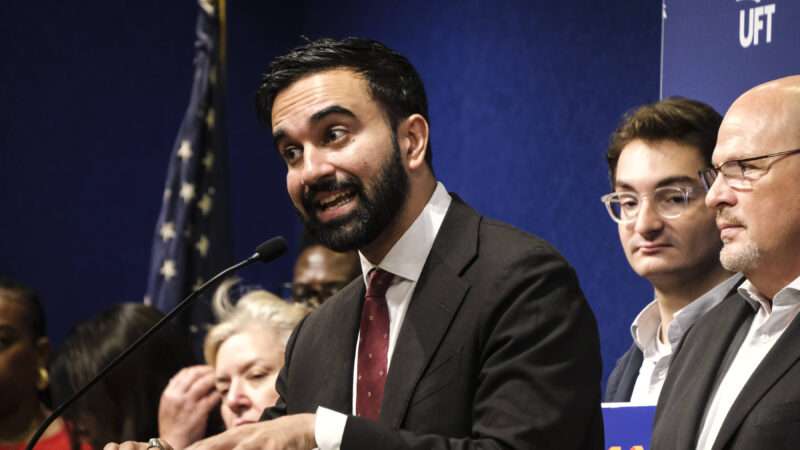
Mayoral Candidate Zohran Mamdani gets endorsed by the United Teachers Federation in downtown Manhattan on July 9th 2025. | IMAGO/Kaite Godowski / MediaPunch/IMAGO/MediaPunch/Newscom

What will Zohran do? Early next week, New York City is set to elect our first democratic socialist mayor (if we’re to believe the polls). The luxury-beliefs class is thrilled. The rest of us? Not so much. I, for one, don’t think Jews are about to be victimized by widespread antisemitic hate crimes that go unprosecuted, or that sharia’s about to come after me for the way I dress, or that we’re going to have to wait in breadlines to get anchovies and steak from Citarella. But I am confident New York will get worse in more insidious ways, and that national Democrats might take the wrong lessons away from this and seek to reproduce this candidate and these results elsewhere.

Transportation: First off, Zohran Mamdani has championed “fast and free buses.” This really misunderstands New York City’s transit problems and “feels like an argument imported from another city,” as journalist Megan McArdle put it on X.

As Janno Lieber—the Metropolitan Transportation Authority head—recently told a group of New York journalists, “compared to the whole country, people [here in New York] spend a lot less on transportation as part of their budgets.” The city already administers programs that subsidize fares for poor New Yorkers, and there are weekly fare caps so the lowest income New Yorkers are never expected to pay more than $17 in a given week on transportation—as many trips as they want, to anywhere within the five boroughs. About half of bus riders choose not to pay their fares, stealing from the system (which already has revenue issues). And a big issue making buses move slower is the rampant double-parking that happens in bus lanes—something authorities have begun to crack down on via automated ticketing by camera.

Mamdani seems to really misunderstand what slows buses down and which affordability issues actually bother New Yorkers, and he seems blissfully unaware of how the system is currently administered.

Public safety: Over the course of his campaigning, Mamdani has tried hard to distance himself from his earlier 2020–2023 sound bites about defunding the police (whose boot…on your neck…was “laced by the IDF“?):

“I don’t think the system actually makes us safer,” he said several years ago, referring to both the way prisons are run and to how policing is conducted, alluding to underlying problems and “trauma” that needs to be addressed.

He hasn’t really pivoted away from these underlying nonsensical views; he’s just tried to play a smarter PR game in recent months, recognizing that totally crapping on the NYPD won’t help him win. And he still seems in favor of some amount of diverting certain issues to social workers, an idea that looms large in the progressive imagination.

But public safety, more broadly, is an area where he might actually be able to do some damage: The mayor has a lot of control over the NYPD’s budget; Mayor Eric Adams restored funding for training to try to grow the police force.


Housing: Incredible.

Schools: “The mayor’s authority over education in New York has long been a political Rorschach test,” writes The New York Times.Supporters argue that it promotes accountability and makes possible large-scale changes, such as Mayor Bill de Blasio’s rollout of free prekindergarten for all 4-year-olds. Critics say it shuts teachers and parents out of decision making, and means that educational priorities can change with every election cycle.” Expect these dynamics to worsen as Mamdani takes charge.

Mamdani has said he wants to phase out gifted programs and gifted tracking for young students; he has at times said he wants to eliminate the specialized test administered to middle school students that allows some of them to gain entrance to the city’s eight elite public high schools (talking about how “segregated” such schools are, as if there was some sort of deliberate racism at play); and he has plans to create universal pre-K for all children, starting at 6 weeks of age. It’s unclear where he’ll get the money to fund such a high-cost initiative, and whether this will be a new program or an expansion of the 3-K program pioneered by Bill de Blasio.

(Policy aside: Mamdani, contra opponent Andrew Cuomo, actually wants less mayoral control over the city’s school system, but it’s not clear how he reconciles these issues with the system-wide changes he’s advocating, like axing certain gifted and talented programs; and some mayoral-control critics are in fact in favor of giving more power to teachers and their unions, not to parents, so it’s not totally clear what flavor of devolution Mamdani supports—to the extent that he’s thought about the mechanism at all.)

In some cities, mayors are sort of pointless figureheads, in charge of relatively little. This is not the case in New York City.

The mayor can “appoint hundreds of commissioners, department heads, their deputies and other senior managers without the advice and consent of the City Council,” notes Vital City. He oversees 300,000 employees and an annual budget of more than $115 billion. The mayor totally controls the Department of Education (“a function often overseen by semi-independent Boards of Education in other cities,” adds Vital City) and there are relatively few checks on his power. Some entities, like the MTA, actually respond to the governor, which makes it a little funny that Mamdani has made transit issues such a huge part of his campaign, given the relatively little control he will have there.

But Mamdani seems to believe he’ll have powers that he won’t have, and seems to advocate for an all-out war on the rich, whom he seems to view as cash cows who will serve as infinite revenue streams, never changing their behavior—or their domicile—to avoid such abusive treatment.

“To pay for his plans, Mr Mamdani proposes two tax hikes: an additional tax of 2% on incomes of more than $1m a year, and raising the top state corporate-tax rate to 11.5%, from 7.25%,” reports The Economist, which he seems to believe will raise $4 billion and $5 billion. But, “mayors cannot set income or business taxes. Hiking them would require the state legislature to act, plus the governor’s signature. And Kathy Hochul, New York’s Democratic governor, has already ruled the idea a nonstarter.” So that’s good, but also somewhat weird that Mamdani doesn’t appear to realize this.

Perhaps the real problem—aside from the fact that my fellow New Yorkers seem persuaded by Mamdani’s bad policy proposals and disturbing rhetoric; aside from the fact that Mamdani doesn’t seem to know which powers he would have and which he wouldn’t; aside from the fact that the sort of generic, vague antisemitism and 9/11 disrespect is unnerving—is that Democrats nationally might overextrapolate from this likely win. Mamdani ran against an incumbent who messaged badly and was plagued by corruption scandals, and a former governor who had resigned that post embroiled in multiple scandals. One takeaway they might have is that Mamdani was a post-wokeness candidate who made cost of living the center of his platform. I think that would be a decent takeaway, leading to them running better/more serious candidates, but I don’t really buy that that’s what’s happening here:

I think it’s simpler: Mamdani is fresh and new and reminds the luxury-beliefs liberal-arts-school class of themselves. He’s a class-solidarity vote. He’s one of them. And he was running against rather bad opponents who read as blatantly corrupt. He won’t improve the cost of living in the slightest, and he will be forced to confront over and over again that he doesn’t actually have the budget to do the things he wants. And over here in Roundupville, we get constant entertainment as other people discover in real time that socialism lite isn’t, in fact, all that great.


Scenes from New York: 


QUICK HITS

  • Looks like China has a ton of bargaining power—and has started to use it, securing rather favorable trade deals from Trump.
  • Inside the rise of Luddite clubs. (“People are just sick of this march forward and having to view technology as progress,” sociologist Caitlin Begg tells The New York Times. “They don’t want their time and attention to be commodified anymore.”)
  • “Defense Department officials do not know precisely who they have killed in multiple military strikes against alleged drug smuggling boats in the Caribbean that have claimed the lives of at least 57 people, according to Democratic lawmakers who attended a classified House briefing on the issue Thursday,” per Politico. Military lawyers were apparently “pulled from the briefing shortly before it started” and members of Congress from both parties “were left frustrated over the lack of clarity on the justifications for the military actions.”
  • “Children born to mothers infected with covid-19 during pregnancy faced a higher risk of autism, along with other neurological differences such as delays in speech and motor development, according to a study published Thursday,” reports The Washington Post. “The analysis of more than 18,100 births in Massachusetts, published in the journal Obstetrics and Gynecology, is among the largest studies to date examining children born to women who contracted the virus starting in the early months of the pandemic through some of 2021, before vaccines were widely available.…as an observational study, the findings do not prove that covid-19 causes the conditions diagnosed in children, but rather signal an association between maternal infection and these outcomes.”
  • Insane:

The post Zohranpocalypse? appeared first on Reason.com.

from Latest – Reason.com https://ift.tt/ExrZfLs
via IFTTT

Palestinian Youth Movement Social Media Posts with “No Justice, No Peace” Urging Protest Outside Synagogue Are Protected Speech

From Helmann v. Codepink Women for Peace, decided June 13 by Judge Stephen Wilson (C.D. Cal.), but just posted on Westlaw; I blogged earlier today about a different facet of the case, which allowed a threats claim to go forward against CodePink for its social media posts, but the court also rejected the claim against the Palestinian Youth Movement for its posts. First, the background:

This case arises out of the events that took place at the Adas Torah [Orthodox] Synagogue … on June 23, 2024 … in Los Angeles’s Pico-Robertson neighborhood.

On June 23, 2024, the Synagogue held its usual religious services: a morning, afternoon, and evening prayer. That same day, the Synagogue also hosted a special “Aliyah Event,” where a real estate company presented opportunities to purchase homes in Israel. According to the complaint, this event held religious significance for many attendees, who view moving to Israel as a fulfillment of a religious commandment. Similar events often include prayer or Torah study and are generally understood by the community as religious in nature.

{Defendants contest the religious nature of the Aliyah Event, largely because Plaintiffs’ claims depend in part on whether they were attempting to enter the Synagogue to exercise their First Amendment rights. The complaint contains detailed allegations regarding the religious nature of the Aliyah Event, e.g. that a common belief among Orthodox Jews is that returning to and dwelling in Israel is a religious commandment. At the motion to dismiss stage, the Court takes Plaintiffs’ allegations regarding the religious nature of the Aliyah Event as true and therefore that attempts to enter the Synagogue to attend that event pertained to an exercise of First Amendment rights. In any event, several Plaintiffs allege that they attempted to enter the Synagogue at least in part for a squarely religious purpose, e.g. to attend prayer services.}

Plaintiffs sued various defendants over various roles in what they characterized as “a mob” that assembled outside the Synagogue; some members allegedly engaged in violence against some of the synagogue-goers. Here, I’ll focus on claims that certain posts were “threat[s] of force” and thus violated the FACE Act, the Freedom of Access to Clinic Entrances Act of 1994; that law bars interference through obstruction, force, or threat of force not just with reproductive health facilities but also with places of religious worship.

The PYM social media posts call on their supports to “STAND AGAINST SETTLER EXPANSION AT SUNDAY’S REAL ESTATE EVENT SELLING HOMES TO BUILD ‘ANGLO NEIGHBORHOODS’ IN PALESTINE.” The post continues by describing the Aliyah Event as a “blatant example of land theft” perpetrated by “[r]acist settler expansionists.”  The posts finish with “FROM THE BELLY OF THE BEAST NO JUSTICE, NO PEACE.”  Plaintiffs allege, “upon information and belief,” that the phrase “belly of the beast” refers to a synagogue.

Even if “belly of the beast” refers to the Synagogue, these posts are not true threats. At most, they express a political message: if there is no justice for Palestinians, there will be no peace—even in religious spaces.

That kind of message is too vague to qualify as a true threat. To be sure, the posts may invoke violent imagery—”no peace” inside of the Synagogue. But “mere advocacy of the use of force or violence does not remove speech from the protection of the First Amendment.” NAACP v. Claiborne Hardware Co. (1982). For example, in Claiborne, even the statement, “if we catch any of you going in any of them racist stores, we’re gonna break your damn neck,” was protected speech.

To lose this First Amendment protection, a statement must be “a serious expression of an intent to commit an act of unlawful violence to a particular individual or group of individuals”—i.e., a “true threat.” PYM’s post does not meet that standard. It targets no individual. It makes no specific threat.

The Supreme Court has upheld similar speech. In Watts v. United States (1969), a protester said: “if they ever make me carry a rifle, the first man I want to get in my sights is L.B.J.” The Court held that the statement was not a true threat. Rather, it was “political hyperbole.”

PYM’s post follows the same structure: a conditional statement tied to a political grievance. To paraphrase PYM’s posts, “if there is no justice, then there will be no peace—even in a synagogue” mirrors the logic of the statement in Watts: if the speaker is drafted, he will target the President. Both are vague expressions of protest—not direct, credible threats. Like the language in Watts, PYM’s statement is “political hyperbole,” “expressly conditional.” and too imprecise to strip it of First Amendment Protection.

This difference between PYM’s posts and true threats is well illustrated by Planned Parenthood. There, anti-abortion activists published “GUILTY” posters naming abortion providers that closely resembled earlier “WANTED” posters. Id. at 1085. After doctors appeared on those earlier posters, they were murdered. Id. at 1085. In that context, the Ninth Circuit said the “GUILTY” posters’ message was clear: “You’re Wanted or You’re Guilty; You’ll be shot or Killed.”

And of course, the Court applied that same reasoning to CodePink’s posts. CodePink’s posts placed the Synagogue’s address in an inverted red triangle. Plaintiffs alleged that symbol is used by Hamas to identify Jews and Jewish targets for “extermination.” That kind of symbol, placed over a specific address, sends a “serious expression of intent to inflict bodily harm.”

PYM’s posts are different. They do not use symbols historically linked to violence. And there are no allegations that phrases like “no justice, no peace” or “belly of the beast” have led to violence. Without that kind of context or history, there is no basis to infer that these posts are true threats. They are political speech that call for protest—such speech is protected by the First Amendment.

Because PYM’s posts are not true threats, they cannot serve as a “threat of force” under the FACE Act. The Court therefore does not need to analyze Plaintiffs’ FACE Act claims against PYM any further—they fail at step one….

Thomas Harvey represents PYM.

The post Palestinian Youth Movement Social Media Posts with "No Justice, No Peace" Urging Protest Outside Synagogue Are Protected Speech appeared first on Reason.com.

from Latest – Reason.com https://ift.tt/wrf0yHB
via IFTTT

Don’t Panic Over Federal Cuts for Homeless Programs


Homeless encampment |  Abaca Press/Europa Press/Abaca/Sipa USA/Newscom

The upset is palpable. News reports that the Trump administration is planning to cut state grants to build permanent housing for homeless people has led state officials and homeless activists to claim that the likely decision will send thousands of people back on the streets just as California is turning the corner on this massive problem.

The usually levelheaded CalMatters reported that the expected deep cuts are the “latest blow in a seemingly endless barrage of bad news for the California agencies tasked with fighting homelessness.” The “news has sent counties throughout California into a panic” and they are “bracing to lose hundreds of millions of dollars,” the publication added.

It’s time to take the proverbial chill pill. Yes, I believe the homelessness situation is a travesty and addressing it is a legitimate government function—for the sake of people living on the streets and the rest of us who want to reclaim public parks and sidewalks. But dig a little deeper, and the cuts might not be as troubling as expected. As Politico reported, those funds “will be cut and moved to transitional housing assistance with some work or service requirements.”

In other words, the money might not evaporate, but instead will be reprogrammed to support a different set of mostly reasonable policies. CalMatters noted the permanent-housing money pool “will shrink from $3.3 billion down to about $1.1 billion.” But that’s a nationwide number. So the “hundreds of millions of dollars” our state potentially loses is a rounding error in a total budget that tops $322 billion. If fighting homelessness is a priority, lawmakers can shift funds from less-urgent matters.

Sure, I dislike the Trump administration’s constant culture-war approach. Instead of analyzing what’s working and what isn’t, the White House is looking to remove funds from service providers that don’t conform to its conservative social views. As LAist reported, the administration’s new Continuum of Care rules penalize organizations and agencies from sanctuary cities, those that offer harm-reduction programs, and also those that recognize transgender people.

Drug addiction, immigration violations (mainly from recent asylum seekers), and mental illness are rampant among the homeless population, so it’s cruel to deny funds to groups that are on the front lines of the problem. Gender issues shouldn’t even come into play here. These groups need to assist anyone in dire straits. The feds ought to focus on providing help, not advance their tangential cultural agendas.

Nevertheless, I agree with the administration’s expectation that funding recipients “operate in a city, county, or state that prohibits public camping.” Unlike those other rules, this one applies directly to the homelessness problem.

The U.S. Supreme Court’s Grant’s Pass decision last year finally freed localities to clear out park encampments. It overturned the Ninth Circuit’s wacky Boise decision, which considered anti-camping statutes to be cruel and unusual punishment. Many California cities have taken advantage of the new latitude. Those that don’t should look for funding elsewhere.

So, California can fill in the gap—or localities can figure out ways to conform to the new guidelines, even if some of them are ridiculous. More significantly, our state needs to rethink its overall approach toward providing “permanent” housing.

The state’s official policy is called Housing First. As a fact sheet on the state’s Housing and Community Development website explains, “Under the Housing First approach, anyone experiencing homelessness should be connected to a permanent home as quickly as possible, and programs should remove barriers to accessing the housing, like requirements for sobriety or absence of criminal history.”

That approach is fine for a portion of the homeless population but is a failure as a broad-based policy for two reasons. First, it doesn’t address underlying social problems. Housing First was originally meant for mothers with young children who had suddenly lost their housing due to, say, a domestic-abuse situation. Fine, but it’s a recipe for disaster when applied to homeless people with debilitating addictions or mental delusions. They need social services, not just apartments. The state needs to consider a variety of options.

Second, California doesn’t build anything inexpensively and efficiently. With onerous state regulations and union work requirements, new permanent housing costs a fortune—and the state can’t build it quickly enough to meet the needs of 187,000 homeless people. Recent projects have cost upwards of $1 million a unit. The federal and state governments will never have the kind of money available to fix the problem at that rate. And, of course, the promise of “free” permanent housing will lure many people who could otherwise find their own accommodations. The waiting lists would be virtually endless.

California’s homeless population has been dropping after years of growth. But I’d be wary of those who claim that moving funds from permanent-housing programs will undo that welcome progress. Officials need to spend more time reforming existing programs and less time getting overwrought.

This column was first published in The Orange County Register.

The post Don't Panic Over Federal Cuts for Homeless Programs appeared first on Reason.com.

from Latest – Reason.com https://ift.tt/01f5SAX
via IFTTT

Jamaica’s Catastrophe Bond Poised For Big Payout Within Weeks After Hurricane Melissa’s Insane Strength

Jamaica’s Catastrophe Bond Poised For Big Payout Within Weeks After Hurricane Melissa’s Insane Strength

Hurricane Melissa was the most powerful storm to make landfall in Jamaica in over 170 years, ripping through the Caribbean island’s western region with 185 mph winds and leaving widespread destruction to infrastructure, towns, resorts, and farmland. The storm’s central pressure is likely to have fallen below the threshold that would trigger a $150 million catastrophe bond designed to offset weather-related losses through the capital markets.

According to CNBC, the government of Jamaica’s $150 million cat bond was structured by insurance broker Aon using the International Bank for Reconstruction and Development’s “capital at risk” program and could be triggered as soon as next month.

For the island nation’s government to receive funds, the storm’s central pressure must be less than 900 millibars upon landfall. Early indications from the National Hurricane Center show the Category 5 hurricane with 185 mph winds met that threshold in several regions in the western part of the island. 

Source: Bloomberg

Key details about $150 million cat bond:

  • The cat bond, structured by Aon and effective through 2027, provides parametric coverage, meaning payouts are based on storm intensity metrics rather than assessed damages.

  • Triggering paypout requires the storm’s central pressure must be <900 millibars upon landfall. Early National Hurricane Center data confirm Melissa met this threshold in multiple regions, now pending verification by an independent agent which could take weeks. 

  • If triggered, funds could reach Jamaica within about one month, far faster than traditional insurance settlements, which often take several months.

Jamaica is the first Caribbean and small-island nation to sponsor a cat bond, according to Aon. 

“While the final numbers are still being verified, the early signs suggest the transaction is doing what it was designed to do: getting critical funds to the country quickly after a major disaster,” Chris Lefferdink, Aon’s head of insurance-linked securities for North America, told CNBC in a statement. 

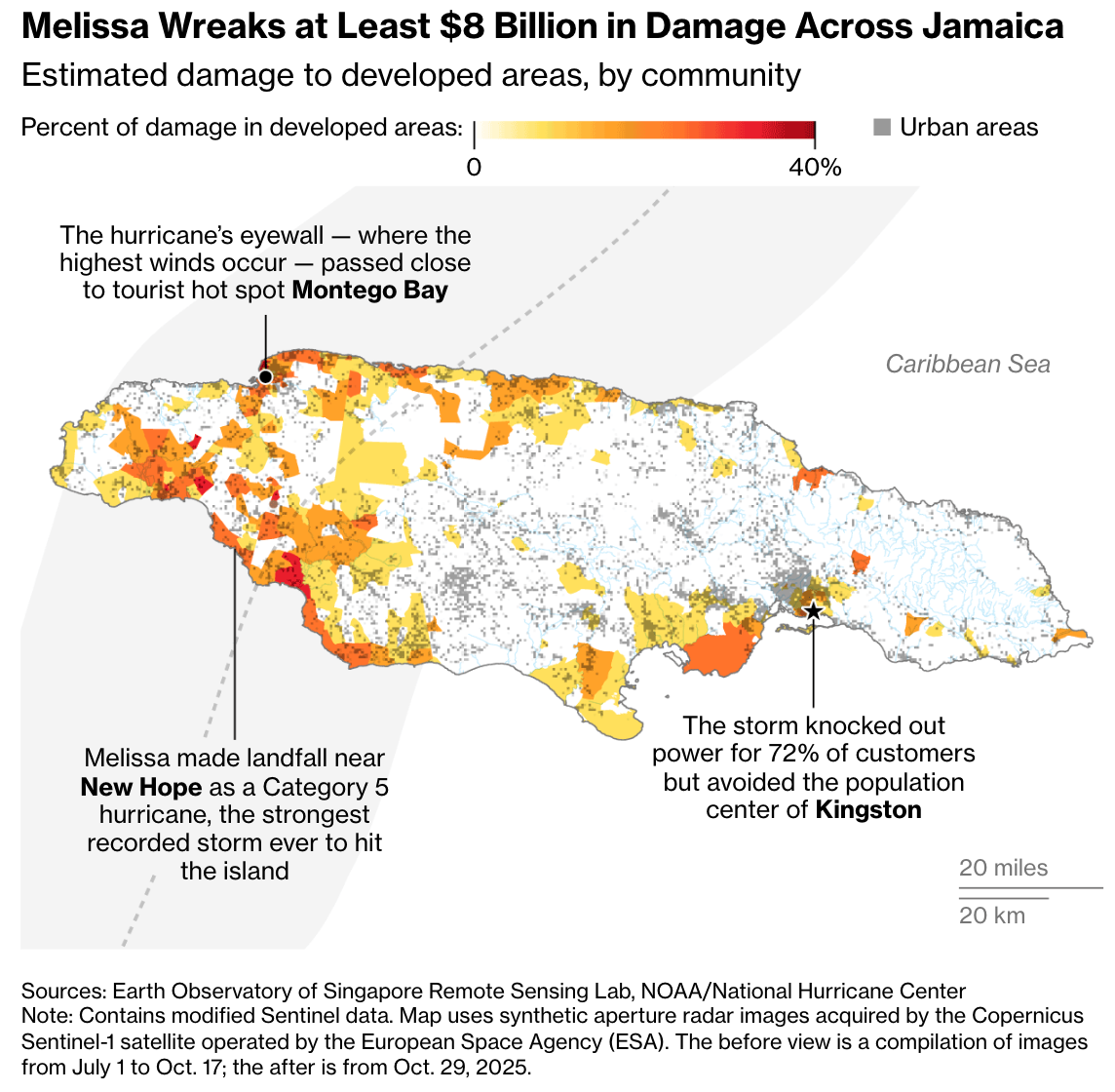
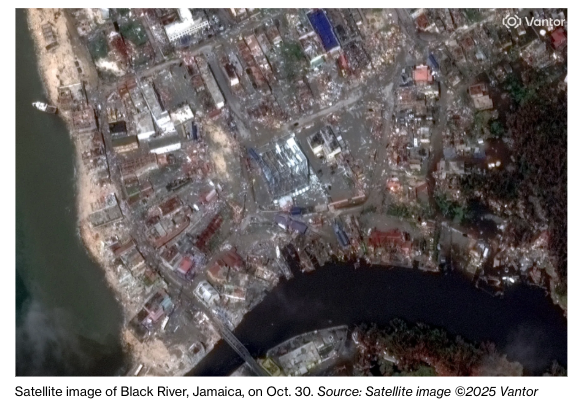
The question of whether the $150 million cat bond will cover all the damage remains in question. New satellite data from Bloomberg shows extensive damage. 

Source: Bloomberg

Damage report so far:

  • Montego Bay, Black River, and surrounding parishes (Saint James, Westmoreland, Saint Elizabeth) suffered the heaviest damage, with around 40% of buildings and roads destroyed.

  • Power outages persist for about 72% of customers, while many communities remain isolated due to blocked roads and debris.

  • At least 19 people were killed, and economic losses are estimated at $8 billion, about one-third of Jamaica’s GDP, according to Enki Research.

Jamaica’s use of a cat bond and its likely trigger event in the coming weeks could spark significant interest among other Caribbean nations for next year’s Atlantic hurricane season. 

Tyler Durden
Fri, 10/31/2025 – 10:05

via ZeroHedge News https://ift.tt/aQDHG7W Tyler Durden

The Long Road Home


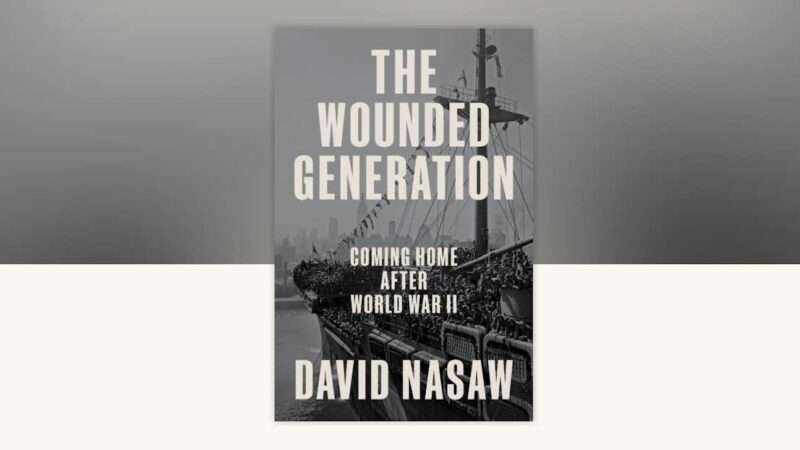
"The Wounded Generation" book cover, authored by David Nasaw | Penguin Random House

The Wounded Generation: Coming Home After World War II, by David Nasaw, Penguin Random House, 496 pages, $35

“There wasn’t any band there; there wasn’t anybody greeting me except the girl that I had [written] to while I was overseas. That was my homecoming.” That poignant moment recounted by World War II veteran Clinton Riddle is one of the many vignettes that populate David Nasaw’s new book, The Wounded Generation: Coming Home After World War II.

Nasaw, an emeritus professor of history at the City University of New York, marshals such experiences to argue that, beyond the ticker-tape parades, millions of men like Riddle filtered home to little fanfare. After returning to America, many struggled with alcohol addiction, marital problems, unemployment, crowded housing, and psychological issues that medical authorities didn’t fully understand. Nasaw’s book is a corrective to the simplistic narrative of stoicism, unity, and triumph that dominates conventional narratives of “the greatest generation.” It isn’t a work of revisionism so much as an act of recovery, one that elevates voices of pain and disquiet that were understood in the years after the war but faded from popular memory in the decades thereafter.

While the book bills itself as a history of veterans’ lives after the conflict, Nasaw adroitly begins his narrative in the thick of the fighting, tying the experiences of returning veterans to their experiences abroad. Beyond the scarring practice of combat, Nasaw illustrates a military culture awash in alcohol abuse and philandering, not to mention soldiers’ nagging concerns about spousal infidelity back home. He continues his narrative through the immediate postwar period, with two final chapters covering the individual and institutional legacies of the war.

Nasaw’s goal is to incorporate the toll on returning veterans and those who they left behind into our understanding today of the Second World War. His book joins a body of work on war and memory that corrects the one-dimensional narrative of the “good war” and restores the complexity and humanity of the Americans who fought it. As he skillfully shows, victory came at a steep cost for those who managed to survive the fighting. The romantic image of the war was largely a post hoc construction, championed not by those who did the fighting but by later generations well-removed from the burdens of the conflict.

* * *

Nasaw challenges some romantic images of postwar policy too, though not from a particularly libertarian direction. He is critical, for example, of the G.I. Bill, the federal entitlement program that afforded tuition and other forms of financial support to send returning veterans to school. Its “democratization of higher education,” he argues, was “revolutionary in establishing a new social welfare state for veterans”—but also “conservative in protecting class, gender, and racial status quos.” As a concession to Southern Democrats, the system was implemented by state and local authorities; as a result, he argues, it left female, gay, and black vets behind.

The broader suite of veterans’ readjustment programs—not just the G.I. Bill but home buying assistance and other efforts—were, the author argues, a missed opportunity for more comprehensive social welfare. Nasaw notes that during the late stages of the war, President Franklin Delano Roosevelt proposed a “second Bill of Rights” that would have extended government assistance to the full progressive shopping list of employment, housing, food, medical care, old age pensions, and so on. Social programs for veterans, he suggests, became a proxy fight over the New Deal, with a conservative coalition of Midwestern Republicans and Southern Democrats who wanted to put FDR’s domestic agenda on ice.

In Nasaw’s retelling, that coalition served as an effective roadblock, thereby undermining Roosevelt’s “aspirational” and “transformative” vision that “would have leveled the playing fields providing rich and poor, Black and White, veteran and citizen with new economic rights.” Libertarian-minded readers will shake their heads in disagreement at the idea that what the country needed was more government redistribution. But you’ll note that even here, Nasaw is challenging the liberal narrative in which the war was an unalloyed progressive force for American society.

* * *

The book shines brightest in its handling of the individual burdens shouldered by veterans and their families: heavy smoking, heavy drinking, infidelity, and, of course, the experience of combat. Behind the images of relief and the euphoria of victory, individual vets struggled to readjust, to find housing, and to reconnect with their loved ones, helping fuel a postwar divorce boom. Nasaw argues that vices and the social dynamics around them—compounded by psychological maladies, which we would now call PTSD—haunted and hamstrung veterans returning to civilian life.

On the specific matter of post-traumatic stress disorder, Nasaw offers many gripping accounts of individuals who struggled to leave the war behind them. Beyond those anecdotes, he illustrates the evolving medical comprehension of the phenomenon previously known as “battle fatigue” or “shell shock.” Psychiatrists, informed by the Freudian thinking of the day, diagnosed lingering war trauma as stemming from internal unresolved childhood suffering and not the obvious external experience of grisly combat.

Relatedly, military and veterans’ affairs doctors misunderstood and therefore misdiagnosed combat ailments now known as “traumatic brain injury.” Soldiers who endured concussive blasts from friendly and enemy fire, and who complained for years of related conditions, were diagnosed with “emotional unrest” that would resolve with the passage of time. Finding little official support, veterans often turned inward and self-medicated with alcohol and overwork.

It is in this area where Nasaw makes his most significant scholarly contributions—and offers his most gripping material on veterans’ personal struggles. His final chapter, “Aftermaths,” argues that the passage of time did not necessarily improve veterans’ mental health but often in fact made it worse. Major, jarring life events, such as retirement or the death of a spouse, could cause lingering traumas to return. Studies from the late 1970s and early ’80s found that alcoholism remained a consistent problem for WWII veterans, leading to a “mortality [that] was significantly higher.”

When greater medical recognition of veterans’ issues came along, it arrived, ironically, at the same time as a widespread desire to sweep them under the rug. Drawing on the earlier work of writers such as Studs Terkel and John Bodnar, Nasaw argues that the romanticized narrative of the “good war” fought by the “greatest generation” demanded that said generation’s lingering traumas be “disremembered.” That “good war” narrative, he shows, gained traction as the nation was “hungry for heroes after the Vietnam debacle and primed to celebrate victory after the fall of the Soviet Union.”

Modern demands for an uplifting World War II narrative mean the real, painful experiences of its veterans are often overlooked. Nasaw cites Marine veteran Eugene Sledge: “Over fifty years later, I look back on the war as though it were some giant killing machine into which we were thrown to endure fear to the brink of insanity.” By restoring these stories to the center, Nasaw shows that veterans were far more than “stick-figure avatars of progress” and that their wartime service was not merely a “character-building, maturing experience.”

According to the Department of Veterans Affairs, approximately 45,000 of the original 16 million World War II veterans are still with us today. As the last of those survivors fade away, The Wounded Generation reminds us that the horrors of war linger long after the shooting stops—it loiters in the minds, marriages, and memories of those who fought them. If even the “greatest generation” struggled after the guns fell silent, their long road home ought to give us pause before we send future generations abroad to fight wars, “good” or not.

The post The Long Road Home appeared first on Reason.com.

from Latest – Reason.com https://ift.tt/xkRaUC9
via IFTTT

Chicago PMI Beats But Remains In ‘Contraction’ For Second Straught Year

Chicago PMI Beats But Remains In ‘Contraction’ For Second Straught Year

There’s good news and bad news in today’s macro data (what scarce data there is).

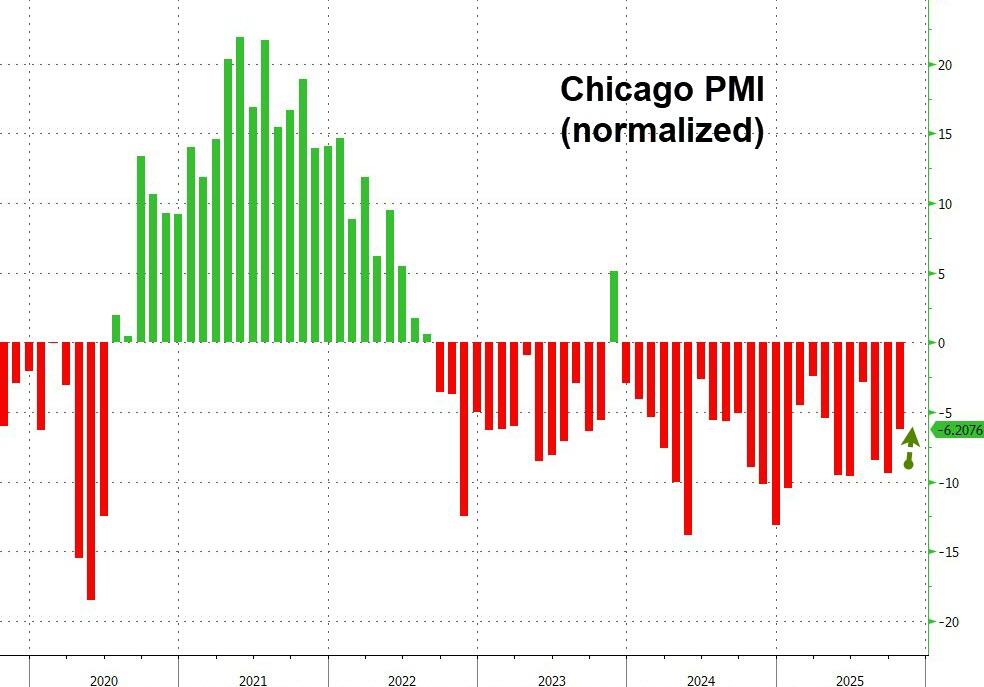
MNI’s Chicago Business Barometer (PMI) printed a better than expected 43.8 (42.3 exp), up from the prior 40.6…

Source: Bloomberg

There’s a little more good news as seven of the underlying components rose vs last month:

  • Prices paid rose at a faster pace; signaling expansion

  • New orders fell at a slower pace; signaling contraction

  • Employment fell at a slower pace; signaling contraction

  • Inventories fell at a slower pace; signaling contraction

  • Supplier deliveries rose at a faster pace; signaling expansion

  • Production fell at a slower pace; signaling contraction

  • Order backlogs fell at a slower pace; signaling contraction

The bad news is, as the chart above shows (normalized for the 50 cut off between expansion and contraction), this was the 23rd straight month below 50 (contraction) and the 37th month of contraction in the last 38 months.

Tyler Durden
Fri, 10/31/2025 – 09:57

via ZeroHedge News https://ift.tt/MFEXYGm Tyler Durden

New York Declares Emergency Over Looming Pause In Food Stamps

New York Declares Emergency Over Looming Pause In Food Stamps

Authored by Jack Phillips via The Epoch Times (emphasis ours),

New York Gov. Kathy Hochul on Thursday declared a state of emergency due to the federal Supplemental Nutrition Assistance Program (SNAP) program being suspended on Nov. 1 due to the government shutdown and a lack of funding.

People shop for food at a store that accepts food stamps in New York City in a file photograph. Spencer Platt/Getty Images

The decision means that $65 million in state funds will be allocated for emergency food assistance to provide for 40 million meals statewide, her office said in a statement. Around 3 million people in the state receive SNAP benefits, known as food stamps.

In a statement, the Democratic governor said that the loss of SNAP funds is “an unprecedented public health crisis” and will harm farmers, grocers, and other stores across the state.

“Today, I’m declaring a state of emergency and am committing additional state funds for emergency food assistance to ensure New Yorkers don’t go hungry,” Hochul added in her statement.

The $65 million in state funding will include $40 million “in new funding for the Hunger Prevention and Nutrition Assistance Program, which provides emergency food relief and nutrition services to food-insecure populations,” said her office.

The emergency order also directs the Empire State Service Corps and the State University of New York Corps, which are both state-funded public service work program for college students, to assist in SNAP registrations and other efforts.

“The Empire State Service Corps will allow current members to expand their paid hours, enabling them to provide greater support at food pantries statewide,” the statement from her office said. “In addition, new short-term crisis response positions will be created to assist food pantries and food banks facing staffing shortages.

SNAP’s looming lapse in funding comes as the shutdown has lasted nearly a month, coming after members of Congress did not come to an agreement on how to fund the government.

Democrats have said that any measure to reopen the government should include what they say are protections for health care, including an extension of health care subsidies that are set to expire at the end of the year. Republicans say that talks on health care should come after the government is reopened.

Meanwhile, both Democrats and Republicans, as well as the Trump administration, have traded blame over the lapse in SNAP funding.

Earlier this week, the U.S. Department of Agriculture (USDA) warned that food stamps are set to run dry and accused Democrats of obstructing the reopening of the government. Hochul and other Democrats have blamed the Trump administration and Republicans over the shutdown and SNAP funding lapse.

Other states have issued emergency orders over SNAP deadline. Connecticut Gov. Ned Lamont, a Democrat, said on Oct. 27 that his administration will provide $3 million in emergency funding to a nonprofit to residents who are expected to lose access to SNAP.

The governor of Delaware, Matt Meyer, also declared an emergency earlier this week that he said will allow the state to redirect funds to food assistance during the shutdown. Rhode Island Gov. Dan McKee made a similar declaration on Oct. 28, and Virginia Gov. Glenn Youngkin declared one on Oct. 23.

At the same time, 25 states have filed a lawsuit against the federal government to keep SNAP’s funding going past the Nov. 1 deadline. U.S. District Judge Indira Talwani told lawyers on Thursday in a hearing that the government can’t afford to cover the program, and that there’s a process to follow rather than simply suspending all benefits.

The steps involve finding an equitable way of reducing benefits,” said Talwani in the hearing.

The Trump administration has argued it wasn’t allowed to use a contingency fund with about $5 billion in it for the program, while a USDA plan from before the shutdown said that money would be tapped to keep SNAP running. Democratic states have argued that not only could that contingency money be used, it must be. They also said a separate fund with around $23 billion could be tapped.

The Associated Press contributed to this report.

Tyler Durden
Fri, 10/31/2025 – 09:25

via ZeroHedge News https://ift.tt/tGsfaQc Tyler Durden

Oil Spikes On Reports US Military Attacks On Venezuela Imminent, Just ‘Hours’ Or ‘Days’ Away

Oil Spikes On Reports US Military Attacks On Venezuela Imminent, Just ‘Hours’ Or ‘Days’ Away

New Friday morning reporting says that President Trump has made the decision to attack Venezuela, ahead of which has seen an unprecedented US military build-up in the South Caribbean, and has included redeploying the USS Gerald R. Ford carrier group from the Mediterranean to join operations off Venezuela.

The planned attacks against Venezuelan military installations are being reported in The Miami Herald and The Wall Street Journal, both which describe the impending assault as imminent.

via US Navy

“The Trump Administration has made the decision to attack military installations inside Venezuela and the strikes could come at any moment, sources with knowledge of the situation told the Miami Herald, as the U.S. prepares to initiate the next stage of its campaign against the Soles drug cartel,” Miami Herald writes.

The will “seek to destroy military installations used by the drug-trafficking organization the U.S. says is headed by Venezuelan strongman Nicolás Maduro and run by top members of his regime,” the report continues.

Sources say it could come in just “hours” or a matter of “days”:

Sources told the Herald that the targets — which could be struck by air in a matter of days or even hours — also aim to decapitate the cartel’s hierarchy. U.S. officials believe the cartel exports around 500 tons of cocaine yearly, split between Europe and the United States. While sources declined to say whether Maduro himself is a target, one of them said his time is running out.

“Maduro is about to find himself trapped and might soon discover that he cannot flee the country even if he decided to,” the source said. “What’s worse for him, there is now more than one general willing to capture and hand him over, fully aware that one thing is to talk about death, and another to see it coming.”

It sounds like it will be a full regime change operation, with a ‘friendly’ pro-US opposition leader likely to be installed into power – such as the latest Nobel Peace Prize winner María Corina Machado, who just in a non-peaceful manner warned Maduro that “his time is up”, after repeatedly calling on Trump for some kind of intervention in her country.

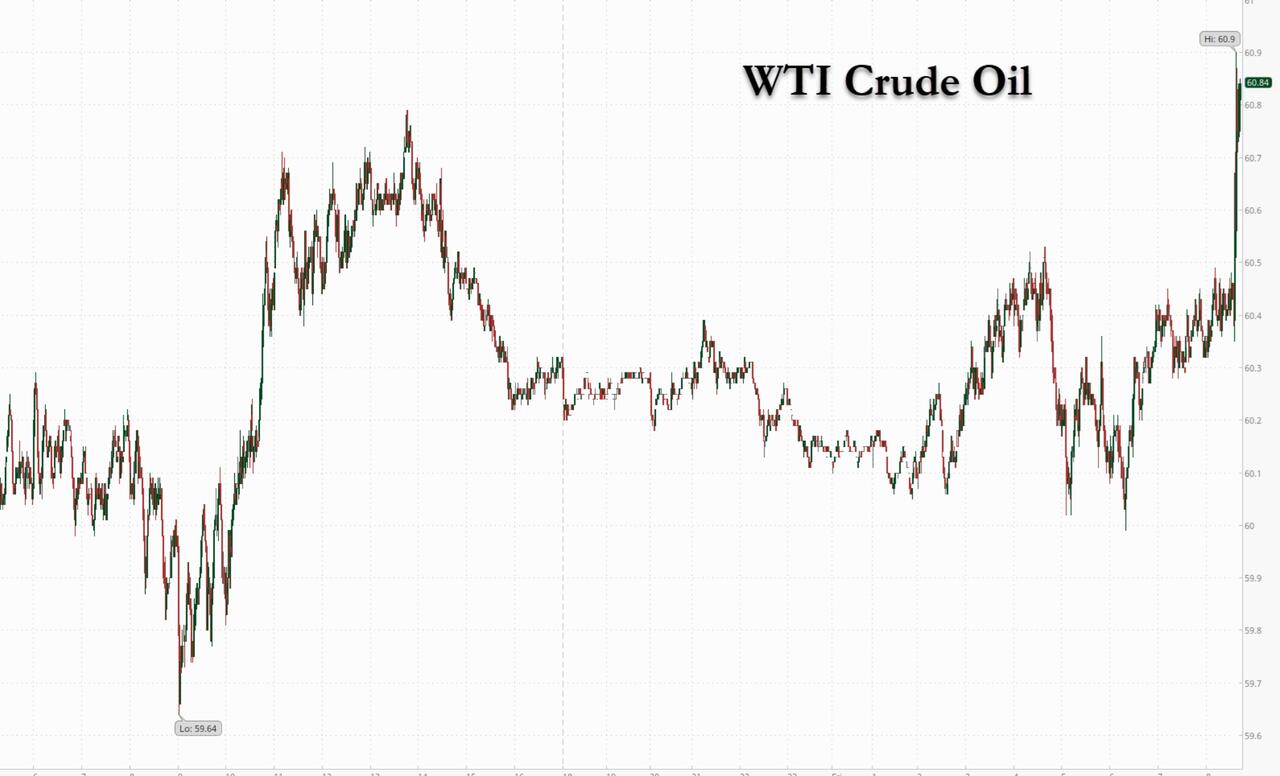
Oil spiked on the new war headlines, in a place which has the world’s largest proven crude reserves…

Up to this point, the significant number of US assets positioned in regional waters have only engaged in maritime operations, having blown up some 15 suspected narco-smuggling boats at this point, and killing and wounding dozens. But in classified briefings to Congressional leaders, reports suggest the Pentagon can’t confirm the identities of who it is actually taking out, even though they’ve been labeled high valued ‘narco-terrorists’ who ultimately do the bidding of President Maduro.

Tyler Durden
Fri, 10/31/2025 – 09:05

via ZeroHedge News https://ift.tt/raopZNK Tyler Durden