RFK Jr. Announces $100 Million Program Aimed At Homelessness And Addiction

RFK Jr. Announces $100 Million Program Aimed At Homelessness And Addiction

Authored by Zachary Stieber via The Epoch Times (emphasis ours),

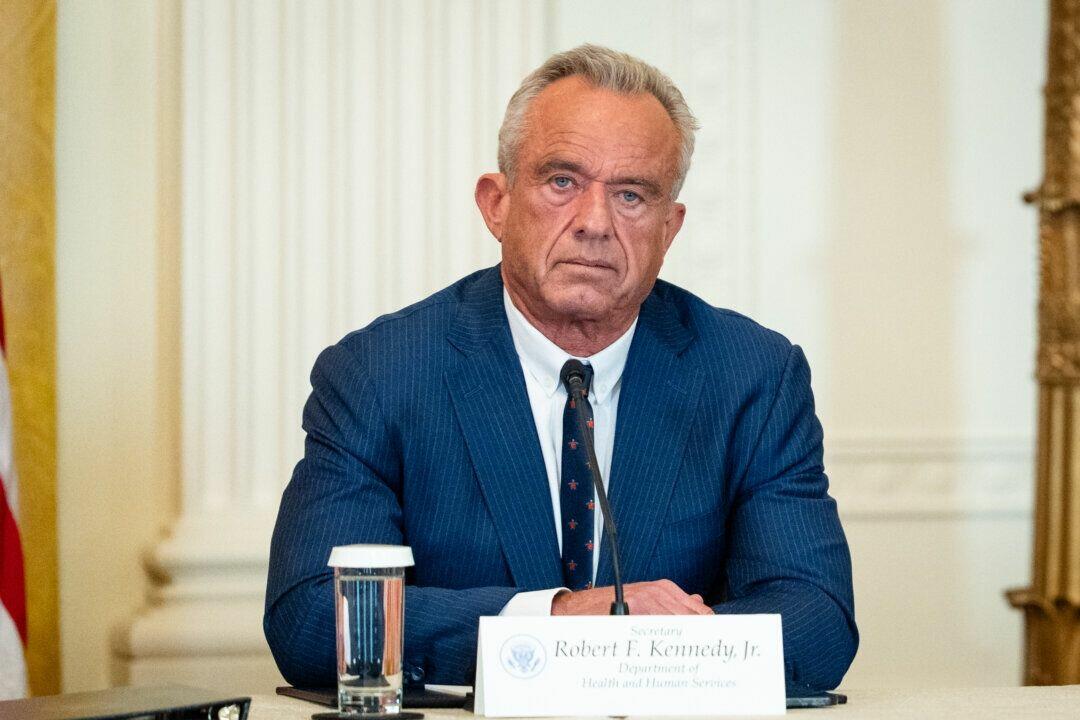
Health Secretary Robert F. Kennedy Jr. on Feb. 2 announced a new $100 million program that he said will help homeless people find jobs and treat drug abuse.

Health Secretary Robert Kennedy Jr. in the East Room of the White House on Jan. 16, 2026. Madalina Kilroy/The Epoch Times

The $100 million investment is aimed at assisting homeless people and drug users in recovering from addiction, finding employment, and locating stable housing.

Kennedy told an event on Prevention Day—which is sponsored by the government and dedicated to preventing drug abuse—in Washington on Monday that the health care system under the previous administration was designed to cycle people who suffer from mental illness and drug addiction “between sidewalks, emergency room visits, jails, mental hospitals, and shelters.”

No one took responsibility for the whole person. No one stayed long enough to help them recover, to help them reestablish their links, and teach them the lessons of how to live in a community,” he said. “That system is neither humane nor effective.”

Kennedy, who has said his addiction to heroin ended with help from 12-step programs, said that the $100 million would fund pilot initiatives that are crafted to resolve long-term homelessness and reduce opioid addiction by expanding treatment regimens that emphasize recovery and self-sufficiency. The program is known as Safety Through Recovery, Engagement, and Evidence-based Treatment and Supports, or STREETS.

“STREETS will engage people continuously, from first contact on the street through recovery, through employment, and through self-sufficiency,” Kennedy said. “Law enforcement, first responders, courts, housing providers, and health care systems will work as one team, so people will no longer fall through the cracks.”

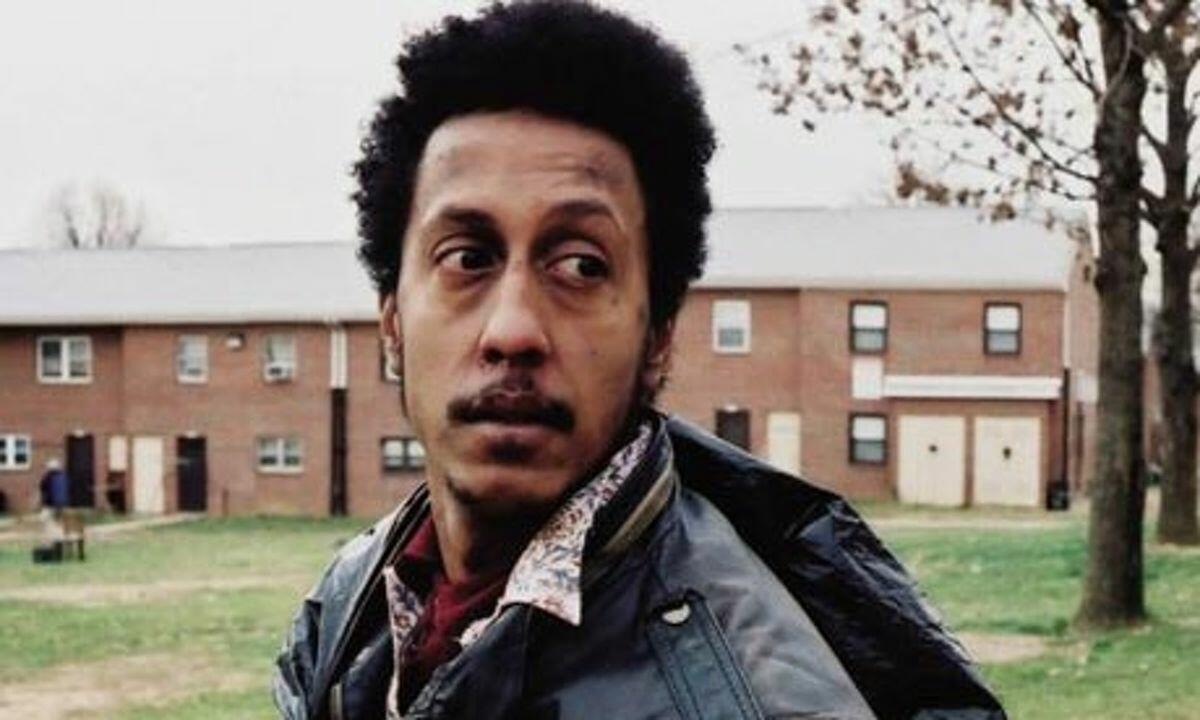
Anyone else rewatching The Wire rn?

STREETS follows an executive order President Donald Trump signed in January that says drug addiction is a chronic disease and that the administration needs to prioritize addiction treatment and recovery.

The new program builds on an investment federal health officials awarded in 2025 to boost homes for recovering addicts. Kennedy says he knows many people who have recovered in such homes.

Kennedy also announced the government will be providing $10 million through an assisted outpatient program to help adults designated as having serious mental illness, which he said will reduce hospitalization, incarceration, and homelessness.

Officials also said that the Department of Health and Human Services will, moving forward, let states use federal funding to pay for addicted parents to receive Food and Drug Administration-approved medications.

And they said that they would be giving faith-based organizations that meet certain standards funding to help with drug addiction recovery.

“This is a chronic disease. It’s a physical disease, it’s a mental disease, it’s emotional disease, but above all, it’s a spiritual disease,“ Kennedy said. ”And we need to recognize that, and faith-based organizations play a critical role in … helping people reestablish their connections to community.”

Tyler Durden
Tue, 02/03/2026 – 20:05

via ZeroHedge News https://ift.tt/4pfhaz9 Tyler Durden

US & Israel Flex From Afar In Joint Red Sea Naval Drills

US & Israel Flex From Afar In Joint Red Sea Naval Drills

This past several days saw Iran conduct limited ‘live fire’ war drills in the Strait of Hormuz, and prior to that there were some joint Iran-China-Russia naval maneuvers – but with the USS Lincoln carrier group reportedly moving away from the potential flashpoint, into waters off Yemen, there remains an uneasy de-escalation (for now) in anticipating of Turkish-hosted US-Iran nuclear negotiations.

Israel and the United States have still flexed back, as the partner forces kicked off the week Monday with joint naval military drills in the Red Sea. The war games come amid fears of a potential US attack on Iran.

AP via Getty Images

“A joint exercise was conducted yesterday between a U.S. Navy destroyer and Israeli Navy vessels. The drill was held as part of the ongoing cooperation between the Israeli Navy and the US Fifth Fleet in the Red Sea arena,” The IDF posted on X Monday.

“The destroyer docked at the port as part of a pre-planned, routine visit and within the framework of the strategic and close cooperation between the two navies and respective militaries,” it said.

The US meanwhile continues to send cargo planes, fighter jets, and advanced air defense systems into the Gulf region to prepare for a potential coming conflict with Iran.

Maximalist demands are still being made of Tehran. While it is willing to talk about its nuclear program, Iranian leaders have balked at Washington demands to give up or at least reduce the Islamic Republic’s ballistic missile program.

All the while, Israeli defense officials have traveled to the US for meetings with top military officials. The Netanyahu government is reportedly lobbying for robust Pentagon action against Iran.

One astute Middle East observer has noted, “There is a persistent and unresolved gap between Trump and Prime Minister Netanyahu — a gap that was not closed even during the recent 12 day war.”

The same analyst lays out the following:

Moreover, even when Trump gave Israel the green light to carry out strikes bacm in June, he did so with the assumption that military pressure would increase Iran’s willingness to accept a deal, not as part of a strategy aimed at regime change. Until recently, Trump rarely spoke in terms of overthrowing the Iranian regime.

Iran is naturally deeply distrustful and suspicious of US motives – especially given it was the first Trump administration which unilaterally pulled out of the Obama-era JCPOA nuclear deal to begin with.

Now Iran is being asked to scrap everything and start afresh, but including ballistic missiles on the agenda will be a non-starter. If Iran gives up or reduces its missile capability, it will have nothing to defend against in the next Israel conflict. The June war saw the Islamic Republic get attacked without warning.

Tyler Durden
Tue, 02/03/2026 – 19:40

via ZeroHedge News https://ift.tt/L24Oga9 Tyler Durden

California’s Hospice Fraud Explosion: Billions Drained From Taxpayers

California’s Hospice Fraud Explosion: Billions Drained From Taxpayers

Authored by Steve Watson via Modernity.news,

The massive hospice fraud racket thriving under California’s lax oversight is finally getting the spotlight it deserves, as the Trump administration’s CMS chief Dr. Mehmet Oz hits the streets of Los Angeles to call out the billions in stolen taxpayer dollars.

With organized crime rings, including Russian-Armenian mafia elements, infiltrating the system through ghost patients and fake companies, the scam highlights how globalist policies have opened the door to foreign exploitation of U.S. resources. As fraudsters traffic beneficiaries like commodities, real Americans suffer denied care while the deep state looks the other way.

Los Angeles County alone accounts for 18% of the entire country’s home health care billing, a staggering figure that screams foul play.

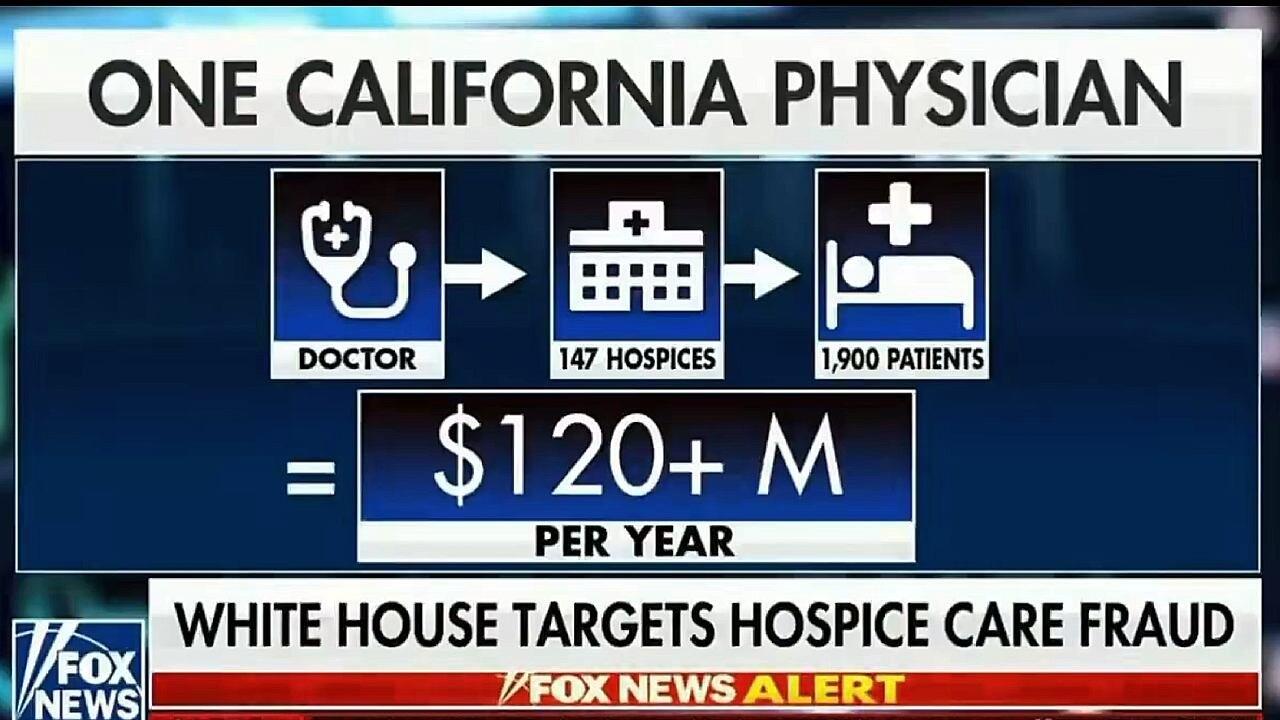
One California physician billed the government $120 million in a single year, claiming to oversee 1,900 patients—a workload that defies logic and reeks of corruption.

The county boasts almost 2,000 hospice agencies, more than 36 states combined and 30 times the number in Florida or New York.

Dr. Oz, administrator for the Centers for Medicare and Medicaid Services, was forthright during his on-the-ground tour: “Hospice is crazy here… You’ve got hospice that’s grown seven-fold in the last five years. They represent about three and a half billion dollars of fraud, we believe, just in LA County.”

California Attorney General Rob Bonta has admitted the problem’s scale, calling it “an epidemic in California, specifically in the greater Los Angeles area.”

The fraud operates through recruiters who lure seniors with freebies like walkers or cash, harvest their Medicare numbers, and sell them to providers for $1,000 to $3,000 each. Providers then bill the feds $260 per day per patient, often for nonexistent services, while shuffling enrollees between sham outfits to evade detection.

In LA’s San Fernando Valley, particularly Van Nuys, the density is absurd: 210 agencies crammed into one square mile, with one building listing 112 hospices showing no actual operations.

Sheila Clark, president of the California Hospice and Palliative Care Association, exposed the human cost: “A Medicare MIB number is more lucrative than a credit card… They’re human traffickers. They’re trafficking beneficiaries in and out of hospices, home health.” She added, “We need to listen to these people when they say, ‘I’ve been scammed.’”

A notorious example is the Mirzoyan-Terdjanian ring, where 73 members were prosecuted for $100 million in fraud using phantom clinics, netting light sentences for racketeering and money laundering.

This constitutes a direct assault on American seniors and the integrity of the U.S. healthcare system, enabled by years of Democrat-led neglect that prioritized open borders over accountability.

While Governor Gavin Newsom claims credit for a 2021 moratorium on new hospice licenses and revoking over 280, the damage was done under his watch, with fraud ballooning unchecked for years. Critics point out that the Trump administration’s renewed federal push, including DOJ investigations, is what’s truly turning the tide against these scams.

Newsom has responsed by filing a civil rights complaint against Dr. Oz for highlighting Armenian community ties to the fraud, a move that reeks of deflection rather than real reform.

This mess underscores the failures of unchecked immigration and weak enforcement, allowing foreign actors to siphon billions meant for American citizens. It’s time for America First policies to root out these parasites and protect seniors from exploitation.

Your support is crucial in helping us defeat mass censorship. Please consider donating via Locals or check out our unique merch. Follow us on X @ModernityNews.

Tyler Durden
Tue, 02/03/2026 – 19:15

via ZeroHedge News https://ift.tt/EaQXqju Tyler Durden

Secretary Noem Takes it On The Chin

From Judge Ana Reyes’ opinion in Miot et al. v. Trump et al. (D.D.C.), a case challenging DHS’ suspension of the TPS (Temporary Protected Status) program for Haitians in the U.S., on the grounds that DHS Secretary Noem “preordained her termination decision and did so because of hostility to nonwhite immigrants.” [The court agreed with the challengers that they were likely to succeed on their claim, and granted their motion to stay the DHS’ action].

It’s pretty powerful stuff.

On December 2, 1783, then-Commander-in-Chief George Washington penned: “America is open to receive not only the Opulent & respected Stranger, but the oppressed & persecuted of all Nations & Religions.” More than two centuries later, Congress reaffirmed President Washington’s vision by establishing the Temporary Protected Status (TPS) program. See 8 U.S.C. § 1254a (TPS statute). It provides humanitarian relief to foreign nationals in the United States who come from disaster-stricken countries. It also brings in substantial revenue, with TPS holders generating $5.2 billion in taxes annually.

Department of Homeland Security (DHS) Secretary Kristi Noem has a different take. [From her posting on X:

“I just met with the President. I am recommending a full travel ban on every damn country that’s been flooding our nation with killers, leeches, and entitlement junkies. . . . WE DON’T WANT THEM.  NOT ONE.”

After a fairly exhaustive review of the facts and the relevant law – 83 pages worth – Judge Reyes writes:

“There is an old adage among lawyers. If you have the facts on your side, pound the facts. If you have the law on your side, pound the law. If you have neither, pound the table. Secretary Noem, the record to-date shows, does not have the facts on her side—or at least has ignored them. Does not have the law on her side—or at least has ignored it. Having neither and bringing the adage into the 21st century, she pounds X (f/k/a Twitter).

Kristi Noem has a First Amendment right to call immigrants killers, leeches, entitlement junkies, and any other inapt name she wants. Secretary Noem, however, is constrained by both our Constitution and the APA to apply faithfully the facts to the law in implementing the TPS program. The record to-date shows she has yet to do that.

By accompanying Order, the Court GRANTS Plaintiffs’ Renewed Motion for a Stay under 5 U.S.C. § 705.


The post Secretary Noem Takes it On The Chin appeared first on Reason.com.

from Latest – Reason.com https://ift.tt/AVDrzfi
via IFTTT

Nuke-Sniffing Helicopter Spotted Over San Francisco Ahead Of Super Bowl

Nuke-Sniffing Helicopter Spotted Over San Francisco Ahead Of Super Bowl

A U.S. Department of Energy helicopter operating under the callsign “ENERGY14,” used for aerial radiological detection, was spotted in the San Francisco metro area ahead of the Super Bowl this weekend.

The nuclear-sniffing helicopter, which flies with specialized sensor pods that detect gamma and neutron radiation and map radioactive plumes in real time, was observed surveying over parts of the San Francisco metro area on Monday.

Open-source intelligence accounts documented ENERGY14’s flight path using Flightradar24 data. X user TheIntelFrog noted that the helicopter was “conducting low-level sweeps over the San Francisco area to obtain baseline samples before Super Bowl LX.”

Another X user documented ENERGY14’s radiological aerial survey of the metro area.

SF Jet Spotter snapped photos of the helicopter.

Beyond the nuke-sniffing mission, we wonder what type of layered counter-UAS threat detection is in place around Levi’s Stadium in Santa Clara, California, given the event’s high profile.

Tyler Durden
Tue, 02/03/2026 – 18:50

via ZeroHedge News https://ift.tt/UR37SlO Tyler Durden

CHOPped: Seattle Found Liable For $30 Million Over Death During “Summer Of Love”

CHOPped: Seattle Found Liable For $30 Million Over Death During “Summer Of Love”

Authored by Jonathan Turley,

In the last week, protesters in Minneapolis began putting up barricades to create checkpoints that bar federal immigration officers from entering certain neighborhoods.

It is all too familiar to those of us who remember what the mayor in 2020 called “the Summer of Love” in Seattle and the establishment of an autonomous area known as the Capitol Hill Organized Protest (CHOP).

Ironically, these barricades are being set up after a jury ruled against the City of Seattle for negligence after the killing of 16-year-old Antonio Mays Jr. in CHOP.

The self-declared anarchist enclave was originally called Capitol Hill Autonomous Zone (CHAZ) but was later renamed the Capitol Hill Occupied Protest (CHOP).

In 2020, we discussed the prospect of tortious liability for the city, which abandoned the Seattle Police Department (SPD) East Precinct to the mob and stood by as CHOP declared itself the sole authority in its seized area.

As I noted in the column, “If Seattle gets chopped in court, it will be due not to a failure of government but to a failure to govern.”

Seattle-based ice cream company, Molly Moon’s Homemade Ice Cream, and other businesses sued the city.

While first supporting the autonomous zone as part of a “summer of love,” Democratic politicians like then-Mayor Jenny Durkan later distanced themselves from the massive damage and crime in the zone.

The Mays lawsuit included not only the city but former Seattle Police Chief Carmen Best and Seattle Fire Chief Harold Scoggins.

The jury awarded the Mays family more than $30 million in damages — $4 million to the estate of Mays Jr. and $26 million to Mays Sr., according to The Seattle Times.

Mays Jr. was visiting Seattle from San Diego when he went to the area to join the protests.

He was later shot and the police failed to respond for five hours due to the limits on entry into CHOP.

At that point, the crime scene was hopelessly corrupted.

Here is the complaint: Complaint Antonio Mays, Jr.

Tyler Durden
Tue, 02/03/2026 – 18:25

via ZeroHedge News https://ift.tt/PYpGzN2 Tyler Durden

Why Skyrocketing Premiums Were Inevitable With Obamacare’s Design

Why Skyrocketing Premiums Were Inevitable With Obamacare’s Design

Authored by Lawrence Wilson via The Epoch Times,

The Affordable Care Act would “bend the cost curve” in health care, “moving the health care system toward higher quality and more efficient care.” So said a White House statement in 2013.
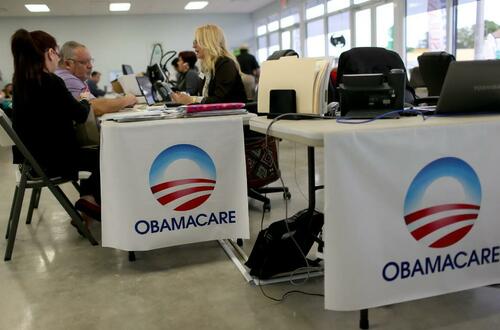
Many people now agree that didn’t happen.

“We pay more than any other country in the world for worse health care,” Sen. Elissa Slotkin (D-Mich.) said while campaigning for office in 2024.

“Families pay more, get less, and we’re left with few choices,” Rep. Mike Lawler (R-N.Y.) testified in a December 2025 committee hearing.

A combined 70 percent of Americans believe the U.S. health care system is either in crisis or has major problems, according to a 2025 Gallup poll.

Health insurance premiums have more than doubled since Obamacare began in 2014, rising twice as fast as inflation. And satisfaction with the cost of health care registered a record low in 2025, at 16 percent.

How did that happen?

Many consumers believe insurance companies are responsible. Insurers shift the blame to hospitals and pharmaceutical companies. Pharmaceutical companies say pharmacy benefit managers are at fault. Political parties blame each other.

Some independent observers agree that the rise in premiums, especially recently, is largely driven by external forces, including the increased use of expensive medications, rising labor costs, and inflation, which reached a 40-year high in 2022.

Others see a more basic cause, one with roots in the Affordable Care Act, the federal law that created Obamacare. Some of the same policies that make Obamacare popular with consumers are actually cracks in its foundation, these observers say. Those policies all but guaranteed premium increases, especially in the program’s early years.
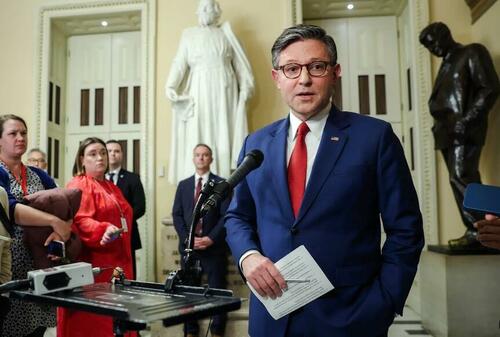
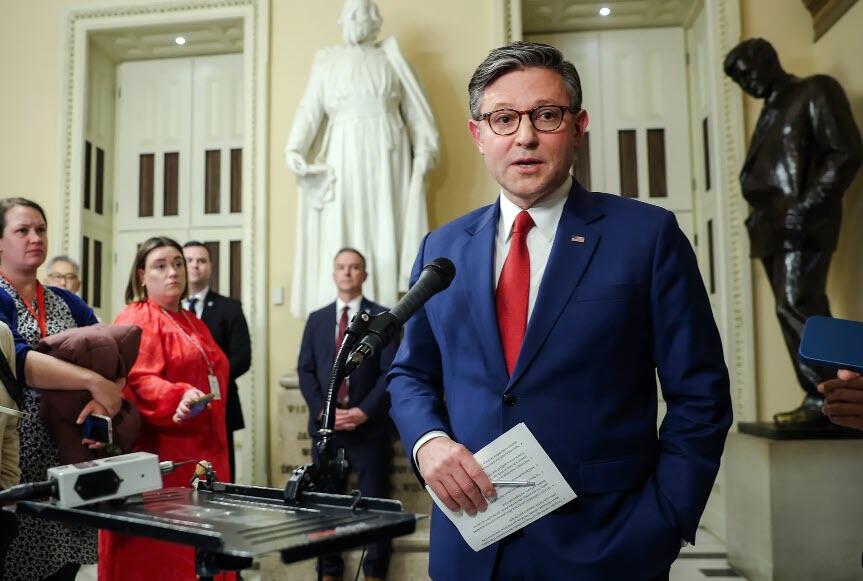
House Speaker Mike Johnson (R-La.) speaks to reporters as he leaves the House chamber at the U.S. Capitol on Dec. 17, 2025. On Jan. 8, 2026, seventeen House Republicans joined Democrats to pass a three-year extension of the expired Affordable Care Act premium tax credits. Kevin Dietsch/Getty Images

Here are the key provisions of Obamacare, which some experts say undermined its success.

Foundations of Obamacare

The Affordable Care Act made profound changes in the health insurance industry. One of the changes required insurance companies to issue health insurance in the individual and small-group markets to any applicant, regardless of pre-existing illness.

Americans generally like that idea. More than two-thirds of the public says that provision is very important, according to polling by health care research group KFF. That includes 54 percent of Republicans, 66 percent of independents, and 79 percent of Democrats.

Known as guaranteed issue, this was one of four foundational provisions built into Obamacare to make health insurance available to more Americans.

The second foundation was community rating, which required insurers to rate, or price, their plans based on the demographic profile of a community, with only limited increases based on age and tobacco use. According to this provision, premiums for people of the same age group in the same geographic area are pretty much the same.

The third foundation was the requirement that certain essential health benefits be included in every plan, except for catastrophic health plans. This ensured that consumers would get real value for their money and not be surprised to find that services such as emergency room visits or maternity care were not covered.

The Department of Health and Human Services eventually decided on 10 essential health benefits.

The final foundation was the individual mandate. This required most adults to either buy health insurance or pay a fine. The point was to keep overall costs down by ensuring that young, healthy people, who would likely incur fewer charges, would stay in the market. The fine was $95 per adult in 2014 and rose to $695 by 2016.
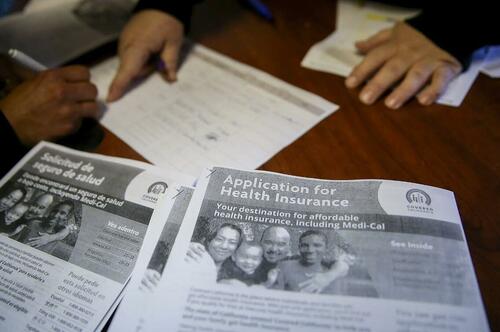
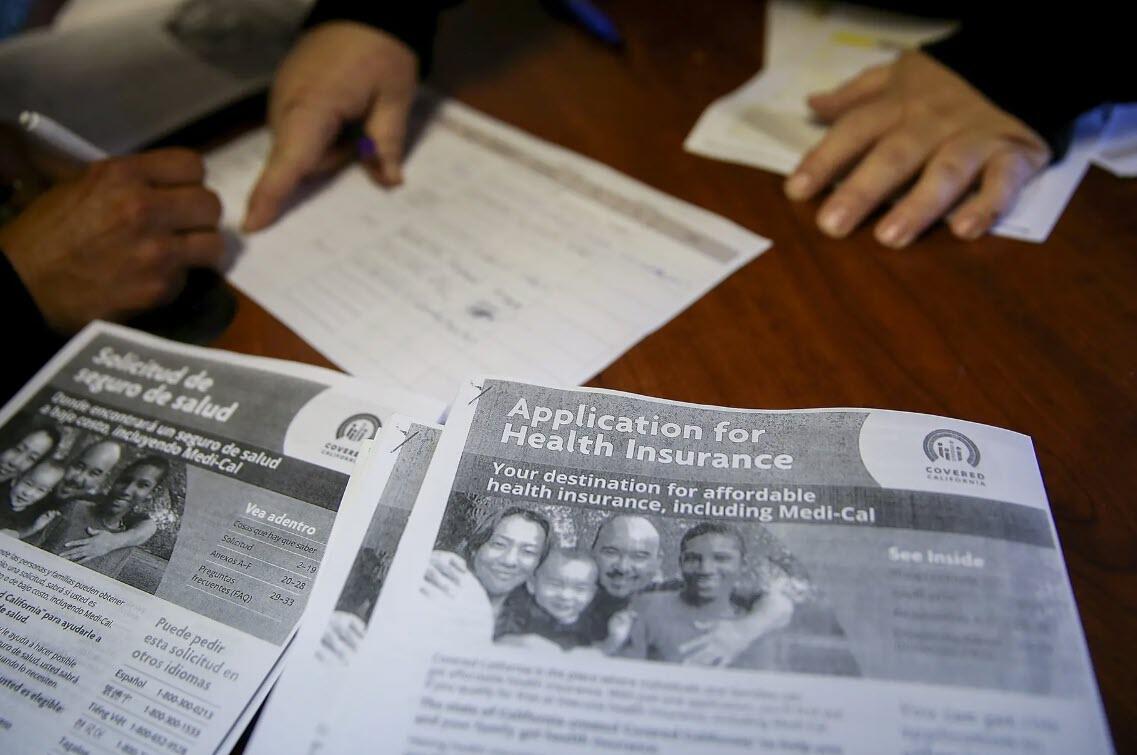
Informational pamphlets are displayed during a health care enrollment fair in Richmond, Calif., on March 31, 2014. Health insurance premiums have more than doubled since Obamacare began in 2014, rising twice as fast as inflation. Justin Sullivan/Getty Images

Though some of these provisions were popular with consumers, they increased both cost and risk for health insurers. And though the new rules made insurance premiums lower for some customers, prices went up for some others.

And the new rules applied to all new plans for individual and small-group insurance sold in the United States, guaranteeing a shift in the entire market, not just the Obamacare exchanges.

Higher Cost, Increased Risk

As the Affordable Care Act was being considered and implemented, stakeholders warned that these sweeping changes could make insurance more expensive. At a minimum, they said, the requirement that plans cover a suite of essential health benefits could raise premiums.

The Board of Health Care Services at the National Academies warned that including too many essential health benefits could make insurance unaffordable for individuals and small businesses.

“If this occurs, the principal reason for the [Affordable Care Act]—enabling people to purchase health insurance and thus covering more of the population—will not be met,” the board wrote in 2012.

Insurers were wary too. America’s Health Insurance Plans, an industry trade group, told regulators in a 2012 letter that the choice of essential health benefits would have “far-reaching implications” on the affordability of health insurance.

Increased risk was also a concern.

Insurers speculated on the legality of the individual mandate and warned that Obamacare wouldn’t be viable without it.

“The insurance market reforms cannot function as Congress intended without the mandate and therefore should be struck down if the mandate is held to be unconstitutional,” the insurance trade group argued in a brief filed with the Blue Cross Blue Shield Association.

The old risk management strategy of medical underwriting—pricing premiums based on the underlying health risks of an individual or members of a small group—was no longer an option.

Community pricing would reduce premiums for people with pre-existing conditions or other health risks. But premiums would increase for younger and healthier people. Some observers feared that younger people might stay out of the market, then buy health insurance only when they became ill.

If that happened, it would throw off the risk predictions insurers had made, leaving them with an older, sicker population to cover. In the insurance business, this situation is known as adverse selection.

Timothy Jost of Washington and Lee University School of Law, in a 2010 report for The Commonwealth Fund, called that possibility “the greatest threat facing exchanges.”

Michael F. Cannon, a health policy expert at the Cato Institute, in 2010 saw the potential for an “adverse-selection death spiral.”

Risk Mitigation

The Affordable Care Act acknowledged the increased risk for insurers and included three provisions to keep premium prices stable.

First, the law included a risk adjustment. This was meant to protect health plans that wound up ensuring an exceptionally high-risk group of people. Plans that wound up with a lower-than-average risk group would make a payment to plans having a higher-than-average risk group.

Second, the law included a reinsurance program. This was to help plans deal with unexpectedly high medical costs for an individual enrollee. All insurers paid into a reinsurance pool. At the end of the year, each could submit a claim for individual enrollee costs that exceeded a certain threshold. This program, which was intended to be temporary, ran from 2014 through 2016.

Third, the law created risk corridors. This was to help health plans whose total claim payments exceeded the predicted amount. Plans that had lower-than-expected claim totals would pay into a fund. The fund would make payments to plans with claim costs higher than their target amount. This program was also intended to be temporary and ran from 2014 through 2016.
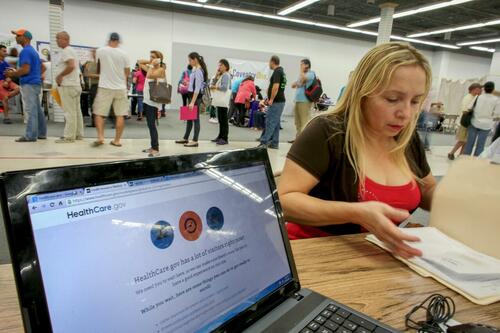
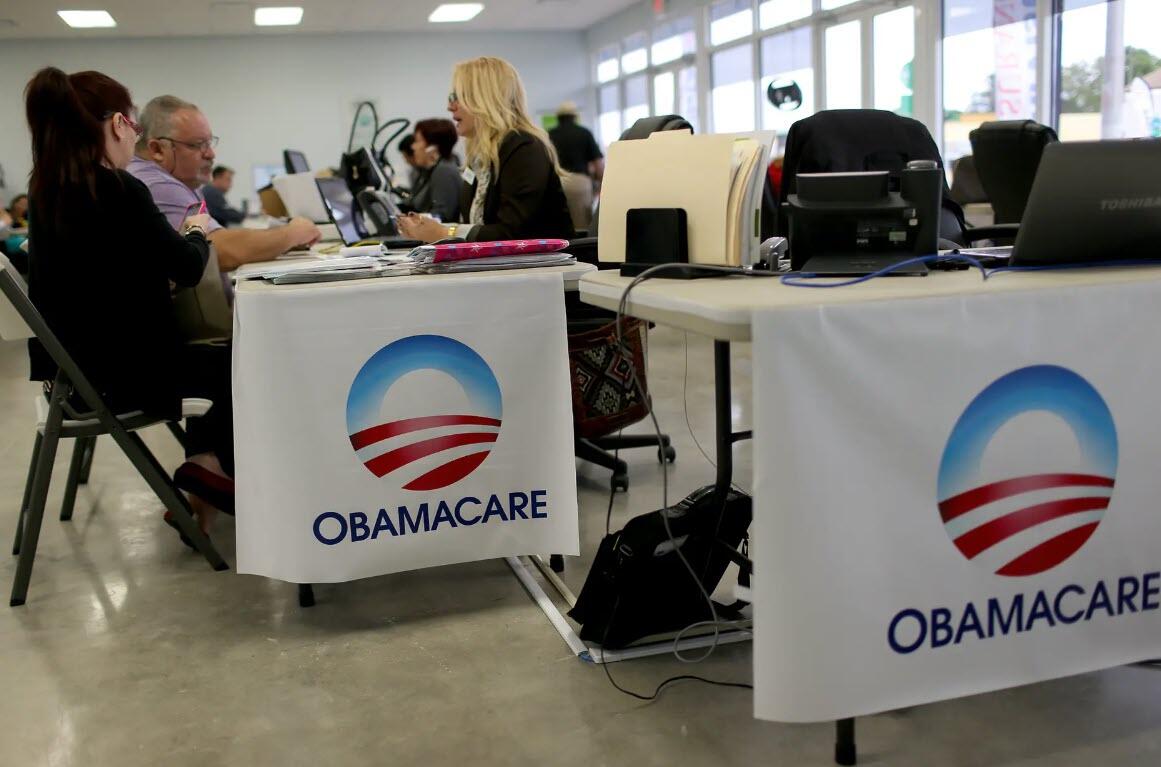
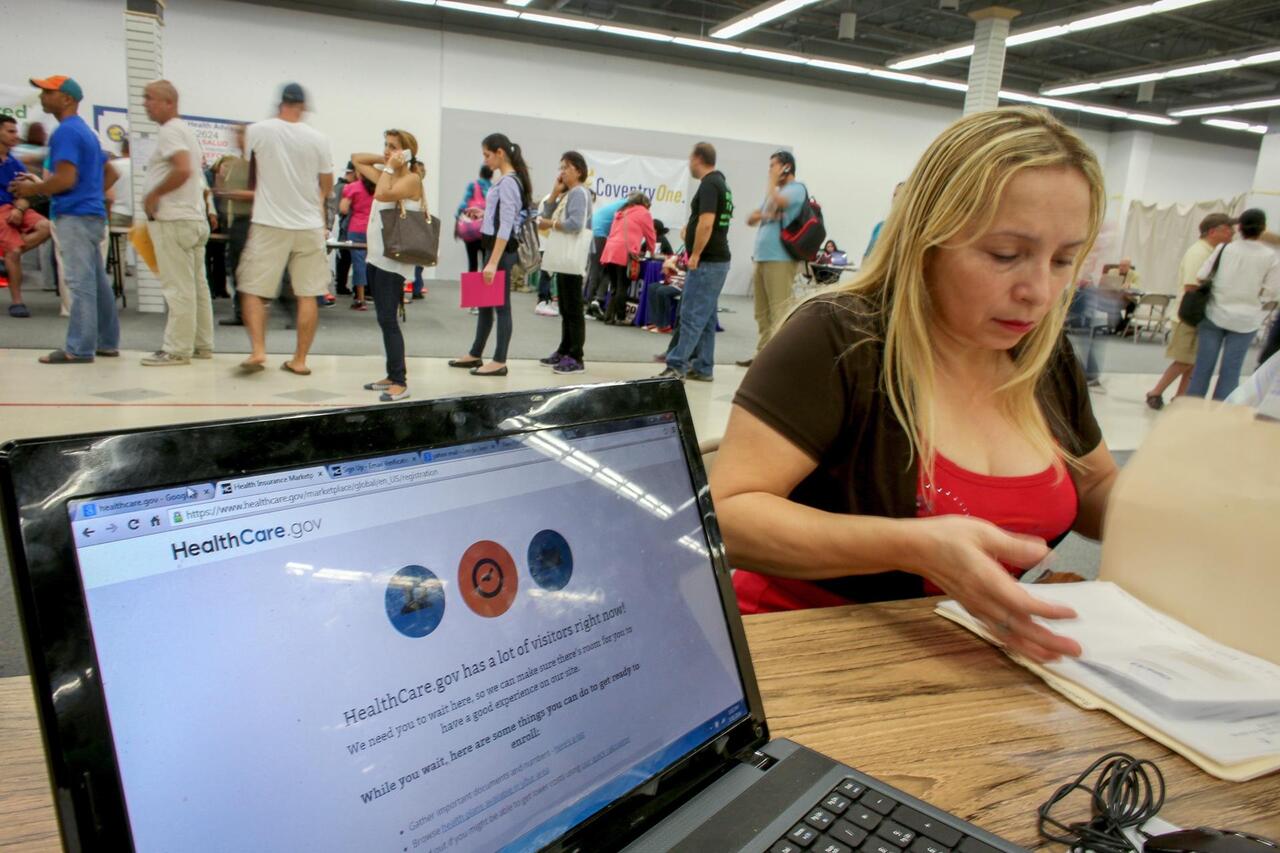
A customer meets with a Sunshine Life and Health Advisors agent while waiting for the Affordable Care Act website to come back online to purchase a health insurance plan in Miami on March 31, 2014. Joe Raedle/Getty Images

The Spiral Begins

The first several years of Obamacare saw lower-than-expected enrollment, higher-than-anticipated costs, and diminishing choice in the marketplace.

Enrollment was significantly lower than expected in the early years, which observers had warned could be a sign of adverse selection.

After a shaky start due to glitches in the online marketplaces, enrollment in 2014 actually exceeded the modest Congressional Budget Office forecast.

Yet the overall market grew by just 4.2 million that year, as many of the 8 million Obamacare enrollees were people who had moved over from the commercial market, according to a report by Amanda E. Kowalski of Yale University.

By 2018, Obamacare enrollment stood at 11.8 million, nearly 1 million less than in 2016 and less than half of the 25 million predicted by that date.

Data suggest that many of the missing enrollees were young adults.

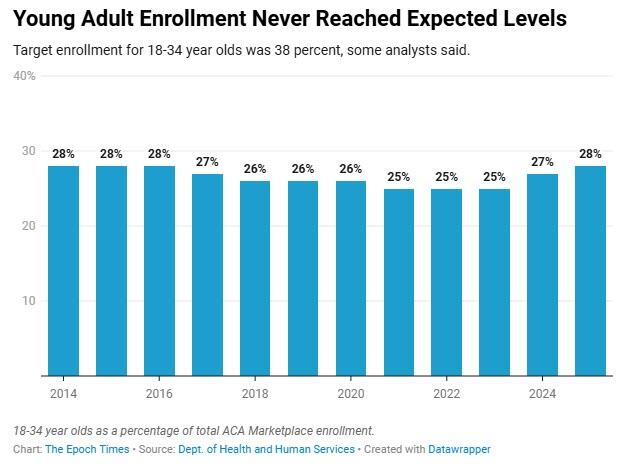
Obamacare needed an enrollment mix that included 38 percent young adults to avoid a “death spiral,” Cato Institute reported in early 2014.
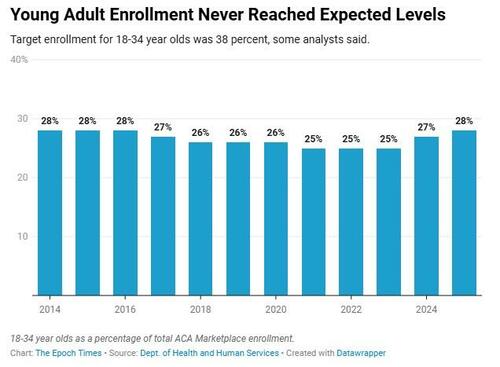
At the close of its first enrollment period in 2014, Obamacare had an enrollment pool that was just 28 percent young adults aged 18–34. A Commonwealth Fund report indicated that people whose premiums increased had been slightly less likely to buy insurance in 2014. Young adults would have been among those whose rates went up.

The individual mandate, which aimed to offset this factor, faced court challenges beginning in 2010. Though it was not ultimately ruled unconstitutional, Congress set the penalty for noncompliance at $0 in 2017, effectively ending the federal mandate.
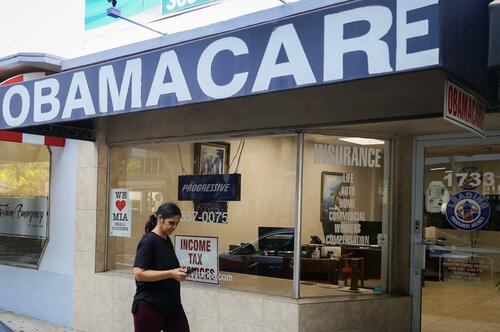
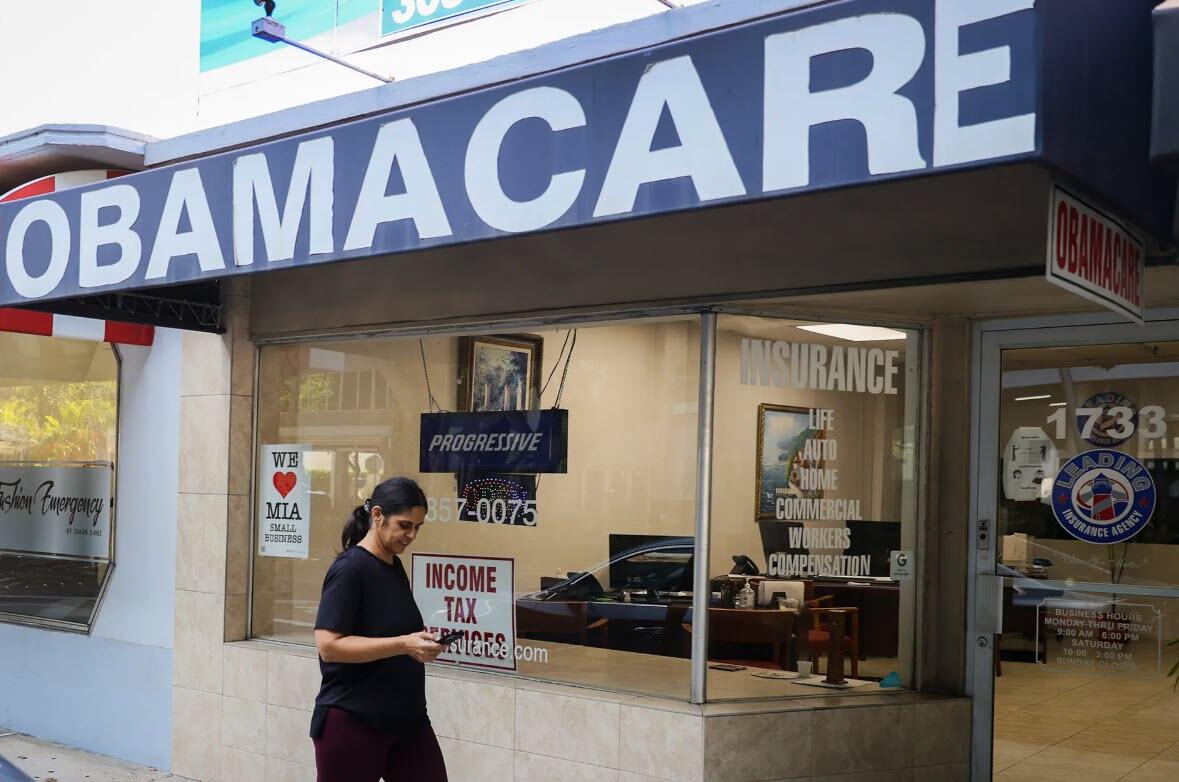
A pedestrian walks past an insurance agency that offers Affordable Care Act plans, in Miami on Jan. 28, 2021. Following the COVID-19 pandemic and enhanced subsidies approved by Congress in 2021, enrollment more than doubled, reaching a record 24.3 million in 2025. Joe Raedle/Getty Images

Enrollee age was not the only indicator of adverse enrollment, Kowalski reported. Her analysis of cost data concluded that marketplaces in at least 16 states experienced adverse enrollment in 2014.

Data indicate the cost of insuring Obamacare enrollees exceeded expected levels in the early years.

The reinsurance program had obligations exceeding income by nearly $10 billion over three years.

The risk corridors program fared no better. Income was insufficient to meet obligations in 2014, so all 2015 income and at least a part of 2016 income was used to pay off the 2014 shortfall.

The increased coverage requirements had the predictable effect of increasing premium prices, according to a 2017 report by the Department of Health and Human Services.

“In most states these regulations increased insurance coverage requirements and would be expected, on average, to increase the price of [Affordable Care Act]-compliant plans relative to pre-[Affordable Care Act] plans all else equal.”

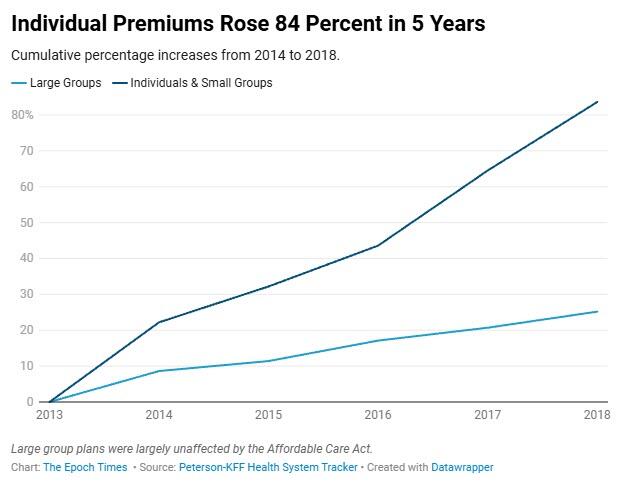
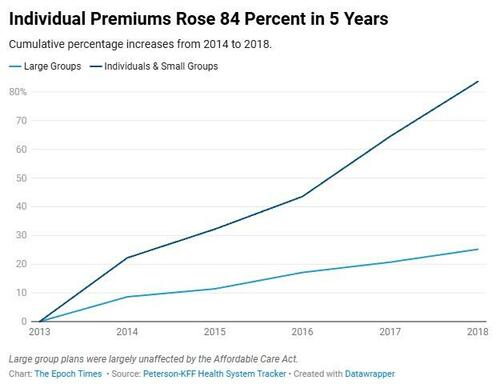
Premiums increased 22 percent in the first year and a total of 84 percent by 2018.
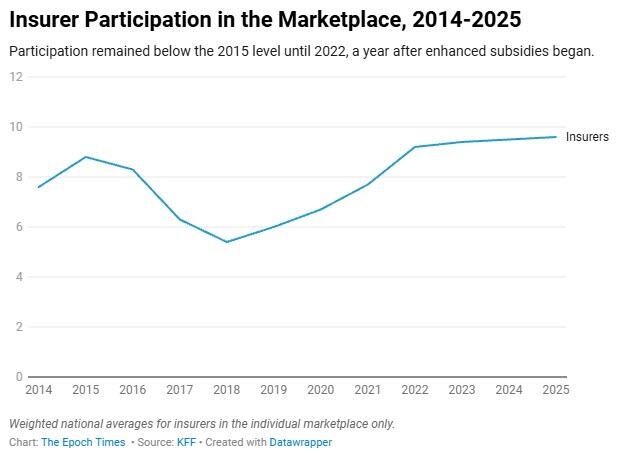
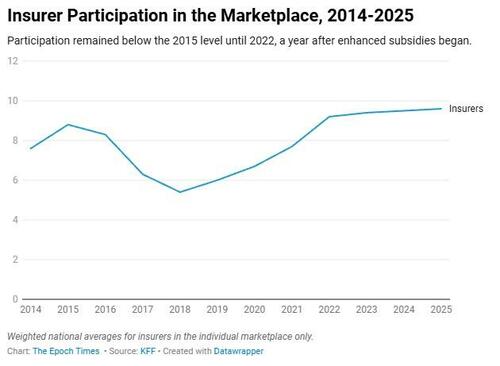
Insurers began to leave the marketplace. In 2015, an average of 8.8 insurers in each state participated in Obamacare, according to KFF. By 2018, that number had dropped more than one-third.
The COVID Years and Beyond

In the middle years of Obamacare, enrollment decreased, then plateaued after reaching a high of 12.7 million in 2016. Premiums decreased somewhat too, dropping about 9 percent over four years from their high point in 2018. And insurer participation ticked up slightly in 2019.

Then came COVID-19 and the enhanced premium subsidies created by Congress in 2021.

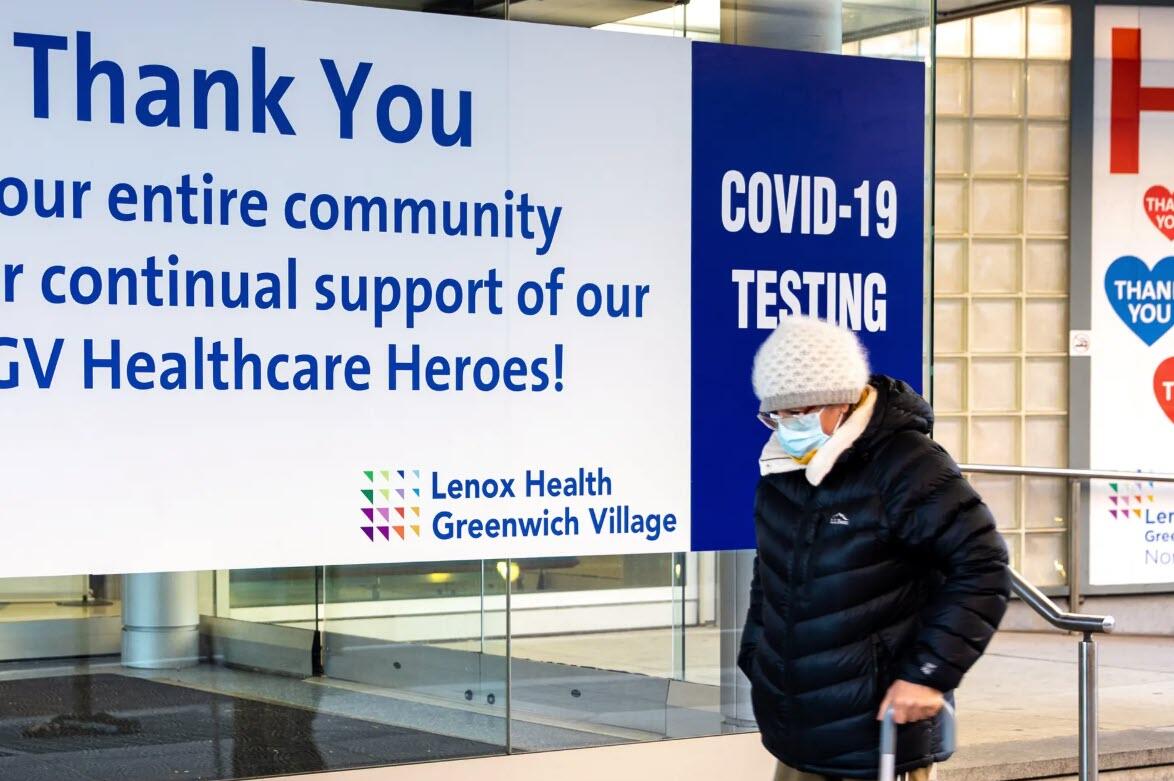
A woman wearing a face mask walks past a COVID-19 test site in Manhattan, N.Y., on Nov. 2, 2020. Chung I Ho/The Epoch Times

Those enhanced subsidies, which expired in 2025, provided financial help to Americans with higher incomes and further lowered the cost of Obamacare for low-income people. Enrollment more than doubled, reaching an all-time high of 24.3 million in 2025.

Yet as enrollment spiraled upward, so did premiums. Prices reached a new high in 2025, averaging $497 per month for a 40-year-old enrolled in the most popular plan.

What didn’t change dramatically was the age profile of enrollees. Though some young adults entered the market in the era of enhanced subsidies, their numbers never exceeded the 2014 rate of 28 percent.

And despite a rise in the number of insurers doing business in Obamacare, some of the largest companies say they find it unprofitable.

David Joyner, the CEO of CVS Health, testifying before Congress on Jan. 22,  said its costs exceeded income in the Obamacare marketplaces last year, and Gail Boudreaux, CEO of Elevance Health—the parent company of Anthem—said it did not turn a profit from Obamacare in 2025.

David Cordani of The Cigna Group said, “We lost money in the exchange all but two years since 2014.”
Tyler Durden
Tue, 02/03/2026 – 17:40

via ZeroHedge News https://ift.tt/NbBYyns Tyler Durden

What We Learned From Jodi Kantor’s Latest Expose About The SCOTUS NDA

In September 2024, Jodi Kantor published a stunning set of leaks concerning Trump v. United States. At the time, I wrote that the Trump leaks were “far worse than the Dobbs leak.” Apparently, Chief Justice Roberts was also bothered. 

Two months later, according to Kantor’s latest report, Roberts required all Court employees (but apparently not the Justices) to sign non-disclosure agreements. Indeed, this mandate came almost halfway into the clerkship. It is customary to require employees to sign NDAs before they learn confidential information, but the Chief switched course midstream. Presumably, the things learned before signing that document were not covered by the agreement.

This piece is the latest in Kantor’s string of articles about inside Court deliberations. Her past installments came in December 2023 about Dobbs, June 2024 about Bruen, September 2024 about Trump immunity, December 2024 about SCOTUS ethics, June 2025 about Justice Barrett, and November 2025 about the liberal Justices. As the dates reveal, Kantor has continued to publish articles after the NDAs were signed, so they do not see to have been entirely effective–unless the people causing the leaks were not subject to the NDA. As Kantor said in a recent interview, she is watching them. Query whether the NDA prohibited the disclosure of the existence of the NDA? At least the Chief is trying something.

Let’s walk through what we learned.

First, Kantor alludes to her sourcing:

Its employees have long been expected to stay silent about what they witness behind the scenes. But starting that autumn, in a move that has not been previously reported, the chief justice converted what was once a norm into a formal contract, according to five people familiar with the shift.

Five people is a very precise number. It is not clear if these people were subject to the NDA, or were even employees at the Court. This could be five people who learned of the NDAs second-hand. Of course, by using intermediaries, the leakers limit potential liability under the NDA.

Second, we learn about the timing of the NDAs.

Roberts summoned “employees” to an all-hands meeting in the grand conference room. Perhaps standing up the portrait of Chief Justice Marshall, Roberts asked the gathered employees to sign an NDA. I suspects this included all of the clerks. Did Roberts give any notice they would have to sign? Did they have to sign on the spot? If they declined to sign, were they terminated? Could they consult counsel? So many questions.

In September 2024, The Times published an article describing how the chief justice pushed to grant President Trump broad immunity from prosecution. The article quoted from confidential memos by the chief justice and other members of the court who applauded his reasoning. Weeks later, the chief justice abruptly introduced the nondisclosure agreements, after the term had begun.

In November of 2024, two weeks after voters returned President Donald Trump to office, Chief Justice John G. Roberts Jr. summoned employees of the U.S. Supreme Court for an unusual announcement. Facing them in a grand conference room beneath ornate chandeliers, he requested they each sign a nondisclosure agreement promising to keep the court’s inner workings secret.

The 2024 election was held on November 5. Two weeks later would have been the week of November 18. The Court released orders on November 18 (no grants), and held a conference on November 22. If I had to guess, this gathering was held late Friday afternoon after the conference, right before the holiday. Did Roberts ask his colleague to vote on whether to require NDAs? Does the Rule of 5 apply here, or did the vote have to be unanimous? Or did Roberts simply tell his colleagues what was coming? What a nice way to begin Thanksgiving break.

This is the sort of practice that employment lawyers detest: forcing employees to sign onerous agreements without any time to consider it–especially right before a major holiday. During the Dobbs investigation, Joan Biskupic reported that clerks were ordered to turn over their phones. Apparently the conservative clerks gladly handed over their devices while some of the liberal clerks lawyered up. Did all of the clerks actually sign the NDA, five months into their employment? If they declined, would they be fired? Would the Chief even have the power to fire someone else’s law clerk?

Third, we do not learn much about the contents of the NDA:

The New York Times has not reviewed the new agreements. But people familiar with them said they appeared to be more forceful and understood them to threaten legal action if an employee revealed confidential information. Clerks and members of the court’s support staff signed them in 2024, and new arrivals have continued to do so, the people said.

Who drafted the NDA? Did the Court do it in-house, or did they retain outside counsel? The policy was prepared “abruptly” so I doubt there was much time to seek counsel. If it was drafted in-house, what experiences does the Chief’s counsel have with a government-employee NDA–especially where the information is not classified? Maybe they used LegalZoom or asked ChatGPT? So many questions.

The problem of course is the Barbara Streisand effect. By enforcing an NDA, the Court will be forced to publicize the very confidential information it seeks to protect. At most, this policy will have an in terrorem effect, and perhaps increase the potential costs of leaking. After all, I’m sure some future Jack Smith, inspired by Jean Valjean, joined by the merry band of innovative lawyers in the Public Integrity Section, could transform the breach of an NDA into some federal criminal offense. This sort of trickery would otherwise be unanimously rejected by the Supreme Court, but I see nine recusals.

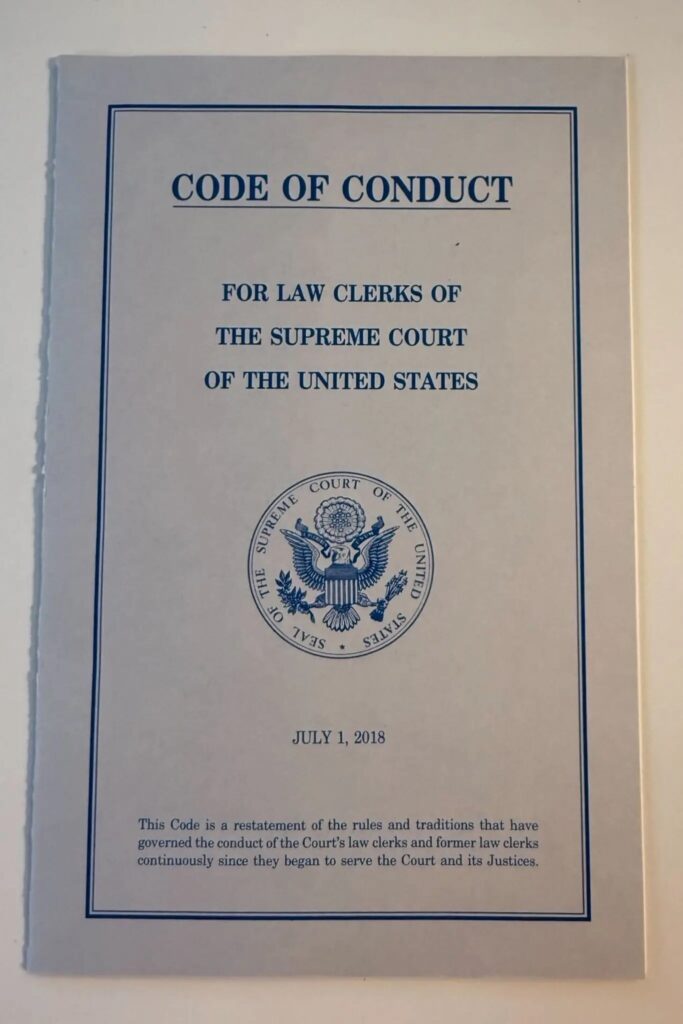
Fourth, Kantor obtained a print copy of the “Code of Conduct for Law Clerks of the Supreme Court of the United States.” I don’t think the existence of this document has ever been confirmed. The booklet is dated, July 1, 2018. I don’t know if the book is printed annually at the start of each clerkship cohort, or if this document had been in effect for some time. I would have to guess the document was updated after the Dobbs leak, so perhaps a clerk from the OT 2018 class gave it to the NY Times. You know who you are.

At the bottom of the cover is a curious note:

This Code is a restatement of the rules and traditions that have governed the conduct of the Court’s law clerks and former law clerks continuously since they began to serve the Court and its Justices.

The Code is like the common law: it has always been in effect, yet always changes.

Kantor quotes from part of the booklet:

“The law clerk owes the appointing Justice, all other Justices, and the Court as an institution, duties of complete confidentiality, accuracy and loyalty,” instructed a 2018 version obtained by The Times, in which every page is labeled “confidential — for authorized internal use only.” The final page mentioned that breaches could lead to “appropriate sanctions,” but did not specify what those might be.

I doubt this handbook had any impact on the clerks’ behavior. If it did, the Chief would not have needed to level up with NDAs.

Fifth, Kantor explains that the NDAs may affect law clerks who seek to collect massive bonuses:

The agreements may complicate another Supreme Court tradition: former clerks cashing in on what they learn there. Law firms now pay clerks signing bonuses as high as $500,000. The court requires them to avoid working on its own cases for two years. But after that, former clerks often spend the rest of their careers monetizing the knowledge they gained from working directly with the justices and also reading still-secret older case files, some said in interviews. While they are not supposed to share specifics with clients, plenty of details slip out, the former clerks said.

I am intrigued about how clerks share information from “still-secret older case files” with clients. I had never thought about it, but I suppose clerks may keep some documents from their clerkships on the way out. (Back when I clerked, there was no VPN, so I stored files on my personal computer so I could work from home.) Would old SCOTUS documents still be valuable to clients? I suppose. But I am struggling to see this point. Then again “some,” meaning several clerks said this in interviews, so the practice must be common. I suppose there is a reason firms pay a $700,000 signing bonus for SCOTUS clerks who are barred from working before the Court for two years.

Finally, speaking of the Dobbs leak investigation, there is a nugget that I hadn’t seen reproted before:

The court conducted an investigation of its staff but mostly spared the justices, and the source was never publicly identified.

The Justices were “mostly” spared? So they were investigated to some degree? I need to know more.

I’ll have more to say about the NDA in a future column.

The post What We Learned From Jodi Kantor's Latest Expose About The SCOTUS NDA appeared first on Reason.com.

from Latest – Reason.com https://ift.tt/y08NAGZ
via IFTTT

If ‘You Bring a Gun’ to D.C., U.S. Attorney Jeanine Pirro Warns, ‘You’re Going to Jail’


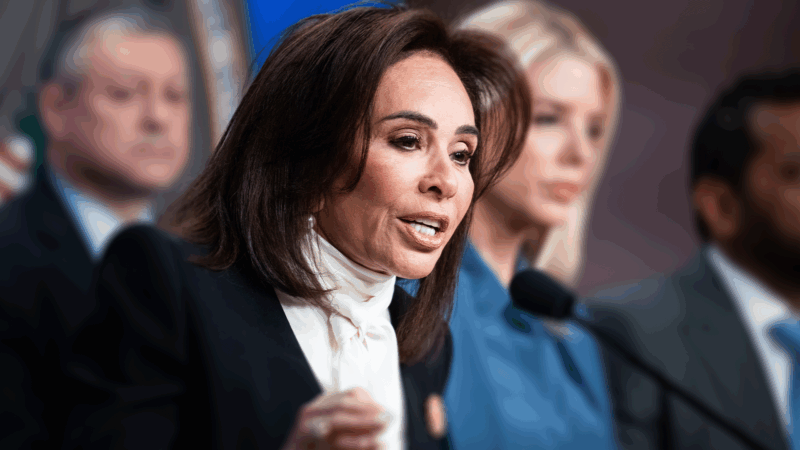
U.S. Attorney Jeanine Pirro | Tom Williams/CQ Roll Call/Newscom

If “you bring a gun” to Washington, D.C., Jeanine Pirro warned during a Fox News interview on Monday, “you’re going to jail.” Pirro, the U.S. attorney for the District of Columbia, was touting her crime-fighting efforts, elaborating on her argument that “taking guns off the street” helps prevent homicides, carjackings, and robberies. But her threat provoked objections from Second Amendment advocates, who noted that the Constitution guarantees the right to carry guns for self-defense and that there is nothing necessarily illegal about doing so in the nation’s capital.

The controversy over Pirro’s remarks is especially notable because it comes shortly after President Donald Trump and other federal officials dismayed gun rights groups by suggesting that Alex Pretti, the Minneapolis protester who was fatally shot by immigration agents on January 24, was asking for trouble by legally carrying a concealed pistol. Both episodes illustrate the tension between Trump’s avowed commitment to “protecting Second Amendment rights” and his frequently authoritarian tough-on-crime instincts.

“I don’t care if you have a license in another district, and I don’t care if you’re a law-abiding gun owner somewhere else,” Pirro said on Fox News. “You bring a gun into this district, count on going to jail, and hope you get the gun back.”

That broad threat is hard to reconcile with the right to bear arms recognized by the Supreme Court’s 2022 decision in New York State Rifle & Pistol Association v. Bruen, which said states may not require that people demonstrate a “special need” to carry guns in public for self-defense. Even before that decision, the U.S. Court of Appeals for the D.C. Circuit, in the 2017 case Wrenn v. District of Columbia, had permanently enjoined the Metropolitan Police Department (MPD) from enforcing D.C.’s “proper reason” requirement for carrying a handgun. Under current D.C. policy, carry permit applicants must be at least 21 and meet several other requirements, including registration of the weapon and completion of a firearms training course.

Notably, those requirements do not include residence in the District of Columbia. “Non-residents can obtain a permit in DC,” Rep. Thomas Massie (R–Ky.) noted in an X post responding to Pirro’s comments. “I bring a gun into the district every week,” Rep. Greg Steube (R–Fla.) wrote in another X post addressed to Pirro. “I have a license in Florida and DC to carry. And I will continue to carry to protect myself and others. Come and Take it!”

The National Association for Gun Rights (NAGR) was also offended. “Jeanine Pirro threatening to arrest people for carrying in DC, even if they are law-abiding and licensed, shows how broken and out of touch these gun laws are,” the NAGR said on X. “Unacceptable and intolerable comments by a sitting US attorney. This is why we need Real Constitutional Carry nationwide. Bureaucrats act like the 2A does not exist and brag about jailing people for exercising their rights.”

The National Rifle Association (NRA) likewise responded to Pirro’s comments by reiterating its support for reducing barriers to carrying guns in public. “Now is the time for Congress to pass HR 38, the National Concealed Carry Reciprocity Act,” it said. “Your right to self-defense should not end simply because you crossed a state line or into Washington, D.C.”

Twenty-nine states do not require permits for concealed carry—the policy to which the NAGR alluded. Several additional states have reciprocity policies that recognize carry permits issued by other states. While D.C. does not fall into either category, nonresidents such as Massie and Steube can still legally carry handguns there if they meet local requirements.

In addition to overlooking that point, Pirro’s comments seemed inconsistent with the agenda of the “Second Amendment Section” that the Justice Department recently established within its Civil Rights Division. Harmeet Dhillon, the assistant attorney general in charge of that division, has said one aim of the new litigation project is facilitating the right to bear arms by challenging obstacles to obtaining carry permits such as “multi-thousand-dollar costs” and “unreasonably long delays.”

Last April, Dhillon noted that jurisdictions with “unreasonably long delays” included Washington, D.C. “The wait right now in DC for an appointment to apply for concealed carry is four months!” she said. Although the situation reportedly has improved since then, people who want to legally carry handguns still face bigger obstacles in D.C. than they do in most states, starting with the permit requirement itself. They can expect to pay about $500 for fees and training, and they have to register their guns with the MPD, a process that is possible only for handguns approved for sale in California, Maryland, or Massachusetts.

On Tuesday morning, Pirro responded to criticism of her threat, suggesting it did not apply to nonresidents with D.C. carry permits. “I am a proud supporter of the Second Amendment,” she wrote on X. “Washington, D.C. law requires [that] handguns be licensed in the District with the Metropolitan Police Department to be carried into our community. We are focused on individuals who are unlawfully carrying guns and will continue building on that momentum to keep our communities safe.”

Pirro could have avoided this contretemps if she had spoken more carefully, and the negative reaction is not surprising in light of what happened after Pretti’s death. Although videos of the incident show that Pretti, who had a carry permit, never drew his pistol, Homeland Security Secretary Kristi Noem falsely claimed he was “brandishing” the weapon. Her department issued a statement saying Pretti “approached US Border Patrol officers with a 9 mm semi-automatic handgun,” adding that they “attempted to disarm [him] but the armed suspect violently resisted.” In reality, those officers did not see the gun until after they tackled Pretti.

The Department of Homeland Security nevertheless portrayed Pretti as a would-be murderer who “wanted to do maximum damage and massacre law enforcement.” And even after that narrative collapsed under the weight of the video evidence, officials such as FBI Director Kash Patel, Treasury Secretary Scott Bessent, and Bill Essayli, the first assistant U.S. attorney for the Central District of California, suggested that Pretti’s exercise of the right to bear arms was unseemly, unwise, illegal, and an invitation to police violence.

Trump, who initially described Pretti as a “gunman,” reinforced those claims. “I don’t like it when somebody goes into a protest and he’s got a very powerful, fully loaded gun with two magazines,” he told The Wall Street Journal the day after the shooting. “You can’t have guns,” he told reporters a couple of days later. “You can’t walk in with guns. You just can’t.”

Trump was still expressing that sentiment last week. “Certainly he shouldn’t have been carrying a gun,” the president said during a visit to Iowa. “I don’t like that he had a gun. I don’t like that he had two fully loaded magazines. That’s a lot of bad stuff.”

The idea that there is something inherently suspicious or threatening about exercising a constitutional right recognized by the Supreme Court understandably provoked complaints from Second Amendment groups such as the NRA and Gun Owners of America. Yet despite that experience, Pirro did not hesitate to threaten “law-abiding gun owner[s]” with jail if they dare to “bring a gun into this district.”

Even with the qualification that Pirro later added, she seems intent on vigorously enforcing D.C.’s strict gun policies, regardless of whether potential defendants pose a threat to public safety. In her view, it makes sense to fight violent crime by jailing visitors who erroneously believe their out-of-state carry permits are good in D.C. You might think “a proud supporter of the Second Amendment” would have different priorities.

Trump likewise presents himself as a Second Amendment champion yet periodically deviates from that stance. His lapses include not only his comments about Pretti but also the positions he took during his first term.

After the 2017 mass shooting in Las Vegas, Trump demanded a bump stock ban that the Supreme Court ultimately overturned, deeming it beyond the statutory authority of federal gun regulators. He also spoke favorably of requiring background checks for all gun transfers, raising the minimum age for buying long guns, and banning “assault weapons.” And he expressed support for “red flag” laws, saying police should “take the gun first” and “go through due process second” when they think someone is dangerous.

The second Trump administration, by contrast, has challenged D.C.’s “assault weapon” ban in federal court. But it is steadfastly defending other constitutionally dubious gun laws, including the federal bans on gun possession by drug users and people convicted of nonviolent felonies. In both cases, the NRA and other gun rights groups are vigorously challenging the administration’s position.

As these examples show, Trump’s desire to placate Second Amendment supporters conflicts with his crime-fighting impulses, even when the perceived threats are as improbable as medical marijuana patients or people who pleaded guilty to nonviolent felonies decades ago. Unlike Trump, critics of those pro-control positions, including Republicans who are normally allied with him, recognize that constitutional rights cannot be secure if they hinge on a politician’s idiosyncratic understanding of what public safety requires.

The post If 'You Bring a Gun' to D.C., U.S. Attorney Jeanine Pirro Warns, 'You're Going to Jail' appeared first on Reason.com.

from Latest – Reason.com https://ift.tt/fw3YNgp
via IFTTT

Next-Generation Nuclear Power Can Meet Data Center Energy Demand—If Regulations Allow It


Against a dark blue background with binary code in it stand three nuclear cooling towers with water vapor coming out of them—the nuclear power plant stands up in a hilly green landscape. | Illustration: Midjourney

AI data centers have become flashpoints in public debates over energy costs and grid capacity, leading some politicians to call for heavy restrictions on their operation. Sen. Bernie Sanders (I–Vt.) is calling for an all-out moratorium.

Advanced nuclear power could provide a solution to these challengesunless federal regulations get in the way.

Data centers create near-perfect conditions for the burgeoning small modular reactor (SMR) industry: enormous, concentrated energy demand that must be met 24/7. These compact nuclear power plants are designed to deliver steady power at a lower capacity than traditional reactors, so they could be uniquely positioned to meet that demand. Indeed, Meta recently struck 20-year agreements to purchase electricity from three nuclear power plants operated by a single provider, while also joining Oklo and TerraPower in an SMR development project. Google and Kairos Power have plans to deploy an advanced nuclear plant tied to the Tennessee Valley Authority’s grid.

Aalo Atomics is a Texas-based startup developing factory-built SMRs designed to operate on or near large energy users—exactly the model that AI infrastructure demands. “We’re talking about tens of gigawatts of power in the next five years,” Aalo Atomics CEO Matt Loszak told Arena last year. “Each gigawatt is like a whole city! When in history have like 20, 30 cities been created in a matter of five or ten years?”

In addition to meeting data centers’ power demands, SMRs could reduce these facilities’ environmental footprint. Last year, driven in part by increased data center power usage, U.S. greenhouse gas emissions rose by about 2.4 percent.

But there are big regulatory barriers. As Loszak pointed out to podcaster Eric Jorgenson, for example, regulators require test data for a new nuclear design license, but obtaining this data is “impossible” without first having that license.

Further, SMRs are subject to a Cold War–era, one-size-fits-all licensing framework. One rule, finalized in 1956, gives the Nuclear Regulatory Commission (NRC) the authority to regulate all commercial reactors, which puts SMRs in the same fundamental licensing category as large, grid-scale nuclear plants. This framework was never designed for factory-built, modular reactors, and it contributes to unnecessarily onerous costs and wait times.

Fortunately, the NRC is working to modernize this system. Described by NRC staff as a “risk-informed, technology-inclusive regulatory framework for commercial nuclear plants,” 10 CFR Part 53 is a new rule better suited for advanced reactors, including SMR designs. It must be finalized by the end of 2027 but could arrive sooner.

Meanwhile, an ongoing lawsuit is challenging long-standing NRC authority. If successful, it could be a major step in cutting through the red tape that has long burdened America’s nuclear energy industry. 

That red tape carries real consequences. The Carbon Free Power Project, once expected to be the first U.S. commercial SMR rollout, was announced in 2015. It did not begin undergoing NRC design certification review until 2018. Final certification took effect in 2023, with commercial launch projected for 2029. In the time it took to receive federal approval, projected costs rose sharply—from roughly $60 to $90 per megawatt-hour—driven by financing costs, inflation, and schedule risk. As timelines stretched and costs ballooned, participating customers withdrew. The project was canceled the same year it received NRC approval.

Private sector interest in SMRs persists, as demonstrated by Meta’s deal with Oklo and TerraPower. But if SMRs are to meet the large-scale energy demand of data centers, major regulatory reform remains necessary.

Many data center companies have a strong preference for electricity from SMRs, and are even willing to pay a price premium for it, because of the reliable, clean energy SMRs can provide,” says Josiah Neeley, an energy analyst at the R Street Institute. “The big question is whether SMRs can be permitted and built on a fast enough time scale to meet that growing demand.”

The post Next-Generation Nuclear Power Can Meet Data Center Energy Demand—If Regulations Allow It appeared first on Reason.com.

from Latest – Reason.com https://ift.tt/p8vJSZo
via IFTTT