Leftist Censors Cry About Censorship

Leftist Censors Cry About Censorship

Authored by J.B. Shurk via American Thinker),

Perhaps the most discouraging condition of the modern age is the absolute breakdown in communication among members of society.  It once seemed reasonable to expect that the Internet and social media might aid in our understanding of each other.  Instead, online forums are filled with people who speak the same language but interpret words entirely differently.

With the arrest of former CNN commentator Don Lemon for allegedly violating the religious rights of worshipers in Minneapolis, Democrats and the corporate news media have universally condemned Attorney General Pam Bondi for somehow “infringing” upon Lemon’s First Amendment rights as a so-called “journalist.”  They intentionally ignore how Lemon joined others in storming a church, intimidating congregants, and causing emotional harm to those worshipers (including children) who understandably felt as if they were under attack.  Lemon and his apologists continue to defend the organized raid of a Christian service as some kind of “protest” and describe the unwanted intruders as “protesters.”  For those who were made to suffer through the invasion, however, their ordeal felt like an act of terrorism perpetrated by terrorists whose intent was to scare those assembled to worship.

When society can’t agree upon the difference between “protest” and “terrorism,” we have a serious problem.  We have seen this dilemma play out all over the Minneapolis area recently.  Democrat officials describe federal agents conducting lawful arrests as “terrorists” and “Nazis” and defend criminal illegal aliens as “victims.”  Trained mobs of leftist agitators who intentionally obstruct the professional duties of law enforcement officers insist on calling themselves “legal observers” and “peaceful protesters.”  When Democrat officials and members of the corporate news media describe people who commit crimes as “legal” and “peaceful,” it is impossible for society to share any common respect for the law.

As a society, we have been debating government attacks on free speech and government-engineered censorship with increased frequency at least since the presidency of Barack Obama.  

Obama was the first modern American president to really go on offense against what he called “fake news,” “misinformation,” and “disinformation.”  He started the pressure campaign on Silicon Valley’s tech titans to “police” their social media sites for “false” information.  While many of us vocally objected to this incipient collective of government and industry “experts” deciding for the rest of us what is “true,” Obama and his supporters insisted that “incorrect” information constituted an unacceptable national security threat.

But how can a society that disagrees about the distinctions between “protest” and “terrorism” or “criminal obstruction” and “legal observation” possibly decipher what is “correct” and “incorrect” information?  When people with power accord themselves the additional power to declare what is “true,” a viewpoint monopoly inevitably rises to crush dissent.  For free speech to function in any authentic form, the public sphere must remain a space where all information — whether true or false — is vigorously debated.

Otherwise, all we have is State-sanctioned dogma — or what the quietly dissenting members of communist societies once derisively referred to as “political correctness.”  In a distressing sign of collapsing respect for free speech across the West, too many nations today actually police citizens’ speech in order to ensure that their thoughts and words comply with narratives constructed and deemed “correct” by the government.  They do this despite having emerged victorious from a twentieth-century Cold War that routinely distinguished Western respect for freedom of speech from the suffocating Iron Curtain of the Soviet Union’s speech police.

The divisions within society have become so great that Democrats and Republicans in the United States can’t even agree about what should be protected as inviolable free speech.  Conservatives and other non-leftists have felt the sting of censorship since Obama’s presidency.  Without explicit warnings or explanations, Big Tech companies began removing online advertisers and other sources of revenue from conservative websites.  Social media companies covertly limited the visibility (and therefore influence) of conservative writers.  Search engines relegated popular conservative publications to obscurity by burying their keyword matches many pages back in relevant hits.  Without any official announcements from government or corporate authorities, it became clear that conservative voices were being targeted for elimination.

Since Obama’s presidency, that cancerous viewpoint discrimination metastasized in many directions: Banks closed the accounts of conservative publications and institutions.  Web hosts refused to support conservative websites.  After the 2020 election, the titans of Big Tech conspired to censor any Americans who argued that various forms of electoral fraud had handed Joe Biden the presidency.  The Biden administration piggybacked on Silicon Valley’s embrace of censorship by working with social media companies to censor anyone who disagreed with the government’s COVID policies.  That censorship became so pronounced that even medical research was targeted for deletion under the pretense that concerns for “public health” and “national security” justified the censorship of scientific debate.  As censorship of the 2020 election and COVID became more widespread, those who were doing the censoring kept pushing the envelope.  For a while, it really looked as if Democrat-embraced narratives concerning everything from man-made “global warming” to “transgenderism” would be declared sacrosanct and too “politically correct” for Americans to debate.  Feeling emboldened to declare “public truths,” the Biden administration turbocharged Obama’s initial directive for social media censorship by building the architecture for a “Disinformation Governance Board” whose purpose was unapologetically directed toward limiting conservative points of view.

For Republicans, conservatives, and other non-leftists, Democrats’ collusion with Silicon Valley to censor information deemed “untrue” constituted an unparalleled attack on Americans’ free speech.  As with so many other conflicts in society today, ordinary Democrats didn’t recognize this threat at all.  When they did acknowledge that conservative voices were being silenced, many immediately justified those infringements on Americans’ natural rights by repeating Obama’s original propaganda that “fake news,” “misinformation,” “disinformation,” and even simply information that fellow leftists judged as “harmful” to society deserved no First Amendment protections.

Perhaps more troubling, even as Democrats argue for mass censorship, they portray themselves as victims of censorship.  When parents insist on protecting their children from “transgender” indoctrination, sexually explicit guides encouraging minors to engage in adult activities, and outright pornography, Democrats pretend that parental supervision violates free speech.  When the FCC reprimands Jimmy Kimmel for lying to the American public by falsely blaming Charlie Kirk’s assassination on President Trump’s MAGA movement (instead of a leftist in a gay relationship with a “trans” furry and someone who allegedly disparaged Charlie’s Christian faith as a form of “hate”), Democrats pretend that Kimmel (who enjoys more free speech than almost anyone in America) is being censored.  When Don Lemon joins a gang of leftist agitators to trespass inside a church, disrupt worship services, and terrorize those assembled to commune with God, the corporate news media pretend that the person doing the terrorizing is somehow a “victim” of government attacks on the First Amendment.

Right now in America censorship of non-leftists is justified, while any pushback against leftist orthodoxy is falsely portrayed as censorship.  If this corrosive double standard weren’t already obvious, “comedians” such as Stephen Colbert make it more glaringly so each day.  Just last week Colbert “joked” that federal agents who enforce America’s immigration laws are worse than Nazi Germany’s SS troops.  Unlike members of that Nazi paramilitary organization, who would have surely imprisoned or murdered Colbert before he even had a chance to speak, ICE and Border Patrol agents put their lives on the line every day to arrest pedophiles, rapists, and murderers illegally residing in the United States.  Colbert calls those law enforcement officers “Nazis,” and he will continue to enjoy the privilege of expressing his vile viewpoints on television.

However, when ordinary conservatives are censored online, Colbert says nothing.  The powerful play “victim,” while the powerless are targeted and silenced.  

We may speak the same language, but our words don’t mean the same things.

Tyler Durden
Tue, 02/03/2026 – 14:40

via ZeroHedge News https://ift.tt/bRXI7N8 Tyler Durden
Gabbard Defends Presence At Fulton County Election Warrant Execution

Gabbard Defends Presence At Fulton County Election Warrant Execution

Authored by Zachary Stieber via The Epoch Times,

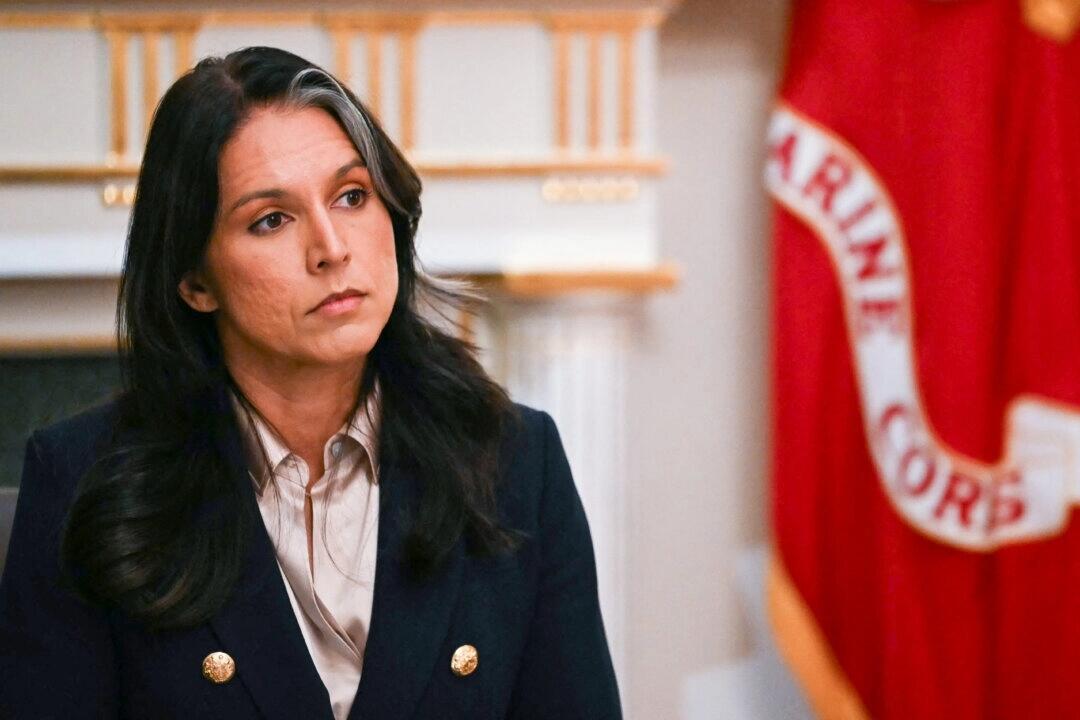
National Intelligence Director Tulsi Gabbard on Feb. 2 defended her presence at a Fulton County elections office while FBI agents executed a search warrant there, saying President Donald Trump had requested that she go to the Georgia office and that she has the authority to take action related to election integrity and security.

“Interference in U.S. elections is a threat to our republic and a national security threat,” Gabbard said in a letter to members of Congress.

“The president and his administration are committed to safeguarding the integrity of U.S. elections to ensure that neither foreign nor domestic powers undermine the American people’s right to determine who our elected leaders are.”

She said that Trump tasked her office with taking appropriate action under the authority granted by Congress toward ensuring the integrity of elections, and specifically directed her to observe the execution of the warrant in Fulton County near Atlanta on Jan. 28.

She also said she facilitated a call in which Trump briefly thanked the agents for their work. Trump did not ask any questions during the call, and neither the president nor Gabbard issued directives, she said.

FBI officials previously described agents as executing a court-authorized warrant about a month after the Trump administration filed a lawsuit against the county seeking voting records from the 2020 presidential election. County officials have said the records were under seal and could not be produced absent a court order.

Trump has alleged that he lost in Georgia in 2020 because of election fraud.

Sen. Mark Warner (D-Va.) and Rep. Jim Himes (D-Conn.), top Democrats on congressional intelligence committees, in a Jan. 29 letter said Gabbard’s presence was “deeply concerning.”

“The intelligence community should be focused on foreign threats and, as you yourself have testified, when those intelligence authorities are turned inwards the results can be devastating for Americans privacy and civil liberties,” they wrote.

The lawmakers asked for Gabbard’s reasoning for attending the FBI operation and legal authorities for her involvement and that of other intelligence officials.

Rep. Raja Krishnamoorthi (D-Ill.) was among other critics of Gabbard’s actions.

“The seizure of ballots in Fulton County may trace back to Trump’s refusal to accept his 2020 loss, but the danger is forward-looking. Tulsi Gabbard has no legal role in domestic law enforcement, and the FBI should not be seizing ballots,” he said on social media on Feb. 1.

Gabbard said in response that personnel from the National Counterintelligence and Security Center traveled with her to Fulton County but were not present during the execution of the warrant. She said that she has not seen the warrant, which is under seal, or evidence submitted to the court by the Department of Justice.

She also said that to preserve the integrity of American elections, officials must determine whether there has been malign interference and whether election systems are vulnerable to future exploitation.

“Election security is a national security issue,” Gabbard wrote.

The National Security Act gives the Office of the Director of National Intelligence the authority to coordinate and integrate national intelligence, including intelligence related to elections, Gabbard said.

She promised that the office would not “irresponsibly share incomplete intelligence assessments” concerning election interference.

Joe Kent, director of the National Counterterrorism Center, said on X this week that Gabbard had found 2020 election fraud. Kent, who did not elaborate, later shared Gabbard’s letter to Warner and Himes.

Tyler Durden
Tue, 02/03/2026 – 14:00

via ZeroHedge News https://ift.tt/lXNsEtu Tyler Durden

Kremlin Says India Hasn’t Confirmed Oil Cutoff As Modi Govt Mute, Hasn’t Ratified

Kremlin Says India Hasn’t Confirmed Oil Cutoff As Modi Govt Mute, Hasn’t Ratified

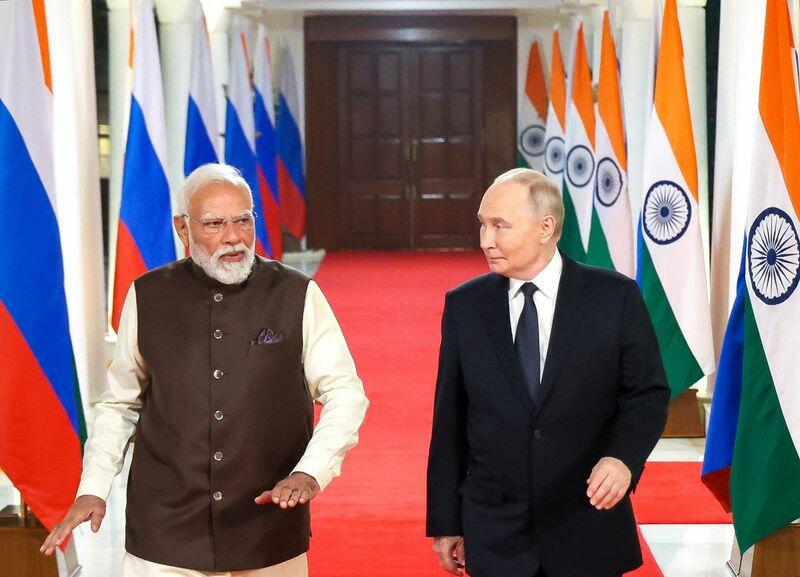
The Kremlin on Tuesday pushed back on Trump’s claims that India is preparing to cut off Russian oil purchases following his major Truth Social announcement of a new US-India trade deal that sharply reduces tariffs on Indian exports.

“So far, we haven’t heard any statements from New Delhi on this matter,” Kremlin spokesman Dmitry Peskov told reporters, signaling that Moscow has received no official confirmation from India in light of Trump’s assertions.

via Reuters

Peskov said Moscow is still “carefully monitoring the news” around Trump’s claims, on the heels of his “wonderful” phone call with India’s Modi and the tariff relief.

Trump had announced the US will trim its punitive tariff on Indian imports to 18% after striking what he hailed as a new “trade deal” with Prime Minister Narendra Modi. Crucially it hinges on New Delhi having reportedly ended its purchases of Russian crude and swapping them for massive US energy and goods buys.

“Out of friendship and respect for Prime Minister Modi and, as per his request, effective immediately, we agreed to a Trade Deal between the United States and India, whereby the United States will charge a reduced Reciprocal Tariff, lowering it from 25% to 18%,” Trump posted. “Our amazing relationship with India will be even stronger going forward.”

And yet, 24 hours later and India’s Foreign Ministry has also remained silent on the question of abandoning Russian oil.

Given all of this, and that the potential remains that Trump’s statements were too out front and presumptuous in terms of anything India may have actually agreed to in a finalized way, Peskov additionally said that while Russia “respects” US-Indian relations, Moscow’s priority remains its own “strategic partnership” with New Delhi.

“And we intend to continue to comprehensively develop our bilateral relations with New Delhi, which is exactly what we’re doing,” he emphasized.

As recently as December, President Vladimir Putin said Russia was prepared to continue “uninterrupted shipments” of oil to India despite pressure from Washington.

Modi’s learning from Trump’s social media about how India will not buy Russian oil & details of US India trade deal (before any Indian announcement) is certainly a first…

Perhaps Trump’s statement was intentionally premature in order to build more leverage and pile the pressure on Modi? The ‘devil is in the details’ in terms of what was actually agreed to in the phone call. The coming days will likely tell.

* * *

Below is more commentary via Rabobank…

Trump also struck a trade deal with India, reducing reciprocal tariffs to 18% and dropping the additional 25% after claiming India would stop buying Russian oil in favor of Venezuelan, showing how geopolitics links up. This isn’t the FTA the EU just signed, but let’s see which proves more important over time: as a well-placed Indian source noted to me, there‘s no growth in Europe vs. the US.

The fact the US will insist on the same no-transshipment rules for Chinese goods that it has with other trade partners is a blow to Beijing; equally, it blows up European hopes of building a trade coalition without the US (and in India frictions will continue, i.e., the EU agreed on green tech collaboration with Delhi, but the US said it is going to sell it more coal). The defense component will also be key. Europe now has a strategic partnership with India in that regard, but national governments hold sway there: will they want to see their defense industries moved to South Asia(?) By contrast, the US is able to move faster, though we shall see what they are prepared to share with India. Delhi at least gets to play both sides off against the other.

Tyler Durden
Tue, 02/03/2026 – 13:40

via ZeroHedge News https://ift.tt/SuLItdx Tyler Durden

Free Speech Unmuted: Can Journalists Be Charged for Involvement in Protests? The Don Lemon Dilemma

Jane and I, joined by press freedom advocate Seth Stern to dissect the federal prosecution of journalist Don Lemon, discuss whether covering—and allegedly accompanying—a disruptive protest inside a church can make a journalist liable for criminal conspiracy under federal laws that ban disruption of worship services.

You can also see our past episodes:

The post Free Speech Unmuted: Can Journalists Be Charged for Involvement in Protests? The Don Lemon Dilemma appeared first on Reason.com.

from Latest – Reason.com https://ift.tt/BTaSDrp
via IFTTT

EU Pushes Rare Earth Mineral Partnership With US To Cut China Reliance

EU Pushes Rare Earth Mineral Partnership With US To Cut China Reliance

The European Union plans to propose a new critical-minerals partnership with the United States, aimed at limiting China’s influence and strengthening shared supply chains, according to Bloomberg.

According to people familiar with the talks, the EU is ready to sign a memorandum of understanding that would create a “Strategic Partnership Roadmap” within three months. The goal is to coordinate efforts to secure key minerals needed for modern technologies and reduce reliance on China’s low-cost supplies, which currently give Beijing significant leverage.

Under the proposal, the EU and US would explore joint mining and processing projects, consider price-support systems, and develop safeguards against market manipulation and oversupply. The plan also calls for building more resilient supply networks between both sides.

Bloomberg reports that the draft agreement stresses respect for territorial integrity, an issue that gained importance after recent tensions linked to President Donald Trump’s comments about Greenland. The proposal arrives as Washington prepares to meet with allied countries to advance agreements that cut dependence on Chinese minerals.

While similar efforts by previous US administrations have had limited results, officials say this push reflects growing urgency after China imposed export controls on rare earths last year. Although some restrictions were eased following talks between Trump and Xi Jinping, US officials are now seeking faster progress.

Washington is also urging partners to adopt pricing mechanisms to protect Western producers from cheaper Chinese exports. When the US encouraged individual EU countries to sign bilateral deals, the European Commission pushed for a unified approach, receiving backing from member states to negotiate on their behalf.

Despite doubts about whether a comprehensive agreement can be reached quickly, the EU’s offer suggests negotiations are moving forward. The proposal aligns with US interest in stockpiling minerals, following Trump’s recent $12 billion stockpile initiative.

According to sources, the new draft centers on closer cooperation to strengthen supply chains, cut strategic dependencies, and improve resilience to disruptions, while also deepening industrial and economic ties through joint projects. It proposes mutual exemptions from certain export controls on critical raw materials and calls for expanded collaboration on research and innovation across the full supply chain. The plan also emphasizes sharing information on risks and market conditions, boosting transparency, and considering measures such as joint stockpiles or a coordinated response group. In addition, it outlines closer alignment on how both sides handle export restrictions involving third countries.

Recall, the Trump administration is preparing to launch a major initiative aimed at protecting US manufacturers from disruptions in the supply of critical minerals, committing about $12 billion in initial funding to build a strategic stockpile of essential materials. The project, known as Project Vault, is designed to reduce America’s dependence on China for rare earths and other strategically important metals. By creating a centralized reserve for civilian industries, officials hope to cushion companies against sudden shortages and sharp price swings that can disrupt production and strain finances.

More than a dozen major companies have joined Project Vault, including General Motors, Stellantis, Boeing, Corning, GE Vernova, and Google. Three large trading firms – Hartree Partners, Traxys North America, and Mercuria Energy – will handle sourcing and purchasing materials for the stockpile.

Tyler Durden
Tue, 02/03/2026 – 13:00

via ZeroHedge News https://ift.tt/n5hOk2V Tyler Durden

Novo Nordisk Shares Sink After Sales Outlook Misses As US GLP-1 Competition Intensifies

Novo Nordisk Shares Sink After Sales Outlook Misses As US GLP-1 Competition Intensifies

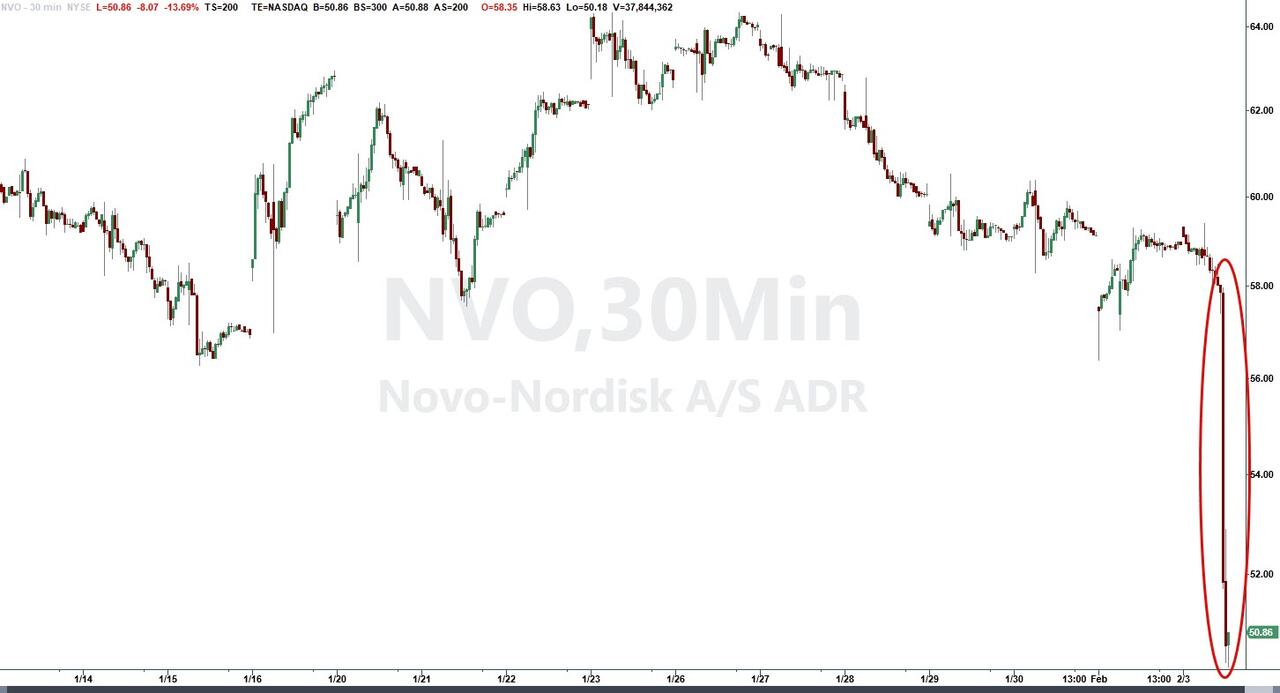
Novo Nordisk ADRs were clubbed like a baby seal around midday after the Danish drugmaker said in an early full-year outlook release that it expects sales to shrink 5% to 13% at constant exchange rates, far worse than the expected 1.3% decline Wall Street analysts had been expecting, according to Bloomberg consensus.

Here’s a snapshot of the full year forecast (courtesy of Bloomberg):

  • Sees sales at constant exchange rates -5% to -13%, estimate -1.39% (Bloomberg Consensus)

  • Sees operating profit at constant FX -5% to -13%, estimate -3.12%

Novo’s annual sales last declined in 2017 during an insulin price war in the US market. The Danish drugmaker faces a multi-front battle, with Eli Lilly’s Zepbound gaining ever-larger market share in the US and continued pressure from copycat versions of Ozempic.

Trading was halted ahead of the report. When trading resumed, Novo’s U.S.-listed shares plunged 13%, the largest intra-day decline since -21% on July 29, 2025.

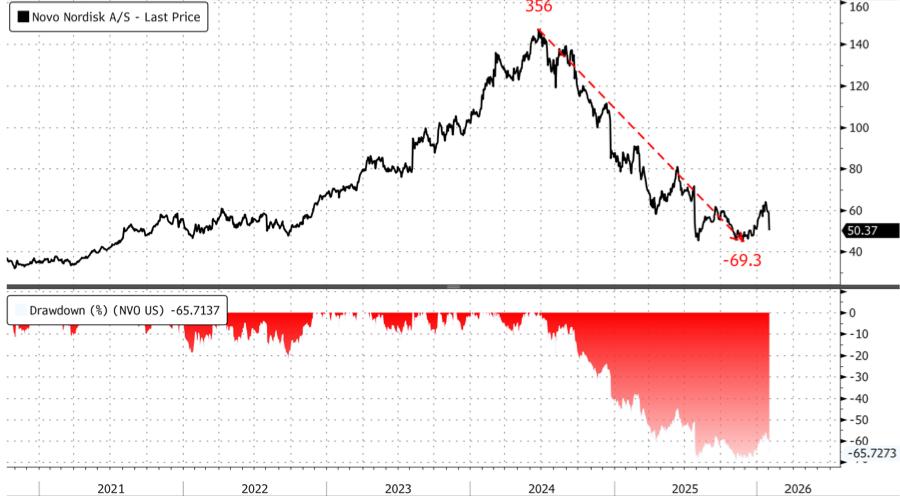
Since Novo ADRs peaked around $145 in mid-2024, shares have been locked in a vicious bear market, down about 64% from the highs.

Hopes for a turnaround emerged late last year (read here), but those expectations have since been erased after today’s dismal outlook.

Last week, Goldman analyst Faris Mourad told clients that “obesity drugs narrative sentiment is on the rise” and “it’s an opportunity to buy the dip.”

More here on Mourad’s call urging clients to buy into beaten-down obesity drug stocks.

Tyler Durden
Tue, 02/03/2026 – 12:45

via ZeroHedge News https://ift.tt/Hkq9Cua Tyler Durden

US Shoots Down Iranian Drone In ‘Self-Defense’ In Gulf Waters

US Shoots Down Iranian Drone In ‘Self-Defense’ In Gulf Waters

Update (1243ET)

A highly dangerous direct first encounter between Iranian and US forces operating in close proximity in the Persian Gulf region, as an Iranian drone has been downed:

  • US F-35 WARPLANE SHOT DOWN DRONE IN SELF-DEFENSE: CENTCOM

“USS Abraham Lincoln (CVN 72) was transiting the Arabian Sea approximately 500 miles from Iran’s southern coast when an Iranian Shahed-139 drone unnecessarily maneuvered toward the ship. The Iranian drone continued to fly toward the ship despite de-escalatory measures taken by US forces operating in international waters,” US Central Command (CENTCOM) Spokesman Capt. Tim Hawkins said.

An F-35C fighter jet launched from the carrier shot down the drone in self-defense to protect the vessel and its crew, Hawkins claimed in the official explanation. There were no reports of injuries.

There’s as yet no account of the incident from the Iranian side, at a moment the Islamic Republic has said its “finger is on the trigger” while awaiting a potential Trump decision for military action. This event alone could derail the expected Friday nuclear talks hosted by Turkey.

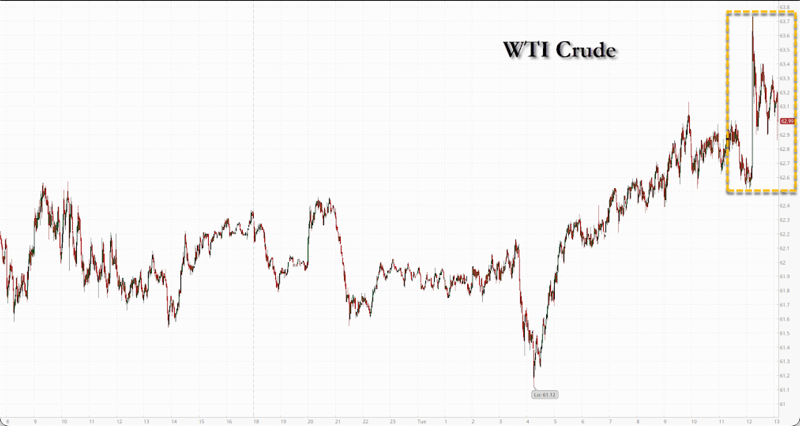
In energy markets, WTI futures briefly spiked into $63/bbl handle and have since retreated to $62/bbl. 

Headlines from White House press secretary Karoline Leavitt:

  • CENTCOM ACTED APPROPRIATELY TO SHOOT DOWN IRAN DRONE

  • IRANIAN DRONE WAS UNMANNED

The comment above was enough to hit oil after the spike… 

Here is what one X slueth is saying (read thread). 

*  *  *

UK Maritime Trade Operations warned of a “suspicious activity” on Tuesday morning at the Strait of Hormuz, the world’s most critical energy chokepoint, after numerous small armed boats attempted to stop a U.S. oil tanker.

This is what UKMTO has reported so far:

  • Location: about 16 nautical miles north of Oman, within the inbound traffic separation scheme

  • Incident: a merchant vessel was hailed on VHF by multiple small armed boats

  • Response: the vessel ignored requests to stop and continued on its planned route

  • Status: authorities are investigating

  • Guidance: all vessels are advised to transit with caution and report any suspicious activity to UKMTO

Here’s the UKMTO Advisory:

The Wall Street Journal provided more color on the situation, including the U.S. tanker:

Maritime-security firm Vanguard Tech said in a message to clients that six Iranian gunboats armed with 50-caliber guns approached the tanker as it entered the strategic waterway and ordered it to kill the engines and prepare to be boarded. Instead, the vessel sped up and was later escorted by a U.S. warship.

U.S. officials confirmed armed Iranian boats tried to stop a U.S.-flagged ship and that it was escorted to safety.

The incident occurred at the critical maritime chokepoint where 20% of oil trade and a large share of LNG flows pass daily.  

At its narrowest, shipping lanes are only about 2 miles wide in each direction…

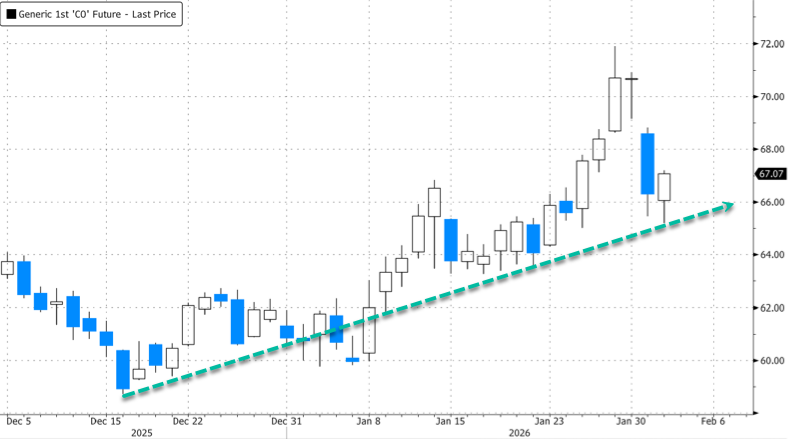
Brent crude prices are marginally higher on the session, trading around $66/bbl handle.

UBS analyst Dominic Ellis provided clients with his assessment of the crude oil market early Tuesday: “The Lowdown: Oil At Risk Of Near-Term Pullback But Risks Remain.”

Ellis continued:

In the near term, UBS strategists are expecting a pullback in oil, which is running ahead of their assumptions for the quarter and the year. They see the market as oversupplied this quarter and in the full year, which should pull Brent back down into the low $60s. It is now in the mid $60s having touched low $70s very recently.

What is challenging their view is that the U.S. is building up a presence in the Middle East, and there is a perceived risk of direct intervention in Iran, which could impact Iranian supply and potentially if things spill over into the wider region, affect the 20% of global crude flows that pass through the Strait of Hormuz.

Brent crude prices…

US-Iran tensions appear to be simmering down:

This comes as the U.S. has been building up naval forces in the region for a possible strike on Iran.

Tyler Durden
Tue, 02/03/2026 – 12:43

via ZeroHedge News https://ift.tt/8VHWL0a Tyler Durden

Watch: Viral Video Exposes Democrats’ Staggering Hypocrisy On Immigration Enforcement

Watch: Viral Video Exposes Democrats’ Staggering Hypocrisy On Immigration Enforcement

Authored by Steve Watson via Modernity.news,

A viral video compilation circulating on X has laid bare the dramatic reversal in Democratic positions on immigration, showcasing top party figures advocating for robust border security measures that they now vehemently oppose.

This shift comes amid growing public demand for deportations, exposing a calculated pivot away from policies that once aligned with American interests.

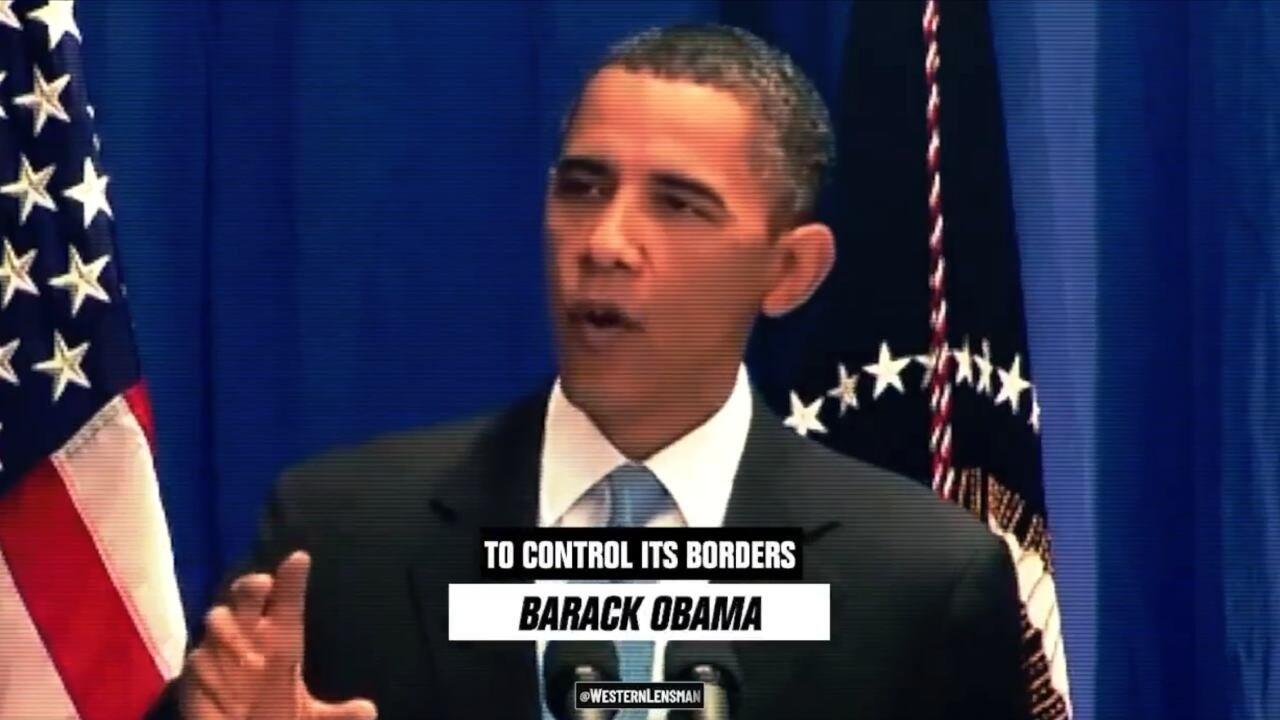
The video, posted by @WesternLensman on X, features archived clips of prominent Democrats articulating views on immigration that echo today’s America First agenda. It underscores how border security was once a bipartisan consensus before the party’s radical elements took over.

In one clip, former President Barack Obama states, “Americans are right to demand better border security and better enforcement of the immigration laws.”

Obama continues in another segment: “We simply cannot allow people to pour into the United States undetected, undocumented, unchecked.”

He adds, “We’ve had five million undocumented workers come over the borders. It has become an extraordinary problem.”

Former President Bill Clinton echoes this sentiment: “All Americans not only in the states most heavily affected but in every place in this country are rightly disturbed by the large numbers of illegal aliens entering our country.”

Clinton asserts, “And we must do more to stop it.”

Joe Biden, in an older clip, is asked, “Yes or no, would you allow sanctuary cities to ignore the federal law?”

He responds, “No. Any city should listen to the Department of Homeland Security.”

Hillary Clinton criticizes sanctuary policies: “The city made a mistake not to deport someone that the federal government strongly felt should be deported.”

Clinton also says, “Just because your child gets across the border, that doesn’t mean the child gets to stay.”

She further declares, “We do not think the comprehensive health care benefits should be extended to those who are undocumented workers and illegal aliens.”

Clinton emphasizes, “We do not want to do anything to encourage more illegal immigration.”

Senate Majority Leader Chuck Schumer explains, “People say, well why can’t you stop illegal immigrants from coming here? And the number one answer we give is when they come here they can get jobs, get benefits against the law because of fraud.”

Schumer states plainly, “Illegal immigration is wrong, plain and simple,” further warning “Open borders, you’re doing away with a concept of nation state.”

Senator Bernie Sanders affirms, “Our nation like all nations has the right and obligation to control its borders.”

Finally, Obama reinforces accountability: “No matter how decent they are, no matter their reasons, 11 million who broke these laws should be held accountable.”

This compilation arrives as Democrats ramp up efforts to undermine ICE and DHS operations. Recent reports highlight Senate Democrats threatening to block government funding over demands for reforms to immigration enforcement following incidents in Minneapolis, including fatal shootings by federal agents. They seek measures like requiring warrants for arrests and ending roving patrols, moves that would hamstring border security.

Such positions mark a stark departure from their earlier stances, prioritizing open borders and globalist priorities over national sovereignty.

This hypocrisy is all the more glaring given the overwhelming public support for mass deportations. As we previously reported, multiple polls confirm that 55% to 64% of Americans favor deporting all illegal immigrants, with sentiments hardening against unchecked influxes.

The video serves as a potent reminder that secure borders were once uncontroversial—until Democrats decided otherwise to chase votes and advance agendas that erode American communities.

With President Trump poised to ramp up enforcement, these past admissions from Democratic leaders only strengthen the case for restoring law and order at the border, putting America first once more.

Your support is crucial in helping us defeat mass censorship. Please consider donating via Locals or check out our unique merch. Follow us on X @ModernityNews.

Tyler Durden
Tue, 02/03/2026 – 12:25

via ZeroHedge News https://ift.tt/PiVQ590 Tyler Durden

‘SaaSpocalypse’ Strikes As Private Credit-Software Stock Vicious Cycle Accelerates

‘SaaSpocalypse’ Strikes As Private Credit-Software Stock Vicious Cycle Accelerates

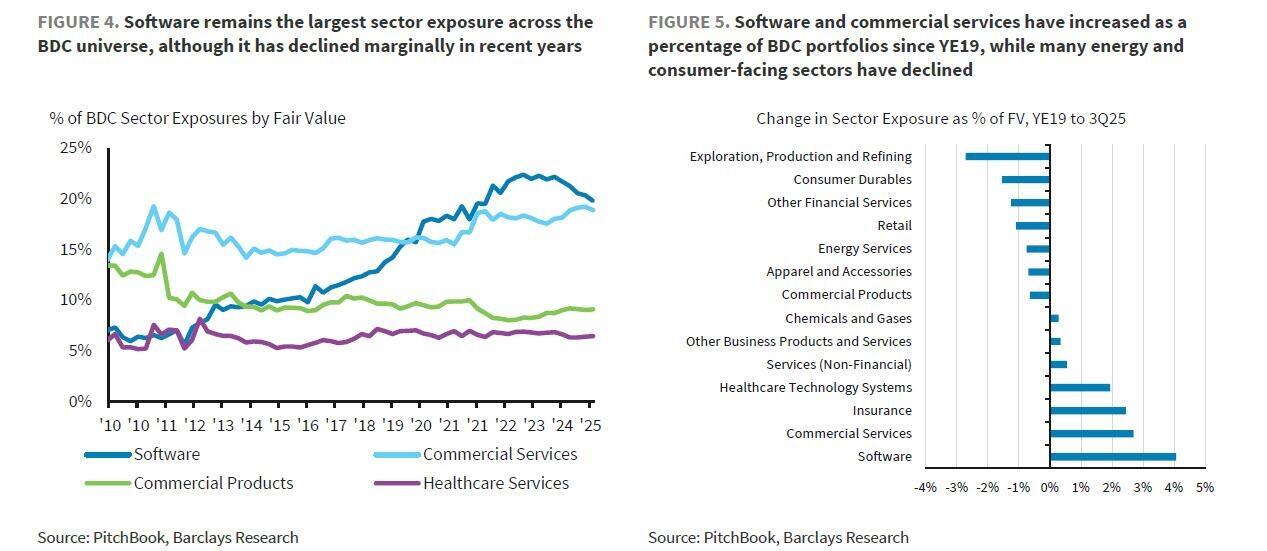
Yesterday, in a must read report for everyone, we highlighted the shocking reality of the circular firing squad evolving between private credit providers (BDCs) and software companies as the latter suffers from artificial intelligence’s domination and the former’s pain grows from the massive exposure it faces to those very same software entities.

“Software is the largest sector exposure for BDCs, at around 20% of portfolios, making the industry particularly sensitive to the recent decline in software equity and credit valuations,” Barclays analysts including Peter Troisi wrote in a note available to pro subs.

The total exposure was about $100 billion in the third quarter of last year, the analysts said, citing PitchBook data.

Read the full report here…

Today the vicious cycle is accelerating as the details of the report hit the mainstream with Bloomberg reporting that sentiment has gone from bearish to doomsday lately with traders dumping shares of companies across the industry as fears about the destruction to be wrought by artificial intelligence pile up.

“We call it the ‘SaaSpocalypse,’ an apocalypse for software-as-a-service stocks,” said Jeffrey Favuzza, who works on the equity trading desk at Jefferies.

“Trading is very much ‘get me out’ style selling.”

The anxiety was underscored Tuesday after AI startup Anthropic released a productivity tool for in-house lawyers, sending shares of legal software and publishing firms tumbling.

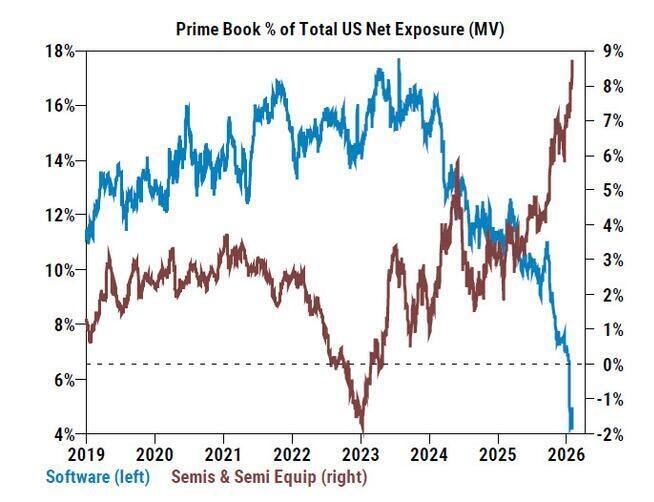
Hedge funds have already been exiting the ‘software’ building en masse, as noted over the weekend, Goldman’s Prime Brokerage showed a stunning chart: the divergence between hedge fund exposure in semiconductor companies (broadly seen as beneficiaries of the AI supercycle) and software companies (increasingly seen as the biggest losers of AI), has never been greater.

It appears that the rest of the market is now waking up to that pain trade.

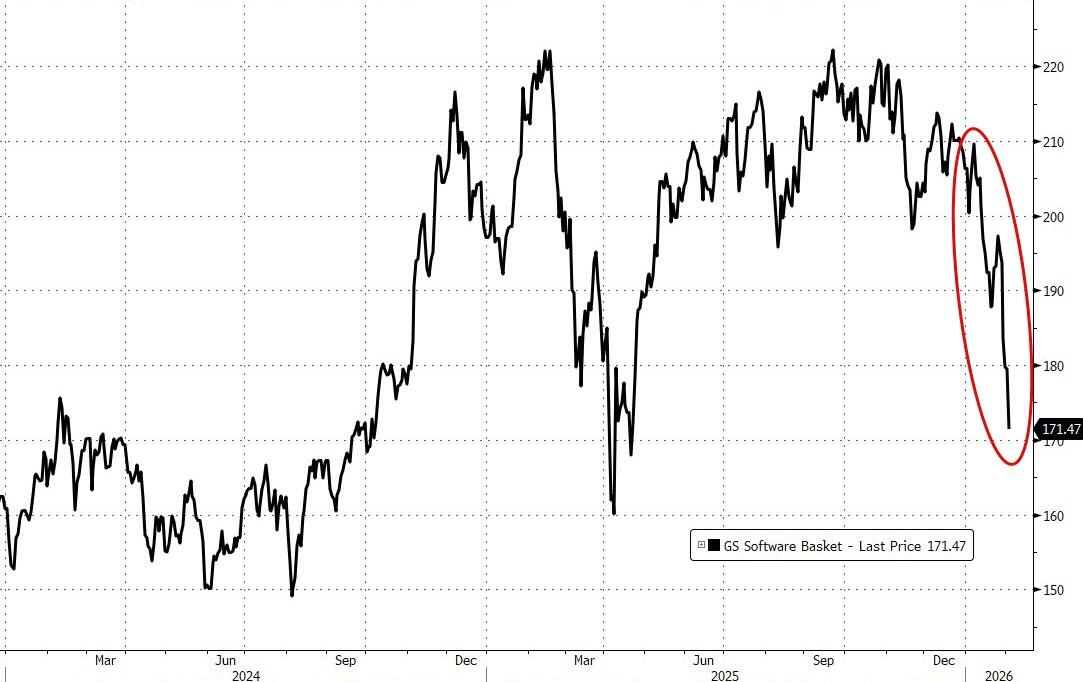
Goldman Sachs Software stock basket is collapsing, now back near Liberation Day lows from last year…

Perceived risks to the software industry have been simmering for months, with the January release of the Claude Cowork tool from Anthropic supercharging disruption fears.

“I ask clients, ‘what’s your hold-your-nose level?’ and even with all the capitulation, I haven’t heard any conviction on where that is,” Favuzza said.

“People are just selling everything and don’t care about the price.”

All told, the S&P North American software index is on a three-week losing streak that pushed it to a 15% drop in January, its biggest monthly decline since October 2008.

Simply put, fears of an AI-induced wave of obsolescence have left investors wondering which industries will be left behind.

“The draconian view is that software will be the next print media or department stores, in terms of their prospects,” said Favuzza at Jefferies.

“That the pendulum has swung so far to the sell-everything side suggests there will be super-attractive opportunities that come out of this. However, we’re all waiting for an acceleration, and when I look out to 2026 or 2027 numbers, it is hard to see the upside. If Microsoft is struggling, imagine how bad it could be for companies more in the path of disruption, or without its dominant position.

FactSet notes that 75% of companies have beat on EPS and 65% beat on revenue. That’s not great by hit-rate standards.

Instead, as Bloomberg reports, the lift is coming from magnitude – fewer companies are clearing the bar, but the ones that do are clearing it by enough to keep the aggregate results looking healthy.

But, as we noted in detail previously, and briefly at the start of this note, the pain in software is not staying there as BDCs are suffering significantly.

Private credit could see default rates surge to as high as 13% in the US if artificial intelligence triggers an “aggressive” disruption among corporate borrowers, UBS Group AG strategists wrote in a separate note on Monday.

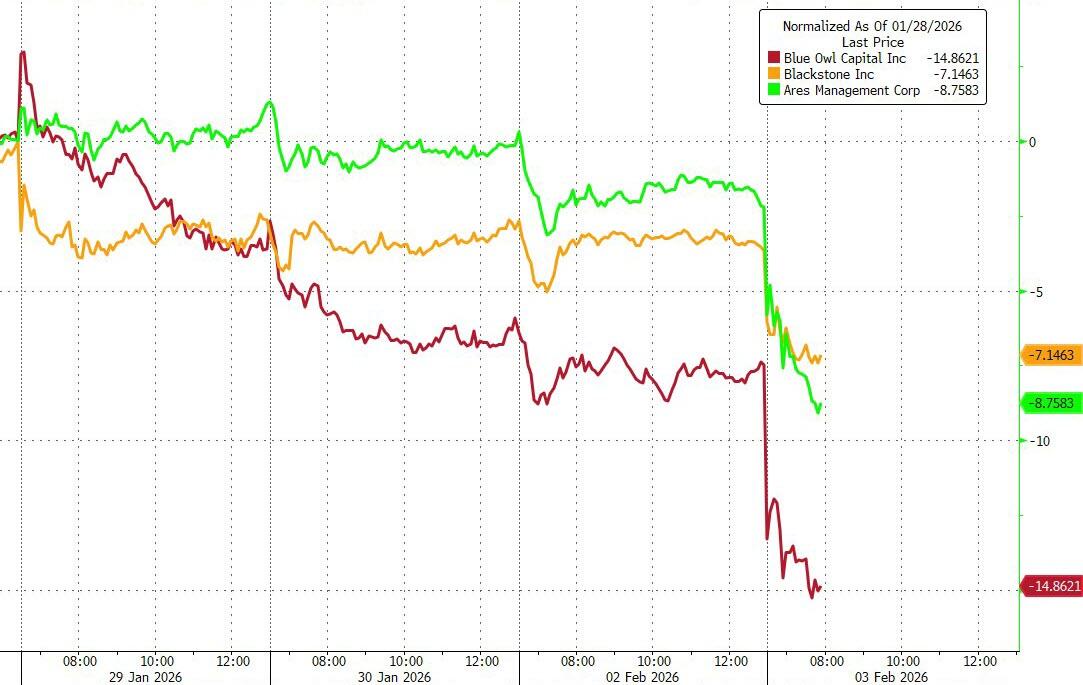
And today we see that fear contagiously accelerate in the BDCs, including Blue Owl, Blackstone, and Ares…

The central issue facing investors who want to buy software stocks is separating the AI winners from the losers. Clearly, some of these companies are going to thrive, meaning their stocks are effectively on sale after the recent rout. But it may be too early to determine who they are.

“The fear with AI is that there’s more competition, more pricing pressure, and that their competitive moats have gotten shallower, meaning they could be easier to replace with AI,” said Thomas Shipp, head of equity research at LPL Financial, which has $2.4 trillion in brokerage and advisory assets.

“The range of outcomes for their growth has gotten wider, which means it’s harder to assign fair valuations or see what looks cheap.”

For now, traders are selling first as the threat of falling software equity prices prompts painful balance sheet reflection at private credit shops (which don’t report until late Fed/early March), triggering less availability of credit (or pulling existing lines), feeding back into lower growth potential for software companies (which already face existential threats from AI).

Much more on this whole fiasco in the full Barclays note available to pro subs.

Tyler Durden
Tue, 02/03/2026 – 12:10

via ZeroHedge News https://ift.tt/NI2uBXM Tyler Durden

Homebuilders Working On Massive Program To Build Up To 1 Million “Trump Homes” To Boost Affordability

Homebuilders Working On Massive Program To Build Up To 1 Million “Trump Homes” To Boost Affordability

Last October, Dubai-based billionaire and Emaar Properties founder Mohammed Alabbar unveiled an audacious $400 billion proposal to help solve America’s worsening housing shortage by building millions of housing units, describing it as both a humanitarian and economic opportunity that could “reshape the U.S. market” and create up to 20 million jobs. 

According to Alabbar, the United States is experiencing a significant housing-supply shortfall, which has led to a crushing lack of affordable housing. Analysts estimate a gap of about 4.7 million to nearly 5 million housing units currently exists in the US. This shortage is the result of many years of underconstruction, soaring costs, regulatory and labor constraints. The effects are broad: higher home and rent prices, fewer first-time buyers, and mobility barriers for workers. In short: a weak supply side has become a drag on affordability, economic growth and inflation control. In response, Alabbar – who now runs the largest real estate developer in the UAE – proposed a $400 billion “fix” at the Reuters NEXT Gulf Summit in Abu Dhabi, capital which he claimed could be raised in as little as one week if the right partners are assembled.

But while Alabbar’s proposal was unlikely to be taken seriously – as it benefits his company as much as it does US homebuyers – the logic behind it is sound – build much more housing – and has seemingly impressed the Trump admin.

It does explains why, as Bloomberg reports, US homebuilders are working on a plan for a massive program to develop up to a million “Trump Homes” that would address the US affordability crisis while allowing private capital to deploy many billions of dollars.

Lennar and Taylor Morrison are among the firms that have worked on the proposal, which calls for builders to sell entry-level homes into a pathway-to-ownership program funded by private investors. 

The size of the program would depend on how many builders decide to participate, though a person involved in the plan said that builders have discussed aiming for as many as 1 million homes. At that number, the program would likely deliver more than $250 billion worth of housing, not to mentions hundreds of thousands of new jobs. 

According to one version of the plan, the investors would rent out the homes to tenants, whose monthly payments would, after three years, be counted toward a down payment if they wished to purchase the home. The drawback is that such a program would be complicated to implement, according to one of BBG’s sources, and it’s possible that it won’t gain enough support to move forward. Even so, it demonstrates builders’ desire to gain the favor – or at a minimum, avoid the ire – of an unusually transactional White House.

The proposal, which some in the industry are colloquially calling “Trump Homes”, could help meet that demand while giving the president a signature program – along the lines of TrumpRx, for addressing the cost of prescription medication, or wealth-building Trump Accounts – that he can use to motivate voters in the coming midterm elections. To that end, Trump has promoted a variety of initiatives, including a plan to drive down mortgage rates by directing Fannie Mae and Freddie Mac to purchase mortgage-backed securities, and a push to ban institutional investors from acquiring single-family rental homes. 

The Trump Homes proposal takes a different approach: increasing housing supply through a business model commonly known as rent-to-own. In past iterations, the model has resembled a standard lease that includes an option to buy, allowing families to move into a home they’d like to purchase before they have saved a down payment. 

A federally backed rent-to-own program could offer solutions to those problems by coordinating the efforts of housing market players, including builders, rental companies, banks and government-sponsored entities.  In January, Pretium Co-President Stephen Scherr sketched out a framework for a federally-backed rent-to-own program in an interview with Bloomberg Television.  

“Imagine a scenario in which rent is paid; money is held back to provide against a deposit account for a down payment,” said Scherr, whose firm is among the largest owners of single-family rentals. “Imagine where we were to link arms with homebuilders who could build smaller, more affordable homes.”

For its part, Lennar has signaled its readiness to increase production once the market improves for buyers.

“We’re very well positioned to provide the affordable supply that the market needs when demand is ultimately activated by either lower interest rates or government-sponsored programs to enable affordability,” Lennar Chief Executive Officer Stuart Miller said on a conference call with investors in December. 

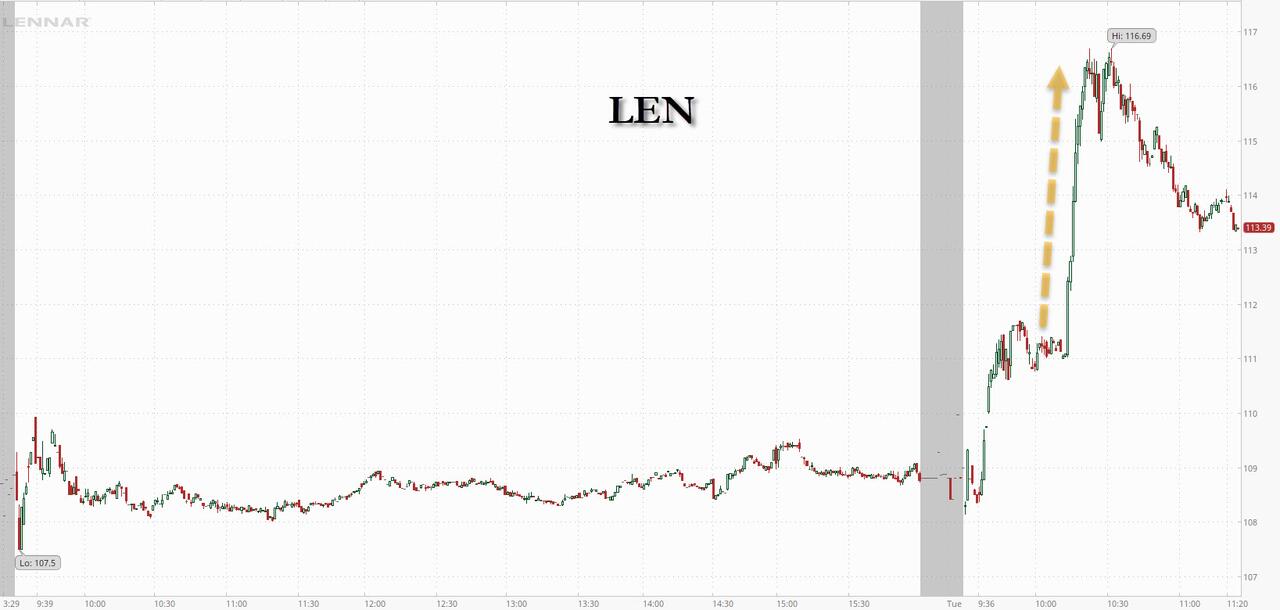
The newst sent shares of Lennar stocks and its peer homebuilders sharply higher. 

While many details of the program have yet to be determined, including the role that federally-backed mortgages should play, the private investors would bear any initial losses. Industry players initially pitched the plan last year to the administration and are continuing to refine the details.

“We are encouraged by the thoughtful discussions between home builders and the administration that could help more Americans step into home ownership,” a Taylor Morrison spokesperson said, adding that it’s “too early to understand any details.”

Responding to Bloomberg, the administration is not actively considering the plan, a White House official said, speaking on condition of anonymity. 

Ultimately, if domestic builders fail to step up, we are confident that the UAE’s developers will be more than happy to take their place. 

Tyler Durden
Tue, 02/03/2026 – 11:40

via ZeroHedge News https://ift.tt/HogZK31 Tyler Durden