Jane and I, joined by press freedom advocate Seth Stern to dissect the federal prosecution of journalist Don Lemon, discuss whether covering—and allegedly accompanying—a disruptive protest inside a church can make a journalist liable for criminal conspiracy under federal laws that ban disruption of worship services.
Marty Makary was appointed commissioner of the Food and Drug Administration (FDA) in 2025. The prominent surgeon, medical researcher, bestselling author, and critic of the medical establishment—including the FDA and the Centers for Disease Control and Prevention—has made the incendiary claim that medical errors are the third-leading cause of death in the United States, roughly equal to the next four causes combined: smoking-related lung disease, suicide, firearms, and automobile accidents.
In January 2026, the FDA issued a draft for public comment advocating more use of Bayesian statistics in drug approvals and other FDA actions. “Bayesian methodologies help address two of the biggest problems of drug development: high costs and long timelines,” Makary wrote. “Providing clarity around modern statistical methods will help sponsors bring more cures and meaningful treatments to patients faster and more affordably.” The proposal also claims a Bayesian approach would result in more accurate and nuanced advice for patient subgroups.
This move would be roughly analogous to regulators moving away from rigid rules specifically defining mandated and forbidden behavior and toward trying to achieve the same regulatory goals with sometimes market-based tools to help nudge people’s behavior, such as auctions, subsidies, and taxes.
Rather than central planners making one-size-fits-all choices for people they never met, don’t understand, and wouldn’t like if they did meet, that approach allows individuals to choose for themselves in individualized reaction to the carrots and sticks wielded by planners. It’s a kinder, gentler central planning.
The public health/medical complex is a battleship, and it takes more than one commissioner waving a draft proposal to change its direction. Makary’s proposal is incremental, not revolutionary. While the FDA’s DNA is what statisticians call “frequentist,” Bayesian methods have been sneaking in through the back door for decades. The Makary proposal is to open the front door for them, but to watch them carefully so they don’t steal the frequentist silver. Only Bayesian tools are permitted entry, not Bayesian theory.
A key theoretical divide runs between Bayesians and frequentists. Frequentists define probability as the long-run frequency of repeated independent trials. There are some severe philosophical issues with that, but it does seem to make some sense for events such as coin flips, dice rolls, and roulette spins. It’s harder to apply that method to things that happen once, like the probability of rain tomorrow or of the Seattle Mariners winning the 2026 World Series.
Bayesians define probability as subjective belief—loosely speaking, the value you would place on a bet. For example, according to recent odds posted at FanDuel, a claim that pays $100 if the Mariners win the World Series is worth $5.78 today, and FanDuel will sell you one for $7.14 (the difference is FanDuel’s expected profit). Now that’s a betting line offered by a commercial venture, not any individual’s subjective belief, but it suggests a reasonable Bayesian estimate of the probability of the Mariners winning is 5.78 percent if you have no strong knowledge on the subject to outguess the bookies.
Frequentist vs. Bayesian Reasoning in COVID-19 Vaccine Studies
To see the difference between the two methods played out in medical science, consider how the Moderna COVID-19 vaccine was approved. The FDA negotiated with Moderna to enroll 30,420 healthy adults in the Phase 3 clinical trials. The volunteers had no history of COVID-19 but were at high risk of exposure. Earlier phases involved animal and smaller-scale human testing to establish safety and some evidence of efficacy. Half the volunteers were given the vaccine, half a placebo.
Neither the volunteers nor the medical staff evaluating the results knew which ones got which. The trial was to continue until at least 151 participants had contracted symptomatic COVID-19. If at that point, fewer than 63 of the treatment group had had COVID-19, the vaccine would be approved.
By the end of the trial, 196 cases had arisen among the study participants, 185 in the placebo group and only 11 in the treatment group. The trial was deemed a spectacular success for the vaccine.
I have omitted reams of details and technicalities here to focus on the basic idea. This trial was conducted under the new rules of Operation Warp Speed, which cut the vaccine development and testing time from an average of 10 to 20 years to under one year.
The numbers involved—30,240 subjects, 151 events, 63 treatment events—came from frequentist calculations. But the important point is that every detail of the test was set in advance. All patients in the treatment group got the same two vaccine doses at the same two-week intervals. The primary decision depended on a binary criterion—either fewer than 63 subjects got symptomatic COVID-19 or more than 63 did. (There were important secondary considerations, including the severity of cases and side effects, but I’m focused on the basics.)
A pure Bayesian test would be run differently. You would begin by using all information from prior phases, theory, similar vaccines, and other sources to identify the best patients to begin with—those with the most chance of being helped relative to current alternatives, the least likely to be harmed, and the ones whose outcomes would provide the most useful information.
A much smaller number of initial patients would be tested with a much larger number of investigators, because each patient would be carefully selected and watched by multiple people—not just a head researcher or specialist staff members but multiple caregivers, the patient herself, and perhaps friends and family. Doses, timing, and supportive therapies would be adjusted by trial and error. All aspects of patients’ reactions would be recorded and considered.
The more you learned, the broader the range of patients would be tested by additional researchers. Conclusions could be nuanced for different patient groups and different individual preferences, such as between longevity and quality of life. There is no fixed goal as in the frequentist study, which was estimating the percentage reduction in COVID-19 infections from two fixed doses of the vaccine two weeks apart.
You might end up discovering the treatment was beneficial for something other than the initial purpose or for different types of patients in different ways. There’s no sharp distinction between study and practice. You use the treatment for more things as you learn more about it, with continual learning and improvement.
Perhaps most importantly, the end goal is not an approved/not-approved decision but a compendium of information that allows individual patients and doctors to apply what is known to their specific circumstances and make their own choices.
This is, in idealized form, what happens after a treatment is approved by the FDA. It’s also how traditional medicine evolves. In real life, not every patient and caregiver is observant, not all data are recorded or shared, lots of bad information creeps in, and lots of good information is suppressed for various reasons. The process has many failures—worthless or harmful traditional remedies, and medical disasters of the sort Makary documented in his book Blind Spots. But it’s also the main way medical practice advances. It’s far more influential than official decisions by the FDA or conclusions of academic medical research.
The Likelihood of the Bayesian Advantage
The Bayesian approach has many advantages over the frequentist approach. It’s faster and cheaper. Patient care improves continuously, not just in a jump at the end of the study. Every patient is given the best available treatment given the state of knowledge at the time. Bayesians use all available information, not just the narrow data that are the primary focus of frequentist testing.
Bayesians can test any kind of holistic or complex treatment, whereas frequentist methods work best for single-ingredient drugs with known dosage patterns that work independently of other treatments. The frequentist approach can be modified for treatments that cannot be double-blinded—such as massage therapy—or ones that have many free parameters to calibrate, but these complications can rapidly increase its expense and reduce its reliability. Often, treatments not amenable to straightforward frequentist testing are ignored in favor of simpler treatments for regulatory convenience rather than optimal medicine.
The Bayesian approach has its flaws as well. It opens the door to human prejudices, biases, wishful thinking, and delusion. These are precisely the things frequentism was invented to combat, with the goal of making science objective.
The double-blind, controlled, frequentist trial is still the gold standard for getting objective answers to narrow questions, such as if 1,000 people are chosen at random to get a specific vaccine dose regime, how many of them will get severe COVID-19 in the subsequent six months compared to a matched random sample of people without the vaccine? That question may be relevant to a greatest-good-of-the-greatest-number public-health collectivist. It might seem less so to an individualist libertarian.
The question is not whether the Bayesian approach is better or worse overall than the frequentist, but at which points in the medical research process should we apply each technique, each with its own dangers and benefits? In the current system, researchers use Bayesian approaches to come up with new conjectures and candidate therapies to be tested with simulations, laboratory work, and animals.
But once humans are being tested, medical science has traditionally required strict frequentism until a regulator says the medicine is permitted. After that, doctors and patients are free to experiment with approved treatments, and other researchers do frequentist studies to continue monitoring safety and effectiveness.
The Makary FDA report suggesting a more Bayesian approach does not advocate switching to pure Bayesian clinical trials. Rather, these new proposals would allow more Bayesian-flavored methodologies within what remains a basically frequentist process. The idea is to incorporate more human judgment into the process—making it less objective—to get cheaper, faster, and better results for a wider variety of treatment types.
But the proposal describes a system with sober negotiations between researchers and regulators on what judgments to credit, resulting in committee decisions, not crediting pure individual subjective belief as Bayesian theory demands.
The difference in the two approaches in medicine can be described like this: Frequentists want to estimate the long-term frequency of patients who will benefit from a treatment, while Bayesians want to price bets on outcomes for individual patients. This leads to profoundly different regulatory goals. Frequentists imagine an infinite series of faceless patients without volition or preferences. The researcher is not one of the patients, but an expert above them, reading arcane entrails to make a choice for all of them, maximizing the regulator’s opinion of aggregate benefit.
Frequentists reason in this inhuman abstraction because it allows rigorous, objective decision making. It bears no relation to reality. Whether or not a treatment will benefit you is not a random event. It depends on your precise condition, your genetics, and other factors. It can be hard to predict, but it’s not random.
Bayesians accept that a patient’s response to a treatment is not random, just unknown. Bayesians are like bookies. They want to hand patients a list of bets they can make with different payouts—cure, death, unpleasant side effects, no change, etc.—and prices attached. Patients can consult with doctors and other experts to choose good bets based on their own additional information, if any, and their personal preferences. Importantly, the Bayesian statistician considers herself one of the people for whom she gives advice—she bets for herself and her loved ones using the same odds she quotes for the public.
Most people who work with data are agnostics, however. They use whatever tools seem to work for different applications without worrying much about the underlying philosophy. Most of the time, the data speak for themselves, and frequentists and Bayesian methods give similar answers; and two frequentists or two Bayesians are as likely to disagree with each other as a frequentist is to disagree with a Bayesian.
If the FDA follows through with the proposed guidelines, and they are not fatally twisted by pressure from the medical establishment and health care industry, it should bring fresh air and sunlight into the approval process. It should save money and speed innovation, with better health outcomes.
Most ideal would be an FDA with Bayesian DNA that left room for some double-blind, controlled frequentist studies to provide a skeleton to the Bayesian flesh of medical practice. This kind of regulation would focus on empowering patients with information and choice, rather than using information about outcomes in a narrowly conceived experiment to make choices for others.
Hello and welcome to another edition of Free Agent! Don’t be afraid to drop the gloves outside this week, even if it is cold out there.
We’ve got a great one for you today, covering everything from the Super Bowl to the Olympics to the Epstein files. Let’s get right into it.
Locker Room Links
Even for sports-related subsidies, this is absolutely insane: Olathe, Kansas, has plans to create a 165-acre tax district around the new Chiefs practice facility, where for 30 years all sales, hotel, and property tax revenues in that district would go to the Chiefs instead of the city.
Since the first Super Bowls that I remember—John Elway’s back-to-back titles in the late ’90s—even non-sports fans have been excited for the commercials. Back then, about 80 million to 90 million Americans tuned in, and now it’s usually above 110 million, with the last Super Bowl setting a record American audience of 127.7 million viewers.
Many of those viewers are football fans, of course. They’d watch even if the commercials were the same repetitive ads they see every time they watch sports. But a lot of people tune in for the commercials and companies are now paying $10 million for the privilege of having your attention for 30 seconds.
Sometimes, people even enjoy watching the halftime show (to my fellow enjoyers of “white dude” music who haven’t really liked a show since the three-year run of Tom Petty, Bruce Springsteen, and The Who: Sorry, but you’re already tuning in anyway—the halftime show is supposed to bring in other viewers). That, too, is an ad that Apple pays $50 million a year for. The performer gets paid in exposure, not dollars, with the assumption that demand for their music, concert tickets, and merchandise will rise.
Tickets to the game itself are expensive. But for everyone else watching on TV, we’re basically getting paid by advertisers to enjoy the show they’re putting on for us. Advertisers bear the cost, we get to watch for free (albeit as part of our cable or streaming plan).
Then there’s the game: Competition within a defined set of rules that are (hopefully) fairly and evenly enforced. (Although the NFL’s off-field rules aren’t very capitalist, with its salary cap, a draft to redistribute talent to worse teams, and stiff speech rules.)
There’s also the food. The Super Bowl is not a time for your garden-grown lettuce and eggs from your free range chickens. The Super Bowl is for pizza and wings you got from the delivery place down the street, the awesome cheese dip that your friend makes from grocery store ingredients, and beers that are probably brewed in America but in breweries owned by multinationalcorporations.
Finally, the parties. Don’t show up to a Super Bowl party empty-handed. You should be engaging in informal “trade” with your host—they’ve cleaned their house and provided some food for you, so bring some other food and drinks in return.
The Super Bowl is a capitalist bonanza, and that’s what makes it great. (If only the game wasn’t being played in a government-owned stadium!)
The Super Bowl is not the best thing about capitalism—that would be the pathways out of poverty capitalism provides to millions of people every year. But the Super Bowl is a healthy byproduct of capitalism. The bigger it gets, the better, by bringing us all together to enjoy and appreciate it.
Steve Tisch: The co-owner of the New York Giants shows up in the files at least 440 times, according to ESPN. His emails seem to be the most damning, with messages back and forth about various women. Tisch said in a statement that he and Epstein “had a brief association where we exchanged emails about adult women, and in addition, we discussed movies, philanthropy, and investments.” He claims he never took Epstein up on “any of his invitations.” The NFL is going to “look into the matter to understand the facts.”Even if he didn’t commit a crime, he could face a fine for “conduct detrimental to the integrity of and public confidence in” the league.
Ron Burkle: Formerly part owner of the Penguins and women’s soccer’s San Diego Wave, Burkle allegedly knew of Epstein’s interest in underage girls and an FBI tip suggests investigating him.
Todd Boehly: The co-owner of the Los Angeles Dodgers, Lakers, and Sparks—as well as soccer clubs Chelsea and Strasbourg—met Epstein at least twice. Boehly’s interactions, as far as we know, were strictly business. But these meetings were after Epstein served 13 months after pleading guilty to prostitution-related crimes.
Casey Wasserman: Wasserman is the head of the 2028 Los Angeles Olympics committee. He doesn’t appear to have a direct Epstein association—but he was all too connected to Epstein’s recruiter and onetime girlfriend Ghislaine Maxwell, sending her saucy messages.
Josh Harris: The owner of the Commanders, 76ers, Devils, and a future WNBA franchise seems to have had the weakest links to Epstein of anyone listed here. It’s unclear if Harris and Epstein ever met, and Harris claims he always rebuffed Epstein. But in at least one email Harris sought to meet with Epstein, asking him “U around any time from now to sunday?
The new Netflix documentary about the Miracle on Ice, called Miracle: The Boys of ’80, is quite good.
It starts by setting the scene very well: Two superpower countries coming together on the ice. One a dominant team full of seasoned professionals (who were listed as students or soldiers to get around the amateurism rules), the other a team of actual amateurs from Minnesota, New England, and the Midwest. Washington Post columnist George Will does well explaining the geopolitical stakes in the documentary.
As Al Michaels said early on in an interview, “What could top this?…Nothing.” That’s worth pondering: It’s hard to imagine a similar scenario right now where America could come off as the underdog against a team from a geopolitical superpower like China or Russia, at least in a sport Americans find worth watching (sorry, table tennis). It’s easy to imagine other countries using America as their sporting and geopolitical foil, though—thanks to President Donald Trump’s Greenland dreams, the men’s hockey game between the U.S. and Denmark on February 14 could be a bit of a trap game for the Americans.
The documentary details the six months of training, preparation, and roster-cutting that the U.S. team went through before the Olympics. New interviews with 16 of the 20 players on the roster drive home how much Herb Brooks was responsible for the team’s success, through off-ice organization (more games and long training camps), an emphasis on fitness through his famous “suicide” drills, and tactical acumen.
The documentary adds to the legend with archival footage of the games that even the players hadn’t seen before, and the crew did a great job finding news clips from the time and weaving them into the story.
The film is an easily digestible100minutes long. If you have time to watch it before the first U.S. men’s hockey game at the Olympics on February 12, I recommend it.
Super Survey Results
Many thanks to all the readers who responded to our survey on the Super Bowl! Turns out 72 percent of you are rooting for the Seahawks, with the Patriots getting just over a quarter of your support.
Based on the additional written responses, it seems like half of the Seahawks supporters are pro-Seahawks (“Lifelong Seahawks fan. I remember when 4-12 was considered a decent year.”) and the other half are just anti-Patriots (“I would root for Lucifer himself over the Pats.”).
Patriots supporters mostly seemed to be locals, though I thought this response was interesting: “I get sick of people, all over the U.S. (especially red states) ‘dumping’ on Boston, Massachusetts, & New England. And it’s not just sports!” Sam Darnold still had one hater, too: “I hate the Seahawks and USC. QB is a Trojan.”
Shoutout to the person who wrote “as a Michigan State fan, it would [be] great to see Kenneth Walker, Super Bowl champion.” Same, dude. Walker winning MVP is probably my best-case scenario.
There’s still time to vote before Sunday if you haven’t already! Heck, this isn’t scientific so vote again if you want.
Replay of the Week
With all due respect to another goalie fight, instead we’re going with a goalie goal to keep the team alive. Incredible stuff.
GOALKEEPER ANATOLIY TRUBIN SCORES A 98TH MINUTE GOAL AGAINST REAL MADRID TO SAVE BENFICA'S #UCL SEASON WITH THE FINAL TOUCH OF THE MATCH! ????
That’s all for this week. Enjoy watching the real game of the week—not the Olympics or the Super Bowl, but Florida Gulf Coast University club hockey’s Senior Night against Northeastern. I don’t think that’s actually viewable anywhere except in-person, so instead enjoy watching mixed doubles curling on Wednesday.
Qatar and Israel are bitter rivals. While the Israeli government blames Qatar for backing “hatred, antisemitism and terror,” the Qatari monarch accuses Israel of “genocide.” And the war of words briefly became a hot war last year, as Israeli warplanes bombed Qatar to kill Hamas officials living there.
But in 2018, leaders from the two Middle Eastern states were brought together by one man: Jeffrey Epstein.
The late sex predator arranged an unreported meeting between former Qatari Prime Minister Hamad bin Jassim bin Jaber Al Thani and former Israeli Prime Minister Ehud Barak in 2018, files released by the U.S. Department of Justice on Friday revealed. (Al Thani, better known as HBJ, is a member of the Qatari royal family.) The meeting came as Epstein worked behind the scenes to resolve the 2017 crisis in the Persian Gulf.
In June 2017, Saudi Arabia and the United Arab Emirates blockaded and reportedly threatened to invade Qatar over its support for Islamist rebels and its hosting of Turkish troops, pitting U.S. partners against U.S. partners. Epstein, who cultivated extensive ties to leaders across the Middle East, tried to insert himself into back-channel negotiations to resolve it.
Neither Barak nor the Qatari embassy responded to a request for comment. Although HBJ, Barak, and other figures Epstein talked to about the crisis were out of government, Epstein clearly believed that they still had influence in the Gulf.
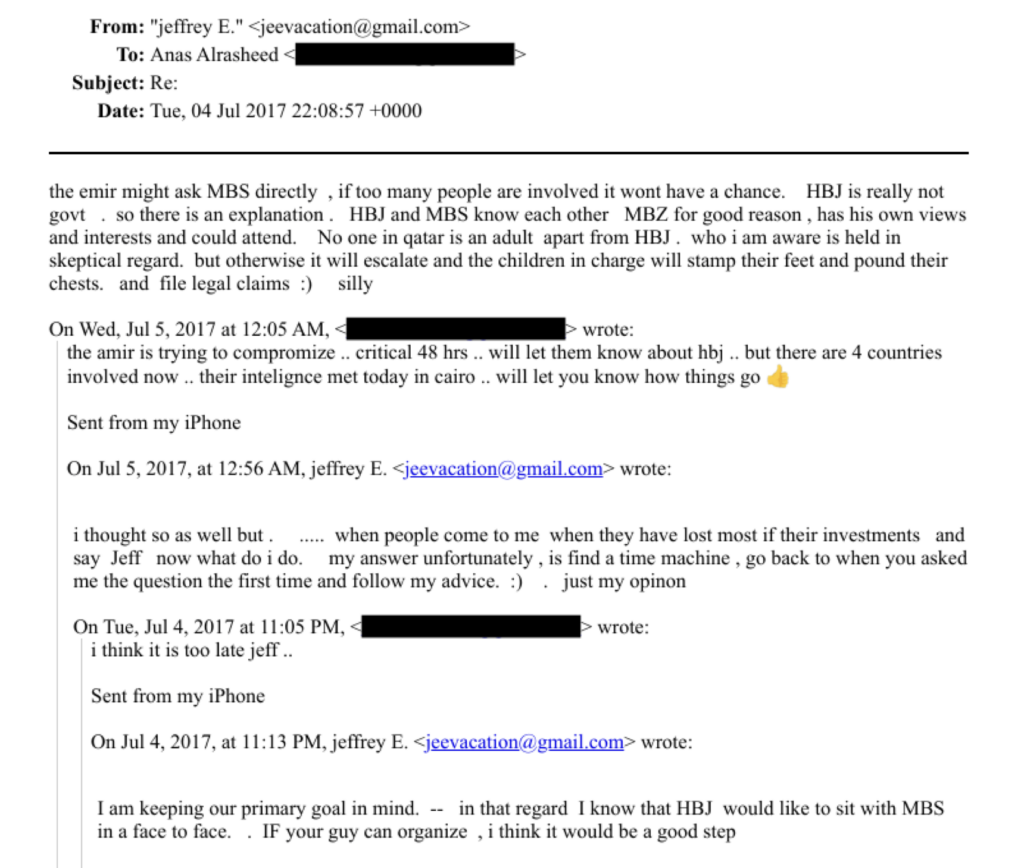
“I am keeping our primary goal in mind. in that regard I know that HBJ would like to sit with MBS in a face to face. . IF your guy can organize, i think it would be a good step,” Epstein wrote in a July 2017 email to Anas al-Rasheed, a Kuwaiti professor who used to be a cabinet minister. (MBS is the nickname of Saudi Crown Prince Mohammad bin Salman.) That “goal” seems to have been an end to the split among Gulf states.
U.S. Department of Justice
In a follow-up email, Epstein clarified that HBJ wasn’t officially speaking for the Qatari government but was the only “adult” left in the Qatari elite. It’s not clear from the emails whether the meeting between HBJ and MBS went through. Al-Rasheed did not respond to a request for comment.
“I think qatar should stop kicking and arguing.. let the heat come down a bit,” Epstein wrote to Jabor Y., a man who had previously managed Epstein’s meetings with HBJ, in July 2017. Epstein implied that courting Israel could be the key to breaking out of Qatar’s isolation.
Jabor Y. also appears under the name Jabor Al Thani in some emails. The files released by the Department of Justice include a permit request from Jabor Yousef Jassim Al Thani, a businessman and member of the royal family, for Epstein’s private jet to land in Qatar. The same royal appears with Epstein in a set of photos released by congressional investigators last year. He did not respond to a request for comment.
“The Indian Prime minisiter modi took advice. and danced and sang in israel for the benefit of the US president. they had met a few weeks ago.. IT WORKED.!” Epstein added in that email. Indian Prime Minister Narendra Modi was visiting Israel at the time the email was written, a few weeks after Modi visited the United States. In other emails released on Friday, an Indian businessman with ties to Modi asked Epstein for help connecting India’s “leadership” to figures in the Trump administration ahead of Modi’s visit.
U.S. Department of Justice
Epstein, who died while awaiting trial for sex trafficking in 2019, was similarly well connected to all sides of the Gulf. He befriended the influential Emirati businessman Sultan Ahmed bin Sulayem, who even ordered DNA test kits for the royal family of Dubai using Epstein’s address. MBS reportedly gave Epstein a Bedouin tent as a welcome gift during a visit to Saudi Arabia. The emails released Friday show that Epstein was having real estate discussions with HBJ, who retired as Qatar’s prime minister in 2013.
One of Epstein’s close business partners was Barak, a decorated general who served as prime minister of Israel from 1999 to 2001 and as defense minister from 2007 to 2013. Epstein wrote to Barak in 2015 about his personal interest in the intersection between the business, military, and intelligence worlds.
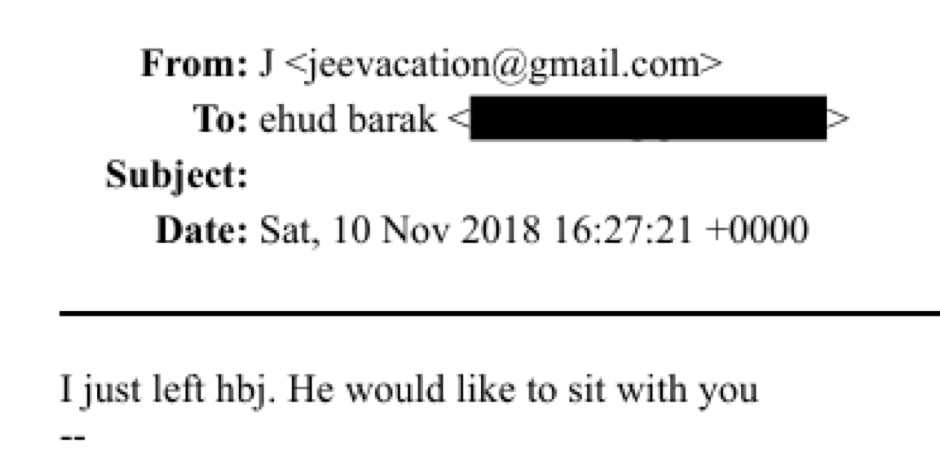
A little over a year into the Gulf crisis, Epstein brokered the meeting between HBJ and Barak. In November 2018, Epstein wrote to Barak: “just left hbj. He would like to sit with you.” Then he wrote an email introducing Barak and Jabor Al Thani.
U.S. Department of Justice
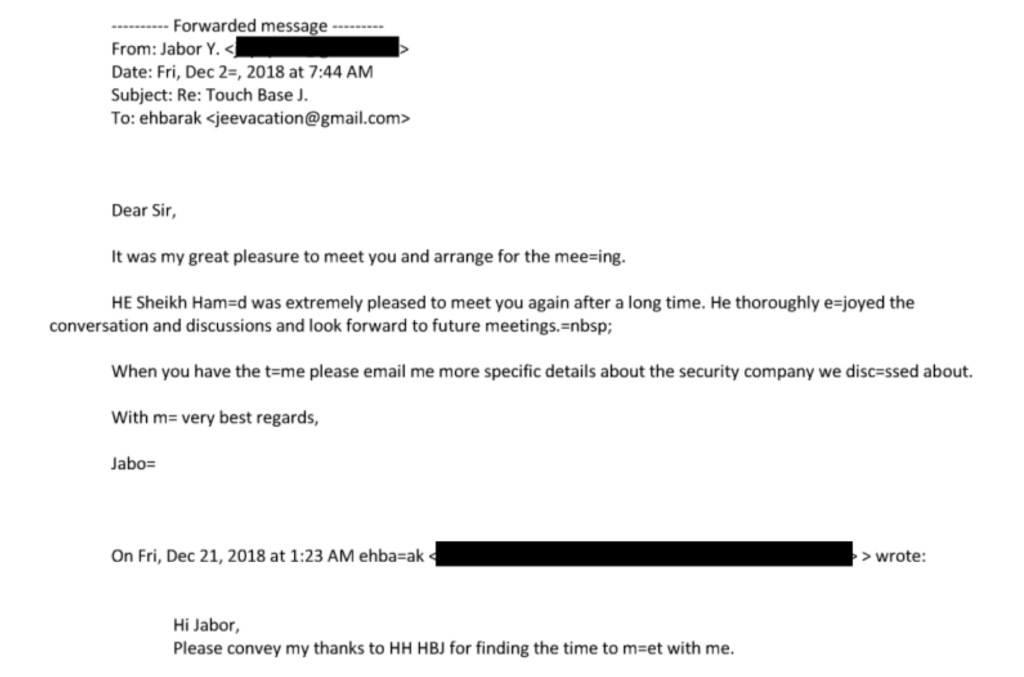
“So many=fascinating and disturbing events following each other on the global and o=r regional arenas. And so much to discuss,” Barak wrote to Jabor Al Thani, noting that he had met HBJ in the past and was eager “to find a way to resume contact.”
The group agreed that Barak would meet HBJ—without Epstein—on December 20 at One Hyde Park, an ultra-posh apartment building in London partially owned by HBJ. After the meeting, Jabor Al Thani wrote a thank-you note to Barak and CC’d it to Epstein. The only clue to the content of the discussion was Jabor Al Thani asking for “more specific details about the security company” they discussed.
U.S. Department of Justice
At the time, Barak and Epstein were working together on a security tech startup called Carbyne, which promises to integrate emergency dispatchers with real-time location tracking and video surveillance feeds sourced from citizens’ phones. (Barak left Carbyne in 2020.) Separately, Epstein was talking to bin Sulayem, the Emirati businessman, about expanding Carbyne into Dubai and having bin Sulayem join as an investor.
Yet the relationship was not just about making money; Barak and Epstein also used their business ties to set up diplomatic back channels. Blurring the lines between business deals, political leverage, and personal companionship was how Epstein operated. In 2010, when Epstein asked an unnamed associate about buying a Syrian or Lebanese bank, the associate wrote back, “I have a good contact in Syria…but sex better in Lebanon.”
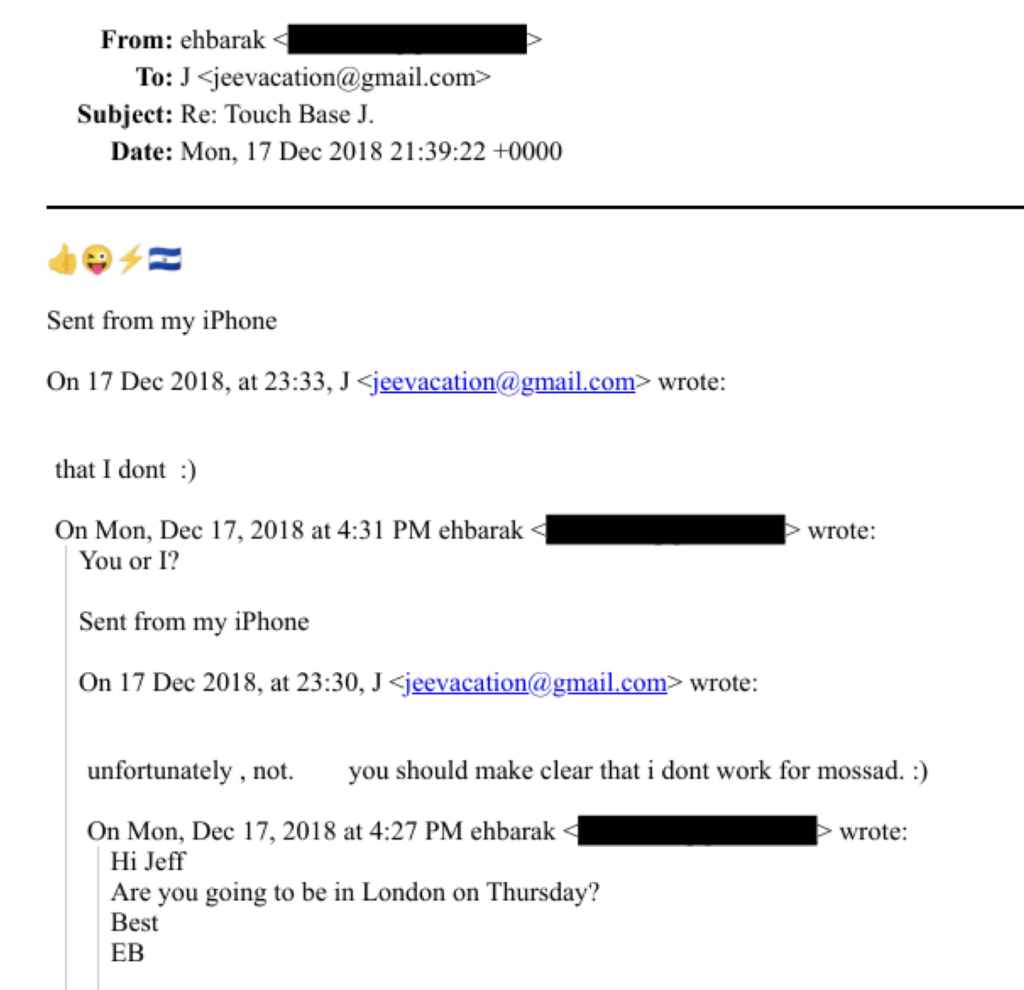
In emails leading up to the Barak-HBJ meeting, Epstein gestured toward the persistent rumors that he was a spy. He asked Barak to “make clear” to the Qatari side “that i dont work for mossad,” the Israeli foreign intelligence agency. Epstein added a smiley face to the end of the message. Barak responded with a series of emojis: thumbs up, tongue sticking out, lightning bolt, and Israeli flag.
U.S. Department of Justice
“Epstein tried to aggrandize his role and his activities and so on. I regret ever meeting him. I was introduced to him in 2003 in a public event with [the late Israeli Prime Minister] Shimon Peres and with hundreds of Americans,” Barak told an audience at the Halifax International Security Forum in November 2025, in response to a question about Epstein’s role in Israeli politics.
While Epstein was joking with Barak about being a Mossad agent, he was also working to cultivate some goodwill for Qatar with Steve Bannon, who had served as the Trump administration’s chief strategist from January 2017 to August 2017. Bannon secretly met with Saudi and Emirati leaders just before they launched their blockade, and he publicly attacked Qatar after leaving the White House.
But he seemed receptive to Epstein’s overtures on Qatar’s behalf. “When you see Jabor you can tell him, I told you he is my arab brother. And tell HBJ that I told you that he and Ehud Barak are head and shoulders above the rest. They will then know you are family,” Epstein wrote in a November 2018 text message to Bannon. “Done,” Bannon replied.
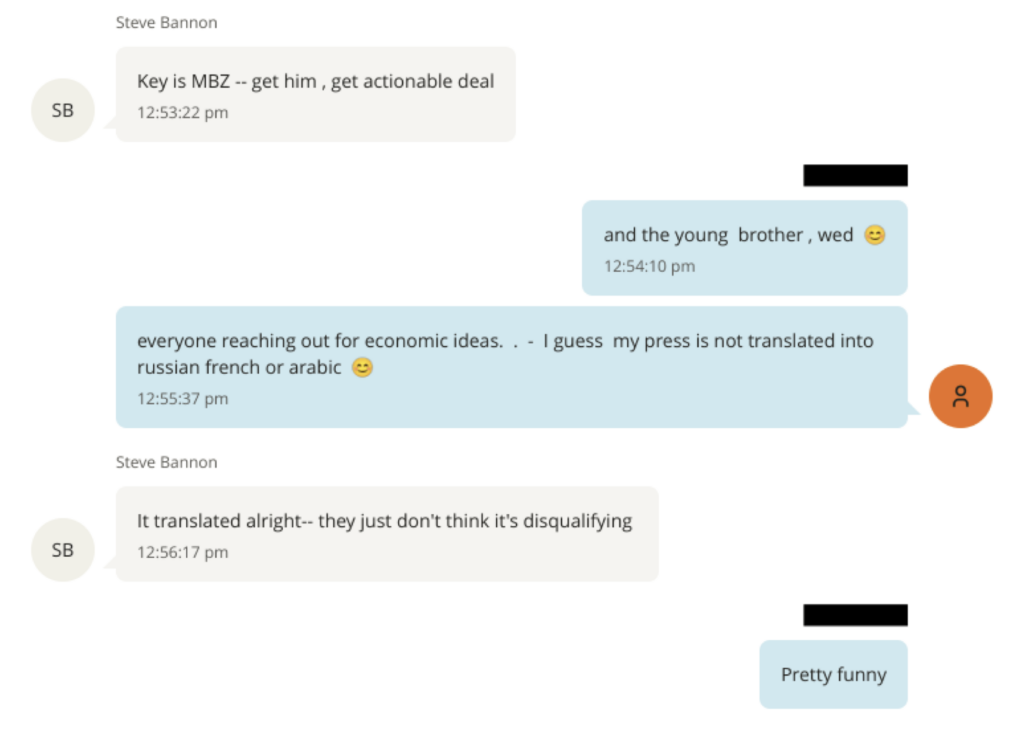
On December 11, 2018, Epstein asked Bannon to “explain to your boys that the lynchpin in the middle east is Qatar , blockade lifted. they can help on many fronts. many.” Bannon responded that Emirati President Mohammed bin Zayed is the “key” to an “actionable deal.”
Epstein noted that “everyone reaching out for economic ideas” and joked that “my press is not translated into russian french or arabic,” apparently referring to the mounting sex abuse allegations against him.
“It translated alright– they just don’t think it’s disqualifying,” Bannon replied. He did not respond to Reason‘s request for an interview.
Markets have shrugged off heavy metal(s) even though their plunge Friday was staggering. We are up around 5% in gold this morning following reports of queues of Singaporeans buying the dip yesterday. Yet note that this happened to an asset seen as a “safe-haven”, and as the foundation of a new global system – even as nobody anywhere is close to demanding gold as payment for exports, or is able to do so if needed. Indeed, there are whispers that a key driver of, and much of the worst damage from, the pump-‘n’-dump was centered in China (whose neo-mercantilism is ironically a key reason for fractures in fiat currency and the liberal world order). One wonders how long generic ‘markets’ can stay calm in a world in which so many people are so unenamoured of fiat FX; and how metals can cope with “because markets!” HFT speculation that make them trade like an NFT or meme stock.
Then again, markets seem to have put the extraordinary recent volatility in JGBs behind them when nothing has been resolved there. PM Takaichi seems set for a landslide victory on 8 February that will lead us back to where we were – save the US suggesting there’s no bailout from it coming for Japan. That leaves the world’s third largest economy, the $7.8 trillion JGB market, and JPY all on edge as Tokyo deals with rising geopolitical tensions with China over Taiwan.
Going back to Friday, a meme is that metals were heavy as Fed Chair nominee Warsh was seen as a hawk: yet there’s as much likelihood of that being true as that he was picked for his looks. US rates are going to fall, but Warsh just looks hawkish. Moreover, a hawk/dove framing is arguably now irrelevant. What I dub ‘reverse perestroika’ implies a shift to a Treasury- not Fed-centric system and to industry from financialisation: logically that implies different interest rates by sector, so hawkish and dovish. As @mnicoletos puts it, it means changes to encourage banks to lend more into productive sectors. And as @ctindale points out, it requires abandoning abstract economist models of aggregate supply and demand — useless vs shocks like rare earths — to address specific material constraints in each sector, e.g., funding stockpiles to release rather than raising rates. If Warsh wants a ‘regime change’ at the Fed (as do Bessent and Trump), then that’s the form it will take, comrades, not just ‘hawk/dove’.
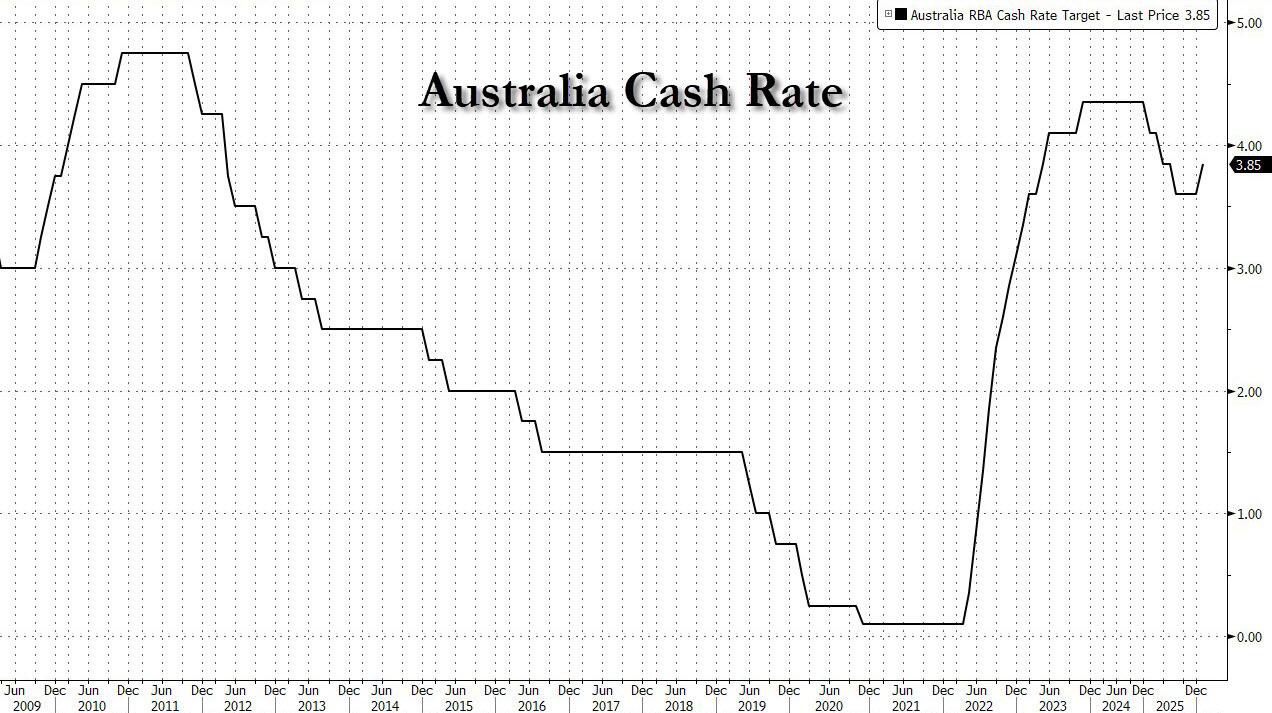
That’s too late for those who ended up having to raise rates after cutting them, i.e., the RBA. Australia’s property-addled economy and Reserve Bank are the first to U-turn on “because (property) markets” rate cuts, hiking to 3.85%, because of “materially” higher inflation, rather than the low inflation their abstract model had told them was looming. It looks like another hike is also going to have to follow. As the Aussie financial press put it, “Chalmers and Bullock both messed up on inflation – the RBA is finally trying to fix its inflation mistakes. When will the federal government follow suit?” Equally, when will abstract models follow suit? And when will markets grasp that is what logically follows on from all of this?
Oil slumped 4.5% Monday on the view Iranian threats of regional war are overblown. The US and Iran will talk Friday, yet the US wants a deal to end its nuclear program, which it bombed last year, and its ballistic missile program and support for terrorist proxies; Iran may float handing over enriched uranium, but says it will only act within its “national interests.” Don’t just read the financial press: follow the logistical build-up of US military power; consider reports Trump favors regime change following as many as 30,000 Iranian protestor deaths; and see there is no geostrategic logic in the US moving weapons into place then allowing Iran to carry on (including selling oil to China).
That’s also as the START US-Russia arms control agreement STOPS on Thursday, kick-starting a new nuclear arms race. Europe might have to join this time. In which case, the politics are very complex –as Draghi called for an EU “federation” to avoid being “picked off one by one” by the US and China— and as a nuclear trifecta could cost from hundreds of billions to a trillion euros. Add it to the Strategic Autonomy bill, as Europe finds that: it’s struggling to coordinate defence efforts; even replacing the US-backed internal communication system for defence data will take until at least 2030; and as it was warned that its efforts to diversify critical minerals supplies have “incomplete foundations” due to their “nonbinding” targets.
By contrast, President Trump will launch Project Vault –$12bn in seed capital, $1.7bn private, the rest from a 15-year US Export-Import Bank loan– to build a US strategic critical minerals stockpile. This is separate from the Pentagon’s and is for the civilian economy. The intention is to insulate it from wild price swings in key inputs –something China has long done for key goods, but which the West has eschewed because of its brilliant intellectual conceit of “because markets” as the answer to everything — as well as economic coercion – which China has again been able to threaten in rare earths “because markets.”
Trump also struck a trade deal with India, reducing reciprocal tariffs to 18% and dropping the additional 25% after claiming India would stop buying Russian oil in favor of Venezuelan, showing how geopolitics links up. This isn’t the FTA the EU just signed, but let’s see which proves more important over time: as a well-placed Indian source noted to me, there‘s no growth in Europe vs. the US. The fact the US will insist on the same no-transshipment rules for Chinese goods that it has with other trade partners is a blow to Beijing; equally, it blows up European hopes of building a trade coalition without the US (and in India frictions will continue, i.e., the EU agreed on green tech collaboration with Delhi, but the US said it is going to sell it more coal). The defense component will also be key. Europe now has a strategic partnership with India in that regard, but national governments hold sway there: will they want to see their defense industries moved to South Asia(?) By contrast, the US is able to move faster, though we shall see what they are prepared to share with India. Delhi at least gets to play both sides off against the other.
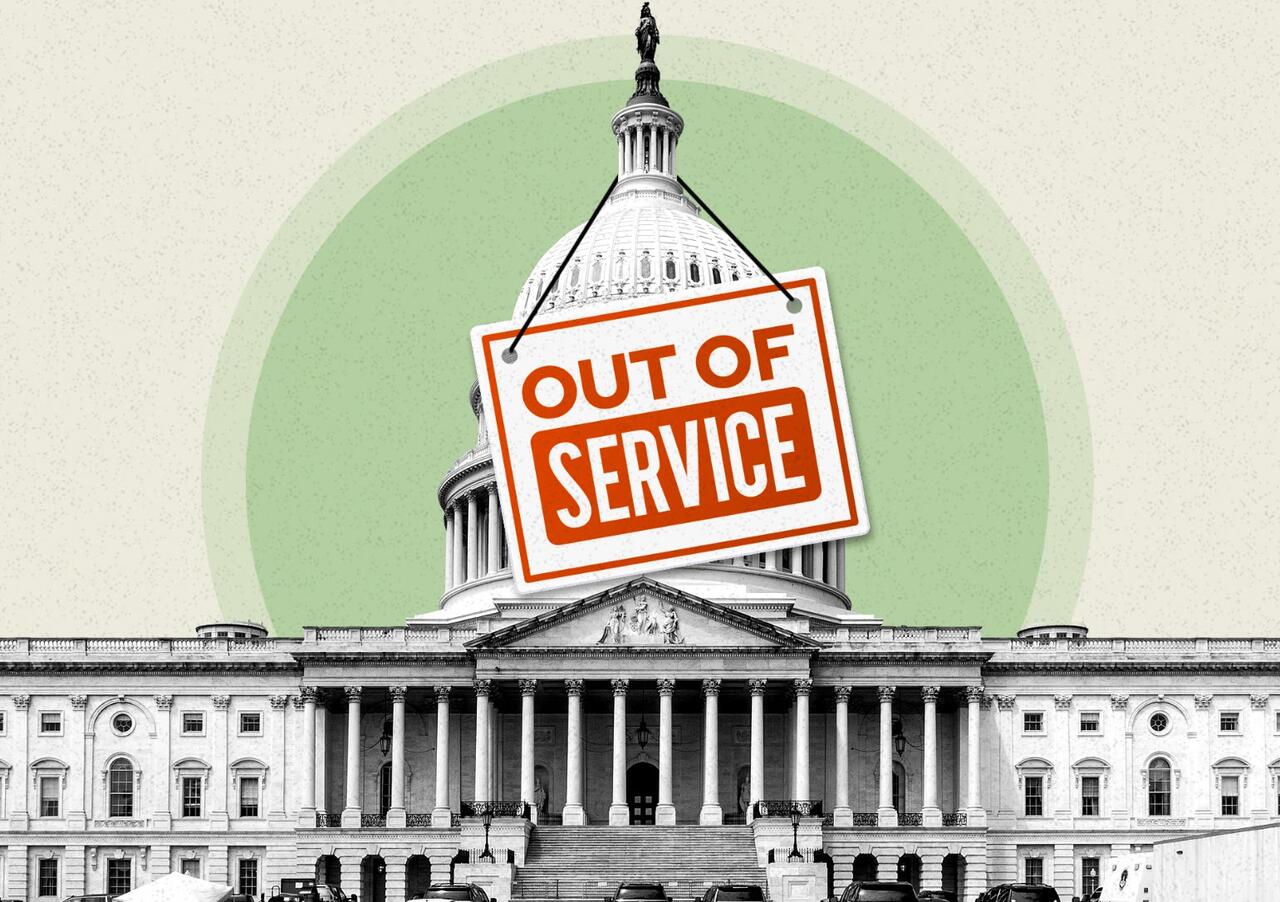
The U.S. House of Representatives on Tuesday will take up a bill to fund several sectors of the federal government as a partial shutdown enters its fourth day.
Many Democrats – including leaders – have vowed to withhold support from the package.
On Monday evening, the House Committee on Rules advanced the measure – which would fully fund five sectors of the government while extending funding for the Department of Homeland Security (DHS) until Jan. 13 – in a party-line 8–4 vote following a more than four-hour committee hearing.
As Jopseph Lord and Nathan Worcester report for The Epoch Times, with Democratic leaders indicating that they won’t give their backing to the measure, House Speaker Mike Johnson (R-La.) will need to rely mostly on his narrow Republican majority to pass the measure.
In a full vote of the House, Johnson can spare only one defection in a party-line vote, though some Democrats are expected to back the measure.
However, some issues with the Senate proposal could lead Republicans to oppose the measure.
Rep. Thomas Massie (R-Ky.), a longtime budget hawk and a particular opponent of the Cybersecurity and Infrastructure Security Agency (CISA), which falls under DHS, voted against the previous funding measure due to its funding for CISA, and could oppose the stopgap measure as well.
Other Republicans have pushed leadership to attach the Safeguarding American Voter Eligibility (SAVE) Act to the measure.
Leadership has resisted these demands, which Senate Minority Leader Chuck Schumer (D-N.Y.) says would make the bill dead on arrival in the upper chamber. The bill reported out of the Rules Committee didn’t include the SAVE Act.
Nevertheless, the passage of the legislation through the Rules Committee—which includes conservative skeptics of the bill such as Reps. Ralph Norman (R-S.C.) and Chip Roy (R-Texas)—is a good sign for Republican leaders on the funding package’s prospects.
House Majority Leader Steve Scalise (R-La.) downplayed the difficulties in comments to reporters on Monday.
“They all come down to the wire, and then we get our business done,” Scalise said.
The bill at issue would provide full-year funding for the departments of Defense, Labor, Health and Human Services, Education, Transportation, and Housing and Urban Development.
Democrats are demanding reforms to DHS and its subsidiary immigration enforcement agencies before they’ll support a full-year funding measure, though many House Democrats—including leadership—have expressed opposition to extending DHS funding at all before these reforms are addressed.
Rules Committee Ranking Member Jim McGovern (D-Mass.), meanwhile, voiced opposition to the measure at the hearing.
“I will not vote for business as usual while masked agents break into people’s homes without a judicial warrant, in violation of the Fourth Amendment,” he said, referencing ongoing disputes related to the executive branch’s use of self-issued administrative warrants, rather than court-issued judicial warrants, to enter homes.
However, one Democrat—House Appropriations Committee Chairwoman Rosa DeLauro (D-Conn.)—indicated at the hearing that she would break with her party to back the measure.
“I will support this package,” DeLauro said at the hearing, referencing the five full-year funding bills attached to the package that have Democratic support.
She said that without the funding extension for DHS, Democrats “won’t be able to bring the kinds of pressure” needed to add reforms to the full-year DHS funding package.
McGovern explained his opposition in response to a question from The Epoch Times outside the hearing room.
“Personally, [I] cannot bring myself to go for one more cent for ICE without some serious guardrails put in place, and I think the leverage we have is now more so than two weeks from now,” McGovern said.
Johnson has said he is “confident” that the partial shutdown will end with the Tuesday vote, despite indicating that House Democrats haven’t given their support to pass the Senate-passed measure.
“We have a logistical challenge of getting everyone in town, and because of the conversation I had with Hakeem Jeffries, I know that we’ve got to pass a rule and probably do this mostly on our own,” Johnson told NBC News’s “Meet the Press.”
House Democratic leadership has not indicated support for the measure publicly, despite it having been backed by Schumer and other Senate Democrats.
House Minority Leader Hakeem Jeffries (D-N.Y.) told ABC’s “This Week” that it’s clear that the “Department of Homeland Security needs to be dramatically reformed.”
“Masks should come off,” he said. “Judicial warrants should absolutely be required consistent with the Constitution, in our view, before DHS agents or ICE agents are breaking into the homes of the American people or ripping people out of their cars.”
‘Turnaround Tuesday’?: FundStrat’s Lee Says “All The Pieces Are In Place For Crypto To Be Bottoming”
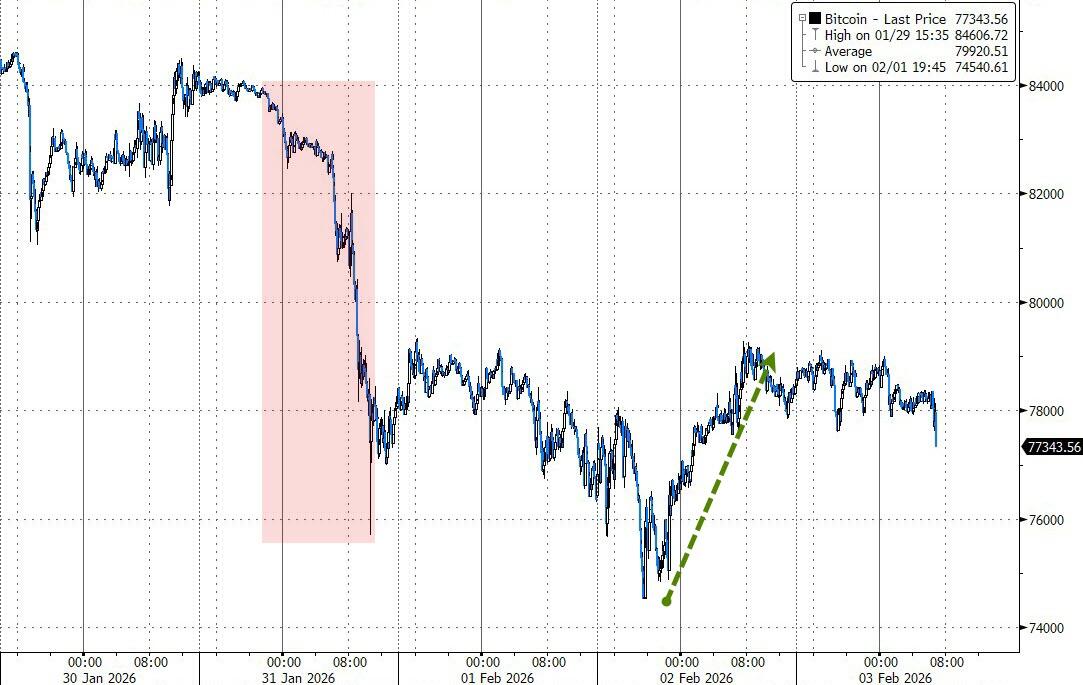
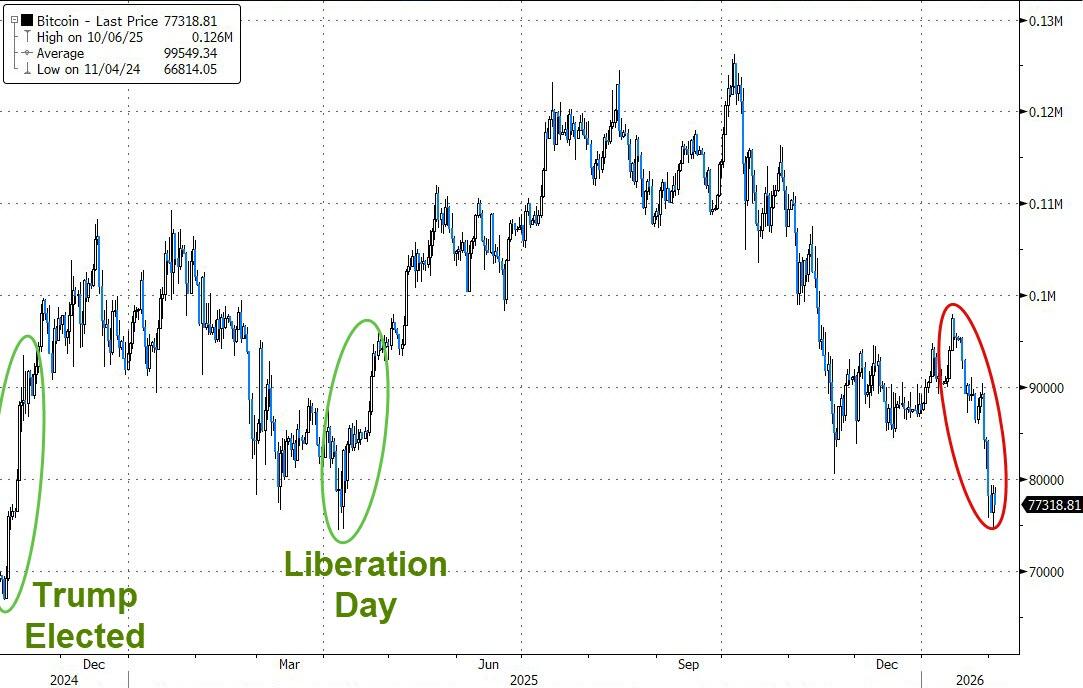
Bitcoin remains under pressure this morning, stalling after a brief rebound from a 10-month low as trader caution persisted in options activity.
Trading was mostly flat, with the biggest cryptocurrency hovering below $78,500 a day after bearish sentiment nearly pushed it to the lowest level since President Trump returned to the White House just over a year ago.
We know that Oct 10 (Billions $$ lost overnight in crypto) was a pivotal moment when some glitches Binance triggered a sell-off, exacerbated by Trump’s tariff tweet that day (100% on China) and MSCI reviewing DAT company eligibility (MSTR, etc.).
Also during Q4, bitcoin suffered from market makers deleveraging, the government shutdown, and the liquidity drain (overnight funding stress), which forced the Fed to restart QE in Dec.
Late in Q4 Mt Gox started to sell again. They still have about 40K bitcoin that they periodically sell, but anytime they show up, it weighs on bitcoin.
The cold spell in mid-January forced a lot of bitcoin miners offline to preserve electricity. This led to a drop in the hash rate, which also put pressure on prices.
Also in January, it became clear that theCLARITY Act (pro bitcoin) was going to be delayed because Trump wants to prioritize housing affordability first. So all the pumpers trying to front-run legislation just got carted off the field.
Simultaneously, bank excess reserves started to bleed lower again as Bessent filled up the TGA to prepare for big tax refunds in Q1 and the Fed was slow to expand its balance sheet in January.
More recently, the appointment of Warsh as Fed chair has triggered a plunge in precious metals on concerns of balance sheet contraction, and this selloff spilled over on bitcoin as well.
However, amid all that, CoinTelegraph reports that market and derivatives data suggests Bitcoin may find support around YTD lows…
1. Resilience in Bitcoin derivatives suggests that professional traders have refused to turn bearish despite the 40.8% price decline from the $126,220 all-time high reached in October 2025. Periods of excessive demand for bearish positions typically trigger an inversion in Bitcoin futures, meaning those contracts trade below spot market prices.
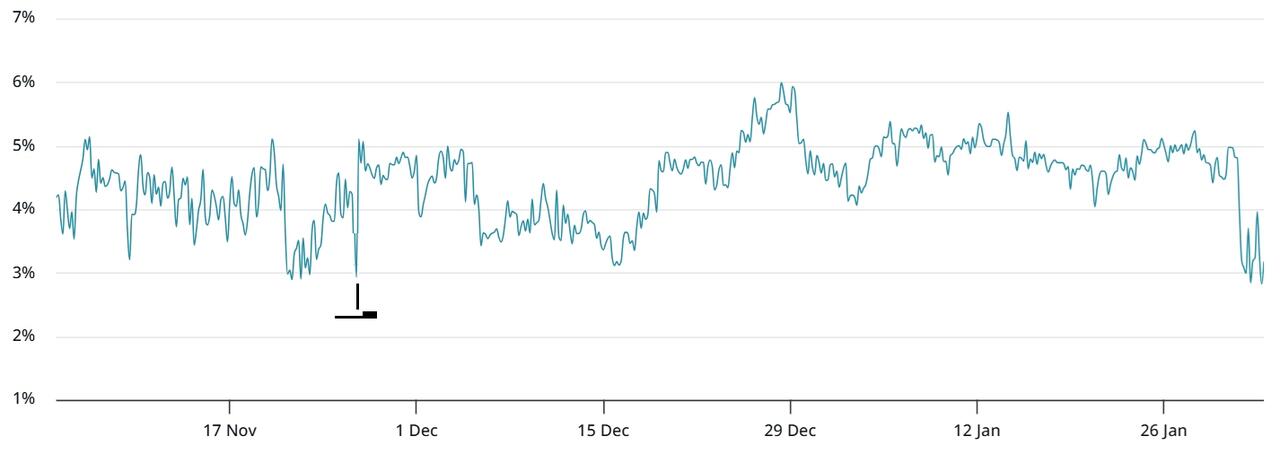
The Bitcoin futures annualized premium (basis rate) stood at 3% on Monday, signaling weak demand for leveraged bullish positions. Under neutral conditions, the indicator usually ranges between 5% and 10% to compensate for the longer settlement period.
2. Even so, there are no signs of stress in BTC derivatives markets, as aggregate futures open interest remains healthy at $40 billion, down 10% over the past 30 days.
“The BTC options market is showing signs of stabilizing as extreme downside fear begins to mean-revert,” said Sean McNulty, APAC derivatives trading lead at FalconX.
“However, a weekly close below $75,000 would invalidate the current bounce higher, and potentially open a vacuum toward that $69,000 to $70,000 zone.”
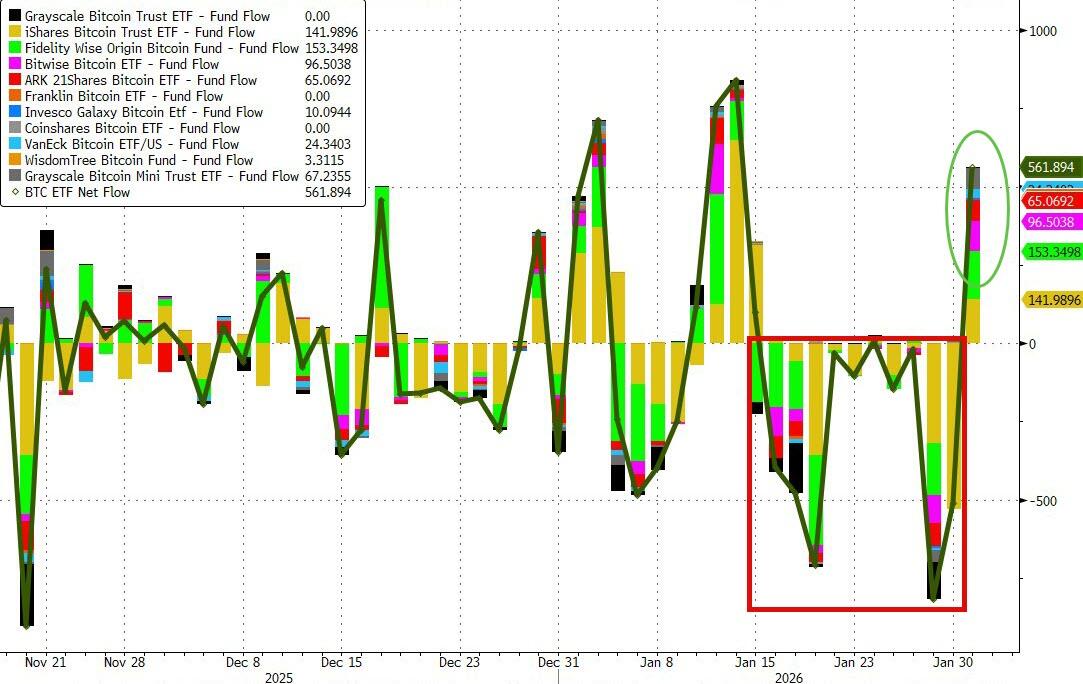
3. Traders grew increasingly concerned after spot Bitcoin exchange-traded funds (ETFs) recorded $3.2 billion in net outflows since Jan. 16. Even so, the figure represents less than 3% of the products’ assets under management. Additionally, after 10 straight days of outflows, BTC ETFs saw a large $561mm inflow yesterday…
Bitcoin US-listed spot ETFs daily net flows, USD
“For crypto specifically, ETF flow stabilization is the key signal to monitor,” said Timothy Misir, head of research at digital asset analytics firm BRN.
4. Strategy (MSTR US) also fell victim to unfounded speculation after its shares traded below net asset value, fueling fears that the company would sell some of its Bitcoin.
Beyond the absence of covenants that would force liquidation below a specific Bitcoin price, Strategy announced $1.44 billion in cash reserves in December 2025 to cover dividend and interest obligations. MSTR announces earnings on Thursday, so that could be a trigger for better or worse.
Bitcoin’s price may remain under pressure as traders try to pinpoint the drivers behind the recent sell-off, but there are strong indications that the $75,000 support level may hold.
“Turnaround Tuesday seems to be in effect,” said Jeff Anderson, head of Asia at STS Digital.
“Markets got over their skis selling risk assets, and now that everyone has calmed down a bit, things rally off the lows.”
Fundstrat Global Advisors’ Tom Lee is sounding a cautious yet optimistic note for crypto investors, arguing that recent turbulence in Bitcoin and Ethereum may be temporary.
“Investors appear more selective, waiting for clearer signals on macro conditions, liquidity, and whether Bitcoin can sustainably hold above prior highs before adding exposure,” said Sean Rose at digital-asset data firm Glassnode about flows and investor appetite.
“A similar slowdown in accumulation momentum among public and private companies reinforces this pattern.”
Despite near-term headwinds, Lee sees signals that crypto may be bottoming. Fundstrat advisor Tom DeMark believes “time and price” alignment has been reached, with Bitcoin back above $78,000 and Ethereum nearing $2,300.
Today @Fundstrat‘s Tom Lee on @CNBC: “All the pieces are in place for crypto to be bottoming right now”
Pepsi Cuts Some Prices As Much As 15% As K-Shaped Economy Squeezes Consumers
Readers already know the K-shaped economy is not going anywhere, even as the Trump administration attempts to correct the imbalance ahead of the midterms. For the junk-food-hungry U.S. consumer, there was a small win on Tuesday morning.
PepsiCo announced it will cut prices by 15% on snack brands like Lay’s and Doritos to restore affordability and help revive sales.
“PepsiCo is taking a meaningful step to lower the price on many of our most loved snacks by up to nearly 15%. This includes iconic favorites like Lay’s, Doritos, Cheetos, Tostitos and more,” PepsiCo wrote in a statement.
Rachel Ferdinando, CEO, PepsiCo Foods U.S., said her team has spent the “past year listening closely to consumers, and they’ve told us they’re feeling the strain” from elevated processed food prices.
“Lowering the suggested retail price reflects our commitment to help reduce the pressure where we can. Because people shouldn’t have to choose between great taste and staying within their budget,” Ferdinando said.
The announcement comes just days before the Super Bowl this weekend, as consumers rush to supermarkets to stock up on junk food for the big game, with this year’s main event featuring the Seattle Seahawks against the New England Patriots.
We must note, and can’t help but wonder, whether activist investor Elliott Investment Management, which built a $4 billion position in the stock and aimed to overhaul PepsiCo toward greater affordability in late 2025, had any say in the latest decision to trim prices ahead of the Super Bowl.
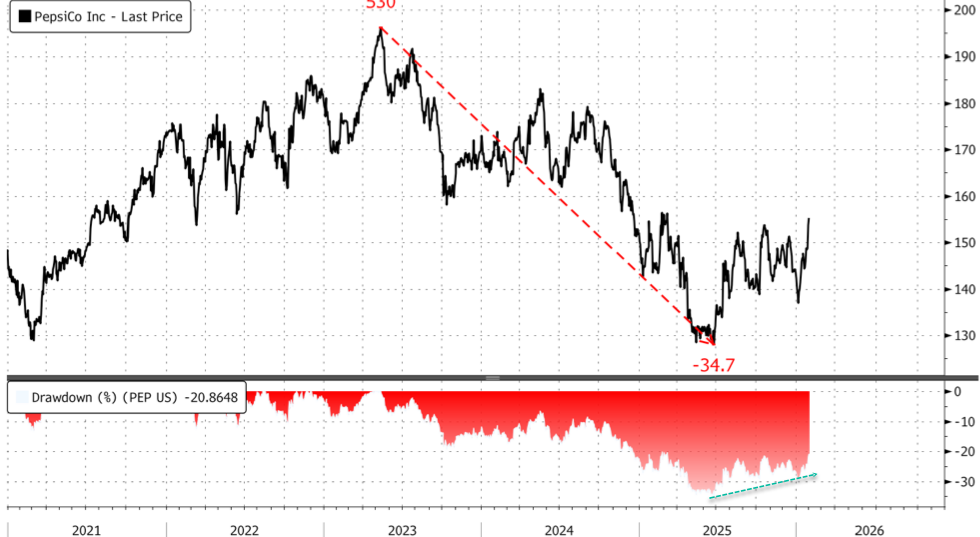
Pepsi shares were marginally higher in premarket trading in New York. Shares remain -20% from their peak, when they nearly topped $200 per share in mid-2023.
Bloomberg noted that PepsiCo has accelerated its cost-reduction efforts, including reducing headcount, closing three plants, and consolidating several manufacturing lines, with “additional actions planned for the near future.” It also announced a product portfolio that would be slashed by 20% in the coming months.
It really does seem like Paul Singer’s team at Elliott is busy at work with PepsiCo…
Rising energy demand, inflation, grid investment, extreme weather and volatile fuel costs are increasing the cost of electricity faster than many households can keep up, and there are no easy fixes, experts say.
Mitigating the problem would require threading a needle of policy alternatives, but even with the right policies, it will take time to reduce customer energy burdens. The U.S. Energy Information Administration puts the national average residential price per kilowatt hour in 2026 at 18 cents, up approximately 37% from 2020.
“I don’t see hidden costs that can be suddenly squeezed out of the system,” said Ray Gifford, managing partner of Wilkinson Barker Knauer’s Denver office and former chair of the Colorado Public Utilities Commission. “You are talking about an industry where most of the costs are fixed, and the assets are long-lived.”
Energy affordability has recently become politically salient, but for many low-income people, “the energy affordability crisis is not new,” said Joe Daniel, a principal on the Rocky Mountain Institute’s carbon free electricity team.
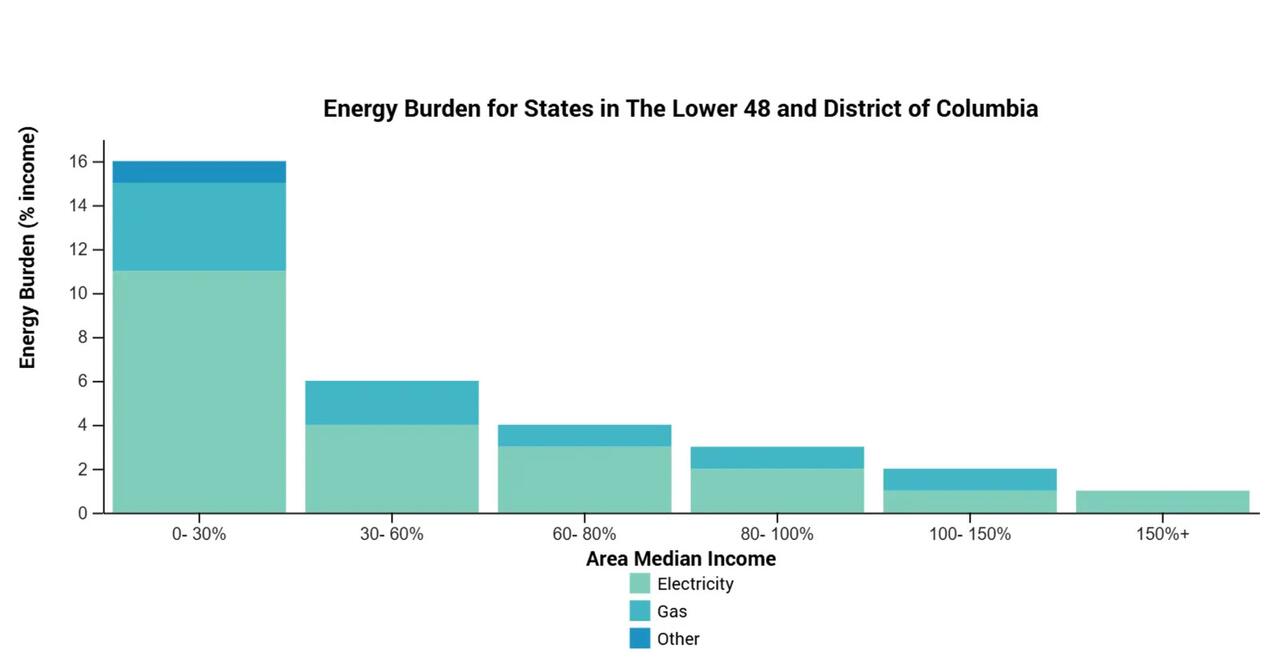
In 2017, 25% of all U.S. households — more than 30 million — faced a high energy burden, defined as spending more than 6% of income on energy bills, according to a report from the American Council for an Energy-Efficient Economy. For the poorest, it can be much higher. Households making less than 30% of area median income paid about 11% of their income for electricity alone, according to data from the Department of Energy covering the years 2018 to 2022.
“What is new is that because electricity prices have outpaced inflation, and, more importantly, dramatically outpaced wages, moderate- and middle-income families are starting to feel the squeeze,” Daniel said.
Between December 2023 and June 2025, household energy arrearages rose by about 31%, according to the National Energy Assistance Directors Association. Forced disconnections for nonpayment are also rising, from 3 million in 2023 to 3.5 million in 2024 and potentially 4 million in 2025, it said.
The increases in electricity prices have not been felt evenly across the country, and the reasons for their rise also vary by region. Still, residential rates have risen faster than those for commercial and industrial customers, and the prices charged by investor-owned utilities are higher and have risen faster than those charged by public power utilities, raising pressure on regulators and elected officials to try to rein in costs.
At least six states introduced legislation last year to limit utilities’ return on equity. California’s Public Utilities Commission recently lowered utilities’ ROE in that state by 0.3 percentage points. And newly elected New Jersey Governor Mikie Sherrill used her first day in office to issue executive orders seeking to freeze electricity cost increases and direct regulators to “modernize” the electric utility business model by making profits “less dependent on capital spending.”
Investors are spooked. Jefferies reported “considerable inbound concern from investors of all types” in January, ahead of Sherrill’s inauguration, related to the anticipated freeze.
But some consumer advocates question whether actions taken now will be too little, too late.
“They’re freezing rates at the highest they’ve ever been,” said Mark Wolfe, executive director of the National Energy Assistance Directors Association.
Low-income customers are “continually falling behind,” and utilities “spend considerable resources trying to collect,” he said. “I don’t think it works, especially as electricity gets more and more expensive, going up faster than incomes.”
Jay Griffin, a former utility regulator and executive chair for the Regulatory Assistance Project, recently wrote that utility business model reform “isn’t just an abstract policy debate, it’s a practical necessity.”
“By rewarding capital investment over outcomes, the model encourages utilities to ‘spend money to make money,’ while discouraging non-capital solutions like demand management and distributed energy resources,” he said. “This model creates risk for customers and investors alike.”
The electric utility sector says it is working to address affordability issues.
Last year, investor-owned utilities allocated about $7 billion to support customer programs, according to their trade group, the Edison Electric Institute. Those efforts included energy audits and weatherization education, usage-reduction programs for low-income households, bill assistance and payment plans, relief programs and referrals for community support.
“As demand grows in our evolving economy, we will continue building on our long track record of delivering customer savings and supporting families facing financial hardships,” EEI said in an emailed statement.
Rising demand — does it hurt or help?
The reasons for electricity price inflation are myriad and the mechanisms for determining price depend on the market, making it hard to generalize across the entire U.S. Grid investments, rising material and labor costs and natural disasters all play a role, but perhaps the issue that has attracted the most attention is that of large-load data centers and their unprecedented demands for power.
After decades of stagnant growth, the EIA expects demand from the commercial and industrial sectors to grow U.S. electricity consumption by 1% in 2026 and 3% in 2027, “marking the first four years of consecutive growth since 2005–07, and the strongest four-year period of growth since the turn of the century.”
Looking further out, the Bank of America Institute projects demand to rise at a 2.5% compound annual rate through 2035. It attributes the growth to not just data centers, but also building electrification, industrial growth and electric vehicles.
Aggressive load forecasts have helped drive capacity prices to new highs in the PJM Interconnection, the largest grid operator in the country. Data center load accounted for $6.5 billion, or 40%, of the $16.4 billion in costs from the PJM Interconnection’s December capacity auction, according to the grid operator’s independent market monitor.
“Generally speaking, the higher the demand, the higher the prices go,” said Marc Brown, the Consumer Energy Alliance’s executive director of Northeast.
But some research has found that growing demand — from large loads as well as consumer electrification efforts — can also be a grid asset. A study released over the summer from the Lawrence Berkeley National Laboratory concluded that load growth helped depress electricity prices over the past five years, and states with the largest price increases typically featured shrinking customer loads.
“It remains unclear whether broader, sustained load growth will increase long-run average costs and prices,” the researchers said. “In some cases, spikes in load growth can result in significant, near-term retail price increases.”
RMI’s Daniel said higher throughput on the grid can help to lower rates by spreading costs over a broader customer base, and flexible demand can be used to address grid stress and peak loads.
“Done poorly or done correctly, it has the capability of dramatically impacting rates and bills,” he said.
Gifford also said that load growth has the potential to benefit the grid, but only under the right circumstances.
“Load growth, if allocated and planned for properly, can lower per-unit costs to customers on the [transmission and distribution] and even generation side,” Gifford said. But the impacts would take some time to materialize.
A lack of competition in transmission and distribution
Experts say transmission and distribution costs are another major driver of rising consumer bills.
“Some of that is because it’s an old grid that needs to get replaced,” said said RMI’s Daniel. “And because of inflation and supply chain issues, the costs to replace an aging grid have gone up.”
Producer price index figures from November show copper wire and cable, as well as switchgear, costs were all up more than 11% year over year and about 60% from 2020. Tariffs, inflation and supply-chain issues have also impacted key components like aluminum, transformers and turbines.
But many of the increases appearing on customer bills now are for infrastructure that was built over the past several years. And some argue the ROE model is incentivizing utilities and infrastructure owners and developers to build more expensively than necessary.
There is a “regulatory gap in how transmission gets approved and then put on bills of utilities in parts of the country,” Danielsaid. “We are building, essentially, the wrong type of transmission.”
Utilities are building local, supplemental projects “that undergo less scrutiny and still deliver a high rate of return, instead of the larger transmission projects that deliver on affordability and reliability,” he said. A 2024 RMI report, for instance, found that in New England, annual spending on local transmission projects increased eightfold from 2016, to nearly $800 million in 2023. The Berkeley Lab study found that overall, investor-owned utilities’ inflation-adjusted spending on distribution and transmission increased from 2019 to 2024 while generation costs declined.
Paul Cicio, chair of the Electricity Transmission Competition Coalition and president of the Industrial Energy Consumers of America, said the fault lies with regulators.
In 2011, the Federal Energy Regulatory Commission issued Order 1000, which requires large transmission projects be subject to competitive bidding. But it made an exception for projects necessary for short-term reliability.
The result, Cicio said, was that just 5% of transmission projects are now being competitively bid. The “loophole” was supposed to be closed in 2024 with FERC Order 1920, but the order did not include ratepayer cost containment provisions, he added.
“FERC needs to close that loophole and require that these projects are competitively bid between utilities,” Cicio said. “Affordability is becoming a national political issue. … Electricity costs are now on everybody’s radar.”
Utilities have spent almost $154 billion annually on transmission investments in the last five years, said Cicio, “but that’s only the initial cost.”
When FERC incentives and financing charges are factored in, the cost to consumers winds up being almost $1.8 trillion on transmission in the last five years, he noted.
“These are massive amounts of layered-in dollars, and consumers are on the hook,” Cicio said.“The cake is baked.”
Storms and wildfires require grid upgrades
Industry sources and grid planners say that in addition to building out transmission and distribution, utilities also have to harden the grid in the face of more destructive storms and wildfires.
Last year, U.S. residents lost more power than any year in the previous decade, according to the EIA, with hurricanes a leading cause. The annual average of 11 hours of electricity interruptions was nearly double the annual average of the last 10 years, it said.
In California, which has some of the highest electricity prices in the country, wildfire mitigation efforts cost ratepayers $27 billion between 2019 and 2023, with 40% of that coming from insurance costs, according to the World Resources Institute.
State policies driving decarbonization can also lead to higher prices, some say.
The Berkeley Lab report linked price increases in recent years to net metered behind-the-meter solar and renewable portfolio standard programs.
States with RPS programs that called for new supplies in the last five years increased retail electricity prices by about 0.4 cents/kWh, the study said. It also found, however, that electricity prices were unaffected by “market-based” utility-scale renewable energy projects built outside of RPS mandates.
“Programs like RGGI have seen pretty significant [cost] increases,” said Brown from the Consumer Energy Alliance. Program revenues could be returned to consumers, or expenses capped, he said.
Gifford said states with carbon reduction deadlines may need to rapidly to squeeze out a final 20% of carbon-emitting resources.
“You could imagine some of those states reconsidering those mandates or creating a political face-saving way to back off,” he said. “But some of those transition costs are baked in already.”
LNG exports contribute to volatile gas prices
Natural gas prices are one of the biggest determinants of power prices because gas generators tend to set the marginal price of electricity in organized markets, and vertically integrated utilities directly pass fuel costs on to consumers.
The EIA expects the spot price of natural gas at Henry Hub to go down this year by 2% from 2025 before rising again in 2027.
“Natural gas prices increase in our forecast because growth in demand — led by expanding liquefied natural gas exports and more natural gas consumption in the electric power sector — will outpace production growth,” it said.
The advocacy group Public Citizen published a report in December arguing the Trump administration’s policies to increase liquefied natural gas exports are driving higher fuel costs and volatility, and, ultimately, higher electricity bills. Under President Trump, DOE has worked to aggressively increase exports, which the agency says are approximately 25% above 2024 levels.
An average U.S. household paid over $124 more on its utility bills in the first nine months of 2025 than in the same period a year earlier due to rising natural gas prices, according to the report.
“And the driver of this, that everyone in the industry acknowledges, is overwhelmingly record LNG exports that are just getting bigger and bigger,” said Tyson Slocum, director of Public Citizen’s energy program.
Eight U.S. LNG export facilities now use more natural gas than all 74 million domestic gas utility household consumers, he said, adding: “That’s madness.”
“If you start to take steps to reduce demand by LNG exporters, it is going to have a downward effect on domestic gas prices,” Slocum said.
Customer support solutions
While experts and government agencies that track electricity prices see little hope for relief this year, some utilities and states are emphasizing bill assistance and other programs intended to help lower-income households in particular.
But NEADA’s Wolfe said the programs don’t go far enough, and changes are necessary, particularly for low-income customers.
“There should be no charge,” he said, for a “base amount of electricity for very-low-income families.”
NEADA has also been critical of the Trump administration’s attitude toward the Low Income Home Energy Assistance Program, known as LIHEAP, a federally-funded, state-administered utility bill assistance program that has helped families afford power for decades.
In April, the Department of Health and Human Services fired the entire LIHEAP program staff, and the administration proposed eliminating funding for the program in fiscal year 2026. The future of the program remains uncertain as lawmakers negotiate government funding.
Even if LIHEAP survives, its budget would need to be increased “maybe 5-10 times in order to actually fully address the problem,” said Daniel.
Utilities and governments should lean into low-income programs that directly provide energy assistance and support, he said.
Fewer unpaid bills means fewer utility write-offs, which ultimately are paid by all customers.
Iran Says US Carrier Has Retreated Near Yemen, Opening Door To Diplomacy
Iran’s Fars news has said that the US aircraft carrier Abraham Lincoln has retreated near Yemen, opening room for the pursuit of diplomacy in hopes of staving off military confrontation between Washington and Tehran.
The report says that the large nuclear-powered carrier had“withdrawn” about 1,400 kilometers (870 miles) from the port city of Chabahar in southern Iran, and that is now operating near the Gulf of Aden, east of Yemen’s Socotra Island; however, the Pentagon had not immediately confirmed this.
The carrier group reportedly has several accompanying destroyers and submarines, as is standard when operating in an active deployment, especially in the Central Command (CENTCOM) area.
US envoy Steve Witkoff and Iranian Foreign Minister Abbas Araghchi are expected to meet on Friday in Istanbul to discuss a possible nuclear deal, according to Axios.
For now, uncertainty hangs above the meeting planning – but the apparent distancing of US and Iranian forces in the Gulf region is a big and positive sign that the dialogue is proceeding, which would constitute the first direct talks since the June war.
Iranian foreign Miniser Araghchi has stressed that “Iran is ready for diplomacy” but has also spelled out that “diplomacy is incompatible with pressure, intimidation, and force.” The Iranians are hopeful about potential renewed direct contacts with Washington, however.
Also, Iranian President Masoud Pezeshkian in a new Tuesday statement signaled conditional support for renewed talks with Washington as regional intermediaries – including Turkey, Egypt, and Qatar – scramble to dial down rising regional tensions.
In a social media post, Pezeshkian said he backs “fair and equitable negotiations” with the United States and has instructed his top diplomat Araghchi to engage with US officials “provided that a suitable environment exists – one free from threats and unreasonable expectations.”
Pezeshkian did not explicitly reference the meeting or any details reportedly expected in Istanbul, but his comments add to mounting signals from Tehran that diplomacy remains on the table, as long as it is not conducted under pressure or ultimatums.
The Quincy Institute’s Trita Parsi has concluded Iran sees itself as having nothing to lose if it tries this diplomatic Hail Mary before possibly trading bombs with the US.
“Direct talks between Iranian officials and Trump himself may appear completely unrealistic, but some of the main turning points in the US-Iran drama were caused by moves that most believe were completely impossible,” he wrote. “I don’t see what the Iranians have to lose by trying this card.“


 (@CBSSportsGolazo)