Jane Street Paid Employees $9.4 Billion, Twice What It Paid Last Year, After Record 2025 Results

Jane Street Paid Employees $9.4 Billion, Twice What It Paid Last Year, After Record 2025 Results

Jane Street Group has evolved from a niche trading shop into one of Wall Street’s most profitable firms and employees are reaping the rewards. The firm paid roughly $9.4 billion in compensation last year, more than twice what it distributed a year earlier, according to Bloomberg.

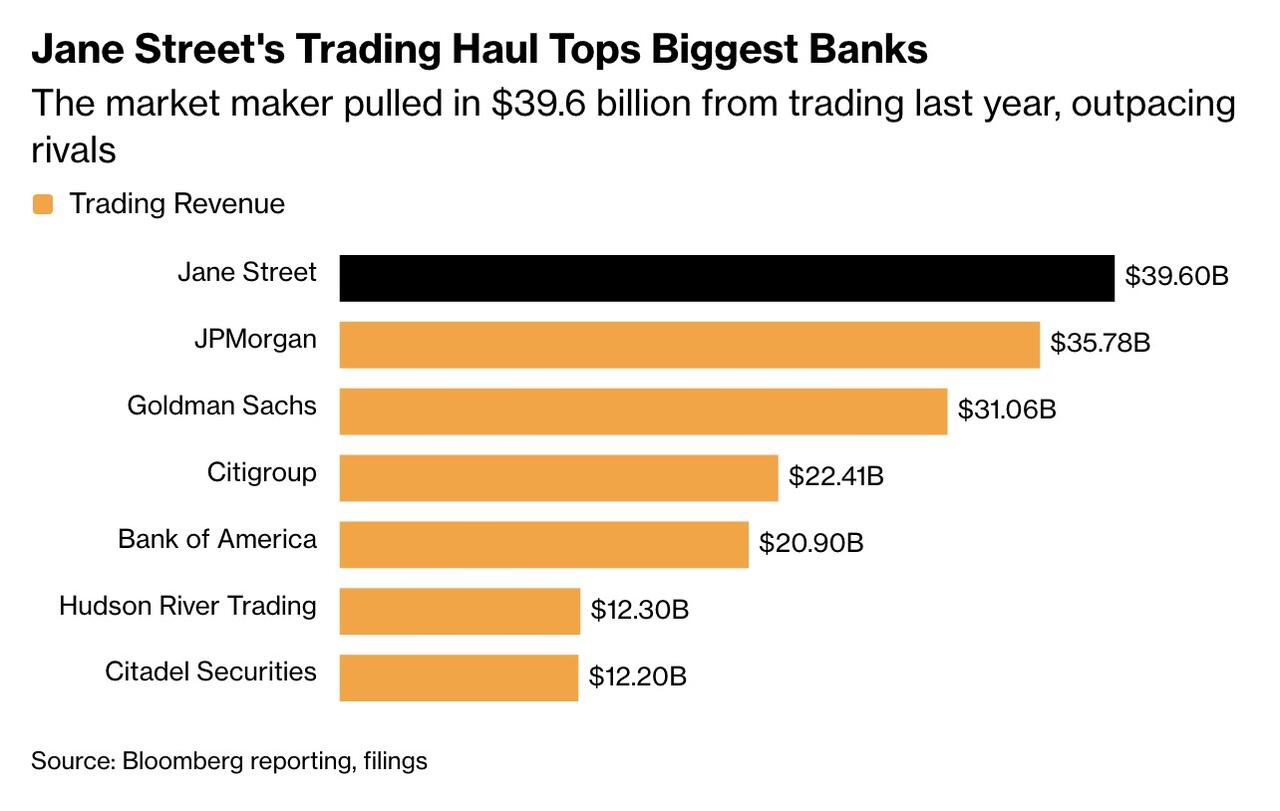
On average, that translated to about $2.7 million per employee, far ahead of traditional banks like Goldman Sachs. The massive payouts followed a record year in which Jane Street generated nearly $40 billion in trading revenue, outpacing major banks and rivals in the market-making business.
Bloomberg writes that the firm started in 2000 trading American depositary receipts before expanding into ETFs and other electronically traded assets. As more markets became automated, Jane Street scaled aggressively and now handles trading across equities, bonds, ETFs, and other products.

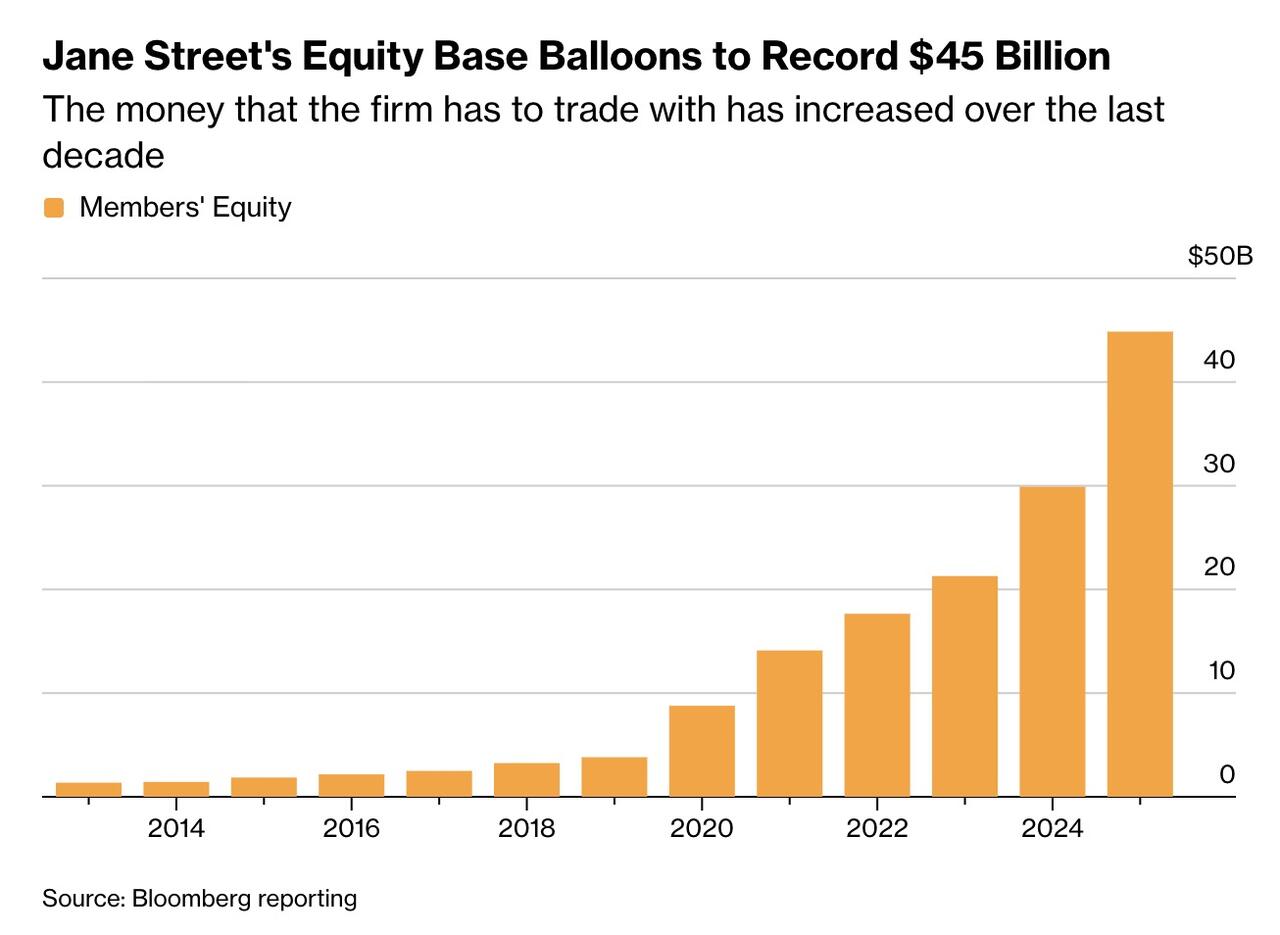
Its financial resources have grown just as dramatically. The firm’s internal capital base has climbed to roughly $45 billion, up nearly twentyfold over the past decade, giving it significant flexibility to capitalize on market swings without relying heavily on outside funding. It has also raised additional cash through debt markets.

That war chest has allowed Jane Street to move beyond day-to-day trading. The firm has built positions in high-growth tech companies, including Anthropic, and has also backed CoreWeave while exploring deals involving Fluidstack.
Jane Street also operates differently from most major financial firms. It doesn’t have a traditional CEO hierarchy and is instead overseen by a group of partners. The firm is well known for recruiting mathematicians, engineers, and problem-solvers to sharpen its trading systems.

Despite regulatory and legal challenges — including scrutiny in India and litigation tied to the collapse of Terraform Labs — Jane Street continues to widen its lead. It outperformed Citadel Securities last year and is continuing to expand, including plans for a larger office in London.

Recall, we wrote just days ago that Jane Street reeled in a Wall Street record $39.6 billion of trading revenue last year, more than any Wall Street bank. According to the report, the firm beat out all global investment banks after reaping $15.5 billion in the year’s final quarter, and with only 3,500 employees, it beat nearest rival JPMorgan by 11% during the year. The company’s adjusted ETBIDA for the full year was a stunning $31.2 billion. 
While Jane Street’s profits were lifted by surging valuations of its stakes in privately held companies, the firm’s main business matching buyers and sellers across assets thrived on bouts of market volatility. The new annual record – which includes gains on long-term investments – shows “how the balance of power has shifted in one of the most lucrative arenas of global finance.”

While it has kept a remarkable low profile, its recent public appearances have been less than laudatory: The company’s record haul is confirmation that Jane Street, long known for its secrecy, was able to keep growing after getting thrust into the spotlight in mid-2025 when authorities in India accused of manipulating markets while running what had once been one of the firm’s most lucrative trading strategies.

Jane Street has denied those allegations and is fighting them in court. In February, Jane Street was sued by the bankrupt Terraform Labs estate, accusing it of engaging in insider trading that precipitated the $40 billion crash of cryptocurrencies associated with Terraform; this week the HFT firm also urged a judge to throw out that lawsuit.

Tyler Durden
Sun, 05/03/2026 – 19:15

via ZeroHedge News https://ift.tt/28jrY7D Tyler Durden
Jailed Iranian Nobel Peace Prize Winner Hospitalized In Critical Condition

Jailed Iranian Nobel Peace Prize Winner Hospitalized In Critical Condition

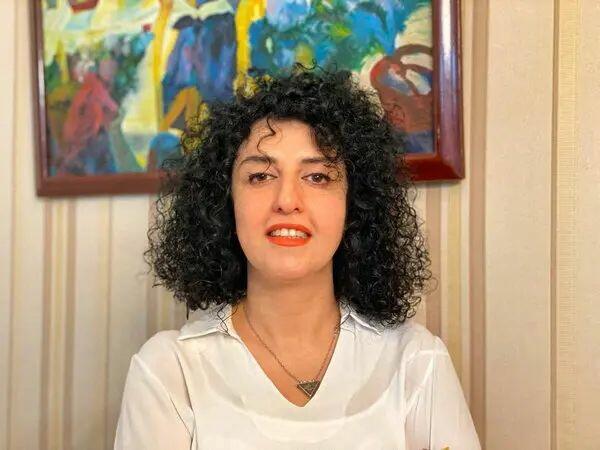
Narges Mohammadi, the 2023 Nobel Peace Prize laureate and prominent Iranian human rights activist, remains in critical condition in a hospital in Zanjan, northwestern Iran, after collapsing in prison last week with severe cardiac distress. She was transferred by ambulance to the local hospital’s coronary care unit on Friday, May 1, 2026, following repeated episodes of loss of consciousness, extreme chest pain, and blood pressure fluctuations, the NY Times reports.

Narges Mohammadi poses in an undated photo provided by her family. The Nobel laureate has suffered from heart ailments for years, according to her family. Credit…Mohammadi family

Her family and lawyer have urgently called for her transfer to a specialized facility in Tehran, where her longtime cardiologist could provide care, but Iranian judicial authorities have refused the requests. The Narges Foundation and her husband, Taghi Rahmani, who lives in exile in Paris with their children, stated that her life is in danger and described the move to the Zanjan hospital as a “last-minute” response after prison doctors determined her condition could no longer be managed on-site.

“We are extremely worried about her; she has collapsed and lost consciousness several times, and her life is in danger,” Rahmani said in an interview. “Our request is basic and urgent: send her to a hospital in Tehran immediately.” Her lawyer, Mostafa Nili, confirmed on social media that she had experienced acute cardiac crisis symptoms in recent days and was initially reluctant to go to the Zanjan facility due to her medical history, which includes multiple angiographies and stent placements.

Mohammadi, 54, has long suffered from chronic heart problems, a prior lung embolism (pulmonary embolism), and persistent headaches linked to ill-treatment in prison, including beatings by guards, according to her family and legal team. Prison authorities have repeatedly denied her adequate medical care in the past, opting instead for treatment in rudimentary prison clinics despite medical recommendations for specialized care.

This latest emergency follows a suspected heart attack in late March 2026, when she was found unconscious in her cell in Zanjan Prison on March 24. Fellow inmates reported she lay with her eyes rolled back for over an hour. Despite clear signs of cardiac distress, authorities refused hospital transfer or specialist evaluation at the time, according to reports from her legal team and visits documented by human rights groups.

She has spent much of her adult life imprisoned for her pro-democracy and women’s rights activism in Iran’s theocratic system. She was previously serving a sentence that included approximately 10 years on national security charges. In February 2026, a court added seven and a half more years—six years for “assembly and collusion against national security” and one and a half years for “propaganda activities”—along with a two-year internal exile and travel ban, bringing her total sentence to around 17–18 years, according to her foundation and lawyers.

She had been granted a yearlong medical furlough in December 2024 due to her deteriorating health but was rearrested on December 12, 2025, while attending a memorial service in Mashhad for slain human rights lawyer Khosro Alikordi. She delivered a speech critical of the government and was violently detained along with other activists. She was subsequently transferred to the more restrictive Zanjan Prison, far from her family in Tehran.

In 2023, while imprisoned, she received the Nobel Peace Prize for “her fight against the oppression of women in Iran and her fight to promote human rights and freedom for all.” The award highlighted her decades of work documenting executions, advocating against compulsory hijab laws, and supporting political prisoners.

Her current hospitalization occurs against a backdrop of intensified repression in Iran. Following nationwide anti-government protests in January 2026 and the escalation of conflict involving the United States and Israel that began in late February 2026, authorities have ramped up arrests of activists, journalists, and students. Human rights monitors report that Iran has carried out at least 22 executions of political prisoners in the past six weeks (mid-March to late April 2026), with at least 10 linked to the January protests. Dozens more face imminent risk of execution.

On April 30, 2026 (Thursday), 21-year-old Sasan Azadvar Junaqani (also spelled Jonaghani or Joonqani), a karate athlete from Isfahan, was executed in Dastgerd Prison in Isfahan. Arrested during the January protests and accused of throwing a stone at security forces and other protest-related acts, he was convicted of “moharebeh” (enmity against God) in a swift Revolutionary Court proceeding widely criticized by rights groups as a sham trial lacking due process. Iran Human Rights (IHRNGO) and HRANA documented the case as one of at least 10 protester executions tied to the recent demonstrations.

Omid Memarian, a senior fellow and Iran expert at the Washington, D.C.-based Dawn think tank focused on U.S. foreign policy, described the pattern as part of a broader campaign of intimidation enabled by the wartime environment.

“The wartime security environment has significantly increased the risks of activism in Iran, giving the government a broader pretext to use violence and making the level of repression, outside peak protest moments, considerably harsher than before the war,” Memarian said.

Iran’s mission to the United Nations declined to comment on Ms. Mohammadi’s health situation. Her family, the Narges Foundation, and international observers continue to demand her immediate transfer to Tehran for proper medical treatment and have expressed fears that delays could prove fatal. As of Saturday, May 2, and into Sunday, May 3, she remained in unstable condition in the Zanjan hospital’s intensive care unit, receiving oxygen support amid ongoing concerns from relatives and rights advocates.

Tyler Durden
Sun, 05/03/2026 – 18:05

via ZeroHedge News https://ift.tt/HcmDYrJ Tyler Durden

Our Coblogger Stewart Baker Has Died

It grieves me to report that our coblogger, and my friend, Stewart Baker died suddenly a few days ago at age 78. Stewart always wrote and spoke modestly, but he (alongside former District Judge Paul Cassell and former U.S. Commission on Civil Rights member Gail Heriot) was the most accomplished of any of us: In addition to a long and successful career as a lawyer at Steptoe & Johnson, he also served as General Counsel of the National Security Agency (1992-94) and as Assistant Secretary for Policy in DHS (2005-09). At the start of his career, after graduating from UCLA School of Law in 1976, he clerked for First Circuit Judge Frank Coffin and then for Justice John Paul Stevens.

I invariably appreciated Stewart’s incisive, knowledgeable, and thoughtful comments on many topics. His perspectives were usually quite conservative, at times more conservative than mine; but even when we disagreed, I always enjoyed reading his work and talking to him, and learned much from him. We also became good friends; I would often look him up when I visited D.C., and just had dinner with him two months ago.

It’s shocking to know that he is gone. As the Russians say (“земля ему пухом”), and as the Romans said (“sit tibi terra levis”)—may the Earth rest lightly on him.

The post Our Coblogger Stewart Baker Has Died appeared first on Reason.com.

from Latest – Reason.com https://ift.tt/eIOnWET
via IFTTT

Our Coblogger Stewart Baker Has Died

It grieves me to report that our coblogger, and my friend, Stewart Baker died suddenly a few days ago at age 78. Stewart always wrote and spoke modestly, but he (alongside former District Judge Paul Cassell and former U.S. Commission on Civil Rights member Gail Heriot) was the most accomplished of any of us: In addition to a long and successful career as a lawyer at Steptoe & Johnson, he also served as General Counsel of the National Security Agency (1992-94) and as Assistant Secretary for Policy in DHS (2005-09). At the start of his career, after graduating from UCLA School of Law in 1976, he clerked for First Circuit Judge Frank Coffin and then for Justice John Paul Stevens.

I invariably appreciated Stewart’s incisive, knowledgeable, and thoughtful comments on many topics. His perspectives were usually quite conservative, at times more conservative than mine; but even when we disagreed, I always enjoyed reading his work and talking to him, and learned much from him. We also became good friends; I would often look him up when I visited D.C., and just had dinner with him two months ago.

It’s shocking to know that he is gone. As the Russians say (“земля ему пухом”), and as the Romans said (“sit tibi terra levis”)—may the Earth rest lightly on him.

The post Our Coblogger Stewart Baker Has Died appeared first on Reason.com.

from Latest – Reason.com https://ift.tt/eIOnWET
via IFTTT

Bessent On Iran: “We Are Suffocating The Regime”

Bessent On Iran: “We Are Suffocating The Regime”

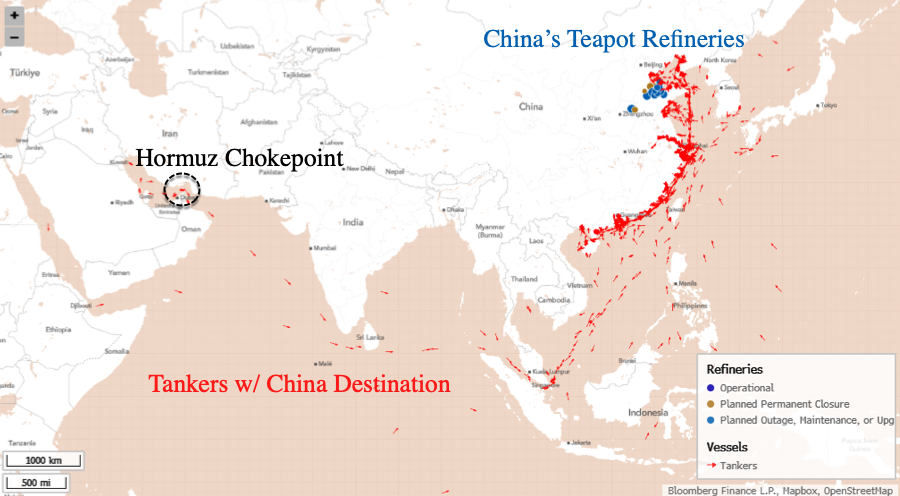
Treasury Secretary Scott Bessent joined Fox News’ Sunday Morning Futures with Maria Bartiromo to discuss how the Trump administration is “suffocating” Iran with economic and financial pressure amid an ongoing U.S. military blockade of the Hormuz chokepoint.

We are running a marathon over the past 12 months, and now we are sprinting toward the finish line”” Bessent told Bartiromo earlier this morning. 

Bessent explained how the U.S. maximum pressure campaign on Tehran has become “a real economic blockade,” claiming the regime is “not able to pay their soldiers” and that oil infrastructure is quickly deteriorating, as crude oil storage quickly rises while export channels remain shuttered.

Bessent warned that Iran may have to start shutting in oil wells within the next week as exports remain constrained.

Their oil infrastructure is starting to creak,” he said. “It hasn’t been maintained, again because of our decades-long sanctions against them.”

Bessent said no tankers are transiting the critical waterway from the Iranian side, “and we have increased the pressure on anyone trying to remit money into Iran to help the IRGC,” referring to Iran’s Islamic Revolutionary Guard Corps.

Late last week, the Treasury Department’s Office of Foreign Assets Control imposed sanctions on Chinese independent “teapot” refineries, particularly those in Shandong Province, for their continued purchase and refining of Iranian crude.

By Saturday morning, Beijing announced that companies in the country should ignore and not comply with U.S. sanctions targeting five domestic refineries.

“The Chinese government has consistently opposed unilateral sanctions that lack authorization from the United Nations and a basis in international law,” Beijing’s Commerce Ministry wrote in a statement. 

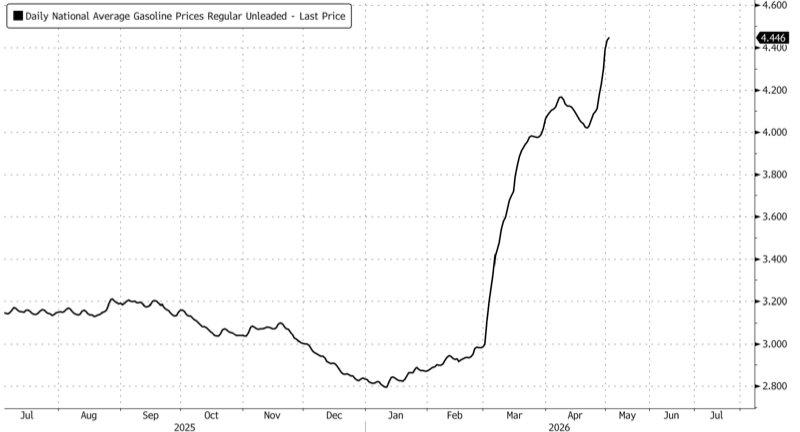
President Trump’s maximum pressure campaign on Tehran comes as the latest U.S. national average for 87-octane gasoline at the pump has topped $4.446 per gallon. Demand destruction starts around $5 per gallon, with numerous Goldman notes indicating that working-poor consumers are already dialing back purchases or trading down at gas stations and convenience stores due to the recent fuel price shock.

On Saturday, President Trump stated that he “can’t imagine” a new peace plan from Tehran that he will review would be acceptable. He added that Iran has not yet paid “a big enough price for what they have done.”

Axios reported earlier that the U.S. and Iran are “still exchanging drafts of a framework agreement to end the war.”

Last week, Iran delivered an updated 14-point proposal to the U.S. for a framework agreement. Sources told the outlet that the proposal sets a one-month deadline for reopening of the Hormuz chokepoint.

Tyler Durden
Sun, 05/03/2026 – 14:35

via ZeroHedge News https://ift.tt/AVPHCie Tyler Durden

Large Cargo Ship Near Hormuz Reports Being Attacked, In First Escalation Since April 22

Large Cargo Ship Near Hormuz Reports Being Attacked, In First Escalation Since April 22

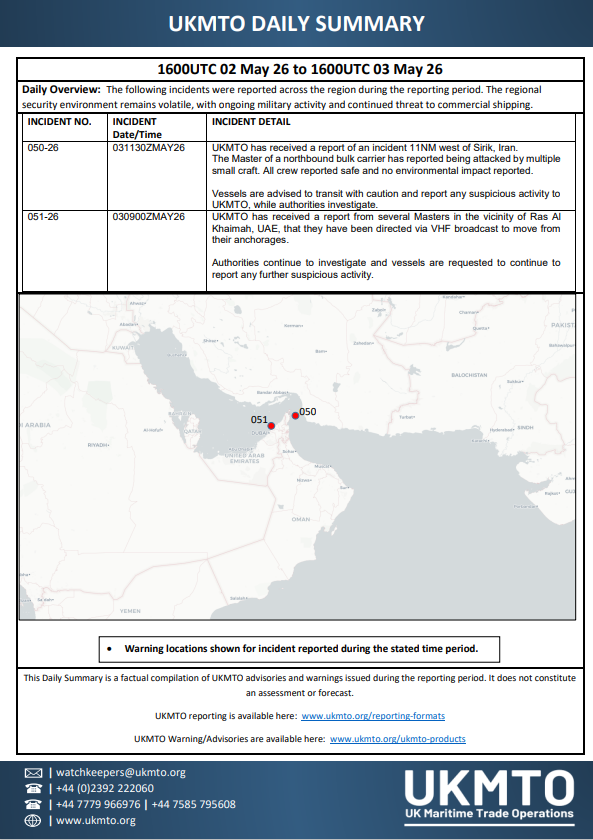
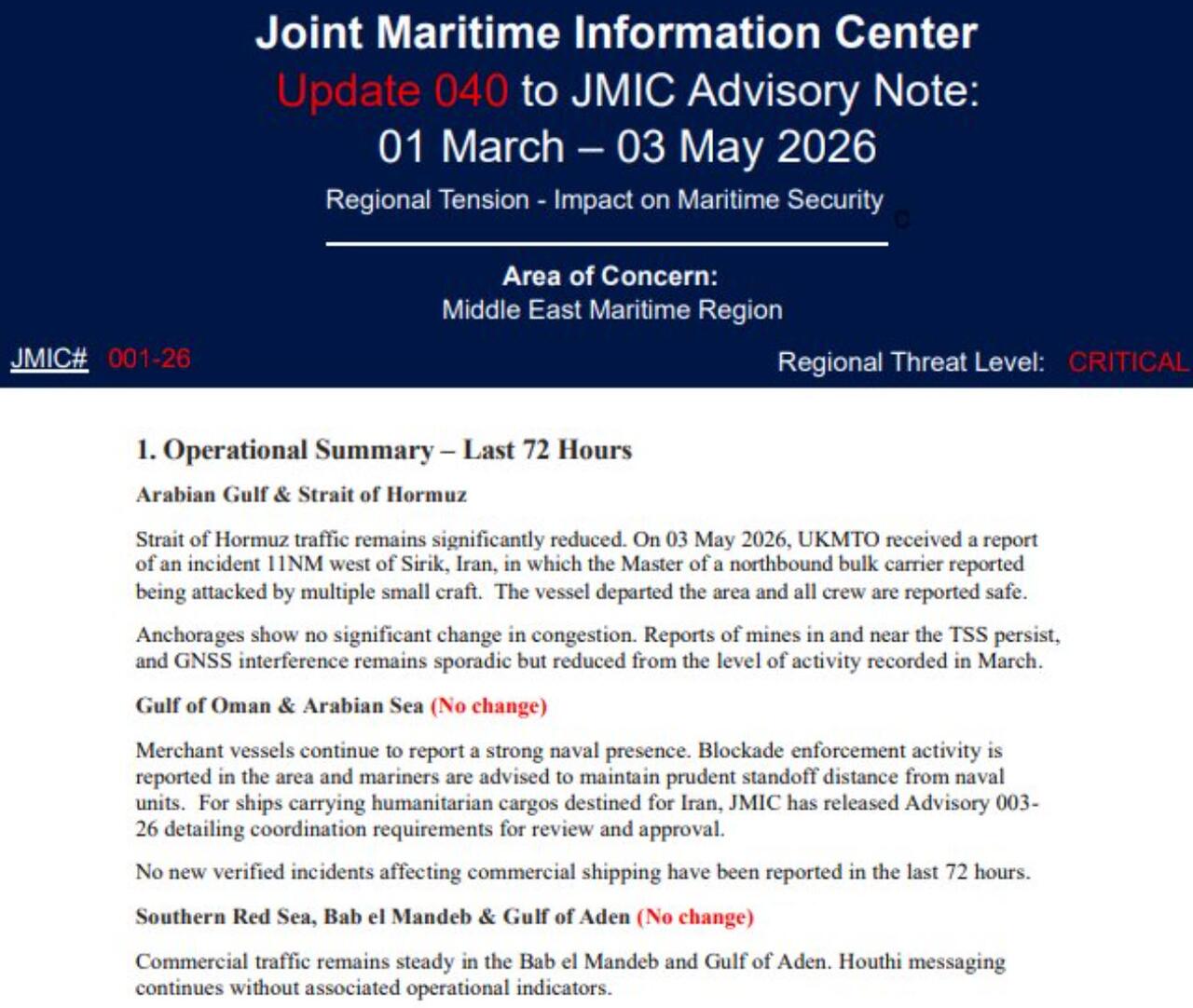
A large cargo ship near the Strait of Hormuz has reported being attacked by multiple small craft, the British military’s United Kingdom Maritime Trade Operations center said Sunday, marking at least two dozen attacks in and around the strait since the Iran war began.

All crew on the unidentified northbound carrier, which could be the Pasargad 11 General Cargo Ship with a destination of Dubai after it reversed…

… were safe after the attack off Sirik, Iran, east of the strait, the monitor said. Iranian officials have asserted that they control the strait and that ships not affiliated with the United States or Israel can pass if they pay a toll.

There was no immediate claim of responsibility for the attack, the first reported in the area since April 22, when a cargo ship reported being fired upon, the monitor said. The threat level in the area remains critical. Tehran effectively closed the strait by attacking and threatening ships.

Iranian patrol boats, some powered only by twin outboard motors, are small, nimble and hard to detect and have attacked several ships. President Donald Trump last month ordered the U.S. military to “shoot and kill” small Iranian boats that deploy mines in the strait.

The fragile three-week ceasefire appears to be holding, though Trump on Saturday told journalists that further strikes remained a possibility

Tyler Durden
Sun, 05/03/2026 – 13:56

via ZeroHedge News https://ift.tt/Ro6yalY Tyler Durden

Contempt Of Court: Hakeem Jeffries Denounces the Supreme Court As “Illegitimate”

Contempt Of Court: Hakeem Jeffries Denounces the Supreme Court As “Illegitimate”

Authored by Jonathan Turley,

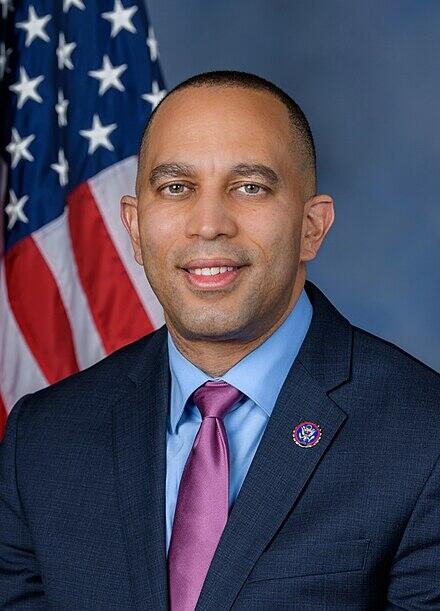
The Supreme Court’s decision in Louisiana v. Callais took 36 pages to explain why Section 2 of the Voting Rights Act is about combating intentional racial discrimination, not allowing racial gerrymandering. However, House Minority Leader Hakeem Jeffries wrapped it up in one word: “illegitimate.”

Jeffries was not speaking of the case, but the Court. The man who would become the next Speaker of the House if Democrats retake power in November has joined other radicals in denying the legitimacy of the nation’s highest court.

Just for the record, the Supreme Court did not strike down Section 2, but said that neither the law nor the Constitution allows legislators to manipulate district lines to guarantee that candidates of a particular race will be elected. It was written not to give any race an advantage, but to prevent a state from creating a disadvantage to voters based on their race. The Act prevents any State from intentionally drawing districts “to afford minority voters less opportunity because of their race.”

This is a matter upon which people of good faith can disagree. Many of the justices have been long opposed to racial criteria in areas ranging from college admissions to voting districts. Chief Justice John Roberts stated it bluntly in 2006 that “It is a sordid business, this divvying us up by race.” Like others, Roberts abhors racial discrimination but declared in another case that “way to stop discriminating on the basis of race is to stop discriminating on the basis of race.”

You will find no such distinctions in much of the press where experts declared the death of equal voting laws in America. UCLA Law Professor Richard Hasen dispenses with any nuance and simply ran a Slate column titled “The Slaying of the Voting Rights Act by the Coward Alito.”

For years, liberal law professors have been trashing conservative justices, including Berkeley Law Dean Erwin Chemerinsky, who called them  “partisan hacks.”

However, the name-calling has mutated into a movement to scrap the Court or the Constitution, or both. Chemerinsky wrote a book recently titled “No Democracy Lasts Forever: How the Constitution Threatens the United States.”

Rep. Jamie Raskin (D-MD) joined Jeffries in calling for changing the Supreme Court after the decision: “we’re going to have to try to transform the way the Supreme Court has been gerrymandered itself and stacked and packed with MAGA appointees.”

There was, of course, no such movement during the decades with a liberal majority that set aside an array of long-standing cases. It was only when a stable conservative majority emerged that law professors declared the Court illegitimate or dangerous, with many calling for packing the Court with an instant liberal majority once Democrats retake power.

I discuss some of these voices as the “new Jacobins” in my book Rage and the Republic, figures echoing the radical concepts or means used in France before what became known as “The Terror.”

Law professors Ryan D. Doerfler of Harvard and Samuel Moyn of Yale have called for the nation to “reclaim America from constitutionalism.” Last December, they published a column titled “It’s Time to Accept that the US Supreme Court is Illegitimate and Must be Replaced.”

They insist that citizens must be rid of this meddlesome court: “remaking institutions like the US supreme court so that Americans don’t have to suffer future decades of oligarchy-facilitating rule that makes a parody of the democracy they were promised.”

Many Democrats realize that the public is rather attached to both the Constitution and its core institutions. That is why various Democratic politicians and pundits have been pledging to pack the Court once they are back in power.  Some have suggested that, if they are going to change the political system and retain power, they will have to do it with the help of a compliant Court.

Democratic strategist James Carville stated matter-of-factly, “They’re going to recommend that the number of Supreme Court justices go from nine to 13. That’s going to happen, people.” He added recently, “Don’t run on it. Don’t talk about it. Just do it.”

To do that, you must first delegitimate the Court. You must attack both the individual justices and the institution itself. You need true rage to get a people to tear apart the core institution of a Republic on its 250th anniversary.

Now you have the next possible Speaker of the United States declaring the Supreme Court illegitimate because he disagrees with its interpretation of the law.

What these figures do not mention is that the majority of opinions by the Supreme Court are unanimous or nearly unanimous.  A comparably few cases break along strict ideological 6-3 lines. Indeed, just last week, it was President Donald Trump who was denouncing the conservative justices as disloyal and weak for, again, ruling against his Administration.

It is not the voting record nor the underlying interpretations that are motivating this campaign of delegitimation. It is power. Former Attorney General Eric Holder explained it most clearly recently in pushing the packing plan after the Democrats retake power: “[We’re] talking about the acquisition and the use of power, if there is a Democratic trifecta in 2028.”

Jonathan Turley is a law professor and the New York Times best-selling author of “Rage and the Republic: The Unfinished Story of the American Revolution.”

Tyler Durden
Sun, 05/03/2026 – 12:50

via ZeroHedge News https://ift.tt/peTNGJ2 Tyler Durden

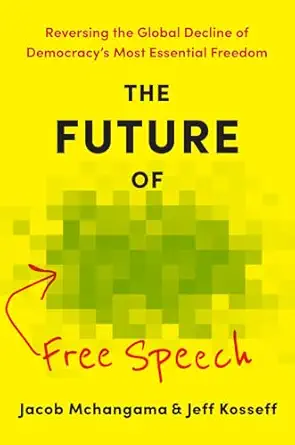
Jacob Mchangama & Jeff Kosseff Guest-Blogging About “The Future of Free Speech: Reversing the Global Decline of Democracy’s Most Essential Freedom”

I’m delighted to report that Profs. Jacob Mchangama (Vanderbilt) & Jeff Kosseff (Naval Academy, moving this year to Minnesota) will be guest-blogging Monday to Wednesday about their new book, The Future of Free Speech: Reversing the Global Decline of Democracy’s Most Essential Freedom. Here’s the publisher’s summary:

An incisive examination of free speech’s global decline and a framework for preserving expression in democratic societies.

The Future of Free Speech confronts a stark truth: the right to speak freely is under siege. Once celebrated as a cornerstone of democratic societies, free expression is now met with growing suspicion and retaliation across the globe. Jacob Mchangama and Jeff Kosseff present a panoramic view of how we arrived at this pivotal moment.

The authors examine a century in which speech rights expanded dramatically―including postwar democratic revolutions and the sweeping protections of the First Amendment―only to find those rights unraveling in the face of new political, technological, and cultural pressures. Today, liberal democracies are imposing speech controls, authoritarian regimes are cloaking censorship in democratic language, and digital platforms wield unprecedented power over global discourse. This book examines the backlash against free speech from all sides: governments criminalizing dissent in the name of national security; lawmakers and activists demanding tighter controls on misinformation, hate speech, and offensive content; and AI systems removing speech at a scale and speed that dwarfs historical forms of censorship. At the same time, faith in free speech itself is waning, even in the very societies that once championed it.

The Future of Free Speech argues for a reinvigorated, global commitment to open dialogue. Mchangama and Kosseff advocate nonpartisan, civic-minded solutions that resist both government overreach and corporate silencing. They offer a compelling case for how free speech can meet modern challenges without abandoning its foundational role in sustaining democracy, human rights, and shared understanding.

And the jacket blurbs:

Free speech is under increasing siege in today’s world. In their new and important The Future of Free Speech, Jacob Mchangama and Jeff Kosseff, advocate for freedom of speech and make a compelling case for optimism.
―Tyler Cowen, George Mason University

A rigorous and inspiring defense of the freedom that safeguards all others. Mchangama and Kosseff powerfully refute alluring but misguided calls for censoring even the most controversial speech, such as disinformation and hate speech. They demonstrate that open debate is essential for protecting human rights and democracy, and resisting authoritarianism.
―Nadine Strossen, Former President, American Civil Liberties Union

In The Future of Free Speech, Mchangama and Kosseff take readers on a bracing global tour of the free-speech recession, documenting how governments are dusting off old tools to police expression in new ways. Clear, principled, and empirically grounded, this book offers realistic strategies for keeping open societies genuinely open.
―Greg Lukianoff, Foundation for Individual Rights and Expression (FIRE)

A broad-ranging and powerful analysis of the recent wave of speech restrictions all over the world, coupled with thoughtful and promising proposals for the future. Very much worth reading.
―Eugene Volokh, Stanford University

The Future of Free Speech is a brilliant defense of our most essential freedom. Mchangama and Kosseff prove that free expression isn’t a threat to democracy―it is its foundation. A vital roadmap for anyone who recognizes that once we lose the right to speak, we also lose the power to defend every other right.
―Yascha Mounk, Johns Hopkins University

One of the very best books about the ‘global free-speech recession’ by two of the greatest analysts and champions for First Amendment values.
―Nick Gillespie, Reason

The post Jacob Mchangama & Jeff Kosseff Guest-Blogging About "The Future of Free Speech: Reversing the Global Decline of Democracy's Most Essential Freedom" appeared first on Reason.com.

from Latest – Reason.com https://ift.tt/p0vBDYr
via IFTTT