US Security Chief Says One Suspected Terrorist Is Arrested At Canadian Border ‘Almost Weekly’

US Security Chief Says One Suspected Terrorist Is Arrested At Canadian Border ‘Almost Weekly’

Authored by Paul Rowan Brian via The Epoch Times,

U.S. Homeland Security Secretary Markwayne Mullin says American authorities apprehend a suspected or wanted terrorist at the Canada-U.S. border “almost weekly,” while warning that “fracturing” relations between the two countries could leave both more vulnerable to criminal organizations, fentanyl traffickers, and other threats.
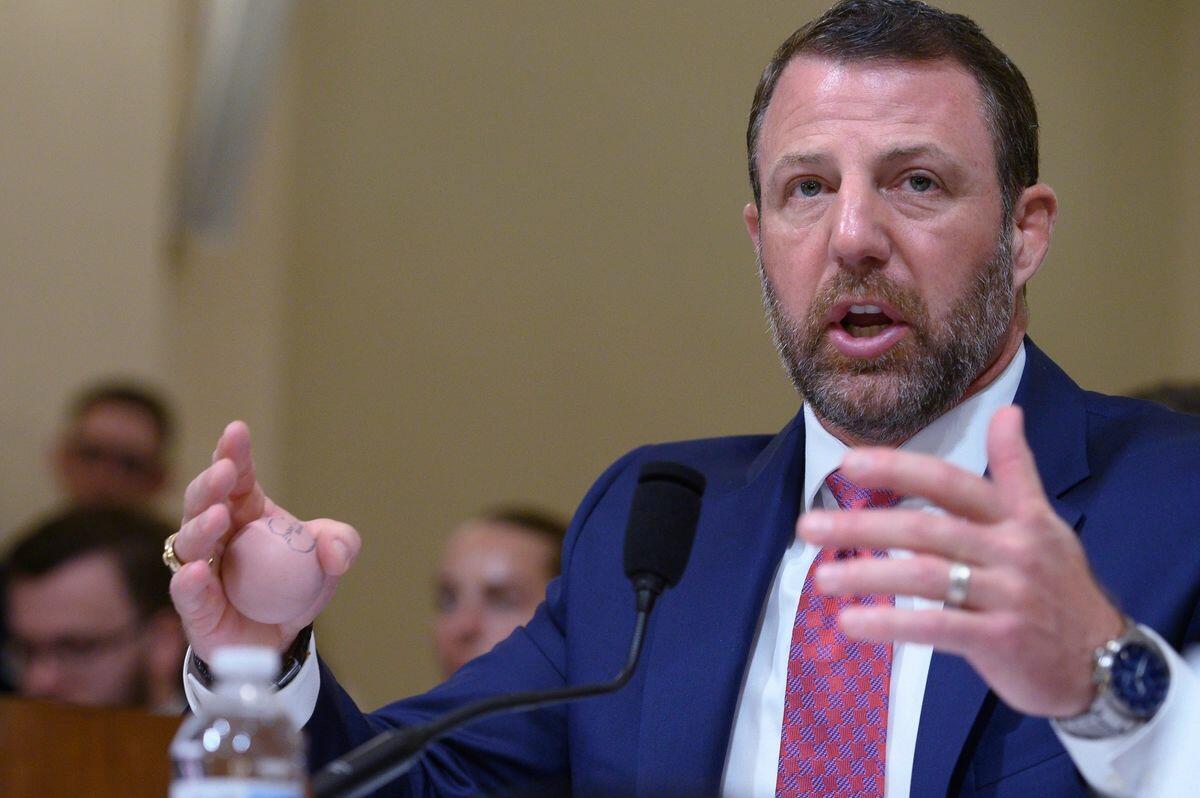
U.S. Homeland Security Secretary Markwayne Mullin testifies before the U.S. House Committee on Homeland Security in Washington on June 3, 2026. AP Photo/Cliff Owen

Mullin made the remarks June 17 during a fireside conversation with Canada’s Public Safety Minister Gary Anandasangaree at the Center for Strategic and International Studies in Washington. He added that the United States is concerned that many criminal organizations whose activity has been reduced due to enforcement at the U.S.-Mexico border are moving operations to the northern border.

“We arrest a terrorist – one either on the watch list or wanted terrorist – on our northern border almost weekly,” Mullin said. “Some of the fracturing we have right now between the countries, we’ve got to figure it out.”

Mullin was sworn in as secretary of the Department of Homeland Security on March 24, succeeding Kristi Noem after she was reposted as the special envoy for the Shield of the Americas by U.S. President Donald Trump.

‘Solid Foundation’

Mullin said improving Canada-U.S. relations and building a “solid foundation” is vital to ensuring that criminals don’t take advantage of a U.S.-Canada rupture in relations.

“We’ve got to move past our differences so we can build that solid foundation, because we have criminals, we have cartels, we have organized crime that’s taken advantage of it,” he added.

While Mullin warned that criminal organizations along with terror suspects and illegal immigrants are increasingly targeting the U.S. northern border, Anandasangaree said Canada has already made considerable progress in tightening border security. Illegal migration from Canada into the United States has declined by 99 percent since Ottawa introduced a plan to boost border security in December 2024, the minister stated.

The border plan that we introduced in 2024 December, which has been implemented now over the last 18 months, is bearing fruit,” he said.

Anandasangaree also highlighted close collaboration between Canadian and American authorities.

“The cooperation amongst law enforcement, whether it’s DHS and Canada Border Services, or the operations centre where we’re embedded in Detroit, it’s critically important and we’re seeing that bearing fruit for security,” he said.

Concern About Cartels Moving North: Mullin

Mullin said that in addition to terrorist-related threats and illegal immigration, the U.S. government is highly concerned about the flow of fentanyl and cartel activity through its northern border.

“Over the last year we’ve apprehended enough fentanyl that would kill 17 million Americans on our northern border,” he said.

Mullin said he believes an uptick in organized crime activity at the Canada-U.S. border is due to stricter enforcement at the U.S.-Mexico border and “pressure we’re putting on the cartels” that is causing them to seek out “other areas.”

“We see the amount of increase of criminal activity that’s happening. And we see the same techniques that were on the southern border that are moving to the northern border,” Mullin said.

He said that cooperation between the United States and Canada is “vitally important” and pointed to intelligence-sharing between the two nations as the top priority.

“Our biggest priority now is to have great partnerships with our friends to the North to be able to actively stop [illegal activity] before it grows to the point that it is in Mexico,” he said, adding “the biggest issue that we’ve really got to work on is sharing the intel and then acting on it in a timely manner.”

Canada-US Tensions

At one point, Mullin compared the Canada-U.S. relationship to marriage, saying that current tensions are similar to when he and his wife get into an argument.

It’s kind of like my wife and I when she gets really mad at me, and I’m well deserved to get mad at, sometimes I just have to stop and say, ‘love you,‘” he said.

“Arguing doesn’t help; it only allows us to be more vulnerable for somebody else to sneak in and take my beautiful wife away from me.”

Anandasangaree also emphasized close U.S.-Canada ties, saying they go beyond government cooperation to economic prosperity.

“We rely heavily on each other for both security, but as well as trade and commerce,” he said, adding that much of the $900 billion of trade that takes place between the two countries annually is done “in an orderly manner that benefits both of our countries.”

“What differences we have is negligible compared to what we have in common and the work that we’re doing together,” Anandasangaree added.

The minister also noted ongoing enhanced investments in border security in Canada including the hiring of 1,000 more RCMP and 1,000 more Canada Border Service Agency personnel announced in June last year, along with increased use of drones, helicopters, and surveillance technology at the border.

Anandasangaree also referenced close cooperation between the RCMP and FBI in working together to help lead to the arrest of accused transnational Canadian drug trafficker Ryan Wedding by Mexican authorities in January, in addition to a recent investigation by Peel Regional Police that led to 17 arrests in May.

Fentanyl

Mullin’s figures for fentanyl lethality appear to be based on the U.S. Drug Enforcement Administration’s calculation method for potential fentanyl deaths, which holds that 2 milligrams can be a potentially lethal dose for the average person.

Data from U.S. Customs and Border Protection showed very low fentanyl seizures at the Canada-U.S. border during the period from July 2024 through to February 2026, with Ottawa stating that “Canada is not a significant source of illegal fentanyl entering the US. Less than 1% of fentanyl seized in the US comes from Canada.”

The office of Canada’s Fentanyl Czar Kevin Brosseau cites U.S. statistics in noting that roughly 71,000 pounds of fentanyl were seized at the U.S.-Mexico border from 2022 to 2025, compared to approximately 134 pounds seized at the Canada-U.S. border or in its vicinity.

While Mullin emphasized the scale of fentanyl seizures at the northern border, Anandasangaree said the real source of the crisis is precursors manufactured overseas.

“The flow of fentanyl is not from the north to south or south to north; it is coming from overseas with precursors that enable dealers to manufacture and distribute in our countries,” Anandasangaree said, though adding that he agreed “fentanyl and the scourge of fentanyl is impacting both of our countries.”

Looking Ahead

In terms of the future of the Canada-U.S. relationship, both officials said they are confident that cooperation will continue despite political disagreements.

“If there are irritations, we need to just work through them. We will work through them,” Anandasangaree said.

Mullin echoed this, saying that despite current tensions, the two countries remain indispensable partners.

“What we have to do is quit focusing on our differences and start thinking about what we have in common,” Mullin said.

Tyler Durden
Thu, 06/18/2026 – 20:55

via ZeroHedge News https://ift.tt/9R0jlYb Tyler Durden

Second Amendment Roundup: Gun Ban for Pot Users Unconstitutional

On June 18, in United States v. Hemani, the Supreme Court unanimously held that the prohibition under 18 U.S.C. § 922(g)(3) of firearm possession by a person who is “an unlawful user of” a controlled substance violates the Second Amendment as applied to one who used marijuana “about every other day.”  Justice Gorsuch delivered the opinion, joined by Chief Justice Roberts and Justices Thomas, Sotomayor, Kavanaugh, Barrett, and Jackson.  Justice Alito concurred in the judgment, joined by Justice Kagan.

Under Bruen, the provision burdens conduct presumptively protected by the Second Amendment because it bans a class of people from possessing (i.e., “keeping” or “bearing”) any firearm.  The burden thus shifts to the government to justify the ban based on longstanding, well-representative historical analogues, but the habitual drunkard laws on which the DOJ relied here “targeted different kinds of people, for different purposes, and operated in different ways” than does 922(g)(3).

The Court found it necessary to distinguish, in footnote 6, certain other provisions of § 922(g), including felon ban in (g)(1) and the categories in (g)(4) concerning any person “adjudicated as a mental defective” or “committed to a mental institution.”  Unlike subsection (g)(3), they “involve some manner of pre-deprivation process before an individual’s Second Amendment rights are lost,” and (repeating Heller) “nothing in our opinion should be taken to cast doubt” on them.  (Other than the alien provision, the other § 922(g) provisions also entail pre-deprivation process.) The Court’s reference to “pre-deprivation” actually speaks to, among other things, so-called red flag laws.

Hemani describes how at the Founding and thereafter, a habitual drunkard was someone who was regularly intoxicated so as to deprive him of his ordinary reasoning faculties.  “Had habitual drunkard laws applied to those who simply drank regularly, many notable early Americans could have faced trouble.”  The Court’s examples verge on the humorous: John Adams took “a tankard of hard cider” with his “daily breakfast,” James Madison “consumed a pint of whiskey daily” (although another author argued that Madison “championed wine … as a healthier and more respectable choice”), “George Washington often drank three glasses of madeira in the evening,” and Thomas Jefferson enjoyed “3 or 4 glasses [of wine] at dinner.”  Just before the Framers signed the Constitution, a farewell party was thrown for General Washington consisting of 55 guests at Philadelphia’s City Tavern where they were served 54 bottles of madeira, 60 bottles of wine, 8 bottles of “Old stock,” 22 bottles of porter, 8 bottles of cider, 12 bottles of beer, and 7 large bowls of punch!

With detail like that, the government’s attempt to equate mere pot use with being a habitual drunkard appeared almost laughable.  Not to mention that laws focused on habitual drunkards because they were virtually incapacitated and incapable of managing their affairs.  Yet no evidence existed that Mr. Hemani’s pot use every other day made him unable to manage his affairs or caused him to be physically-violent or be a risk to himself or his family.  Under the government’s theory, it does not matter if he “use[s] a mild gummy as a sleep aid a few times a week,” or if as applied to others a husband “regularly takes his wife’s prescription Ambien to sleep” or a college student “routinely uses a friend’s Adderall to cram for exams.”

Moreover, the government misunderstood the purposes of the historical analogues it cited, which “had little to do with protecting the public from categorically violent and unusually dangerous persons.”  The vagrancy laws were directed against those who failed to fit in with the culture of working.  The civil-commitment laws sought to protect habitual drunkards from themselves and their families from financial ruin.  Imposing a surety of good behavior protected society from scandals “against good morals.”

The “why” or purpose of the above laws were thus not motivated to protect society from physical violence, and so the “why” of the Bruen methodology did not line up.  And neither did the “how” of the government’s purported analogues, for those analogue laws “usually provided some form of process before an individual lost any of his liberties, even temporarily.”  But § 922(g)(3) “automatically divests an individual of his constitutional right to bear arms the moment he becomes an unlawful user and until he ends his drug use—all without any pre-deprivation process.”  Look for lack of process to be a bone of contention in future prohibited person challenges.

Hemani next turns to the government’s argument that the unlawful user provision disarms persons who as a category are violent and unusually dangerous.  (Recall the 1936 movie Reefer Madness?)  First, the ban is keyed to the Controlled Substances Act, to which drugs can be included without any association with violence, although “some unlawful users of controlled substances can pose a risk of violence.”  Second, when this case started, marijuana was listed on Schedule I, which includes drugs with “a high potential for abuse” with “no currently accepted medical use.”  But after oral argument, some marijuana products were declassified to Schedule III, which includes drugs with low potential for abuse and for which there is a “currently accepted medical use.”  All the while most states have legalized marijuana in different ways.  All of that leaves the government “awkwardly positioned to suggest that the millions of Americans who now regularly use marijuana are categorically and unusually dangerous.”

The Court notes that use of marijuana or other controlled substances may render a person dangerous, but the government insists that no such showing is necessary for a valid conviction.  The following passage adopts the principle that the government’s ipse dixit will not suffice where constitutional rights are at stake:

[The government] asks us to conclude that anyone who regularly uses marijuana is categorically violent and dangerous without any further showing. All based on little more than its current say-so, one at odds with its own regulatory actions. And affording the government that kind of “broad power to designate any group as dangerous and thereby disqualify its members from having a gun” would risk allowing it to “quickly swallow” the Second Amendment.  (Quoting then-Judge Barrett’s dissent in Kanter v. Barr (7th Cir. 2019).)

Hemani concludes that the decision is narrow.  It does not address the “addicted to any controlled substance” prong of (g)(3) or (g)(1)’s provision where the felony is drug-related.  “We do not even address whether the government could bring a prosecution under § 922(g)(3) accompanied by individualized proof that the defendant’s use of marijuana (or any other drug) renders him a danger to himself or others. Or proof that a certain drug always renders its users dangerous because of its potency or for some other reason.”

At bottom, Hemani strictly applies Bruen‘s principle of reasoning by historical analogy without any departure from that principle.  As the Court did in Rahimi, it relies on the “why” principle that a valid deprivation of the arms right must apply to persons who pose a danger of violence and the “how” principle of pre-deprivation process.

Justice Thomas concurred in the opinion, adding (as he rightly does on firearm and other issues) that Congress has exceeded its powers under the Commerce Clause.  Section 922(g)(3) criminalizes possession of a firearm by a drug user “in or affecting commerce,” which courts read to mean having crossed state lines at some point in history.  As Lopez held, that would “convert congressional authority under the Commerce Clause to a general police power of the sort retained by the States.”

Justice Jackson, joined by Justice Sotomayor, concurred, but wanted to remind us that “Bruen is unworkable,” and that “means-end scrutiny—the approach courts applied before we adopted Bruen‘s ‘history and tradition’ metric—offers a more rational way of assessing the constitutionality of firearm regulations.”  In practice, that means that all firearm regulations are always constitutional.

Finally, Justice Alito, joined by Justice Kagan, concurred in the judgment.  He agreed with the Court that the government’s historical analogues are not “relevantly similar” to § 922(g)(3) “as applied to respondent,” reminding us that this is an “as-applied” challenge, not a facial one.  He repeated that nothing in the opinion casts doubt on provisions like §§ 922(g)(1) and (4), which concern felons and the mentally ill.  But reality tells us that “marijuana use today is like alcohol use at the founding. It is widespread and increasingly considered socially acceptable in many quarters. And from a practical standpoint, law enforcement widely tolerates the use of marijuana.”  He seems to suggest that prosecuting pot-using gun owners today is like beating a dead horse.

The post Second Amendment Roundup: Gun Ban for Pot Users Unconstitutional appeared first on Reason.com.

from Latest – Reason.com https://ift.tt/YESr5fn
via IFTTT

Infant Mortality Drops To All-Time Low In United States

Infant Mortality Drops To All-Time Low In United States

Infant mortality has dropped to the lowest level ever recorded in the United States, according to new preliminary data from the CDC – though it’s still higher than in some other countries. According to the data, 5.36 infants per 1,000 live births died, down from 5.54 in 2024 and 5.63 in 2023. The results are based on death and birth certificates.

A baby in a hospital in a file photograph. Fred Dufour/AFP via Getty Images

Infants is defined as children who have not yet reached their first birthday.

According to researchers, the decline is statistically meaningful and translates into hundreds of fewer infant deaths per year.

This is an encouraging data point, and we hope that this trend will continue,” said Dr. Michael Warren, chief medical and health officer for the March of Dimes.

Warren said it was difficult to pinpoint what was driving the decline.

As the Epoch Times notes further, the overall numbers have been going down. U.S. infant deaths fell to about 19,350 last year, according to provisional CDC data that may rise a little as additional analysis is completed. The final tally is still expected to be down from about 20,050 in 2024 and about 20,160 in 2023, according to the agency.

Leading causes of infant mortality are birth defects, preterm birth and low birth weight, sudden infant death syndrome, unintentional injuries such as car accidents, and pregnancy complications, the CDC says.

The new data is not yet available by state. In 2024, infant mortality rates varied widely across states.

The CDC said this week in a report analyzing infant mortality data from 2024 that Mississippi had the highest infant mortality rate at 9.65 deaths per 1,000 births, and New Hampshire had the lowest, at just under 3 per 1,000.

“These differences are reflective of a variety of reasons related to access to care, community factors, and policies that improve health and outcomes,” Warren said.

Not The Lowest

Worldwide, the infant mortality rate is 28 per 1,000 live births, according to the World Bank. The new U.S. rate is well below the average across countries.

A number of developed countries, though, boast lower rates, including Australia, Belgium, and Hungary.

From 2007 to 2022, infants were 78 percent more likely to die in the United States than in other high-income countries, researchers said in a 2025 paper.

Older children in the United States also faced higher odds of dying than kids in the other countries with high incomes.

In 2023, U.S. health officials began recommending two new measures aimed at protecting infants: a lab-made antibody shot for infants that helps the immune system fight off the respiratory syncytial virus, and an RSV vaccine for women between 32 weeks and 36 weeks of pregnancy.

The Associated Press contributed to this report.

Tyler Durden
Thu, 06/18/2026 – 20:30

via ZeroHedge News https://ift.tt/btPa2ko Tyler Durden

More Gunmakers Relocate To GOP States

More Gunmakers Relocate To GOP States

Authored by Kevin Stocklin via The Epoch Times,

Firearms manufacturers Ruger and Rideout Arsenal are heading south, continuing a trend of firearms companies leaving Democrat-run states.

On June 10, Virginia-based Rideout Arsenal, a firearms designer and manufacturer, announced that it would invest $22 million to build a new manufacturing facility in Thomasville, Georgia. The investment would create 120 new jobs over the next several years, the company said.

This relocation was not something we originally planned to pursue,” Rideout founders Travis and Kelsey Rideout said in a statement.

“The reality is that recent anti-gun legislation in Virginia created a significant uncertainty for our company and ultimately forced us to look for a state where we could continue operating, investing, and growing with confidence.”

These moves follow a trend in which firearms manufacturers such as Remington, Winchester, Stag Arms, Magpul, Troy Industries, Smith & Wesson, Dark Storm, and others have relocated over the past decade from left-leaning states such as New York, Massachusetts, Illinois, and Colorado to conservative states such as Florida, Texas, Georgia, and Tennessee.

“Firearm businesses are migrating to other states primarily because states like Virginia, Connecticut, Colorado, Massachusetts, and others are becoming increasingly hostile to Second Amendment rights and the ability for these companies to produce firearms in their states,” Mark Oliva, public affairs director for the National Shooting Sports Foundation, told The Epoch Times.

“While Virginia was the latest example with Rideout Arsenal moving to Georgia, the move of Smith & Wesson Brands, Inc., to move their headquarters and expand production to Tennessee underscores the importance of firearm businesses finding greener pastures.”

With Democrats in control of the legislature and the governorship, Virginia recently passed an array of new gun control laws, effective on July 1, including among other things a ban on the sale of various semi-automatic firearms, and certain large-capacity magazines, unserialized firearms, as well as new restrictions on carrying firearms in public places. Virginia also enacted laws to expand civil liability for gun manufacturers and dealers.

In welcoming Rideout to his state, Georgia Gov. Brian Kemp stated that his state’s “pro-business approach, skilled workforce, and enduring support for constitutional freedoms make us an ideal home for manufacturers like Rideout Arsenal.”

In May, it became public that Ruger had relocated its head office from Fairfield, Connecticut, to Mayodan, North Carolina, at the start of the year. Although the company has not issued a public statement, it listed Mayodan as its location in its quarterly earnings report and has since confirmed the move.

Connecticut, once known as the “arsenal of democracy,” had been home to several of America’s largest firearms manufacturers, including Smith & Wesson, Winchester, and now Sturm, Ruger & Co. Since the 2012 massacre of 26 first-grade children and teachers at Sandy Hook School in Newtown, the state has passed a series of laws to limit access to guns. In addition, the state has been the site of a number of lawsuits against gun makers, such as the $73 million settlement of a lawsuit brought by the parents of Sandy Hook children against Remington and threats of civil litigation against Ruger in November 2025.

Moving out of left-leaning states may lead to a more business-friendly environment, but it will do little to protect firearms manufacturers from lawsuits, Oliva said.

The threat of litigation is still alive, since states like New Jersey and New York have pursued laws that allow for loosely designed ‘public nuisance’ lawsuits to skirt the Protection of Lawful Commerce in Arms Act,” Oliva said. “The move to these states is more about the ability to produce the firearms today’s gun owners want and the legislative threats to that business.”

The 2005 Protection of Lawful Commerce in Arms Act prohibits lawsuits against manufacturers or dealers of firearms and ammunition for harm solely caused by criminal misuse of their products.

Tyler Durden
Thu, 06/18/2026 – 20:05

via ZeroHedge News https://ift.tt/jVZ8TBH Tyler Durden

Bad News Overload? News Avoidance On The Rise

Bad News Overload? News Avoidance On The Rise

These days more than ever, it often feels like there’s no end to bad news.

In the age of social media and constant exposure to news, doom scrolling can take a heavy toll on people’s mental wellbeing.

As a consequence, more and more people actively try to avoid the news or at least limit their exposure to it.

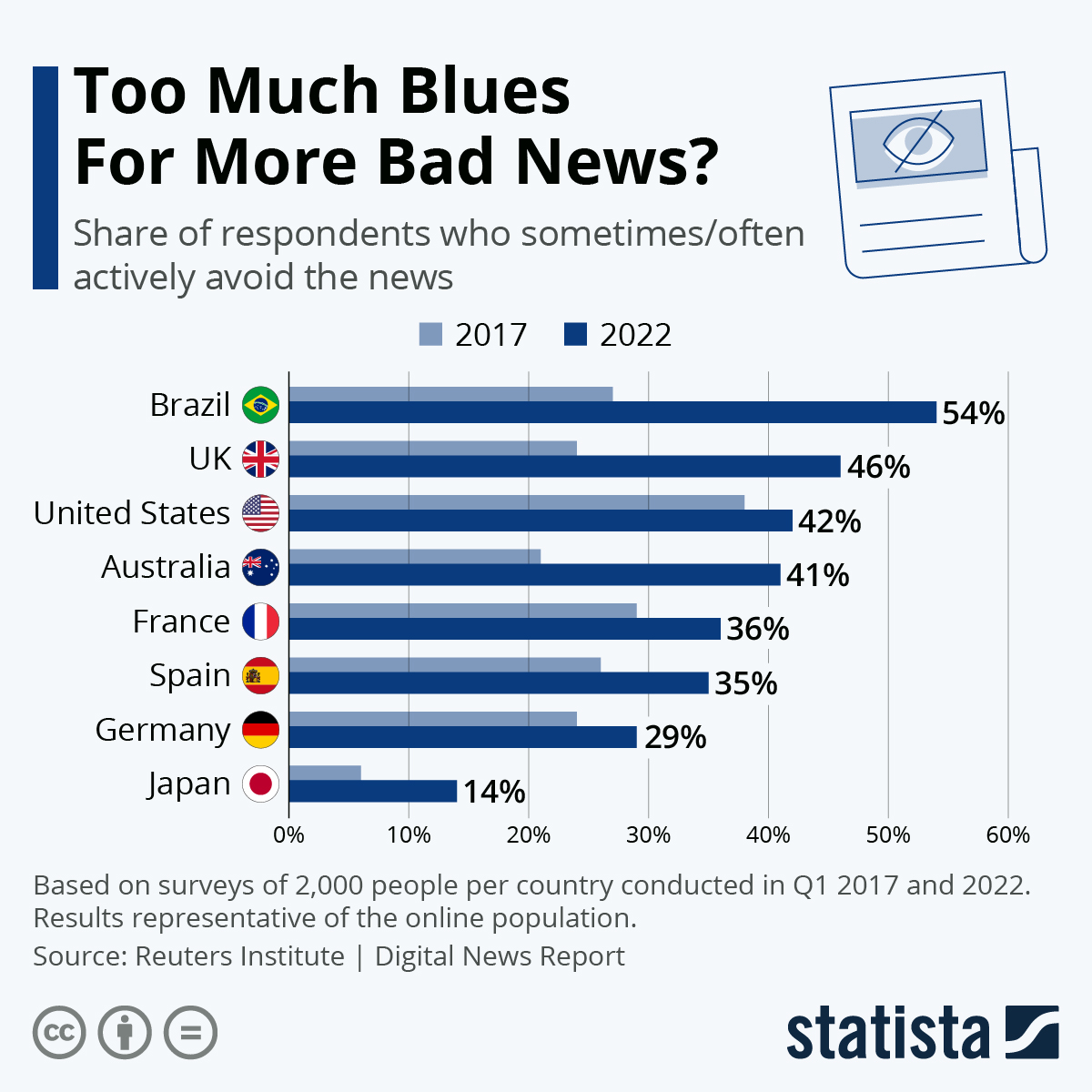
As Statista’s Felix Richter shows in the chart below, according to the Reuters Institute’s latest Digital News Report, an average of 42 percent of respondents from 48 countries included in the survey said that they sometimes or often actively avoid the news, a significant increase from 29 percent in 2017, when the question was first asked.

Infographic: Bad News Overload? News Avoidance on the Rise | Statista

You will find more infographics at Statista

Selective news avoidance, as the Reuters Institute calls it, became significantly more widespread across all markets in recent years, with half of all respondents from the United Kingdom and 45 percent of U.S. respondents making an effort to reduce their news intake.

The Reuters Institute finds that news avoidance is often linked with low trust in the news and that there are generally two types of news avoiders: consistent avoiders who typically have low education levels and little to no interest in the news; and selective avoiders who struggle with news overload and try to insulated themselves from certain topic to protect their mental wellbeing.

Tyler Durden
Thu, 06/18/2026 – 19:40

via ZeroHedge News https://ift.tt/0j4PgkR Tyler Durden

Waste Of The Day: Town Manager’s Snacking Spree

Waste Of The Day: Town Manager’s Snacking Spree

Authored by Jeremy Portnoy via RealClearInvestigations,

Topline: Michael Boaz, the former town manager of Pilot Mountain, North Carolina, made hundreds of unauthorized purchases on his city credit card from 2022 to 2024, including bullets and a hotel for his family vacation, according to a state audit released in May.

Boaz was fired in 2024 when the allegations first came to light. Now that a state audit confirmed the questionable purchases, he has been indicted for felony embezzlement.

Key facts: Boaz’ questionable purchases totaled $18,426, much of which was spent on food. He spent $12,897 at pizzerias, barbecue restaurants, an oyster bar, Chili’s, Jersey Mike’s Subs and many more. He also placed 34 DoorDash orders for $1,576.

Boaz bought $2,300 worth of other items, including ammunition, a massage and a hotel for a family vacation.

Credit card records show Boaz claimed the purchases were for work meetings, but he did not provide documentation and could not remember who attended the alleged meetings, according to the audit.

All checks and balances were ignored. The town’s finance officer paid Boaz’ credit card bill without reviewing the transactions, and the town’s board of commissioners failed to review credit card statements even though the town’s credit card policy requires them to do so.

Boaz was also paid $37,936 in unused vacation leave when he resigned in 2024. The audit found that $12,804 of that payout was improper.

Search all federal, state and local salaries and vendor spending with the world’s largest government spending database at OpenTheBooks.com.

Background: Pilot Mountain, population 1,500, is located about 30 miles northwest of Winston-Salem. Boaz was hired as town manager in 2019 and earned $108,000 in 2024, records show.

Summary: The town of Pilot Mountain paid for thousands of dollars in meals, bullets and travel that auditors say had no legitimate public purpose. The town also failed to follow basic oversight rules that could have prevented or caught the spending earlier.

The #WasteOfTheDay is brought to you by the forensic auditors at OpenTheBooks.com.

Tyler Durden
Thu, 06/18/2026 – 19:15

via ZeroHedge News https://ift.tt/fNoWdQl Tyler Durden

Removing AI Spyware From Your Google Account

Removing AI Spyware From Your Google Account

Authored by Thomas Neuburger via Naked Capitalism,

Yves here. News you can use! And advice that helps readers limit their exposure to two longstanding abuses. One is the unending efforts of the surveillance state to extend its reach. Two is the way AI companies steal original work without consent or compensation to feed into training sets.

By Thomas Neuburger. Originally published at God’s Spies

The glorifyingly named Googleplex headquarters in Mountain View, California.

As most have noticed, AI is entering our lives in a very big way.

Doctor’s offices are using AI to replace human scribes, which means whole visits must be recorded and saved. For how long? This can vary or be changed. And AI will soon decide whether you’re too disabled to drive your own car (for that, see here).

The rush toward AI – a rush to prop up the stocks and cut employees – is producing an AI fence between you and all of the corporate entities that run your life. For example, AI now guards the door between you and your next job or loan.

AI has also entered your dealings with the state. Will you be audited this year? AI will decide. How will your Social Security struggles be handled? AI will replace the humans who deal with your needs. And of course, AI policing is already here.

AI is not only “changing what it means to be human,” but for us little folks, us muppets, it’s replacing the human entirely in corporate and government interactions – because money, despite its propensity for massive mistakes.

And that doesn’t begin to discuss AI battlefield murder, a use no one but those in control want to grow.

Gmail And AI

Which leads us to discuss AI’s intrusion into our digital lives. On most computers and websites, AI is ubiquitous. Today, let’s take a look at Gmail and AI.

The latest versions of Gmail, a web-based email client, have AI mail scanning and analysis turned on. If you want AI watching, no problem. Leave it turned on.

If you want to de-AI your Gmail account – to extent you can, at least – these are the steps. I found this thanks to this Twitter account. The thread begins as follows (slight editing mine):

If you have a Gmail account, you need to read this.

Google’s AI now scans your emails and attachments, bank statements, tax files, medical letters, all of it. It turned on by default, and there’s a class-action lawsuit over how. […]

Google automatically turned on AI features in Gmail, Chat, and Meet for many users in late 2025. These features can read your emails, messages, and attachments to create summaries and suggestions.

Google says your emails don’t train Gemini, but some users say they never clearly agreed to these AI features being enabled. Unless you turn them off, the AI can still analyze your inbox to provide these features.

The thread details the steps. As I worked through them, I found differences between his steps and mine, so here are the steps as modified by my own experience.

Change Your Gmail Settings

Change the main Gmail and Google Workspace settings as follows:

  1. Go to Settings – See all settings.
  2. In your browser’s search bar (Ctrl-F), search for the word “smart” (no quotes).

  1. Find every mention of “smart” in the settings and turn it off. On my version of Gmail, that includes Grammar, Spelling, Autocorrect, Smart Compose, Smart Compose personalization, and Smart Reply. Your list may differ.
  2. Make sure Smart Features, a major settings checkbox, is unchecked (see below).
  3. Go to Google Workspace smart features and click on the Manage Workplace smart features settings button (above).
  4. On the next screen, toggle everything off and click Save.

  1. Go the bottom of the main settings page and click Save Changes (important).

Check Your Phone Settings. Delete Your Gemini History.

The writer advises doing the following as well:

Your Phone. The settings don’t always sync between devices, so check the Gmail app separately.

Gmail app – Menu – Settings – Select your account – Turn off “Smart features and personalization” – Confirm.

And if you’ve used Gemini already:

Delete Gemini History. If you’ve used Gemini before, your chats may be saved, and some could be reviewed by humans.

Go to http://myactivity.google.com/product/gemini – Turn off Gemini Apps Activity – Delete Activity – All Time.

This removes your past Gemini chat history and stops future conversations from being saved.

I had no Gemini history, but that won’t be true for everyone.

Does All This Stop Google From Watching You?

You could say that Google is always watching you. This is their profit model: watching and selling you ads, watching and selling your profile. It’s why they’re so rich.

But it seems, at least for now, that turning smart features off in your Gmail and Google Workspace account means AI is no longer used to power those feature, and indeed is turned off. In addition, as of this writing, Google claims that Gmail smart features is not a backdoor way of training its AI. At least so far.

The murdered girls of Minab, Iran (Ons Abid/AP Photo)

Tyler Durden
Thu, 06/18/2026 – 18:25

via ZeroHedge News https://ift.tt/D7Zres6 Tyler Durden

Plaintiff Can’t Litigate Claim That “Security Clearance Process” Was Used “as a Pretextual Weapon to Execute an Ideological Purge”

From Judge Kyle Dudek (M.D. Fla.) today in Reilly v. U.S. Att’y Gen.:

This case presents a conflict between individual rights and executive sovereignty. On one side are liberties guaranteed by the First and Fifth Amendments—specifically, the right of a public employee to be free from political viewpoint discrimination and the foundational promise of due process. On the other side sits an equally formidable principle of structural governance: the Executive Branch’s exclusive Article II authority to control access to national security secrets. The friction between these two forces becomes acute when, as here, a plaintiff alleges that the Executive Branch used its security clearance process not to protect classified information, but as a pretextual weapon to execute an ideological purge.

The Supreme Court has left little room to maneuver when determining which of these constitutional interests wins out. See Dep’t of Navy v. Egan (1988). Egan treats national security as a virtually impenetrable executive enclave. The Court held that no judicial body has authority to audit the substance of an underlying security clearance determination when reviewing an adverse employment action. And at least in the Eleventh Circuit, this limitation applies not only to the revocation of a security clearance, but also to decisions made at the suspension or investigatory stage. Hill v. White (11th Cir. 2003). “To review the initial stages of a security clearance determination is to review the basis of the determination itself regardless of how the issue is characterized.”

The combined weight of Egan and Hill dictates the outcome here. Plaintiff Kelli-Ann Reilly sues the FBI and several officials “for politically motivated” retaliation and unlawful termination of her employment. She brings a few different claims, but they all center on the same “core issue”: “the FBI revoked her security clearance to punish disfavored political viewpoints and enforce ideological conformity.” Under Hill and its progeny, if the alleged malfeasance is tied to the security clearance pipeline, as here, the inquiry is at an end.

Make no mistake, the factual allegations in this complaint are troubling. Reilly’s charge that the FBI transformed its background check process into an instrument for political screening is profoundly troubling. But institutional discomfort cannot hand a federal court jurisdiction it does not possess. Because evaluating Reilly’s claims requires inquiry into the security clearance process itself, her case “is not within the jurisdiction of the courts.” …

Here are the relevant facts from Reilly’s complaint, which must be accepted as true at this stage. Reilly worked at the FBI as a financial analyst for twenty-six years. She held a Top-Secret security clearance and successfully passed several periodic security-clearance reviews. She steered clear of any disciplinary actions or internal misconduct. Her record, in short, was spotless.

Then the 2020 presidential election happened. Reilly told her supervisor that she felt the election “involved irregularities and might be overturned through lawful judicial processes.” The institutional reaction was quick. Within a month, her security clearance was suspended. As the FBI tells it, she had relayed “baseless conspiracy theories associated with” possibly violent or criminal organizations. Concluding that these viewpoints rendered her “potentially vulnerab[le] to manipulation and coercion,” the FBI stripped her security clearance and placed her on unpaid administrative leave pending a full investigation.

The FBI Security Division conducted that investigation and probed Reilly on a wide range of politically charged topics. They included not just the 2020 election’s legitimacy, but also questions about Covid-19’s origin, the efficacy of mask wearing, and Jeffrey Epstein. Unhappy with her responses, the FBI formally revoked Reilly’s security clearance in June 2021. The investigation found that she was “delusional” and made “unfounded conspiratorial statements.” According to the FBI, her personal conduct and psychological condition presented unacceptable risks. Left with her paycheck frozen, her security credentials stripped, and her professional reputation in tatters, Reilly ultimately elected to take early retirement—a choice she contends was no real choice at all, but rather a forced constructive discharge.

Perhaps understandably, Reilly feels persecuted. She now sues the FBI, its director, the United States Attorney General, and the United States Department of Justice (collectively, “the Government”). Her complaint raises a trio of constitutional claims and attaches alternative requests for declaratory or mandamus relief to the back of them.

Reilly first alleges that the FBI “constructively discharged [her] and revoked her” security clearance in direct retaliation for her perceived political alignment, which amounts to viewpoint-discrimination under the First Amendment. She then switches to the Fifth Amendment, lodging a procedural due-process challenge against the “unlawful, politically driven litmus test” she claims the FBI deployed to investigate her security clearance. She rounds out the core constitutional charges with a “stigma-plus” due process claim premised on the “false and defamatory smears” regarding her mental stability that the FBI published as part of the investigation. Relying on these underlying constitutional violations, Reilly bootstraps two final claims. First, she seeks a declaratory judgment “to establish that her constructive discharge was a legal nullity.” Finally, she requests “a writ of mandamus commanding defendants to return her to her former FBI employment.” …

Egan held that the decision to deny or revoke a security clearance belongs solely to the Executive Branch. The Court observed that such decisions fall squarely within the President’s core powers under Article II, § 2 of the Constitution. It interpreted that section to award the Executive Branch unfettered authority over who may or may not be made privy to government secrets. And it stressed how impossible it would be “for an outside nonexpert body” to referee such “sensitive and inherently discretionary judgment call[s].” Egan’s instruction is thus clear: only the Executive Branch gets to decide who gets a security clearance, and the judiciary cannot interfere with those decisions. While some courts have read Egan as leaving room for claims attacking the security clearance process apart from the ultimate decision, the Eleventh Circuit has not. Hill.

Against this backdrop, our hands are tied. This Court cannot entertain claims targeting the preliminary, investigatory, or final stages of a security clearance revocation, no matter how artfully framed. To hold otherwise would run headlong into Hill‘s core structural command that prohibits judicial oversight of the security clearance process.

Yet that is precisely what Reilly seeks. Although she carefully dresses her grievances in the language of independent constitutional violations, each calls on this Court to audit an unreviewable executive pipeline.

Her First Amendment claim takes direct aim at not only the final revocation but also the decision to launch the background check in the first place. Yet that maneuver runs headlong into Hill‘s explicit command that the opening stages of an investigation are structurally inseparable from its final conclusion.

Her due process counts fare no better, targeting the mechanics of the investigatory phase and the specific findings underlying the FBI’s security assessment. To evaluate whether those investigative steps were a politically motivated sham, or whether those psychological findings were false and defamatory, the factfinder would have to dissect the FBI’s process and decision-making—the very diagnostic task Egan takes off the table..

Boiled down, Reilly’s lawsuit is a direct assault on the FBI’s motives. Her complaint is saturated with allegations attacking the basis of her clearance investigation, suspension, and ultimate revocation. In her own words, the FBI’s investigation was a “politically motivated,” “pretextual” “ideological inquisition” designed “to probe [her] political beliefs” in “retaliation” for her being “politically affiliated with President Trump.” The FBI denies that politics or retaliation played any role in its decisions. So for this case to proceed, a factfinder would have to weigh these competing assertions and determine who is telling the truth. And the FBI would have to defend and explain its security clearance determinations, along with the motivations driving its investigation. That is simply a dead end under Hill and its progeny….

To be sure, a handful of courts have considered this issue and declined to stretch Egan far enough to swallow constitutional claims. The anxiety driving those decisions is easy enough to understand. Nobody is eager to hand the Executive Branch what looks like a blank check to bypass constitutional guarantees in this arena.

But whatever the wisdom of those cases, they do not write the law for this circuit. Egan carved out a national security enclave, and the Eleventh Circuit has endorsed its most expansive boundaries. If Congress (or a higher court) wants to recalibrate this structural balance and allow review of security clearance decisions, it is entirely free to do so. Until those bodies choose to act, however, “we must apply Egan according to its terms.” …

Kevin Huguelet represents the government.

The post Plaintiff Can't Litigate Claim That "Security Clearance Process" Was Used "as a Pretextual Weapon to Execute an Ideological Purge" appeared first on Reason.com.

from Latest – Reason.com https://ift.tt/wenc9Cg
via IFTTT

Plaintiff Can’t Litigate Claim That “Security Clearance Process” Was Used “as a Pretextual Weapon to Execute an Ideological Purge”

From Judge Kyle Dudek (M.D. Fla.) today in Reilly v. U.S. Att’y Gen.:

This case presents a conflict between individual rights and executive sovereignty. On one side are liberties guaranteed by the First and Fifth Amendments—specifically, the right of a public employee to be free from political viewpoint discrimination and the foundational promise of due process. On the other side sits an equally formidable principle of structural governance: the Executive Branch’s exclusive Article II authority to control access to national security secrets. The friction between these two forces becomes acute when, as here, a plaintiff alleges that the Executive Branch used its security clearance process not to protect classified information, but as a pretextual weapon to execute an ideological purge.

The Supreme Court has left little room to maneuver when determining which of these constitutional interests wins out. See Dep’t of Navy v. Egan (1988). Egan treats national security as a virtually impenetrable executive enclave. The Court held that no judicial body has authority to audit the substance of an underlying security clearance determination when reviewing an adverse employment action. And at least in the Eleventh Circuit, this limitation applies not only to the revocation of a security clearance, but also to decisions made at the suspension or investigatory stage. Hill v. White (11th Cir. 2003). “To review the initial stages of a security clearance determination is to review the basis of the determination itself regardless of how the issue is characterized.”

The combined weight of Egan and Hill dictates the outcome here. Plaintiff Kelli-Ann Reilly sues the FBI and several officials “for politically motivated” retaliation and unlawful termination of her employment. She brings a few different claims, but they all center on the same “core issue”: “the FBI revoked her security clearance to punish disfavored political viewpoints and enforce ideological conformity.” Under Hill and its progeny, if the alleged malfeasance is tied to the security clearance pipeline, as here, the inquiry is at an end.

Make no mistake, the factual allegations in this complaint are troubling. Reilly’s charge that the FBI transformed its background check process into an instrument for political screening is profoundly troubling. But institutional discomfort cannot hand a federal court jurisdiction it does not possess. Because evaluating Reilly’s claims requires inquiry into the security clearance process itself, her case “is not within the jurisdiction of the courts.” …

Here are the relevant facts from Reilly’s complaint, which must be accepted as true at this stage. Reilly worked at the FBI as a financial analyst for twenty-six years. She held a Top-Secret security clearance and successfully passed several periodic security-clearance reviews. She steered clear of any disciplinary actions or internal misconduct. Her record, in short, was spotless.

Then the 2020 presidential election happened. Reilly told her supervisor that she felt the election “involved irregularities and might be overturned through lawful judicial processes.” The institutional reaction was quick. Within a month, her security clearance was suspended. As the FBI tells it, she had relayed “baseless conspiracy theories associated with” possibly violent or criminal organizations. Concluding that these viewpoints rendered her “potentially vulnerab[le] to manipulation and coercion,” the FBI stripped her security clearance and placed her on unpaid administrative leave pending a full investigation.

The FBI Security Division conducted that investigation and probed Reilly on a wide range of politically charged topics. They included not just the 2020 election’s legitimacy, but also questions about Covid-19’s origin, the efficacy of mask wearing, and Jeffrey Epstein. Unhappy with her responses, the FBI formally revoked Reilly’s security clearance in June 2021. The investigation found that she was “delusional” and made “unfounded conspiratorial statements.” According to the FBI, her personal conduct and psychological condition presented unacceptable risks. Left with her paycheck frozen, her security credentials stripped, and her professional reputation in tatters, Reilly ultimately elected to take early retirement—a choice she contends was no real choice at all, but rather a forced constructive discharge.

Perhaps understandably, Reilly feels persecuted. She now sues the FBI, its director, the United States Attorney General, and the United States Department of Justice (collectively, “the Government”). Her complaint raises a trio of constitutional claims and attaches alternative requests for declaratory or mandamus relief to the back of them.

Reilly first alleges that the FBI “constructively discharged [her] and revoked her” security clearance in direct retaliation for her perceived political alignment, which amounts to viewpoint-discrimination under the First Amendment. She then switches to the Fifth Amendment, lodging a procedural due-process challenge against the “unlawful, politically driven litmus test” she claims the FBI deployed to investigate her security clearance. She rounds out the core constitutional charges with a “stigma-plus” due process claim premised on the “false and defamatory smears” regarding her mental stability that the FBI published as part of the investigation. Relying on these underlying constitutional violations, Reilly bootstraps two final claims. First, she seeks a declaratory judgment “to establish that her constructive discharge was a legal nullity.” Finally, she requests “a writ of mandamus commanding defendants to return her to her former FBI employment.” …

Egan held that the decision to deny or revoke a security clearance belongs solely to the Executive Branch. The Court observed that such decisions fall squarely within the President’s core powers under Article II, § 2 of the Constitution. It interpreted that section to award the Executive Branch unfettered authority over who may or may not be made privy to government secrets. And it stressed how impossible it would be “for an outside nonexpert body” to referee such “sensitive and inherently discretionary judgment call[s].” Egan’s instruction is thus clear: only the Executive Branch gets to decide who gets a security clearance, and the judiciary cannot interfere with those decisions. While some courts have read Egan as leaving room for claims attacking the security clearance process apart from the ultimate decision, the Eleventh Circuit has not. Hill.

Against this backdrop, our hands are tied. This Court cannot entertain claims targeting the preliminary, investigatory, or final stages of a security clearance revocation, no matter how artfully framed. To hold otherwise would run headlong into Hill‘s core structural command that prohibits judicial oversight of the security clearance process.

Yet that is precisely what Reilly seeks. Although she carefully dresses her grievances in the language of independent constitutional violations, each calls on this Court to audit an unreviewable executive pipeline.

Her First Amendment claim takes direct aim at not only the final revocation but also the decision to launch the background check in the first place. Yet that maneuver runs headlong into Hill‘s explicit command that the opening stages of an investigation are structurally inseparable from its final conclusion.

Her due process counts fare no better, targeting the mechanics of the investigatory phase and the specific findings underlying the FBI’s security assessment. To evaluate whether those investigative steps were a politically motivated sham, or whether those psychological findings were false and defamatory, the factfinder would have to dissect the FBI’s process and decision-making—the very diagnostic task Egan takes off the table..

Boiled down, Reilly’s lawsuit is a direct assault on the FBI’s motives. Her complaint is saturated with allegations attacking the basis of her clearance investigation, suspension, and ultimate revocation. In her own words, the FBI’s investigation was a “politically motivated,” “pretextual” “ideological inquisition” designed “to probe [her] political beliefs” in “retaliation” for her being “politically affiliated with President Trump.” The FBI denies that politics or retaliation played any role in its decisions. So for this case to proceed, a factfinder would have to weigh these competing assertions and determine who is telling the truth. And the FBI would have to defend and explain its security clearance determinations, along with the motivations driving its investigation. That is simply a dead end under Hill and its progeny….

To be sure, a handful of courts have considered this issue and declined to stretch Egan far enough to swallow constitutional claims. The anxiety driving those decisions is easy enough to understand. Nobody is eager to hand the Executive Branch what looks like a blank check to bypass constitutional guarantees in this arena.

But whatever the wisdom of those cases, they do not write the law for this circuit. Egan carved out a national security enclave, and the Eleventh Circuit has endorsed its most expansive boundaries. If Congress (or a higher court) wants to recalibrate this structural balance and allow review of security clearance decisions, it is entirely free to do so. Until those bodies choose to act, however, “we must apply Egan according to its terms.” …

Kevin Huguelet represents the government.

The post Plaintiff Can't Litigate Claim That "Security Clearance Process" Was Used "as a Pretextual Weapon to Execute an Ideological Purge" appeared first on Reason.com.

from Latest – Reason.com https://ift.tt/wenc9Cg
via IFTTT

Gulf Oil Is Available Again, But Asian Refiners Balk At Soaring Tanker Rates

Gulf Oil Is Available Again, But Asian Refiners Balk At Soaring Tanker Rates

Iran and the US have a peace deal? check (for 60 days, allegedly). 

Strait of Hormuz open? check (for 60 days, allegedly).

Ships transiting freely? check (not really)

Massive build up of Gulf oil desperate to reach Asian refiners? check.

All great news, which means that oil should now flow freely and in huge amounts, right?

Wrong: two of Asia’s largest refiners, PetroChina and Indian Oil, failed to secure very large crude carriers to lift Iraqi Basrah crude in late June, Reuters reported, while another Chinese major Sinochem is on the hunt for a ‌tanker.

The inquiries from the state energy firms followed an interim deal between the United States and Iran to end their war and reopen the Strait of Hormuz. PetroChina had sought a VLCC (which can carry up to 2mm barrels) to load from Iraq’s Basrah Oil terminal between ​June 25 and 30. And while the Chinese major received at least six offers at worldscale ​points of 650 to 750, these rates were nearly triple those charged before the Iran war broke out in late February. The worldscale measure is used by the shipping industry to calculate freight rates.

There are tankers available, but the problem is it’s too expensive and there is ​no guarantee you can exit the strait,” a PetroChina official said.

Indeed, a quick look at the latest gulf tanker rates shows that while not nearly as bad as when the war broke out, rates on tankers from the Gulf to various Asian destinations have doubled in the past weeks as buyers scramble to secure their shipments. Expect these prices to soar much higher in the coming days.

The punchline: securing supplies from the Gulf will remain complicated despite the peace deal, and not just due to the soaring tanker prices. 

“It’ll be ‌still ⁠difficult to fix a vessel due to the rate, and I assume that both parties need to agree to some special clause (in the contract for transiting the strait),” the source said.

On Thursday, another Chinese state major, Sinochem, sought a VLCC to load oil in the Gulf between June 20 and ​30 for Asia, ​the shipping sources said. ⁠It was not immediately clear if the company would succeed in finding a vessel.

Remarkably, as this was taking place, India’s giant oil company IOC did not receive any offers in a tender ​last week ⁠seeking a VLCC to lift oil from Iraq on June 22 and 23 and deliver to Paradip port on India’s east coast, a Reuters source said.

IOC, India’s largest ⁠refiner, subsequently ​issued a force majeure on the cargo. 

Tyler Durden
Thu, 06/18/2026 – 18:00

via ZeroHedge News https://ift.tt/96mvPLS Tyler Durden