NYC Suburban Home Sales Plunge As Shortages Persist

NYC Suburban Home Sales Plunge As Shortages Persist

Even though we recently noted US housing supply could be finally catching up with demand, that doesn’t seem to be the case for single-family homes in New York City’s suburbs. The great exodus from the city for rural life continues, but there are not enough homes on the market, which dampened sales last month.

New York City’s suburbs have been in a total euphoric buying frenzy over the last year due to an abundance of city dwellers buying up rural homes. This sparked insane bidding wars and homes that sold routinely over asking prices, many with cash offers that were willing to waive inspections and seller costs. 

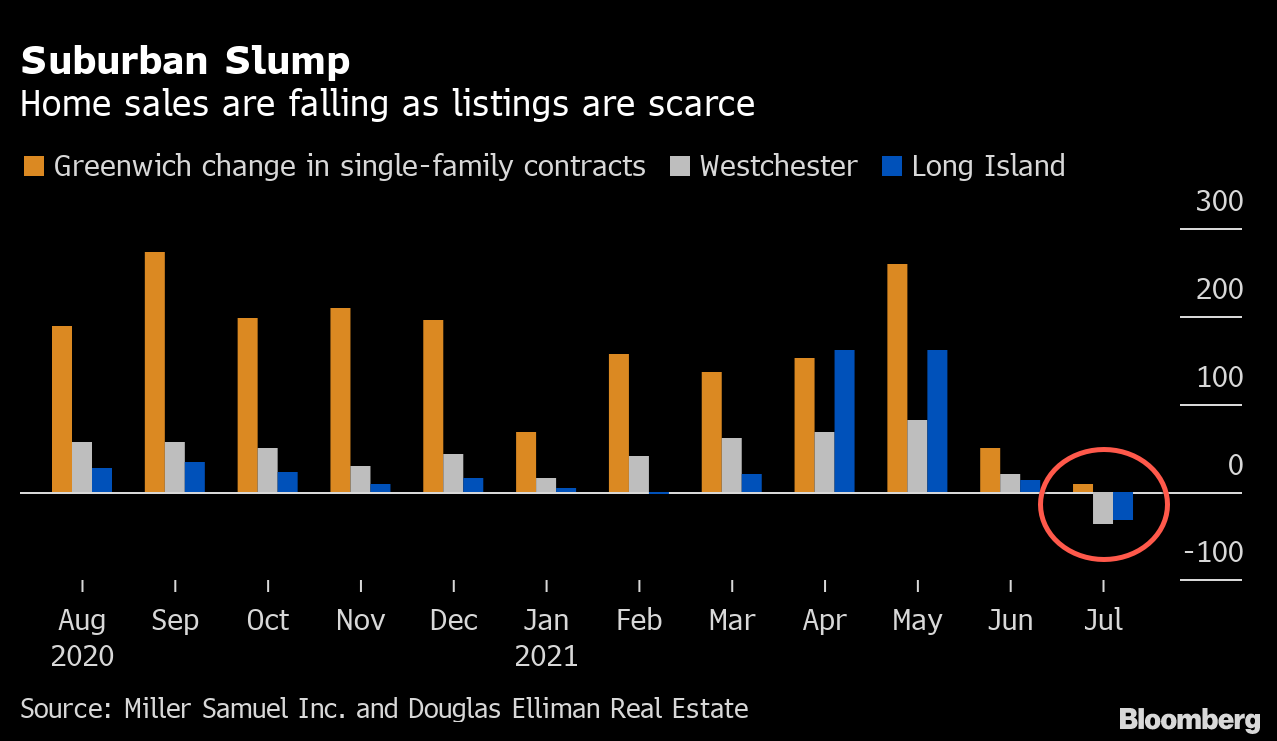
Bloomberg cites a new report from appraiser Miller Samuel Inc. and brokerage Douglas Elliman Real Estate that says for the first time in more than a year, home sales for July in New York City’s suburbs declined.

Single-family home sales in Westchester County fell 36% and 31% in Long Island last month over the same period the previous year, the first decline since June 2020. Signed deals in the Hamptons fell for the second consecutive time since May 2020, with contracts in July diving as much as 61%. 

The lack of homes with high demand among city dwellers plus low-interest rates has kept a bid in New York City’s suburban markets. A hybrid workweek has allowed many to work at home and float between the office. As long as a good internet connection in the suburbs can handle Bloomberg Terminals and Zoom calls, demand for suburban homes will continue. 

Only 150 homes were listed last month in the Hamptons, 36% fewer than a year ago. Westchester recorded a 48% drop in new listings while Long Island listings sank 18%. 

Scott Durkin, chief executive officer of Douglas Elliman, said new construction is needed to satisfy demand. Those familiar with purchasing land and building a home from scratch understand that permitting to the actual build can take anywhere between 1-2 years. 

There was one exception, Greenwich saw a 10% rise in signed deals last month, though listings fell 8.5%. 

Home sales in New York City’s suburbs are sliding as many are unwilling to chase prices higher. This market will eventually correct the supply imbalance, and prices will adjust accordingly. 

Tyler Durden
Sun, 08/08/2021 – 17:35

via ZeroHedge News https://ift.tt/2X02Goq Tyler Durden

The Paradigm Shift In China

The Paradigm Shift In China

By Chetan Ahya, Morgan Stanley chief Asia economist

A profound policy shift is under way in China. To achieve the goals of ensuring social stability and making economic growth more sustainable, policy-makers have initiated a far-reaching and wide-ranging regulatory tightening cycle. This new course will shape the evolution of China’s economy and capital markets in the coming years. The implications? Rebalancing the shares of corporate profits and wages in GDP as well as recalibrating China’s equity risk premium.

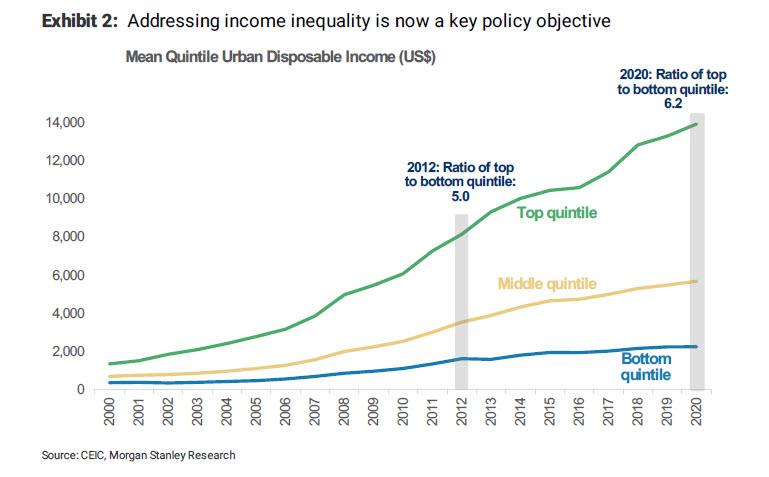
Broadly speaking, we believe that policy-makers’ goal of ‘common prosperity’ focuses on the challenges of rising income inequality. Significantly, this parallels the unfolding policy shift in the US, albeit with different approaches and starting points (see Sunday Start: The Paradigm Shift). While this change in policy should not come as a surprise since income inequality is a global issue, the speed, scale and intensity of the measures we are seeing in China today are unexpected.

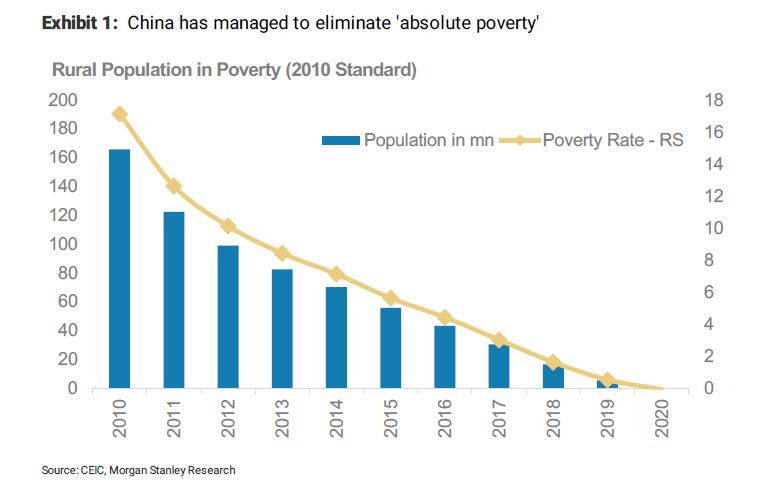
To take a step back, from a macroeconomic perspective, ‘common prosperity’ is consistent with rebalancing China’s economy towards consumption. In the early phase of China’s modern economic development, the most pressing need was to create employment opportunities to meet a sharp and sustained rise in China’s working age population. To address this, policy-makers took the approach of incentivizing investment, especially in the manufacturing sector. Costs for a wide variety of inputs across land, labor, capital and energy were kept low, while growth took precedence over the environmental impact of industrialization. The result was a rise in the ratio of fixed investment to GDP from 24% in 1990 to 42% in 2020, which catalyzed a period of fast-paced GDP growth, in the process lifting hundreds of millions out of poverty.

Economic development has now reached a critical juncture. Per capita income is on the cusp of crossing the high income threshold, but the distribution of household incomes has become markedly uneven. The most pressing need today is to address income inequality and raise the share of wages in GDP to support the long-standing goal of rebalancing the economy towards consumption. With a wage share of 52% and high levels of precautionary saving given limited access to healthcare, education and housing (especially for migrant workers), the proportion of private consumption in GDP is naturally limited. Raising the share of household incomes in GDP and reducing inequality while tackling the ‘three big mountains’ – escalating healthcare, education and housing costs – should support a higher share of private consumption.

Rebalancing towards consumption comes at a price. A higher wage share helps households but affects the owners of capital. A declining share of corporate profits in GDP means that even with relatively high rates of GDP growth, corporate profitability in aggregate will face headwinds.

What’s more, regulatory actions to rebalance the shares of labor and corporate profits inevitably raise the equity risk premium. Regulatory changes are often unpredictable, leading market participants to second-guess when the next wave will hit, which sectors might be affected and to what extent. In some instances, especially in recent years, regulatory actions have not kept pace with the growth of industries. Industries were initially allowed to grow and gain scale, attracting significant capital commitments for future growth and investment. But after exponential expansion, these industries have experienced a wave of intense regulatory action, limiting their scope severely and even disrupting their business models. Moreover, the uneven communications around regulatory changes and seemingly uncoordinated actions across different regulatory agencies leave global investors in need of clarity.

The upshot is that, in the near term, the effects of the regulatory tightening cycle should dampen overall corporate sentiment, curtail private investment and weigh on the growth outlook. It may also deter global investors from deepening their participation in China’s capital markets. Our equity strategists, Jonathan Garner and Laura Wang, believe that equity risk premium will remain at a relatively high level, at least in the near term, and that, over time, the MSCI China universe will gradually have a more balanced sector allocation with a reduced weight for Internet and a higher weight for sectors like Industrials and IT. From a capital markets perspective, our China financials analyst, Richard Xu, believes that the recent regulations may lead to further shifts in some IPOs from the US to Hong Kong.

Policy trade-offs and choices will likely determine the intensity of these headwinds. While all industries need regulations to varying extents, these constraints need to be balanced against the overarching objective of maintaining economic progress. The private sector plays a crucial role in innovation and sustaining productivity gains, growth drivers that have become more important against the backdrop of weakening demographics. We believe that policy-makers understand the challenges posed by dampening corporate sentiment and investment and will steer a middle course between tempering the worst effects of market forces while ensuring a reasonable and sustainable rate of economic growth.

Tyler Durden
Sun, 08/08/2021 – 17:10

via ZeroHedge News https://ift.tt/3s45Kvu Tyler Durden

Dixie Wildfire Becomes Largest Active Fire In US, Charing Nearly Half Million Acres

Dixie Wildfire Becomes Largest Active Fire In US, Charing Nearly Half Million Acres

The Dixie Wildfire continues to ravage hundreds of thousands of acres, fueled by strong winds and bone-dry vegetation in Northern California. The wildfire has become the third-largest in California history, and the largest in the US as more than a hundred large fires burn.

Dixie incinerated more than 447,000 acres as of Saturday night, according to the California Department of Forestry and Fire Protection (CAL FIRE). The fire is only 21% contained. 

The wildfire’s cause is under investigation. Bloomberg said Thursday utility giant PG&E Corp.’s power lines might have played a part in sparking the fire. On Friday, a federal judge ordered PG&E to provide details about the equipment and where the fire began. 

Dozens of building structures were destroyed in the gold rush-era town of Greenville on Wednesday and Thursday. 

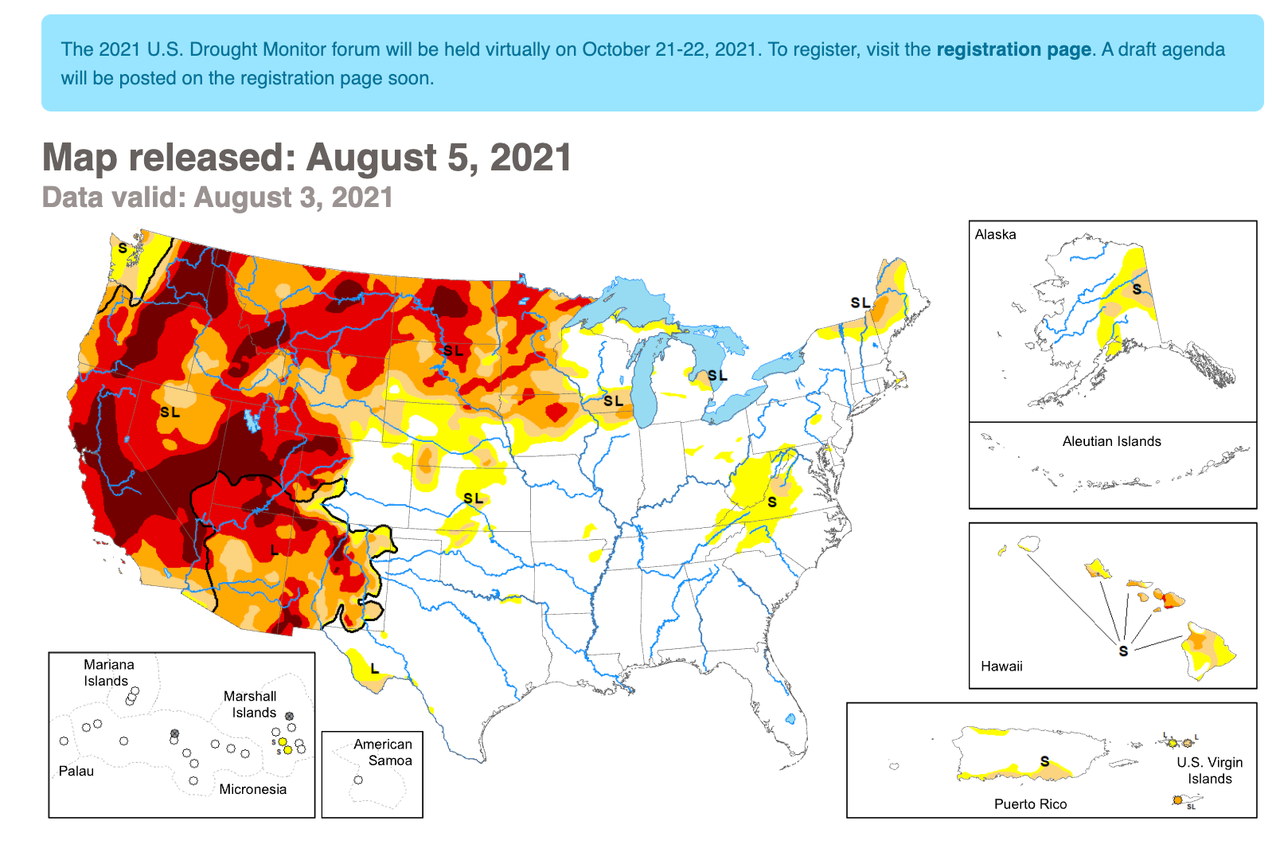
Heat waves and a historic megadrought have transformed much of the American West into a tinder box. Dixie has become the third-largest fire in recorded California history and is the largest active fire in the US. 

Smoke from the wildfires is spreading across the country. 

The National Interagency Fire Center (NIFC) reports “107 large fires have burned 2,179,454 acres” in 14 western states. 

NIFC provides a grim weather forecast for the western US, stating, “the fire outlook continues to reflect warmer and drier conditions leading to the high potential for severe wildfire activity throughout the western United States through the rest of summer and into the fall.”

The US Drought Monitor continues to show severe conditions across the western half of the US.

California’s fire season could surpass last year’s season, the worst fire season in state history. 

None of this should be surprising since California’s top fire officials were warning months ago that the worst wildfire season on record was quickly approaching.  

Tyler Durden
Sun, 08/08/2021 – 16:45

via ZeroHedge News https://ift.tt/37u2JLm Tyler Durden

Sagging Productivity Will Fuel Stagflation

Sagging Productivity Will Fuel Stagflation

Authored by Bruce Wilds via Advancing Time blog,

For years businesses shouted they were seeing huge gains in productivity but the truth is that productivity can be difficult to measure. Before long, that will bring front and center the issue of how sagging productivity can help fuel stagflation. Covid-19 may shine a bit of light on this with many people now working at home, do not be surprised if companies are forced to ask, what are these employees really doing? 

While it is easy to recognize places where huge gains are being made, productivity can suffer from something akin to the leaky bucket syndrome. I contend that over the last few years society, in general, has seen overall efficiency drop in many areas. This has been papered over by a slew of claims about how this and that are being handled much better. 

The hype we hear often ignores the reality that many of the new systems touted as gains carry with them a lot of negatives. With the onslaught of computers and word processing the garbage in garbage out pipeline has exploded. This has resulted in a simple search for information dropping the person searching into a loop that circles back upon itself at the same time it renders little in the way of helpful information. The effect of this is evident in government, it is not uncommon for laws and bills flowing from Washington to run thousands of pages in length. In hindsight, while the old way of typing and copying was inefficient compared to modern methods, it did limit the number of pages a person could create.

The truth be told, many of us have wasted a full day or more on a machine that is malfunctioning or simply refuses to do our bidding. The idea we save time by not fixing something discounts the cost and waste created when we are forced to throw away an item that still has a great deal of useful value. Sometimes I have to wonder whether people will ever look up from their cell phones long enough to realize a lot of things are not working. 

What You Get When People Don’t Care

Saving a few dimes by outsourcing the payment of our local utility bills means those jobs no longer remain in our community. Also, getting answers takes longer for the consumer that ends up paying more in both time and effort. Public transportation based on tax-supported empty buses crisscrossing town on the half-hour does more damage to the environment than many of its supporters are willing to admit. 

Another example is continuing to have the money-losing United States Postal Service rush to every mailing address in America six days a week delivering junk mail that people often don’t want. Industries have grown up around this so-called public service. Advertisers exploit this. Where I live, even our tax-funded entities such as the park department, public school system, and state university feed into the waste by putting out glossy notices and thick books touting all that they are offering as a “public service.”

The fact is in our current easy money economy a company’s value is often no longer being closely linked to productivity. Stock buybacks using low-cost loans and bonds have both led to driving the stock market higher. Still, this is more about how big companies often exhibit a lack of skin in the game mentality. This is also being fueled by employees that don’t expect to be with a company for very long in a society where many people move from company to company. These people seldom care if a job holds up over time or what happens after they move on.  

In some ways, society has moved toward a nonchalant attitude towards companies that simply fail to impress. This can also be seen in non-profit concerns and quasi-government agencies, both seem to be having a difficult time finding good leaders to carry out their missions. The one thing most are able to do, however, is to pay these figureheads far more than they are worth. 

The market may be a little bit soggy when it comes to the importance of productivity because so much of what the talking heads are focused on is tapering, tapering, and tapering. The recent flow of free easy money from the Fed has washed away much of the common sense of which Main Street was originally based. Having employees that are, productive, responsible, and knowledgeable has a great deal of merit.

The huge problem before us is that tapering is easier said than done and politically unpopular. QE has made the wealthy and powerful much richer and they “control the strings.” Risk can build slowly and while some people predict a massive deflationary cycle may happen in the future as defaults surge, it is just as likely inflation is being baked into the whole financial system. This makes stagflation the most probable scenario we face in the future.

Tyler Durden
Sun, 08/08/2021 – 16:20

via ZeroHedge News https://ift.tt/3yx6M5t Tyler Durden

What Goldman Really Thinks: “The Ante Will Be Upped When Taper Begins”

What Goldman Really Thinks: “The Ante Will Be Upped When Taper Begins”

Finance professionals are well aware that when it comes to research, Wall Street has two sets of books: one set, that produced by the official sellside Research division, tends to be perpetually cheerful and is meant to encourage commission-boosting risk-taking among the broader client group; and since this is the research that immediately leaks to the financial media and thus the broader public, it serves to bolster optimism in capital markets and encourage a continuation of a market-levitating status quo. An example of this is Goldman’s David Kostin announcing last Thursday that he is hiking his year-end price target for the S&P500 from 4,300 to 4,700 primarily on lower Treasury yields. While there was little discussion about why lower yields which paradoxically signify a slowing economy and lack of reflation should be bullish for markets, that doesn’t really matter – what matters is that market upside has received a Goldman stamp of approval, and now the rest of Wall Street’s client-facing researchers will scramble to imitate Goldman with their own optimistic upgrades of where “they” think the market will close the year.

But is that what Goldman really thinks?

For the answer of what any bank – be it Goldman or anyone else – believes will happen, one has to step away from the research desk which is manned by bankers whose pay is not determined by whether they are right or wrong, but whether they produce enough convincing work product to validate the prevailing market narrative (in the current case bullish) and also facilitating client meetings with management teams, which is also why most ratings on Wall Street are “Buy” – few CEOs will meet with clients of a bank that just slapped a “Strong Sell” rating on their stock.

As a result, the truth often lies with the unofficial research created by a bank’s Sales and Trading division, which is far more difficult to come by – in fact it usually is not even included in a bank’s client blasts, one can’t directly subscribe to it – and is proprietary to specific traders from either the Flow or Prop desks where it is shared on a direct email basis with a very small subset of generous clients, usually those whose soft dollar commissions surpass a given threshold. Furthermore, since these reports – and their authors – are judged and compensated on the feedback from their clients, and in many cases their own direct P&Ls, the analysis is usually far much more accurate because unlike regular research, if traders are wrong one too many times, they can not only lose their bonus if clients complain, but can also lose their job.

To get a sense of just how different official research is from S&T reports, below we have grabbed the latest note from Goldman’s Tony Pasquariello, head of hedge fund sales at the bank. We urge readers to first skim the summary of Kostin’s hyperbullish market upgrade which we published last week, which sees nothing but smooth sailing in the second half, and compare it to the note below which is far more somber and while admitting the bubble nature of the market, anticipates turbulence once the taper is announced, perhaps as soon as this month’s Jackson Hole meeting: “S&P is trading at P/E levels only seen in the tech bubble … and US Financial Conditions have never been easier … so, yes, the ante will be upped when taper begins.”  Furthermore, retail euphoria is a stark reminder that we are in another dot com era: “the US retail investor is long and involved in a way that’s very distinct from the pre-2020 bull market … and, we’ve lived in an era of investor euphoria that’s pushed the multiple up to demanding levels.

Perhaps most notably, his concern that the “current policy setting” may lead to ruins, but – well – one should never fight central banks, right: “while the current monetary approach may ultimately constitute an inappropriate policy setting, it’s been another year where you’ve been paid to just go with global central banks.”

So without further ado, here is the latest client note from Goldman’s Tony Pasquariello:

Markets/Macro

While preparing for a trip earlier this week1, I dug through some old notes in a markets folder2. Here are a handful of one-liners that stuck out, with a stab at the application to the present day:

i. “as a wise macro manager once said, it’s usually 3-4 big trades a year that drive 90% of your returns” ⇒ Q1 offered a very high quality opportunity set that’s hugely waned; that said, if the US labor market steams ahead, I’m relatively optimistic the back end of the year will offer a few more pitches to hit.

ii. “every macro process begins with a liquidity framework” ⇒ while the current monetary approach may ultimately constitute an inappropriate policy setting, it’s been another year where you’ve been paid to just go with global central banks.

iii. “equities don’t suddenly break because of over-valuation, they typically break when liquidity is tightened” ⇒ S&P is trading at P/E levels only seen in the tech bubble … and US Financial Conditions have never been easier … so, yes, the ante will be upped when taper begins.

iv. “the rally in equities is constantly in question; e.g. at 1250 in S&P, there was no workout in Europe — Greece was going to default and there wasn’t enough capital in the European banking system to withstand it” ⇒ easier said than done, I know.

v. “certain years and certain cycles favor trading over investing, in others it’s the photographic negative” ⇒ in macro, 2021 has clearly favored aggressive trading; in micro, it’s been a mixed bag (investing at the index level, trading at the sector/factor level).

  • footnote 1: what stuck out when meeting with corporate clients was enormous focus on two topics: China (most every mention was shot through with some degree of negativity) and ongoing labor challenges (the difficulty of hiring, the friction of RTO and the persistence of COVID).
  • footnote 2: one of the journals I re-read was from 2016. it was striking how, eight full years on from the GFC, there was still so much scar tissue in the market narrative (as distinct from the investor euphoria that’s characterized the past 12 months).

Market Direction:

With respect to supply/demand and sentiment:

  1. i. the bullish read: retail activity is off the boil from Q1, but it’s still a story of net demand (see chart 12 below) … corporate technicals are very healthy (all-time high in M&A, $727bn of expected buyback executions and $546bn of dividends from S&P) … there’s still a huge amount of cash sloshing around the global financial system (that’s a clunky statement, but I think you can detect it everywhere) … the put/call ratio on S&P is around all-time highs … and various measures of investor sentiment are surprisingly well balanced (be it Goldman Investment Research or CNN fear/greed).
  2. ii. the less bullish read: don’t miss the point, following a period of record demand, the US retail investor is long and involved in a way that’s very distinct from the pre-2020 bull market … and, we’ve lived in an era of investor euphoria that’s pushed the multiple up to demanding levels.

Bigger picture, my simple macro process for equities always starts with (1) the trajectory of growth and (2) financial conditions. In an outright sense, current readings are superb (Q3 should market the apex of global economic output, and the GS Financial Conditions Index has never been more accommodative) … While in a comparative sense, the rate of change / second derivative of both factors will almost certainly be less impressive from here.

At the risk of boring you with the same conclusion, I still think that’s a good enough underpinning for US equities — while admitting that the path for S&P from here is more likely to be a grind than a gap (and, that the overriding theme of macro trading is more likely to be “pro-cyclical” than full-throated “reflation”).

I’ll conclude with a reference to point 9 below, which vividly illustrates just how strong the building blocks of shareholder returns are today.

* * *

Quick points, charts:

1. Calibrating China: the amount of ink devoted to China right now is very significant. A few takes:

  • i. again, to this point in the game, global equity markets have notably compartmentalized this variable. I’m not speaking of just S&P — the durability of other Asian markets, and EM in general, is a historical aberration: link.
  • ii. in a way, that’s a bit reminiscent of the 1990s wedge … I’m not suggesting it will be anywhere close to this magnitude, but note NKY dropped 50% in the decade … whilst S&P ripped 430%.
  • iii. should the news flow continue, it’s reasonable to think the repatriation of capital out of the Chinets could be large and sustained. I think it’s worth remembering that — outside of US mega cap tech — the Chinese ADRs felt like one of the only games in town circa ’09-19.

2. Speaking of Japan: despite the Olympics, the domestic equity market is remarkably off the radar of global investors. while admitting my soft spot for Japan-style trading rallies, note the GDP sequencing: Q1 -3.9% … Q2 +0.3% … Q3E +4.0% … Q4E +8.4% (that last estimate is well above consensus). My point here is I can see NKY lining up as great risk/reward again down the stretch should the pro-cyclical narrative reassert itself.

3. Rates: As a colleague put it, 1.25% on 10yr note yields is purgatory for the directional crowd. that said, again viewed through the prism of a stock operator, the ongoing push lower in real yields — both in the US and Europe — is an ongoing tailwind for risk in general, particularly the long duration plays (and, not just tech stocks, I continue to be drawn to healthcare).

4. Infrastructure: given the long runway here, in isolation I don’t think this is a story to plan your risk around, but on the margin our house view for infrastructure stuck me as decently positive: “overall, we continue to expect Congress to approve around $3 trillion over 10 years in additional spending, consisting of around $500bn from the bipartisan infrastructure bill and another $2.5 trillion from a budget reconciliation bill” (link).

5. This benchmark note on the future of work is worth a trip to the printer: For example: in surveying 50k full-time US and 15k UK workers, 20% of people don’t want to work from home at all post-pandemic, while 30% want to work from home five days a week. the remaining 50% of workers are fairly evenly spread between wanting to work one to four days a week at home. so, the biggest groups want either zero — or five days — in the office.

6. I thought this quote applies to many people in our trade: Novak Djokovic said in an interview with the Financial Times that “I can carry on playing at this level because … I like hitting the tennis ball.”

7. While on the topic of being good at your craft, h/t to one Dr. Sancheti, who is retiring after performing more than 55,000 surgeries in his career: link.

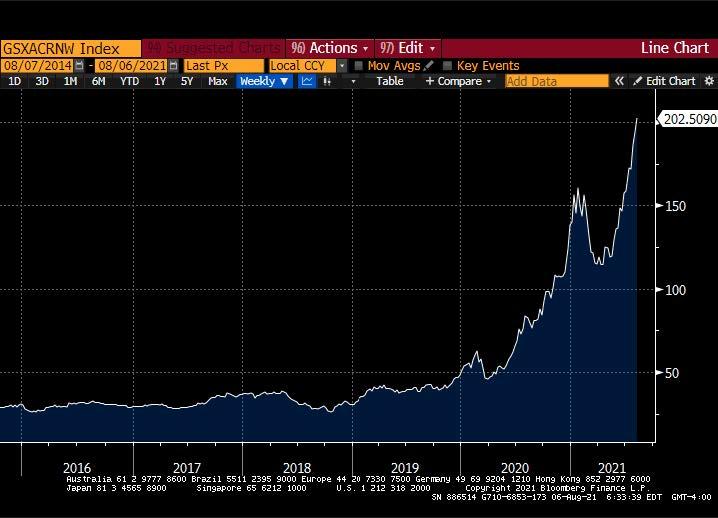
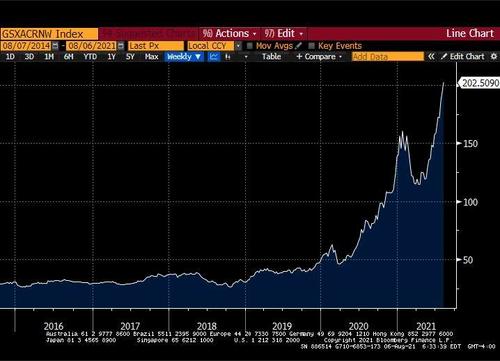
8. Yes, China is mired in a serious bear market. yet, amidst the breakdown, witness the explosive breakout in our China renewables / clean energy basket (you’ll see similar strength in the China innovation basket, ticker GSXACINO). this is also an interesting compare/ contrast with the US, where the domestic renewables basket (GSXURNEW) is 20% off the February highs with S&P ripping:
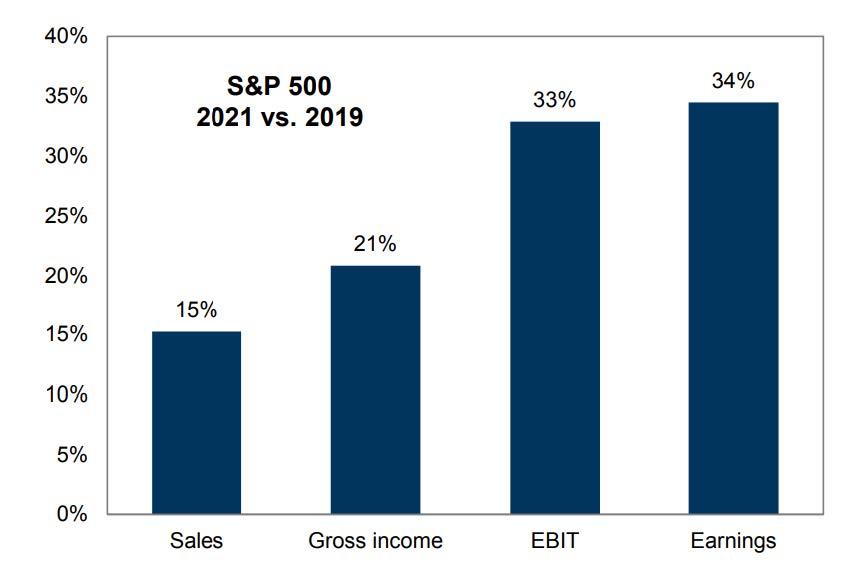
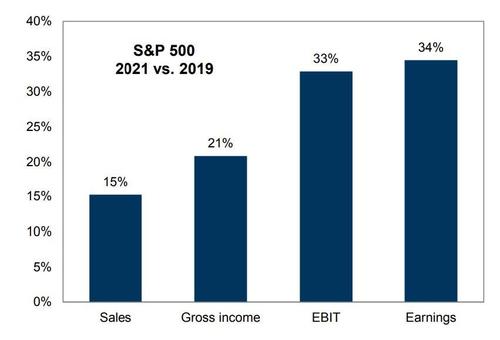
9. US Portfolio Strategy made notable upward revisions to our S&P price targets: YE’21 to 4700 (from 4300) and YE’22 to 4900 (from 4600). within that forecast, our new earnings estimates represent upward revisions of $14 for 2021 and $10 for 2022, reflecting expectations of stronger top-line growth and profit margin expansion. as you can see here, compared to the pre-pandemic levels of 2019, sales, income, EBIT and earnings should be up very meaningfully in 2021.
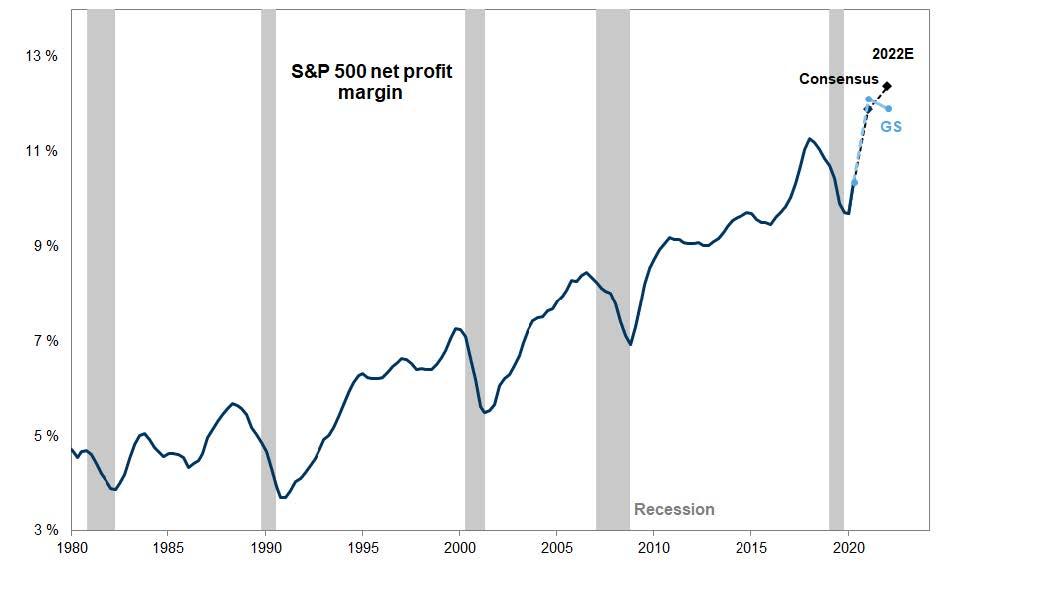
10. While increasingly viewed with ambivalence, the past three decades have seen a remarkable expansion in US corporate profit margins. as you can see here, while margins should make a fresh push to higher highs, in the forward our US Portfolio Strategy team is a bit less bullish than consensus, though this is largely because they assume a version of tax reform is passed by year-end and becomes effective next year (credit to Cormac Conners):

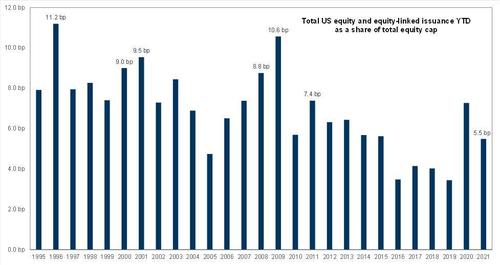
11. Yes, it’s been a huge year for new issues. that said, again as a % of equity market cap, it’s really not so wild:
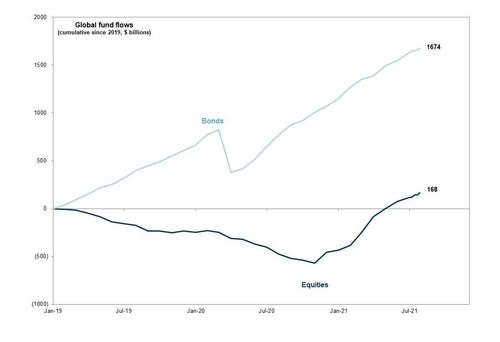
12. Yes, a tremendous amount of money has flowed into global equities over the past few years. At the same time, demand for Fixed Income remains utterly huge (credit to sales & trading collegue Scott Rubner):
Tyler Durden
Sun, 08/08/2021 – 15:55

via ZeroHedge News https://ift.tt/3xz23Pc Tyler Durden

Ron DeSantis Is Defending Freedom By ‘Getting In The Way’ Of COVID Authoritarians

Ron DeSantis Is Defending Freedom By ‘Getting In The Way’ Of COVID Authoritarians

Authored by Jordan Schachtel via ‘The Dossier’ substack,

In an ideal nation, the most important duty of an elected politician involves ensuring the protection of their constituents’ individual rights. During COVID Mania, the political forces for tyranny in America have attempted to contaminate this sacred ideal — under the guise of keeping us safe from a virus — by running roughshod over every aspect of our lives. The Biden Administration has sought to delegitimize the former category of politician, whose most high-profile advocate in America today is Gov. Ron DeSantis, in order to boost the latter form of nanny state authoritarianism. 

On Tuesday, the battle between these two forces continued, with high profile Biden Administration actors (such as President Biden himself, along with White House spokesperson Jen Psaki) demanding that Gov. DeSantis “get out of the way” and let the ruling class, under the advice of their esteemed “public health experts,” continue to trample our rights as Americans. 

“We need leadership from everyone. If some governors aren’t willing to do the right thing to beat this pandemic, then they should allow businesses and universities who want to do the right thing to be able to do it,” Joe Biden said today at a press conference.

“I say to these governors, ‘Please help. But if you aren’t going to help, at least get out of the way.'”

The language is purposely colorless and unspecific. What they want and support is very clear, as stated mid day by Psaki. The Biden Administration and the forces for COVID tyranny want the governor to let the federal government, school boards, and “pubic health” bureaucrats impose discriminatory movement passes on populations based on their COVID vaccination status. Additionally, they want to let school boards and teachers unions force children to wear masks all day, subjecting them to physical and emotional trauma, so that their elders can feel safer.

As political season heats up, the Biden Administration has stepped up its campaign to attack Governor DeSantis, largely in bad faith. 

COVID cases are indeed up in Florida. This is expected, because just like at this time last year, Florida is dealing with yet another respiratory illness season. The Biden Administration claims that forced masking, vaccine passports, lockdowns, and the like will somehow improve Florida’s situation, and that the sick would suddenly stop getting sick during the hot summer months. 

There is simply no evidence anywhere in the world that restricting the individual rights of citizens, segregating the unvaccinated from the vaccinated, and forcing people to wear masks all day would have any benefit whatsoever when it comes to stopping a virus. Virtually every “public health” command and edict has come up empty, and these severely damaging policies have made matters worse across the board. The forces for COVID tyranny live in an evidence-free world, and DeSantis is right to dismiss them and shame them for their failures. The data and the science is on the side of the Florida governor, and not America’s COVID totalitarian class. And even if those tyrannical solutions worked to stop a virus with a 99.8% recovery rate, the residual effects would not be anywhere near worth it under any rational cost benefit analysis. 

Luckily for Floridians, when it comes to protecting the most vulnerable Americans among us, the schoolchildren who remain without a political voice, the Florida governor has made it his mission to “get in the way,” in the form of protecting their individual rights from the “public health” extremists.

The Iraq War vet is clearly no pushover, and he’s had enough of the corporate press and other corrupt institutions blaming the supposedly non-compliant class for a virus problem that they couldn’t solve through shoddy authoritarian nonsense.

By being the man who “gets in the way” when the forces of tyranny come for his state, DeSantis is upholding his commitment to the individual rights of each and every citizen of Florida, and he’s setting a foundational American example for all elected politicians to follow.

*  *  *

Support Jordan’s work here

Tyler Durden
Sun, 08/08/2021 – 15:30

via ZeroHedge News https://ift.tt/3lHgFtN Tyler Durden

Trio Of Tropical Disturbances To Watch In Atlantic Basin

Trio Of Tropical Disturbances To Watch In Atlantic Basin

A trio of tropical disturbances are developing in the Atlantic basin and should be closely watched next week. Two of the disturbances have the chance of forming into tropical depressions in the next five days. 

July was a quiet period after an active start (June 1) to the 2021 Atlantic hurricane season, but statistically, the busiest part of the hurricane season begins on Aug. 20. It seems a significant uptick in storms is ahead. 

The first disturbance is a low-pressure system over the west-central Atlantic. The second disturbance is more east and is moving westward in the central tropical Atlantic. The third distance is near Africa. 

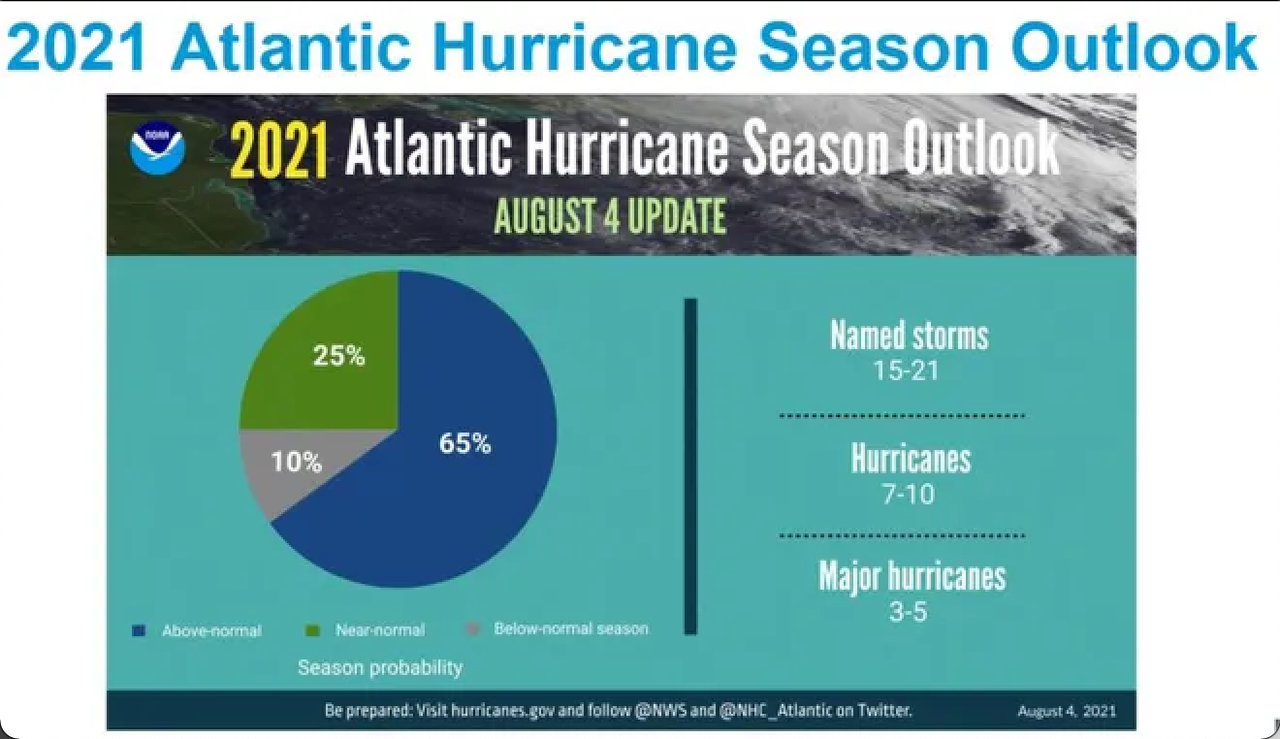
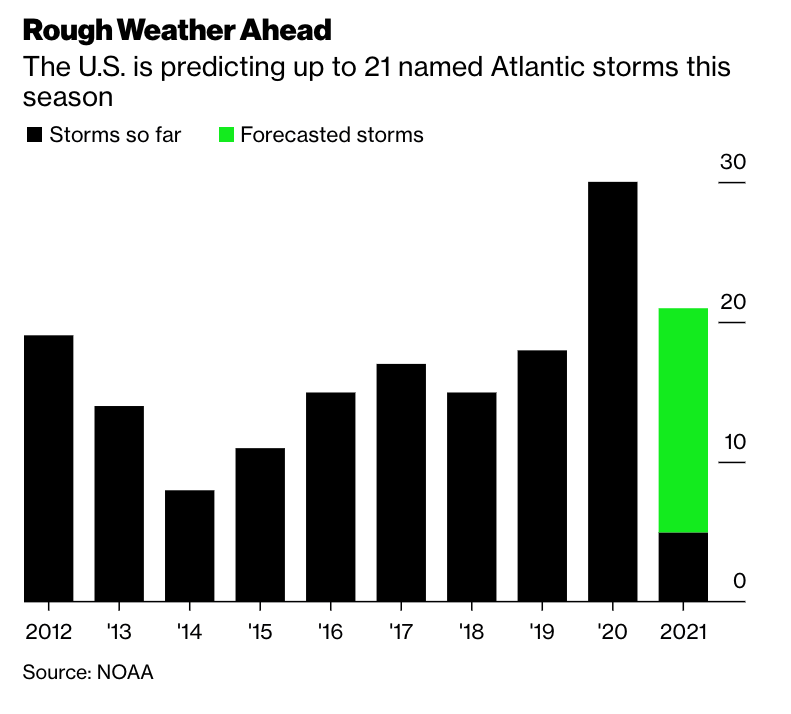
Last week, National Oceanic and Atmospheric Administration (NOAA) upgraded the number of named storms to 21 from its prior forecast of 15 in May. 

NOAA is now forecasting at least ten hurricanes and up to five major ones with winds above 100 mph. 

“While the tropics have been slow the past few weeks, NOAA forecasters believe a busy hurricane season lay ahead,” said Matthew Rosencrans, the lead seasonal hurricane forecaster at the U.S. Climate Prediction Center.

Source: Bloomberg 

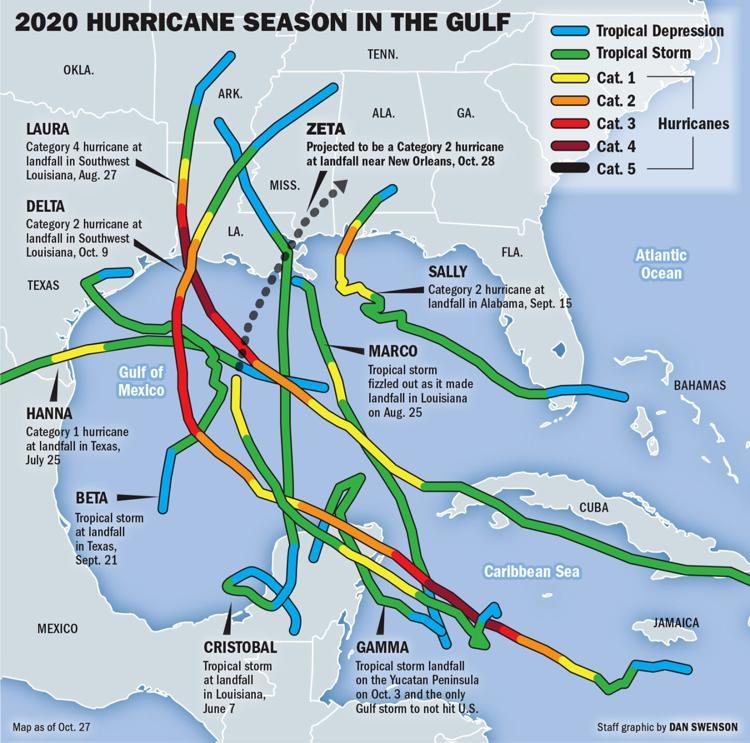
The 2020 hurricane season saw a record 30 storms, with several major ones striking Louisiana.

Keep an eye on tropical development in the Atlantic Basin. The next tropical storm will be named Fred. 

Tyler Durden
Sun, 08/08/2021 – 15:05

via ZeroHedge News https://ift.tt/37pr9pk Tyler Durden

Lobbyists Spent $426 Million To Reap An Infrastructure Bonanza

Lobbyists Spent $426 Million To Reap An Infrastructure Bonanza

Authored by Mike Shedlock via MishTalk.com,

Nearly 2,000 companies and other groups have engaged with Washington officials about infrastructure to shape the final deal

Lobbying Bonanza in Washington

The Washington Post comments Massive Economic Packages Unleash Lobbying Bonanza in Washington.

Nearly 2,000 companies and organizations have lobbied Congress and the administration this year in an attempt to influence the contours of major new infrastructure spending, an effort that is sure to intensify now that the Senate is hoping to vote within days on their version of the $1 trillion public-works package.

The proposal — along with a still-forming second economic package valued at $3.5 trillion — carries high stakes for corporations that have long pined for infrastructure improvements and other federal spending that would be beneficial to their bottom lines. 

The organizations working to shape the package — ranging from powerful trade associations representing agricultural and energy giants to small-time firms working for cities in Alabama and Kansas — mentioned either “infrastructure” or President Biden’s initial proposal, known as the American Jobs Plan, on their lobbying disclosure forms during the most recent quarter this year, according to an analysis from the Center for Responsive Politics, a nonprofit group that tracks money and influence in Washington.

Amazon, whose founder Jeff Bezos owns The Washington Post, spent nearly $10 million in the first six months of the year on a slew of lobbyists who worked on issues including “electric vehicle charging infrastructure” and “infrastructure investment legislation,” according to filings. The Global Infrastructure Investor Association, which represents financial firms like Goldman Sachs, Blackstone and Morgan Stanley, lobbied earlier this year on “public-private partnerships in financing state and federal infrastructure,” its disclosures show.

The RATE Coalition hired Forbes Tate Partners to lobby against corporate tax raises, a firm whose lobbyists include former aides to the Senate’s top tax-focused committee. The American Chemistry Council, which represents companies including 3M, Dow, Dupont and ExxonMobil, has taken particular aim at a portion of the infrastructure package that would raise the country’s so-called superfund tax.

Result: 2,701-Page Infrastructure Bill

As fruits of their efforts, the lobbyists produced a 2,701-page bill.

It’s important to understand that Congressmen do not write bills, lobbyists do. They are the only ones who understand what’s in those 2,701 pages. 

On Fox News, Kudlow asked: How many Senators have read this bill? 

Dirty Little Republican Secret 

17 GOP Senators have signed on to this package making it a truly bipartisan boondoggle. The WSJ comments on the Republican support.

So why did 17 GOP senators vote to proceed? On the baser end of the scale, here’s the dirty little secret: The bill fundamentally amounts to a heap of spending, and some Republicans can spend with the best of Democrats. The member press releases are already flying, bragging about the pork they are directing back to their home states.

The Biden White House wants to remake America fundamentally in Bernie Sanders’s vision. This is the moment the GOP needs to be hammering away at the bad policy, the risks, and at the contrasts in governance. Which gets hard to do when Senate Republicans are whooping that Biden agenda along.

Musical Tribute

Long time readers knew from the top of this post that a musical tribute was coming. This one is a movie flashback.

Worst Bills Money Can Buy

In the end, Democrats and Republicans mostly feed from the same trough in the same smelly pigsty

Lobbyists reap the Bonanza and taxpayers foot the bill. 

On Thursday Senator Manchin Urged Fed to Immediately Taper to Halt Inflation and Avoid Tax Hikes

I suggest he (a Democrats), and all the Republicans take a look at the bills they are  now prepared to sign.

After the obligatory review (has anyone even read it?) It’s Senator Manchin’s Patriotic Duty to Switch Parties to Stop the Insanity

*  *  *

Like these reports? I hope so, and if you do, please Subscribe to MishTalk Email Alerts.

Tyler Durden
Sun, 08/08/2021 – 14:40

via ZeroHedge News https://ift.tt/3Ar1okG Tyler Durden

“This Is About Control, Not Children”: Eric Weinstein Calls Out Apple’s Virtuous Pedo-Hunter Act

“This Is About Control, Not Children”: Eric Weinstein Calls Out Apple’s Virtuous Pedo-Hunter Act

Last week, Apple announced that they would begin analyzing images on its devices before they’re uploaded to the cloud in order to identify child pornography and report it to the authorities, sending privacy advocates through the roof.

Apple defended the decision – claiming there’s a ‘1 in 1 trillion chance of false positives.’

“Instead of scanning images in the cloud, the system performs on-device matching using a database of known CSAM image hashes provided by NCMEC (National Center for Missing and Exploited Children) and other child safety organizations. Apple further transforms this database into an unreadable set of hashes that is securely stored on users’ devices,” the company said in an announcement.

Privacy advocates have pointed out the obvious slippery slope of allowing big tech to infiltrate our personal lives under the guise of fighting [evil thing], and the next thing you know Apple is hunting dissidents for human rights abusers, reporting who owns what guns, or people taking ‘suspicious’ routes that deviate from their normal pattern. As the Electronic Frontier Foundation notes:

We’ve said it before, and we’ll say it again now: it’s impossible to build a client-side scanning system that can only be used for sexually explicit images sent or received by children. As a consequence, even a well-intentioned effort to build such a system will break key promises of the messenger’s encryption itself and open the door to broader abuses.

All it would take to widen the narrow backdoor that Apple is building is an expansion of the machine learning parameters to look for additional types of content, or a tweak of the configuration flags to scan, not just children’s, but anyone’s accounts. That’s not a slippery slope; that’s a fully built system just waiting for external pressure to make the slightest change. -EFF


They’re hypocrites anyway

Hitting it on the nose, as usual, is Eric Weinstein – who calls out Apple’s Tim Cook for scanning our *private* photos for child porn, while utterly ignoring Jeffrey Epstein’s high-level child-sex trafficking and ties to intelligence.

Also critical of Apple is WhatsApp head Will Cathcart – who says he’s “concerned” about Apple’s announcement, and “a setback for people’s privacy all over the world.”

More via Threadreader App

@WhatsApp, all without breaking encryption.
More notable hot takes:

Tyler Durden
Sun, 08/08/2021 – 14:15

via ZeroHedge News https://ift.tt/3CwQMCI Tyler Durden

When Dissent Is Misinformation, Fallacies Become Facts

When Dissent Is Misinformation, Fallacies Become Facts

Authored by Mark Jeftovic via BombThrower.com,

“Whoever practices this prophylaxis will experience the pleasure, not from time to time to lose every third or fourth patient from puerperal fever, but perhaps lose only one in four hundred” 

-Ignaz Semmelweis, 1860, trying to convince the medical profession that hand disinfection before conducting medical procedures would save lives

My friend Doug McKenty, who does The Shift podcast was just suspended by Mailchimp. He’s been getting more vocal about what he calls healthcare freedom (read: vaccine passports), and something about that coloured outside the lines.

Mailchimp, an email list provider, is known for doing this. You effectively pay Mailchimp to curate what you can or cannot say to your own email subscribers.  You’re using their mailservers, and in their mind that’s what gives them the right and the moral authority to monitor the content of your communications to your own audience.

In my book Unassailable: Protect Yourself From Deplatform Attacks, Cancel Culture and other Online Disasters (the e-book version has been available for free for some time now) I devote an entire chapter to the machinations of the Big Tech and how they overstep the bounds of rationality when it comes to deciding what is within their purview and what isn’t, or shouldn’t be.

No tech company should be enforcing their Terms of Service based on what they think their users have done or might do off of their own platforms. Yet Twitter, Facebook, Patreon and who knows who else do that.

A mailer company like Mailchimp has no business even parsing the content of their paying clients, let alone summarily judging whether it is misinformation or not. Mail providers should care about two things and two things only:

  1. The list is clean (opt-in and confirmed)

  2.  The mailings aren’t infected with any kind of malware.

That’s it. Beyond that it really isn’t their business and it’s the height of grandiosity and hubris to think that it is.

Patreon’s CEO Jack Conte describes how their Trust and Safety Team remove all subjective elements from the decision to demonetize somebody’s content by evaluating them based on “Manifest Observable Behaviour”:

“Manifest observable behavior is to remove personal values and beliefs when the team is reviewing content. It’s a review method that’s entirely based on observable factswhat has a camera seenwhat has an audio device recorded. It doesn’t matter what your intentions are, your motivations, who you are, your identity, your ideology. The trust and safety team only looks at Manifest Observable Behaviour. We get rigorous and specific because we’re talking about removing a person’s income. The authority to take away a human being’s income is a sobering responsibility. It is not something to be done on a whim.”

What does this process resemble? It actually sounds a lot like a legal proceeding, albeit one that’s entirely one-sided, devoid of any semblance of due process or legal protection under the law, and probably carried out by teams of purple-haired Millennials with nose hoops and personal pronoun mood-rings.

When tech companies take it upon themselves to arbitrate what is or isn’t misinformation, or taking action based on events that occur outside of their own platforms what they are doing, at its core, is adjudicating international law. Do you really want your domain registrar or your web host doing that?

These companies think they’re the patricians of internet discourse. The reality is they’re the plumbing.

Fact Checks, Fallacies and Misinformation

“Fact Checks” are another entirely subjective catch phrase dolled up to look like objective truth. These days a fact check is more likely to be a logical fallacy and the reality is, most people don’t even know what logical fallacies are.

When the Associated Press “fact checked” US Senate testimony on the efficacy of Ivermectin claiming “there is no evidence that Ivermectin is a ‘miracle drug’ against COVID” and they labeled it false, they committed a logical fallacy called “appeal to ignorance” (absence of evidence is not evidence of absence).

The vast majority of all media narrative around COVID-19, on masks, lockdowns, Ivermectin, HCQ and yes, vaccines, can be categorized into five logical fallacies:

  1. Appeal to Authority: whatever experts and unaccountable technocrats say is objectively true. If you disagree with the experts you are disputing science itself (even the ones who were neck deep in funding the gain-of-function research that quite possibly led to the lab release that caused the pandemic).

  2. Bandwagon: Because everybody else believes something, you have a moral obligation to believe it too. Anything you’ve come across or read that contradicts what everybody else believes to be true is “misinformation”.

  3. Ad Hominem: is not an argument at all, it’s an attack. “Covidiots”, “Deniers” these are not rational counter-arguments, they’re slurs. Anybody employing them is not  engaging in discourse but rather bigotry and prejudice. This is as inexcusable as racism. Over the past few years many have been challenged to examine their own biases and privilege, in certain contexts for perfectly valid reasons. Anybody engaging in this type of othering toward skeptics and contrarians lacks self-awareness and empathy to the same degree as a racist.

  4. Appeal To Emotion: Corporate media thrives on fear. Social media platforms on anger. It’s why every time CNN says “Delta variant” it is “highly contagious” instead of “less fatal”. If everybody knew that recent data out of the UK (among others) indicates the Delta variant has a fatality rate that’s even lower than the already quite low Alpha variant, basically the same as seasonal flu, then they may just calm down. And we can’t have that.

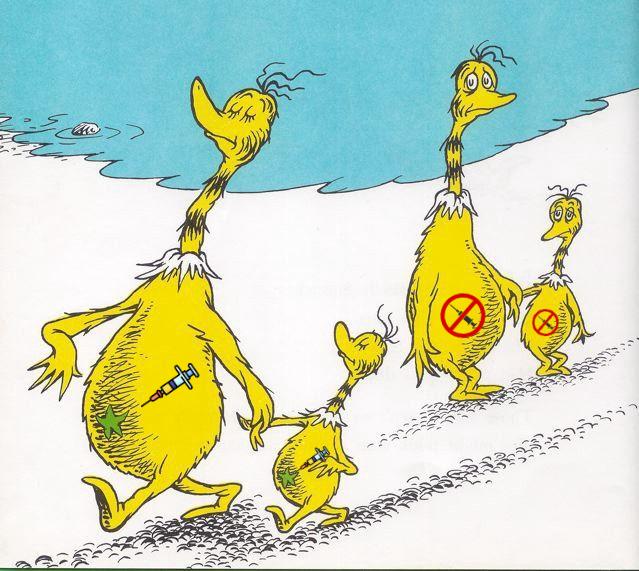
  5. Moving the Goalposts: 15-days to flatten the curve became #NoJabNoJob in about 18 months. You’re still supposed to wear a mask if you’re fully vaccinated, the media has already decided that a fourth wave will occur in the fall and the really forward looking thinkers are gearing us up for climate lockdowns.  “We’re all in this together” turned into that Dr. Seuss story about the Sneeches. Also, Dr Seuss got canceled.

There are those that believe there is no subjectivity involved in any of this. They think, as Jack Conte does, that there are standalone objective truths, like Manifest Observable Behaviour. Realms where nuance, uncertainty and conflicting data are banished. All right thinking people grok The Truth and only wrong thinking people dispute it.

Triggernometry’s Konstantin Kissin recently put out a Twitter thread on vaccine hesitancy:

It lays out the case, fairly cogently, why the general public may just simply be confused, distrustful and hesitant as opposed to being morally reprobate monsters. Further, it enumerates, in painstaking detail, multiple pillars of official canon which turned out to be, misinformation, for lack of a better word (unless that word is “lies”). 

We see Fauci removing his mask the moment the cameras stop rolling. We see AOC sitting amongst a fairly close knit crowd put one on for the express purpose of a photo op and then take it off again. But if you send an email to your own subscribers via Mailchimp wondering out loud if masks are nothing more than performative theatre, you’ll get shut down.

How does any of this establish the credibility and public trust required to mobilize that last 20% to 30% needed to (purportedly) achieve herd immunity? It doesn’t.

From WMD in Iraq being a “slum dunk” through “Subprime is Contained” to “Tapering will be like watching paint dry”, anybody who has actually been keeping track of the expert authorities track records over the past 20 years has legitimate reason to believe that experts don’t know anything. At least nothing of predictive value.

Another chapter in my book asks the question ‘Does Deplatforming Even Work?’ Short answer is: it doesn’t. Over the long haul, suppression of material amplifies it. If you want fewer unhinged conspiracy theories circulating about COVID, stop deplatforming anybody who isn’t mindlessly parroting Fauci.

What is really needed is a society-wide crash course in critical thinking, and not to be incessantly hectored and told what not to think. The Davos crew, the entrenched elites of late stage globalism think we’re headed toward a world managed by expert technocrats. But they haven’t exactly put up a string of successes and this approach to public policy has arguably failed its most important test.

We’re headed toward a decentralized world governed my open source protocols and smart contracts. The battle is not about left vs right, conservative vs liberal where either side would have you believe that content cleanly bisects into Truth and Misinformation. The defining tension of the next 20 years is decentralization vs bureaucracy, platforms vs protocols and nation states vs networks.

As for the opening quote of today’s piece? Semmelweis lived a tragic life. The battle to convince the medical establishment of his day that washing ones hands  after performing an autopsy and before delivering a baby would prevent the spread of  “cadaverous particles” from corpses to mothers and newborns was seen as delusional. Surely AP would have “fact checked” it as false. Politifact would have rated it “pants on fire”. After all, that there was no such thing as germs was settled science.

The stress of the scorn and demonization took a lot out of Semmelweis. He apparently aged the equivalent of decades in just three years since he commenced his writing campaign in 1857 promoting his theories until the publication of his Aetiology in 1860.

He died alone and in ignominy, having been committed to a mental institution by his medical peers.

*  *  *

Mark E. Jeftovic is the CEO of the Toronto-based web services company easyDNS. To receive future posts in your mailbox join the free Bombthrower mailing list. To get premium research on companies and stocks that are poised to win big as crypto continues its ascent, try our Crypto Capitalist Portfolio trial offer.

Tyler Durden
Sun, 08/08/2021 – 13:50

via ZeroHedge News https://ift.tt/3Cxvx42 Tyler Durden