How Bill Gates’ Carefully Curated “Tech Savior” Image Unraveled

How Bill Gates’ Carefully Curated “Tech Savior” Image Unraveled

For millions of Americans, the outpouring of negative stories about Bill Gates – allegations of an improper adulterous relationship with a Microsoft employee, his stubborn insistence on standing by Jeffrey Epstein, Melinda Gates’ years-long plotting to divorce him – may have taken them by surprise. Thanks to an extensive propaganda operation overseen by Gates via the Bill and Melinda Gates Foundation, most media coverage of Gates has been overwhelmingly positive – until now.

This belies the reality that criticism of Gates has been growing since before the start of the pandemic – although his emergence as the de facto global vaccine czar sparked conspiracy theories, Gates’ media manipulation machine successfully shifted the narrative to paint all his critics as unhinged conspiracy theorists, drowning out criticisms of Gates’ success in undermining the “open vaccine” movement, something that has been revitalized by President Biden’s decision to back a proposal at the WTO to waive IP protections for COVID vaccines.

In the span of about two weeks, the public goodwill that Gates long enjoyed has mostly evaporated. But as Bloomberg reminds us in a lengthy feature about Gates’ sudden loss of public support, Gates wasn’t always so revered. In the early days, before he the propaganda machine, Gates was seen as a “ruthless nerd-turned-tycoon”.

In fact, as Bloomberg tells it, Gates’ initial interest in philanthropy was part of an attempt to white wash his image after some pretty aggressive behavior in the 1980s, including stabbing his co-founder in the back while he was undergoing cancer treatment.

It’s easy to forget that Bill Gates wasn’t always so publicly revered. During the heyday of the PC revolution, he was the ruthless nerd-turned-tycoon who brutally and profanely berated underlings and allegedly tried to slash Microsoft cofounder Paul Allen’s equity in the company while he was undergoing cancer treatment in the early 1980s. (Gates has said his recollection of events differed from Allen’s.) Windows software, his flagship creation, was a buggy mess that frustrated millions of consumers, and Steve Jobs groused that Gates and his team showed “no shame” and “no taste” in ripping off Apple’s products. Even the judge who oversaw Microsoft’s crippling turn-of-the-century monopoly trial said Gates had “a Napoleonic concept of himself and his company, an arrogance that derives from power and unalloyed success.”

By the 2000s, though, the world’s richest man seemed to have realized he had to change this Redmond-robber-baron narrative—and that his wealth could help. He stepped down as Microsoft’s CEO and shifted his attention to what would become the Bill and Melinda Gates Foundation, which eventually gave away more than $50 billion to fight malaria and AIDS and boost childhood vaccination rates, earning the couple widespread praise, not to mention Time’s 2005 “Persons of the Year” cover with U2’s Bono. Less than a decade after Microsoft’s antitrust trial, Gates was making the rounds on Capitol Hill advising lawmakers on U.S. technology competitiveness and health initiatives.

“I was lucky enough in my Microsoft work to accumulate an ownership that was worth a lot of money,” he told Charlie Rose in 2008, shortly after switching to full-time focus on his giving pledges. “Warren [Buffett] likes to call that ‘claim checks’ on society, where you get to say, you know, have a thousand people go build a pyramid for you or do whatever you want.”

Pretty soon, Gates image morphed from “technocrat” to “savior”. Before long, the media was gobbling up his seasonal reading lists, and President Barack Obama was awarding him the presidential medal of freedom, America’s highest civilian honor.

Surely, these massive philanthropic claim checks have immensely aided vulnerable populations. They’ve also proved astonishingly effective in rehabbing his image from tyrannical technocrat to saintly savior. Good deeds bought good will. His and Melinda’s annual foundation letters grew more popular than Microsoft product launches (albeit a low bar). Media scrutiny mostly vanished, replaced by perpetual guest-editor spots at major publications lusting after Bill’s world-changing ideas. His 2015 TED Talk racked up tens of millions of views, his occasional book recommendations were greeted like Oprah endorsements, and it wasn’t too long before Barack Obama awarded him the Presidential Medal of Freedom.

This was more than superficial fame. Gates’s civic clout could sway the discourse on critical and controversial issues (only recently he lobbied to keep Covid-19 vaccine patent protections in place), an influence that’s threatened as more lurid details surface from his current divorce proceedings. That’s not to suggest NGOs and nonprofits will stop taking his money. But, as skeptics have noted, if he’s sought inappropriate relationships with female employees, the foundation that bears his name is probably no longer the ideal advocate for women’s empowerment. If he became too close years ago with Jeffrey Epstein, even after Epstein had pleaded guilty to soliciting prostitution from a minor, Gates is clearly not the right leader to campaign against sex trafficking. It’s not so much that he’s at risk of being “cancelled” altogether as he is from being Ctrl-Alt-Deleted from his perch atop the moral high ground.

But nothing can protect a billionaire’s reputation from association with Jeffrey Epstein, the pedophile financier, along with #MeToo-inspired reports about “mistreatment” of female Microsoft employees with who he may have been romantically involved. The controversy is spoiling Gates’ plans to follow up his COVID-era achievements by doubling-down on his focus on climate change. He has just published a new book, and has been working with other ‘global leaders’ to invest in green tech.

Although Gates has long since pivoted away from the business world in favor of philanthropy, Bloomberg points out that Microsoft still bears much of Gates “DNA”, as does the broader tech landscape. And while Gates was once one of the few billionaires who could get away with criticizing other tech titans – he slammed Silicon Valley for its sanctimonious self-importance “before it was cool” – imagine what might happen now if he tried to pick a fight with, say, arch-memelord Elon Musk?

For years, he was respected enough to smack around techies usually indifferent to outside criticism. Before it was cool, Gates chided the Valley for neglecting thorny societal problems in favor of building apps and gizmos. (“When you’re dying of malaria, I suppose you’ll look up and see that balloon, and I’m not sure how it’ll help you,” he once cracked, referring to Google’s internet-beaming Project Loon.) He’s tried to temper the arrogance of Facebook CEO Mark Zuckerberg, who inherited the mantle of most-loathed geek, and, last summer, chastised Elon Musk for speaking out of school about the pandemic.

With an asterisk on Gates’s appeal now, it’s likely his ubiquity of tech activism will be less meaningful. Musk, for one, already writes off Gates’s taunts. “Billy G is not my lover,” Musk tweeted in July. Imagine what Tesla’s Memelord will resort to if Gates picks another fight with him amid his tabloid-worthy scandals. Meanwhile, Microsoft’s redemption story is strong enough under Nadella that Gates’s soul isn’t required anymore. If anything, it seems more likely that near-term corporate events will feature cameos not from Gates but Steve Ballmer, his once-maligned CEO successor who has since turned into the loveable-goofball owner of the Los Angeles Clippers.

For a man who has repeatedly insisted that he doesn’t care about his “legacy”, his divorce from Melinda will likely permanently tarnish his public image. One thing is clear: it’s going to be a long time before he appears on another magazine cover with Bono.

Tyler Durden
Sat, 05/22/2021 – 05:11

via ZeroHedge News https://ift.tt/3oINZjt Tyler Durden

Tesla’s Berlin Gigafactory Could Be Delayed To 2022 As Company Faces Mountain Of Legal Woes

Tesla’s Berlin Gigafactory Could Be Delayed To 2022 As Company Faces Mountain Of Legal Woes

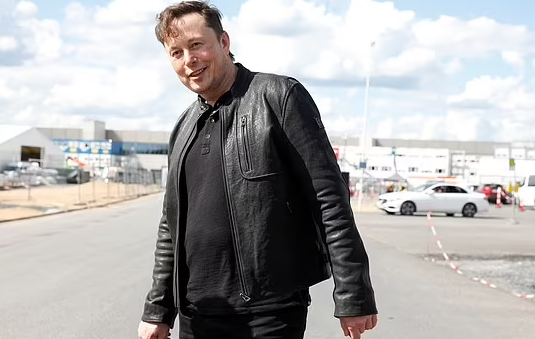
While at the same time Elon Musk is dealing with a not-too-happy Chinese Communist Party, he also appears to be hitting roadblocks in Germany. 

Since announcing plans for expansion in 2019, Tesla’s proposed factory in Berlin has been “torpedoed by environmental regulations, unexploded WW2 bombs and labor laws,” according to the The Daily Mail

The “huge construction delays” and “government red tape” means that the facility may not wind up producing any vehicles until next year, the report notes. The facility had previously been scheduled to open on July 1 of this year. 

Elon Musk took to Twitter this week – hilariously after jetting off in his hydrocarbon burning private jet, according to the report – pleading with those involved to “please accelerate” progress in Germany. 

Musk has visited the plant on Monday but Brandenburg’s economy minister Joerg Steinbach said there were no meetings with Musk and that the visit was “technical in character”. 

Musk announced plans for the facility back in November 2019 around the same time Tesla’s Shanghai factory was coming online. Musk reportedly chose Germany so he could avoid the Brexit-induced administrative hassle that would come with moving into the UK.

To this date, he is still waiting for environmental approval for his plant, despite stating last July: ‘Giga Berlin will come together at an impossible-seeming speed.’

Among the environmental roadblocks the company faces are controversies with removing trees and animal habitats, as well as the company having to remove bomb shells from the construction site. 

While physical construction nears an end, a mountain of legal issues remains. Recall, in February, Tesla was ordered by a German court to stop cutting down trees to make space for its factory.

When asked during his most recent trip about opening, Musk said: “It’s hard to predict with precision because you can only make the cars when all of the pieces are here.”

“I think there could be less bureaucracy, that would be better,” he continued. “There should be some kind of active process for removal of rules. Otherwise, over time, the rules will just accumulate and you get more and more rules until eventually you can’t do anything.”

Garrett Nelson, senior equity analyst at CFRA Research, recently told Forbes: “Tesla is doing everything possible to stay on track with its guidance, but the reality is that first production could be delayed until early 2022.”

Tyler Durden
Sat, 05/22/2021 – 07:35

via ZeroHedge News https://ift.tt/3f8nK2I Tyler Durden

Russia Warns US & NATO Over Increased Military Activity In Arctic

Russia Warns US & NATO Over Increased Military Activity In Arctic

Authored by Dave DeCamp via AntiWar.com,

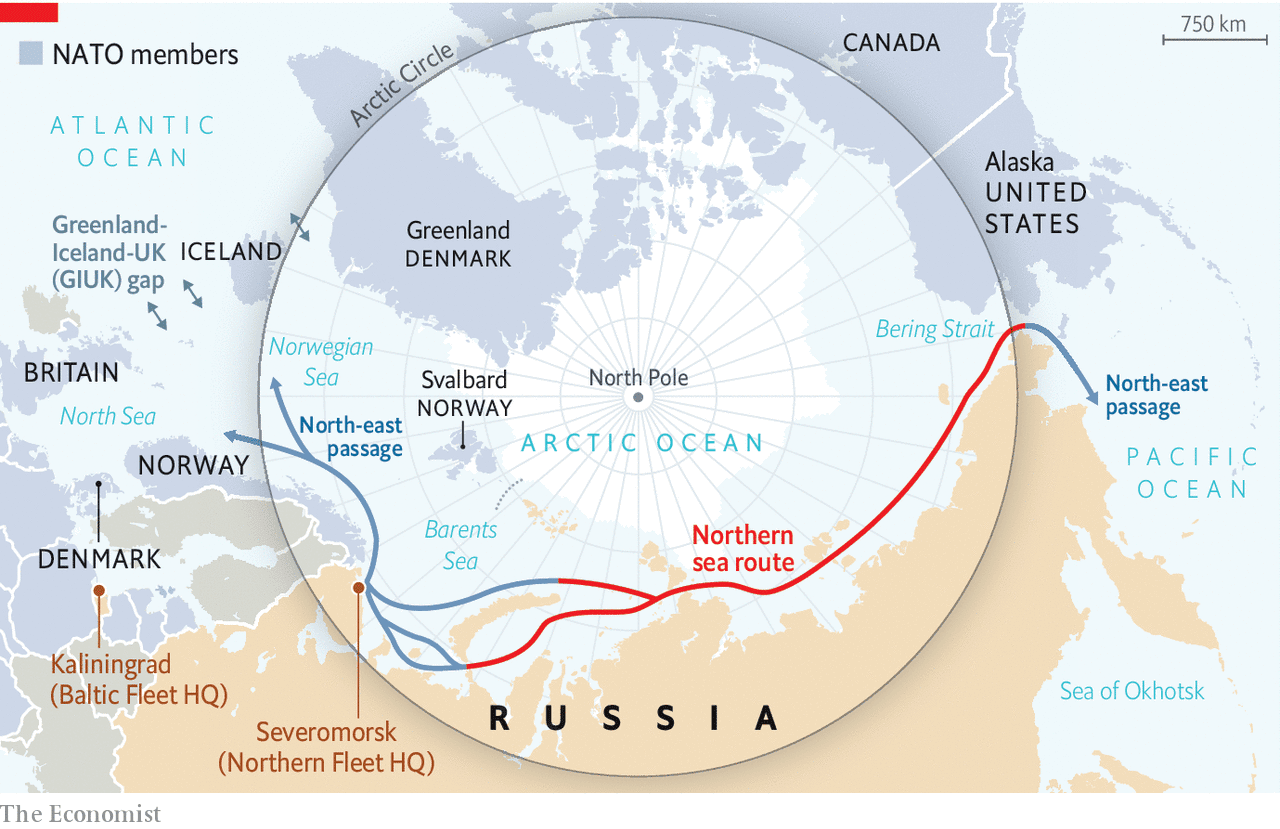
On Thursday, Russian Foreign Minister Sergei Lavrov voiced concern over the uptick in US and NATO military activity in the Arctic. The comments were made in a speech at a meeting of the Arctic Council in Reykjavik, Iceland.

“We are concerned about what is going on close to our border with Norway,” Lavrov said. The US has been putting more focus on military cooperation with Norway as part of its strategy to confront Russia in the ArcticEarlier this year, the US deployed long-range bombers to Norway for the first time.

Via US Army/Army Times

Next year, Norway will host US and NATO forces for military exercises that will involve about 40,000 troops, which the head of Norway’s military said will be “the largest military exercise inside the Arctic Circle in Norway since the 1980s.”

The Arctic Council currently does not deal with military issues, something Lavrov said should change. “It is important to extend the positive relations that we have within the Arctic Council to encompass the military sphere as well,” he said.

On Tuesday, US Secretary of State Antony Blinken accused Russia of making “unlawful” claims in the Arctic, something he said the US will “respond to.” Blinken also warned against increased military activity in the region, but it’s clear that the US and NATO are set on militarizing the Arctic.

On Wednesday, Blinken met with Lavrov on the sidelines of the Arctic Council meeting, marking the first high-level in-person meeting between US and Russian officials of the Biden administration.

While tensions are high between the two countries due to Biden’s hostile policies, Lavrov was cautiously optimistic and described the talk with Blinken as “constructive.”

Tyler Durden
Sat, 05/22/2021 – 07:00

via ZeroHedge News https://ift.tt/3fazKAJ Tyler Durden

Total Tyranny: We’ll All Be Targeted Under The Government’s New Pre-Crime Program

Total Tyranny: We’ll All Be Targeted Under The Government’s New Pre-Crime Program

Authored by John W. Whitehead & Nisha Whitehead via The Rutherford Institute,

“There is now the capacity to make tyranny total in America.”

– James Bamford

It never fails.

Just as we get a glimmer of hope that maybe, just maybe, there might be a chance of crawling out of this totalitarian cesspool in which we’ve been mired, we get kicked down again.

In the same week that the U.S. Supreme Court unanimously declared that police cannot carry out warrantless home invasions in order to seize guns under the pretext of their “community caretaking” duties, the Biden Administration announced its plans for a “precrime” crime prevention agency.

Talk about taking one step forward and two steps back.

Precrime, straight out of the realm of dystopian science fiction movies such as Minority Report, aims to prevent crimes before they happen by combining widespread surveillance, behavior prediction technologies, data mining, precognitive technology, and neighborhood and family snitch programs to enable police to capture would-be criminals before they can do any damage.

This particular precrime division will fall under the Department of Homeland Security, the agency notorious for militarizing the police and SWAT teams; spying on activists, dissidents and veterans; stockpiling ammunition; distributing license plate readers; contracting to build detention camps; tracking cell-phones with Stingray devices; carrying out military drills and lockdowns in American cities; using the TSA as an advance guard; conducting virtual strip searches with full-body scanners; carrying out soft target checkpoints; directing government workers to spy on Americans; conducting widespread spying networks using fusion centers; carrying out Constitution-free border control searches; funding city-wide surveillance cameras; and utilizing drones and other spybots.

The intent, of course, is for the government to be all-seeing, all-knowing and all-powerful in its preemptive efforts to combat domestic extremism.

Where we run into trouble is when the government gets overzealous and over-ambitious and overreaches.

This is how you turn a nation of citizens into snitches and suspects.

In the blink of an eye, ordinary Americans will find themselves labeled domestic extremists for engaging in lawful behavior that triggers the government’s precrime sensors.

Of course, it’s an elaborate setup: we’ll all be targets.

In such a suspect society, the burden of proof is reversed so that guilt is assumed and innocence must be proven.

It’s the American police state’s take on the dystopian terrors foreshadowed by George Orwell, Aldous Huxley and Phillip K. Dick all rolled up into one oppressive pre-crime and pre-thought crime package.

What’s more, the technocrats who run the surveillance state don’t even have to break a sweat while monitoring what you say, what you read, what you write, where you go, how much you spend, whom you support, and with whom you communicate.

Computers now do the tedious work of trolling social media, the internet, text messages and phone calls for potentially anti-government remarks, all of which is carefully recorded, documented, and stored to be used against you someday at a time and place of the government’s choosing.

In this way, with the help of automated eyes and ears, a growing arsenal of high-tech software, hardware and techniques, government propaganda urging Americans to turn into spies and snitches, as well as social media and behavior sensing software, government agents are spinning a sticky spider-web of threat assessments, behavioral sensing warnings, flagged “words,” and “suspicious” activity reports aimed at snaring potential enemies of the state.

It works the same in any regime.

As Professor Robert Gellately notes in his book Backing Hitler about the police state tactics used in Nazi Germany: “There were relatively few secret police, and most were just processing the information coming in. I had found a shocking fact. It wasn’t the secret police who were doing this wide-scale surveillance and hiding on every street corner. It was the ordinary German people who were informing on their neighbors.”

Here’s the thing as the Germans themselves quickly discovered: you won’t have to do anything illegal or challenge the government’s authority in order to be flagged as a suspicious character, labeled an enemy of the state and locked up like a dangerous criminal.

In fact, all you will need to do is use certain trigger words, surf the internet, communicate using a cell phone, drive a car, stay at a hotel, purchase materials at a hardware store, take flying or boating lessons, appear suspicious to a neighbor, question government authority, or generally live in the United States.

The following activities are guaranteed to get you censored, surveilled, eventually placed on a government watch list, possibly detained and potentially killed.

Use harmless trigger words like cloud, pork and pirates: The Department of Homeland Security has an expansive list of keywords and phrases it uses to monitor social networking sites and online media for signs of terrorist or other threats. While you’ll definitely send up an alert for using phrases such as dirty bomb, Jihad and Agro terror, you’re just as likely to get flagged for surveillance if you reference the terms SWAT, lockdown, police, cloud, food poisoning, pork, flu, Subway, smart, delays, cancelled, la familia, pirates, hurricane, forest fire, storm, flood, help, ice, snow, worm, warning or social media.

Use a cell phone: Simply by using a cell phone, you make yourself an easy target for government agents—working closely with corporations—who can listen in on your phone calls, read your text messages and emails, and track your movements based on the data transferred from, received by, and stored in your cell phone. Mention any of the so-called “trigger” words in a conversation or text message, and you’ll get flagged for sure.

Drive a car: Unless you’ve got an old junkyard heap without any of the gadgets and gizmos that are so attractive to today’s car buyers (GPS, satellite radio, electrical everything, smart systems, etc.), driving a car today is like wearing a homing device: you’ll be tracked from the moment you open that car door thanks to black box recorders and vehicle-to-vehicle communications systems that can monitor your speed, direction, location, the number of miles traveled, and even your seatbelt use. Once you add satellites, GPS devices, license plate readers, and real-time traffic cameras to the mix, there’s nowhere you can go on our nation’s highways and byways that you can’t be followed. By the time you add self-driving cars into the futuristic mix, equipped with computers that know where you want to go before you do, privacy and autonomy will be little more than distant mirages in your rearview mirror.

Attend a political rally: Enacted in the wake of 9/11, the Patriot Act redefined terrorism so broadly that many non-terrorist political activities such as protest marches, demonstrations and civil disobedience were considered potential terrorist acts, thereby rendering anyone desiring to engage in protected First Amendment expressive activities as suspects of the surveillance state.

Express yourself on social media: The FBI, CIA, NSA and other government agencies are investing in and relying on corporate surveillance technologies that can mine constitutionally protected speech on social media platforms such as Facebook, Twitter and Instagram in order to identify potential extremists and predict who might engage in future acts of anti-government behavior. A decorated Marine, 26-year-old Brandon Raub was targeted by the Secret Service because of his Facebook posts, interrogated by government agents about his views on government corruption, arrested with no warning, labeled mentally ill for subscribing to so-called “conspiratorial” views about the government, detained against his will in a psych ward for having “dangerous” opinions, and isolated from his family, friends and attorneys.

Serve in the militaryOperation Vigilant Eagle, the brainchild of the Dept. of Homeland Security, calls for surveillance of military veterans returning from Iraq and Afghanistan, characterizing them as extremists and potential domestic terrorist threats because they may be “disgruntled, disillusioned or suffering from the psychological effects of war.” Police agencies are also using Beware, an “early warning” computer system that tips them off to a potential suspect’s inclination to be a troublemaker and assigns individuals a color-coded threat score—green, yellow or red—based on a variety of factors including one’s criminal records, military background, medical history and social media surveillance.

Disagree with a law enforcement official: A growing number of government programs are aimed at identifying, monitoring and locking up anyone considered potentially “dangerous” or mentally ill (according to government standards, of course). For instance, a homeless man in New York City who reportedly had a history of violence but no signs of mental illness was forcibly detained in a psych ward for a week after arguing with shelter police. Despite the fact that doctors cited no medical reason to commit him, the man was locked up in accordance with a $22 million program that monitors mentally ill people considered “potentially” violent. According to the Associated Press, “A judge finally ordered his release, ruling that the man’s commitment violated his civil rights and that bureaucrats had meddled in his medical treatment.”

Call in sick to work: In Virginia, a so-called police “welfare check” instigated by a 58-year-old man’s employer after he called in sick resulted in a two-hour, SWAT team-style raid on the man’s truck and a 72-hour mental health hold. During the standoff, a heavily armed police tactical team confronted Benjamin Burruss as he was leaving an area motel, surrounded his truck, deployed a “stinger” device behind the rear tires, launched a flash grenade, smashed the side window in order to drag him from the truck, handcuffed and searched him, and transported him to a local hospital for a psychiatric evaluation and mental health hold. All of this was done despite the fact that police acknowledged they had no legal basis nor probable cause for detaining Burruss, given that he had not threatened to harm anyone and was not mentally ill.

Limp or stutter: As a result of a nationwide push to certify a broad spectrum of government officials in mental health first-aid training (a 12-hour course comprised of PowerPoint presentations, videos, discussions, role playing and other interactive activities), more Americans are going to run the risk of being reported for having mental health issues by non-medical personnel. Mind you, once you get on such a government watch list—whether it’s a terrorist watch list, a mental health watch list, or a dissident watch list—there’s no clear-cut way to get off, whether or not you should actually be on there. For instance, one 37-year-old disabled man was arrested, diagnosed by police and an unlicensed mental health screener as having “mental health issues,” apparently because of his slurred speech and unsteady gait, and subsequently locked up for five days in a mental health facility against his will and with no access to family and friends. A subsequent hearing found that Gordon Goines, who suffers from a neurological condition similar to multiple sclerosis, has no mental illness and should not have been confined.

Appear confused or nervous, fidget, whistle or smell bad: According to the Transportation Security Administration’s 92-point secret behavior watch list for spotting terrorists, these are among some of the telling signs of suspicious behavior: fidgeting, whistling, bad body odor, yawning, clearing your throat, having a pale face from recently shaving your beard, covering your mouth with your hand when speaking and blinking your eyes fast. You can also be pulled aside for interrogation if you “have ‘unusual items,’ like almanacs and ‘numerous prepaid calling cards or cell phones.’” One critic of the program accurately referred to the program as a “license to harass.”

Allow yourself to be seen in public waving a toy gun or anything remotely resembling a gun, such as a water nozzle or a remote control or a walking cane, for instance: No longer is it unusual to hear about incidents in which police shoot unarmed individuals first and ask questions later. John Crawford was shot by police in an Ohio Wal-Mart for holding an air rifle sold in the store that he may have intended to buy. Thirteen-year-old Andy Lopez Cruz was shot 7 times in 10 seconds by a California police officer who mistook the boy’s toy gun for an assault rifle. Christopher Roupe, 17, was shot and killed after opening the door to a police officer. The officer, mistaking the Wii remote control in Roupe’s hand for a gun, shot him in the chest. Another police officer repeatedly shot 70-year-old Bobby Canipe during a traffic stop. The cop saw the man reaching for his cane and, believing the cane to be a rifle, opened fire.

Stare at a police officer: Miami-Dade police slammed the 14-year-old Tremaine McMillian to the ground, putting him in a chokehold and handcuffing him after he allegedly gave them “dehumanizing stares” and walked away from them, which the officers found unacceptable.

Appear to be pro-gun, pro-freedom or anti-government: You might be a domestic terrorist in the eyes of the FBI (and its network of snitches) if you: express libertarian philosophies (statements, bumper stickers); exhibit Second Amendment-oriented views (NRA or gun club membership); read survivalist literature, including apocalyptic fictional books; show signs of self-sufficiency (stockpiling food, ammo, hand tools, medical supplies); fear an economic collapse; buy gold and barter items; subscribe to religious views concerning the book of Revelation; voice fears about Big Brother or big government; expound about constitutional rights and civil liberties; or believe in a New World Order conspiracy. This is all part of a larger trend in American governance whereby dissent is criminalized and pathologized, and dissenters are censored, silenced or declared unfit for society. 

Attend a public school: Microcosms of the police state, America’s public schools contain almost every aspect of the militarized, intolerant, senseless, overcriminalized, legalistic, surveillance-riddled, totalitarian landscape that plagues those of us on the “outside.” From the moment a child enters one of the nation’s 98,000 public schools to the moment she graduates, she will be exposed to a steady diet of draconian zero tolerance policies that criminalize childish behavior, overreaching anti-bullying statutes that criminalize speech, school resource officers (police) tasked with disciplining and/or arresting so-called “disorderly” students, standardized testing that emphasizes rote answers over critical thinking, politically correct mindsets that teach young people to censor themselves and those around them, and extensive biometric and surveillance systems that, coupled with the rest, acclimate young people to a world in which they have no freedom of thought, speech or movement. Additionally, as part of the government’s so-called ongoing war on terror, the FBI—the nation’s de facto secret police force—has been recruiting students and teachers to spy on each other and report anyone who appears to have the potential to be “anti-government” or “extremist” as part of its “Don’t Be a Puppet” campaign.

Speak truth to power: Long before Chelsea Manning and Edward Snowden were being castigated for blowing the whistle on the government’s war crimes and the National Security Agency’s abuse of its surveillance powers, it was activists such as Martin Luther King Jr. and John Lennon who were being singled out for daring to speak truth to power. These men and others like them had their phone calls monitored and data files collected on their activities and associations. For a little while, at least, they became enemy number one in the eyes of the U.S. government.

Yet as I point out in my book Battlefield America: The War on the American People, you don’t even have to be a dissident to get flagged by the government for surveillance, censorship and detention.

All you really need to be is a citizen of the American police state.

Tyler Durden
Sat, 05/22/2021 – 00:00

via ZeroHedge News https://ift.tt/3fC10XX Tyler Durden

Watch Postmates Robot In The Wild Of Downtown Los Angeles 

Watch Postmates Robot In The Wild Of Downtown Los Angeles 

A new video that surfaced on TikTok showed what appeared to be a Postmates Serve delivery robot cruising down the sidewalk of Los Angeles, dodging a homeless man laying on the pathway, and continued on its route to deliver food to a customer. 

If you had to ask us, this video is a glimpse of the dystopic future in liberal-run cities where automation displaces low-skilled workers and the homeless population continues to increase. 

@supersnacksupreme

##postmates ##postmatesrobot ##delivery ##melrose ##losangeles ##la ##fyp ##foryoupage ##foodiemobbb

♬ original sound – supersnacksupreme

TikTok was awash with comments about the dystopic world ahead: 

“This is the future, and it’s looking pretty bleak,” said glassfox. 

“This is so dystopian,” Kendall Tichner said. 

Another person said, “when are people going to realize they are replacing people’s jobs with robots this is the start.” 

Someone else added: “There definitely something wrong with this” video. 

This is a taste of the dystopic world ahead where automation displaces millions of humans. Some of them will wind up homeless or perhaps be given generous UBI checks as technological unemployment is set to soar by the end of this decade. 

Tyler Durden
Fri, 05/21/2021 – 23:40

via ZeroHedge News https://ift.tt/3fbsxAk Tyler Durden

Caught Red-Handed: CDC Changes Test Thresholds To Virtually Eliminate New COVID Cases Among Vaxx’d

Caught Red-Handed: CDC Changes Test Thresholds To Virtually Eliminate New COVID Cases Among Vaxx’d

Authored by Kit Knightly via Off-Guardian.org,

New policies will artificially deflate “breakthrough infections” in the vaccinated, while the old rules continue to inflate case numbers in the unvaccinated.

The US Center for Disease Control (CDC) is altering its practices of data logging and testing for “Covid19” in order to make it seem the experimental gene-therapy “vaccines” are effective at preventing the alleged disease.

They made no secret of this, announcing the policy changes on their website in late April/early May, (though naturally without admitting the fairly obvious motivation behind the change).

The trick is in their reporting of what they call “breakthrough infections” – that is people who are fully “vaccinated” against Sars-Cov-2 infection, but get infected anyway.

Essentially, Covid19 has long been shown – to those willing to pay attention – to be an entirely created pandemic narrative built on two key factors:

  1. False-positive tests. The unreliable PCR test can be manipulated into reporting a high number of false-positives by altering the cycle threshold (CT value)

  2. Inflated Case-count. The incredibly broad definition of “Covid case”, used all over the world, lists anyone who receives a positive test as a “Covid19 case”, even if they never experienced any symptoms.

Without these two policies, there would never have been an appreciable pandemic at all, and now the CDC has enacted two policy changes which means they no longer apply to vaccinated people.

Firstly, they are lowering their CT value when testing samples from suspected “breakthrough infections”.

From the CDC’s instructions for state health authorities on handling “possible breakthrough infections” (uploaded to their website in late April):

For cases with a known RT-PCR cycle threshold (Ct) value, submit only specimens with Ct value ≤28 to CDC for sequencing. (Sequencing is not feasible with higher Ct values.)

Throughout the pandemic, CT values in excess of 35 have been the norm, with labs around the world going into the 40s.

Essentially labs were running as many cycles as necessary to achieve a positive result, despite experts warning that this was pointless (even Fauci himself said anything over 35 cycles is meaningless).

But NOW, and only for fully vaccinated people, the CDC will only accept samples achieved from 28 cycles or fewer. That can only be a deliberate decision in order to decrease the number of “breakthrough infections” being officially recorded.

Secondly, asymptomatic or mild infections will no longer be recorded as “covid cases”.

That’s right. Even if a sample collected at the low CT value of 28 can be sequenced into the virus alleged to cause Covid19, the CDC will no longer be keeping records of breakthrough infections that don’t result in hospitalisation or death.

From their website:

As of May 1, 2021, CDC transitioned from monitoring all reported vaccine breakthrough cases to focus on identifying and investigating only hospitalized or fatal cases due to any cause. This shift will help maximize the quality of the data collected on cases of greatest clinical and public health importance. Previous case counts, which were last updated on April 26, 2021, are available for reference only and will not be updated moving forward.

Just like that, being asymptomatic – or having only minor symptoms – will no longer count as a “Covid case” but only if you’ve been vaccinated.

The CDC has put new policies in place which effectively created a tiered system of diagnosis. Meaning, from now on, unvaccinated people will find it much easier to be diagnosed with Covid19 than vaccinated people.

Consider…

Person A has not been vaccinated. They test positive for Covid using a PCR test at 40 cycles and, despite having no symptoms, they are officially a “covid case”.

Person B has been vaccinated. They test positive at 28 cycles, and spend six weeks bedridden with a high fever. Because they never went into a hospital and didn’t die they are NOT a Covid case.

Person C, who was also vaccinated, did die. After weeks in hospital with a high fever and respiratory problems. Only their positive PCR test was 29 cycles, so they’re not officially a Covid case either.

The CDC is demonstrating the beauty of having a “disease” that can appear or disappear depending on how you measure it.

To be clear: If these new policies had been the global approach to “Covid” since December 2019, there would never have been a pandemic at all.

If you apply them only to the vaccinated, but keep the old rules for the unvaccinated, the only possible result can be that the official records show “Covid” is much more prevalent among the latter than the former.

This is a policy designed to continuously inflate one number, and systematically minimise the other.

What is that if not an obvious and deliberate act of deception?

Tyler Durden
Fri, 05/21/2021 – 23:20

via ZeroHedge News https://ift.tt/2SibqUM Tyler Durden

“Mask Up To Keep It Up” – Study Finds Links COVID To Erectile Dysfunction

“Mask Up To Keep It Up” – Study Finds Links COVID To Erectile Dysfunction

A new study published in The World Journal of Men’s Health says aftereffects of contracting COVID-19 could cause erectile dysfunction in men.

“Our research shows that COVID-19 can cause widespread endothelial dysfunction in organ systems beyond the lungs and kidneys. The underlying endothelial dysfunction that happens because of COVID-19 can enter the endothelial cells and affect many organs, including the penis,” said Ranjith Ramasamy, M.D., associate professor and director of the University of Miami Miller School of Medicine’s Reproductive Urology Program.

“In our pilot study, we found that men who previously did not complain of erectile dysfunction developed pretty severe erectile dysfunction after the onset of COVID-19 infection,” Ramasamy continued. 

Ramasamy and researchers from UMiami discovered long after recovery, the virus may stay in mens’ penises for months on end. And if that wasn’t scary, researchers further hypothesize that the “widespread blood vessel dysfunction” caused by COVID could contribute to erectile dysfunction. 

“The blood vessels themselves malfunction and are not able to provide enough blood to enter the penis for an erection,” Ramasamy said. “We found that the virus affects the blood vessels that supply the penis, causing erectile dysfunction.”

The virus has been associated with damaging other organs, such as the lungs, kidneys, and brain. But now, after collecting penile tissue samples from two men with a history of COVID infections, UMiami researchers believe erectile dysfunction “could be permanent.”

This isn’t the first study that has claimed COVID can cause erectile dysfunction. 

In March, researchers from the University of Rome published a study in the medical journal Andrology titled “”Mask up to keep it up”: Preliminary evidence of the association between erectile dysfunction and COVID‐19,” which said those who contracted the virus were 5.6x more likely to have erectile dysfunction. 

Ramasamy said more data is needed to understand better how widespread erectile dysfunction is post-COVID infection. 

Both studies come as one of the biggest deflationary threats looms over the global economy: US birth rates have fallen to their lowest level in a generation

Tyler Durden
Fri, 05/21/2021 – 23:00

via ZeroHedge News https://ift.tt/3bLkWXa Tyler Durden

Unsettled: What Climate Science Tells Us, What It Doesn’t, And Why It Matters

Unsettled: What Climate Science Tells Us, What It Doesn’t, And Why It Matters

Authored by Rupert Darwall via RealClearEnergy.com,

On January 8, 2014, at New York University in Brooklyn, there occurred a unique event in the annals of global warming: nearly eight hours of structured debate between three climate scientists supporting the consensus on manmade global warming and three climate scientists who dispute it, moderated by a team of six leading physicists from the American Physical Society (APS) led by Dr. Steven Koonin, a theoretical physicist at New York University. The debate, hosted by the APS, revealed consensus-supporting climate scientists harboring doubts and uncertainties and admitting to holes in climate science – in marked contrast to the emphatic messaging of bodies such as Intergovernmental Panel on Climate Change (IPCC).

At one point, Koonin read an extract from the IPCC’s Fifth Assessment Report released the previous year. Computer model-simulated responses to forcings – the term used by climate scientists for changes of energy flows into and out of the climate system, such as changes in solar radiation, volcanic eruptions, and changes in the concentrations of greenhouse gases in the atmosphere – “can be scaled up or down.” This scaling included greenhouse gas forcings.

Some forcings in some computer models had to be scaled down to match computer simulations to actual climate observations. But when it came to making centennial projections on which governments rely and drive climate policy, the scaling factors were removed, probably resulting in a 25 to 30 percent over-prediction of the 2100 warming.

The ensuing dialogue between Koonin and Dr. William Collins of the Lawrence Berkeley National Laboratory – a lead author of the climate model evaluation chapter in the Fifth Assessment Report – revealed something more troubling and deliberate than holes in scientific knowledge:

  • Dr. Koonin: But if the model tells you that you got the response to the forcing wrong by 30 percent, you should use that same 30 percent factor when you project out a century.

  • Dr. Collins: Yes. And one of the reasons we are not doing that is we are not using the models as [a] statistical projection tool.

  • Dr. Koonin: What are you using them as?

  • Dr. Collins: Well, we took exactly the same models that got the forcing wrong and which got sort of the projections wrong up to 2100.

  • Dr. Koonin: So, why do we even show centennial-scale projections?

  • Dr. Collins: Well, I mean, it is part of the [IPCC] assessment process.

Koonin was uncommonly well-suited to lead the APS climate workshop. He has a deep understanding of computer models, which have become the workhorses of climate science. As a young man, Koonin wrote a paper on computer modeling of nuclear reaction in stars and taught a course on computational physics at Caltech. In the early 1990s, he was involved in a program using satellites to measure the Earth’s albedo – that is, the reflection of incoming solar radiation back into space. As a student at Caltech in the late 1960s, he was taught by Nobel physicist Richard Feynman and absorbed what Koonin calls Feynman’s “absolute intellectual honesty.”

On becoming BP’s chief scientist in 2004, Koonin became part of the wider climate change milieu. Assignments included explaining the physics of man-made global warming to Prince Philip at a dinner in Buckingham Palace. In 2009, Koonin was appointed an under-secretary at the Department of Energy in the Obama administration.

The APS climate debate was the turning point in Koonin’s thinking about climate change and consensus climate science (“The Science”).

“I began by believing that we were in a race to save the planet from climate catastrophe,” Koonin writes in his new book, “Unsettled: What Climate Science Tells Us, What It Doesn’t, And Why It Matters.”

“I came away from the APS workshop not only surprised, but shaken by the realization that climate science was far less mature than I had supposed.”

“Unsettled” is an authoritative primer on the science of climate change that lifts the lid on The Science and finds plenty that isn’t as it should be.

“As a scientist,” writes Koonin, “I felt the scientific community was letting the public down by not telling the whole truth plainly.”

Koonin’s aim is to right that wrong.

Koonin’s indictment of The Science starts with its reliance on unreliable computer models. Usefully describing the earth’s climate, writes Koonin, is “one of the most challenging scientific simulation problems.” Models divide the atmosphere into pancake-shaped boxes of around 100km wide and one kilometer deep. But the upward flow of energy from tropical thunder clouds, which is more than thirty times larger than that from human influences, occurs over smaller scales than the programmed boxes. This forces climate modellers to make assumptions about what happens inside those boxes. As one modeller confesses, “it’s a real challenge to model what we don’t understand.”

Inevitably, this leaves considerable scope for modelers’ subjective views and preferences. A key question climate models are meant to solve is estimating the equilibrium climate sensitivity of carbon dioxide (ECS), which aims to tell us by how much temperatures rise from a doubling of carbon dioxide in the atmosphere. Yet in 2020, climate modelers from Germany’s Max Planck Institute admitted to tuning their model by targeting an ECS of about 3° Centigrade. “Talk about cooking the books,” Koonin comments.

The proof of the pudding, as they say, is in the eating. Self-evidently, computer projections can’t be tested against a future that’s yet to happen, but they can be tested against climates present and past. Climate models can’t even agree on what the current global average temperature is. “One particularly jarring feature is that the simulated average global surface temperature,” Koonin notes, “varies among models by about 3°C, three times greater than the observed value of the twentieth century warming they’re purporting to describe and explain.”

Another embarrassing feature of climate models concerns the earlier of the two twentieth-century warmings from 1910 to 1940, when human influences were much smaller. On average, models give a warming rate of about half of what was actually observed. The failure of the latest models to warm fast enough in those decades suggest that it’s possible, even likely, that internal climate variability is a significant contributor to the warming of recent decades, Koonin suggests. “That the models can’t reproduce the past is a big red flag – it erodes confidence in their projections of future climates.” Neither is it reassuring that for the years after 1960, the latest generation of climate models show a larger spread and greater uncertainty than earlier ones – implying that, far from advancing, The Science has been going backwards. That is not how science is meant to work.

The second part of Koonin’s indictment concerns the distortion, misrepresentation, and mischaracterization of climate data to support a narrative of climate catastrophism based on increasing frequency of extreme weather events. As an example, Koonin takes a “shockingly misleading” claim and associated graph in the United States government’s 2017 Climate Science Special Report that the number of high-temperature records set in the past two decades far exceeds the number of low-temperature records across the 48 contiguous states. Koonin demonstrates that the sharp uptick in highs over the last two decades is an artifact of a methodology chosen to mislead. After re-running the data, record highs show a clear peak in the 1930s, but there is no significant trend over the 120 years of observations starting in 1895, or even since 1980, when human influences on the climate grew strongly. In contrast, the number of record cold temperatures has declined over more than a century, with the trend accelerating after 1985.

Notes Koonin, “temperature extremes in the contiguous U.S. have become less common and somewhat milder since the late nineteenth century.” Similarly, a key message in the 2014 National Climate Assessment of an upward trend in hurricane frequency and intensity, repeated in the 2017 assessment, is contradicted 728 pages later by a statement buried in an appendix stating that there has been no significant trend in the global number of tropical cyclones “nor has any trend been identified in the number of U.S. land-falling hurricanes.”

That might surprise many politicians.

“Over the past thirty years, the incidence of natural disasters has dramatically increased,” Treasury secretary Janet Yellen falsely asserted last month in a pitch supporting the Biden administration’s infrastructure package. “We are now in a situation where climate change is an existential risk to our future economy and way of life,” she claimed.

The sacrifice of scientific truth in the form of objective empirical data for the sake of a catastrophist climate narrative is plain to see. As Koonin summarizes the case:

“Even as human influences have increased fivefold since 1950 and the globe has warmed modestly, most severe weather phenomena remain within past variability. Projections of future climate and weather events rely on models demonstrably unfit for the purpose.”

Koonin also has sharp words for the policy side of the climate change consensus, which asserts that although climate change is an existential threat, solving it by totally decarbonizing society is straightforward and relatively painless.

“Two decades ago, when I was in the private sector,” Koonin writes, “I learned to say that the goal of stabilizing human influences on the climate was ‘a challenge,’ while in government it was talked about as ‘an opportunity.’ Now back in academia, I can forthrightly call it ‘a practical impossibility.’”

Unlike many scientists and most politicians, Koonin displays a sure grasp of the split between developed and developing nations, for whom decarbonization is a luxury good that they can’t afford. The fissure dates back to the earliest days of the U.N. climate process at the end of the 1980s. Indeed, it’s why developing nations insisted on the U.N. route as opposed to an intergovernmental one that produced the 1987 Montreal Protocol on ozone-depleting substances.

“The economic betterment of most of humanity in the coming decades will drive energy demand even more strongly than population growth,” Koonin says.

“Who will pay the developing world not to emit? I have been posing that simple question to many people for more than fifteen years and have yet to hear a convincing answer.”

The most unsettling part of “Unsettled” concerns science and the role of scientists.

“Science is one of the very few human activities – perhaps the only one – in which errors are systematically criticized and fairly often, in time, corrected,” Karl Popper wrote nearly six decades ago.

That condition does not pertain in climate science, where errors are embedded in a political narrative and criticism is suppressed. In a recent essay, the philosopher Matthew B. Crawford observes that the pride of science as a way of generating knowledge – unlike religion – is to be falsifiable. That changes when science is pressed into duty as authority in order to absolve politicians of responsibility for justifying their policy choices (“the science says,” we’re repeatedly told). “Yet what sort of authority would it be that insists its own grasp of reality is merely provisional?” asks Crawford. “For authority to be really authoritative, it must claim an epistemic monopoly of some kind, whether of priestly or scientific knowledge.”

At the outset of “Unsettled,” Feynman’s axiom of absolute intellectual honesty is contrasted with climate scientist Stephen Schneider’s “double ethical bind.” On the one hand, scientists are ethically bound by the scientific method to tell the truth. On the other, they are human beings who want to reduce the risk of potentially disastrous climate change.

“Each of us has to decide what the right balance is between being effective and being honest,” Schneider said.

“Being effective” helps explain the pressure on climate scientists to conform to The Science and the emergence of a climate science knowledge monopoly. Its function is, as Crawford puts it, the manufacture of a product – political legitimacy – which, in turn, requires that competing views be delegitimized and driven out of public discourse through enforcement of a “moratorium on the asking of questions.” This sees climate scientist gatekeepers deciding who can and cannot opine on climate science. “Please, save us from retired physicists who think they’re smarter and wiser than everyone in climate science,” tweeted Gavin Schmidt, NASA acting senior climate advisor, about Koonin and his book. “I agree with pretty much everything you wrote,” a chair of a university earth sciences department tells Koonin, “but I don’t dare say that in public.” Another scientist criticizes Koonin for giving ammunition to “the deniers,” and a third writes an op-ed urging New York University to reconsider Koonin’s position there. It goes wider than scientists. Facebook has suppressed a “Wall Street Journal” review of “Unsettled.” Likewise, “Unsettled” remains unreviewed by the “New York Times,” the “Washington Post” (though it carried an op-ed by Marc Thiessen based on an interview with Koonin) and other dailies, which would prefer to treat Koonin’s reasoned climate dissent as though it doesn’t exist.

The moratorium on the asking of questions represents the death of science as understood and described by Popper, a victim of the conflicting requirements of political utility and scientific integrity. Many scientists take this lying down. Koonin won’t. For his forensic skill and making his findings accessible to non-specialists, Koonin has written the most important book on climate science in decades.

*  *  *

Rupert Darwall is a senior fellow of the RealClear Foundation and author of  Green Tyranny and Capitalism, Socialism and ESG

Tyler Durden
Fri, 05/21/2021 – 22:40

via ZeroHedge News https://ift.tt/3f7Wj97 Tyler Durden

US Hits Russian Entities With More Nord Stream 2 Sanctions After Removing Them For German Side

US Hits Russian Entities With More Nord Stream 2 Sanctions After Removing Them For German Side

In the continuing saga of contradictory US efforts to thwart the Russia to Germany natural gas pipeline Nord Stream 2, the US Treasury on Friday hit Russia with more sanctions – specifically announcing that three more Russian entities and 13 vessels will come under sanction for their work on the project.

“Among the sanctioned vessels are the Akademik Cherskiy, the Vladislav Strizhov, the Yury Topchev and the Baltiyskiy Issledovatel, along with others,” Treasury announced. “The sanctioned companies are Russia’s Marine Rescue Service, Mortransservice, and the Samara Heat and Energy Property Fund.”

Via Moscow Times/TASS

Of course, the bizarre thing about this is that it was only on Tuesday of this week that the Biden administration revealed it would actually remove Trump-era sanctions on Nord Stream 2 AG and CEO Matthias Warnig (considered a personal friend of Putin) – which is the German company overseeing the project.

The removal of the punitive actions took place Wednesday and Axios’ Jonathan Swan wrote of the decision that it “indicates the Biden administration is not willing to compromise its relationship with Germany over this pipeline, and underscores the difficulties President Biden faces in matching actions to rhetoric on a tougher approach to Russia.”

Germany had long rejected Washington’s punitive measures over the project as interference in its domestic affairs, but Wednesday’s removal for the overseer of the project served to drastically east tensions with Berlin over the matter, with German foreign minister Heiko Maas thanking the Biden administration for doing so: 

“We understand the decisions that have been taken in Washington as taking into account the really extraordinarily good relationship that have been built with the Biden administration,” Maas said.

Biden was immediately slammed for the act of “capitulation” after long vowing to get “tough” on Russia by Republicans but also Democrat hawks, including in conservative and independent media outlets which pointed out that Trump would have no doubt been accused of being under “Russian influence” had he been the one to relax sanctions.

Tyler Durden
Fri, 05/21/2021 – 22:20

via ZeroHedge News https://ift.tt/2SdOiqk Tyler Durden

14 Cities In LA County Issue No-Confidence Resolutions Against Soros-Backed DA

14 Cities In LA County Issue No-Confidence Resolutions Against Soros-Backed DA

Authored by Vanessa Serna via The Epoch Times,

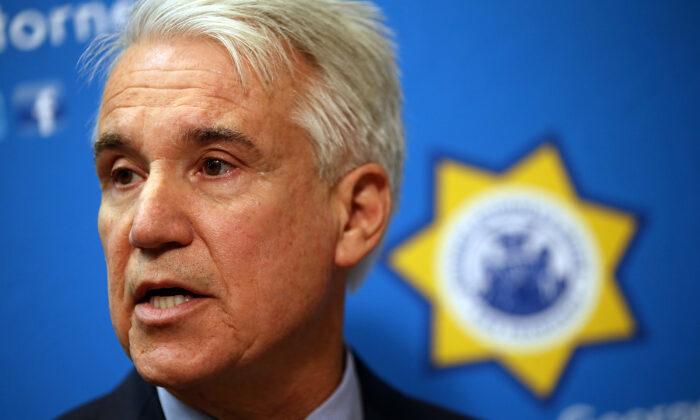
Fourteen cities in Los Angeles county have issued no-confidence resolutions against District Attorney George Gascon, claiming his reforms went too far.

Diamond Bar’s city council passed a no-confidence motion during its May 18 meeting, with some councilmembers wishing to address Gascon’s perceived leniency to horrific crimes throughout the county.

“Gascon is making it less safe for our residents and businesses,” Diamond Bar Mayor Nancy Lyon told The Epoch Times.

 “He’s more concerned about the criminals than the victims. You can’t do special enhancements on things like hate crime, elder abuse, child physical abuse, trauma, [or] human trafficking.”

Lyon added, “Even if they’re 17-and-a-half-year-old and they committed a double murder and tortured people, they can’t be tried as an adult… and he’s no longer going to seek the death penalty in any case.”

The residents’ response to the agenda item was “overwhelming,” Lyson said, adding she has never seen the community more involved. While most residents were in favor of the no confidence vote, a few voiced opposition to it.

One Diamond Bar resident said council should vote against the notion, as Gascon’s sweeping reforms were justifiable.

“The common practice of conditioning freedom solely on whether an arrestee can afford bail is unconstitutional,” the speaker said.

“DA Gascon’s policy encourages the use of diversion programs, which provide treatment rather than prosecution in jailing for many minor offenses.”

The resident continued, “Public expense jails, prisons, and courts are not the best way to manage the root causes of many misdemeanors, we must step up the availability of community support services…We must stop thinking that imprisoning people longer reduces crime or addresses issues that our society fails to address…Depriving people of life and liberty after serving a sentence only keeps them from becoming productive members of society.”

Conversely, some Diamond Bar residents who said they originally voted for Gacon expressed disappointment in the district attorney.

“While I voted for him initially his truth was really a lie and he proved it on his first day in office,” a speaker said.

“[We] did not elect him to destroy our system of justice.”

The City of Manhattan Beach also voted in favor of no confidence for the district attorney on May 18.

“We share the DA’s desire for criminal-justice reform,” Mayor Suzanne Hadley told The Epoch Times.

“Our Concern is that the DA is choosing not to enforce the law—rather than tackle the necessary, difficult, and legislative work of true reform.”

The no confidence votes from 14 cities came less than a year after the district attorney took office last December. Other cities to pass symbolic no confidence resolutions include Covina, Azusa, Beverly Hills, Lancaster, La Mirada, and Whittier, Santa Clarita, Pico Rivera, Redondo Beach, Arcadia, Rosemead, and Santa Fe Springs.

On his first day in office, Gascon signed a special directive that announced policy changes including potential sentence reductions for inmates, a ban on sentence enhancements, and elimination of the death penalty.

Gascon received $2 million in funding for his district attorney campaign from Hungarian-born billionaire George Soros, who is known for financing leftist causes.

Tyler Durden
Fri, 05/21/2021 – 22:00

via ZeroHedge News https://ift.tt/3hKOxUp Tyler Durden