Stocks Slammed After Trump Confirms China News Conference Tyler Durden
Thu, 05/28/2020 – 15:23
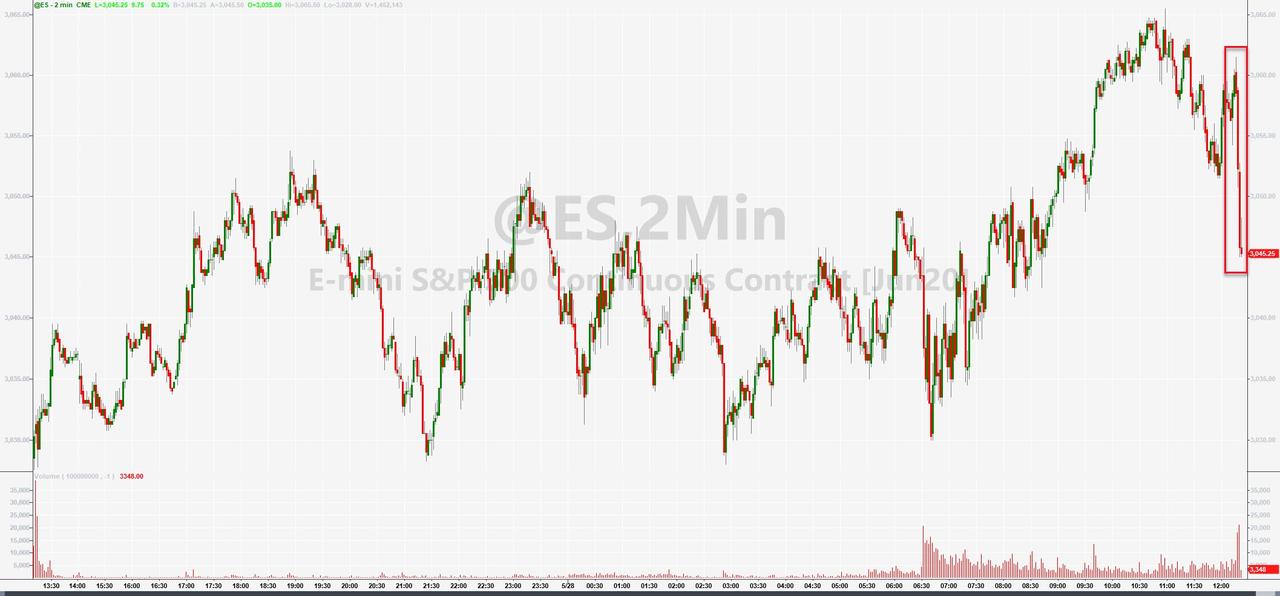
US equity markets legged lower after President Trump confirmed that he will hold a news conference tomorrow on China.
No details were revealed but it’s pretty clear he’s not going to walk back any of the recent rhetoric over the “China virus”, the human rights abuses of Uighurs, or the implicit political invasion of Hong Kong…
via ZeroHedge News https://ift.tt/2zuhvEB Tyler Durden
Dining In The Financial District Will Never Be The Same Tyler Durden
Thu, 05/28/2020 – 15:05
New York City has been the epicenter of the COVID-19 pandemic, and now Mayor Bill de Blasio has made remarks considering a phased reopening of the city by the first half of June. When New Yorkers emerge from their homes, they will see an entirely different world, one where social distancing will reshape the landscape of many public areas and commercial spaces.
Though the Big Apple is a ways off from opening its bars and restaurants. One eatery in the Financial District has offered a view into what the post-corona world of the restaurant industry is going to look like.
FOX 5 New York reports the Brooklyn Chop House has redesigned its dining hall with social distancing in mind.
Owner Stratis Morfogen said customers can expect to wear a facemask, eat between dividers, and be screened at the door, all moves that will hopefully limit virus transmission risk.
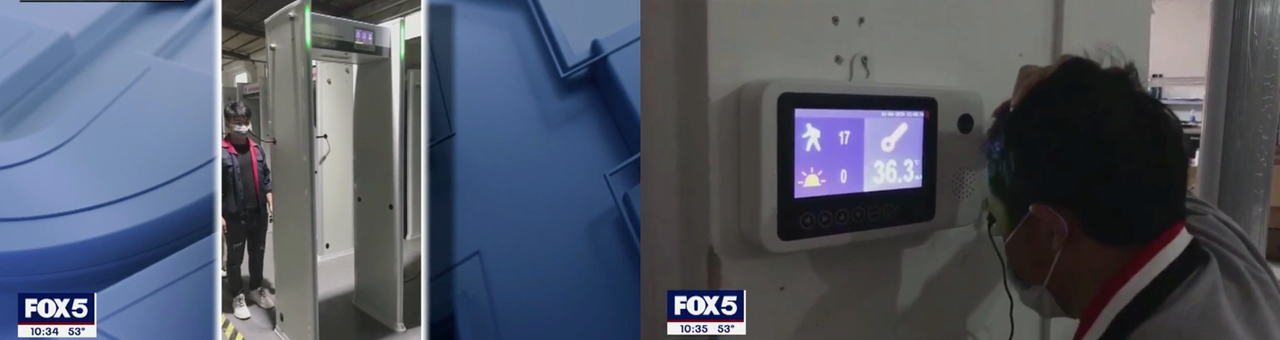
Morfogen said before the patron steps onto the dining floor, they will be screened by an ultraviolet thermal body scanner.
“The ultraviolet kills anything that’s on your clothing,” he said.
He said the scanner will take the guest’s temperature and if someone registers over 99.7 Fahrenheit, staff would immediately deny them access.
Morfogen also said he’s building a second restaurant that will be “contact-free with the staff.” Customers at the Brooklyn Dumpling Shop will soon have the ability to order via app or phone and pick up through food lockers. He assured this way there will be “zero human interaction.”
In the last several months, we have allowed readers to peer inside what a post-corona world could look like and how public spaces are rapidly changing with social distancing in mind:
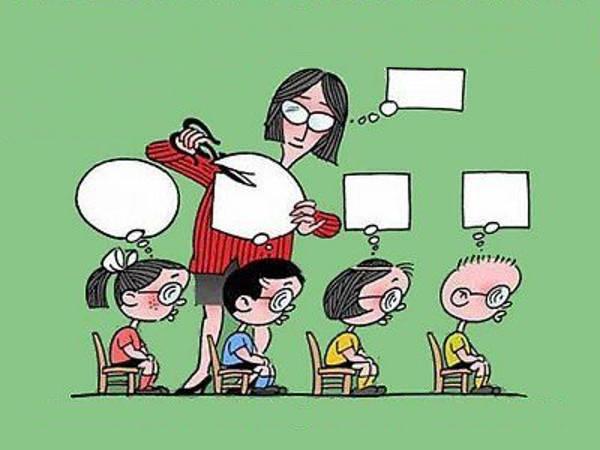
One of the few good things to come out of the government-mandated shutdown is that many parents have started homeschooling their children. Many of these parents are likely to continue homeschooling after the government schools reopen.
Last week, the Centers for Disease Control and Prevention (CDC) did its part to encourage homeschooling when it unveiled “guidelines” for schools to follow when they reopen. Among the CDC’s guidelines are that schools put tape on the hallways, directing children which direction to walk and how much distance to keep between themselves and their classmates. The CDC also recommends children do not share electronic devices or learning aids. The guidelines even say children should wear masks at school.
The CDC’s guidelines instruct schools to close playgrounds and cafeterias, and to cancel all field trips and assemblies. Instead, students are to spend all day at their desks, not even leaving classrooms for lunch or recess.
The CDC’s guidelines may not have the force of law, but it is likely most government schools will adopt them in order to ensure continued access to federal funding. Schools will do this even though children are at a very low risk of being seriously harmed by coronavirus. In fact, by forbidding children from going outside to play, exercise, and get sunshine, the guidelines actually endanger children’s health. The guidelines also harm children by limiting their ability to interact with their fellow students and develop social skills.
Opponents of homeschooling claim that homeschooled children lack proper socialization. Like many attacks on homeschooling, the claim that homeschoolers are not “socialized” is the opposite of the truth.
Education researcher Corey DeAngelis recently told journalist John Stossel in a Reason interview that “children who are homeschooled get much better academic and social results than kids in government schools.”
Mr. DeAngelis pointed out that “homeschoolers score about 30 percent higher on the SAT test than kids in regular schools.”
Parents looking for a homeschooling program that includes an introduction to the ideas of liberty should consider my homeschool curriculum. My homeschool curriculum provides students with a solid education in history, literature, mathematics, and the sciences. It also gives students the opportunity to create their own websites and internet-based businesses. The curriculum is designed to be self-taught, with students helping, and learning from, each other via online forums.
Starting in fourth grade, students are required to write at least one essay a week. Students also take a course in public speaking.
The curriculum teaches history from a pro-liberty perspective, and the economics section is taught from the Austrian viewpoint. But, unlike government schools, the curriculum does not compromise education quality or distort facts in pursuit of a political agenda.
Students using my homeschooling program develop a love of learning, study superior communication skills, and gain real-world business experience. They also develop the critical thinking skills necessary to see through the lies peddled by government officials and their sycophants in the mainstream media. The skills and knowledge students gain will enable them to succeed in whatever careers they choose to pursue.
Parents interested in giving their children a well-rounded homeschool education that includes sound economics and the history and philosophy of liberty can get more information about my curriculum by going to RonPaulCurriculum.com.
via ZeroHedge News https://ift.tt/2ZXAPVF Tyler Durden
Walmart Now Sells Used Clothing As Unemployment Nears Great Depression Levels Tyler Durden
Thu, 05/28/2020 – 14:34
As the economy plunges into depression with tens of millions of people unemployed, Walmart is taking no chances on losing its customer base and announced this week, it will start selling used clothing, shoes, and accessories on its website.
Walmart recognizes that consumers have been severely affected by coronavirus lockdowns, which has sparked depressionary unemployment levels, had to quickly find new ways to continue expanding sales while offering super low prices. It figured, a partnership with San Francisco-based Thredup, one of the largest online thrift stores in the country, could be that solution, where customers can buy pre-owned garments and shoes and accessories for up to 90% off.
“We are excited to join forces with Walmart to power a sustainable, secondhand shopping experience unlike any other. From Calvin Klein and Nike to Coach and Michael Kors, this digital partnership enhances Walmart’s fashion offering with fresh brands at amazing prices that their customers will love,” said Jenn Volk, Director of Product Management at ThredUP.
Walmart said customers can now shop at www.walmart.com/thredup to find over “750,000 pre-owned items across women’s and children’s clothing, accessories, footwear, and handbags.”
In a severe economic downturn, there is no doubt that the second-hand merchandise market will erupt as people are too poor to buy new things. With 40 million Americans filing for unemployment benefits in ten weeks, we suspect a lot of people will be buying used items and shunning away from new stuff for several years as the downturn is expected to persist through 2021.
Walmart gets it. The second-hand merchandise market is set to explode in the “greatest economy ever.”
via ZeroHedge News https://ift.tt/36I0BOL Tyler Durden
A Visual Tool To Gauge The Risk Of A Second Coronavirus Wave Tyler Durden
Thu, 05/28/2020 – 14:19
While it may not be quite as “scientific” as human excrement, Nomura’s Global Economics team has developed a simple visual tool to assess the risk of a COVID-19 second wave in 10 US states and 45 countries around the world. The toll currently categorizes 17 countries as “on track” in terms of their economies reopening with no signs of second wave; 13 countries as displaying some tentative “warning signs”, and 15 countries (mostly EM) that are in the “danger zone” as most at risk of a second wave.
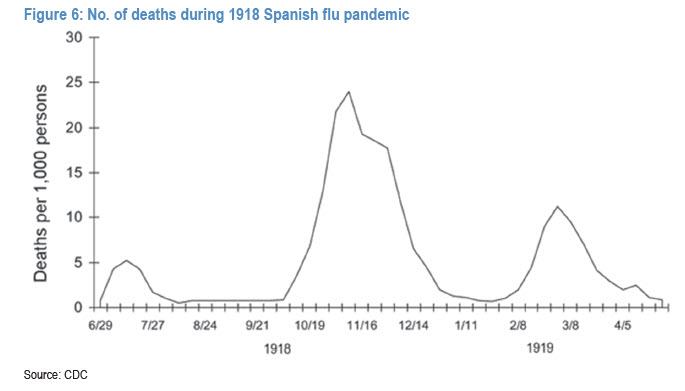
As we first discussed almost two months ago, the global economic and financial market outlook depends heavily on whether the world can avoid a situation similar to the Spanish Flu of 1918, when the second wave of infections was larger – and more deadly – than the first.
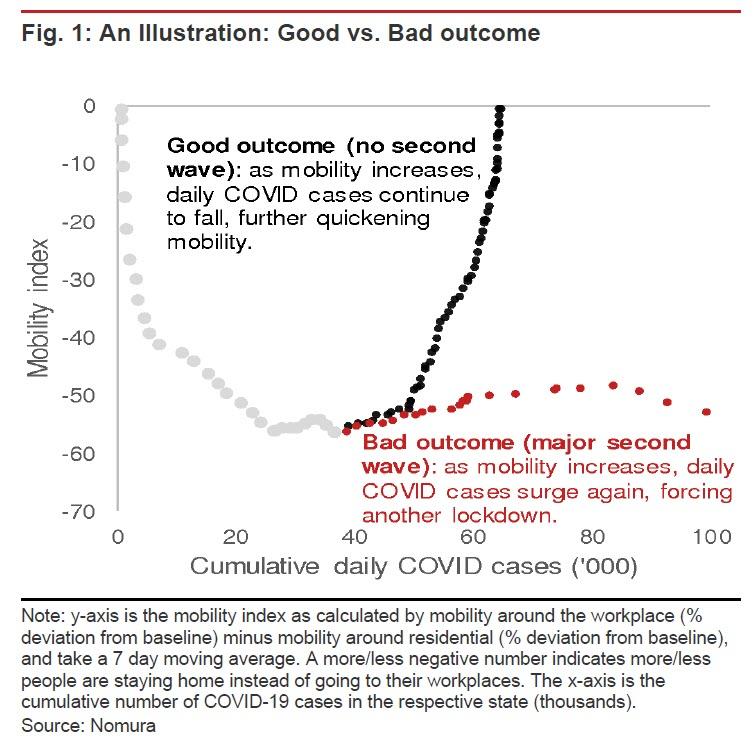
Addressing these investor concerns, and using high-frequency data, Nomura developed an easy-to-use visual tool to help assess the risk of a COVID-19 second wave as economies reopen. The Japanese bank applied the tool to 10 US states and 45 major economies around the world. Figure 1 presents the schematic to this visual tool.
The y-axis is the bank’s mobility index, which is constructed based on daily Google Mobility data. The bank then took the 7-day moving average of this difference. A more/less negative number indicates more/less people staying home instead of going to their workplaces. The x-axis is simply the cumulative number of COVID-19 cases measured in thousands.
The schematic illustrates two scenarios that could unfold.
In the first scenario (Good outcome), a country (or US state) experiences a quick recovery in people mobility as stay-at-
home orders are relaxed. Businesses resume operations with minimal increases in the number of new daily COVID-19 cases. This eases the public fear factor, resulting in a further increase in people mobility, and as the number of new daily COVID-19 cases decline, a positive feedback loop kicks in (i.e., the chart shows the mobility recovery is very ‘steep’, as total COVID-19 cases levels off).
In contrast, the second scenario (Bad outcome) is characterized by a much ‘flatter’ curve. The reopening of the economy is associated with an acceleration in the number of new daily COVID-19 cases (the gap between the red dots widens), the public fear factor grows again and the rise in people mobility comes to a sudden halt, and possibly even reverses, as lockdowns are reimposed.
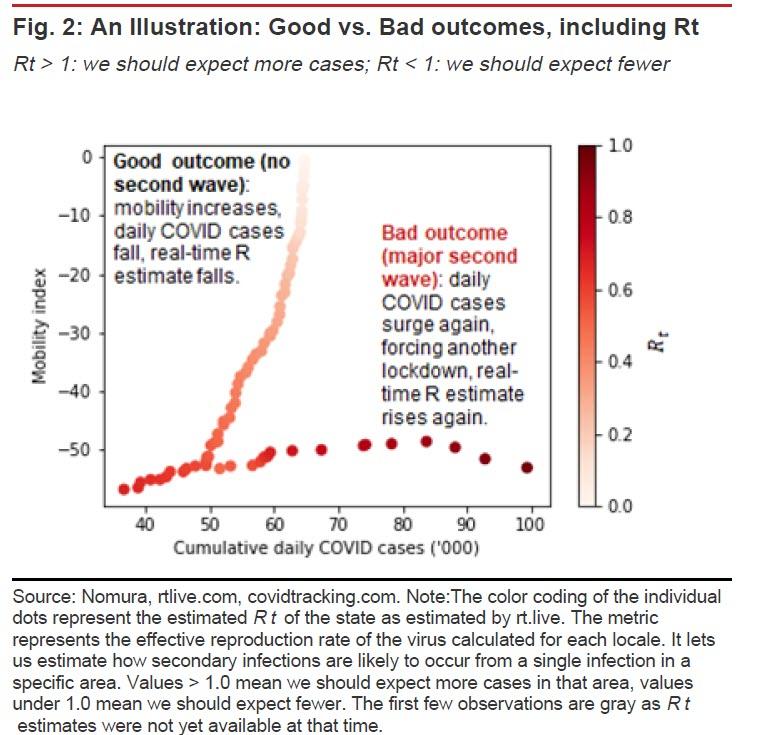
In the case of US states, Nomura supplements the analysis by adding a real-time estimate of the reproduction rate of the virus (Rt ), where the most dangerous sign of a second wave is the dots moving East and turning darker (see Figure 2).
Results
The visual tool is based on the latest available daily data on Google mobility and confirmed COVID-19 cases. The number of COVID-19 cases is updated daily but the mobility index lags by about one week (latest available is 21 May) and so to fill in the missing observations, Nomura’s Rob Subbaraman projects forward by linear interpolation of the historic trend. The results are shown below for 10 US states and 45 major economies around the world. It is admittedly a subjective exercise, but based on the visual tool it categorizes the results into three groupings:
On track: increasing mobility and no sign of a second wave;
Warning signs: increasing mobility and some tentative warning signs;
Danger zone: Most at risk of a second wave
US states
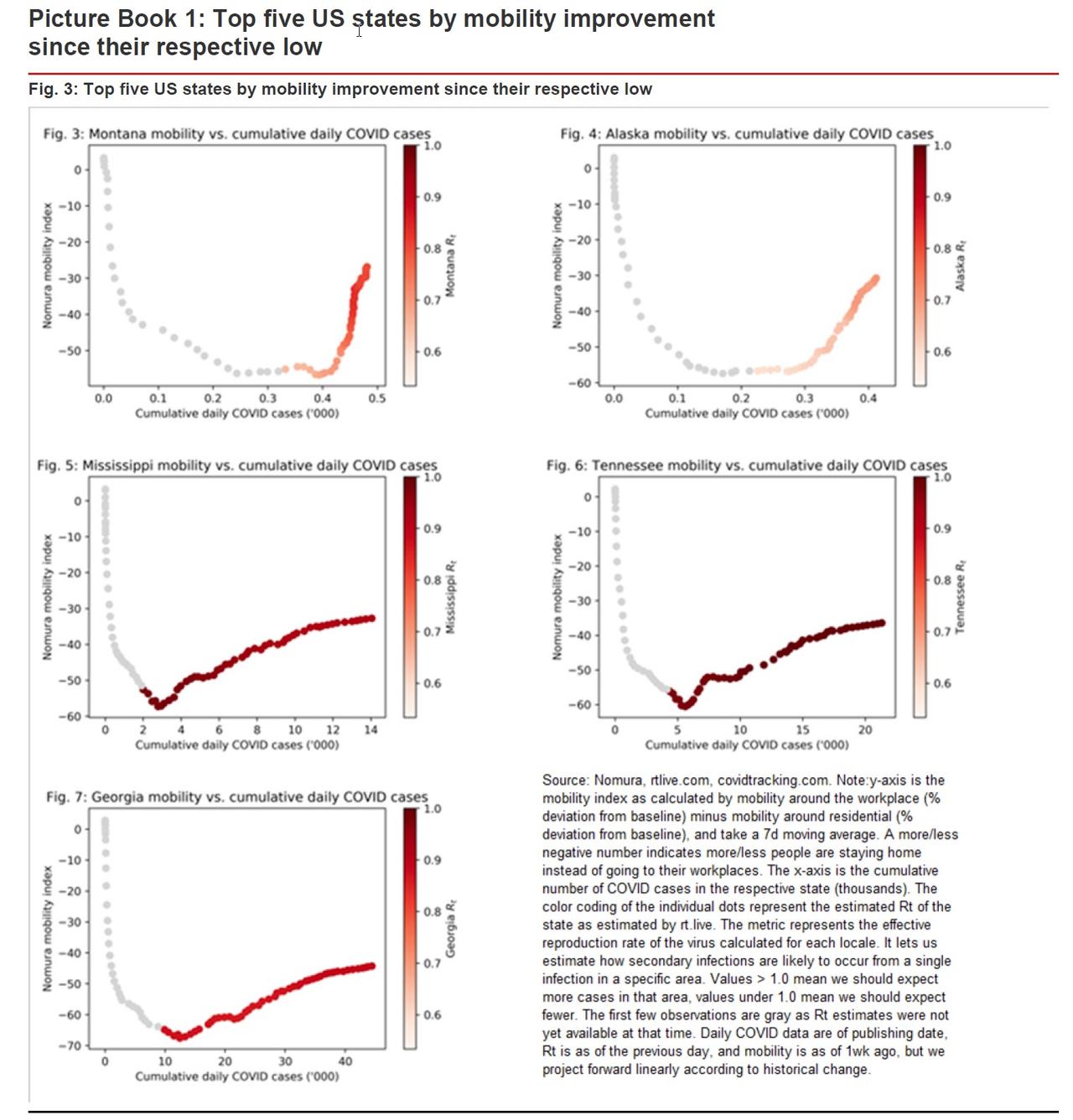
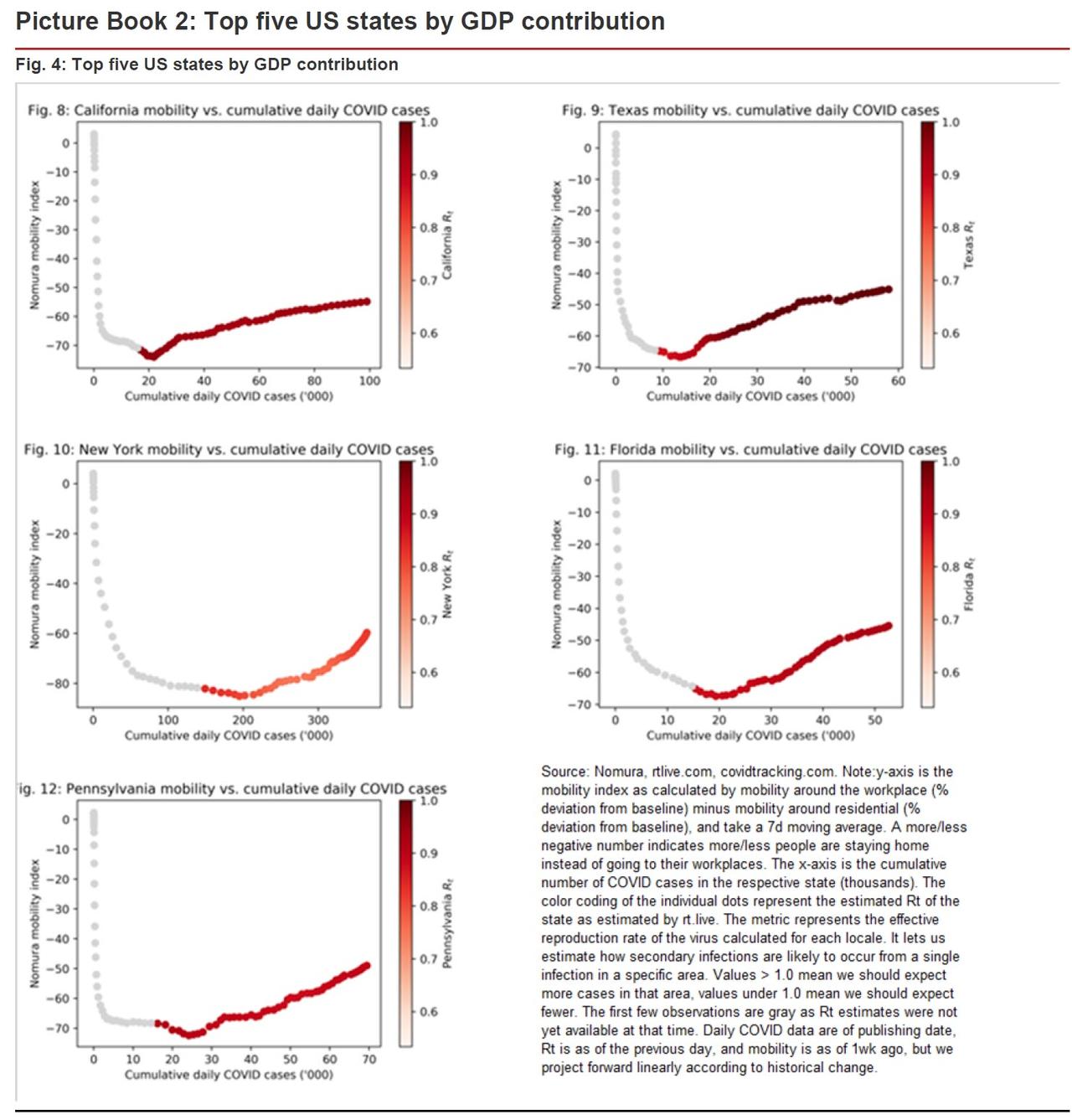
The analysis tracks two sets of 5 US states that represent different angles to analyse the data. The first set are five states that have experienced the sharpest recovery in the mobility index: Montana (MT), Alaska (AK), Mississippi (MS), Tennessee (TN), Georgia (GA), which represent a combined ~5.7% of U.S. GDP. The second set (see Picture Book 2) represent the top five states by GDP contribution: California (CA), Texas (TX), New York (NY), Florida (FL) and Pennsylvania (PA), which represent a combined ~41% of U.S. GDP.
The findings show that the characteristics of the ongoing reopening, both in terms of pace (how ‘steep’ is the ongoing recovery in mobility?) and Rt (how sustainable is the reopening?) can differ markedly across states.
On track: Montana and Alaska are potential model cases where mobility has improved drastically along with minimal increases in daily COVID-19 cases (i.e., the chart shows the recovery line is very ‘steep’), while estimated Rt remains reasonably below 1.0 (i.e., light colored dots), although for Montana Rt has recently risen a little.
Warning signs: Here, Nomura is closely tracking Mississippi, Tennessee and Georgia, as there are some, albeit very tentative, warning signs of a potential second wave in these states. Mobility has increased, but the curves are flatter, indicating that the number of COVID-19 daily cases continues to increase and, for Tennessee, Rt is close to 1.0.
If the dots for these three states continue to move eastward, darken in color with an increasing interval between them, they could move into the Danger Zone. Of the top 5 US states by GDP contribution, the reopening of their economies has been more gradual, judging by the flatter curves, and all five are still experiencing still-high number of daily COVID-19 cases, albeit so far no acceleration (increasing intervals between the dots). States such as California and Texas are particularly noteworthy, as they also register an Rt close to 1.0.
45 countries
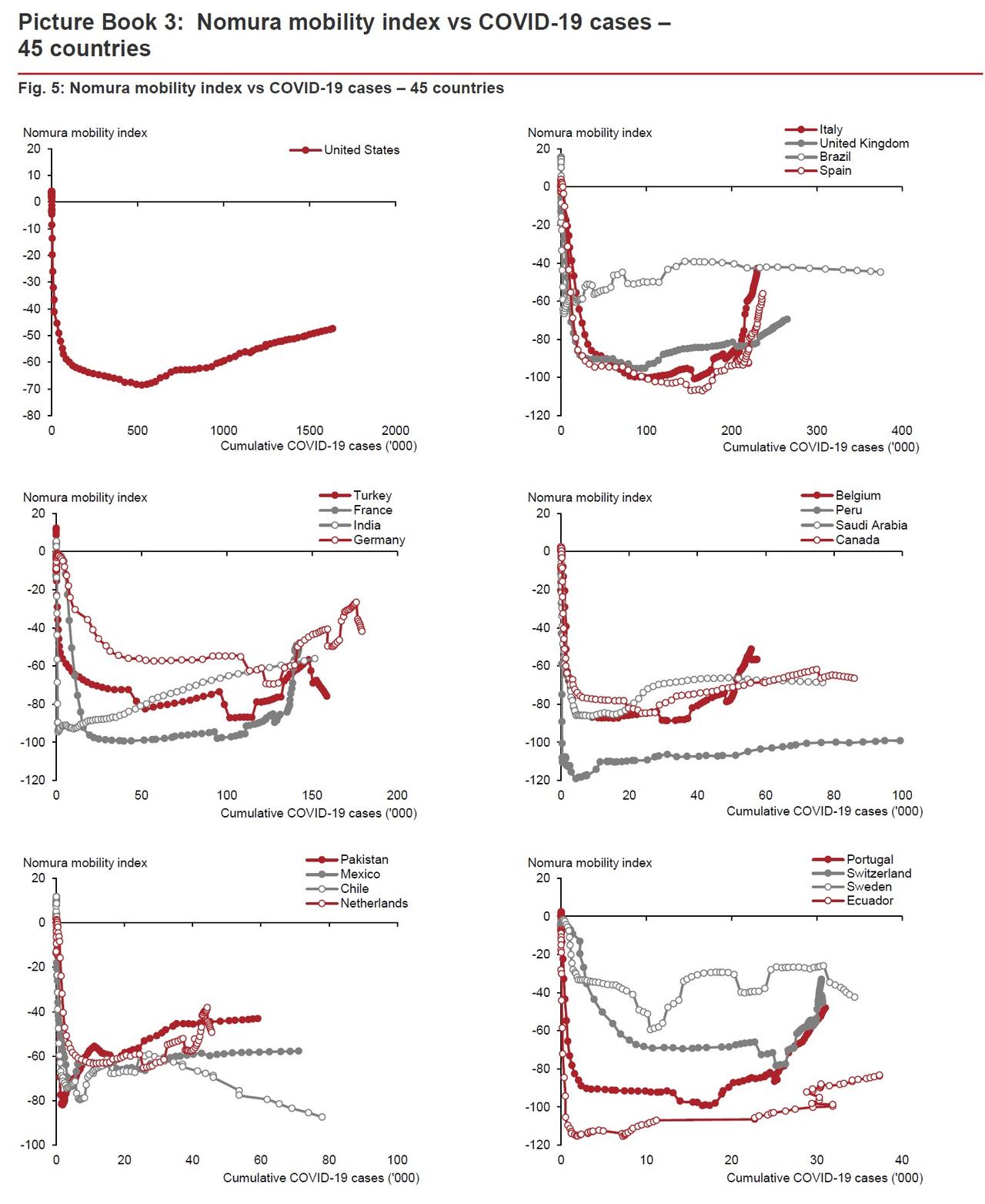
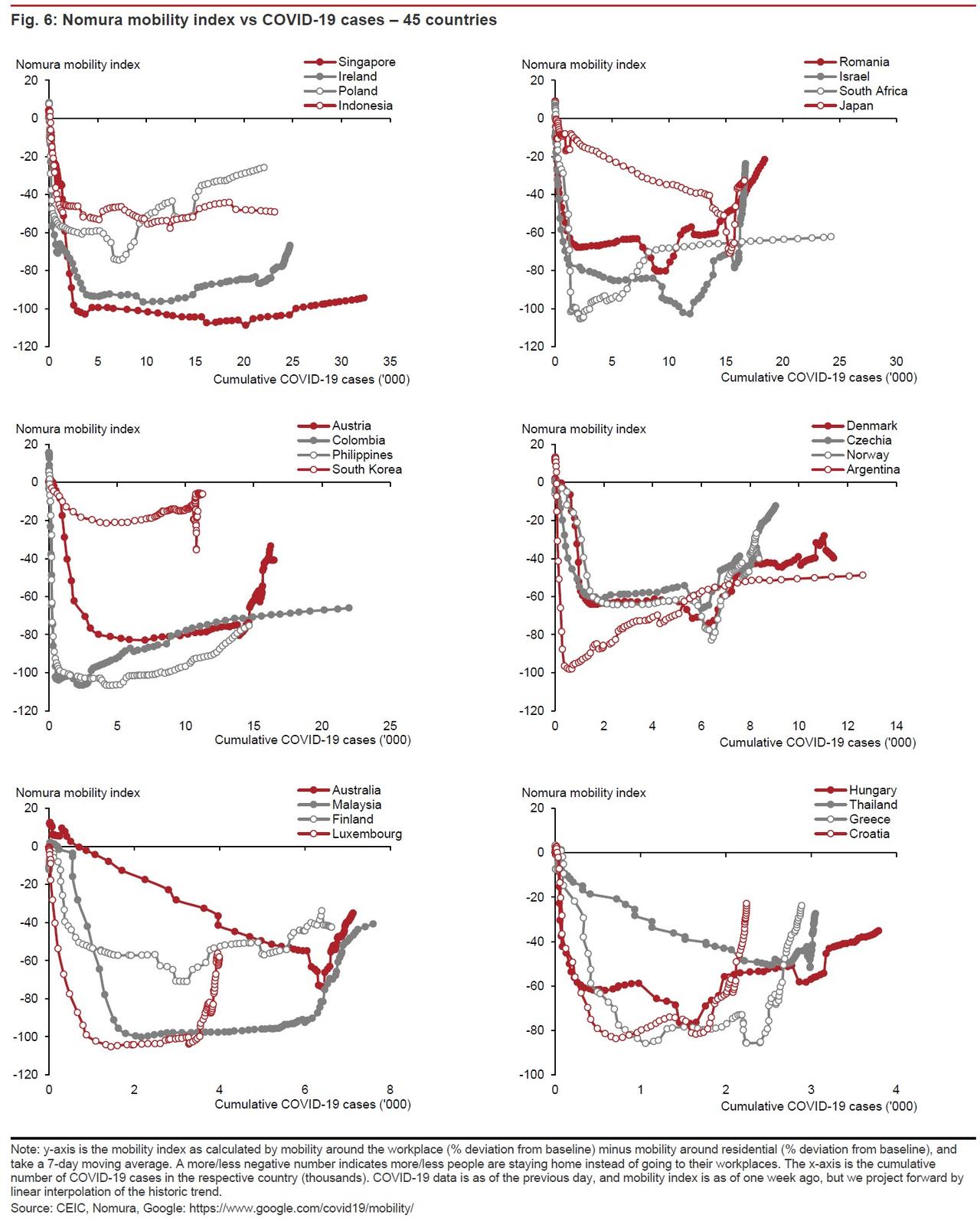
The analysis is then extended to the whole of the US and 44 other countries (see Picture Book 3). These countries are selected based on three criteria:
relatively large cumulative number of COVID-19 cases per 1mn population;
experiencing a sharp rise in our mobility index; and
have relatively large economies.
Nomura’s interpretation of the results are as follows:
On track: Italy, Spain, France, Belgium, Switzerland, Israel, Japan, Romania, South Korea, Austria, Czech Republic, Norway, Luxembourg, Australia, Greece, Thailand and Croatia are on good track of mobility recovery while at the cost of only limited increases in daily COVID- 19 cases, signaling low risk of a second wave as of now.
Warning signs: US, UK, Turkey, Germany, Netherlands, Portugal, Poland, Ireland, the Philippines, Denmark, Malaysia, Finland, and Hungary are also in the stage of mobility recovery, although the recoveries have been more gradual than the first set of countries above. However, this is associated with still-high daily COVID-19 counts, indicating a moderate risk of a second wave.
Danger zone: Brazil, India, Pakistan, Saudi Arabia, Peru, Canada, Chile, Ecuador, Sweden, Mexico, Singapore, Indonesia, South Africa, Colombia and Argentina are still suffering from relatively large increases in daily COVID-19 cases and, consistent with this, our mobility index has been slow to rise. These countries are nearly all emerging markets, which could be at the highest risk of a second wave upon the gradual relaxation of lockdown measures.
And here are the case by case charts, first for states:
… and next for countries:
via ZeroHedge News https://ift.tt/2X8gXNv Tyler Durden
The Texas Supreme Court ruled on Wednesday that “a voter’s lack of immunity to COVID-19” is not a physical disability that qualifies people to vote by mail.
The court agreed with Texas Attorney General Ken Paxton, who has argued that only a physical illness or disability that prevents voters from going to the polls should qualify an individual to vote by mail.
Judges decided that the risk of contracting the virus alone does not meet the state’s qualifications for voting by mail, noting that the decision to apply to vote by mail based on a disability is the voter’s and that they were confident clerks “will comply with the law in good faith.”
“We agree with the state that a voter’s lack of immunity to COVID-19, without more, is not a ‘disability’ as defined by the Election Code,” the court wrote (pdf). “But the state acknowledges that election officials have no responsibility to question or investigate a ballot application that is valid on its face.”
The decision is a loss for the Texas Democratic Party and voting rights groups who had pushed for expanded mail voting during the CCP virus pandemic and filed lawsuits in both state and federal courts on the matter, winning temporary victories in lower courts.
In its ruling on Wednesday, the court said the Texas Democratic Party’s definition of disability was overly broad and such an interpretation would enable things like “being too tired to drive to a polling place” to count as a physical condition.
“It would swallow the other categories of voters eligible for mail-in voting,” the judges said. “We agree, of course, that a voter can take into consideration aspects of his health and his health history that are physical conditions in deciding whether, under the circumstances, to apply to vote by mail because of disability. We disagree that lack of immunity, by itself, is one of them.”
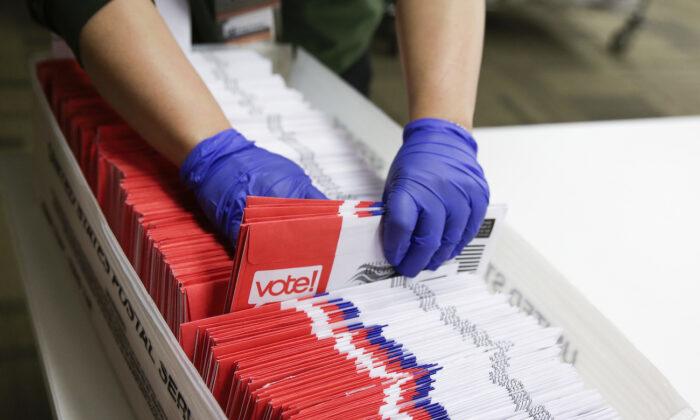
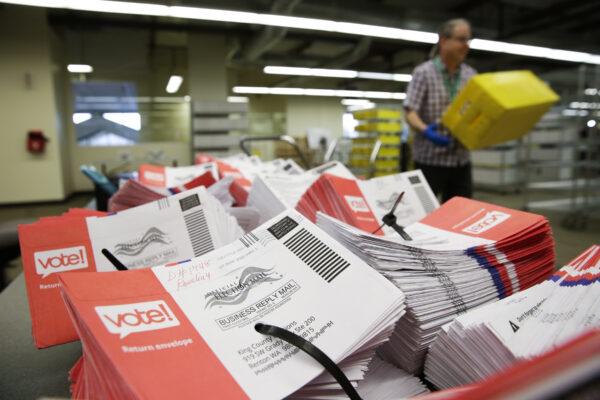
Empty envelopes of opened vote-by-mail ballots for the presidential primary are stacked on a table at King County Elections in Renton, Washington, on March 10, 2020. (Jason Redmond/AFP via Getty Images)
Paxton applauded the court’s decision in a statement issued on Wednesday, noting that, “In-person voting is the surest way to maintain the integrity of our elections, prevent voter fraud, and guarantee that every voter is who they claim to be.”
“I applaud the Texas Supreme Court for ruling that certain election officials’ definition of ‘disability’ does not trump that of the Legislature, which has determined that widespread mail-in balloting carries unacceptable risks of corruption and fraud,” Paxton said. “Election officials have a duty to reject mail-in ballot applications from voters who are not entitled to vote by mail.”
Following the ruling from the Supreme Court, President Donald Trump, who has previously said mail-in voting is particularly susceptible to fraud tweeted, “Big win in Texas on the dangerous Mail In Voting Scam!”
Election law established by the Texas Legislature generally requires in-person voting, and allows mail balloting only for certain limited groups, including those who are 65 or older, have a disability or illness that render them unable to vote in-person, those who will be out of the county on election day, and those who are confined in jail but otherwise eligible.
The Texas election code defines disability as a “sickness or physical condition” that prevents a voter from appearing in person without the risk of “needing personal assistance or injuring the voter’s health.”
A voter ill with COVID-19 and who meets those requirements may apply for a ballot by mail.
via ZeroHedge News https://ift.tt/2ZLIPcb Tyler Durden
China Claims It “Expelled” A “Trespassing” US Warship In Latest Dangerous S.China Sea Incident Tyler Durden
Thu, 05/28/2020 – 13:35
The Washington-Beijing tit-for-tat is growing on a number of fronts, but has the potential for direct conflict in the South China Sea, where both countries are busy flexing, also on the heels of accusations and counter charges over the COVID-19 pandemic’s origins and cover-up.
Fox’s Lucas Tomlinson reports Thursday, “One month after U.S. guided-missile destroyer Mustin harassed by Chinese warship from a carrier strike group, the Mustin cruises by contested islands in move likely to irk China.”
Specifically the Arleigh Burke-class guided missile destroyer sailed near the Paracel Islands in a contested area of the South China Sea.
With all eyes on South China Sea, U.S. Navy dispatches two warships to East China Sea: Japan-based USS New Orleans and guided-missile destroyer Rafael Peralta from TR strike group pic.twitter.com/hy31WihXRO
As the Fox correspondent further reports, the US Navy has dispatched a pair of additional warships to the East China Sea, namely USS New Orleans out of Japan and the guided-missile destroyer Rafael Peralta, the latter also based in the Western Pacific region as part of the Theodore Roosevelt carrier strike group.
It goes without saying that US-China relations have reached their lowest point in decades, with a former Trump administration trade official recently warning the spike in tensions brought on by the corona-crisis on the heels of the trade war has marked“the start of a new Cold War”.
This has been demonstrated especially with the Pentagon’s significant ramping up of B-1 bomber flyovers of contested waters near China over the past weeks.
Two days before U.S. Navy warship sailed by contested islands in South China Sea, U.S. B-1 bombers flew over same area from Guam while a separate pair flew to Sea of Japan for training with 16 Japanese fighter jets pic.twitter.com/SPS49cvnve
For example, since the start of April there’s beenno less than 15 US military aircraft flights approaching Taiwan’s contested borders, with at least three bomber approaches since the start of May.
Meanwhile, Chinese state media confirmed the US warship presence in the South China Sea, claiming its PLA forces “expelled” an American ship for “trespassing” in China’s territorial waters.
The Chinese People’s Liberation Army (PLA) on Thursday expelled a US warship that trespassed into Chinese territorial waters off the Xisha Islands in the South China Sea, and the US operation amid the COVID-19 pandemic showed the US is the source that sabotages peace and stability in the South China Sea, a Chinese military spokesperson said on Thursday.
Citing military sources to assert it’s part of a long recent history of US violations of Chinese sovereignty, GTstated further, “The PLA Southern Theater Command organized naval and aerial forces to follow the US guided missile destroyer USS Mustin when it illegally trespassed into China’s territorial waters off the Xisha Islands on Thursday without authorization from the Chinese government, said Senior Colonel Li Huamin, a spokesperson of the PLA Southern Theater Command, on Tuesday.”
The PLA sources said they followed and monitored the ship’s course before ultimately driving it out of Chinese-claimed waters.
Chinese PLA on Thursday sent forces and expelled US destroyer USS Mustin when it trespassed into China’s territorial waters off the Xisha Islands. The US is the source that sabotages peace and stability in the #SouthChinaSea: spokesperson https://t.co/ugkcV6xJpcpic.twitter.com/1eTmH5rGyZ
Of course the US Navy saw things very differently:
“On May 28 (local time), USS Mustin (DDG 89) asserted navigational rights and freedoms in the Paracel Islands, consistent with international law,” Lt. Anthony Junco, a spokesperson for the US Navy’s 7th Fleet, said in a statement.
“By conducting this operation, the United States demonstrated that these waters are beyond what China can lawfully claim as its territorial sea,” the statement added.
In the past two months there’s been a very noticeable and dangerous uptick in both American battleships entering contested waters near China’s coast and around Taiwan, as well as long-range bomber activity essentiallyright on the Communist country’s doorstep.
Though the trade war and more recent coronavirus blame-game remains but heated rhetoric with occasional mutual expelling of foreign journalists and students, the potential for a direct military ‘incident’ or ‘accident’ in the region could be a concrete outlet for boiling tensions and combustible mix leading to violent regional conflict.
via ZeroHedge News https://ift.tt/3c9Of35 Tyler Durden
The main reason for the continued lack of attention, Goldman says, is that Bitcoin does not generate revenue flows for holders, for example, in the same way that stocks and bonds do.
“We believe that a security whose appreciation is primarily dependent on whether someone else is willing to pay a higher price for it is not a suitable investment for our clients,” a related PowerPoint presentation states.
Along with other claims including high volatility, the criticism is nothing new, Bitcoin having faced years of identical scorn from the legacy banking sector. Just last week, wealth manager Peter Mallouk told CNBC that despite its recent returns, there was “no need” for any investors to buy Bitcoin.
“Cookiecutter arguments”
Goldman’s tone meanwhile riled some of the best-known figures in the Bitcoin industry and beyond.
Reacting, D-TAP capital founder Dan Tapeiro argued that the bank was simply concerned about its revenue stream.
“Goldman Sachs does not make fees when a client buys #bitcoin. Buying Btc is an implicit rejection of buying assets that Goldman Sachs sells upon which they make fees,” he wrote on Twitter.
Buying btc is a rejection of the worldview they sell upon which they make fees. Long PTJ/Short GS EVERY TIME.
Gemini exchange co-founder Tyler Winklevoss meanwhile argued that the attention being paid to Bitcoin suggested a longer-term shift was underway.
“Crypto used to be where you ended up when you couldn’t make it on Wall Street,” he tweeted.
The quality of Goldman Sachs’ recent research on #Bitcoin demonstrates that there has been a talent flippening. Today, Wall Street is where you end up when you can’t make it in crypto.
In another post, Winklevoss took issue with Goldman’s understanding.
“Me: What are you smoking? I thought Goldman was the bank on Wall Street for smart bankers,” he wrote.
Others simply reiterated that Bitcoin was immune to naysayers, as evidenced in recent years by high-profile criticism impacting the price less and less.
“In all honesty most of their arguments were cookiecutter,” School of Arms Media CEO, John Bednarski summarized.
via ZeroHedge News https://ift.tt/3cazCwo Tyler Durden
‘Thousands’ Of Dutch COVID-19 Survivors Likely Have Permanent Lung Damage According To Top Pulmonologist Tyler Durden
Thu, 05/28/2020 – 12:54
COVID-19 may be far less deadly than originally projected – and asymptomatic cases may be even more common than first suspected, but for those who have caught it and come down with symptoms, the disease can result in lasting symptoms, including shortness of breath, lethargy, recurrent fevers, headaches, itchiness and other mystery problems that aren’t going away.
To that end, a top pulmonologist in the Netherlands says that thousands of Dutch residents who have recovered from COVID-19 may be left with permanent lung damage, resulting in decreased lung capacity and difficulty absorbing oxygen.
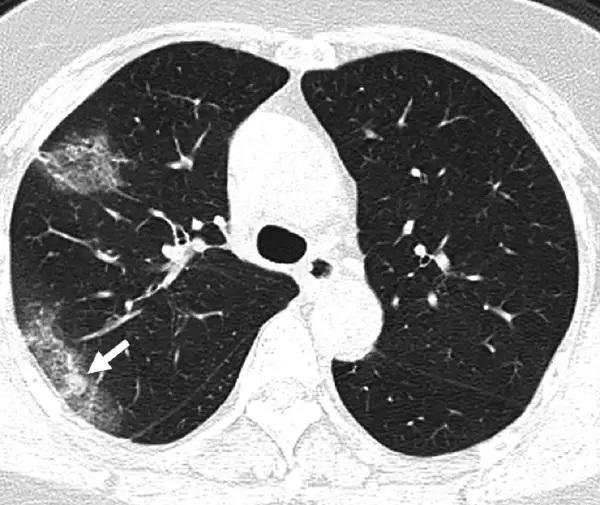
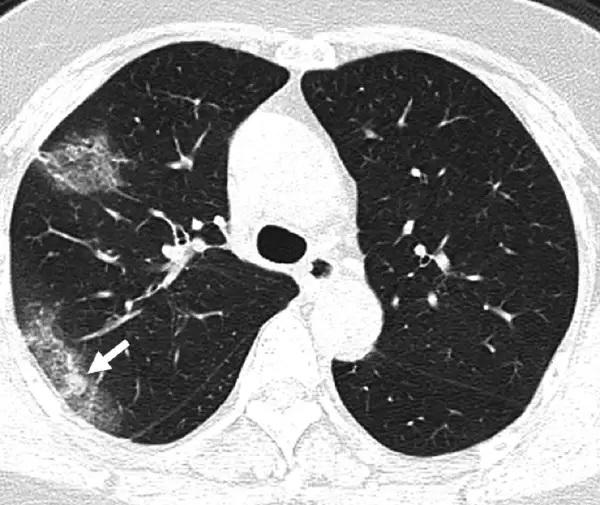
A computer tomography (CT) X-ray scan shows the signature “ground glass” tissue due to COVID-19 infection, which is caused by fluid in the lungs. Weifang Kong and Prachi P. Agarwal
According to Leon van den Toorn, Chairman of the Dutch Association of Physicians for Pulmonary Disease and Tuberculosis NVALT, people are underestimating the consequences of the coronavirus.
“In severe cases, a kind of scar formation occurs, we call this lung fibrosis. The lungs shrink and the lung tissue becomes stiffer, making it harder to get enough oxygen,” Van den Toorn told Dutch newspaper AD (via the NL Times), adding that “there may be thousands of people in the Netherlands who suffered permanent injury to the lungs from corona.”
Of the 1,200 Covid-19 patients who so far recovered after admission to intensive care, “almost 100 percent went home with residual damage”, he said to AD. And about half of the 6 thousand people who were hospitalized, but did not need intensive care, will have symptoms for years to come.
So far 45,500 people in the Netherlands tested positive for the coronavirus. Many did not get sick enough to need hospital care. In this group, Van den Toorn expects that permanent problems will be less serious, but still possible. –NL Times
Van den Toorn says that patients experiencing lung issues should immediately see a pulmonologist, as “there may be a low oxygen level in the blood, which is harmful to the body.”
“People with a history of corona infection should be monitored closely to see if recovery is complete,” he added.
Drilling down on lung issues, let’s flash back to March, when a New Orleans respiratory therapist dealing with coronavirus patients told ProPublica that coronavirus patients suffering from acute respiratory distress syndrome (ARDS) are extremely difficult to oxygenate.
“Normally, ARDS is something that happens over time as the lungs get more and more inflamed. But with this virus, it seems like it happens overnight. When you’re healthy, your lung is made up of little balloons. Like a tree is made out of a bunch of little leaves, the lung is made of little air sacs that are called the alveoli. When you breathe in, all of those little air sacs inflate, and they have capillaries in the walls, little blood vessels. The oxygen gets from the air in the lung into the blood so it can be carried around the body.
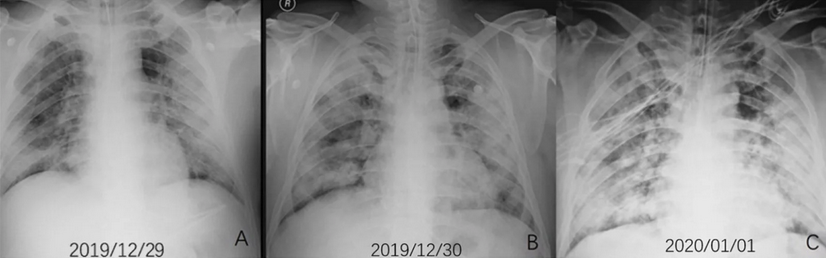
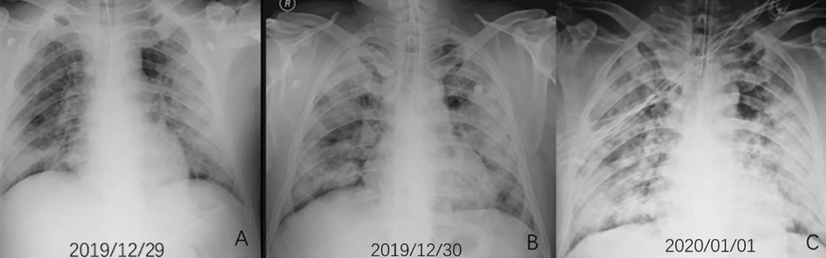
A screenshot of chest radiographs of a man suspected to have COVID-19. (Obtained by ProPublica via the Radiological Society of North America, cited in the paper “Severe Acute Respiratory Disease in a Huanan Seafood Market Worker: Images of an Early Casualty” by Lijuan Qian, Jie Yu and Heshui Shi.)
“Typically with ARDS, the lungs become inflamed. It’s like inflammation anywhere: If you have a burn on your arm, the skin around it turns red from additional blood flow. The body is sending it additional nutrients to heal. The problem is, when that happens in your lungs, fluid and extra blood starts going to the lungs. Viruses can injure cells in the walls of the alveoli, so the fluid leaks into the alveoli. A telltale sign of ARDS in an X-ray is what’s called ‘ground glass opacity,’ like an old-fashioned ground glass privacy window in a shower. And lungs look that way because fluid is white on an X-ray, so the lung looks like white ground glass, or sometimes pure white, because the lung is filled with so much fluid, displacing where the air would normally be.”
…
“It first struck me how different it was when I saw my first coronavirus patient go bad. I was like, Holy shit, this is not the flu. Watching this relatively young guy, gasping for air, pink frothy secretions coming out of his tube and out of his mouth. The ventilator should have been doing the work of breathing but he was still gasping for air, moving his mouth, moving his body, struggling. We had to restrain him. With all the coronavirus patients, we’ve had to restrain them. They really hyperventilate, really struggle to breathe. When you’re in that mindstate of struggling to breathe and delirious with fever, you don’t know when someone is trying to help you, so you’ll try to rip the breathing tube out because you feel it is choking you, but you are drowning.
via ZeroHedge News https://ift.tt/3gwkX2c Tyler Durden
28 North Koreans Charged In Sweeping Conspiracy To Launder $2.5 Billion For Nuclear Program Tyler Durden
Thu, 05/28/2020 – 12:36
Is the Trump Administration finally coming around to the notion that disarming North Korea’s nuclear arsenal is never going to happen? Well, at least not while the Kims are still in power.
Since President Trump started his ‘bromance’ with Kim Jong Un, which briefly reemerged following the Dear Leader’s purported brush with illness, corners of the intelligence community have been grumbling to the press about how the president was being played by both Kim and his chief benefactor, President Xi and China, which accounts for more than 90% of North Korea’s foreign trade, and protects the Hermit Kingdom from harsher penalties and sanctions via China’s veto power at the security council.
As the administration ramps up its assault on Beijing as “decoupling” moves into hyperdrive, the DoJ on Thursday has unsealed an indictment against North Korean and Chinese nationals who are accused of operating a multibillion-dollar money laundering scheme to help fund North Korea’s nuclear weapons program.
The indictment charges 28 North Koreans and five Chinese nationals of using a web of more than 200 shell companies to launder more than $2.5 billion in assets through the international banking system. according to the NYT.
Ultimately, the money flowed back to the Foreign Trade Bank of the Democratic People’s Republic of Korea, North Korea’s primary, state-operated foreign exchange bank, which is also known as Josen Bank. It’s believed the money was then used to finance the country’s nuclear program, which is believed to have produced several rather rudimentary nuclear weapons, making NK an unacknowledged nuclear power (kind of like Israel).
Since succeeding his dead father as North Korea’s supreme leader, the third in the Kim dynasty, Kim has overseen four underground nuclear tests and has pushed for North Korea to heavily invest in its nuclear weapons and missile programs while its poverty-stricken people struggle to feed their families.
Under his leadership, NK flight-tested three intercontinental ballistic missile tests in 2017 (remember that?). Kim recently commanded the country’s top officials to start ramping up the country’s weapons program again as talks with the White House stalled, with both sides acknowledging that the impasse reached during a second global summit in Hanoi – the US insisted that NK must first give up some or all weapons to get sanctions relief, while NK insisted on a gradual schedule of relief in exchange for disarmament – remains insurmountable.
via ZeroHedge News https://ift.tt/2Xb4993 Tyler Durden