What To Do? The European Dilemma

What To Do? The European Dilemma

Authored by Patrick Armstring via The Strategic Culture Foundation,

Aim for genuine independence: preserve the thought of a united Europe becoming an independent force in the world…

According to hoary tradition, there are two obsessive questions in Russian history: who is guilty and what is to be done? This assertion is likely another Russophobic trope in which Russia was, is and always will be a mess populated by supine drunks slurring “Not me” and “Pass the bottle”. Nonetheless, good questions they are and ones that Europeans should ponder. Here are some circumstances that call out for doing something different.

European Union as an emerging superpower” – Wikipedia has a whole article on it. And, on paper, it is: the population, the economic power, the potential military power, the intellectual power and everything else necessary to become a significant independent player on the world scene – fully equal to any other major power. Except… it isn’t. Why isn’t it? Why did it follow Washington’s lead and sanction Russia? The sanctions have certainly cost it more than the USA and probably more than Russia; Washington, on the other hand, never sanctions Russian rocket engines or Russian oil. Why do the Europeans dutifully swallow it down? Many of them followed Washington into Afghanistan and other disastrous military adventures for a reward of failure and crisis. At least they’ve found the will to stop pretending Guaido is really President of Venezuela but they’re piling on Belarus at Washington’s command. Why? No kind of “superpower” on the geopolitical stage, the EU pretty well does what it’s told by Washington. There’s the occasional rebellion – Germany and Nord Stream 2 – but then the obsequious sending of a warship on a FON mission to please Washington. Hoping to cut the cost with a cringing attempt to placate Beijing. Are these the actions of a self-respecting independent country? What is to be done?

When a country signs up with the EU, it signs up to the complete package. Not just the diktats of the bureaucracy in Brussels but the ever-metastasising “human rights” package. I use quotation marks because, these days, human rights to the West appears to be concerned with nothing other than what Monty Python called “your naughty bits”; Assange is never to be mentioned and nor is Yemen. The LGBTQIA+ obsession sits poorly with some of the members. Against them the full vocabulary is mobilised – Poland’s victorious party is “right wing” and “populist”. Epithets that fall just short of Hungary’s “soft fascism”:

Hungary is a warning of what could happen when a ruthless, anti-minority populist backed by a major political party is allowed to govern unchecked.

Here’s Hungary’s Orbán defending himself. But so great is his sin that some say Hungary should be expelled from the EU. And maybe Poland too. The DM has a piece that is reasonably balanced, once you get past the obligatory insult (“ugly far-right”):

Instead of a serene and harmonious Europe of Tuscan villas, Provencal markets, German opera and Bavarian beer halls, we are witnessing rancorous divisions over migration, economic stagnation and incipient independence movements. And the bitter truth is that in Hungary, the Czech Republic and Poland, there is now a stridently anti-Brussels, anti-migrant and anti-Establishment movement with the increasingly angry peoples of these nations convinced they are being treated as second-class citizens.

Hungary and Poland did not get out from under the diktat of Moscow to subjugate themselves to the diktat of Brussels. What is to be done?

When the Euro was introduced, each country produced its own coins; citizens could have coins from Spain, Greece, Germany and Poland in their pockets; each with its own language and symbols. An effective demonstration of unity. The paper money was an equally instructive, but contrary, choice. Architectural details: a Romanesque door, a Gothic arch, but no particular door or arch – generalised Romanesque or Gothic. Or, to put it rudely, architectural details from plastic buildings in Walt Disney’s Euroland. And that is where Orbán does not want to live: he wants to live in Hungary, the ancient homeland of Hungarians. He fears that Brussels is building a smushed together fake Europe: no Frenchmen, just baguettes; no Italians, just gelato; no Spanish, just paella. Consumed in buildings populated from people from somewhere else; in a décor with arches of no particular provenance. No history, no reality – a movie set. Orbán is the most prominent of those who think this way but there are many more in the real, actual Europe – AfD in Germany, LePen in France, Five Star in Italy: it’s a growing phenomenon; so widespread that the tired epithets of “far-right” or “fascist” or “populist” have a contrary effect. They are becoming the European equivalents of “deplorable” in the USA – because they so despise the insulters, the insulted take pride in being insulted. What is to be done?

Refugees/migrants. They used to pretend it was not a problem – even welcomed it – but that pretence is harder to support now. And, little by little, they notice. But where do these people come from? That’s easy – here’s the list: the leading three countries of origin are Syria, Iraq and Afghanistan. What do these three countries have in common? A question that shouldn’t even have to be asked but, still, is unasked. The next two are Nigeria (partly connected with NATO’s destruction of Libya) and Pakistan which brings us to NATO’s destruction of Afghanistan. NATO’s GenSek flatulates:

When it comes to NATO’s role in addressing the migrant and refugee crisis, so NATO’S main role has been to address the root causes, the instability in the region and trying to help stabilize the countries where the refugees are coming from.

“Root causes” indeed: “stability” is, of course, NATOese for chaos. Ubi solitudinem faciunt pacem appellant. Here are pictures of the solitude NATO made and what preceded it. Is it surprising that the inhabitants want to leave that solitude and go somewhere else? Again Europe is paying for the consequences of Washington’s destruction of the MENA. What is to be done?

The Joint Comprehensive Plan of Action (JCPOA) was the result of a long and complicated negotiation between Iran on the one hand and China, France, Russia, UK, USA, Germany and the EU on the other. The agreement provided an inspection regime that would ensure that Iran did not develop nuclear weapons; Tehran agreed, it was adopted by the UNSC and ratified by the EU. But it was never ratified in the USA – Obama made it an “executive agreement” – which made it easy for his successor to abandon the “horrible” agreement and sanction Iran. Under the CAATSA law, sanctions are contagious: if you disobey them, you’re sanctioned too. And since Washington has great power over the world’s – West’s anyway – economies, its sanctions are potent. Washington has formally declared Iran a terrorist country; on negligible evidence, of course; but what matter? Europe must obey. Thus, after immense negotiation and general satisfaction with the result, Europe finds itself subject to the whim of Washington on its trade with Iran and forced to kneel. Biden promised to return to the deal but, thus far, American negotiators want Iran to make concessions: “The ball remains in Iran’s court” while Iran’s Supreme Leader Khamenei has warned against trusting the West and so the outlook looks poor. Europe didn’t walk out of the agreement and neither did Tehran, but they will be paying the cost of Washington’s walkout. What is to be done?

And then the protests. Ostensibly about COVID restrictions, fuel prices or migrants, they’re really protests against uncaring, unresponsive and incompetent rulers. On the last Saturday in July “Thousands upon thousands of demonstrators were seen in London, Dublin, Paris, Rome, Athens, and other cities across Europe“. The next Saturday “major mobilizations took place in several European cities including Berlin, Rome, Paris, Marseille and Lyon, among others“. Lithuania a couple of days ago. The protests have been met with considerable police brutality as Moscow delighted in pointing out in the video it handed out in February. But plenty more examples since then and more protests to come. What is to be done?

The UK finally left the EU. Who will be next? If the unthinkable happened once, it can happen again. And the history of referendums is not encouraging for advocates of the EU: France and The Netherlands rejected the EU Constitution in 2005. The name was changed and Ireland rejected the re-tread in 2008 but approved it on a re-run in 2009. If this sort of finagling happened in, say, Belarus, there would be solemn condemnations throughout Europe of Lukashenka’s undemocratic behaviour. In the actual Europe, Brussels has learned never to let the people anywhere near a decision again. What is to be done?

Afghanistan. What more is there to say? Many European countries, believing what Washington told them, trusting Washington’s competence and leadership, buying into and contributing to NATO’s gassy platitudes about its new role, spent years, lives and treasure in a futile effort. The final disillusion was the US President solemnly declaring they had months, when there were only days dwindling quickly to hours. Their soldiers and “nation-builders” are now now being “sent under the yoke” in Kabul. What is to be done?

Finally, why pay all that money to visit Los Angeles when you can stay home in Paris and see the same thing for free? What is to be done?

What is to be done?

Well, here’s a list of things that Brussels could work towards.

  • Aim for genuine independence: preserve that thought of a united Europe becoming an independent force in the world.

  • Russia is there, it’s not going away, it’s not getting weaker; forge relations with it, on Europe’s own terms, following its own, true, interests. Europe has to live with Russia, the USA does not.

  • Ditto with China.

  • NATO does nothing for Europe except get it stuck into disasters that – see refugees – see Afghanistan – see Libya – see Syria – Europeans wind up paying for; quit it; form a genuinely European independent defensive alliance.

  • Ukraine – another Washington project – will not have happy consequences. Change behaviour.

  • Washington is not really a friend; cut dependence on it and reduce the links.

  • Understand that lots of things in the world are a) none of Europe’s business b) nothing it can do anything about. Moralistic posturing is not a useful starting position.

  • Exceptionalism is a bust: Moscow learned it the hard way; Washington is learning it the hard way; learn from their mistakes.

But the depressing reality is that the chances of that happening are probably somewhere between none and a lot less than none. But maybe – maybe – the Afghanistan disaster will concentrate minds in Europe: things are not going as they should.

As to who is to blame? That’s for later.

Tyler Durden
Sun, 08/22/2021 – 07:00

via ZeroHedge News https://ift.tt/3gnoBgp Tyler Durden

The Dollar’s Debt Trap

The Dollar’s Debt Trap

Authored by Alasdair Macleod via GoldMoney.com,

On the fiftieth anniversary of the Nixon Shock, this article explains why fiat currencies have become joined at the hip to financial asset values. And why with increasing inevitability they are about to descend into the next financial crisis together.

I start by defining the currencies we use as money and how they originate. I show why they are no more than the counterpart of assets on central bank and commercial bank balance sheets. Including bonds and other financial issues emanating from the US Government, the individual states, with the private sector and with broad money supply, dollar debt totals roughly $100 trillion, to which we can add shadow banking liabilities realistically estimated at a further $30 trillion.

This gives us an idea of the scale of the threat to asset values and banking posed by higher interest rates, which are now all but certain. The prospect of contracting financial asset values is potentially far worse than in any post-war financial crisis, because the valuation base for them starts at zero and even negative interest rates in the case of Europe and Japan.

I focus on the dollar because it is everyone’s reserve currency and I show why a significant bear market in financial asset values is likely to take down the dollar with it, and therefore, in that event, threatens the survival of all other fiat currencies.
Introduction

Dickensian attitudes to debt (Annual income twenty pounds, annual expenditure twenty pounds ought and six, misery) reflected the discipline of sound money and the threat of the workhouse. It was an attitude to debt that carried on even to the 1960s. But the financial world changed forever in 1971 when post-war monetary stability ended with the Nixon shock, exactly fifty years ago.

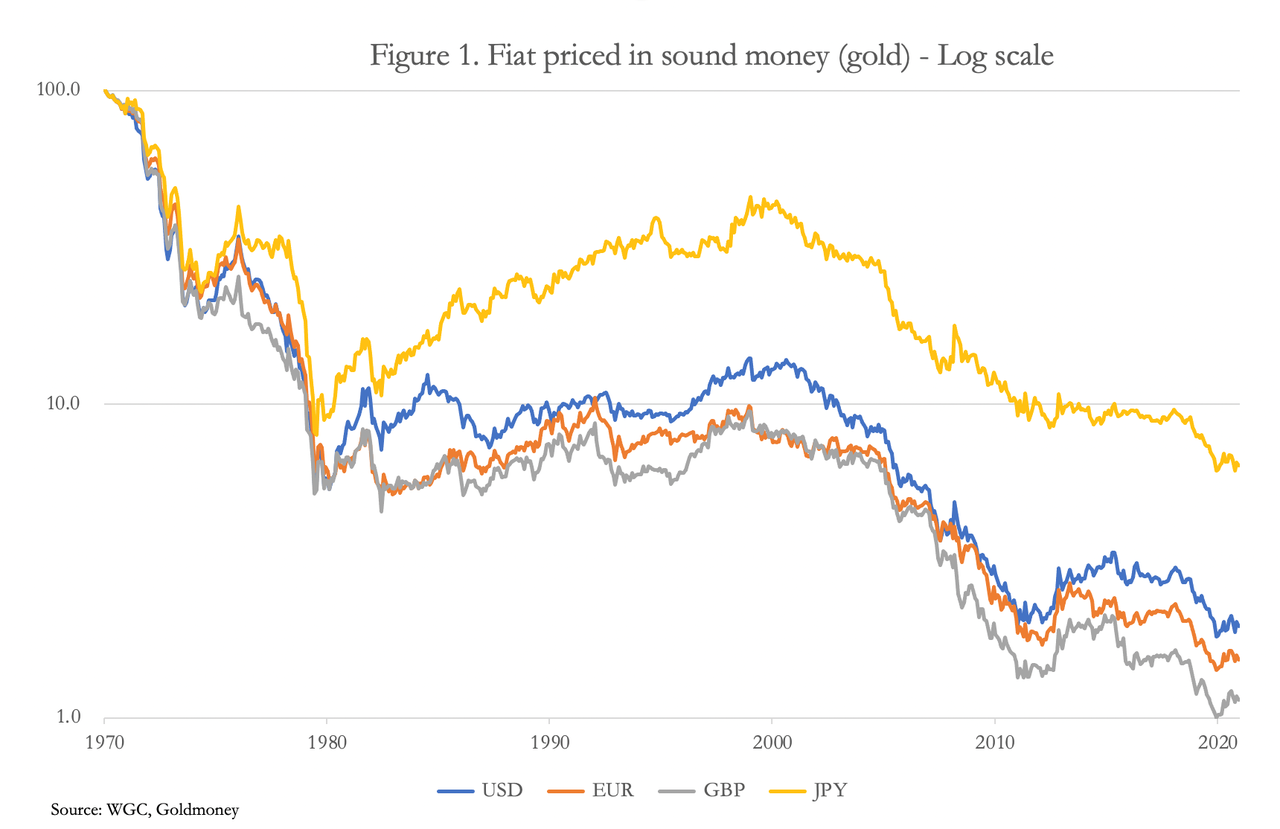
Micawber’s aphorism was aimed at personal spending. It was advice given to a young David Copperfield, rather than a recipe for life. But since money’s transmogrification into pure fiat and as soon as youngsters in the fiat-currency world began to earn, Micawberism no longer held. Figure 1 shows the decline in purchasing power of fiat currencies in which earnings are paid relative to the sound money (gold) that had underpinned the post-war Bretton Woods agreement.
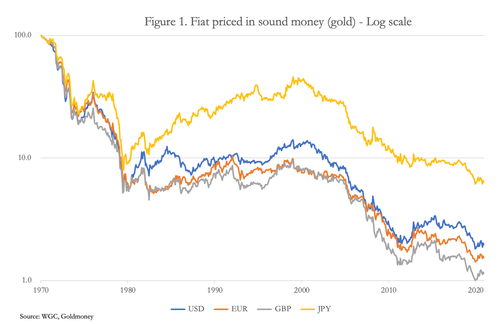
In the four major currencies, Micawber’s advice turns out to have been inappropriate and the opposite of being the path to riches. To benefit from a lender’s losses, a borrower merely had to ensure two things: that he could always service his debt and that the lender could not reclaim the debt before it was due so long as it was serviced according to the contract.

Unsurprisingly, everyone who could dismiss Micawberisms did so and increasingly turned borrower, financing house purchases with mortgages and supplementing earnings with borrowing for consumption. Since 1970, average house prices in the UK have increased from £4,057 to £256,000 today. But as a means of hedging the fall in the pound’s purchasing power, it has underperformed sound money. Instead of buying a house, if £4,057 had been hedged into gold it would now be worth £100,000 more. And according to the St Louis Fed’s statistical base, median sales prices of houses sold in the US rose from $23,000 in 1970 to $375,000 today, an increase of 16.3 times. Invested in gold, it would have risen to $1,162,000.

These figures assume no mortgage borrowing, which would have made all the difference. The message for those who speculated in residential property is to have borrowed as much as could be afforded. 90% loan-to-value mortgages would have knocked the socks off the long-term decline in fiat money’s purchasing power.

The basic lesson hasn’t been lost on industry either. It has moved on from borrowing with a view to repayment from the profits of production to running debt permanently, further encouraged by the practice of private equity using debt to leverage returns. Governments too have exploited the dubious benefits of debt: it enables them to spend without increasing unpopular taxes. And today, according to the Congressional Budget Office’s baseline budget projections for the current fiscal year, 44% of government spending is financed by debt.

The origin of all this debt is monetary expansion, mostly from the banking system but topped up by the central banks. It is a mistake to view it as deposit money originating from savers, which is the common fallacy, as we shall now illustrate.

The origin of debt

Many economists and financial commentators assume that deposits equate to savings, when instead they equate to debt. The error arises from not understanding how deposits are created. To explain it we shall start with the central bank. A central bank acquires assets in the form of bills, bonds, and loans, by issuing deposits matched by them to the government’s account and to commercial banks, along with bank notes to the public.

The point is that the central bank issues deposits and bank notes to acquire assets, and they do not arise by any other means.

It is true that bank notes can be deposited at a bank, in return for which a customer’s deposit account is credited, but this is a minor part of total bank deposits. The origin of the rest of deposit money is always the consequence of credit creation. A bank lends money to a borrower by recording the loan as an asset, and at the same time it credits the borrower’s deposit account with the proceeds. This is because through double entry book-keeping a credit in its asset column must always match an equal debit on the liability side. It is through this process that deposits are created. And as a bank loan is drawn down, both the bank’s assets and liabilities reflect the change in balances.

The borrower draws down his loan from the bank to pay his creditors, and in turn they pay the proceeds into their bank accounts. To the latter, they have earned the money, but its origin nonetheless is bank credit, or if they are paid in bank notes, central bank credit. Consequently, it is a mistake to look at a bank’s balance sheet, observe that it has, say, $100 billion of deposits and conclude that the bank possess it. It doesn’t. Among its assets, it will have a small amount of vault cash (bank notes) and some assets that can be liquidated immediately to meet withdrawals if need be. And all the deposits on a bank’s balance sheet showing as liabilities are debts to its lending customers.

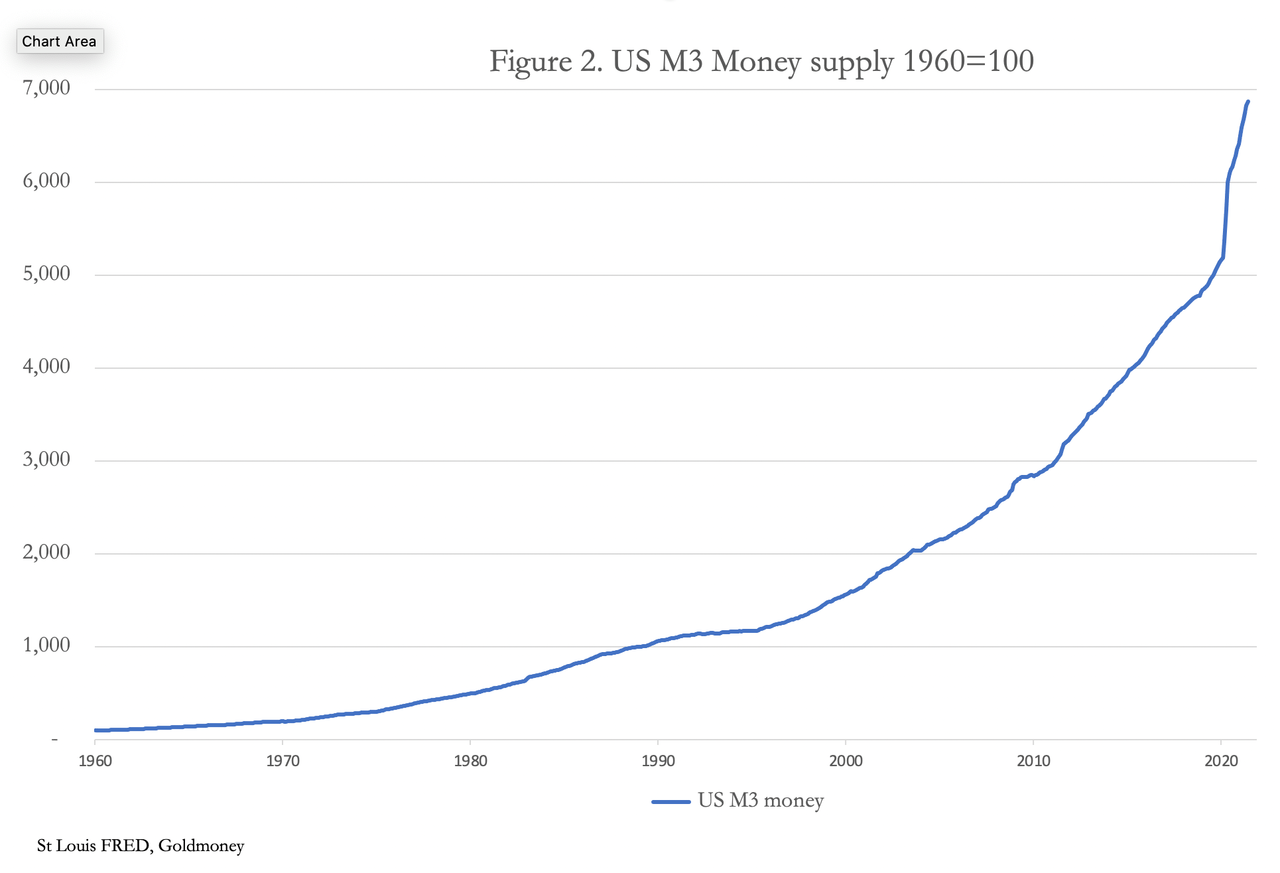
So, what about savings? Savings are simply unspent bank credit and hoarded bank notes. The only true money, a medium of exchange whose origin is not debt, is physical gold. Otherwise, savings in the form of bank deposits and bank notes owe their origin entirely to debt. We can now explain the mystery of the accumulation of money supply. It is not an accumulation of savings, but an accumulation of the counterpart to debt financed by the expansion of bank credit. Figure 2 shows how dramatically bank and central bank credit have expanded over time.
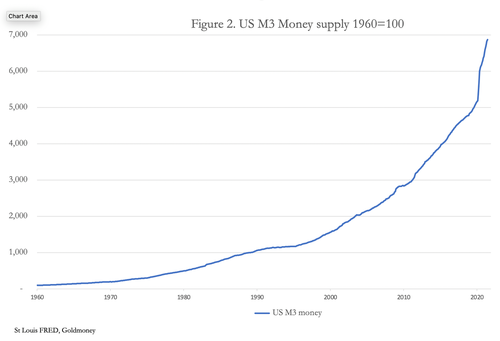
M3 is the US’s broadest measure of currency and has expanded nearly seventy times since 1960. Since 1971 when Bretton Woods was suspended, the expansion has been 34 times, while the US population increased by just under 59%. The average of all bank liabilities therefore rose from $2,881 per head of population to $61,562. The subtle point is that they are not to be regarded as currency owed to depositors, but debt owed by the banking system to the public.

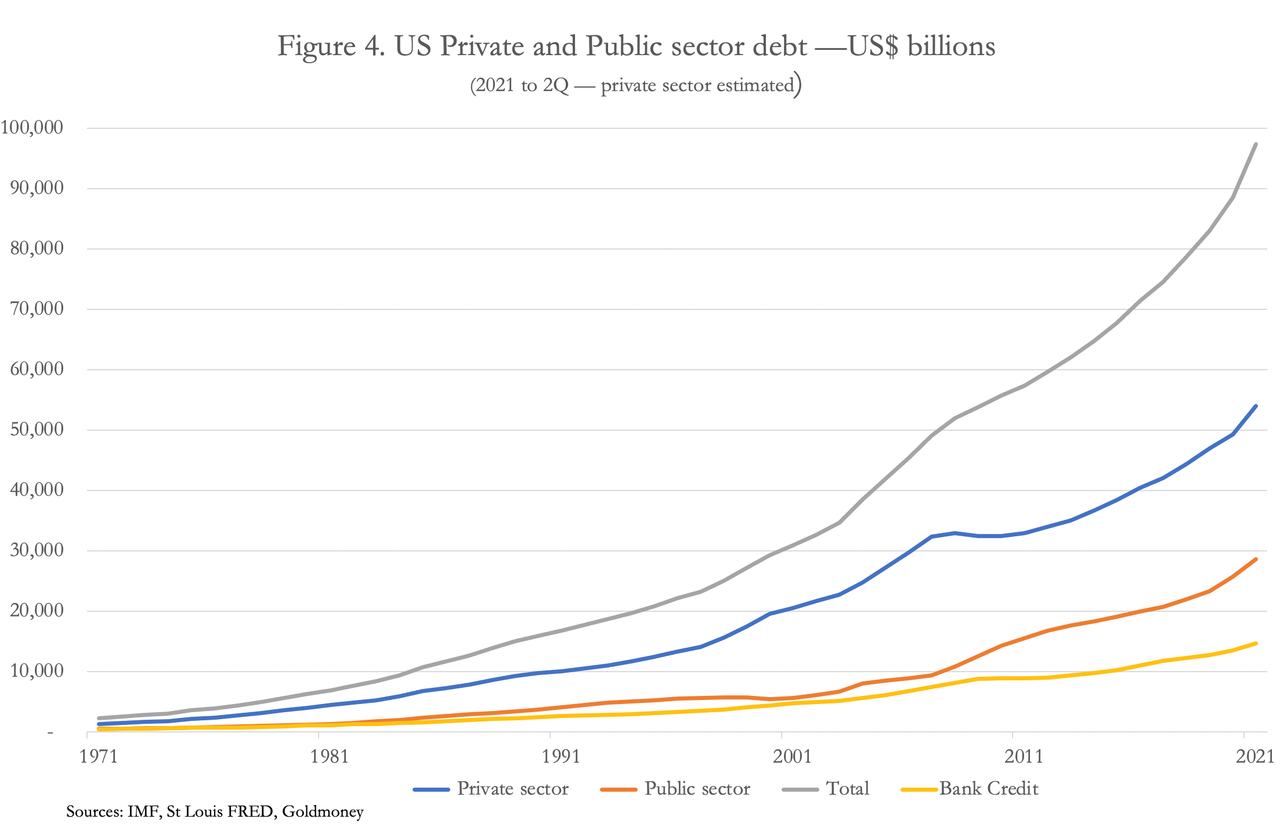
But banks are not the only source of debt. Capital markets create further debt obligations through the recycling of bank deposits. Let’s say that a corporation raises a billion-dollar loan in the capital markets. Subscribers for the loan draw down on their bank deposit balances to transfer them to the agent’s bank for transmission to the corporation’s deposit account with its own bank. In the process, some banks will see net withdrawals while others will see net deposits. The differences are ironed out through wholesale money markets, which operate as a centralised clearing system, so that commercial banks individually are always in balance. Consequently, the fund-raising corporation has a debt facilitated through the banking system but owed directly to investors. Governments and financial borrowers do most of their funding in this manner, and while the US banks owe their customers an indicated (M3) $20.5 trillion, the total of private sector and government debt is estimated to be more than a further $70 trillion. Altogether, including bank obligations US debt is approaching $100 trillion (see Figure 4 below). And that’s before we account for shadow banking.

Micawber would have a fit — but it’s only paper.

The history of credit expansion

Banking has worked in this manner since London’s goldsmiths began to operate as lenders against deposited specie during the English Civil War (1642—1651). To pay the 6% interest common at the time depositors recognised that goldsmiths would have to take in deposits as their own property to be able to earn the interest by trading with it as they saw fit. Under this agreement they were not trustees of the money, but its proprietors, and therefore they received it as bankers.

Naturally, the funds deposited bore little relationship to the goldsmiths’ own capital and they quickly learned that depositors were unlikely to demand their funds returned to them all at once. Therefore, goldsmiths and the bankers that they evolved into were able to multiply their liabilities to pay on demand and keep sufficient liquidity to ensure immediate payment of all claims likely to be demanded at any one time.

This was fine, so long as trading in currency and credit progressed with a reasonable degree of stability. But when the quantity of credit expanded more rapidly, typically under the influence of undue lending optimism, it led to a liquidity crisis; an event that through the nineteenth century was recorded every ten years or so and is approximately still the pattern in recent times.

It is that instability which matters in our efforts to divine future trading conditions. Figure 2 above shows the rapid expansion of US dollar money and bank credit culminating at an annualised 25% rate which has taken place since March 2020. That much of this expansion of deposits originated at the central bank is immaterial.

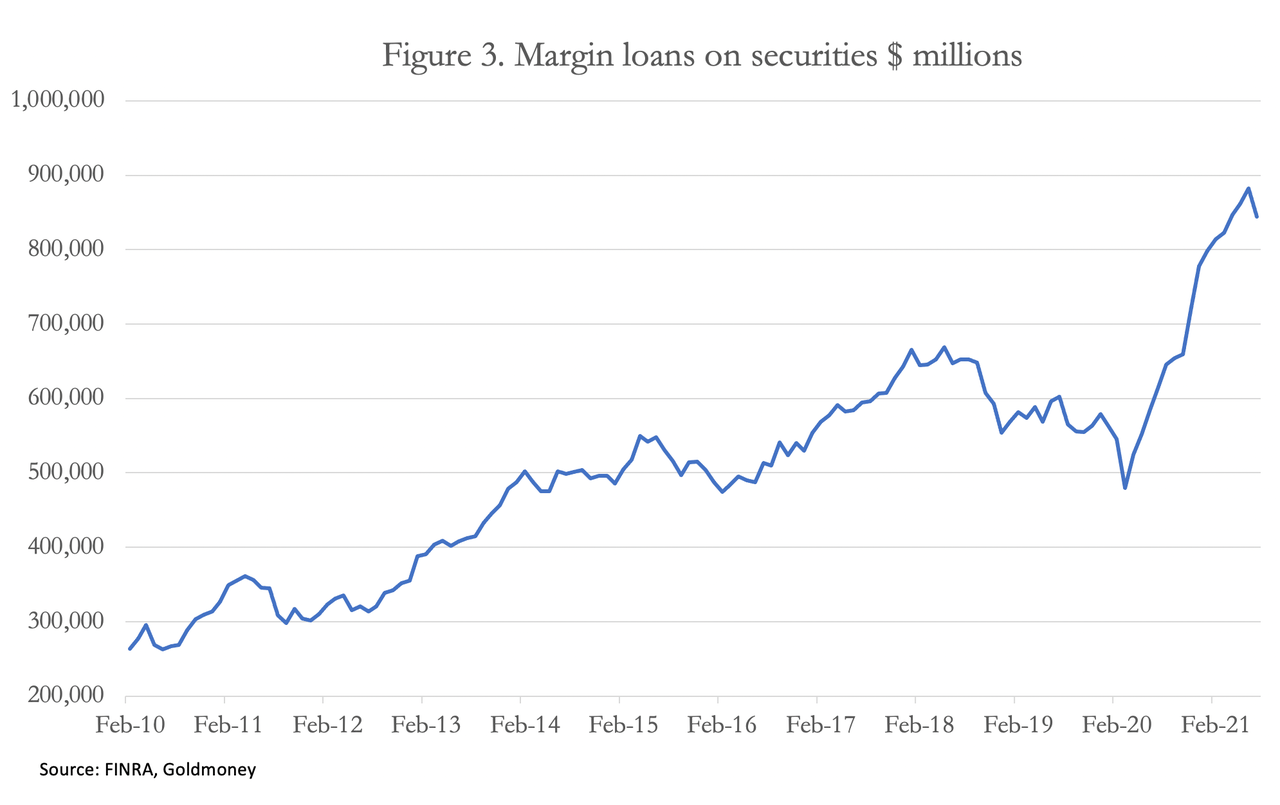
The change that we have seen since the 1980s is that the expansion of credit has increasingly shifted from non-financial borrowers to financing purely financial activities. This does not invalidate systemic risk from lending cycles; rather, it alters its character. Lending to customers to speculate in financial assets while taking in those assets as loan collateral is one example of how this risk is likely to materialise, which when interest rates increase — the inevitable consequence of a prior increase in circulating currency — will force bankers to liquidate loans to protect their own capital.

Figure 3 shows the recent level of investor leverage, which at the end of July stood at $844bn, which represents the initial margin calls that will occur in a market downturn.

Another aspect of the current situation stems from the leverage given to capital issues of debt outside the banking system by the increase in bank deposits. Figure 4 below shows the summation of bonds and bank credit. Including bank credit, total US dollar debt will shortly exceed $100 trillion if it hasn’t already.
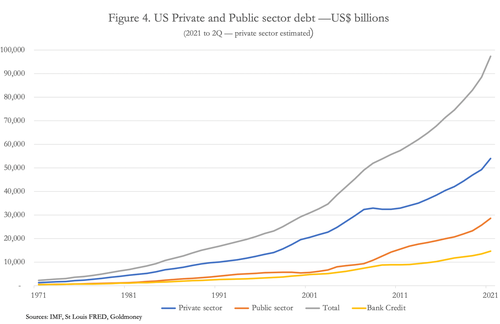
Debt is not a problem so long as it is productive, and overall it increases at a stable rate. Neither is true today. Private sector debt is increasingly used for ephemeral consumption and to prop up zombie corporations and their malinvestments. Government debt is rapidly increasing on the back of escalating statist social responsibilities and self-serving cheap borrowing costs. A projection of debt levels into the future is unlikely to see any diminution of the pace of its increase, with a further acceleration appearing to be more likely. And this is only the on-balance sheet evidence.

Shadow banking

Banking and debt statistics exclude shadow banking — including but by no means limited to non-bank mortgage lending, leveraged lending, student lending and some consumer lending (according to Jamie Dimon in his 2019 annual letter to JPMorgan Chase’s shareholders) for which there are no reliable estimates. A figure of $52 trillion in 2018 has been suggested in the media.

Shadow banking refers to financial businesses that are not regulated as conventional banks and which originate or act as intermediaries in lending money, such as payday lenders, hedge funds, insurance companies, asset managers, credit card providers, payment systems, mortgage servicers, and even auctioneers who make loans to wealthy clients. More recently we can add stablecoins. It is not clear to what extent shadow banking is funded by entities acting as agents for regulated banks and as arrangers of securitisations, such as the creation and funding of mortgage-backed securities. But it seems likely that significant quantities of shadow funding originate from credit additional to that recorded in licenced banks. A clear illustration would be the issuer of the stablecoin Tether, which runs a balance sheet similar to a central bank, with assets on one side and stablecoin currency tokens, nominally tied to the dollar by being the counterpart to dollar-denominated assets, as liabilities on the other.

The Financial Stability Board (a subset of the Bank for International Settlements) now uses the term non-bank financial intermediation as a substitute for shadow banking. The FSB’s last estimate of perhaps the most relevant category, other financial institutions’ (OFIs), in the US was estimated by the FSB to have assets of $30 trillion in 2018. We can reasonably add this to the $100 trillion of the outstanding currency and debt liabilities recorded in Figure 4, without allowing for any further growth in the last few years.

As a footnote, it is worth recording that financial leverage in some OFI categories can be extreme, imparting extra unaccounted systemic risk to the financial system. And in his letter to JPMorgan Chase shareholders referred to above, Dimon pointed out that when the next downturn begins, “Banks will be constrained — both psychologically and by new regulations — from lending freely into the marketplace, as many of us did in 2008 and 2009. New regulations mean that banks will have to retain liquidity going into a downturn, be prepared for the impacts of even tougher stress tests and hold more capital…. In the next financial crisis, JPMorgan Chase will simply be unable to take some of the actions we took in 2008…

It is alarming to think that the Fed’s reliance on commercial banks pulling together to prevent a financial crisis bankrupting financial and non-financial businesses, such as was dramatically achieved following the Lehman failure, will not be available to central banks today due to tighter regulations. To further illustrate the point, Dimon might add today that the risk weighted asset provisions of Basel 3, due to apply from 2023 will require banks to increase their equity capital even more; or alternatively, reduce their balance sheet exposure.

In summary, quantifying shadow banking in the context of additional debt and currency to that recorded officially is like trying to nail a jelly to the wall. But there is no doubt that the figure is substantial and there are systemic risks in the sector in addition to the official banking system. And even on a conservative assumption, in the US it is 50% larger than regulated banking activities.

The inevitability of rising interest rates

The consequences for the purchasing power of an accelerating rate of inflation of credit and currency are manifest in rising commodity prices, rising manufacturing price inputs and rising consumer prices themselves. The US’s official CPI has risen by 5.4% over the last year, and despite the fervent hopes of the Fed’s FOMC members shows no sign of abating. Shadowstats calculates the true increase at 13.4%.

In truth, changes in the general price level cannot be calculated, being no more than a concept. But what we can say is that the purchasing power of the dollar is probably falling at a rate faster than 10% annualised, and given the continuing inflation of credit, it is unlikely to stabilise in the foreseeable future. If the Fed is unable to raise interest rates sufficiently to stem it, the rate of decline for the dollar in terms of its purchasing power is likely to accelerate. In short, interest rates are bound to rise by more than a trivial amount.

Instead of facing this reality, the Fed is dismissing rising prices by claiming that they are due to temporary factors. Furthermore, there are now signs that the US and other economies are either stalling or slowing after an initial bounce, which encourages central bankers to hope that pressure for prices to rise further will subside. But on examination it is an argument that barely holds water.

Behind the error is a belief that price rises are predominantly caused by increasing demand, and that overall demand has been temporarily boosted by the ending of coronavirus lockdowns at a time of supply disruption. But there is an inconvenient truth to consider. Possibly other than some short-term countertrend effects, there is no recorded instance of a substantial monetary debasement that has not led to significantly higher prices, particularly for essentials such as food and energy, while at the same time economic activity enters a significant downturn. The reason is simple: currency debasement transfers wealth, and therefore buying power in real terms, from its users to the issuer, impoverishing the former and benefiting the latter. Everyone with a salary and savings suffers a reduction in their real values, while the state and the early receivers of the newly-issued currency get the benefit.

Therefore, driven by a falling purchasing power for the currency on the back of an inflation of its quantity, we will either see a further substantial fall in the dollar’s purchasing power, fully reflecting its dilution, or we will see a rise in interest rates which may or may not be sufficient to encourage holders not to dispose of the currency immediately. The group most likely to dump the dollar first is foreign holders, who currently hold dollar deposits and financial assets totalling over $30 trillion. But the foreigners’ problem is that with all fiat currencies tied to the dollar as their reserve currency, there is no alternative sounder currency in exchange. Consequently, the loss of all currencies’ purchasing power will be reflected in commodity prices and the prices of everything else.

Driven by neo-Keynesian beliefs, central banks will be conflicted between maintaining easy monetary policies to support economic activity, and raising interest rates to combat rising prices by supporting their currencies. The history of similar instances tells us that they are likely to err in favour of suppressing interest rates, and even supporting price controls rather than raising interest rates sufficiently. It is not because the monetary authorities necessarily believe in these measures — it’s just they will see no alternative.

There is bound to come a point where the monetary authorities lose control over interest rates, and if it has not yet occurred by then, control over markets themselves. They will then find it increasingly difficult to fund government budget deficits. And with the outlook being for ever higher prices, despite price controls (if they are introduced) the pressure for financial asset values to decline will be set to overwhelm all attempts by the authorities to support them. There is no doubt that bonds and equities are in a bubble to end all bubbles, priced based on zero, and in many cases negative interest rates. Never in the course of financial history has a bubble burst on such excessive valuations.

Returning to the dollar, if Shadowstats estimate of price inflation at over 13% is correct, then the recognition of the true loss of the dollar’s purchasing power in the domestic economy will be that all financial assets are horribly mispriced as well. The reality will then dawn on market participants about the true state of government finances. In America, net interest will rise from the CBO’s estimate of $331bn to close to a trillion and then two the following year, because of the relatively short-term average maturity profile of USG debt.

Tapering QE will not be possible

As if to illustrate the confusion on Wall Street and in the FOMC, there is talk of introducing a taper of quantitative easing in the fourth quarter of this year or early in 2022. But other than reflecting zero interest rates, the reason markets are at current levels of overvaluation is because of the monthly injection of $120bn QE into pension funds and insurance companies in return for government and agency debt. They invest the cash in riskier bonds and equities. Any attempt by the Fed to ween them off this monthly injection will make markets fall, something which the authorities have been keen to avoid. There can only be one of two conclusions: either the FOMC members do not understand the true purpose of QE (which is unlikely) or they are bluffing. The bluff must be to pretend that economic conditions have improved enough to support markets without as much as $120bn monthly being injected into them, without any actual intention of tapering.

More realistically, when the interest rate outlook clarifies into one where the risk is of significant increases, the Fed may be forced into increasing QE substantially to support equities and ensure bond yields remain suppressed.

The fates of financial assets and fiat currencies are joined at the hip

In this article, we have seen that all currency is the result of credit expansion either by the central bank or by the banking system. And to the latter, we must add the shadow banks who similarly create credit with matching deposit entitlements. We have focused on the dollar because it is the reserve currency. But all other currencies have the same fiat characteristics and none of them have a sound money alternative underpinning them or available to the public in the form of gold coin.

We have noted that financial assets owe their current valuations to zero or even negative rates, and that prices are further supported by QE, which in the US at $120bn every month amounts to nearly two trillion dollars since March 2020. Some other jurisdictions have aggressive QE programmes, notably the Japanese, but it is the US that matters because global capital markets take their cue from those of the US.

At some stage soon, due to imminently rising interest rates and/or a further acceleration in the declining purchasing power of the dollar, financial asset values are bound to face a sharp contraction. The one topic we haven’t explored is the relationship between falling asset values and their effect on the fiat currency.

In the initial stages of a market bubble bursting, there is a dash for cash. Investors will try to rescue what they can by selling, and we can be certain that the lenders providing margin loans will be calling them in and causing further selling. We can therefore expect a currency to remain steady, perhaps rising slightly on the foreign exchanges (depending on the counter-acting degree of foreign liquidation) while bond yields begin to rise, and stock prices fall.

We then enter a second phase, when banks begin to call in loans more widely, because collateral values have fallen, and loans not related to market speculation are no longer secured. Both the asset and liability sides of bank balance sheets will contract through a combination of non-performing loans being written off and loans being successfully called in. Dollar debt, totalling at our estimate as much as $130 trillion will be under threat for all holders of it, and their losses will be substantial. And for those with debt obligations, who for too long have become accustomed to very low, suppressed bond yields, their economic calculations will have become seriously undermined.

The response from central banks can only be to rapidly increase their balance sheets to compensate for the losses in the commercial banks, flooding the financial system with extra deposits to bolster bank reserves. It will take many trillions of dollars to stabilise a tottering $130 trillion mountain of debt and its matching credit, and the equivalent task for central banks managing all the other major currencies, to stop the global banking system from going under. The collapse in the purchasing power of all currencies will then resume with a vengeance, because attempts to stop bank credit and deposits liquidating into a black hole of currency destruction can only accelerate.

Tyler Durden
Sat, 08/21/2021 – 23:30

via ZeroHedge News https://ift.tt/3D6oOxY Tyler Durden

Fed’s Jackson Hole Meeting Takes Place In The Country’s Wealthiest County

Fed’s Jackson Hole Meeting Takes Place In The Country’s Wealthiest County

What better place for the Fed to have their annual company picnic than at the apex of the country’s wealth inequality gap?

That’s exactly what they’ll be doing when they meet at Jackson Hole next week. It is located in Teton County, which has the “nation’s highest per-capita income from assets”, according to Bloomberg.

How fitting.

A study by the Economic Innovation Group points out that Jackson Hole has attracted the “ultra-rich” in recent years and that the “gap between counties with the lowest and highest asset income per capita rose sixfold between 1990 and 2019”.

The study looked specifically at “income from assets”, which excludes wages and government assistance. This category of wealth has skyrocketed in places like New York City and the San Francisco Bay Area.

In Manhattan, for example, asset income per capita of about $64,200 is 13 times that in the Bronx, the report notes. 

The county with the lowest asset income per capita is in South Dakota. Coming in at $2,800 per person, the number is about just 33% of the nationwide average. 

Kenan Fikri, research director at EIG, commented: “I was pretty shocked that so much of the country has derived so little benefit from the boom in asset prices and asset values that we’ve seen over the past couple of decades.”

People with large assets bases are disproportionately the beneficiaries of Fed policy, while those working a normal 9-5 are left brutalized by the inflation the Fed leaves in its wake.

Only 15% of households own stocks and about 13% of households own business equity or a second residential property.

Fikri concluded that even though “the condition of being poor today is better than it was in 1970,” some still don’t have access to “avenues for wealth creation.”

We can’t wait to see what new techniques the Fed comes up with for prying the wealth gap open even further after their meeting next. 

Tyler Durden
Sat, 08/21/2021 – 23:00

via ZeroHedge News https://ift.tt/382UGFz Tyler Durden

Assange Described A Decade Ago How ‘Endless’ Afghan War Was Engineered By “Transnational Security Elite”

Assange Described A Decade Ago How ‘Endless’ Afghan War Was Engineered By “Transnational Security Elite”

Authored by Jessica Corbett via Common Dreams & Consortium News,

As the hawks who have been lying about the US invasion and occupation of Afghanistan for two decades continue to peddle fantasies in the midst of a Taliban takeover and American evacuation of Kabul, progressive critics on Tuesday reminded the world who has benefited from the “endless war.” “Entrenching U.S. forces in Afghanistan was the military-industrial complex’s business plan for 20+ years,” declared the Washington, D.C.-based advocacy group Public Citizen.

“Hawks and defense contractors co-opted the needs of the Afghan people in order to line their own pockets,” the group added. “Never has it been more important to end war profiteering.”

In a Tuesday morning tweet, Public Citizen highlighted returns on defense stocks over the past 20 years — as calculated in a “jaw-dropping” analysis by The Intercept — and asserted that “the military-industrial complex got exactly what it wanted out of this war.”

The Intercept‘s Jon Schwarz examined returns on stocks of the five biggest defense contractors: Boeing, Raytheon, Lockheed Martin, Northrop Grumman, and General Dynamics.

Schwarz found that a $10,000 investment in stock evenly split across those five companies on the day in 2001 that then-President Georg W. Bush signed the authorization preceding the US invasion would be worth $97,295 this week, not adjusted for inflation, taxes, or fees.

U.S. Army photo

According to The Intercept:

“This is a far greater return than was available in the overall stock market over the same period. $10,000 invested in an S&P 500 index fund on September 18, 2001, would now be worth $61,613.

That is, defense stocks outperformed the stock market overall by 58% during the Afghanistan War.”

“These numbers suggest that it is incorrect to conclude that the Taliban’s immediate takeover of Afghanistan upon the U.S.’s departure means that the Afghanistan War was a failure,” Schwarz added. “On the contrary, from the perspective of some of the most powerful people in the U.S., it may have been an extraordinary success. Notably, the boards of directors of all five defense contractors include retired top-level military officers.”

“War profiteering isn’t new,” journalist Dina Sayedahmed said in response to the reporting, “but seeing the numbers on it is staggering.” Progressive political commentator and podcast host Krystal Ball used Schwarz’s findings to counter a key argument that’s been widely used to justify nearly 20 years of war.

“This is what it was really all about people,” she tweeted of the defense contractors’ returns. “Anyone who believes we were in Afghanistan to help women and girls is a liar or a fool.”

Jack Mirkinson wrote Monday for Discourse Blog that “it is unquestionably heartbreaking to think about what the Taliban might inflict on women and girls, but let us dispense with this fantasy that the U.S. has been in Afghanistan to support women, or to build democracy, or to strengthen Afghan institutions, or any of the other lines that are deployed whenever someone has the temerity to suggest that endless war and occupation is a harmful thing.”

“We did not go into Afghanistan to support its people, and we did not stay in Afghanistan to support its people,” he added. “It is astonishing, given what we know about the monsters that the U.S. has propped up time and time againaround the world, that the myth persists that we do anything out of our love for human rights. We went in and we stayed in for the same reason: the American empire is a force that must remain in perpetual motion.”

As Common Dreams reported Monday, while the Taliban has retaken control, anti-war advocates have argued diplomacy is the only path to long-term peace, with Project South’s Azadeh Shahshahani emphasizing that “the only ones who benefited from the U.S. war on Afghanistan were war-profiteering politicians and corporations while countless lives were destroyed.”

Responding to Shahshahani’s tweet about who has benefited from two decades of bloodshed, Zack Kopplin of the Government Accountability Project wrote, “Adding war-profiteering generals to the mix too.”

Tyler Durden
Sat, 08/21/2021 – 22:30

via ZeroHedge News https://ift.tt/3j8080a Tyler Durden

School Board Recall Attempts Surge in 2021 Amid COVID Closures & CRT Fears

School Board Recall Attempts Surge in 2021 Amid COVID Closures & CRT Fears

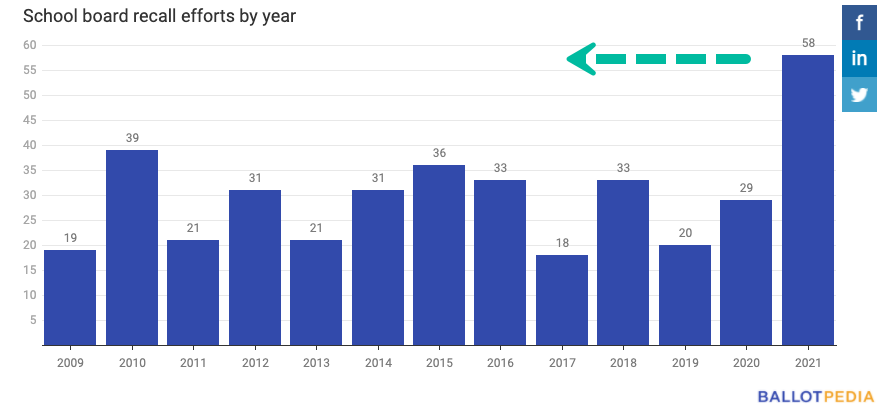
As summer enters the final stretch and the fall school year is about to begin, the supposed quietest part of the year has been anything but for school boards across the country, according to Ballotpedia.

School board recalls, the process of removing a member or members of a school board from office through a petitioned election, have surged this summer to record-highs as schools are caught in the crosshairs of culture wars. 

Many issues have parents across the country in an uproar, such as critical race theory (CRT), virus restrictions, and transgender rights. School officials have found themselves bombarded by angry parents who say CRT is poisoning the minds of their kids. In response, school board recall efforts are sweeping the country. 

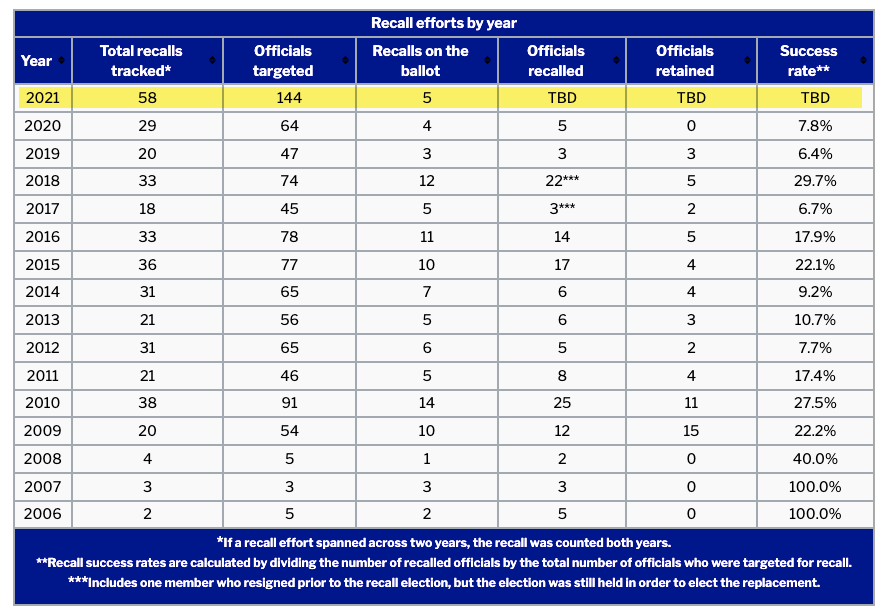
So far, 58 recall efforts against 144 board members have taken place in 2021, a record high dating back to 2009. 

Ballotpedia lists most of the recall efforts as “underway.” Some have been followed by “did not go to vote.” Only one school board member has been removed this year. Here’s a partial list: 

The table provides a breakdown of how many officials were targeted and recalled and includes the recall success rate for each year. This year’s rate has yet to be determined. 

The growing trend in recall efforts is expected to increase as grassroots efforts by parents and teachers are popping up all across the country. They are absolutely sick of school boards pushing a politicized curriculum that is dividing the county. 

A non-partisan effort to recall the Loudoun County School Board in Ashburn, Virginia, called “Fight For Schools” is underway. 

Even teachers have had enough of the liberal’s force-feeding children garbage at their most critical learning stages in life. 

Here’s a Loudoun teacher quitting in front of the school board because she doesn’t believe in CRT. 

Here’s another recall to replace the school board of Fairfax County Public Schools. 

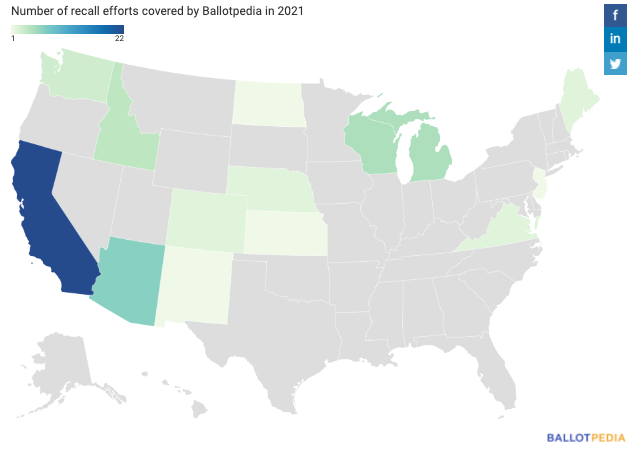
Ballotpedia shows the hotbed for recalls is California, with over 22 this year. 

Besides CRT, parents are also up in arms about virus restrictions at schools. Listen to this San Diegonian parent who spits truth bombs about COVID to the local school board. 

This parent is furious. 

While most recalls are underway, some have failed. However, the trend appears to be growing as parents wake up to the liberal madness of CRT being embedded into curriculums and how it’s poisoning the youth’s minds by advocating for more division.

Tyler Durden
Sat, 08/21/2021 – 22:00

via ZeroHedge News https://ift.tt/3muzWie Tyler Durden

Snyder: What Is America Going To Look Like If This Continues?

Snyder: What Is America Going To Look Like If This Continues?

Authored by Michael Snyder via The Economic Collapse blog,

You can’t have a civilization without civility.  We may possess technology that is more advanced than any previous generation of Americans has had, but when it comes to how we treat one another and how we conduct ourselves, we are the worst generation in U.S. history by a very wide margin.  We have truly become a “Hollywood culture”, and I don’t mean that in a good way.  The average American spends 238 minutes a day watching television, and it is inevitable that putting so much garbage into our minds is going to result in garbage coming out.  Most Americans learn how to express themselves by emulating what they see on their screens, and so now we have tens of millions of extremely crude people running around all over the place.

If you spend any time in public at all, you know exactly what I am talking about.  Most Americans dress like slobs, act like pigs and endlessly spew profanity wherever they go.

This is something that Mark H. Creech discussed in an article that he published this week

While at the grocery store this week, a woman was ahead of me in the checkout line using the word, “Mother F&*#@%.” To the left of me, in another line, was a different woman on her cell phone. I could overhear her saying to someone, “F&$#” this, and “F*#@” that. I felt that I was drowning in a cesspool of profanity.

Recently, my wife said she was in the checkout line at Walmart, and a man was using such language without any inhibitions. Not being the kind of person to hold back, Kim said to him, “Sir, would you please not use that language? There are children present.” To which the man defiantly replied, “No!” His companion then backhanded him on the arm and said to, “Cut it out.” That was the end of it.

Sadly, it has gotten to a point where even our national leaders are not afraid to use profanity.

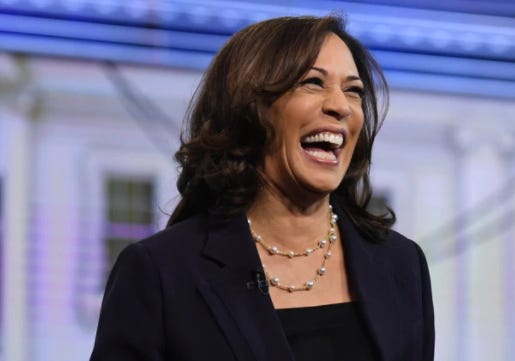
Earlier this week, it was being reported that Kamala Harris used profanity while engaged in a heated discussion about the crisis in Afghanistan…

Vice President Kamala Harris reportedly refused to stand alongside Joe Biden as he addressed the nation on the Afghanistan chaos, allegedly saying “you will not pin this shit on me” despite her massive role in Biden’s US troop withdrawal decision.

Before Biden gave an 18 minute speech to justify his decision to withdraw US troops from Afghanistan as the Taliban took over the country, Kamala Harris reportedly refused to stand alongside him as he spoke. “You will not pin this shit on me,” Harris reportedly said. However in April, Harris had bragged that she played a key role in Biden’s decision to withdraw, as was reported by Politico. She even confirmed that she was the last person in the room with the President during the major discussion regarding his decision to pull out US troops by September 11.

And profane language that Joe Biden once used about Afghanistan received renewed attention this week because of the drama unfolding in Kabul…

According to Holbrooke, when Biden was asked about America’s obligation to maintain their presence in Afghanistan to protect vulnerable civilians, he scornfully replied by referencing the US exit from southeast Asia in 1973.

‘**** that, we don’t have to worry about that. We did it in Vietnam, Nixon and Kissinger got away with it.’

Of course foul language is not just limited to one side of the aisle.

Our leaders like to consider themselves the pinnacle of civilization, and they have often criticized the Taliban for tearing down historical statues and forcing women to wear masks.

But over the past year, far more statues have been torn down inside the United States than the Taliban ever dreamed of tearing down, and at this point we are forcing everyone to wear masks.

Critics say that the Taliban does not allow freedom of speech, but when Taliban officials were asked about this they simply pointed out that Facebook is even worse when it comes to freedom of speech.

And they are right.

Critics say that the Taliban treats women horribly, and that is certainly true.

But women are treated shamefully in our nation too.  Here is one example

A creep groped a woman on a Brooklyn street this week — and then pummeled her when she tried to fight back, disturbing new video shows.

The 26-year-old woman was walking at the corner of South 4th Street and Havemeyer Street in Williamsburg around 2:15 a.m. Saturday when a stranger approached from behind and grabbed her buttocks, video released by cops early Tuesday shows.

When the woman attempted to slap the suspect, he socked her in the face multiple times, the clip shows.

And here is another example

The woman and her boyfriend were on their way to the Chicago Transit Authority Red Line subway at State Street and Jackson Boulevard Saturday night. They were waiting for the elevator at ground level to go down to the platform.

But they never made it. Instead, trouble found them, surrounded them, and attacked them.

They were viciously assaulted by a large gang of teens, and the woman was pummeled so badly that she actually needs plastic surgery

“I need plastic surgery, because the bones are broke, and still bleeding inside,” the woman said.

The scars and bruising are concealed behind the shades the woman now wears over her eyes. But the pain is deeper.

Murder rates were way up all over the country last year, and they are way up again all over the country this year.

We have become a brutal, violent, blood-soaked country, and that is because we have a brutal, violent, blood-soaked culture.

At one time the U.S. could lecture the rest of the world about morality because we lived in a civilized society.  But now we have lost whatever moral high ground we once possessed, and at this point we need the rest of the world to lecture us.

So what is going to happen as the thin veneer of civilization that we all take for granted on a daily basis continues to steadily disappear? 

I am deeply, deeply concerned about our future, and this is a theme that I explored in my new book entitled “7 Year Apocalypse”

We are in a highly advanced state of social decay, and it is getting worse with each passing year.

In recent days, I have heard so much criticism of the Taliban’s culture, and many of those criticisms are right on target.

But our culture is detestable too, and it has become that way because of the choices that we have made as a society.

*  *  *

It is finally here! Michael’s new book entitled “7 Year Apocalypse” is now available in paperback and for the Kindle on Amazon.

Tyler Durden
Sat, 08/21/2021 – 21:30

via ZeroHedge News https://ift.tt/2Wcx3b4 Tyler Durden

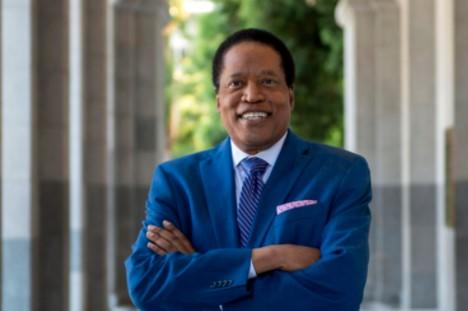
LA Times Dubs CA Recall Frontrunner Larry Elder “The Black Face Of White Supremacy”

LA Times Dubs CA Recall Frontrunner Larry Elder “The Black Face Of White Supremacy”

If you’re looking for proof positive that Larry Elder is making progress toward winning California’s recall election, look no further than the LA Times.

The paper published a column on Friday claiming that longtime conservative, Fox News contributor and syndicated talk radio host Elder “is the Black face of white supremacy”.

Columnist Erika D. Smith wrote: “Few things infuriate me more than watching a Black person use willful blindness and cherry-picked facts to make overly simplistic arguments that whitewash the complex problems that come along with being Black in America.”

Despite ostensibly representing the political party of equality and being anti-racist, Smith’s arguments against Elder seemed to mostly focus on his race: “Like a lot of Black people, though, I’ve learned that it’s often best just to ignore people like Elder. People who are — as my dad used to say — skin folk, but not necessarily kin folk.”

Just another run of the mill white supremacist…

Melina Abdullah, cofounder of Black Lives Matter Los Angeles, even chimed in: “He is a danger, a clear and present danger.”

Abdullah continued: “Anytime you put a Black face on white supremacy, which is what Larry Elder is, there are people who will utilize that as an opportunity to deny white supremacy. They say, ‘How could this be white supremacy? This is a Black man.’ But everything that he’s pushing, everything that he stands for, he is advancing white supremacy.”

So, we guess not all Black Lives Matter, then?

Earl Ofari Hutchinson, a political analyst and author, made the most astute observation, despite likely trying to argue a different point: “The only positive I see in an Elder candidacy is that it is yet another wake-up call for Democrats, in California and nationally, to not take Black and people of color’s votes and support for granted.”

Elder seemed to take the jab in jest this weekend, Tweeting: “You’ve got to be real scared and desperate to play the race card against the brother from South Central.”

Tyler Durden
Sat, 08/21/2021 – 21:00

via ZeroHedge News https://ift.tt/3B2UpyM Tyler Durden

Pentagon Confirms Americans Have Been Beaten In Afghanistan

Pentagon Confirms Americans Have Been Beaten In Afghanistan

By Zachary Stieber of Epoch Times

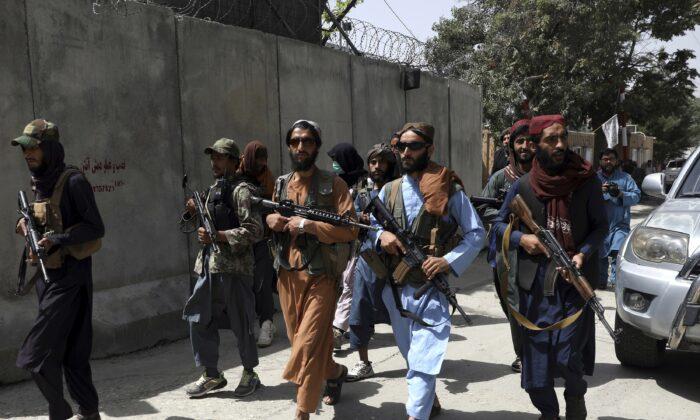
Taliban terrorists patrol in a neighborhood in Kabul, Afghanistan, on Aug. 18, 2021.

Americans have been beaten in Afghanistan, a U.S. military official said Saturday. A day after he said the military was aware of reports that Americans were beaten by Taliban terrorists, Pentagon press secretary John Kirby said that “we know of a small number of cases where some Americans … have been harassed, and in some cases, beaten.”

“We don’t believe it’s a very large number, and most Americans who have their credentials with them are being allowed through the Taliban checkpoints,” he added.

The stunning admission came as the U.S. Embassy warned Americans against traveling to the U.S.-held airport in Kabul, where thousands of people are trying to enter to escape the country before American troops leave.

The United States is openly working with the Taliban to facilitate the evacuation, and Taliban militants control all of the ground around the exterior of the airport. President Joe Biden said Friday that the United States was in “constant communication” with the Taliban, which is designated as a terrorist group by a number of countries.

The U.S. military has largely chosen not to conduct operations outside the airport, leaving Americans and Afghans to fend for themselves until they reach the facility.

Defense Secretary Lloyd Austin told members of Congress in a call Friday that violence against Americans “is unacceptable,” Kirby said Saturday.And U.S. commanders have conveyed the same message to Taliban commanders, he said.

“We’ve been in touch with the Taliban for quite some time, I think, over the course of the last week. And we’ve certainly made our concerns known,” Kirby said.

According to the military spokesman, word had not filtered down from Taliban leadership to every individual militant.

“What appears to be happening is that not every Taliban fighter either got the word or decided to obey the word,” he said.

The revelation came as a growing number of Republicans called for more decisive action from the Biden administration, which both parties have said has botched the withdrawal from Afghanistan.

“Instead of going out there and making the Taliban our hostages, right now America is on day seven, day eight of the Afghanistan hostage crisis for us,” Rep. Brian Mast (R-Fla.), a military veteran, said on Fox News on Friday. “And until we flip that scenario back to where it was prior to this, we can’t safely get our people out.”

“Biden’s failed Afghanistan withdrawal has put thousands of American lives in danger behind enemy lines,” added Sen. Rick Scott (R-Fla.), who is trying to impeach Biden, on Twitter on Saturday. “The Taliban is beating Americans but Biden is still relying on & trusting them. He is incompetent, unhinged, incoherent & unfit.”

Military officials said the focus remains on keeping the airport secure and evacuating people who can make it there.

“The military mission that we are executing now is a noncombatant evacuation operation,” Kirby said. “We’re fighting against both time and space. That’s the race that we’re in right now,” he added later.

Tyler Durden
Sat, 08/21/2021 – 20:30

via ZeroHedge News https://ift.tt/3Da3rvE Tyler Durden

Beware An “Instability Cascade”: One Bank Warns That Stocks Are About To Hit Record Fragility

Beware An “Instability Cascade”: One Bank Warns That Stocks Are About To Hit Record Fragility

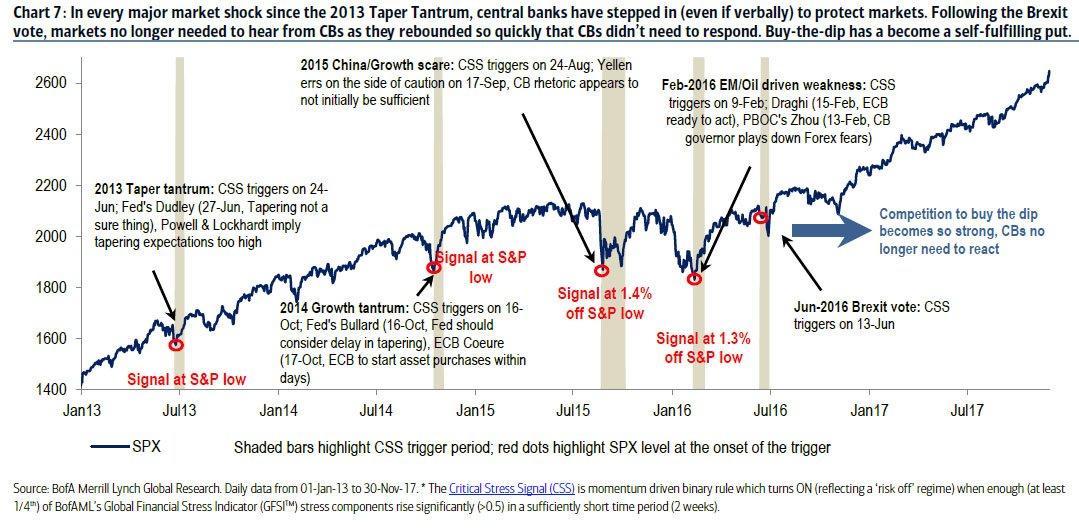
Back in late 2017, Bank of America’s derivatives strategists made a remarkable, if hardly original, observation – the bank said what everyone knew but was afraid to voice namely, that “In Every Market Shock Since 2013 Central Banks Have Stepped In To Protect Markets.”

Since then, the market’s Pavlovian response to unconditional central bank intervention has gotten so embedded in the collective trader psyche that neither fundamentals, nor adverse news matter any more as everyone is convinced that central banks will step in the moment there is another dip in risk assets. In fact, on Friday another BofA strategist, Michael Hartnett, wrote that in the past 18 months “the Fed has bought $4 trillion bonds, twice the amount the US spent on War in Afghanistan past 20 years as it, and other global central banks, have spent $834 million every hour buying bonds since COVID.” Add to this that the US government has spent $875 million every hour in ’21 and one gets a staggering number of $1.7 billion spent between central banks and the US government to prevent even a modest market correction.

As Hartnett put it, “little wonder everyone believes in TINA & BTD.”

Little doubt indeed, and that’s why we now live in a world where a 1% “drop” in the market is considered a biddable dip.

There is just one problem with this Pavlovian approach to “investing” in manipulated markets: as Bank of America also explained back in 2017, indiscriminate dip-buying leads to unprecedented fragility and risks of a crash so powerful not even the Fed will be able to reverse it.

Incidentally, that was the subtext of observations published yesterday by Goldman’s derivatives strategist Rocky Fishman who observed several increasingly alarming trends in the options market, most notably the gaping chasm that has opened between realized and implied vol, not just spot by 1 year forward. As Fishman noted, “the one-year VIX index has risen to 26 — close to the top of its Q2/Q3 range, well above spot, though below its Q1 median of 28.” As Fishman noted, “since 1940, the only times the S&P 500 has had realized volatility well above 26 for a full year have been around the 1987 crash, the GFC, and the coronavirus crisis.” This means that, all else equal, while stocks may be levitating ever higher on ever lower volumes and ever shrinking breadth, the options market is preparing for a crash similar to those observed on Black Monday, the Global Financial Crisis and the Covid Crash, which wiped out a third of market cap in days.

Of course, one wouldn’t know this by looking just at the S&P500 which on Friday again closed just a hair away below its all time high.

Which brings us back to the topic of market fragility, initially popularized by BofA back in 2017 and one which the bank’s derivatives team addressed again last week, noting that after the latest ramp higher which is on the verge of breaking core records, “history suggests caution against this calm backdrop, as similar periods of extremely steady grinds higher have preceded large fragility shocks.”

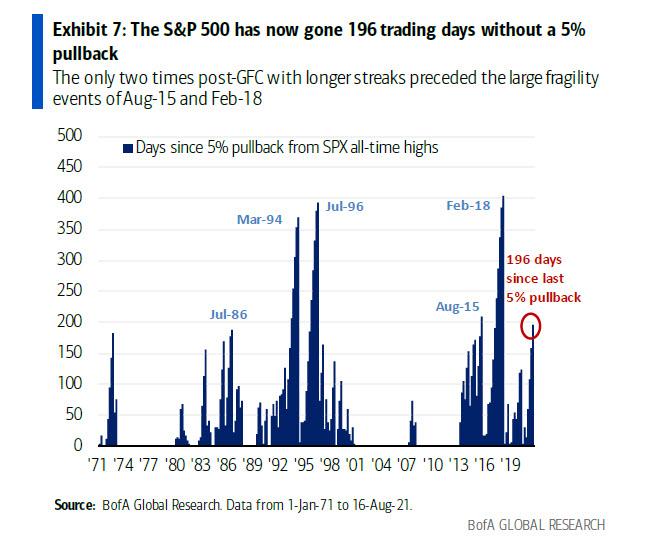
As BofA’s Benjamin Bowler writes, echoing many of the same observations made by Goldman’s Rocky Fishman, “swelling taper talk and the rise of the Delta variant have failed to make a meaningful mark this summer on the US equity market, which continues its steady drift higher at low realized vol.” To demonstrate this point, in the chart below Bowler and team show that the S&P has now gone 200 trading days (it was 196 as of Monday) without a 5% pullback, making this the 5th longest streak in 50yrs. Notably, in the post-GFC era, the two previous such streaks both ended in the “large fragility events” of the Aug 2015 yuan devaluation and the Feb 2018 Volmageddon.

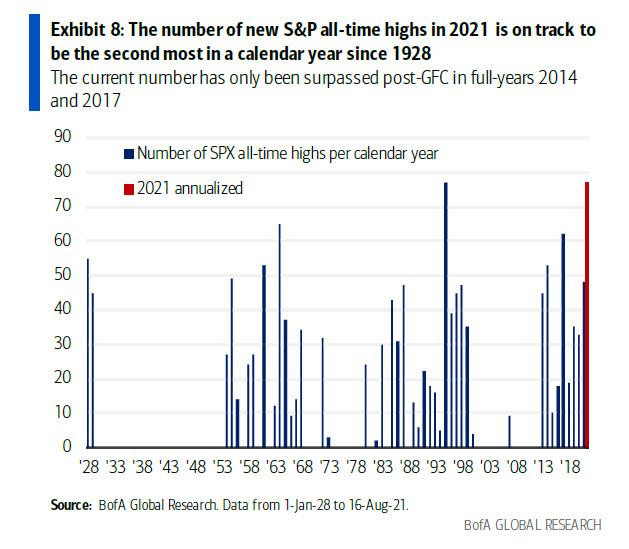
Meanwhile, underscoring the complacency in the market, the index is on track to a near-record number of all-time highs in 2021.

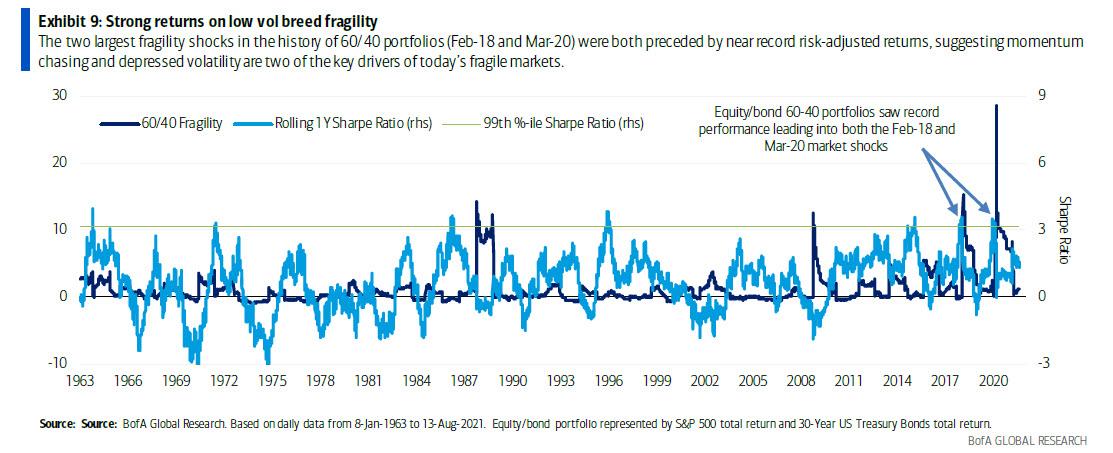
Expanding this analysis from stocks to balanced portfolios, BofA notes that the two largest fragility shocks in the history of 60/40 portfolios – Feb-18 and Mar-20 – were both preceded by near record risk-adjusted returns, similar to what we are seeing today, “suggesting momentum chasing and depressed volatility are two of the key drivers of today’s fragile markets.” Needless to say, while implied vol may be a somewhat elevated, realized vol is near record lows while momentum chasing… well, just take one look at what happens to any meme stock du jour.

The bottom line, as Bank of America concludes is that “history suggests caution against this calm backdrop, as similar periods of extremely steady grinds higher have preceded large fragility shocks.” Echoing what he wrote 4 years ago, Bowler repeats the most important mantra of modern markets, namely that “stability breeds fragility, particularly when (i) the stability is grounded in the tight grip of central banks, who force investors into low-conviction, momentum-driven positions, and (ii) those central banks turn less accommodative, a prospect that is now upon US investors.”

Bowler’s advice: watch Jackson Hole (26-Aug), August payrolls (3-Sep), and the 22-Sep FOMC meeting for potential risk off catalysts, although as the BofA strategist warns “fragility can also be triggered by seemingly innocuous events” when they reach a point of peak  instability, triggering a liquidation cascade.

Our only counterargument here is that even, or rather especially if, stocks indeed crumble as the market instability finally manifests itself into a selloff, the most likely outcome is that the Fed will step in even more forcefully, with many expecting that Powell will buy single stocks and equity ETFs during the next crisis, and thus refuse to sell expecting an even bigger bounce after the next Fed bailout. And since the Fed has now staked its entire reputation on not allowing what was once a market and is now merely a policy vehicle to give the impression that all is well, to crash ever again, these cynical skeptics are likely right inexpecting an even more powerful meltup just after the next crisis strikes.

Tyler Durden
Sat, 08/21/2021 – 20:00

via ZeroHedge News https://ift.tt/3z2FVhT Tyler Durden

After 4 Years Of Trying To Throw Out Trump, It May Actually Be Biden Who Doesn’t Finish His First Term

After 4 Years Of Trying To Throw Out Trump, It May Actually Be Biden Who Doesn’t Finish His First Term

(Authored by Quoth the Raven at QTR’s “Fringe Finance” blog: http://quoththeraven.substack.com)

After 4 years of hearing every possible reason as to why former President Trump should be thrown out of office, impeached, arrested or otherwise prevented from finishing his first term as President, it’ll be President Joe Biden that doesn’t finish his first term as President. At least, that’s my prediction.

I take zero pleasure in predicting this, not only because I don’t want President Biden’s health to deteriorate, no matter how much I disagree with his policy prescriptions, but also because I found Kamala Harris to be stunningly useless as Attorney General of California, phony and dislikable as a Presidential candidate and now simply incompetent and in over her head as Vice President. A growing number of Americans, a majority of which think she is “not fit to be President”, agree with me.

This isn’t a partisan analysis, either. I’m trying to make a prediction based on objective truths to arrive at the most likely outcome. You can make claims that this is a partisan swipe, but be reminded that I also accurately predicted that President Trump would not be re-elected just days into the Covid pandemic, specifically citing his “15 cases going to zero” response to pandemic as inept.

I made that criticism in a Periscope that has since disappeared into the bowels of the internet somewhere, but I also said it in February 2020 on Twitter.

I even predicted it before the press conference started that evening, before the “truth” about Covid was anywhere near the mainstream media and before the entire country went full-on scared shitless and slid face first down a slippery slope into an ocean of panicked reactionary responses based on “the science”.

In fact, for my misinformed critics out there who thought I was nothing but a mouthpiece for President Trump, here’s a great reminder of just how constantly I was mocking Trump’s response to Covid at first.

But now let’s turn to President Biden. Let this sink in: Joe Biden has only been President for 7 months out of a 4 year term. That means he has at least 39 more months where he needs to get up every single day and make calculated, critically thought out decisions as leader of the free world.

I’d be hard pressed to believe that, at this point, Biden can make a critically thought out decision about whether or not he wants waffles or eggs from the White House chef for breakfast, let alone decisions about foreign policy, how many more trillions of worthless U.S. dollars he wants to print out of thin air and spend under the guise of fighting whatever social cause is trendy this week, or national defense.

39 months is a long time for a President who appeared to barely be able to hold it together leading up to the election.

The simple fact is that questions about Biden’s mental fitness have bled into the mainstream ethos and are going to persist, and this risks becoming too big of a liability for the Democratic party.

The world’s most popular podcaster, Joe Rogan, commented this summer:

“We don’t really have a real leader in this country,” Rogan said. “Everybody knows he’s out of his mind. He’s barely hanging in there.”

As he did during his campaign, Biden still appears to be continuing his penchant for minimal press interaction and avoiding taking unscripted press questions, dispersing with what is usually a prerequisite for any President in a Democracy.

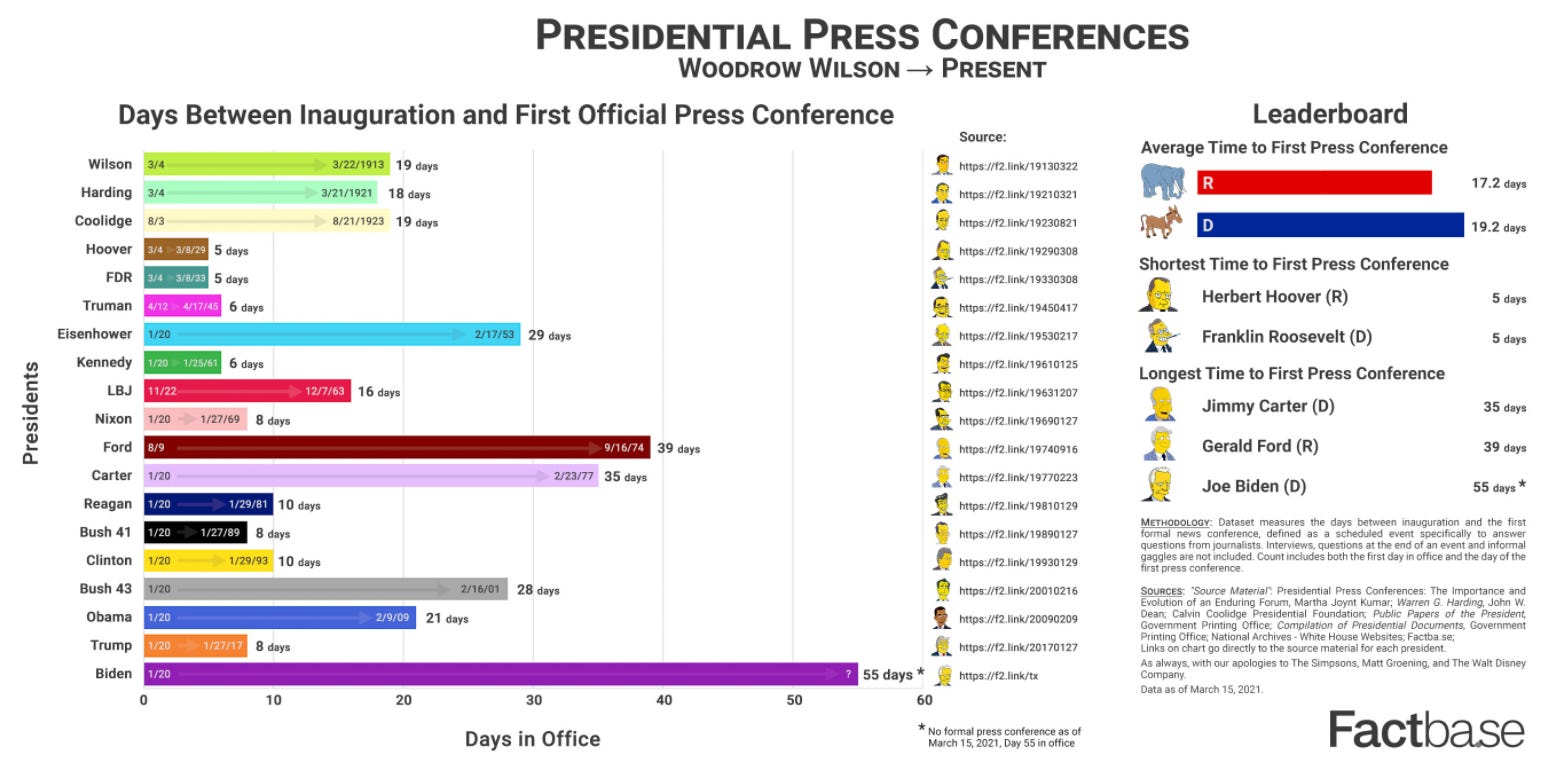
After being elected, Biden “waited longer than any president in the last 100 years to face reporters,” according to ABC news.


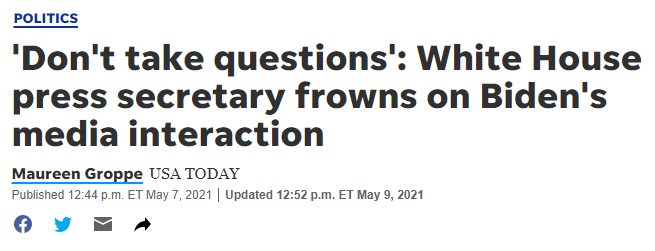
On the select days that Biden does make his way out in front of the podium now, the press is generally rushed out of the room without being allowed to ask questions. Biden’s own press secretary has even urged him not to take questions from journalists.

Then there’s the Afghanistan mess. Faced with the first real foreign policy decision of consequence since taking office, it has been nearly unanimously agreed upon that President Biden has botched the U.S. military’s exit from Afghanistan.

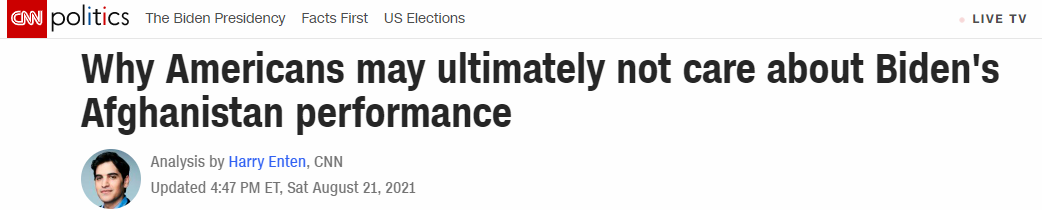
Even CNN was forced to admit, “The debacle of the US defeat and chaotic retreat in Afghanistan is a political disaster for Joe Biden, whose failure to orchestrate an urgent and orderly exit will further rock a presidency plagued by crises and stain his legacy.”

I knew Afghanistan was gut punch for the Democrats the second that CNN published “analysis” that the blunder, for some reason, wouldn’t matter to the American voter.

His handling of Afghanistan, as future issues will also do, led back to the unfortunate question of whether or not Biden is fit to be President. Is he now? Was he ever?

Douglas Murray touched on this in a wonderfully pointed op-ed for the Telegraph this weekend called “Biden was always unfit to be president but his Left-wing media cheerleaders didn’t dare admit it”. In it, Murray lays out the precise case of how the media chose to ignore the warning signs with Biden throughout the election, purely out of their distaste for Donald Trump.

Murray writes:

The world appears to have woken up to an important truth this week: which is that Joe Biden is a truly terrible president. It is a shame that it took America gifting Afghanistan back to the Taliban for so many people to realise this.

To be charitable, there were perhaps two reasons why this had not become more obvious before. The first is that Joe Biden is not Donald Trump and for a lot of the planet that seems to be recommendation enough to occupy the Oval Office. A break from the Trump show appealed to an awful lot of people.

But the second reason why too few realised what the world was going to get from a Biden presidency is that the US media simply didn’t ask the questions it needed to ask. Before the election a near entirety of the American media gave up covering it and simply campaigned for the Democrat nominee.

He said of Biden’s tenure thus far:

It is what you get when you have spent a career with a court media asking you about your choice of ice cream and reached the highest office in the land because you weren’t the other guy.

The world always gets serious again. And it just got serious on Biden’s watch and has shown something that should have been revealed during the primary season long ago: that the man who is now commander-in-chief is not remotely in command of his brief.

Not unlike how I knew Afghanistan may be a pressing issue for Biden’s team based on the media’s ridiculous claim that the American public may “not care” about the job he’s done, I feel that I now know his mental health is also becoming a gut punch, because it has become an issue of proactive defense for the left.

CNN wrote an article this weekend called “Republicans keep trying to make Biden’s mental capacity an issue,” as if questioning the mental fitness of a man who routinely can’t put a sentence together is somehow ageism or a political dirty trick.

Questions about Biden’s mental health “never really caught on”, CNN wrote.

Yeah, OK. Listen, CNN, let’s be real with each other here. Sometimes you have to call a spade a spade: Trump fucked up that Covid press conference and Joe Biden may or may not know what year it is or what planet he resides on.

Another development (and potentially the most disturbing to those laying the chalk that Biden is going to finish his term) is the fact that the mainstream media is turning on Biden slightly. In addition to CNN’s sporadic criticisms layered in between their Democratic excuse-making and spin, networks like ABC have also been committed to making sure Biden can’t lie his way out of the mess he is in, specifically with Afghanistan.

I think the DNC will have no choice but to realize that the mainstream narrative questioning Biden’s fitness is making its way to the American public. Rasmussen just released a new poll revealing that most Americans don’t think Biden is “mentally and physically capable of doing his job”.

A majority of voters don’t think President Joe Biden is mentally and physically capable of doing his job, and suspect the White House is actually being run by others.

A new Rasmussen Reports national telephone and online survey finds that only 39% of Likely U.S. Voters believe Biden is really doing the job of president – that’s down from 47% in March. A majority of voter (51%) now say others are making decisions for Biden behind the scenes. Another 10% are not sure. 

Documentary filmmaker Ami Horowitz also honed in on this sentiment days ago, claiming that the American public has “turned” on Joe Biden.

If the American public has truly turned on Biden, or is in the process of doing so, the Democratic party is going to have to step in and do damage control and crisis management. At some point, the party may realize that Biden is more of a liability for the party than an asset, and the Democrats may turn their focus to battening down the hatches as much as possible for 2024.

In my opinion, Democratic strategists should be working on this solution already, before the next public Biden gaffe forces their hand. If the party initiates an attempt to remove Biden from office, it’ll at least appear as though the party still maintains some control, despite its recent infighting between its socialists and moderates.

A crucial part of managing a crisis is getting ahead of it before it gets ahead of you. I think this is a concept Democrats may be reading about this weekend.

Gambling.com has Biden finishing his first term at just a 63% chance of occurring.

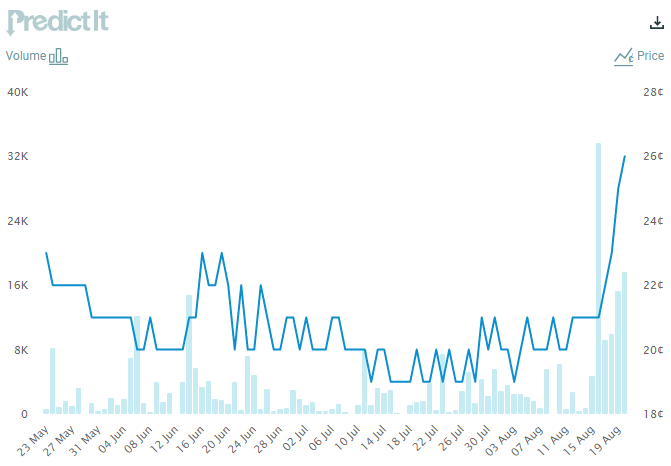
PredictIt has odds at $0.26 on the dollar that Biden will resign.

You can subscribe to QTR’s Fringe Finance newsletter here: http://quoththeraven.substack.com

Tyler Durden
Sat, 08/21/2021 – 19:30

via ZeroHedge News https://ift.tt/3j7Perg Tyler Durden