2/4/1824: Gibbons v. Ogden argued.
The post Today in Supreme Court History: February 4, 1824 appeared first on Reason.com.
from Latest – Reason.com https://ift.tt/7gWGTrm
via IFTTT
another site
2/4/1824: Gibbons v. Ogden argued.
The post Today in Supreme Court History: February 4, 1824 appeared first on Reason.com.
from Latest – Reason.com https://ift.tt/7gWGTrm
via IFTTT

After threatening to invoke the Insurrection Act to put down sometime-violent protests in Minneapolis with military force, President Donald Trump appears to have backed off, standing-down the troops slated for deployment. That’s a win for domestic peace, reducing the chances of worse conflict on city streets than we’ve already seen over the past year. It’s also a boon for taxpayers, given the high price tag—a half-billion dollars to date—that comes with deploying soldiers to patrol American communities.
In response to vigorous resistance to the Trump administration’s often-brutal immigration enforcement, the federal government several times deployed National Guard and active-duty military personnel to American cities. In the name of suppressing crime (in the nation’s capital) and protecting federal personnel and property, the president sent or attempted to send troops to Democrat-led cities including Chicago, Los Angeles, Memphis, Portland, Oregon, and Washington, D.C. The deployments look as much like schemes to humiliate the president’s political opponents as they resemble enforcement of federal policy.
Judicial responses to the deployments have been mixed, though leaning toward deep skepticism. A federal judge ruled that use of the National Guard and Marines in Los Angeles violated the Posse Comitatus Act, which restricts domestic use of the military. The U.S. Supreme Court blocked military deployments to Chicago, also with reference to the limited permissible use of the military. Now, with tensions rising, the White House looks to be pausing its efforts to militarize immigration enforcement.
Given the conflict we’ve already seen related to immigration enforcement, including the shooting deaths of Renee Good and Alex Pretti by federal agents, that’s a relief to those of us hoping to avoid worse social unrest and to avert—or at least delay—what appears to be a looming national cataclysm. But at a time of rising federal deficits and debt and semi-serious attempts to slash government expenditures, stepping back from sending troops into the streets could also save money.
“Since June 2025, the Administration has deployed National Guard personnel or active-duty Marine Corps personnel to six U.S. cities: Los Angeles, California; Washington, D.C.; Memphis, Tennessee; Portland, Oregon; Chicago, Illinois; and New Orleans, Louisiana,” the Congressional Budget Office (CBO) responded to a query from Sen. Jeff Merkley (D–Ore.). “The Administration has also kept 200 National Guard personnel mobilized in Texas after they left Chicago. CBO estimates that those deployments (excluding the one to New Orleans, which occurred at the end of the year) cost a total of approximately $496 million through the end of December 2025.”
The CBO analysis makes clear that calculating future costs is a bit speculative because of variables that are unknowable ahead of time. These include the size of potential troop deployments, duration of their stay, and expenses that might be greater or lesser depending on locations where troops could be sent. Also, legal challenges to the domestic use of the military might raise costs or lower them. That said, the CBO can look to costs incurred in 2025 and extrapolate to similar situations going forward.
“The factors CBO used to estimate the costs of deployments in 2025 suggest that continuing the ongoing deployments at their size as of the end of 2025 would cost $93 million per month,” the report noted. “More generally, deploying 1,000 National Guard personnel to a U.S. city in 2026 would cost $18 million to $21 million per month, depending mainly on the city’s cost of living.”
To arrive at its figures, the CBO looked at the cost of transporting, feeding, and lodging troops while they’re deployed. In the case of National Guard troops the costs are particularly high because they are added to the federal payroll, while active-duty personnel are already being paid.
“When National Guard members are called to federal service, they are compensated at the same rate as personnel in the military’s active component,” the report explained. “Using DoD’s 2025 budget documentation, CBO estimates that the increase in military personnel costs associated with activating National Guard troops—that is, the average increase in costs when changing Guard personnel from nonmobilized to mobilized status—is approximately $95,000 per person per year, or $260 per person per day.”
Those costs aren’t just a matter of pay; they also reflect the expense of benefits for Guard personnel and their dependents—healthcare, in particular—with such costs put at $9,100 per person per year, or $25 per person per day. Mobilizations, as the CBO points out, typically last longer than actual deployments. Each day Guard troops spend on duty brings them closer to qualifying for Veterans Administration benefits including education and disability (if they’re injured while in uniform).
These costs add up. While the CBO puts the costs of new urban deployments between $18 million and $21 million per month in each city, maintaining the nearly 3,000 troops currently deployed to pricey Washington, D.C. comes in at $55 million a month.
Basically, maintaining a domestic security force to enforce locally unpopular policies and to intimidate political enemies is really expensive. It’s an expense that raises tensions in a country already simmering with partisan hatreds, in which people openly discuss “national divorce” and don’t debate whether America’s near-term political future will be violent, but just how violent.
It shouldn’t be forgotten that deploying military troops to patrol our own communities is expensive in terms of life and liberty, foremost. The lives lost—in Minneapolis and elsewhere—to conflict between the public and federal agents underline that point. And imposing something akin to martial law inherently makes a place and its residents less free than they are in the absence of such an occupation. That can only be justified in the most extreme circumstances, when order has been lost—a point hard to argue when it’s the government and its agents who threaten order.
But at a time of a bloated federal government that spends wildly beyond its means, with the national debt at over $38 trillion and rising, it’s important to emphasize that military occupation of our own cities is very expensive. We can’t afford the government we have. Letting that government deploy troops to the streets is an unnecessary and unacceptable additional burden.
The post Deploying Troops to U.S. Cities Cost Half a Billion Dollars in 2025 appeared first on Reason.com.
from Latest – Reason.com https://ift.tt/Fj8hIEi
via IFTTT
2/4/1824: Gibbons v. Ogden argued.
The post Today in Supreme Court History: February 4, 1824 appeared first on Reason.com.
from Latest – Reason.com https://ift.tt/7gWGTrm
via IFTTT
Second Iranian Diplomat In Europe Defects, Seeks Asylum, Amid US Pressure Campaign
Trump’s repeated threats to bomb Iran seem to have resulted in some Iranian officials abandoning ship. There have been reports of two such recent instances.
In the latest, Iran’s chargé d’affaires in Vienna, Gholamreza Derikvand, abruptly abandoned his post and is reportedly seeking asylum in Switzerland for himself and his family.

The Iranian government has not confirmed this, however, and Iran’s Foreign Ministry has simply said amid the speculation of the diplomat’s sudden absence that it is “avoiding discussing the case or claiming ignorance due to fear of intelligence agencies.”
Derikvand’s colleagues told Iran International that Derikvand was widely seen as a rising figure within Iran’s diplomatic corps and could have been promoted to ambassador had he stayed on. His résumé includes a previous stint as chargé d’affaires at Iran’s embassy in the Czech Republic from 2011 to 2014.
The story broke Tuesday in Iran International – an online news portal which has long been accused of having links to Israel’s Mossad intelligence agency. This means all initial claims should be taken in context and with a critical eye.
Israeli media itself has reviewed of the London-based outlet falling under suspicion:
Iran’s Intelligence Ministry claimed to have found a broadcast studio belonging to London-based anti-regime outlet Iran International in Tel Aviv, Iranian media reported this week.
The ministry also claimed to have identified “a number of individuals working at, or with,” the outlet, as well as their alleged residences.
…Iran International is designated as a “terrorist broadcaster” by Tehran, which alleges that it works alongside Mossad to “destabilize” the Islamic Republic.
But as for an Iranian top-level diplomat defecting while the Islamic Republic faces massive US political and even military pressure – this makes sense and there is precedent, also on the heels of last month’s deadly protests in Iran where thousands died.
A prior alleged defection surfaced in headlines just last month, as Newsmax recalls:
The report follows another recent case in Switzerland involving an Iranian diplomat assigned to the United Nations’ European headquarters in Geneva.
On Jan. 18, Iran International reported that Alireza Jeyrani Hokmabad, described as a senior official and deputy head of Iran’s mission to U.N. agencies in Geneva, left his workplace and applied for asylum with his family.
If this becomes a trend, it would be highly embarrassing for the Iranian government and its diplomatic corps. This alone gives motive for Tehran wanting to keep it quiet, and so will probably hold off commenting.
Tyler Durden
Wed, 02/04/2026 – 05:45
via ZeroHedge News https://ift.tt/tfLZ7GN Tyler Durden
The Government Is Obsessed With Making Britain’s Countryside ‘Less White’
Authored by Steve Watson via Modernity.news,
The British countryside is under siege from diversity mandates that aim to transform it into a “less white environment,” with officials in areas of natural beauty like the Chilterns and Cotswolds pledging to draw in more ethnic minorities under Department for Environment, Food & Rural Affairs (Defra) guidance.

This push stems from reports warning that rural spaces risk becoming “irrelevant” in a multicultural society, dominated by the “white middle class,” prompting commitments to outreach, diverse staffing, and even dog control measures to make the outdoors more appealing.
The Telegraph reports that National Landscapes—formerly Areas of Outstanding Natural Beauty (AONB)—and local councils have adopted diversity targets following Defra-commissioned studies.
?LABOUR LAUNCHES PLAN TO MAKE THE COUNTRYSIDE ‘MORE DIVERSE’
Country pubs are TOO WHITE according to the latest report and now they want to ‘fix’ this problem.
It isn’t a problem
It never was
These people are obsessed with replacing white brits pic.twitter.com/lhZj2fiPia— Basil the Great (@BasilTheGreat) February 2, 2026
In the Chilterns, proposals include community outreach to attract Muslims from nearby Luton, recruiting diverse staff, and producing marketing materials featuring ethnic minorities in “community languages.”
Research cited suggests tighter dog controls, as some groups fear them.
“Diversity drive to make Britain’s countryside ‘less white’”
This is just racist.
https://t.co/qQBnZAM2Zr— Steven Barrett (@SBarrettBar) February 2, 2026
Malvern Hills National Landscape stated: “Many minority peoples have no connection to nature in the UK because their parents and their grandparents did not feel safe enough to take them or had other survival preoccupations.”
It added: “While most white English users value the solitude and contemplative activities which the countryside affords, the tendency for ethnic minority people is to prefer social company (family, friends, schools).”
The area plans to “develop strategies to reach people or communities with protected characteristics such as people without English as a first language”.
Diversity drive to make Britain’s countryside more welcoming to minorities after report found it was ‘too white’ and ‘middle class’ https://t.co/FfVPtwIaT9
— Daily Mail (@DailyMail) February 2, 2026
Nidderdale in North Yorkshire warns of barriers for ethnic minorities, including “concerns about how they will be received when visiting an unfamiliar place”, and vows to “develop more inclusive information to reflect more diverse cultural interpretation of the countryside”.
Cranborne Chase will also target “people or communities with protected characteristics such as people without English as a first language”.
Surrey Hills notes “some demographics are still under-represented in our countryside”, while Suffolk and Essex Coast Heaths expresses concerns about “some sections of society that are under-represented when looking at the composition of visitors”.
Dedham Vale pledges to “identify and seek to address barriers facing under-represented and/or diverse groups which limit equal access to the Dedham Vale National Landscape”.
These efforts trace back to a 2019 Defra report by Julian Glover, which claimed: “We are all paying for national landscapes through our taxes, and yet sometimes on our visits it has felt as if National Parks are an exclusive, mainly white, mainly middle?class club.”
Oh no, how awful, in a country where over 80% of the population is white.
It warned: “Many communities in modern Britain feel that these landscapes hold no relevance for them. The countryside is seen by both black, Asian and minority ethnic groups and white people as very much a ‘white’ environment.
“If that is true today, then the divide is only going to widen as society changes. Our countryside will end up being irrelevant to the country that actually exists,” the report continued, adding that a key proposal is “New long?term programmes to increase the ethnic diversity of visitors.”
The government responded by committing to “expand community engagement including with reference to increasing the ethnic and socioeconomic diversity of visitors”.
A 2022 Defra report, costing £108,000 found “perceptions of protected landscapes as being for white people and middle-class people could be a powerful barrier for first-generation immigrants”.
It noted ethnic minorities associate visiting with “white culture” and see “the English countryside as a white space, to which they did not belong”.
Concerns included rural facilities catering to “white English culture”, such as “traditional’ pubs, which have limited food options and cater to people who have a drinking culture. Accordingly, Muslims from the Pakistani and Bangladeshi group said this contributed to a feeling of being unwelcome.”
The Cotswolds plan references this, aiming to review provisions for the “widest possible demographic”.
This insane DEI drive echoes earlier claims we covered, where wildlife charities like the RSPCA, WWF, and National Trust labeled the countryside “racist” because it’s dominated by “white British cultural values” and influenced by “racist colonial legacies”.
Wildlife and Countryside Link, a charity umbrella group whose members include the RSPCA, WWF and National Trust, made the claim in evidence provided to Parliament on racism and its influence on the natural world.
The country’s green spaces are “dominated by white people” and are influenced by “racist colonial legacies” that are frightening away ethnic minorities from visiting them, the report claims.
Non-whites cannot ‘enjoy the outdoors’ because of the perception that the countryside is a “white space,” it adds.
“Cultural barriers reflect that in the UK, it is White British cultural values that have been embedded into the design and management of green spaces, and into society’s expectations of how people should be engaging with them,” states the report.
As we highlighted, such groups demanded the government create “legally binding target for access to nature” in order to address “structural racism”.
The Muslim Hikers group has also claimed that rural areas are seen as unwelcoming to minority communities, with the people who live there seemingly wanting to avoid the issues that “minority communities” bring with them.
These DEI initiatives coincide with a surge in rural degradation from fly-tipping, turning protected sites into wastelands.
We previously reported on 20 tonnes of rubbish dumped in Dorset’s Holt Heath nature reserve, blighting a Site of Special Scientific Interest and threatening wildlife.
Similarly, a Welsh mountain in Treorchy became a “stream of rubbish visible for miles,” devastating farmer Katie Davies’ land and endangering her sheep.
Davies called it “devastating” and “horrendous,” stressing the need for a “long-term solution”.
These incidents reveal how imported chaos and lax enforcement are eroding Britain’s rural heritage, now compounded by forced diversity schemes that risk further alienating natives while importing urban issues to green havens.
As mass migration reshapes society, preserving the countryside’s traditional appeal—without mandates that dilute its cultural roots—remains essential to keeping Britain’s landscapes relevant and intact for all who respect them.
Your support is crucial in helping us defeat mass censorship. Please consider donating via Locals or check out our unique merch. Follow us on X @ModernityNews.
Tyler Durden
Wed, 02/04/2026 – 05:00
via ZeroHedge News https://ift.tt/wRSxEDY Tyler Durden
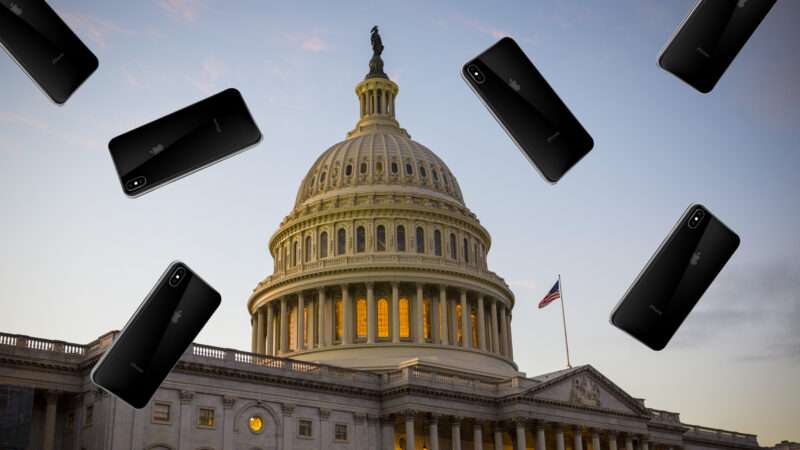
A former employee of the U.S. House of Representatives was arrested and indicted in federal court for stealing government-issued cellphones worth more than $150,000 while he worked as a system administrator for the House Committee on Transportation and Infrastructure. Prosecutors say Christopher Southerland ordered 240 extra phones to be shipped to his home and sold most of them to a pawn shop, even telling a pawn shop employee to break the phones down into parts to avoid detection. The theft was uncovered when he sold a phone on eBay, and the buyer called a number preloaded in the phone, which went to Congress’ tech support desk. That call sparked an investigation by the FBI and U.S. Capitol Police.
The post Brickbat: A Game of Telephone appeared first on Reason.com.
from Latest – Reason.com https://ift.tt/v2QS51x
via IFTTT
The post Open Thread appeared first on Reason.com.
from Latest – Reason.com https://ift.tt/MfyVdq8
via IFTTT
Gold Giant Bundesbank Signals An Open Vote Of No Confidence in Global Monetary Stability
Submitted by Thomas Kolbe
The German Bundesbank hoards the second-largest gold reserves among central banks. The precious metal serves as an insurance policy for both states and private individuals. Its massive price surge shows that the dice have already been cast: governments will attempt to inflate their debts.
Anyone acquiring precious metals in these weeks simultaneously casts a verdict on their currency. This may be a conscious portfolio decision or simply an undefined desire to have a monetary insurance policy at hand. One never knows what the future holds.
Gold jewelry or collectible silver coins are aesthetically appealing and trigger our instinct to collect. What private purchases and the massive hoarding of gold by central banks share is their monetary-policy background.
In honest moments, looking at the soaring global sovereign debts and escalating geopolitical conflicts, we know that our monetary system is heading for severe turbulence. In many places, the fiscal Rubicon has long been crossed. With debt-to-GDP ratios well above 100 percent—in the U.S., China, and numerous European countries—only a massive expansion of the money supply can ensure the public sector’s ability to pay.
This occurs at the expense of those trusting in cash. In this context, it is noteworthy that the German Bundesbank hoards the second-largest gold reserves among global central banks.
3,350 tons of gold, with a market value of roughly half a trillion euros, are split between the Bundesbank’s vaults in Frankfurt (50 percent), the New York Federal Reserve (37 percent), and a storage facility in the City of London (13 percent). It is an inheritance from the old Bretton Woods system, when gold was stored near major global trade hubs.
The time is drawing closer to bring the reserves stored abroad back home. In a fragile monetary system, precaution is not alarmism—it is pure self-protection.
Italian Prime Minister Giorgia Meloni must have thought the same. She is working under intense pressure to formally transfer the Italian central bank’s gold reserves to the state—a step equivalent to an open vote of no confidence against the European Central Bank.
Italy holds 2,452 tons of gold, ranking third internationally behind the U.S. and Germany, giving it, like Germany, a bargaining chip to restart its own currency should a severe euro crisis ever occur.
From the Frankfurt ECB Tower, these developments are viewed with the utmost concern. Nothing corrodes a monetary system faster and more effectively than a loss of confidence in creditworthiness. The banking system, as well as pension funds and retirement insurance, rely on the stability of government bonds recorded on their balance sheets.
Once it became clear that states could no longer consolidate fiscally, the bond market corrected sharply. Billions in losses are on the books, only not written off due to special valuation rules granted by lawmakers.
From the ECB’s perspective, the hoarding of national gold reveals dangerous secession tendencies. It still holds around 500 tons of gold from the early days of the monetary union, when member states contributed gold reserves proportionally to their GDP to support the euro. This is far from sufficient to provide the euro with a stable, metal-backed anchor after decades of money growth.
The repeated desire of ECB President Christine Lagarde to centralize national gold reserves at the ECB vault is almost universally rejected by eurozone members. So much for the repeatedly touted integration of the euro system.
Elsewhere, gold has also become central to stabilizing trust. The BRICS nations have for years worked on creating a payment system independent of SWIFT but have failed so far because no one trusts the Asian hegemon, China.
The solution—the pegging of mutual transfers to gold—was adopted by China during the global financial crisis more than fifteen years ago, when it became the largest buyer in the precious metals market. With roughly 2,300 tons, China now holds the fourth-largest gold reserves in the world.
Besides China, Russia, Turkey, India, and Poland, as well as countries like Egypt and Thailand, have significantly increased their gold holdings since 2008. The price increase is therefore justified and likely to continue in the long term, albeit with growing volatility.
A positive side effect of this reevaluation is a kind of balance-sheet repair. The deep gaps created by the bond market crisis are closed by the appreciation of gold for those who recognized the approaching sovereign debt danger early.
In Germany’s Bundesbank, gold now represents roughly 80 percent of the entire balance sheet. There is thus motivation in many places to continue boosting the gold price. It is an elegant way to stabilize the monetary system while simultaneously repairing past damages across different institutional levels through a simple repricing.
It is almost a historical irony. When U.S. President Richard Nixon terminated the dollar’s convertibility into gold in 1971 amid soaring debt and massive inflation of liabilities, the so-called fiat credit money system was set in motion. Debts exploded, and states could borrow nearly without limit.
Unbacked credit, combined with ever-lowering reserve requirements, created a perfect Ponzi system, which has now entered its crisis stage.
German policymakers tried to escape this debt spiral by enshrining the so-called debt brake a few years ago. Yet the corrosive erosion of this fiscal constraint began immediately afterward and was ultimately buried last year by Chancellor Friedrich Merz and his high-stakes special fund gamble.
With this policy of unlimited state credit, citizens are driven toward safe havens such as precious metals, accelerating the decline of the fiat credit money system.
The relationship of states to gold remains ambivalent. Aside from committed fiat regimes like Canada, which holds no gold at all, it is becoming increasingly clear that gold can either extend the Ponzi scheme or initiate a new monetary system.
However, citizens fleeing into the safe haven of precious metals become potentially dangerous antagonists, prompting an immediate political counterreaction. Gold purchases are recorded, limited, and legislated in ways clearly designed to capture future portfolio gains.
The Netherlands, for example, is expected to begin taxing unrealized capital gains in 2028—a clear warning.
A general, sharp appreciation of precious metals could create tens of thousands of capital-strong, independent families, particularly in Europe. It is precisely this independence that vexes the etatists in Brussels and EU capitals. The fiscal effect of harvesting book gains in the private sector also plays a role, given runaway sovereign debt.
The ambivalence of gold—and this applies to precious metals as well as other assets without counterparty risk, such as Bitcoin—inevitably provokes massive repression in political regimes focused on citizen control.
Expect other European states soon to follow the Netherlands’ example. The fight for sovereignty has begun.
* * *
About the author: Thomas Kolbe, a Germany a graduate economist, has worked for over 25 years as a journalist and media producer for clients from various industries and business associations. As a publicist, he focuses on economic processes and observes geopolitical events from the perspective of the capital markets. His publications follow a philosophy that focuses on the individual and their right to self-determination.
Tyler Durden
Wed, 02/04/2026 – 03:30
via ZeroHedge News https://ift.tt/ClhOIQg Tyler Durden
A former employee of the U.S. House of Representatives was arrested and indicted in federal court for stealing government-issued cellphones worth more than $150,000 while he worked as a system administrator for the House Committee on Transportation and Infrastructure. Prosecutors say Christopher Southerland ordered 240 extra phones to be shipped to his home and sold most of them to a pawn shop, even telling a pawn shop employee to break the phones down into parts to avoid detection. The theft was uncovered when he sold a phone on eBay, and the buyer called a number preloaded in the phone, which went to Congress’ tech support desk. That call sparked an investigation by the FBI and U.S. Capitol Police.
The post Brickbat: A Game of Telephone appeared first on Reason.com.
from Latest – Reason.com https://ift.tt/v2QS51x
via IFTTT
The post Open Thread appeared first on Reason.com.
from Latest – Reason.com https://ift.tt/MfyVdq8
via IFTTT