WTI Holds Gains After Surprise Gasoline Inventory Draw
Oil prices exploded higher overnight after a dismal few days which sent WTI to one-year-lows, on speculation that OPEC+talks in Vienna may result in an emergency ministerial meeting on fresh output cuts, as well as reports of a possible coronavirus vaccine, which have lifted broader markets.
“The short-term damage to oil demand from China has already occurred,” said Ole Hansen, head of commodities strategy at Saxo Bank A/S.
“On that basis the upside potential may still depend on action from OPEC+.”
We suspect, however, that if the official data confirms API’s large crude build, things will reverse rapidly.
“Between gasoline and crude, the oil market needs a bullish catalyst to relieve demand pressure,” says Josh Graves, senior market strategist at RJ O’Brien & Associates.
“Any kind of build in inventories will worsen fears of a glut and keep a lid on prices”
API
Crude +4.18mm (+3mm exp)
Cushing +960k
Gasoline +1.96mm (+1.8mm exp)
Distillates -1.78mm (-200k exp)
DOE
Crude +3.355mm (+3mm exp)
Cushing +1.068mm
Gasoline -91k (+1.8mm exp)
Distillates -1.512mm (-200k exp)
A surprise draw in gasoline relieved some bearish oil price pressures and a smaller crude build than API reported also helped…
Source: Bloomberg
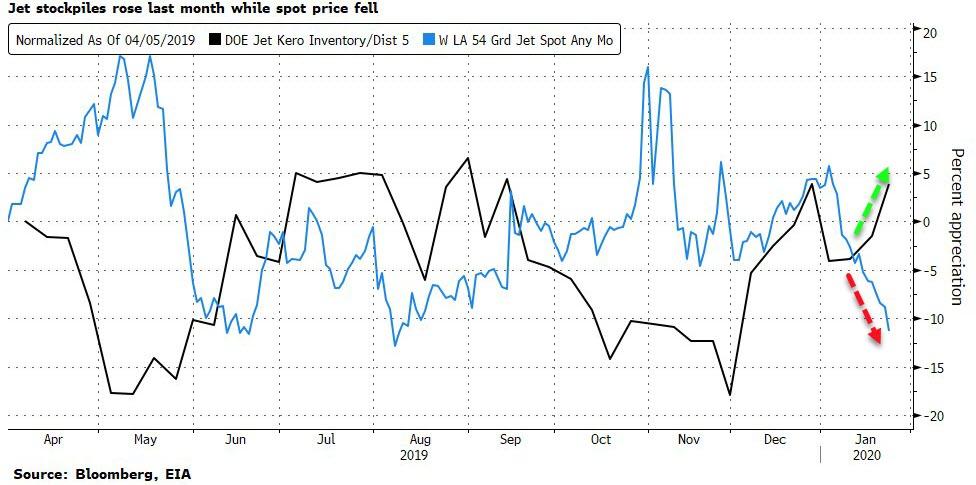
Additionally, amid the flight cancellations, jet fuel inventories are rising notably as prices fall…
Source: Bloomberg
Bloomberg Intelligence Senior Energy Analyst Vince Piazza notes that the coronavirus isn’t the primary cause of a potential slowdown in global economic growth but a depressant for an already-maturing cycle that underpins our reserved outlook for oil. Persistent trade and geopolitical tensions add to the pressure.
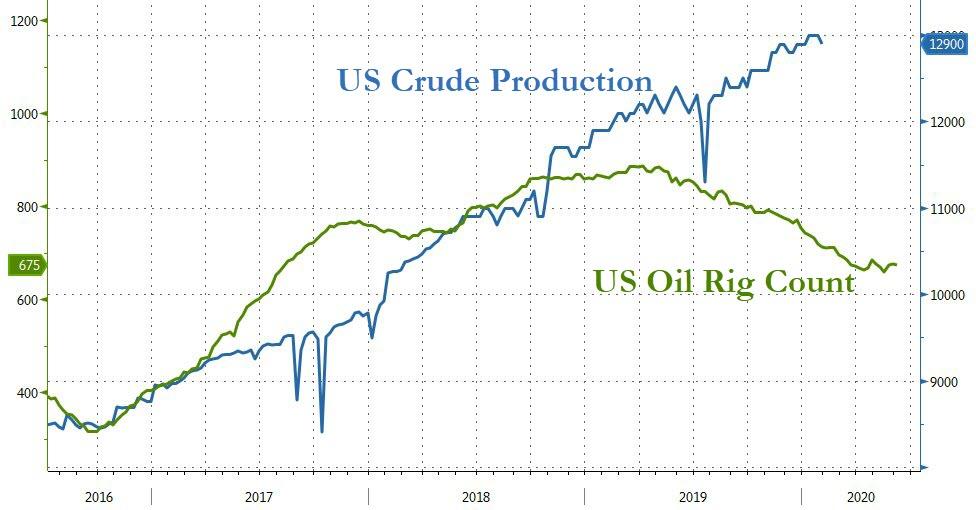
US Crude production continues at record highs while the rig count has somewhat stabilized…
Source: Bloomberg
WTI was trading around $51.50 ahead of the DOE data and held those gains after the surprise gasoline draw and modest crude build…
Finally, Bloomberg Intelligence Energy Analyst Fernando Valle warns, demand destruction from the coronavirus is taking its toll on an already-oversupplied market. Middle distillates, particularly jet fuel, are feeling increased pressure that’s neutralizing benefits from IMO 2020. China is well-supplied with crude, and there should be little disruption to short-term availability, at least compared with demand. That should drive further economic run cuts in 1Q. Gasoline has fared slightly better, but the upcoming switch from winter-grade components is likely to add pressure to already-weak crack spreads.
“Big Short’s” Eisman Top-Ticks Tesla, Covers Short As Carmaker Enters Bear Market
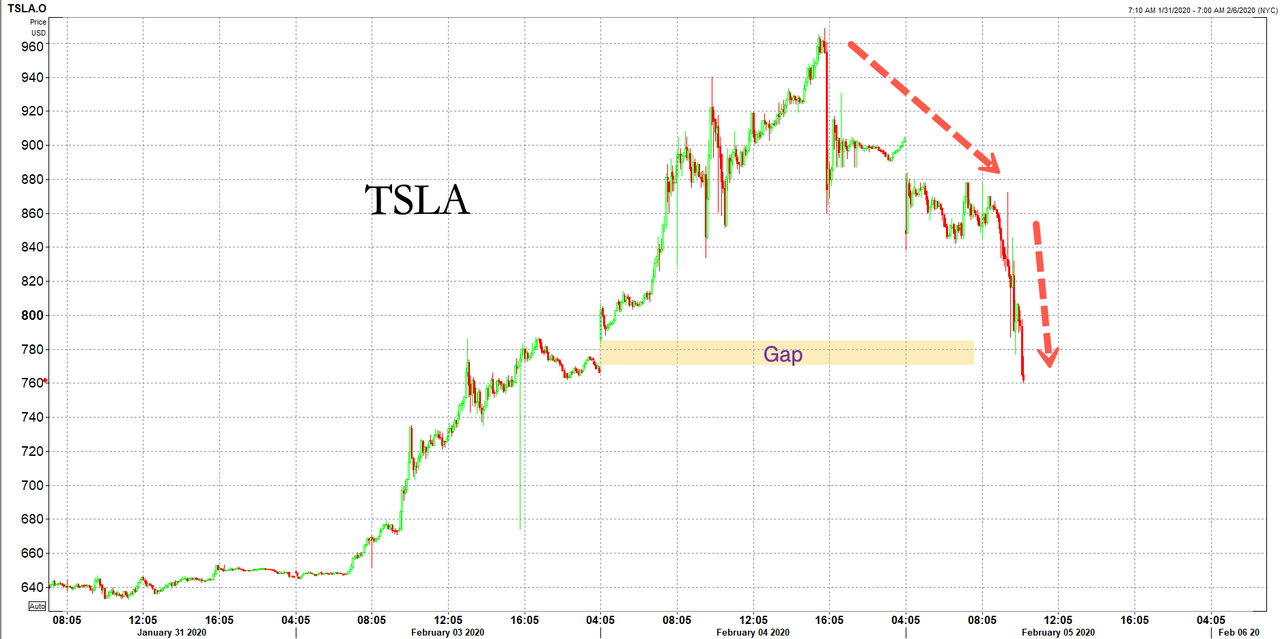
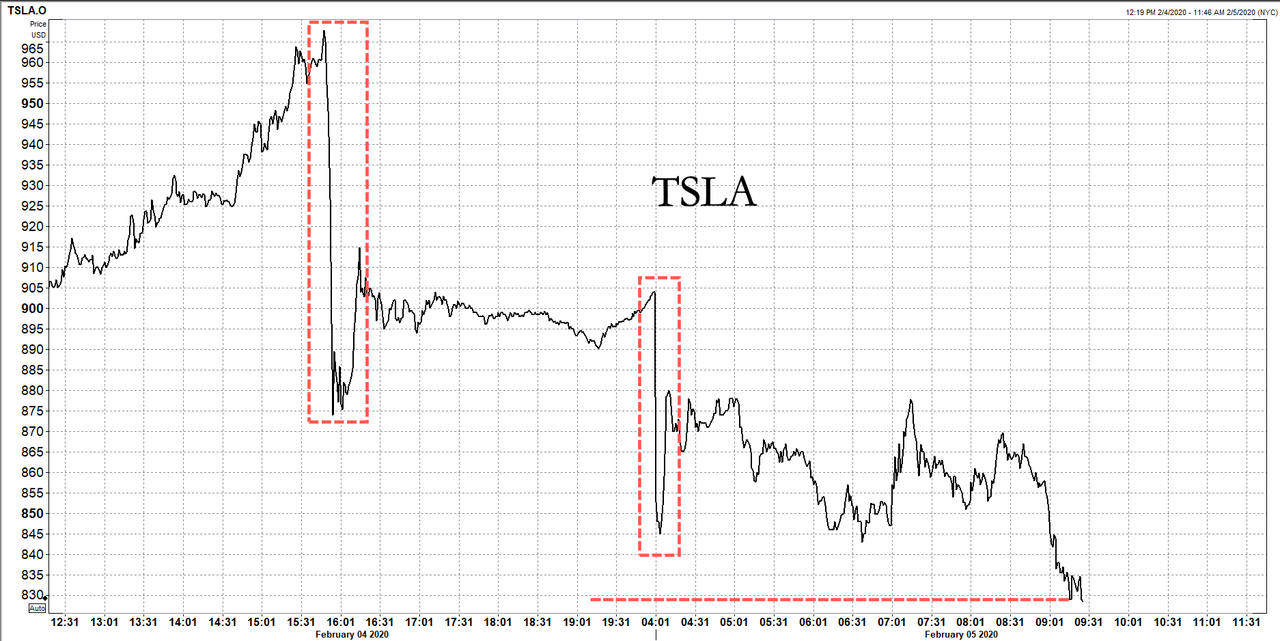
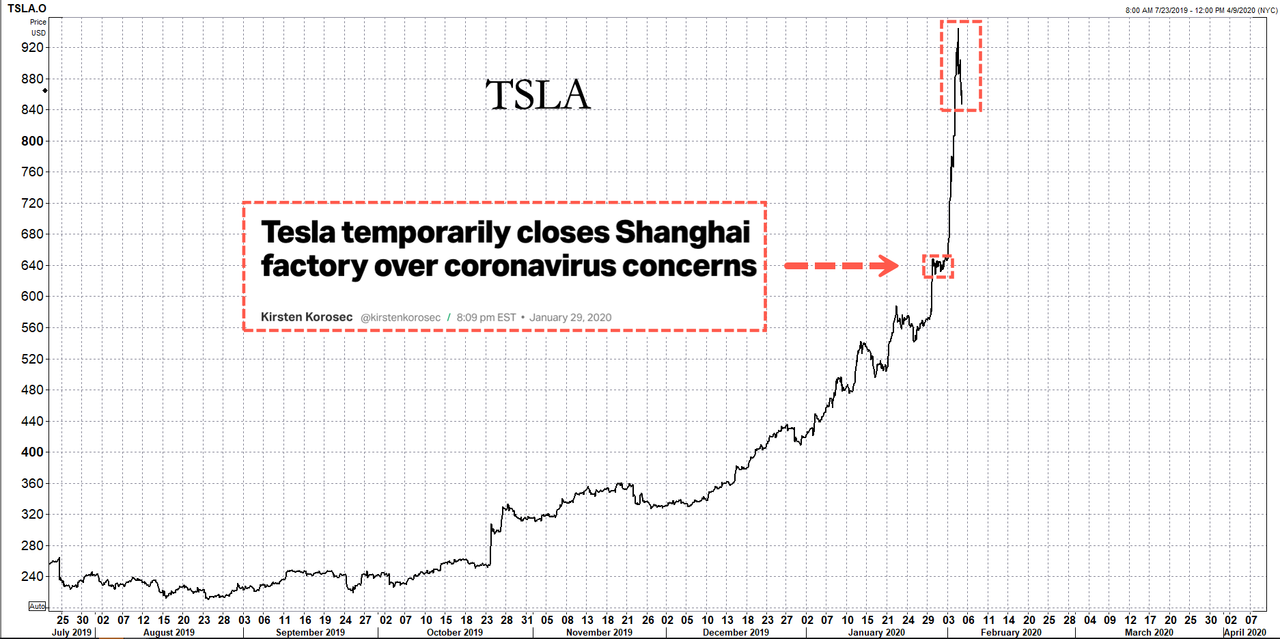
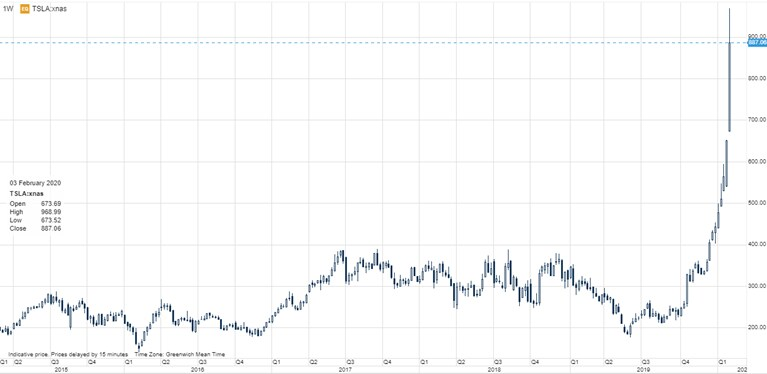
Update (1015ET): Tesla crashes into a bear market on Wednesday morning, down 21.57% from tagging the 968-handle on Tuesday. It appears Steve Eisman covered his short a little too early.
* * *
“The Big Short’s” Steve Eisman, known for shorting the housing market before the 2008 financial crash, was forced to cover his bearish bet on Tesla.
Tesla has plunged nearly 15% or has lost $142, or about $25 billion in market cap since yesterday’s 968 print.
“Look, everybody has a pain threshold,” Eisman, a senior portfolio manager at Neuberger Berman Group, told Bloomberg TV’s Tom Keene.
“When a stock becomes unmoored from valuation because it has certain dynamic growth aspects to it, and has cult-like aspects to it, you have to just walk away.”
Eisman said his firm owns GM and calls it a “reality on the ground” relative to the “dream” Tesla bulls have: dominate the electric vehicle market.
GM “used to be a poorly run company with a terrible balance sheet and terrible products, and today it’s got a great balance sheet, it’s got very good management and it’s no longer in Europe,” he said.
Eisman is a GM bull. He opened long trades on the carmaker about a year and a half ago. “It’s really not a car company anymore, it’s really a truck company that also sells SUVs very profitably and it has a real division called Cruise which is a real option on autonomous driving,” he said.
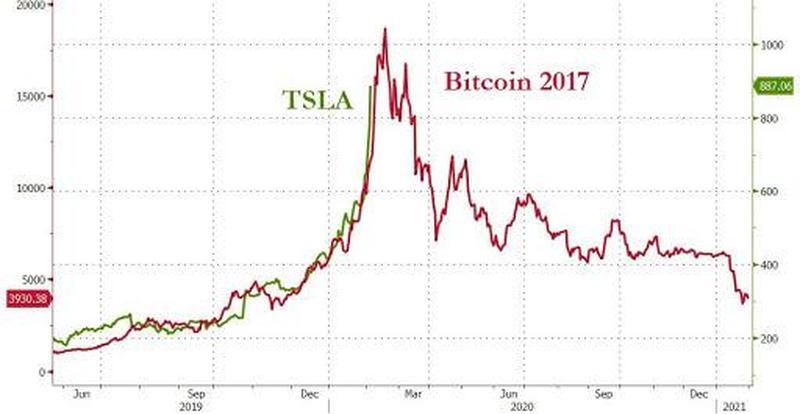
The parabolic melt-up seen in Tesla’s shares in the last several weeks is starting to unwind. The catalyst today could be due to production delays at Tesla Giga Shanghai because of the coronavirus.
However, we must note, investors have been well aware of possible production woes in Shanghai for the last week.
And maybe Eisman, who timed the 2008 financial crisis with precision, might have been stopped out of his Tesla short right before all the fun starts…
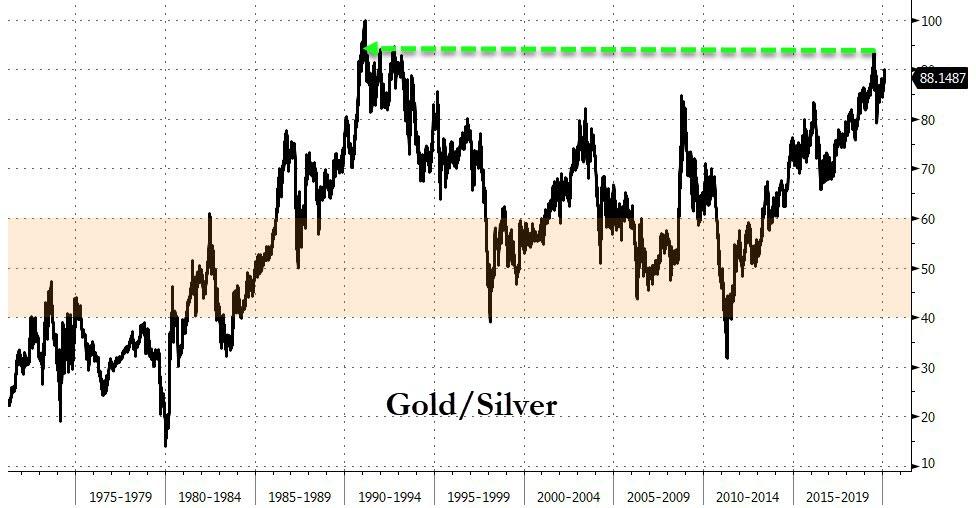
The silver-gold ratio has ticked back up to historically high levels of late.
As I write this article, the ratio stands at just over 88:1. That means it takes 88 ounces of silver to buy an ounce of gold. To put that into perspective, the average in the modern era has been between 40:1 and 60:1.
In simple terms, historically, silver is extremely underpriced compared to gold.
Last summer, the ratio climbed to nearly 93:1 as gold rallied. Silver closed the gap in the fall and the ratio dropped into the low 80s’ to one. But in recent weeks, we’ve seen the gap widening once again.
In 2019, the silver-gold ratio averaged 86:1. That ranks in the top 2% all-time, dating back to 1687. Only two years in the era since the US government unpegged the dollar from gold have seen higher ratios – 1991 and 1992.
Here’s some historical perspective.
Geologists estimate that there are approximately 19 ounces of silver for every ounce of gold in the earth’s crust, with a ratio of approximately 11.2 ounces of silver to each ounce of gold that has ever been mined. Interestingly, the silver-gold ratio in ancient Egypt was 1:1.
In 1792, the gold/silver price ratio was fixed by law in the United States at 15:1. France mandated a ratio of 15.5:1 in 1803. Faced with the challenges of a bi-metallic monetary system with fixed exchange rates and the aftermath of a worldwide financial crisis, the US Congress passed the Coinage Act of 1873. Following the lead of other Western nations, including England, Portugal, Canada, and Germany, this act formally demonetized silver and established a gold standard for the United States.
With silver playing a smaller role as a monetary metal, the silver-gold ratio gradually spread. The modern average over the last century has been around 40:1.
Since the world went to a total fiat money system, there seems to be some correlation between the silver-gold ratio and central bank money-creation. During periods of central bank money-printing, the gap tends to shink. In fact, it plummeted in the aftermath of the 2008 financial crisis as the Fed engaged in extreme monetary policy.
But as Peter Schiff has explained, the Federal Reserve fooled everybody into believing low interest rates and quantitative easing were temporary – that they were emergency fixes. The mainstream expected the Fed would eventually raise interest rates and shrink the balance sheet. But it’s become clear that wasn’t the case. Extreme monetary policy is the new normal.
Peter has said that when the mainstream figures this out, gold will go through the roof. If that’s the case, silver will almost certainly go up with it. Silver is much more volatile than gold due to its industrial role, but at its core, it is still a monetary metal and it tends to track relatively consistently with gold over time. When gold goes up, it almost always takes silver with it
Furthermore, it may well mean the silver-gold ratio will shrink again as it did in the years after the ’08 crash. Historically, during a bull market in gold, silver outperforms. If this holds trues, that ratio will close.
As commodities analyst Jason Hamlin said in an article published by Seeking Alpha, “The gold-silver ratio has been one of the most reliable technical ‘buy’ indicators for silver, whenever the ratio climbs above 80.”
The silver-gold ratio has been out of whack for quite a while now, but investors still aren’t buying. Of course, the mainstream, by-and-large, isn’t buying gold either. They still seem convinced that the Fed can keep the air in the stock market bubble.
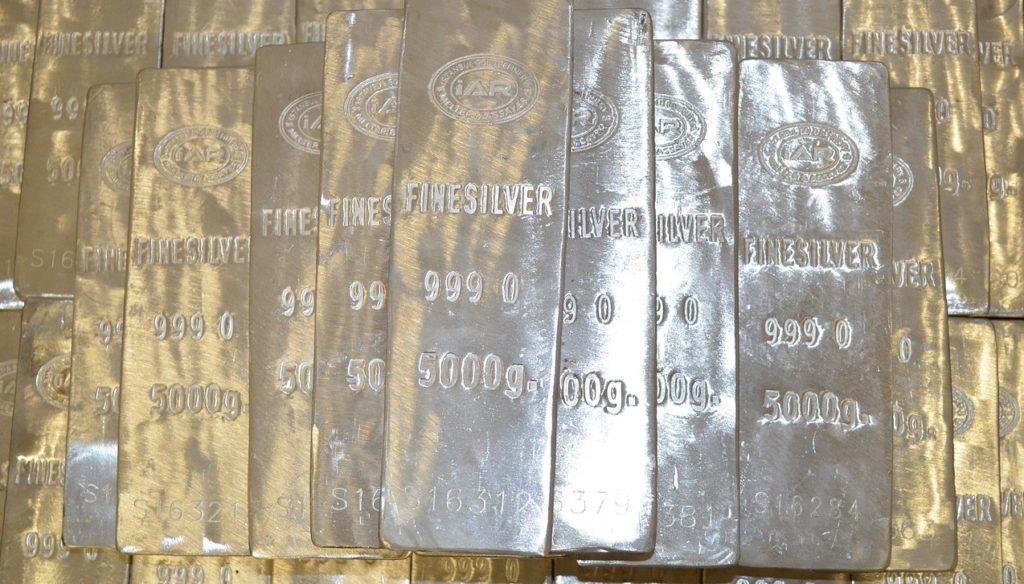
Silver has hit an all-time high of $49 per ounce twice – in January 1980 and then again in April 2011. If you adjust that $49 high for inflation, you’re looking at a price of around $150 per ounce. In other words, silver has a long way to run up.
As one analyst put it, “With the long-term downside potential of silver very low versus its current valuation, the risk/reward is one of the best investments on the planet.”
US Services Survey Improves But “Business Confidence Subdued”
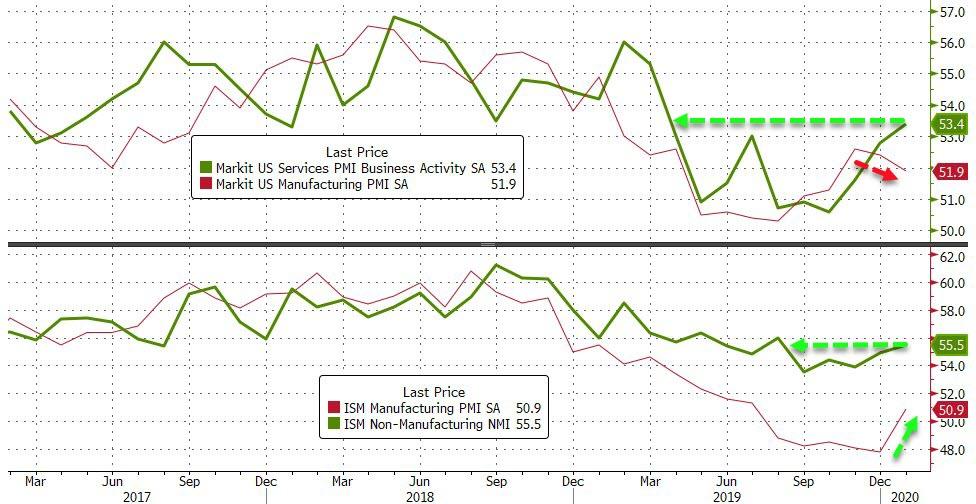
Following the mixed picture on Manufacturing (ISM spiked, PMI dumped), US Services data was expected to rise for both ‘soft’ surveys.
Take a look down the list and decide which fits your narrative…
Markit US Manufacturing PMI 51.9 (down from 52,4) to 3-month lows.
Markit US Services PMI 53.4 (up from 52.8) to 10-month highs.
ISM Manufacturing 50.9 (up from 47.8) to 6-month highs.
ISM Services 55.5 (up from 54.9) to 5-month highs.
Source: Bloomberg
Once again it seems a global pandemic is not enough to spook American business…
The ISM’s measure of new orders at U.S. service providers increased to 56.2 in January from a three-month low. Other details from the report were less upbeat. Measures of employment, order backlogs and exports all softened from the end of 2019.
The improvement in services activity and a rebound in the ISM’s manufacturing gauge show business optimism was building just as the coronavirus epidemic began to exact a bigger toll — both in terms of the growing number of lives lost and economic disruption.
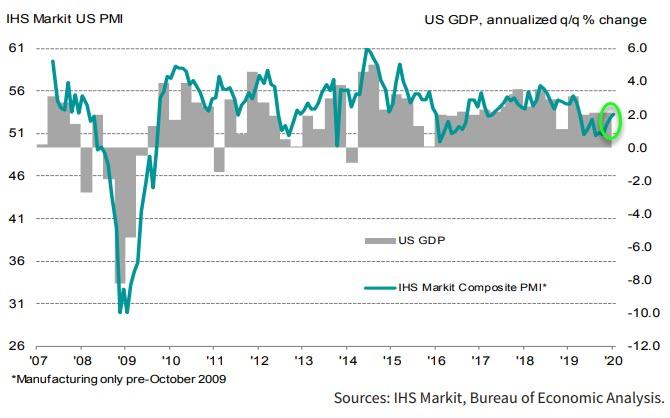
The Markit Composite index rose to 10-month highs at 53.3. Commenting on the latest survey results, Chris Williamson, Chief Business Economist at IHS Markit, said:
“The PMI data indicate that the US economy is ticking along at a steady but unspectacular annualized rate of growth of approximately 2% at the start of 2020. Growth has gained some momentum from the lows seen in the fall as the service sector enjoys stronger growth and manufacturing has also shown signs of the trade-led downturn easing. However, factory activity remains worryingly remains subdued, and optimism about future growth across the business community as a whole continues to run at one of the lowest levels seen over the past decade.
“Business are concerned by the prospect of weaker economic growth at home and abroad in the coming year, especially with spending potentially being dampened in an election year. Fresh worries are also likely to appear. With the vast majority of the survey data having been collected prior to the 24th January, we’ve yet to see any impact from the Wuhan coronavirus outbreak, but the potential disruption to business and the associated financial market jitters pose additional downside risks to both the global and US economies in coming months.”
But of course, US data is meaningless – it’s all about China liquidity and fake virus data now.
Trader: “More Interest In Fading These Moves As Overdone”
Authored by Richard Breslow via Bloomberg,
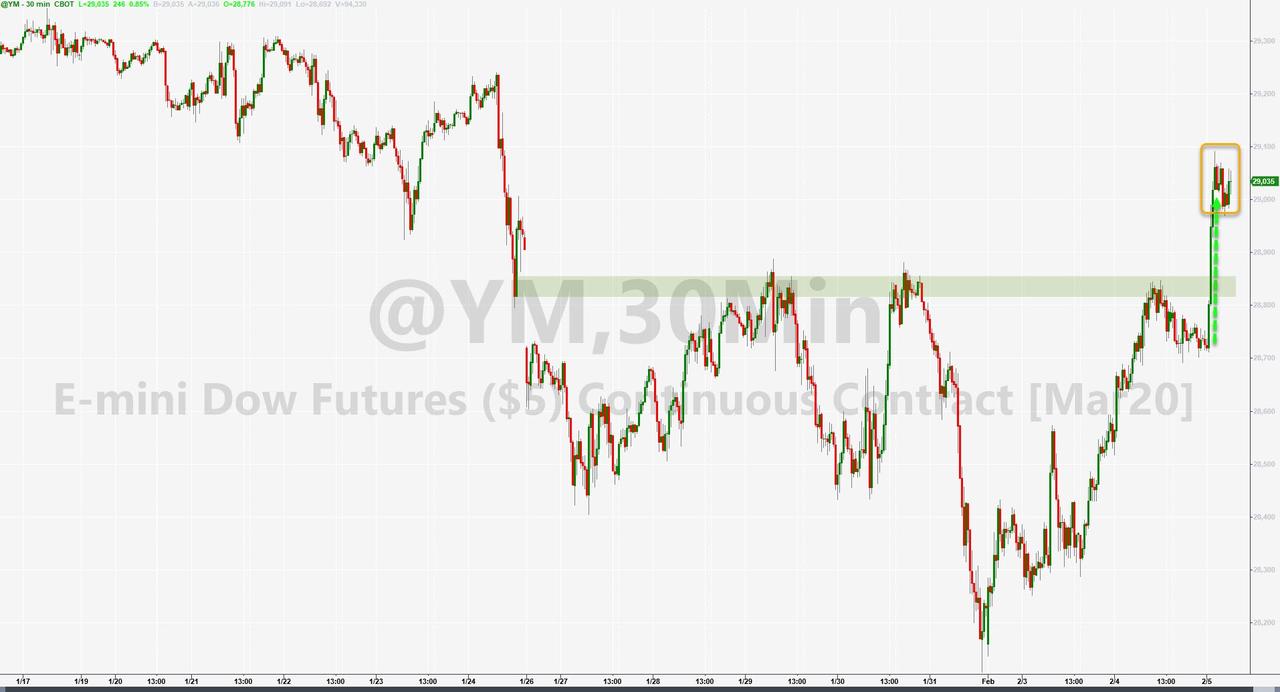
Some days it’s best just to let things play out for a little while. Economic numbers that came out overnight haven’t hurt. Very dovish comments by a senior Bank of Japan official. Upbeat comments by the governor of the Reserve Bank of Australia. And then the big one, hopeful comments concerning potential progress in dealing with the virus outbreak. And the market has taken off. Given the impulsive, explosive, nature of the move, which came mid-morning during the London session, a fairly steady, mildly corrective day for risk was sent galloping higher. The reality is, you either had it or you didn’t.
There was no trading this move. Your only choices now are to go with it at what looks like very heady levels or fade it. An hour after the market got turned on its head, neither seemed like an easy and clear choice. Once the price action unfolds and news is digested it will be claimed to have been patently obvious.
Just listening to the chatter, however, there seems to be greater interest in treating the moves as overdone. There is not a great deal about the pressing of bets. Further indication that this caught traders by surprise and ill-positioned. Should the market give back some, or even all, of its newly found gains, resist the notion that it was motivated by profit-taking. These are likely to be new speculative positions. Which is fine, there is no intent to stop anyone from trading if they want to. But have stops in mind, so any squeezes are manageable.
Things seem to have settled down and moving into a holding pattern. European traders would now like to see how their North American colleagues react as they begin to settle in. They will have to evaluate for themselves the relative merits of the headlines and asset prices they went to sleep with and the new ones they have awoken to. That might be the best guide to what the next market gyration is likely to be.
You don’t need to deal only at extremes to make a really good trade – if it’s right. And so far, the price action is still warning of potential trend days. Meaning, letting it do something wrong first before counter-trading the move increases the likelihood of success. And if you were caught the wrong way around, it will be scant consolation, at least for the moment, if you think all this was an overreaction.
I was planning to write about some new developments on international trade being prepared by the U.S.. It’s a new development that the markets probably won’t like. Certainly not those overseas. Here we go again? But given where attention is likely going to be focused in trading rooms, it’s best to go with the famous adage, “tomorrow is another day”
Nearly 2,000 Quarantined On Hong Kong Cruise Ship; Mother Gives Birth To Baby Infected With nCoV
Summary:
First babies born infected with coronavirus
Hong Kong closes borders with mainland
Doctors say death rate exaggerated by Wuhan fatalities
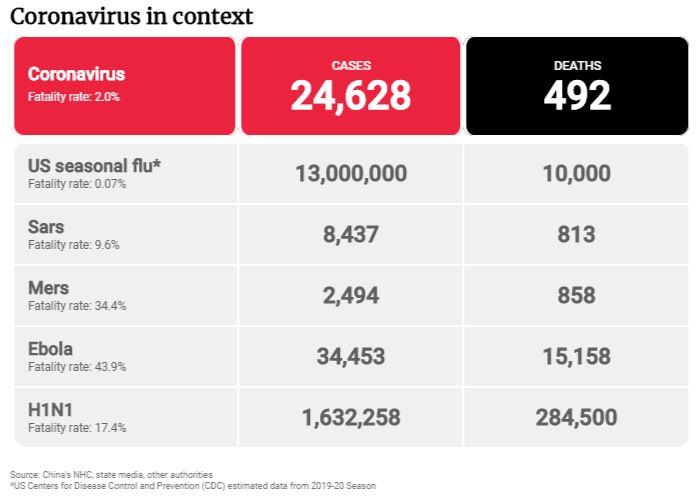
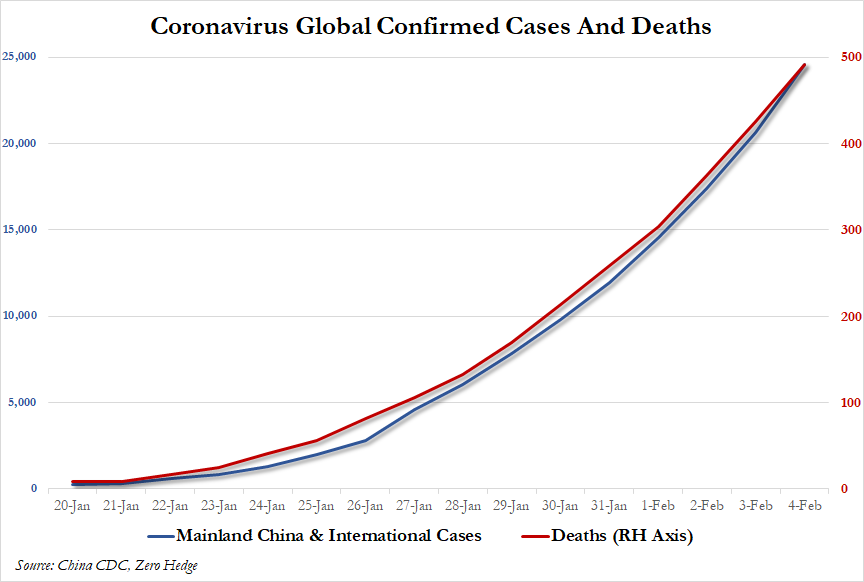
24,628 cases, 492 deaths
President Xi says China ‘capable of suppressing outbreak
Cruise ship quarantined in Hong Kong
* * *
Two days ago, Chinese health authorities breathed a sigh of relief as a newborn tested negative for the hyper-contagious virus, which bears suspicious similarities to HIV.
Unfortunately, another newborn hasn’t been so lucky: media reports claimed the first case of mother-to-child transmission has been confirmed in Wuhan.
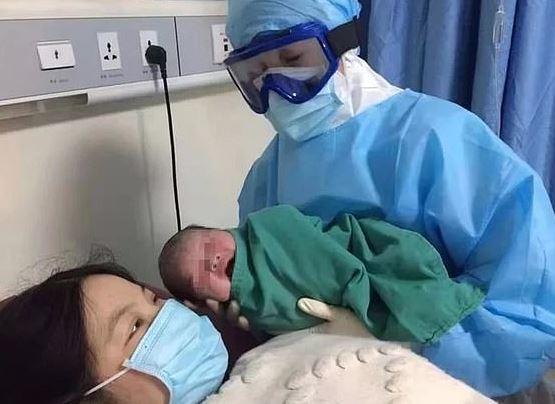
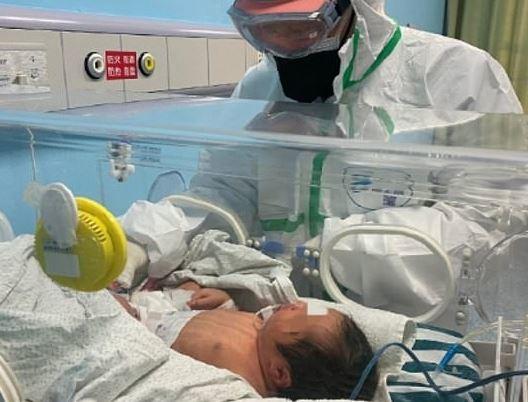
Picking up on reports in Chinese media, the Daily Mail reported Wednesday that the newborn baby of a coronavirus patient in Wuhan had been diagnosed with the deadly disease just 30 hours after birth, prompting doctors to reckon with the possibility that the virus could be routinely passed from pregnant mother to child, in addition to feces and aerosol transfer. The gender of the infected child, who was born on Sunday, has not been released. The baby’s condition is said to be ‘stable’ and it is being closely monitored.
“This reminds us to pay attention to a potential new transmission route of the coronavirus – vertical transmission from mothers to babies,” said Dr Zeng Lingkong, chief physician from the hospital’s Department of Neonatal Medicine.
The newborn is one of the two babies at Wuhan Children’s Hospital that have been found to carry the coronavirus. The other baby was infected by a wet nurse after being born healthy. In Wuhan, babies are being delivered by doctors in hazmat suits.
Funny thing is…
Funny that last week #zerohedge got banned over an HIV linked article and now 2 drug companies are offering their HIV drugs for help with the virus. https://t.co/JYlnJN1oOu
Meanwhile, after reporting dozens of new deaths late Tuesday evening in New York, total coronavirus cases remained at 24,628 Wednesday morning after a few new cases were reported around the world overnight. The global death toll remains at 492, according to SCMP.
Now that Wuhan has finished the first of two new coronavirus hospitals adding 1,000 beds, the city has started setting up three modular hospitals to provide another 3,800 beds for patients with mild symptoms of infection. A second hospital under construction is expected to be finished in the coming days.
As Beijing struggles to battle anti-Chinese sentiment around the world, Bloomberg reports that “Indonesia’s scariest market” has just taken bat soup off the menu.
* * *
During an emergency meeting of China’s highest policy-setting body on Monday, President Xi reportedly called on all Communist Party officials to work together to fight the viral outbreak, which has grown into a serious threat to stability on the mainland. In addition to emphasizing the seriousness of the virus, Xi also threatened to punish any local officials caught slacking (hundreds have already been published as part of his scapegoating efforts).
But after eight days of radio silence outside of the state-controlled media reports, Xi appeared in public on Wednesday for the first time since the outbreak caught the world’s attention.
During an appearance alongside Cambodian Prime Minister Hun Sen in Beijing, Xi said China had imposed strict measures to contain the outbreak, and promised to look after Cambodian students in Wuhan.
“China is confident and capable of containing the outbreak,” he said. He added that the Cambodian students stuck in Wuhan would be well taken care of by the Chinese government.
The president added that Chinese laws against eating wild animals (like…bats) must be fully enforced, along with all other strictures imposed to fight the virus (like all of those lockdowns requiring millions of terrified Chinese to stay inside).
“Currently we are at the critical moment of controlling the epidemic,” he said. “Offences jeopardising disease control, including resistance to control measures, violence towards medical staff, counterfeiting medical materials and the spreading of rumours must be severely curtailed.”
Despite Xi’s optimistic words, another Chinese official told state media that the situation in places like Wuhan is still “severe”, and that the city faces many “challenges and pressures.”
In other news, yet another cruise ship has been waylaid by the outbreak: After Japanese officials confirmed last night that nearly a dozen passengers aboard the “Diamond Princess”, a cruise ship presently being quarantined in Yokohama, had tested positive for the virus.
Now, Reuters reports that Hong Kong is testing more than 1,800 passengers and crew aboard a cruise ship for coronavirus after some crew members reported fevers and other suspicious symptoms. Authorities were not letting anyone leave the ship without explicit permission.
In the latest round of speculation about the virus’s fatality rate, doctors told Reuters that the fatality rate has been exaggerated because overwhelmed Wuhan is struggling with many more preventable deaths, along with underreporting of mild cases.
“In an outbreak your really have to interpret fatality rates with a very skeptical eye, because often it’s only the very severe cases that are coming to people’s attention,” said Amesh Adalja, an expert in pandemic preparedness at the Johns Hopkins Center for Health Security in Baltimore.
“It’s very hard to say those numbers represent anything like the true burden of infection” said Adalja, who estimates current fatality rates are likely below 1%.
That’s probably true, but still…one death in 23? The virus is clearly more of a threat to healthy people than Chinese authorities were initially willing to admit (remember when they said the virus only killed the elderly and those with serious co-occurring conditions?).
As people reflect on China’s extensive lockdowns forcing millions to remain inside Wuhan and other cities. In the central Chinese city, which has been on lockdown for more than a week, found a 43-year-old native of Wuhan who climbed up rusty pipes to the third-floor balcony of an apartment to gain entry into the home of a middle-aged couple – to feed 2 starving cats trapped inside 10 days. Locals have said they’re afraid to leave their houses for fear of being targeted by drones, or by police.
Reuters reports that many in Wuhan are taking drastic steps to feed starving pets.
BEIJING (Reuters) – A 43-year-old native of Wuhan, a central Chinese city ravaged by a virus outbreak, said he climbed up rusty pipes to the third-floor balcony of an apartment to gain entry into the home of a middle-aged couple – to feed 2 starving cats trapped inside 10 days.
Reuters: He found the animals under a sofa, barely alive. Lao Mao rang up their owners, who broke down and cried on the video call at the sight of their pets.
Their owners had gone on what was originally a three-day trip to the north but had been unable to return.
Reuters: “The volunteers on our team, me included, have saved more than 1,000 pets since Jan. 25,” said Lao Mao, declining to disclose his real name because he did not want his family to know he was out and about in the city.
Reuters: Without intervention, the pets will starve to death. Many owners, either in quarantine or stranded in other provinces and countries, have sought help from animal lovers like Lao Mao on social media.
“My phone never stops ringing these days. I barely sleep,” Lao Mao said
In the latest sign of how the virus is impacting airlines, Cathay Pacific has asked employees to take unpaid leave. On Tuesday, the airline, which is partially owned by the Chinese government, said it plans to cut about 30% of capacity over the next two months, including about 90% of flights to mainland China.
Dozens of airlines have suspended some or all of their routes to China. Jefferies analysts warned clients in a note that Cathay would report a loss in the first half of 2020 thanks to the outbreak, though they expect performance to rebound strongly in the second half.
In the US, former FDA Director Dr. Scott Gottlieb reiterated on CNBC that an outbreak in the US is inevitable (indeed it’s already started).
“We are very likely to see outbreaks of this virus here in the United States,” says @ScottGottliebMD. “It’s likely there are cases here in the U.S. right now where people are spreading this at a low level–we haven’t detected it yet–who haven’t traveled to China.” #coronaviruspic.twitter.com/QfKO2503Ks
After China accused the US of provoking unnecessary panic over the virus (why won’t everyone just listen to the WHO?), State TV published a report declaring racism to be “the most dangerous” aspect of the outbreak.
Racism is the most dangerous virus.
“When H1N1 virus broke out in the U.S. in 2009, no one called it “American virus’, When this coronavirus broke out in China, you call it ‘China virus'”, Chinese blogger calls for #coronavirus related racism and bullying to stop. pic.twitter.com/u3JTJnL4xU
More severe than a fast-spreading virus that shares characteristics of the flu, pneumonia and HIV?
In other virus news, earlier, Hong Kong acquiesced to striking health care workers and authorized the closure of all borders with China. Meanwhile, a WHO spokesperson said there are “no effective remedies” proven to treat coronavirus – this amid reports that AIDS meds and some flu meds had been found to be effective for some patients.
As rescue operations continue with Canada becoming the latest to dispatch a plane to evacuate citizens trapped in Wuhan, Canadian media reported that the plane sent for the evacuation is awaiting permission from Chinese authorities, mirroring delays that afflicted previous missions carried out by the British and others.
Finally, have you been dreading that inevitable conversation where you have to explain the coronavirus outbreak to your kids? Don’t worry – Time Magazine has got you covered.
For readers who may be interested, here is a list of my upcoming speaking engagements for the next several months. All are free and open to the public, unless otherwise noted. I will update this post, as necessary.
February 6, noon-1:15 PM, Georgetown University Law Center, McDonough Hall, Rm. 110, Washington, DC: “The Second Amendment Returns to the Court,” panel with Clark Neily (Institute for Justice). Sponsored by the Georgetown Federalist Society
March 3, 2-3:30 PM, Georgetown University Law Center, Washington, DC: “The Promise and Limits of Reducing Judicial Deference to Federal Agencies,” panel on “Agency Deference After Kisor v. Wilkie” (other panelists TBA). Sponsored by the Georgetown Journal of Law and Policy, and Georgetown Federalist Society.
March 4, 12:30-2 PM, Duke Law School, Rm. 3037, Durham, NC: “How Federalism Protects Sanctuary Cities,” panel on “Federalism and Sanctuary Cities” (with Duke law professors Ernie Young and Neil Siegel). Sponsored by the Duke Federalist Society.
March 6, time TBA, Washington College of Law, American University: “How to Reinvigorate Constitutional Limits on Presidential Power,” Conference on “Presidential Power Under the Constitution (tentative title and topic).
March 18, 3:40-4:30 PM, America’s Health Insurance Plans, National Health Policy Conference: Panel on “Texas v. US and Other Legal Issues,” with Prof. Nicholas Bagley (Michigan) and Prof. Abbe Gluck (Yale). This event is, I believe, only open to participants in the AHIP conference.
March 24, Time TBA (but probably around noon), Sandra Day O’Connor College of Law, Arizona State University, Phoenix, AZ: “The Free Market Conservative Case for Open Borders,” sponsored by Arizona State Federalist Society. Possible additional participants TBA.
March 31, noon, Georgia State University College of Law. Atlanta, GA: Debate on “What Does the Constitution Leave to the States” (tentative title). Debate with Prof. Eric Segall. Co-sponsored by the Georgia State American Constitution Society, and the Federalist Society.
April 1, 12-1:30 PM tentative time, Emory Law School, Atlanta, GA: “The Case Against Democratic Socialism.” Sponsored by the Emory Federalist Society.
April 29, Time TBA, Annual Lecture in Law Philosophy, and Public Policy, Legal Studies Institute , City University of New York, New York, NY: “Free to Move: Foot Voting, Migration, and Political Freedom” (lecture based on my book of the same title).
May 6, 12-1:30 PM (tentative time and date), Cato Institute, Washington, DC: “Free to Move: Foot Voting, Migration, and Political Freedom” (Book Forum on my book of the same title).
May 12, Time TBA, conference on “Trust: A Philosophical Approach,” University of Pisa, Pisa, Italy: “Trust and Political Ignorance”
May 13, Time TBA/tentative date, University of Pisa, Pisa, Italy: “Free to Move: Foot Voting, Migration, and Political Freedom” (Based on my book of the same title). I am not sure if people who are not students and/or faculty at the University of Pisa will be allowed to attend this event.
May 14, Time TBA, Istituto Bruno Leoni, Milan, Italy: “Democracy and Political Ignorance: Why Smaller Government is Smarter”
from Latest – Reason.com https://ift.tt/31sYBar
via IFTTT
For readers who may be interested, here is a list of my upcoming speaking engagements for the next several months. All are free and open to the public, unless otherwise noted. I will update this post, as necessary.
February 6, noon-1:15 PM, Georgetown University Law Center, McDonough Hall, Rm. 110, Washington, DC: “The Second Amendment Returns to the Court,” panel with Clark Neily (Institute for Justice). Sponsored by the Georgetown Federalist Society
March 3, 2-3:30 PM, Georgetown University Law Center, Washington, DC: “The Promise and Limits of Reducing Judicial Deference to Federal Agencies,” panel on “Agency Deference After Kisor v. Wilkie” (other panelists TBA). Sponsored by the Georgetown Journal of Law and Policy, and Georgetown Federalist Society.
March 4, 12:30-2 PM, Duke Law School, Rm. 3037, Durham, NC: “How Federalism Protects Sanctuary Cities,” panel on “Federalism and Sanctuary Cities” (with Duke law professors Ernie Young and Neil Siegel). Sponsored by the Duke Federalist Society.
March 6, time TBA, Washington College of Law, American University: “How to Reinvigorate Constitutional Limits on Presidential Power,” Conference on “Presidential Power Under the Constitution (tentative title and topic).
March 18, 3:40-4:30 PM, America’s Health Insurance Plans, National Health Policy Conference: Panel on “Texas v. US and Other Legal Issues,” with Prof. Nicholas Bagley (Michigan) and Prof. Abbe Gluck (Yale). This event is, I believe, only open to participants in the AHIP conference.
March 24, Time TBA (but probably around noon), Sandra Day O’Connor College of Law, Arizona State University, Phoenix, AZ: “The Free Market Conservative Case for Open Borders,” sponsored by Arizona State Federalist Society. Possible additional participants TBA.
March 31, noon, Georgia State University College of Law. Atlanta, GA: Debate on “What Does the Constitution Leave to the States” (tentative title). Debate with Prof. Eric Segall. Co-sponsored by the Georgia State American Constitution Society, and the Federalist Society.
April 1, 12-1:30 PM tentative time, Emory Law School, Atlanta, GA: “The Case Against Democratic Socialism.” Sponsored by the Emory Federalist Society.
April 29, Time TBA, Annual Lecture in Law Philosophy, and Public Policy, Legal Studies Institute , City University of New York, New York, NY: “Free to Move: Foot Voting, Migration, and Political Freedom” (lecture based on my book of the same title).
May 6, 12-1:30 PM (tentative time and date), Cato Institute, Washington, DC: “Free to Move: Foot Voting, Migration, and Political Freedom” (Book Forum on my book of the same title).
May 12, Time TBA, conference on “Trust: A Philosophical Approach,” University of Pisa, Pisa, Italy: “Trust and Political Ignorance”
May 13, Time TBA/tentative date, University of Pisa, Pisa, Italy: “Free to Move: Foot Voting, Migration, and Political Freedom” (Based on my book of the same title). I am not sure if people who are not students and/or faculty at the University of Pisa will be allowed to attend this event.
May 14, Time TBA, Istituto Bruno Leoni, Milan, Italy: “Democracy and Political Ignorance: Why Smaller Government is Smarter”
from Latest – Reason.com https://ift.tt/31sYBar
via IFTTT
State of the Union: Petty. When it comes to the State of the Union (SOTU), Reason‘s Zuri Davis put it best: “The SOTU is perhaps the greatest example of a meeting that could have been an email.” For all the pomp and public spectacle, President Donald Trump’s address to America last night was nothing more than a warmed-over collection of Trumpian tall tales.
We heard again how passing one (good but limited) bill in 2018 means Trump pretty much single-handedly “got it done” on criminal justice reform.
We heard about how Trump is “working to finally end America’s longest war and bring our troops back home,” despite the administration sending more troops to the Middle East.
That was just false: Trump is not working to end endless wars. ⁰He vetoed my WPR to end the war in Yemen, stripped my amendment to prevent a war in Iran, and is to blame for another failed surge in Afghanistan. Enough. #SOTU
We heard about how Immigration and Customs Enforcement (ICE) has arrested leagues of “wicked human traffickers” (sigh) and how protectionist trade policies are creating (dubious) manufacturing jobs.
And we heard about how opposed Trump is to socialism, in between the president praising big government initiatives and promising more of them.
For a person who claims to oppose socialism, President Trump spent a lot of time in his SOTU address touting central planning, federal intervention in nonfederal matters, and a big-government spending spree—policies that threaten our rights and undermine our long-term prosperity.
Also, right-wing radio personality Rush Limbaugh received a Medal of Freedom, triggering Democrats and delighting the #MAGA right. At least three Congressional Democratswalkedout during Trump’s speech and House Speaker Nancy Pelosi (D–Calif.) tore up the speech afterward—triggering Republicans (and one very melodramatic White House tweet) and delighting her base.
Pelosi told reporters it was the “courteous thing to do considering the alternative. It was such a dirty speech.”
If the whole thing seems stupid, petty, pointless, vomit-inducing, etc.…well, duh. These types of government spectacle always are. At least the waning “civility” fetish on the left and right and their rapidly devolving ability to put on shows about playing nice has left a lot of people beyond libertarians questioning why we even do this in the first place.
Things that are now meaningless:
– Presidential Medal of Freedom – State of the Union – Senate impeachment trials – Everything Republicans say, ever
(If only they had the power to remember that when their side wins the presidency back…)
ELECTION 2020
Pete Buttigieg and Bernie Sanders inching closer to victory in Iowa, as app-related confusion clears. Democratic voters in Monday’s caucuses seem to have favored Buttigieg, the mayor of South Bend, Indiana, and Sen. Bernie Sanders (I–Vt.), according to the results that were in as of Wednesday morning.
With a little more than 70 percent of Iowa precincts sending along their final tallies, Buttigieg and Sanders will still be in a close race for delegates, with Buttigieg ever so slightly ahead. (See exact tallies at FiveThirtyEight.)
Sen. Elizabeth Warren (D–Mass.) trailed slightly behind them, leaving former Vice President Joe Biden in fourth place and nearly tied with Sen. Amy Klobuchar (D–Minn.).
And Andrew Yang and Tom Steyer may have picked up at least a few delegates, but none so far for Michael Bloomberg or Rep. Tulsi Gabbard (D–Hawaii).
SaxoBank: Our View On The Short Squeeze In Tesla Shares
Submitted by Peter Garnry of SaxoBank
Summary: Tesla shares have exploded this year burning short sellers and the last two trading sessions have been an outright short squeeze detaching Tesla from meaningful fundamentals. It is quite likely that the stock will normalize. How it plays out and when we don’t know, but if investors want to play any normalization we go through the various options and the risks associated with them.
Tesla shares are up 36% in the last two trading sessions and up 111% year-to-date. We are observing a classic short squeeze where many short sellers are forced to reduce their position. The interesting math of short selling is that a short position increases in exposure (weight in the portfolio) as the position goes against you which is opposite of what is happening on long positions. So if a stock declines that you have short then you short even more to maintain the same risk exposure in the portfolio.
The price action in Tesla is compounded by other market participants smelling fatigue and weakness among the entrenched short sellers in Tesla. So they are forcing short sellers to buy back some of the shares they have borrowed. But several short sellers have openly said that they are continuing to short and new short sellers are taking the risk at current levels.
Depending on the will of the buyers trying to shake the short sellers and the short sellers’ stubbornness this short squeeze might not be over just yet. But everyone agrees that the move is not based on fundamentals and Tesla’s shares cannot support this market valuation of $160bn. That means that the market will most likely normalize Tesla’s shares at one point, but we want to stress that we don’t know when and how much the normalization will go.
But if investors believe Tesla shares will be down in the near term future how should investors do it?
If investors are shorting a delta one instrument (shares or CFDs) on Tesla then timing is everything and the potential losses are unbounded so this approach has extremely high risk. Another approach is to buy put options on Tesla. The current market price (premium) on a put option at-the-money with expiry on Friday next week is around 10% of the underlying. The put option provides the investors will pre-defined maximum loss (premium + commission paid) that cannot be exceeded. In such a volatile environment this maximum loss characteristic is attractive. But the risk with the option is naturally that the investor pays a high premium for a short period and thus could end up losing 10% of the underlying in a short period.