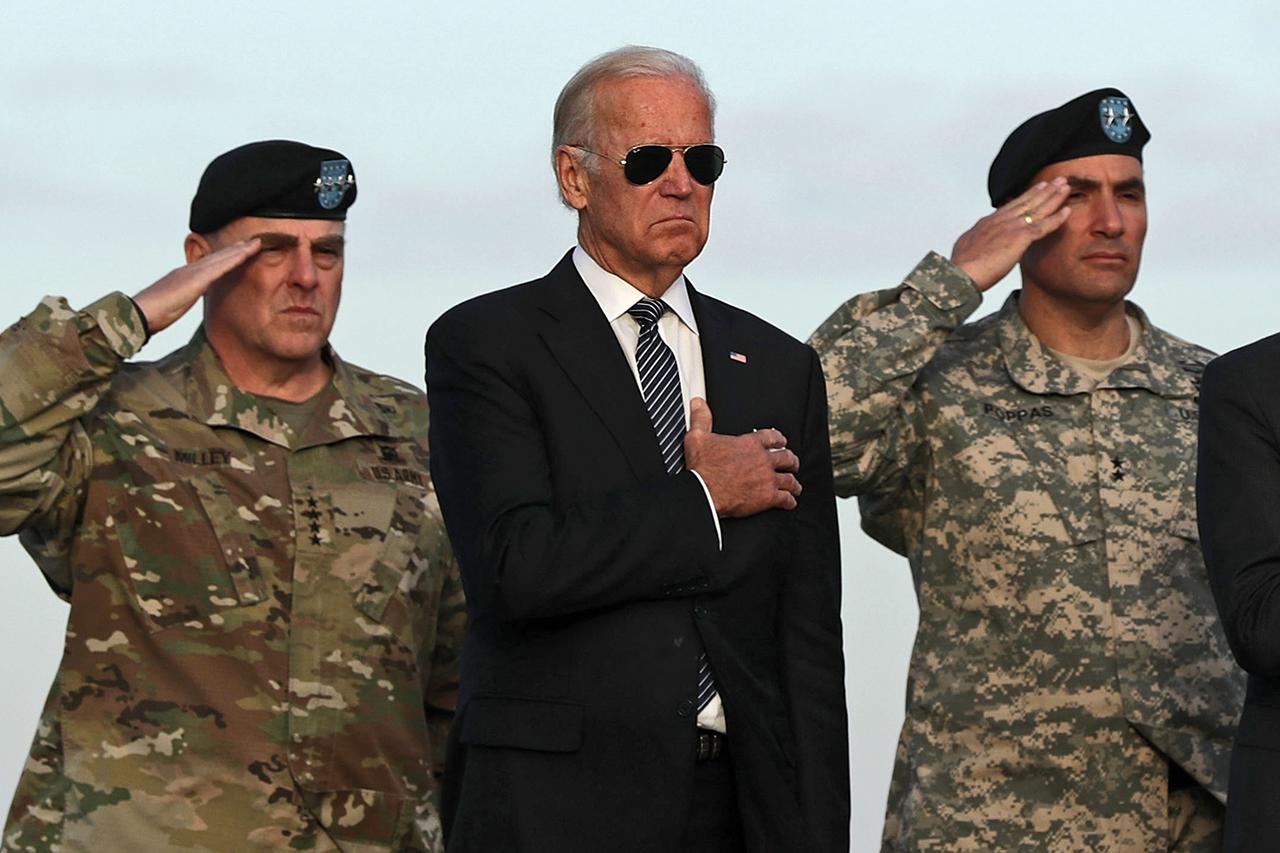
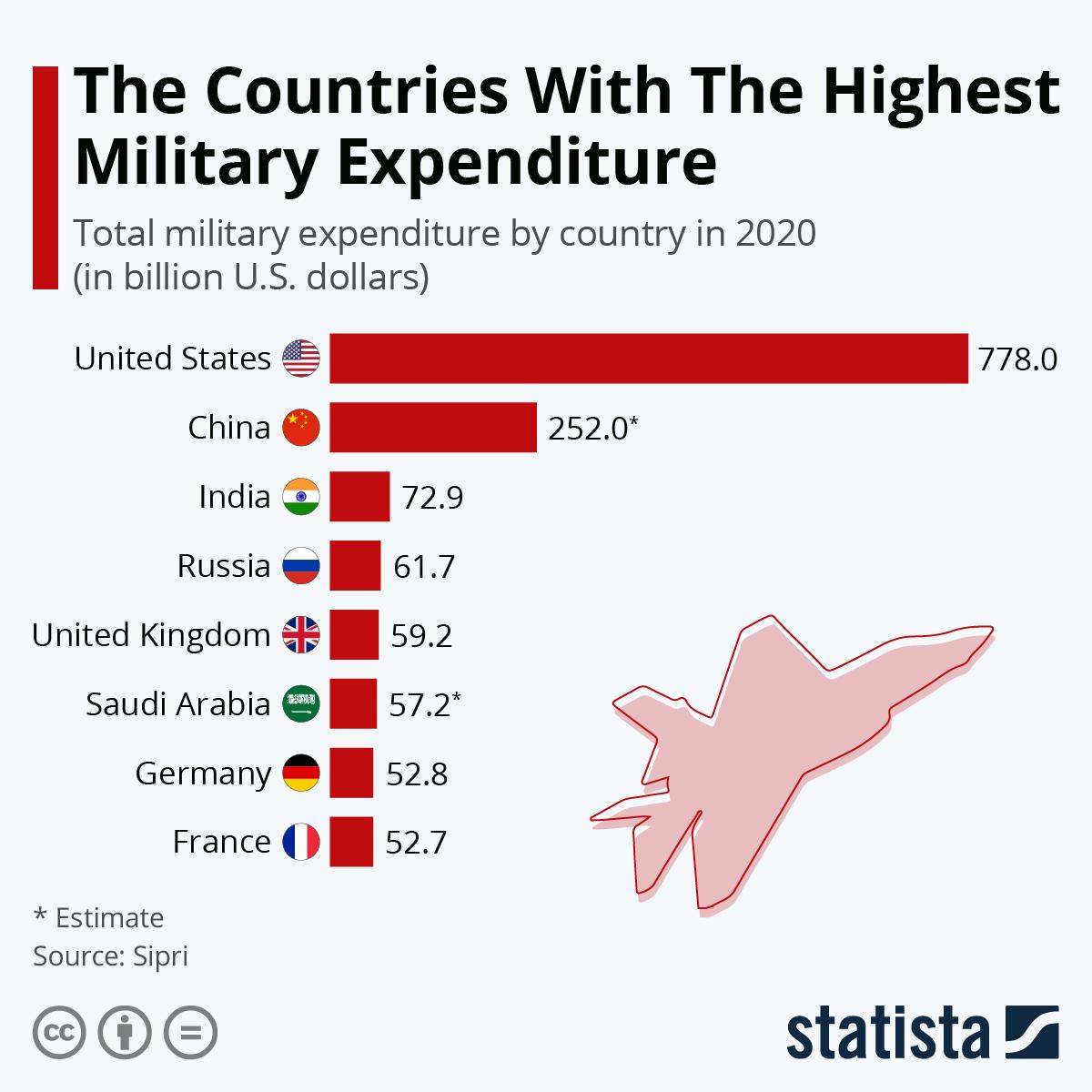
The Senate Armed Services Committee is debating military spending for 2022 this week, and some lawmakers want tomassively increase the budget that President Biden has requested.
For the 2022 fiscal year, Biden requested about $753 billion for national security spending, including about $715 billion that will be the base budget for the Pentagon. According to a report from Military Times, one amendment being pushed by Republicans on the committee would increase the Defense Department’s budget by a whopping $25 billion.
Sen. Jim Inhofe (R-OK), the ranking member of the committee, said he believes the $25 billion increase might have bipartisan support. “I feel very confident about getting support, from Democrats too,” he said.
The increase in funding would be meant to give military services’ weapons and training programs that are not covered by Biden’s budget. For example, the Army wants an additional $1.1 billion for training and another $1.9 billion for aviation platforms and combat vehicles.
Biden’s massive budget request is not enough for Republican hawks who don’t think the administration is doing enough to compete with China, although the Pentagon has agreed that Beijing is the top “pacing threat” facing the US military.
The $716 billion budget proposal represents a 1.4 percent increase over fiscal 2021 spending levels, a figure that Republicans say does not keep up with inflation costs. Numerous GOP members have publicly attacked the plan, saying it failed to keep pace with the threats presented by China and terrorist groups around the globe.
Here We Go Again: Toyota Shutters Factory In Thailand Due To COVID ‘Delta’ Variant
Today in “are we going to do the entire lockdown again for the Delta variant despite the entire world having access to vaccines” news…
Toyota says it is halting operations at three of its factories in Thailand as a result of the Delta variant disrupting the supply of automotive parts globally. The stoppage began on July 21 and will last until at least July 28, according to a report from Nikkei.
The report says that Toyota “has sourced wire harnesses to connect electrical components from an external factory, which was recently forced to shut down”.
The annual production capacity of the factories that have been shuttered is 760,000 units. They produced only 440,000 units in 2020 and Thailand is the 3rd largest overseas hub for Toyota, after China and the U.S.
The shuttered factories are mainly responsible for producing the Corolla and the company’s Hilux pickup. It is the second time the company’s Thailand factories have been closed down, with the first being in March 2020 at the onset of the pandemic.
The Delta variant is “overwhleming” southeast Asia according to the report and the Thai government has “resorted to a business lockdown of affected provinces to contain the situation”.
Similarly, Malaysia also went into a nationwide lockdown in June, forcing auto factories there to close. “Indonesia has now overtaken India as the Asian epicenter of the pandemic,” Nikkei concluded.
Putting the fight against critical race theory –which holds that white people are inherently racist— on a firmer footing by emphasizing that teaching it in public schools violates the Constitution and civil rights laws is an excellent tactic, supporters of traditional patriotic education told The Epoch Times.
Their comments came after Austin Knudsen, Republican attorney general of Montana, wrote a legal opinion about whether Marxist-invented critical race theory (CRT) violated the U.S. and Montana constitutions as well as various federal civil rights laws. He was responding to an inquiry by Elsie Arntzen, Montana’s superintendent of public instruction, also a Republican.
The opinion came as public resistance to CRT grows and intensifies among parents in communities across the country who are fighting back by protesting and taking over local school boards. In 26 state legislatures bills have been introduced or other steps have been taken to prevent CRT from being taught, according to Education Week.
But those measures have rarely offered a comprehensive rationale for banning CRT, which is something Knudsen’s legal opinion provides, sources consulted for this article told The Epoch Times. Without tying objections to CRT to the Constitution or state constitutions, CRT opponents had left their laws more susceptible to being overturned.
Acknowledging resistance to CRT in education is “absolutely grassroots” and led by parents at the local level, Ian Prior, a parent who helped to found and is executive director of Virginia-based Fight for Schools, said Knudsen did the right thing.
“Whenever one is taking action against policies being pushed downstream from the highest levels of government authority, having a rock-solid legal basis for those actions is absolutely necessary to accomplish required change and do so in a way that will not fluctuate with changes in political power,” Prior said.
David Randall, director of research at the National Association of Scholars, told The Epoch Times that in his view “there has been a sudden spike of outrage by ordinary people, that the professional political class has been caught off-guard by it, and that they are struggling to catch up with popular outrage rather than fanning it.”
Although legal opinions like Knudsen’s are needed, much more is required for the fight, he said.
“Our elite institutions have practiced unconstitutional race discrimination for decades, regardless of the Constitution and the law. They will continue to do so until the people reassert control over their authoritarian elites. The solution must be political as well as legal. We need Knudsen, but we also need an effective political movement to remove all the elite discriminators from the chokepoints of power.”
Adam Waldeck, founder of 1776 Action, a nonprofit group, said “the tighter and more grounded these anti-CRT laws are the better, and there are no doubt preexisting laws on the books against discrimination that CRT opponents should look to as well.”
“That said, the opposition to CRT started at the local grassroots level and that must continue, particularly in regards to school boards. It’s up to voters to make sure that their officials (and relevant candidates) state exactly what they believe and support, which is exactly why we created The 1776 Pledge to Save Our Schools.”
In his legal opinion, Knudsen wrote that in many instances the use of CRT and so-called antiracism programming does discriminate “on the basis of race, color, or national origin in violation of the Equal Protection Clause of the Fourteenth Amendment, Title VI of the Civil Rights Act of 1964, Article II, Section 4 of the Montana Constitution, and the Montana Human Rights Act.”
CRT, he noted, calls for teaching students how white people are supposedly by their nature racist and for engaging in racial discrimination in the name of combating it.
What Is Critical Race Theory?
“The driving force behind CRT and antiracism is the complete and total acceptance of a specific worldview—one that encompasses very specific notions about history, philosophy, sociology, and public policy. Being a so-called ‘antiracist’ requires individuals to accept these premises and advocate for specific policy proposals. Individuals who do not comply cannot truly be ‘antiracist,’ and are, therefore, considered racist,” Knudsen wrote.
“By its own terms, antiracism excludes individuals who merely advocate for the neutral legal principles of the Constitution, or who deny or question the extent to which white supremacy continues to shape our institutions,” he wrote. “To that end, no one can be antiracist who does not act to eliminate the vestiges of white supremacy, i.e., embrace the specific public policy proposals of CRT and antiracism.”
“For example, critics have suggested that there is one, and only one, correct stance on standardized testing, drug legalization, Medicare for All, and even the capital gains tax rate. This paradigm is conveniently constructed ‘like a mousetrap,’” Knudsen wrote, quoting Christopher Rufo.
“Disagreement with any aspect becomes irrefutable evidence of its premises of systemic racism, bias, fragility, or white supremacy. … CRT and antiracism are not merely academic ideas confined to university critical studies courses. These ideologies have begun to infiltrate mainstream American dialogue and permeate our institutions.”
Compelled Speech
Knudsen argues that, “Trainings, exercises, or assignments which force students or employees to admit, accept, affirm, or support controversial concepts such as privilege, culpability, identity, or status, constitute compelled speech,” which is something the First Amendment forbids the government from forcing people to do.
“It is obvious that CRT and antiracism programming take strident positions on some of the most controversial political, societal, and philosophical issues of our time. Compelling students, trainees, or anyone else to mouth support for those same positions not only assaults individual dignity, it undermines the search for truth, our institutions, and our democratic system.”
Some schools have proposed separate housing and advisors based on race, as well as separate professional development training, he wrote. Some universities have been sued for diversity programs in which “they make people get down on the floor and apologize for being white.”
Key elements of CRT and antiracism education and training, when used to classify students or other Montanans by race, run afoul of the U.S. Constitution and federal and state civil rights laws, Knudsen wrote.
“The term ‘antiracism’ appears reasonable and innocuous on its face. After all, our Constitution, our laws, and nearly all our citizens are ‘antiracism,’” he wrote. But “antiracism,” when used to describe radical activists’ worldview, is “an Orwellian rhetorical weapon.”
Knudsen added that the National Museum of African American History and Culture’s website had a page dealing with “Whiteness,” that bizarrely claimed traits such as “individualism,” “hard work,” “objectivity,” “progress,” “politeness,” “decision-making,” and “delayed gratification” were hallmarks of “white culture.”
Teaching CRT
CRT supporters have lashed out at critics. Michelle Leete, Vice President of Training at the Virginia PTA (Parent Teacher Association) wished death on CRT opponents at a public event on July 15. Two days later Leete, who is also a vice president of the NAACP’s chapter in Fairfax County, Virginia, was forced to resign her PTA post. The American Federation of Teachers and National Education Association have vowed to defend their members who teach CRT.
After he was inaugurated, President Joe Biden promptly rescinded former President Donald Trump’s Executive Order 13950, which banned teaching CRT to government contractors. Trump said the ideology was “divisive and harmful” and “like a cancer.”
Critical race theory—whose proponents frequently denounce American culture and history as “Eurocentrism” and “whiteness”—is “a variation of critical theory applied to the American context that stresses racial divisions and sees society in terms of minority racial groups oppressed by the white majority,” according to the report of the 1776 Commission, an advisory body created by Trump, which sought to move U.S. education away from a radical curriculum that unduly emphasized race-related injustices of the past.
“Equally significant to its intellectual content is the role Critical Race Theory plays in promoting fundamental social transformation,” the report states, “to impart an oppressor-victim narrative upon generations of Americans. This work of cultural revolution has been going on for decades, and its first political reverberations can be seen in 1960s America.”
Trump unveiled the commission last year as the New York Times-promoted 1619 Project gained widespread acceptance among elites as it rode a wave of national revulsion over the death in Minneapolis police custody last year of black suspect George Floyd which was popularly blamed on anti-black racism by police.
The 1619 Project claims real American history began when the first African slaves arrived in colonial America in 1619, and not on July 4, 1776, when the colonists declared independence from the United Kingdom. Educators helped to lay the foundation for the revisionist history project years ago by teaching the ahistorical “A People’s History of the United States,” by academic Howard Zinn, who was a member of the Communist Party USA. Millions of copies of the book have been sold.
Leftists claim CRT promotes racial equality by highlighting the supposed damage that white people have done to others in society. Left-wing sociology professor Robyn Autry of Wesleyan University, praised Biden for killing the commission, falsely claiming it promoted a “dangerous alternative history,” instead of seeking a return to the traditional way the country’s history has been taught.
Subversion
But critical race theory “is designed to subvert our system of government,” Mary Grabar, resident fellow at the Alexander Hamilton Institute for the Study of Western Civilization told The Epoch Times.
“Distorted history, such as The 1619 Project, is used to make CRT seem plausible. CRT is inherently anti-Constitutional … and cannot be justified at the K-12 and even undergraduate levels because students are still learning history in terms of fundamentals and facts. They cannot perceive its Marxist underpinnings.”
Grabar’s new book, “Debunking the 1619 Project,” will be published by Regnery on Sept. 7. She is also author of “Debunking Howard Zinn,” published in 2019.
UK’s Sending 2 Warships To Japan Infuriates China – Warns Against “Flexing Muscles”
China is urgently warning Britain against “flexing muscles” in and around its claimed territorial waters after the UK confirmed it is sending two warships to be permanently stationed off Japan to patrol Asian waters.
Chinese Foreign Ministry spokesperson Zhao Lijian said in the wake of the announcement earlier this week that Beijing “firmly opposes the practice of flexing muscles at China.” His Wednesday comments to reporters further described that any ‘permanent’ UK military presence “undermines China’s sovereignty and security, and harms regional peace and stability.”
As we described previously, Britain’s Defense Minister Ben Wallace this week unveiled that the UK will keep two warships in the region while in Tokyo meeting with his Japanese counterpart, Nobuo Kishi. “Following on from the strike group’s inaugural deployment, the United Kingdom will permanently assign two ships in the region from later this year,” he had said.
It broadly demonstrates that Britain has of late joined Washington in deepening its security ties with Japan at a moment tensions with China over Taiwan and other contested islands are at their highest in years. The US-UK military build-up appears centered on growing rumors of a near-future Chinese military move on Taiwan, also as the PLA military has of late sent unprecedented numbers of aircraft to breach Taiwan’s Defense Identification Zone.
Rabobank had this to say as the HMS Queen Elizabeth aircraft carrier is en route to the region – first taking part of joint exercises with regional allies including the US Navy:
…The UK just announced its two new aircraft carriers will be based in Japan from now on, with the first due to arrive in September. Think about that for a moment. Two vastly-expensive pieces of military equipment, full of US-made F-35s, and British sailors and sausages, kept on the other side of the world. It says a huge amount about the UK’s intentions to go global in at least one dimension – alongside the Quad. Expect new trade architecture to eventually flow as a quid pro quo, or else the UK isn’t doing diplomacy right. (And that is admittedly a real possibility with the current UK bridge crew, as we see with Northern Ireland.)
Britain is indeed describing a “realignment” to the Indo-Pacific based on its “commitment to collective security”.
UK’s largest warship enters Indian Ocean, to conduct exercises with Indian Navy
HMS Queen Elizabeth, country’s most ambitious naval deployment, warships will sail to South China Sea for military drills with US Navy and Japan’s Maritime Self-Defense Force https://t.co/afsejSo55t
Japan is of course welcoming this at a moment the historic Senkaku Islands dispute with Beijing in the East China Sea is again heating up, while an anxious China looks on with growing anger, as Newsweek details:
The Queen Elizabeth Carrier Strike Group, which also has U.S. Navy and Royal Netherlands Navy escorts, is scheduled to transit the contested South China Sea on its way to Japan. China claims almost all of the energy-rich sea as part of its expansive “nine-dash line.”
Earlier this summer China warned the Western allies – specifically the US, UK, and NATO that its military will not “sit by and do nothing” if “challenges” arise. No doubt Beijing will see any new US and UK ‘permanent’ military deployment off Japan as reason enough to act with its own ‘muscular’ deployment in response.
The American Civil War is often thought of as being the deciding historical factor putting to rest any future ambition of individual or groups of states wanting to secede from the union.
Well over a century later, the idea of secession appears far from settled in the minds of millions of Americans—Democrats and Republicans alike.
In fact, secession mindedness has been gaining ground following the 2016 and 2020 presidential elections, which showed the nation to be more politically divided than ever.
A newly released poll found that two-thirds (66 percent) of Republicans living in southern states, including Texas and Florida, would approve of seceding from the United States to join a union of southern states.
That number is up from 50 percent from a similar poll conducted earlier this year.
Among southern Democrats, 20 percent are in favor of breaking away and forming a new country, according to the latest poll by YouGov and Bright Line Watch of 2,750 Americans.
For Daniel Miller, president of the Texas Nationalist Movement, founded in 2005, the poll numbers are revealing but not surprising.
Similar polls conducted in the Lone Star State have also shown a willingness among Texans to leave the union and establish their own nation—a Texit, if you will.
“You look at the size of our movement—we are literally the largest political advocacy organization in the state” with over 400,000 members, Miller told The Epoch Times in a phone interview.
At the very core of the state’s secessionist movement is the belief that Texas is “past the breaking point” in terms of dealing with a liberal Washington establishment and its unfavorable policies regarding border control, immigration, culture, and finance, Miller said.
“We are being crushed by 180,000 pages of federal laws, rules and regulations every single day. What we want is a basic fundamental right of self-governance. Texans want to be able to create policies that can’t be overridden [by Washington politicians],” Miller said. “That is what this movement is all about.”
Throughout his speaking engagements, Miller said, “I couldn’t find anyone that would vote to join the union.”
Miller said Texas House Bill 1359 would have allowed Texans to vote in a referendum on the question of whether the state should leave the union and establish an independent republic. The bill died in committee.
In the aftermath, the Texas Nationalist Movement has been “quietly” recruiting secessionist-minded candidates to run in the 2022 primary.
The organization is also working to garner 80,000 signatures necessary to petition for a non-binding advisory ballot vote on the Texit proposal. The measure would need a simple majority to pass.
Miller, however, said it would be up to the newly configured legislature to “put the next steps in place for full withdrawal.”
“This is not a ‘mother may I?’ movement,” he said. “If the federal government needed a new motto, it’s ‘one size fits none.’”
The Calexit movement in California is another breakaway effort whose goal is to divide the rural portions of the state from the coastal and liberal bastions to create the 51st state.
In Arizona, the liberal-led Baja Arizona movement in 2011 sought to split the state into two separate states over the increasing partisan divide between the more conservative north and liberal southern areas.
The non-binding initiative failed to gather the required number of signatures to place the measure on the 2012 election ballot.
Other lesser known separatist movements in the United States have sprung up in states such as Vermont, Hawaii, and Alaska, though not all currently active movements desire secession from the United States.
The Greater Idaho movement, for example, seeks a political merger of the rural eastern and southern counties in Oregon with neighboring conservative Idaho.
“After Trump was elected the first time, in January 2017 Oregonians submitted a petition to place secession from the U.S. on the state ballot, and were only convinced to retract the petition by death threats,” according to a Greater Idaho statement to The Epoch Times.
“One of our concerns is that after an economic depression, or after a more muscular Republican is elected president, conditions might deteriorate to the point that Oregon may choose to secede from the U.S. Eastern and southern Oregon certainly wouldn’t want to join northwestern Oregon in such an adventure, because our counties belong with Idaho.”
The Cascadia secession movement, which proposes a union of Oregon, Washington, and British Columbia in Canada as a single “bioregion,” in Oregon is broadly supported, and “held back by the ‘normalcy bias’ of people expecting the future to look like the present,” the Greater Idaho statement added.
“We admit that if the border of Oregon and Idaho were relocated as we propose, that northwestern Oregon would be more likely to be able to secede from the U.S., but that’s a chance we’re willing to take because our counties certainly don’t want to be stuck with [liberal] Portland.”
The organization added, “We are confident that we will convince Idaho to accept our counties. Congress usually approves interstate compacts approved by both blue and red state[s]. We expect that the chances of the Greater Idaho movement being successful [will] depend entirely on whether we are able to convince northwestern Oregon to let our counties go.”
According to Hans A. von Spakovsky, a senior legal fellow at The Heritage Foundation, which promotes conservative public policies, the question of state secession was settled by the Civil War.
However, while border realignments between states are within the realm of congressional approval, he said, “the practical difficulties are so great” that they are unlikely to occur.
Regarding state secession, “it’s not an area where we’ve been keeping our fingers” on recent activity, von Spakovsky said.
In West Virginia, state Rep. Gary Howell, a Republican, is sponsoring a resolution inviting conservative Virginia counties to dissolve their borders and join West Virginia.
Such a “Vexit” measure would require the approval of both states’ legislatures. Howell added that the benefits of the proposal are many.
“You can elect every liberal you want and have the liberal utopia you want,” he said regarding the liberal counties in Virginia.
“There won’t be anybody standing in their way. This is a very serious offer to them. We have looked at the numbers. We want Virginia to make an actual request and hold a referendum in all counties [involved]. If they don’t make the ask, [the counties] have to be released from Virginia in some form.”
“You’ve got cities in the western part of Virginia saying, ‘We’re done with you,’” Howell added. “Is [Vexit] unlikely to happen? Probably. It’s a long shot, but the odds are not zero.”
“He Totally Distorted Reality” – Fauci Accuses Paul Of Slander During Congressional Showdown
Rand Paul’s skewering of Anthony Fauci during a Congressional hearing earlier this week – followed by the senator’s announcement that he planned to write a letter to the DoJ asking that Fauci be investigated for lying to Congress – emerged as a major story. Even mainstream reporters like the Washington Post’s Josh Rogin asserted that Fauci hadn’t been truthful in his characterization of the NIH’s role in financing dangerous research involving bat coronaviruses at the Wuhan Institute of Virology.
The incident has clearly had an adverse impact on Fauci’s already tarnished reputation, and we imagine if the administration wasn’t in such a panic about the Delta variant, WaPo, CNN and NYT would be printing anonymously sourced stories about the administration’s growing frustration with Fauci and his – as Paul put it – potential “moral culpability”.
For those who haven’t been following along, here’s a quick summary: in the years before SARS-CoV-2 first started infecting people in Wuhan, the Fauci-led NIH gave grant money to an organization called EcoHealth Alliance. That group then turned around and funneled money to the Wuhan Institute of Virology, to help finance ‘gain-of-function’ research on bat coronaviruses. ‘Gain-of-function’ research involves manipulating viruses to make them more virulent and infectious against humans in the hopes that the scientists will deepen their understanding of how they work, and how to prevent them. However, the Obama Administration made it illegal to finance this type of research with federal dollars, lifting the ban just days before President Trump took office.
As Sen. Paul pointed out before Congress, the report describing the research underway at the WIV involved “viruses that in nature only infect animals were manipulated in the Wuhan lab to gain the function of infecting humans. This research fits the definition of the research that the NIH said was subject to the pause in 2014-2017, a pause in funding on gain-of-function. But the NIH failed to recognize this.”
Reporting from the Australian shows Fauci has (in the past) been an outspoken proponent of this type of research, even claiming that pursuing it was “worth the risks” of a deadly pandemic. We suspect he feels different today.
Some have suggested that this is why Fauci pushed back so hard against the lab leak theory (until he finally acknowledged the theory’s ‘plausibility’). And Sen. Paul said during an interview on Fox News that Fauci is clearly too “conflicted” to be running the country’s COVID response.
Now, it looks like Fauci is fighting back once again. In a headline that will almost certainly be picked up by the MSM, Fauci is claiming that Paul’s “inflammatory” comments amounted to slander.
Both men accused one another of “lying” during a heated back-and-forth abotu the level of the National Institute of Health’s role in funding gain-of-function research at China’s WIV. Fauci made the remarks during an interview with MBNBC’s “The Beat” Wednesday evening.
“I don’t any take great pleasure, Ari, in clashing with the senator,” Fauci said. “I have a great deal of respect for the institution of the Senate of the United States.”
“But he was completely out of line,” the doctor continued. “He totally distorted reality. And he made some inflammatory and, I believe, slanderous remarks about lying under oath, which is completely nonsense.”
“I mean, and some of the things he says are so distorted and out of tune with reality, I had to call him on that,” he added. “I didn’t enjoy it, but I had to do that because he was completely out of line. Totally inappropriate.”
Watch the clip below:
“I don’t take any pleasure in clashing with a senator,” Dr. Fauci says after heated exchange with Sen. Paul, adding that Paul was “completely out of line” and “made some inflammatory and, I believe, slanderous remarks about lying under oath.” pic.twitter.com/aSvnYd3ndI
Of course, Fauci didn’t get into the details of Paul’s claim, nor offer to explain exactly why Paul is incorrect. And MSNBC’s Ari Melber seemed just fine with that.
Mississippi AG Asks Supreme Court To Overturn Roe v. Wade
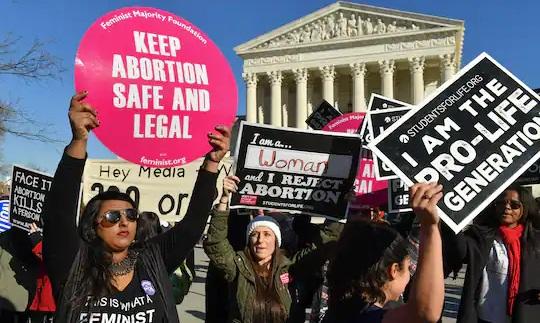
Mississippi’s Attorney General on Thursday asked the Supreme Court to overturn Roe v. Wade, calling the right to abortion “egregiously wrong,” while also asking the court to uphold a state law that bans most abortions after 15 weeks of pregnancy.
According to the New York Times, “The court will hear arguments in the case in the fall, giving its newly expanded conservative majority a chance to confront what may be the most divisive issue in American law: whether the Constitution protects the right to end pregnancies.”
Mississippi’s 15-week abortion statute was struck down by lower courts, which called it a cynical and calculated assault on abortion rights which are at odds with precedent set by the Supreme Court.
In May, the USSC agreed to hear the case, several months after anti-abortion Justice Amy Coney Barrett joined the panel – replacing abortion rights advocate Ruth Bader Ginsburg, who died in September.
“The Constitution does not protect a right to abortion,” wrote Mississippi Attorney General Lynn Fitch, adding “The Constitution’s text says nothing about abortion. Nothing in the Constitution’s structure implies a right to abortion or prohibits states from restricting it.”
The new filing, from Attorney General Lynn Fitch, was a sustained and detailed attack on Roe and the rulings that followed it, notably Planned Parenthood v. Casey, the 1992 decision that said states may not impose an “undue burden” on the right to abortion before fetal viability — the point at which fetuses can sustain life outside the womb, or about 23 or 24 weeks. –New York Times
According to Fitch, the scope of abortion rights should be determined through a political process.
“The national fever on abortion can break only when this court returns abortion policy to the states — where agreement is more common, compromise is often possible and disagreement can be resolved at the ballot box,” she wrote.
At issue is Dobbs v. Jackson Women’s Health Organization, No. 19-1392, enacted in 2018 by the GOP-controlled Mississippi legislature. The law bans abortions if “the probable gestational age of the unborn human” was medically determined to be 15 weeks or more, with narrow exceptions for medical emergencies or “a severe fetal abnormality.”
The precise question the justices agreed to decide was “whether all pre-viability prohibitions on elective abortions are unconstitutional.” Depending on how the court answers that question, it could reaffirm, revise or do away with the longstanding constitutional framework for abortion rights.
Ms. Fitch urged the justices to take the third approach, saying it would bolster the legitimacy of the court. –New York Times
“Roe and Casey are unprincipled decisions that have damaged the democratic process, poisoned our national discourse, plagued the law — and, in doing so, harmed this court.”
Mississippi AG Asks Supreme Court To Overturn Roe v. Wade
Mississippi’s Attorney General on Thursday asked the Supreme Court to overturn Roe v. Wade, calling the right to abortion “egregiously wrong,” while also asking the court to uphold a state law that bans most abortions after 15 weeks of pregnancy.
According to the New York Times, “The court will hear arguments in the case in the fall, giving its newly expanded conservative majority a chance to confront what may be the most divisive issue in American law: whether the Constitution protects the right to end pregnancies.”
Mississippi’s 15-week abortion statute was struck down by lower courts, which called it a cynical and calculated assault on abortion rights which are at odds with precedent set by the Supreme Court.
In May, the USSC agreed to hear the case, several months after anti-abortion Justice Amy Coney Barrett joined the panel – replacing abortion rights advocate Ruth Bader Ginsburg, who died in September.
“The Constitution does not protect a right to abortion,” wrote Mississippi Attorney General Lynn Fitch, adding “The Constitution’s text says nothing about abortion. Nothing in the Constitution’s structure implies a right to abortion or prohibits states from restricting it.”
The new filing, from Attorney General Lynn Fitch, was a sustained and detailed attack on Roe and the rulings that followed it, notably Planned Parenthood v. Casey, the 1992 decision that said states may not impose an “undue burden” on the right to abortion before fetal viability — the point at which fetuses can sustain life outside the womb, or about 23 or 24 weeks. –New York Times
According to Fitch, the scope of abortion rights should be determined through a political process.
“The national fever on abortion can break only when this court returns abortion policy to the states — where agreement is more common, compromise is often possible and disagreement can be resolved at the ballot box,” she wrote.
At issue is Dobbs v. Jackson Women’s Health Organization, No. 19-1392, enacted in 2018 by the GOP-controlled Mississippi legislature. The law bans abortions if “the probable gestational age of the unborn human” was medically determined to be 15 weeks or more, with narrow exceptions for medical emergencies or “a severe fetal abnormality.”
The precise question the justices agreed to decide was “whether all pre-viability prohibitions on elective abortions are unconstitutional.” Depending on how the court answers that question, it could reaffirm, revise or do away with the longstanding constitutional framework for abortion rights.
Ms. Fitch urged the justices to take the third approach, saying it would bolster the legitimacy of the court. –New York Times
“Roe and Casey are unprincipled decisions that have damaged the democratic process, poisoned our national discourse, plagued the law — and, in doing so, harmed this court.”
Iranian Officer Killed In Worsening Water Crisis Protests – Internet Shutdowns Imposed
Water and power shortage protests in Iran have now been raging continuously for one week, resulting in multiple deaths and injuries particularly out of the restive southwest oil-rich province of Khuzestan, including the death of a police officer.
State media by mid-week has reported a death toll of three: “According to the state-run IRNA news agency, gunfire killed the officer in the city of Mahshar and another suffered a gunshot wound to his leg,” the AP reports citing state sources.
Tehran has presented the violence and killings as the fault of “rioters” while the State Department early in the week referenced reports of security forces indiscriminately opening fire on peaceful protesters.
“We support the rights of Iranians to peacefully assemble and express themselves… without fear of violence, without fear of arbitrary detention by security forces,” State Dept. spokesman Ned Price said.
Chants saying “down with the Ayatollah” have also been reported based on widely circulating social media videos, also with external Iranian opposition groups as well as Saudi-funded think tanks in the West attempting to seize on the protests as an “opportunity” to weaken and overthrow the Islamic Republic regime.
Iran Protests: Protestors closing the road in Borazjan from lack of water & electricity, it says. https://t.co/tpHjX9rhED
Behind the crisis are US-led sanctions, severe government mismanagement of resources, but crucially what’s being dubbed the worst drought in 50 years.
IRAN: Protests continue in the oil-rich province of Khuzestan in the heat of the summer. Protesters demand access to clean water.pic.twitter.com/sUBMEs12n3
One opposition group called Human Rights Activists in Iran was cited in AP as saying:
“As nearly 5 million Iranians in Khuzestan are lacking access to clean drinking water, Iran is failing to respect, protect, and fulfill the right to water, which is inextricably linked to the right to the highest attainable standard of health,” the group said.
And in a sign of the growing fierceness of the security response and crackdown, the global web-outage monitor Netblocks has reported widespread internet outages in Khuzestan for days, place of multiple protests across towns and cities, that are part of “state information controls or targeted Internet shutdowns.”
Iran Protests: Water protests in Khuzestan turn anti-government tonight w/clashes & chants of “death to Islamic Republic” & “death to Khamenei.”
Izeh, Khuzestan#خوزستانpic.twitter.com/XjeH5a1Cas
The monitor said outages began on July 15, with outages still being reported into this week…
⚠️Confirmed: Network data show a significant regional disruption to mobile internet service in #Iran beginning Thursday 15 July 2021 amid widespread protests against water shortages in #Khuzestan Province; incident ongoing 📉
Both the energy and water crisis are deepening the outrage of the Iranian populace, particularly during a hot summer, and given apartment high rises in places like Tehran and other big cities are not designed to go long periods without air conditioning. The water protests have reached several cities in the oil rich southwest. And in the balance are the Vienna nuclear talks and a new incoming Iranian president – the former said to be “stalled” till later in August. Thus the crisis is likely set to get worse for the time being.
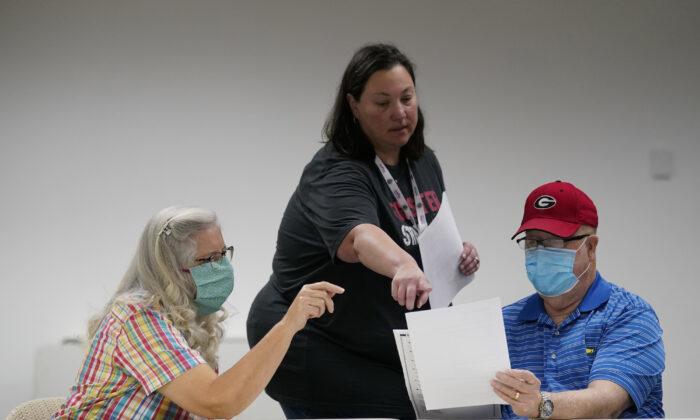
Citing overriding federal authority under the Cyber and Infrastructure Security Agency (CISA), the North Carolina Board of Elections (BOE) has denied a North Carolina House Freedom Caucus (HFC) request to examine voting machines.
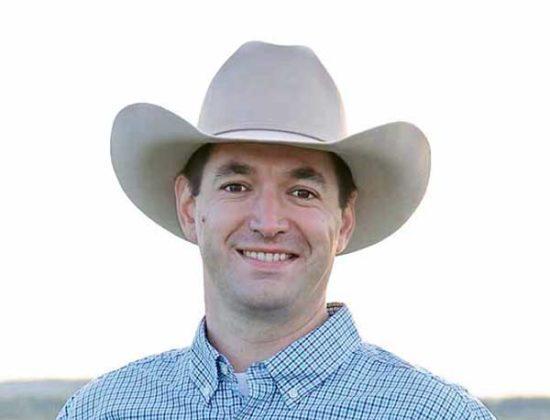
Chairman of the caucus, Rep. Keith Kidwell (R-Beaufort), told The Epoch Times that although there is a statute that requires state employees to comply with requests for data from the North Carolina General Assembly, Karen Brinson Bell, executive director of the elections board, declined the request to inspect voting equipment used in the November 2020 election in a July 7 letter.
During a July 15 press conference, Kidwell said the HFC had been responding to public concern regarding transparency in the election process.
Before the denial, the HFC met with the BOE twice, and Kidwell added that Elections Systems & Software (ES&S), the largest election vendor for North Carolina, agreed to provide access to three voting systems it manufactures.
At the time, ES&S indicated that they would be willing to take any inspected system at a randomly selected precinct by the HFC and recertify the equipment so that there would be no cost to the BOE or county, Kidwell said.
ES&S, he said, “seemed eager” to have the inspection to relieve the public concerns about the equipment.
“We would not invade, compromise, or damage the machines,” Kidwell said in the press conference. “The only thing that would happen is the ES&S service technician would open, show us and allow us to see that there are no modems in the machines.”
According to Bell, in her statement to the HFC, neither ES&S nor the machines manufactured by Hart InterCivic (Hart) have modems, which are prohibited by state law.
After speaking with ES&S officials, Bell said in the statement that “they [ES&S] were unaware of any commitment by the company to take any accessed machines back to their headquarters for recertification.”
ES&S didn’t respond immediately to The Epoch Times in request for a statement.
Critical Infrastructure
CISA, a division of the Department of Homeland Security, classifies voting equipment as “critical infrastructure,” Bell said.
She included a letter from Geoff Hale, director of the Election Security Initiative (ESI) at CISA, in which he said “allowing unknown, unauthorized, or inexpert actors” to access the machines could risk damage and manipulation, which would compromise the security of the equipment.
Bell said that the ESI would not “partake in, nor perpetuate, myths and falsehoods about the voting system or elections.”
Kidwell said he wouldn’t classify members of the General Assembly as “unknown, unauthorized, or inexpert actors.”
The goal of the HFC is to show the public that voting equipment is not a problem, Kidwell said.
“I want to point out that first, we seek transparency in the election process,” Kidwell said. “The North Carolina House Freedom Caucus believes that every legal vote should be counted, but not a single illegal vote should be counted.”
The HFC has made no false or “misleading statements about the machines, processes, or staff,” Kidwell said.
“In fact, we have sent out press releases and made social media post that clearly stated we thought—from what we had seen to date—our system did not have modems, and appeared to be secure,” Kidwell said.
Up until the statement from Bell, Kidwell said the HFC had been “impressed by the cooperation” from the BOE.
“Now we’ve hit a wall,” Kidwell said in the press conference. “That wall—they’re seemingly hiding behind. Miss Bell, tear down that wall, unless you have something to hide.”
The BOE told The Epoch Times that it’s not aware of a statute that allows a member of the General Assembly access to voting machines.
Because county boards of elections are legally responsible for the voting equipment, access must be restricted to prevent tampering, said the BOE.
North Carolina General Statute 120-19 states that “all officers, agents, agencies and departments of the State are required to give any committee of either house of the General Assembly, or any committee or commission whose funds are appropriated or transferred to the General Assembly or to the Legislative Services Commission for disbursement, upon request, all information and all data within their possession, or ascertainable from their records.”
“Here is the key,” Kidwell said. “This requirement is mandatory.”
Kidwell added that, at this point, he’s not asking for a “full-blown audit,” which is what took place in Arizona when Florida-based tech firm Cyber Ninjas performed a months-long forensic audit.
Last week, Arizona’s GOP-led state Senate held a hearing in which Cyber Ninja CEO Doug Logan spoke, telling senators that, among other discrepancies, auditors could find no record of the county sending more than 74,000 mail-in ballots.
After the hearing, some Republicans called for Arizona’s 11 electors—who went for Biden—to be recalled, to which Arizona Senate President Karen Fann, a Republican, said that the state Senate can’t recall electors.