“Leadership Is Shifting”: Goldman Says Business Sentiment, Job Growth And QE Have Peaked – What Happens Next

“Leadership Is Shifting”: Goldman Says Business Sentiment, Job Growth And QE Have Peaked – What Happens Next

Two weeks after Goldman speculated that this market was “as good as it gets” when it joined other big banks – such as Deutsche Bank, Morgan Stanley and JPMorgan – in turning bearish and warning of a market drop in the coming months, the bank has doubled down and as Goldman strategist Chris Hussey writes, after an April of ‘regular way’ trading, “the S&P 500 reverted to it pro-cyclical tilt that we have seen for the majority of the year with mega-cap Tech actually losing ground on the week at the same time that Industrials, Financials, and Energy stocks posted notable gains.”

What is even more interesting is that the rotation chose last week to resume (as confirmed by Modnay’s even more dismal action) with a vengeance given three pieces of news that seemingly work against the pro-cyclical trade:

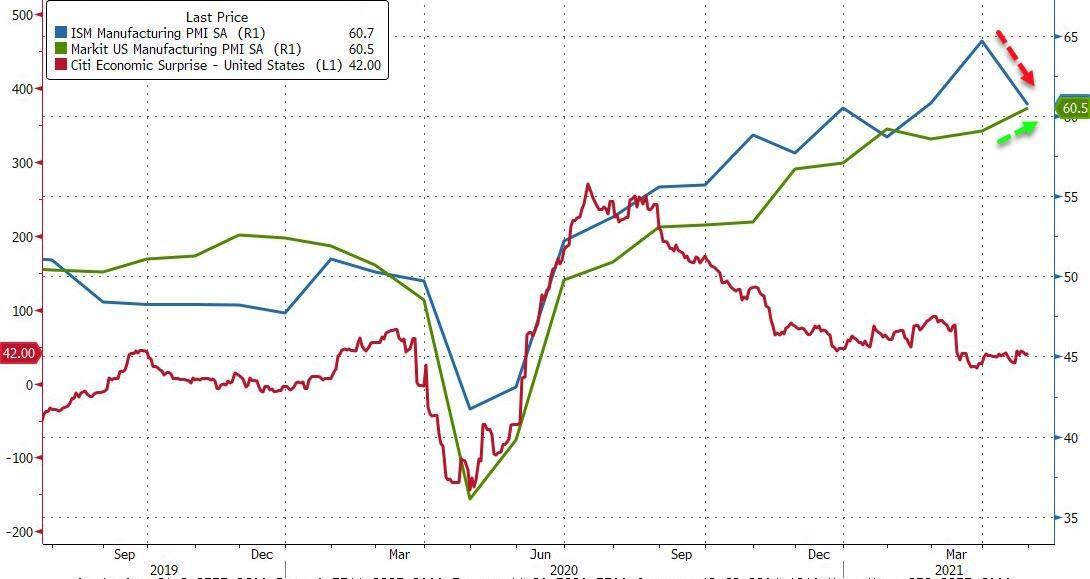
  • Business sentiment may have peaked. We started the week with a notable down-tick in the ISM Manufacturing index to 60.7 from 64.7
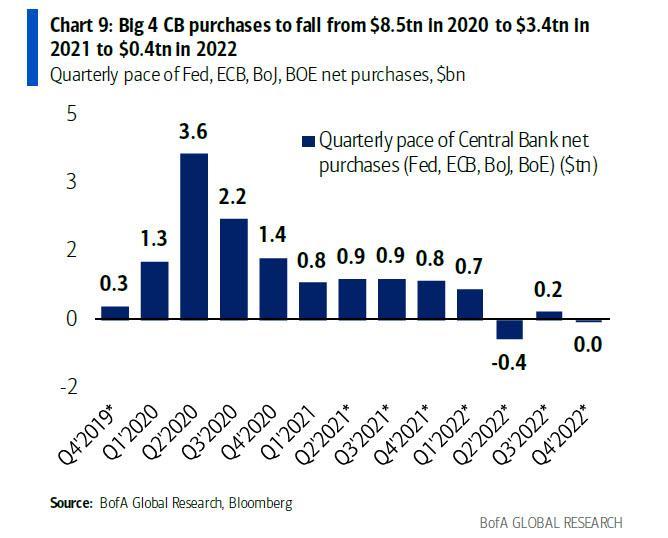
  • QE may have peaked. The move also came at the same time as the first major.central bank — the BoE — surprisingly reduced its QE program — signaling a turning point in UK monetary policy. Meanwhile, as BofA’s Michael Hartnett calculates, the big 4 central banks’ QE is set to fall from $8.5tn in ‘20 to $3.4tn in ‘21 to just $0.4tn in ’22, and in Q2/Q3 “the stronger the macro the quicker & bigger the taper.”
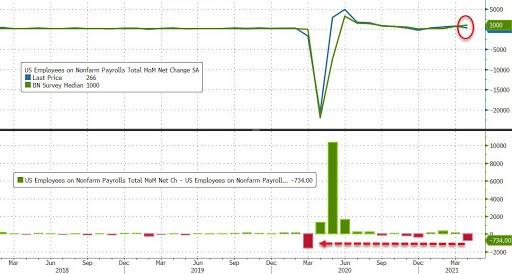
  • Job growth may have peaked. We finishing last week with a very surprisingly disappointing April Payrolls report which showed only 266k net new jobs were created against expectations for an increase of 1 million jobs or more. The unemployment rate also bumped up to 6.1% (because more people are now looking for work) and average hourly earnings grew by 0.7% mom versus consensus expectations (at least among economists) for no growth (as not enough low-paying jobs were created).
Yet potentially peaking growth and signs of an end to low central bank-enabled interest rates was apparently no obstacle to leaning further into stocks that should benefit from a post-pandemic growth phase. Well, in retrospect that’s not very surprising – the market lost its ability to discount the future a few months into QE1 when the Fed would simply step in any time there were “market conditions” in the market, i.e., more sellers than buyers.

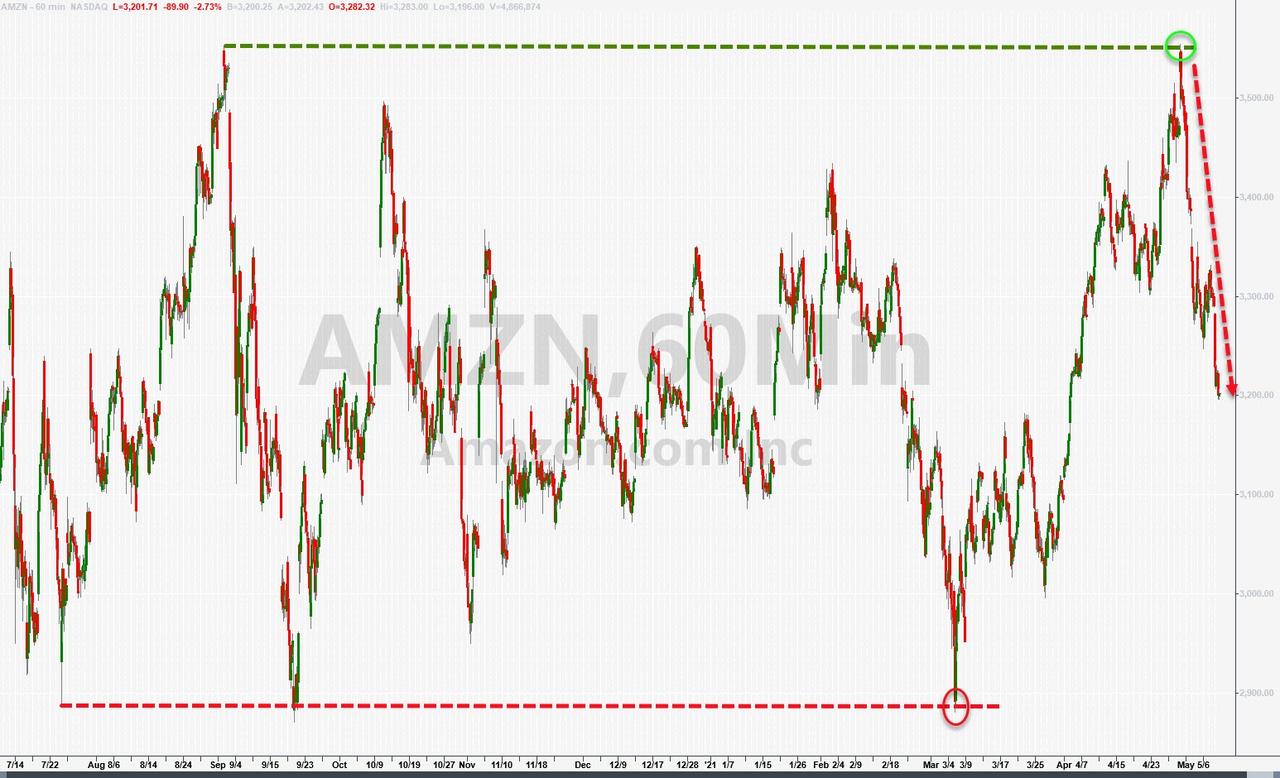
Then again, on the flip side of the procyclical trade sits mega-cap Tech with 3 of the 5 FAAMG stocks declining in value last week led by a 4%+ drop in AMZN, a drop which continued for another 3% on Monday, and pushing the stock into a deep correction from its all time highs just over a week earlier when the company reported blow out earnings. Not even today’s announcement that Amazon would sell $18.5BN in bonds to repurchase stock did anything to boost the share price.

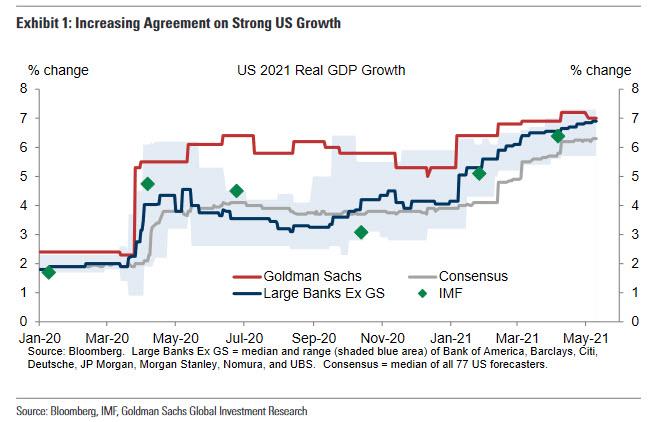
Picking up on this theme, on Monday afternoon Goldman’s chief economist Jan Hatzius also offered a somewhat downbeat assessment of market conditions, writing that the bank’s biggest call for 2021 has been its US growth forecast, which stood about 2% above the Bloomberg consensus for much of the past year.  However, over the last few months, the gap has shrunk as many private and official forecasters have upgraded their numbers on the back of rapid vaccinations, easier US fiscal policy and—until recently—stronger data. 
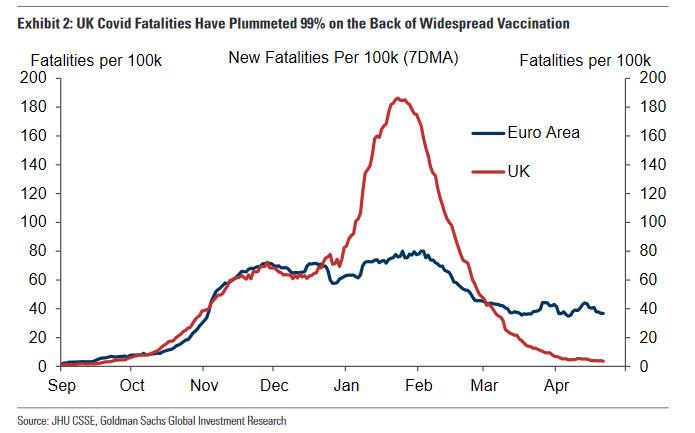
More importantly, the latest news fits the narrative of shifting growth leadership. The European health situation has begun to improve sharply, with surging vaccinations and declining new infections. The PMIs continue to rise, and Goldman expects GDP growth “to accelerate to 13% on a quarter-on-quarter annualized basis in Q3. And there is plenty of spare capacity that should be relatively easy to fill in, especially in the service sector. “

All this means that the continent is well-placed for a period of substantially above-trend growth if the path of the virus in coming months resembles what we have seen in other economies with successful vaccination programs, with the UK perhaps the most relevant example.
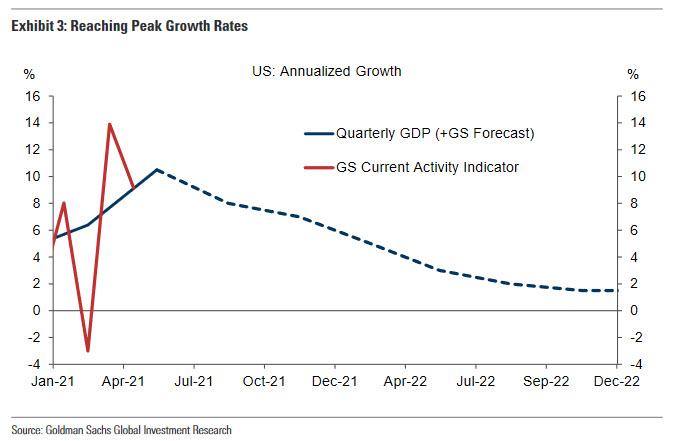
By contrast, and in keeping with the them of changing leadership, the US has stopped beating expectations, and the daily pace of vaccinations has fallen from 3.4 million in mid-April to 2 million now.  Meanwhile, activity indicators have started to come in on the softer side, not only because of Friday’s disappointing jobs report but also because both ISM surveys fell in April, albeit to still-high levels of above 60. This is consistent with Goldman previously noted view that GDP growth is set to peak in Q2 at 10½% on a quarter-on-quarter annualized basis, with gradual deceleration in subsequent quarters. On a monthly basis, March currently looks likely to be peak for Goldman’s current activity indicator (CAI), although this could still shift to sometime in Q
Curiously, here Goldman is quick to dismiss Friday’s ugly NFP print, saying “it looks inconsistent” with other timely indicators of labor demand and spending, including jobless claims, ISM services employment, and Goldman’s high-frequency measures of retail sales and service sector activity
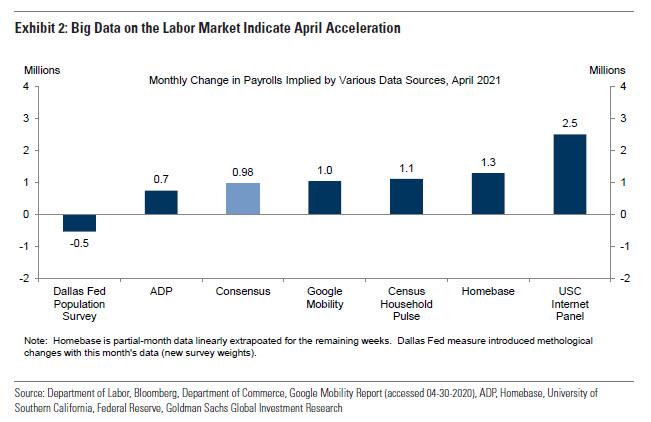
Why Goldman’s jobs complacency? Two reasons:

  • First, employers might be prioritizing post-pandemic hiring over the seasonal hiring which normally takes place in the spring and which is incorporated in the Labor Department’s seasonal adjustment process (note that payrolls did grow nearly 1.1million on a seasonally unadjusted basis).
  • Second, the $300/week unemployment benefit top-up is keeping the replacement ratio—total unemployment benefits as a percentage of take-home pay—above 100% in low-wage industries. Elevated job vacancies, elevated quit rates, continued strength in wages, and many anecdotes suggest that the top-up is making it more difficult to fill open positions than one wouldexpect at a 6.1% unemployment rate.

Combining these two points, Goldman concludes that both factors should be temporary: first, if seasonal hiring is lower than assumed in the seasonal factors in the spring, seasonal layoffs will also be lower than assumed in the fall, boosting seasonally adjusted job growth. Second, the $300/week top-up is scheduled to expire in early September, and some Republican – dominated states are already scrapping it. Together with continued health improvement— Goldman still thinks 70-80% of the US population will have immunity to covid by the fall – and a close-to-normal 2021-2022 school year that makes it much easier for parents to work, will help labor supply recover starting in the fall. This should result in stronger payroll gains as well as a reduction in wage pressures

Hand in hand with the projection for stronger payrolls gains, is Goldman expectation of renewed downward inflation pressure as the bank’s trimmed-mean index still shows benign underlying inflation trends, the temporary boosts gradually wane, and healthcare costs—a key component of the core PCE index—slow more notably on the back of the expiration of the covid-related payments to medical providers.

The bank therefore is comfortable with its forecast that core PCEinflation will return to about 2% by the end of 2021, which should likewise keep Fed officials comfortable with a tapering schedule that starts in Q1 and runs for about a year (in short, the market is freaking out that in 7 month the Fed’s liquidity injections will decline from $120BN to… $100BN.(The horror). Rate hikes become a live option during 2023, although we think the economic data will push liftoff into 2024.

Putting this all together, from a market perspective Goldman’s forecasts limited inflation risk and dovish monetary policy — with Fed tapering starting in early 2022 and Fed hikes starting in early 2024—are now at least as important as the remaining gap in US growth forecasts.

Looking forward, Goldman’s strongest market views take their cue from the broadening of the global recovery. The bank’s commodity strategists have been vocal about their positive views on oil and copper, while FX strategists have expressed renewed confidence in a meaningful euro appreciation and a return to broad dollar weakness over the balance of the year. In rates, Goldman still thinks the market prices the first Fed hike too early but we view back-end real yields astoo low, with a 5-year 5-year forward TIPS yield of just 0.1%. In credit, valuations are elevated but nevertheless retain a down-in-quality bias, as economic forecasts should support corporate cash flows and central banks remain highly supportive. And similarly, the equity market has taken a good amount of creditfor the economic improvement but still see further upside in both DM and EM marketsgiven the ongoing global expansion and the friendly policy environment.

Tyler Durden
Mon, 05/10/2021 – 17:10

via ZeroHedge News https://ift.tt/3f3Dwuy Tyler Durden

A Phase 3 Clinical Trial Confirms MDMA’s Effectiveness As a Psychotherapeutic Catalyst


MDMA-capsules-MAPS

MDMA-assisted psychotherapy for people with post-traumatic stress disorder (PTSD) is substantially more effective than psychotherapy alone, according to a study reported today in Nature Medicine. The results of the Phase 3 clinical trial, which are consistent with earlier research, mean that MDMA, which was banned in 1985, is on track to be approved as a prescription drug by the Food and Drug Administration (FDA) as soon as 2023.

“These data indicate that, compared with manualized therapy with inactive placebo, MDMA-assisted therapy is highly efficacious in individuals with severe PTSD, and treatment is safe and well-tolerated, even in those with comorbidities,” say University of California, San Francisco, neuroscientist Jennifer Mitchell and her co-authors. “We conclude that MDMA-assisted therapy represents a potential breakthrough treatment that merits expedited clinical evaluation.”

The FDA officially recognized MDMA as a “breakthrough therapy” in 2017, meaning it “may demonstrate substantial improvement over existing therapies on one or more clinically significant endpoints.” That designation signaled that the FDA would expedite development and approval of MDMA.

The double-blind, placebo-controlled trial, which was sponsored by the Multidisciplinary Association for Psychedelic Studies (MAPS), confirms MDMA’s potential. The study included 90 subjects with “severe” PTSD who were randomly assigned to receive either MDMA or a placebo on three occasions. All of them participated in three preparatory sessions and nine “integrative therapy sessions.”

In the MDMA group, scores on the Clinician-Administered PTSD Scale for DSM-5 had fallen by an average of 24.4 points 18 weeks after the study began, compared to 13.9 points in the placebo group. “Functional impairment” based on the Sheehan Disability Scale fell by an average of more than three points in the MDMA group and two points in the placebo group. The subjects who received MDMA also showed bigger improvements in mood as measured by the Beck Depression Inventory II. Their scores dropped by an average of nearly 20 points, compared to about 11 points in the placebo group.

“Three doses of MDMA given in conjunction with manualized therapy over the course of 18 weeks results in a significant and robust attenuation of PTSD symptoms and functional impairment,” Mitchell et al. note. “MDMA also significantly mitigated depressive symptoms.”

These results are striking but not surprising; psychotherapists have long observed similar effects. As the authors of an earlier MAPS-sponsored study put it, MDMA-assisted therapy is “aimed at allowing participants to revisit traumatic experiences while staying emotionally engaged even during intense feelings of anxiety, pain, or grief without feeling overwhelmed.”

Mitchell et al. suggest that “MDMA may exert its therapeutic effects through a well-conserved mechanism of amygdalar serotonergic function that regulates fear-based behaviors and contributes to the maintenance of PTSD.” They say MDMA “may facilitate the processing and release of particularly intractable, potentially developmental, fear-related memories,” perhaps “by reopening an oxytocin-dependent critical period of neuroplasticity that typically closes after adolescence.”

The researchers hypothesize that “the pharmacological properties of MDMA, when combined with therapy, may produce a ‘window of tolerance,’ in which participants are able to revisit and process traumatic content without becoming overwhelmed or encumbered by hyperarousal and dissociative symptoms.” The aim is to “facilitate recall of negative or threatening memories with greater self-compassion and less PTSD-related shame and anger.” That process seems to be enhanced by “the acute prosocial and interpersonal effects of MDMA,” which “may support the quality of the therapeutic alliance, a potentially important factor relating to PTSD treatment adherence and outcome.”

Last year Reason‘s Nick Gillespie interviewed MAPS founder Rick Doblin, a co-author of the new study. “Although MAPS is doing everything by the book in seeking approval of MDMA as a prescription drug, Doblin’s vision goes beyond such doctor-approved uses,” Gillespie noted. “He aspires to a world in which people can use psychedelics responsibly without permission from physicians or priests.”

Doblin does not accept the idea that psychoactive substances are inherently good or bad. “Psychedelics are tools,” he said. “They’re not good or bad in and of themselves. It’s how they are used. It’s the relationship you have with them.” He argued that “people should have the fundamental human right to change their consciousness.”

from Latest – Reason.com https://ift.tt/3y3QXTM
via IFTTT

A Phase 3 Clinical Trial Confirms MDMA’s Effectiveness As a Psychotherapeutic Catalyst


MDMA-capsules-MAPS

MDMA-assisted psychotherapy for people with post-traumatic stress disorder (PTSD) is substantially more effective than psychotherapy alone, according to a study reported today in Nature Medicine. The results of the Phase 3 clinical trial, which are consistent with earlier research, mean that MDMA, which was banned in 1985, is on track to be approved as a prescription drug by the Food and Drug Administration (FDA) as soon as 2023.

“These data indicate that, compared with manualized therapy with inactive placebo, MDMA-assisted therapy is highly efficacious in individuals with severe PTSD, and treatment is safe and well-tolerated, even in those with comorbidities,” say University of California, San Francisco, neuroscientist Jennifer Mitchell and her co-authors. “We conclude that MDMA-assisted therapy represents a potential breakthrough treatment that merits expedited clinical evaluation.”

The FDA officially recognized MDMA as a “breakthrough therapy” in 2017, meaning it “may demonstrate substantial improvement over existing therapies on one or more clinically significant endpoints.” That designation signaled that the FDA would expedite development and approval of MDMA.

The double-blind, placebo-controlled trial, which was sponsored by the Multidisciplinary Association for Psychedelic Studies (MAPS), confirms MDMA’s potential. The study included 90 subjects with “severe” PTSD who were randomly assigned to receive either MDMA or a placebo on three occasions. All of them participated in three preparatory sessions and nine “integrative therapy sessions.”

In the MDMA group, scores on the Clinician-Administered PTSD Scale for DSM-5 had fallen by an average of 24.4 points 18 weeks after the study began, compared to 13.9 points in the placebo group. “Functional impairment” based on the Sheehan Disability Scale fell by an average of more than three points in the MDMA group and two points in the placebo group. The subjects who received MDMA also showed bigger improvements in mood as measured by the Beck Depression Inventory II. Their scores dropped by an average of nearly 20 points, compared to about 11 points in the placebo group.

“Three doses of MDMA given in conjunction with manualized therapy over the course of 18 weeks results in a significant and robust attenuation of PTSD symptoms and functional impairment,” Mitchell et al. note. “MDMA also significantly mitigated depressive symptoms.”

These results are striking but not surprising; psychotherapists have long observed similar effects. As the authors of an earlier MAPS-sponsored study put it, MDMA-assisted therapy is “aimed at allowing participants to revisit traumatic experiences while staying emotionally engaged even during intense feelings of anxiety, pain, or grief without feeling overwhelmed.”

Mitchell et al. suggest that “MDMA may exert its therapeutic effects through a well-conserved mechanism of amygdalar serotonergic function that regulates fear-based behaviors and contributes to the maintenance of PTSD.” They say MDMA “may facilitate the processing and release of particularly intractable, potentially developmental, fear-related memories,” perhaps “by reopening an oxytocin-dependent critical period of neuroplasticity that typically closes after adolescence.”

The researchers hypothesize that “the pharmacological properties of MDMA, when combined with therapy, may produce a ‘window of tolerance,’ in which participants are able to revisit and process traumatic content without becoming overwhelmed or encumbered by hyperarousal and dissociative symptoms.” The aim is to “facilitate recall of negative or threatening memories with greater self-compassion and less PTSD-related shame and anger.” That process seems to be enhanced by “the acute prosocial and interpersonal effects of MDMA,” which “may support the quality of the therapeutic alliance, a potentially important factor relating to PTSD treatment adherence and outcome.”

Last year Reason‘s Nick Gillespie interviewed MAPS founder Rick Doblin, a co-author of the new study. “Although MAPS is doing everything by the book in seeking approval of MDMA as a prescription drug, Doblin’s vision goes beyond such doctor-approved uses,” Gillespie noted. “He aspires to a world in which people can use psychedelics responsibly without permission from physicians or priests.”

Doblin does not accept the idea that psychoactive substances are inherently good or bad. “Psychedelics are tools,” he said. “They’re not good or bad in and of themselves. It’s how they are used. It’s the relationship you have with them.” He argued that “people should have the fundamental human right to change their consciousness.”

from Latest – Reason.com https://ift.tt/3y3QXTM
via IFTTT

Tropical Storm Andres Forms In Pacific, Earliest On Record; Expect Another Busy Atlantic Hurricane Season 

Tropical Storm Andres Forms In Pacific, Earliest On Record; Expect Another Busy Atlantic Hurricane Season 

Tropical Storm Andres is the earliest named storm to develop in the eastern Pacific Ocean, surpassing Adrian in 2017. Andres became a tropical storm on Sunday, according to the National Weather Service.

Andres formed off the southwest coast of Mexico Sunday, had sustained winds of 40 mph and moved out to sea at six mph. 

“Increasing southwesterly to westerly shear and drier air to the west of the cyclone should prevent any significant additional strengthening,” the National Hurricane Center said Sunday.

Meteorologist Phil Klotzbach from Colorado State University said, “Andres is the earliest calendar year eastern tropical Pacific (to 140°W) named storm formation on record, breaking the old record of May 10 set by Adrian in 2017.”

The official start of the eastern Pacific hurricane season is May 15. The Pacific is not the only ocean basin expected to observe increasing tropical activity this year. Another above-average Atlantic hurricane season is expected. The season starts on June 1. 

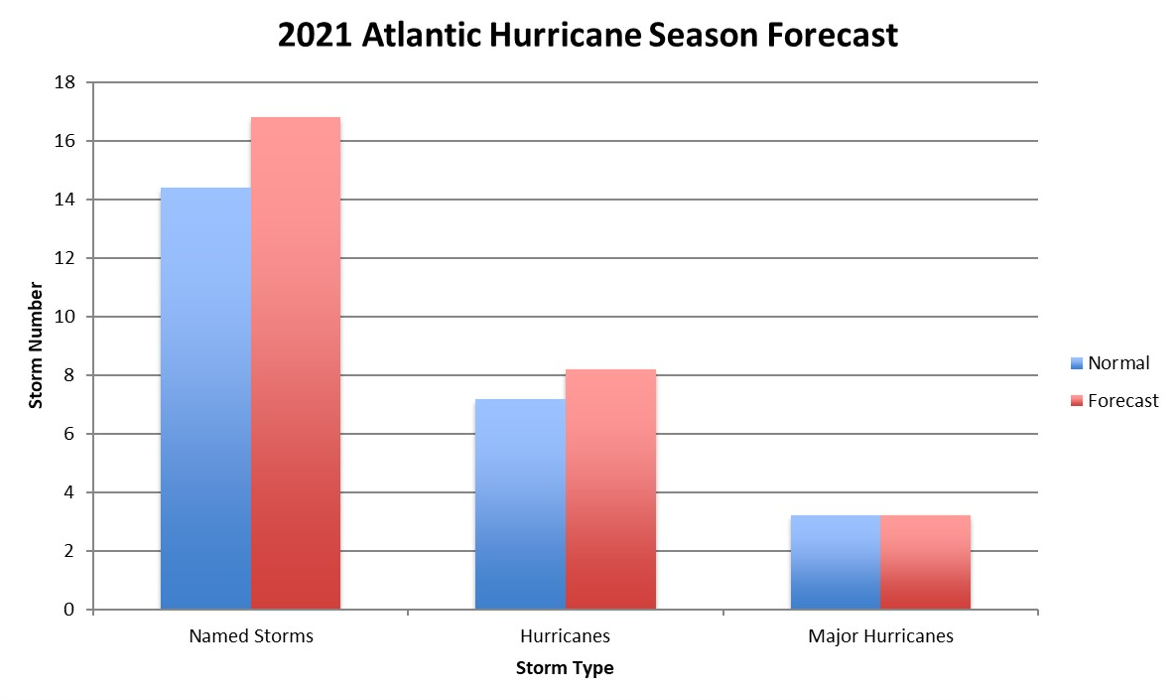
Klotzbach expects there will be 17 named storms in the Atlantic – eight becoming hurricanes. 

Refinitiv’s commodity desk provides a more in-depth view of the 2021 hurricane season, only to say it will be the 6th consecutive season of above-normal tropical activity in the Atlantic: 

  • The 2020 Atlantic hurricane season ended up being hyperactive, with significant impacts on oil operations in the Gulf of Mexico as well as devastation in Nicaragua
  • 2021 is likely to fall into the “near normal” category in terms of tropical activity, though there is upside risk toward an active season
  • Impacts from landfalling hurricanes could shift eastward this season toward the U.S. East Coast and the Leeward Islands based on Atlantic SSTs

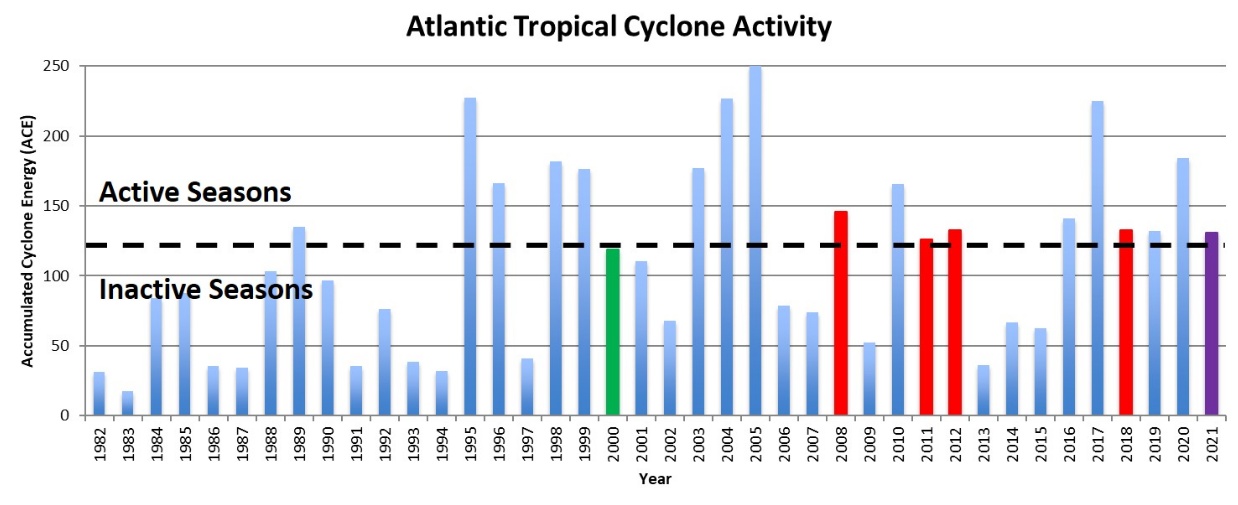
Our official forecast for the 2021 Atlantic Hurricane Season (described below) shows the likelihood for a near normal season, with tropical cyclone activity at ~107% of normal anticipated and a range of activity from 97-119% of normal. Our forecasted ACE, or accumulated cyclone energy, for 2021 is 131 (Figure 2). When the is translated into “plain English” and compared to normal, 17 named storms, 8 hurricanes, and 3 major hurricanes are expected from June-November (Figure 1). This compares to historical averages of 14 named storms, 7 hurricanes, and 3 major hurricanes, respectively.

Unlike last season, the 2021 outlook does not include a hyperactive season within the expected range of outcomes, though there is very little chance for below normal activity this season. Upside toward an active season does exist if key forecast  drivers consolidate in that direction, and above normal tropical activity is anticipated based on all metrics except for major hurricanes this season. It should be noted that a “normal hurricane season” now represents higher levels of tropical activity in all aspects because of the climatology update that uses 1991-2020 as the baseline instead of 1981-2010. For example, if our 2021 outlook was issued based on the previous climatology, our forecast would call for an active season instead of a near normal one. Related to the climatology change (increased storm number), the Greek alphabet will no longer be used to extend the name list moving forward, replaced by a secondary name list if the initial one is exhausted. Details behind our 2021 outlook are outlined below:

  • Forecast Indicators: At a two-month lead time from the start of the 2021 Atlantic hurricane season (begins 01 June), and a four-month lead on the beginning of the peak season where ~90% of the total activity occurs, the major ocean basins are aligned in support of a near to above normal season of tropical activity once again. Beginning with ENSO (El Niño Southern Oscillation), there is an 80% chance of neutral or La Niña conditions being in place by the August-October peak of hurricane season, with only a 20% chance of El Nio. La Niña is the most favorable state for active Atlantic seasons as it supports low vertical wind shear needed for tropical cyclone intensification/formation, so the strong likelihood of neutral or La Niña conditions in 2021 supports an active year while the slight El Niño chance caps the potential to some degree. The Atlantic Multi-decadal Oscillation (AMO) shows an 80% chance to  be in its favorable warm SST phase for Atlantic tropical activity. The largest question pertains to the Indian Ocean Dipole (IOD), which has a connection to Atlantic activity in relation the occurrence of dry air that suppresses tropical cyclone formation. In 2021, there are questions about  the state of the IOD by August-October, which supports a nearer to normal  hurricane season.
  • 2021 Hurricane Season Outlook: Based on the forecast indicators outlined, analog years were selected to help produce a forecast for 2021 Atlantic tropical cyclone activity. The most reliable variable forecasted is accumulated cyclone energy (ACE), which is widely viewed as the best measure of cyclone activity as compared to total named storm number, hurricane number, etc. The reason for this is that tropical cyclones vary wildly in duration/lifetime (anywhere from 1-10+ days), so similar numbers of storms in different years can still represent very different levels of activity. We also represent the forecast in terms of average/expected numbers of tropical storms, hurricanes, and major hurricanes, which is what is presented in the forecast summary of Figure 1. Our forecast for the June-November hurricane season is for activity to be at 107% of normal. The spread among the analogs was relatively narrow, with 20% of the years showing below normal activity while the other 80% showed  above normal activity (see Figure 2). Due to the narrow range among analog years relative to the new normal level of activity, 100% of the analog years  used in the forecast fell into the “near normal” range (within 25% of normal).  This results in a high confidence outlook for near to above normal activity in  2021, with the direction of ENSO and the IOD key issues to watch in the direction that the season takes.

THE 2021 SST (SEA SURFACE TEMPERATURE) PATTERN SUGGESTS THAT LANDFALLING IMPACTS IN THE ATLANTIC COULD SHIFT TOWARD THE U.S. EAST COAST

Separate from overall Atlantic hurricane activity, impacts on commodities such as oil and shipping depend on storms reaching the Gulf of Mexico and/or making landfall in North America. The analog years used in the forecast and current SST anomalies both depict the U.S. East Coast as being at the greatest risk for higher impacts than usual based on warm ocean waters off the coastline. If the picture holds, any developing tropical cyclone that moves across the Western Atlantic approaching the U.S. will have ample energy to tap into and become a high-impact hurricane if other environmental conditions allow. There is also a consensus for slightly warmer than normal SSTs  around the Leeward Islands of the Caribbean Sea, making that another area to  watch for high-end impacts this season. Gulf of Mexico SSTs are by no means cold but are nowhere near the record warmth of last year.

2020 VERIFICATION AND SUMMARY

The 2020 Atlantic hurricane season finished with 30 named storms, 13 hurricanes,  and 6 major hurricanes. Total tropical activity came in at 176% of normal, as  measured by accumulated cyclone energy (ACE). This hyperactive season made 2020 the 5th consecutive active season in the Atlantic, demonstrating the highest degree of tropical Atlantic activity since 2017. Our 2020 Atlantic tropical seasonal outlook called for an active season with a risk toward hyperactive levels, which means that the hyperactive season observed was within our anticipated range of outcomes albeit on the top end of the range.

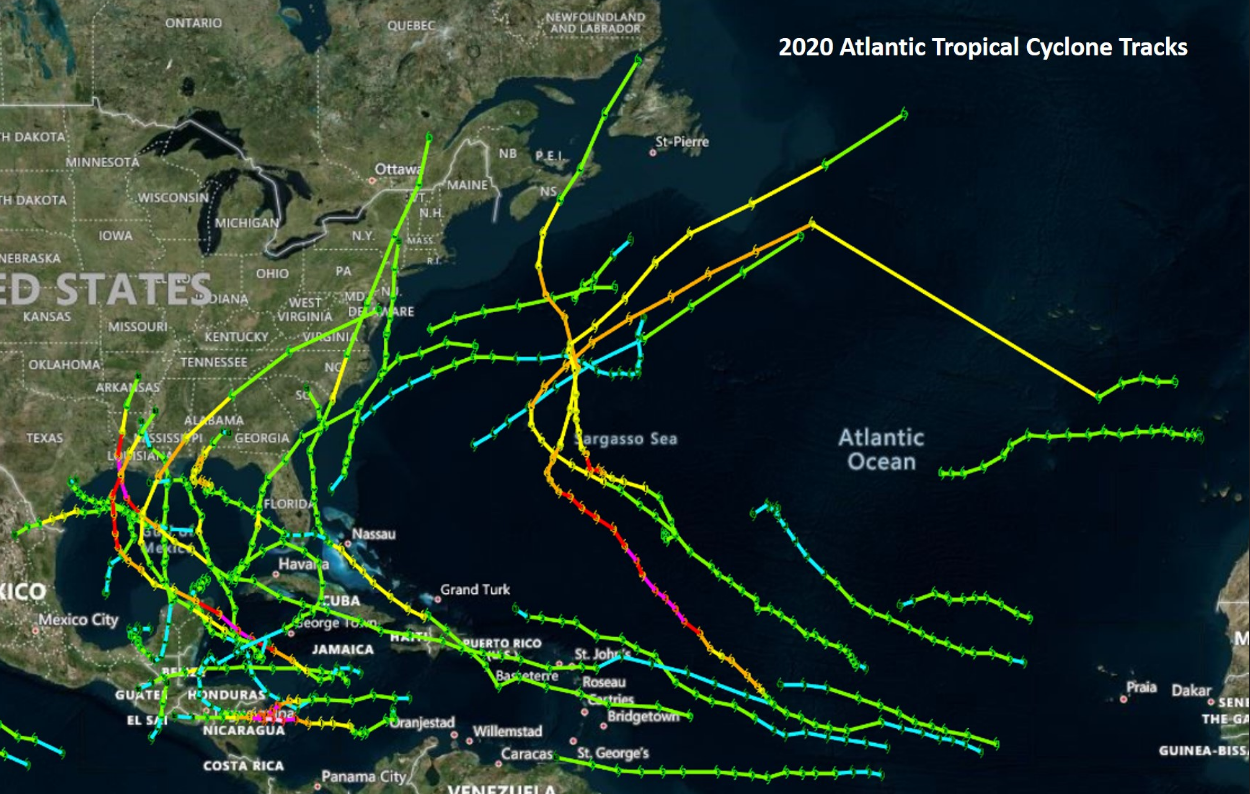
  • Impacts: The 2020 Atlantic Hurricane season was a worst-case scenario in terms of impacts based on activity being strongly focused over the Gulf of Mexico and Central America (Figure 4). A flurry of storms made landfall in the Gulf of Mexico, with eastern  Texans and Louisiana being the hardest-hit U.S. areas from two major hurricanes impacting the region. This activity caused major disruptions for oil operations in the Gulf of Mexico. Nicaragua also experienced landfalls by  major hurricanes in close succession, which resulted in catastrophic damage to the coastal areas of the country. Meanwhile, the U.S. East Coast and the Caribbean Leeward Islands dodged major impacts in 2020 as generally quieter areas.

FIGURE 2: Annual Atlantic seasonal (June-November) tropical cyclone activity from 1982-2021, with the top analogs (2000, 2008, 2011, 2012, and 2018) highlighted in red (green) for active (inactive) seasons, and the 2021 forecast highlighted in purple.

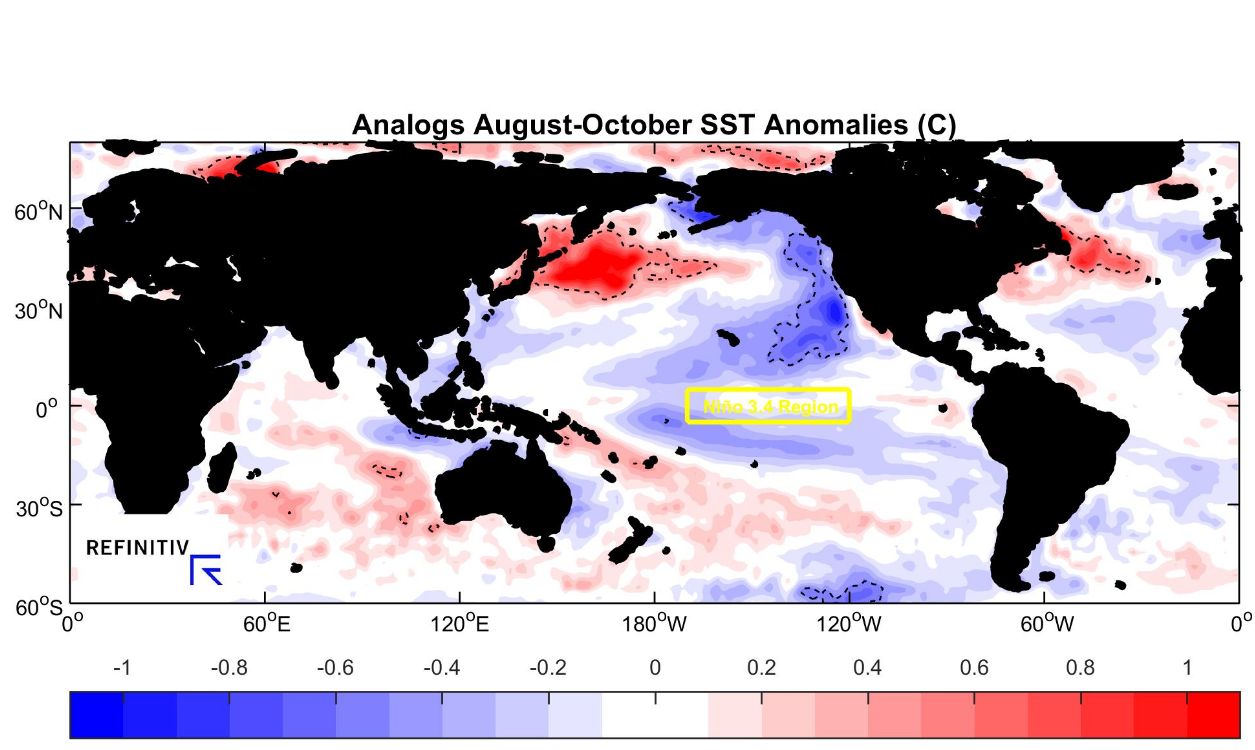
FIGURE 3: Global composite SST anomalies (°C) from the top August-October analogs based on the leading forecast indicators, with a yellow box outlining the Niño 3.4 region. SST anomalies exceeding 0.5°C are enclosed by dashed black contours. Analog years influencing the composite are as follows, with equal weightings: 2000, 2008, 2011, 2012, and 2018. SOURCE: ESRL/NCEP

Hopefully the 2021 Atlantic Hurricane season is nothing like 2020… 

    Tyler Durden
    Mon, 05/10/2021 – 16:50

    via ZeroHedge News https://ift.tt/3eyjOrG Tyler Durden
    “This Must Stop!” One Father’s Fight Against Pervasive Entrenchment Of Critical Race Theory In America’s Schools

    “This Must Stop!” One Father’s Fight Against Pervasive Entrenchment Of Critical Race Theory In America’s Schools

    Authored by Andrea Widburg via AmericanThinker.com,

    Even as the Biden administration doubles down on Critical Race Theory, a dishonest, divisive, toxic idea holding that Whites are racist, inferior creatures who have used their unfairly obtained privilege to oppress Blacks and other races, parents are beginning to fight back.  It turns out that, once you ignore cancel culture make a statement, there are a lot of people who want to follow your lead.  One of those parents, to his surprise, found himself at the head of a brewing revolution.

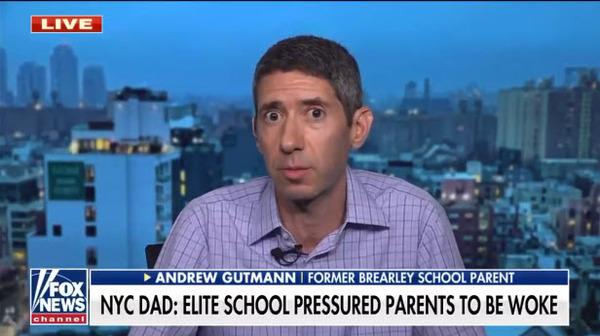
    Three weeks ago, two letters exploded on the New York education scene and started echoing through the rest of America.  The first was from a teacher challenging Grace Church High School’s anti-white Critical Race Theory indoctrination.  The second letter was from Andrew Gutmann, who spoke out against the same indoctrination at the Brearley school.  Both schools are expensive, claim to be elite, and are teaching a doctrine every bit as toxic as the Jim Crow eugenics garbage that Democrats promoted in the first half of the 20th century.

    While the teacher’s letter was an eye-opener, the fact that Gutmann is a parent meant that his letter resonated with parents across America.  To his surprise, he’s found himself leading the charge for these parents.  In an opinion piece in the New York Post, Gutmann describes the positive feedback he’s getting, as well as the fact that there is a huge battle ahead for those parents unhappy about the hard left turn their children’s education has taken:

    I am enormously gratified by the overwhelmingly supportive emails and messages that I have personally received. Countless parents expressed to me their appreciation for stating clearly and forcibly what so many Americans have been thinking but have been too afraid to state out loud. Many also conveyed that they felt newly emboldened to speak up for their children. I have learned that my letter has been circulated and discussed in Board of Trustees meetings of schools across the country and I have been told that it has begun to make an impact. Even Brearley, after initially dismissing the contents of my letter and indicating a desire to double down on antiracism initiatives has, for the very first time, offered parents an opportunity to ask questions about the school’s diversity, equity, inclusion, and antiracist initiatives. 

    That’s the good news.  The bad news is that Gutmann learned from the outpouring of messages that, in a single year, Critical Race Theory has become deeply embedded in American education from kindergarten through to graduate work:

    Prior to sending the letter, I had no idea how pervasive and entrenched critical race theory had become in our schools, including public and religious schools. Nor did I comprehend just how many parents were dealing with the same issues as our family, with close-minded administrations and racist, age-inappropriate and indoctrinating curriculums. I have been told stories about children as early as kindergarten being asked to draw a self portrait, with explicit instructions to focus exclusively on accurately depicting their skin tone. I have been told stories of young adults at elite medical schools spending weeks of instruction on transgender issues and antiracism in lieu of pediatrics and geriatrics. 

    The biggest issue standing in the way of fixing the problem is cancel culture:

    Additionally, we cannot fix these educational problems until we eradicate the insidious cancer that is cancel culture. Too many parents are too afraid to speak up in support of their children’s education for fear of losing their jobs. And it’s true that there is an appalling stench of cowardice emanating from the corporate boardrooms of our country. Just like the administration of my daughter’s private school, our business leaders have been cowering to a small, miseducated and unenlightened social media mob. This must stop! 

    There’s much more, and I urge you to read the whole thing.  It’s clear that, because CRT is so entrenched, Gutmann does not think the end of the battle is anywhere near.  Instead, his tone is rather like Churchill’s in 1942, when Churchill said, “This is not the end.  It is not even the beginning of the end.  But it is, perhaps, the end of the beginning.”  Just a month ago, American parents hadn’t even started to fight.  As more engage in the battle, the pace will accelerate.

    Tyler Durden

    Mon, 05/10/2021 – 16:30

    via ZeroHedge News https://ift.tt/3xYTte9 Tyler Durden
    Tech Wrecks, Ether Erupts, Commodities Crumble As Dollar Gives Up 2021 Gains

    Tech Wrecks, Ether Erupts, Commodities Crumble As Dollar Gives Up 2021 Gains

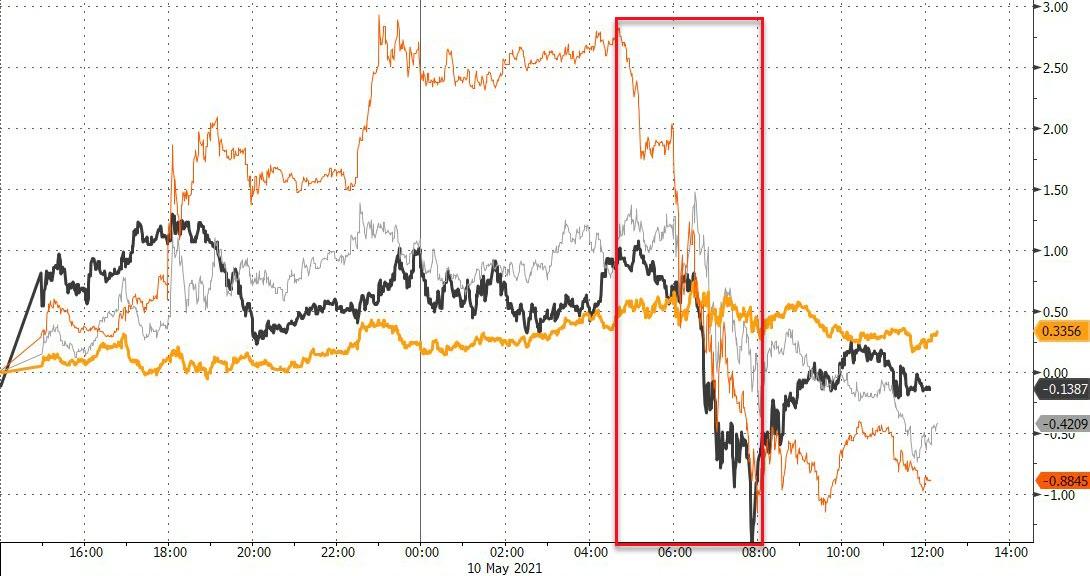
    That was quite a day. The tech wreck continued, leading the drop in stocks. Commodities did the unthinkable and tumbled on the day but Gold and Cryptos gained as the dollar dumped into the red for the year…

    Source: Bloomberg

    Dallas Fed’s Kaplan warned that he was “cognizant of excess risk-taking in financial markets”. Maybe turn the taps off then?

    The Dow topped 35k for the first time ever but was unable to hold gains and ended its win streak at 5 days. The US cash open sparked panic-selling in Small Caps and Big-Tech and they never really looked back. All major indices were hit to the downside around 1415ET (ahead of margin call time). Stocks closed ugly at the lows of the day…

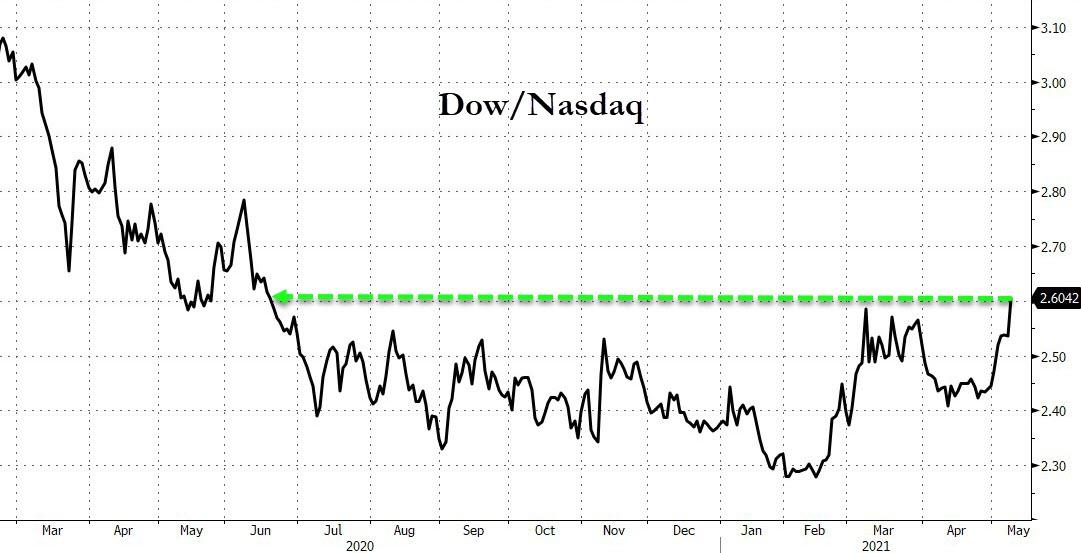
    The Dow’s recent dramatic outperformance pushed it above the March highs relative to Nasdaq…

    Source: Bloomberg

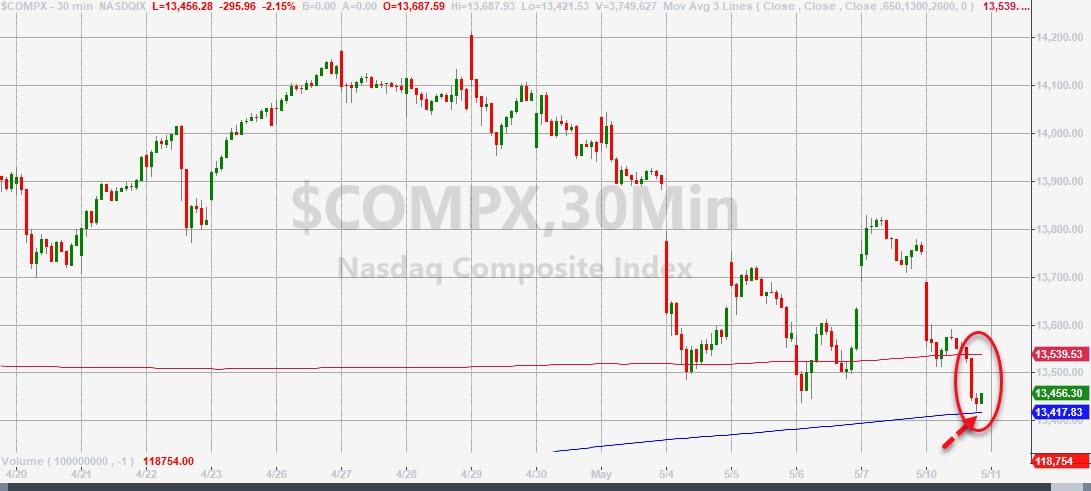
    Nasdaq broke down to its 100DMA…

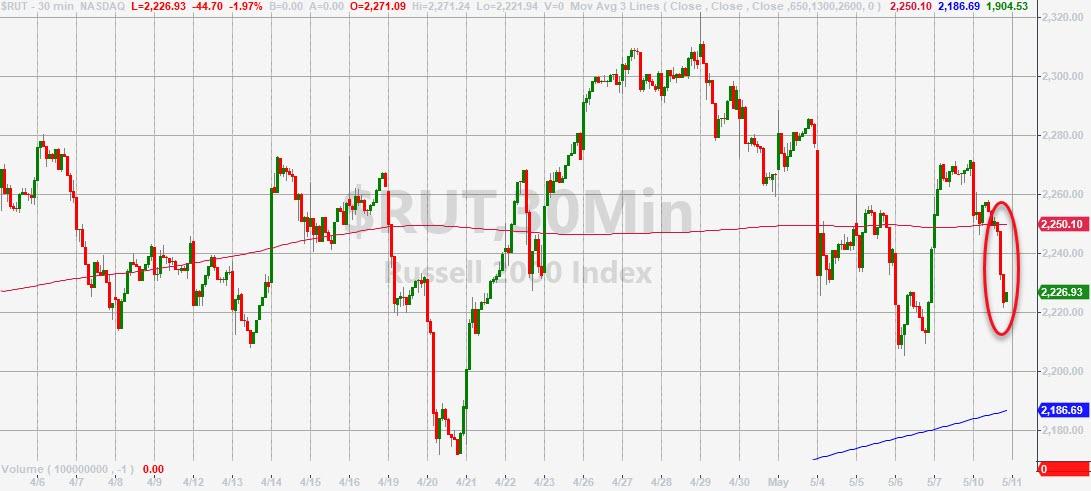
    Small Caps closed below their 50DMA once again…

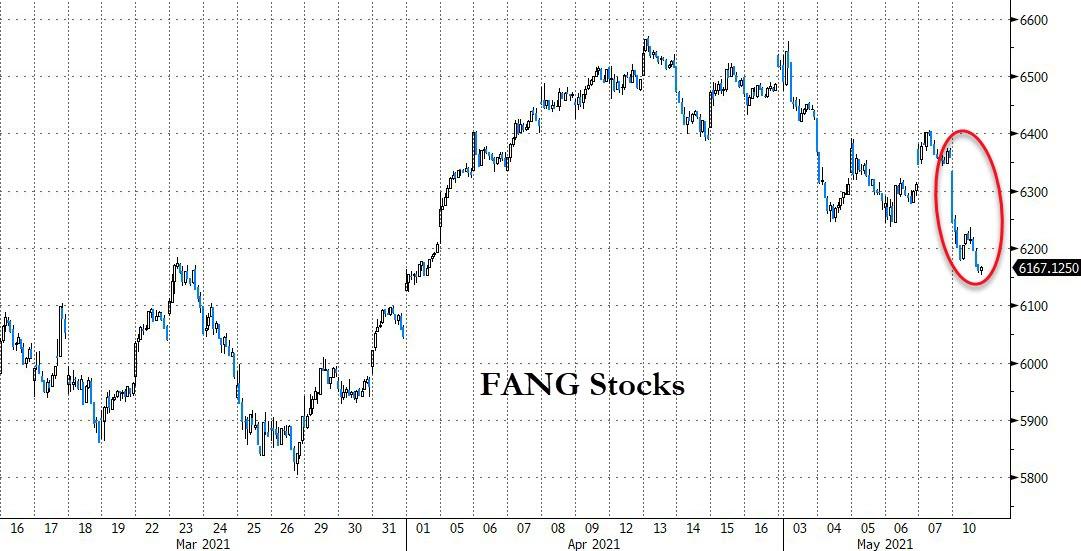
    FANG Stocks continued to slide…

    Source: Bloomberg

    AMZN dropped 3% as it issued upside $18.5bn debt…

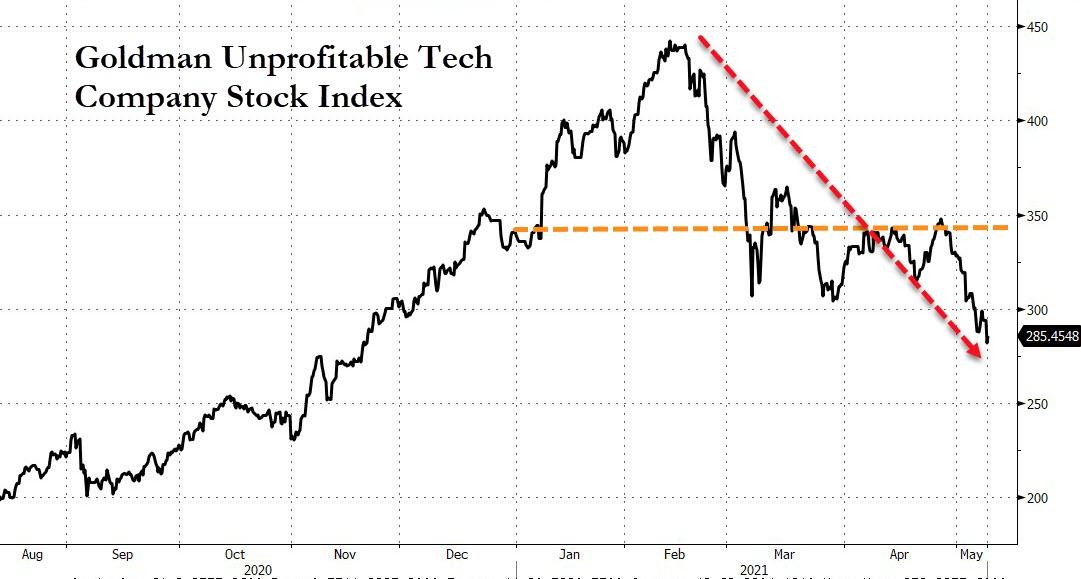
    Unprofitable Tech company stocks are are down 17% YTD (and -36% from their February highs)…

    Source: Bloomberg

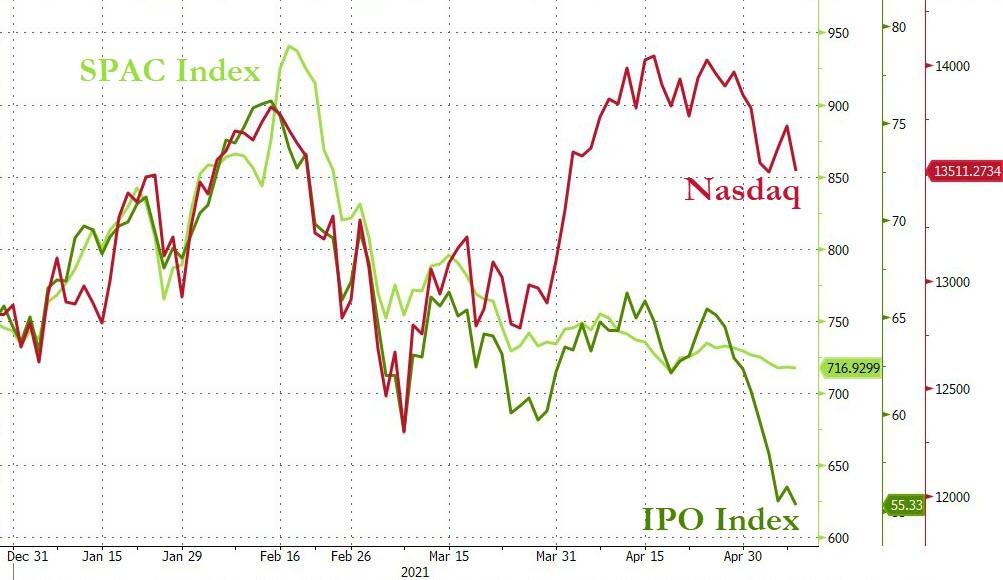
    IPOs continue to tumble (as Jessica Alba’s Honest Co crashes)…

    Source: Bloomberg

    ARKK continues to sink, now at its lowest since mid-Nov 2020…

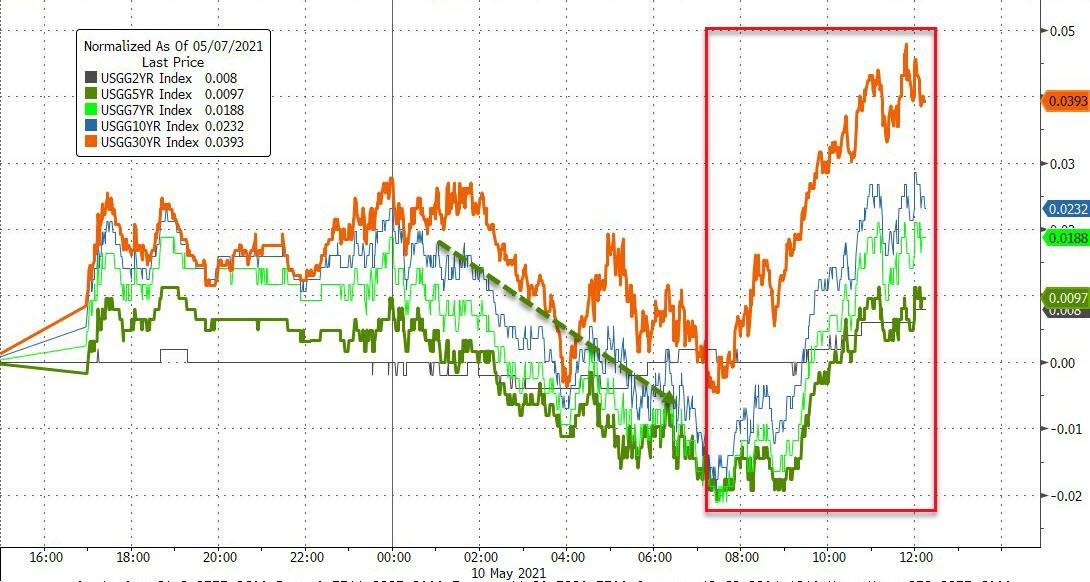
    Despite the carnage in stocks, bonds were also under pressure today (likely due to the major AMZN issue) with the long-end underperforming (30Y +4bps)…

    Source: Bloomberg

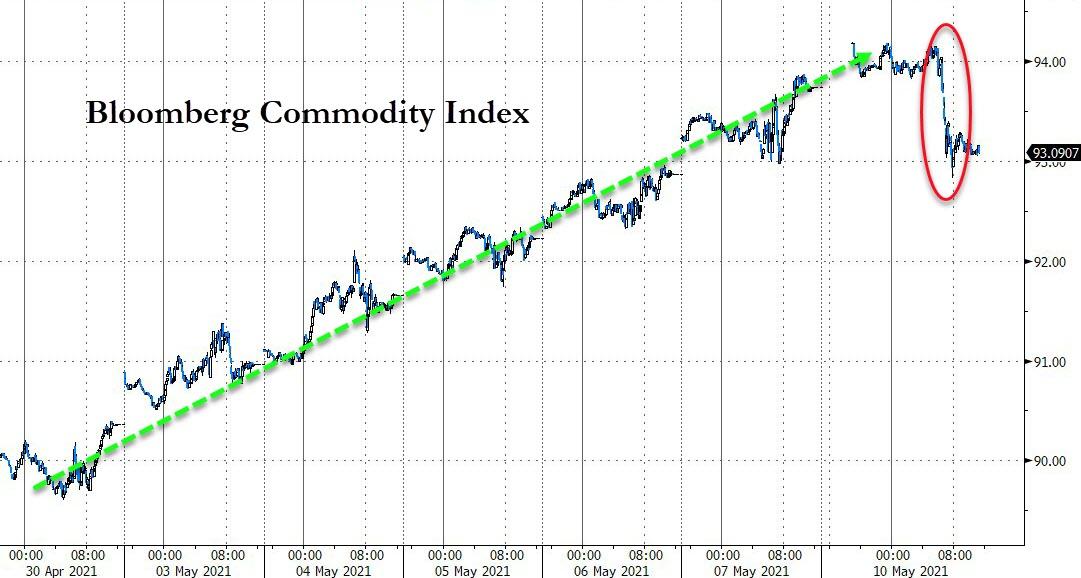
    Commodities did the unthinkable today… and closed lower (biggest daily drop in over 5 weeks)..

    Source: Bloomberg

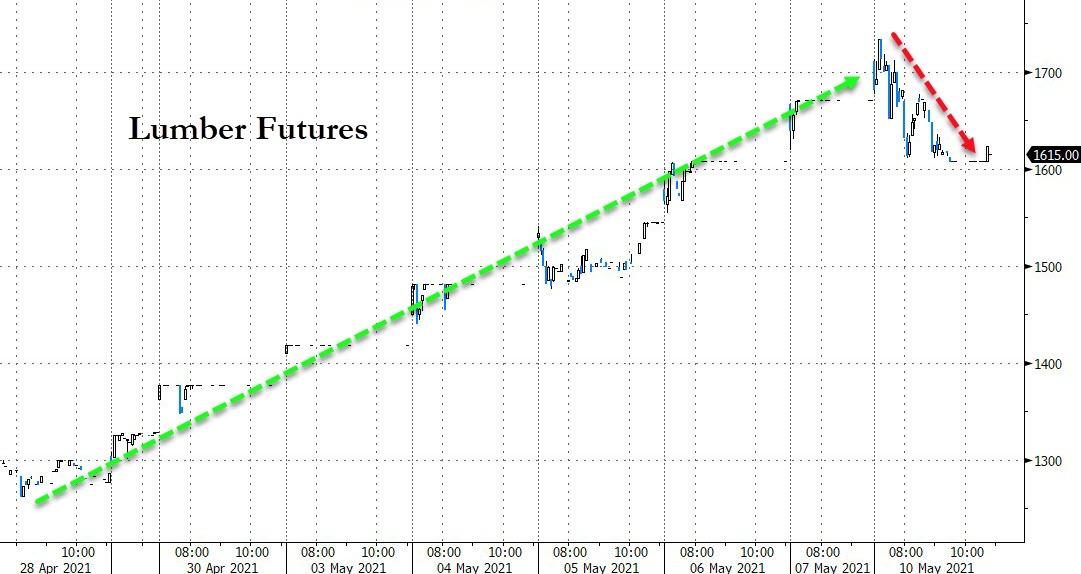
    Lumber tumbled by the most since March today – ending the winning streak at 13 days…

    Source: Bloomberg

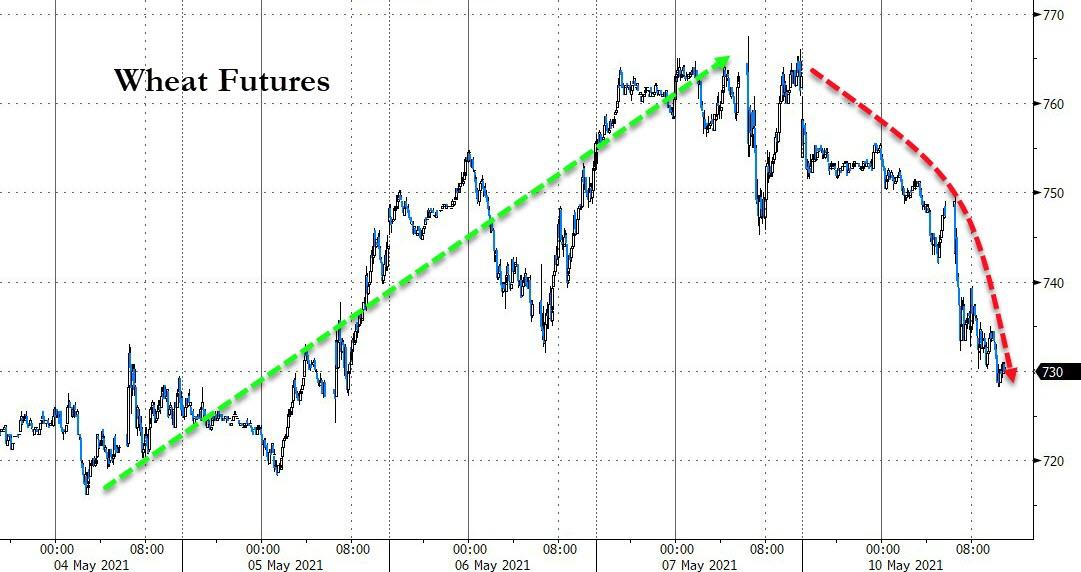
    Wheat also plunged today – its biggest drop since Aug 2019…

    Source: Bloomberg

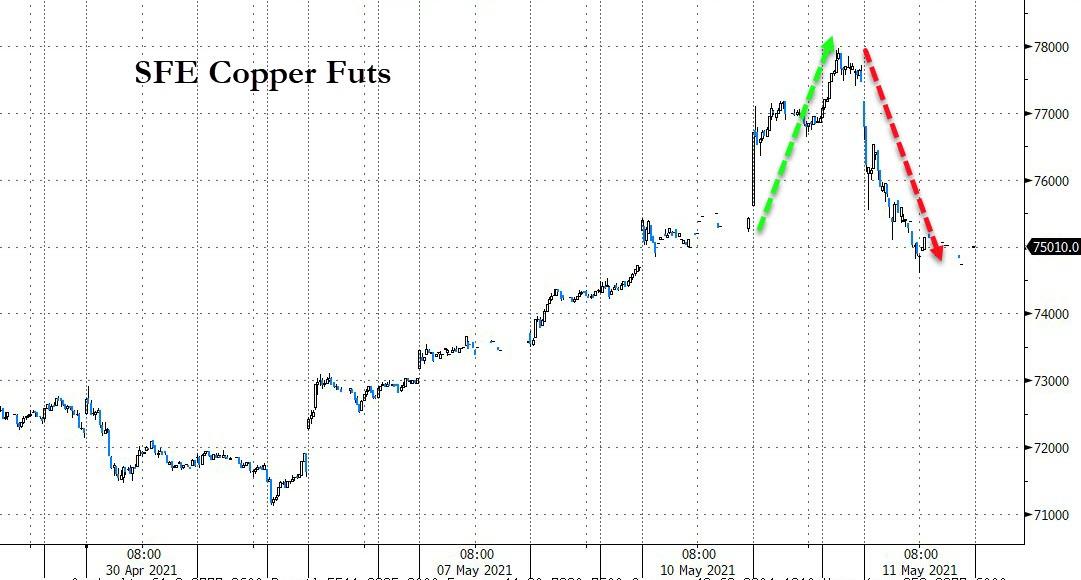
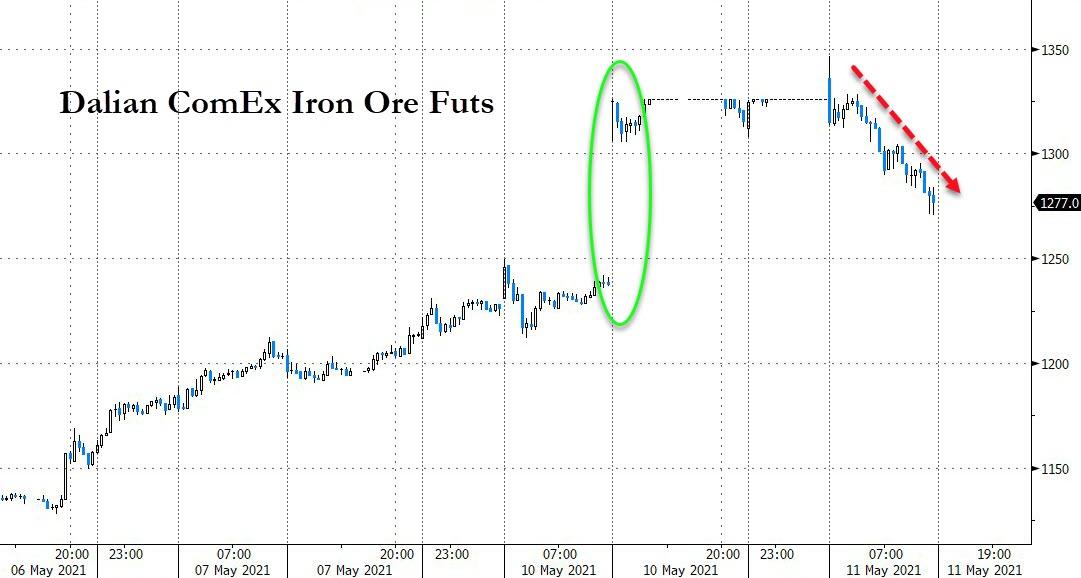
    Overnight saw surges in a number of industrial metals in China (Iron Ore, Steel, Copper), but they also started to tumble as the day wore on…

    Source: Bloomberg

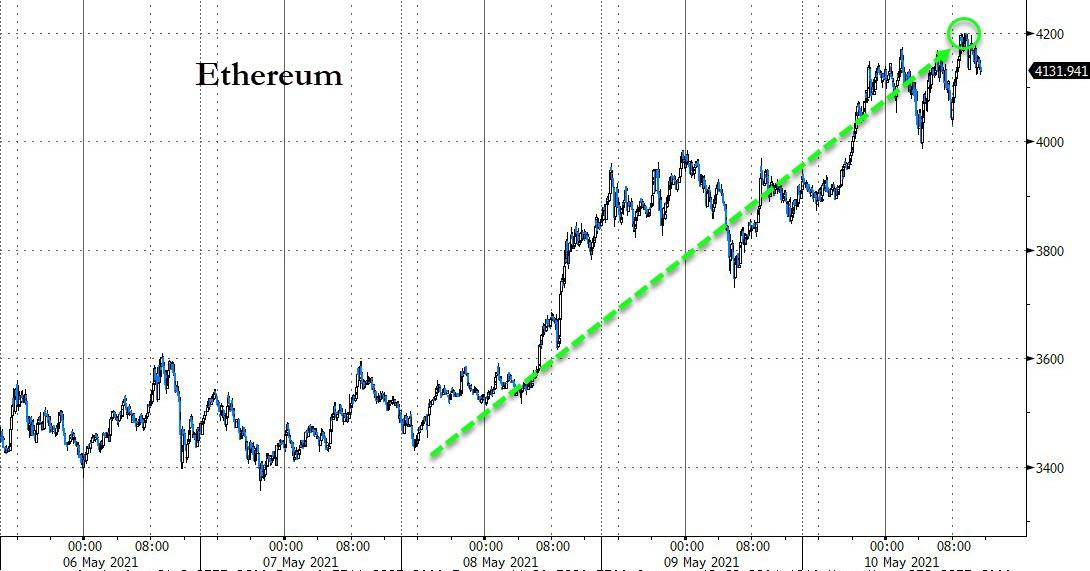
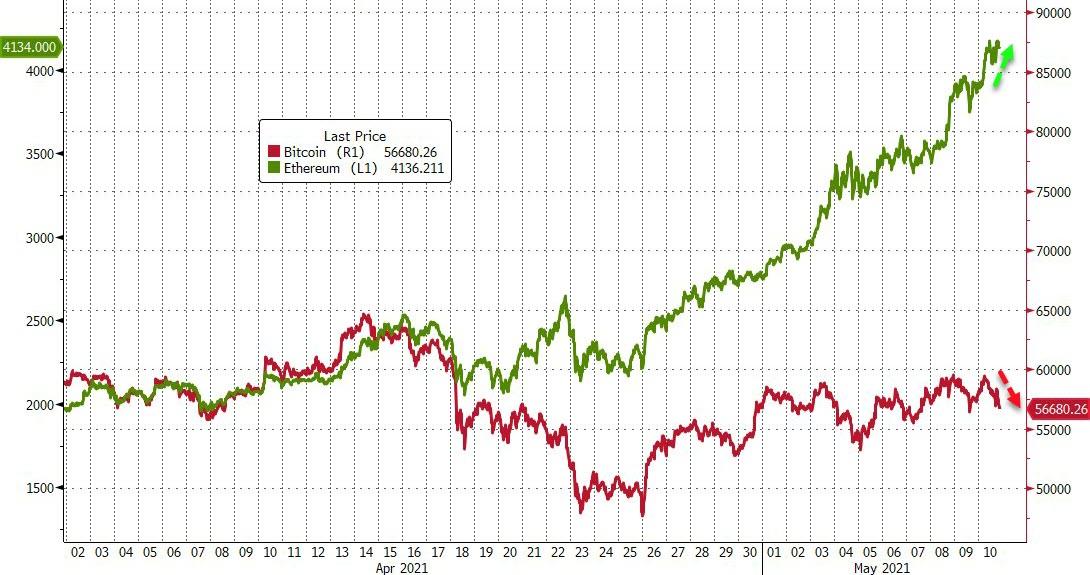
    Cryptos were mixed as the dollar dropped with Ether outperforming, hitting $4200 record highs…

    Source: Bloomberg

    And Bitcoin disappointing (back below 57k)…

    Source: Bloomberg

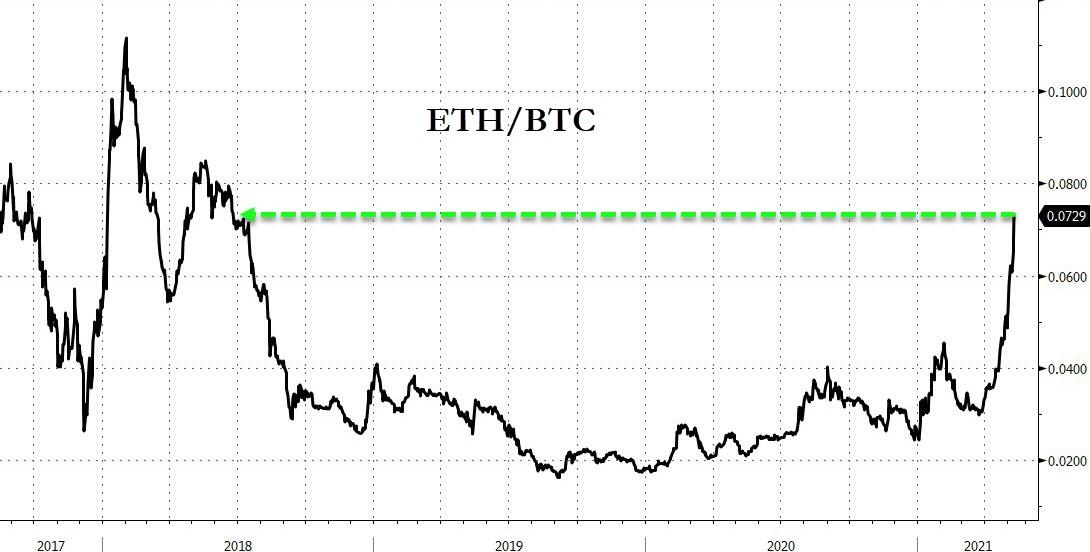
    Sending ETH/BTC to its highest since June 2018…

    Source: Bloomberg

    Gold ended the day only marginally higher (despite the USD’s notable weakness). Silver was a laggard and crude and copper also lost ground today…

    Source: Bloomberg

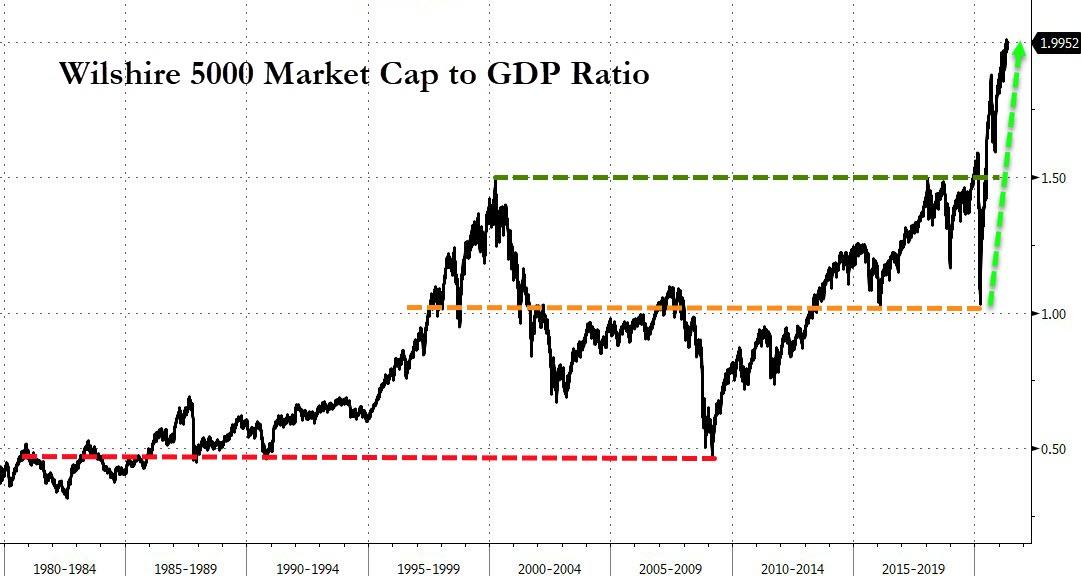
    Finally, it’s probably nothing, but US stocks have never, ever, ever been this expensive…

    Source: Bloomberg

    Tyler Durden
    Mon, 05/10/2021 – 16:01

    via ZeroHedge News https://ift.tt/3bgPrEg Tyler Durden
    NTSB Issues Preliminary Report On Fatal Tesla Wreck, Says “All Aspects” Remain Under Investigation

    NTSB Issues Preliminary Report On Fatal Tesla Wreck, Says “All Aspects” Remain Under Investigation

    The NTSB has issued its preliminary report on the fatal Texas Tesla crash that took the lives of the vehicle’s two occupants last month. While the preliminary report notes that “all aspects of the crash remain under investigation as the NTSB determines the probable cause,” the report did touch on several key points. 

    The report noted that:

    • Footage from the vehicle’s owner’s home security system showed “the owner entering the car’s driver’s seat and the passenger entering the front passenger seat”. It has been called into question whether or not there was anyone in the driver’s seat at the time of the crash, so it appears to be too early to judge whether or not this means anything.

    • It was shortly thereafter that the “car leaves and travels about 550 feet before departing the road on a curve, driving over the curb, and hitting a drainage culvert, a raised manhole, and a tree,” the report notes. 

    • The ensuing fire destroyed the car’s onboard data storage device. Yes, despite the fact that Elon Musk went “all in” in proclaiming that data logs “recovered so far” showed Autopilot was not enabled in the car last month, the NTSB is now reporting that they didn’t have access to stored data inside the vehicle The report reads: “The crash damaged the front of the car’s high-voltage lithium-ion battery case, where a fire started. The fire destroyed the car, including the onboard storage device inside the infotainment console.”

    Then the report highlights one of the main points of contention around the investigation: whether or not Autopilot was engaged. The NTSB writes that a similar vehicle could have engaged Traffic Aware Cruise Control, but not Autosteer, at the point where the crash took place:

    “The vehicle was equipped with Autopilot, Tesla’s advanced driver assistance system. Using Autopilot requires both the Traffic Aware Cruise Control and the Autosteer systems to be engaged. NTSB tests of an exemplar car at the crash location showed that Traffic Aware Cruise Control could be engaged but that Autosteer was not available on that part of the road.”

    It is unclear whether or not Tesla can toggle the availability of these features, for certain roads, on the fly. 

    The report also contained a stunning photo of the “fire and impact damage” to the vehicle

    The NTSB concluded by stating that the investigation was ongoing and that it was working with Harris County Texas Precinct 4:

    The NTSB continues to collect data to analyze the crash dynamics, postmortem toxicology test results, seat belt use, occupant egress, and electric vehicle fires. All aspects of the crash remain under investigation as the NTSB determines the probable cause, with the intent of issuing safety recommendations to prevent similar crashes. The NTSB is working alongside the Harris County Texas Precinct 4 Constable’s Office, which is conducting a separate, parallel investigation. 

    Recall, it was Mark Herman, Harris County Constable Precinct 4, who was most skeptical of Musk’s comments absolving Autopilot of liability last month, telling Reuters that the police served search warrants on Tesla to secure data from the Model S. 

    Responding to Musk at the time, Herman said: “If he is tweeting that out, if he has already pulled the data, he hasn’t told us that. We will eagerly wait for that data.”

    “We have witness statements from people that said they left to test drive the vehicle without a driver and to show the friend how it can drive itself,” Herman said according to the Reuters report.

    A reported 23,000 gallons of water needed to be used to extinguish the flames because the Tesla’s battery “kept reigniting”.

    Tyler Durden
    Mon, 05/10/2021 – 15:40

    via ZeroHedge News https://ift.tt/3uF4wHe Tyler Durden
    The Problem Of Pulling Forward Sales & Revenue

    The Problem Of Pulling Forward Sales & Revenue

    Authored by Lance Roberts via RealInvestmentAdvice.com,

    There is a problem of pulling forward sales and revenue when it comes to future outcomes.

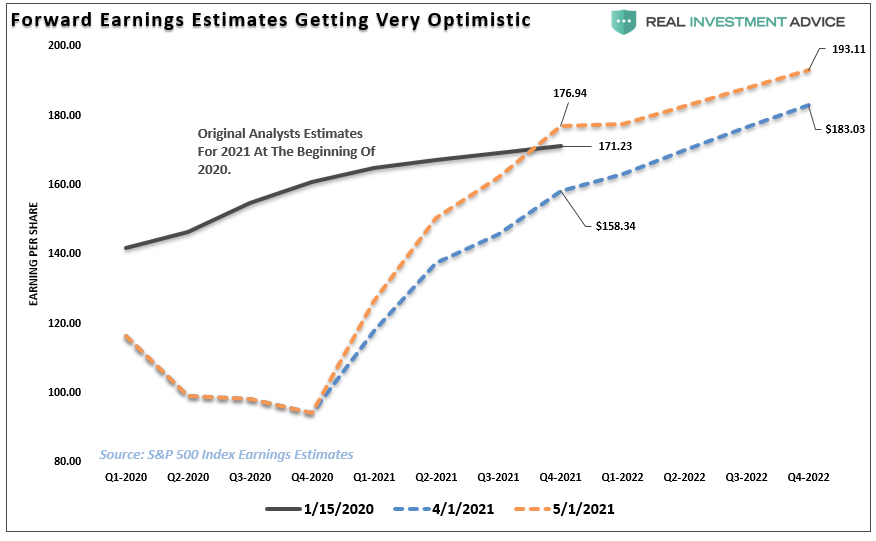
    Currently, analysts are incredibly exuberant about earnings for the S&P 500 index. In just the last month, they sharply increased 2021 earnings. The chart below shows where 2021 estimates were in January 2020 versus the previous two months.

    The near $20 jump in EOY estimates for 2021 over the last month is highly optimistic. The increase was a function of expectations for a “sugar rush” of economic activity from the stimulus. Of course, after the surge, the growth rate of earnings quickly fade.

    But are analysts too optimistic?

    A Fading Support

    One of the potential issues over the next few quarters is 3-successive rounds of financial stimulus led to a spending spree by recipients.

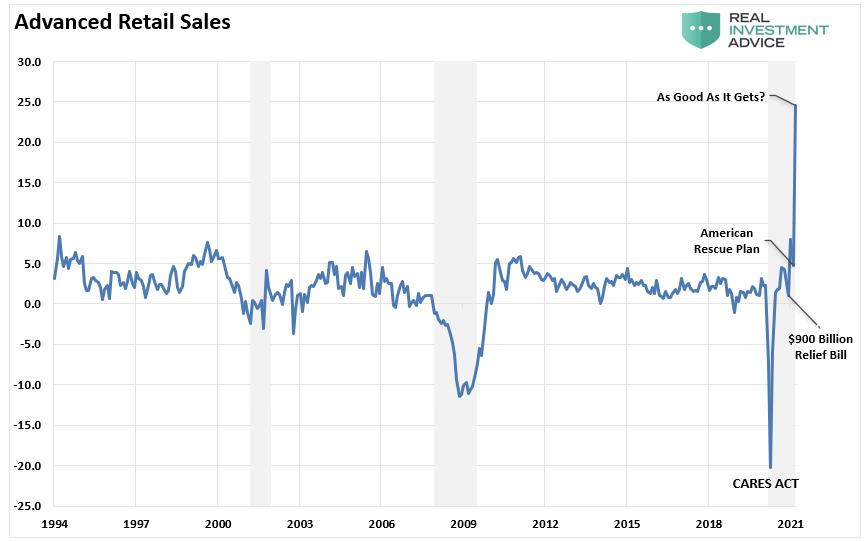
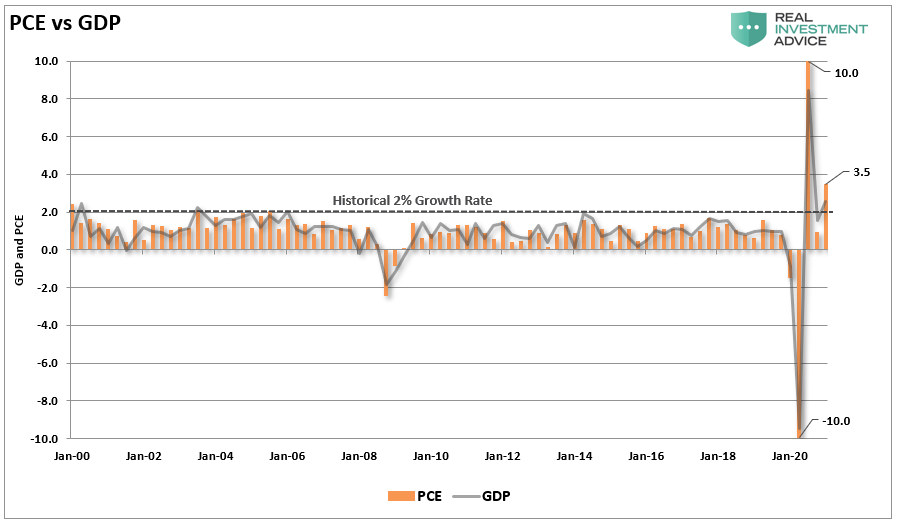
    Retail sales make up roughly 40% of Personal Consumption Expenditures (PCE). Importantly, PCE comprises almost 70% of the GDP calculation.

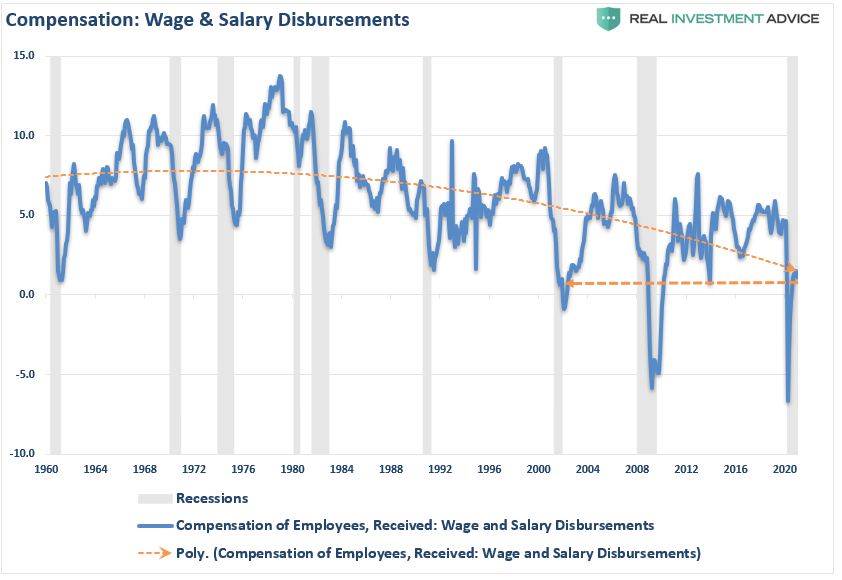
    Given that recipients likely spent the bulk of their stimulus, and each dollar spent has a smaller impact on growth, the rate of change is slowing. With no more stimulus in the pipeline, and other supports fading this year, economic growth will slow to the rate of wage growth.

    The problem with all stimulus is that it does not lead to productive activity in the economy.

    Therefore, the question becomes, “what happens next?”

    Pulling Forward Future Sales

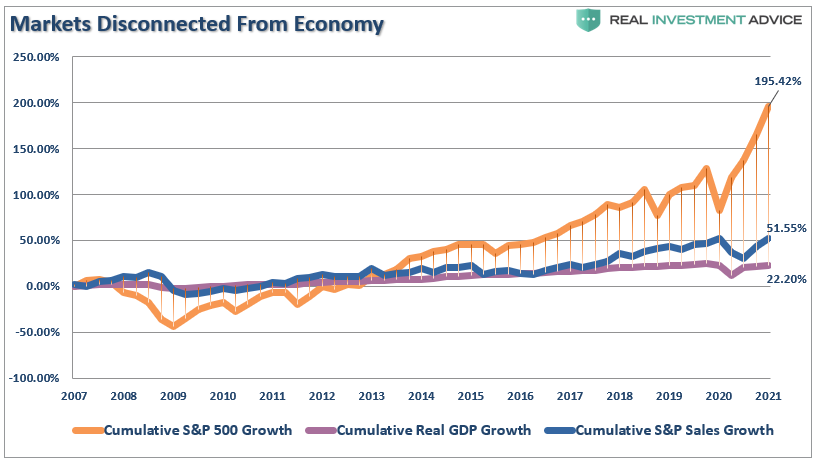
    I have shown the following chart previously. It shows the cumulative increase from 2007-present of the S&P 500 index compared to sales and economic growth.

    Notably, the outsized growth of the market reflects repetitive interventions into the financial markets by the Fed. Those interventions detached financial asset growth from their long-term correlation to GDP growth, where corporate revenue comes from. Historically, when the S&P 500 becomes detached from economic growth, a reversion occurred.

    Currently, analysts are expecting earnings to surge well above economic growth rates. However, the flaw in the analysis is the assumption earnings growth will continue its current trend.

    While there will be an economic recovery to pre-pandemic levels, a recovery is very different from an expansion. Following the shutdown, companies such as Zoom, Peleton, Apple, and Microsoft saw a surge in demand due to the shift to “work at home.” Then, following the massive amounts of stimulus, there was a surge in other products. Consumers flush with cash ran out to purchase automobiles, computers, phones, durable goods, home refurbishings, and food. Apple, Home Depot,  EtsyPinterest, and others saw a surge in demand as shopping sprees ensued.

    Today, with much of the money spent, companies are providing warnings about weaker future growth. Such is the problem of stimulus, which pulls forward “future consumption” to “today.” The void it creates must get filled in the future. The question is, with what?

    Without more stimulus, the demand for goods and services fades as the ability to consume reverts back to base wage growth.

    But inflation presents another problem.

    Inflation Is Also Problematic

    While providing stimulus is indeed helpful in boosting short-term demand, it leads to inflationary pressures. When businesses realize consumers have money to spend, the ability to pass on higher prices becomes easier. However, given the nature of the economic shutdown and disruption of supply chains, those price increases occur everywhere.

    Companies have two choices to deal with inflationary pressures:

    1. They can absorb the higher costs, which impact profit margins; or,

    2. They can pass the cost on to consumers. 

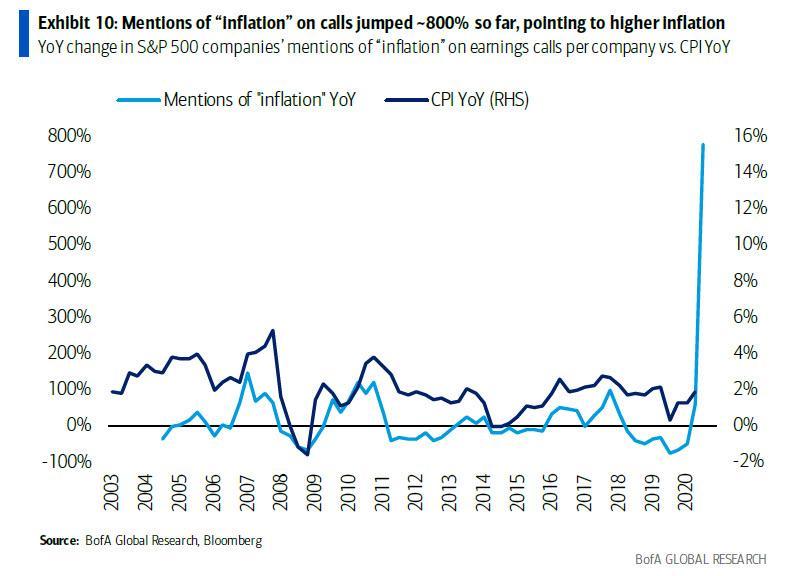
    Given the number of companies mentioning inflation during the latest earnings season calls, I suspect we will see their decision sooner than later.

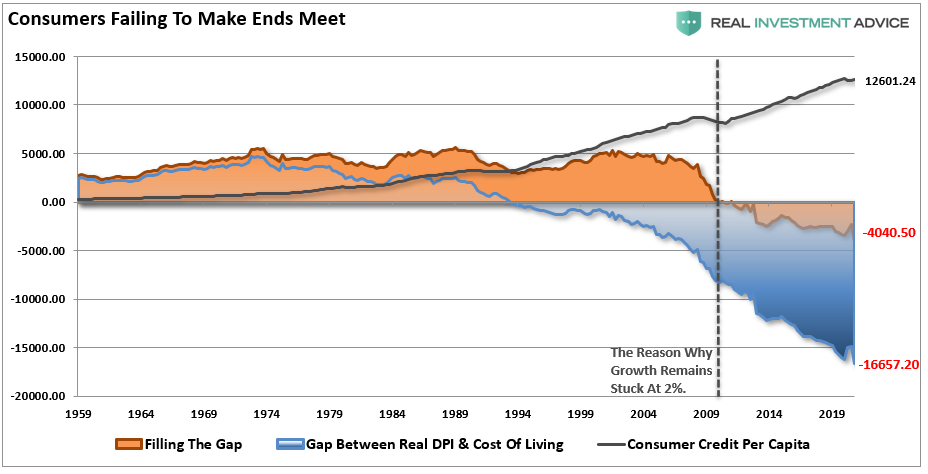
    We bet that we will see it passed on to consumers either in the form of “shrink-flation,” where the price for a good remains the same but less is provided, or “inflation” through higher prices. With stimulus fading, higher costs eat into the discretionary income of households that largely live paycheck-to-paycheck. Once the top-20% of income earners are removed, and we factor in the cost of living, the problem becomes apparent.

    What Are You Going To Do For Me Now?

    The two-fold problem of the temporary nature of stimulus and inflation leaves the market vulnerable to a downshift in earnings expectations over the next couple of quarters. As is always the case, Wall Street has ratcheted up expectations to try and justify current prices.

    However, a bit of analysis suggests that over-estimating earnings will lead to a price correction when it becomes realized. While that is something we do not expect immediately, we expect that markets will wake up to this reality in the last half of the year.

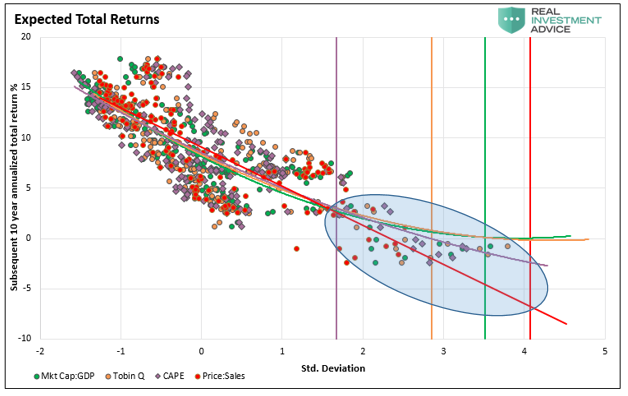
    By no measure is the market valued at a level that supports current valuations. The average of the 10-year expected returns from four of the most popular measures is -0.75%.

    While The Fed will continue to supply liquidity, their programs’ efficacy has become less with each iteration. While monetary interventions allow market participants to ignore the reality of the economic ties to the market, such does not preclude hair-raising volatility and large declines as in March 2020.

    In 2021, earnings are likely to come in once again substantially lower than analyst’s exuberant estimates. But such shouldn’t be a surprise since they are never accurate historically. More importantly, if the Fed backs off, whether by its design or due to inflation, slower economic growth, or massive debt overhead, rich valuations will matter.

    The risk of disappointment is high. And so are the costs of being “wilfully blind” to the risks.

    Tyler Durden
    Mon, 05/10/2021 – 15:19

    via ZeroHedge News https://ift.tt/2SBw3v7 Tyler Durden

    Federalist Society Executive Branch Review Conference

    I wanted to echo Ilya’s recommendation of this week’s online conference, which is available for free here. Among many other topics, it will cover:

    Wednesday, 11:00 a.m.—12:30 p.m. (Eastern): Regulating Social Media in the New Administration
    Ms. Joan Marsh, Executive Vice President and Chief Regulatory Officer, AT&T
    Hon. Noah Phillips, Commissioner, Federal Trade Commission
    Hon. Nathan Simington, Commissioner, Federal Communications Commission
    Mr. K. Dane Snowden, President & CEO, Internet Association
    Moderator: Hon. Elizabeth L. Branch, U.S. Court of Appeals, Eleventh Circuit

    Wednesday, 3:00 p.m.—4:30 p.m. (Eastern): Religious Liberty in Transition?
    Mrs. Allyson N. Ho, Partner, Gibson Dunn
    Mr. Gregory M. Lipper, Partner, Clinton & Peed
    Prof. Daniel Mach, Director, ACLU Program on Freedom of Religion and Belief; George Washington University Law School
    Hon. Roger Severino, Senior Fellow, Ethics & Public Policy Center
    Moderator: Hon. Edith H. Jones, U.S. Court of Appeals, Fifth Circuit

    from Latest – Reason.com https://ift.tt/3f6aiew
    via IFTTT

    North Carolina’s Terrible Body Camera Law Blocks Important Information in a Controversial Police Shooting


    andrewbrown_1161x653

    When deputies in Pasquotank County, Tennessee, shot and killed Andrew Brown Jr. while attempting to serve a drug warrant, the whole event was captured on body camera footage.
    So we should be able to see it and judge whether the deputies were in danger when they opened fire on Brown, who was behind the wheel of his car at the time of the April shooting. But thanks to North Carolina’s extremely restrictive body camera laws, a judge is refusing to release the footage to the public and is even restricting how much Brown’s family can see.

    Brown, 42, a father of seven, was killed on the morning of April 21. Police say they went to his house with a search warrant looking for crack cocaine, based on information from confidential informants—circumstances that should at this point raise any number of red flags with the public.

    Brown apparently attempted to leave the scene in his car. What happened next is not clear. The authorities say Brown’s vehicle made contact with law enforcement officers twice as they tried to get him to exit his car, and then they opened fire. Seven deputies were involved, and Brown was shot five times, once in the back of the head, according to an independent autopsy. The deputies are now on administrative leave during the investigation.

    So far, Brown’s family has seen only a 20-second clip of the body camera footage. They claim it shows an “execution” and that both of Brown’s hands were on the steering wheel when he was shot. They say the evidence shows he was trying to leave the scene, not strike the deputies.

    The public has seen absolutely none of the footage, even though Pasquotank County Sheriff Tommy Wooten has publicly called for it to be released.

    But it’s not his call, nor is it Brown’s family’s. That’s because in 2016, North Carolina passed a terrible law that exempted police body camera footage from the state’s public records laws. Instead it gave judges the power to decide when and how much body camera footage may be released.

    At the end of April, a judge ruled that the footage of Brown’s shooting would not be made public as yet, despite the wishes of both the family and the sheriff’s department. On Tuesday, the family will be allowed to see more footage of the shooting, but the judge has ordered that the faces of deputies involved be blurred so they cannot be identified.

    When the law was originally passed, Reason warned that North Carolina’s law would not serve justice. This isn’t the only time that forecast has been borne out. In 2017, a judge blocked release of the footage of a teen’s violent encounter with the police despite the wishes of the family and the City Council of Greensboro, where the incident took place.

    The lack of transparency in Brown’s case has led to protest marches, as well it should. Body cameras as a police transparency tool don’t work if the footage is kept secret. The fact that George Floyd‘s death was captured on video, including body camera footage, played a major role in former Minneapolis police officer Derek Chauvin’s subsequent murder conviction.

    Not everybody who watched the footage came away believing Chauvin was guilty. But at least that was an informed conclusion. Something similar may happen with Brown. People may watch it and some may agree with the family that shooting the man was completely unnecessary. Others may decide that the danger to deputies presented by the car was actually real and therefore the shooting is justified. The point is transparency. The more the public is able to witness police behavior, the more the public is able to decide what police behavior is acceptable.

    from Latest – Reason.com https://ift.tt/3bg3IRD
    via IFTTT