Bursting Of AI Bubble, Collapse Of Circular Deals Are Among Top Risks To Global Financial System, BIS Warns

Bursting Of AI Bubble, Collapse Of Circular Deals Are Among Top Risks To Global Financial System, BIS Warns

An artificial-intelligence bust (and thus bubble), inflation and fiscal stress are the three the most alarming threats to global prosperity at present, the Bank for International Settlements warned. In its annual report published on Sunday, the Basel-based institution – better known as the central banks’ central bank – cited those on a list of “pressure points” that currently “demand attention,” with underlying financial vulnerabilities lurking that could amplify any shock.

“The global economy remains caught in the crosscurrents of progress and peril,” Basel officials said in the report. “Resilience is being increasingly tested and strained.”

The assessment highlighted AI-led risks prominently in a report that arrived on the eve of the ECB’s three-day annual symposium in Sintra, where a host of global policymakers will also scrutinize such stability dangers closely.

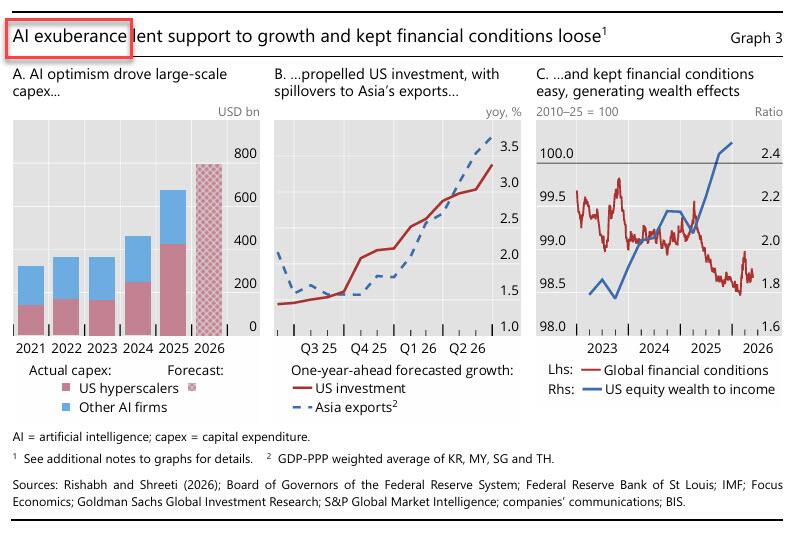
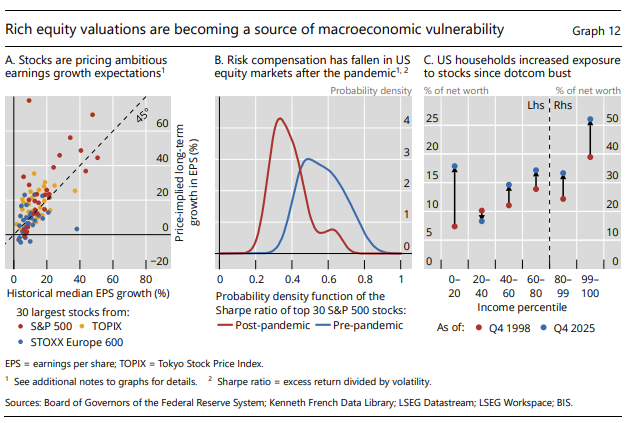
“Disappointment in returns could trigger a sudden pullback in financing and turn the capex boom into a protracted investment bust, with potential knock-on effects on financial conditions,” the BIS said, before observing that “a major equity-market correction could have larger macroeconomic consequences today than in the past.” 

Besides AI, the Basel officials went on to note that other assets could face similar dangers, and highlighted credit in particular.

“Repricing of risk this time, whether triggered by higher interest rates or an AI bust, has the potential to be similarly disruptive” in that segment to the 2008 Global Financial Crisis, the BIS said. 

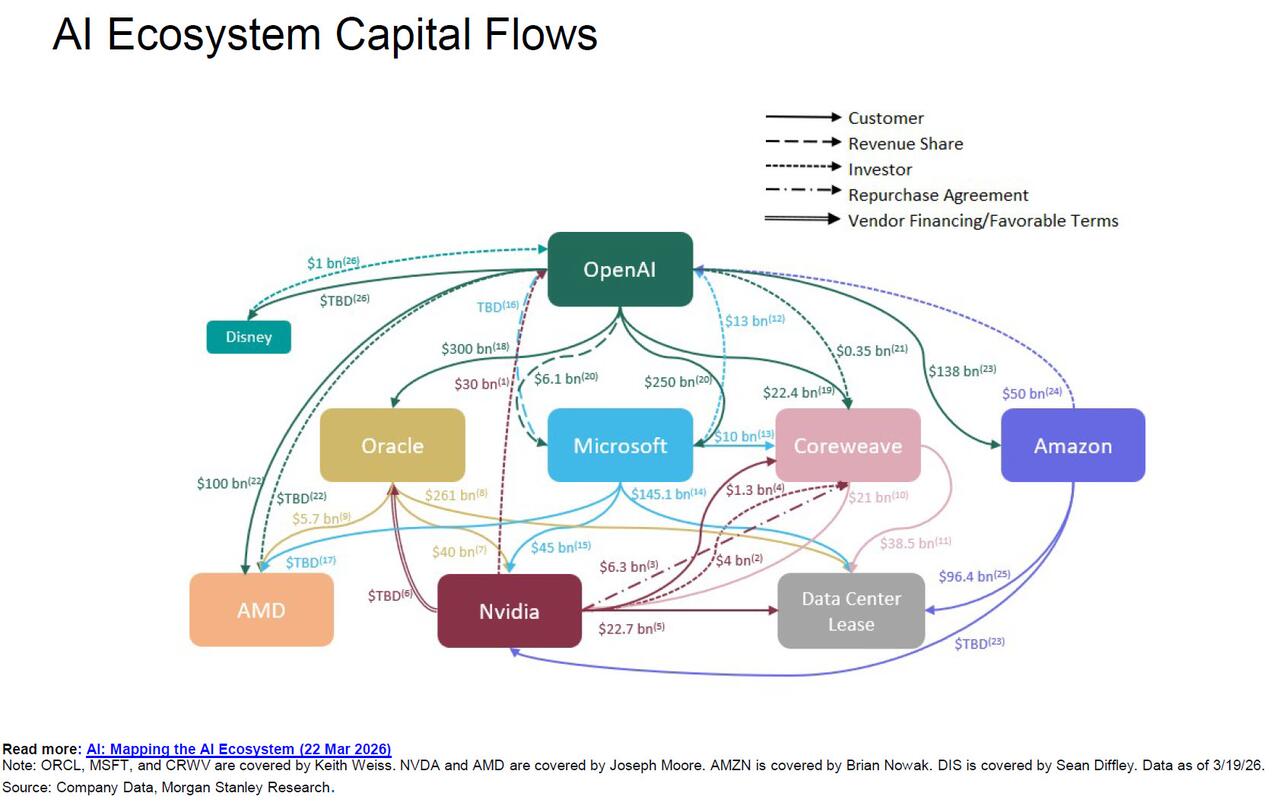
On AI specifically, officials highlighted vulnerabilities linked to funding, including complex arrangements such so-called “circular financingdeals that can mix equity and debt with supplier-client contracts (as discussed here “The $1.8 Trillion Off-Balance Sheet Time Bomb At The Heart Of The AI Supercycle“)

For instance, chipmakers and hyperscalers take stakes in AI labs or neocloud providers, who in turn commit to multi-year purchases of chips or computing power, the BIS said. Data center construction is more frequently outsourced to third parties that lease facilities back to hyperscalers on long-term contracts with embedded exit clauses.

Source: Morgan Stanley

“The terms of such deals are typically poorly disclosed, with risks of the same asset being pledged multiple times,” officials wrote.

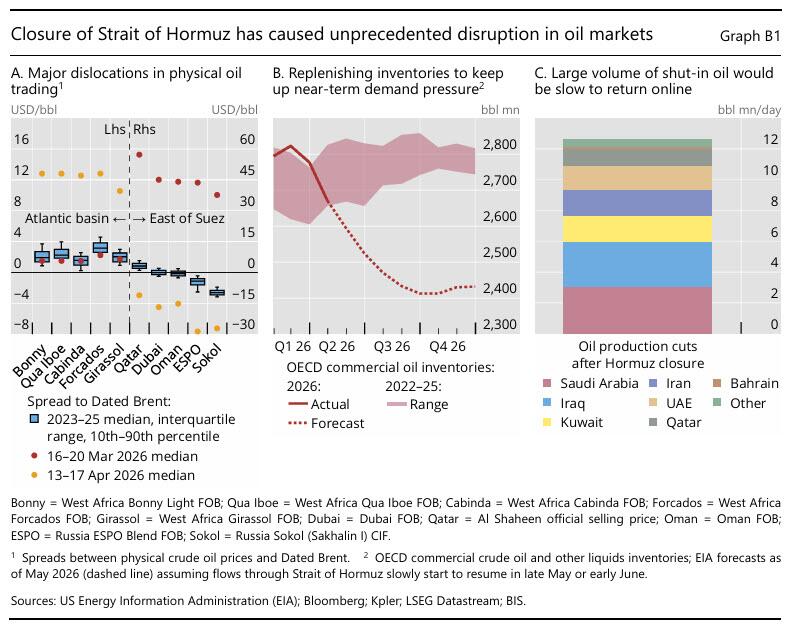
The BIS’s separate warning of a possible return of inflation jars with some initial optimism that the current energy shock caused by the Middle East crisis might recede. Signs of progress over a peace deal this week brought the oil price down to levels below where they were when the Iran war broke out in late February.

BIS officials, in tune with peers at institutions such as the ECB, also worry that the disruption to energy supplies may not be over, that infrastructure will take time to rebuild, and that existing impacts could linger. 

That followed US data last week showing prices rising at the fastest pace in more than three years, and precedes numbers in coming days that may show euro-zone inflation still far above officials’ 2% target.

The last cost-of-living shock in 2022 “is still in the memory of economic agents,” BIS chief Pablo Hernandez de Cos told reporters, intending no puns with the whole “memory” thing, and noting that this can mean a “higher probability of second-round effects.”

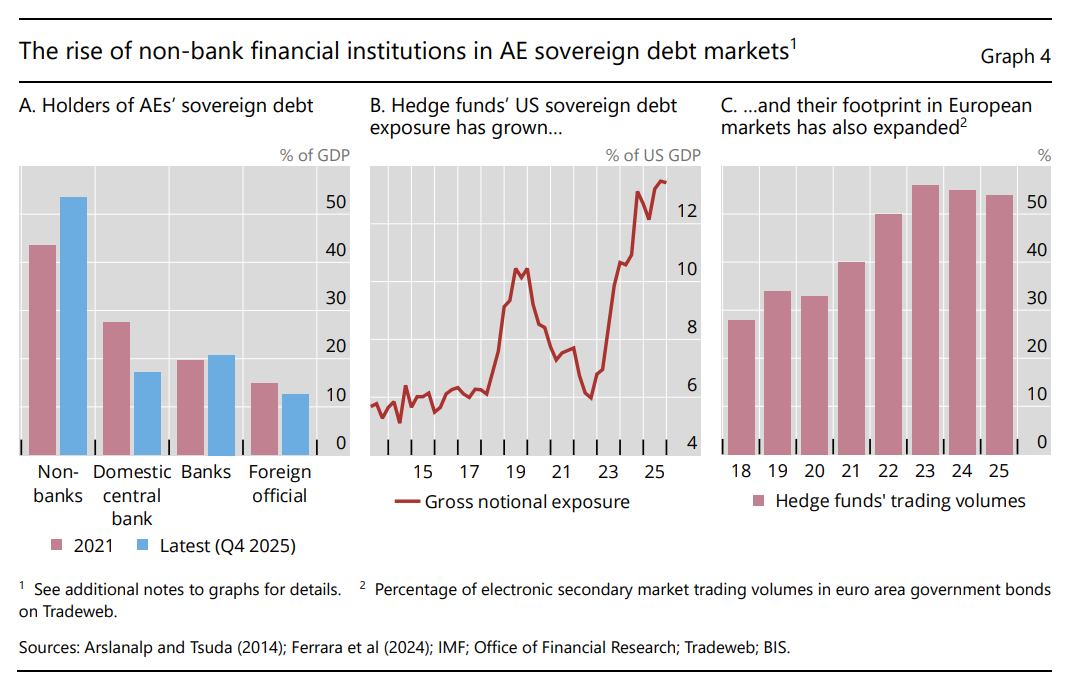
The BIS also highlighted what has become a familiar warning about how fiscal dangers posed by high sovereign debts still loom large, with added complications given the other risks. Echoing counterparts such as the Paris-based OECD, it pointed to how hedge funds have become much more prominent as buyers of government bonds, often using funding that can quickly unwind when conditions deteriorate as part of their massively levered basis trades.

“These hedge funds employ highly leveraged strategies that rely on short-term financing on favorable terms, creating risks of fire sales and de-leveraging feedback loops,” the BIS said. “Financial stresses can now propagate quickly and broadly through funding markets, across borders and between banks and non-banks.”

This year has already seen moments of bond-market tension, with broad selloffs on the UK gilt market summoning memories of the country’s 2022 crisis, and similar developments in Japan causing global ripples that extended to US Treasuries. 

“Market reactions can emerge in any moment, depending on sometimes political events or economic events,” de Cos said. “It will be important to reduce these vulnerabilities before these market reactions might take place.”

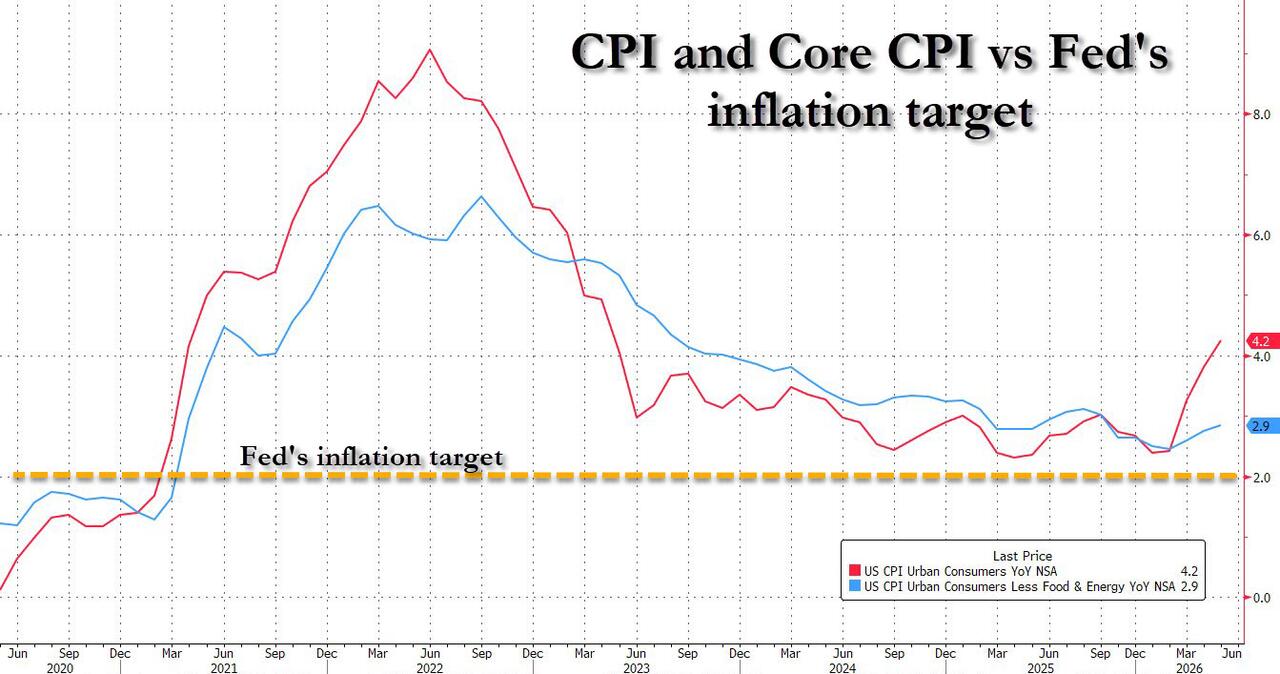
In its capacity advising global central banks, the BIS said that a strict focus on monetary discipline remains essential, ensuring that inflation expectations don’t become unhinged on the back of the recent energy price spikes and other supply shocks, Bloomberg reported, yet as we noted earlier, the US has been above the Fed’s 2% inflation target for about 5 years now, making a mockery of the central bank’s core pillar. Officials shouldn’t shirk from raising interest rates if needed, even if that harms growth in the short term, BIS said, knowing fully well nobody would do anything that harms growth in the short term.

“Policies reinforce each other,” the officials wrote. “Disciplined fiscal policy underpins monetary credibility and financial stability. Robust regulation strengthens market resilience, preserves fiscal space and limits the need for frequent central bank interventions. Credible monetary policy anchors inflation expectations.”

Tyler Durden
Sun, 06/28/2026 – 23:33

via ZeroHedge News https://ift.tt/dlBpOzx Tyler Durden

250 Years Ago: South Carolina Defeats The British Empire

250 Years Ago: South Carolina Defeats The British Empire

Authored by Alan Wakim via The Epoch Times,

On the morning of June 28, 1776, Thomas Jefferson and the Committee of Five presented a draft of the Declaration of Independence to John Hancock, president of the Second Continental Congress. Although immortalized by John Trumbull’s famous painting, the historic moment unfolded with quiet parliamentary precision and strict protocol rather than fanfare.

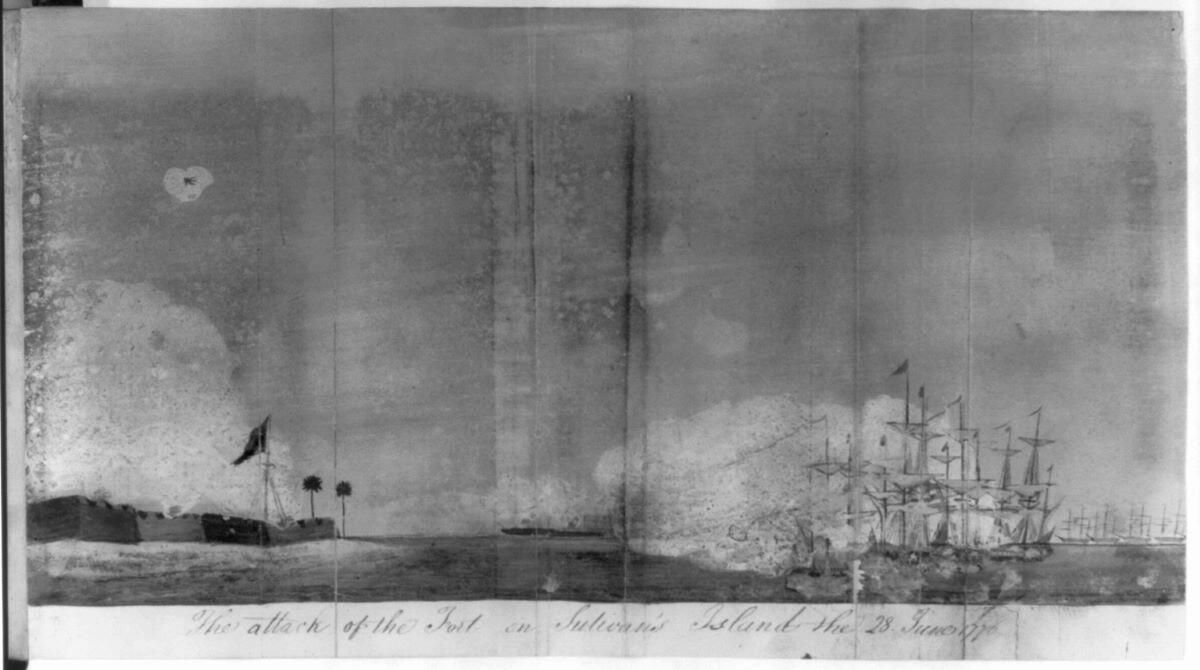
The attack on the fort on Sulivan’s Island the June 28, 1776, painted by Henry Gray. Drawing shows British ships firing on Fort Sullivan on Sullivan’s Island. Library of Congress. Public Domain

That same morning, a drastically different scene was unfolding at the vital port city of Charles Town, South Carolina, now known as Charleston. A British invasion force of up to 3,000 soldiers and marines, supported by Royal Navy warships and transports, had been sent to suppress the growing independence movement and restore royal authority in the southern colonies. For weeks, the armada had been poised to strike the city and the surrounding fortifications.

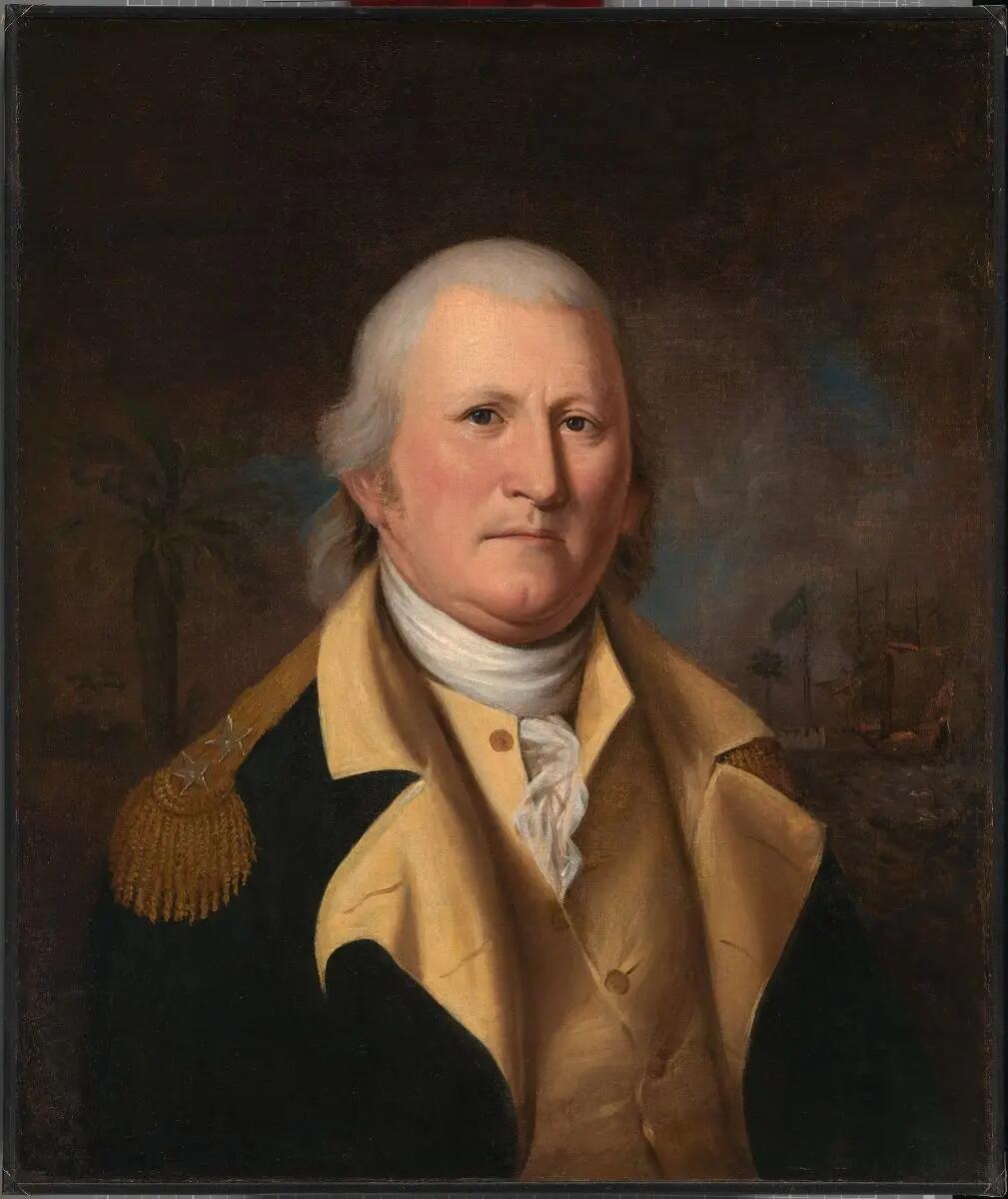
On the northeast shore of Sullivan’s Island, Col. William Moultrie and Col. William “Old Danger” Thomson were inspecting earthen batteries and entrenchments when a sentry posted nearby caught movement out at sea—British warships unfurling their sails and weighing anchor—and shouted the alarm. Moultrie immediately galloped his horse back to Fort Sullivan as the enemy ships began their slow approach. Upon arrival, he ordered the drummer to beat the “long roll”—the urgent alarm signal commanding soldiers to their battle stations.

A portrait of Col. William Moultrie, by Charles Willson Peale. National Portrait Gallery. Public Domain

The rhythmic thud of the drum could be heard four miles away in Charles Town. Large crowds gathered along the waterfront and crowded the upper floors of the city’s buildings for a clear view of what many expected would be an intense artillery duel. Among those watching was South Carolina President John Rutledge, standing on the second floor of the Exchange Building. Observing the scene unfold with his spyglass, Rutledge could see naval gunners loading their heavy cannon.

On the very day Congress received Jefferson’s draft, more than 6,500 Continental soldiers, militiamen, enslaved laborers, and warriors from the Pee Dee, Waccamaw, Cheraw, and Catawba tribes prepared to defend South Carolina in what history remembers as the Battle of Sullivan’s Island.

South Carolina Mobilizes

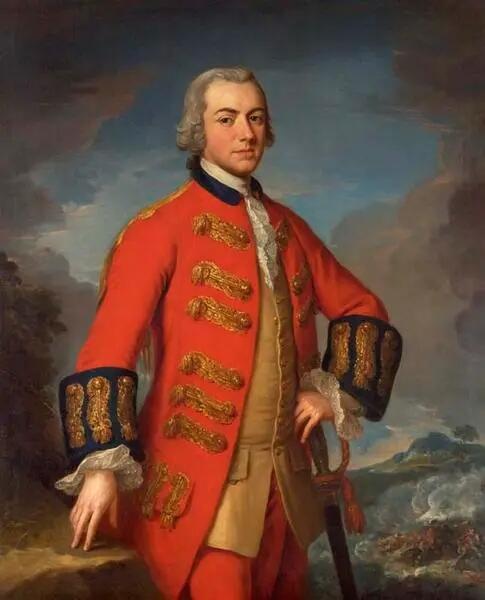
In December 1775, Patriots intercepted British dispatches revealing plans to strike the southern colonies. Those fears were confirmed the following February when British Gen. Henry Clinton, while visiting New York City, indicated that his destination lay somewhere in the South before departing for North Carolina on Feb. 28.

A portrait of Gen. Henry Clinton, 1762-1765, by Andrea Soldi. Public Domain

Alarmed by these developments, Congress created the Southern Department on March 1 and appointed Gen. Charles Lee as its commander. Lee, who had been overseeing the defenses of New York under Gen. George Washington, departed the city on March 7 for his new command.

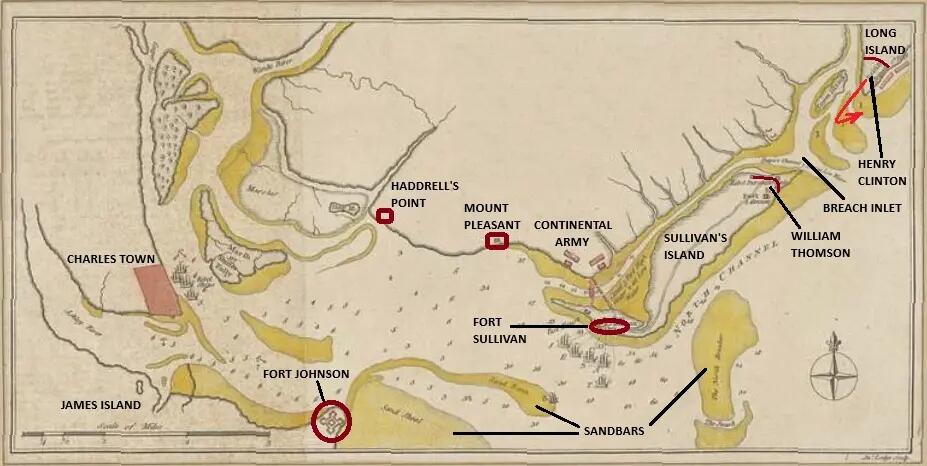
Rumors of an impending British attack swept through the Charles Town Harbor, prompting extensive defensive preparations. Within the city, workers erected barricades, breastworks, and heavy artillery batteries. Ringing the harbor, strategic outposts including Fort Johnson, Haddrell’s Point, and Mount Pleasant—along with scattered coastal redoubts—strengthened their lines with palmetto logs, sand, and powerful artillery.

Strategic outposts, forts, and locations of the British and Continental armies along the Charles Town Harbor. Markings by Alan Wakim on a 1776 map of Charles Town, S.C. Public Domain

The harbor’s defense was focused on Sullivan’s Island—at the time, a roughly four-mile-by-quarter-mile strip of land positioned by the harbor’s entrance. Shallow sandbars dotted the area inside and outside the harbor, forcing deep-draft ships to navigate past Sullivan’s Island to avoid running aground. Because of the island’s position as a strategic bottleneck, work began on the construction of Fort Sullivan with palmetto logs and sand. Moultrie was given command of the fort.

In North Carolina, Clinton met with the royal governor, Josiah Martin, when he learned that the Loyalist army had been defeated at the Battle of Moore’s Creek Bridge. Patriot militias now had exclusive control of the coastal regions. By the time Commodore Sir Peter Parker and Gen. Lord Charles Cornwallis rendezvoused with Clinton, North Carolina was unfeasible as a base of operations. Charles Town was now their best option.

The British Arrive

British vessels were spotted in late May taking soundings and gathering intelligence. On May 31, a Patriot horseman arrived at Rutledge’s headquarters to inform him that a massive fleet had been spotted on the horizon.

On June 1, the British armada arrived and dropped anchor outside the harbor. For the next several days, they searched for accessible crossing channels among the shallow sandbars.

On June 4, Lee arrived with his staff and assumed command. When he inspected Fort Sullivan, he called it a “slaughter pen” and predicted its destruction by naval artillery within half an hour. He ordered the fort to be abandoned and for the men to fall back to the mainland. Rutledge, however, instructed Moultrie to disobey those orders and to continue working on the fort.

On June 8, Clinton issued a formal proclamation to the city, demanding its immediate surrender. His timing proved unfortunate because Lee’s vanguard of roughly 2,000 Continental soldiers from Virginia and North Carolina arrived on the same day.

After his proclamation was ignored, Clinton deployed more than 2,500 redcoats onto Long Island, now known as Isle of Palms. The island was one mile northeast of Sullivan’s Island, separated by a waterway known as Breach Inlet. Lee responded by redeploying Thomson and 780 men to fortify the beaches facing the waterway.

The Isle of Palms (Long Island) across Breach Inlet. Taken from Sullivan’s Island. Alan Wakim

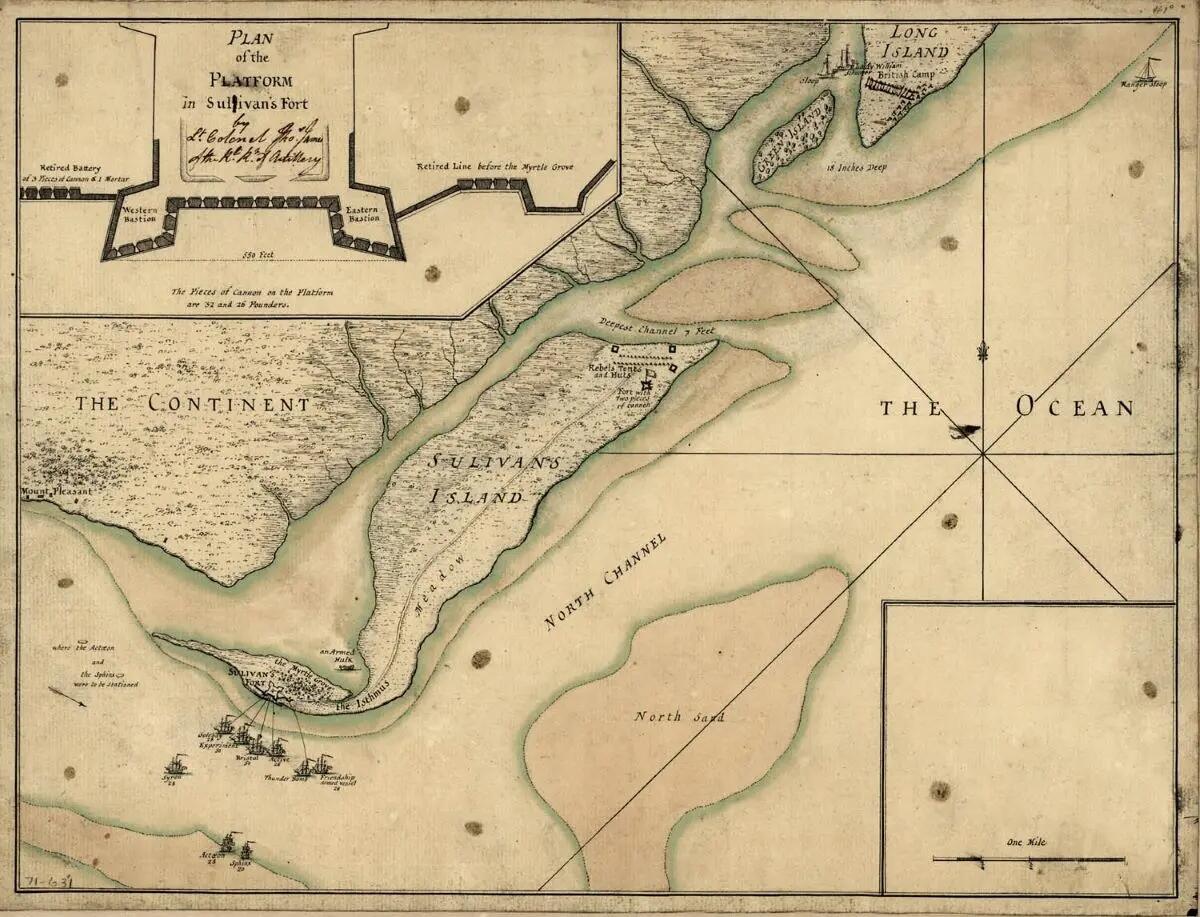
A coordinated assault of Sullivan’s Island was planned. Parker’s warships would batter the fort while Clinton’s men crossed Breach Inlet and attacked from the rear. However, flawed intelligence doomed the operation before Clinton ever set foot on Long Island. Early scouting reports mistakenly indicated that the inlet was an easily fordable sandbar measuring just 18 inches deep at low tide. In reality, Clinton’s men discovered a treacherous, 7-foot-deep channel driven by a ripping current that made a crossing by foot impossible.

Unfavorable winds and adverse tides further stalled the British operation for several days. Clinton used the delay to abandon the infantry march and organize an amphibious assault using flatboats. Meanwhile, Moultrie used the time to feverishly reinforce the fort’s defenses with his force of 435 men.

June 28, 1776

On the morning of June 28, Parker found sea and weather conditions ideal for an attack. He signaled the fleet to weigh anchor, loosen their sails, and begin their advance, setting in motion Moultrie’s frantic dash back to the fort.

HMS Thunder dropped anchor and fired the opening shots. Within minutes, all nine warships unleashed a thunderous cannonade at the unfinished fort.

The bombardment, however, produced an unexpected result. Instead of splintering into deadly shards, the soft, sponge-like palmetto logs absorbed the cannon’s impact. British officers later acknowledged that the unusual construction made the fort far more resilient than anticipated.

Palmetto logs, such as these, were used to fortify outposts during the Battle of Sullivan’s Island. Alan Wakim

Moultrie’s men fired slowly and deliberately to avoid using up the fort’s limited supply of powder. Their carefully aimed shots inflicted heavy damage on the attacking ships, especially Parker’s flagship, HMS Bristol, which suffered extensive casualties. Nearly every officer on its quarterdeck was killed or wounded. Parker was among the wounded when an American shot tore away part of his uniform, leaving his backside exposed.

Also wounded aboard Bristol was Lord William Campbell, South Carolina’s deposed royal governor, who had volunteered to serve with a gun crew. Struck by flying splinters, Campbell never fully recovered from his wounds, dying in England two years later.

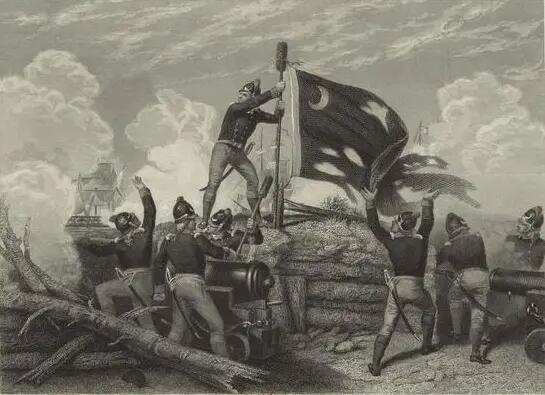
Enemy fire severed the fort’s flagstaff during the battle. Sgt. William Jasper climbed over the ramparts, recovered the fallen colors under fire, and fastened them to a sponge staff, raising them once more above the fort. His actions became one of the enduring images of the entire war.

An image of Sgt. Jasper raising the battle flag of the colonial forces over present-day Fort Moultrie on June 28, 1776 during the Battle of Sullivan’s Island. New York Public Library. Public Domain

Parker attempted to reposition three frigates to attack exposed areas of the fort. The vessels—Sphinx, Syren and Actaeon—ran aground on a shoal. Sphinx and Syren eventually escaped, but Actaeon remained stranded.

Clinton attempted to force a crossing using flatboats, but Thomson’s men unleashed a devastating barrage of musket and artillery fire from behind their entrenchments, forcing the British to abandon the attempt and leaving Clinton powerless to support Parker’s fleet.

For nearly 10 hours, the two sides exchanged artillery fire beneath a blazing June sun. As evening approached, the battered British fleet withdrew. The crew of the stranded Actaeon abandoned the ship and set her ablaze.

Aftermath

A British engineer’s map made following the engagement. Library of Congress. Public Domain

Residents in Charles Town had spent the day anxiously awaiting news. When word arrived that Fort Sullivan still stood, celebrations erupted throughout the city. Even Lee, who had doubted the fort’s chances, praised the defenders. He visited the fort during the battle, observed the men’s calm bravery, and fired several rounds himself before returning to the mainland.

Americans suffered 37 casualties. British casualties approached 220.

Fort Sullivan, now called Fort Moultrie. Alan Wakim

The fort was later renamed Fort Moultrie in honor of its commander. The palmetto tree eventually became a symbol of the state, giving rise to its nickname “The Palmetto State.”

The victory provided a powerful boost to the Patriot cause and delayed major British operations in the South until December 1778.

Six days later, on July 4, 1776, Congress approved the Declaration of Independence.

Tyler Durden
Sun, 06/28/2026 – 23:20

via ZeroHedge News https://ift.tt/7v0DYux Tyler Durden

Speculation Nation

Speculation Nation

Authored by Adam Sharp via DailyReckoning.com,

Americans are natural risk takers. This trait goes back to the country’s founding stock.

Many of our ancestors decided to leave their homelands and set off to the New World.

In search of freedom, land, meat, and prosperity, these pioneers laid the foundation for a bold nation.

As a result, Americans have always excelled in the entrepreneurial arts. We aren’t afraid to take the risk of starting a business. This is surprisingly rare throughout the world. It’s one of the prime reasons our nation is so exceptional.

But today, our risk-taking nature is being taken advantage of.

Gambling EVERYWHERE

You can’t watch sports these days without the inevitable gambling ads. TV hosts offer up their suggested bets and plug the sponsor’s gambling app.

This was absolutely unheard of even 10 years ago. But in 2018, the Supreme Court ruled that sports gambling had been improperly banned by the federal government.

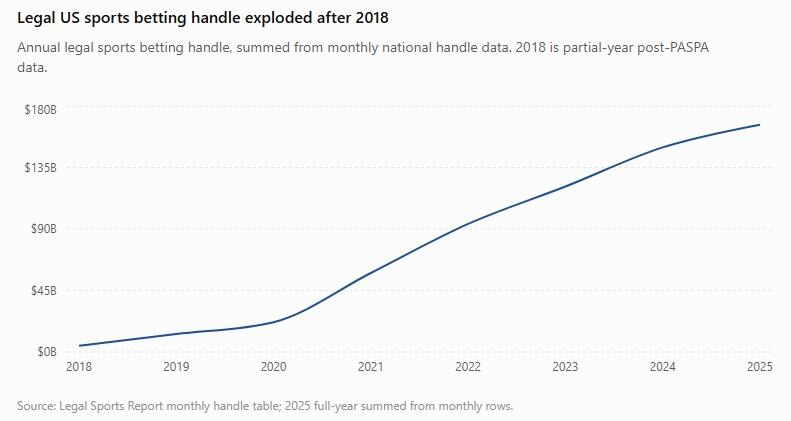
The rest is history. The chart below shows legal sports gambling volume since 2018:

Source: Author

From $4.6 billion in 2018 to $166 billion in 2025! It’s a disturbingly bullish chart. That’s a lot of money being flushed down the drain every year.

According to the largest study of online sports betting, about 96% of people lose money. That’s based on tracking digital payments. Only 4% ever withdrew winnings.

The odds are shockingly bad. And the crazy thing is, even if you do manage to beat the system, the gambling apps will limit your bets to tiny amounts. It’s rigged.

The study also found that lower-income people are hardest hit. They gamble more of their income, and lose more.

Investors are increasingly using “parlay” bets in an attempt to hit it big. You can bet on the outcome of 10+ different events, and depending on their probability, win 100x or more your money. But these parlays almost never hit. And the house makes a lot more money from these bets.

Too many people today view parlays as a retirement plan. There are much better ways to speculate available, like the stock market.

But even parts of the stock market have turned into a casino.

Stocks, Too

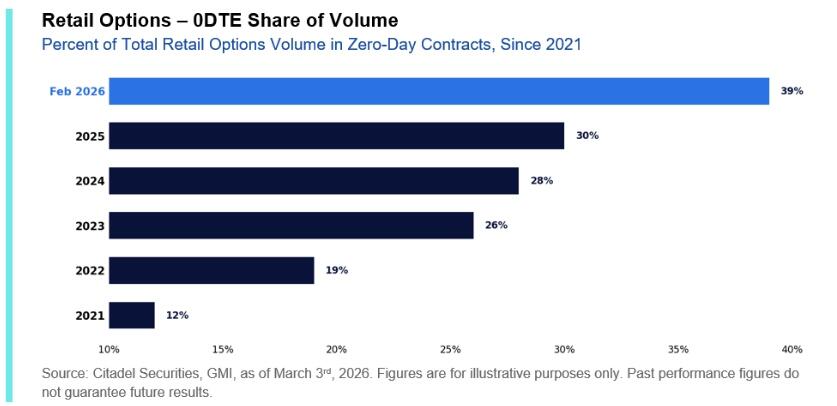
Citadel Securities is a firm you may not have heard of. But they handle about 25% of all retail trading in the U.S. Stocks and options.

And their latest data is shocking. In February 2026, 39% of all options volume was on “zero-day” contracts. In other words, options that expire the same day. We call these “ODTE” options. Incredibly risky.

Source: Citadel Securities

This is day trading on steroids. Note how in 2021, 0DTE volume was just 12% of the total.

Many Americans are struggling. Housing is unaffordable, food prices are ridiculous, and the job market is rough. So they’re trying to use 0DTE options to strike it rich.

For the vast majority of traders, this strategy will end in tears.

Prediction Markets – Bet on Anything

And now, the next evolution in gambling. Prediction markets.

The name sounds respectable. Honey, I’m not gambling. I’m predicting.

Same difference.

On sites like Kalshi and Polymarket, you can bet on almost anything.

  • Will it rain in New York City today?
  • Will Trump say “Dumbocrats” in his speech tonight?
  • Will the Fed raise interest rates by 0.25% in October?
  • Who will win the UFC fight?

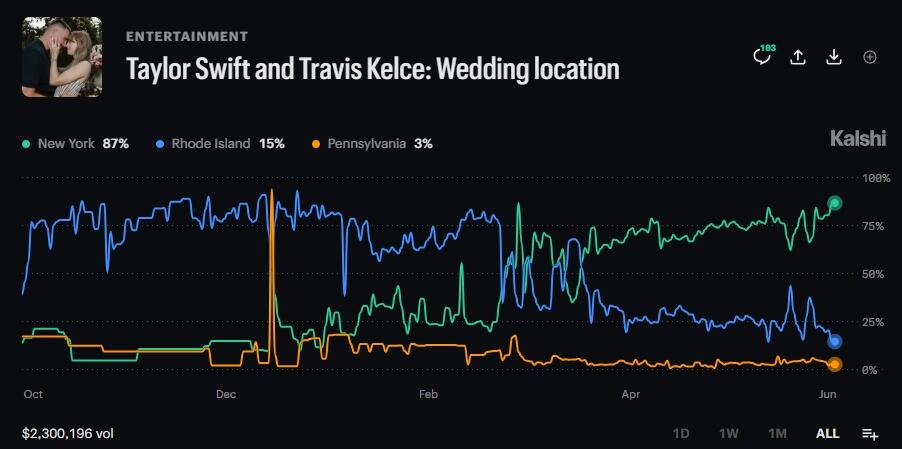
You can even bet on where Taylor Swift’s wedding will take place. New York, or Rhode Island? A few bold bettors say it’ll be in Pennsylvania (3% chance, make 33x your money!).

Source: Kalshi

The suspense is killing me…

Naturally, there is a huge insider trading problem in prediction markets. Someone on Taylor Swift’s team probably knows where the wedding will be. They could bet themselves, but then they might get caught. So they might tip off friends, and share the winnings.

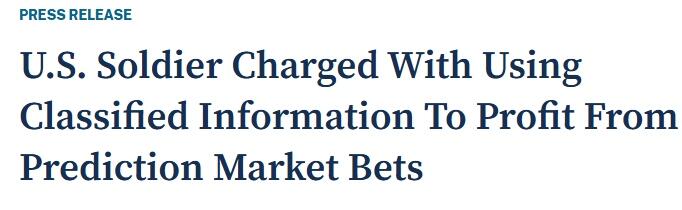
Insider trading is becoming a major problem in prediction markets. We’ve already seen a U.S. soldier get busted for betting on Nicolas Maduro’s removal from power in Venezuela. He won $400,000, but got caught.

Source: DOJ

Of course, there are going to be productive uses of prediction markets. But for most people, it’s really just gambling under a fancier name.

What’s The Solution?

Pandora’s box is open. Gambling has become a big part of our culture and economy.

It’s unlikely to be outlawed or restricted anytime soon. There’s too much money to be made.

But gambling is draining the savings of Americans. And preventing many from investing their money where it should be, in the stock market. Or a small business.

So we should encourage our kids, grandkids, and friends to steer clear of gambling. Many people are developing serious gambling addictions in this new world.

Many have come to see reckless speculation as their only “way out”. This is understandable, but it almost never works.

Sports gambling is not a path to riches. Quite the opposite. And 0DTE options and prediction markets may seem more sophisticated, but the result will be similar for most people.

Instead of making a deposit in the sports book, people should be opening a Roth IRA, or contributing to a 401k. These legal tax shelters offer incredible benefits, and over a long period you will make money with a well-thought out portfolio.

Sports betting was $166 billion last year. Total U.S. investment into 401ks is about $600 billion per annum. And gambling is growing much faster.

Compared to sports gambling, where only 4% win, the choice is clear. Take advantage of the most powerful force in the universe: compounding. And the only way to do that with a high probability is by owning quality stocks.

Be sure to put as much as you can in retirement accounts. Or if you’re already retired, encourage your kids/grandkids to do so. Compounding works best when the government isn’t constantly taking a cut.

Tyler Durden
Sun, 06/28/2026 – 22:10

via ZeroHedge News https://ift.tt/kwLuPnO Tyler Durden

Supreme Court Expected To Rule On Cook, Elections, And Trans Athletes

Supreme Court Expected To Rule On Cook, Elections, And Trans Athletes

The U.S. Supreme Court is expected to decide in the coming days whether President Donald Trump can remove Federal Reserve Board of Governors member Lisa Cook from her post – an extraordinary step that would mark the first presidential firing of a Fed official since the central bank’s founding in 1913 and directly test the institution’s independence from political interference.

The justices, who hold a 6-3 conservative majority, signaled skepticism during January arguments toward Trump’s authority to oust Cook. The Federal Reserve Act requires that governors be removed only “for cause,” a term Congress left undefined and without procedural details. Trump cited unsubstantiated allegations of mortgage fraud – which Cook has denied and called a pretext for her removal over monetary policy disagreements. Cook has remained in her role while the case proceeds. No president has attempted such a firing in the Fed’s more than century-long history.

This dispute is one of three pending cases examining the outer limits of presidential power under Trump. The others involve his removal of a Federal Trade Commission member and an executive order limiting birthright citizenship. The court has already delivered Trump victories in two immigration cases this week and has frequently sided with the administration in emergency rulings, though it rejected his sweeping tariffs in February.

Firing Federal Officials

The justices appeared ready during December arguments to uphold Trump’s firing of Democratic FTC Commissioner Rebecca Slaughter over policy differences. Lower courts had ruled that Trump exceeded his authority. U.S. Solicitor General D. John Sauer urged the Court to overturn the 1935 precedent Humphrey’s Executor v. United States, which has protected heads of independent agencies from at-will removal. While the Court has narrowed that precedent in recent decades, it has stopped short of overruling it. Conservative justices have expressed sympathy for the view that statutory tenure protections encroach on the president’s constitutional powers. The Court previously allowed Trump to remove Slaughter while the case continues.

Election-Related Cases

Two election disputes remain as Republicans seek to retain congressional control in the November midterms.

During March arguments, conservative justices expressed skepticism toward a Mississippi law – challenged by Republicans and supported by the Trump administration – that permits mail-in ballots postmarked on or before Election Day to be counted if received up to five business days later. A lower court invalidated the provision. A ruling striking down the law could encourage stricter voting rules nationwide.

Trump issued an executive order in March restricting mail-in ballots across the country, but a federal judge in Boston blocked its implementation on Thursday.

In December, the Court heard a Republican-led challenge – involving Vice President JD Vance – to federal limits on coordinated spending between political parties and candidates. Some conservative justices appeared open to the First Amendment arguments against the restrictions, while the liberal justices seemed inclined to preserve them. A lower court had upheld the limits.

Transgender Athletes

In January arguments, the conservative majority signaled it is prepared to uphold laws in Idaho and West Virginia barring transgender athletes from female sports teams at public schools and universities. The states argue the measures protect fair competition for women and girls; critics see them as part of broader efforts to restrict transgender rights.

Geofence Warrants

The Court also heard April arguments in a Virginia case examining whether law enforcement’s use of “geofence” warrants – which sweep up cellphone location data from areas near crime scenes to identify potential suspects – violates the Fourth Amendment’s ban on unreasonable searches.

The Supreme Court’s term, which began in October, typically ends in late June or early July. With seven cases still unresolved and the next round of decisions expected Monday, the coming days will bring clarity on these high-stakes disputes.

Tyler Durden
Sun, 06/28/2026 – 21:35

via ZeroHedge News https://ift.tt/dm1vWFD Tyler Durden

“Wants To Be More Political Than His Daddy”: Alex Soros Plows $103 Million Into Unhinged Democrats Ahead Of Midterms

“Wants To Be More Political Than His Daddy”: Alex Soros Plows $103 Million Into Unhinged Democrats Ahead Of Midterms

The uncomfortable reality for socialist Democrats is that the anti-capitalist and anti-American movement is not an organic uprising from the working class, as they often portray in their propaganda.

The same left-wing politicians and activists who talk about dismantling capitalism and throwing wrenches into the capitalist system, all while pushing nation-killing progressive experiments across the West, are often backed by billionaire dark money and, in some cases, foreign influence networks.

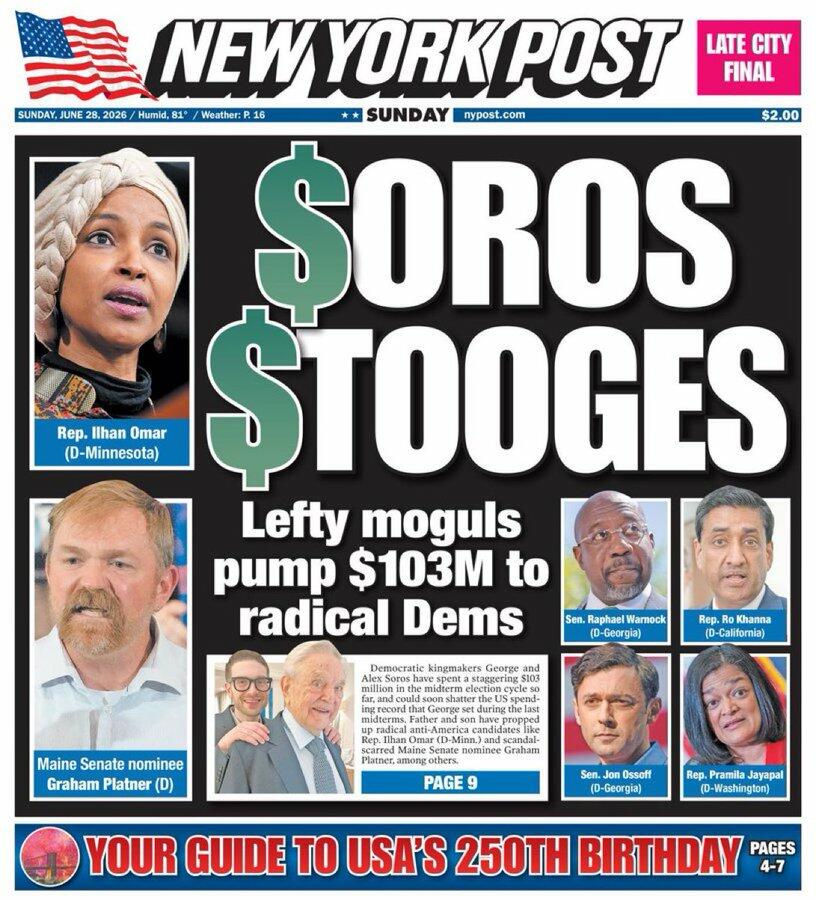
A New York Post report released this weekend found that left-wing billionaire George Soros and his son, Alex Soros, who is even more politically extreme than his father, have funded Democrats and socialists to the tune of a staggering $102.8 million so far in the midterm cycle.

The Soros family seems hell-bent on advancing a far-left, radicalized agenda to reshape the nation into what can only be described as a leftist hellhole, something already present in blue cities plagued by years of violent crime and chaos.

NYPost adds more color:

Only a fraction of this cycle’s contributions — $793,800 — were made in the 95-year-old mega donor’s name, a review of publicly available Federal Election Commission data reveals.

. . .

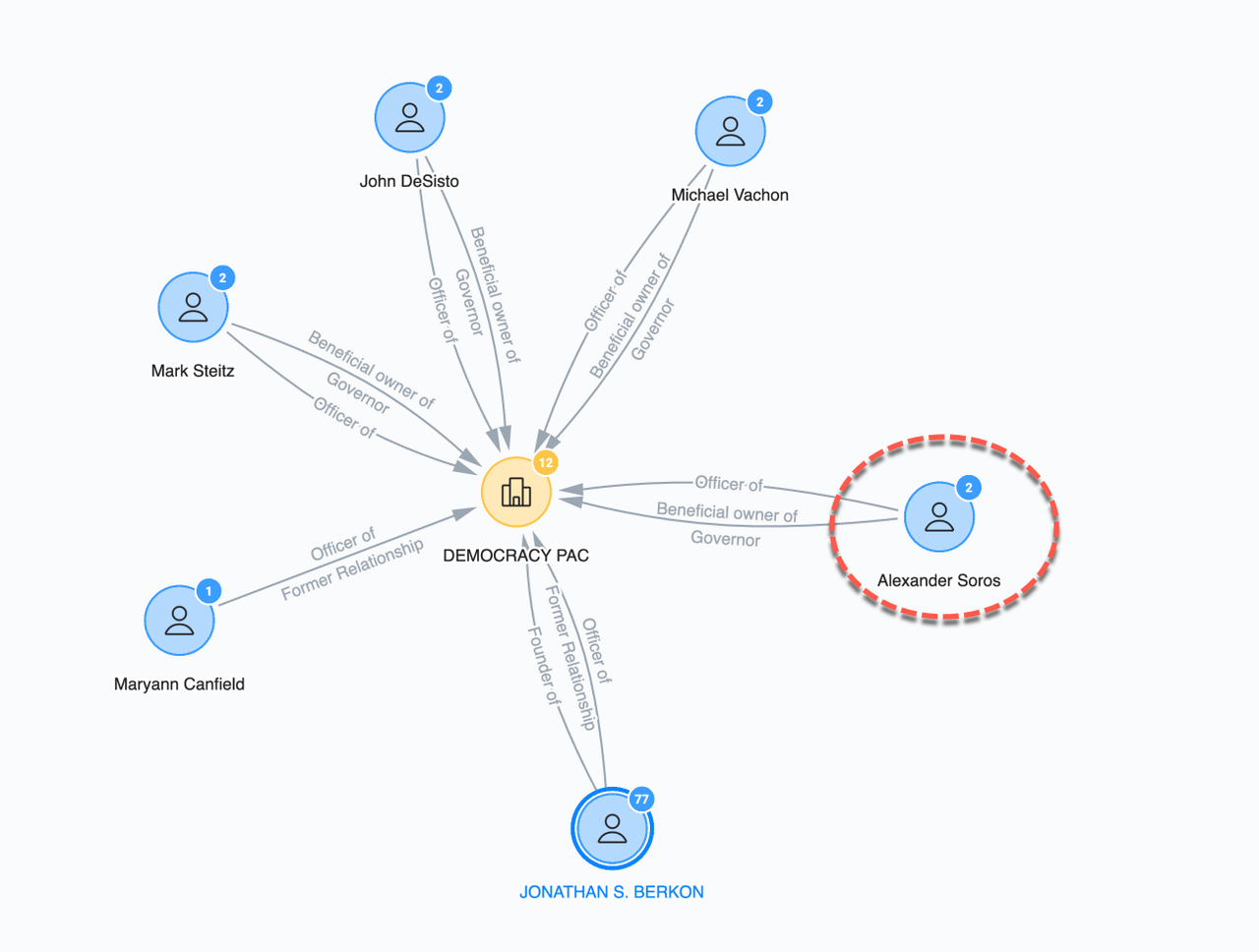
Almost all of the money — $102 million — was funneled through the Democracy Political Action Committee, the super PAC Soros launched in 2020, which acts as the family’s main political arm, obfuscating efforts to know which radical candidates the clan is propping up.

Of that, a little over half, $52 million, came from George Soros through the private corporation Geosor under his name and the other half, $50 million, from Fund for Policy Reform, a nonprofit which lists Alex Soros as director in tax filings.

Democracy Political Action Committee

Parker Thayer, an investigative researcher at think tank Capital Research Center, told The Post that Alex Soros “wants to be more political than his dad. This is the first midterm cycle where he is in control,” adding, “George is not in control; he hasn’t been in control for some time.”

Related:

NYPost also noted direct donations by George and Alex Soros to several unhinged Democratic candidates and lawmakers, including Graham Platner, Ilhan Omar, Ro Khanna, Raphael Warnock, Jon Ossoff, and Pramila Jayapal.

The report continued:

Alex Soros, 40, and his father George both sent a maximum contributions of $7,000 ($14,00 total) to Maine senatorial candidate Graham Platner, who’s been accused of misconduct toward women and regularly slams the rich — despite his own wealthy upbringing and lining his pockets with billionaire money.

The fat cat’s spawn maxed out donations and sent $7,000 to Jimmy Choo-wearing Omar, who’s been slammed for allegedly knowing about the widespread fraud involving the Somali community in her Minneapolis district. Omar has denied wrongdoing.’ He also sent a max donation of $7,000 to multimillionaire Silicon Valley lefty Rep. Ro Khanna (D-Calif.), who’s said to be mulling a 2028 presidential run.  

The nepo baby and his oligarch father also sent maximum donations to two other 2028 Democratic presidential hopefuls with Peach State Pastor Sen. Raphael Warnock (D-Ga.) and Sen. Jon Ossoff (D-Ga.) receiving a total of $14,000 each.

In all, the Soros’ have already poured an eye-watering 52% more into the family political slush fund than in 2024, when they channeled $67 million into the Democracy PAC, according to campaign filings.

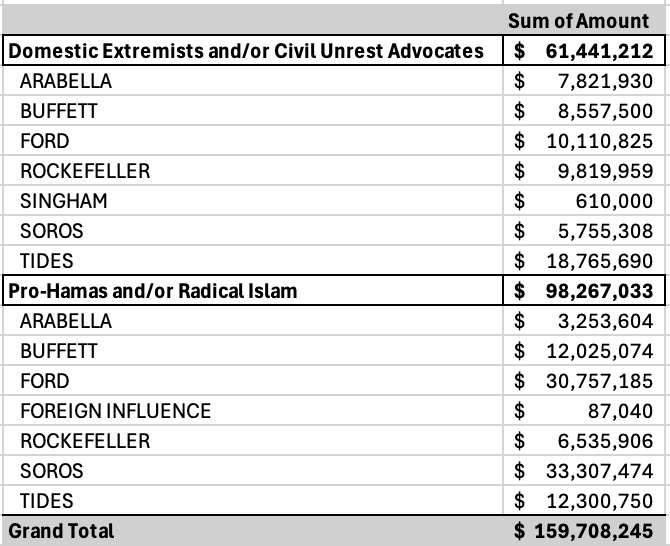
Last fall, Seamus Bruner, Director of Research at the Government Accountability Institute, briefed President Trump and his cabinet on dark-money-funded NGOs and activist groups fueling chaos nationwide, a phenomenon also referred to as the protest-industrial complex.

We have identified dozens of radical organizations, not just the decentralized Antifa organizations, but dozens of radical organizations that have received more than $100 million from the Riot Inc investors,” Bruner told Trump at the Antifa roundtable at the White House.

via Government Accountability Institute

At the time, Elon Musk commented on X in response to a video featuring Bruner’s public briefing to the president about dark-money-funded NGOs, saying, “Way more than $100M of US taxpayer money.

Bruner’s briefing to Trump builds on last year’s New York Times report, which cited a Capital Research Center report stating that “Soros’ Open Society gave $80 million to pro-terror groups“…

It is important to understand that the Trump administration’s broader NGO investigations appear to be focusing on the radicalization pipeline within the American left.

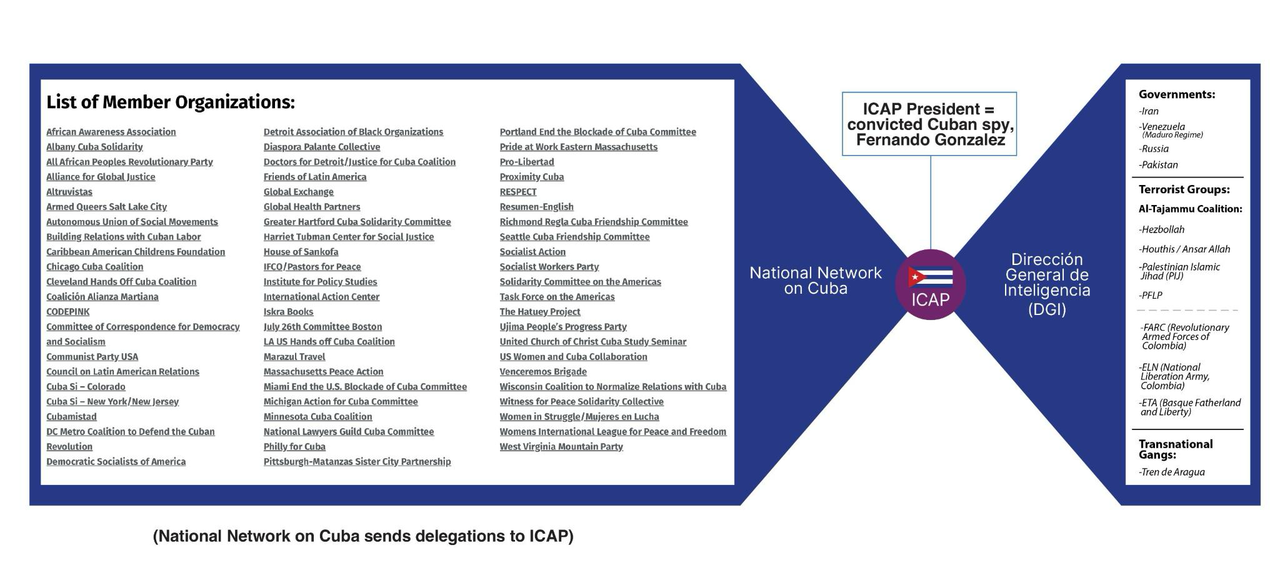
Soros-linked money is certainly part of the story, but it is not the whole story. The key shift in investigations now appears to be centering around Democratic Socialists and their potential connections to foreign influence networks, including entities allegedly tied to the China-linked Neville Roy Singham network and Cuba.


Treasury Secretary Scott Bessent recently signaled, “In the weeks and months ahead, we are going to have a lot to report” on the NGOs.

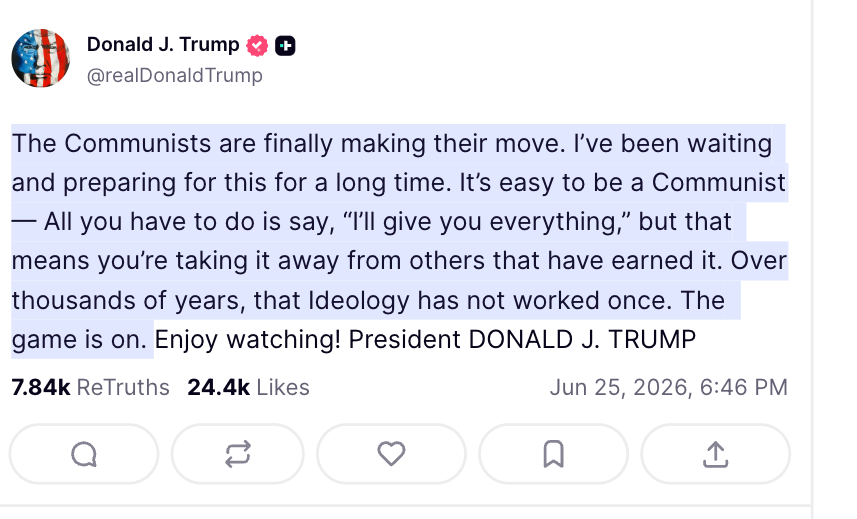
One major signal came from President Trump himself, who criticized Marxists on Truth Social last Friday, suggesting he may have been briefed on the broader problem of radical left NGOs and Marxist-aligned activist networks. At the same time, top Democratic Party leaders appeared on corporate media at the end of last week, effectively admitting their party has been influenced by socialists and Marxists.

Truth Social Post #1 

Then #2 

So what happens next? If Trump launches an anti-Marxist task force, he could frame it not only as a crackdown on radical NGOs and foreign influence networks but also as an effort to rescue the Democratic Party from its own stupidity by allowing socialists and Marxists to run rampant inside their DEI kingdom.

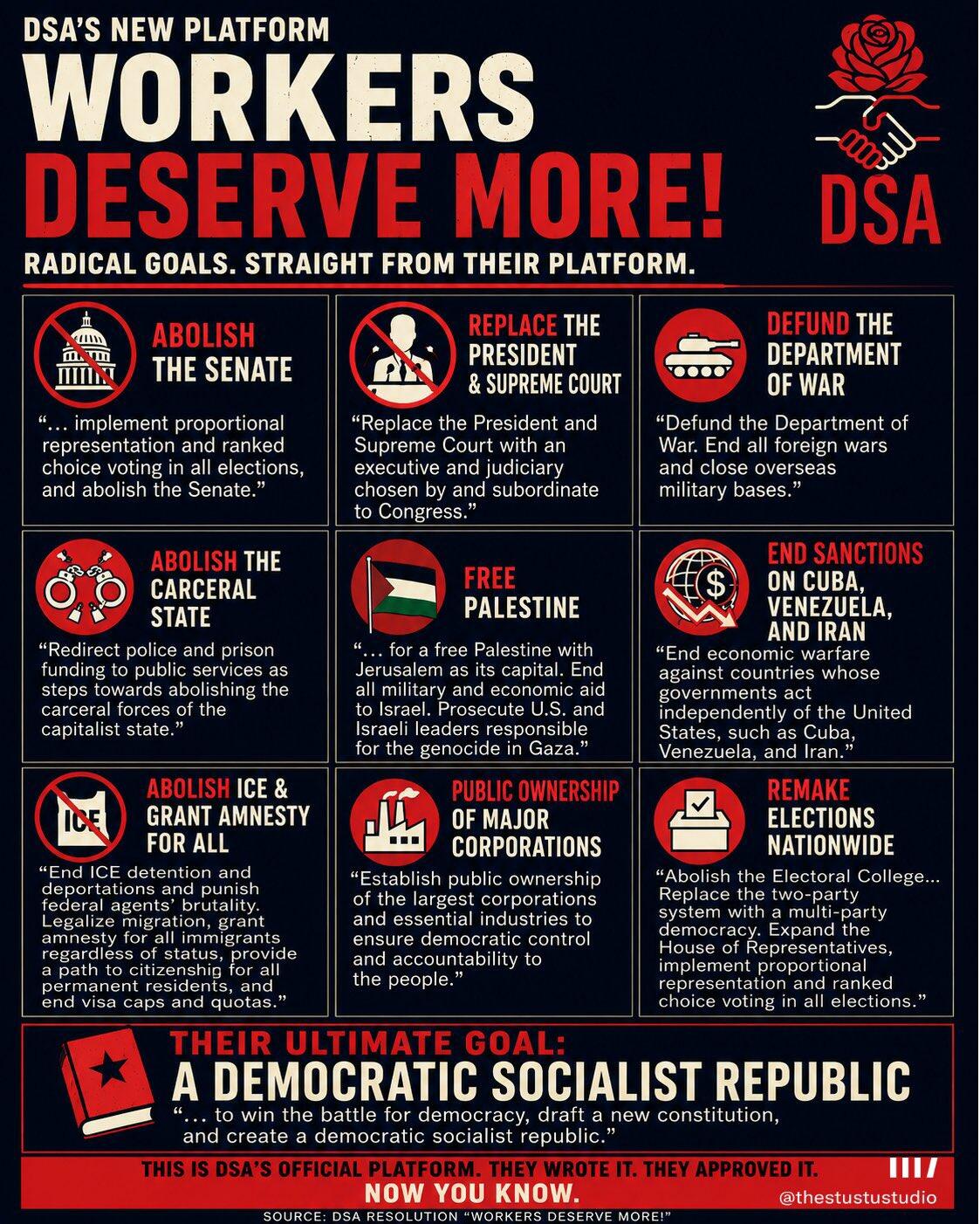
The unofficial spokesperson of the DSA recently told millions of followers to kill capitalists in the streets.

DSA’s plan for America:

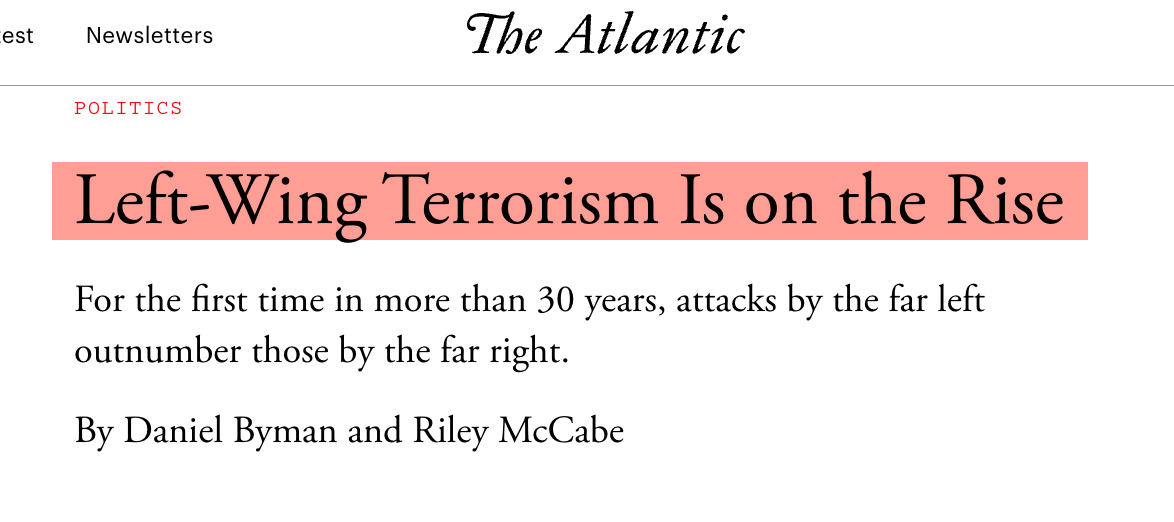
There has been a troubling pattern of youth radicalization targeting “capitalists.” Top officials in the U.S. and Europe have agreed in recent meetings that this radicalization is producing increasingly younger extremists.

Tyler Durden
Sun, 06/28/2026 – 20:25

via ZeroHedge News https://ift.tt/plHWxwN Tyler Durden

AI Demand, War, & Climate Pressure Push World Back To Nuclear

AI Demand, War, & Climate Pressure Push World Back To Nuclear

Authored by Haley Zaremba via OilPrice.com,

  • The US and Canada each announced plans this week to build ten new nuclear reactors, the biggest coordinated nuclear push in North America in decades.

  • The moves come as the AI boom, the war in Iran, and broader geopolitical instability push energy security to the top of the policy agenda worldwide.

  • China added 34 gigawatts of nuclear capacity over the past decade to the US’s one plant, and is on track to overtake both the US and France as the world’s top nuclear producer.

Global energy markets are in turmoil as energy crises keep piling up. The energy-hungry AI boom, war in Iran, geopolitical instability, and climate pressures are creating a polycrisis for the global energy sector, and it’s just getting started. To solve multiple overlapping crises, we will need multiple overlapping solutions.

An all-of-the-above solution to increasing energy security is therefore gaining favor on a global scale as the precariousness of over-reliance on limited energy supply chains becomes dangerously clear. While fossil fuels continue to provide the lion’s share of the global energy mix, alternative energy sources, especially those that are harder to blockade or embargo, are quickly gaining favor.

One of the biggest benefactors of this all-of-the-above approach to energy growth is the nuclear energy sector, which is currently undergoing a worldwide renaissance. While nuclear energy had fallen out of favor in much of the world in the wake of high-profile nuclear disasters like Chernobyl, Three Mile Island, and Fukushima, it has come roaring back due to the undeniable advantages it offers as a zero-carbon, round-the-clock energy source with well-established supply chains and high efficiency.

“With energy security now ranking alongside climate commitments as a top policy priority, nuclear power appears positioned to play a central role in the global electricity landscape through mid-century,” the Foreign Policy Journal reported earlier this month.

Just this week, the United States and Canada unveiled separate plans to build ten new nuclear reactors each, marking a massive acceleration of nuclear energy development across North America. On Monday, Energy Minister Tim Hodgson introduced a plan for a “new civilian nuclear renaissance” that serves as a central component of a larger plan to double the capacity of the national electrical grid by 2050 to keep up with projected demand growth.

“If our goal is to double our grid and build a low-carbon economy in less than 25 years, there is no credible plan to do that without nuclear energy and the clean, reliable baseload power it provides,” Hodgson said at a news conference in Ontario. “There is no credible plan for Canada to become an energy superpower if we choose not to build upon one of the strongest energy advantages we have,” he went on to say.

Just a day later, the Trump administration announced that it plans to funnel billions of dollars in federal loans toward kickstarting a buildout of nuclear power plants across the United States as part of Trump’s desire to to “produce lasting American dominance in the global nuclear energy market.”

The new Department of Energy plan, which a New York Times report describes as “complex and unusual”, would rely on utilities to put forward hundreds of millions of dollars of their own money in order to access the federal loans, with the ultimate goal of easing the sticker shock of the components for large new reactor types.

These two plans are designed to reverse a yearslong inertia in Western nuclear energy markets. In the last ten years, the United States only built one new nuclear plant, and it was years overdue and billions over budget by the time it was finally finished. Over the same time period, China added a staggering 34 gigawatts of capacity over the same time period. As a result, China is on track to overtake the United States (and France) to become the world’s biggest producer of nuclear energy within the next ten years.

The United States and Canada’s new plans pale in comparison to China’s lofty nuclear goals as outlined in the country’s newest five-year plan, but they mark a major shift in energy strategy for the two powers, and potential progress toward rebalancing the global nuclear sector.

Tyler Durden
Sun, 06/28/2026 – 19:50

via ZeroHedge News https://ift.tt/PWk3ytf Tyler Durden

CDC Raises Ebola Response To Highest Level As Outbreak Grows

CDC Raises Ebola Response To Highest Level As Outbreak Grows

Authored by Kimberley Hayek via The Epoch Times,

The U.S. Centers for Disease Control and Prevention has activated its highest-level emergency response to the growing Ebola outbreak in central Africa caused by the rare Bundibugyo strain, as the agency says that the risk of spread within the United States remains low.

The move to Level 1 activation, signifying the most severe health crises, comes as the outbreak, which is now in its second month, has infected more than 1,200 people in Congo, with 321 deaths reported there, plus additional cases in neighboring Uganda, according to the World Health Organization. This marks the highest first-month total of any Ebola episode on record.

Dr. Satish Pillai, the CDC’s incident manager for the Ebola response, detailed the agency’s efforts during a briefing on June 26.

Pillai said the CDC has stationed 19 staff members overseas to aid country teams and local health ministries with data analysis, exit screenings at airports, laboratory support, and training. Those personnel join approximately 100 CDC staff already on the ground in Congo and Uganda.

There are no approved vaccines or specific treatments for the Bundibugyo strain, distinguishing it from more common Zaire ebolavirus outbreaks. Mortality rates for Bundibugyo have historically spanned from 25 percent to 50 percent, according to the CDC.

The United States is currently developing a vaccine to combat the Bundibugyo strain through the U.S. Department of Health and Human Services’ Administration for Strategic Preparedness and Response and the Biomedical Advanced Research and Development Authority (BARDA).

That agency is also sending doses of the experimental monoclonal antibody therapy MBP134, which was developed with Mapp Biopharmaceutical for compassionate use and a randomized clinical trial spearheaded by the University of Oxford. BARDA has also pre-positioned 2,500 rapid diagnostic tests for deployment to Africa.

BARDA is also seeking proposals for vaccine candidates using the same platform as Merck’s Ervebo vaccine, which targets the Zaire strain.

The effort strives to support both the current outbreak response and longer-term preparedness in coordination with global partners, including the Coalition for Epidemic Preparedness Innovations.

The outbreak, first confirmed in mid-May in Congo, has spread to additional health zones, with recent jumps in cases and deaths. Congo’s Ministry of Communications reported 72 new cases and 32 new deaths in one update, raising the regional toll. Death totals in the outbreak have surpassed 200, with confirmed fatalities climbing steadily.

The outbreak has encompassed the displacement camps where the first Ebola deaths were reported, and challenges like laboratories running low on testing supplies early on in the response. Uganda has closed its border with Congo, and has confirmed cases and deaths of its own.

U.S. officials have issued travel advisories for the impacted regions. The State Department and CDC have issued guidance for travelers, with certain restrictions expanded in response to the outbreak.

Health authorities underscore that while the situation in Africa is serious, transmission requires direct contact with bodily fluids of infected individuals or contaminated surfaces, lowering the threat of widespread spread in the United States.

No cases have been reported in the United States connected to this outbreak.

Prior Ebola outbreaks, including the 2014–2016 West Africa epidemic, have also prompted a previous Level 1 CDC activation. International partners, including UNICEF and Gavi, have also urged accelerated vaccine development for the Bundibugyo strain.

Tyler Durden
Sun, 06/28/2026 – 18:40

via ZeroHedge News https://ift.tt/ec4EHkb Tyler Durden

Chinese AI Matches Mythos In Cybersecurity Tasks With Open-Weight Model

Chinese AI Matches Mythos In Cybersecurity Tasks With Open-Weight Model

While Anthropic has been forced to shut down its latest general-use models for over two weeks after it emerged that the company’s de-tuned public-facing Fable 5 model could be ‘jailbroken’ into its unrestricted form (Mythos 5) to perform tasks that pose security risks, a Chinese AI company backed by Alibaba and Tencent has released a model that matches the performance of Mythos in some cybersecurity scenarios. 

The company, Zhipu AI – also known as Z.ai, can match the latest US models when it comes to finding security bugs – though it still lags at other tasks, according to the Wall Street Journal

Overall, the capability gap between top U.S. models and those built by Chinese companies has narrowed significantly, and use of Chinese AI systems has surged as businesses seek to rein in runaway costs. A host of companies, including Microsoft, are weighing how they can offer Chinese models on their platforms, a development that is set to alter the balance of power among tech companies.

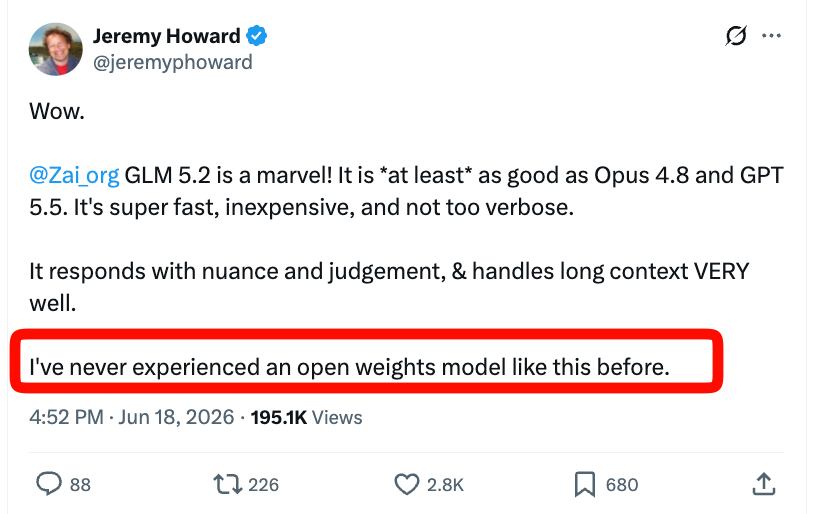
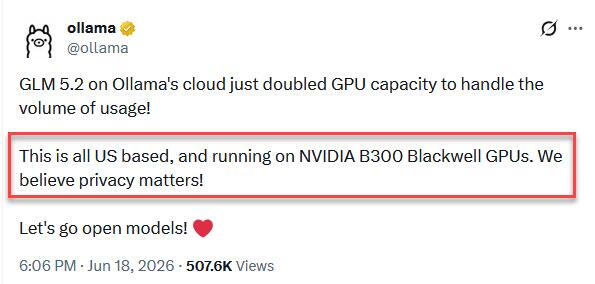
What’s more, Zhipu’s GLM-5.2 is an open-weight model, meaning it can be downloaded and run on hardware by anyone and can be modified and used without supervision – which hackers are undoubtedly loving. 

GLM-5.2 has ranked as one of the 10 most-used AI models, according to data from OpenRouter, a company that provides access to more than 400 AI models. In some benchmarking tests, according to the cybersecurity company Semgrep, GLM-5.2 bested Anthropic’s Claude Opus 4.8 model, which was released in May. When given further instructions, Opus 4.8 and GLM-5.2 can match Mythos in bug-finding ability, according to researchers.

As we noted last week for our premium subscribers, this is how Goldman’s Delta One head, Rich Privorotsky framed the latest Chinese shock to the system from open-weight models: 

The big development over the last couple of days has been GLM-5.2, another Chinese open source model that appears highly competitive on SWE benchmarks relative to some of the latest private models. It is not quite cutting edge, but the gap between open and closed models continues to narrow. The weights are open (MIT license), models can be distilled, quantized and reproduced…its a big leap in capability and a clear sign the field is narrowing.

It’s not just some of Wall Street’s top thinkers who were immediately drawn to the stats of the latest Chinese offering: various industry insiders were in shock.

Artificial Analysis’ new knowledge work benchmark rated it higher than GPT 5.5

“This kind of powerful weapon that can alter the landscape of cyberwarfare can’t remain solely in American hands,” Zhou Hongyi – CEO of Chinese cybersecurity company 360 Security Technology, speaking at a cybersecurity conference in Beijing. His company has released a new bug-finding tool called Tulongfeng – which it claims is comparable to Mythos when it comes to finding bugs. 

Zhou Hongyi, chief executive of 360 Security Wu Hao/EPA/Shutterstock

So while the Trump administration restored some access to Mythos 5, IT departments across America are now at a disadvantage when it comes to using something this powerful to find and patch their own vulnerabilities. 

“Banning Fable while selling chips China needs to develop its own version is a gift to China,” said Saif Khan – a distinguished technology fellow at the Institute for Progress think tank who focused on export restrictions under the Biden administration. Kahn says that the US needs to maximize the use of Mythos and similar models to harden cyber defenses while it can

Among the Mythos 5 and Fable 5 users that had lost access before Friday’s decision to restore Mythos 5 access for some trusted entities: the National Security Agency, which had been testing the tools and found them impressive in trials, according to people familiar with the matter.

Critics of the White House approach have said it has been lax in restricting use of Chinese open-weight models from companies such as DeepSeek and Zhipu, which are popular among U.S. businesses. -WSJ

Meanwhile – OpenAI on Friday said it will now limit access to its latest model – GPT 5.6, after Trump administration officials raised security concerns. The company warned that the government’s current case-by-case evaluation process isn’t a good long-term solution, but they’re adhering to it following a recent executive order focused on security and model oversight. 

In short, the Trump administration is driving people to use open-weight Chinese models, while hobbling the US AI industry. 

Tyler Durden
Sun, 06/28/2026 – 18:05

via ZeroHedge News https://ift.tt/ULAjBYK Tyler Durden

The Coming Return Of Commodity-Backed Money

The Coming Return Of Commodity-Backed Money

Authored by Chris MacIntosh via InternationalMan.com,

This piece is as much a mental exploration as a fact-gathering exercise.

Let’s begin with the problem. Bank failures come together with economic failures.

So trusting banks is a problem, but furthermore, trusting fiat currency is also a problem. This is on top of the issue that moving capital from one bank to another is increasingly fraught with headaches. AML and KYC have become weaponised, and the global surveillance system is tightening its grip. So movement of capital, treasury, and of course what to own in your treasury are all problems as I see it.

How to solve for all?

The Inversion

Most investors think in fiat terms — what’s the IRR in dollars, what’s the EBITDA multiple. That’s measuring real assets with a rubber ruler.

The better question is: What is this stake worth in hard asset terms, and what hard asset exposure does it give me per unit of fiat deployed?

Fiat currency is a liability of a central bank. It has no intrinsic floor. Now consider a warehouse receipt for oh say 500 tonnes of copper. That is the asset. There’s no counterparty sitting behind it who can dilute it, default on it, or sanction it into worthlessness.

The Real Monetary History

The current system is historically aberrant. Pre-1971, every dollar was a claim on gold. What Nixon did at Camp David wasn’t just a policy change — it was the largest unilateral default in history, redenominating global savings from hard asset claims into sovereign promises.

Since then, global M2 has expanded roughly 50x. Gold has gone from $35 to $4,000+. Real wages in the developed world have largely flatlined. Asset prices have inflated dramatically… but measured in gold, most assets are flat to down.

The money supply expansion didn’t create wealth. It merely redistributed it from savers and wage earners toward asset holders… and those closest to the money creation spigot.

What Warehouse Receipts Actually Represent

Imagine owning a warehouse receipt just like in the good old days when gold was held with a goldsmith and you received a receipt of ownership. But one can expand this beyond gold into most any commodity. This then isn’t just “a useful treasury instrument.” Rather, it’s a pre-fiat-style monetary instrument.

Medieval banking was largely built on exactly this. A Florentine merchant deposited grain or wool, got a receipt, and that receipt circulated as money because it was a claim on something real. Through this lens, the Medici didn’t invent credit — they institutionalised the monetisation of physical inventory.

What if one could enjoy a partial return to that model: hold receipts for oil, copper, wheat, cocoa. Those receipts are denominated in the asset itself, not in a currency. The currency price of those assets will fluctuate, but the asset quantity doesn’t. When the next monetary reset comes — and the direction of travel is clear — you hold the denominator, not the numerator.

The Hierarchy of Real Assets

Not all hard assets are equal in this context.

Gold and silver (the monetary metals). No industrial consumption risk on gold; pure monetary store. Silver has a dual role: monetary and industrial (solar, electronics). Both have 5,000-year track records as money. Central banks are net buyers of gold at record pace right now. They know what’s coming. Since you’re here… you do too.

Oil and energy (the master resource). Everything in industrial civilisation is downstream of energy. A barrel of oil contains the energy equivalent of roughly 4.5 years of human manual labour. It can’t be printed. It is under attack now globally and being fought over.

Agricultural commodities — arguably the most underappreciated. Food is the original hard asset. You can live without gold but not without calories. Soft commodities (cocoa, coffee, sugar) and hard agricultural commodities (wheat, corn, soy) sit at the base of social stability. History is littered with governments that fell not from military defeat but from grain price spikes.

Industrial metals, especially copper. The copper price is essentially a real-time vote on global industrial activity. Also increasingly a monetary metal proxy given its role in electrification, regardless of which energy path dominates.

So the question I asked myself is this: where in the world does something exist that has all or some of these commodities in physical form? And how to move them and turn them liquid?

The Trading House as Hard Asset Node

The answer appears to be trading houses.

A commodity trading house at its core is a node in the physical asset network. It handles the logistics, financing, and title transfer of real goods. The warehouse receipts it holds at any given moment are snapshots of real-world production: tonnes of metal, barrels of oil, bushels of grain.

It makes sense to own a stake in that node. It provides continuous exposure to the physical flow of real assets without having to warehouse them yourself; receipt access as treasury — you’re not holding a gold ETF (someone else’s promise), you’re holding a title document to a specific physical lot; and participation in the spread between jurisdictions — the firm makes money on the arbitrage between where goods are produced and where they’re consumed. That spread is denominated in real goods, not financial engineering.

What’s the alternative? Compare this to holding cash in a bank. The bank holds your deposit as a liability on its balance sheet and lends it out 10:1. You have an unsecured claim on an institution that is itself leveraged against a system that can be inflated, bailed-in, or sanctioned. The warehouse receipt has none of those layers.

The Monetary Reset Angle

The direction of travel globally is already toward commodity-backed settlement.

The BRICS payment system discussions keep circling back to commodity baskets. Saudi Arabia is actively diversifying away from dollar settlement. Russia’s war chest rebuild post-sanctions was done largely through commodity export surpluses held outside Western systems. China has been accumulating gold at the sovereign level while simultaneously building out commodity infrastructure across Africa, South America, and Central Asia.

When — not if — the next monetary architecture emerges, it will be anchored to something real. The countries and entities that hold the physical nodes of that system will be on the right side of the reset.

A trading house stake, held correctly, is a small position in that inevitable infrastructure.

Practical Implication for the Deal

Price the stake in hard asset terms. What quantum of warehouse receipt access does this buy you? Expressed not in dollars but in tonnes of copper equivalent, barrels of oil equivalent, or ounces of gold equivalent.

If a firm has, say, $15 million of inventory at any given time and you own a 20% non-operating stake with receipt participation rights, you have a claim on $3 million of physical commodity inventory. At current gold prices, that’s roughly 1,000 oz gold equivalent.

That’s your real floor. Not the EBITDA multiple.

*  *  *

The shift Chris describes is already underway. The old financial system is being strained by debt, inflation, political pressure, and a growing loss of trust in fiat money. That does not mean you need to predict every detail of what comes next. But it does mean you should understand the forces now reshaping the world—and what they could mean for your wealth, freedom, and future. We’ve prepared a free special report that explains the major economic, political, and cultural trends unfolding right now, the risks they create, and how a contrarian investor can think about staying one step ahead. Click here to get it now now.

Tyler Durden
Sun, 06/28/2026 – 17:30

via ZeroHedge News https://ift.tt/F0hSutN Tyler Durden

The Path To A September Rate Cut (Despite AI Inflation)

The Path To A September Rate Cut (Despite AI Inflation)

By Peter Tchir of Academy Securities

The Path to a September Rate Cut (despite AI inflation)

A lot has changed in the past 24 hours. After Thursday’s CNBC interview, it seemed obvious (to me) that I needed to write about how there is a real path to a Fed Rate Cut in September. Not only has the market priced in a 75% chance of a hike in September, and 1.25 hikes by the December meeting, most have also taken any chance of a cut off the table. I think that is missing the path that I believe Warsh is trying to create. We argued last weekend, The Fed and Rates, that Warsh had curtailed the tail risk on the long end of the curve. We switched from bearish to neutral on the long end of the curve (10s went from 4.46% to 4.37% this week). The more we think about it, the more we believe that he has started us on a path, that despite his hawkish rhetoric, sets up for a cut in September to be followed by another cut in October, just ahead of the midterms.

Two things occurred, making me rethink today’s topic: Iran and doubts about the AI trade.

Those two topics are important enough that we need to at least address them, but in the end, we decided to focus on the path to rate cuts, as the other two stories will take time to play out.

Iran, Attacks Resume, But Ceasefire is Not Officially Broken

Iran and the U.S. exchanged fire on Friday and Saturday, and fighting continues to be a risk this weekend. Academy published a SITREP on The U.S. Strikes Iranian Targets over Ceasefire Violation.

For now, the working assumption is that this round of back-and-forth attacks will not derail the discussions. That both sides were “flexing” to remind the other side of why they are at the table. If the ceasefire breaks down, the hostilities escalate, and the oil trade is once again disrupted, then the odds of a September rate cut look bleak, but for now, that is not our base case on Iran.

There are two things that have not gotten the attention they deserve with respect to oil prices:

  • The U.S. drained the SPR (strategic petroleum reserve) rapidly and to its limit, which kept oil prices capped, but that ability is largely gone, so something needs to be done.
  • Providing sanction relief to Iranian oil may be as important as re-opening the Strait. Providing sanction relief not only brings more Iranian oil to the market than before, but it also lets them move the oil they were already sending (above sanctioned limits) with a higher degree of flexibility and transparency.
    • The fact that the concept of OPEC seems to be in tatters doesn’t hurt either.

Admirals Joyner and Whitworth, along with Bret Lowry, Maria Donnelly and I (Peter Tchir), touched on the f ragility of the peace between Iran and the U.S. in this month’s Around the World Podcast (iTunes and Spotify). The podcast also provides an update on our take on the Russia/Ukraine war, Cuba (which doesn’t get the attention it deserves), and of course, China and macro.

We need to keep a close eye on Iran, but for now, we see us limping along the path to discussing the details of the rather vague MOU that both sides seem to interpret very differently.

Questioning the AI Growth Story

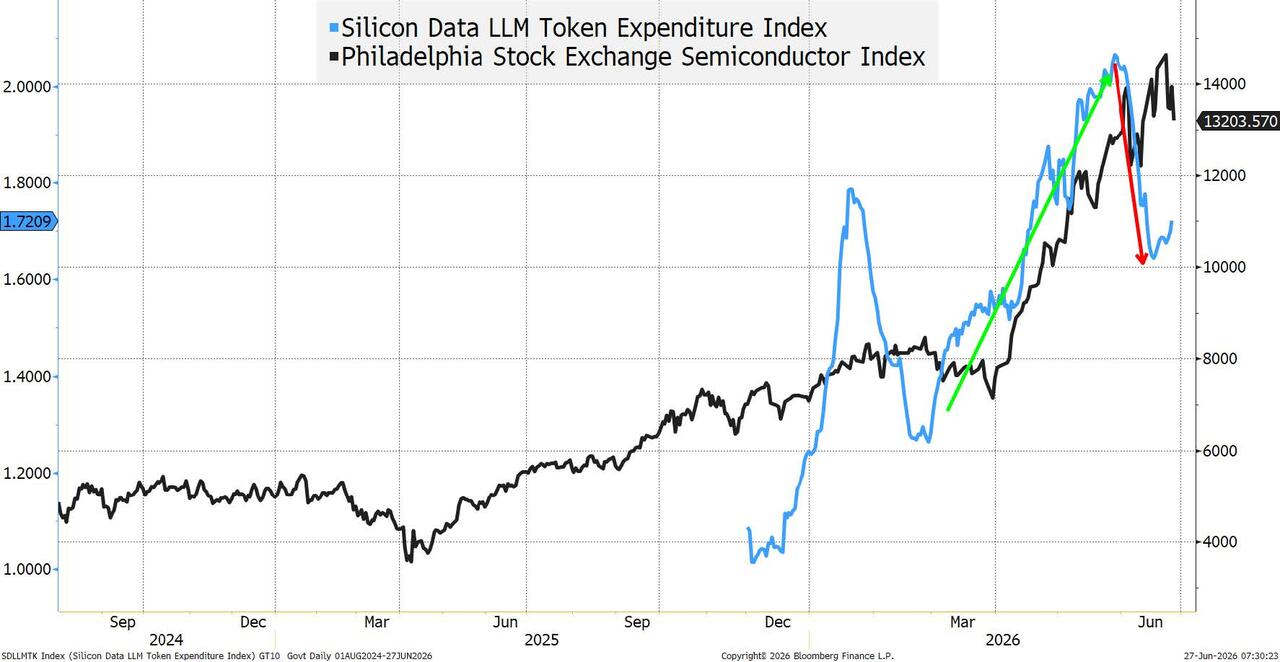
We continue to see two economies. The AI and Data center economy and the rest of the economy. The former has been generating the jobs, the growth, and the earnings. The SOX Index (Philadelphia Semiconductor Index as if anyone, anywhere doesn’t know what the SOX is at this time) hit a high on Monday before dropping almost 10% from there.

Micron’s earnings call helped generate a rebound on Thursday, but that proved to be short-lived.

Questions are swirling around the spending. The cost of the buildout (more on that later). The utility of AI versus the cost of using AI. At some level, is the cost of using AI rising even faster than the benefits?

The growing angst about AI and Robotics (in our AI Revolution pieces) continues to grow and is something the AI companies need to aggressively address before it becomes a problem (via legislation or taxes, for example).

This isn’t a debate that will be answered today, but it does seem like the market is starting to rethink valuations. Stories were circulating that OpenAI may delay their highly anticipated IPO from this year to 2027. Since there is no official timetable, it is difficult to evaluate the veracity of such news, but it did little to help market sentiment.

It is always risky (and not wise) to publish a chart that one does not really understand. But rarely has the T-Report been accused of being risk averse and wise, so here it goes.
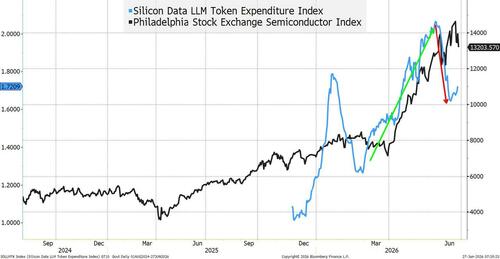
According to Bloomberg the Silicon Data LLM Token Expenditure Index (is a daily statistical benchmark to measure the effective expenditure level of the actively traded broad LLM Market, measuring price per million tokens). Say that ten times quickly!

I really don’t know how good this index is at measuring what it tries to measure (and it is in its infancy in any case), but it seems like something worth paying attention to as we all try to figure out where we are headed on AI spend (not just the spending to build out AI and data centers, but the actual spending on the compute they provide).

For what it’s worth, credit spreads in the sector started to widen recently. Not that problematic and certainly not enough to derail the borrowing to spend, but it is always worth paying attention to credit.

Expect more questions about valuations, even with good news, let alone with bad news.

The Path to a September Rate Cut

Let’s get to the “ fun ” part of today’s Report. We will lay out a case for September Rate Cuts that is entirely consistent with Warsh’s messaging.

We will do this, step by step. Some of the “steps” may seem to be disjointed, but I think they all tie well together.

Miran and The Neutral Rate

Let’s just go back in time, before the U.S. attacked Iran.

Miran was the administration’s inside person on the Fed. I didn’t like that he voted to cut every single time, but I think he did a lot of good work on the Neutral Rate.

The Neutral Rate, like R* and many other things in the field of economics, sounds precise, but is incredibly difficult to measure. There is a range of what the Neutral Rate is at any given time. That range moves along with the economy and technology.

  • I felt attacking the neutral rate, and arguing that it was lower than the previous Fed had thought, was a solid argument towards getting cuts. You could probably justify 50 to 100 bps of cuts, just based on arguing that the prior Fed had been wrong on where the neutral rate was.
    • It is not an accident that I try to frame this as the “new” Fed blaming the “old” Fed for mistakes. It is consistent with this admin (and every other administration), to blame prior administrations for mistakes. It is often reserved for Presidents, but the tactic can be applied more broadly.

While no one is talking about the neutral rate today, I think this work will become relevant again.

STOP WITH THE PCE CHATTER!

Surprisingly, few things make my head explode (though high on the list is The Big Short’s portrayal of just a few people seeing cracks in the housing market, when lots of people saw the issue, but got stopped out because they timed it wrong).

But on Thursday my head nearly exploded, as I heard over and over that “ PCE, The Fed’s preferred inflation gauge ” did whatever it did.

I don’t know what it did because the PCE is NOT this Fed’s preferred measure. I’m not even sure if it was Powell’s favorite measure. I’m pretty positive Bernanke said it was the best measure. Maybe Yellen did too? Maybe Powell, though that doesn’t stand out. But I can pretty much guarantee you that Warsh doesn’t stay awake at night looking at PCE data.

The Data Source Task Force

I keep raising my hand (though I’m not sure that is a thing), but I’d love to be on the data source task force. Garbage In, Garbage Out.

This is where we square the circle on Warsh’s tough stance on inflation, with achieving a September Rate Cut.

Which data set do you believe?
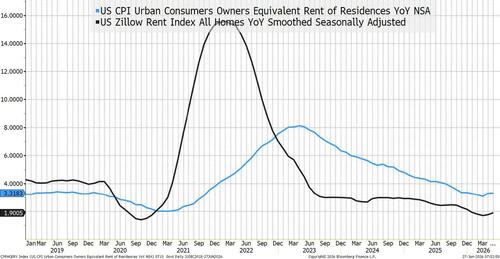
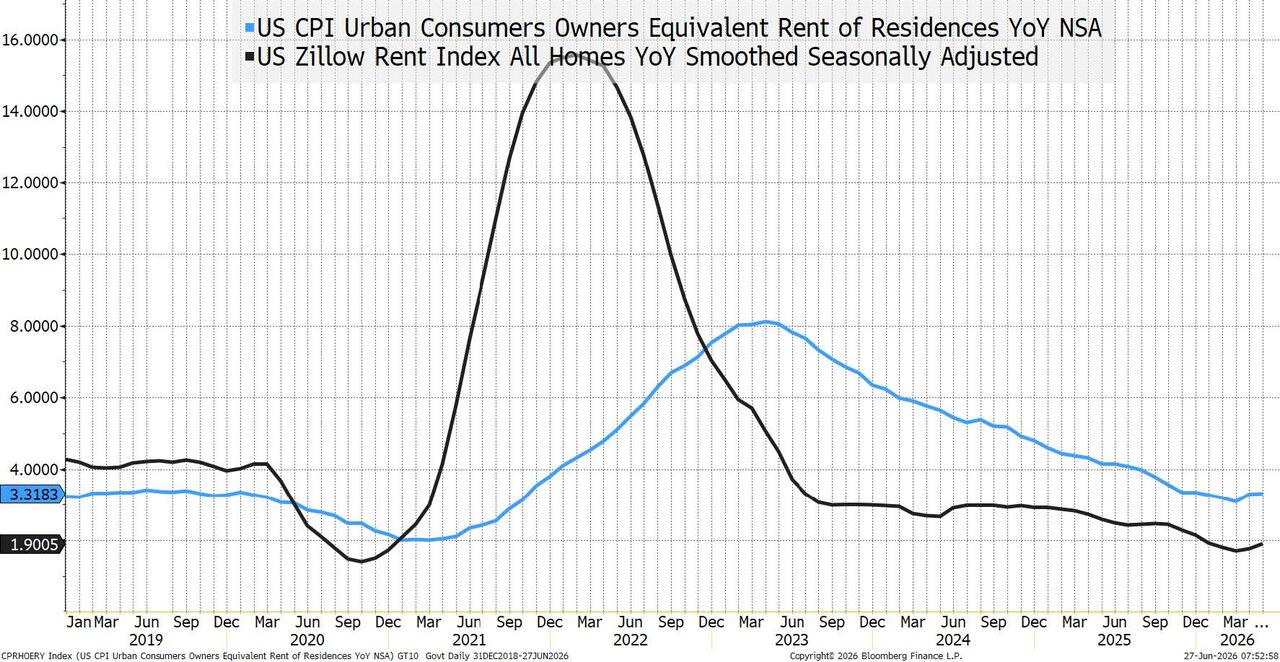
The blue line is Owners ’ Equivalent Rent of Residences. It feeds into CPI. You can read the BLS Description. I challenge anyone to read that and argue it reflects anything in the world of renting shelter today.

In our “beloved” CPI, OER didn’t peak until the middle of 2023. Even then it “peaked” at 8%. Zillow peaked at almost 16% back in early 2022! For anyone who remembers the rental market post-Covid, which metric seems right?

Remember Team Transitory, who was still going ahead with QE while “contemplating” a rate cut, basing their assessment on inflation in shelter on OER versus something actually seen in the real world?
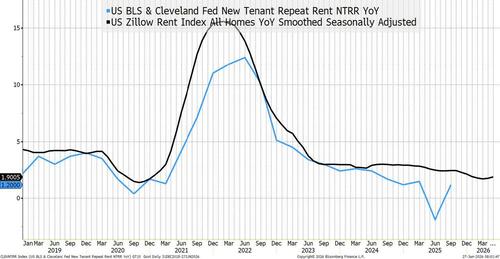
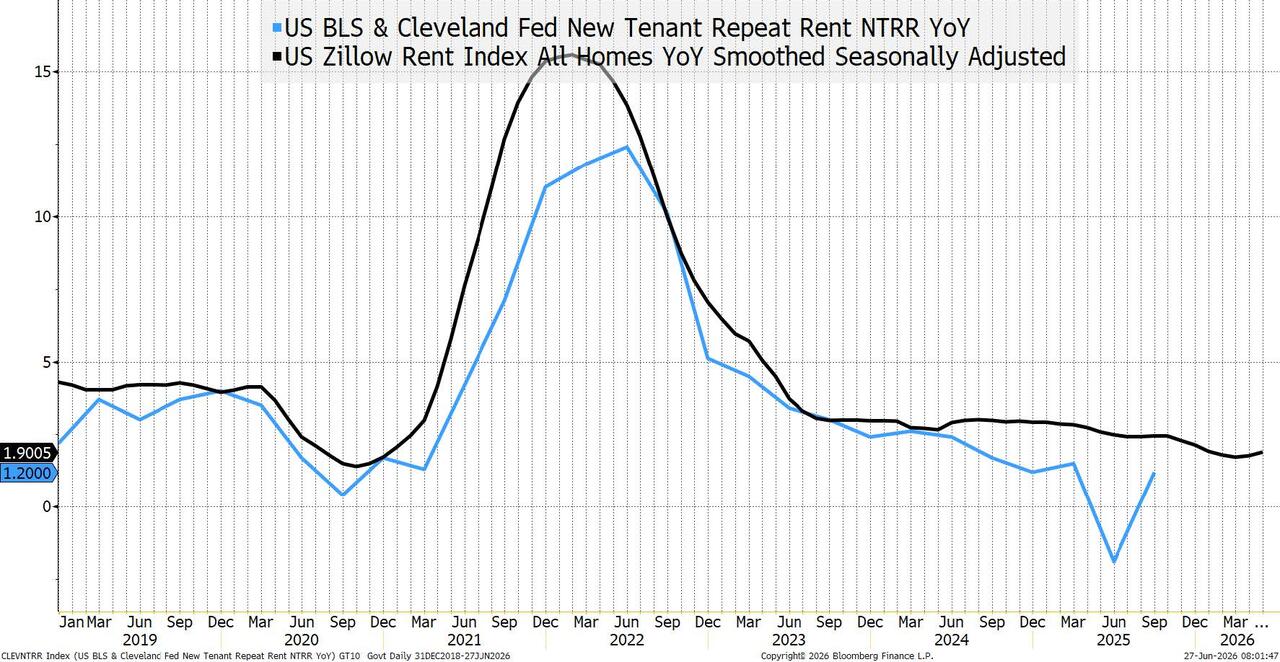
What is the BLS & Cleveland Fed New Tenant Repeat Rent NTRR YoY index? If you guessed, worst name ever for an index, you are probably correct! It is an index that the Cleveland Fed introduced (with little fanfare) to try to track rents. Guess what? It tracks the Zillow index pretty darn well!

So, Warsh doesn’t even need to go to outside sources! The Task Force can ask the somewhat obvious question – Why don’t we use the index that the smart people in Cleveland created? They did this work for a reason! They know OER is flawed. Maybe OER needs to be in CPI because it takes an act of Congress to change the CPI calculation (because it is used for Social Security benefits). But maybe, just maybe, someone at the Fed can say we should base monetary policy on something that resembles the real world, instead of some archaic, obsolete metric?

Two things come out of this work:

  • The Team Transitory mistake was waiting too long to tighten monetary policy, because they were looking at the wrong data.
  • Affordability, not inflation, is the bigger problem people face, and the affordability problem was a 2021/2022 problem, that was NEVER picked up accurately by the inflation data.

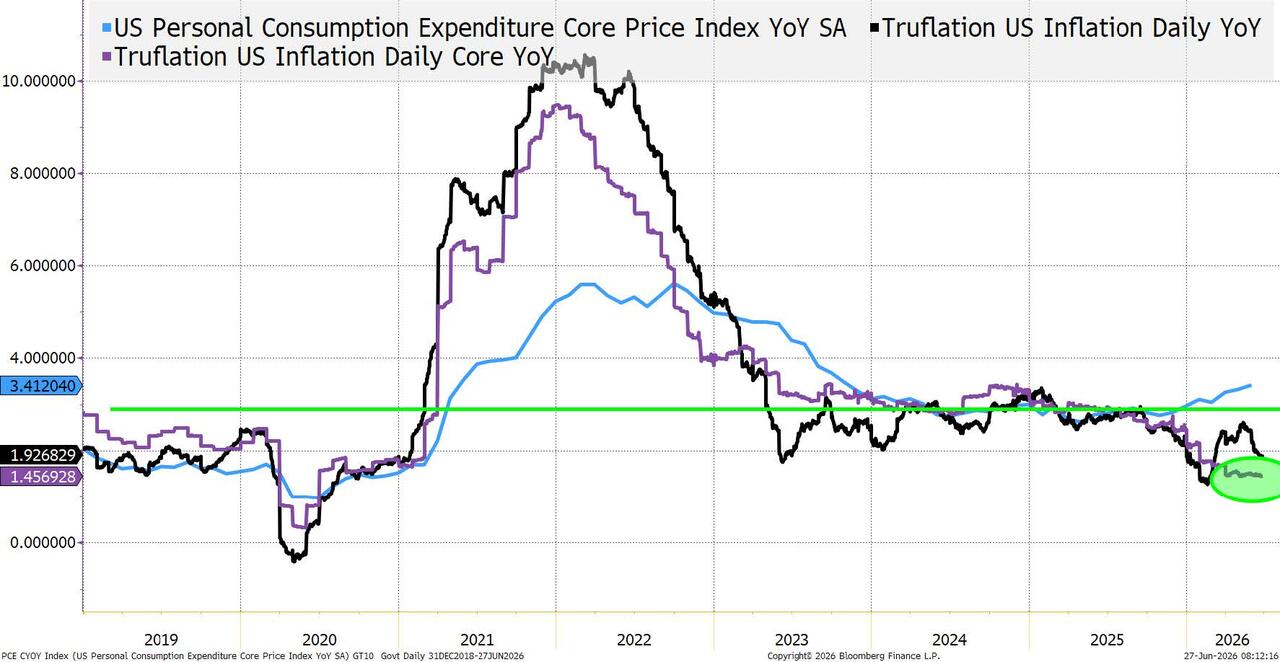
Now let’s go back to PCE and bring back Truflation.
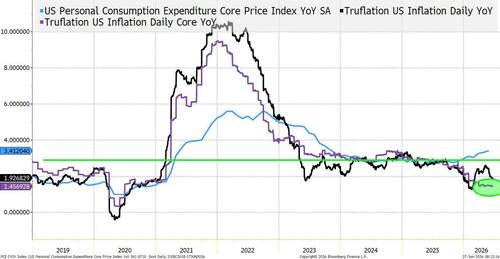
I put the “green” line for inflation target at 2.9% rather than 2%. Yes, we have been “conditioned” to treat 2% as the target, but Warsh did “hint” that the left side (i.e., “big figure”) is more important than the total or “rounded” number. Sure, 2.9% isn’t 2%, but expect to be “conditioned” over the coming months to see that 2 point something is close enough to 2.

Truflation core is currently at 1.45% and has been below 1.8% since February.

Truflation produces real-time, daily inflation indices and other economic data to provide a more transparent and current view of the market than traditional government-reported metrics. Unlike monthly, survey- based methods, Truflation’s indices are compiled using extensive datasets (you had me at real time. You also had me at datasets).

It is also quite obvious, that had Team Transitory even glanced at Truflation we might have moved to tighter monetary policy sooner?

The same two mistakes that show up in housing show up in this as well:

  • The Team Transitory mistake was waiting too long to tighten monetary policy, because they were looking at the wrong data.
  • Affordability, not inflation, is the bigger problem people face, and the affordability problem was a 2021/2022 problem, that was NEVER picked up accurately by the inflation data.

The Data Source Task Force will come back with data that provides cover to cut and that data is likely better for basing decisions on, than the data the Fed has been wedded to!

Affordability NOT Inflation

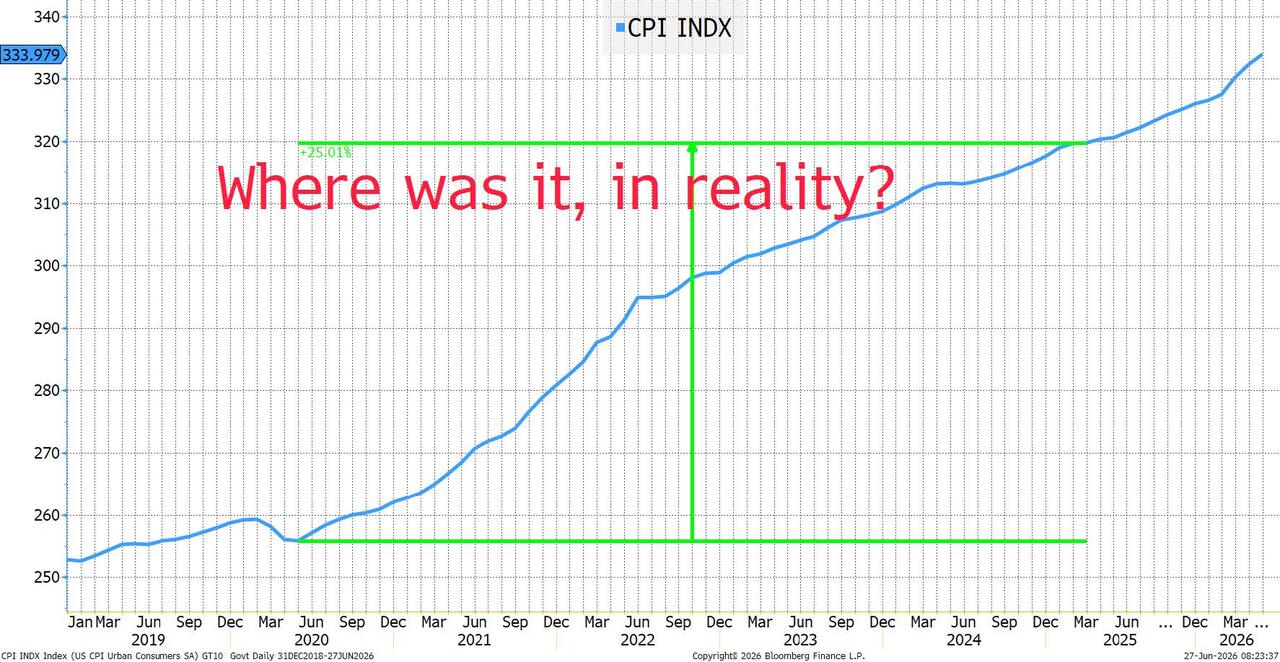
I’m not even sure how to “fix” this chart, but I will figure it out (maybe with the help of AI).
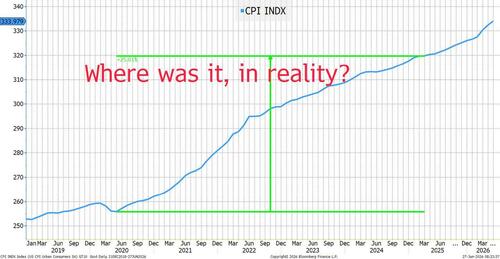
We don’t look at the CPI data series very often. We tend to focus on monthly or annual changes. But affordability is the cumulative effect and that is what is hitting people.

  • Given what we saw with Truflation and with rent, I suspect that CPI understates the real-world problem – by a LOT. And the problem is primarily a 2021 and 2022 problem!

I think there are cases to be made around past mistakes being made because the wrong data was used.

Avoiding future mistakes by looking at the correct data makes sense!

The Impact of the War Being “Over”

We can quibble about whether the war is over or not, but going back to Academy’s SITREP, we expect peace talks to continue, and the flow of oil to also continue.

Yes, there are problems in the energy ecosystem. We are “higher for longer” in prices, from oil out to January, to diesel, etc., but by all accounts the worst is behind us.

Why would we possibly be pricing in war impacts on inflation, when we seem to be in some new status quo? Maybe I spend too much time with geopolitical experts, but we don’t see a return to full hostilities, or significantly higher oil prices. Again, the removal of sanctions is a big deal.

The Administration’s Goals Have NOT Changed

The President didn’t wake up one day a few weeks ago, and tell Warsh, go ahead and hike. The President, as I believe he reiterated again this week, says he knows a lot about real estate and lower rates help real estate.

So, you can believe that Warsh is truly hawkish, that Bessent no longer cares about 3, 3, 3, and the President is oblivious to his hand-picked Fed Chair being hawkish (a chair who will likely spend Thanksgiving dinner at the home of his father-in-law, a large Trump donor), or you can think about what “master plan” is behind all of this.

Imagine (it is easy if you try) that Warsh convinced Trump that sounding dovish right now would be a disaster. Imagine (again, it is easy if you try) that he convinced the President to let me sound hawkish on inflation. That my hawkish message will control the long end of the yield curve (which it did). That we will convince every reporter and Wall Street analyst to believe we are going to hike and fight inflation. That we are retaining our independence (which they will to a degree).

And then Mr. President, this is the “good” part, data will start rolling our way. Inflation is already overpriced and with the war ending, it will come down more. Then, we will argue (persuasively, because it is true) that we should use other sources of data that show lower inflation.

Then, Mr. President, we will dazzle them with “neutral rate” mumbo jumbo. It has always been mumbo jumbo, but we will use it to our advantage.

Then, when the hawks and “dumocrats” (or is it spelled with a b?) say we are not protecting the people against inflation, we will point out it is all about affordability and the prior administration and “their” Fed (despite Powell being appointed by Trump) being “too late” resulting in “the mess” we are in.

You can agree or disagree with anything I just wrote on “political” grounds or otherwise, but can you really argue that it cannot play out that way?

AI and Data Center Inflation

Do you know what sort of spending is not affected by 50 bps of hikes?

  • Spending by companies trading at 100x some multiple! (Ok, probably some hyperbole here, again, but seriously, 50 bps of hikes is meaningless to the data center/AI build). Just look at the price of electricity. Hiking to slow down AI/Data center spending (which is inflationary for now), will be incredibly ineffective/useless. The people hurt by 50 bps of hikes aren’t the ones driving inflation, they are the ones trying to stay one step ahead of the Repo Man (still a bizarre movie).

AAPL dropped after announcing some price hikes. The price hikes on relatively expensive things to begin with (the upper part of the k rather than the lower part). But the market, I believe, perceived that those price hikes would not be absorbed easily. If one of the largest consumer product companies raises prices and the market questions their ability to pass on costs, what does that mean for the

average company selling to consumers? I don’t read that as inflationary.

Someone in my stream, who I cannot seem to find at the moment, pointed out that some of the survey data pointed to increases in prices paid, and declines in prices received. Bad for margins, but hardly inflationary.

Anecdotally, and this was somewhat confirmed by a chip company we met with recently. Remember when they were “giving away” memory? I looked at updating my 5-year-old desktop. I have 64 gig of RAM. I do remember paying “up” for the upgrade. While today’s RAM is better, faster, etc., I was shocked, that most desktops came with 32 gig as standard and 64 gig was a relatively costly upgrade.

This feeds back into the “ are AI/Data Centers getting too expensive” question? And yes, it is inflationary, but has nothing to do with the true affordability or the inflation problems many are dealing with.

Bottom Line

Look for the market to start pricing in rate cuts. If there is one “pound the table message” I’d give, it is lower yields at the front end of the curve. The “hike” community is applying the wrong data to this Fed.

I’m less clear on the long end, but I’m neutral, to even slightly bullish on 10s. Bessent wants a 3 handle. Warsh took out the tail risk. There are all sorts of headwinds facing the longer end of the yield curve, but I think with some “appropriate” timing, the admin can launch Operation Twist with some other tools and force the long end lower.

I’m far from certain on AI/Data Center valuations.

I think with recent weakness, go heavily overweight energy, especially nuclear across the globe. As the President focuses on domestic issues, energy and electricity production remains front and center. Even Europe is nearing that point.

Lean heavily on ProSec and overweight the biotech/pharma component, while underweight the chip component (still a critical part of ProSec but not where the best value is).

Look for credit spreads to come under some pressure, as the big tech/data center/AI/space issuers have more to do and are less price sensitive than we are used to, because their multiples allow them to be less price sensitive. Just like their potential to issue more equity (after years of buybacks) is weighing on their equity.

While Bitcoin and crypto in general aren’t moving markets like they once did (thanks to prediction markets and leveraged ETFs, etc.), the losses in crypto may slow down the “gambling” crowd, which won’t help equities in general, especially the high-flyer, momentum stocks that have benefited most from this crowd.

Good luck and get ready for another short week, that will probably feel much longer than 4 days!
Tyler Durden
Sun, 06/28/2026 – 16:20

via ZeroHedge News https://ift.tt/918ouKN Tyler Durden