Watch: Heavily Armed German Police Raid Crowded Cafe Over “COVID Rule Violations”

Watch: Heavily Armed German Police Raid Crowded Cafe Over “COVID Rule Violations”

Illegal drug and gun trafficking? Organized crime? Sex or slave trafficking? Plotting of terrorist acts? One might expect such actions to result in heavily armed police descending on a venue for that to bust up any such criminal enterprise, but welcome to 2021… where a Swat team can show up at your home or business for simply allowing patrons to dine in peace. 

On Friday RT’s Ruptly published raw footage of what it reported are ongoing “police raids” in Berlin which uncovered “multiple COVID-19 violations”

The “raids” come amid growing international fears of the Omicron variant, which in many European countries triggered travel bans from South African and other renewed instructions. 

It seems curious that just ahead of Christmas the West gets a new “scare” – also as in many places the pandemic is appearing to wane in intensity, and as people increasingly get back to normal. But as the deeply disturbing footage from Berlin shows, in many locales it seems authorities will go to any lengths possible to prevent a “back to normal atmosphere” – all in the name of “fighting the pandemic”. 

This further comes as Germany is reportedly mulling forced vaccines on sectors of the population which remain unvaxxed, as NBC reported days ago:

Germany is set to decide on tougher Covid-19 restrictions and could even opt for a full lockdown amid record daily infections and mounting pressure on hospitals.

Olaf Scholz, Germany’s chancellor-designate, said Wednesday that the Covid situation was serious and that the country would massively push its vaccination campaign, noting that “vaccination is the way out of this pandemic.”

Scholz said Germany “should make vaccination compulsory for certain groups,” without stating which groups, while new Finance Minister Christian Lindner stated that Germans should avoid all unnecessary contact this winter “to preserve all of our health in this pandemic.”

Meanwhile, it’s worth recalling in this context that Australia’s Northern Territory chief minister Michael Gunner captures well the kind of militant “Stuff it, shove it” mentality among political and “health authorities” in imposing extreme, draconian restrictions… the kind also increasingly present in Western Europe, as the German police raid example reveals.

No wonder these same places are increasingly seeing large scale anti-mandate protests pop up, which are unleashing fury on local and national governments. 

Instead of a “Merry Christmas” or “Happy Holidays” – it seems more and more people will be greeted by police with a “papers please!” greeting this year.

Tyler Durden
Sat, 11/27/2021 – 12:15

via ZeroHedge News https://ift.tt/3CWFres Tyler Durden

We Don’t Talk About Collapse To Revel In It, We Talk About Collapse To Prevent It

We Don’t Talk About Collapse To Revel In It, We Talk About Collapse To Prevent It

Authored by Charles Hugh Smith via OfTwoMinds blog,

If one possible result of the current system is collapse, realizing the system itself must be changed isn’t doom-and-gloom, it’s problem-solving.

Those of us who discuss collapse are generally dismissed as doom-and-gloomers, the equivalent of people who watch dash-cam videos of vehicle crashes all day, reveling in disaster. Why would we spend so much effort discussing collapse if we didn’t long for it?

Those dismissing us all as doom-and-gloomers hoping for collapse have it backward: yes, some long for collapse as a real-life disaster movie, but those discussing collapse in systems terms are trying to avoid it, not revel in it.

If the system is vulnerable beneath a surface stability, then the only way to avoid negative consequences is to understand those vulnerabilities / fragilities and work out systemic changes that reduce those risks.

It’s not the analysis of vulnerabilities that causes collapse, it’s refusing to look at vulnerabilities because to do so is considered negative. Why not be optimistic and just go with the consensus that the status quo is impervious to serious disruption? Can-do optimism is all that’s needed to overcome any spot of bother.

The problem is humanity’s propensity to confuse optimism with magical thinking. This confusion is particularly visible in any discussion of energy. The status quo holds that every problem has a technological solution, and doubting this optimism is dismissed as naysaying: “why can’t you be positive?”

I consider myself an optimist in the sense that I see solutions that are within reach if we change our definition of the problem so we can enable new solutions. I consider myself a practical, pragmatic optimist because I understand from life experience that systemic solutions generally require arduous transformations that will demand great effort and sacrifice. In many cases, this process is mostly a series of failures and disappointments that are the essential parts of a steep learning curve.

But little of this basic awareness is visible in media descriptions of “solutions.”

Thus every advance in a lab somewhere is immediately touted as the globally scalable solution: algae-based fuel, modular nuclear reactors, new battery designs, etc., in an endless profusion of technologies which are 1) not even to the prototype stage 2) cannot be scaled 3) limited to specific uses 4) require the construction of new infrastructure 5) consume vast resources to be built, including hydrocarbons 6) are not renewable as they must be replaced every 10-15 years 7) are not cost-effective once externalities are included 8) are intrinsically impractical due to complexity, dependency on rare minerals, etc.

All this “optimism” is actually 95% magical thinking, as the practical, real-world realities are dismissed or glossed over: “oh, they’ll figure all that out.”

In other words, throw enough money and talent at a problem (“we went to the moon, so anything is possible!”) and it will always be solved in a way that’s bigger and better. This is not optimism, this is magical thinking being passed off as optimism. Real optimism is cautious and contingent, hyper-aware that solutions are a dependency chain that only reach cost-effective scalability if an entire chain of circumstances and advances line up just right.

There’s another source of confusing optimism and magical thinking: being too successful for too long. Former Intel CEO Andy Grove discussed this in his book Only the Paranoid Survive: once an organization reckons it has succeeded and has everything necessary to continue achieving success without making any systemic changes, then it’s doomed to decay and eventual collapse.

When success becomes the default then all the hard parts of success–sacrifices made, failures mopped up, gambles that didn’t pay off and gambles that did–melt away and all that’s left is a sunny confidence that somebody somewhere will work out a solution that scales up to solve the problem for all of us: “we have top people working on it–top people!”

Meanwhile, back in the real world, it takes 20 years to get a new bridge approved and built in the U.S., 20 years for a new subway line approved and built and 20 years to get a new landfill approved.

We’re supposed to make the leap to a renewable zero-net-carbon future in 20 years and we can’t even build one new-design nuclear reactor prototype in 20 years, even as we’d need hundreds of new reactors to replace a significant slice of hydrocarbon consumption.

But if you dare to point out this painfully visible discrepancy between the real-world difficulties in getting a single prototype built in less than 20 years and the claim that we’re going to transition away from hydrocarbons in 20 years, then you’re a doom-and-gloomer, a naysayer who derives some bitter pleasure from shooting down optimists working on painless, sacrifice-free techno-solutions.

The essence of magical thinking is the belief that the long dependency chain between the idea/lab experiment and a solution that’s cost-effective and scales up to serve everyone will always fall into place because it’s always fallen into place in the past, and so there’s no reason to doubt that all the pieces will fall into place going forward.

This is magical thinking because it has zero interest in the real-world constraints embedded in each link in the long chain. If you bring up any of these constraints, the magical thinking “optimist” is immediately annoyed and accuses you of being a bitter naysayer. The idea that there might be real-world constraints that “top people” can’t overcome is rejected as naysaying.

The possibility that there might be systemic constraints is rejected out of hand because “anything’s possible if we throw enough money and talent at it.” There will always be a solution / substitute which will be affordable and sacrifice-free.

That all the previous examples of this were enabled by our exploitation of the easiest-to-extract hydrocarbon wealth is overlooked as a footnote.

This leaves us all frustrated. Those of us grounded in the real world are frustrated that if we bring up any real-world constraints–for example, those wondrous untapped ore deposits that are going to make all these new techno-wonders cheap and quick and easy are far from paved highways, far from major river or bluewater ports, far from processing plants, and far from sources of the millions of liters of diesel fuel that will be needed onsite to extract the ores–then we’re bitter naysayers who can’t bear optimism and easy success, while the magical thinking “optimists” are frustrated that we’re not accepting the technocratic religion that “top people” and a tsunami of money will solve any problem.

One thing I’ve noticed is “top people” (actual experts with long experience) are never the ones hyping some new technology as the pain-free affordable solution unless they’re paid shills of special interests. Then they hype nuclear reactors as the solution without mentioning the problem of what to do with the waste, to name one constraint “optimists” inevitably ignore.

In the real world, the hard part is getting every link of the long dependency chain to work reliably and at a cost that’s sustainable/affordable. Success comes not from blithely dismissing constraints as naysaying but from accepting most potential solutions will fail due to issues for which there is no cost-effective, practical, scalable fix.

On a systemic level, this requires questioning whether the system itself has to change if we want a different result. If one possible result of the current system is collapse, realizing the system itself must be changed isn’t doom-and-gloom, it’s problem-solving.\

*  *  *

Thank you, everyone who dropped a hard-earned coin in my begging bowl this week–you bolster my hope and refuel my spirits. If you found value in this content, please join me in seeking solutions by becoming a $1/month patron of my work via patreon.com.

My recent books:

A Hacker’s Teleology: Sharing the Wealth of Our Shrinking Planet (Kindle $8.95, print $20, audiobook $17.46) Read the first section for free (PDF).

Will You Be Richer or Poorer?: Profit, Power, and AI in a Traumatized World (Kindle $5, print $10, audiobook) Read the first section for free (PDF).

Pathfinding our Destiny: Preventing the Final Fall of Our Democratic Republic ($5 (Kindle), $10 (print), ( audiobook): Read the first section for free (PDF).

The Adventures of the Consulting Philosopher: The Disappearance of Drake $1.29 (Kindle), $8.95 (print); read the first chapters for free (PDF)

Money and Work Unchained $6.95 (Kindle), $15 (print) Read the first section for free (PDF).

Tyler Durden
Sat, 11/27/2021 – 11:52

via ZeroHedge News https://ift.tt/3cSc8ij Tyler Durden

First Cases Of Omicron COVID Variant Detected In UK

First Cases Of Omicron COVID Variant Detected In UK

Two infections with the new Omicron variant (also known as B.1.1.529 COVID-19 variant) have been detected in the U.K., according to the health secretary. 

Health Minister Sajid Javid tweeted Saturday that the U.K. Health Security Agency has been notified about two U.K. cases of the Omicron variant. He said, “the two cases are linked and there is a connection with travel to southern Africa,” adding “these individuals are self-isolating with their households while further testing and contact tracing is underway.”

Javid said one infection was detected in Chelmsford, Essex, and another in Nottingham. He said, “as a precaution, we are rolling out additional targeted testing in the affected areas,” calling the infiltration of the new coronavirus variant “a fast-moving situation.”

He added, “We are taking decisive steps to protect public health.”

The health secretary announced that four countries – Angola, Mozambique, Malawi, and Zambia – will be added to the “red list,” effective from 0400 local time Sunday. Anyone returning from these countries must isolate for ten days and receive “PCR tests.” 

Last week, scientists first detected the new variant in Botswana and then in South Africa. It has since spread to other countries, including Israel, Hong Kong, and Belgium, prompting officials in Europe, Asia, and North America to restrict travel from Africa. 

Citi analyst Andrew Baum spoke with Pfizer’s CEO, Albert Bourla, about the new variant, who said laboratory tests are underway and could take up two weeks to decide whether a reformulation of the COVID-19 vaccine is needed. If so, Bourla said it could take 100 days to develop a novel variant vaccine to combat Omicron. 

Courtesy of Bloomberg’s James Ludden, here are the latest updates on the latest COVID scare:

U.K. Reports Two Cases of Omicron Variant (9:16 a.m. N.Y.)

 The U.K. has confirmed two cases of the new Covid-19 strain omicron. “The two cases are linked and there is a connection with travel to southern Africa,” Health Minister Sajid Javid said on Twitter. The individuals and their households — one in Chelmsford and one in Nottingham — are self-isolating and contact tracing is ongoing, according to the U.K. Health Security Agency

German Scientists Urge Immediate Restrictions (8:03 a.m. N.Y.) 

The German National Academy of Science Leopoldina is urging the government to implement stringent contact restrictions immediately for a few weeks to combat the pandemic and address the Omicron variant. These bans must also cover vaccinated people and those who recovered from an infection. The government also must make vaccination mandatory over the coming months, the academy said in a statement on its website.

Highly Probable Omicron Is in Germany (6:21 p.m. H.K.)

 It’s “very likely” the new coronavirus strain, omicron, has arrived in Germany, a state official said Saturday. A traveler returning from South Africa on Friday night showed several symptoms typical of the new variant, Kai Klose, minister of social affairs in the German state of Hesse, said on Twitter without providing more detail. While the virus sample hasn’t been sequenced, there’s a “high level of suspicion” that the person has the new strain, Klose said. The traveler has been isolated at home.

Modi Wants to Review Easing of Travel Rules (6:02 p.m. H.K.) 

Prime Minister Narendra Modi asked Indian officials to review plans for the easing of international travel restrictions after the emergence of the new omicron variant. India needs to be “proactive in light of the new variant,” Modi said during a meeting on the Covid-19 situation and the pace of vaccinations in the country. On Friday, the Press Trust of India cited the civil aviation ministry as saying scheduled international flights to and from India will resume starting Dec. 15.

 Dutch: 61 Flyers From S. Africa Test Positive (5:49 p.m. H.K.) 

Sixty-one people arriving in the Netherlands on separate flights from South Africa tested positive for the coronavirus and were in isolation Saturday, the A.P. reported. Further tests are underway to determine if any of those who arrived at Amsterdam’s Schiphol Airport are infected with the new omicron variant. The planes arrived in the Netherlands on Friday shortly after the Dutch government imposed a ban on flights from some southern African nations following discovery of the new variant.

New Zealand, Australia Tighten Borders (4:17 p.m. H.K.) 

New Zealand joined Australia in banning entry to travelers from nine African countries in an effort to protect against the new omicron variant. The restrictions start Sunday night but don’t apply to returning citizens, Covid-19 Response Minister Chris Hipkins said. New Zealanders returning from those nations are required to undergo testing and a 14-day managed isolation period, he said. Earlier, Australia said direct flights from South Africa, Namibia, Zimbabwe, Botswana, Lesotho, Eswatini, the Seychelles, Malawi and Mozambique were being suspended, Health Minister Greg Hunt said. Returning citizens and their dependents who have been in any of those countries in the past 14 days must enter supervised quarantine on arrival.

Thailand Bars Entry From Eight African Nations (2:38 p.m. H.K.) 

Thailand will ban entry from eight southern African nations from Dec. 1, after Prime Minister Prayuth Chan-Ocha ordered agencies to step up vigilance against the new omicron variant. Arrivals from Botswana, Eswatini, Lesotho, Malawi, Mozambique, Namibia, South Africa and Zimbabwe will be forbidden, said Opas Karnkawinpong, director general of the Disease Control Department.

N.Y. Governor Declares State of Emergency (8:35 a.m. H.K.) 

New York Governor Kathy Hochul declared a state of emergency on Friday due to a rise in the state’s Covid cases and the threat of the omicron variant. She said the variant hasn’t yet been detected in New York but she decided to sign an executive order to allow the health department to limit non-essential, non-urgent procedures at hospitals and acquire critical supplies more quickly. The order takes effect Dec. 3 and will be re-assessed Jan. 15.

CDC Concerned Vaccines May Not Work Well (5:49 a.m. H.K.)

 Based on omicron’s mutation profile, partial immune escape is likely, the European Centre for Disease Prevention and Control said in a threat assessment report Friday. The E.U.’s health agency is among the first official authorities to acknowledge that vaccines may not work well against the new strain. The ECDC pushed authorities to “urgently” reinforce pandemic restrictions, avoiding travel to affected areas, and the vaccination of holdouts.

U.S., Canada Curb Travel From Southern Africa (2:05 p.m. N.Y.) 

President Joe Biden’s administration will restrict travel from South Africa and seven other countries starting on Monday, according to senior administration officials. In addition to South Africa, they include Botswana, Zimbabwe, Namibia, Lesotho, Eswatini, Mozambique and Malawi. The policy doesn’t apply to American citizens and lawful permanent residents, though they must still test negative prior to travel to the U.S. Canada is banning the entry of foreign nationals who have traveled through southern Africa in the last 14 days.

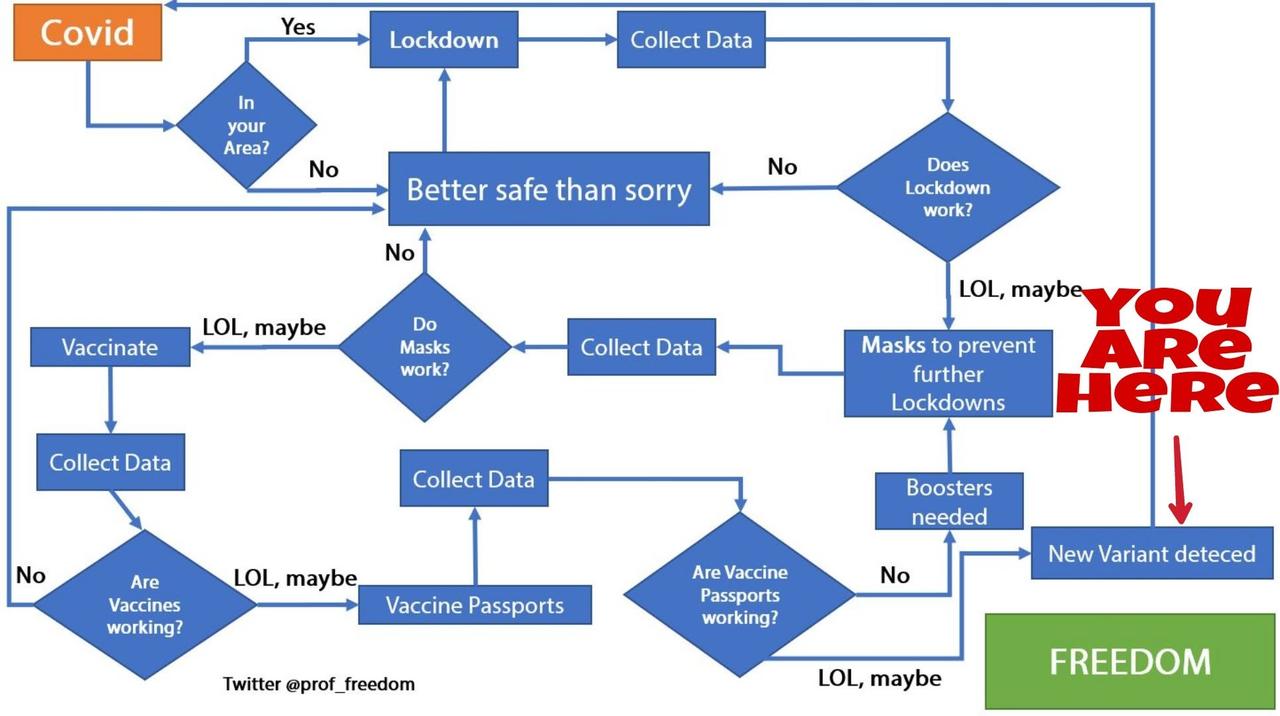
As anyone who works in P.R. and or marketing knows, global elites need to keep their COVID narrative fresh, relevant and scary. We urge everyone to read what we know so far about variant in Friday’s note titled “A Scared Nu World: Here’s What We Know About The COVID “Omicron” Strain.”  

Here’s a possible guide of what could happen next:

Remember, U.S.’ top infectious disease expert, Dr. Anthony Fauci, did say months ago that the U.S. may face a “dark winter.” How long until he blames the unvaccinated? 

Tyler Durden
Sat, 11/27/2021 – 11:16

via ZeroHedge News https://ift.tt/3cRutMA Tyler Durden

Big Three US Automakers Agree To Not Mandate Vaccines For UAW Union Members

Big Three US Automakers Agree To Not Mandate Vaccines For UAW Union Members

Authored by ‘sundance’ via TheConservativeTreehouse.com,

A big win for medical privacy and the principles of freedom. 

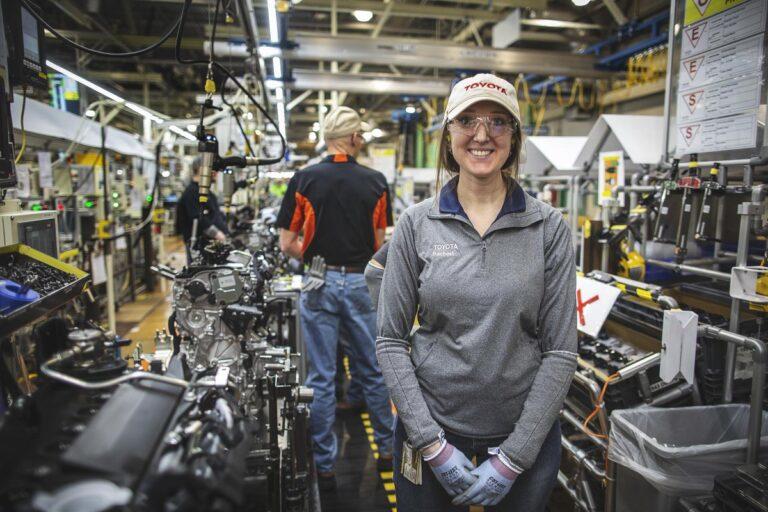
Ford, General Motors and Stellantis have agreed the United Auto Workers union members will not be forced to take the mandatory vaccine as a condition of employment.

Additionally, the vaccine status of the workers will remain private with a policy of private and voluntary disclosure.

UAW – At a meeting Monday evening, the COVID-19 Joint Task Force, comprised of the UAW, Ford, General Motors and Stellantis, has aligned on a policy of voluntary and confidential disclosure of vaccination status for UAW members. Each company will provide additional communication to employees on how, where and when to report their vaccination status.

In addition to encouraging members to disclose their vaccination status, the Task Force continues to urge all members, coworkers, and their families to get vaccinated and get booster vaccinations against COVID-19, while understanding that there are personal reasons that may prevent some members from being vaccinated, such as health issues or religious beliefs.

After reviewing the status of CDC and OSHA guidelines, the Task Force also decided it is in the best interest of worker safety to continue masks in all worksites at this time. (read more)

This helps swing the pendulum back toward the American worker.

Tyler Durden
Sat, 11/27/2021 – 10:30

via ZeroHedge News https://ift.tt/311fopA Tyler Durden

US Says “All Options” On Table Over Alleged ‘Russian Invasion Threat’ To Ukraine

US Says “All Options” On Table Over Alleged ‘Russian Invasion Threat’ To Ukraine

The US now says “all options” are on the table in response to an alleged Russian troop build-up near its border with Ukraine. Top officials are set to meet with NATO next week to decide what further steps to take, according to Reuters.

“As you can appreciate, all options are on the table and there’s a toolkit that includes a whole range of options,” the assistant secretary of state for European and Eurasian affairs, Karen Donfried, told reporters Friday.

Source: EFE/EPA

Widespread media reports in the West have for more than a past week been warning that about 100,000 Russian troops are mustered near Ukraine’s eastern border, poised for an invasion, as an initial Nov.11 Bloomberg story headlined. The Kremlin has repeatedly slammed this as disinformation and part of manufactured attempts at ramping up political pressure against Moscow. 

“It’s now for the alliance to decide what are the next moves that NATO wants to take,” Donfried said. “Next week, we will talk about our assessment of what’s happening on Russia’s border with Ukraine and we will begin that conversation of what are the options that are on the table and what it is that NATO as an alliance would like to do together,” she added.

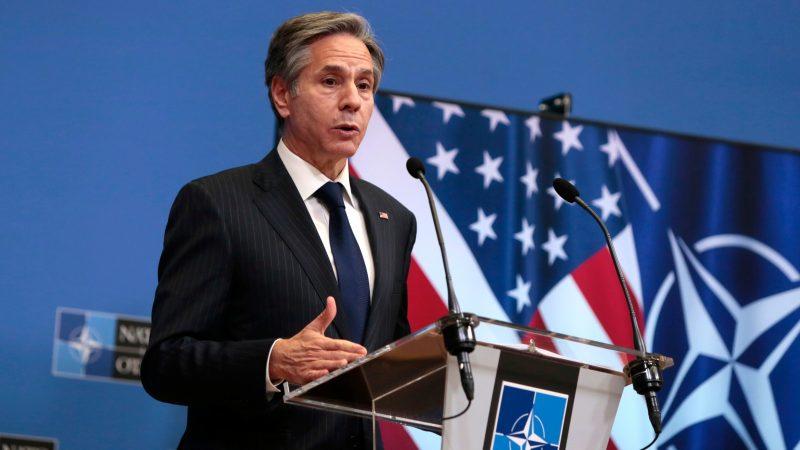
Secretary of State Antony Blinken is expected to be in Latvia Monday for the NATO foreign ministerial meeting – this after some sharp words from NATO Secretary General Jens Stoltenberg, who warned Russia on Friday, “If Russia uses force against Ukraine that will have costs, that would have consequences.”

However, there’s been agreement on all sides that a de-escalation of tensions is urgently needed, though Washington’s “all options on the table” rhetoric likely isn’t helping, given the phrase in the past has basically pointed to the military option.

Earlier this month Blinken put words to both Kiev and Washington’s worst fears amid the Russian troop movement and build-up reports: “Our concern is that Russia may make the serious mistake of attempting to rehash what it undertook back in 2014, when it amassed forces along the border, crossed into sovereign Ukrainian territory and did so claiming — falsely — that it was provoked,” he said previously.

Tyler Durden
Sat, 11/27/2021 – 09:55

via ZeroHedge News https://ift.tt/3p5AZoD Tyler Durden

Martin Armstrong Warns “America Is Under Attack By Marxist Globalists”

Martin Armstrong Warns “America Is Under Attack By Marxist Globalists”

VIA Greg Hunter’s USAWatchdog.co,

Back in July, legendary geopolitical and financial cycle analyst Martin Armstrong boldly said, “The system has come to an end.” 

What are we seeing now? 

There is massive inflation, huge defaults of debt in China, a badly broken supply chain and a hostile government against “We the People” here in America. 

It sure looks like the end of this system is near. 

Armstrong contends it is not an accident that all this is happening now to the United States because Marxist globalists want to overthrow our Constitutional form of government.  Armstrong explains,

This is getting to be really absurd.  Biden is the perfect President.  I warned that this election had nothing to do with Trump versus Biden.  It was Trump versus a foreign entity that was trying to take over the United States.  Biden is absolutely the perfect President.  They got their wish.  They got somebody in there that really would not be able to figure out left from right. 

I am not making derogatory statements against him. 

This isn’t even Biden’s agenda.  You are lucky if he even understands what’s going on.  It’s the people behind him.  It you look at his polls, they are down to 33%.  A politician would normally care about that.  You don’t see any change because he’s not the one doing this.  They know he’s just a place holder. , , , They are just moving their agenda through—period.  The United States is being orchestrated from Geneva. 

All this ‘Build Back Better’ stuff was a slogan created at Davos. . . .The United States is under attack from a foreign entity.”

Armstrong says his predictive Socrates computer program does not see the Marxist globalists succeeding.  Armstrong says,

They think they can take over the world and create this fictional wonderland of Marxism.  It’s not going to work.  Our computer is showing that they have failed.  In 2022, this whole thing is going to start blowing up.  Bill Gates . . . actually said that the vaccines don’t work.  He said we are going to have to create a new sort of R&D.  There is too much evidence now that the vaccines do not prevent you from getting Covid or spreading it.  Data coming out of Israel shows the majority of people vaccinated are the majority of the people that are dying.  Gates is being confronted with this behind the curtain.”

Armstrong says the Marxist globalists are trying to create a Great Depression.  Why?  Armstrong says, “The reason why they are trying to create a Great Depression is they are now desperate…”

…They created, in my opinion, this virus that numerous people I know behind the curtain were told a virus was coming.  I think it was planted.  I think it was created by a lab in China.  This is all total B.S.  It’s being used mainly to prevent people from traveling.”

Armstrong also says the Marxist globalists have a plan to default on all debt.  Listen to how they are going to sell this to the public.  Armstrong says,

“They pretend they care about you.  You won’t own anything.  We are going to eliminate all mortgages, all credit card debt and you are going to be happy. 

Why? 

Because that’s the cover for them to default.  They can’t default without wiping out everybody’s pension fund.”

Armstrong says rich people are buying tangible assets to get their money off the grid, and the little guy should be doing the same thing.  This is why Armstrong says things such as art, collectibles, Bitcoin and gold are going up and will continue to do so.  Armstrong says be careful with crypto currencies because, eventually, governments will have their own crypto currencies and will not allow competition.

Join Greg Hunter of USAWatchdog.com as he goes One-on-One with Martin Armstrong, world renowned geopolitical and economic cycle expert. (What is written above is only a fraction of what is in the 61 min. interview.)

*  *  *

To Donate to USAWatchdog.com Click Here

There is some free information, analysis and articles on ArmstrongEconomics.com. To get a copy of Armstrong’s 5th edition of “Manipulating the World Economy” updated with 70 fresh pages of data and analysis on CV19 and the vaccines, click here.

Tyler Durden
Sat, 11/27/2021 – 09:20

via ZeroHedge News https://ift.tt/3FVu1Jx Tyler Durden

Tesla Withdraws Application For $1.3 Billion In Subsidies For Its German Gigafactory

Tesla Withdraws Application For $1.3 Billion In Subsidies For Its German Gigafactory

Tesla is officially giving up on $1.3 billion in German subsidies it had hoped for, officially withdrawing an application for state-sponsored funding, according to Yahoo News.

The subsidies were supposed to be for the EV manufacturer’s new battery-cell plant it is setting up, Tagesspiegel newspaper reported. The plant is being set up in Brandenburg, close to Berlin. 

“Germany’s Economy Ministry had already approved the aid package as per the European Union’s IPCEI battery-innovation program,” Bloomberg wrote Friday morning. 

Details were sparse as to why the application was pulled. A spokesperson for the economy ministry said: “Tesla continues to stick to its plans for the battery factory in the Gigafactory Berlin-Brandenburg, but will do without state IPCEI funding.”

Recall, this summer, we commented on the ongoing war between Tesla and German environmentalists who were trying to prevent the erection of the plant. 

German environmentalist groups Green League and NABU officially filed complaints against the company earlier this year, looking to block provisional approvals necessary for the construction of the factory.

As if the irony of Tesla’s planned getting bulldozed by groups looking to preserve the environment wasn’t rich enough, the action came after deficiencies were discovered in how Tesla may deal with environmental hazards at its forthcoming plant. “…A recent accident report warned Tesla wasn’t sufficiently prepared with regard to the possibility of exploding gas clouds and the escape of irritant gas in the factory’s paint shop,” Bloomberg reported.

We noted back in early May that the factory could be delayed due to legal woes lodged by environmentalists. Since announcing plans for expansion in 2019, Tesla’s proposed factory in Berlin has been “torpedoed by environmental regulations, unexploded WW2 bombs and labor laws,” according to the The Daily Mail

Tyler Durden
Sat, 11/27/2021 – 08:45

via ZeroHedge News https://ift.tt/3D2qyXU Tyler Durden

Food Trucks Still Being Squeezed Out by Local Governments


foodtruck_1161x653

Last week, Detroit’s city council introduced new rules that will allow food trucks to operate in more parts of the city beginning next spring.

“From an equity standpoint and from a food access standpoint, we believe food trucks should be able to operate in public spaces across the city,” city councilor Raquel Castañeda-Lopez, who introduced the measure, told the Detroit Free Press. I agree.

Some advocates for downtown Detroit appear quite vaguely pleased.

“Not being against an ordinance but important to have the clarity to what can and cannot take place in the city street but supporting fairness and harmony,” Eric Larson, CEO of the Downtown Detroit Partnership, told the Detroit Free Press. “We have to continue to find ways to support all of the small businesses equitably.”

While words such as “fairness and harmony” and “equitably” make for a nice word salad, they mask the true, protectionist spirit underlying the new ordinance.

“Food trucks must be 200 feet away from existing restaurants and 300 feet from entertainment and sports arena areas,” the Freep report indicates, also noting that food trucks may no longer operate after 11 p.m. That’s progress?

Maybe to Larson, whose nebulous, we kinda sorta like it remarks aren’t a huge surprise, given that Downtown Detroit Partnership’s member list includes a host of giant companies and traditional food-truck opponents—including brick-and-mortar restaurateurs and the realty groups that rent space to them.

Indeed, in discussions of expanding food truck access to other parts of Detroit—or any city or town in America—the devil’s in the details.

Just a couple days after the city council vote, American Coney Island, a brick-and-mortar hot dog joint in Detroit that’s operated since 1917, tweeted out its displeasure at having to compete, for the time being, with a “fleet of unexpected food trucks parked along our street.” Owner Grace Keros, Deadline Detroit reported, “was particularly concerned about the trucks that sell hot dogs. She said her neighbor Lafayette Coney Island was also upset.” Lafayette Coney Island and American Coney Island, brick-and-mortar neighbors for more than 100 years, each sell hot dogs. (Read that sentence again.)

A host of withering comments greeted American Coney’s tweet, noting the hot dog restaurant doesn’t own the street, and that competition and “CHOICE” are, you know, good things.

Those commenters get it. Radius restrictions have always been about illegally protecting brick-and-mortar restaurants from competition. Nothing else.

Detroit’s hardly alone. City councilors in Beatrice, Neb., south of Lincoln, are mulling how to regulate food trucks that operate in the city. Though at least one councilor lauded food trucks as “a bright spot in the community,” the Lincoln Journal Star reported this week, the council appears set on making sure those bright spots don’t park anywhere near a brick-and-mortar restaurant in the city.

“The ordinance would prevent mobile food vending within 50 feet of a food establishment, though Councilor Rick Clabaugh recommended changing that to 100 feet,” the Journal Star report noted.

50 feet isn’t enough? Why not 100 feet? Why not 300 feet? Or a mile? Or in some other city?

Nearly a year ago, I discussed the case of a brick-and-mortar restaurant owner who wanted her town, Seymour, Ind., to restrict food trucks because, she said, her restaurant “can’t compete with Chick-fil-A,” the national restaurant chain, which occasionally parked a food truck in town.

“What is the point of having them in downtown Seymour when we have restaurants here that are trying to grow and strive to make downtown better?” Brewskies owner Lori Keithley asked at the time.

“The point?” I wondered? “Well, it’s competition and choice. But some who can’t or won’t compete throw up their hands and ask the government to limit choice by stifling competition. That’s protectionism.”

“We’d love food trucks,” critics seem to be saying, “if they’d just park away far, far away from any potential customers.”

While the pandemic has decimated the restaurant industry, I noted last year, “rather than making life easier for brick-and-mortar restaurants—say, by lifting barriers to entry or by making it easier and less costly for restaurants to operate—many cities and towns have decided instead to make life harder for food trucks.”

Food trucks are a welcome addition to any city or neighborhood. They’re also—as recent examples in Bridgeport, Dearborn, and Centerville (outside Dayton) remind us—a great way for entrepreneurs to test out concepts that can grow into one or more brick-and-mortar restaurants. While consumers would be foolish to leave food trucks alone—so many of them serve really great food—lawmakers and regulators should just leave them be.

The post Food Trucks <em>Still</em> Being Squeezed Out by Local Governments appeared first on Reason.com.

from Latest – Reason.com https://ift.tt/3nZzkBT
via IFTTT

Food Trucks Still Being Squeezed Out by Local Governments


foodtruck_1161x653

Last week, Detroit’s city council introduced new rules that will allow food trucks to operate in more parts of the city beginning next spring.

“From an equity standpoint and from a food access standpoint, we believe food trucks should be able to operate in public spaces across the city,” city councilor Raquel Castañeda-Lopez, who introduced the measure, told the Detroit Free Press. I agree.

Some advocates for downtown Detroit appear quite vaguely pleased.

“Not being against an ordinance but important to have the clarity to what can and cannot take place in the city street but supporting fairness and harmony,” Eric Larson, CEO of the Downtown Detroit Partnership, told the Detroit Free Press. “We have to continue to find ways to support all of the small businesses equitably.”

While words such as “fairness and harmony” and “equitably” make for a nice word salad, they mask the true, protectionist spirit underlying the new ordinance.

“Food trucks must be 200 feet away from existing restaurants and 300 feet from entertainment and sports arena areas,” the Freep report indicates, also noting that food trucks may no longer operate after 11 p.m. That’s progress?

Maybe to Larson, whose nebulous, we kinda sorta like it remarks aren’t a huge surprise, given that Downtown Detroit Partnership’s member list includes a host of giant companies and traditional food-truck opponents—including brick-and-mortar restaurateurs and the realty groups that rent space to them.

Indeed, in discussions of expanding food truck access to other parts of Detroit—or any city or town in America—the devil’s in the details.

Just a couple days after the city council vote, American Coney Island, a brick-and-mortar hot dog joint in Detroit that’s operated since 1917, tweeted out its displeasure at having to compete, for the time being, with a “fleet of unexpected food trucks parked along our street.” Owner Grace Keros, Deadline Detroit reported, “was particularly concerned about the trucks that sell hot dogs. She said her neighbor Lafayette Coney Island was also upset.” Lafayette Coney Island and American Coney Island, brick-and-mortar neighbors for more than 100 years, each sell hot dogs. (Read that sentence again.)

A host of withering comments greeted American Coney’s tweet, noting the hot dog restaurant doesn’t own the street, and that competition and “CHOICE” are, you know, good things.

Those commenters get it. Radius restrictions have always been about illegally protecting brick-and-mortar restaurants from competition. Nothing else.

Detroit’s hardly alone. City councilors in Beatrice, Neb., south of Lincoln, are mulling how to regulate food trucks that operate in the city. Though at least one councilor lauded food trucks as “a bright spot in the community,” the Lincoln Journal Star reported this week, the council appears set on making sure those bright spots don’t park anywhere near a brick-and-mortar restaurant in the city.

“The ordinance would prevent mobile food vending within 50 feet of a food establishment, though Councilor Rick Clabaugh recommended changing that to 100 feet,” the Journal Star report noted.

50 feet isn’t enough? Why not 100 feet? Why not 300 feet? Or a mile? Or in some other city?

Nearly a year ago, I discussed the case of a brick-and-mortar restaurant owner who wanted her town, Seymour, Ind., to restrict food trucks because, she said, her restaurant “can’t compete with Chick-fil-A,” the national restaurant chain, which occasionally parked a food truck in town.

“What is the point of having them in downtown Seymour when we have restaurants here that are trying to grow and strive to make downtown better?” Brewskies owner Lori Keithley asked at the time.

“The point?” I wondered? “Well, it’s competition and choice. But some who can’t or won’t compete throw up their hands and ask the government to limit choice by stifling competition. That’s protectionism.”

“We’d love food trucks,” critics seem to be saying, “if they’d just park away far, far away from any potential customers.”

While the pandemic has decimated the restaurant industry, I noted last year, “rather than making life easier for brick-and-mortar restaurants—say, by lifting barriers to entry or by making it easier and less costly for restaurants to operate—many cities and towns have decided instead to make life harder for food trucks.”

Food trucks are a welcome addition to any city or neighborhood. They’re also—as recent examples in Bridgeport, Dearborn, and Centerville (outside Dayton) remind us—a great way for entrepreneurs to test out concepts that can grow into one or more brick-and-mortar restaurants. While consumers would be foolish to leave food trucks alone—so many of them serve really great food—lawmakers and regulators should just leave them be.

The post Food Trucks <em>Still</em> Being Squeezed Out by Local Governments appeared first on Reason.com.

from Latest – Reason.com https://ift.tt/3nZzkBT
via IFTTT

German Health Minister Calls For “Massive Contact Restrictions” To Fight COVID

German Health Minister Calls For “Massive Contact Restrictions” To Fight COVID

By TheLocal.de,

German Health Minister Jens Spahn has urged the incoming government to take drastic measures after more than 76,000 new Covid infections were reported within a day, saying the situation was “more serious than any other time in this pandemic.”

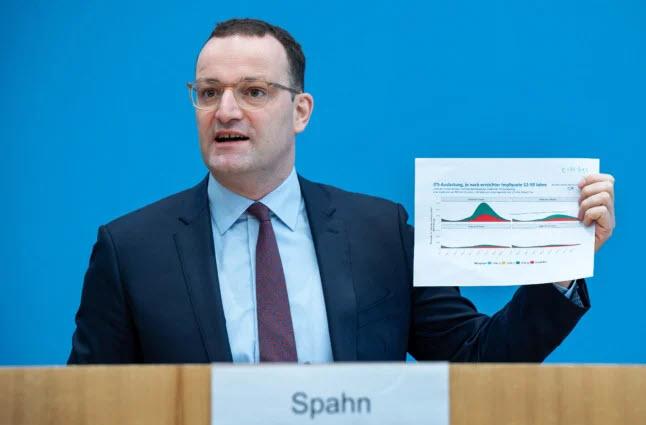
Health Minister Jens Spahn addresses reporters at a press conference in Berlin on November 26th, 2021. Photo: picture alliance/dpa | Bernd von Jutrczenka

The situation is dramatically serious,” the CDU politician told reporters gathered in Berlin on Friday. “More serious than at any other time in this pandemic.”

Calling the current situation in Germany a ‘national emergency’, Spahn claimed that the incoming government was doing too little, too late to try and stem the tide. “We must stop this wave now,” he warned.

On Friday, the weekly incidence of Covid infections hit yet another new peak of 438 infections per 100,000 people, while the Robert Koch Institute (RKI) reported a record-breaking 76,000 new infections within a day. In the worst-hit region of Saxony, the 7-day incidence recently topped 1,000 per 100,000 people.

In the meantime, weekly hospitalisations have been edging up and now stand at 5.97 per 100,000 people nationally. The daily Covid death toll hit 357 on Friday, bringing the total number of deaths since the start of the pandemic to 100,476.  

Criticising politicians who he said had underestimated the scale of the crisis, Spahn warned that the Covid wave would “continue to move west and north” from the regions in the south and east of Germany that have been badly affected so far.

In the short term, he said, there is only one thing that will make a decisive difference: “The number of contacts must be reduced, significantly, otherwise (the measures) are no use at all.”

States should introduce consistent access rules that allow entry only to vaccinated and recovered people who have a negative test to hand (a system known as 2G plus) and should consider the cancellation of festive celebrations and large events, he said.

Appearing at the press conference alongside Spahn, RKI president Lothar Wieler also urged lawmakers to take decisive action in order to stem the spread of the virus.

RKI president Lothar Wieler appears at a press conference alongside Jens Spahn on Friday. Photo: picture alliance/dpa

“I now expect decision-makers to initiate all possible measures to jointly bring the case numbers down,” he said, adding that contact restrictions should once again be brought into play.

“With every contact we don’t have, with every meeting we forgo, with every crowd we avoid, we help slow the spread of the virus,” Wieler said.

He appealed to Germans: “Please get vaccinated or get your booster jabs, and please also comply with all the measures adopted in the federal states.”

South African ‘supervariant’

At the press conference on Friday morning, Spahn also expressed concern about the new ‘supervariant’ (B.1.1.529) that has recently appeared in South Africa.

As The Local reported on Friday, the discovery of the new variant has prompted Germany to ban all incoming travel from the country for people who don’t live in Germany or hold German citizenship.

The aim must be to avoid the entry of this variant as far as possible, the caretaker health minister said. “The arrival of a new variant is the last thing we need now in our current situation,” he added.

Spahn urged all people who have arrived in Germany from South Africa and the surrounding countries in recent days to get tested for the virus with a PCR test to be on the safe side.

RKI chief Wieler said that, as of Friday morning, he was not aware that the virus variant had made it into Europe or Germany.

At the same time, he stressed: “We are very concerned. And I very much hope that stringent work will be done to at least limit the spread of this variant as much as possible through travel restrictions.”

In some provinces of South Africa, there’s been a stark upswing in the number of infections over the past few days, which experts believe could be due to the new variant.

Compared to Delta, which has two mutations, and Beta, which has three, the as-yet unnamed South African variant has ten mutations, meaning it could be more resistant to vaccines, spread faster and place more strain on the human immune system.

The World Health Organisation (WHO) is said to be studying the newly emerged variant to see if it should be classed as variant of ‘interest’ or ‘concern’.

Meeting of state leaders

On Thursday, November 25th, Germany’s ‘epidemic situation of national importance’ was allowed to expire after almost a year and a half. The epidemic situation clause had granted sweeping powers to the federal government and states to impose Covid restrictions such as lockdowns and mandatory masks without consulting parliament.

The incoming government has opted to replace the clause with amendments to the Infection Protection Act, but critics from the opposition CDU/CSU parties say the new regulation does not go far enough.

In order to get their amended Act through the upper house of parliament, the three ‘traffic light’ parties were forced to strike a deal with Merkel’s conservatives. The deal ensured that the bill would be allowed to pass in the Bundesrat – but only if it was subject to review at the next meeting of state leaders on December 9th.

Health Minister Jens Spahn (CDU) holds up a graph to reporters at Friday’s press conference. Photo: picture alliance/dpa

With the Covid situation worsening daily, however, outgoing Health Minister Spahn has been calling on state leaders to bring the meeting forward. The meeting should ideally be held over the next few days, he said.

In light of the rising number of Covid patients on intensive care wards, urgent operations are currently having to be cancelled and postponed, while up to 100 intensive care patients have had to be moved to other hospitals in Germany where medical staff are less overburdened, Spahn revealed.

But these are only temporary solutions and cannot continue indefinitely, he said.

According to Spahn, however, there is one piece of good news: “The vaccination campaign is picking up again.”

In the past three days, there have been more than 300,000 new vaccinations against Covid, while this week, more than two million booster vaccinations have been administered.

“Every vaccination gives hope that this winter will not be as dark as it currently looks,” the Health Minister said.

Tyler Durden
Sat, 11/27/2021 – 08:10

via ZeroHedge News https://ift.tt/3G8qo3p Tyler Durden