PETA Wants Major League Baseball To Stop Saying “Bullpen” Because It’s “Insensitive To Cows”

PETA Wants Major League Baseball To Stop Saying “Bullpen” Because It’s “Insensitive To Cows”

People for the Ethical Treatment of Animals have outdone themselves with “wokeness” once again on behalf of the animal kingdom. This time, PETA is in the news for urging Major League Baseball to stop referring to pitcher warmup areas as “bullpens”. 

Because we’re sure this hurts the animals’ feelings when they sit around and watch baseball, right?

And while that’s sarcasm, that hasn’t stopped the agency from petitioning the MLB to change the term. PETA actually argued that “bullpen” is insensitive to cows, TMZ reported this week. PETA is insisting that the MLB change the name of the warmup area to the “arm barn”. 

As if referencing a barn is going to be any less “insensitive” than saying “bullpen”? Couldn’t the mention of a barn wind up giving horses somewhere PTSD? But we digress…

PETA exec Tracy Reiman, who obviously has a lot of time on her hands, commented: “Words matter, and baseball ‘bullpens’ devalue talented players and mock the misery of sensitive animals.”

The organization takes exception with the fact that the “bullpen” is a holding area where bulls are kept before slaughter.

“Strike out the word ‘bullpen,’ which references the holding area where terrified bulls are kept before slaughter, in favor of a more modern, animal-friendly term,” PETA said.

Ah, strike out. We see what you did there. Great work advancing the cause, guys. Godspeed.

Tyler Durden
Fri, 10/29/2021 – 20:45

via ZeroHedge News https://ift.tt/3CvWYdM Tyler Durden

FBI Asks US Businesses To Work Closely With The Agency To Counter China

FBI Asks US Businesses To Work Closely With The Agency To Counter China

Authored by Dave DeCamp via AntiWar.com,

FBI Director Christopher Wray urged private companies Thursday to work with the agency to counter China and prevent the Asian country from becoming “the world’s only superpower.”

Wray claims China could become the world’s dominant power by amassing intellectual property. The accusation that Beijing steals intellectual property was the primary basis for the Trump administration’s trade war with China, which is continuing under President Biden.

Via AP

Wray accused China of trying to access information through cyberattacks. “Too often when we see a cyberthreat and start digging, we find that the same adversary is also working with an unwitting company insider to target… sensitive and proprietary information,” he said.

The FBI chief also claimed China was using “non-traditional collectors” to gain information in the US, including “businessmen, different kinds of researchers and graduate students, scientists, ostensibly private companies.”

He said these private individuals are “effectively under the thumb of the Chinese Communist Party, all geared towards a common aim of trying to steal our information to put the Chinese government in a way to become the world’s only superpower.”

The idea that the FBI suspects anyone from China of being a spy for Beijing has grave implications for the civil liberties of Chinese Americans and Chinese residents living in the US. The FBI’s campaign has already led to the agency falsely accusing Chinese professors in the US of spying for Beijing.

It’s now common for US officials to claim China is the top “threat” facing the US, but Wray, a holdover from the Trump administration, has been making that claim for years. In 2018, he told Congress that China represents “the broadest, most complicated, most long-term counter-intelligence threat we face.”

Tyler Durden
Fri, 10/29/2021 – 20:20

via ZeroHedge News https://ift.tt/3BnOhkp Tyler Durden

Airbnb Canceling One Night Halloween Bookings To Deter “Party Houses” 

Airbnb Canceling One Night Halloween Bookings To Deter “Party Houses” 

Airbnb is taking steps to prevent wild Halloween weekend parties at homes rented through its platform. New restrictions began on Wednesday and will last through the weekend that will limit large gatherings. 

For the second consecutive year, Airbnb has enforced temporary restrictions around Halloween to prevent parties. One-night reservations will be blocked this weekend for users without a history of positive reviews.

The vacation rentals platform also announced occupancy limitations to 16 and encouraged neighbors to report suspicious activity. 

Restrictions led to a 49% plunge in unauthorized parties for Halloween in the U.S. and Canada for 2020.

Last year, restrictions were first implemented after a Halloween party at a Bay Area Airbnb rental left five people dead in 2019. At the time, Airbnb CEO Brian Chesky said the company would examine measures to ban “party houses.” 

The company this year has published a set of rules for guests for this weekend: 

  • For one-night reservations — Guests without a history of positive reviews on Airbnb will be prohibited from making one-night reservations in entire home listings.
  • For two-night reservations — Airbnb will deploy more stringent restrictions on two-night reservations that may pose heightened risk for parties. For example, the company will use technology that restricts certain local and last-minute bookings by guests without a history of positive reviews on Airbnb and also block reservations within an expanded radius.
  • Guests who have a history of positive reviews on Airbnb will not be subject to these restrictions.
  • Guests making one or two-night reservations will need to attest that they understand Airbnb’s party ban and that they could face legal consequences for breaking the rules.

Airbnb expects their anti-party measures this Halloween weekend will deter “Project X” type style parties. 

    Tyler Durden
    Fri, 10/29/2021 – 19:55

    via ZeroHedge News https://ift.tt/3GCe5gL Tyler Durden

    Airbnb Canceling One Night Halloween Bookings To Deter “Party Houses” 

    Airbnb Canceling One Night Halloween Bookings To Deter “Party Houses” 

    Airbnb is taking steps to prevent wild Halloween weekend parties at homes rented through its platform. New restrictions began on Wednesday and will last through the weekend that will limit large gatherings. 

    For the second consecutive year, Airbnb has enforced temporary restrictions around Halloween to prevent parties. One-night reservations will be blocked this weekend for users without a history of positive reviews.

    The vacation rentals platform also announced occupancy limitations to 16 and encouraged neighbors to report suspicious activity. 

    Restrictions led to a 49% plunge in unauthorized parties for Halloween in the U.S. and Canada for 2020.

    Last year, restrictions were first implemented after a Halloween party at a Bay Area Airbnb rental left five people dead in 2019. At the time, Airbnb CEO Brian Chesky said the company would examine measures to ban “party houses.” 

    The company this year has published a set of rules for guests for this weekend: 

    • For one-night reservations — Guests without a history of positive reviews on Airbnb will be prohibited from making one-night reservations in entire home listings.
    • For two-night reservations — Airbnb will deploy more stringent restrictions on two-night reservations that may pose heightened risk for parties. For example, the company will use technology that restricts certain local and last-minute bookings by guests without a history of positive reviews on Airbnb and also block reservations within an expanded radius.
    • Guests who have a history of positive reviews on Airbnb will not be subject to these restrictions.
    • Guests making one or two-night reservations will need to attest that they understand Airbnb’s party ban and that they could face legal consequences for breaking the rules.

    Airbnb expects their anti-party measures this Halloween weekend will deter “Project X” type style parties. 

      Tyler Durden
      Fri, 10/29/2021 – 19:55

      via ZeroHedge News https://ift.tt/3GCe5gL Tyler Durden

      Dan Bongino Ends Radio Program In Vaccine Mandate Battle With Employer

      Dan Bongino Ends Radio Program In Vaccine Mandate Battle With Employer

      Authored by Christopher Burroughs via The Epoch Times (emphasis ours),

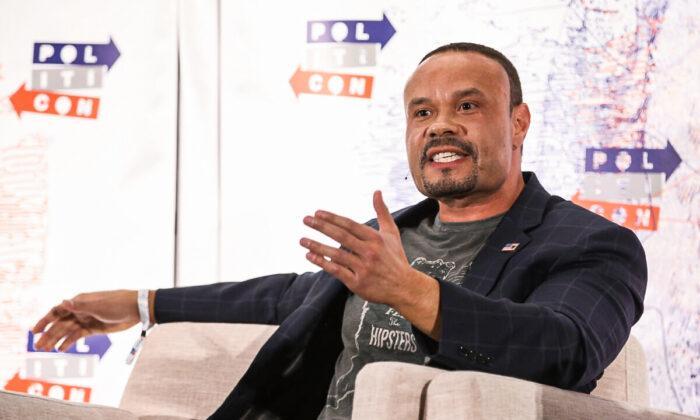
      Conservative radio host Dan Bongino announced his daily show will only air replays while he deals with a COVID-19 vaccine mandate with his show’s parent company Cumulus Media.

      LOS ANGELES, CA – OCTOBER 21: Dan Bongino speaks onstage during Politicon 2018 at Los Angeles Convention Center on October 21, 2018 in Los Angeles, California. (Photo by Phillip Faraone/Getty Images for Politicon )

      Bongino shared the news during his Wednesday online podcast.

      They didn’t consult with us content providers. I strongly object to the mandate,” Bongino said.

      The fight with them is having a real impact. Behind the scenes, it’s getting a little ugly here. I wasn’t on the radio today. I don’t know what they did, played the ‘best of’ or whatever. You don’t treat people this way. You don’t let people go because they insist their body is theirs,” he added.

      During Wednesday’s podcast, Bongino also urged listeners to join the Locals platform. Video platforms Rumble and Locals merged on Tuesday after Rumble recently acquired the tech company.

      “It is unfortunately an ugly fight. I wish it weren’t,” Bongino said as he reviewed the controversy with Cumulus during his Wednesday episode.

      “Some of the people who were fired by Cumulus whose stories are piling in, they are really disturbing. I hear you … I read one of the emails yesterday and I’m going to get to more of them as time goes on.”

      Though Bongino is personally fully vaccinated against COVID-19, he opposes the company’s vaccine mandate.

      The former New York police officer and Secret Service agent’s message first pushed back on the media group’s COVID-19 vaccine mandate requirement last week.

      You can have me or you can have the [vaccine] mandate. But you can’t have both of us,” Bongino said during his nationwide radio program on Oct. 18.

      I’m not letting this go,” Bongino publicly declared in another post.

      “I’m not even considering letting it go. I’m announcing it publicly so you know I’m not letting it go,” he added.

      Cumulus Media announced a COVID-19 vaccine mandate for employees on Aug. 12.

      CEO Mary Berner stated in a message to employees that they needed to be fully vaccinated by Sept. 27—two weeks prior to the scheduled return date.

      The statement included various exceptions to the mandate. Cumulus Media says its workforce includes approximately 4,000 people and runs more than 400 stations in 80 markets.

      Tyler Durden
      Fri, 10/29/2021 – 19:30

      via ZeroHedge News https://ift.tt/2XYa5pj Tyler Durden

      Janet Yellen Flip-Flops, Insists Biden’s ‘BBB’ Plan Will Actually Help Suppress Inflation

      Janet Yellen Flip-Flops, Insists Biden’s ‘BBB’ Plan Will Actually Help Suppress Inflation

      Before jetting off to Rome for a weekend G-20 summit in Rome, President Biden on Thursday offered his most detailed outline yet of the Dems new $1.75 trillion social spending/climate changing package, a number that was too small for progressives, who proceeded to block a Thursday vote on the president’s “bipartisan” infrastructure bill.

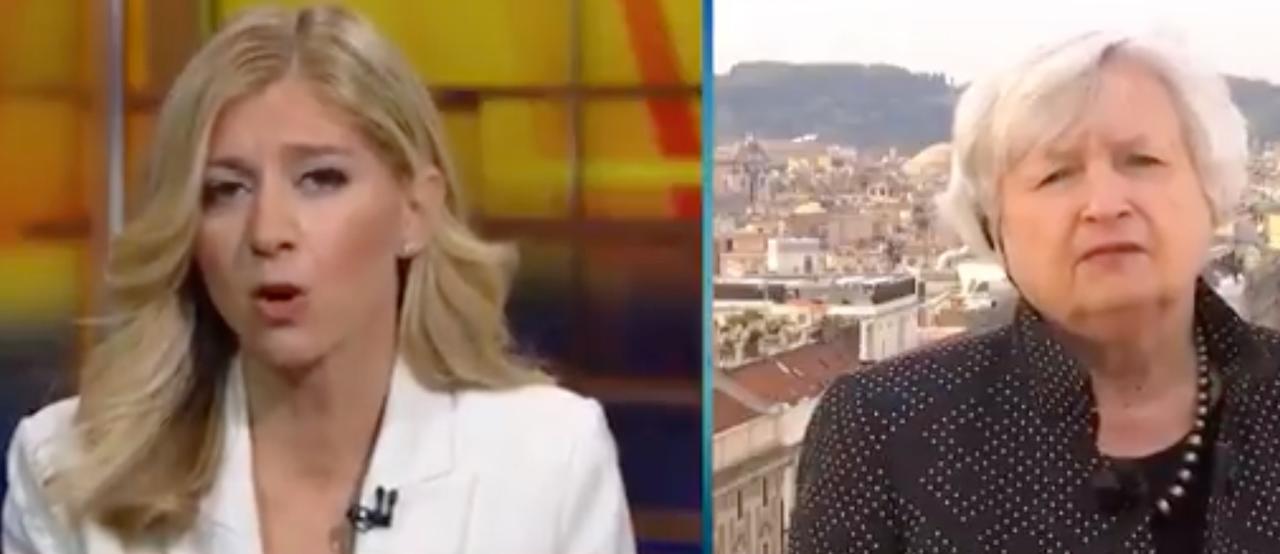
      Speaking to CNBC from Rome where Yellen is attending the G-20 conference of global leaders with President Biden, the Treasury Secretary delivered her latest pitch in support of the $1.75 trillion social spending-climate agenda, covering a critical area of concern that her boss did his best to avoid during his speech yesterday.

      That subject? Inflation, which Biden’s aides probably felt might be too dangerous for him to discuss due to his cognitive decline.

      And so Treasury Secretary Yellen was left to pick up the slack with a 0500ET interview on CNBC’s Worldwide Exchange. The broad takeaway from her remarks: President Biden’s two-party social-spending-climate plan and his “bipartisan” infrastructure plan will actually help lower inflation by reducing costs for households for key services like child-care, health care and other issues. Ultimately, she expects these pressures to subside by the second half of next year.

      “I don’t think that these investments will drive up inflation at all,” she told CNBC’s Sara Eisen during a live “Worldwide Exchange” interview.

      Months ago, Yellen was one of the first to warn about the looming inflationary beast. But now she’s in charge of taming it, so of course her rhetoric has changed.

      Biden claimed during his White House address yesterday that “17 Nobel winning economists” had signed off on his framework, claiming it wouldn’t push up inflation because it would be – more or less – be fully paid for by tax hikes while creating new economic opportunities. Right now, the bigger driver of inflation is the supply-side shocks like those unveiled by Apple during last night’s earnings.

      Yellen renewed her push for White House spending plans that are unpopular with several factions of Congress and have yet to be approved. But even as the headline CPI number hits its highest level in 30 years, Yellen insisted that Biden’s program would be a net benefit for workers.

      “It will boost the economy’s potential to grow, the economy’s supply potential, which tends to push inflation down, not up,” she said. “For many American families experiencing inflation, seeing the prices of gas and other things that they buy rise, what this package will do is lower some of the most important costs, what they pay for health care, for child care. It’s anti-inflationary in that sense as well.”

      The only problem with Yellen’s worldview right now is that, as the holiday’s approach, GDP is slowing because more than 100 ships are being left floating in a massive logjam making it nearly impossible for companies to obtain the goods they need ahead of the holiday season. As we noted the other day, economists from the American farm bureau warned that the US is headed for its expensive Thanksgiving ever.

      In effect, the reality of our current economy reflects the exact opposite of what Yellen says is coming just around the corner.

      “Not only has inflation risen, but growth also has decelerated. Due in large part to supply issues that have left dozens of ships stranded at U.S. ports, the pace of gross domestic product growth slowed to 2% in the third quarter, the slowest rate since the pandemic-induced recession ended in April 2020.

      Part of the administration’s G-20 agenda will be addressing its pet economic concerns, including the implementation of a global minimum for corporate taxes, as well as addressing climate change and the supply chain issues that have hampered growth and threaten to cut into holiday spending patterns. Yellen said she expects the supply chain issues “will be addressed over the medium term.” She called the White House’s Build Back Better program “transformational” in addressing the economy’s needs as the nation seeks to emerge from the Covid-19 pandemic. She insisted that the spending plans are “fully paid for” through tax proposals primarily aimed at higher earners and corporations. “I think it really helps us invest in physical capital. That’s public infrastructure that’s important to productivity growth,” she said. “There’s investment in human capital, there’s investment in research and development, the support that families will receive that will help them participate in the labor market.”

      As we quipped on twitter just a week ago, the nabobs running American fiscal and monetary policy have been slowly moving the goalposts vis-a-vis inflation since the start of the year, when Larry Summers first warned about the risks of rising inflation – prompting his fellow academics to response with a mix of derision and mockery.

      Now, Treasury Secretary Janet Yellen has revised the narrative once again: President Biden’s massive spending plan won’t stoke even more inflation (like other recent COVID-related stmulus plans have) because the Biden plan will help stoke economic growth by allowing more women to participate in the workforce while investing in “public infrastructure.”

      She called the White House’s Build Back Better program “transformational” in addressing the economy’s needs as the nation seeks to emerge from the Covid-19 pandemic. She insisted that the spending plans are “fully paid for” through tax proposals primarily aimed at higher earners and corporations.
      “I think it really helps us invest in physical capital. That’s public infrastructure that’s important to productivity growth,” she said. “There’s investment in human capital, there’s investment in research and development, the support that families will receive that will help them participate in the labor market.”

      In the end, she’s hopeful that economic growth will accelerate and inflation will recede. But to claim that this is a certainty is magical thinking at best.

      Over the past few weeks, the debate surrounding the inherent “transitoriness of inflation” has become increasingly fierce, forcing Fed Chairman Jerome Powell to tacitly signale to other senior Fed officials that the word “transitory” shouldn’t be used during public remarks, even as  America’s current inflationary issues, as the accelerating price pressures have already risen more quickly than the Fed had anticipated (something billionaire PTJ warned is the “biggest threat to society).

      Yellen said she Friday she expects inflation to ebb over time and return to its longer-run average around 2%, which tracks with the Fed’s latest economic projections. The fact that it hasn’t subsided as quickly as the Fed had hoped is simply a reflection of the fact that humanity is still caught in an unprecedented pandemic in a globalized world.

      “I think it’s still fair to use [‘transitory’] in the sense that even if it doesn’t mean a month or two, it means a little bit longer than that. I think it conveys that the pressures that we’re seeing are related to a unique shock to the economy,” she said. “As the United States recovers and as vaccinations proceed globally, and the global economic activity revives, that pricing pressure will ease.”

      To be sure, not every business has been harmed or frustrated by inflation. Take hotels, for instance, which have the luxury of re-setting their prices every night.  “If you look at the $3 trillion of incremental savings during COVID, there’s a long way to go to spend it all. Thank you Federal Reserve and the U.S. Congress for fiscal and monetary stimulus,” said CEO Christopher Nassetta.

      But what we would like to know is why Yellen and other top officials at the Fed and elsewhere seem so blithe to throw away their reputations as sober-minded observers of the American economy. There was – not all that long ago – a time when Yellen spoke honestly about the inflationary threat. But now that this threat has apparently surpassed the Fed and Treasury’s worst-case scenarios, the Bide Admin and its top economic officials have decided to return to magical thinking while Biden weighs deploying the National Guard to drive trucks laden with goods off boatss.

      Tyler Durden
      Fri, 10/29/2021 – 19:05

      via ZeroHedge News https://ift.tt/3nFIAJY Tyler Durden

      South Dakota Gov. Noem Signs Order To ‘Protect’ State Employees From Biden’s Vaccine Mandate

      South Dakota Gov. Noem Signs Order To ‘Protect’ State Employees From Biden’s Vaccine Mandate

      Authored by Isabel Van Brugen via the Epoch Times (emphasis ours),

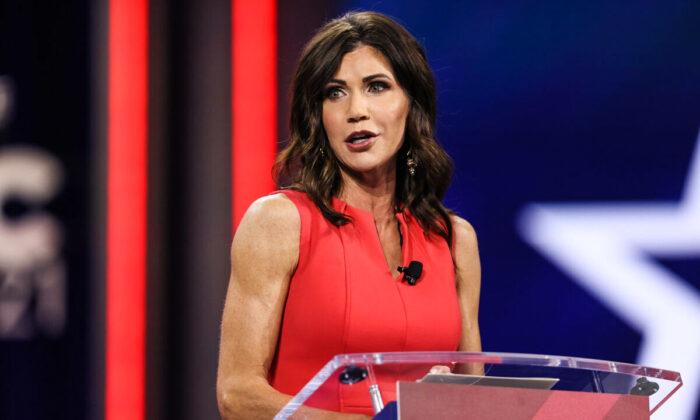
      South Dakota Gov. Kristi Noem signed an executive order this week to “protect” state employees against President Joe Biden’s COVID-19 vaccine mandate by allowing them to easily obtain medical and religious exemptions.

      “South Dakota is fighting back against the heavy hand of @JoeBiden & his Administration,” the Republican governor announced on Twitter. “Today I signed an Executive Order to protect state employees, & those w/ federal contracts who are being forced to get vaccinated against their wishes. The order protects medical & religious exemptions for these workers.”

      “Additionally, I am working w/ legislators on addressing other areas. I have always said the decision to get vaccinated should be a personal choice-not a mandate from Joe Biden, Fauci or your boss,” she added.

      Noem said the move was necessary to ensure that employees aren’t forced to get COVID-19 vaccinations under  Biden’s initiative, which covers not only people directly paid by federal contracts but also anyone who works to support them.

      South Dakota Gov. Kristi Noem addresses the Conservative Political Action Conference held in the Hyatt Regency in Orlando, Fla., on Feb. 27, 2021. (Joe Raedle/Getty Images)

      State lawmakers have said South Dakotans are being denied medical and religious exemptions from feds and have called for a special session to stop it.

      Noem spokesman Jordan Overturf said Noem’s exemptions are “explicit and offer a clear path” for state workers to opt-out of the shots.

      In a press release from Noem’s office, the governor said that employees who wish to receive a medical exemption from the vaccine mandate need a note from a doctor stating that the COVID-19 vaccination is too risky for health reasons.

      Workers who wish to be exempted for religious reasons must fill out a form from the Bureau of Human Resources that states that they “dissent and object to receiving a COVID-19 vaccine on religious grounds, which includes moral, ethical, and philosophical beliefs or principles.”

      “Due to established precedent, this Executive Order does not apply to service members with the South Dakota National Guard who must meet federal readiness responsibilities for deployment,” the release adds.

      It also states that Noem will work during next year’s legislative session with South Dakota lawmakers to make these “protections” for state employees permanent, and “to extend similar health and religious liberty protections” to employees of private businesses who adopted mandatory COVID-19 vaccination policies.

      The governor earlier criticized proposals by Republican lawmakers to ban vaccine mandates as “not conservative” because they’re telling businesses what to do and how to treat their employees. This order, spokesman Overturf said, is about upholding rights already included in the Constitution.

      “She has repeatedly said private businesses should offer medical and religious exemptions for COVID vaccine mandates,” Overturf said.

      Noem earlier said on Twitter that the state will “l stand up to defend freedom,” referring to the president’s vaccine mandates.

      @JoeBiden see you in court,” she wrote in September, later adding that her legal team is prepared to stand up to the Biden administration’s mandates.

      The Epoch Times has contacted the White House for comment.

      Tyler Durden
      Fri, 10/29/2021 – 18:40

      via ZeroHedge News https://ift.tt/3bmnQ4f Tyler Durden

      Lincoln Project Democrat Operatives Busted For White Nationalist Hoax

      Lincoln Project Democrat Operatives Busted For White Nationalist Hoax

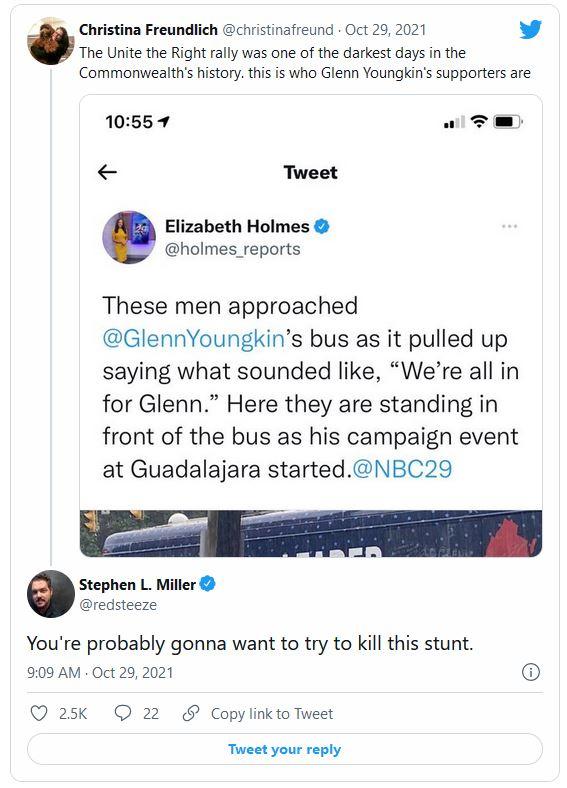
      The anti-Trump, pedo-protecting Lincoln Project was forced to issue an emergency press release Friday afternoon after Democratic operatives they paid to impersonate tiki-torch wielding Trump supporters were doxxed after standing in front of Republican gubernatorial candidate Glenn Youngkin’s campaign bus.

      The hoax was spread by several notables, including Terry McAuliffe’s spokeswoman, Christina Freundlich.

      It was also spread by MSM journos:

      And then… the internet figured out who the operatives were;

      And they began frantically scrubbing their social media history:

      After the hoax unraveled, the Lincoln Project issued a press release taking credit.

      “Today’s demonstration was our way of reminding Virginia voters of what happened in Charlottesville four years ago, the Republican party’s embrace of those values, and Glenn Youngkin’s failure to condemn it.”

      Bringing it home is Glenn Greenwald, who opines with yet another killer thread: 

      Is anyone surprised?

      Tyler Durden
      Fri, 10/29/2021 – 18:12

      via ZeroHedge News https://ift.tt/3nG1hgH Tyler Durden

      Democrats Have a Lot of Bad Ideas for Tax Reform


      sfphotosfive139002

      Passing an enormous, (theoretically) paid-for spending bill that pleases all the various factions within the Democratic Party was never going to be easy. But the current framework that Democrats have unveiled—where party leaders determine what revenue raisers to use by throwing them at a wall like spaghetti and seeing what sticks—is downright disastrous.

      This slapdash approach is par for the course nowadays for Congress. Passage of the 2017 Tax Cuts and Jobs Act (TCJA) was marred by last-second additions and changes, as well as funky accounting to pass muster by reconciliation rules. Even before this year, Congress was not exactly known for fostering the development of careful, thoughtful policy making.

      But the process behind trying to “pay for” this year’s reconciliation bill has taken things to a whole new level. Ideas that were half-baked from the beginning have arisen only to collapse under their own weight, with each attempt dropping more quickly than the last. It would almost be amusing if it didn’t relate to important national fiscal policy.

      Take the latest proposal by Sen. Ron Wyden (D–Ore.) to establish a “billionaires tax” by imposing a so-called mark-to-market regime of taxing unrealized capital gains for the wealthiest taxpayers. Doing so would not only have been an administrative nightmare for an IRS that is already demanding a massive expansion to its budget to fight tax evasion, but also likely would have wreaked havoc on markets as hundreds of the largest shareholders sold large portions of their holdings just to pay their tax bills.

      The idea was promptly put aside, with Wyden’s proposal not even lasting a full 24 hours before being pronounced dead. In any functional policy-making environment where legislation is being created by level-headed adults who have the goal of extracting the necessary amount of revenue with the minimum economic harm and additional tax complexity, this never would have happened.

      Democrats are instead having the equivalent of a messy Facebook fight, openly airing their dirty laundry in the hopes of achieving their policy priorities through overwhelming public support and positive press. When that fails to materialize, they grumpily return to glaring at each other.

      Another example: the since-aborted attempt to sneak an unprecedented expansion of the IRS’s power to monitor taxpayers’ finances into the reconciliation bill. Pushed by the Treasury Department, the original proposal would have required financial institutions to report data from accounts with annual gross inflows and outflows exceeding $600 total. Though the proposal technically only provided the IRS with data on gross numbers, the IRS could potentially have used its audit power to evaluate specific transactions.

      Responding to the backlash over this attempt to monitor just about every account, the proposal was revised to raise the threshold to $10,000, with payroll deposits and spending up to that level exempted. Yet even this would have roped in Americans making cash-tipped wages, about half of small business owners, anyone selling tax-exempt used items, and someone making a large purchase after saving up for years, to name a few examples. By any metric, it would have caught millions of average-income Americans in its dragnet.

      That proposal appears to be dead in the water as well after swing-vote Sen. Joe Manchin (D–W.Va.) accurately described it as “screwed up.” But the question remains of how it got as far as it did—not only was the proposal itself fundamentally flawed, but it does not appear a necessary vote like Manchin was consulted beforehand.

      While some of the worst ideas have been filtered out, the current framework has more than its fair share of bad ideas. For example, a proposed excise tax on corporate stock buybacks strikes at a common source of progressive angst, but there’s really no good policy reason to discourage buybacks through the tax code.

      Then there’s proposals for a minimum corporate book tax. Populist claims that the tax code is rigged in favor of corporations are inaccurate—the deductions corporations use to lower their tax bills enjoy bipartisan support in Congress and corporate tax revenues this year are projected to be around the level they were projected to be this year prior to the passage of the 2017 tax cuts. But even if corporations were getting off scot-free, there are much more straightforward, less clunky ways to handle the issue, such as by modifying tax rates.

      It’s too late in the game to maintain any naivete about whether Congress can be trusted to responsibly shepherd taxpayer funds and maintain a fair and competitive tax code. But taxpayers should at least demand better than this slipshod approach of putting forward as many ideas as possible and seeing what can get passed.

      While TCJA had some slapdash ideas attached through the congressional bargaining process, it largely achieved its goal of lowering rates and producing a less complex tax system. The slate of half-baked goods that Congress is preparing to present to American taxpayers would make sure that the tax system will need another overhaul sooner rather than later.

      from Latest – Reason.com https://ift.tt/31eRWVv
      via IFTTT

      Democrats Have a Lot of Bad Ideas for Tax Reform


      sfphotosfive139002

      Passing an enormous, (theoretically) paid-for spending bill that pleases all the various factions within the Democratic Party was never going to be easy. But the current framework that Democrats have unveiled—where party leaders determine what revenue raisers to use by throwing them at a wall like spaghetti and seeing what sticks—is downright disastrous.

      This slapdash approach is par for the course nowadays for Congress. Passage of the 2017 Tax Cuts and Jobs Act (TCJA) was marred by last-second additions and changes, as well as funky accounting to pass muster by reconciliation rules. Even before this year, Congress was not exactly known for fostering the development of careful, thoughtful policy making.

      But the process behind trying to “pay for” this year’s reconciliation bill has taken things to a whole new level. Ideas that were half-baked from the beginning have arisen only to collapse under their own weight, with each attempt dropping more quickly than the last. It would almost be amusing if it didn’t relate to important national fiscal policy.

      Take the latest proposal by Sen. Ron Wyden (D–Ore.) to establish a “billionaires tax” by imposing a so-called mark-to-market regime of taxing unrealized capital gains for the wealthiest taxpayers. Doing so would not only have been an administrative nightmare for an IRS that is already demanding a massive expansion to its budget to fight tax evasion, but also likely would have wreaked havoc on markets as hundreds of the largest shareholders sold large portions of their holdings just to pay their tax bills.

      The idea was promptly put aside, with Wyden’s proposal not even lasting a full 24 hours before being pronounced dead. In any functional policy-making environment where legislation is being created by level-headed adults who have the goal of extracting the necessary amount of revenue with the minimum economic harm and additional tax complexity, this never would have happened.

      Democrats are instead having the equivalent of a messy Facebook fight, openly airing their dirty laundry in the hopes of achieving their policy priorities through overwhelming public support and positive press. When that fails to materialize, they grumpily return to glaring at each other.

      Another example: the since-aborted attempt to sneak an unprecedented expansion of the IRS’s power to monitor taxpayers’ finances into the reconciliation bill. Pushed by the Treasury Department, the original proposal would have required financial institutions to report data from accounts with annual gross inflows and outflows exceeding $600 total. Though the proposal technically only provided the IRS with data on gross numbers, the IRS could potentially have used its audit power to evaluate specific transactions.

      Responding to the backlash over this attempt to monitor just about every account, the proposal was revised to raise the threshold to $10,000, with payroll deposits and spending up to that level exempted. Yet even this would have roped in Americans making cash-tipped wages, about half of small business owners, anyone selling tax-exempt used items, and someone making a large purchase after saving up for years, to name a few examples. By any metric, it would have caught millions of average-income Americans in its dragnet.

      That proposal appears to be dead in the water as well after swing-vote Sen. Joe Manchin (D–W.Va.) accurately described it as “screwed up.” But the question remains of how it got as far as it did—not only was the proposal itself fundamentally flawed, but it does not appear a necessary vote like Manchin was consulted beforehand.

      While some of the worst ideas have been filtered out, the current framework has more than its fair share of bad ideas. For example, a proposed excise tax on corporate stock buybacks strikes at a common source of progressive angst, but there’s really no good policy reason to discourage buybacks through the tax code.

      Then there’s proposals for a minimum corporate book tax. Populist claims that the tax code is rigged in favor of corporations are inaccurate—the deductions corporations use to lower their tax bills enjoy bipartisan support in Congress and corporate tax revenues this year are projected to be around the level they were projected to be this year prior to the passage of the 2017 tax cuts. But even if corporations were getting off scot-free, there are much more straightforward, less clunky ways to handle the issue, such as by modifying tax rates.

      It’s too late in the game to maintain any naivete about whether Congress can be trusted to responsibly shepherd taxpayer funds and maintain a fair and competitive tax code. But taxpayers should at least demand better than this slipshod approach of putting forward as many ideas as possible and seeing what can get passed.

      While TCJA had some slapdash ideas attached through the congressional bargaining process, it largely achieved its goal of lowering rates and producing a less complex tax system. The slate of half-baked goods that Congress is preparing to present to American taxpayers would make sure that the tax system will need another overhaul sooner rather than later.

      from Latest – Reason.com https://ift.tt/31eRWVv
      via IFTTT