Witkoff Set To Meet Iran Envoy In Istanbul For Rare Direct Nuclear Talks

Witkoff Set To Meet Iran Envoy In Istanbul For Rare Direct Nuclear Talks

At this point it it seems clear that President Trump is not quite ready to order a major attack on Iran, after last week threatening to do so, and weighing military options. Instead, Washington and Tehran could be inching back toward direct contact.

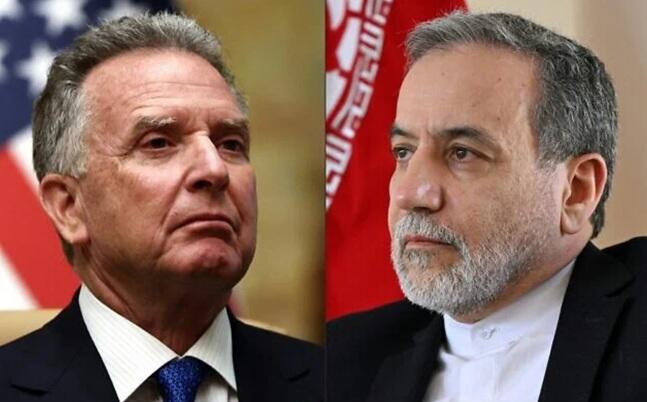
US envoy Steve Witkoff and Iranian Foreign Minister Abbas Araghchi are expected to meet on Friday in Istanbul to discuss a possible nuclear deal, Axios reports.

If it actually happens (and the two sides don’t escalate the rhetoric before then), it would mark the first face-to-face engagement between American and Iranian officials since talks collapsed amid the 12-day June war.

Still a lot could happen between now and the end of the week, as Axios also concedes:

A fourth source familiar with the planning said a meeting on Friday was “the best case scenario” but cautioned that nothing is final until it happens.

Iranian foreign Miniser Araghchi has stressed that “Iran is ready for diplomacy” but has also spelled out that “diplomacy is incompatible with pressure, intimidation, and force.” The Iranians are hopeful about potential renewed direct contacts with Washington, however.

There’s been reports of a lot of behind the scenes diplomatic scrambling in order to head off war, especially by Egypt, and Qatar.

But Washington’s demands have remain unchanged. This reportedly includes Trump insisting on zero uranium enrichment, and restrictions on Iran’s ballistic missile program.

Tehran has expressed that it is willing to dialogue on the nuclear issue, but that it will not limit or reduce its ballistic missile capabilities, given especially that Israel is not willing to do the same, and the Islamic Republic has already come under unprovoked Israeli attack. Such would be tantamount to national self-destruction and handing Israel an easy, cost-free victory.

In a recent interview with CNN, Araghchi said indirect contacts with Washington via regional intermediaries had been “fruitful” while at the same time warning that a wider war would be “a disaster for everybody.”

“Trump has yet to say whether and how he might use force,” the WSJ wrote over the weekend. “But American airstrikes on Iran aren’t imminent, U.S. officials say, because the Pentagon is moving in additional air defenses to better protect Israel, Arab allies and American forces in the event of a retaliation by Iran and a potential prolonged conflict.”

Tyler Durden
Tue, 02/03/2026 – 02:45

via ZeroHedge News https://ift.tt/MXZFJah Tyler Durden

NYT To SCOTUS: “I just want them to know we’re watching them.”

I have long been a subscriber to the New York Times. I read the online version daily, and closely follow its reporting about the Supreme Court. Traditionally, the Times had a single Supreme Court reporter: Anthony Lewis, Linda Greenhouse, and most recently Adam Liptak. These reporters would cover all facets of the Supreme Court. They would preview high-profile cases, write about oral argument, analyze decisions, and offer updates whenever the Justices did something noteworthy. But in recent years, I’ve noticed a shift in how the media covers the Supreme Court. New reporters were hired who focused not on the work of the Court, but on the Justices themselves. There were any stories about Justice Alito’s flags and Justice Thomas’s travels. And Jodi Kantor published inside information about the Court’s deliberations.

The Times Insider interviews the SCOTUS quartet–Jodi Kantor, Adam Liptak, Ann Marimow, and Abbie VanSickle–to explain why the Times has expanded its coverage.

Adam​ Liptak, who practiced law for 14 years, has been the dominant and authoritative voice on the beat since he began covering the court in 2008. He has just taken on a new role, chief legal affairs correspondent, and will soon start writing a weekly newsletter, The Docket, about the most pressing legal questions of the day.

Nearly four years ago, Jodi Kantor, an investigative reporter with a track record of telling difficult stories, began taking readers inside the institution and delivering telling portraits of how the justices exercise their power, often working with Adam. In 2023, The Times added an investigative reporter and lawyer, Abbie VanSickle, to the team. Last summer Ann E. Marimow, who previously covered the court at The Washington Post, took over Adam’s role writing about major cases.

The first, and most important note, is that Adam Liptak is stepping down from his regular coverage of the Court. His latest Sidebar column closes with this note:

The first installment of the Sidebar column appeared 19 years ago, in January 2007. It was about housing discrimination. Since then, I’ve written hundreds more. This one is the last.

But I have more to say, and I’ll be saying it in The Docket, a new weekly newsletter on the law. It will retain a lot of this column’s DNA, but, if I do it right, it will be more ambitious, varied and informal. I hope you’ll join me there.

I promptly signed up for the newsletter, but will miss Adam’s regular coverage. Even where I disagree with Liptaks coverage from time-to-time (including about myself), I still found him to be a fair, careful, and insightful journalist. Adam leaves large shoes to fill.

Second, Jodi Kantor state with some clarity the effect, if not purpose of the expanded coverage. She was asked if “greater media scrutiny affected on the court, the justices or their performance.” Kantor replied, “I just want them to know we’re watching them.” I firmly believe that Justices respond to media scrutiny. I think this scrutiny works, so long as it is applied to both sides. I offered this remark about Kantor’s reporting in November:

In the past, I’ve been critical that she has focused only on the Court’s conservatives. To her credit, Kantor has done a deep dive on the Court’s three progressives.

Indeed, my post was cited in the interview.

Americans across the ideological spectrum want to know more about the court. I noticed that a prominent conservative legal analyst wrote online how much he learned from your piece on the liberal justices, for instance.

KANTOR: That story does get to the heart of this work — who are the nine human beings who inhabit these roles, and how do they approach their work? How do lifetime appointments and the extreme way people tend to treat the justices — obsequiousness, attack — affect them? What is this institution — the holy of holies of American law — actually like inside, and how does power flow there? How partisan are the justices, and how do they interact with one another? Those are the kinds of questions I’m interested in discussing. (And if anyone with knowledge wants to help, you can reach me securely through nytimes.com/tips.)

This was the second time in 24 hours that the Times felt compelled to refer to me as a conservative. More on that later.

Speaking of balance, I’d like to know how Justice Jackson reacted to all of the anti-ICE statements during the Grammy’s. Remember how closely Justice Alito was scrutinized after the 2010 State of the Union address? An MSNBC reporter talked to Judge Emil Bove after the President’s rally in the Poconos. Certainly someone checked in with KBJ on this point, right?

Third, Kantor refused to say even a word about her sourcing:

How do you get people inside an institution as heavily cloaked as the court to share important but confidential information?

KANTOR: We can’t talk about our sources, full stop. Even an innocuous comment from us could be mistaken for a clue, and we have pledged to protect their privacy.

There is some irony that someone leaked information about the Chief Justice’s NDA in violation of the NDA. I’ll write about that story later.

Still, Kantor acknowledges that much of her reporting can be found in the actual opinions, a point I’ve made many times before:

But the behind-the-scenes stories we’ve been able to tell often have public hints and markers. I recently wrote about the split in strategy among the liberal justices, based on conversations with people who know and understand them. But the differences in approach between Justice Elena Kagan and Justice Ketanji Brown Jackson, and the strains between Justice Jackson and Justice Amy Coney Barrett, are right in the text of opinions. This world is very decorous; we’re not talking about the screamathons we see in other areas of public life. That means that even a word or two can pack a punch.

Finally, Adam offers an unfortunately accurate observation:

News coverage has changed, too. Our first takes on arguments and decisions are published much faster than when I started covering the court in 2008. The introduction of live audio in 2020 was a mixed blessing. I used to attend a majority of the arguments in person. Since the court allows only pen and paper in the courtroom — no electronics — I paid close attention. These days I often listen on my laptop and don’t always succeed in avoiding distractions.

I think one of the greatest downsides of live-streaming is that people spend less time attending oral arguments, and reading the transcripts. As a rule, I will only write about a case after I’ve read the transcript–even if I tune into the livestream. Reporters do not have that luxury.

I look forward to reading the reporters from the Times, and other outlets. I just want them to know I’m watching them.

The post NYT To SCOTUS: "I just want them to know we're watching them." appeared first on Reason.com.

from Latest – Reason.com https://ift.tt/pyP9eOT
via IFTTT

NYT To SCOTUS: “I just want them to know we’re watching them.”

I have long been a subscriber to the New York Times. I read the online version daily, and closely follow its reporting about the Supreme Court. Traditionally, the Times had a single Supreme Court reporter: Anthony Lewis, Linda Greenhouse, and most recently Adam Liptak. These reporters would cover all facets of the Supreme Court. They would preview high-profile cases, write about oral argument, analyze decisions, and offer updates whenever the Justices did something noteworthy. But in recent years, I’ve noticed a shift in how the media covers the Supreme Court. New reporters were hired who focused not on the work of the Court, but on the Justices themselves. There were any stories about Justice Alito’s flags and Justice Thomas’s travels. And Jodi Kantor published inside information about the Court’s deliberations.

The Times Insider interviews the SCOTUS quartet–Jodi Kantor, Adam Liptak, Ann Marimow, and Abbie VanSickle–to explain why the Times has expanded its coverage.

Adam​ Liptak, who practiced law for 14 years, has been the dominant and authoritative voice on the beat since he began covering the court in 2008. He has just taken on a new role, chief legal affairs correspondent, and will soon start writing a weekly newsletter, The Docket, about the most pressing legal questions of the day.

Nearly four years ago, Jodi Kantor, an investigative reporter with a track record of telling difficult stories, began taking readers inside the institution and delivering telling portraits of how the justices exercise their power, often working with Adam. In 2023, The Times added an investigative reporter and lawyer, Abbie VanSickle, to the team. Last summer Ann E. Marimow, who previously covered the court at The Washington Post, took over Adam’s role writing about major cases.

The first, and most important note, is that Adam Liptak is stepping down from his regular coverage of the Court. His latest Sidebar column closes with this note:

The first installment of the Sidebar column appeared 19 years ago, in January 2007. It was about housing discrimination. Since then, I’ve written hundreds more. This one is the last.

But I have more to say, and I’ll be saying it in The Docket, a new weekly newsletter on the law. It will retain a lot of this column’s DNA, but, if I do it right, it will be more ambitious, varied and informal. I hope you’ll join me there.

I promptly signed up for the newsletter, but will miss Adam’s regular coverage. Even where I disagree with Liptaks coverage from time-to-time (including about myself), I still found him to be a fair, careful, and insightful journalist. Adam leaves large shoes to fill.

Second, Jodi Kantor state with some clarity the effect, if not purpose of the expanded coverage. She was asked if “greater media scrutiny affected on the court, the justices or their performance.” Kantor replied, “I just want them to know we’re watching them.” I firmly believe that Justices respond to media scrutiny. I think this scrutiny works, so long as it is applied to both sides. I offered this remark about Kantor’s reporting in November:

In the past, I’ve been critical that she has focused only on the Court’s conservatives. To her credit, Kantor has done a deep dive on the Court’s three progressives.

Indeed, my post was cited in the interview.

Americans across the ideological spectrum want to know more about the court. I noticed that a prominent conservative legal analyst wrote online how much he learned from your piece on the liberal justices, for instance.

KANTOR: That story does get to the heart of this work — who are the nine human beings who inhabit these roles, and how do they approach their work? How do lifetime appointments and the extreme way people tend to treat the justices — obsequiousness, attack — affect them? What is this institution — the holy of holies of American law — actually like inside, and how does power flow there? How partisan are the justices, and how do they interact with one another? Those are the kinds of questions I’m interested in discussing. (And if anyone with knowledge wants to help, you can reach me securely through nytimes.com/tips.)

This was the second time in 24 hours that the Times felt compelled to refer to me as a conservative. More on that later.

Speaking of balance, I’d like to know how Justice Jackson reacted to all of the anti-ICE statements during the Grammy’s. Remember how closely Justice Alito was scrutinized after the 2010 State of the Union address? An MSNBC reporter talked to Judge Emil Bove after the President’s rally in the Poconos. Certainly someone checked in with KBJ on this point, right?

Third, Kantor refused to say even a word about her sourcing:

How do you get people inside an institution as heavily cloaked as the court to share important but confidential information?

KANTOR: We can’t talk about our sources, full stop. Even an innocuous comment from us could be mistaken for a clue, and we have pledged to protect their privacy.

There is some irony that someone leaked information about the Chief Justice’s NDA in violation of the NDA. I’ll write about that story later.

Still, Kantor acknowledges that much of her reporting can be found in the actual opinions, a point I’ve made many times before:

But the behind-the-scenes stories we’ve been able to tell often have public hints and markers. I recently wrote about the split in strategy among the liberal justices, based on conversations with people who know and understand them. But the differences in approach between Justice Elena Kagan and Justice Ketanji Brown Jackson, and the strains between Justice Jackson and Justice Amy Coney Barrett, are right in the text of opinions. This world is very decorous; we’re not talking about the screamathons we see in other areas of public life. That means that even a word or two can pack a punch.

Finally, Adam offers an unfortunately accurate observation:

News coverage has changed, too. Our first takes on arguments and decisions are published much faster than when I started covering the court in 2008. The introduction of live audio in 2020 was a mixed blessing. I used to attend a majority of the arguments in person. Since the court allows only pen and paper in the courtroom — no electronics — I paid close attention. These days I often listen on my laptop and don’t always succeed in avoiding distractions.

I think one of the greatest downsides of live-streaming is that people spend less time attending oral arguments, and reading the transcripts. As a rule, I will only write about a case after I’ve read the transcript–even if I tune into the livestream. Reporters do not have that luxury.

I look forward to reading the reporters from the Times, and other outlets. I just want them to know I’m watching them.

The post NYT To SCOTUS: "I just want them to know we're watching them." appeared first on Reason.com.

from Latest – Reason.com https://ift.tt/pyP9eOT
via IFTTT

Yoram Hazony’s Fifteen Minutes of Infamy

Last week, I wrote about Yoram Hazony’s speech at the International Conference on Anti-Semitism. Hazony argued that critics simply have not made the case against Tucker Carlson. Hazony made a very unusual reference to the lack of a fifteen-minute video to make that case. I quote him in full to ensure that readers get the full context:

A third possibility is that Jews and Zionist Christians have plenty of connections in the Republican party, but that the case against Tucker over the last six months just wasn’t presented in a way that was professional, serious, and competent enough to be persuasive.

Sure, many of you think that Tucker is a leading promoter of anti-Semitism, and that the Trump movement should just ditch him.

But that’s obviously not what President Trump thinks about Tucker, who did extraordinary work building up the Trump movement over seven years as a host on Fox News. On top of that, Tucker is a very smart, passionate, and very likeable man when you meet him in person. I had lunch with him once, years ago, and I thought he was great. I invited him to NatCon 1 and he gave one of the best speeches we have ever hosted.

And Tucker has been saying—as clear as the day—that he is not an anti-Semite.

Now, if you think otherwise, you are going to have to convince people. You will have to make your case, in a persuasive way, to people who don’t spend a lot of time watching podcasts.

Have Tucker’s critics done that? Well, if they have, where is the 15-minute explainer video, that I can show my friends on the political right, which proves that this very serious accusation against Tucker is true? Where is the carefully assembled research, with links and dates and timestamps, that could convince an impartial public figure who is open to being convinced?

The answer is: There is no such 15-minute explainer video. There is no such serious research. They don’t exist because, for some reason, there are no Jews or Zionist Christians, who think it’s their job to produce such things. Or if there are people who think it’s their job, they haven’t circulated anything of the sort—to me or to anyone else in Washington who’s in a position to do anything with it.

This is an extremely high level of incompetence by the entire anti-Semitism-industrial complex, some of whose representatives are sitting right here in this room. Maybe some of you think you were persuasively “fighting anti-Semitism” over the last six months. But the unfortunate truth is that you weren’t.

When I first read this, I wondered whether a fifteen minute video is some sort of necessary condition. Is this the standard length of opposition research needed to take someone down? I didn’t give this passage much attention, as there were so many other problematic aspects of the speech.

But now, the story has developed.

The day after Hazony shared his speech, Orit Arfa published an essay at Tablet, titled “Yoram Hazony’s 15 Minutes.” Until recently, Orit worked for Hazony. I interacted with her when I spoke at NatCon 5 in September.

The story is almost too strange to believe: there is a 15-minute video.

The truth, as Yoram well knows, is that there is such a video—and the reason he knows it is because Yoram himself produced it. Fellow employees and I worked hours to produce an explainer with video excerpts of Tucker’s seven slanders against Jews that Yoram enumerated in his speech. The final cut? Fourteen minutes and 57 seconds.

But Yoram would not make this video public. He kept it unlisted in an obscure account with the stated intention of sharing it with select people in Washington. I am flabbergasted that Yoram would say that no such video exists, because he produced one. He just didn’t have the courage to put his name or his organization’s name on it or to make it public. It saddens me that he would diminish the work of his dedicated employees by erasing our efforts.

You can watch the unlisted video here:

Will Chamberain, who works for Hazony, offered a different take: Hazony knew a fifteen minute video existed, but he concluded that it didn’t make the case:

Should he have clarified by saying “there is one such video that I tasked a subordinate with making, but I haven’t published it because her work product was poor and the video was unpersuasive?”

This is all a massive stretch.

Arfa responded that Hazony had praised the video, and showed it to people:

Will, it was a group effort. He gave editorial guidance at every step and praised our teamwork and the final product. Watch it.

Someone shared with me this brilliant insight:

“When I read his speech, I was jarred by the focus on a ’15-minute video.’ Such a specific reference. There have been countless articles and op-eds and podcasts and media appearances and social media posts pointing out Tucker’s rancid antisemitism. Why did it have to be ‘a 15-minute video’? But your piece explained it. It was a tell. BECAUSE he knew there was one because you all produced it. It was what remains of his conscience goading him to tell on himself.”

This is all so strange. Frankly, I don’t know what to believe. Hazony didn’t have to say anything about a 15-minute video, but by doing so, he opened himself up to this predictable criticism.

Hazony is clearly focused on expanding the tent. But he is the center pole under the big top. When he engages in such inexplicable behavior, the entire tent begins to collapse. The leader of a moment needs to avoid unforced errors, yet Hazony continues to make them. Indeed, Hazony’s compatriot Kevin Roberts is in similar spot. As Roberts continues to fall, the edifice that is the Heritage Foundation collapses, and becomes unrecognizable.

I’ve learned that the next NatCon conference will be in Jerusalem in June 2026. That should go over well.

The post Yoram Hazony's Fifteen Minutes of Infamy appeared first on Reason.com.

from Latest – Reason.com https://ift.tt/zUJZ2mC
via IFTTT

Yoram Hazony’s Fifteen Minutes of Infamy

Last week, I wrote about Yoram Hazony’s speech at the International Conference on Anti-Semitism. Hazony argued that critics simply have not made the case against Tucker Carlson. Hazony made a very unusual reference to the lack of a fifteen-minute video to make that case. I quote him in full to ensure that readers get the full context:

A third possibility is that Jews and Zionist Christians have plenty of connections in the Republican party, but that the case against Tucker over the last six months just wasn’t presented in a way that was professional, serious, and competent enough to be persuasive.

Sure, many of you think that Tucker is a leading promoter of anti-Semitism, and that the Trump movement should just ditch him.

But that’s obviously not what President Trump thinks about Tucker, who did extraordinary work building up the Trump movement over seven years as a host on Fox News. On top of that, Tucker is a very smart, passionate, and very likeable man when you meet him in person. I had lunch with him once, years ago, and I thought he was great. I invited him to NatCon 1 and he gave one of the best speeches we have ever hosted.

And Tucker has been saying—as clear as the day—that he is not an anti-Semite.

Now, if you think otherwise, you are going to have to convince people. You will have to make your case, in a persuasive way, to people who don’t spend a lot of time watching podcasts.

Have Tucker’s critics done that? Well, if they have, where is the 15-minute explainer video, that I can show my friends on the political right, which proves that this very serious accusation against Tucker is true? Where is the carefully assembled research, with links and dates and timestamps, that could convince an impartial public figure who is open to being convinced?

The answer is: There is no such 15-minute explainer video. There is no such serious research. They don’t exist because, for some reason, there are no Jews or Zionist Christians, who think it’s their job to produce such things. Or if there are people who think it’s their job, they haven’t circulated anything of the sort—to me or to anyone else in Washington who’s in a position to do anything with it.

This is an extremely high level of incompetence by the entire anti-Semitism-industrial complex, some of whose representatives are sitting right here in this room. Maybe some of you think you were persuasively “fighting anti-Semitism” over the last six months. But the unfortunate truth is that you weren’t.

When I first read this, I wondered whether a fifteen minute video is some sort of necessary condition. Is this the standard length of opposition research needed to take someone down? I didn’t give this passage much attention, as there were so many other problematic aspects of the speech.

But now, the story has developed.

The day after Hazony shared his speech, Orit Arfa published an essay at Tablet, titled “Yoram Hazony’s 15 Minutes.” Until recently, Orit worked for Hazony. I interacted with her when I spoke at NatCon 5 in September.

The story is almost too strange to believe: there is a 15-minute video.

The truth, as Yoram well knows, is that there is such a video—and the reason he knows it is because Yoram himself produced it. Fellow employees and I worked hours to produce an explainer with video excerpts of Tucker’s seven slanders against Jews that Yoram enumerated in his speech. The final cut? Fourteen minutes and 57 seconds.

But Yoram would not make this video public. He kept it unlisted in an obscure account with the stated intention of sharing it with select people in Washington. I am flabbergasted that Yoram would say that no such video exists, because he produced one. He just didn’t have the courage to put his name or his organization’s name on it or to make it public. It saddens me that he would diminish the work of his dedicated employees by erasing our efforts.

You can watch the unlisted video here:

Will Chamberain, who works for Hazony, offered a different take: Hazony knew a fifteen minute video existed, but he concluded that it didn’t make the case:

Should he have clarified by saying “there is one such video that I tasked a subordinate with making, but I haven’t published it because her work product was poor and the video was unpersuasive?”

This is all a massive stretch.

Arfa responded that Hazony had praised the video, and showed it to people:

Will, it was a group effort. He gave editorial guidance at every step and praised our teamwork and the final product. Watch it.

Someone shared with me this brilliant insight:

“When I read his speech, I was jarred by the focus on a ’15-minute video.’ Such a specific reference. There have been countless articles and op-eds and podcasts and media appearances and social media posts pointing out Tucker’s rancid antisemitism. Why did it have to be ‘a 15-minute video’? But your piece explained it. It was a tell. BECAUSE he knew there was one because you all produced it. It was what remains of his conscience goading him to tell on himself.”

This is all so strange. Frankly, I don’t know what to believe. Hazony didn’t have to say anything about a 15-minute video, but by doing so, he opened himself up to this predictable criticism.

Hazony is clearly focused on expanding the tent. But he is the center pole under the big top. When he engages in such inexplicable behavior, the entire tent begins to collapse. The leader of a moment needs to avoid unforced errors, yet Hazony continues to make them. Indeed, Hazony’s compatriot Kevin Roberts is in similar spot. As Roberts continues to fall, the edifice that is the Heritage Foundation collapses, and becomes unrecognizable.

I’ve learned that the next NatCon conference will be in Jerusalem in June 2026. That should go over well.

The post Yoram Hazony's Fifteen Minutes of Infamy appeared first on Reason.com.

from Latest – Reason.com https://ift.tt/zUJZ2mC
via IFTTT

It’s Time To Accept That Civil War 2.0 Has Already Started

It’s Time To Accept That Civil War 2.0 Has Already Started

Authored by Brandon Smith via Alt-Market.us,

In July of 1917 as the fires of WWI raged across Europe, the Russian city of Petrograd was facing its own special turmoil in the form of a large scale Bolshevik insurgency. Up to 500,000 protesters, agitators and provocateurs had entered the city from across the country, many of them armed. They took over large swaths of the metropolis, hijacked private vehicles and confiscated private buildings.

Some soviet leaders including Vladimir Lenin called the event “premature” and did not publicly endorse it, which may have been a calculated attempt to avoid direct blowback. The official historical explanation is that the insurrection had taken on a life of its own, but the stage had been set and the communist agitators got exactly what they wanted, what their strategy demanded:

Human sacrifice.

Clashes with government authorities led to hundreds of protester deaths and a handful of police casualties. The Russian government surged military forces into the region to arrest Bolshevik captains and the movement had to pull back. In the end, though, the primary goal of the insurgents had been achieved. Whether spontaneous or planned, the point of the communist methodology is always to trigger government violence which can then be used to create public sympathy and bolster the revolution.

The majority of “normies” don’t need to join the revolution, they just have to be convinced to stay out of the way. And that’s largely what happened a few months later in October of 1917 when the Red Terror began. What followed was five years of civil war.

The communists, who had long claimed to be innocent victims of the Tsarist “imperialism”, went on a murder spree as soon as they solidified their political power. Their ideological opponents were systematically rounded up and eliminated. There are no exact numbers on how many killings occurred because records were destroyed, but estimates suggest the revolutionaries and secret police arrested and executed around 1 million political dissidents in the first few years of communist rule.

This genocide, though, would pale in comparison to the 10 million deaths caused by the Russian Civil War. Not to mention the imprisonment and mass murder of millions of Christians by the atheist regime over the course of the next couple decades.

History rarely “repeats” but our modern political dynamic rings rather familiar. Many of the tactics used by the leftists in Russia in the early 20th Century are being used today in the US. In fact, I would argue they are almost exactly the same and that a Bolshevik-style revolution is happening right now.

Interestingly, the Bolsheviks were a tiny minority within the Russian population. At their peak in 1917 they had only 400,000 “official” members. They were supported politically by an estimated 23% of the population, but that is still a small movement compared to the 150 million Russian citizens trying to live their lives from day to day.

Had Russian conservatives (nationalists, Christians and defenders of private property rights) stood up and acted en masse to stop the Bolsheviks early in 1917, their society could have avoided the full scale murder that would befall them from 1918 onward. They might not have aligned perfectly with their existing government, but the communist alternative was so much worse.

Instead, the conservatives waited until agents of the Cheka were at their doorstep, and by that time it was too late to effectively fight back. As Aleksandr Solzhenitsyn depressingly noted in his book “The Gulag Archipelago”, the majority of Russians stood against Soviet rule but they did not have the courage to take up arms when it mattered most. And so, a minority of militant communists were able to dominate a nation of hundreds of millions. As Solzhenitsyn warned:

We didn’t love freedom enough. And even more – we had no awareness of the real situation…We purely and simply deserved everything that happened afterward.”

The communists, of course, did not achieve such success alone. As scholar Antony Sutton outlined with ample evidence in his book “Wall Street And The Bolshevik Revolution”, they enjoyed the financial and logistical backing of various global elites (from the Rockefellers to the Morgans to the Harrimans) through the course of the revolution and after their rise to power.

The purpose? To create the model for an atheist and relativistic authoritarian state. A system that the globalists intend to one day use to take over the entire world.

Their plan relies heavily on a lack of action by patriots. It could be a weakness, but the leftists have good reason to feel emboldened lately.

Civil War 2.0 has, in fact, already kicked off in the form of a well funded far-left insurrection much like what happened in 1917 Russia.

The lack of conservative organization in response has been less than impressive, and I’m here to give a warning: We are approaching the point of no return.

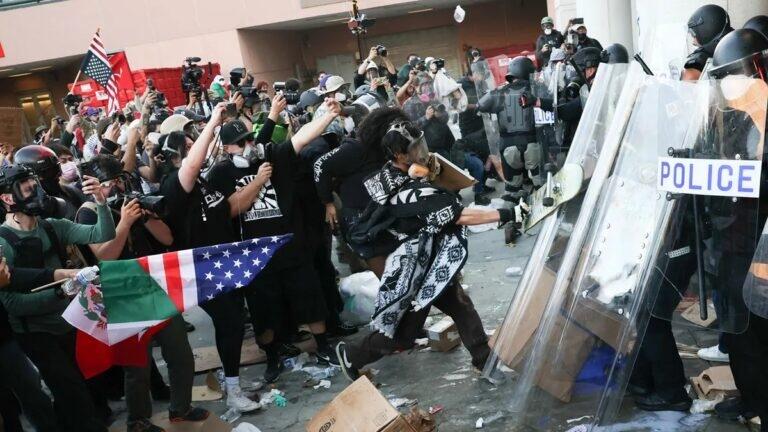
Activists are funded by a massive shell game of NGOs hidden behind other NGOs. They are coordinated by hidden online discord servers. They receive their orders and share information in the field through encrypted Signal chats. They are trained in agitation and disruption by anonymous online meet-ups run by covert activist coordinators.  They have engaged in violent attacks on ICE agents on hundreds if not thousands of occasions and few of them are ever prosecuted. This is not the behavior of a grassroots protest movement, this is the behavior of an army of covert operatives with special protections.
It’s important to understand that the “protests” are actually a highly coordinated guerrilla campaign – These are not sincere citizens exercising their civil rights.  For now their stated motivation is to stop deportations of illegal migrants, but this is just an excuse for their insurgency.  If ICE stopped operations tomorrow, the paid activists would simply fabricate another rationale for tearing the country apart.  Placating them will accomplish nothing.

They are hostile combatants trying to assert dominance and grow their numbers through posturing. Their goal is the destruction of the western world. This cannot be allowed.

The clear solution would be for the government to shut down hostile NGOs, however, these institutions are protected by corporate personhood and have the same constitutional rights as individual citizens. The process of investigating them and prosecuting them takes time – time we don’t have.

Even if Trump utilized the Insurrection Act and deployed the military, there are not enough troops to lock down more than a handful of US cities. Those people hoping that martial law will resolve the issue are kidding themselves. By extension, leftists stand to gain greater support: Martial law would represent proof to the rest of the world that the administration is indeed “fascist.”

The course of the war will not depend on government intervention, so don’t hold your breath waiting for effective enforcement. The reality is, most activist arrests end with them right back out on the street anyway. Their support apparatus has to be permanently removed, or THEY have to be permanently removed from the equation.

Everything will be decided by regular conservatives. If they organize in large numbers, if they create a funding apparatus to move people and supplies around the country quickly, and if they form proper leadership and training guidelines, then there might be a chance for peace simply by presenting a formidable deterrent. If not, at least the means to put down the insurgency will be available.

If conservatives stay at home and refuse to protect any piece of territory beyond their front gate, they will lose everything. It’s inevitable. The side that wants to win will always have an edge over the side that “just wants to be left alone.”

Protests will continue to spread to other cities using the same model we have seen recently in Minneapolis. NGOs will try to provoke more activist deaths at the hands of federal agents. The more the activists go unchecked by the general public the more emboldened they will become and the more their numbers will grow in the assumption that they are the majority.

In the event that the protests are stalled but the organizations are not crushed, activists will revert to assassinations and Weather Underground-style terror attacks until they demoralize the populace and gather strength again. The bottom line? If the political left is not made to truly FEAR consequences, they will not stop until they get their own Red Terror purge.

The end result is not going to be “balkanization.” That idea might have worked during the pandemic, but at this stage it’s far too late for a national divorce. The leftists will never allow conservatives to live in peace in red states. Letting blue cities rule over entire states of mostly red counties would only legitimize progressive extremists and hurt the conservative cause. This fight is for the entire country, not pieces of it.

It’s also not going to be a war of “factions”. This is prepper SHTF theory nonsense. The lines could not be more defined. The “false left/right paradigm” is a dead remnant of the Ron Paul era. It no longer exists, at least not where the bottom of the pyramid is concerned. The vast majority of progressives and Democrats are onboard with woke extremism. They’re onboard with the purge. They are loyal soldiers of globalism. Unity with them means enslavement.

Leftists, globalists and their allies are not going to discern between MAGA, libertarians and centrists. They will ultimately treat everyone as an enemy worthy of elimination.

They’re also not going to divide and in-fight the way some conservatives predict, at least not until they’ve gotten rid of us first.

In the end, the fate of the US and western civilization stands on the precarious shoulders of a conservative movement that has the means to fight, but not necessarily the will. They are forever waiting for the perfect Hollywood scenario in which they can defend themselves in good conscience in a fair fight where they are the clear and undeniable “good guy.” They are forever waiting for the perfect moment to rise up – A moment that will never come.

Patriots have also planned and trained for decades under the pretenses that conservatives would be the insurgents, not the counter-insurgency. Counter-insurgency is much more difficult and requires far more resources. But guess what? You don’t always get to choose the wars you fight. Sometimes the war chooses you and you have to adapt.

There are certainly individuals who will do what they can. I will be among them as will many of the people I know.

But the great question, the great unknown, the unpredictable factor is whether or not average Americans will step off their porches in large numbers and send a clear message that they will no longer tolerate the chaos.

*  *  *

If you would like to support the work that Alt-Market does while also receiving content on advanced tactics for defeating the globalist agenda, subscribe to our exclusive newsletter The Wild Bunch Dispatch.  Learn more about it HERE.

Views expressed in this article are opinions of the author and do not necessarily reflect the views of ZeroHedge.
Tyler Durden
Mon, 02/02/2026 – 23:25

via ZeroHedge News https://ift.tt/BhDfLFX Tyler Durden

Watch: Russian Soldiers Surrender To Gun-Wielding Robot; Humanoid Warfare Nears

Watch: Russian Soldiers Surrender To Gun-Wielding Robot; Humanoid Warfare Nears

Video footage circulating on X from the Ukrainian front shows a Droid TW-7.62 ground robotic system, roughly half the size of a Mini Cooper, forcing the surrender of three Russian troops during an active military operation. The incident suggests that war robots are rapidly maturing, moving beyond support and logistics into offensive roles.

Futurism reports that Ukrainian defense robotics firm DevDroid’s armed unmanned ground vehicle (UGV) forced the surrender of three Russian soldiers.

“The footage shows three Russian soldiers approaching one by one, removing their equipment, and lying down next to the UGV,” the tech outlet wrote in a note, adding the UGV has a ballistic computer and artificial intelligence for autonomous detection, capture, and tracking of targets.

What is clear is that wheeled combat robots on the modern battlefield in Ukraine, used for offensive operations, could soon transition into humanoid robotic platforms.

California-based robotics startup Foundation is developing the Phantom humanoid robot for both commercial and military use.

The firm has stated ambitions to build tens of thousands of these humanoids, capable of carrying payloads and various weapon platforms, for use in dangerous missions, such as breaching buildings, and has secured defense contracts and interest from U.S. military programs.

Unlike other robotics companies such as Boston Dynamics, Agility Robotics, ANYbotics, Clearpath Robotics, Open Robotics, Unitree, and Figure AI, all of which have stated that their humanoids will not be used in military or defense applications, Foundation has stated otherwise.

Foundation’s Phantom MK1 has been trained on the 9mm pistol.

CEO Sankaet Pathak confirmed Phantom MK1 has had weapons training in a recent conversation with tech blog Humanoids Daily.

According to Forbes, Foundation deployed 40 robots in 2025, with manufacturing expanding this year to 10,000, then to 50,000 by late 2027.

Given that Foundation is one of the very few, if not only, robotics firms in the US with a DoD contract specifically for an offensive humanoid combat robot, it wouldn’t be a surprise if these bots were found on the Ukrainian battlefield for testing later this year.

Great time for a Polymarket bet on when Skynet arrives … 

Tyler Durden
Mon, 02/02/2026 – 23:00

via ZeroHedge News https://ift.tt/aIFx7lM Tyler Durden

America At 250: The Words That Helped Ignite A Revolution

America At 250: The Words That Helped Ignite A Revolution

Authored by Gene Pisasale, via RealClearWire,

“… a thirst for absolute power is the natural disease of monarchy …. To the evil of monarchy we have added hereditary succession … the first is a degradation and lessening of ourselves … the second, claimed as a matter of right, is an insult and an imposition on posterity.”

– Thomas Paine, “Common Sense”

On Jan. 10, 1776, Robert Bell did something that could have landed him in prison for treason against King George III of England.

In his small shop on Third Street in downtown Philadelphia, Bell printed an incendiary 47-page pamphlet, published anonymously, calling for rebellion against the Crown and independence from Great Britain.

Its author was a little-known Englishman who had befriended Benjamin Franklin in London two years earlier.

Franklin was impressed with the man and recommended that he emigrate to the colonies, which he did that same year.

Arriving in America just five months before shots were fired at Lexington and Concord, Thomas Paine had a front row seat as the American Revolutionary War was unfolding.

Despite “the shot heard ’round the world” on April 19, 1775, calls for independence were relatively muted throughout the colonies, historians estimating that only about 25 percent of citizens supported the move.

That changed after “Common Sense” hit the streets, being widely read and discussed openly in taverns and coffeehouses throughout the land.

Within approximately one year, an estimated 100,000 copies were sold—a remarkable feat considering the population of America was only about 2.5 million.

After its widespread distribution, Paine’s words proved highly persuasive to tens of thousands across the colonies, nudging support for independence to well over 50 percent. Paine followed it up with an even more persuasive clarion call—“The American Crisis”—in December 1776, its words so grippingly effective that General George Washington had it read out loud to his troops in an attempt to keep his Army together:

“THESE are the times that try men’s souls. The summer soldier and the sunshine patriot will, in this crisis, shrink from the service of their country; but he that stands by it now, deserves the love and thanks of man and woman. Tyranny, like hell, is not easily conquered; yet we have this consolation with us, that the harder the conflict, the more glorious the triumph.”

An Incredibly Risky Wager

As America had a miniscule Army and ineffective Navy in 1776—versus Great Britain with the most powerful Army in the western hemisphere and a colossally-equipped Navy, only the most aggressive wagerer would have made the bet that the colonies could prevail.

After the move for independence was put into writing on July 4, 1776, the die was cast.

The members of the Second Continental Congress understood that what they were hoping to achieve would be a “long shot” by any reasonable standard.

Early Losses, but Some Victories

King George III and his senior military officers had a lot to be optimistic about early on. The city of Boston was surrounded, then Crown forces took control of another major port—New York—and Washington’s troops were not only on the run—they were ragged, nearly starving, and dangerously low on supplies.

Retreating across the Delaware River to Pennsylvania, Washington knew he had to be bold to survive. With the help of financier Robert Morris and others, Washington received enough cash and materials to forge not only one, but two attacks that would change the way people viewed the war.

The Battle of Trenton on Dec. 26, 1776 and the Battle of Princeton on Jan. 3, 1777 were brilliantly conceived and stunningly successful victories at a time when the Commander knew his Army was near collapse. Being a deeply religious man who often visited local churches during the war, Washington was convinced that a “higher power” had kept his dream—what he called “the Cause”—alive.

A Leap in the Dark

Historian John Ferling captured the essence of this tumultuous era effectively in “A Leap in the Dark: The Struggle to Create the American Republic.” In the book, Ferling describes the “behind the scenes” workings of all the major players, noting their strengths, their weaknesses, and their own doubts about whether they could possibly succeed.

That Washington’s Army was desperate for a victory to end the conflict is an understatement.

Most days they were just hoping to find food and stay on their feet. Though the Continental Army had eked out a few wins, the odds still favored the British. The war would drag on until British General Cornwallis found himself in deep trouble in Virginia, getting surrounded by Washington’s as well as France’s troops and warships leading up to the climactic Battle of Yorktown in October 1781.

A World-Changing Event

Though it may be apocryphal, when Cornwallis surrendered, it has been reported that the British troops were so stunned, they played the English ballad “The World Turned Upside Down” as they relinquished the battlefield to Washington—who literally “by the grace of God” had managed to survive.

The soldiers who had stood by Washington from the beginning, through the defeats in New York and Philadelphia, the horrendous freezing Winters at Valley Forge and Morristown, surely felt in their veins what those assembled in downtown Philadelphia had written on July 4th: “… with a firm reliance on the protection of divine Providence, we mutually pledge to each other our Lives, our Fortunes and our sacred Honor.”

Considering the overwhelming odds against us, it is not a stretch to say that the words to the tune written decades later were true: “America! America! God shed His grace on thee …”

Looking back 250 years, it becomes clear that the sacred fire of liberty which burned in those hearty souls was not only a flame that couldn’t be extinguished—it was an idea which was destined to change the world.

Tyler Durden
Mon, 02/02/2026 – 22:35

via ZeroHedge News https://ift.tt/IgRsbtH Tyler Durden