On Gold, Oil, & Uranium

On Gold, Oil, & Uranium

Billionaire natural resources investor Rick Rule, legendary short-seller Bill Fleckenstein, and veteran oil trader Erik Townsend join ZeroHedge this evening at 7PM ET to give their outlooks on three key commodities sectors: Gold, Oil, and Uranium.

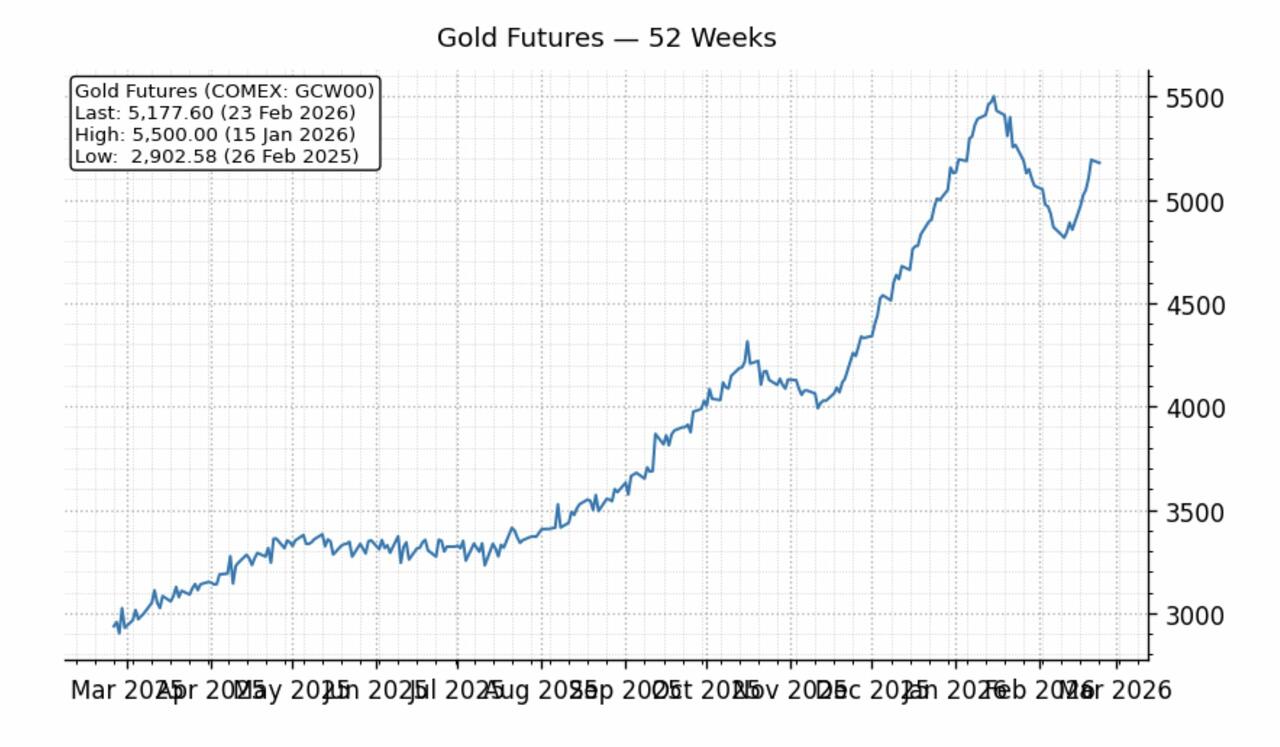
Gold and silver have, of course, exploded in price over the last 52 weeks with gold’s price almost doubling and reaching a high of over $5500.

Silver’s price more than tripled at one point and now sits ($87.50) just under 3X where it sat in February of last year ($32.93).

Given the fast and intense rise, Rule recently reduced his silver position though remains long mining stocks.

Time to Rotate into Oil?

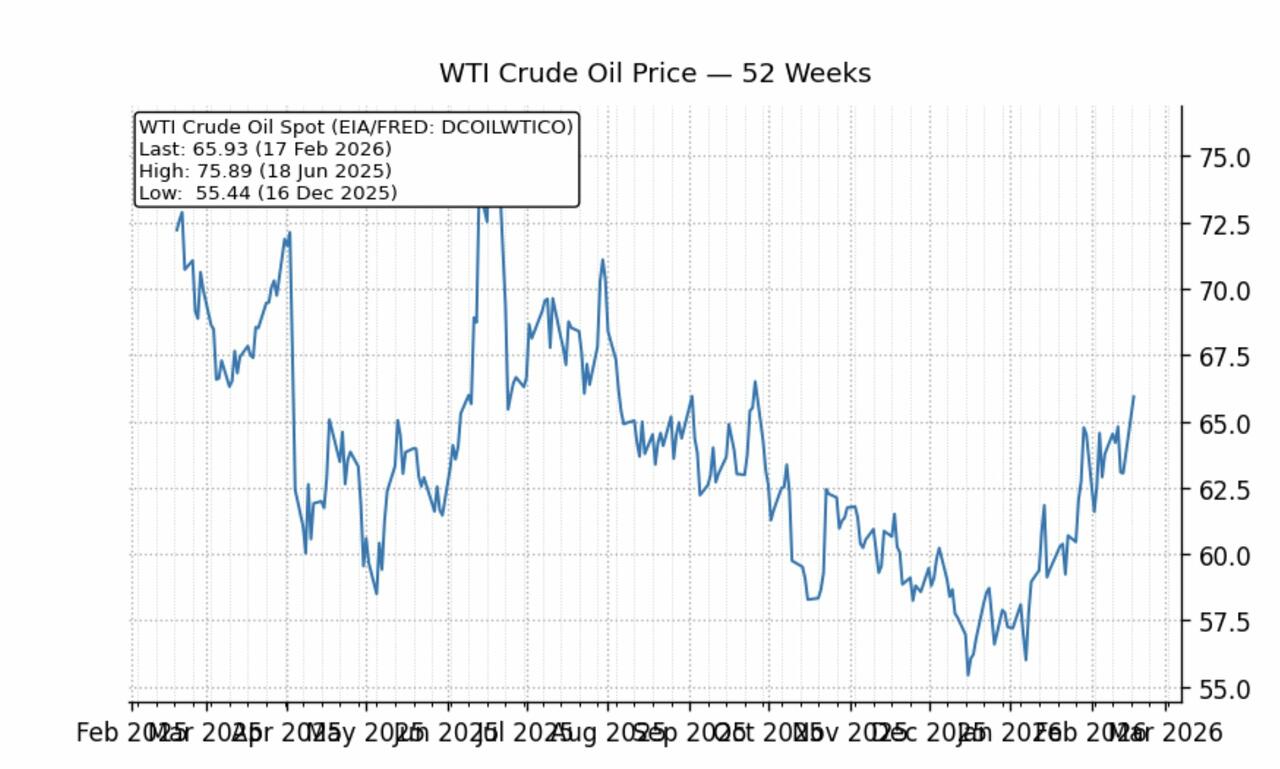
Oil on the other hand is down YoY, making it perhaps the most attractive commodity due to it being relatively cheap.

Oil stocks are Rule’s number one investment position due to what he says is decades of massive underinvestment, a thesis he will expand upon this evening.

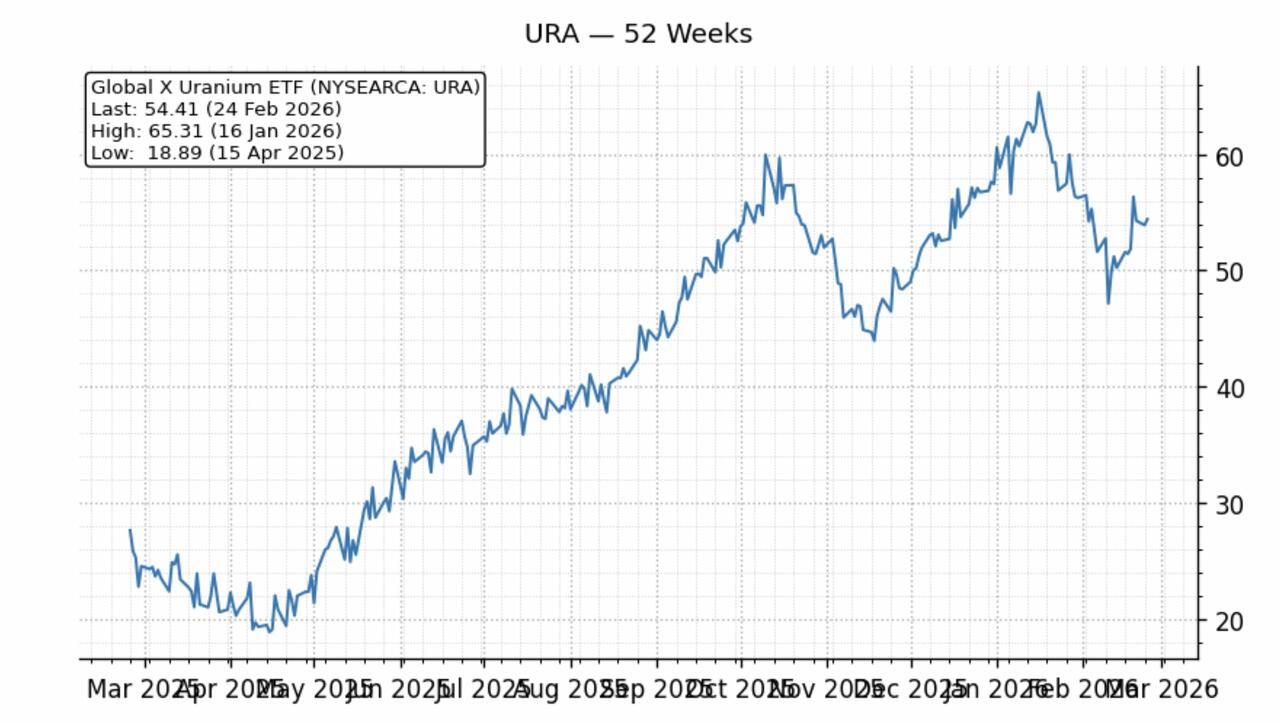
Lastly, uranium mining stocks have seen a meteoric rise rivaling that of gold stock, broadly doubling with some names like Energy Fuels seeing an almost 400% increase YoY.

Townsend will speak to the emerging technology in the nuclear energy space and Rule will speak to the long-term bull case and whether the mining stocks have flown too high too fast.

We encourage commodity investors to tune in.

Visit the ZeroHedge homepage at 7pm ET tonight to watch live and commercial-free.

Or follow our Spotify and YouTube to watch after it airs.

Tyler Durden
Wed, 02/25/2026 – 11:45

via ZeroHedge News https://ift.tt/OaIh2en Tyler Durden

Software Stocks: Navigating The SaaSpocalypse

Software Stocks: Navigating The SaaSpocalypse

Authored by Michael Lebowitz via RealInvestmentAdvice.com,

The recent rotation from growth to value is well documented. While the return divergences between, for instance, technology stocks and materials or industrials stocks are significant, they do not tell the whole story. There are also extreme return differentials between broad industries and their sub-industries.

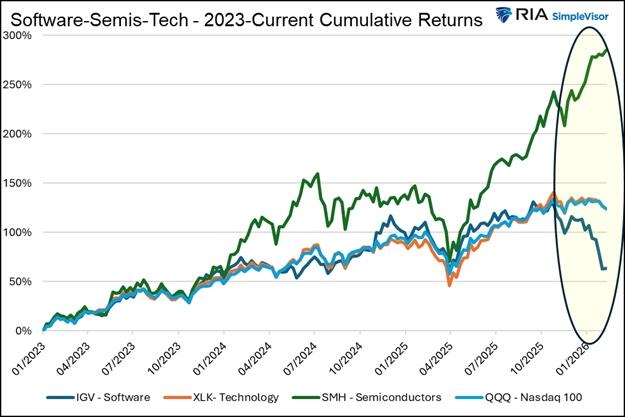
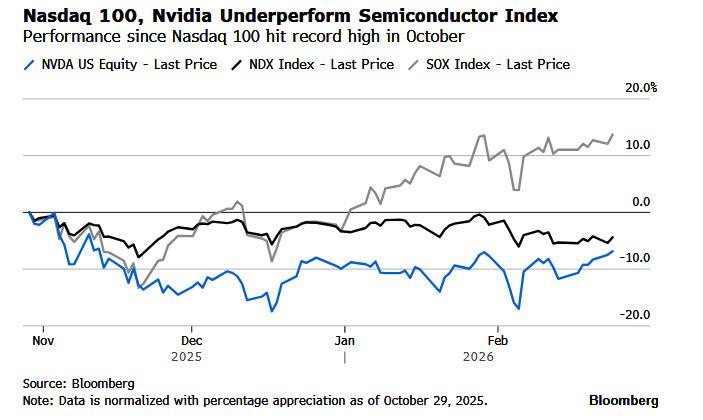
In this article, we address one such divergence between the broad technology sector and the software-as-a-service (SaaS) sub-industry. The graph below shows the wide gap in returns between software, technology, the Nasdaq 100, and semiconductor stocks. Since the well-followed software ETF (IGV) peaked on September 19, 2025, it has fallen 30%. For context, the broad technology indexes (XLK and QQQ) are flat over the period, and the semiconductor ETF (SMH) is up 30%.

Narratives Drive Passive Flows

Behind every good stock or index move is a narrative. The narrative is the market’s collective explanation for why prices move. Most narratives have some truth, some degree of speculation, and include some falsehoods. The job of an individual or professional investor is to understand the narratives driving money flows, assess their accuracy, and trade accordingly.

As if evaluating the validity of narratives weren’t hard enough, we must also consider that many narratives are, to some degree, based on expectations, in which no one knows what the future holds with certainty.

The bearish software narrative, known as “SaaSpocalypse,” which is the market rationale for big drawdowns in many software stocks, has some truths, lots of speculation, and falsehoods. Let’s explore the narrative, some counterpoints, and assess whether software stocks are a steal or, as some claim, on their way to zero.

The SaaSpocalypse Narrative

The “SaaSpocalypse” story holds that the current AI wave poses a significant threat to traditional software companies because AI changes how software is built, delivered, and priced.

If generative AI can write code, automate workflows, and rapidly and cheaply create customized applications, the value of today’s established off-the-shelf software products declines, and in some cases, may approach zero. Instead of paying for software and recurring subscription fees, enterprises and individuals may soon be able to build their own software easily and cheaply.

As if that weren’t enough of a threat to traditional software companies, AI lowers barriers to entry, enabling more competitors to quickly replicate existing software. More competition should compress profit margins and weaken the “moats” that once protected large software firms.

Rebutting The Narrative

The primary rebuttal to SaaSpocalypse is that the value of software lies beyond the code. Enterprise SaaS companies derive their lasting power from durable moats such as network effects, high switching costs, proprietary data, compliance infrastructure, and trust. AI-created software or a competing software product from an AI-driven startup might replicate the look and feel of a software program, but it cannot recreate years of customer data, deep integration with other core systems, and, importantly, the confidence required for corporate deployments. Essentially, the rebuttal argues that the narrative fails to distinguish between the look and feel of software and the other attributes that can make it valuable.

Moreover, the narratives ignore that AI will help existing software companies improve their products, reduce costs, and, in some cases, make their moats even more durable. Current software producers have a huge leg up because they already have distribution networks, a customer base, and staff who understand the intricacies of their product and how customers use it.  

However, the rebuttal may not apply to all software companies. Each software product and company should be judged according to its own merits. Basic, generic products that can be easily programmed with AI are more likely to be replaceable than well-distributed products with significant usage and data connections within companies.

Strong Moats

We asked ChatGPT for examples of Saas companies with strong moats and received the following:

ServiceNow — Workflow + Enterprise System Depth

Why the moat holds up:

  • Deeply embedded into ITSM, HR, security, and enterprise workflows — replacing it means re-architecting internal operations, not just swapping software.
  • AI agents actually increase their value because orchestration becomes more important than standalone apps.
  • Enterprise workflows contain thousands of hidden rules and dependencies that are hard for AI copilots to replicate. Research shows LLMs struggle with these types of opaque enterprise systems.

Salesforce — Data + Ecosystem Lock-In

Why it’s durable:

  • Massive installed enterprise base + heavy customization.
  • CRM data accumulation over many years = high switching friction.
  • Ecosystem moat (partners, integrations, internal workflows, apps).

Even though AI can generate workflows or lightweight CRMs, enterprises still need:

  • permission structures
  • compliance layers
  • enterprise data governance

Datadog — Observability Data Moat

Why this one stands out:

  • Continuous telemetry ingestion creates a proprietary “data exhaust.”
  • AI needs observability platforms — agents can’t fix or optimize what they can’t measure.
  • Integrated logs + metrics + traces across thousands of systems = massive operational switching costs.

AI may help explain incidents, but it doesn’t replace the monitoring layer itself.

Opportunities In SAAS Stocks

We led this article with a graph showing the software ETF IGV’s gross underperformance relative to the broader technology sector. We now dig deeper to help form short-term return expectations for SaaS companies.

XLK vs IGV

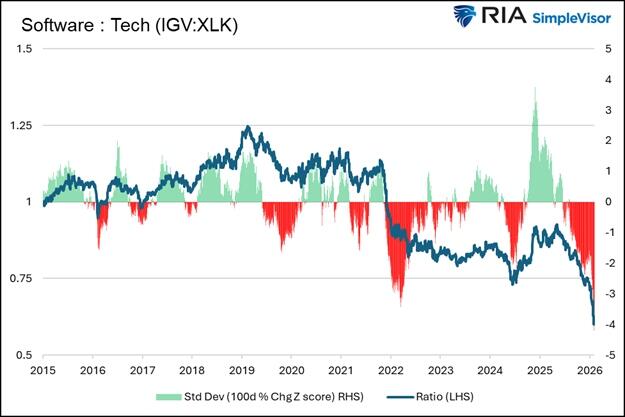
The first analysis compares the software ETF IGV to the broad technology sector ETF XLK.  Within the top ten holdings of XLK, Microsoft and Palantir are the only two that are also in the top ten holdings of IGV.

The graph below shows the price ratio of the two ETFs (IGV and XLK). As shown in red/green, the most recent 100-day price ratio change is almost 4 standard deviations from the norm. 

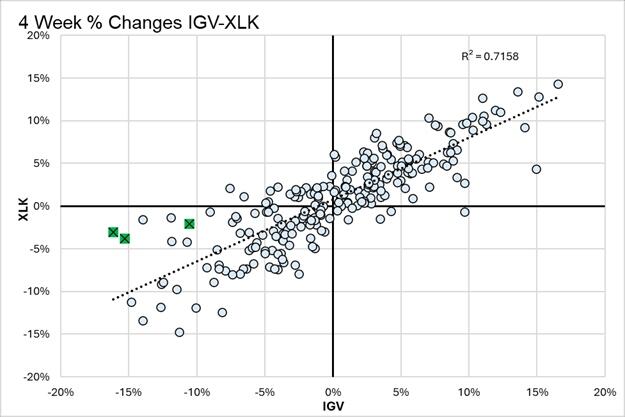
The second graphic uses the last five years to also show how detached the sturdy relationship has drifted recently. Per the most recent weekly readings (green), either XLK is 10% overpriced, or IGV is 10% underpriced.

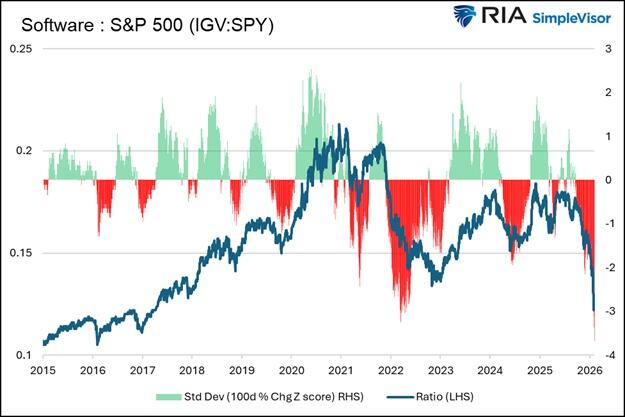
The statistical divergence is also significant when comparing IGV to SPY (S&P 500).

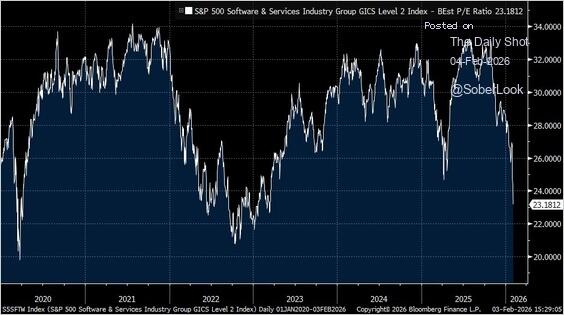
For fundamental context, we share the graph below from the Daily Shot. The P/E ratio of the software sector has fallen rapidly over the last few months, from 34 to 24. For context, the utility sector has a P/E ratio of 21.

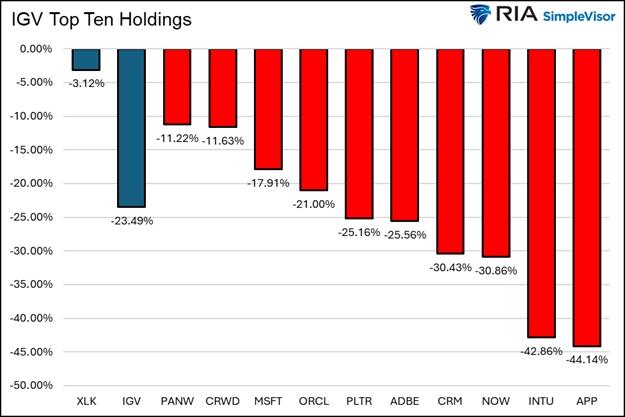
Lastly, we present the year-to-date returns of IGV’s top 10 holdings. Based solely on the returns below, the market is betting that INTU and APP have the weakest moats and that PANW and CRWD are potentially the least negatively affected by potential AI competition.

Summary

Like most narratives, the SaaSpocalypse has some truth and some falsehoods. There is also a large degree of speculation buried within it. Furthermore, the truth shouldn’t be applied broadly to all software companies and their products. In fact, AI will make some software companies more profitable and strengthen their moats. Other companies may fail as competition becomes fierce. The goal for an investor is to figure out who the winners and losers will be. Such is not a simple task, but doing so can provide significant rewards if your research proves correct.

We caution that market rotations have been volatile, with many relationships, like those shown earlier, statistically very stretched. While that may provide comfort for some, we are also aware that in markets like this, where narratives are as strong as they are, relationships can become even more divergent. If you are inclined to buy into the software sector, we recommend taking small starter positions with a stop-loss level in mind. This way, if you are early, the losses are minimal. If the rotations start favoring software stocks and the narrative fades, such evidence may warrant increasing the starter positions. Trade with caution.

Tyler Durden
Wed, 02/25/2026 – 11:25

via ZeroHedge News https://ift.tt/oQVIXA7 Tyler Durden

Democrats Talk Affordability, Immigration In Rebuttal To Trump SOTU

Democrats Talk Affordability, Immigration In Rebuttal To Trump SOTU

As usual, the opposing party was ready with a rebuttal to the President’s State of the Union address last night. 

Virginia Gov. Abigail Spanberger delivers the Democratic response to President Donald Trump’s State of the Union address in Williamsburg, Va., on Feb. 24, 2026. Mike Kropf/Getty Images

Speaking from the House of Burgesses in Colonial Williamsburg, Virginia Gov. Abigail Spanberger focused on affordability and immigration.

“As we watched our nation’s lawmakers gather for a joint session of Congress, we did not hear the truth from our president,” she said, adding that Trump had “offered no real solutions to our nation’s pressing challenges.” 

“The United States was founded on the idea that ordinary people could reject the unacceptable excesses of poor leadership, band together to demand better of their government, and create a nation that would be an example for the world,” she continued. “This year, as we celebrate 250 years since America declared independence of tyranny, I can think of no better place to speak to you as we reflect on the current state of our union tonight.” 

Spanberger, a former US representative and member of the House Intelligence Committee, became the governor of Virginia last November by a 15-point margin. 

Last night she asked: “Is the president working to make life more affordable for you and your family? Is the president working to keep Americans safe, both at home and abroad? Is the president working for you?”

As the Epoch Times notes further, Spanberger covered the following topics:

Economics

Most of Spanberger’s speech focused on economic issues, with the governor describing Democrats as being “laser-focused on affordability.”

First, Spanberger decried what she described as Trump’s “reckless trade policies.”

Despite the Supreme Court’s recent decision overturning Trump’s authority to unilaterally impose certain kinds of tariffs, Spanberger said, “The damage to us, the American people, has already been done.”

Spanberger said these new tariffs represent “another tax hike on you and your family.”

“Republicans in Congress, they remain unwilling to assert their constitutional authority to stop him,” she said. “They’re making your life harder. They’re making your life more expensive.

Trump had said that tariff costs would not be passed onto consumers and that foreign countries are taking up the burden. He said tariffs can protect American businesses and jobs by addressing unfair trade practices and boosting domestic manufacturing.

Recently, an analysis of economic data by the Kiel Institute for the World Economy found that Americans paid 96 percent of Trump’s tariff fees in 2025. The non-partisan Tax Committee found that this added up to about $1,000 in new taxes per household in 2025.

Meanwhile, the annual inflation rate slowed to 2.4 percent in January, the lowest level since May, according to new Bureau of Labor Statistics data released on Feb. 13.

Core inflation, which strips out volatile energy and food prices, also eased to a 12-month rate of 2.5 percent, the lowest level since March 2021.

Spanberger also linked the affordability issue to the One Big Beautiful Bill Act, which included a nearly $1 trillion cut to Medicaid, a primary source of revenue for many of these types of hospitals.

“They’re even making it more difficult to see a doctor,” she said, citing rural hospital closures.

Immigration and Safety

Spanberger also discussed immigration enforcement and broader national security concerns.

Democrats’ concerns over the behavior of Immigration and Customs Enforcement (ICE) agents under Trump have been one of their primary objections to the administration.

Our president has sent poorly trained federal agents into our cities where they have arrested and detained American citizens and people who aspire to be Americans, and they have done it without a warrant,” Spanberger said, citing the use of administrative warrants by ICE rather than court-granted judicial warrants to enter homes.

These agents, Spanberger said, “have ripped nursing mothers away from their babies. They have sent children, a little boy in a blue bunny hat, children, to far off detention centers,” Spanberger said. “They have killed American citizens in our streets, and they have done it all with their faces masked from accountability.”

More briefly, Spanberger also cited international concerns.

Trump, she said, “continues to cede economic power and technological strength to Russia, bow down to China, bow down to a Russian dictator, and make plans for war with Iran.”

She said that “through [Department of Government Efficiency] mass firings and the appointment of deeply unserious people to our nation’s most serious positions, our president has endangered the long, storied history of the United States of America being a force for good.”

Andrew Moran contributed to this report.

Tyler Durden
Wed, 02/25/2026 – 11:05

via ZeroHedge News https://ift.tt/wA5yKlR Tyler Durden

Most Voters Want Immunity For Vaccine Companies Removed: Poll

Most Voters Want Immunity For Vaccine Companies Removed: Poll

Authored by Zachary Stieber via The Epoch Times,

A majority of voters say immunity for pharmaceutical firms should be removed in cases where the companies’ vaccines cause injuries, according to a new poll.

Sixty percent of voters responding to the poll agreed that vaccine manufacturers should be stripped of immunity in such cases, including 33 percent who strongly backed withdrawing the immunity.

Majorities across all age groups, genders, and races also supported the immunity abolishment.

Just 27.5 percent of respondents did not think the immunity should end, while 12.6 percent of respondents said they were not sure.

The survey was carried out by Big Data Poll for the 1776 Law Center.

“Few single issues enjoy more support across every group of Americans than ending all immunity for Big Pharma,” Robert Barnes, the civil rights and criminal defense attorney who heads the law center, said in a statement.

“That includes their vaccines when those vaccines cause injury.”

“As we have seen with food and financial freedoms, the proposals are supported most vigorously among the voters the administration badly needs to win back over,” Big Data Poll Director Rich Baris added.

“That includes voters below 65 years old and minorities that previously voted for the president in 2024.”

The poll was conducted from Feb. 16 to Feb. 18 among 2,012 registered voters. The margin of error was plus or minus 2.1 percent.

The 1986 National Childhood Vaccine Injury Act granted immunity to vaccine companies for vaccine injuries “if the injury or death resulted from side effects that were unavoidable even though the vaccine was properly prepared and was accompanied by proper directions and warnings.”

The immunity does not cover instances where manufacturers engaged in fraud, wrongfully withheld information from the government prior to approval of a vaccine, improperly withheld information following approval, or engaged in “other criminal or illegal activity relating to the safety and effectiveness of vaccines.”

The law also created a vaccine injury compensation program that places the government in the position of defending against petitions alleging injury. In some cases, injured people are paid by the government from a pool of money funded by a tax on vaccines. There is a backlog of cases awaiting medical review, officials said in connection with a recent Department of Health and Human Services budget request.

Prior to the act, people were able to sue companies in court for damages.

Health Secretary Robert F. Kennedy Jr. has floated a proposal to address the issue, including by adding symptoms associated with autism as eligible for compensation.

Members of Congress have also introduced multiple bills that would alter or remove the immunity protection.

Sen. Rand Paul (R-Ky.) unveiled one such bill early in February, saying in a statement that “when it comes to vaccines … the rules are rigged: you’re funneled into a federal no-fault program that limits damages, restricts your options, and—in many cases—leaves people without real justice.”

Tyler Durden
Wed, 02/25/2026 – 10:45

via ZeroHedge News https://ift.tt/9faELY6 Tyler Durden

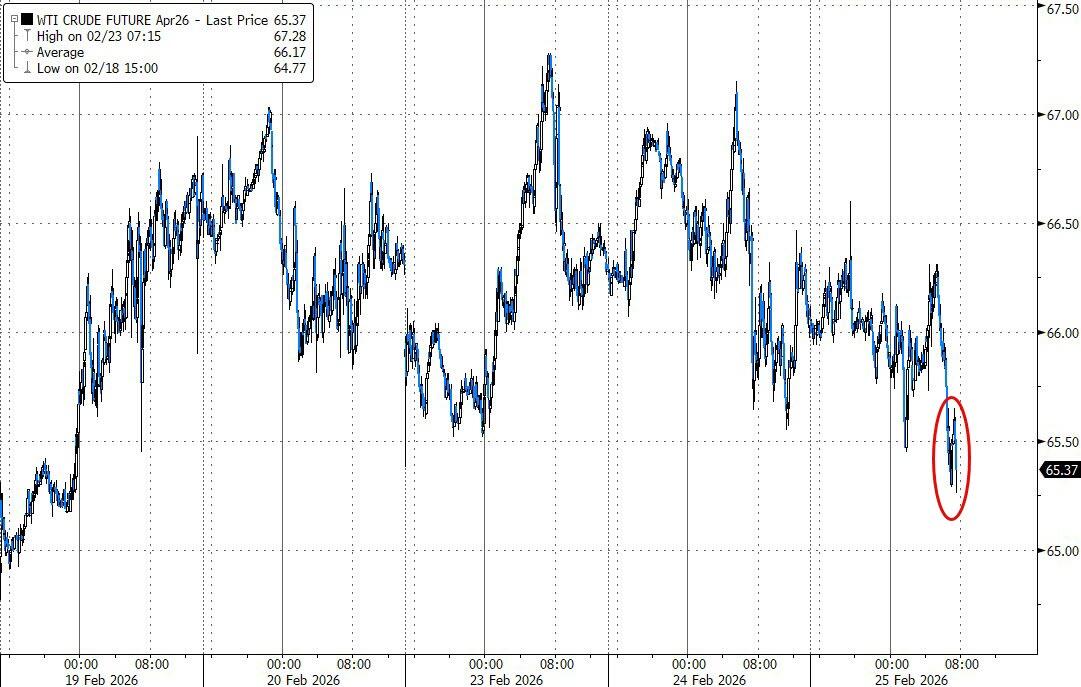
WTI Extends Losses After Biggest Crude Build In 3 Years

WTI Extends Losses After Biggest Crude Build In 3 Years

Oil prices are sliding this morning following as an over-supplied market (API reported a huge 11.4mm barrel build last week) beats the geopolitical risk premia (with the US poised to attack Iran).

“Iran, rather than backing down and agreeing to all and any term [U.S. President Trump] is placing on the table (as he had expected), is instead daring him to attack.

“Just you try it and you will see what you will get!” is kind of what Iran implicitly said to Trump when it held military drills in the Straight of Hormuz last week,” Bjarne Schieldrop, chief commodities analyst at SEB Research, wrote.

But, prices dipped into negative territory after a Hezbollah official said the group will not intervene in the event of limited US strikes on Iran, AFP reported.

“My preference is to solve this problem through diplomacy, but one thing is certain: I will never allow the world’s number one sponsor of terror, which they are by far, to have a nuclear weapon,” Trump said on Tuesday.

Nevertheless, The US has ordered the biggest military build-up in the Middle East since the second Gulf war in 2003, including two aircraft carriers. America is adding even more assets to the region, deploying 12 stealth F-22 fighter jets to Israel, according to CNN, which cited a defense official.

“So long as we remain in this realm of uncertainty, oil prices are more prone to upside risk on any headlines out of the US-Iran talks,” said Samantha Hartke, head of market analysis for the Americas at Vortexa Ltd.

“Our view is that a prolonged disruption is unlikely given the onerous effect that will have on Iranian trade flows and revenues,” she added, referring to Hormuz.

So will the official data confirm API’s ugly over-supplied build signal?

API

  • Crude +11.4mm

  • Cushing +1.8mm

  • Gasoline -1.5mm

  • Distillates -2.8mm

DOE

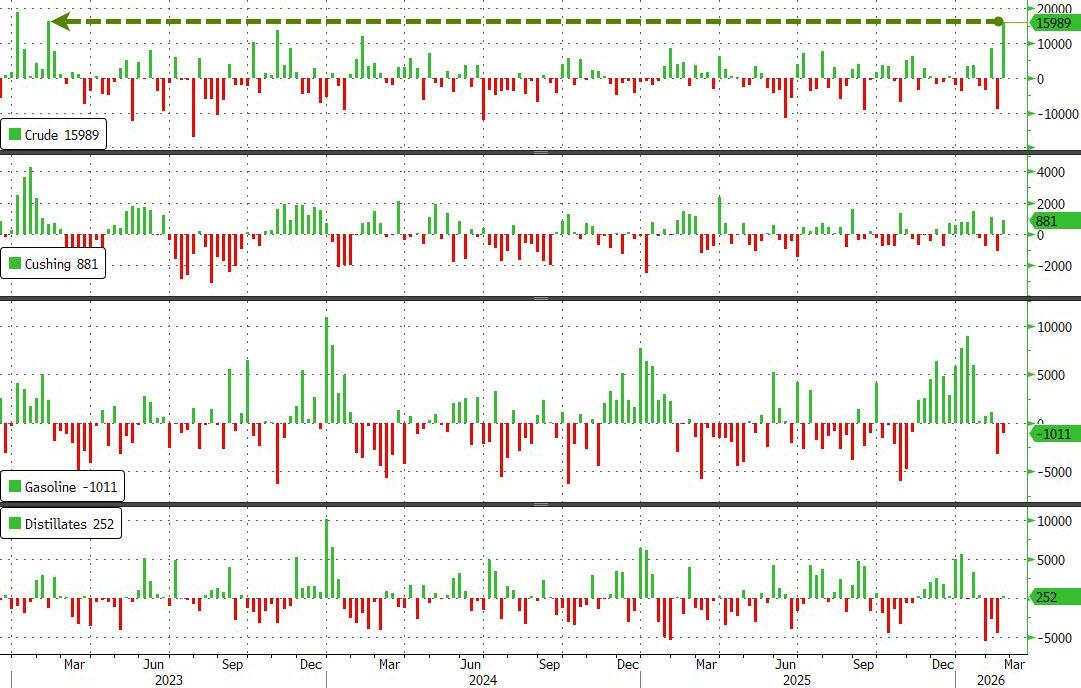
  • Crude +15.99mm – biggest build since Feb 2023

  • Cushing +881k

  • Gasoline -1.01mm

  • Distillates +252k

The official data confirmed a huge inventory build for crude stocks in the US (15.99mm barrels is the biggest build since early Feb 2023), reverses some of the bumper draws we’ve seen in the last few weeks. The rest of the energy complex was ‘meh’…

Source: Bloomberg

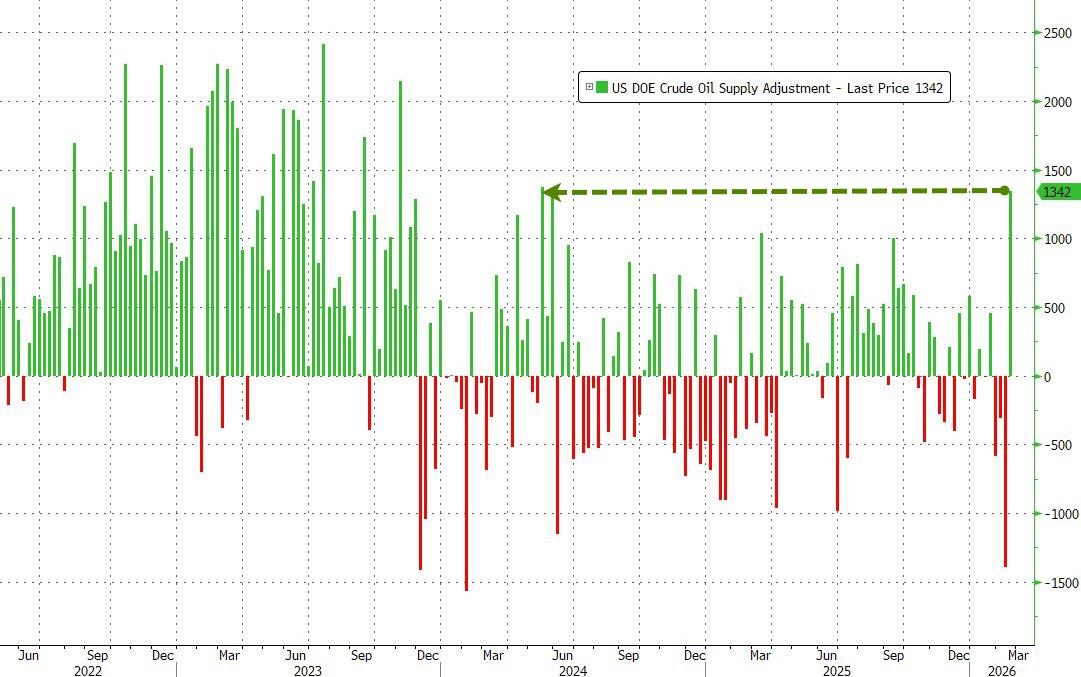
Don’t get too excited though as a huge jump in the adjustment factor is a sign that this data is likely still being impacted by the bad weather of recent weeks

Source: Bloomberg

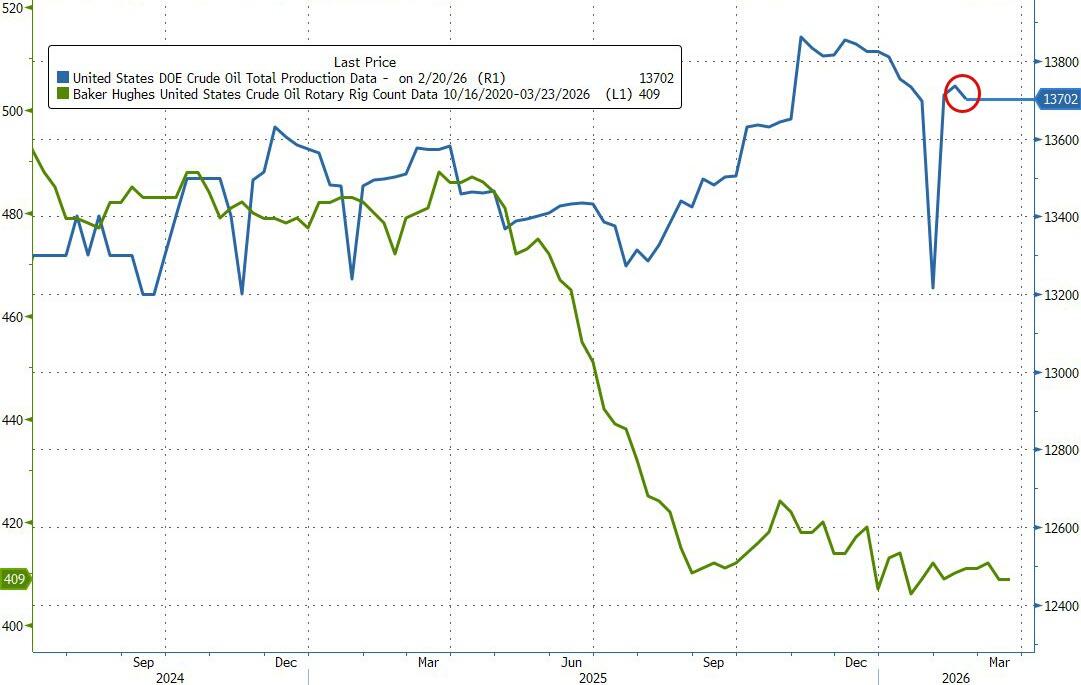
Crude production dipped last week…

Source: Bloomberg

WTI slid before the DOE data but is holding in the red for now after the huge crude build…

Source: Bloomberg

Despite the sizable builds, Bloomberg notes that this week has brought fresh evidence of how the tide is turning in favor of those who believe crude can surprise to the upside.

On Monday, shale giant Diamondback Energy said the widely anticipated “wave of oversupply” is being deferred further out in time, a view echoed the following day by Baker Hughes.

Meanwhile, Goldman Sachs raised its forecasts for Brent crude prices, saying that while supply is still expected to exceed demand this year, the excess will continue to be diverted to less-visible storage hubs.

Additionally, OPEC+ delegates firmed up expectations that key members will agree to resume modest supply increases in April when they meet this weekend.

While that decision may end up adding more barrels onto an already-oversupplied world market, it’s also a sign of the undimmed confidence among top Middle East producers that the universally bearish view is overdone, and that extra barrels can ultimately find a home.

The prospect of conflict in Iran could tighten supplies further. Iran counts for about 3% of global oil supply, producing roughly 3.3 million barrels per day.

Tyler Durden
Wed, 02/25/2026 – 10:37

via ZeroHedge News https://ift.tt/PuxKIXy Tyler Durden

“Enough Is Enough”: David Tepper Slams Whirlpool For Value Destruction In “Scathing” Letter

“Enough Is Enough”: David Tepper Slams Whirlpool For Value Destruction In “Scathing” Letter

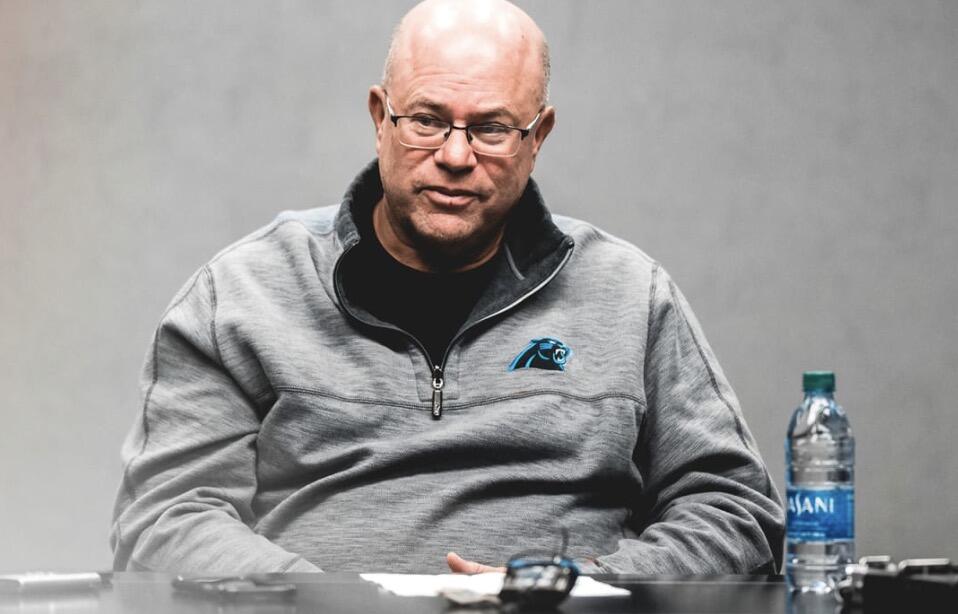
David Tepper, the billionaire behind Appaloosa Management, blasted Whirlpool’s board in a sharply critical letter, accusing the appliance maker of eroding shareholder value and demanding a strategic reset, according to CNBC, who viewed the letter.

Tepper said he watched with “a certain astonishment” as Whirlpool moved ahead with what he described as a sizable and avoidable equity issuance that diluted investors. He argued the capital raise carried a cost of more than 10% — far above the company’s tax-adjusted borrowing costs of under 5% in public markets — despite management’s stated aim of cutting leverage.

“Over the years this management team has destroyed hundreds of millions of dollars of shareholder value. Enough is enough. There can be no more excuses,” Tepper wrote in the letter, first reported by CNBC’s Andrew Ross Sorkin.

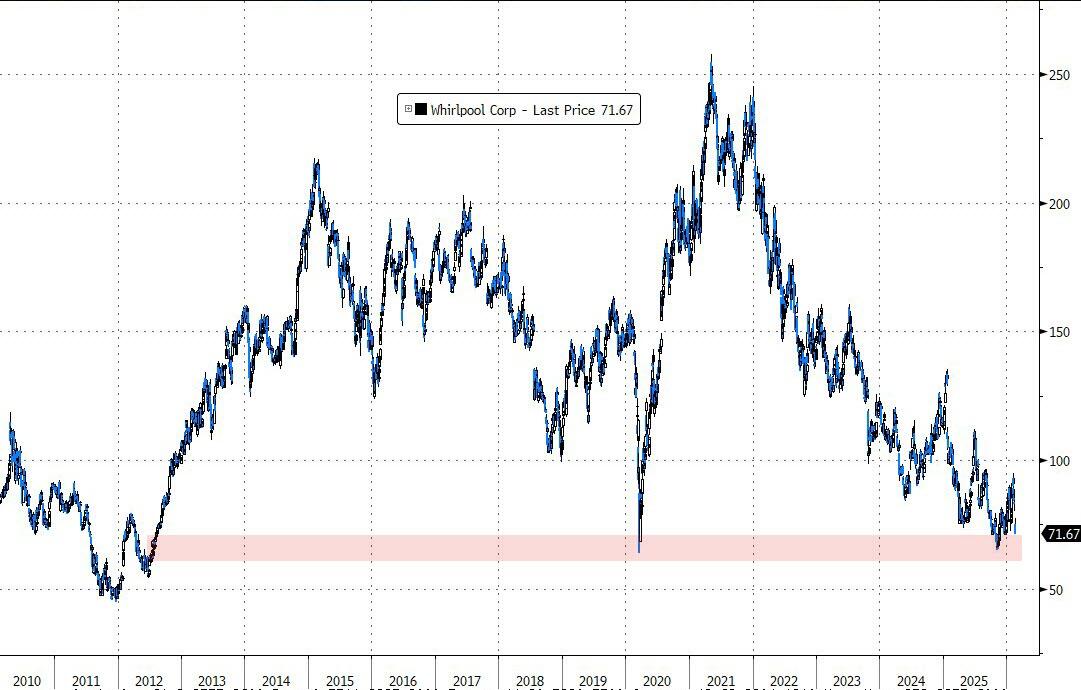
The share sale triggered a sharp market reaction. Whirlpool stock fell 14% Tuesday after announcing plans to raise about $454.9 million through a common stock offering and $508.1 million via depositary shares.

The company also placed 435,000 shares with Guangdong Whirlpool Electrical Appliances at a discounted $69 apiece in a private deal. Whirlpool was Appaloosa’s eighth-largest position at the end of the fourth quarter, valued at $282 million, according to Verity data.

CNBC noted that shares later rebounded nearly 1%, though they remain down roughly 36% from a 52-week high reached in July.

Tepper also criticized Whirlpool for not fully leveraging tariffs imposed during the Trump administration, suggesting it consider alliances or mergers with foreign competitors disadvantaged by trade policy to improve its footing.

“We encourage the Board to (i) remember their fiduciary responsibilities and not accept management acting purely in its own self-interest, and (ii) invite domestic entities or foreign corporations who want to create American jobs and increase shareholder value to take an interest in Whirlpool,” the letter said.

Tepper, who founded Appaloosa in 1993, is known for aggressive, event-driven investing and outspoken activism.

He previously ran a successful distressed-debt strategy, bought the NFL’s Carolina Panthers in 2018, and has built a reputation as one of Wall Street’s most influential hedge fund managers.

Tyler Durden
Wed, 02/25/2026 – 09:45

via ZeroHedge News https://ift.tt/9W5FHnG Tyler Durden

The US Dollar: From Exceptional To Average?

The US Dollar: From Exceptional To Average?

Authored by Eva Sun-Wai via BondVigilantes.com,

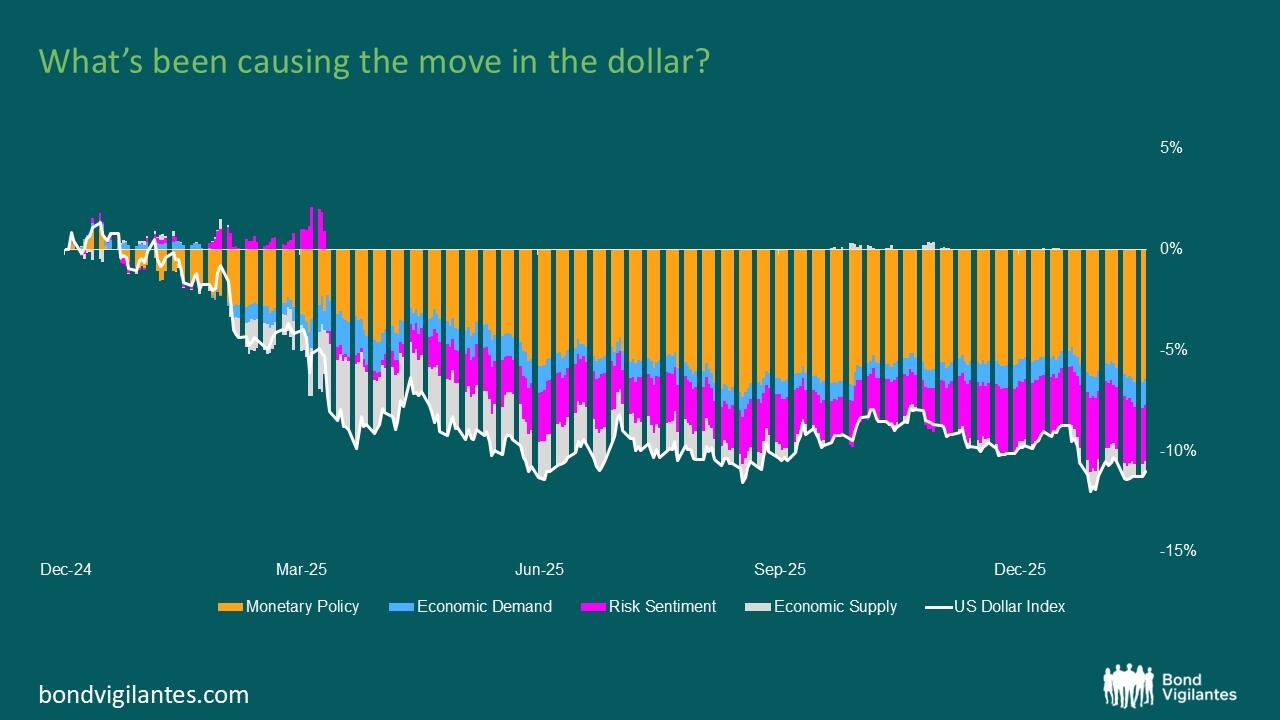
The dollar’s slide last year looks less like a sudden break and more like the culmination of pressures that have been gathering for a while. The fading of US exceptionalism has sat quietly in the background, and once the narrative started to normalise, the cracks became clearer: softer growth expectations, slower capital inflows, and valuations that had been leaning heavily on the idea that the US could keep outperforming indefinitely. The currency came into the year heavily owned and reliant on that growth premium, and when it began to erode, the dollar suddenly felt far more exposed to shifts in sentiment and positioning than it had for some time.

At the same time, the policy backdrop has turned more awkward for the currency. Markets expect the Fed to continue cutting, and the prospect of a more politically influenced leadership has introduced a small but noticeable risk premium around credibility. That is happening just as fiscal policy remains unanchored, with deficits showing little sign of narrowing and spending likely to rise into the election cycle. The steepening we’ve seen in the curve has not offered the dollar much support. Even when nominal yields tick higher, the lack of a credible fiscal path blunts the rate‑differential argument the currency would otherwise be able to lean on.

Trade policy hasn’t helped clarify matters either. Ordinarily, higher tariffs would tighten the inflation narrative and lend support to the dollar, but the market seems to be treating recent announcements with a degree of caution. The reversals, the unpredictability, and the simple fact that these things take time to feed through the system have meant the FX impact has been surprisingly muted. Rather than helping the dollar, tariff headlines have added to the broader sense of uncertainty.

Source: M&G, Bloomberg intelligence.

All of this has fed into the gentler tone around inflation expectations. Long‑dated breakevens suggest a market that is comfortable (perhaps too much so) with the idea that inflation pressures will remain contained. For the dollar, that matters: when inflation is assumed to stay under control, rate differentials compress, and one of the currency’s key supports weakens. A shift in those expectations, whether driven by tariffs or other factors, could prompt a repricing. The more challenging scenario would be one where inflation starts to firm again, yet the Fed continues to ease. That combination would weigh heavily on real yields and raise questions about policy direction and central‑bank independence at a moment when confidence is already fragile.

Against this backdrop it’s no surprise that traditional valuation anchors feel less dependable. Too many competing forces such as policy, flows, and politics, are pulling at once. If the Fed keeps cutting and differentials narrow, a softer dollar is the natural outcome unless other central banks ease more aggressively and/or for longer than expected. And while this doesn’t yet resemble a structural rotation away from the dollar, the combination of drivers could support a gradual diversification at the margins. Reserve managers are still operating within clear limits with USD markets remaining the core of the system, but increased accumulation of alternatives, particularly gold, fits with the broader theme.

Taken together, this episode looks both political and structural. Politics has accelerated the move, but the foundations were already in place: the normalisation of US exceptionalism, the awkward policy mix, and the evolving inflation and reserve‑management dynamics. How long those forces persist will shape the dollar’s path into the next decade.

It doesn’t yet feel like a dramatic turning point, but nor does it look like an interruption that will snap back quickly.

The more plausible path is a slower, uneven adjustment as the market works out what the right premium for the US actually is.

Tyler Durden
Wed, 02/25/2026 – 09:25

via ZeroHedge News https://ift.tt/mSonziv Tyler Durden

Contaminated Meat From Brazil Hits The EU, As Mercosur Opponents Are Proven Right

Contaminated Meat From Brazil Hits The EU, As Mercosur Opponents Are Proven Right

Via Remix News,

Opponents of Brussels’ deal with Latin American countries to import agricultural products are being proven right, unfortunately. Meat containing a banned growth hormone has shown up in the EU, a Dutch authority has reported, leading Polish authorities to order urgent inspections by the relevant inspectorates.

EU farmers and multiple groups warned that the lack of safety regulations in use across the Mercosur countries would lead to such outcomes.

The Dutch Food and Consumer Product Safety Authority announced that it had detected Brazilian beef contaminated with estradiol, a growth hormone used to stimulate estrus in cattle that is banned in the European Union, writes Do Rzezcy.

Four contaminated shipments, containing a total of 62,781 kilograms of meat, were imported by two European companies.

A significant portion of the meat was distributed to several buyers and introduced into the EU market.

Two remaining shipments of beef from Brazil (each containing approximately 25 tons of frozen meat) were blocked by Dutch authorities from being released for distribution, the Farmer.pl website reported on Monday.

The website stressed that the detection of contaminated beef imports could become another argument for opponents of the EU trade agreement with Mercosur, a bloc of South American countries.

According to the RMF FM radio station, EU member states, including Poland, were informed by the European Commission about the distribution of contaminated meat from Brazil as early as November 11 of last year. The European Commission detected the irregularities during an audit at the end of October 2025. By Jan. 21, contaminated beef had been detected in approximately 10 countries, including the Czech Republic, Germany, and Italy.

And yet, that same day, on Jan. 21, despite the European Parliament voting to have the ECJ review the legality of the Mercosur deal, leaders in Brussels were urging for the deal to be formalized, including the German president of the European Commission, Ursula von der Leyen, and German Chancellor Friedrich Merz as well.

“We are convinced of the agreement’s legality. No more delays. The agreement must now be applied provisionally,” Merz posted on X at the time.

The Polish Ministry of Agriculture and Rural Development has ordered inspections of beef imported from Brazil.

“Due to reports of estradiol (a growth hormone) being detected in batches of Brazilian beef imported to the EU, we have ordered urgent inspections by the relevant authorities. We are monitoring the inflow of products into Poland and verifying all signals.”

“At this time, there is no information that the indicated batches have reached the Polish market. We are taking preventive measures to ensure full food safety,” Deputy Minister Małgorzata Gromadzka announced on X.

Read more here…

Tyler Durden
Wed, 02/25/2026 – 08:45

via ZeroHedge News https://ift.tt/YtNEwmM Tyler Durden

Futures Rise Ahead Of Critical Nvidia Earnings

Futures Rise Ahead Of Critical Nvidia Earnings

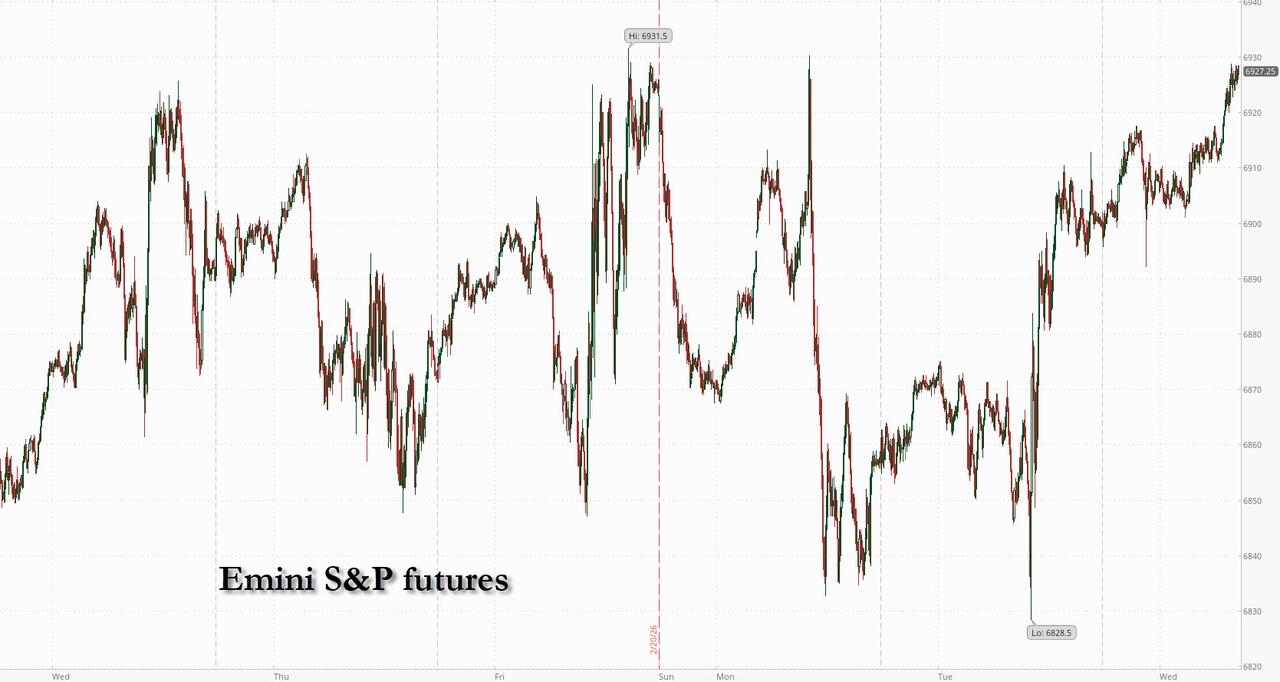
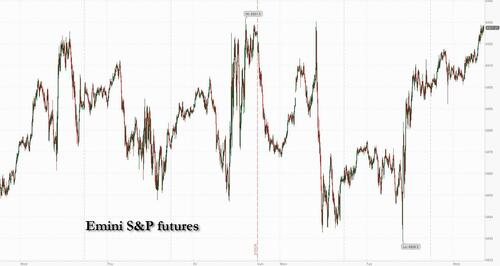
US equity futures are higher into NVDA earnings release after the close, and the risk-on tone in the US yesterday has spread globally with tech giant’s earnings a catalyst for maintaining the rally aided by Tech. As of 8:00am ET, S&P 500 futures were up 0.3% as with Nasdaq 100 contracts +0.4%; NVDA is up 0.6% in premarket trading and while blowout results from the company later today may soothe nerves about the AI trade, “even if they have tremendous numbers, we know the markets are really fickle,” said Mahoney Asset Management’s Ken Mahoney. Other Mag7s are also higher ex-AAPL and TSLA with Cyclicals bid, led by Fins/Industrials/Materials while Defensives mostly lower pre-mkt, ex-Healthcare, reflecting the risk-on tone. JPM says to keep an eye on Software if TMT gains positive momentum. European stocks rose 0.5%, hitting a record on a rebound in banks and miners. South Korea pushed past France in stock-market value.Bond yields are +1-3bp, the dollar slipped after President Donald Trump doubled down on his commitment to tariffs, before erasing the move, and commodities are bid led by Metals with precious outperforming base especially silver and platinum. Bitcoin rallied more than 2%. Gold and silver climbed. Today’s macro data releases are light (only Mortgage Applicatgions which rose 0.4%) ahead of tomorrow’s  jobless claims and Friday’s PPI, but with multiple Fedspeakers. Yesterday we saw better weekly ADP data, weaker regional Fed data, and improving consumer sentiment.
In premarket trading, Magnificent Seven stocks are mostly higher, with Nvidia +0.8% ahead of its report (Alphabet +0.5%, Amazon +0.5%, Microsoft +0.3%, Meta Platforms +0.3%, Tesla +0.4%, Apple -0.2%). 

  • Lithium stocks are rising after Zimbabwe suspended exports of lithium concentrates and raw minerals.
  • AbCellera Biologics (ABCL) rises 8% after the drug developer reported total revenue for the fourth quarter that was ahead of the average analyst estimate. The firm also posted loss per share for the quarter that was narrower than Wall Street’s expectations.
  • Aspen Aerogels (ASPN) falls 21% after the maker of thermal insulation used in electric vehicles reported loss per share for the fourth quarter that’s wider than expected. The company has initiated a strategic review.
  • Axon (AXON) rises 15% after the Taser maker reported adjusted earnings per share for the fourth quarter that beat the average analyst estimate.
  • Camping World (CWH) slides 12% after the retailer of recreational vehicles reported a larger-than-expected adjusted Ebitda loss for the fourth quarter.
  • Cava Group (CAVA) climbs 11% after the fast-casual chain’s restaurant comp sales forecast for 2026 came in above the average estimate from analysts.
  • Circle Internet Group Inc. (CRCL) rises 16% as profit and revenue increased more than estimated while the amount of its USDC stablecoin in circulation jumped 72% to $75.3 billion in the fourth quarter.
  • First Solar (FSLR) slides 16% after the maker of electricity-producing solar modules reported a 2026 net sales forecast which missed the average analyst estimate.
  • HP Inc. (HPQ) falls 5% after providing a profit outlook for the current quarter that may fall short of estimates and said full-year earnings will likely hit the lower end of a previously forecast range as the company copes with tariffs and the rising price of memory chips.
  • Lowe’s Cos. (LOW) slips 3% after forecasting sales guidance for the full year that fell short of expectations, a sign the housing market will remain lackluster in the near term due to high borrowing costs and economic volatility.
  • Lucid (LCID) declines 2% after the electric-vehicle maker reported adjusted loss per share for the fourth quarter that missed the average analyst estimate.
  • MercadoLibre (MELI) falls 5% after the online marketplace for Latin America reported its fourth-quarter results. While analysts are broadly positive on growth trends, they noted that elevated spending will pressure the company’s margins.
  • Oddity Tech (ODD) slumps 34% after the direct-to-consumer beauty and wellness company said it expects its revenue for the first quarter of 2026 to decline 30% year-over-year.
  • Workday (WDAY) declines 9% after giving a subscription revenue guidance that missed expectations, adding to investor concerns that a rise of AI automation tools is disrupting traditional software vendors.

In other corporate news, DoorDash is pulling out of four countries in Asia, a sign that fierce competition and thin margins are weighing on its overseas ambitions. Anthropic has loosened its central safety policy, coinciding with a growing dispute with the Defense Department. AMC plans to close more theaters in underperforming locations.

Expectations are high for Nvidia as customers have announced huge capex plans, but a positive stock reaction is key for the Nasdaq after recent underperformance, said Arnaud Girod, head of cross-asset strategy at Kepler Cheuvreux. “We’re in the thick of uncertainty about the disruption of AI with the market de-rating entire segments of the stock market.”
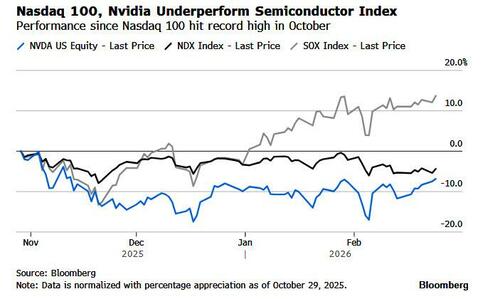
To reinvigorate its stock performance, Nvidia will at least need to beat its prior outlook and set new targets above current Wall Street estimates. While the company has done this repeatedly, concerns have grown that the AI spending wave isn’t sustainable. “Nvidia’s results are expected to be good given the massive capex announced by its clients, but it’s all about how the market will react,” said Arnaud Girod, head of cross-asset strategy at Kepler Cheuvreux. “The Nasdaq needs Nvidia if it is to limit its current underperformance.”

Another key earnings event on Wednesday is Salesforce, the cloud-based customer-relationship firm whose stock has plunged 30% this year after getting caught up in the selloff of software companies on fears that AI could render their services obsolete. Analysts, on average, project that the company will post its best quarterly revenue growth rate in three years. Still, highlighting the risks for software-as-a-service firms, Workday Inc. slid nearly 10% in early trading after subscription sales fell short of estimates.

Turning to Trump’s State of the Union address, the President talked up the economy saying that the nation is back, bigger, better and stronger than before, while he added that we’ve seen nothing yet and this is the golden age of America.

  • Trump said they have achieved a transformation like never before and a turnaround for the ages, as well as stated that low interest rates will solve the housing problem, and they want to protect home values and keep them up.
  • He also commented that inflation is plummeting, salaries are rising, and the roaring economy is roaring like never before.
  • Regarding tariffs, Trump said the Supreme Court decision on tariffs is very unfortunate, but added that tariffs will remain in place and nearly all countries want to keep the trade deals, while he also stated that congressional action won’t be needed on tariffs.
  • Trump also commented on Iran, which he claimed is working on missiles that could soon reach the US, and noted Iran wants to make a deal but hasn’t yet said that it won’t pursue nuclear weapons, while he reiterated that his preference is to resolve Iran’s nuclear issue through diplomacy.

Out of the 450 S&P 500 companies that have reported so far in the earnings season, 74% have managed to beat analyst forecasts, while 21% have missed. TJX, Bank of Montreal and Lowe’s are among companies expected to report results before the market opens. Wall Street expects TJX’s fourth-quarter results to have received a boost from a strong holiday shopping season, with comparable sales estimate of +3.7% (Bloomberg Consensus). Earnings from Nvidia and Salesforce follow later with Wall Street eager to hear what it has to say about potential disruption to software makers from AI upstarts like Anthropic.

Rates on Japan’s longer-term bonds climbed further after Prime Minister Sanae Takaichi’s government nominated two new Bank of Japan policy board members who are seen as dovish. The yen fell 0.5%, the worst performance among major currencies.

European stocks are higher across the board with the FTSE 100 outpacing peers as post-earnings gains in HSBC send the index to a record high. Mining and banking shares are leading gains. Meanwhile, food and beverage as well as personal care stocks are the biggest laggards. Here are the biggest movers Wednesday:

  • HSBC shares advanced as much as 6.1% in London to a fresh high after the lender reported strong earnings ahead of estimates and offered new guidance figures that analysts say are above expectations
  • Relx shares rise as much as 5.3% after the professional publisher says it’s integrating an Anthropic automation tool into its legal research platform
  • Anglo American rallied as much as 4.4% in London after DZ Bank upgraded the miner to buy from hold, saying that the merger with Teck Resources to become one of the world’s biggest copper producers is going as planned
  • Lion Finance Group shares climb as much as 9.8% to the highest level on record, after the Georgian lender reported strong fourth-quarter results
  • Temenos shares rise as much as 8.6%, the most since October, after the software firm raised its mid-term targets for annual recurring revenue, free cash flow and Ebit, while issuing fiscal 2026 guidance that met expectations
  • St James’s Place shares climb as much as 7.3%, the most since July, after the British wealth manager reported underlying cash profit for the full year that beat the average analyst estimate
  • Diageo shares fall as much as 7.1% after the maker of Guinness stout and Johnnie Walker whiskey cut its sales guidance due to further weakness in the key US market, and reduced its dividend
  • Haleon shares drop as much as 5.6% after the consumer healthcare firm delivered weaker-than-expected organic growth in the final quarter of 2025 and issued guidance that was below its mid-term ambition
  • Iberdrola shares slip as much as 1.5%, ceding earlier gains, after the Spanish power company’s fourth-quarter net income missed estimates, overshadowing a 12% rise in full-year 2025 results

Earlier in the session, Asian stocks rise for a third straight day, led by tech stocks, as investors pared concerns over potential disruption from artificial intelligence. The MSCI Asia Pacific Index gained 1.1% at the close to remain near record highs, with  chipmakers TSMC and Samsung continuing to drive advances. Benchmarks in Japan and Taiwan rose more than 2%, while Australian and Korean shares also gained over 1%. Asia’s equity markets have avoided some of the volatility sweeping Wall Street in recent weeks, as investors remain confident about the region’s role in supplying essential AI components to the US. On Wednesday, the region’s tech firms were further supported by comments from Anthropic PBC that it plans to build partnerships with existing businesses. 

“Today’s firmer Asia open, following the US rebound, looks like a reset from oversold levels,” said Ritesh Ganeriwal, head of investment at Syfe Pte in Singapore. “The bounce in US tech is providing near-term relief to sentiment.” “That said, we would characterize this as tactical stabilization rather than a full reset of positioning. Markets are still digesting valuation, earnings visibility, and AI monetization assumptions.”

In FX, the Bloomberg Dollar Spot index is now up a touch as yen weakness helped the greenback shrug off initial downside. The yen was sold and the JGB curve steepened after Japanese PM Takaichi nominated two dovish reflationist academics to join the BOJ board.

In rates, treasuries are slightly cheaper in early US trading as stock futures advance and investors set up for 5-year note auction at 1pm New York time.US yields are 1bp-3bp higher and curve spreads are within 1bp of Tuesday’s close. 10-year near 4.05% is 2bp cheaper, lagging German counterpart by around 1bp.$70 billion 5-year note auction follows solid results for Tuesday’s 2-year; WI 5-year yield near 3.618% is ~20.5bp richer than last month’s auction, which tailed by 0.3bp. Elsewhere in the rates space, US yields are up 1-2bps across the curve with modest upside also seen in German and UK borrowing costs.

While Treasuries showcased their haven status during Monday’s tech selloff, longer-term pressures including uncertainty over inflation, tariffs and fiscal questions remain, according to Laura Cooper, head of macro credit at Nuveen. “We are unlikely to see the resumption of rate cuts until we see greater signs of disinflationary pressures coming through, which to our mind is more of a second-half-of-2026 story,” Cooper told Bloomberg TV. “All of the factors suggest we are in a higher-for-longer yield backdrop.”

In commodities, WTI crude is up 0.3%, but down from highs. US President Donald Trump stated that Iran is working to reconstitute its nuclear program. Spot gold and silver are up 0.5% and 3.5% respectively. Bitcoin is up 2.1% after a recent run of losses. 

The US economic data calendar is blank, while Fed speaker slate includes Barkin (10:40am), Schmid (11am) and Musalem (1:20pm)

Market Snapshot

  • S&P 500 mini +0.1%
  • Nasdaq 100 mini +0.2%
  • Russell 2000 mini +0.4%
  • Stoxx Europe 600 +0.6%
  • DAX +0.4%
  • CAC 40 +0.4%
  • 10-year Treasury yield +2 basis points at 4.05%
  • VIX little changed at 19.51
  • Bloomberg Dollar Index little changed at 1189.37
  • euro +0.1% at $1.1786
  • WTI crude +0.4% at $65.89/barrel

Top Overnight News

  • Donald Trump accused Iran of reviving its nuclear program in his State of the Union address, adding to speculation of new US strikes. BBG
  • Trump pledged a new retirement savings plan for workers without 401(k)s. It would be modeled after the federal Thrift Savings Plan, with a government match of up to $1,000 annually. BBG
  • US House Speaker Johnson said codifying some of the tariffs would be difficult and will have discussions on tariffs in coming weeks, via Fox Business Interview.
  • The Pentagon threatened to invoke a Cold War-era law against Anthropic unless it allows unrestricted military use of its technology by Friday, people familiar said. Anthropic said in a blog post that it’s loosening its hallmark safety pledge.
  • Nvidia Corp. has yet to sell any of its H200 chips to China two months after President Donald Trump’s decision to allow shipments of the artificial intelligence processors to the world’s second-largest economy. BBG
  • Two Federal Reserve officials on Tuesday signaled no near-term appetite to change the setting of central bank interest rate policy. Markets expect the Fed to lower rates again this year but officials, faced with a stabilizing job market and uncertainty over whether inflation pressures will moderate back to target, have not given much guidance about the prospect for more reductions in the cost of short-term borrowing. RTRS
  • Japan must keep raising interest rates and tighten fiscal policy as the economy is already in “great shape,” former central bank chief Haruhiko Kuroda said, warning that Premier Sanae Takaichi’s big spending plan could stoke an inflationary upswing. RTRS
  • Japan’s government has nominated candidates for two positions at the central bank, a move that could be viewed as a chance to influence monetary policy in a more dovish direction. WSJ
  • The Aussie gained as January core inflation came in stronger than expected. The Bank of Thailand unexpectedly cut rates to 1%. BBG
  • Consumers expecting a drop in prices after the U.S. Supreme Court struck down the White House’s emergency tariffs are likely to be disappointed, as businesses plan to use any relief to offset elevated costs and gird themselves to chase refunds. RTRS

Trade/Tariffs

  • China’s Commerce Ministry, on USTR Greer comments, said that China has fulfilled obligations of China-US phase one agreement.
  • China’s Commerce Ministry announces that the country encourages imports of services related to chip research, development and design.
  • Chinese Premier Li said in meeting with German Chancellor Merz that China is willing to bolster dialogue, communication and mutual trust.
  • German Chancellor Merz on trade with China said, they welcome any further market opening and it is in their mutual interest.
  • US President Trump said Supreme Court decision on tariffs is very unfortunate, but adds that tariffs will remain in place and nearly all countries want to keep the trade deals, also said congressional action won’t be needed on tariffs.

A more detailed look at global markets courtesy of Newsquawk

APAC stocks traded higher as the region took impetus from the rebound on Wall Street after Anthropic’s presentation helped soothe some AI/software concerns, and with tech also bolstered by the USD 60bln Meta-AMD chip deal. ASX 200 advanced with gains led by notable outperformance in the tech, consumer staples and mining sectors, while participants continue to digest an overload of earnings and are unfazed by firmer-than-expected CPI data. Nikkei 225 rallied to a fresh record high as exporters benefitted from recent currency weakness after it was reported that Japanese PM Takaichi relayed to BoJ Governor Ueda her reservations about further rate hikes. Hang Seng and Shanghai Comp conformed to the broad upbeat risk sentiment, with attention in Hong Kong on the annual budget and with the mainland underpinned with the PBoC conducting a CNY 600bln MLF operation.

Top Asian News

  • China aims to boost output of relatively advanced chips to 100,000 wafers in 1-2 years, according to Nikkei; China has set target of adding an additional 500,000 wafers of capacity by 2030.
  • Shanghai City relaxes home buying rules for non-residents effective on Thursday and will exempt property tax for certain home buyers.
  • Japanese PM Takaichi said closely watching FX moves with a high sense of urgency.
  • Major Japanese brokerage warns that yen could test post-election low if BoJ appointments are dovish.
  • Hong Kong Financial Secretary Chan said in Budget Address that 2025 GDP rose 3.5% and the domestic economic trend is to continue to be good in 2026. Sees 2026 GDP at 2.5%-3.5% and average growth of 3.0% per year in real terms for 2027-2030.
  • Hong Kong budget is speculated to include funding for tech hub and aerospace sector incentives, according to SCMP.

European bourses (STOXX 600 +0.6%) are entirely in the green, with the FTSE MIB and FTSE 100 (+0.9%) gaining, helped by positive HSBC earnings. The SMI (+0.1%) is the slight laggard, weighed down by Alcon (-1.1%) after the Co. missed on Q4 revenue and core EPS. European sectors are broadly in the green. Banks (+1.8%) and Basic Resources (+2.2%) sit comfortably at the top of the table, while Food, Beverages and Tobacco (-0.7%) is soft as poor Diageo guidance hits the rest of the sector (Pernod Ricard -2.9%, Heineken -0.3%). HSBC shares (+5.5%) are higher today for three reasons: 1) beating market estimates for its top line metrics, 2) lifting its annual 2026-28 ROTE to 17% or greater, and 3) stating its USD 1.5bln cost-saving target will be hit ahead of schedule. This, alongside an update from Santander (+2.7%), in which they expect 2028 net income at EUR 20bln (exp. EUR 18.6bln), lifts the Banking sector.

Top European News

  • UK Chancellor Reeves is facing renewed called to cut bank tax as UK competitiveness lags, according to City AM.
  • German lawmakers are reportedly set to approve EUR 540mln order for attack drones, Bloomberg reported citing sources.

FX

  • DXY trade flat intraday and off worst levels within a current 97.643-97.867 range after briefly dipping under yesterday’s 97.695 low, with little reaction to US President Trump’s State of the Union Address, where he defended his leadership and described the past year as a “turnaround for the ages”; he promoted tariffs as strengthening the US economy, and said they would “substantially replace” income taxes; he offered limited details on Iran, China and Ukraine. Aside from that, newsflow this morning has been on the lighter side. Focus ahead will be on Fed speak and then NVIDIA earnings.
  • JPY underperforms with recent developments seeing PM Takaichi nominating academics Ayano Sato and Toichiro Asada to the BoJ policy board, replacing Asahi Noguchi and Junko Nakagawa; analysts said the picks are viewed as reflationist and dovish, and may reduce expectations of near-term rate hikes. Further, JPY weakness coincided with reports that Japan’s FTC conducted an on-site inspection of Microsoft (MSFT) on suspicion of violating the Antimonopoly Act, Nikkei reported, potentially stoking some Big Tech-related bilateral tensions. USD/JPY resides in a 155.34-156.64 range after topping Tuesday’s 156.28 high.
  • AUD is the G10 outperformer following firmer-than-expected monthly CPI data from Australia. The upside in consumer inflation was driven by electricity and garments & footwear offset somewhat by a larger than expected fall in holiday travel and a smaller than expected rise in health. Analysts at Westpac note “Consistent with our preliminary review we see little risk to our current inflation profile.” AUD/USD resides closer to the top end of a 0.7057-0.7117 range at the time of writing.
  • GBP and EUR trade with mild gains despite a flat DXY, possibly more a function of JPY weakness as GBP/JPY hovers around 211.50 and EUR/JPY meanders around 184.50. Aside from that, specifics for GBP and EUR are light, with the latter eyeing EZ final inflation metrics.

Central Banks

  • Former BoJ Governor Kuroda said Japan need to move toward tighter fiscal and monetary policy as the economy is already in great shape. Recent USD/JPY levels near 157 is somewhat too weak. BoJ can probably hike rates around twice a year in 2026 and 2027 to around 1.5-1.75%. PM Takaichi’s administration spending and tax-cut plans could fuel inflation and push up bond yields.
  • Japan nominates professors Toichiro Asada and Ayano Sato to replace outgoing BoJ board members Noguchi and Nakagawa.
  • Japanese Deputy Chief Cabinet Secretary said aware of report that PM Takaichi voiced apprehension to additional BoJ rate hikes, adds Takaichi did not have a specific request and there is ‘nothing more or less than that’.
  • RBA Governor Bullock said patience is required in assessing policy.
  • China may see lower rates from Q2, according to experts cited by China Securities Journal.
  • Thai Central Bank unexpectedly cuts its rate by 25bps to 1.00% (exp. a hold at 1.25%); 4-2 voted in favour of the cut; said downside risks to headline inflation are expected to increase relative to previous assessment.

Fixed Income

  • Global benchmarks are broadly lower this morning. Pressure which also comes alongside JGB selling, which are currently lower by around 50 ticks. The situation is Japan appears to be shifting from optimism surrounding political stability, after PM Takaichi’s landslide victory, to one where traders are questioning “reflationist” policy; this refers to government’s ability to boost spending whilst also allowing inflation to run higher. Fears which were sparked by reports on Tuesday, that PM Takaichi expressed her apprehension to further BoJ hikes. Moreover, overnight it was reported that the government had recommended two academics, who have been described as “staunch reflationists”, by Chief Fixed Income strategist SBI Securities.
  • USTs are lower by a handful of ticks and currently hold within a 113-05+ to 113-10+ range, with price action ultimately sideways for much of the morning. Pressure this morning in tandem with easing AI disruption related fears, after Anthropic announced a slew of new partnerships. Overnight, markets tuned into President Trump’s State of the Union Address, in which he largely talked up the US economy; on trade, he suggested that tariffs will remain in place and nearly all countries want to keep the trade deals. On the Iran situation, he suggested that Iran wants to make a deal, and reiterated his own preference to solve the situation through diplomacy. Overall, his comments did not spur a reaction in US paper.
  • Bunds initially held around the unchanged mark early doors, before slipping slightly into the red; currently off by around 10 ticks, to hold within a 129.50-129.71 range. Earlier, Final German GDP (Q4) figures were unrevised, whilst the GfK Consumer Confidence metrics deteriorated from the prior vs expectations of a slight improvement. Little move to the release of Final EZ HICP metrics.
  • Gilts follow peers lower, and currently lower by 10 ticks within a 92.94-92.84 range. Focus on Tuesday was on the BoE, where several MPC members appeared at the TSC hearing. Governor Bailey noted that would go into coming meetings asking if a cut is justified, adding that a rate cut at the next meeting is a genuinely open question. Market pricing was little moved following the hearing and are still yet to definitively determine if the next cut will be in March or April. Elsewhere, CityAM reported that UK Chancellor Reeves is facing renewed calls to cut the bank tax as UK competitiveness lags.

Commodities

  • Crude benchmarks remain underpinned, with WTI and Brent trading within the ranges of USD 65.45-66.60/bbl and USD 70.45-71.60/bbl, respectively. Ongoing geopolitical tension between the US and Iran will likely keep oil prices volatile in the near term. At the time of writing, the latest update includes US Senator Cruz suggesting that they are likely to see limited strikes on Iran in a matter of days. Meanwhile, Iranian Foreign Minister Araghchi said Tehran will resume talks with the US in Geneva tomorrow. In Russia and Ukraine, Washington warned Ukraine not to strike targets within Russia that could hit US economic interests, according to the FT.
  • In the precious metal space, XAU and XAG continue to surge, trading at the upper range of USD 5128.3-5310.7/oz and USD 86.22-87.10/oz, respectively. The yellow metal has been underpinned by recent dollar softness as well as continuous haven demand over geopolitical uncertainty between the US and Iran.
  • Copper prices are slightly firmer this morning, tracking global risk sentiment from Wall Street and APAC, which finished higher, as well as the European session, which is trading mostly positive thus far this morning. At the time of writing, 3M LME copper is trading at the upper end of a USD 13.19-13.29k range.
  • Russia and Iran are cutting its oil prices to China, Bloomberg reported citing traders; Russia’s Urals grade is selling USD 12/bbl below ICE Brent (prev. USD 10/bbl below), Iranian Light selling USD 11/bbl below ICE Brent (prev. USD 8-9/bbl).

Geopolitics: Ukraine

  • Ukraine President Zelensky’s negotiators will meet with US counterparts on Thursday and is targeting a leaders summit in March.
  • Washington warns Ukraine over striking US economic interests in Russia, FT reported. Kyiv’s ambassador to Washington said the Trump admin has formally warned Ukraine not to strike targets within Russia that could hit US economic interests.

Geopolitics: Middle East

  • US President Trump said Iran is working on missiles that could soon reach the US, and noted Iran wants to make a deal but hasn’t yet said that it won’t pursue nuclear weapons, reiterates his preference is to resolve Iran nuclear issue via diplomacy.
  • Iran’s Parliamentary Speaker said, with relation to US-Iran talks, all options are on the table. Ready for dignified diplomacy, also ready for defence.

US Event Calendar

  • 7:00 am: United States Feb 20 MBA Mortgage Applications, prior 2.8%
  • 10:40 am: United States Fed’s Barkin Speaks on Panel
  • 11:00 am: United States Fed’s Schmid Speaks on Monetary Policy and the Economy
  • 1:20 pm: United States Fed’s Musalem Speaks on Role of Fed

DB’s Jim Reid concludes the overnight wrap

Markets recovered their poise over the last 24 hours, with the S&P 500 (+0.77%) advancing thanks to positive US data and a rebound in software stocks. Clearly that mood could change with Nvidia’s results after tonight’s close, but the news led to a bit more confidence in the near-term outlook, and the financial stress at the start of the week eased across several asset classes. Moreover, inflation concerns also fell back after Brent crude oil prices (-1.01%) declined for a second day. So there was a much more positive tone relative to Monday’s selloff, and futures on the S&P 500 (+0.01%) are just about higher as well this morning.

In terms of the latest on the AI side, there wasn’t much in the way of fresh headlines to drive markets yesterday, but we did see software and other tech stocks pare back their Monday losses. For instance, the NASDAQ (+1.04%) and the Magnificent 7 (+1.14%) both put in a decent performance, and the S&P 500’s software component (+1.28%) picked up from its 10-month low on Monday. Meanwhile, AMD (+8.77%) was the second-best performer in the S&P 500 after it was announced that Meta would acquire AMD chips with a total capacity of 6 gigawatts. So it was a strong session for tech stocks, which also supported broader US equity gains. By the close, more than 70% of the S&P 500’s companies were higher on the day, with consumer discretionary (+1.58%) and industrials (+1.23%) sectors leading the way. However, there were more concerns in the credit space, with US IG and HY spreads both edging +1bps higher, reaching their widest levels since December.

Risk assets got further support from the latest US data, as the Conference Board’s consumer confidence reading picked back up to 91.2 in February (vs. 87.1 expected). Moreover, the expectations component also rebounded to 72.0, up from a 9-month low the previous month. There were also promising signs on the labour market, as the ADP’s weekly private payrolls series hit a 2-month high, showing 4-week average growth of +12.75k in the period to February 7. So at the margins, that leant positively against the recent talk of AI-driven unemployment.

Given the more positive data and the tech stock rebound, investors also priced in a slightly more hawkish path for the Fed over the year ahead. For instance, the probability of a rate cut by the June meeting fell to just 52%, the lowest so far this year. And looking further out, just 55bps of cuts are now priced in by the December meeting, which was down -3.9bps on the day. So in turn, that pushed up front-end Treasury yields, with the 2yr yield (+2.3bps) up to 3.46%, although the 10yr yield (-0.2bps) was basically flat at 4.03%. Comments from Fed officials also leaned against imminent rate cuts, with Chicago Fed President Goolsbee warning that 3% inflation “is not good enough” and that they needed to make more progress. And Boston Fed President Collins said rate were likely to stay unchanged “for some time” and that she was looking for more confidence that disinflation resumes. There were also discussions around AI-related job losses too, with Governor Cook saying that “our normal demand-side monetary policy may not be able to ameliorate an AI-caused unemployment spell without also increasing inflationary pressure”.

Another supportive factor yesterday was the latest dip in oil prices, which helped to ease concerns on the inflation side. In part, that was driven by growing hopes for some sort of deal between the US and Iran that would avoid a military escalation. Indeed, Trump himself had posted on Monday evening after the US close that “I would rather have a Deal than not”. So that took a bit of the geopolitical risk premium out, with Brent crude down -1.01% to $70.77/bbl, whilst gold prices fell -1.60% to $5,144/oz. Trump echoed that rhetoric on a deal in last night’s State of the Union address, saying that his “preference is to solve this problem through diplomacy”.

Over in Japan, the yen weakened yesterday after the Mainichi newspaper reported that PM Takaichi was apprehensive about more rate hikes in a meeting last week with BoJ Governor Ueda. So it was down -0.78% against the US Dollar yesterday, making it the weakest-performing G10 currency. Then this morning, Japanese equities have seen a strong outperformance after the government nominated two reflationists to join the Bank of Japan’s board, who were seen as favouring more stimulus. So the Nikkei is up +2.60% this morning, on course for another record high, and bringing its 2026 gains to +16.83% already.

That optimism has been clear elsewhere in Asia, building on the overnight gains seen on Wall Street. So in South Korea, the KOSPI (+1.79%) is up for a 5th consecutive session, and also on track to close at a record. Similarly in Australia, the S&P/ASX 200 (+1.17%) is on course for an all-time high as well, despite a stronger-than-expected CPI report this morning, with inflation remaining at +3.8% in January (vs. +3.7% expected). So that’s seen investors price in more RBA rate hikes at the next few meetings, and the Australian Dollar has strengthened against every other G10 currency this morning, up +0.73% against the US Dollar. Otherwise, there’s also been gains for the Hang Seng (+0.72%), the Shanghai Comp (+0.99%) and the CSI 300 (+0.86%).

Earlier in Europe, most assets had also put in a decent performance yesterday, with the STOXX 600 (+0.23%) paring back some of Monday’s losses as well. That came as longer-dated yields continued to fall across the continent, with yields on 10yr gilts (-0.9bps) and BTPs (-0.5bps) at their lowest since December 2024, whilst 10yr OAT yields (-0.8bps) reached their lowest since July. For 10yr bund yields (-0.4bps) there was a comparatively smaller fall, but yields still closed at their lowest since November.

Looking at the day ahead, one of the main highlights will be Nvidia’s earnings after the US close tonight. Otherwise, central bank speakers include the Fed’s Barkin, Schmid and Musalem, and the ECB’s Vujcic. There’s not much data, but we will get the final Euro Area CPI print for January, along with the final Q4 GDP release from Germany.

Tyler Durden
Wed, 02/25/2026 – 08:33

via ZeroHedge News https://ift.tt/8pAMztu Tyler Durden

“I Did Nothing Illicit”: Bill Gates Begins Apology Tour Over His Epstein Ties

“I Did Nothing Illicit”: Bill Gates Begins Apology Tour Over His Epstein Ties

A week after Bill Gates abruptly pulled out as a keynote speaker at a high-profile global AI summit in India, the left-wing billionaire finally mustered enough nerve to “take responsibility for his actions” over his ties to late financier and sex offender Jeffrey Epstein during a town hall meeting with Gates Foundation employees.

The Wall Street Journal reports that Gates told employees at a town hall event for the foundation on Tuesday that he never spent time with Epstein’s victims, and never visited Epstein’s island.

He revealed that Epstein later learned about two affairs he had with Russian women, but said those relationships did not involve Epstein’s victims. Gates said photos in the Epstein files show him with redacted women were taken by Epstein’s assistants after meetings.

Did Gates fall into a Russian honeypot?

I did nothing illicit. I saw nothing illicit,” Gates emphasized, according to a recording reviewed by WSJ journalists.

Gates continued, “To be clear, I never spent any time with victims, the women around him.”

“It was a huge mistake to spend time with Epstein” and bring Gates Foundation executives into meetings with the sex offender, Gates said, adding, “I apologize to other people who are drawn into this because of the mistake that I made.”

Last week, the $86 billion philanthropic body’s last-minute decision to yank Gates was a major embarrassment and came as the Epstein fallout worsened, with many high-profile people under fire.

Related:

Knowing what I know now makes it, you know, a hundred times worse in terms of not only his crimes in the past, but now it’s clear there was ongoing bad behavior,” Gates said. He gave credit to his ex-wife, who “was always kind of skeptical about the Epstein thing.”

Gates told staff he began meeting Epstein in 2011, despite the financier’s 2008 guilty plea for soliciting a minor for prostitution. He said he was aware of the “18-month thing” that had restricted Epstein’s travel, yet continued the relationship, even after his then-wife, Melinda French Gates, raised serious concerns in 2013.

He said the relationship continued through 2014 and that he flew on a private jet with Epstein and spent time with him in Germany, France, New York, and Washington. “I never stayed overnight,” he said, or visited Epstein’s island.

He said Epstein “talked about the kind of intimate relationship he had with a lot of billionaires, particularly Wall Street billionaires,” and that he could help raise money for global health nonprofits.

It definitely is the opposite of the values of the Foundation and the goals of the Foundation,” he said. “And our work is very reputation-sensitive. I mean, people can choose to work with us or not work with us.”

No matter what, the Gates Foundation has a dark cloud hanging over it because of Gates’ involvement amid the deepening Epstein fallout.

Gates is worth billions, so why would he need Epstein to raise money for global health nonprofits? Something doesn’t pass the sniff test in this damage-control town hall he held for his foundation’s employees.

Tyler Durden
Wed, 02/25/2026 – 08:05

via ZeroHedge News https://ift.tt/j2eQpKi Tyler Durden