Today, the Center for Disease Control and Prevention filed a notice in the Federal Register. The order purports “to temporarily halt residential evictions to prevent the further spread of COVID-19.” No, not just in federal housing. Nationwide.
Under this Order, a landlord, owner of a residential property, or other person3 with a legal right to pursue eviction or possessory action, shall not evict any covered person from any residential property in any jurisdiction to which this Order applies during the effective period of the Order.
CDC argues that keeping people in their homes will prevent the spread of COVID-19:
In the context of a pandemic, eviction moratoria—like quarantine, isolation, and social distancing—can be an effective public health measure utilized to prevent the spread of communicable disease. Eviction moratoria facilitate self-isolation by people who become ill or who are at risk for severe illness from COVID-19 due to an underlying medical condition. They also allow State and local authorities to more easily implement stay-at-home and social distancing directives to mitigate the community spread of COVID-19.
Landlords who evict tenants to qualify for this program face fines of up to $100,000 and a year in prison.
What is the authority for this sweeping order? The thirty-seven page notice cites a single regulation: 42 CFR § 70.2. It provides:
Whenever the Director of the Centers for Disease Control and Prevention determines that the measures taken by health authorities of any State or possession (including political subdivisions thereof) are insufficient to prevent the spread of any of the communicable diseases from such State or possession to any other State or possession, he/she may take such measures to prevent such spread of the diseases as he/she deems reasonably necessary, including inspection, fumigation, disinfection, sanitation, pest extermination, and destruction of animals or articles believed to be sources of infection.
To be sure, this regulation allows the Director to “take such measures to prevent such spread of the diseases as he/she deems reasonably necessary.” But there are limits of this delegation. The regulation provides examples of such measure: “inspection, fumigation, disinfection, sanitation, pest extermination, and destruction of animals or articles believed to be sources of infection.” All of these measures are localized, and limited to prevent the spread of an infection in a single building or location. None of these examples are even remotely close to a nationwide moratorium on evictions. This action is far beyond the scope of delegated authority.
Moreover, the Director cannot order state courts to not process summary evictions. A landlord could rely on these processes, but then face a federal prosecution for doing so. Would any landlord risk it?
This eviction moratorium lacks even a patina of statutory authorization. Landlords can, and should challenge this executive action.
In August, I blogged about the President’s executive actions for disaster relief and payroll tax deferral. Both actions were well within the scope of the President’s statutory authority. For days, critics argued these actions were unconstitutional. No one ever backed this argument up. These positions were pure political posturing. Now, about a month later, all objections have subsided. Yet, I have seen nary an objection to this eviction moratorium.
One final, pragmatic point. This order only delays evictions. It does not excuse back rent. In theory, once January rolls around, people would be required to pay five months of back rent. But that will never happen. Whoever is President in December will sign into law a bill that funds all of this back rent. All of it. In effect, President Trump gave millions of Americans a five month reprieve from paying rent. Any litigation will likely be mooted come January, as a bill will make the landlords whole.
from Latest – Reason.com https://ift.tt/2QLi7un
via IFTTT
New York Launches Unsecured Online ‘Portal’ For Requesting Absentee Ballots Tyler Durden
Tue, 09/01/2020 – 23:50
As New York, which successfully managed to hold most of its primary votes mostly by mail, has opened an online portal allowing residents to request an absentee ballot.
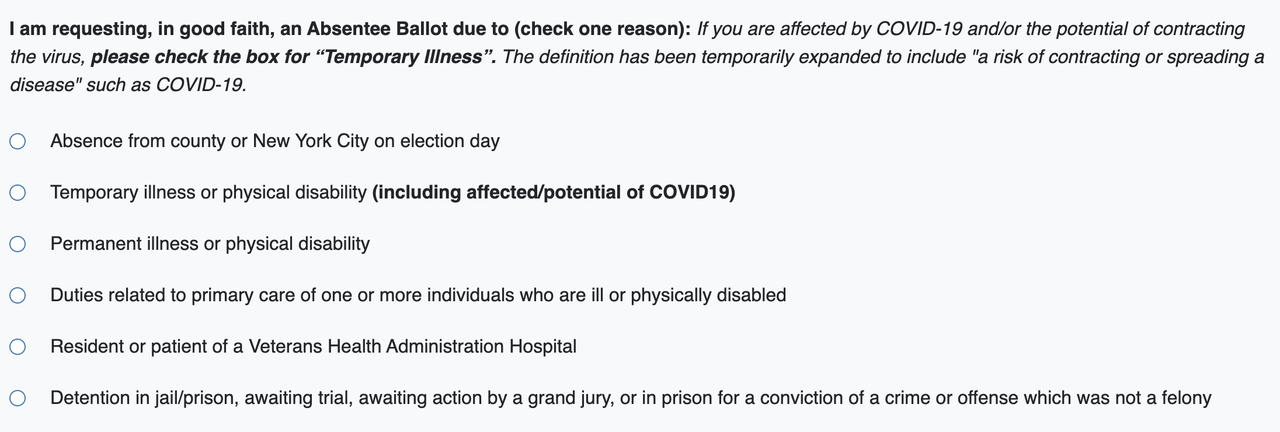
Gov Andrew Cuomo acted unilaterally to allow any person concerned about COVID-19 risk to request an absentee ballot, even as some southern states rule that COVID-19 fears aren’t a valid reason to vote absentee. ;
NYers have until Oct. 27 to mail in their ballots.
The absentee ballot portal went live Tuesday, and Cuomo heralded the launch as a move toward ensuring free and fair elections.
“As the November election approaches, we know that many voters feel vulnerable in the midst of this pandemic,” he said. “In line with the sweeping reforms we have implemented to make it easier for New Yorkers to exercise their right to vote, today we launch the online portal through which every registered voter concerned about COVID-19 can obtain an absentee ballot.”
USPS has advised Americans to request ballots no later than 15 days before the Nov. 3 vote.
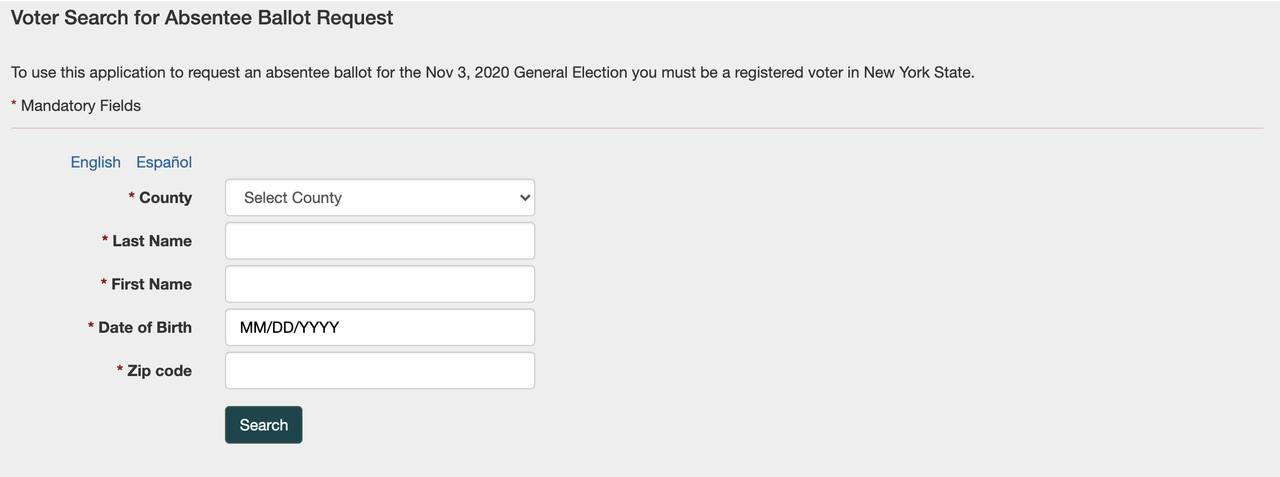
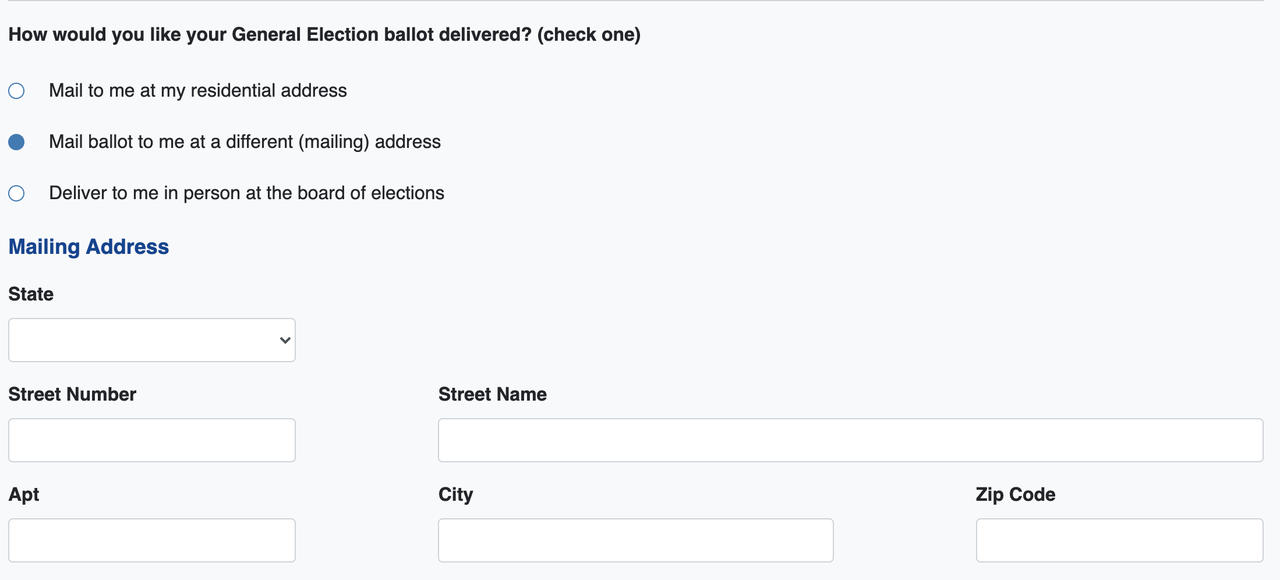
To request a ballot, users must enter their birth date, county and ZIP code to confirm that you are already registered to vote. You are then taken to a page where you decide how you want the absentee ballot delivered.
Interestingly, when we tested the portal, we found that it didn’t include any requests for sensitive private information like an individual’s social security number. An individual could request an absentee ballot simply by entering in another individual’s birthday, address and zip code – all information that’s easily attainable.
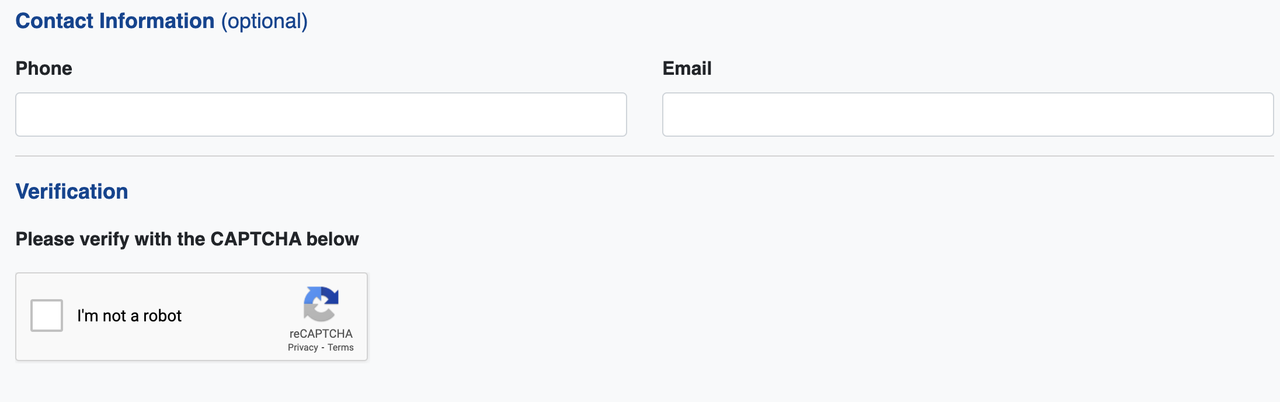
The screen shots below are from the website for NYC’s board of elections. City-dwellers are directed there to finish the application, but virtually all of the same questions, and the complete lack of security, are the same.
We sincerely hope this doesn’t create a massive crush of fraudulent requests, as any motivated individual could use social media to fraudulently apply for absentee ballots, if only to prove a point.
And NY isn’t alone.
Three states are building or have launched a portal to allow voters to request absentee ballots online:
-Georgia
-Michigan
-New Yorkhttps://t.co/jMMA2N4SDz
The coronavirus pandemic has led to a surge in remote work. However, that surge is more apparent in the number of remote working days for telecommuters than in the number of workers moving from on-site to at-home work.
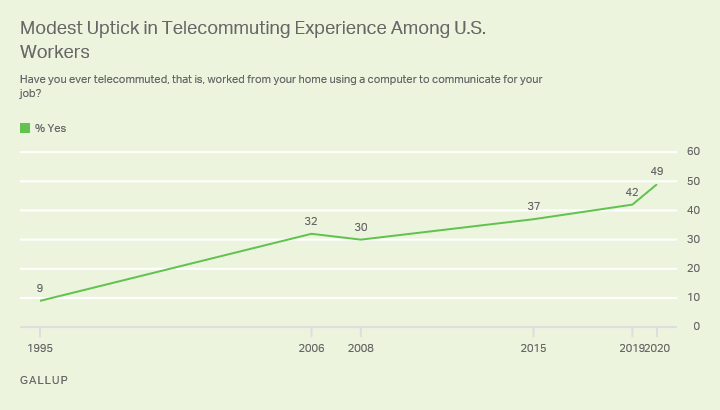
Since Gallup last asked about remote work in October 2019, there has been a modest uptick in the percentage of U.S. workers who report having ever telecommuted for work, from 42% to 49%. The recent figures demonstrate the growth in remote work over recent decades from 9% in Gallup’s initial measurement in 1995.
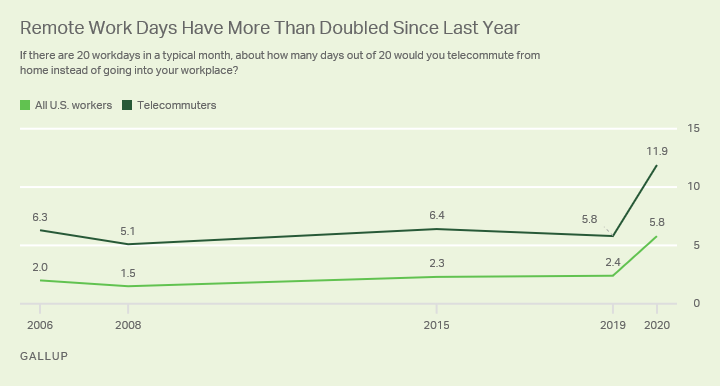
While the percentage of U.S. workers who have telecommuted has changed modestly, the average number of workdays telecommuters are working from home has more than doubled, from 5.8 days per month last fall to 11.9 days currently. Among all U.S. workers, the average number of telecommuting days has also more than doubled, from 2.4 per month to 5.8.
These results are based on Gallup’s annual Work and Education poll, conducted July 30-Aug. 12.
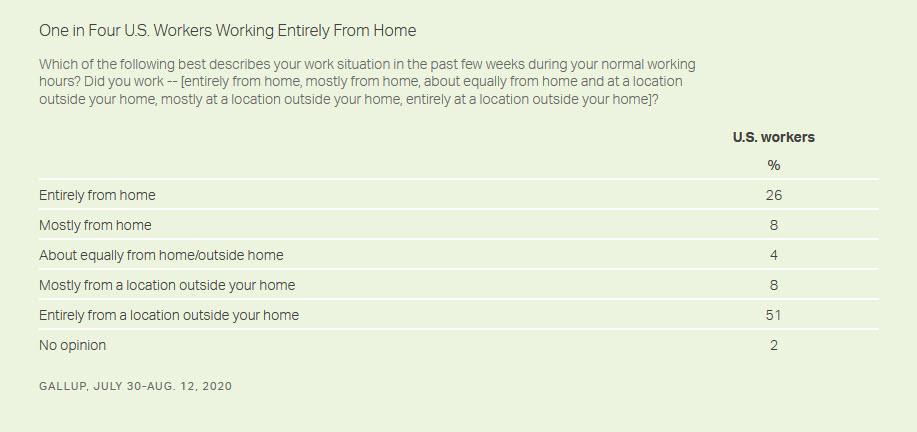
The poll finds 26% of U.S. workers currently saying they have worked entirely from home in recent weeks, while 51% are working entirely from a location outside their home, with one in five reporting a mix of on-site and remote work.
Nearly half of those who have ever telecommuted, 45%, say they have been working entirely from home in recent weeks, with another 14% working mostly from home. This question had not been asked previously, so it is not possible to know how those figures compare with before the pandemic.
However, 13% of telecommuters and 5% of all workers in 2019 said they worked from home 20 days a month (assuming 20 monthly workdays). Now, the figures are 45% and 22%, respectively.
College Graduates Much More Likely to Work Remotely
As might be expected, telecommuting is much more common among Americans with a college degree than those without one. Employed college graduates are more than twice as likely as employees without a college degree to work remotely. This is seen in the percentages reporting that they have ever telecommuted, as well as in the number of days they report working remotely and in their self-reports of whether they are currently working entirely from home.
The survey also shows that working women are more likely than working men to be performing their job functions remotely.
The differences between younger and older workers’ likelihood to work remotely are not statistically meaningful.
An analysis of prior Gallup data on occupation finds that the vast majority of college graduates work in what can be considered white-collar occupations, and that women are much more likely than men to do so.
Last year, an average of 63% of college graduates versus 29% of college nongraduates had ever telecommuted, so the growth in telecommuting has come almost entirely among those with higher educational attainment. Also, before this year, men and women were about equally likely to say they had ever telecommuted for work. The emerging gender gap in remote work probably reflects women’s greater presence in white-collar than blue-collar jobs.
Implications
The widespread closure of businesses and schools to control the spread of the coronavirus sent unemployment soaring. The jobs situation would have been much worse if not for advances in technology that allow many workers to complete their work remotely. Close to half of U.S. workers have now taken advantage of opportunities to telecommute, and currently about one-quarter are doing so every workday.
Of course, not every job can be done remotely; therefore, the growth of telecommuting has a ceiling. Half of U.S. workers currently say they do their job entirely at a location outside their home. Given this, and that half of U.S. workers report they have never telecommuted, the growth in the proportion of the workforce that could telecommute may have reached that ceiling during the pandemic. Further growth in remote work may thus come in the amount of time workers spend outside the office or work site, rather than in the number of workers who do so.
Having an expanded remote workforce alters the dynamics for employers in many ways. Remote work changes the considerations on where employers can find and attract new hires. For example, flexible work arrangements have special appeal to millennials and women. But remote work also can create both challenges and opportunities when it comes to worker engagement, worker productivity and maintaining company culture. The COVID-19 pandemic has accelerated the trend toward remote work and has made companies’ policies toward it even more crucial to their success.
via ZeroHedge News https://ift.tt/2EOOV39 Tyler Durden
New York City’s MTA Crisis Could Be “Catastrophic” For Housing Market Tyler Durden
Tue, 09/01/2020 – 23:00
Readers may recall New York City’s MTA proposed drastic transit cuts and higher fares after losing an astonishing $200 million per week after a collapse in ridership following the virus pandemic. As a result, the transit authority is preparing for a “doomsday scenario” to include a 40% reduction in service for both commuter trains and busses, a move that would result in longer travel times and make commuting a nightmare.
A reduction in NYC’s transit system could be nearing if Washington doesn’t pass another coronavirus relief package. Both Republicans are Democrats have stalled for at least a month in agreeing on the dollar amount of the next round of stimulus, already resulting in a dangerous fiscal cliff that could soon jeopardize the nation’s economic recovery.
If transit cuts are seen, the effects could be devastating to the city’s economy, said Bill Rudin, CEO of Rudin Management, and chairman of the Real Estate Board of New York, who spoke with The Real Deal.
“The ability to move people effectively, expeditiously, efficiently is critical to our economic engine,” Rudin said.
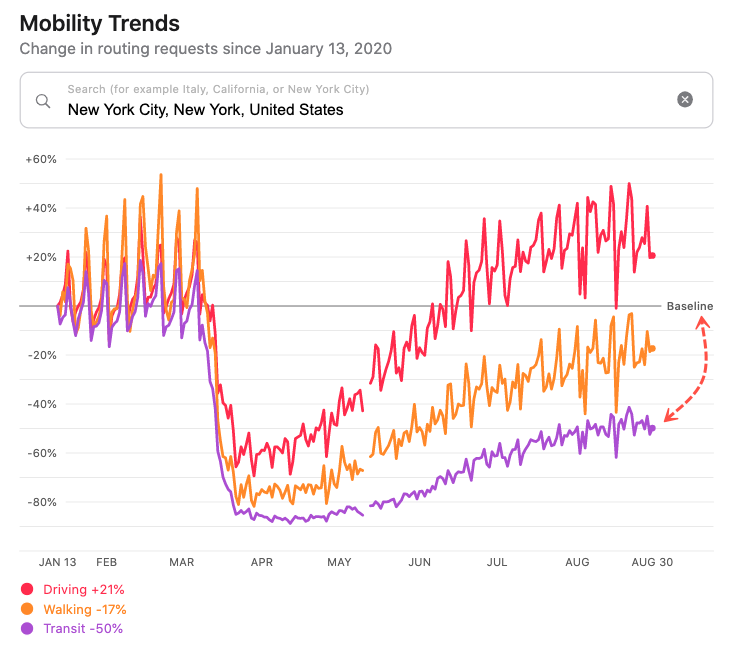
The latest mobility trends report via Apple shows people using NYC public transportation on Sept. 1 continues to remain halved of what it was before the virus.
One look at Time Squares on Tuesday afternoon and foot traffic remains dead – the city is still a “ghost town.”
Nicole Gelinas, a senior fellow at the Manhattan Institute, focused on transportation and infrastructure policy, said the transport authority “could not persist very long in continuing full service with just a fraction of their fare and toll revenue.”
Gelinas said, “I do think they need more money from the federal government and also need to look at rational cost-cutting.”
Drastic cuts to the city’s transit system could slow the economic recovery in the metro area as the velocity of people moving around, transacting, and or just doing business that uses public transportation be much slower than pre-virus times. Longer travel times would undoubtedly lead to continued ridership losses and more future cuts to service.
Scott Rechler, chairman and CEO of RXR Realty, who is also chairman of the Regional Plan Association and a former MTA board member, claims transit cuts “would be catastrophic for the real estate industry,” as well as the city’s overall economy.
Already, real estate prices in Manhattan are pressured as folks and businesses are leaving the borough for rural communities amid depressionary unemployment, virus pandemic, social unrest, and surging violent crime.
If Congress can’t agree on the next round of stimulus in the near term, NYC’s MTA could undergo transit cuts, resulting in a chain reaction that would cripple the city’s already limping recovery.
via ZeroHedge News https://ift.tt/3gNMD1q Tyler Durden
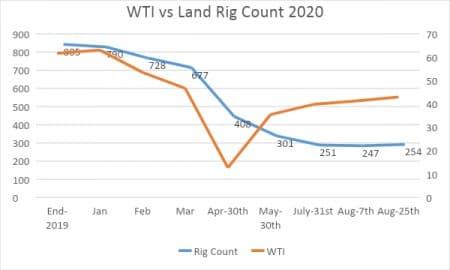
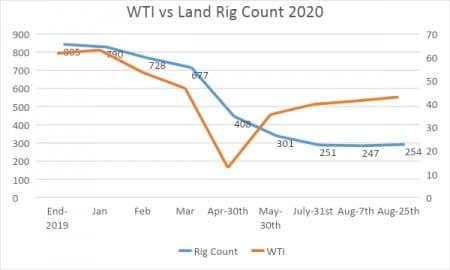
One of the themes that is emerging as we review investment candidates is the era of oil growth, which is at least going to take a substantial pause, if it is indeed, not totally in the rear view. Company after company has told us that “maintenance capex” is all they are allocating at current oil prices. An example of this mindset is Parsley Energy, (NYSE:PE) which reduced its capex budget by 50% year over year. This new era of growth restraint has implications for the world energy market that isn’t reflected in the energy structure at present.
Drilling and fracking each picked up slightly from the week prior. Hence the question I pose about seeing the bottom in activity. We saw a bump similar to this once before this summer, and then each category fell back into decline for a month or so. I am not betting that we’ll see another boost this week, as the trading range for WTI just isn’t supportive enough for a big activity inflection.
Source: Baker Hughes
I remain committed to my previously established targets for shale exit production ~5 mm BOEPD. The next way point will be the EIA-914 on Monday.
Why are we where we are?
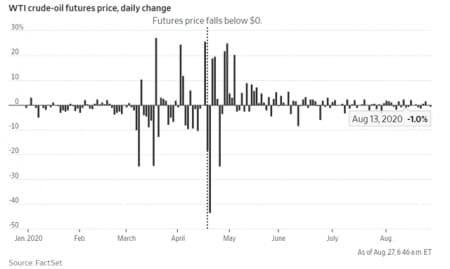
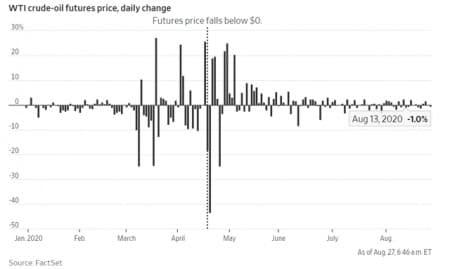
That’s a question I’ve been wrestling with regards to the pricing of WTI. Oil has definitely plateaued in recent weeks, after a nice run in the spring and early summer. A brief investigation reveals one likely source of the lack of volatility.
The answer could be hedging. Using a trading strategy known as a Strangle, funds, and large institutions with exposure to commodities-oil in this case, can limit this with puts and calls. A put gives you the right to sell WTI-for example at a future price, while a call gives you the right to buy at a different price, thus limiting the impact of volatility on your position.
Note: The tight range since late April driven by hedging strategies
Source Hedging on this scale has a potential to result in a big dislocation in the market. In a recent WSJ article Marwan Younes, chief investment officer of Massar Capital Management commented: ‘’Hedging has the consequence to push prices back within that range. Historically, long periods of calm in financial markets have tended to end with a burst of volatility. It feels like we have two tectonic plates building up energy. The day it gives way will be a fairly eventful day.’’
This is an interesting idea that is supportive of my general diatribe about oil going higher and breaking out of this range. Particularly as regards Younes final line that I have italicized. We need a catalyst for this to happen, and it’s hard to say just what that will be.
I don’t trade futures contracts. I just don’t have the attention span or the temperament to stay that focused on the market. I figure the money I am missing out on in a success case, is more than compensated for by sleeping fairly well at night, and consuming less Maalox.
Under-investment in supply, “Chickens” are coming home to roost
Paul Sankey is a well-known securities analyst, formerly with a big firm-Mizuho, and now on his own. I’ve followed him for years. Sankey has some interesting ideas that coincide with my own. Chief among them is the idea that the oil market is approaching a precipice of supply short-fall that will simply be breath-taking when its full effects land out.
Another area of agreement between us is that years of under-investment in replacing barrels from aging Brown-field developments will ultimately constrict supply and drive prices higher.
Focusing mainly on the decline rate of shale and the lack of new drilling, I’ve made the point repeatedly in OilPrice articles that the shale miracle in the U.S. is over. Here is a link to my most recent writing on this topic. Shale was thought to be impervious to decline by many. Some of us (speaking of myself here) always knew better as we understood the short-decline nature of the rock. Now companies are taking write-offs on shale as they did deepwater assets a few years ago, meaning there are reserves we thought would be available in the years ahead that will now be uneconomic.
The short-lived era of the U.S as “swing-producer” for oil has ended.
Why “war-premiums” for oil don’t last
One thing we should be able to agree on is that the world currently assumes unlimited supplies of crude oil, now the norm thanks to overproduction the last few years, will continue to be the base case going forward.
Is the world right? Obviously you know I don’t think so, but we are certainly getting mixed signals right now. It is worth noting when a giant hurricane that shuts down 80% of the GoM’s producing and refining capacity doesn’t move the market even a little higher it speaks strongly to the markets confidence about future supply.
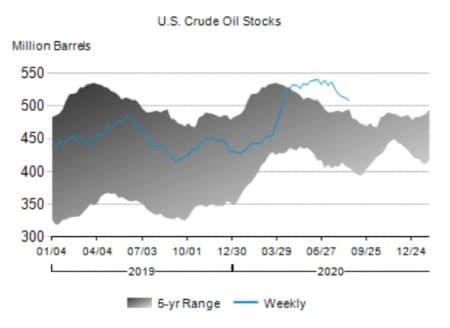
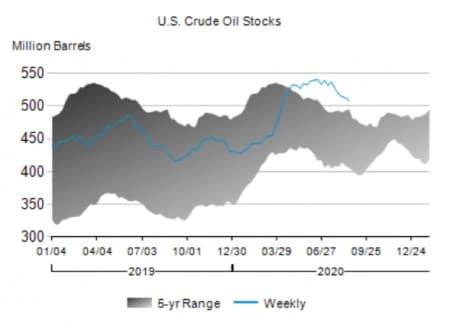
As noted in the EIA graphic below, last week we edged down still further toward the 500 million barrels mark in inventories, and still crickets from the oil market. It should be noted that this represents about a 30 day supply at current consumption rates.
We think that the +/- 3-mm BOEPD supply/demand gap will accelerate as the year closes, and these inventory draws will continue.
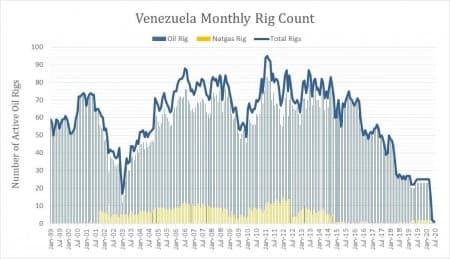
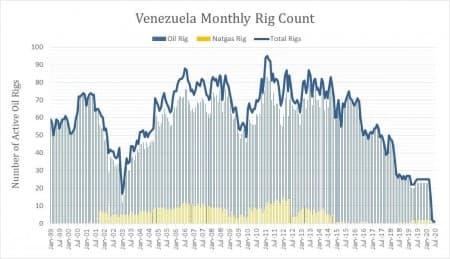
I have previously identified several hot spots that could explode at any time, creating an instant inflection for oil. You know them well. Iran, Venezuela, Iraq, Libya are all experiencing severe economic and social disharmony for various reasons, but no one is shooting at one another taking a war-premium completely out of the price. Should we be so complacent?
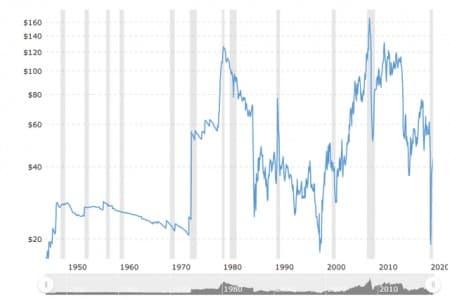
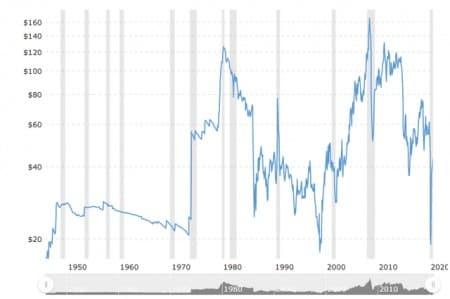
One interesting aspect of a war-premium is that it doesn’t last for long. History tells us the sharp spikes in price due to conflict are short-lived, and oil driven higher by conflict reverts quickly to its previous range. The world continues to spin on its axis, infrastructure that may be damaged or destroyed is quickly rebuilt, and importantly no one goes without. A good example is the recent attack on Saudi oilfields in 2019 by Iran. Oil spiked to $80 from $60 overnight, and quickly fell back to $60, and then to $50, and then to $40. Fear comes out of the market as rapidly as it enters.
What the chart above tells us is that war premiums soon fade. Take the spike circa 1990 when the U.S. led coalition began the response to Iraq’s invasion of Kuwait. A brief spike to $80 was quickly followed by a rapid collapse to the mid-$30’s and over most the next decade to a low below $20. It then took another 10 years for oil to peak again, this time in the financial collapse of 2008.
One takeaway from this chart is that wars are over so quickly these days (Afghanistan excepted), that they don’t have much prolonged impact on the perception of supply security.
Much more important are key producer decisions to restrict production. For example the Arab oil embargo of the early 1970’s led to a 30-year uptrend that was only broken when they opened the taps in 1998. A decision they quickly regretted when the oil price crashed. A “V” shaped rebound led to nearly another 20 years of higher prices, until in 2014, OPEC again opened the taps. This seems to be a mistake they are unable to stop making as they did it again earlier this year.
In short while a shooting war changes the dynamic briefly, decisions by producers have a much more pronounced effect on oil prices.
Your takeaway
Inflation is on the horizon. It’s been ages since we had to worry about generally rising prices. The full effects of the dynamic imposed by the virus, lower employment, business failures, etc. have led governments around the world to print trillions of dollars to provide liquidity. A lesson perhaps learned in 2008 when governments were slow to provide this under-pinning to world markets. The net effect of this is always inflation.
Last week the Chairman of the Federal Reserve, (Fed) Jerome Powell reinforced their position on employment vs inflation making a change to their historic stance of combating inflation. In this speech Powell let it be known that it will let inflation run…to a degree, in support of putting people back to work. Up to this point the Fed had established an arbitrary 2% limit for inflation before it would move proactively to tighten the money supply to drive it down.
This is bullish for oil prices and oil equities in general, telling us we are on the right track with our overall thesis of higher oil prices. Interest rates will stay down hurting savers, but commodities and equities will rise. Oil is a commodity.
via ZeroHedge News https://ift.tt/3jCkPyN Tyler Durden
Australia Plunges Into First Recession In 29 Years Following Biggest GDP Drop On Record Tyler Durden
Tue, 09/01/2020 – 22:31
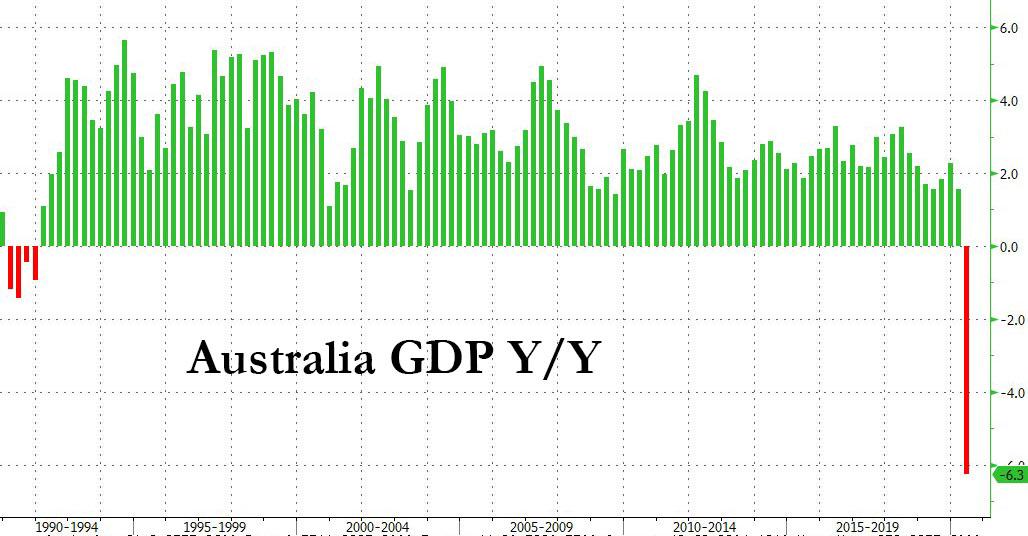
Nothing good lasts forever, as Australia just discovered when after seemingly defeating the gravity of the business cycle and lasting a record 29 year without an economic contraction, the country tumbled head first into its first recession in almost 30 years, which also happened to be the worst on record as its Q2 GDP plunged -6.3% Y/Y, worse even than the consensus estimate of a -6.0% drop.
GDP plunged 7% sequentially from the first three months of the year – hammered by the renewed Covid outbreak and lockdown in Victoria state – the first back-to-back quarterly declines since 1991. The sequential drop also was larger than economist forecasts of a 6% drop.
As Bloomberg notes, “Australia’s record run of avoiding two consecutive quarters of negative GDP, which included avoiding recessions during the 1997 Asian Financial Crisis, the Dot Com Bubble and the 2008 global financial crisis, has come to an end with the largest contraction on record according to ABS data dating back to 1959. It now joins much of the world in succumbing to a pandemic-induced downturn.”
Household spending plunged 12.1%, subtracting 6.7 percentage points from GDP; government spending rose 2.9%, adding 0.6 percentage point
Investment in new and used dwellings fell 7.3% in the quarter
Net exports contributed 1 percentage point to GDP
Just like in the US, the savings rate soared, hitting 19.8%, the highest rate since 1974
Australia’s desire to declare an early victory against covid which was accompanied by an early lifting of restrictions and reopening of its economy, proved catastrophic and has been offset by an almost two-month lockdown in Melbourne, the nation’s second-largest city with about 5 million people, crushing any hopes of a recovery.
In March, Australia’s Reserve Bank cut its cash rate to a record-low 0.25% and set the same target for the three-year bond yield as it aims to lower borrowing costs across the economy. As Bloomberg notes, the RBA predicts the renewed lockdown will lift unemployment to about 10% later this year.
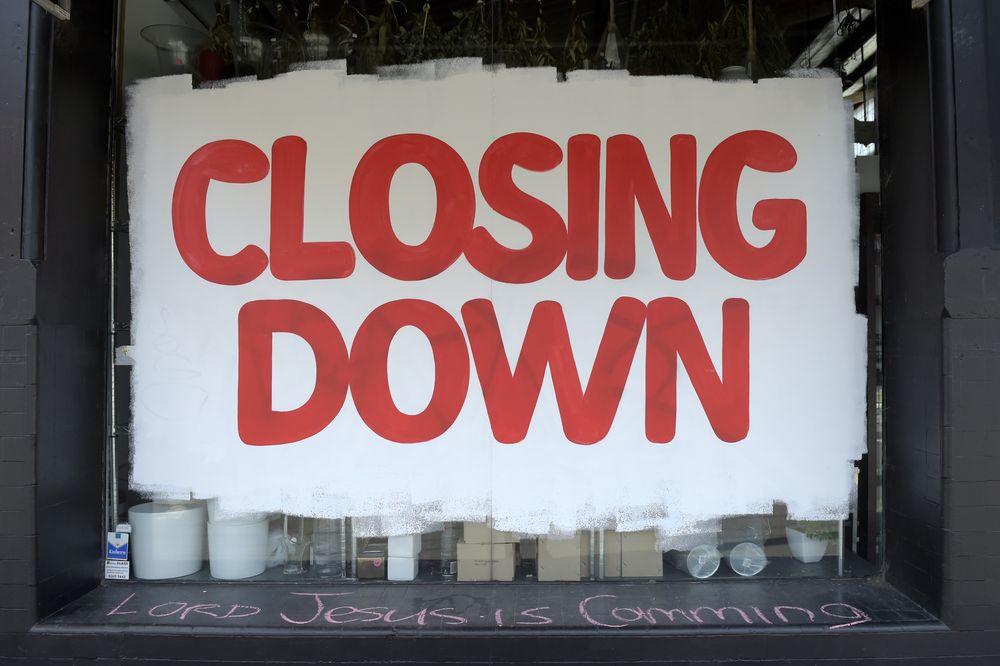
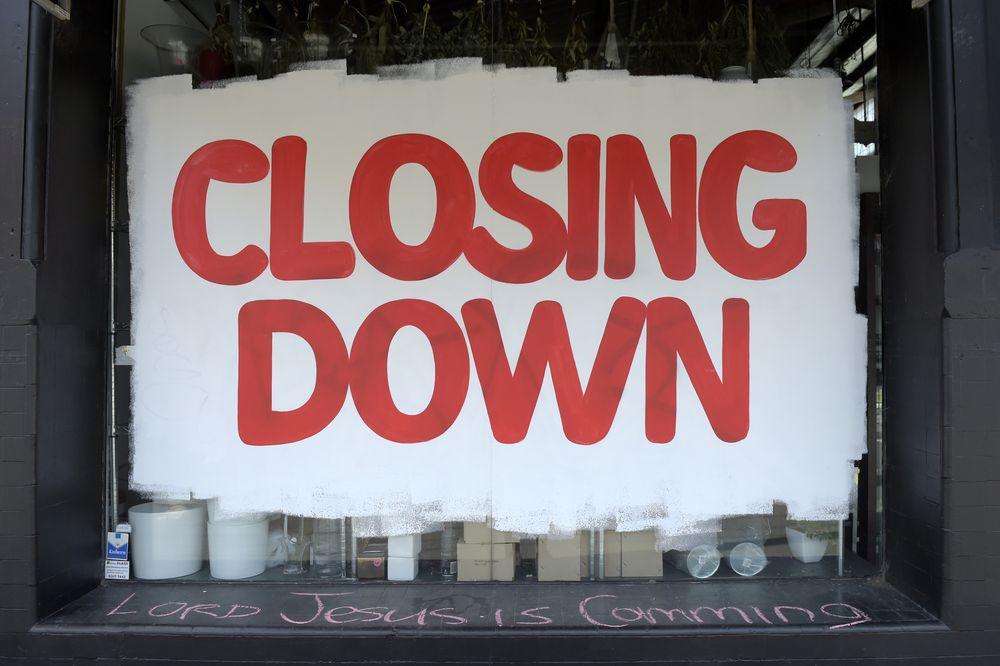
A ‘closing down’ sign fills the window of a homewares store in Melbourne, Australia; Photo: Bloomberg
The government, meantime, has followed the rest of the world in flooding the country with fiscal stimulus, injecting tens of billions of dollars into the economy including its signature JobKeeper wage subsidy program designed to keep workers attached to firms as it tries to maintain employment connections until activity can resume.
The silver lining is that the stimulus unleashed in China – Australia’s top trading partner (which is in jeoaprdy due to an escalating diplomatic feud) – to revive its economy is also fueling demand for Australian commodities and lifting prices, keeping the terms of trade elevated in the second quarter. In Q2, Australia saw a record current-account surplus of A$17.7 billion ($13.1 billion) aided by the weaker dollar and the country nation’s closed international borders which is keeping people from traveling abroad.
Meanwhile, on Tuesday the central bank boosted a line of cheap funding to banks to A$200 billion. In addition to supporting the economy, that should also help ease some of the upward pressure on the currency by confirming the RBA’s commitment to keeping conditions accommodative until activity recovers.
While the recession was widely expected, the aussie dollar slumped against the dollar, sliding from 0.7375 before the news to 0.7337 before paring some of the losses. The Australian dollar has benefited from Australia’s trade position, soaring almost 30% from a nadir in March.
via ZeroHedge News https://ift.tt/3hTAAAT Tyler Durden
Bipartisan Bill Seeks To Curb US Reliance On China For Rare Earths Tyler Durden
Tue, 09/01/2020 – 22:10
Ever since the first shots were fired in the US-China trade/tech/cold war in 2016, Beijing has frequently threatened to use its strategic position as the world’s pre-eminent supplier of rare earth metals – a group of 17 elements used in everything from sophisticated weapons to cell phones to wind turbines to electric cars – as potential leverage which it could wield in response to any perceived foreign (read US) aggression, even if it has so far refused to use this particular trump card. And with Sino-US relations deteriorating by the day, pushing China ever closer to the day it may in fact ban rare earth exports to the US, US House lawmakers are now taking advance measures for when that day finally comes, and have introduced a bipartisan bill aimed at seeking to curb US dependence on China for rare earths.
Rare earth elements are described as the ‘vitamins of chemistry’ — producing powerful effects in small doses
The legislation was co-authored by Republican Lance Gooden and Democrat Vicente Gonzalez, both of Texas, and is similar to that introduced in May by Senator Ted Cruz. Republicans Will Hurd, Roger Williams, Pete Olson and Randy Weber, as well as Democrat Henry Cuellar, are co-sponsors of the bill. All are Texas representatives. The measure would give tax incentives for companies involved in the mining, reclaiming and recycling of critical minerals and metals from deposits in the US, Bloomberg reported.
The bill is also part of a recent push in Congress to shift supply chains, especially in sectors viewed as critical for national defense, away from China and back toward the US; predictably, the effort has drawn broad support from domestic rare-earth companies which anticipate a major financial windfall should the bill pass.
“The tax incentive seeks to level the playing field with regard to the subsidies China provides from mine to magnet,” Pini Althaus, chief executive officer of USA Rare Earth, which is developing the Round Top Mountain deposit in Texas, said in a phone interview. “It would significantly improve the bottom line of any domestic rare earth project.”
Althaus also said the House measure which China would surely claim is a subsidy prohibited by the WTO, reduces the potential for China to dissuade investment in U.S.-based rare earth projects and supply chains, because those businesses will be better able to compete.
Last year, amid mounting concerns China would limit shipments of rare earths as the trade war escalated, Trump ordered the Defense Department to spur production of rare-earth magnets.
The legislation “lowers the cost of capital, which is the goal because China has lowered the cost of capital for their sector, and our sector needs to be able to compete,” Jim Litinsky, the incoming CEO of MP Materials, currently the sole U.S. miner of the minerals, said in a phone interview. “It’s probably the one thing I’ve seen everyone get behind.”
via ZeroHedge News https://ift.tt/3jBaOlh Tyler Durden
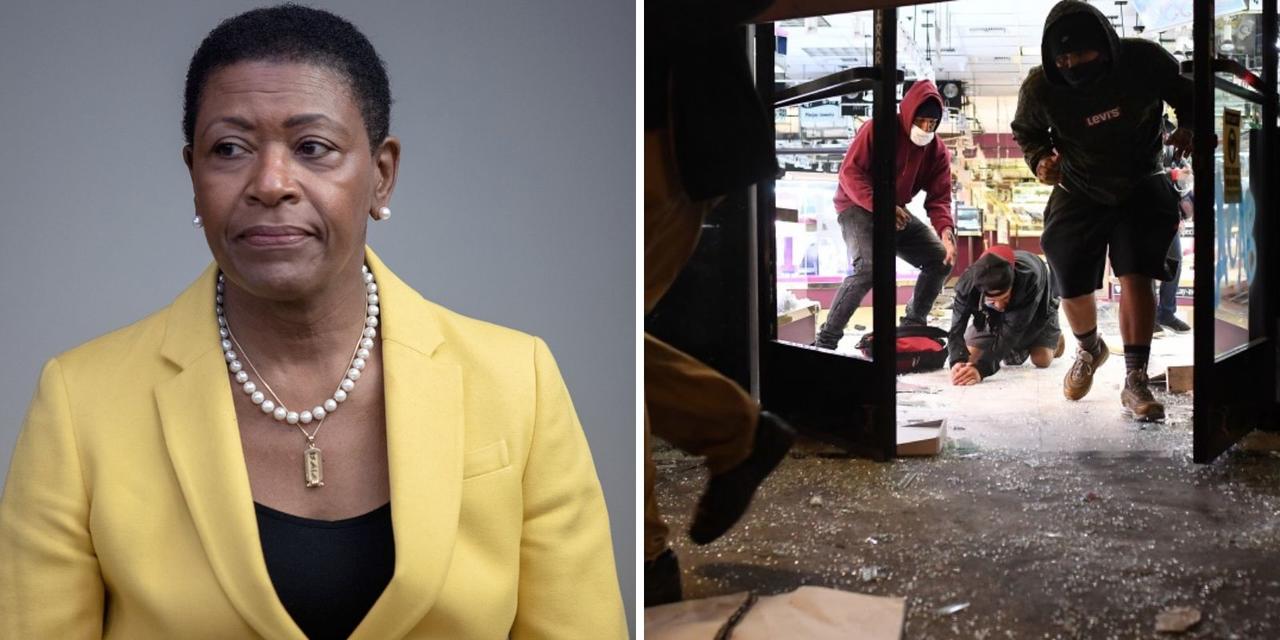
A district attorney in California reportedly told members of law enforcement that they should consider the needs of looters before deciding to charge them with looting.
Costa County District Attorney Diana Becton expressed her view that officers should consider whether “the target business” was “open or closed” at the time the looting took place, and “what was the manner and means” by which the looters had managed to get inside the business, the Daily Wire reported.
The charging guidelines were laid out by Jennifer Van Laar of RedState, which are as follows:
1.) Was this theft offense substantially motivated by the state of emergency, or simply a theft offense which occurred contemporaneous to the declared state of emergency?
2.) Was the target business open or closed to the public during the state of emergency? ii. What was the manner and means by which the suspect gained entry to the business? iii. What was the nature/quantity/value of the goods targeted? iv. Was the theft committed for financial gain or personal need? v. Is there an articulable reason why another statute wouldn’t adequately address the particular incident?
Van Laar goes on to quote Shouse California Law Group: “Under Penal Code 463 PC, California law defines ‘looting’ as taking advantage of a state of emergency to commit burglary, grand theft or petty theft. Looting charges can be filed as a misdemeanor or a felony and is punishable by up to 3 years in jail.
Becton’s ideas run counter to those in charge of Sacramento County, where Sheriff Scott Jones reportedly requested on Friday that the federal government send in the National Guard after “roughly 200 protesters broke windows at the downtown offices of the sheriff, district attorney and other government agencies the night before.”
Jones was flanked by “blown-up photographs” depicting protesters dressed in body armor during a protest that took place Thursday, and he referred to the demonstrations as an “attempted insurrection.” Sacramento County District Attorney Anne Marie Schubert suggested that the actions of the demonstrators was planned.
“It’s been one day and I’m already done with this,” Jones said during a Friday news conference.
I wonder why many of the agitators reportedly came from out-of-state?https://t.co/4g9qcyF1ht
The Daily Wire reported that Becton is the same district attorney who charged a couple with a “hate crime” for painting over a Black Lives Matter mural in front of the Wakefield Taylor Courthouse.
Becton has also garnered a name for herself in co-authoring an opinion piece for Politico alongside district attorneys Kim Foxx of Chicago, St. Louis’ Kim Gardener and two two others, writing: “Our criminal legal system was constructed to control Black people and people of color. Its injustices are not new but are deeply rooted in our country’s shameful history of slavery and legacy of racial violence. The system is acting exactly as it was intended to, and that is the problem. We should know: We’re Black, we’re female, and we’re prosecutors. We work as the gatekeepers in this flawed system. And we have some ideas for how to fix it.”
Becton is not the only one supporting the idea of looting. Vicky Osterweil penned a book entitled “In Defense of Looting,” where she argued that “looting is a powerful tool to bring about real, lasting change in society.” Osterweil even denigrated small businesses, in writing: “When it comes to small business, family owned business or locally owned business, they are no more likely to provide worker protections. They are no more likely to have to provide good stuff for the community than big businesses.”
via ZeroHedge News https://ift.tt/3gRAFDZ Tyler Durden
Ilhan Omar Demands Apology From MSNBC’s Joy Reid Over “Islamophobic Comments” Tyler Durden
Tue, 09/01/2020 – 20:55
MSNBC personality Joy Reid is under fire once again after making an allegedly “Islamaphobic” comment”. But this time, her accuser is none other than controversial Democratic Congresswoman Ilhan Omar, who herself has refused to apologize for comments that were heralded as anti-semitic, while once blithely – and publicly – dismissing 9/11 as “a thing that happened”.
Omar and a anti-defamation league-type group called Muslim Advocates complained that Reid made callously Islamophobic remarks on air during a broadcast the other night.
Reid’s crime? She compared the way President Trump acts to the way “Muslims” act. She intended to compare Trump’s behavior to that of somebody like Turkish leader Recep Tayyip Erdogan, which is hilarious because in reality, there is no real grounds for comparison. Even their rhetorical styles differ markedly, though both have shown a penchant for “interfering” with the central bank.
But that’s not how it came out.
During her show, Reid said, “the leaders, let’s say in the Muslim world, talk a lot of violent talk and encourage their supporters to be willing to commit violence, including on their own bodies, in order to win against whoever they decide is the enemy. We in the U.S. media describe that as they are radicalizing those people—particularly they are radicalizing young people. That’s how we talk about the way Muslims act. When you see what Donald Trump is doing, is that any different from what we describe as radicalizing people?””
In a statement, Muslim Advocates demanded that Reid “apologize on air tonight.”
“Joy Reid must apologize on air tonight for spreading the false, dangerous myth that Muslims are inherently radical and violent. MSNBC also needs to take action to ensure anti-Muslim bigotry has no place on its network. Muslims have been gunned down in their homes and houses of worship by people who believe in the very same hateful, false smears that Reid shared on her program. This is deadly serious and it’s part of a dangerous, longstanding pattern.
Omar made a similar request.
Honestly, this kinda of casual Islamophobia is hurtful and dangerous.
We deserve better and an apology for the painful moment for so many Muslims around our country should be forthcoming. https://t.co/megnZyL9dd
This isn’t the first time Reid has been in the cross-hairs of Islamic rights groups. Back in 2018, a furor was unleashed when several old blog posts bearing homophobic and Islamophobic messages were unearthed.
Here’s an excerpt from one particularly “problematic” post:
“My feeling is that the only reason that a world war between civilizations has not already broken out is that the vast majority of Muslims living in the world today are so desperately poor that they have the time, energy and resources for only the occasional burst of AK-47 fire into the air from the garbage and sewage laden streets outside of their mud huts. Give them resources and I fear that they will come after us everywhere that they can find us, which is to say everywhere.”
Her use of the phrase “mud huts” is particularly appalling.
Yet, Reid survived past scandals and managed to hang on to her job at MSNBC. It’s almost like the news organization can’t fire her.
Last time around, Reid laughably made things worse by claiming that “hackers” published the offending blog posts under her name.
Will Reid make history as one of the first people to mendaciously cry “deep fake?”
via ZeroHedge News https://ift.tt/2YU8TjU Tyler Durden
In Unprecedented Move, CDC Halts Most Rental Evictions Until End Of 2020 Tyler Durden
Tue, 09/01/2020 – 20:30
In an unprecedented move on Tuesday, with Congress unable to reach a common ground on virtually any stimulus extension, the Centers for Disease Control and Prevention unveiled today it would temporarily – at least through the end of 2020 – suspend most rental evictions for Americans struggling to pay rent due to the pandemic, in a step which CNN dubbed was “broader than eviction protections already in place.” The move comes as negotiations on further coronavirus aid have been stalled as Republicans and Democrats refuse to budge on topline numbers for what a new relief package would cost.
In a phone call with reporters, officials said the order will apply to Americans who qualified for direct payments under the CARES Act.
To be sure there are some hurdles: renters will have to prove that they’ve taken “best efforts possible to seek government assistance to make their rental payments,” and will have to “declare that they are unable to pay rent due to Covid financial hardship,” and must show they “will likely become homeless or move into congregate housing settings if they are evicted”, but that should not be a problem for anyone willing to live rent free indefinitely.
Renters will also have to fill out several forms, found on the CDC’s website, and give them directly to their landlords to qualify for the program.
“This will be a declaration presented to the landlord, if that landlord approaches a tenant with an intent to evict,” an official said. Because the move is federally mandated, it “would become a criminal offence” if the landlord chose to ignore the declaration. But it could still end up in courts, possibly leading to legal actions that could show up on background checks or credit reports.
And while landlords are being effectively stripped of most if not all of their rights with this extraordinary intervention, they will still be able to remove tenants for “committing criminal acts, threatening the health and safety of other residents, damaging property or other health and safety considerations,” an official added although good luck getting through to the local police station and reporting a crime in a country where defunding the local law enforcement is seen as the pinnacle of progressive thought.
“To the extent that there is a dispute between the landlord and the renter about whether or not an eviction protection is in place here, it can be filed, and that would be for the local courts, which are not federal to adjudicate,” an official said, without clarifying how long before defunding the local courts becomes the next progressive ideal. On the other hand, in places like Portland they won’t even have to do that: after all, everyone arrested for rioting is released the next day with the blessing of the judicial branch so they can resume rioting post haste.
Under the CARES Act, only renters in federally-backed rental units were protected from eviction. “This covers any rental unit in United States, so long as the renter meets those requirements, where they’ve demonstrated that they are at risk of becoming evicted,” an official said. There’s also currently a moratorium on evictions for federally-backed, single family home mortgages.
Realizing that this was nothing short of an invitation to stop paying rent, a CDC official said pointblankthis “is not an invitation to stop paying rent.” It was unclear how many in the audience laughed. “The order makes clear that a renter who cannot pay his or her full rent should pay an amount that is not unduly burdensome, and as close to payment as possible.”
The landlords are surely holding their breath (their best and only recourse… although if they hold it long enough they will surely get a Fed bailout too).
As for those asking just why on earth a decision to halt evictions is being made by the CDC and not say… Congress, an official said “the CDC director has authority to take measures that he’s reasonably necessary to mitigate the spread of communicable disease.”
“Congress has delegated broad authority to HHS, the Surgeon General and CDC, to take reasonable efforts to combat the spread of communicable diseases, and frankly I think it makes sense for those authorities abroad because we don’t know for any given situation or scenario what steps will be needed to stop the spread,” an administration official said. “I think, in this particular order, the CDC has made a very compelling case that it is quite problematic at this particular time. It’s focused on this particular pandemic, which is obviously the uniquely powerful grasp in the nation’s entire history in terms of the effect it’s had that for a bunch of reasons in particular, that the home has been sort of the focal point of people social distancing and building, sort of a safe space themselves over the past few months, and also the fact that if people get kicked out, they may end up in overcrowded congregated living facilities or homeless shelters, and that is a potential recipe for a big spread of COVID-19.”
Asked why that authority wasn’t being used to enact a federal mask mandate, officials refused to answer because the question didn’t “have to do with the call at hand.”
Finally, confirming the political nature of the decision, deputy press secretary Brian Morgenstern said the action “means that people struggling to pay rent due to the coronavirus will not have to worry about being evicted and risk further spreading of or exposure to the disease due to economic hardship,” and attacked Democrats on the hill.
Officials did not answer questions about how that legal action could impact credit or future housing options.
And with that, we now wait for the CDC to start sending unemployment benefits and buying Apple bonds.
via ZeroHedge News https://ift.tt/3jO54VJ Tyler Durden