US ‘In Contact’ With Russia, Trump Confirms

US ‘In Contact’ With Russia, Trump Confirms

President Donald Trump has acknowledged that the United States and Russia are “in contact” related to the tragic events of the American Airlines passenger plane colliding with a US Army Black Hawk helicopter Wednesday evening near Reagan National airport in Washington D.C.

All 64 passengers and crew members aboard Flight 5342 perished, while the three US servicemembers on board the H-60 Black Hawk were killed. No one survived the crash in the Potomac River. Among the 16 figure-skaters on board, two well-known skating coaches who were Russian nationals died: Evgenia Shishkova and Vadim Naumov.

Trump in a Thursday briefing told reporters: “We had a Russian contingent – some very talented people – unfortunately on that plane,” emphasizing of the deadly tragedy that he’s “Very, very sorry about that.”
Via Reuters

“We’ve already been in contact with Russia,” Trump said in response to a question from a reporter. He pledged that the the US “will facilitate” the transfer of the remains of any Russian nationals who died in the crash, and that sanctions and flight bans into Russia will not impact this.

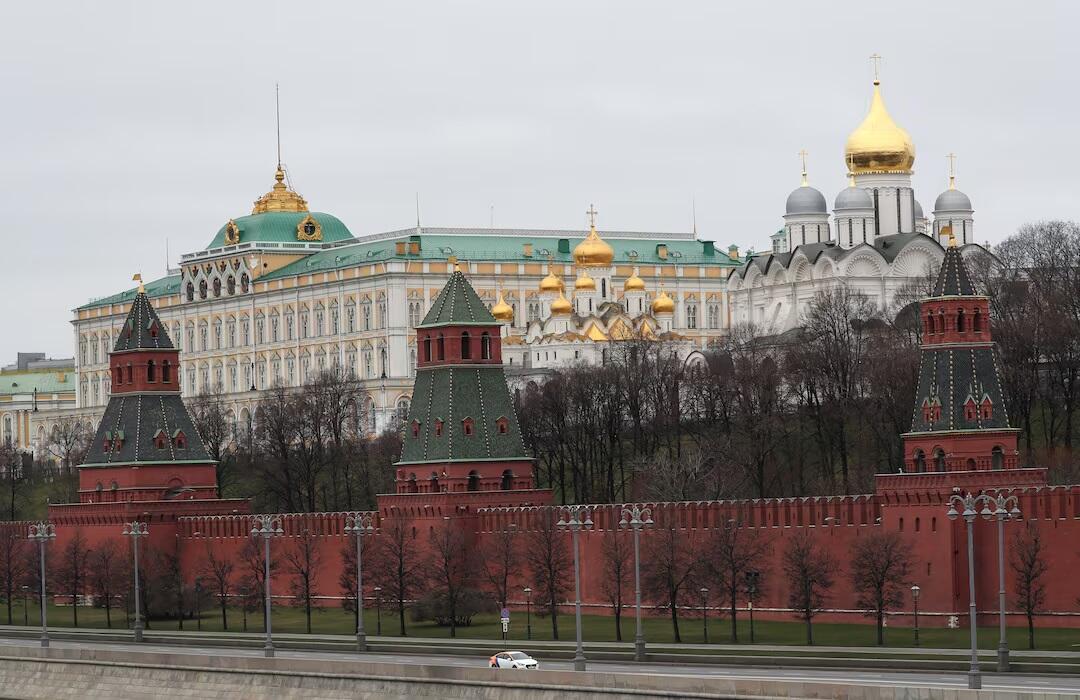
The Kremlin has since clarified that this did not involve direct contact between Presidents Putin and Trump.

Russian Foreign Ministry Spokeswoman Maria Zakharova has since indicated there may have been up to four Russian citizens on board the plane when it went down: “According to our embassy, three victims of this plane crash had Russian passports. There is confirmation regarding another, a fourth person who could hold a Russian passport, this information is currently being verified,” the diplomat said.

Despite Trump’s positive words of condolence, Zakharova strongly suggested that the US side hasn’t been very responsive to Russian requests:

“Our embassy is communicating with the US Department of State on the entire range of issues,” Zakharova assured reporters, even as it “looks like a one-way communication.” The Russian embassy has been asking questions, “but we have not received substantive responses so far. However, there is communication, and we have been given some general replies,” she explained.

“We are grateful to the American authorities, with whom we are in constant contact, for the words of support expressed to the families of the victims and their readiness to help with the transfer of the remains to their homeland,” the Russian embassy said in a statement on Thursday.

Plane crash victims Evgenia Shishkova and Vadim Naumov. Getty Images

The question of how quickly Trump and Putin might directly engage in frank dialogue related to seeking to wind down the Ukraine war is being watched by many.

There’s a likelihood of lower level talks which could hammer out the parameters of such initial dialogue. But the expected Trump-Putin phone call quickly on the heels of Trump’s inauguration doesn’t appear to have happened yet.

Tyler Durden
Fri, 01/31/2025 – 18:00

via ZeroHedge News https://ift.tt/uD0QyVW Tyler Durden
China’s Boldest Oil Hunt Yet

China’s Boldest Oil Hunt Yet

By Irina Slav of OilPrice.com

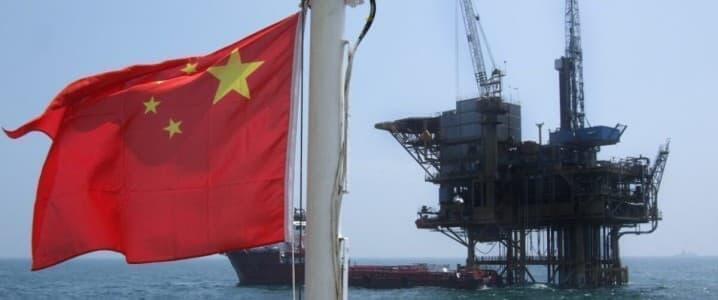
In October last year, China’s CNOOC reported record oil and gas production from a field called Deep Sea #1. The field was the company’s first ultra-deep project, an example of the pursuit of new, untapped resources that lie deeper under the sea. Yet it’s not only ultradeep offshore drilling that the Chinese are focusing on. Right now, China is building a new rig that should be able to drill much deeper than any other rig-onshore.

Led by the Chinese Academy of Geological Sciences, the project involves a number of research institutions and companies. Its purpose: to develop a smart drilling rig that could reach depths of 15,000 meters, or about 50,000 feet.

“The Deep Earth National Science and Technology Megaproject is a forward-looking strategy that aligns with global scientific frontiers while ensuring national energy and resource security,” state news outlet Xinhua said, as quoted by the South China Morning Post.

Scientific frontiers aside, it’s all about the oil and gas and other mineral resources. That was the purpose of a CNPC project in the Tarim Basin in Northwestern China, where the state oil major experimented with drilling depths of up to 11,000 meters. The drilling began in 2023. Last year, after 279 days of drilling, the drill broke the 10,000-meter mark, per Chinese media reports, making the well the deepest ever drilled in the country. It was also the deepest well drilled in Asia—and the fastest drilled well of over 10,000 meters. The well was completed in March last year.

Drilling ultra-deep wells is certainly a challenging endeavor.

The deeper you go, the hotter it gets, and this can interfere with the process, which is why ultradeep drilling is not yet standard practice.

However, the fact that Chinese energy companies and researchers teamed up on the subject is telling—and it tells us that China is prepared to go to these lengths to increase the degree of self-sufficiency in the energy space.

The Shendi Take 1 well—the one that CNPC drilled in the Tarim Basin—cuts through 13 layers of rock, reaching formations that are 500 million years old. The new drill that the Chinese Academy of Geological Sciences-led team is developing will make it possible to cut even deeper into the Earth’s crust and tap new oil and gas. And there is lots of these at such depths.

The Shendi Take 1 well is certainly an achievement. But it is not the deepest well drilled in the world. That honor falls to the Chayvo well, drilled offshore Russia’s Sakhalin island by a local subsidiary of Exxon—the operator of the Sakhalin-1 project. The Chayvo well exceeds 12,000 meters in depth, which makes it 15 times longer than the world’s tallest building, Dubai’s Burj Khalifa. The deposit, which the well was drilled into, holds an estimated 2.3 billion barrels of crude oil and 480 billion cu m of natural gas.

This is the ultimate reason for the ultra-deep drilling exercises: finding new hydrocarbon resources. Because the biggest energy challenge that human civilization faces—as articulated by “Landman” protagonist Tommy Norris—is whether we would find an alternative before it runs out. There are schools of thought that argue there is in fact an unending supply of hydrocarbons in the Earth’s crust. While that remains debatable, it is a fact that the world’s undiscovered oil and gas resources lie in greater depths than previously considered standard. Researching ultra-deep drilling is an example of adaptation to the changing realities of energy supply.

China is the most obvious candidate for such research and experiments. The largest crude oil and gas importer in the world has substantial local reserves of hydrocarbons, but reaching them is more challenging than it is, say, in the Permian. Hence the concerted investment in ultra-deep drilling and the pursuit of “leading-edge scientific breakthroughs as soon as possible” – even as China cements its dominance in the wind and solar sector.

Tyler Durden
Fri, 01/31/2025 – 17:40

via ZeroHedge News https://ift.tt/2UouRfx Tyler Durden