New Trump-Xi Showdown Approaches As Chinese Tankers Press Ahead To Venezuela Despite Blockade

New Trump-Xi Showdown Approaches As Chinese Tankers Press Ahead To Venezuela Despite Blockade

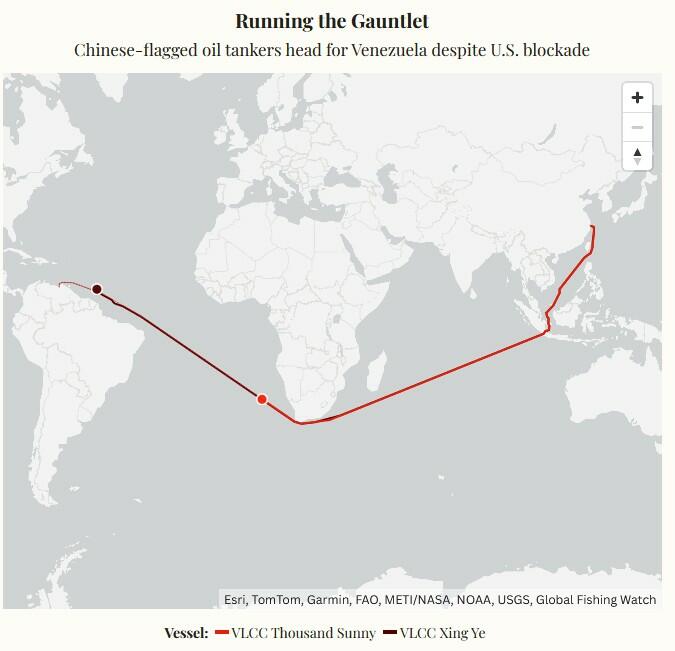
Two Chinese-flagged very large crude carriers are proceeding toward Venezuelan waters despite a U.S.-imposed blockade on sanctioned oil tankers, raising the prospect of heightened tensions between Washington and Beijing over Venezuela’s crude exports.

Thousand Sunny oil tanker (photo: Tommy Chia)

Shipping data published by Lloyd’s List on Tuesday shows the Thousand Sunny is expected to arrive at Venezuela’s Jose Terminal in mid-January after rounding the Cape of Good Hope empty in the southern Atlantic, Newsweek reports. The vessel, which is not subject to U.S. sanctions, has historically transported Venezuelan Merey heavy crude to China. A second unsanctioned Chinese-flagged VLCC, the Xing Ye, is currently positioned off French Guiana, awaiting loading at the same terminal, Newsweek said.

Via Newsweek

Both the State Department and China’s Foreign Ministry have remained mum on the vessels’ movements.

The high-stakes voyages come as President Donald Trump escalates pressure on Venezuelan dictator Nicolás Maduro, including a mid-December order for a “total and complete blockade” of sanctioned oil tankers entering or leaving the country. U.S. forces have seized at least two tankers carrying Venezuelan crude in international waters this month, with a third evading boarding. The Pentagon has described the measures as a “quarantine” aimed at curbing revenue to the Maduro government, which Washington accuses of links to drug trafficking and terrorism.

Separately, the Central Intelligence Agency carried out a drone strike on a remote coastal dock in Venezuela earlier this month, marking the first acknowledged U.S. operation on Venezuelan territory, according to people familiar with the matter briefed to CNN.The target, believed by U.S. officials to be used for storing and loading narcotics onto boats – potentially by the Venezuelan gang Tren de Aragua – was unoccupied at the time, and no casualties were reported. The strike followed a series of U.S. attacks on suspected drug-trafficking vessels in international waters.

Trump first referenced the operation in a Friday radio interview with WABC’s John Catsimatidis, saying U.S. forces had “knocked out” a “big facility where the ships come from” two nights earlier.

On Monday, Trump elaborated on the mission during a gaggle with reporters, saying, “There was a major explosion in the dock area where they load the boats up with drugs… That is no longer around.”

The White House and Pentagon have declined to provide further details on the operation or its execution. Venezuelan officials have not publicly responded to the reports.

Tyler Durden
Wed, 12/31/2025 – 18:20

via ZeroHedge News https://ift.tt/2mYb7iQ Tyler Durden

In Texas, A 400-Acre Muslim Development Sparks Controversy

In Texas, A 400-Acre Muslim Development Sparks Controversy

Authored by Darlene McCormick Sanchez via The Epoch Times,

JOSEPHINE, Texas – This rural town with farmland stretching to the horizon might as well be a million miles away from New York City with its skyscrapers and big-city worries.
But the residents of the Big Apple and Josephine have something in common—controversy over the construction of a mosque.

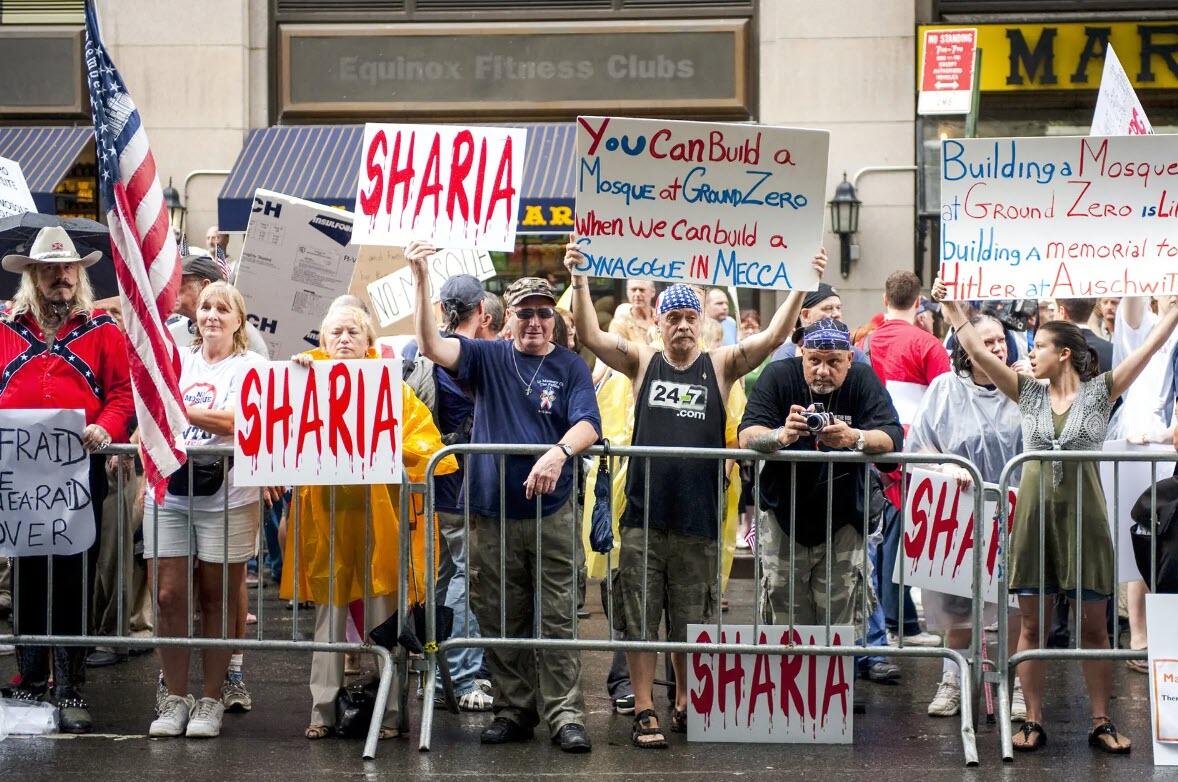
Perhaps not since the “Ground Zero Mosque” was proposed two blocks from the World Trade Center site of the Sept. 11 terrorist attacks has a mosque drawn so much attention.

The proposed 2009 Manhattan mosque and Islamic cultural center was known as Park 51. It faced sharp public criticism for plans to place a symbol of Islam so close to where thousands died from an attack by radical jihadists. Groups such as Stop Islamization of America led protests against “radical Islam” before the project was eventually abandoned.

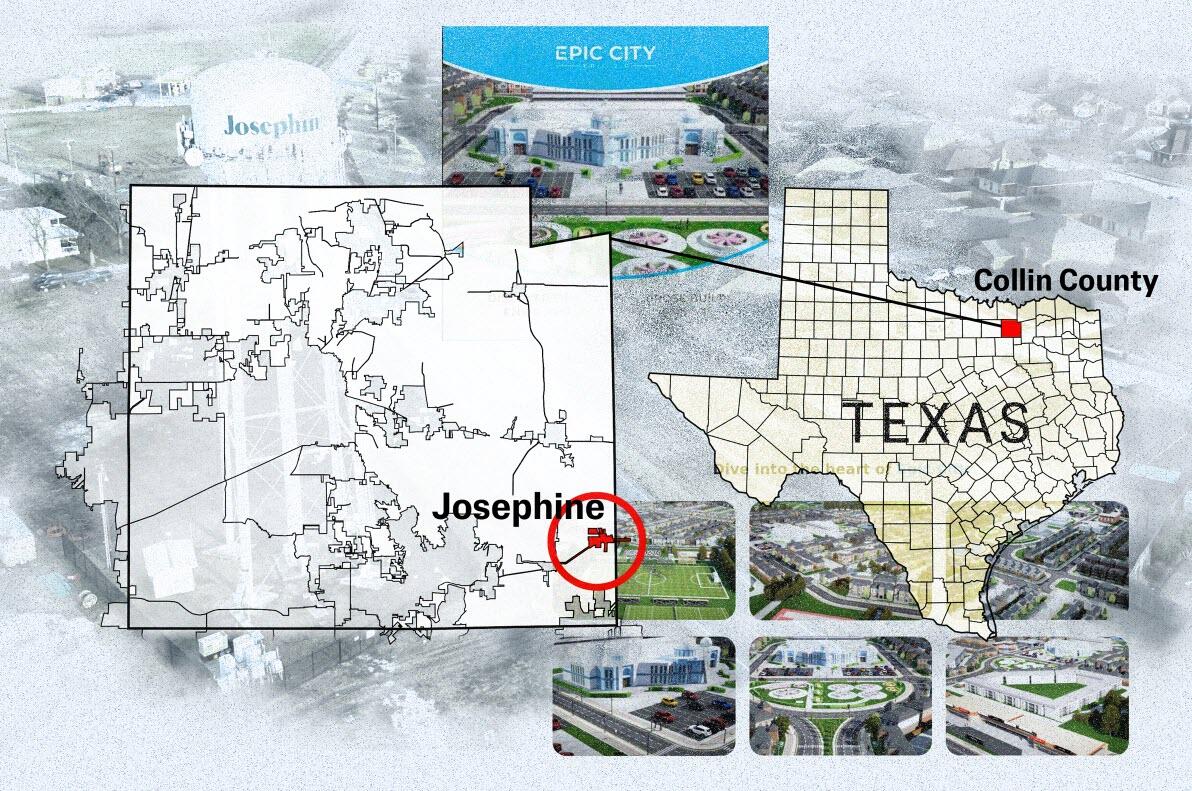
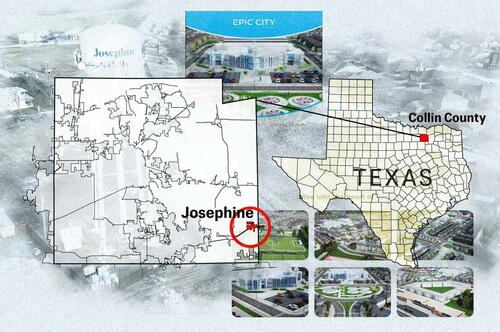
More than a decade later, as Muslim migration to Texas has increased, a similar uproar has risen over a proposed Muslim-focused neighborhood anchored by a mosque in rural Texas, some 40 miles from Dallas.

Promotional materials first described EPIC City, named after the East Plano Islamic Center, as the “epicenter of Islam in America.”

Following backlash at the local, state, and federal levels, it changed its name to The Meadow.

The development would encompass 402 acres of farmland outside Josephine, a town of 8,800 residents founded in 1888 by a railroad company back when cotton was king in Texas.

It would include 1,000 homes, a mosque, a K-12 faith-based school, sports facilities, a community college, senior housing, an outreach center, and businesses.

Since the idea was proposed, numerous public officials and community members have worked to halt the development, citing concerns about whether the new community would integrate with the local population and asking questions over sharia—Islamic law—and potential ties to foreign Islamic groups.

The development has prompted legal battles, state and federal investigations, and new state laws addressing neighborhood composition and foreign ownership. The ongoing battle included Texas Gov. Greg Abbott classifying some Islamic groups as foreign terrorist organizations; and the White House is considering similar action.

A new mosque is the centerpiece of the proposed EPIC City, described as the “epicenter of Islam in America.” The city was renamed The Meadow after backlash at the local, state, and federal levels. Republican leaders, including Texas Gov. Greg Abbott, and residents have opposed the proposed 402-acre Muslim development outside the rural town of Josephine, Texas. Rendering from Texas legal documents

Grassroots Backlash

The Muslim-led community would be located in an area largely populated by white and Hispanic residents whose religion is predominantly Christian.

Locally, residents have voiced concerns about Islamic radicalization and sharia law in communities they believe may not integrate into U.S. culture, despite the developer’s denials.

Sharia law is an Islamic code of conduct and law derived from the Quran, often at odds with laws and rights in Western countries.

One woman who spoke at a Collin County Commissioners Court meeting in November raised concerns that sharia would replace U.S. law within the development.

“This remains an Islamic-focused community, and Islam is fundamentally incompatible with our Constitution,” she said.

At the Josephine City Council meeting, a resident of Armenian descent said people should be aware that, in his view, Islam is only peaceful when it is not in control.

“Islam is not truly a religion of peace,“ he added. ”Once they get to a certain point in a culture, they start to ravage it from within.”

Most Muslims are good people, he said, but when their religious ideology demands it, they feel compelled to obey. “They don’t speak up against it.”

He referenced historical events, saying the West should consider the Armenian genocide over a century ago under the Ottoman Empire, which imposed sharia.

“We were walked into the Syrian desert until we died of hunger, of starvation. They hung Christian females to posts and lit them on fire as candles,” he said.

As public concerns intensified, state officials stepped up their efforts to address them.

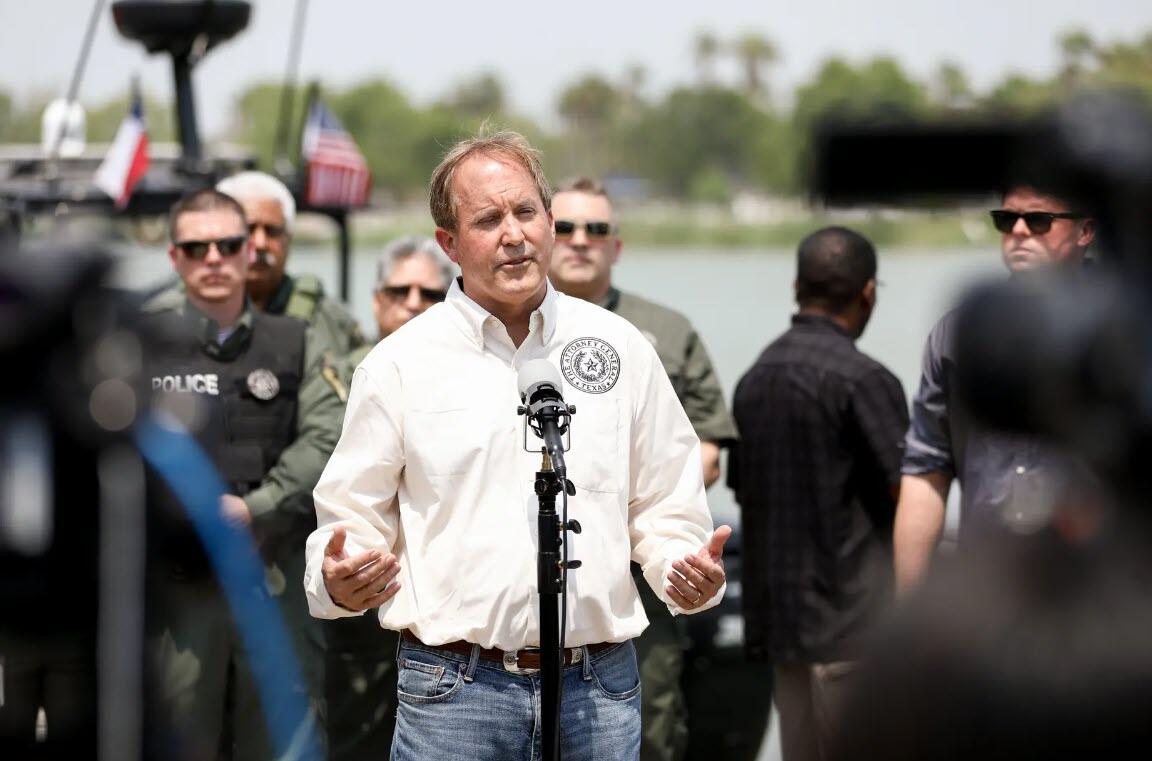
Earlier this month, Texas Attorney General Ken Paxton announced a lawsuit against the East Plano Islamic Center (EPIC), which contracted for the land, and developer Community Capital Partners, and others, alleging violations of Texas securities laws.
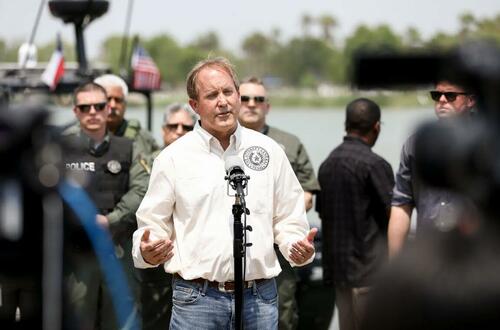
Texas Attorney General Ken Paxton at a press conference in Anzalduas Park near McAllen, Texas, on April 28, 2021. Charlotte Cuthbertson/The Epoch Times

​The lawsuit claims the housing development would be illegally reserved for Muslim residents. It also asserts that the project’s leaders “lined their own pockets” with funds during development.

Abbott took to social media on Dec. 3, stating the development’s name change does not alter its intent and that at least four state agencies continue to investigate “this misguided mission.”

“‘The Meadow’ will remain just that—an empty meadow,” Abbott said. “EPIC can change its name, but can’t change the legality of the flawed structure they seek to impose. They delete social media posts & rewrite contracts. But it’s just a disguise to impose sharia on a community they create.”

Developers Say No Wrongdoing

​Meanwhile, the Texas enclave’s developers and Muslim groups have denounced the legal action as Islamophobic and a violation of their rights.

The Islamophobia Network, a project of the Council on American-Islamic Relations (CAIR), produced a report about the development condemning Abbott’s actions as politically motivated.

​“Anti-Islam organizing targeting the Muslim-led EPIC City development project saw bias mobilizing the power of Texas government to deny Muslims their equal opportunities to pursue their dreams and potential,” the report said.

​It denounced what it called “anti-Islam” legislation and what it called “advanced conspiracy theories” involving “no-go zones.”

​The report compared tactics used to stop the EPIC development to those used in the controversy over the “Ground Zero Mosque” at Park 51.

​“We also note that Governor Abbott and Texas Attorney General Ken Paxton’s attack on EPIC City has not resulted in any evidence of wrongdoing to date and may violate Constitutional prohibitions against arbitrary government action,” the group stated.
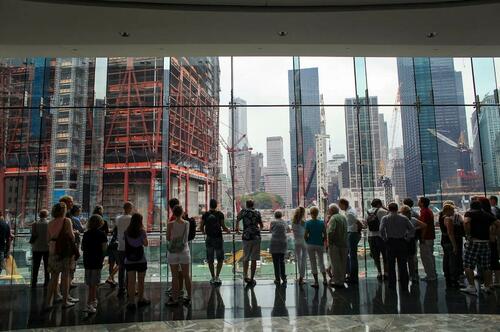
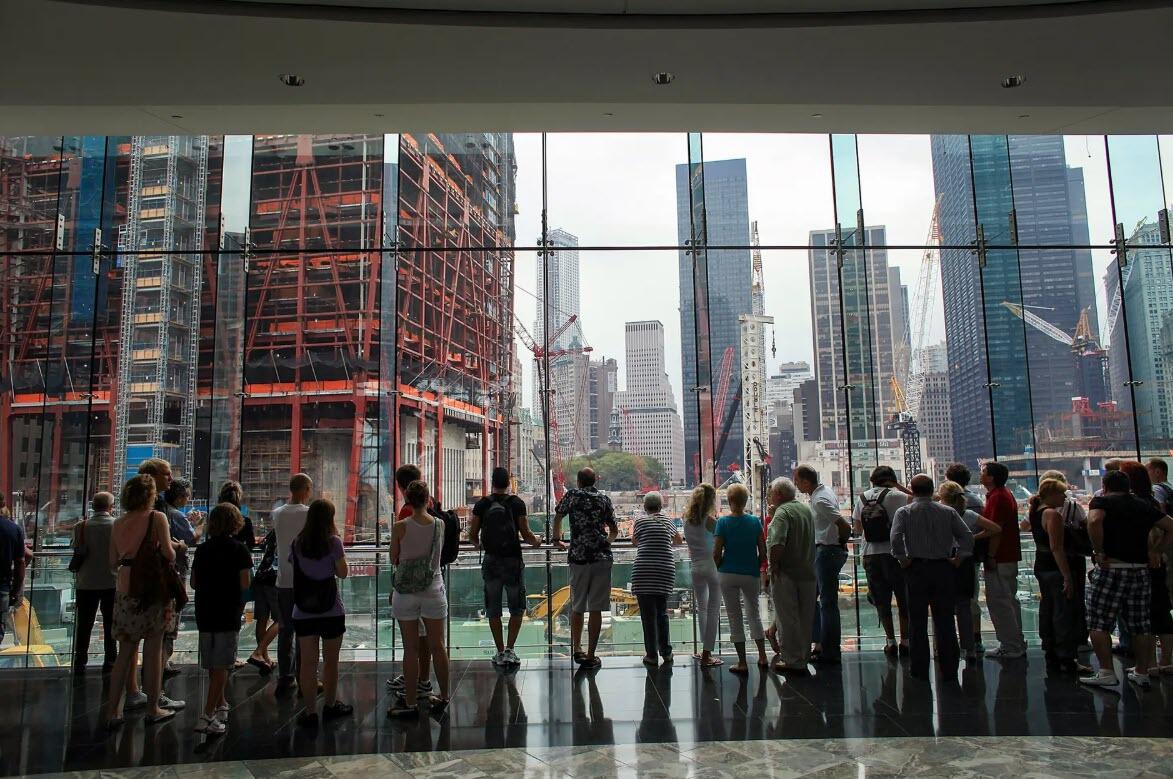
People watch construction at the World Trade Center site in New York City on Aug. 16, 2010. The proposed Manhattan mosque and Islamic cultural center, known as Park51, drew sharp criticism in 2009 over plans to locate it near the site of the Sept. 11 terrorist attacks. Spencer Platt/Getty Images

​High-profile Texas attorney Dan Cogdell, who represents developer Community Capital Partners, held a press conference in the spring as the pressure campaign against the development ramped up.

​​“My clients are law-abiding Texans, law-abiding Americans, and law-abiding Muslims,” he said.

​​He added that no one associated with the community follows or implements sharia and that Abbott was attempting to “demonize” Muslims.

​Neither EPIC nor Cogdell responded to requests for comment.

State Legislation

Republicans campaigning in the Lone Star state are tapping into public unease over mass immigration and the increase in terrorist incidents, such as the Nov. 26 shooting of two Washington D.C. guardsmen by an Afghan immigrant.

​Abbott is currently seeking his fourth term as governor, while Paxton is running in the Senate Republican primary against incumbent Sen. John Cornyn (R-Texas).

In a flurry of activity this fall, Abbott took steps to block foreign threats and developments in Texas.

In September, he signed House Bill 4211 into law, banning residential property developers from creating exclusionary compounds, specifically citing the EPIC project.

Abbott stated that the law bans residential property developments such as EPIC City “from creating sharia compounds and defrauding and discriminating against Texans.”

“The fact is, religious freedom is a central part of the Texas Constitution. But bad actors like EPIC and EPIC City tried to use religion as a form of segregation. We will ensure that we have the laws and law enforcement in place to prevent attempts to build such discriminatory compounds in the state of Texas.”

​Likewise, in June, the governor signed Senate Bill 17 into law, banning transnational criminal organizations and foreign adversaries—including Iran—from purchasing land.
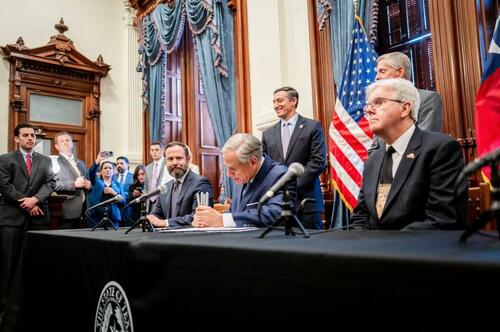
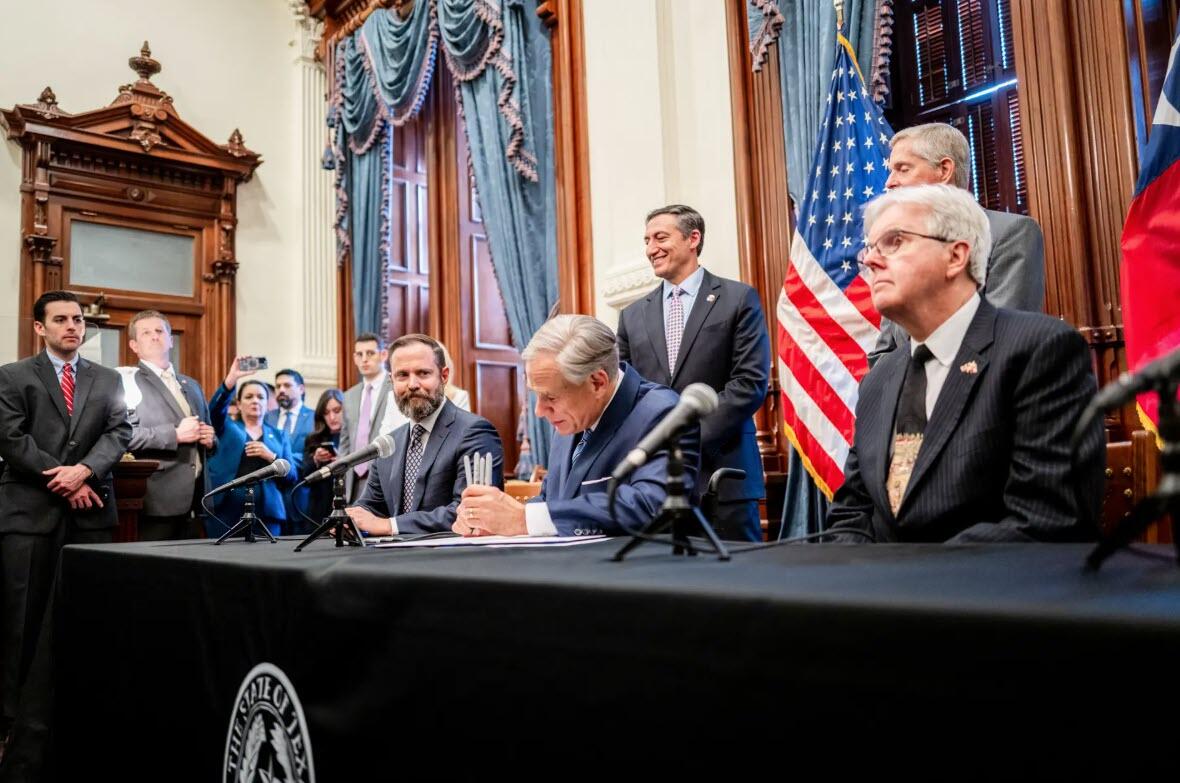
Texas Gov. Greg Abbott signs a bill at the state Capitol in Austin on April 23, 2025. Earlier this year, Abbott signed measures that would curb exclusionary residential compounds—citing the EPIC project—and restrict land purchases by foreign adversaries and transnational criminal groups. Brandon Bell/Getty Images

On Nov. 18, Abbott cited these laws in a proclamation designating the Muslim Brotherhood, which has ties to Hamas, and the Council on American-Islamic Relations (CAIR) as foreign terrorist organizations (FTOs) and transnational criminal organizations.

The designation authorizes “heightened enforcement against both organizations and their affiliates and prohibits them from purchasing or acquiring land in Texas,” according to the governor’s office.

Abbott took the additional step in December of asking Treasury Secretary Scott Bessent to suspend CAIR’s tax-exempt status, citing longstanding ties to the Muslim Brotherhood and Hamas.

CAIR filed its own lawsuit against Abbott and Paxton in November, calling Abbott’s proclamation “unconstitutional and defamatory.” The group said the proclamation falsely declared the Texas chapter of CAIR as a terrorist group.

A few days later, the White House announced it would investigate whether certain chapters of the Muslim Brotherhood should be designated as FTOs. Secretary of State Marco Rubio suggested during a radio interview with “Sid and Friends in the Morning” in August, that designating CAIR as a terrorist group was also “in the works.”

Other leading Republicans, opponents of Islamic extremism and sharia, have weighed in on the EPIC development.

In May, Cornyn said that the Department of Justice (DOJ) launched a civil rights investigation into the development at his request. The investigation was ultimately dropped with no violations cited.

Cruz, who reintroduced a bill in July to designate the Muslim Brotherhood as a terrorist group, said during a Heritage Foundation appearance that sharia law was a concern at the EPIC development in North Texas.

​Last month, Rep. Chip Roy (R-Texas), who is running for Texas Attorney General, introduced legislation to counter mass migration. The bill would deny legal status to followers of sharia, known or suspected terrorists, and other groups.

​“Many Americans strive to live their life practicing their faith, while our immigration system is actively importing radical Islamic sharia adherents and communists,” Roy said in a press release.
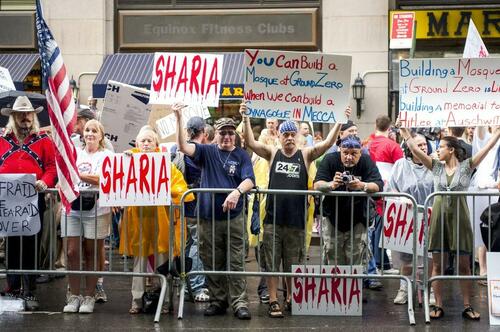
Demonstrators attend a rally with the Coalition to Honor Ground Zero in New York City on Aug. 22, 2010. The rally was held to oppose the construction of an Islamic Center and mosque near Ground Zero. Don Emmert/AFP via Getty Images

‘A Different Population’

​Simon Hankinson, a senior research fellow at the Border Security and Immigration Center at The Heritage Foundation, said public fears over Muslim enclaves and mass migration are symptoms of a brewing national identity crisis.

Americans fear they are losing their culture and way of life to foreign influences, including those from the Middle East, he told The Epoch Times.

​The foreign-born population of the United States currently sits at about 16 percent—the highest in history, according to the U.S. Census Bureau’s January 2025 Current Population Survey.  The last time it was close to being that high was in 1890, when immigrants mainly from Eastern Europe pushed the foreign-born population to 14.8 percent, according to the Census Bureau.

​“But obviously, now the Muslim population is growing rapidly with immigrants from the Middle East and North Africa—and it’s a cultural change,” Hankinson said.

​“So it’s a new phenomenon. I think people, maybe in parts of rural Texas, were kind of used to the certain makeup that they had.”

More Americans are paying attention to immigration policy because it’s impacting their communities, he said.

Social media is awash in posts highlighting the effect of mass migration in Europe, warning that it’s a harbinger of things to come in America.

On Dec. 20, Tulsi Gabbard, director of National Intelligence, warned against “Islamist ideology” and sharia taking over the West during a speech at Turning Point USA’s AmericaFest

“This Islamist ideology is a direct threat to our freedom because at its core it is a political ideology that seeks to create a global caliphate that governs us here in America,” she said.

“If we don’t take action to identify this threat, to define it, to call it out for what it is, and take action to defeat it, then we will find ourselves in a place where many European countries and countries like Australia have found themselves.”

Director of National Intelligence Tulsi Gabbard speaks at Turning Point USA’s AmericaFest in Phoenix on Dec. 20, 2025. Gabbard warned against “Islamist ideology” and sharia taking over the West. John Fredricks/The Epoch Times

Hankinson, a British immigrant, said that native-born English citizens are now the minority in London.

​“If you replace a population with a different population, then everything’s going to change,” he said.

​But immigration is not accidental; it is a policy choice that voters make, he said.

Small groups of immigrants with cultures similar to those of the areas they move to tend to assimilate, such as Ukrainians settling in Poland, he said.

​Enclaves of culturally diverse immigrants have been accepted when they are localized and relatively small, he said. ​But large groups of people coming into a country will change that society.

​“I think Americans are noticing, and some of them probably don’t like it,” he said.

Ammon Blair, a security consultant and senior fellow for the Texas Public Policy Foundation’s Secure & Sovereign Nation Initiative, said the mass migration that occurred during the Biden administration was different from past migrations.

​“This is a completely engineered, fabricated form of immigration where it’s done for the sole purpose of eradicating the sovereignty of a nation and state,” he told The Epoch Times.

​Blair pointed to large immigrant settlements that sometimes remain under the control of the countries they left, making assimilation difficult.
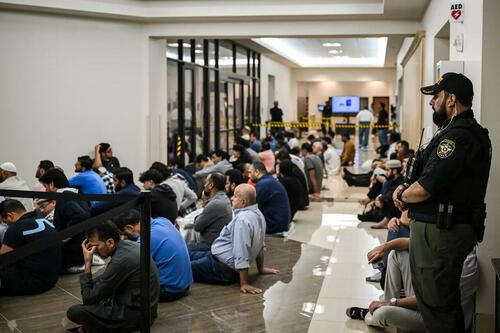
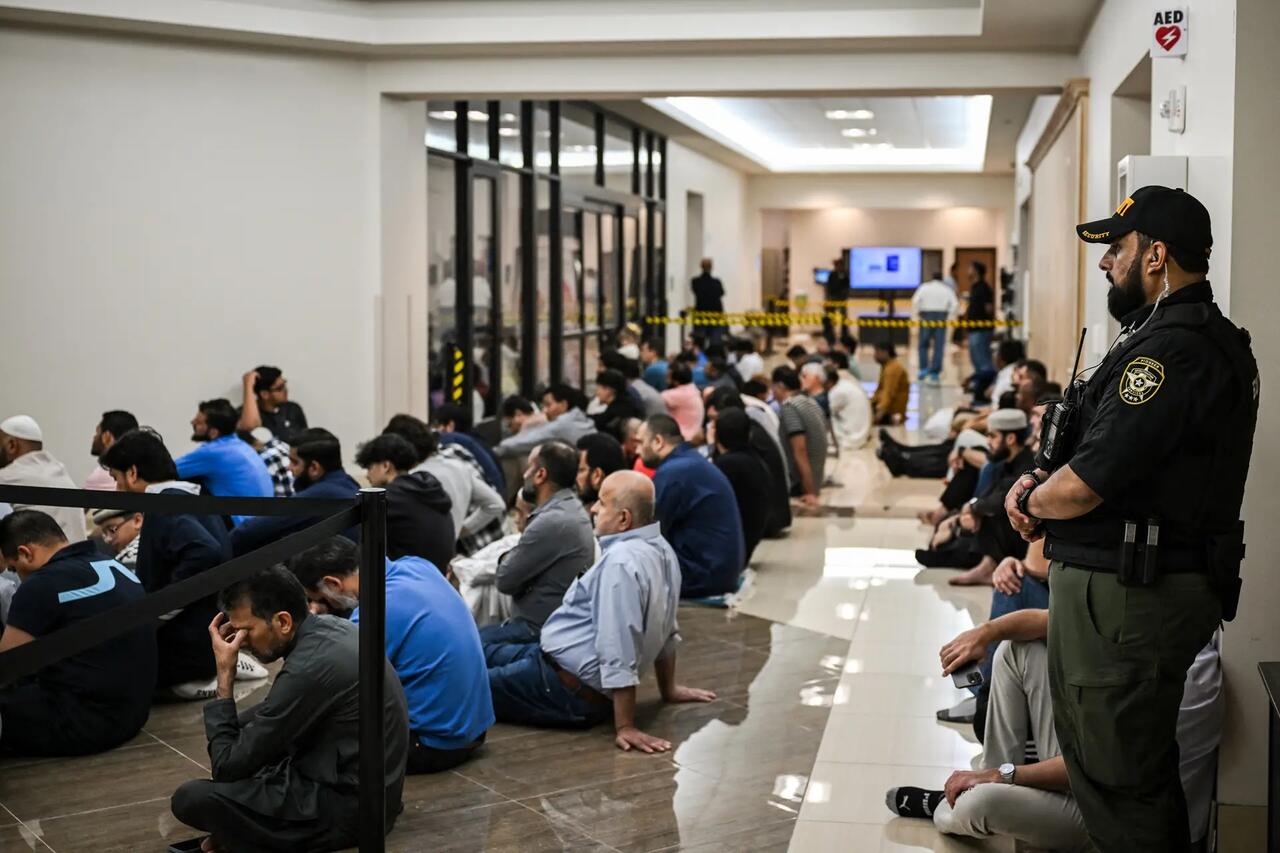
Muslims pray at a mosque during Friday prayers in Plano, Texas, on April 11, 2025. Ronaldo Schemidt/AFP via Getty Images

This March, President Trump asserted in a proclamation that the Venezuelan transnational gang Tren de Aragua was part of the Cártel de los Soles, sponsored by President Nicolás Maduro’s regime. Tren de Aragua is known to target Venezuelan nationals in the United States.

Another example would be recent fraud rooted in Minnesota’s Somali settlement, which allegedly funds Al-Shabaab, a terrorist organization, he noted. Since then, President Donald Trump announced a crackdown on temporary legal status for Somalis.

“It all comes down to not just assimilation, but allegiance,” Blair said.

Hankinson said after experiencing immigration himself and watching countries change, he no longer believes multiculturalism works, saying it has probably “failed as an experiment.”

The ongoing debate over the proposed Muslim-centric development in Texas encapsulates larger questions about immigration, assimilation, and national identity across the United States, he said.

“The idea is that we can all live in one country, but we can have completely different values, beliefs, religions, cultural traditions, etc. I don’t think there’s enough to hold a country together without those things.”

Tyler Durden
Wed, 12/31/2025 – 17:45

via ZeroHedge News https://ift.tt/dLvJHPQ Tyler Durden

Hundreds Of Thousands In Moscow Experience Rare ‘Total Blackout’ After Drone Wave

Hundreds Of Thousands In Moscow Experience Rare ‘Total Blackout’ After Drone Wave

Something very rare just happened in Moscow. Large swathes of Russian capital were plunged into darkness Wednesday after a swarm of inbound Ukrainian drones resulted in a fire at a key electrical substation.

People reported widespread outages across the Moscow region, including a “total blackout” in areas southeast of the capital, leaving homes without electricity for over four hours.

Power was cut to hundreds of thousands of residents in and around Moscow, though estimates have varied from 100,000 to up to 600,000 people impacted.

Social media videos and images showed apartment buildings, streets, and and businesses in areas like Zhukovsky, Lyubertsy, Lytkarino, and Ramenskoye, in total darkness.

Moscow authorities confirmed they deployed an army emergency crews with mobile generators to darkened city sectors as repairs were being made.

Moscow Mayor Sergei Sobyanin said at least 100 drones were intercepted between 5:00 and 7pm that night. At least eight were shot down directly over the Moscow region – though drones were observed over various parts of the country, as has become an almost nightly norm.

The evening drone wave resulted temporary closures at Moscow’s airports, disrupting air traffic, which has also occurred a number of times before.

This marks a rare moment that the power grid has been successfully targeted in Moscow, after literally hundreds of attacks on oil and gas sites in various other oblasts of the country, particularly near the Black Sea and southwest Russia.

While numbers have varied, this was clearly a very widespread outage across various districts in Moscow Oblast:

It is more typical for Ukrainian cities to be suffering, amid cold and increasingly winter temperatures. The national grid has needed so many new parts at such rapid pace that it can’t keep up.

“Russian strikes on Ukraine’s power grid will continue without President Trump stepping in, Ukraine’s top energy executive has warned, as millions risk a freezing winter without power,” Fox reports.

“DTEK’s Maxim Timchenko spoke out as Ukraine braced for further Russian drone and missile attacks on energy infrastructure and a day after Trump met Ukrainian President Volodymyr Zelenskyy for the third time to bring an end to the nearly four-year war,” it adds.

Tyler Durden
Wed, 12/31/2025 – 17:10

via ZeroHedge News https://ift.tt/6VSPt34 Tyler Durden

First Amendment Right to Film on Public University Campuses (at Least on Open Quads)

From Chief Judge Sarah Morrison (S.D. Ohio) yesterday in Peace v. Carter:

On the morning of April 25, 2024, protestors against Israel’s actions in Gaza and OSU’s involvement with Israel gathered at the South Oval (a space on OSU’s campus in front of the student union) and set up camping equipment. At approximately 9:30 a.m., OSU police ordered that all camping equipment be removed from the South Oval and the protesters complied. Subsequently, OSU Police Division Deputy Chiefs Eric Whiteside and Dennis Jeffrey determined that the protest violated OSU’s University Space Rules (“USR”) because it was a continuation of an event that had improper tents. Later that evening, another group of protestors attempted to construct encampments on the South Oval….

Mr. Peace graduated from OSU in 2021. He arrived at the South Oval at approximately 9:57 a.m. on April 25, 2024, and joined with protestors who were expressing their criticism of OSU and Israel in a peaceful and nondisruptive manner. By the time he arrived, protesters had already begun to tear down the encampment; they finished within a few minutes of his arrival.

Within ten minutes of Mr. Peace’s arrival, OSU police officers, including Deputy Chief Whiteside, approached the protesters with whom Mr. Peace was standing. While Mr. Peace filmed, Deputy Chief Whiteside told them that the University had determined that their protest was a continuation of an event that had violated the USR by having tents and that the protestors needed to disperse. At no point did Deputy Chief Whiteside tell them to leave the OSU campus or the South Oval. The protestors dispersed and people not involved in the protest continued to use the South Oval as normal.

Mr. Peace walked approximately 150 feet to the south of the original encampment site where he began filming an “arrest squad” of OSU officers under the command of Lt. Alan Horujko. Around 10:17 a.m., while Mr. Peace was filming, Lt. Horujko directed two members of the arrest squad to arrest Mr. Peace for criminal trespassing.

Mr. Peace was detained for the rest of the day, incarcerated, and released on bond that evening. He was charged with criminal trespassing in a complaint signed by Detective Susan Liu but the charge was later dismissed unconditionally.

Because of his arrest, Mr. Peace was fired from his job as a contractor for a delivery service and his application to work for another delivery service was denied….

The court allowed Peace’s First Amendment claim to go forward:

 “[T]he First Amendment rights of speech and association extend to the campuses of state universities.” Even though the Supreme Court and Sixth Circuit have not determined whether the public enjoys a First Amendment right to record police activities in public places, “[s]even circuit courts have held the public has some right to film police.” Based on the body of persuasive authority, this Court “agree[d] that the First Amendment protects the public’s right to film police and other government agents subject to reasonable restrictions.”

Defendants provide no basis to find as a matter of law that Mr. Peace’s alleged conduct filming OSU police officers on the South Oval does not enjoy First Amendment protection. Instead, they argue that “there is no First Amendment right to set up an encampment on public property.” That is not what Mr. Peace alleges occurred.

He alleges that he was merely standing with the protestors at the morning encampment site. He claims that the original encampment was taken down shortly after his arrival and that he and the other protestors dispersed when ordered to do so by OSU police. He was standing 150 feet away from the original encampment site at the time of his arrest. While a second encampment was attempted later that evening, that second encampment did not begin until well after his arrest. Assuming these allegations are true, whether the First Amendment provides a right to set up encampments is immaterial to Mr. Peace’s conduct….

And the court allowed Peace’s wrongful arrest claim to go forward as well, concluding that Peace had adequately alleged that the police lacked probable cause to arrest him for trespass:

“In Ohio, an individual commits criminal trespass by ‘[k]nowingly enter[ing] or remain[ing] on the land or premises of another’ absent ‘privilege to do so.'” A “privilege” is “an immunity, license, or right conferred by law, bestowed by express or implied grant, arising out of status, position, office, or relationship, or growing out of necessity.” Generally, a person has a privilege to enter and be upon the public areas of public property but a public official or agency that owns or controls public property can revoke that general privilege. Even so, in the context of public property, “a criminal trespass may be inappropriate where, subject to certain time, place, and manner of use restrictions, the defendant is lawfully exercising his or her First Amendment rights to free speech and peaceful assembly.”

Defendants argue that the arresting OSU officers had probable cause to arrest Mr. Peace for criminal trespass because “(1) law enforcement officers asked [him] to vacate the area near the planned encampment site and (2) [he] was arrested thereafter while still in the area.” But, according to the Amended Complaint, Deputy Chief Whiteside only told the protestors at the morning encampment site (including Mr. Peace) to “disperse” and “and did not at any time tell them they needed to leave the Ohio State Campus or the South Oval.” Mr. Peace alleges he was arrested approximately 150 feet away from the encampment site and there are no allegations that OSU officers told him to leave after his dispersal from the morning encampment site. While the evidence may subsequently reveal Defendants’ factual arguments, Mr. Peace has sufficiently pleaded facts suggesting that the OSU officers lacked probable cause to arrest him….

Edward Reilley Forman, Helen M. Robinson, John Spenceley Marshall, Madeline Jean Rettig, and Samuel Micah Schlein (Marshall & Forman LLC) represent plaintiff.

The post First Amendment Right to Film on Public University Campuses (at Least on Open Quads) appeared first on Reason.com.

from Latest – Reason.com https://ift.tt/WTR8DM6
via IFTTT

First Amendment Right to Film on Public University Campuses (at Least on Open Quads)

From Chief Judge Sarah Morrison (S.D. Ohio) yesterday in Peace v. Carter:

On the morning of April 25, 2024, protestors against Israel’s actions in Gaza and OSU’s involvement with Israel gathered at the South Oval (a space on OSU’s campus in front of the student union) and set up camping equipment. At approximately 9:30 a.m., OSU police ordered that all camping equipment be removed from the South Oval and the protesters complied. Subsequently, OSU Police Division Deputy Chiefs Eric Whiteside and Dennis Jeffrey determined that the protest violated OSU’s University Space Rules (“USR”) because it was a continuation of an event that had improper tents. Later that evening, another group of protestors attempted to construct encampments on the South Oval….

Mr. Peace graduated from OSU in 2021. He arrived at the South Oval at approximately 9:57 a.m. on April 25, 2024, and joined with protestors who were expressing their criticism of OSU and Israel in a peaceful and nondisruptive manner. By the time he arrived, protesters had already begun to tear down the encampment; they finished within a few minutes of his arrival.

Within ten minutes of Mr. Peace’s arrival, OSU police officers, including Deputy Chief Whiteside, approached the protesters with whom Mr. Peace was standing. While Mr. Peace filmed, Deputy Chief Whiteside told them that the University had determined that their protest was a continuation of an event that had violated the USR by having tents and that the protestors needed to disperse. At no point did Deputy Chief Whiteside tell them to leave the OSU campus or the South Oval. The protestors dispersed and people not involved in the protest continued to use the South Oval as normal.

Mr. Peace walked approximately 150 feet to the south of the original encampment site where he began filming an “arrest squad” of OSU officers under the command of Lt. Alan Horujko. Around 10:17 a.m., while Mr. Peace was filming, Lt. Horujko directed two members of the arrest squad to arrest Mr. Peace for criminal trespassing.

Mr. Peace was detained for the rest of the day, incarcerated, and released on bond that evening. He was charged with criminal trespassing in a complaint signed by Detective Susan Liu but the charge was later dismissed unconditionally.

Because of his arrest, Mr. Peace was fired from his job as a contractor for a delivery service and his application to work for another delivery service was denied….

The court allowed Peace’s First Amendment claim to go forward:

 “[T]he First Amendment rights of speech and association extend to the campuses of state universities.” Even though the Supreme Court and Sixth Circuit have not determined whether the public enjoys a First Amendment right to record police activities in public places, “[s]even circuit courts have held the public has some right to film police.” Based on the body of persuasive authority, this Court “agree[d] that the First Amendment protects the public’s right to film police and other government agents subject to reasonable restrictions.”

Defendants provide no basis to find as a matter of law that Mr. Peace’s alleged conduct filming OSU police officers on the South Oval does not enjoy First Amendment protection. Instead, they argue that “there is no First Amendment right to set up an encampment on public property.” That is not what Mr. Peace alleges occurred.

He alleges that he was merely standing with the protestors at the morning encampment site. He claims that the original encampment was taken down shortly after his arrival and that he and the other protestors dispersed when ordered to do so by OSU police. He was standing 150 feet away from the original encampment site at the time of his arrest. While a second encampment was attempted later that evening, that second encampment did not begin until well after his arrest. Assuming these allegations are true, whether the First Amendment provides a right to set up encampments is immaterial to Mr. Peace’s conduct….

And the court allowed Peace’s wrongful arrest claim to go forward as well, concluding that Peace had adequately alleged that the police lacked probable cause to arrest him for trespass:

“In Ohio, an individual commits criminal trespass by ‘[k]nowingly enter[ing] or remain[ing] on the land or premises of another’ absent ‘privilege to do so.'” A “privilege” is “an immunity, license, or right conferred by law, bestowed by express or implied grant, arising out of status, position, office, or relationship, or growing out of necessity.” Generally, a person has a privilege to enter and be upon the public areas of public property but a public official or agency that owns or controls public property can revoke that general privilege. Even so, in the context of public property, “a criminal trespass may be inappropriate where, subject to certain time, place, and manner of use restrictions, the defendant is lawfully exercising his or her First Amendment rights to free speech and peaceful assembly.”

Defendants argue that the arresting OSU officers had probable cause to arrest Mr. Peace for criminal trespass because “(1) law enforcement officers asked [him] to vacate the area near the planned encampment site and (2) [he] was arrested thereafter while still in the area.” But, according to the Amended Complaint, Deputy Chief Whiteside only told the protestors at the morning encampment site (including Mr. Peace) to “disperse” and “and did not at any time tell them they needed to leave the Ohio State Campus or the South Oval.” Mr. Peace alleges he was arrested approximately 150 feet away from the encampment site and there are no allegations that OSU officers told him to leave after his dispersal from the morning encampment site. While the evidence may subsequently reveal Defendants’ factual arguments, Mr. Peace has sufficiently pleaded facts suggesting that the OSU officers lacked probable cause to arrest him….

Edward Reilley Forman, Helen M. Robinson, John Spenceley Marshall, Madeline Jean Rettig, and Samuel Micah Schlein (Marshall & Forman LLC) represent plaintiff.

The post First Amendment Right to Film on Public University Campuses (at Least on Open Quads) appeared first on Reason.com.

from Latest – Reason.com https://ift.tt/WTR8DM6
via IFTTT

Americans Will Drop Everything (And Anything) To Celebrate New Year’s Eve

Americans Will Drop Everything (And Anything) To Celebrate New Year’s Eve

Authored by John Haughey via The Epoch Times,

Millions worldwide will watch a crystal ball descend 139 feet down a flagpole in Manhattan’s Time Square as a throng of thousands counts down the last 10 seconds of 2025 and ushers in 2026 in a blizzard of confetti and a cacophony of kazoos, party horns, whistles, and whatever else imaginative noisemakers can stash and carry.

The minute-long ball drop is among the planet’s most viewed annual live events.

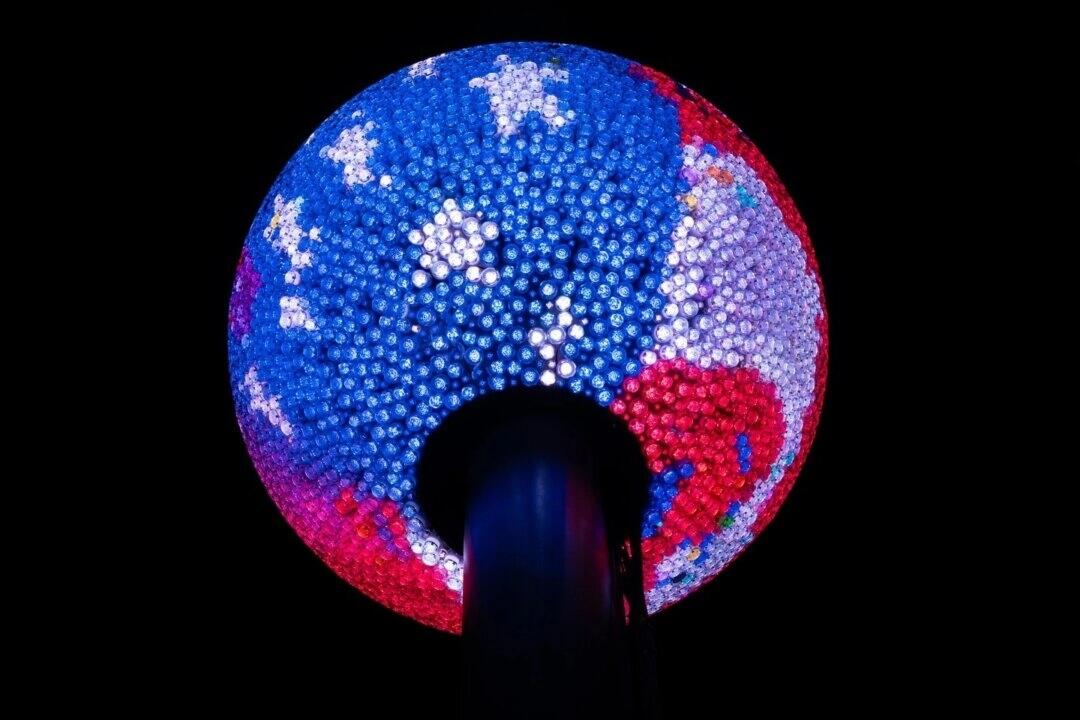
At least a billion will see the 12.5-foot diameter, 12,350-pound “Constellation Ball“ with 32,000 LEDs and 5,280 Waterford crystals shimmer, shine, and sink.

Only this year, they’ll see the ball rise again in a blaze of red, white, and blue as 2026 dawns to mark the 250th birthday of the United States and instantly kick off a year of commemorative celebrations across the country.

The Times Square New Year ball drop is glitter, glitz, and a tradition since 1907 so when it comes to ball drops, it’s the premier event.

But face it: Anyone can drop a ball.

Ask Jacksonville Jaguars’ quarterback Trevor Lawrence. His receivers have dropped the ball an NFL-leading 45 times in 2025. It’s been done. Over and over.

So ever-innovative Americans have found all sorts of weird and wonderful things to drop when saying farewell to one year and welcoming the next.

On New Year’s Eve, anchors and shoes will drop—a “whiskey boot” in Prescott, Ariz.; flip-flops in Folly Beach, S.C.—and pants will be run up and down flagpoles, including yellow breeches on Yellow Breeches Creek in Lititz, Pa.

Marine life will be honored with sardines, mossbunkers, lobsters, oysters, conch, carp, red crabs, and blue crabs dropping in coastal towns, including Manhattan’s Hell’s Kitchen, where “Cosmic Turtle” is set to rise and fall to the occasion like a true hard-shelled urbanite.

There will be birds of all feathers diving into posterity, most commonly eagles, pelicans, and ducks, but in Perry, Ga., a buzzard will wing in the New Year.

Stuffed beavers, bears, goats, a hamster, and a flying pig will be among cherished critters descending to applause with a live possum the honoree in Tallapoosa, Ga. When it comes to, let’s say the most distinctive New Year drops, Georgia and Pennsylvania top the list.

Vegetables and fruits will be frequent fallers. Oranges, blueberries, pineapples, peaches, watermelons, grapes, cherries, strawberries, acorns, mushrooms, lemons, peanuts, olives, lettuce, potatoes, chili peppers, and applies—including apples with arrows shot through them—will take the plunge. There will be pickle drops but the one in Dillsburg, Pa., soberly conducted since 1907, is the best preserved.

Stars, sunbursts, atoms, meteorites, jugs, race cars, hockey pucks, fishing lures, piñatas, ukuleles, guitars, bricks, beer bottles, cannonballs, ping pong balls, golf balls, beach balls, popcorn balls, crayons, kettles, cigars—there’s controversy in Red Lion, Pa., where a lion will defiantly hoist a cigar, but in a parking lot rather than from the municipal building—horseshoes, and gumbo pots will all mark the passage of time and decorum.

Meatballs, sausage, cheese dogs, pretzels, French fries, potato chips, pierogies with kielbasa, tacos, an 80-pound cheese wedge, giant M&Ms, Hershey’s Kisses, lollipops, ice cream cake, doughnuts, a 600-pound moonpie, and tortilla chips will be on the drop menu and, for the 29th year, so will a 150-pound “stick” of bologna in Lebanon, Pa.

Pac-Man, pirates, drag queens—in Key West, pirate drag queens—Las Vegas skydivers in lighted suits, and a Kansas City comedian will be among those who drop as the last seconds of 2025 tick away, as will Jasper The Flea, Lucky The Dead Carp (kiss it for good luck!), Captain Wylie Walleye, Spencer The Stuffed Opossum, Chuck The Chicken, Bob The Shrimp, and Marshall P. Muskrat in top hat and bow tie.

Below are 12 arbitrarily selected towns with distinctive styles in counting down the final fleeting moments of a year.

The 6-foot Bayer aspirin tablet drop Myerstown, Pa., would be included but confirming if that’s happening this year is too much of a headache, and if others are overlooked, someone in marketing dropped the ball.

In Guam, where “America’s Day Begins” 15 hours before the day begins in Times Square, it’s good luck to wear polka dots on New Year’s Eve, and on Cadillac Mountain in Maine, the first place to see a winter sunrise in the continental United States, anyone who sees a snowy owl on New Year’s Eve is destined to have a fortuitous year.

But luck has nothing to do with these local New Year’s drop rituals that drop-kick convention, some for don’t ask, don’t tell reasons lost to antiquity.

Eastport, Maine: There are two New Year’s Eve drops in the easternmost town in the continental United States as part of The Great Sardine & Maple Leaf Drop. At 11 p.m., an illuminated maple leaf descends to honor neighboring towns across the border in Canada’s Atlantic Time Zone and an hour later, down comes a six-foot sardine that onlookers swarm to kiss for good luck. If smooching a sardine doesn’t appeal, there’s always the DownEast Lobstah Drop an hour away in Machias.

Key West, Florida: A six-foot queen conch shell will drop 20 feet onto the bar at Sloppy Joe’s during the Key West Conch Drop but whether celebrants notice is always uncertain with all sorts of things dropping elsewhere on Duval Street. There will be plenty of citrus-themed drops across the Sunshine State and kids can pick a brick to drop at Legoland in Winter Haven.

Unadilla, Georgia: A pig-shaped sign will be lowered in awestruck reverence during the ninth annual “Hog Drop” that includes a BBQ competition, Monster Truck show, dirt bike stunts, fire breathers, racing pigs, chainsaw sculptors, and axe-throwers.

Sure, Atlanta is dropping a big peach, Brunswick has “Bob The Shrimp,” Cornelia the “Little Red Apple,” and Perry has its buzzard, but watching the hog drop in Unadilla is, like, seeing what Georgia is all about.

Vincennes, Indiana. An 18-foot, 500-pound steel-and-foam watermelon descends 100 feet during the last 60 seconds of the year before hitting the ground and spilling forth a bounty of locally grown watermelon. This isn’t merely some quirky local oddity, this is the National Watermelon Drop—the Super Bowl, World Cup, Nobel Prize of watermelon drops.

Frederick, Maryland: The 78th annual “Key Drop” on Carroll Creek will commemorate Francis Scott Key, the hometown lawyer who wrote the poem “Defense of Fort McHenry“ that became the United States’ national anthem., ”The Star-Spangled Banner.”

Less than 30 miles away, a giant doughnut will be dunked in Hagerstown to honor Krumpe’s Do-Nuts, a family-owned bakery in business since 1934, because—why not?

Detroit: The ninth annual “D Burst” will drop at Campus Martius Park to commemorate the Motor City’s renaissance and serve as the finale of a series of celebrations that began with a Christmas tree lighting ceremony on Thanksgiving.

Meanwhile, in Naguanee, on Michigan’s Upper Peninsula, the annual New Year’s Midnight Meatball Drop at Strega Nonna, will likely draw many of the town’s 4,600 residents to enjoy a 50-pound meatball that drops into a massive pot of tomato sauce.

St. Paul, Minnesota: The Midway Saloon will again orchestrate the New Year’s “Minnesota Bobber Drop” that features the descent of the unchallenged, no doubt, Guinness World Records-certified largest functioning fishing bobber—a seven-foot diameter red-and-white float “big enough to make Paul Bunyan proud.”

Allentown, Pennsylvania: Downtown Allentown isn’t just dropping hockey pucks, it annually stages “The World’s Largest Puck Drop” on New Year’s Eve, just one of many distinctive celebrations across the Keystone State.

Among notable drops: Mabel The Cow from a silo in Blain; Haydn’s Jug in East Petersburg; a wrench in Mechanicsburg; and “chunks of coal” in several towns.

Oak Ridge, Tennessee: Celebrate the end of 2025, which marked the 80th anniversary of atomic weaponry that somehow, thus far, hasn’t ended life on Earth, at the “Secret City New Year’s Eve Atomic Ball Drop” in the national lab city where it all began.

Mobile, Alabama: A Mardi Gras-style parade ends with the descent of a 600-pound MoonPie from RSA Tower in Mobile’s 17th annual “MoonPie Over Mobile“ New Year’s Eve party.

For something more down to earth in ‘Bama, there’s always the Wetumpka Crater “Meteor Drop” and Samson’s “Snuff Drop,” which commemorates “an incident where a train containing a shipment of Rooster-brand snuff [tobacco] was parked at the town’s depot for an extended period of time.” Got to be there to learn the details of this “incident.”

Plymouth, Wisconsin: Home of “The Big Cheese Drop,” where an 80-pound decorated cheese wedge is dangled and dropped 100 feet from a firetruck ladder.

Show Low, Arizona: The annual “Show Low Deuce of Clubs Drop” will draw locals and tourists to see a giant playing card lowered from the town’s library to commemorate “the infamous card game that started the town.”

Elsewhere in Arizona, iceberg lettuce will be dropped in Yuma and a pinecone in Flagstaff, and a boot in Prescott.

Tyler Durden
Wed, 12/31/2025 – 16:35

via ZeroHedge News https://ift.tt/alWiodM Tyler Durden

‘Affordability’ Politics Is a Major Opening for the Free Market Message in the New Year


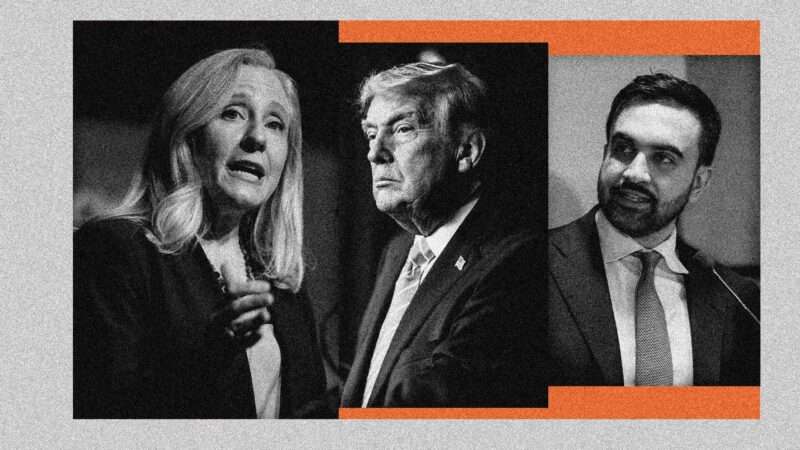
Abigail Spanberger, Donald Trump, and Zohran Mamdani | Eddie Marshall | Derek French | ZUMAPRESS | Daniel Torok/White House | Peter Casey | TNS | Newscom

This week, incoming Virginia Gov. Abigail Spanberger released a policy agenda for her administration that’s allegedly intended to deliver lower living costs for the state’s residents.

None of her initial proposals—mandating utilities build more energy storage capacity, stretching out the eviction process for delinquent renters, and banning health insurers from charging additional fees to tobacco users—seems particularly promising.

As Manhattan Institute scholar Judge Glock pointed out on X, basically everything the governor-elect has proposed will raise, not lower, costs.

That’s pretty disappointing (if not necessarily surprising) for a politician who just won her gubernatorial election by pitching herself as the “affordability” candidate.

Across the political spectrum, everyone is trying to say their agenda will enable Americans to buy more for less, while proposing policies that would leave everyone poorer.

Zohran Mamdani elevated himself from long-shot leftist candidate to soon-to-be Mayor of New York City with a relentless focus on making the Big Apple affordable to working-class residents. (His actual agenda is a lot more focused on using price controls to obscure how much everything actually costs.)

President Donald Trump has likewise claimed the mantle of “affordability,” even as he’s hiked tariffs on imported goods.

It’d be tempting then to dismiss affordability politics as empty messaging or even cynical rebranding for the same tired state interventions from both the left and the right.

And yet, free marketers have cause to be optimistic that partisan politics in 2026 might revolve around the question of affordability.

Whatever its failings at setting a policy agenda, the affordability framing does at least refocus partisan arguments on the thing that free marketers have the best answers for and on which free markets can actually deliver.

To paraphrase Joseph Schumpeter, the achievement of capitalism is enabling average people to consume more things for increasingly less effort.

It’s a promise that free markets keep delivering on. The real cost of the electronic device you’re using to read this article compared to what it would have been a decade ago should be evidence enough of that.

When it comes to questions about how to bring down the costs of healthcare or housing, free marketers have the best answers. Government regulations of prices and production are driving up costs. Eliminating those regulations will bring them back down.

The fact that politicians as different as Mamdani and Spanberger won on a common affordability message is evidence that voters are hungry for policy proposals that promise to bring everyday prices down.

The flawed, interventionist affordability platforms they offer are an opportunity for free marketers to clearly and patiently explain why their interventions will fail.

When they do fail, free marketers can reap the benefits of being right about the thing that people care about the most right now.

It’s fair to say that libertarian politics in 2025 was at a low ebb. A major reason for that is that too many of the political debates that have dominated the headlines and viral X posts have been either irrelevant to the cause of free markets or are divisive among the people who support them.

An appreciation for capitalist-enabled material progress can’t tell you a lot about whether the Jeffrey Epstein files should be released, for instance.

Support for small government doesn’t imply a particular position on whether the East Wing of the White House should be enlarged.

Laws of supply and demand don’t say who counts as a “Heritage American” or what’s the appropriate social sanction for people who said ugly things about the Charlie Kirk assassination.

Anyone remotely invested in the debate about the Trump-Kennedy Center rebranding has almost no time for the stock libertarian interjection that we really shouldn’t have a federal arts venue at all.

When our politics revolves around these squabbles, the cause of generally shrinking the size and scope of government doesn’t get a lot of play in the conversation.

Even when the story of the day did directly involve the proper role of the state in 2025, free marketers in good standing can end up on either side of an issue.

The Department of Government Efficiency (DOGE) was an incredibly clumsy, mostly unsuccessful effort by the Trump administration to accomplish a libertarian-ish goal of saving taxpayers’ money by making government more “efficient.”

Free marketers, even within the pages of Reason, are split on whether we should be mad at the dismal results or grateful for the effort.

Where Trump’s exercises of executive power have been the most alarming and most extreme, the mainstream debates about them generally devolve into much less compelling quibbling over the details.

Instead of arguing about whether the president can execute suspected drug smugglers on a whim, we end up debating whether two strikes on an alleged drug boat were justified or if one would have been enough.

The administration’s deportation drive has generally provoked procedural criticisms about individual raids and removals, not a more substantive defense of open immigration.

The front page debate about tariffs, and the president’s power to impose them unilaterally, is an exception that proves the rule.

Free marketers have been the leading critics of the Trump administration’s tariff regime, precisely because our ideas and the evidence offer a compelling case that raising taxes on imported goods makes things more expensive and people poorer.

Congressional Democrats have largely failed to turn voter anger about higher tariff-induced prices into their own compelling case against Trump precisely because they’re not free marketers and thus can’t fully abandon their own protectionist sympathies.

It’s notable that part of Spanberger’s winning message was criticism of Trump’s tariffs. (It’s convenient that she, as a governor of a state, has no power over trade policy.)

The daily partisan squabbles that dominate political news have long been of little interest to libertarians, who have a more fundamental critique of state power to share. For all that’s alarming and novel about politics during the second Trump administration, political debates revolving around superficial bullshit are par for the course.

It’s for this reason that affordability politics offers so much promise for the free market message in the coming year.

When a centrist Democrat says that we should make housing more affordable by making it harder to evict non-paying tenants, free marketers can counter with both sound theory and empirical evidence that making the rental housing business riskier for landlords leads them to raise costs to offset that risk.

When a socialist Democrat says we can make housing more affordable by getting rid of market prices entirely, we can point to how well that’s worked in the past.

And when a MAGA Republican says tariffs and immigration restrictions will lower Americans’ costs of living, we can counter with sound arguments that restrictions on the international movement of goods and people will do the opposite.

It’d be naive to think political debates in 2026 will be significantly more substantive than they were in 2025. Culture wars that are orthogonal to free market concerns will still drive much of the conversation.

But to the degree that politicians see an advantage in running on a message of affordability, that’s an opening for free marketers.

Explaining why making things cost more won’t make them cost less is frustrating. It’s also easy and compelling. The rise of affordability politics means that it will offer a lot of opportunities to deliver that simple message in the New Year.

The post 'Affordability' Politics Is a Major Opening for the Free Market Message in the New Year appeared first on Reason.com.

from Latest – Reason.com https://ift.tt/bzavmpU
via IFTTT

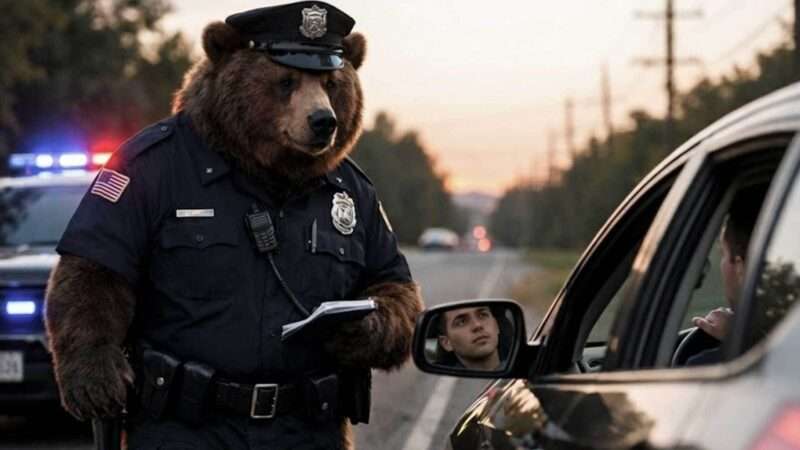
If You Give a Bear a Badge, Will It Respect Your Rights?


A bear in a police uniform approaches a car on the side of a road. | ChatGPT | Eddie Marshall

A few years ago in Connecticut, Mark and Carol Brault complained that state officials had strapped a camera to the neck of a black bear that was known to frequent their property. They alleged that the Connecticut Department of Energy and Environmental Protection (DEEP), which suspected them of illegally feeding bears, was employing the furry spy in an attempt to back up that allegation. That DEEP strategy, the Braults argued, violated their Fourth Amendment right to “be secure in their persons, houses, papers, and effects” against “unreasonable searches and seizures.”

The couple’s claim was complicated by the Supreme Court’s “open fields” doctrine, which says private property beyond the immediate vicinity of a home, a.k.a. the “curtilage,” is not protected by the Fourth Amendment. But it seemed unlikely that Bear Number 119, the camera-carrying animal that Mark Brault had photographed “near the center of our property,” was familiar with the finer points of Fourth Amendment case law. Assuming it was not, there was no assurance that it would confine itself to the Braults’ “open fields” and avoid the “curtilage” around their home.

If police need a warrant to deploy a drug-sniffing dog on the porch of a suspected marijuana grower’s house, as the Supreme Court held in the 2013 case Florida v. Jardines, similar restrictions presumably would apply when the government deploys camera-toting bears against people suspected of feeding them. The problem is that the paths of unsupervised bears do not necessarily follow judicial guidelines.

That case illustrates the point that enlisting bears in law enforcement can be legally risky. But we should not be too hasty in concluding that bears are completely incapable of complying with constitutional requirements and respecting civil liberties. In some respects, they may be better than humans.

‘As Old as the Common Law’

The Braults, who own 114 acres of forested land in Hartland, Connecticut, operate a private nature preserve that charges admission to visitors interested in seeing bears and other wildlife. In a 2020 lawsuit, the town of Hartland accused them of violating a local ordinance against feeding bears, a charge they denied.

In the midst of that dispute, Mark Brault encountered a bear he recognized, but it was wearing a new outfit. On the morning of May 20, 2023, he reported, “I observed Bear Number 119 near the center of our property, within 200 yards of our residence.” The bear “was wearing a video camera,” which was “affixed to a collar” that DEEP “apparently had placed” on the animal. “I have known that bear for a long time,” Brault said. “I know it frequents my property and adjacent properties. I know that it was tagged by [DEEP] previously, but not collared.”

That affidavit was attached to a lawsuit that Brault and his wife filed in the U.S. District Court for the District of Connecticut 10 days after his unnerving encounter with the camera-equipped bear. DEEP “is conducting warrantless ground-level photographic surveillance of the interior of [our] property,” the Braults alleged. Although the area was “clearly posted with ‘no trespassing’ signs,” they said, DEEP “did not have a search warrant authorizing or permitting photographic surveillance of the interior of [our] property.” Presumably, the bear did not have a warrant either.

According to the Supreme Court, however, neither the presence of signage nor the absence of a warrant was constitutionally significant. “The special protection accorded by the Fourth Amendment to the people in their ‘persons, houses, papers and effects,’ is not extended to the open fields,” Justice Oliver Wendell Holmes Jr. wrote for a unanimous Court in the 1924 case Hester v. United States, which involved illegal whiskey production in South Carolina. “The distinction between the latter and the house is as old as the common law.”

The Court reaffirmed that principle in the 1984 case Oliver v. United States, which involved a marijuana farm discovered by Kentucky state police. “In the case of open fields, the general rights of property protected by the common law of trespass have little or no relevance to the applicability of the Fourth Amendment,” Justice Lewis F. Powell Jr. wrote in the majority opinion. Although the marijuana growers “erected fences and ‘No Trespassing’ signs around the property,” the Court rejected “the suggestion that steps taken to protect privacy establish that expectations of privacy in an open field are legitimate.”

The implication was that “open fields” need not actually be open. Even when private property is fenced and marked with “No Trespassing” signs, the Court said, “no expectation of privacy legitimately attaches to open fields.” At the same time, it acknowledged that the Fourth Amendment does apply to “the ‘curtilage,’ the land immediately surrounding and associated with the home.”

Under the “open fields” doctrine, the Supreme Court ruled three years later in United States v. Dunn, police likewise did not need a warrant to approach a barn located about 50 yards from a home, even though they had to cross several fences on the way. Nor did they need a warrant to peer into the barn, where they ultimately found a laboratory producing the methamphetamine precursor phenylacetone, because at that point they were still located in “open fields.” The majority concluded that “the barn and the area around it lay outside the curtilage of the house.”

‘Ill-Founded Reasoning’

The “open fields” doctrine is misbegotten, the Institute for Justice argues. The civil liberties group says the “distinction” that Holmes deemed “as old as the common law” in Hester was based on a misunderstanding.

“The sole citation to support this historical assertion was to three pages of Blackstone’s Commentaries,” Institute for Justice attorneys Robert Frommer and Anthony Sanders noted in a 2017 Supreme Court brief. “The problem with Justice Holmes’ citation is that in those pages, Blackstone was not talking about open fields, officers of the law, or even trespass. Instead, he was discussing the elements of burglary. Blackstone simply lays out the rule that to commit burglary, among other elements, the burglar must break into a home, and do it at night.”

Holmes “took this distinction between burglary and other crimes and gave it constitutional significance by applying it to an area—an open field—that Blackstone does not even address,” Frommer and Sanders added. “By the same, ill-founded reasoning, Hester could have stated that the Fourth Amendment does not apply to the government entering homes during the day, or entering buildings such as barns and warehouses at all, all areas Blackstone contrasted to a break-in of the home at night.”

That highly improbable result, Frommer and Sanders argued, “is the logical conclusion once the citation to Blackstone is actually examined. In short, the citation to Blackstone did nothing to support the Court’s refusal to apply the Fourth Amendment to an ‘open field.'”

Given the persistence of this exception to the Fourth Amendment, however, it is not surprising that DEEP argued, in its motion to dismiss the Braults’ lawsuit, that “all the activity alleged in the complaint falls squarely within the ‘open fields’ doctrine.” Nor did Frommer think the Braults were likely to prevail in arguing that DEEP’s ursine surveillance violated the Fourth Amendment. Their best bet, he suggested shortly after they filed their complaint, would be to emphasize the unpredictable meandering of camera-bearing bears.

“The problem with slapping a camera onto a bear and then unleashing it into the wild is that you can’t control where that bear goes,” Frommer said. “For all the officer knows, the bear could park itself right outside somebody’s house, with the camera capturing everything therein.” Or as he put it in a more colorful turn of phrase, “turning wildlife into unguided surveillance drones is unbearable,” and “Connecticut should paws its animal camera program so as not to infringe on Nutmeggers’ privacy and security.”

‘Not Practicable To Secure a Warrant’

While the distinction between “open fields” and “curtilage” might escape the average bear, that does not necessarily mean bears cannot be trusted to follow other Fourth Amendment principles laid down by the Supreme Court. In the 1988 case California v. Greenwood, for example, the Court ruled that people do not have a reasonable expectation of privacy in the trash they leave on the curb for collection. Bears seem to instinctively understand that you don’t need a warrant to rummage through someone’s garbage.

A century ago in Carroll v. United States, the Supreme Court likewise held that police do not need a warrant to search motor vehicles. The case involved two suspected Michigan bootleggers whom federal prohibition agents stopped as they were driving west on the road from Detroit to Grand Rapids. The agents searched the car and found 68 bottles of whiskey and gin hidden behind the upholstery of the seats. “Contraband goods concealed and illegally transported in an automobile or other vehicle may be searched for without a warrant,” the Court ruled.

As the majority saw it, that leeway was a practical necessity. “It is not practicable to secure a warrant” in such cases, Chief Justice William Howard Taft explained, “because the vehicle can be quickly moved out of the locality or jurisdiction in which the warrant must be sought.” But there was a catch: Police still need “probable cause for believing” a car contains contraband.

The Supreme Court has said probable cause is equivalent to a “substantial chance” or a “fair probability” that evidence of a crime will be discovered. The Court has not defined the concept more precisely than that. Since humans struggle to understand what probable cause means in practice, it seems unrealistic to expect that bears will do any better. The evidence suggests they are not even trying.

If bears did worry about probable cause, they might be able to supply it with a simple sniff of the air. In the 2013 case Florida v. Harris, the Supreme Court unanimously held that an “alert” by a dog trained to detect illegal drugs is enough, by itself, to justify a car search. Although the Court has not addressed bears in this context, there is reason to think it also would view them as four-legged probable cause generators.

“Bears are known for their exceptional sense of smell,” the San Diego Animal Sanctuary notes. “In fact, their olfactory abilities are often considered the best among all animals on Earth.”

They’ve got numbers to back that up: “The average dog’s sense of smell is roughly 100 times better than that of a human. A bloodhound, which is one of the best tracking dogs, is 300 times better. But a bear’s olfactory ability is 7 times better than a bloodhound’s.”

With certain notable exceptions, however, bears are unlikely to be sniffing for drugs, as opposed to honey, berries, porridge, or picnic baskets. And even if they do decide to search a car, we can be pretty sure they will not assert the right to seize any cash they come across, as human police officers routinely do under civil forfeiture laws.

Watching the Watchers

Just as bears have no interest in your money, they generally do not seem to mind, or even notice, when people record them as they go about their business. Sometimes they even seem to like it. That also stands in sharp contrast with the behavior of human cops, who frequently object (or worse) when bystanders use cell phones to document their official conduct, even though several federal appeals courts have held that people have a First Amendment right to do that—a point on which the U.S. Department of Justice concurs.

Bears also compare favorably to humans when it comes to the use of deadly force. While more than 600 people are killed by American law enforcement officers each year, The Alaska Frontier counted just eight fatal bear attacks in the United States from 2020 through 2022, an average of fewer than three a year. That is pretty reassuring, even taking into account the fact that the United States has more cops (about 720,000) than bears (around 340,000).

On balance, it is fair to say that bears, despite their general ignorance of constitutional law, pose a much less grave threat to your civil liberties than humans do. But the factors that weigh in favor of bears—a lack of interest in your contraband or money, a tendency to mind their own business, and a disinclination toward violence unless they perceive a threat to themselves or their cubs—probably make them ill-suited to careers in law enforcement.

The post If You Give a Bear a Badge, Will It Respect Your Rights? appeared first on Reason.com.

from Latest – Reason.com https://ift.tt/IfnLxJi
via IFTTT

National Guard Patrols New Orleans Ahead Of New Year Amid Vehicle-Ramming Threats

National Guard Patrols New Orleans Ahead Of New Year Amid Vehicle-Ramming Threats

Weeks after National Counterterrorism Center Director Joe Kent warned that thousands of known and suspected terrorists entered the U.S. during the Biden-Harris regime years of a nation-killing open-border invasion, and days after a U.S. government threat assessment flagged elevated risks from lone wolves and small terror cells potentially targeting ‘special events‘ in New York City and Chicago, the deployment of National Guard troops to New Orleans only suggests officials are responding to credible threats.

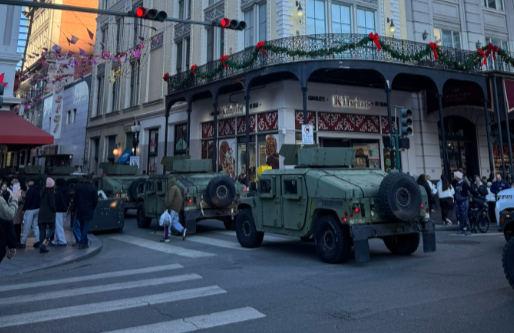
A total of 350 Louisiana National Guard soldiers are patrolling Bourbon Street in the French Quarter and other high-value areas across the metro region, one year after a vehicle-ramming terror attack on Bourbon Street killed 14 people.

The deployment follows similar National Guard posturings in Washington and Memphis. Officials note that Guard deployments are merely “routine” in the French Quarter.

“It’s no different than what we’ve seen in the past,’ New Orleans police spokesperson Reese Harper told AP News.

“This is for visibility and really to keep our citizens safe,” Harper said. “It’s another tool in the toolbox and another layer of security.”

Louisiana National Guard spokesperson Lt. Col. Noel Collins said the Guard will support local, state, and federal law enforcement to “enhance capabilities, stabilize the environment, assist in reducing crime, and restore public trust.”

However, our assessment is that the presence of National Guard troops in certain major U.S. cities is less about routine crime suppression and more about a broader terror threat.

Earlier this month, NCTC’s Kent told the House Homeland Security Committee that the agency has identified roughly 18,000 known and suspected terrorists who were allowed to enter the country under the Biden-Harris regime.

It also follows last month’s terror attack in which an Afghan national killed one National Guard member and wounded another just blocks from the White House.

Some may dismiss former CIA targeting officer Sarah Adams as a sensationalist, but her warnings about this terror threat from open borders for the last few years are increasingly becoming more mainstream and widely embraced by Trump officials. 

Importantly, the threat is not limited to radicalized Islamists or even South American transnational gangs; there is also an emerging threat coming from the radical left, as highlighted in a foiled New Year’s Eve bomb plot by Turtle Island Liberation Front.

Tyler Durden
Wed, 12/31/2025 – 15:40

via ZeroHedge News https://ift.tt/POYMJx8 Tyler Durden

Investors Scoop Up 40% Of Vacant Lots Sold After Los Angeles Fires: Report

Investors Scoop Up 40% Of Vacant Lots Sold After Los Angeles Fires: Report

Authored by Mary Prenon via The Epoch Times,

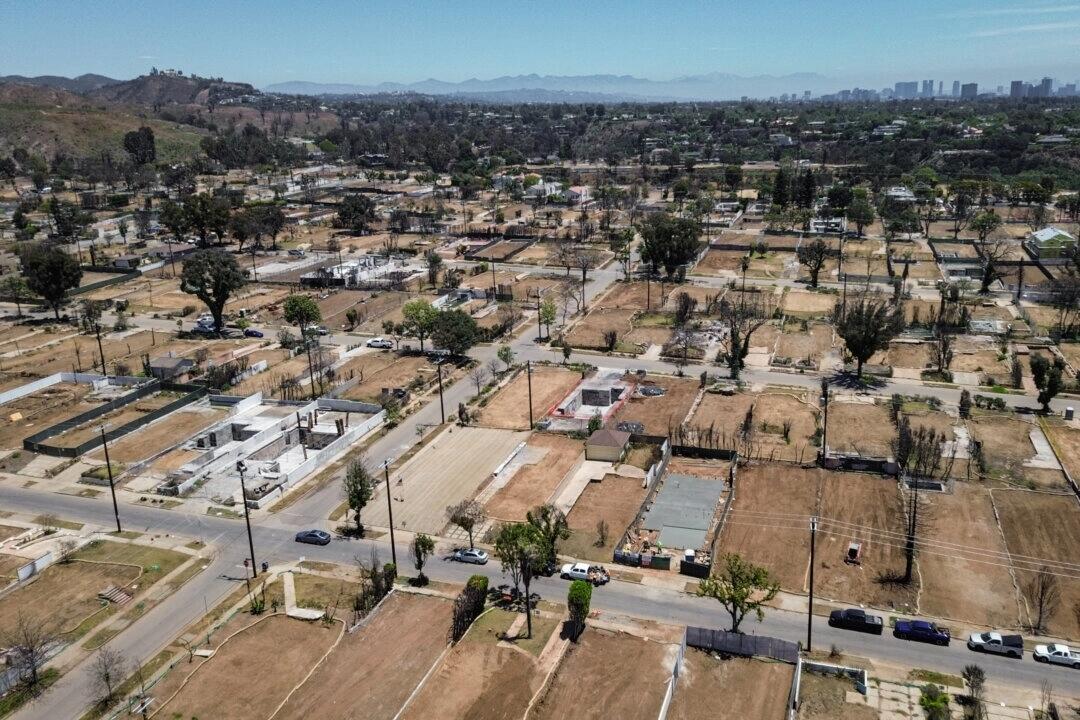
Almost a year after January’s devastating California wildfires, real estate investors have been buying up nearly 40 percent of the land sold in the areas impacted by the fires.

A Dec. 30 report from Redfin stated that many of these now-empty lots once retained some of the nation’s most expensive homes, before they were reduced to rubble when the fire ripped through over 40,000 acres and destroyed more than 11,000 single-family homes in the Los Angeles suburbs.

A Zillow analysis—also released on Dec. 30—indicates the total residential housing value of the 19,605 homes in the affected regions was $46 billion prior to the fires.

More than 11,000 of those homes were destroyed.

The median home value in Los Angeles suburbs was listed at $1.95 million as of December 2024, prior to the fires.

Zillow’s report shows that for-sale housing supply near the fire zones escalated soon after the fires ended. In addition, new listings within five miles of the fire regions continued to grow from December 2024 to January 2025.

“While home values nearby have dipped a bit, in line with broader Los Angeles trends, the most evident impact was on supply,” Orphe Divounguy, a Zillow senior economist, said in the report.

“The sharp increase in listings just outside the burn zones likely reflects a mix of homeowners accelerating planned sales or owners of second homes deciding to list in response to the sudden shift in local demand.”

According to Redfin, investors were responsible for buying 48 of the 119 lots for sale in the Pacific Palisades area during the third quarter. In nearby Altadena, investors purchased 27 of the 61 lots available, and in Malibu, 19 of the 43 lots for sale were bought by investors.

Redfin’s analysis indicates that many investors made lowball offers for lots in Altadena, where some of the destroyed homes had been built in the 1940s and 1950s. These lots have been selling in the $500,000 to $600,000 range. The report noted that while some owners rejected these offers, others were forced to sell as they lacked the money to rebuild.

By comparison, a typical empty lot sold for $1.6 million in Pacific Palisades, and for $1.3 million in Malibu.

“It’s not uncommon for investors to buy and develop land after natural disasters,” the report stated.

However, while investors have been making inroads in getting vacant land off the market, Redfin agents say there is so much vacant land for sale that much of it remains unsold.

Meanwhile, those homes left standing in the fire zones are attracting offers if they’re reasonably priced, with owners usually handling the ash and smoke damage remediation.

Redfin reported 31 sales of single-family homes in Pacific Palisades during the three months ending Nov. 30, up from a record low of just six in the three months that followed the fires. Altadena agents recorded 58 sales of single-family homes, up from a record low of 26 in the three-month, post-fire period.

Zillow found that median home values within five miles of the fire perimeters fell 1.7 percent from December 2024 through November 2025. Similarly, median home values also dropped by 1.9 percent in the Los Angeles metro area, more than 20 miles from the fires.

Immediately following the fires, the number of new listings within five miles of the fire zones skyrocketed by 194 percent in January 2025, compared with December 2024.

“The most important thing someone looking to buy in this area can do is figure out if they can afford insurance,” the Redfin report stated. “Mortgage lenders in California require homebuyers to have fire coverage, and premiums have gone up by 35% to 50% since the fires.”

Tyler Durden
Wed, 12/31/2025 – 15:20

via ZeroHedge News https://ift.tt/vCVe8rH Tyler Durden