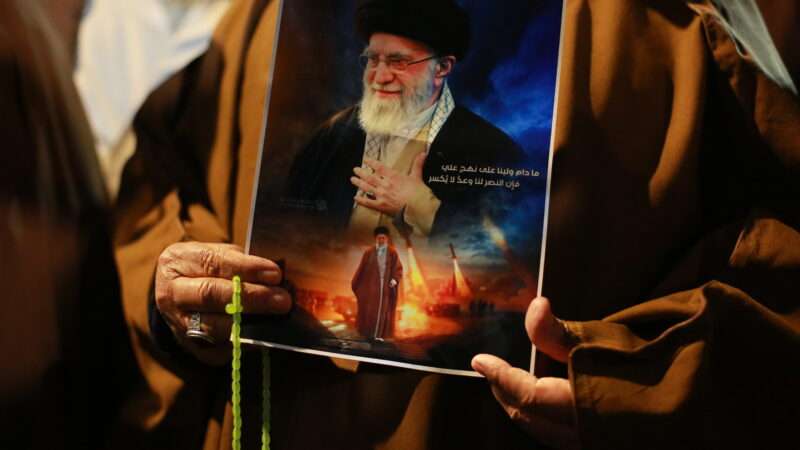
Iranian Ayatollah Ali Khamenei was killed in his palace at the beginning of the U.S.-Israeli war in Iran on Saturday morning, ending 37 years as Iran’s Supreme Leader,U.S. President Donald Trump claimed on Saturday afternoon. Khamenei’s reported death was a culmination of his governing style: stubborn enough to make enemies, but too passive and weak to overcome them. Even as a U.S. armada loomed off the coast of Iran, the autocrat remained a sitting duck in his palace.
Iranian state media is so far denying the report, claiming instead that Khamenei is still “steadfast and firm in commanding the field.”
Though Khamenei is often mistaken for his predecessor, Ruhollah Khomeini, the two are nothing alike. Khomeini was a revolutionary with an air of mystique who built a state from the ground up; Khamenei was a doddering bureaucrat who inherited that state and ran it back into the ground.
The past few years of Khamenei’s reign were marked with escalating waves of unrest and repression, each one more deadly and frequent than the last. From the crackdown on student reformists in 1999, which killed three people, to the uprising and massacres this year, which killed hundreds, Khamenei gradually muscled out his rivals within the Islamic Republic and pushed Iranians to hate that republic. In between each explosion, corruption and nepotism built up within the system. Khamenei focused immense resources into unpopular culture war bugbears, such as mandatory hijab, while neglecting the country’s basic resources.
Meanwhile, the sharks circled from the outside. Khamenei was just scary enough for hawks in the United States to present as an enemy, yet just predictable enough that they could manage the consequences of escalation. He carried out a uranium enrichment program, then insisted that actually building a nuclear bomb would go against his religion. Khamenei raised an army of anti-Israel militias across the Middle East at great cost in blood and treasure, then watched Israel pick them off one-by-one over the past three years.
After all, Khamenei’s own path to power was paved by the same combination of cruelty and incompetence. Khomeini’s successor was originally supposed to be Ayatollah Hussein-Ali Montazeri. In 1988, however, left-wing Iranian rebels joined forces with an invading Iraqi army, and the Islamic Republic responded with mass executions of leftist dissidents. When Montazeri protested the killings, Khomeini dismissed him as successor. After Khomeini’s death, the succession council elevated Khamenei, a yes-man who himself admitted that he was not qualified.
But the system that Khamenei shaped does not necessarily die with him—at least, not in the way that his assassins might have hoped. If Trump was looking for a cost-free Venezuela-style decapitation, Iran did not provide it. Even as Khamenei’s palace lay in ruins and the leader incommunicado, the Iranian military immediately fired back at U.S. forces and partners across the Middle East, and began attempting to blockade oil shipping. The fighting is intense and ongoing.
It remains to be seen who would become the new public face of the system. Before the war, the CIA assessed that Khamenei would be succeeded by a hardline military dictator. An even bigger question is whether Iranians will heed Trump’s call to overthrow the Islamic Republic. History has very few good precedents for regime change under wartime conditions. But one thing seems certain: Khamenei will not be around to see the final, bloody consequences of his rule.
From his Free Press article; Ferguson is a Senior Fellow at the Hoover Institution, a former Harvard history professor, and a noted author both on historical matters and modern ones:
Since the news of the joint U.S.-Israeli strikes on Iran this morning, I have been thinking a lot about a song in the 2004 movie Team America:World Police. The movie was co-written by the creators of South Park and follows a group of heroic American puppets waging kinetic war on Islamic terrorists, the North Korean dictator Kim Jong Il, and liberal Hollywood, leaving cataclysmic collateral damage (the Eiffel Tower, Cairo, the Sphinx) in their wake. But the real highlight is a song called “America, Fuck Yeah.” Here’s how it goes:
America, fuck yeah
Comin’ again to save the motherfuckin’ day, yeah
America, fuck yeah
Freedom is the only way, yeah
Terrorists, your game is through
‘Cause now you have to answer to …
America, fuck yeah
So lick my butt and suck on my balls
America, fuck yeah
What you gonna do when we come for you now?
It’s the dream that we all share
It’s the hope for tomorrow
Fuck yeah
Team America was an ambivalent movie at the time. That was what made it funny. It simultaneously mocked the liberal opponents of an aggressive foreign policy and the neoconservatives who advocated policies such as regime change in Iraq. The South Park team understood before many commentators that the United States has a track record of coming to save the day and leaving a trail of devastation.
For the habitual critics of U.S. foreign policy in general and Donald Trump’s in particular, the analogy between today’s air raids against Iran and the invasion of Iraq nearly 23 years ago is too obvious to be resisted….
However, Iran 2026 is not Iraq 2003. Back in those days, I shed no tears for Saddam Hussein and had considerable sympathy with the project of covert empire-building, but I was a critic of the Bush administration’s post-invasion nation-building strategy because I believed the U.S. lacked the key structural attributes to make it work.
By comparison with the British Empire, American power in the 2000s had three fateful deficits: a manpower deficit, a fiscal deficit, and an attention deficit. I argued that the occupying force was too small relative to Iraq’s population. The complete destruction of the Ba’athist regime laid the foundations for anarchy and civil war, which swiftly mutated into an insurgency against the U.S.-led coalition. And I came to see that the principal beneficiary of Hussein’s downfall was none other than Iran.
And yet, contrary to the criticism already being aired on both the left and the right, Trump is not reverting to George W. Bush and Dick Cheney’s “regime change” playbook….
Operation Epic Fury differs from Operation Iraqi Freedom—the 2003 invasion of Iraq—in two key respects. Yes, the justification is preemption against a regime intent on acquiring weapons of mass destruction and implicated in international terrorism. But the goal is not to march into Iran and confer, much less impose, freedom on the Iranians. It is to decapitate the Islamic Republic’s political structure and leave the Iranians to take their freedom from the mullahs and their murderous henchmen. As Trump said in his speech this morning, “members of the Islamic Revolutionary Guard, the armed forces and all of the police” can “have complete immunity” if they lay down their weapons….
The real question is: Who rules in Tehran after Khamenei? …
Iranian Ayatollah Ali Khamenei was killed in his palace at the beginning of the U.S.-Israeli war in Iran on Saturday morning, ending 37 years as Iran’s Supreme Leader,U.S. President Donald Trump claimed on Saturday afternoon. Khamenei’s reported death was a culmination of his governing style: stubborn enough to make enemies, but too passive and weak to overcome them. Even as a U.S. armada loomed off the coast of Iran, the autocrat remained a sitting duck in his palace.
Iranian state media is so far denying the report, claiming instead that Khamenei is still “steadfast and firm in commanding the field.”
Though Khamenei is often mistaken for his predecessor, Ruhollah Khomeini, the two are nothing alike. Khomeini was a revolutionary with an air of mystique who built a state from the ground up; Khamenei was a doddering bureaucrat who inherited that state and ran it back into the ground.
The past few years of Khamenei’s reign were marked with escalating waves of unrest and repression, each one more deadly and frequent than the last. From the crackdown on student reformists in 1999, which killed three people, to the uprising and massacres this year, which killed hundreds, Khamenei gradually muscled out his rivals within the Islamic Republic and pushed Iranians to hate that republic. In between each explosion, corruption and nepotism built up within the system. Khamenei focused immense resources into unpopular culture war bugbears, such as mandatory hijab, while neglecting the country’s basic resources.
Meanwhile, the sharks circled from the outside. Khamenei was just scary enough for hawks in the United States to present as an enemy, yet just predictable enough that they could manage the consequences of escalation. He carried out a uranium enrichment program, then insisted that actually building a nuclear bomb would go against his religion. Khamenei raised an army of anti-Israel militias across the Middle East at great cost in blood and treasure, then watched Israel pick them off one-by-one over the past three years.
After all, Khamenei’s own path to power was paved by the same combination of cruelty and incompetence. Khomeini’s successor was originally supposed to be Ayatollah Hussein-Ali Montazeri. In 1988, however, left-wing Iranian rebels joined forces with an invading Iraqi army, and the Islamic Republic responded with mass executions of leftist dissidents. When Montazeri protested the killings, Khomeini dismissed him as successor. After Khomeini’s death, the succession council elevated Khamenei, a yes-man who himself admitted that he was not qualified.
But the system that Khamenei shaped does not necessarily die with him—at least, not in the way that his assassins might have hoped. If Trump was looking for a cost-free Venezuela-style decapitation, Iran did not provide it. Even as Khamenei’s palace lay in ruins and the leader incommunicado, the Iranian military immediately fired back at U.S. forces and partners across the Middle East, and began attempting to blockade oil shipping. The fighting is intense and ongoing.
It remains to be seen who would become the new public face of the system. Before the war, the CIA assessed that Khamenei would be succeeded by a hardline military dictator. An even bigger question is whether Iranians will heed Trump’s call to overthrow the Islamic Republic. History has very few good precedents for regime change under wartime conditions. But one thing seems certain: Khamenei will not be around to see the final, bloody consequences of his rule.
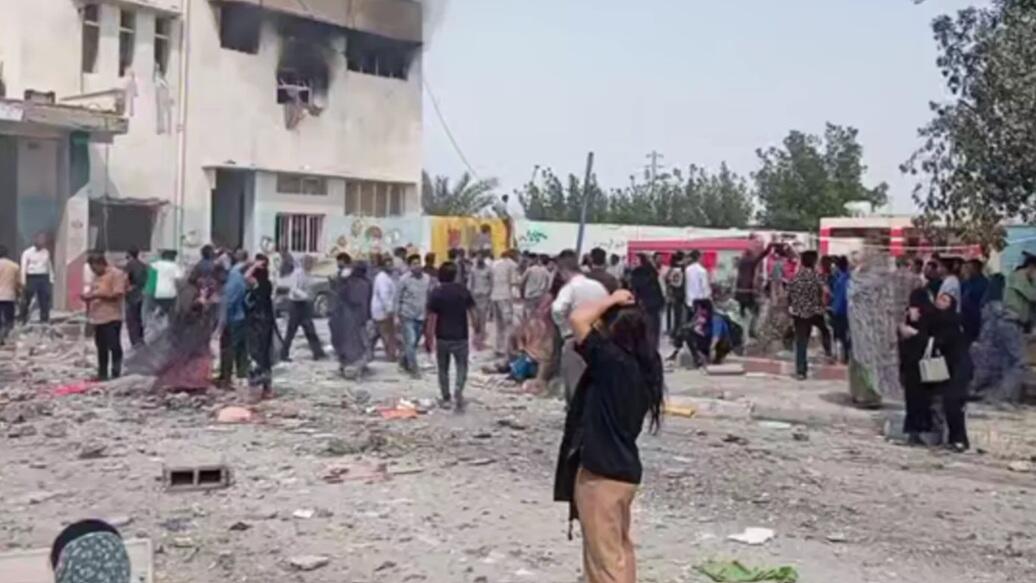
At least 85 people, almost all of them young girls, have been killed in an air strike on a primary school in southern Iran, the Iranian judiciary said. The attack on Saturday morning hit Shajareh Tayyebeh schoolin the city of Minab, in Hormozgan province, as the United States and Israel began launching strikes on targets across Iran.
The victims were between seven and 12 years old, according to Iran’s Tasnim and Fars news agencies. A staff member at the Minab school, who asked not to be named, told Middle East Eye she remains in shock at the intensity of the attack. Iran’s foreign minister also featured the attack on social media.
Through tears, she said she used to watch the young girls playing at school every day. After today’s strikes, however, she saw their bodies lying on classroom benches and in different corners of the school.
She said she had stepped out of the school to take care of something when she suddenly heard a horrifying sound. Within seconds, a missile – or something like it – hit the school building. After hearing the blast, she ran back towards the school and was faced with a scene she says she would never forget.
“I felt like I had gone mute. I couldn’t speak,” the staff member told MEE. “You could hear the sound of children crying and screaming.” When rescue teams arrived, she said, they began to understand the scale of the disaster.
“We still don’t know how many are under the rubble. Some are even saying more than 100. Some of these small children are severely injured. Their parents have come to the school, and this place has turned into a house of mourning.”
The air strike on the school left many inside the building trapped beneath the rubble. There were 170 female students at the school at the time of the attack. So far, at least 45 people have also been reported wounded.
Footage posted by Telegram accounts affiliated with the Islamic Revolutionary Guards Corps appeared to show people digging through the rubble.
Smoke could be seen rising from surrounding buildings, while a wrecked car lay in the street. People were heard screaming and wailing; others appeared to be in shock. Iranian Foreign Minister Abbas Araghchi denounced the attack on X and said the deaths of the children would “not go unanswered”.
“The destroyed building is a primary school for girls in the south of Iran. It was bombed in broad daylight, when packed with young pupils,” he wrote. “Dozens of innocent children have been murdered at this site alone.”
At least 70 people, including some 60 children, were killed when U.S. and Israeli strikes hit the Shajareh Tayyebeh girls’ elementary school in Minab, southern Iran, according to the Fars News.
The attack reportedly struck during school hours, with about 170 girls inside.… pic.twitter.com/G7dE0z660f
US and Israeli strikes on Iran have also heavily targeted Tehran. Explosions echoed across the capital as Iranians set out for work on the first day of the week, before quickly spreading across the country.
Attacks were reported in a range of cities, including the holy city of Qom, as well as Karaj, Isfahan and Kermanshah. An overall death toll has not yet been released, but Reuters reported that Supreme Leader Ali Khamenei had been moved to a “safe location”.
US President Donald Trump said the joint attacks were aimed at “eliminating imminent threats from the Iranian regime”.
“Short time ago, US military began major combat operation in Iran. Our objective is to defend the American people by eliminating threats from the Iranian regime,” he said. Trump also made a number of other statements and predictions without offering any concrete evidence, such as Washington’s refusal to allow Iran to obtain a nuclear weapon.
“We are going to annihilate their navy. We are going to ensure that the region’s ‘terrorist’ proxies can no longer destabilise the region or the world. “We will ensure that Iran does not obtain a nuclear weapon. It is a very simple message.”
The program targets field-scale demonstrations of enhanced geothermal systems (EGS) for electricity generation, along with drilling to characterize and confirm hydrothermal and next-gen prospects nationwide.
The funding splits into two initial open topics: up to $100 million for EGS field tests and $71.5 million for exploratory drilling. Letters of intent are due March 27, with full applications due April 30. The move directly supports President Trump’s Executive Order “Unleashing American Energy,” according to the agency.
Geothermal currently supplies roughly 4 GW of U.S. capacity, but represents only about 0.3% of total power generation. DOE estimates the resource base could support 300 GW or more by 2050 with technology improvements, delivering firm, 24/7 baseload power that complements intermittent renewables and meets rising demand from data centers and AI infrastructure.
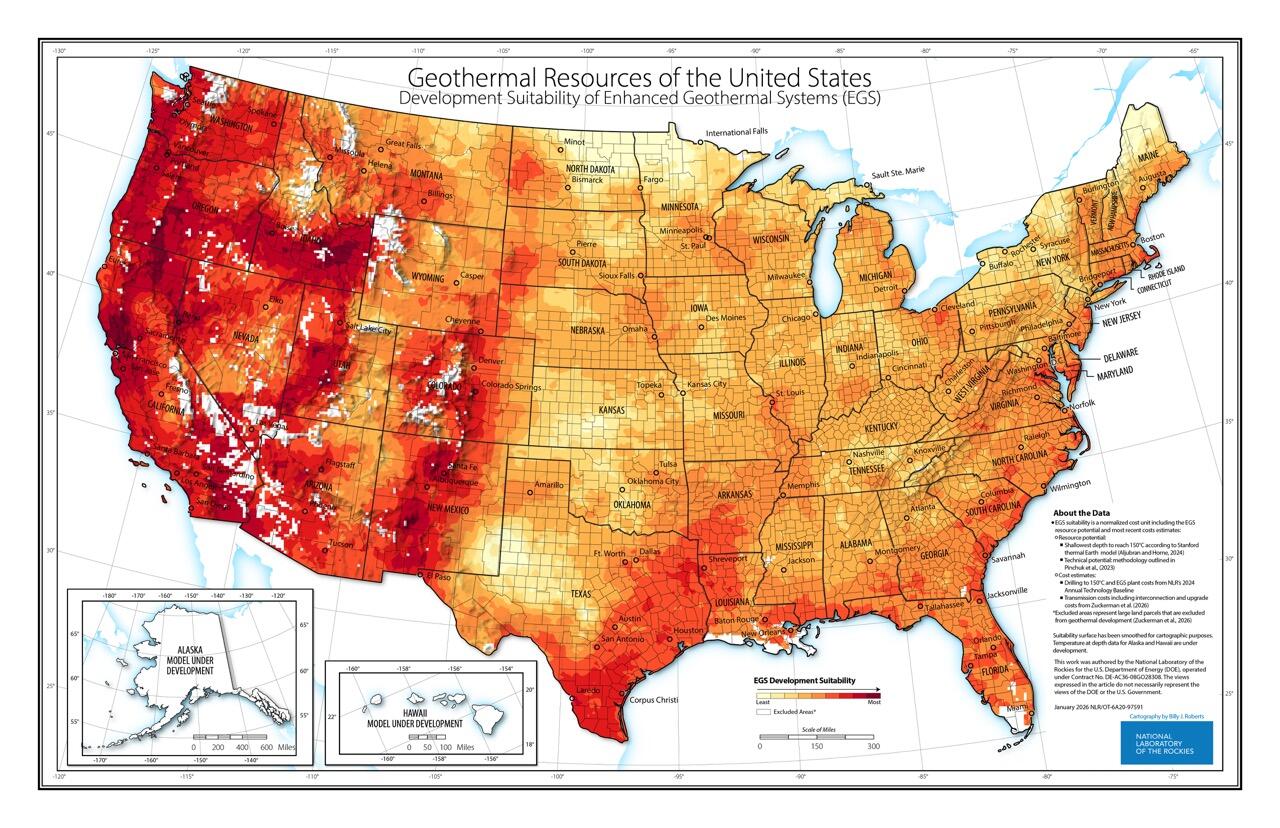
Recent studies show that some of the best locations in the United States for new geothermal sites are in the western part of the country and some of the southern states.
Assistant Secretary Kyle Haustveit of the Office of Hydrocarbons and Geothermal Energy stated the initiative will “directly support our commitments to advance energy addition, reduce energy costs for American families and businesses, and unleash American energy dominance and innovation.”
One of the only pure-play publicly traded geothermal companies is Ormat Technologies (ORA), which develops, owns, and operates geothermal power plants primarily in the U.S. and internationally. The company has recently expanded via long-term power purchase agreements with data-center operators (Google), underscoring commercial interest in reliable geothermal supply.
Some Democratic appropriators are pitching a fit, noting the $146.5 million tranche exceeds the $118 million Congress appropriated for geothermal in FY2025 and requesting further review. Proponents counter that successful pilots could unlock far larger private investment and help diversify the grid beyond wind, solar, and gas.
From his Free Press article; Ferguson is a Senior Fellow at the Hoover Institution, a former Harvard history professor, and a noted author both on historical matters and modern ones:
Since the news of the joint U.S.-Israeli strikes on Iran this morning, I have been thinking a lot about a song in the 2004 movie Team America:World Police. The movie was co-written by the creators of South Park and follows a group of heroic American puppets waging kinetic war on Islamic terrorists, the North Korean dictator Kim Jong Il, and liberal Hollywood, leaving cataclysmic collateral damage (the Eiffel Tower, Cairo, the Sphinx) in their wake. But the real highlight is a song called “America, Fuck Yeah.” Here’s how it goes:
America, fuck yeah
Comin’ again to save the motherfuckin’ day, yeah
America, fuck yeah
Freedom is the only way, yeah
Terrorists, your game is through
‘Cause now you have to answer to …
America, fuck yeah
So lick my butt and suck on my balls
America, fuck yeah
What you gonna do when we come for you now?
It’s the dream that we all share
It’s the hope for tomorrow
Fuck yeah
Team America was an ambivalent movie at the time. That was what made it funny. It simultaneously mocked the liberal opponents of an aggressive foreign policy and the neoconservatives who advocated policies such as regime change in Iraq. The South Park team understood before many commentators that the United States has a track record of coming to save the day and leaving a trail of devastation.
For the habitual critics of U.S. foreign policy in general and Donald Trump’s in particular, the analogy between today’s air raids against Iran and the invasion of Iraq nearly 23 years ago is too obvious to be resisted….
However, Iran 2026 is not Iraq 2003. Back in those days, I shed no tears for Saddam Hussein and had considerable sympathy with the project of covert empire-building, but I was a critic of the Bush administration’s post-invasion nation-building strategy because I believed the U.S. lacked the key structural attributes to make it work.
By comparison with the British Empire, American power in the 2000s had three fateful deficits: a manpower deficit, a fiscal deficit, and an attention deficit. I argued that the occupying force was too small relative to Iraq’s population. The complete destruction of the Ba’athist regime laid the foundations for anarchy and civil war, which swiftly mutated into an insurgency against the U.S.-led coalition. And I came to see that the principal beneficiary of Hussein’s downfall was none other than Iran.
And yet, contrary to the criticism already being aired on both the left and the right, Trump is not reverting to George W. Bush and Dick Cheney’s “regime change” playbook….
Operation Epic Fury differs from Operation Iraqi Freedom—the 2003 invasion of Iraq—in two key respects. Yes, the justification is preemption against a regime intent on acquiring weapons of mass destruction and implicated in international terrorism. But the goal is not to march into Iran and confer, much less impose, freedom on the Iranians. It is to decapitate the Islamic Republic’s political structure and leave the Iranians to take their freedom from the mullahs and their murderous henchmen. As Trump said in his speech this morning, “members of the Islamic Revolutionary Guard, the armed forces and all of the police” can “have complete immunity” if they lay down their weapons….
The real question is: Who rules in Tehran after Khamenei? …
An excerpt from Prof. Goldsmith’s post at Executive Functions:
We’re already seeing a debate about the legality of President Trump’s use of force in Iran. I’ve grown cynical about these debates. Law is the language we use when criticizing presidential war powers—and it has been since the beginning of the nation. But the truth is that there are only political constraints.
As I’ve been saying for a while, there are no effective legal limitations within the executive branch. And courts have never gotten involved in articulating constraints in this context. That leaves Congress and the American people. They have occasionally risen up to constrain the president’s deployment of troops and uses of force—for example, in Vietnam, and in Lebanon in 1983, and in Somalia in 1993. But those actions are rare and tend only to happen once there is disaster.
The Office of Legal Counsel opinions on the presidential use of force are famously promiscuously permissive. Some will now invoke the single acknowledged OLC limitation on unilateral uses of force to criticize the Iran attack. As the opinion justifying the attack on ISIS in 2014 explained: If the “‘anticipated nature, scope, and duration‘ of the planned military operations, analyzed in light of the applicable historical precedent” amount to “war,” the president must secure prior congressional approval.
President Trump in his statement about the attack said: “The lives of courageous American heroes may be lost, and we may have casualties,” and that “that often happens in war.” Does that implicate the OLC limitation and require him to seek congressional approval? It would be very easy for OLC to conclude not.
First, I am not aware of any episode in which this standard was invoked to deny the president the authority to use force. It has been mentioned only in opinions justifying force and it has been fudged in various ways.
Second, OLC made clear in its Libya opinion that the “anticipated nature, scope and duration” test “will be satisfied only by prolonged and substantial military engagements, typically involving exposure of U.S. military personnel to significant riskover a substantial period.” (Emphasis added.) …
None of the above is meant to justify the Iran strikes or endorse them. I’m praying for U.S. troops and for everyone involved, and hoping for the best. But it is hard to be optimistic given the terrible U.S. record with violent military disruptions and regime changes in and around the Middle East in my lifetime. Maybe this time will be different.
My point is that the rhetoric of legal constraint, and debates about the legality of presidential uses of force, are empty. And they deflect attention from Congress’s constitutional responsibility to exercise its political judgment and the political powers that the framers undoubtedly gave it to question, to hold to account, and (should it so choose) to constrain presidential uses of force.
As Walter Dellinger wrote for OLC 30 years ago: “in establishing and funding a military force that is capable of being projected anywhere around the globe, Congress has given the President, as Commander in Chief, considerable discretion in deciding how that force is to be deployed.” Congress in giving the president a gargantuan military, and in its “oversight” and lack of imposed constraint, is as responsible for the use of force against Iran, for better or worse, as the president.
This is a lightly edited transcript of today’s video from Daily Signal Senior Contributor Victor Davis Hanson.
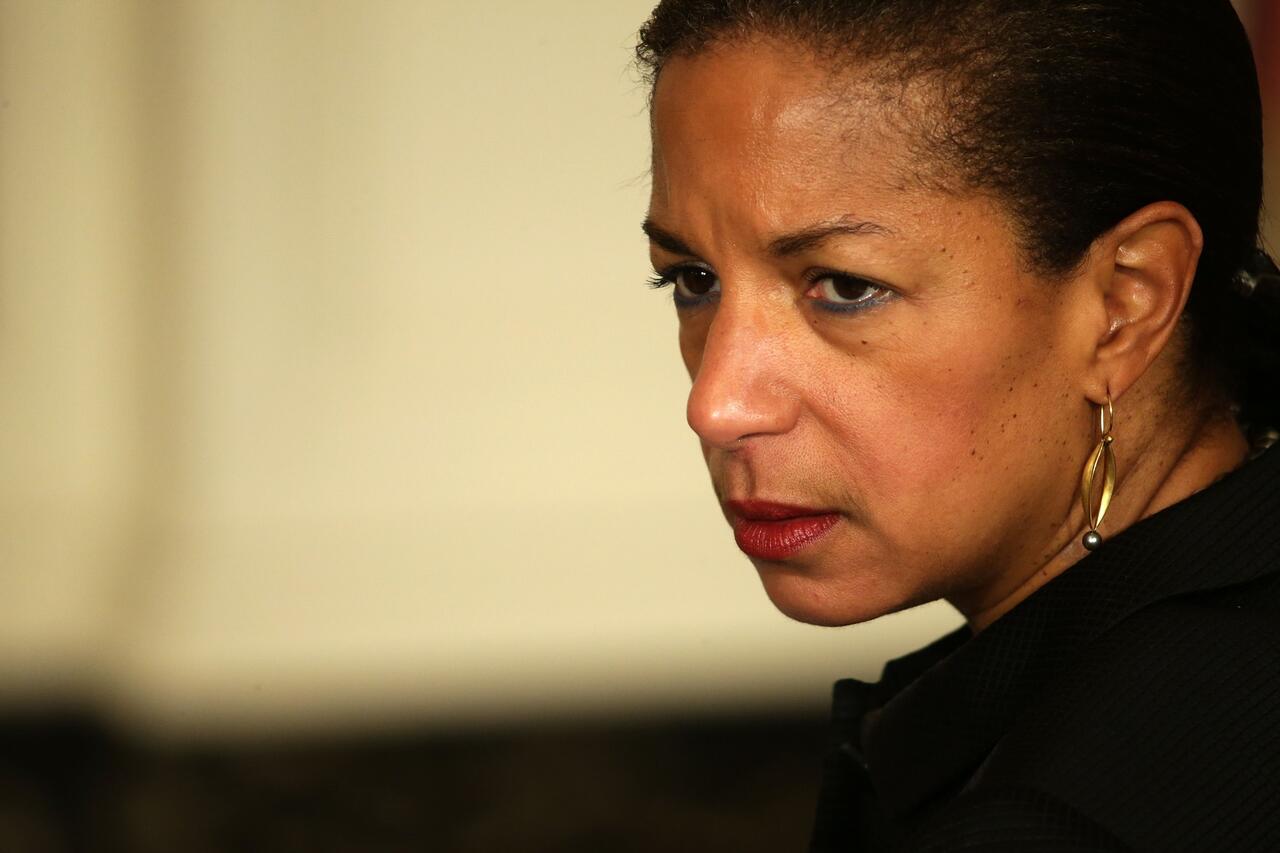
Susan Rice, the former U.N. ambassador under the Obama administration, national security adviser, and also served in various capacities with former President Joe Biden, gave an interview on a podcast with Preet Bharara. He is that very liberal federal prosecutor that developed quite a name for himself in New York, going after, I think, targeted a lot of people based on their politics.
But nonetheless, it was one of the strangest interviews because she flat out, candidly, with no reservations, sent a message to people who were conservative, Republican, or Trump supporters, and she used “Game of Thrones” imagery. “You’ve taken the need of [President] Donald Trump. You have allowed him to bully you.”
She was talking about the so-called elites in the academic world, in the corporate world, in the institutional world. “And we’re not going to forget,” she says, “that you did that. And you better have your documents ready because when we come back into power, we’re going to … ” And the implication was: take you to court, make you pay, shake you.
I don’t know what she was talking about, but it was a direct threat.
But here’s what’s strange about it: Start with Susan Rice herself.
If you look back through her latter years with the Obama administration, it was nothing but a complete disaster.
She was the one that, you remember, that the CIA and the Obama administration wheeled out on a Sunday afternoon to explain the Benghazi attack that killed the four Americans at the annex and the consulate.
Five times she told the American people that those attacks were spontaneous, and they were because of some right-wing Coptic video maker who caused it all. That was not true.
That was a preplanned, either an al-Qaeda or ISIS or some type of radical Islamic preplanned assault.
People knew what they were doing. They were well armed. They were well organized.
Why did she go out five times and mislead the American people?
Because the Obama administration had been warned prior that their security was too lax and they did not want to give the impression that that attack was preventable, which it was.
She was the one that also assured us, Americans, that when former President Barack Obama issued those red lines and said if Bashar al-Assad and his Syrian forces move WMD around or still have it, that’s going to be intolerable, i.e., I’m going to take it out.
When they didn’t do that and they backed out, and we knew they had it, she lied to the American people and said, essentially, that they no longer had WMD.
Remember also she wrote, just wrapping up her career, she wrote a little memo to herself in the last weeks of the Obama administration about Michael Flynn. She went to a meeting, and it was pretty clear in that meeting they had planned to subvert the incoming administration with the false narrative of Russian collusion and that somehow Mike Flynn, the national security adviser-designate, had been colluding with the Russians, but that was not true.
But then she wrote a fake memo to herself suggesting that they hadn’t really done that, that it was all up and up. And then, of course, she and others had requested the unmasking of people related with Trump in otherwise confidential files. So, she doesn’t have a good record.
That’s why she didn’t have a high-profile position in the Biden administration.
But there is also some real problems with what she said. She never said to corporate America, to the academic world, to the institutional world, to the political world what they had done wrong. She just said, “We’re going to come back. People don’t like Trump. It’s our turn to come back. We’re not going to play by the old rules. No, no, no. We’re going to be tough. You better get your … ”
Well, what had they done? What had they done? If she’s implying they let people off, or they laid people off that were associated with DEI, that was in accordance with the Supreme Court ruling barring race-based preferences in academic life.
If she means that Donald Trump does not have the authority to issue an executive order stopping DEI, the whole idea of executive orders goes back to the beginning, almost to the republic.
But more importantly, Barack Obama was the one who said, “I have a pen and I have a phone and I’m going to use it.” And that’s when he lost control of Congress and he issued, up until that time, almost the greatest number of executive orders.
So, if she’s not going to tell us that anybody committed a felony or misdemeanor, and yet she’s going to punish them, that doesn’t sound too legitimate.
How does she know, secondly, that she’s going to come back into power? The polls are very volatile. Donald Trump has made, as we’ve talked before, a vast investment in the economy. Inflation is down, unemployment is down, gross domestic product is solid. Foreign investment is at record levels. So is energy production.
And when the “Big, Beautiful Bill” is fully enacted and filters its way through the economy, you’re going to see enormous stimuli given reductions in the tax code, reductions in the deductions that you have to make for the IRS, no tax on tips, etc.
It’s going to have an enormous effect, and it’s going to come into effect before the midterms.
We don’t know what the world is going to look like abroad in Ukraine, in Cuba, in Iran. It may be that Donald Trump is able to solve two or three or all of them. November’s a long way away, so I wouldn’t be so sure, Susan Rice, that you will win the November elections, much less, if you are alluding, as I think you were, to 2028.
If you heard Marco Rubio’s speech to the Munich Security Conference and you’ve seen JD Vance in the 2024 election take down almost every hostile reporter that interviewed him, they’re going to be a very formidable team.
And I don’t see anything quite like that with Gavin Newsom.
I don’t see it with AOC, especially after her performance at the Munich Security Conference.
I don’t think Pete Buttigieg is a viable candidate.
So, we’ve seen Kamala Harris, very uninspiring.
Maybe Josh Shapiro. But given the antisemitic nature of the new Democratic Socialist Party, I doubt, as we saw with the vice-presidential selection in 2024, I doubt that he would have a chance to be the nominee of the new Democratic Party.
And finally, when you talk about retribution, where have you been, Susan Rice?
Who were the people who tried to take Donald Trump off 25, 26 state ballots … unprecedented? Who were the people who for the first time in history impeached a president twice? Who were the people who tried him as a private citizen when he was out of office in the Senate? Tried to convict him.
Who were the people behind the Letitia James frivolous lawsuit that tried to bankrupt him with almost a $500 million fine because he took a loan out with a Deutsche Bank and they claimed that he overvalued the assets, which the Deutsche Bank said he didn’t? That he paid the interest on time to the profit of the bank who had no complaint?
Who was Alvin Bragg trying to shoehorn a federal offense onto a state law and said that Donald Trump’s non-disclosure with Stormy Daniels was a federal campaign violation? Who were the people behind the crazy E. Jean Carroll persecution lawsuit that may have cost Donald Trump $90 million?
Who were the people behind Jack Smith, who was knee deep along with the FBI and knew about that with Merrick Garland, the raiding, the Mar-a-Lago … the home of Donald Trump?
And the idea that Donald Trump violated some confidential agreement with the government when an archival dispute when Joe Biden had taken materials that were confidential and classified from his days in the Senate in three or four, much less secure, places?
Who’s behind all that? Who’s behind Fani Willis when a person calls the registrar and says, “I know there’s votes there, find them,” as a lot of candidates do to every registrar when they feel that they’re not adequately looking for votes that have been cast. There was a lot of things to be suspicious about in Georgia and turned that into a felony.
All of those prosecutors were politically minded, biased, and ultimately found themselves in their own ethical dilemmas. But who did that? My point is, Susan Rice, your party has already taken out retribution. You were the ones that politicized the Department of Justice. You were the ones, going back to 2015 and ’16 with Russian collusion, 2020 with laptop disinformation.
Your entire career of the Democratic Party—your career, Hillary Clinton’s career, Barack Obama—has been to destroy Donald Trump. So, we don’t need lectures on retribution. You’ve already tried to practice retribution against Trump. And I don’t think you’re going to be in a position of power necessarily in the Congress in 2026, and I have a pretty good idea you won’t come back to power in 2028.
But otherwise, you really displayed your true nature and put your cards on the table. And I don’t think that your opponents are going be naive once they understand what your true intentions are, which are completely vengeful and incoherent.
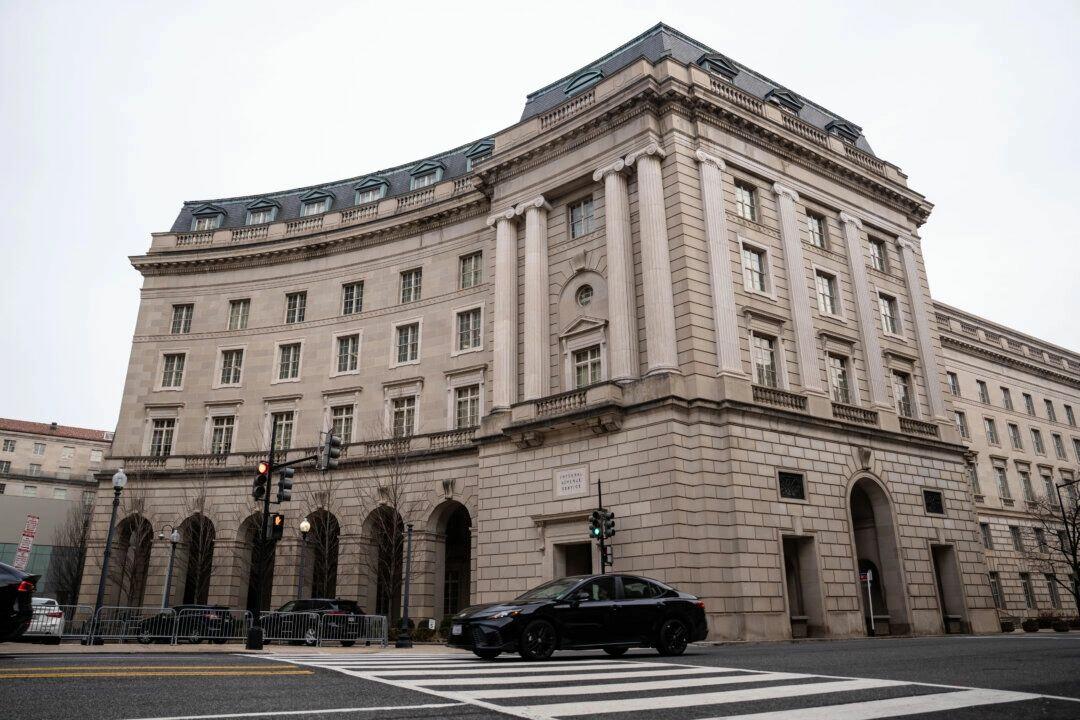
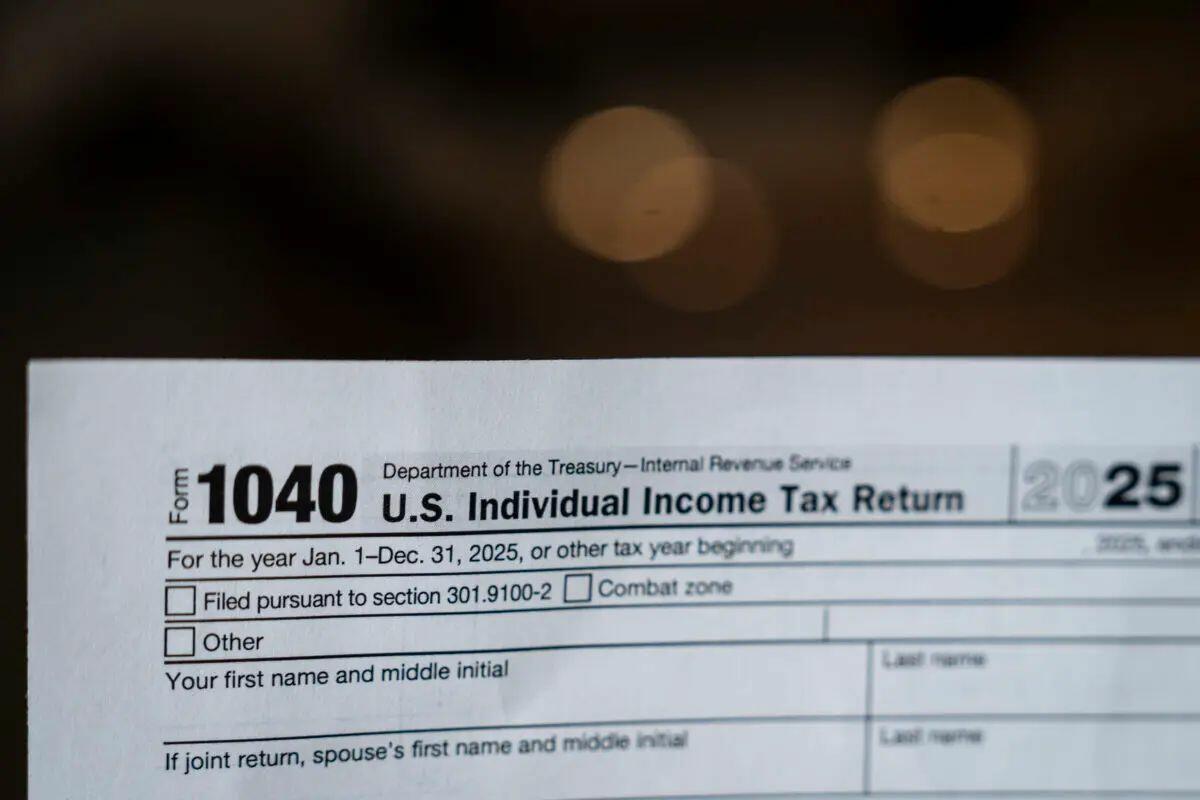
U.S. District Judge Colleen Kollar-Kotelly said the IRS erred when it shared the taxpayer information with ICE and the Department of Homeland Security (DHS) as part of an agreement between the two agencies in a bid to identify illegal immigrants.
Earlier in February, an IRS official, Dottie Romo, issued a sworn statement saying the IRS provided the information for about 47,000 taxpayers to DHS, which had requested the information of a total of 1.28 million people.
In Thursday’s 13-page opinion, Kollar-Kelly cited Romo’s statement as part of her ruling against the two agencies, calling it a “significant development” in the case.
The judge wrote that the IRS violated a confidentiality law “approximately 42,695 times by disclosing last known taxpayer addresses to ICE.”
The IRS had given “confidential taxpayer addresses to ICE in response to requests from ICE that the IRS now admits were legally deficient. The Court’s prior decision to indicate that it would supplement the record on appeal with the Romo Declaration reflects the significance of this new information,” she wrote.
“In other words, the IRS not only failed to ensure that ICE’s request for confidential taxpayer address information met the statutory requirements, but this failure led the IRS to disclose confidential taxpayer addresses to ICE in situations where ICE’s request for that information was patently deficient.”
In a filing in mid-February, Romo wrote that the IRS had told DHS in January to take steps to “prevent the disclosure or dissemination, and to ensure appropriate disposal, of any data provided to ICE by IRS based on incomplete or insufficient address information” and that the agency also requested DHS’s assistance in moving to remediate the matter.
“DHS and ICE have confirmed to Treasury and IRS that they will comply with federal law and the MOU in addressing this data issue,” Romo added in the sworn statement, using an acronym for a memorandum of understanding between the two agencies.
The agencies have agreed they “will not inspect, view, use, copy, distribute, rely on, or otherwise act on any return information that has been obtained from or disclosed by IRS pursuant to the MOU.”
In November, Kollar-Kotelly blocked the data-sharing agreement between ICE and the IRS, which the Trump administration had proposed.
A data-sharing agreement signed last April by Treasury Secretary Scott Bessent and Homeland Security Secretary Kristi Noem allowed ICE to submit names and addresses of illegal immigrants inside the United States to the IRS for cross-verification against tax records.
Earlier this week, a three-judge panel for the U.S. Court of Appeals for the D.C. Circuit declined to issue a preliminary injunction for the immigrants’ rights group, Centro de Trabajadores Unidos, and other nonprofits that are suing the federal government to stop implementation of the IRS–ICE agreement.
In declining the preliminary injunction request, Judge Harry Edwards wrote that the nonprofit groups “are unlikely to succeed on the merits of their claim,” since the information the agencies are sharing isn’t covered by the IRS privacy statute.
An excerpt from Prof. Goldsmith’s post at Executive Functions:
We’re already seeing a debate about the legality of President Trump’s use of force in Iran. I’ve grown cynical about these debates. Law is the language we use when criticizing presidential war powers—and it has been since the beginning of the nation. But the truth is that there are only political constraints.
As I’ve been saying for a while, there are no effective legal limitations within the executive branch. And courts have never gotten involved in articulating constraints in this context. That leaves Congress and the American people. They have occasionally risen up to constrain the president’s deployment of troops and uses of force—for example, in Vietnam, and in Lebanon in 1983, and in Somalia in 1993. But those actions are rare and tend only to happen once there is disaster.
The Office of Legal Counsel opinions on the presidential use of force are famously promiscuously permissive. Some will now invoke the single acknowledged OLC limitation on unilateral uses of force to criticize the Iran attack. As the opinion justifying the attack on ISIS in 2014 explained: If the “‘anticipated nature, scope, and duration‘ of the planned military operations, analyzed in light of the applicable historical precedent” amount to “war,” the president must secure prior congressional approval.
President Trump in his statement about the attack said: “The lives of courageous American heroes may be lost, and we may have casualties,” and that “that often happens in war.” Does that implicate the OLC limitation and require him to seek congressional approval? It would be very easy for OLC to conclude not.
First, I am not aware of any episode in which this standard was invoked to deny the president the authority to use force. It has been mentioned only in opinions justifying force and it has been fudged in various ways.
Second, OLC made clear in its Libya opinion that the “anticipated nature, scope and duration” test “will be satisfied only by prolonged and substantial military engagements, typically involving exposure of U.S. military personnel to significant riskover a substantial period.” (Emphasis added.) …
None of the above is meant to justify the Iran strikes or endorse them. I’m praying for U.S. troops and for everyone involved, and hoping for the best. But it is hard to be optimistic given the terrible U.S. record with violent military disruptions and regime changes in and around the Middle East in my lifetime. Maybe this time will be different.
My point is that the rhetoric of legal constraint, and debates about the legality of presidential uses of force, are empty. And they deflect attention from Congress’s constitutional responsibility to exercise its political judgment and the political powers that the framers undoubtedly gave it to question, to hold to account, and (should it so choose) to constrain presidential uses of force.
As Walter Dellinger wrote for OLC 30 years ago: “in establishing and funding a military force that is capable of being projected anywhere around the globe, Congress has given the President, as Commander in Chief, considerable discretion in deciding how that force is to be deployed.” Congress in giving the president a gargantuan military, and in its “oversight” and lack of imposed constraint, is as responsible for the use of force against Iran, for better or worse, as the president.