Rabobank: There Are Only Three Ways That This All Ends

Rabobank: There Are Only Three Ways That This All Ends

By Michael Every of Rabobank

Our problem, in a Canute shell

As posited yesterday morning, Monday indeed proved that Friday’s market price-action had been about end-of-month short covering in bonds, rather than a sudden market recognition that major central banks are ahead of the curve in controlling longer bond yields. Monday was a new day, a new week, a new month, and a new way to show us that inflation is still something bonds are unhappy about.

The US ISM manufacturing survey, for example, saw the number of firms reporting that they were paying higher prices stay at 100% for a third month in a row: there isn’t much room for misinterpretation when everyone is paying more for their inputs. Then we also saw the US House pass the USD1.9 trillion stimulus bill, which now moves on to the Senate: apparently this can continue to be priced in over and over again.

As such, at time of writing, long bond yields are going up; and so are stocks; and so are commodities. Yet the first and the third trend on that short list risk hitting the second, as we have already seen graphically displayed of late.

To repeat the analogy from yesterday, central banks are going to have to do something other than just expect markets to retreat at their verbal command like King Canute, whom popular British legend says believed the tides would obey him as he sat on his throne on the seashore.

They will certainly need to do more than the ECB did yesterday in sending the signal, genuine or not, that it may be scaling back its QE bond purchases just as at least one governing council member jawboned that it may need to increase it. (Markets, unlike tides, can count.)

They will arguably need to act more like the RBA, which smashed bond bears yesterday with a doubling of its QE purchase at the longer end to AUD4bn. However, it is vitally important that central banks in general, and the RBA in particular, understand that the huge intra-day drop in 10-year bond yields seen in the Aussie market yesterday was the product of follow-through short-covering from the US on Friday (i.e., the tide decided that it wanted to go out) rather than a reflection of shock and awe at the figure of AUD4bn.

The tactical risk for markets is that the conservative RBA, which meets today, sits on its throne with its crown at a jaunty angle, strokes its beard, and proudly announces that it is in full control of the curve. If so it, and then others by extension, are going to get pretty wet, pretty fast.

Yet our good King Canute and the central banks differ: the latter *do* have the ability to control the curve if they really want to; they *can* peg yields wherever they want them to be. Indeed, one can expect the market to start calling for exactly that both in word –and they are, with calls for the Fed to shift to a new Operation Twist focusing QE at the long end of the curve– and in deed, through both higher yields and bear steepening, with every inflation anecdote and data release.

As has been underlined here for years, and many times recently, the only problem with central banks displaying such awesome powers at a time when input prices are soaring is that there is no going back to normal market tides afterwards: no ripples; no waves; and certainly no surfing. The sea will be artificially becalmed – but lots of important things will still drown.

Tactically, let’s see what the Fed’s Brainard and Daly have to say today as they get their latest chance to dip their toes in the water on this key topic. Strategically, however, and given King Canute is NOT applying his powers to the labor market *directly*, where the waters still remain full of sharks and dangerous undercurrents (and no USD15 minimum wage), one has to recognize that there are only three ways that this all ends up: the tide is either coming in or going out, so to speak. Either:

  • Central banks refuse to step in; longer yields rise sharply, and probably overshoot; stocks are dragged down; the US Dollar is pushed up; commodities are dragged down; markets start to panic; governments start to panic; corporations start to panic; and everyone ends up in rags crammed onto the tiny desert island of the short-end of the yield curve under a solitary coconut tree; or

  • Central banks step in; longer yields are crushed, as we saw Monday in Australia; stocks rally further; the US Dollar is pushed down (assuming the Fed is doing this); commodities are pushed up; markets are on fire; governments are free to spend – if they can bothered, which still looks unlikely; corporations are free to build lots of ‘useful’ projects like The World islands in Dubai; and those long assets get to sit on man-made islands drinking cocktails under coconut trees, while those long labour get to swim with the sharks in wave-free seas to serve the drinks to them; or

  • Central banks and governments step in; and they focus on the labour market *directly*, which will have to involve building a whole series of dykes to keep liquidity in and other fishers out, in a proletarian version of The World islands in Dubai where everyone has rolled up trousers and wears a white hankie on their head; and only the rich end up on a desert island, one way or another.

So which of the above is really nautical, and which is nice? That’s our problem in a Canute shell.

Tyler Durden
Tue, 03/02/2021 – 10:15

via ZeroHedge News https://ift.tt/3b7O1w8 Tyler Durden

“Vega Vacuum” Vaporized: What’s Behind The Market’s Violent Meltup

“Vega Vacuum” Vaporized: What’s Behind The Market’s Violent Meltup

Two weeks ago, on Feb 16, when discussing the persistently high and sticky level in the spot VIX, we referenced a recent report from Goldman according to which retail investors were flooding into long VIX ETP and calls, creating an upside “vega vacuum“…

… perhaps in anticipation of another VIX spike, perhaps in a (misguided) attempt to spark a VIX short squeeze (as Morgan Stanley previously speculated), but whatever the reason, last week’s VIX surge was enough to hand retail investors sufficient profits with the fear index surging by 50% since our initial post on the topic.

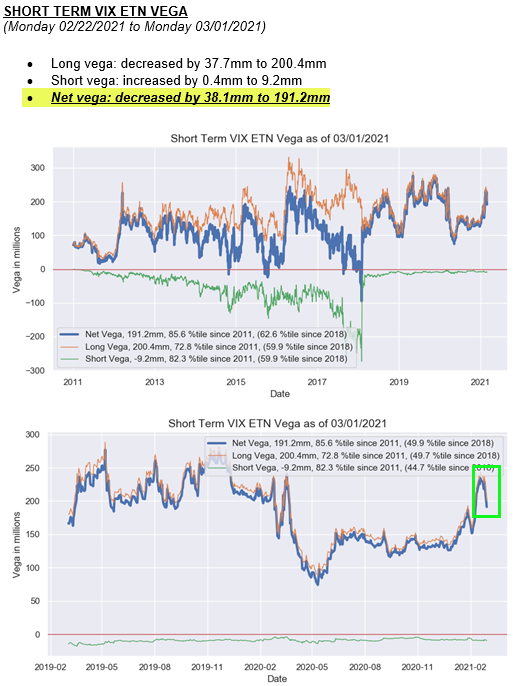
Why is this notable? Because as Charlie McElligott writes this morning, the “enormous decrease” in daily VIX ETN “Net Vega” which we addressed two weeks ago, and which declined by a whopping $38.1mm as some of that recent enormous “long Vega” accumulation is monetized (thanks to the VIX surge), now serves as a “potential source of easing some of the stickiness in  persistently-higher implied vol” (i.e., VIX, etc) which then becomes a “feed-back loop” into softening of realized vol yet again.

As shown below, the net vega tumbled from $230MM on Feb 22 to $191.2MM on Mar 1, which while still high is a violent rate of easing/change.

It is the vaporization of this “vega vaccum” that we saw yesterday as the VIX tumbled that was the key driver behind the market stabilization. There is more.

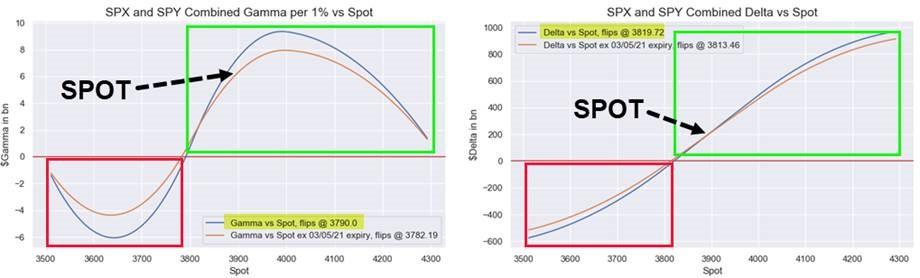
As Nomura’s Charlie McElligott adds, with Spooz currently sitting ~ 3895, between the two massive Gamma strikes of 3900 ($3.6B) and 3850 ($2.5B)— the critical observation is that after being short for a few days, dealers are now long Gamma vs spot (Gamma neutral line at 3790) and are helping to insulate against large market swings, while option holders are again long Delta vs spot, (the Delta neutral line at 3819).

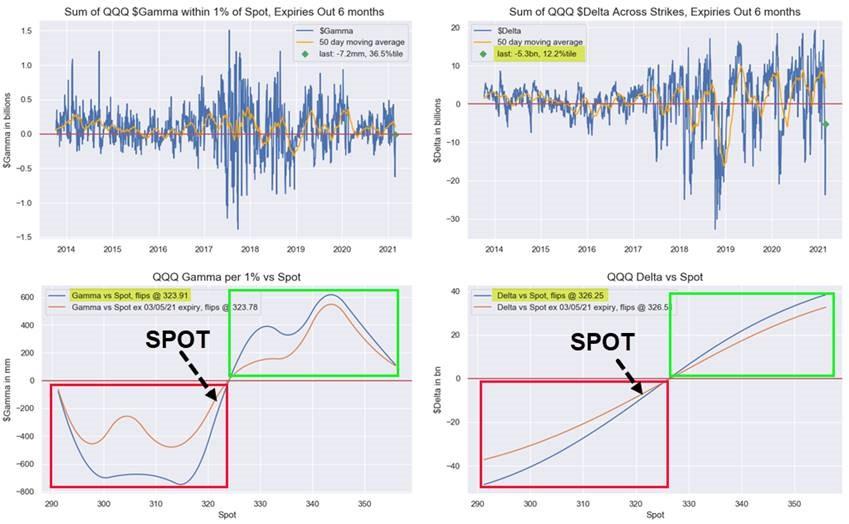
Yet in a curious divergence, the duration-sensitive Nasdaq/QQQ continues to sit at the root of much of the market “jumpiness,” where as opposed to SPX/SPY options positioning,  Dealers remain incrementally “short Gamma” vs spot (Gamma neutral line at $323.91 in QQQ), and options “short Delta vs spot” as well (neutral line at $326.25), leaving markets especially susceptible to more bond-market tremor if the Rates selloff were to reacclerate / further re-price Fed path.

Yet while short dealer gamma in Nasdaq is a potential source of risk, what is far more important is that SPY gamma is now positive.

It is this double whammy of i) positive gamma and ii) collapsing vega then that according to McElligott explains the meltup in risk assets in the past 48 hours. Some more details: 

  1. Rate Vol stabilization/calming of last week’s VaR-event, followed by the Monday Equities impulse then assisting a return to an equity options dealer “long Gamma” regime seeing virtuous “Vanna” flow second-order benefits (especially with VIX ETN monetization of “long Vega” helping soften forward Vol), will with each passing-day act to…
  2. Reverse the recent “realized vol crash-UP to implied vol” phenomenon which has been at the basis of Nomura’s repeated calls for “broken Vol mkt” risk, which finally materialized in the shock-down move after Friday Feb 19th’s Op-Ex “unclenching” catalyst

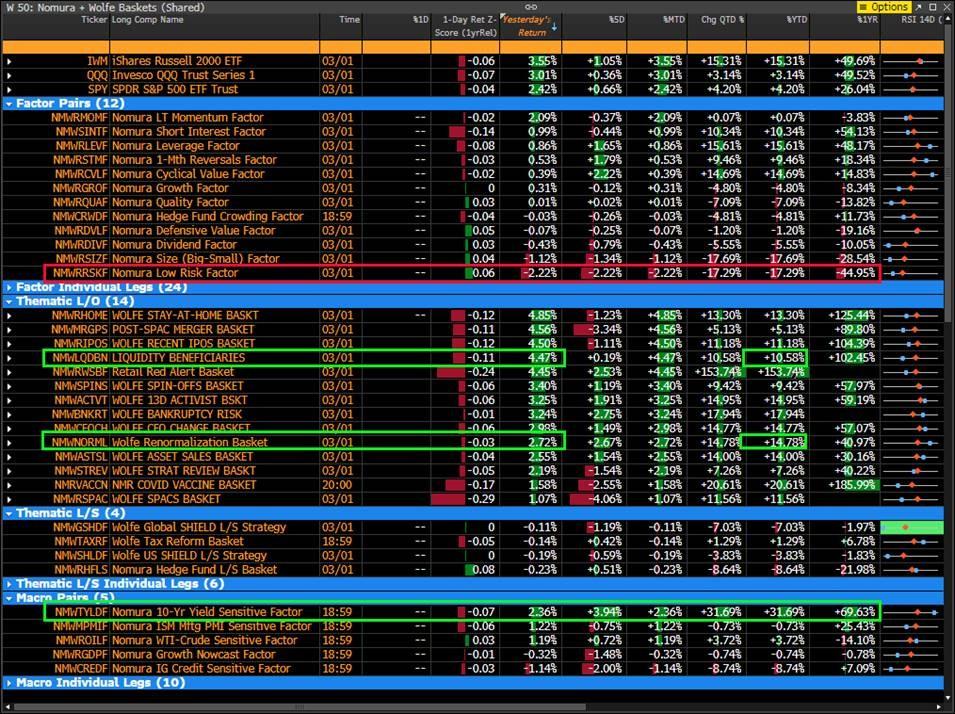
And this is why, McElligott writes, “yesterday was an “everything up” day with “Low Risk” again hammered, particularly positive for both legs of his recommended “65% Renormalization, 35% Fed Liquidity Beneficiaries” basket structure advocated for 2021… but also evidenced bullish moves in Macro factor pairs following the monster ISM Manu print, with “Nomura 10-Yr Yield Sensitives” +2.4% on day and now +31.7% YTD.

Tyler Durden
Tue, 03/02/2021 – 09:59

via ZeroHedge News https://ift.tt/3bQiez6 Tyler Durden

Ormat Exec Relieved Of Duties, Director Won’t Seek Re-Election, After Allegations Of “Dirty Dealings”

Ormat Exec Relieved Of Duties, Director Won’t Seek Re-Election, After Allegations Of “Dirty Dealings”

On Monday morning, Hindenburg Research – best known for being the firm that exposed Nikola’s One semi truck as rolling down a hill in a video that purported to show the semi “in action” – released a report on Israeli-based geothermal power company Ormat. 

The lengthy report, called “Ormat: Dirty Dealings in ‘Clean’ Energy”, alleged that Ormat engaged in what Hindenburg believed “to be widespread and systematic acts of international corruption.”

“We expect the blowback to these revelations to be severe, threatening Ormat’s contracts in its most lucrative markets. In fact, history is already catching up to Ormat’s senior leadership,” Hindenburg wrote. “Ormat’s General Counsel & Chief Compliance Officer, along with an Ormat director, are under pre-indictment in Israel. This is a formal stage of prosecution just prior to indictment. Ormat has apparently chosen not to disclose that the two are currently in the midst of a criminal prosecution. Both still serve in senior oversight roles at Ormat.”

The report also alleged routing sales through undisclosed related party entities, ties to government corruption in Kenya and South America, and that Ormat’s key customer in Kenya could be “broke” and “technically insolvent”. 

Ormat responded after market close on March 1, calling Hindenburg’s report “inaccurate and filled with innuendo in an attempt to mislead investors about Ormat.”

“We have been providing clean renewable energy in Kenya, Honduras and Guatemala for many years, supporting local communities. Our facilities are financed by numerous leading multinational banks, which conduct extensive due diligence on the Company and its operations prior to entering into lending agreements. We are committed to conducting all of our business according to the highest ethical standards, and we have clear policies in place to ensure our people and our partners act accordingly and consistent with all applicable laws and regulations.” 

But then it also disclosed that one of its board members would not stand for re-election and that its General Counsel and Chief Compliance Officer would transfer his responsibility to other members of the management team, pending a “governmental hearing”:

The Company is aware of claims being investigated in Israel regarding Ravit Barniv, an Ormat Board member, and Hezi Kattan, the Company’s General Counsel and Chief Compliance Officer. The claims involve Ms. Barniv’s and Mr. Kattan’s work at another company, prior to joining Ormat. Those claims remain subject to a governmental hearing that may take time to conclude and Ormat is monitoring the process closely.

On February 24, 2021, the Company’s Board of Directors determined that, at this time, it would be prudent to transfer the responsibility for the Company’s compliance function to other members of the Ormat management team until these issues are resolved. In addition, Ms. Barniv told the Board of Directors that she believes that investor attention should be focused on Ormat’s strong performance and future prospects. Accordingly, she has decided not to stand for reelection at the upcoming Annual Meeting expected in May.

Hindenburg followed with a Tweet on Monday evening:

“Ormat’s Board of Directors and leadership team are confident in the Company’s strategy. Our strong performance shows that we are on the right path for long-term success and to continue the Company’s growth trajectory. We are focused on capitalizing on our momentum – even in light of the COVID-19 pandemic – and will continue to serve and act in accordance with our values, high ethical standards and in our shareholders’ best interests,” Ormat said on Monday. 

Despite falling from recent highs well over $120 per share, Ormat is still about 40% higher over the last 6 months, as what appears to be endless cash pours into any type of ESG name the market can get its hands on. 

Tyler Durden
Tue, 03/02/2021 – 09:39

via ZeroHedge News https://ift.tt/3sKHBZE Tyler Durden

Americans Reject Republicans and Democrats in Record Numbers

Wide Me

Half of Americans reject both Republicans and Democrats. Recent polling from Gallup finds 50 percent of respondents identifying as independents, rather than aligning themselves with either Democrats or the GOP.

Gallup’s latest political identification poll, conducted January 20 through February 2, saw just 25 percent of respondents identifying as Democrats and 25 percent identifying as Republicans. Among independents, 41 percent said they lean more Republican and 50 percent said they lean more Democrat. This is quite a change from November 2020 (when the Democrat/Republican/Independent divide was 31 percent, 30 percent, and 38 percent), and from February 2020 (when it was 26 percent, 33 percent, 39 percent). Gallup has been asking this same question myriad times per year since 2004. Party identification numbers tend to fluctuate quite a bit between surveys, but Gallup reports this is the first time the share of independents has reached 50 percent.

In addition, more poll respondents than ever before—62 percent—say that Republicans and Democrats “do such a poor job representing the American people that a third party is needed.” Agreement with this statement is up from 57 percent in September 2020, and a previous record high of 61 percent in 2017.

The first time Gallup asked the question, back in October 2003, only 40 percent agreed. “In several election years—2006, 2008 and 2012—Americans were divided as to whether a third party was needed, but since 2012, Americans have consistently favored the idea,” notes Gallup.

The results should give both parties and their members pause, but belonging to one of America’s two ruling tribes seems to mean never having to engage in self-reflection. Why should they? In cities and states across the U.S., professional Democrats and Republicans have successfully worked the system to keep third parties off ballots and out of office,  while fighting electoral innovations—like ranked choice voting—that allow people to vote their actual preferences rather than simply pick the proverbial lesser of two evils.

And when legal machinations fail, the two parties resort to shaming: Don’t third-party voters know they’re destroying democracy?

That attitude is on full display in some reactions to the recent Gallup polling results. Take Lee Drutman, a senior fellow at the New America Foundation and political science lecturer at Johns Hopkins University, who shared the poll results yesterday with a warning that “this disaffiliation from the two major parties is very dangerous for democracy.” 

People labeling themselves and voting according to their own preferences and beliefs instead of whatever hogwash they’ve been force-fed is not dangerous to democracy—many functional democracies in the world have third and fourth and fifth parties, who govern in coalitions thanks to proportional representation. But this disaffiliation trend is dangerous to establishment politicians and staid political institutions who think they’re too big to fail and thus immune from having to actually act like democratic leaders. To which I say:

And according to Gallup, a whole lot of Americans feel similarly.


FOLLOWUP

A picture is worth… After two former staffers of New York Gov. Andrew Cuomo accused him of sexual harassment, another woman has come forward saying that Cuomo made unwanted sexual advances:


FREE MINDS

Liberalism is not inevitable. Canadian political scientist Jacob T. Levy, author of The Multiculturalism of Fear and Rationalism, Pluralism, and Freedom, talked to The Signal‘s Phoebe Maltz Bovy about “the cult of now”:

Phoebe Maltz Bovy: In your Vox article on the idea of moral progress, you wrote, “Before we attribute magical moral powers to the passage of the next 50 years, we should look backward in 50-year increments and ask: How many old moral errors keep coming back? How many new ones get introduced?”

I want to ask specifically about the “new ones” part. Because if I understand you correctly, you’re arguing that it’s not just that progress can be slow, in a two-steps-forward, one-step-backwards sense. It’s also that things are not necessarily getting better, or as you quote Martin Luther King, Jr., “‘time itself is neutral.'” Are there ways this moment is less enlightened than, say, ten years ago?

Jacob T. Levy: I think there’s been what’s referred to as liberal-democratic backsliding, compared with certainly before the 2008 financial crisis. Broadly speaking, the stability of liberal and constitutional democracy looks less clear and less entrenched. That’s what comes to mind most obviously.

Bovy: Are you referring to Trump, and to Trump-like leaders worldwide?

Levy: I mean the rise of generally nationalist, populist authoritarianism, with associated challenges to the separation of powers, minority rights, and federalism. This precedes Trump. The standard exemplar from before that was Viktor Orbán, Erdoğan in Turkey, Modi in India, and Netanyahu in important ways in Israel. The time horizon for the decay of Venezuelan democracy is somewhat longer than that, but you’re still seeing instances around the world in different kinds of political systems, different regions, the Philippines, Brazil, where what had looked like relatively stable, relatively entrenched, liberal, constitutional democracy, starts to look a lot less so, and in some cases, I’d argue both Hungary and Turkey, falling out of the category altogether.

Read the whole interview here.


FOLLOWUP

The state budget apocalypse that wasn’t. “Throughout the debate over stimulus, one question has produced repeated deadlock in Washington: Should the states get no-strings federal aid?” notes The New York Times. Over the course of the pandemic, Democrats have continually argued yes, and still are saying as much, arguing that this is absolutely essential to keep states—and their residents—financially afloat. But evidence suggests otherwise. More from the Times:

State aid could well be a stumbling block for President Biden’s $1.9 trillion federal stimulus bill, which contains $350 billion in relief for state and local governments and narrowly passed the House this past weekend. It faces a much tougher fight in the Senate.

As it turns out, new data shows that a year after the pandemic wrought economic devastation around the country, forcing states to revise their revenue forecasts and prepare for the worst, for many the worst didn’t come.

[…] By some measures, the states ended up collecting nearly as much revenue in 2020 as they did in 2019. A J.P. Morgan survey called 2020 “virtually flat” with 2019, based on the 47 states that report their tax revenues every month, or all except Alaska, Oregon and Wyoming.


QUICK HITS

• The U.S. Marshals Service, a wing of the Department of Justice, “have been acting like local police—only with more violence and less accountability, according to an investigation by The Marshall Project and the USA TODAY Network.” The investigation found that “on average, from 2015 to late 2020, they shot 31 people a year, killing 22 of them.”

• Refugees are being turned away from the U.S. due to President Joe Biden’s inaction. “Three weeks after announcing that this year’s refugee cap would be modified, Biden has yet to sign the determination making it official, leaving refugees abroad in limbo,” reports CNN. “Last week, 60 refugees were unbooked from their flights and this week, more than 200 refugees have had their trips postponed, according to a source with knowledge of the matter.”

• A good thread out of Sweden on how the Nordic Model of criminalizing customers of sex workers but not the selling of sex—a model that some U.S. groups and celebrities have been trying to misleadingly label as the “equality model,” or even simply as decriminalization—still leads to really bad outcomes for sex workers:

• Well, this is despicable:

• Instagram has a new rival.

from Latest – Reason.com https://ift.tt/3bUJzjn
via IFTTT

Impeachment and the First Amendment, Revisited

We are now two weeks removed from the Senate impeachment trial. Already, that enervating saga has faded into our polity’s rear-view mirror. I hope that this distance provides an opportunity for calm reflection on the legal arguments raised in those proceedings. Specifically, I’d like to address the First Amendment and the impeachment process. 

Prior to January 6, 2021, most people never considered the interaction between the First Amendment and the impeachment process. I had. In 2017, I wrote a widely-read Lawfare post on obstruction of justice and the presidency. (Trump’s lawyers would cite this post). I argued that the Constitution imposes certain limits on Congress’ powers to regulate the presidency. And I argued that these particular limitations apply with respect to civil laws, criminal laws, and even the impeachment process. That is, Congress could not impeach the President for conduct that complies with the Constitution. And this limitation cuts in two directions. Congress could not impeach the President for exercising a specific power delegated by Article II. And Congress could not impeach the President for conduct that is expressly protected by the Bill of Rights.

My Lawfare series caused a stir. Critics argued that the Constitution does not limit the impeachment process: Congress could impeach the President for just about any reasoneven if the President was complying with the Constitution. Other critics accepted my general premise, but countered that Trump’s conduct was not consistent with the Constitution. Still, I did not think my position was frivolous. I wrote that the 1868 impeachment trial of Andrew Johnson implicated the freedom of speech. At the time, I didn’t dig through the records, but I presumed that Johnson’s acquittal was based, at least in part, on the First Amendment.

My presumption was correct. Several prominent Senators stated that the President has First Amendment rights, and that the Senate could not convict the President for exercising those rights. The views of these Senators were not monolithic. But we are not dealing with a judicial proceeding in which there is a single decision-maker who reaches a single final answer to a constitutional question. Different senators expressed different views. But the position I held was held at least since the 1860s. 

My position may be right or wrong, but it cannot be frivolous. To say my position is frivolous is to charge with incompetence those who framed the Fourteenth Amendment. Indeed, the records of these debates have been carefully examined for more than 150 years. As far as I am aware, no one ever suggested that these members of Congress were wrong. Indeed, one prominent impeachment scholar favorably cited these sources. I encourage everyone to read Professor Kate Shaw’s article, Impeachable Speech, in the Emory Law Journal. She suggested that the First Amendment, and the Brandenburg test in particular, could constrain the impeachment process. Professor Shaw published this article behind the proverbial veil of ignorance in mid-2020, long before January 6. Trump’s lawyers favorably cited her work.

Before January 6, no one had ever argued that the views of these senators articulated during the first presidential impeachment trial were frivolous. What changed after January 6? This position did not suddenly become frivolous. Rather, this argument got in the way of a movement. And it had to be squashed. 150 scholars signed an incoherent statement that didn’t even acknowledge the history from the Johnson impeachment. Yet, the press and the House Managers dutifully cited this letter as a definitive statement about the First Amendment. 

The willingness to charge the Framers of the 14th Amendment with incompetence reminds me of a similar willingness to charge our first President with incompetence, or worse. To this day, the key to the Bastille hangs on the wall at Mt. Vernon. The Marquis de Lefayette gave that famous key, and a painting, to President Washington. Countless generations of scholars and schoolchildren have walked past that key. 

Until 2016, we are not aware that anyone suggested that Washington’s acceptance of that foreign state gift violated the Foreign Emoluments Clause. Yet, after President Trump’s elections, some people were content to suggest that our first President violated the Constitution he helped to define.

For some time, I have thought that the entire Constitution, including the First Amendment, constrains Congress’ impeachment powers. My position became mightily inconvenient after January 6. But the Constitution often imposes inconvenient constraints. In his classic book about presidential impeachments, Grand Inquests, Chief Justice Rehnquist observed that, during times of conflict, “[p]rovisions in the Constitution for judicial independence, or provisions guaranteeing freedom of speech to the President as well as others, suddenly appear as obstacles to the accomplishment of the greater good.” The Chief Justice was right. 

from Latest – Reason.com https://ift.tt/3uNpOmr
via IFTTT

Americans Reject Republicans and Democrats in Record Numbers

Wide Me

Half of Americans reject both Republicans and Democrats. Recent polling from Gallup finds 50 percent of respondents identifying as independents, rather than aligning themselves with either Democrats or the GOP.

Gallup’s latest political identification poll, conducted January 20 through February 2, saw just 25 percent of respondents identifying as Democrats and 25 percent identifying as Republicans. Among independents, 41 percent said they lean more Republican and 50 percent said they lean more Democrat. This is quite a change from November 2020 (when the Democrat/Republican/Independent divide was 31 percent, 30 percent, and 38 percent), and from February 2020 (when it was 26 percent, 33 percent, 39 percent). Gallup has been asking this same question myriad times per year since 2004. Party identification numbers tend to fluctuate quite a bit between surveys, but Gallup reports this is the first time the share of independents has reached 50 percent.

In addition, more poll respondents than ever before—62 percent—say that Republicans and Democrats “do such a poor job representing the American people that a third party is needed.” Agreement with this statement is up from 57 percent in September 2020, and a previous record high of 61 percent in 2017.

The first time Gallup asked the question, back in October 2003, only 40 percent agreed. “In several election years—2006, 2008 and 2012—Americans were divided as to whether a third party was needed, but since 2012, Americans have consistently favored the idea,” notes Gallup.

The results should give both parties and their members pause, but belonging to one of America’s two ruling tribes seems to mean never having to engage in self-reflection. Why should they? In cities and states across the U.S., professional Democrats and Republicans have successfully worked the system to keep third parties off ballots and out of office,  while fighting electoral innovations—like ranked choice voting—that allow people to vote their actual preferences rather than simply pick the proverbial lesser of two evils.
And when legal machinations fail, the two parties resort to shaming: Don’t third-party voters know they’re destroying democracy?

That attitude is on full display in some reactions to the recent Gallup polling results. Take Lee Drutman, a senior fellow at the New America Foundation and political science lecturer at Johns Hopkins University, who shared the poll results yesterday with a warning that “this disaffiliation from the two major parties is very dangerous for democracy.” 

People labeling themselves and voting according to their own preferences and beliefs instead of whatever hogwash they’ve been force-fed is not dangerous to democracy—many functional democracies in the world have third and fourth and fifth parties, who govern in coalitions thanks to proportional representation. But this disaffiliation trend is dangerous to establishment politicians and staid political institutions who think they’re too big to fail and thus immune from having to actually act like democratic leaders. To which I say:

And according to Gallup, a whole lot of Americans feel similarly.


FOLLOWUP

A picture is worth… After two former staffers of New York Gov. Andrew Cuomo accused him of sexual harassment, another woman has come forward saying that Cuomo made unwanted sexual advances:


FREE MINDS

Liberalism is not inevitable. Canadian political scientist Jacob T. Levy, author of The Multiculturalism of Fear and Rationalism, Pluralism, and Freedom, talked to The Signal‘s Phoebe Maltz Bovy about “the cult of now”:

Phoebe Maltz Bovy: In your Vox article on the idea of moral progress, you wrote, “Before we attribute magical moral powers to the passage of the next 50 years, we should look backward in 50-year increments and ask: How many old moral errors keep coming back? How many new ones get introduced?”

I want to ask specifically about the “new ones” part. Because if I understand you correctly, you’re arguing that it’s not just that progress can be slow, in a two-steps-forward, one-step-backwards sense. It’s also that things are not necessarily getting better, or as you quote Martin Luther King, Jr., “‘time itself is neutral.'” Are there ways this moment is less enlightened than, say, ten years ago?

Jacob T. Levy: I think there’s been what’s referred to as liberal-democratic backsliding, compared with certainly before the 2008 financial crisis. Broadly speaking, the stability of liberal and constitutional democracy looks less clear and less entrenched. That’s what comes to mind most obviously.

Bovy: Are you referring to Trump, and to Trump-like leaders worldwide?

Levy: I mean the rise of generally nationalist, populist authoritarianism, with associated challenges to the separation of powers, minority rights, and federalism. This precedes Trump. The standard exemplar from before that was Viktor Orbán, Erdoğan in Turkey, Modi in India, and Netanyahu in important ways in Israel. The time horizon for the decay of Venezuelan democracy is somewhat longer than that, but you’re still seeing instances around the world in different kinds of political systems, different regions, the Philippines, Brazil, where what had looked like relatively stable, relatively entrenched, liberal, constitutional democracy, starts to look a lot less so, and in some cases, I’d argue both Hungary and Turkey, falling out of the category altogether.

Read the whole interview here.


FOLLOWUP

The state budget apocalypse that wasn’t. “Throughout the debate over stimulus, one question has produced repeated deadlock in Washington: Should the states get no-strings federal aid?” notes The New York Times. Over the course of the pandemic, Democrats have continually argued yes, and still are saying as much, arguing that this is absolutely essential to keep states—and their residents—financially afloat. But evidence suggests otherwise. More from the Times:

State aid could well be a stumbling block for President Biden’s $1.9 trillion federal stimulus bill, which contains $350 billion in relief for state and local governments and narrowly passed the House this past weekend. It faces a much tougher fight in the Senate.

As it turns out, new data shows that a year after the pandemic wrought economic devastation around the country, forcing states to revise their revenue forecasts and prepare for the worst, for many the worst didn’t come.

[…] By some measures, the states ended up collecting nearly as much revenue in 2020 as they did in 2019. A J.P. Morgan survey called 2020 “virtually flat” with 2019, based on the 47 states that report their tax revenues every month, or all except Alaska, Oregon and Wyoming.


QUICK HITS

• The U.S. Marshals Service, a wing of the Department of Justice, “have been acting like local police—only with more violence and less accountability, according to an investigation by The Marshall Project and the USA TODAY Network.” The investigation found that “on average, from 2015 to late 2020, they shot 31 people a year, killing 22 of them.”

• Refugees are being turned away from the U.S. due to President Joe Biden’s inaction. “Three weeks after announcing that this year’s refugee cap would be modified, Biden has yet to sign the determination making it official, leaving refugees abroad in limbo,” reports CNN. “Last week, 60 refugees were unbooked from their flights and this week, more than 200 refugees have had their trips postponed, according to a source with knowledge of the matter.”

• A good thread out of Sweden on how the Nordic Model of criminalizing customers of sex workers but not the selling of sex—a model that some U.S. groups and celebrities have been trying to misleadingly label as the “equality model,” or even simply as decriminalization—still leads to really bad outcomes for sex workers:

• Well, this is despicable:

• Instagram has a new rival.

from Latest – Reason.com https://ift.tt/3bUJzjn
via IFTTT

Impeachment and the First Amendment, Revisited

We are now two weeks removed from the Senate impeachment trial. Already, that enervating saga has faded into our polity’s rear-view mirror. I hope that this distance provides an opportunity for calm reflection on the legal arguments raised in those proceedings. Specifically, I’d like to address the First Amendment and the impeachment process. 

Prior to January 6, 2021, most people never considered the interaction between the First Amendment and the impeachment process. I had. In 2017, I wrote a widely-read Lawfare post on obstruction of justice and the presidency. (Trump’s lawyers would cite this post). I argued that the Constitution imposes certain limits on Congress’ powers to regulate the presidency. And I argued that these particular limitations apply with respect to civil laws, criminal laws, and even the impeachment process. That is, Congress could not impeach the President for conduct that complies with the Constitution. And this limitation cuts in two directions. Congress could not impeach the President for exercising a specific power delegated by Article II. And Congress could not impeach the President for conduct that is expressly protected by the Bill of Rights.

My Lawfare series caused a stir. Critics argued that the Constitution does not limit the impeachment process: Congress could impeach the President for just about any reasoneven if the President was complying with the Constitution. Other critics accepted my general premise, but countered that Trump’s conduct was not consistent with the Constitution. Still, I did not think my position was frivolous. I wrote that the 1868 impeachment trial of Andrew Johnson implicated the freedom of speech. At the time, I didn’t dig through the records, but I presumed that Johnson’s acquittal was based, at least in part, on the First Amendment.

My presumption was correct. Several prominent Senators stated that the President has First Amendment rights, and that the Senate could not convict the President for exercising those rights. The views of these Senators were not monolithic. But we are not dealing with a judicial proceeding in which there is a single decision-maker who reaches a single final answer to a constitutional question. Different senators expressed different views. But the position I held was held at least since the 1860s. 

My position may be right or wrong, but it cannot be frivolous. To say my position is frivolous is to charge with incompetence those who framed the Fourteenth Amendment. Indeed, the records of these debates have been carefully examined for more than 150 years. As far as I am aware, no one ever suggested that these members of Congress were wrong. Indeed, one prominent impeachment scholar favorably cited these sources. I encourage everyone to read Professor Kate Shaw’s article, Impeachable Speech, in the Emory Law Journal. She suggested that the First Amendment, and the Brandenburg test in particular, could constrain the impeachment process. Professor Shaw published this article behind the proverbial veil of ignorance in mid-2020, long before January 6. Trump’s lawyers favorably cited her work.

Before January 6, no one had ever argued that the views of these senators articulated during the first presidential impeachment trial were frivolous. What changed after January 6? This position did not suddenly become frivolous. Rather, this argument got in the way of a movement. And it had to be squashed. 150 scholars signed an incoherent statement that didn’t even acknowledge the history from the Johnson impeachment. Yet, the press and the House Managers dutifully cited this letter as a definitive statement about the First Amendment. 

The willingness to charge the Framers of the 14th Amendment with incompetence reminds me of a similar willingness to charge our first President with incompetence, or worse. To this day, the key to the Bastille hangs on the wall at Mt. Vernon. The Marquis de Lefayette gave that famous key, and a painting, to President Washington. Countless generations of scholars and schoolchildren have walked past that key. 

Until 2016, we are not aware that anyone suggested that Washington’s acceptance of that foreign state gift violated the Foreign Emoluments Clause. Yet, after President Trump’s elections, some people were content to suggest that our first President violated the Constitution he helped to define.

For some time, I have thought that the entire Constitution, including the First Amendment, constrains Congress’ impeachment powers. My position became mightily inconvenient after January 6. But the Constitution often imposes inconvenient constraints. In his classic book about presidential impeachments, Grand Inquests, Chief Justice Rehnquist observed that, during times of conflict, “[p]rovisions in the Constitution for judicial independence, or provisions guaranteeing freedom of speech to the President as well as others, suddenly appear as obstacles to the accomplishment of the greater good.” The Chief Justice was right. 

from Latest – Reason.com https://ift.tt/3uNpOmr
via IFTTT

Greensill Gonzo? – Political Questions Need To Be Asked

Greensill Gonzo? – Political Questions Need To Be Asked

Yesterday, we detailed the rise an rapid fall of Lex Greensill – the so-called “king of supply-chain finance” – as major partners pulled funding amid questionable valuations in the illiquid investments the fund parlays in.

This morning, things have escalated as, following Credit Suisse and Softbank’s decisions to abandon the fund yesterday, Swiss asset manager GAM Holdings is closing the GAM Greensill Supply Chain Finance Fund to subscriptions and redemptions “as a result of recent market developments.” It added:

“A certain part of the [funds’] assets is currently subject to considerable uncertainties with respect to their accurate valuation.”

Greensill said it acknowledged “the decision” to “temporarily” suspend the funds, adding:

“We remain in advanced talks with potential outside investors in our company and hope to be able to update further on that process imminently.”

The Wall Street Journal reported earlier on Monday that the parts of Greensill in which Apollo is interested could fetch $100m.

But, as Bill Blain notes, the collapse of the supply-chain finance firm will come as little to surprise to anyone who has looked at their deals over the past few years.

When CSFB pulled its financing Greensill’s lines on the back of “uncertainties with respect to their accurate valuations”, it was clear Greensill’s trick of financing the Gupta’s empire was busted. 

Greensill Capital, a new lender that got backing from Softbank, is a fascinating tale. Greensill’s trick was to use supply-chain finance, receivables, and factoring to create very complex investment instruments that looked uber-secure and boasted high returns. I know of at least two major UK institutions that became heavily involved in financing Greensill’s deals via US investment banks. One of these investors, GAM, effectively imploded when the complexity and doubts on the Greensill loans were revealed. 

Much of what Greensill financed was linked to Gupta’s GFC Alliance – which is a many facetted and impenetrable network of related companies all owned by the Gupta family, including SIMEC in Singapore. I first saw the Greensill/Gupta deals a couple of years ago when a fund manager that had funded some of the Greensill deals asked me to take a look with a view to selling his large positions in them – the deals were truly extraordinary. 

As I examined the docs on a number of deals, including a hydro/aluminium smelter in Scotland that had remarkably obtained a Scottish guarantee, I grew increasingly concerned. There were also aircraft ultimately owned by Russian shell companies. I wondered how anyone had ever financed them, and came to the conclusion the promised returns had trumped proper due diligence. The reality is any fund manager will light up if you show them index stomping returns. 

The reality is any financing deal should boil down to simple facts. Is there going to be income to repay the debt, and are the assets secured. The Greensill deals were impenetrable in that regard, with assets apparently charged and pledged all across the complex Gupta/Simec family businesses. The same questions about security were being asked internally at the asset manager – GAM ultimately imploded on the back of deals originated by Greensill. 

Yet Greensill came up smelling of roses – perhaps having former UK prime minister David Cameron on board as an advisor helped? Now it’s finally crashed after Credit Suisse froze over $10 bln of funds linked to Greensill’s exposure to Gupta’s businesses. The German regulator has expressed major concerns about Greensill’s German bank’s Gupta exposures.

Moreover, the British Business Bank has now stripped Greensill of government guarantees related to massive loans made to Gupta businesses under the Coronavirus Large Business Interruption Loan Scheme (CLBILS). A few months ago I commented that it was extraordinary how a Gupta company with a tiny number of UK based employees had secured hundreds of millions in CLBILS financing.

I suspect the Greensill blowup is going to open a whole oil-drum full of political worms. I’m under no illusions about how the Gupta’s financed their firm – no sane investor would have gone near them with a 10 mile long bargepole. Yet, politically connected Greensill grew a whole financing business on the back of it… 

I’m also intrigued by the Scottish connection – at one stage I was assured by Greensill executives there would be a second Scottish Government Guarantee on the Aluminium smelter in Kinlochleven once a new wheel making business was established. The original deal was financed on the back of Scottish government guarantees on the back of payments from the Gupta owned smelter for power from the Gupta owned Hydro scheme. Does that strike you as slightly suspect?

The story of Aluminium smelters is famous in Scotland as a tale of industrial decay: “Lochaber No More” as the Proclaimers sang. 

The Gupta’s bought the Kinlochleven hydro and smelters in 2016, using £300mm plus of Greensill funding and a 25 year Scottish Government guarantee. It promised of thousands of jobs from a wheel factory it promised to build. Gupta sold it in November 2020 for £150mm. Few jobs have been created. There is no wheel factory.

If questions are going to be asked about political connections and how the Gupta’s and Greensill got away with CLBILS funding, it may also be worth asking what Scotland’s government knew – I was never ever able to trace down details of how the Scottish Government guarantees were determined. 

I wonder if the local MP can help – just happens to be Ian Blackford, the leader of the SNP in Westminster. 

Tyler Durden
Tue, 03/02/2021 – 09:20

via ZeroHedge News https://ift.tt/37YstA4 Tyler Durden

Merck To Manufacture Johnson & Johnson Single Shot Vaccine Amid Efficacy Questions

Merck To Manufacture Johnson & Johnson Single Shot Vaccine Amid Efficacy Questions

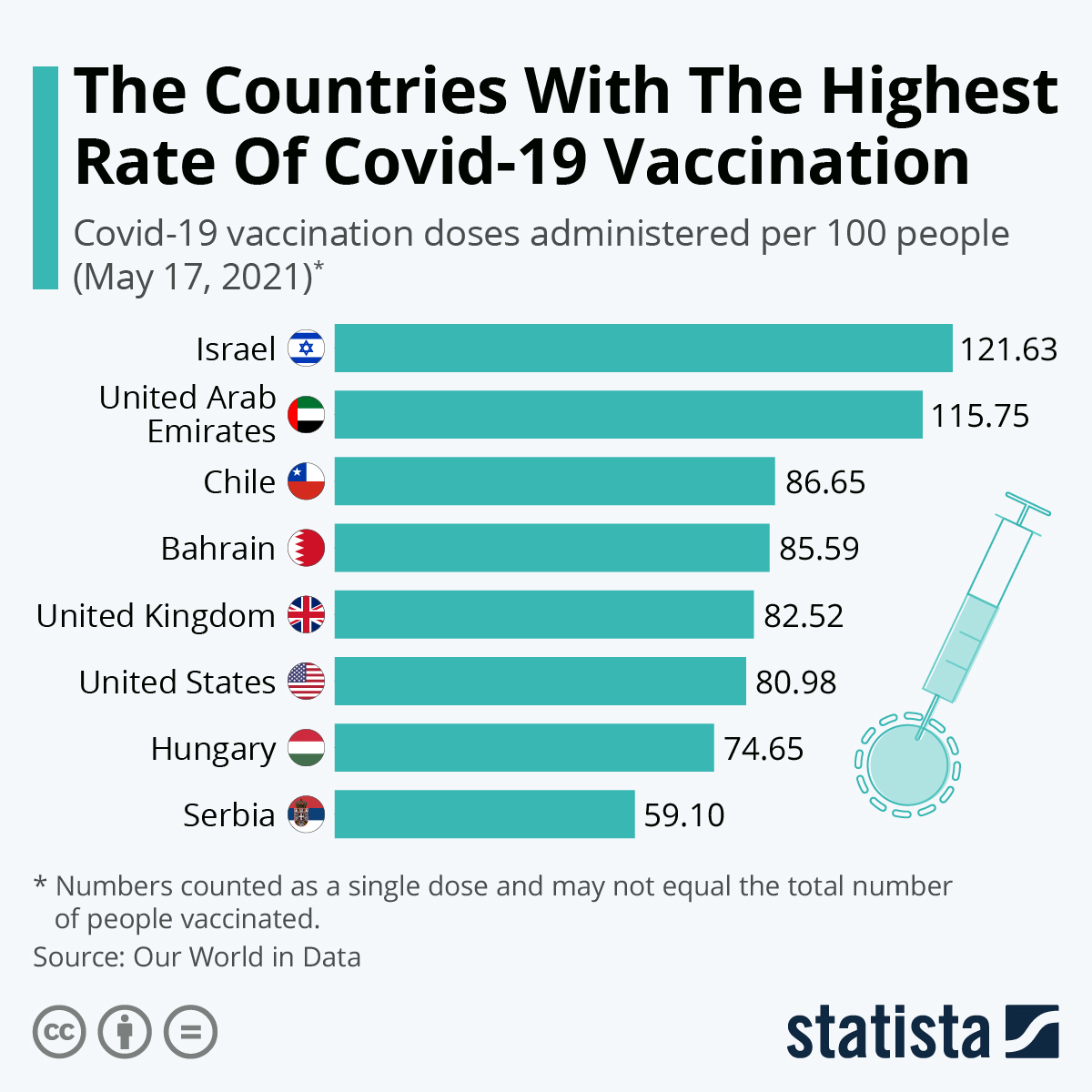
Update (0910ET): In a promising development for anyone fearful of vaccine supply issues, The Wall Street Journal reports that Merck will help produce Johnson & Johnson’s single-shot Covid-19 vaccine. According to administration officials, President Biden will announce this partnership later today.

While headlines across the mainstream media highlight anecdotal regions that are running low on vaccines, the broader view currently appears to be that there is a ‘demand’ issue – not enough arms to jab – rather than a supply issue.

Infographic: The Covid-19 Vaccination Race | Statista

You will find more infographics at Statista

*  *  *

The entry of Johnson & Johnson’s Covid-19 vaccine into the field of vaccines is going to help protect millions more Americans. But a trust issue remains, outside the normal realm of vaccine-trust issues: people will need to be convinced that the efficacy of the single shot vaccine is worth taking. 

The shot, which the FDA approved over the weekend, is undoubtedly going to be more convenient than the others – it is only one shot and can be stored in a conventional refrigerator. But some are still cautious about the “perception that J&J’s shot is an inferior option,” Bloomberg reported this week. J&J’s shot was found to be 72% effective in the U.S. and 66% effective overseas. Vaccines from Pfizer and Moderna posted efficacy of 95% and 94%, for comparison. 

But it is tough to directly compare the results. J&J conducted the largest trial to date, including sites in places like South Africa and Brazil, where the vaccine went up against un-tested virus variations. 

J&J’s Chief Executive Officer Alex Gorsky said Monday: “I can certainly understand [people’s] confusion because there was a lot of data. There’s a lot of facts, there’s a lot of figures.”

A survey conducted in February found that only 7% of respondents would select a single dose vaccine, compared with 58% who said they would prefer the dual dose. 28% of those who said they wanted the dual dose said they would take the single shot if it meant they didn’t have to wait longer for the dual shot. 

Michelle Williams, an epidemiologist and dean of the Harvard T.H. Chan School of Public Health, said: “This is not the time to be quibbling over decimal places or the levels of efficacy that we’re seeing. Vaccines are a public health tool meant to keep people from getting sick, becoming hospitalized, and overwhelming the health-care system.”

And this is what J&J’s shot does. It was 85% effective in preventing severe disease after 28 days.

Gorsky continued: “We think that’s particularly true in the United States when you think about rural areas but equally as important when you get outside to you know, the developing world where it’s going to be so important.”

Additionally, it will be easier to distribute. The U.S. is expected to start shipping 3.9 million doses to states this week, with some already arriving. 20 million doses have been promised by the end of March. Gregory Poland, a virologist and director of the Mayo Clinic’s Vaccine Research Group, said Friday: “A one-dose vaccine decreases the burden on the health-care system.”

Pediatric infectious disease specialist H. Cody Meissner said: “It’s important that people do not think that one vaccine is better than others. All vaccines work with what appears to be equal efficacy and equal safety as of this time.”

Glen Nowak, director of the Center for Health and Risk Communication at the University of Georgia, thinks that keeping the messaging around the jab simple will be helpful: “When you start to communicate complexity and nuance, you lose people.”

And America’s favorite doctor, Anthony Fauci, has simply stated: “The vaccine that’s available to you — get that vaccine. It is important to get as many people vaccinated as quickly and as expeditiously as possible.”

Tyler Durden
Tue, 03/02/2021 – 09:11

via ZeroHedge News https://ift.tt/2NSS06Y Tyler Durden

Oil Rebounds Above $60 Ahead Of OPEC+ Meeting (After February Production Plunge)

Oil Rebounds Above $60 Ahead Of OPEC+ Meeting (After February Production Plunge)

Oil prices are rebounding this morning on the back of a reported plunge in OPEC+ production in February, after tumbling yesterday on virus-variant fears and OPEC+ production plan anxiety.

As OilPrice.com’s Irina Slav reports, Saudi Arabia’s unilateral additional cut in oil production sent the total OPEC output down by 870,000 barrels per day (bpd) in February, the first monthly drop in the cartel’s production since June last year, the monthly Reuters poll showed on Monday.

The total crude oil production from all 13 OPEC members stood at 24.89 million bpd last month, with Saudi Arabia achieving around 850,000 bpd of its pledged 1-million-bpd cut beyond its OPEC+ quota, according to the Reuters survey of OPEC sources, sources at oil firms, and tanker-tracking data. 

In January 2021, according to OPEC’s secondary sources, the cartel’s oil production averaged 25.50 million bpd, up by 180,000 bpd from December, with output rising in top producer Saudi Arabia, as well as in Venezuela and Iran, which are exempt from the OPEC+ cuts.

In February, however, the first of two months in which Saudi Arabia is cutting an additional 1 million bpd, total production declined thanks to this cut, and to lower exports from Angola and Libya, the Reuters survey found. Iran, which like Libya is exempt from the cuts, saw its supply also drop in February.

In Libya, oil loadings at export terminals were disrupted last month, after members of the Petroleum Facilities Guard stopped vessels from loading crude amid a strike over delayed salary payments.

Nigeria, Africa’s top oil producer and an OPEC member that has struggled with compliance with the cuts, saw its production rise by 100,000 bpd after

ExxonMobil lifted a more than a month-long force majeure on the Qua Iboe crude oil export terminal at the end of January. 

OPEC and its non-OPEC allies led by Russia are meeting later this week to decide how to proceed with the collective production cuts from April onwards. Given the recent rally in oil prices, analysts expect the group to lift production in some form and the Saudis to reverse their unilateral 1-million-bpd cut.

As Newsquawk noptes, it is expected that some of the more hawkish producers, namely Russia, will exert pressure on the group to ease its output curbs, with recent commentary from Russia Deputy PM Novak suggesting that the market is balanced. Sources last week said members will mull raising output by as much as 500k BPD, effective April. Saudi Arabia will have to avoid a rift widening as the Kingdom itself is to unwind its volunatry additional supply curbs of 1mln BPD of oil, which it implemented over February and March as a goodwill gesture against the backdrop of lockdown re-impositions. As unanimity is needed for any accord, the Saudis may as a precautionary measure opt to either take a more gradual approach in the 1mln BPD reintroduction, or delay it until until some of the near-term fragilities within the oil complex have passed.

PRIOR MEETING

The February JMMC offered no surprises given that the February and March production quotas were set in January. To recap that more pertinent meeting, Russia and Kazakhstan were permitted to raise output by a modest 75k BPD (65k BPD for Russia), which some suggested was a small technical adjustment rather than a signal of any rift/divergence within the group. Saudi, meanwhile, surprised markets with a unilateral 1mln BPD cut through February and March at a time when COVID variants seemed a greater threat.

OPEC+ UNITY

Brokerage PVM highlights that a number of questions remain unanswered about OPEC policy, and this makes it difficult to predict the outcome of the meetings; however, it agrees that the show of unity between Saudi and Russia will likely be the most important factor. Saudi Arabia has previously warned against complacency, but Russia sees the continued rebalancing of oil markets as a signal to roll-back output constraints. Recent reports also highlighted diverging views among members against the backdrop of higher prices; a few have voiced support for higher production, whilst some proposed no more relaxations until June. Further, news reports citing advisers have stated that OPEC is likely to maintain production curbs in April, and the Saudis are planning to bring back its voluntary cuts, albeit plans can change.

FACTORS AT PLAY

PRICES: On the demand-side, the ramp-up in vaccinations across major economies alongside the barrage of fiscal and monetary stimulus have provided oil prices with underlying support. Meanwhile, the supply-side sees an extra 1mln BPD of Saudi oil out of the market, while a chunk of US operations were temporarily taken offline by the deep freeze in Texas. The terms structure has also seen steeping backwardation – making oil more attractive for investors via roll yields. Brent prices are almost back to pre-pandemic highs of ~USD 71/bbl, with Brent recently hitting levels just shy of USD 68/bbl. One OPEC source suggested prices are “definitely high” and more oil is needed to cool the markets – adding that a 500k BPD increase looks to be a good option.

DEMAND: The latest OPEC Oil Market Report downgraded its 2021 world oil demand growth forecast by 100k BPD from prior report, with demand now set to rise by around 5.80mln BPD Y/Y. OPEC noted that lockdowns contributed to the downward revisions in H1 projections and the revisions are concentrated in the OECD region. That being said, healthy demand is expected in H2 2021. “The momentum is then expected to be supported by pent-up demand, especially in the contact-intensive services sectors like tourism and travel, leisure and hospitality. The seasonal aspect of warm weather in the Northern Hemisphere and the summer travel season will add more support… further upside to the current global economic growth forecast may materialise.”, OPEC said. Resilient variants and further lockdowns of course remain a tail risk for demand – but ministers are likely to emphasise proactiveness and flexibility to soothe these fears.

COMPLIANCE: Compliance has remained an issue among members – with Russia also among the recent straddlers. However, OPEC+ compliance in January stood at 103%, above December’s 101%, according to three sources cited by Argus. These figures will be reviewed by the JMMC and details are likely to be released by journalists. Eyes are also on Iraq as the country boosted its exports by 4.4% in the first two weeks of February, according reports citing Bloomberg data. The report suggests that if Iraq keeps up this pace of export growth, also considering domestic, it could top the production ceiling of 3.6mln BPD.

IRANIAN/LIBYAN SUPPLY: Libya and Iran are currently exempt from the production quotas, due to volatile domestic supply for the former and US sanctions for the latter. These are unlikely to take much credence at this month’s decision. Libya’s situation remains uncertain as oil loadings at a Libyan export terminal were again recently disrupted as production was restored to its pre-blockade level of 1.25mln BPD. Meanwhile, the US has signalled that it will not remove Iranian sanctions to bring Tehran to the negotiating table over the nuclear deal, but an interim deal was touted in order to restore and build confidence. That being said, tensions remain heated as President Biden warned Iran that the recent US airstrike against Iranian-backed militias shows that Iran can expect consequences.

US SHALE THREAT: The loss of market share to the US has been an ongoing concern among OPEC+ members, with some also highlighting the resiliency of the US energy industry in the face of the Texas freeze. However, Pioneer Natural Resources suggested OPEC+ no longer needs to worry about this loss of market share due to strong demand for crude, alongside low growth rates from Shale.

Morgan Stanley sees Brent rising to USD 70/bbl in Q3 amid improving demand. The bank argues that “new COVID-19 cases are falling fast globally, mobility statistics are bottoming out and are starting to improve, and in nonOECD countries, refineries are already running as hard as before COVID-19.”

Tyler Durden
Tue, 03/02/2021 – 08:45

via ZeroHedge News https://ift.tt/3b8ur2J Tyler Durden