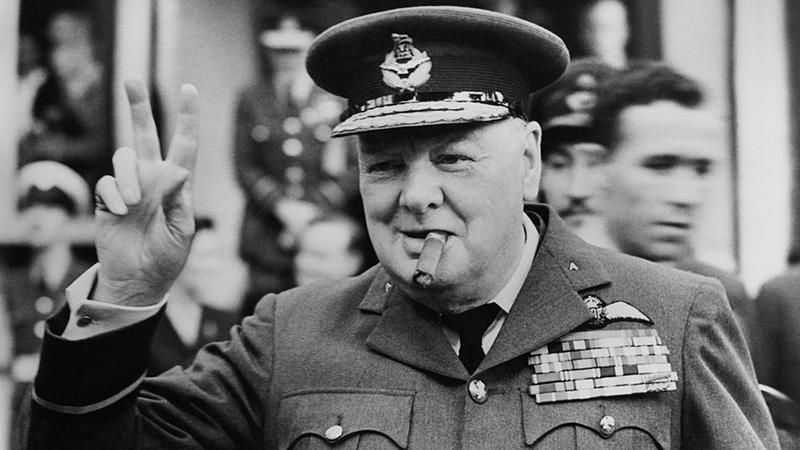
Cambridge University Panel: Winston Churchill A “White Supremacist” Leading Empire “Worse Than The Nazis”

Cambridge University Panel: Winston Churchill A “White Supremacist” Leading Empire “Worse Than The Nazis”

Authored by Steve Watson via Summit News,

A Cambridge University panel of academics discussing wartime Prime Minister Winston Churchill’s legacy concluded that the leader who helped defeat Hitler was actually a “white supremacist” and was leading an empire “worse than the Nazis”.

The London Telegraph reports that the inflammatory comments were made during a discussion titled “Racial Consequences of Mr Churchill”.

Ironically, the event was taking place at the Churchill College, named in honour of the former Prime Minister.

Participants decided that Churchill was “the perfect embodiment of white supremacy”, and labelled the British Empire ‘morally poorer than the Third Reich’.

The academics involved agreed that it is a “problematic narrative” that Britain was ‘virtuous’ in comparison to the Nazis.

One academic, Professor Kehinde Andrews, declared “The British Empire far worse than the Nazis and lasted far longer.”

“That’s just a fact.  But if you state something like that it’s like heresy,” Andrews added, claiming that holding Churchill in esteem is part of a process of “lionising dead white men”.

Another panelist, Dr Onyeka Nubia, claimed that Churchill promoted ‘white supremacy’ because he used terms such as “English Speaking Peoples” and “Anglo-Saxon”.

Others argued that Churchill viewed Indian people as animals, and that his policies regarding India led to mass starvation there in the early 1940s.

Another academic, Dr Madhusree Mukerjee, dismissed Britain’s role in the Second World War, stating that “It was the Soviets who defeated the Nazis and the Americans who defeated the Japanese.”

Before the ‘discussion’ at the college took place this week, Andrew Roberts, author of Churchill: Walking with Destiny, warned that the panel taking part lack historical expertise, and that previous claims made by some of them are  “libels” that are “entirely factually incorrect”. 

Defending Churchill, Roberts wrote that “a white supremacist wants bad things to happen to non-whites… Churchill fought to protect the hundreds of millions of non-whites in the Empire.”

“If the Japanese had captured India in WW2  [that] would have led to perhaps tens of millions of deaths if their record elsewhere was comparable,” the author added.

“In his political career [Churchill] fought again and again against slavery and for the rights of non-whites within the British Empire. Churchill was moreover instrumental in destroying the worst racist in history, Adolf Hitler,” Roberts further urged.

The discussion group was chaired by college fellow Prof Priyamvada Gopal,  who last year made headlines for declaring “abolish whiteness”, and stating that “white lives don’t matter”.

After receiving backlash for the comments, Gopal was defended and then promoted by Cambridge University, despite the fact that Twitter removed her original tweet under ‘hate speech’ rules.

Cambridge is one of the Universities named in a recent study by leading education focused think tank Civitas, which found that free speech at the world’s leading universities is being eroded at an alarming rate owing to the rise of “cancel culture”.

This kind of revisionist history being pushed by race baiting activists who have wormed their way into the fabric of Universities is having real world effects, as witnessed by the boxing up of Churchill’s Parliament Square statue, as well as the Cenotaph WWII memorial in London last year during Black Lives Matter led protests.

London Mayor Sadiq Khan also just appointed a ‘task-force’ made up of unelected woke activists and campaigners to determine whether the capital’s statues and landmarks are ‘diverse enough’.

Tyler Durden
Sun, 02/14/2021 – 08:10

via ZeroHedge News https://ift.tt/3rSqsNw Tyler Durden

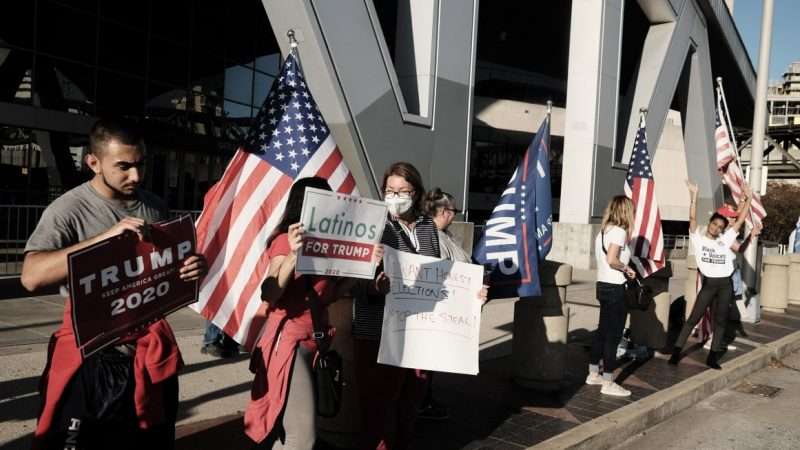
The Future of the Latino Vote, If There Is Such a Thing

latinostrump_1161x653

If Hispanics swung for former President Donald Trump in some states and against him in others in the 2020 election, is there such a thing as a generic Latino vote? Among the most unorthodox answerswhich is not for that reason mistakenis that of Miami writer Alex Perez. He argues that his hometown is unique insofar as traditional polling, policy wonkery, and ideological point-scoring fail to capture what appeals to its voters: not “‘serious’ politics,” but rather aesthetics that reflect the city’s tropical, party atmosphere, in itself a result of a blend between Latino culture and the “classic American idea of ‘work hard, play hard.'”

Perez attributes the former president’s success in South Florida to a “Trumpian aesthetic” that projected “a carnivalesque, raucous good time: where the energy of a tailgate, and not of politics, carried the day.” Trump’s showpiece was a salsa song by Cuban group Los 3 de la Habana, whose video highlighted Latino families living “the good life” due to a booming, presumably pre-COVID economy under Trump (pronounced in its Latinized version: Tron). Meanwhile, President Joe Biden’s dreary campaign reflected the Democrats’ conversion into the party of H.R. department scolds. The maximum expression of this worldview is the use of the term Latinx to refer to Hispanics, who are mostly confounded by the word’s meaning. 

While Perez claims that Trump’s choice of salsa beats added several percentage points to his Florida vote, Spanish journalist Emilio Doménech even tweeted that the song led to outright victory in the state. This theory fails to convince Daniel Garza, executive director of the LIBRE Initiative, who argues that the salsa theory insults the intelligence of Latinos, an increasingly sophisticated group of voters “when it comes to making election decisions based on policy.”             

Latinos in South Florida and the Rio Grande Valley in southern Texas showed similar swings toward Trump, who gained 23 percentage points in Miami-Dade County and flipped Zapata County, Texas, for the first time since the 19th century. The difference, Garza points out, was that the Republican Party invested heavily in mobilizing Hispanics in South Florida, where it has a well-oiled political machine. That is not the case in the Texas border area, where Latinos mobilized spontaneously and educated each other around the key issues: the Second Amendment, energy policy, economic opportunity, school choice, and the importance of constitutionalist Supreme Court justices who would uphold the freedoms of worship and free speech. 

Like the rest of Americans, Garza says, Latinos tend to distrust the media and political parties, whereas their neighbors, fellow churchgoers, and other parents at their children’s schools have much greater credibility. Garza, a Rio Grande Valley native, noticed that these communities, which are united by “the shared experience of scraping their knees on the economy,” began to turn against efforts to impose a cancel culture, dismantle the nuclear family, or defund the police. As in Florida, this hurt candidates who had supported Black Lives Matter. A Miami Democrat told Politico: “We came out strong for BLM and then saw the Hispanic push back and went lukewarm and got killed.”

Many Texas Latinos also resisted policies that threatened high-paying jobs in the energy sector, which many of them hold. They understood, Garza says, that “a country with energy is a country with a future.” The importance of energy jobs for Latino voters in Texas also shows how the Hispanic vote is “just as varied as in the rest of the country.” Latinos in North Carolina, for instance, are more interested in preserving private health insurance. In Florida, a strong stance against Latin American socialism was important. Overall and contrary to the media narrative, however, immigration was not among the top seven issues for Hispanics in the 2020 election according to the Pew Research Center.

In Georgia, a number of left-leaning PACs invested heavily to mobilize Hispanics prior to the Senate runoff elections. While they maintained turnout levels, Latinos “were not the reason [Democrats Raphael] Warnock and [Jon] Osoff [sic] defeated Republicans Kelly Loeffler and David Perdue,” according to Suzanne Gamboa of NBC News.

Although the Hispanic vote in Georgia provided no surprises, Garza does see a general north-south divide. Latinos’ shift in some Sun Belt states toward Republicansa turn that he associates with faith, patriotism, and greater economic opportunitiesfailed to materialize in northern states such as New York and Illinois, where Hispanic voting tendencies remained mostly intact. This proved disappointing for Democrats. 

As Bloomberg‘s Joshua Green notes, the party just about managed to maintain turnout among Latinos in the battleground states that granted Biden the presidency. In part, the problem was that New York City–based strategists were often mistaken about what appealed to Hispanic voters, thus realizing that their best bet was to decentralize ad production and outsource it to people in the communities. This reflects Garza’s insight that, at some point, leftist leaders overtook Latinos in the trend toward the extreme progressive ideas, to the point that “they are now projecting their priorities onto the Latino community and we’re rejecting them.”

The culture wars certainly loom large. Perez argues that Democrats face a challenge since they are “so often embarrassed by America’s more ‘uncouth’ elements,” while there is a “jovial Latino Americanism” evident in campaign rallies that combine mostly spoken Spanish with “all-American, good-times Nascar vibes.” Latinos, he adds, “see themselves not as Latinx, or even Latinos, but as Americans.” If he’s right, then betting the house on identity politics will prove costly.

Although the failure to bring about a blue wave at the congressional level shocked many Democrats, Garza still sees the party moving more toward “democratic socialists” like Rep. Alexandria Ocasio-Cortez (D–N.Y.) than toward moderates like Rep. Henry Cuellar (D–Texas). This conservative Blue Dog Democrat defeated Jessica Cisneros, a candidate Ocasio-Cortez endorsed, in the latest primary in Texas’ 28th Congressional District, but he’s increasingly isolated in his own party. 

Does this mean that Republicans can make further gains with Latinos if they reject the woke agenda and embrace a philosophy of removing barriers to opportunity? Garza agrees that superficiality cannot be ignored since the messenger is important: “You still need a charismatic personality, a good retail politician who sells the policies well.”

But there seems to be a fine line between relying on Reaganesque charisma and descending toward Latin American levels of caudillismo. In March 2016, David Luhnow of The Wall Street Journal compared Trump to a number of caudillos, leaders who use superior showmanship skills to “confront an ossified political establishment, develop a strong bond with their followers and attack their opponents and the media with no holds barred—sometimes even encouraging violence.” ​

That warning seems ominous after the assault on the U.S. Capitol on January 6. Politics relying on props and visuals can lead to danger; after all, the absolute masters of political aesthetics were 20th century totalitarian socialists. Trump’s failures, however, should not leave a message of state dependency and wokeness to carry the day unopposed, especially with the Hispanic community. According to Garza’s experience, when Latinos hear a compelling case in favor of free market ideas, their reaction tends to be, “That’s what I always believed, where have you been?” 

Perhaps there is ground to gain when you sell a freedom message with some joie de vivre. To borrow Perez’s term, Trumpistas should not have a monopoly over being “the party of the party.” 

from Latest – Reason.com https://ift.tt/37g1gZj
via IFTTT

White House Demands China Provide All Data On COVID Outbreak Early Cases

White House Demands China Provide All Data On COVID Outbreak Early Cases

The White House issued a surprise statement Saturday on the developing World Health Organization controversy, a day after WHO officials said Chinese scientists “refused” to hand over the key raw data on 174 of the country’s first cases – which marked the first in the world to what would emerge as a global pandemic – during the recent WHO trip to uncover its origins. 

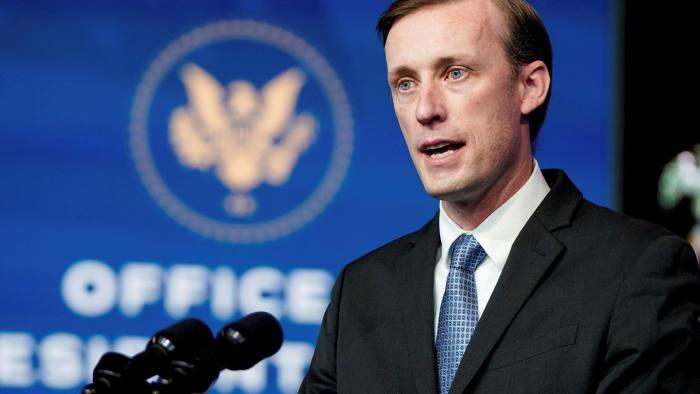
National security adviser Jake Sullivan said Saturday morning that the allegations have caused “deep concerns” in the Biden administration suggesting China may still be engaged in a cover-up given their alleged unwillingness to cooperation.

“We have deep concerns about the way in which the early findings of the COVID-19 investigation were communicated and questions about the process used to reach them,” Sullivan said. “It is imperative that this report be independent, with expert findings free from intervention or alteration by the Chinese government.”

National security adviser Jake Sullivan, file image

Crucially he demanded that Chinese authorities hand over this data, which The Wall Street Journal on Friday described as subjected of “heated exchanges” over the “lack of transparency.”

“To better understand this pandemic and prepare for the next one, China must make available its data from the earliest days of the outbreak,” Sullivan said.

Yet despite the criticisms he still attempted to distance Biden’s policy from that of Trump’s – the latter which stymied official US cooperation with the WHO, seeing the organization as ultimately too much under the thumb of Beijing.

“President Biden rejected and reversed the Trump Administration’s decision to disengage from the WHO,” Sullivan said. “But re-engaging the WHO also means holding it to the highest standards.  And at this critical moment, protecting the WHO’s credibility is a paramount priority.”

Getty Images

“Going forward, all countries, including China, should participate in a transparent and robust process for preventing and responding to health emergencies — so that the world learns as much as possible as soon as possible.”

But as Australian microbiologist and WHO team member Dominic Dwyer said on Friday in comments given to the WSJ, “They showed us a couple of examples, but that’s not the same as doing all of them, which is standard epidemiological investigation.” Speaking further of the Chinese scientists that coordinated the trip, he added, “So then, you know, the interpretation of that data becomes more limited from our point of view, although the other side might see it as being quite good.”

Meanwhile, the WHO on Friday said it still hasn’t ruled out any cause, with WHO Director General Tedros Adhanom Ghebreyesus in his latest statement seeking to distance the team’s findings from reaching any definitive conclusion on the virus’ origin. 

Tyler Durden
Sun, 02/14/2021 – 07:35

via ZeroHedge News https://ift.tt/3ahcD51 Tyler Durden

Mysterious Weapon Knocked Out Syrian Army Battle Tank In Southern Idlib

Mysterious Weapon Knocked Out Syrian Army Battle Tank In Southern Idlib

Via SouthFront.org,

On February 12, a mysterious weapon knocked out a battle tank of the Syrian Arab Army (SAA) in the southern Idlib countryside.

The battle tank blew up in the early morning hours after being hit with an unknown object. The battle tank was situated south of the government-held town of Ma`arat al-Nu`man, way behind the frontline.

Opposition sources reported the incident, with some claiming that the battle tank was hit with an artillery round fired by Greater Idlib militants.

However, this high-level of accuracy is nearly impossible to achieve with unguided artillery rounds. The battle tank was also situated beyond the militants’ line of sight.

The battle tank may have been targeted by one of the Turkish combat drones which operate over Greater Idlib on a regular basis. Another possibility is that the battle tank was struck with a laser-guided artillery shell or rocket, after being illuminated by a Turkish drone.

Last year, Turkey’s ROKETSA revealed its TRLG-230 laser-guided rocket system. The system was successfully deployed against Armenian forces during the 2020 Nagorno-Karabakh war. The Syrian battle tank may have been struck with the TRLG-230 or a similar system.

The Turkish military maintains more than 60 posts, camps and bases throughout Greater Idlib. Heavy weapons, similar to the TRLG-230, are deployed in most of these positions.

In any case, the strike represents a serious escalation by Turkey and a violation of the agreement signed with Russian on March 5, 2020. Ankara forces engaged in a fierce confrontation with the SAA and its allies last year to stop them from neutralizing the remaining terrorist groups in Greater Idlib.

Tyler Durden
Sun, 02/14/2021 – 07:00

via ZeroHedge News https://ift.tt/3dbnqzA Tyler Durden

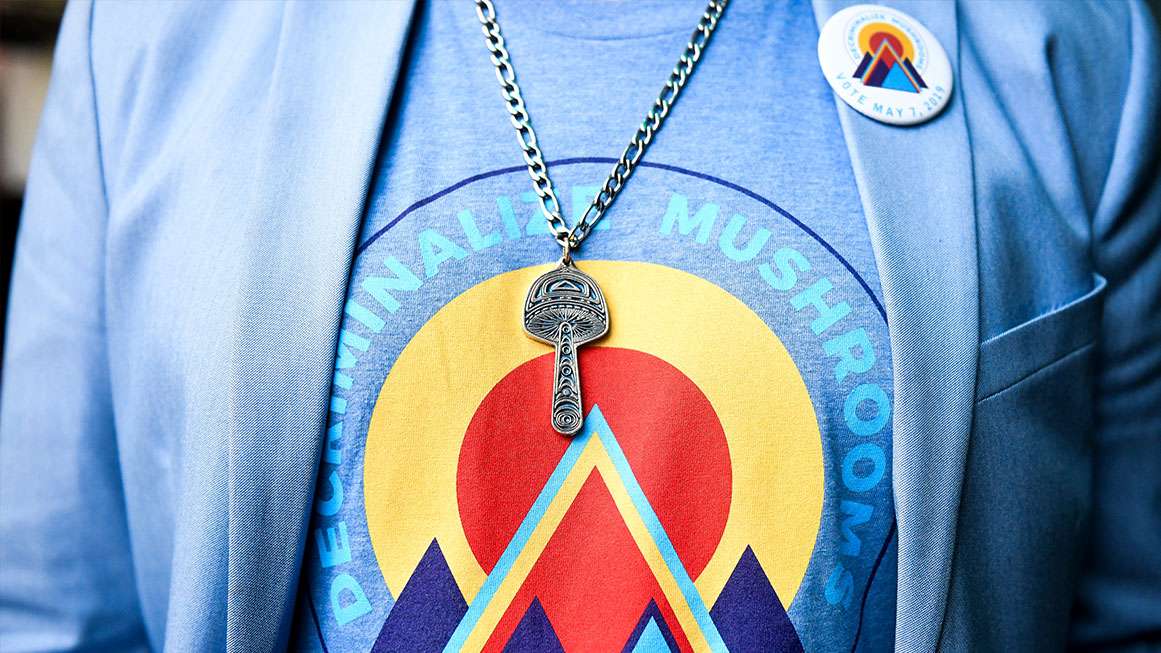
From Magic Mushroom to Forbidden Fungus (and Back)

shroomsullum2

In 1968, just 11 years after the international banker and amateur mycologist R. Gordon Wasson introduced Americans to “magic mushrooms” in a landmark Life magazine story, the federal government banned them. That was how long it took for this object of anthropological fascination, source of visions, and tool of self-discovery to become an intolerable threat to the nation’s youth.

Two years later, when Congress passed the Controlled Substances Act of 1970, it listed psilocybin and psilocin, the psychoactive components of the “divine” fungi that Wasson ate, under Schedule I, a category supposedly reserved for exceptionally dangerous drugs with no accepted medical use. Half a century would pass before any jurisdiction in the United States reconsidered that classification.

When Oregon voters approved Measure 109, a.k.a. the Psilocybin Services Act, by a 12-point margin in November, they repudiated decades of anti-drug propaganda that depicted psychedelics as a ticket to the mental hospital. To the contrary, the initiative said, “studies conducted by nationally and internationally recognized medical institutions indicate that psilocybin has shown efficacy, tolerability, and safety in the treatment of a variety of mental health conditions, including but not limited to addiction, depression, anxiety disorders, and end-of-life psychological distress.”

The Food and Drug Administration (FDA) in 2018 recognized psilocybin as a “breakthrough therapy” for “treatment-resistant depression.” That designation, which meant “preliminary clinical evidence indicates that the drug may demonstrate substantial improvement over existing therapies,” signaled the agency’s intent to “expedite” development and review of psilocybin, suggesting it might eventually be approved as a prescription medicine.

Oregonians are not waiting. Measure 109 gives the Oregon Health Authority (OHA) two years to write rules for licensing and regulating “psilocybin service centers” where adults 21 or older can legally take the drug under the supervision of a “facilitator” after completing a “preparation session.” And in an important departure from the FDA’s approach, which charges doctors with guarding the doors of perception, the initiative says the OHA “may not require a client to be diagnosed with or have” any particular medical or psychiatric condition to participate in the program.
Shock and Awe

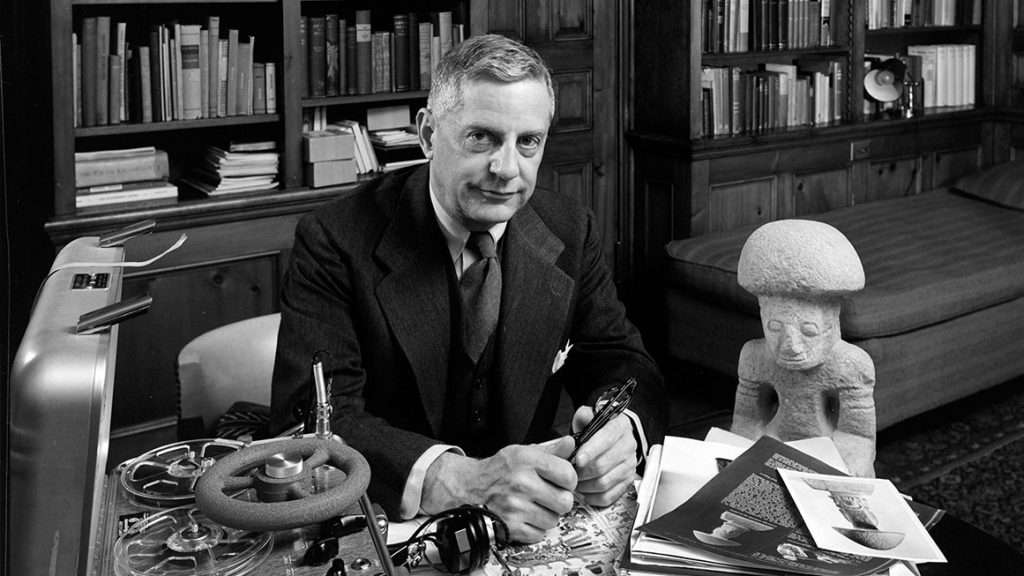
Wasson likewise had no prescription when he tripped on psilocybin, although his wife, Valentina, who accompanied him on his international hunts for mind-altering mushrooms, was a pediatrician. When those journeys took them to Mexico, their “facilitator” was Maria Sabina, a Mazatec curandera (folk healer) who let them in on a secret they could have discovered back home in New York, where several species of psilocybin mushrooms grow, although that would have required potentially dangerous experimentation.

“On the night of June 29–30, 1955,” Wasson’s 1957 account in Life began, “in a Mexican Indian village so remote from the world that most of the people still speak no Spanish, my friend Allan Richardson and I shared with a family of Indian friends a celebration of ‘holy communion’ where ‘divine’ mushrooms were first adored and then consumed.” Those mushrooms, he explained, “were of a species with hallucinogenic powers; that is, they cause the eater to see visions.”

By turns respectful and condescending, Wasson bragged that “Richardson and I were the first white men in recorded history to eat the divine mushrooms, which for centuries have been a secret of certain Indian peoples living far from the great world in southern Mexico.” Gloating a bit more, he added that “no anthropologists had ever described the scene that we witnessed.”

The two men were blown away by the mushrooms’ “astonishing effects” and “emerged from the experience awestruck.” Wasson, who said he ultimately participated in nine mushroom ceremonies, described vividly colored, “always harmonious” visions featuring “art motifs,” “resplendent palaces all laid over with semiprecious stones,” “a mythological beast drawing a regal chariot,” camel caravans, and aerial views of mountains and rivers.

“It was as though the walls of our house had dissolved, and my spirit had flown forth,” Wasson wrote. “It seemed as though I was viewing a world of which I was not a part and with which I could not hope to establish contact. There I was, poised in space, a disembodied eye, invisible, incorporeal, seeing but not seen….I felt that I was now seeing plain, whereas ordinary vision gives us an imperfect view; I was seeing the archetypes, the Platonic ideas, that underlie the imperfect images of everyday life.”

Wasson wondered if the mushrooms could be the key to the Eleusinian Mysteries of ancient Greece or the explanation for the flying witches of European folklore. He pondered such questions while continuing to see strange and wonderful things. “The effect of the mushrooms is to bring about a fission of the spirit, a split in the person, a kind of schizophrenia, with the rational side continuing to reason and to observe the sensations that the other side is enjoying,” he reported. “The mind is attached as by an elastic cord to the vagrant senses.”

‘A Serious Hazard’

Some people will recoil in horror from that description, wondering why anyone in his right mind would put himself through such an ordeal. Others will think, “That sounds pretty fucking cool. Where can I get some of those mushrooms?” The latter sort of people, disproportionately young and curious, tend to congregate on college campuses, which proved to be a problem as far as the legal status of psilocybin was concerned.

By the early 1960s, university administrators were beginning to freak out about psilocybin. In December 1962, Harvard College Dean John Monro warned students away from “mind-distorting drugs,” saying there was “unanimity among our doctors that these drugs are dangerous.” Worrying that a “determined and convinced promotion of these drugs seems to be taking hold at the universities,” he blamed Aldous Huxley—who published his mescaline memoir, The Doors of Perception, the year before Wasson’s Mexican adventure—and likeminded enthusiasts. Monro and other Harvard officials cautioned that psychedelics posed “a serious hazard to the mental health and stability even of apparently normal people.” The New York Times noted that “the most prominent among the drugs referred to is psilocybin.”

Psychologists Timothy Leary and Richard Alpert, who were running a psilocybin research project at Harvard, rebutted such “rumor and hysteria” in a letter to The Harvard Crimson. They emphasized the importance of “set and setting”—including expectations, emotions, social context, and the physical environment—in shaping the psychedelic experience. They noted the rarity of serious negative reactions even in “psychiatric situations where set and setting were purposely psychotogenetic,” as researchers tested the hypothesis that drugs like LSD and psilocybin trigger psychotic symptoms. The two psychologists highlighted the profoundly positive experiences commonly reported even by “persons who were not in formal therapy but, for the most part, experimental subjects.”

Leary and Alpert also posed some provocative questions. “Who controls your cortex?” they asked. “Who decides on the range and limits of your awareness? If you want to research your own nervous system, expand your consciousness, who is to decide that you can’t and why?”

Five months later, Alpert was out of a job, fired for violating university rules by giving psilocybin to an undergraduate. Leary, who would soon become notorious as a psychedelic guru, got the boot around the same time, ostensibly for skipping classes he was supposed to teach.

Three years after that, official alarm about psychedelics prompted a “stern letter” from FDA Commissioner James Goddard to “more than 2,000 colleges and universities,” demanding “concerted action” against “consciousness-expanding” chemicals, the Times reported. Without an aggressive crackdown, Goddard warned, “an untold number of our students may suffer permanent mental or physical injury.” As Leary observed, “psychedelic drugs cause panic and temporary insanity in people who have not taken them.”

Evidently unsatisfied by the response to Goddard’s admonition, Congress soon gave a definitive answer to the question posed by Leary and Alpert. Who controls your cortex? The government does.
Mushroom Eaters Are Not Criminals

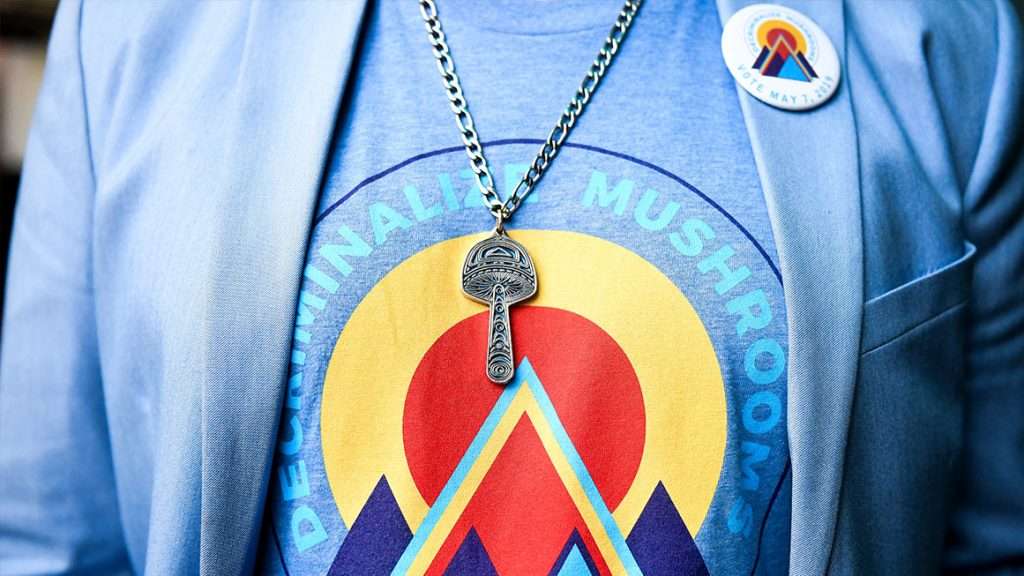
The Oregonians who approved the Psilocybin Services Act last fall are not alone in challenging that premise. In 2019, Denver voters approved a groundbreaking initiative that made adult possession of psilocybin the city’s lowest law enforcement priority and prohibited the use of public money to pursue such cases. The following year, the city councils of Ann Arbor, Michigan; Oakland, California; and Santa Cruz, California, enacted similar measures. And on the same day that Oregon’s initiative passed, voters in Washington, D.C., overwhelmingly approved quasi-decriminalization of “entheogenic plants and fungi,” including psilocybin mushrooms, peyote, iboga root, and plants that contain dimethyltryptamine.

The D.C. initiative, which urges police and prosecutors to leave consumers of those substances alone, does not include a ban on spending money to bust them. But in some respects it goes further than the other local measures, since it covers a wider range of psychedelics and applies to noncommercial production and distribution as well as possession.

In other parts of the United States, the legal consequences of being caught with psilocybin mushrooms can be severe. In Texas, where I live, possessing less than a gram of the wrong fungus is punishable by up to two years in jail; one to four grams can get you up to 20 years.

Eliminating criminal penalties for psychedelic users, so that arresting them is no longer a legal option, would be preferable to deprioritizing those cases. And if the idea that psychedelic use should not be treated as a crime catches on, perhaps Americans eventually will recognize that merely aiding and abetting that noncrime does not justify locking people in cages either.

That breakthrough is finally happening with marijuana, although it took decades. While states began to decriminalize marijuana use in the 1970s, licensed pot shops did not start serving recreational consumers until 2014. Unlike the epiphanies that Wasson achieved with a little help from his fungus friends, reclaiming control of our cortexes is apt to be a long and gradual process.

from Latest – Reason.com https://ift.tt/3rN4awk
via IFTTT

From Magic Mushroom to Forbidden Fungus (and Back)

shroomsullum2

In 1968, just 11 years after the international banker and amateur mycologist R. Gordon Wasson introduced Americans to “magic mushrooms” in a landmark Life magazine story, the federal government banned them. That was how long it took for this object of anthropological fascination, source of visions, and tool of self-discovery to become an intolerable threat to the nation’s youth.

Two years later, when Congress passed the Controlled Substances Act of 1970, it listed psilocybin and psilocin, the psychoactive components of the “divine” fungi that Wasson ate, under Schedule I, a category supposedly reserved for exceptionally dangerous drugs with no accepted medical use. Half a century would pass before any jurisdiction in the United States reconsidered that classification.

When Oregon voters approved Measure 109, a.k.a. the Psilocybin Services Act, by a 12-point margin in November, they repudiated decades of anti-drug propaganda that depicted psychedelics as a ticket to the mental hospital. To the contrary, the initiative said, “studies conducted by nationally and internationally recognized medical institutions indicate that psilocybin has shown efficacy, tolerability, and safety in the treatment of a variety of mental health conditions, including but not limited to addiction, depression, anxiety disorders, and end-of-life psychological distress.”

The Food and Drug Administration (FDA) in 2018 recognized psilocybin as a “breakthrough therapy” for “treatment-resistant depression.” That designation, which meant “preliminary clinical evidence indicates that the drug may demonstrate substantial improvement over existing therapies,” signaled the agency’s intent to “expedite” development and review of psilocybin, suggesting it might eventually be approved as a prescription medicine.

Oregonians are not waiting. Measure 109 gives the Oregon Health Authority (OHA) two years to write rules for licensing and regulating “psilocybin service centers” where adults 21 or older can legally take the drug under the supervision of a “facilitator” after completing a “preparation session.” And in an important departure from the FDA’s approach, which charges doctors with guarding the doors of perception, the initiative says the OHA “may not require a client to be diagnosed with or have” any particular medical or psychiatric condition to participate in the program.

Shock and Awe

Wasson likewise had no prescription when he tripped on psilocybin, although his wife, Valentina, who accompanied him on his international hunts for mind-altering mushrooms, was a pediatrician. When those journeys took them to Mexico, their “facilitator” was Maria Sabina, a Mazatec curandera (folk healer) who let them in on a secret they could have discovered back home in New York, where several species of psilocybin mushrooms grow, although that would have required potentially dangerous experimentation.

“On the night of June 29–30, 1955,” Wasson’s 1957 account in Life began, “in a Mexican Indian village so remote from the world that most of the people still speak no Spanish, my friend Allan Richardson and I shared with a family of Indian friends a celebration of ‘holy communion’ where ‘divine’ mushrooms were first adored and then consumed.” Those mushrooms, he explained, “were of a species with hallucinogenic powers; that is, they cause the eater to see visions.”

By turns respectful and condescending, Wasson bragged that “Richardson and I were the first white men in recorded history to eat the divine mushrooms, which for centuries have been a secret of certain Indian peoples living far from the great world in southern Mexico.” Gloating a bit more, he added that “no anthropologists had ever described the scene that we witnessed.”

The two men were blown away by the mushrooms’ “astonishing effects” and “emerged from the experience awestruck.” Wasson, who said he ultimately participated in nine mushroom ceremonies, described vividly colored, “always harmonious” visions featuring “art motifs,” “resplendent palaces all laid over with semiprecious stones,” “a mythological beast drawing a regal chariot,” camel caravans, and aerial views of mountains and rivers.

“It was as though the walls of our house had dissolved, and my spirit had flown forth,” Wasson wrote. “It seemed as though I was viewing a world of which I was not a part and with which I could not hope to establish contact. There I was, poised in space, a disembodied eye, invisible, incorporeal, seeing but not seen….I felt that I was now seeing plain, whereas ordinary vision gives us an imperfect view; I was seeing the archetypes, the Platonic ideas, that underlie the imperfect images of everyday life.”

Wasson wondered if the mushrooms could be the key to the Eleusinian Mysteries of ancient Greece or the explanation for the flying witches of European folklore. He pondered such questions while continuing to see strange and wonderful things. “The effect of the mushrooms is to bring about a fission of the spirit, a split in the person, a kind of schizophrenia, with the rational side continuing to reason and to observe the sensations that the other side is enjoying,” he reported. “The mind is attached as by an elastic cord to the vagrant senses.”

‘A Serious Hazard’

Some people will recoil in horror from that description, wondering why anyone in his right mind would put himself through such an ordeal. Others will think, “That sounds pretty fucking cool. Where can I get some of those mushrooms?” The latter sort of people, disproportionately young and curious, tend to congregate on college campuses, which proved to be a problem as far as the legal status of psilocybin was concerned.

By the early 1960s, university administrators were beginning to freak out about psilocybin. In December 1962, Harvard College Dean John Monro warned students away from “mind-distorting drugs,” saying there was “unanimity among our doctors that these drugs are dangerous.” Worrying that a “determined and convinced promotion of these drugs seems to be taking hold at the universities,” he blamed Aldous Huxley—who published his mescaline memoir, The Doors of Perception, the year before Wasson’s Mexican adventure—and likeminded enthusiasts. Monro and other Harvard officials cautioned that psychedelics posed “a serious hazard to the mental health and stability even of apparently normal people.” The New York Times noted that “the most prominent among the drugs referred to is psilocybin.”

Psychologists Timothy Leary and Richard Alpert, who were running a psilocybin research project at Harvard, rebutted such “rumor and hysteria” in a letter to The Harvard Crimson. They emphasized the importance of “set and setting”—including expectations, emotions, social context, and the physical environment—in shaping the psychedelic experience. They noted the rarity of serious negative reactions even in “psychiatric situations where set and setting were purposely psychotogenetic,” as researchers tested the hypothesis that drugs like LSD and psilocybin trigger psychotic symptoms. The two psychologists highlighted the profoundly positive experiences commonly reported even by “persons who were not in formal therapy but, for the most part, experimental subjects.”

Leary and Alpert also posed some provocative questions. “Who controls your cortex?” they asked. “Who decides on the range and limits of your awareness? If you want to research your own nervous system, expand your consciousness, who is to decide that you can’t and why?”

Five months later, Alpert was out of a job, fired for violating university rules by giving psilocybin to an undergraduate. Leary, who would soon become notorious as a psychedelic guru, got the boot around the same time, ostensibly for skipping classes he was supposed to teach.

Three years after that, official alarm about psychedelics prompted a “stern letter” from FDA Commissioner James Goddard to “more than 2,000 colleges and universities,” demanding “concerted action” against “consciousness-expanding” chemicals, the Times reported. Without an aggressive crackdown, Goddard warned, “an untold number of our students may suffer permanent mental or physical injury.” As Leary observed, “psychedelic drugs cause panic and temporary insanity in people who have not taken them.”

Evidently unsatisfied by the response to Goddard’s admonition, Congress soon gave a definitive answer to the question posed by Leary and Alpert. Who controls your cortex? The government does.

Mushroom Eaters Are Not Criminals

The Oregonians who approved the Psilocybin Services Act last fall are not alone in challenging that premise. In 2019, Denver voters approved a groundbreaking initiative that made adult possession of psilocybin the city’s lowest law enforcement priority and prohibited the use of public money to pursue such cases. The following year, the city councils of Ann Arbor, Michigan; Oakland, California; and Santa Cruz, California, enacted similar measures. And on the same day that Oregon’s initiative passed, voters in Washington, D.C., overwhelmingly approved quasi-decriminalization of “entheogenic plants and fungi,” including psilocybin mushrooms, peyote, iboga root, and plants that contain dimethyltryptamine.

The D.C. initiative, which urges police and prosecutors to leave consumers of those substances alone, does not include a ban on spending money to bust them. But in some respects it goes further than the other local measures, since it covers a wider range of psychedelics and applies to noncommercial production and distribution as well as possession.

In other parts of the United States, the legal consequences of being caught with psilocybin mushrooms can be severe. In Texas, where I live, possessing less than a gram of the wrong fungus is punishable by up to two years in jail; one to four grams can get you up to 20 years.

Eliminating criminal penalties for psychedelic users, so that arresting them is no longer a legal option, would be preferable to deprioritizing those cases. And if the idea that psychedelic use should not be treated as a crime catches on, perhaps Americans eventually will recognize that merely aiding and abetting that noncrime does not justify locking people in cages either.

That breakthrough is finally happening with marijuana, although it took decades. While states began to decriminalize marijuana use in the 1970s, licensed pot shops did not start serving recreational consumers until 2014. Unlike the epiphanies that Wasson achieved with a little help from his fungus friends, reclaiming control of our cortexes is apt to be a long and gradual process.

from Latest – Reason.com https://ift.tt/3rN4awk
via IFTTT
Is China Creating A New Master Race?

Is China Creating A New Master Race?

Authored by Gordon Chang via The Gatestone Institute,

Bing Su, a Chinese geneticist at the state-run Kunming Institute of Zoology, recently inserted the human MCPH1 gene, which develops the brain, into a monkey. The insertion could make that animal’s intelligence more human than that of lower primates. Su’s next experiment is inserting into monkeys the SRGAP2C gene, related to human intelligence, and the FOXP2 gene, connected to language skills.

Has nobody in China seen Planet of the Apes?

Or maybe they have. “Biotechnology development in China is heading in a truly macabre direction,” writes Brandon Weichert of The Weichert Report in an article posted on the American Greatness website.

In a communist society with unrestrained ambition, researchers are pursuing weird science. What happens when you mix pig and monkey DNA? Chinese experimenters can tell you. How about growing human-like organs in animals? Yes, they have done that as well.

Moreover, Beijing may already be engineering “super soldiers.” “U.S. intelligence shows that China has conducted human testing on members of the People’s Liberation Army in hope of developing soldiers with biologically enhanced capabilities,” wrote then Director of National Intelligence John Ratcliffe, in a December 3 Wall Street Journal op-ed titled “China Is National Security Threat No. 1.”

It is not clear how far Chinese military researchers have gone. They are, however, advocating use of the CRISPR gene-editing tool to enhance human capabilities, and the Communist Party’s Central Military Commission is “supporting research in human performance enhancement and ‘new concept’ biotechnology.”

The People’s Liberation Army has gone all-in on gene editing of humans. As leading analysts Elsa Kania and Wilson VornDick report, there are “striking parallels in themes repeated by a number of PLA scholars and scientists from influential institutions.”

All these Chinese moves are meant to obtain “biological dominance.” “There are,” as Ratcliffe noted, “no ethical boundaries to Beijing’s pursuit of power.”

It is clear that the Communist Party is thinking about more than just soldiers. A Chinese researcher is also the first — and so far only — person to gene-edit human embryos that produced live births.

He Jiankui, while at Southern University of Science and Technology in Shenzhen, used the CRISPR-Cas9 tool to remove gene CCR5 to give twin girls, born in late 2018, immunity to HIV but perhaps also to enhance intelligence. The experiment evoked the eugenics program of the Third Reich to create a “master race.”

China is in the process of creating the “perfect Communist,” Weichert, also the author of Winning Space, told Gatestone. “China is run by a regime that believes in the perfectibility of mankind, and with the advent of modern genetic and biotechnology research, China’s central planners now have the human genome itself to perfect according to their political agenda.”

Chinese scientists already are on the road of “gene-doping” to make future generations smarter and more innovative than those in countries refusing to embrace these controversial methods. “What you are witnessing in China,” Weichert has written, “is the convergence of advanced technology with cutting-edge bio-sciences, capable of fundamentally altering all life on this planet according to the capricious whims of a nominally Communist regime.”

Shenzhen’s He, after an international uproar caused by news of his dangerous and unethical work, was fined and jailed for “illegally carrying out human embryo gene-editing,” but in the Communist Party’s near-total surveillance state, he obviously had state backing for his experiments.

He’s efforts are not isolated. Nature magazine’s news team reported in April 2015 that Chinese researchers at Sun Yat-sen University in Guangzhou, in another world-first experiment, edited “non-viable” human embryos with CRISPR-Cas9. “A Chinese source familiar with developments in the field said that at least four groups in China are pursuing gene editing in human embryos,” the magazine’s website stated.

Beijing’s prosecution of He, therefore, looks like an attempt to cool down the furor and prevent the international scientific community from further inquiry into China’s activities.

Unfortunately, China’s advances in gene editing human embryos for super soldiers is persuading others they must do the same. Soon, for instance, there will be “Le Terminator.” The French government has just given approval for augmented soldiers. “We have to be clear, not everyone has the same scruples as us and we have to prepare ourselves for such a future,” declared French Minister for the Armed Forces Florence Parly.

Michael Clarke of Kings College London told the Sun, the British tabloid, there is now a biological competition fueled by China. Will we soon have, as the International Society for Military Ethics has dubbed it, a race of “homo robocopus”?

If we do, China will not be the only party to blame. “What is most disturbing about these endeavors is that China has gleaned access to CRISPR and advanced genetic and biotech research, thanks to their relationship with the United States and other advanced Western nations,” Weichert told Gatestone this month. “American research labs, biotech investors, and scientists have all striven to do research and business in China’s budding biotech arena explicitly because the ethical standards for research on this sensitive issue are so low.”

“This will prove to be a long-term strategic threat to the United States that few in Washington, on Wall Street, or in Silicon Valley understand,” Weichert says, referring to China’s rapid weaponization of biotechnology.

China’s regime does not have ethics or decency, is not bound by law, and does not have a sense of restraint. It does, however, have the technology to start a whole new species of genetically enhanced, goose-stepping humans.

Tyler Durden
Sat, 02/13/2021 – 23:30

via ZeroHedge News https://ift.tt/3aiJ0k4 Tyler Durden

‘Matrix’-Style Wearable Device Turns Humans Into Battery 

‘Matrix’-Style Wearable Device Turns Humans Into Battery 

The race is now on to convert body heat into battery power. Just like the action/sci-fi movie The Matrix.  

In The Matrix, it was revealed to Neo (Keanu Reeves) that humans are flesh batteries powering artificial intelligence machines that have taken control of Earth. 

Researchers at the University of Colorado Boulder have come one step closer to harness the human bodies’ thermoelectric energy to power low-cost wearable devices. 

“In the future, we want to be able to power your wearable electronics without having to include a battery,” said Jianliang Xiao, senior author of the new paper and an associate professor in the Paul M. Rady Department of Mechanical Engineering at CU Boulder.

As we noted above, the human-powered battery to power machines is straight out of The Matrix film. Xiao said the battery could generate about 1 volt of energy for every square centimeter of skin – allowing it to power wearable devices, such as fitness trackers. 

In a short informational video, CU Boulder explains how the new battery works. 

“Whenever you use a battery, you’re depleting that battery and will, eventually, need to replace it,” Xiao said. “The nice thing about our thermoelectric device is that you can wear it, and it provides you with constant power.”

Though the technology is still in its infancy, he said it generates less voltage per area than a conventional battery.

While more research is needed to increase the amount of power produced before it can be commercialized. He figured it would take about a decade before the new battery is introduced for the retail market. 

“Just don’t tell the robots. We don’t want them getting any ideas,” Xiao concluded. 

Tyler Durden
Sat, 02/13/2021 – 23:00

via ZeroHedge News https://ift.tt/3b0LGSA Tyler Durden