
Forthcoming Revised Edition of my Book “Free to Move: Foot Voting, Migration, and Political Freedom”


Revised Edition Cover

I am pleased to announce that the revised edition of my book Free to Move: Foot Voting, Migration, and Political Freedom will be in print on December 1! It is already available for preordering on Amazon and the Oxford University Press website. If you purchase it at the Oxford UP site, you can use coupon code ALAUTCH4 to get a 30% discount. There will soon be a Kindle/e-book version of the revised edition, as well.

Why did the publisher and I decide to put out a revised edition only about 18 months after the first edition was published in May of last year? The biggest reason is that I ended up publishing a book on the value of freedom of movement just as the Covid-19 pandemic hit, and much of the world was trapped in lockdown. This tragic event raised issues that were not included in the first edition, but now clearly deserve attention: most notably claims that severe migration restrictions are needed to control the spread of Covid and other contagious diseases, and the implications of widespread remote work for foot voting.

The revised edition incorporates these two issues and more besides. Among other things, I also address the claim that too much immigration might generate a dangerous nativist backlash, which in turn could even threaten liberal democracy. This idea – which I really should have included in the original edition – is distinct from the argument that immigration threatens liberal institutions because immigrants themselves might turn out to be terrible voters who support illiberal politicians and parties. The latter issue was already extensively addressed in the original edition, and I have a added a few points in this one.

The new edition also includes a number of other smaller additions and improvements, such as consideration of the issue of extraterritorial taxation – a problem that caught my attention because Yale Law School Prof. Jack Balkin raised it in an interview with me. Its importance was further highlighted by the abortive case of New Hampshire v. Massachusetts, which I think might be a harbinger of things to come.

I hereby extend my pledge to donate 50% of all royalties generated by Free to Move to causes benefiting refugees. That commitment now applies to any that come my way from this revised edition. The first edition raised several thousand dollars for refugees, and I hope this one might help, as well.

Here is the publisher’s description of the revised edition:

Ballot box voting is often considered the essence of political freedom. But it has two major  shortcomings: individual voters have little chance of making a difference, and they face strong incentives to remain ignorant about the issues at stake. “Voting with your feet,” however, avoids both these pitfalls and offers a wider range of choices.

In Free to Move, Ilya Somin explains how broadening opportunities for foot voting can greatly enhance political liberty for millions of people around the world. People can vote with their feet through international migration, choosing where to live within a federal system, and by making decisions in the private sector. Somin addresses a variety of common objections to expanded migration rights, including claims that the “self-determination” of natives requires giving them the power to exclude migrants, and arguments  that migration is likely to have harmful side effects, such as undermining political institutions, overburdening the welfare state, increasing crime and terrorism, and spreading undesirable cultural values. While these objections are usually directed at international migration, Somin shows how a consistent commitment to such theories would also justify severe restrictions on domestic freedom of movement.

By making a systematic case for a more open world, Free to Move challenges conventional wisdom on both the left and the right. This revised and expanded edition addresses key new issues, including fears that migration could spread dangerous diseases, such as Covid-19, claims that immigration might generate a political backlash that threatens democracy, and the impact of remote work.

And here are excerpts from some of the reviews and endorsements of the first edition:

“It is the best book on geographic mobility and exit that has been written to date, and… I am happy to recommend it heartily.” — Tyler Cowen, Marginal Revolution

“In this excellent book, Somin makes a compelling case that migration — or foot voting — provides far more political power than voting. Any one voter has a trivially small chance of altering an election, but any household can choose a new state and local government by simply moving. This insight implies that devolving power to local governments will generate far more political voice than any conceivable reform to national elections. Freer international migration would empower even more people to choose their own government. Somin’s case is strong, his thinking is clear, and his writing is eloquent.” — Edward Glaeser, Fred and Eleanor Glimp Professor of Economics, Harvard University and author of The Triumph of the City

“Ilya Somin shows that mobility-the freedom to move from here to there-might be the most underrated underpinning of a free society. It is especially important in America, where states can compete with one another to have social policies welcoming to enterprise and liberty. Voting is important; so is what Somin calls ‘foot voting.'”–George F. Will, columnist, Washington Post, and author of The Conservative Sensibility

“First rate.”—Robert Guest, Foreign Editor, the Economist, and author of Borderless Economics

Free to Move shows that foot voting works better than we think, is more common than we think, and that there are many opportunities to improve political freedom by encouraging foot voting…. Chapter 5…. convincingly rejects both individualistic and communitarian arguments that self-determination can justify the exclusion of people. It offers as clear and convincing a rejection of discrimination based on parentage and place of birth as this author has ever seen… One of the outstanding features of the book is that it is robust to criticism. The reason is that Somin deals with potential critiques in a fair way. There are no straw person arguments.” — Ilia Murtazashvili, Public Choice

“A powerful book.” — Richard A. Epstein, New York University School of Law, author of The Classical Liberal Constitution.

“Ilya Somin’s book is terrific.” — Guy-Uriel Charles, Law professor at Duke Law School and the co-director of the Center on Law, Race, and Politics, Twitter

“Ilya Somin gives the reader a theory of Federalism writ (internationally) large: A great book.” — Professor Roderick Hills, NYU School of Law

“Somin offers a compelling and ingenious justification for free global movement … The book’s combination of rigorous thought and engaging argument makes “Free to Move” a must-read for those interested in the future of immigration law and policy.” — Peter Margulies, Lawfare


from Latest – Reason.com https://ift.tt/3wyEjMe
via IFTTT
Yield-Curve Collapses As Inflation/Biden Spark Policy-Error Anxiety

Yield-Curve Collapses As Inflation/Biden Spark Policy-Error Anxiety

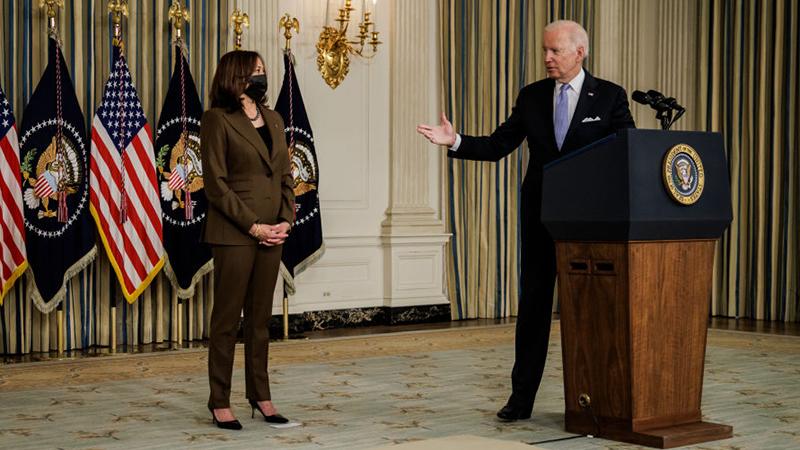
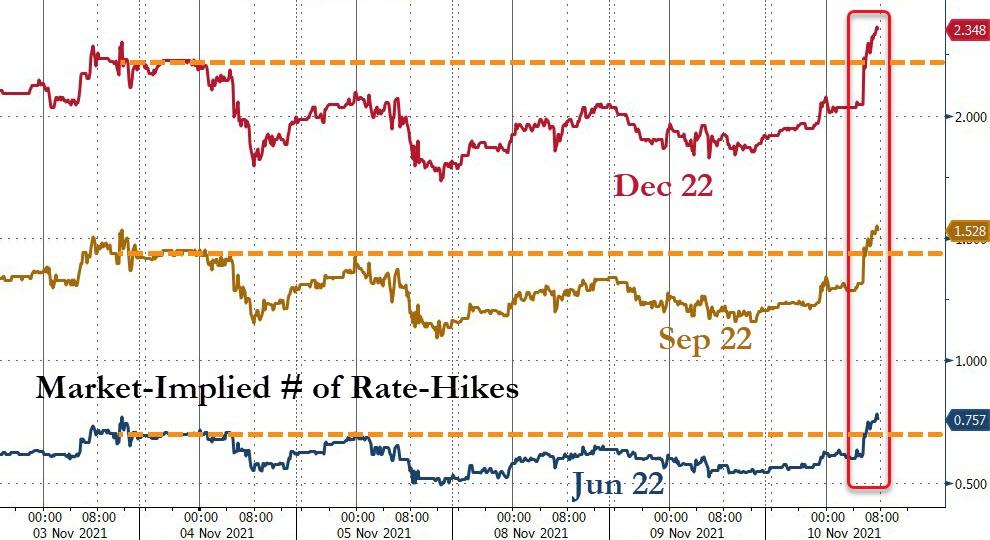
The market’s rate-hike expectations are surging higher this morning following the way hotter than expected CPI print. Additionally, perpelxing double-speak from Biden is not helping as he reflects on The Fed’s “independence” while implying the need to ‘do something about inflation!!!!’:

“And I want to reemphasize my commitment to the independence of the federal reserve to monitor inflation, and take steps necessary to combat it.

Having desperately jaw-boned down the market’s hawkish expectations in the week since the FOMC statement, today’s data has sent rate-hike expectations to cycle highs..

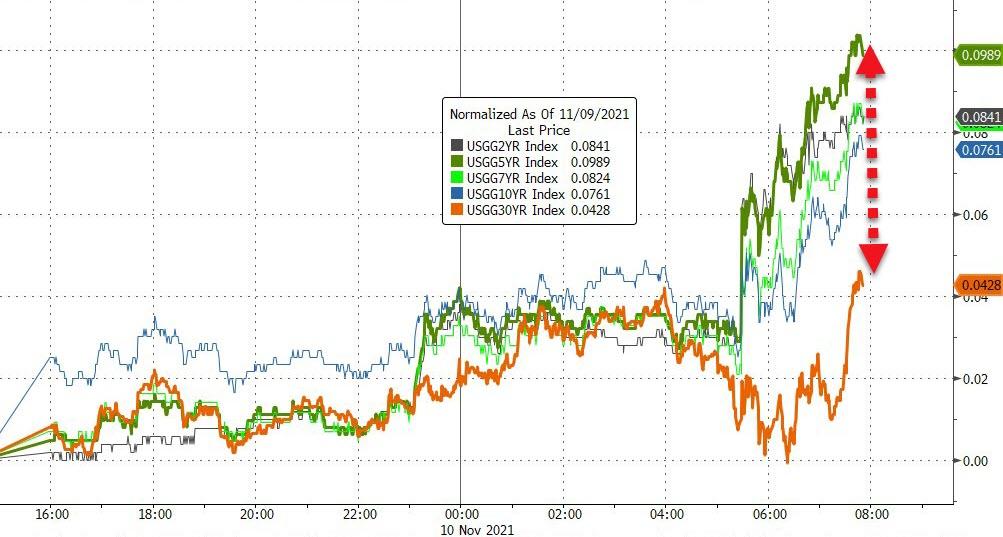
That has sparked serious weakness in the belly of the yield curve (5Y +10bps) relative to the long-end…

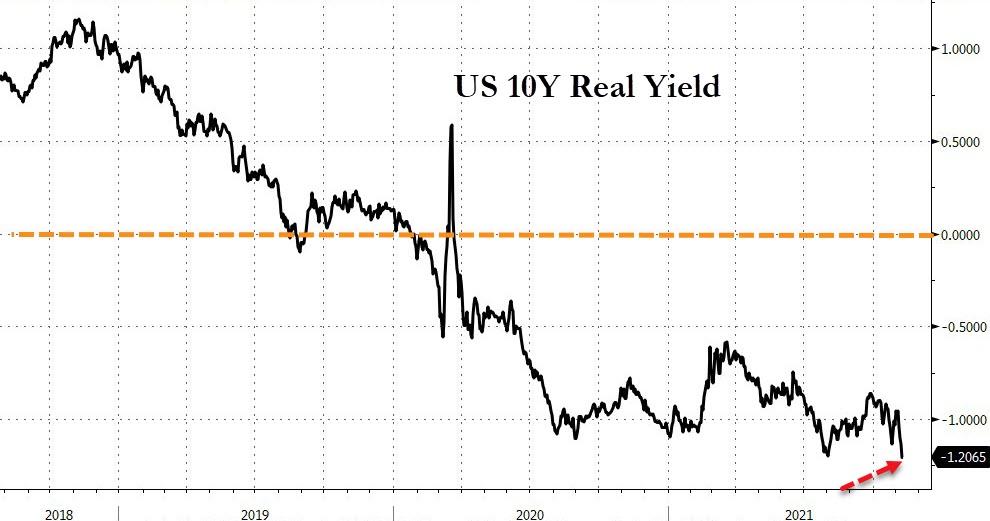
Real yields continue to hit record (negative) lows…

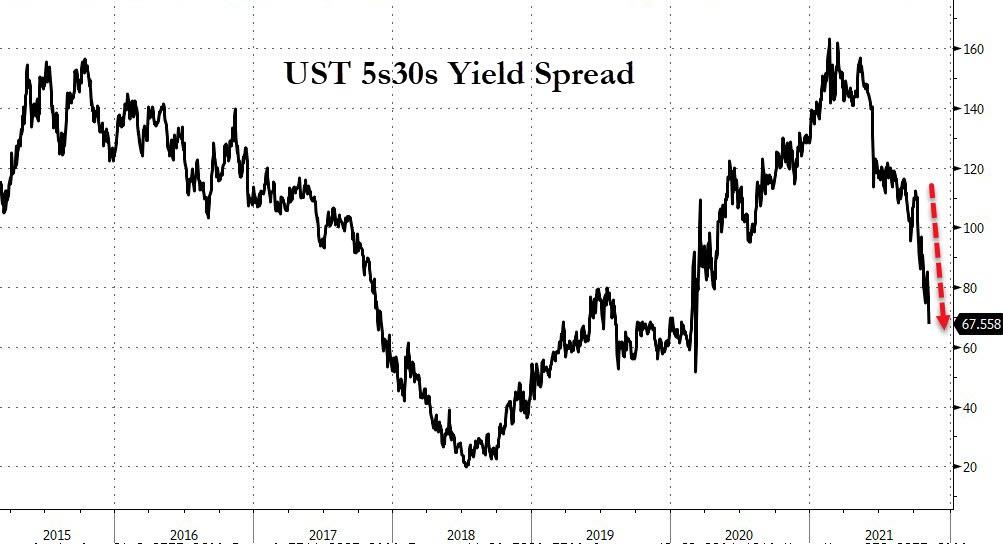
And that has pushed the yield curve (5s30s) to its flattest since pre-COVID…

As traders position for a more aggressive-than-they’d-like Fed coming to the rescue sooner than expected and then having to back-pedal rapidly as the Oz-ian world in which we live falls apart.

Tyler Durden
Wed, 11/10/2021 – 10:55

via ZeroHedge News https://ift.tt/3c1XZil Tyler Durden

Forthcoming Revised Edition of my Book “Free to Move: Foot Voting, Migration, and Political Freedom”


Revised Edition Cover

I am pleased to announce that the revised edition of my book Free to Move: Foot Voting, Migration, and Political Freedom will be in print on December 1! It is already available for preordering on Amazon and the Oxford University Press website. If you purchase it at the Oxford UP site, you can use coupon code ALAUTCH4 to get a 30% discount. There will soon be a Kindle/e-book version of the revised edition, as well.

Why did the publisher and I decide to put out a revised edition only about 18 months after the first edition was published in May of last year? The biggest reason is that I ended up publishing a book on the value of freedom of movement just as the Covid-19 pandemic hit, and much of the world was trapped in lockdown. This tragic event raised issues that were not included in the first edition, but now clearly deserve attention: most notably claims that severe migration restrictions are needed to control the spread of Covid and other contagious diseases, and the implications of widespread remote work for foot voting.

The revised edition incorporates these two issues and more besides. Among other things, I also address the claim that too much immigration might generate a dangerous nativist backlash, which in turn could even threaten liberal democracy. This idea – which I really should have included in the original edition – is distinct from the argument that immigration threatens liberal institutions because immigrants themselves might turn out to be terrible voters who support illiberal politicians and parties. The latter issue was already extensively addressed in the original edition, and I have a added a few points in this one.

The new edition also includes a number of other smaller additions and improvements, such as consideration of the issue of extraterritorial taxation – a problem that caught my attention because Yale Law School Prof. Jack Balkin raised it in an interview with me. Its importance was further highlighted by the abortive case of New Hampshire v. Massachusetts, which I think might be a harbinger of things to come.

I hereby extend my pledge to donate 50% of all royalties generated by Free to Move to causes benefiting refugees. That commitment now applies to any that come my way from this revised edition. The first edition raised several thousand dollars for refugees, and I hope this one might help, as well.

Here is the publisher’s description of the revised edition:

Ballot box voting is often considered the essence of political freedom. But it has two major  shortcomings: individual voters have little chance of making a difference, and they face strong incentives to remain ignorant about the issues at stake. “Voting with your feet,” however, avoids both these pitfalls and offers a wider range of choices.

In Free to Move, Ilya Somin explains how broadening opportunities for foot voting can greatly enhance political liberty for millions of people around the world. People can vote with their feet through international migration, choosing where to live within a federal system, and by making decisions in the private sector. Somin addresses a variety of common objections to expanded migration rights, including claims that the “self-determination” of natives requires giving them the power to exclude migrants, and arguments  that migration is likely to have harmful side effects, such as undermining political institutions, overburdening the welfare state, increasing crime and terrorism, and spreading undesirable cultural values. While these objections are usually directed at international migration, Somin shows how a consistent commitment to such theories would also justify severe restrictions on domestic freedom of movement.

By making a systematic case for a more open world, Free to Move challenges conventional wisdom on both the left and the right. This revised and expanded edition addresses key new issues, including fears that migration could spread dangerous diseases, such as Covid-19, claims that immigration might generate a political backlash that threatens democracy, and the impact of remote work.

And here are excerpts from some of the reviews and endorsements of the first edition:

“It is the best book on geographic mobility and exit that has been written to date, and… I am happy to recommend it heartily.” — Tyler Cowen, Marginal Revolution

“In this excellent book, Somin makes a compelling case that migration — or foot voting — provides far more political power than voting. Any one voter has a trivially small chance of altering an election, but any household can choose a new state and local government by simply moving. This insight implies that devolving power to local governments will generate far more political voice than any conceivable reform to national elections. Freer international migration would empower even more people to choose their own government. Somin’s case is strong, his thinking is clear, and his writing is eloquent.” — Edward Glaeser, Fred and Eleanor Glimp Professor of Economics, Harvard University and author of The Triumph of the City

“Ilya Somin shows that mobility-the freedom to move from here to there-might be the most underrated underpinning of a free society. It is especially important in America, where states can compete with one another to have social policies welcoming to enterprise and liberty. Voting is important; so is what Somin calls ‘foot voting.'”–George F. Will, columnist, Washington Post, and author of The Conservative Sensibility

“First rate.”—Robert Guest, Foreign Editor, the Economist, and author of Borderless Economics

Free to Move shows that foot voting works better than we think, is more common than we think, and that there are many opportunities to improve political freedom by encouraging foot voting…. Chapter 5…. convincingly rejects both individualistic and communitarian arguments that self-determination can justify the exclusion of people. It offers as clear and convincing a rejection of discrimination based on parentage and place of birth as this author has ever seen… One of the outstanding features of the book is that it is robust to criticism. The reason is that Somin deals with potential critiques in a fair way. There are no straw person arguments.” — Ilia Murtazashvili, Public Choice

“A powerful book.” — Richard A. Epstein, New York University School of Law, author of The Classical Liberal Constitution.

“Ilya Somin’s book is terrific.” — Guy-Uriel Charles, Law professor at Duke Law School and the co-director of the Center on Law, Race, and Politics, Twitter

“Ilya Somin gives the reader a theory of Federalism writ (internationally) large: A great book.” — Professor Roderick Hills, NYU School of Law

“Somin offers a compelling and ingenious justification for free global movement … The book’s combination of rigorous thought and engaging argument makes “Free to Move” a must-read for those interested in the future of immigration law and policy.” — Peter Margulies, Lawfare


from Latest – Reason.com https://ift.tt/3wyEjMe
via IFTTT
Kamala Harris Is Most Unpopular VP Ever (Even More Disliked Than Dick Cheney)

Kamala Harris Is Most Unpopular VP Ever (Even More Disliked Than Dick Cheney)

Authored by Steve Watson via Summit News,

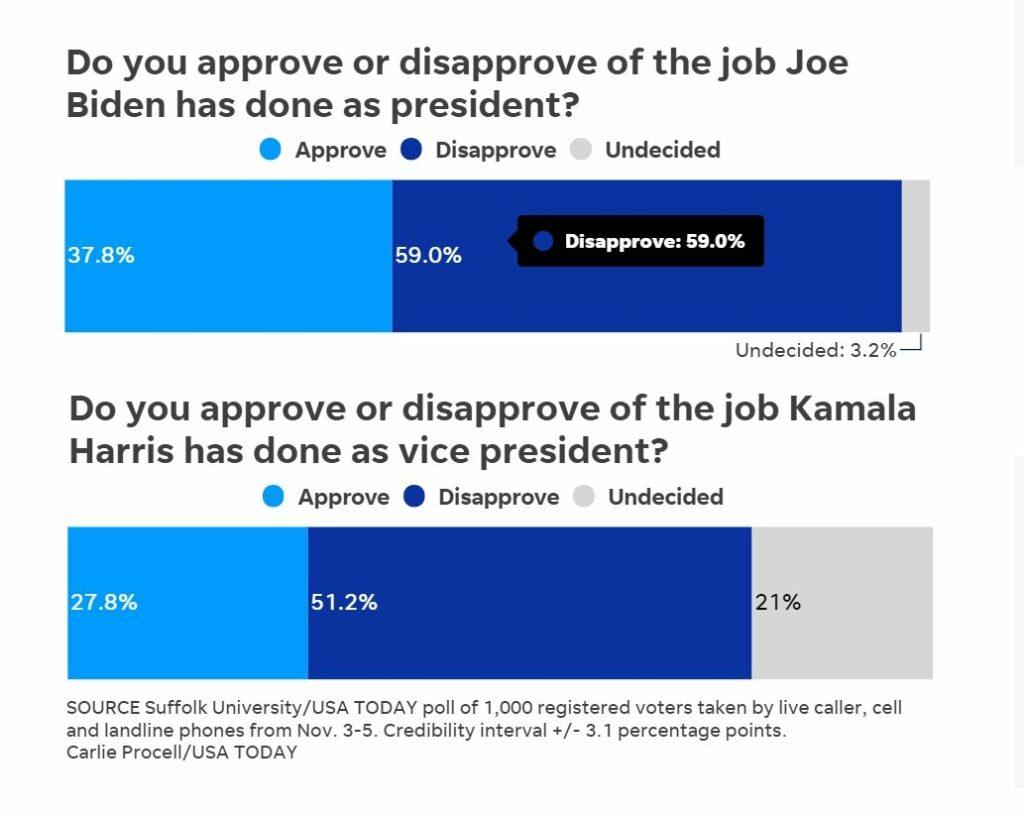
USA TODAY/Suffolk University Poll released last week shows that Kamala Harris is now the most unpopular Vice President in history, even more unpopular than the dark overlord Dick Cheney at the height of the Iraq war stagnation.

The poll found that Harris only has a 28 percent approval rating, with 51 percent disapproving of the job she is doing.

Business Insider notes that “The closest comparison – which involves slightly different methodology and margins of error – would be former Vice President Dick Cheney, the most unpopular US vice president in polling history.”

“He bottomed out at 30% in Gallup’s tracking survey, but that wasn’t until the end of former President George W. Bush’s second term in 2007,” the report adds.

It is quite a feat for Harris. While Biden’s approval rating is a dismal 38 percent in the same poll, the Vice President managed to languish a full TEN percentage points behind him.

As Vice President, Dick Cheney handed out no bid contracts to his oil buddies at Halliburton after overseeing the deployment of Americans to die in a pointless quagmire war. He even literally shot a man in the face with a 28-gauge Perazzi shotgun, but he still managed to be more popular than Kamala Harris is.

Why is that?

Perhaps it’s because when Harris is in the public eye, rather than hiding as she often does from Biden’s calamitous administration, she comes across as perpetually uneducatedborderline ADHDtotally fake, and completely in over her head.

At least when Cheney lurked behind Bush he looked like wanted to be there. Harris continually looks like she has something better to do rather than awkwardly fidgeting and looking over Biden’s shoulder every now and then.

Politico recently reported, “Vice President Kamala Harris’s aides are in a  panic…stating she is “fucking up” and perhaps “shouldn’t be the heir apparent” for 2024’s presidential race because she “could not defeat whomever the Republican Party puts up.”

Axios also recently reported, “One Democrat operative” said about the 2024 concern that “most  Democrats aren’t saying, ‘Oh, no, our heir apparent is f***ing up, what  are we gonna do?’ It’s more that people think, ‘Oh, she’s f***ing up,  maybe she shouldn’t be the heir apparent.’”

Harris’ dismal handling of the border catastrophe after being made border ‘czar’, not even bothering to go look at the situation for months, has also ensured the historically high disapproval.

Politico reported that after the decision was made for Harris to travel to the  border, “people inside her own office were blindsided by the news,” and  many aides began “scrambling, including officials who were responsible  for making travel arrangements and others outside the VP’s office charged with crafting the messaging across the administration.”

Despite Harris’ awful job performance and deep unpopularity, Joe Biden keeps suggesting that she will be President sooner or later.

Many will beg to differ.

*  *  *

Brand new merch now available! Get it at https://www.pjwshop.com/

In the age of mass Silicon Valley censorship It is crucial that we stay in touch. We need you to sign up for our free newsletter here. Support our sponsor – Turbo Force – a supercharged boost of clean energy without the comedown. Also, we urgently need your financial support here.

Tyler Durden
Wed, 11/10/2021 – 10:44

via ZeroHedge News https://ift.tt/31EcEy6 Tyler Durden

WTI Holds Losses After Official Data Shows Crude Inventory Build

WTI Holds Losses After Official Data Shows Crude Inventory Build

Oil prices are lower this morning, after a brief jump following last night’s API-reported surprise crude draw. The weakness followed a U.S. government report which forecast oversupply next year, cooling expectations of an immediate emergency stock release. The U.S. government projected that the global market will become oversupplied and prices will fall by early next year.

API

  • Crude -2.485mm (+1.6mm exp)

  • Cushing

  • Gasoline -552k (-1.2mm exp)

  • Distillates +573k (-1.1mm exp)

DOE

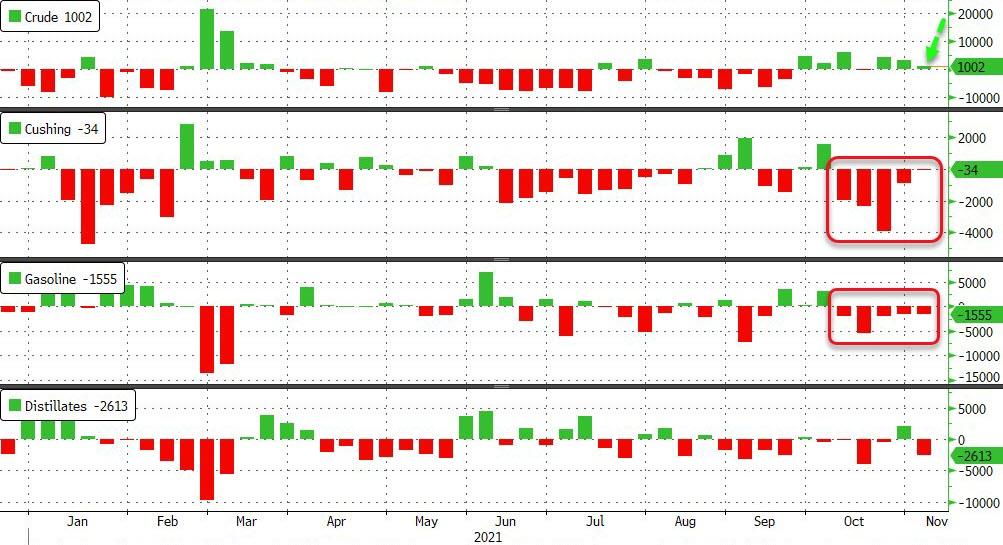
  • Crude +1.002mm (+1.6mm exp)

  • Cushing -34k

  • Gasoline -1.555mm (-1.2mm exp)

  • Distillates -2.613mm (-1.1mm exp)

While API reported a draw, official data confirmed a crude inventory build.

Source: Bloomberg

Cushing crude stocks fell very modestly last week, remaining near operational lows, well below seasonal averages…

Source: Bloomberg

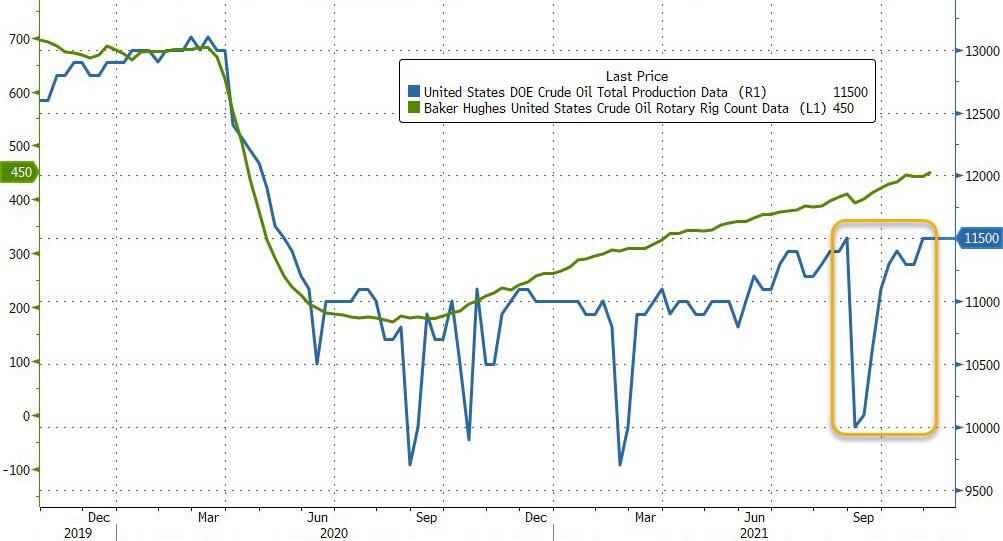
US crude production was flat from the previous week, hovering right at pre-Hurricane-Ida levels…

Source: Bloomberg

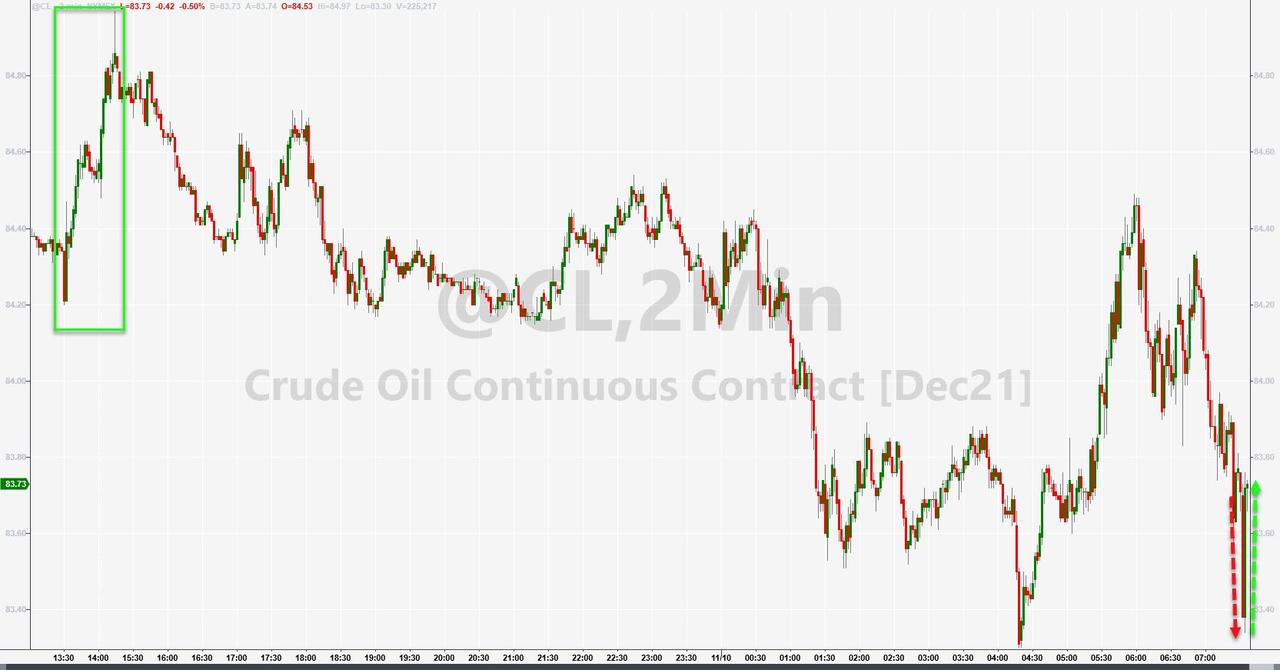
WTI was hovering around $83.75 ahead of the official data, dropped on the surprise build, then rebounded…

The battle between Biden’s desperate jawboning please for more production and the reality of demand coming back continues to play out.

Demand has already jumped back to pre-pandemic levels and is poised to go even higher early next year, said Russell Hardy, the chief executive officer of Vitol Group said. Hardy said market supply and demand is “going to be reasonably tight” for the next 12 months and a price spike to $100 a barrel is “certainly a possibility.”

Tyler Durden
Wed, 11/10/2021 – 10:40

via ZeroHedge News https://ift.tt/3c5jy1f Tyler Durden

Burned After Reading

Burned After Reading

By Michael Every of Rabobank

Well, someone just got burned: and who is next?

USTs yields continue to fall and the US curve to bull flatten, shouting “policy error!” at the Fed and those in bond markets expecting both the Fed and other central banks to be hiking ahead. Like the Fed’s Bullard, with his stated threat of two hikes next year(!) Getting ahead of that curve, USTesla slumped 12% and is now down $199bn in just a few days. So much for asking for personal financial advice from Twitter in-between toilet humour. That dip may put back Musk’s upcoming trip to Mars. More so if Michael Burry of “The Big Short” fame is right.

US PPI yesterday stayed at a record high, if in line with market expectations, at 8.6% y/y. “Transitory.” Moreover, the NFIB survey’s ‘actual price changes’ sub-index hit 53, the highest since March 1980: it was 15 a year ago. Although below the peak of 67 seen in October 1974 following the oil-price spike after the Yom Kippur war, it means higher prices loom, just as high energy prices imply pricier food via fertilizers. It’s US CPI today, of course, where consensus is a 5.9% y/y print, the highest since December 1990. In response, the White House is again demanding OPEC+ pump more oil, which they refuse to do, and/or the US may release oil from its strategic reserve. Industry experts point out the issue is more of refining capacity, not physical supply constraints, which the strategic reserve is supposed to be for.

Fear not: Yellen says the Fed, which she doesn’t run, will not allow 1970’s style inflation to return. The same Yellen who told us there will never be another financial crisis in her lifetime, just as the Fed warns of the risks of one building even as it aims to raise rates. ‘Helpfully’, the CBO says it won’t have finished looking at the deficit implications of the Build Back Better bill by 15 November, suggesting infrastructure may be the only Biden bill to pass. If so, Yellen will be right: high inflation well into 2022 will be followed by deflation as demand collapses. Indeed, the NFIB outlook was -37 in October, the joint lowest with November 2012. Equally, while global export values appear to be doing well, this is inflation: volumes are far weaker – which might solve the crisis at ports the hard way. Yet if the CBO nods and BBB passes, it’s inflation and logjams.

A similar either/or plays out in China, where the “contained” Evergrande crisis –which even the Fed has noticed– is seeing contagion. Junk bond yields are soaring and the trend is spreading to better quality credits and large banks, with investment grade yields up 8-10bp yesterday. As developers who have not crossed any debt redlines ‘mysteriously’ see their bonds plunge, Bloomberg reports the 10 largest developers carry debts of $1.7 trillion…on book. Off book and contingent liabilities are likely *far* higher. Worse, Chinese cities are now tightening the use of proceeds from presold properties, effectively forcing developers to use this cashflow to finish construction rather to repay debts. Can you guess what happens next?

Yet Goldman is quoted saying: “It’s unlikely the government will tolerate the impact on growth that would come about if it were to allow such a large number of developers to fail,” and putting other people’s money where its mouth is by snapping up developers’ USD debts. The logic is that central banks bail us all out and common prosperity is just “regulatory change”. As Michael Pettis argues in a Godley/Minsky vein long echoed here, it is also that Beijing must U-turn, spend on infrastructure (which Simon Rabinovitch of The Economist shows is likely already overbuilt), or growth slumps and, as Bloomberg puts it, ‘China Looks a Lot Like Japan Did in the 1980s’.

The official Securities Times now reports developers may be allowed to issue more domestic bonds, which Chinese banks will buy (lucky them!), according to “unnamed sources”, while the New York Times take is ‘As China’s property crisis spreads, Beijing says there’s nothing to see’. As such, there appears push-and-pull over policy (or a time lag at the Times). Yet there is another option, which we saw echoes of in the sudden excitement in educational shares yesterday on news they could start after-school tuition again….before seeing it was on a limited non-profit basis, with the only cashflow from adult exam courses. Common prosperity over equity, sorry.

That option is this: don’t bail out all the developers; merge and nationalise the best; then use their physical capital to build social housing, not swanky apartments. Yes, there are still huge issues related to propping up property prices as de facto Chinese pensions, and massive lost tax revenues. But don’t rule it out: and imagine Wall Street backing the safe, low returns of an ‘ESG’ housing project it would never dream of financing in the US! In what may be a similar vein, China is also banning unlicensed firms and individuals from making product recommendations to its $3.7 trillion mutual funds industry. Is this a step towards funds being steered towards state goals? Have you looked at the trend in Western fund management?

Today also saw Chinese CPI at 1.5% y/y vs. 1.4% consensus and 0.7% last month, and PPI at 13.5% y/y vs. 12.1% expected and 10.7% prior. For PPI, that is the highest level since June 1995. Clearly the consumer side of things is getting worse but is still being protected by Beijing, but the producer side is being walloped. Yes, China should slowly get this PPI surge under control vis-à-vis electricity now it is going all in on coal again, and as the PBOC offers discounted 1.75% loans on national green products,…which may also be the new stimulus to offset housing. Food prices are potentially a very different issue, however.

Lastly, the White House is flexing its foreign policy muscles…over Bosnia, which should really be EU turf, and Nicaragua, calling its recent election “undemocratic” and threatening new sanctions. Nice to see that the big problems and big sanctions are being tackled head on at a time when China is building replicas of US navy vessels for target practice. Of course, Biden and Xi have an online summit next week, so there is that.  

Tyler Durden
Wed, 11/10/2021 – 10:25

via ZeroHedge News https://ift.tt/3bZcqDN Tyler Durden

Developers Halt Projects, Mayor Demands Reform After St. Paul Voters Approve Radical Rent Control Ballot Initiative


reason-apartment4

It’s only been a week since voters in St. Paul, Minnesota, approved a sweeping rent control ballot initiative, but developers are already pausing projects while city leaders scramble to amend the most harmful aspects of the new law.

In last Tuesday’s municipal election, 52 percent of voters approved Question 1, an ordinance that puts a hard annual 3 percent cap on rent increases. It makes no allowances for inflation or exemptions for vacant apartments and new construction that are typical in other rent control policies.

The new ordinance doesn’t go into effect until May 2022. Nevertheless, several real estate companies with large projects in the works have already announced that they’re pulling their permit applications.

That includes Ryan Companies. Local NBC affiliate KARE 11 reports that the company pulled applications for three buildings in its proposed 3,800-unit Highland Bridge project.

“The City and Ryan took great care in creating a finance plan that leveraged market rate developments to provide funding to support deeply affordable housing creation both at Highland Bridge and throughout Saint Paul,” said a company executive in a statement to KARE 11. “The rent control policy threatens the funding sources for market rate projects and therefore the overall finance plan for the development.”

Other developers are singing a similar tune.

“We, like everybody else, are re-evaluating what—if any—future business activity we’ll be doing in St. Paul,” Jim Stolpestad, founder of development company Exeter, told the Minneapolis Star-Tribune.

The Star-Tribune reports that developers have also been calling Nicolle Goodman, the city’s director of planning and economic development, to say that they were placing hundreds of new units on hold in response to the passage of rent control.

“We don’t want our equity goals to be at odds with our growth goals,” Goodman told the St. Paul city council at last Wednesday’s meeting, reports the Star-Tribune. “The ordinance as written may actually put those goals at odds.”

In response to the developer freakout, freshly reelected Mayor Melvin Carter’s administration sent an email to the St. Paul City Council on Monday saying that while he supported “rent stabilization” as one necessary tool to make housing affordable, the new ordinance passed by voters could use some work.

“Allowing a reasonable return on investment is why virtually every other rent control ordinance in effect today exempts new construction,” reads the email. “The Mayor requests you consider an amendment to exempt new housing construction, which he will sign once it reaches his desk.”

That would make St. Paul’s new rent control policy more similar to those that exist in other states around the country.

Both California and Oregon, which passed statewide rent control ordinances in 2019, exempt buildings that are less than 15 years old from their price caps. New York’s long-standing rent stabilization law mostly applies to apartments built before 1974 or to newer units that received certain tax benefits.

The idea, as Carter’s email mentions, is to allow investors and developers to make a decent return on a project so as not to deter new construction. Some economists have argued that even with exemptions for new construction, rent control policies still suppress the value of new buildings and thus deter some amount of new construction.

That academic debate is kind of beside the point in St. Paul where developers are actively walking away from in-progress projects because of the new ordinance’s lack of an explicit exemption for new construction.

And even with an amendment for new construction, St. Paul’s rent control ordinance is still likely to reduce the supply of rental housing.

The 3 percent cap on annual rent increases is itself pretty strict. California and Oregon permit annual rent increases of 5 and 7 percent respectively. Allowable increases at rent-stabilized apartments in New York are typically much lower, and are often in the 1 to 2 percent range.

Both California and Oregon also allow landlords to factor inflation into rent increases. St. Paul’s ordinance makes no allowance for inflation, meaning that if prices rise more than 3 percent, landlords will effectively be required to lower the real rents that they charge. St. Paul’s ordinance also does not allow landlords to raise rents beyond that 3 percent cap for vacant units.

All of this could well encourage landlords to just get out of the rental market altogether and sell their properties to owner-occupiers. Rising home values in St. Paul, where prices have increased 12 percent in the last year, only make this option more attractive for landlords.

This is what happened in San Francisco where an expansion of preexisting rent controls led to a 15 percent reduction in the supply of rental housing, according to one 2018 study. That study found that incumbent tenants benefited handsomely from the limits on rent increases but that their windfall came “at the great expense of welfare losses from future inhabitants.”

Even if the city’s new ordinance is amended to exempt new construction, St. Paul renters, current and future, can expect a similar result.

from Latest – Reason.com https://ift.tt/3D7a0ic
via IFTTT

Biden Starts To Freak Out About Soaring Inflation, Orders Economic Council To “Reduce Energy Costs”

Biden Starts To Freak Out About Soaring Inflation, Orders Economic Council To “Reduce Energy Costs”

When discussing today’s “shock” CPI report we said that it was just a matter of time before there is a wave of political blowback that will make the recent anti-democrat revulsion in Virginia and NJ seem like amateur hour. Specifically, we said that “the explosive inflation surge threatens to exacerbate political challenges for President Brandon as he seeks to pass a nearly $2 trillion tax-and-spending package and defend razor-thin congressional majorities in next year’s midterm elections.”

It took just a few minutes for this prediction to materialize because just around the time the market opened, Biden addressed the public and confirmed that unlike the Fed, he is finally starting to freak out about soaring prices, to wit:

… on inflation, today’s report shows an increase over last month. Inflation hurts Americans pocketbooks, and reversing this trend is a top priority for me. The largest share of the increase in prices in this report is due to rising energy costs—and in the few days since the data for this report were collected, the price of natural gas has fallen.

I have directed my National Economic Council to pursue means to try to further reduce these costs, and have asked the Federal Trade Commission to strike back at any market manipulation or price gouging in this sector.

So… the national economic council will restart the Keystone XL pipeline and make it fund shale producers? We didn’t think so. But at least in a time of near-record inflation, Biden’s talk remains extremely cheap.

And speaking of cheap talk, the president also claimed that “other price increases reflect the ongoing struggle to restore smooth operations in the economy in the restart.”

So that’s what uncontrolled inflation is called by the White House today?

Hilariously, all this is happening just as Biden is still trying to shove trillions in additional fiscal stimulus down the country’s throat which, make no mistake, will lead to even higher inflation but of course, not to the White House, which continues to claim that a plan that will require trillions in funding is actually, don’t laugh, deflationary!

I am travelling to Baltimore today to highlight how my Infrastructure Bill will bring down these costs, reduce these bottlenecks, and make goods more available and less costly.

And just in case there is any doubt that Biden is contemplating replacing Powell with Hillary Clinton fangirl and Democrat Lael Brainard, Biden said he wants to “reemphasize my commitment to the independence of the federal reserve to monitor inflation, and take steps necessary to combat it.” Translation: he wants to appoint a career democrat who will make it easier to push through the $150 trillion in QE needed over the next 30 years to pretend to fund “net zero” but is really meant to make the rich richer.

Going forward, it is important that Congress pass my Build Back Better plan, which is fully paid for and does not add to the debt, and will get more Americans working by reducing the cost of child care and elder care, and help directly lower costs for American families by providing more affordable health coverage and prescription drugs—alongside cutting taxes for 50 million Americans including for most families with children. 17 Nobel Prize winners in economics have said that my plan will “ease inflationary pressures.” And my plan does this without raising taxes on those making less than $400,000 or adding to the federal debt, by requiring the wealthiest and big corporations to start to pay their fair share in taxes.

Luckily, at least one Democrat is not a lunatic and just as Biden was delivering his prepared remarks, Democratic Senator Joe Manchin said that the “threat posed by record inflation to the American people is not ‘transitory’ and is instead getting worse.”

“From the grocery store to the gas pump, Americans know the inflation tax is real and DC can no longer ignore the economic pain Americans feel every day.”

To be clear, what he was referring to is Biden’s $1.75 trillion (which really is more like $5 trillion) BBB plan (the same as the US credit rating after it passes), which will make galloping inflation quite “hyper” and which Manchin is – at least for now – clearly opposing.

Tyler Durden
Wed, 11/10/2021 – 10:10

via ZeroHedge News https://ift.tt/309QqDs Tyler Durden

Manchin Says Inflation ‘Not Transitory’, Cannot Ignore ‘Pain’ Felt By Americans

Manchin Says Inflation ‘Not Transitory’, Cannot Ignore ‘Pain’ Felt By Americans

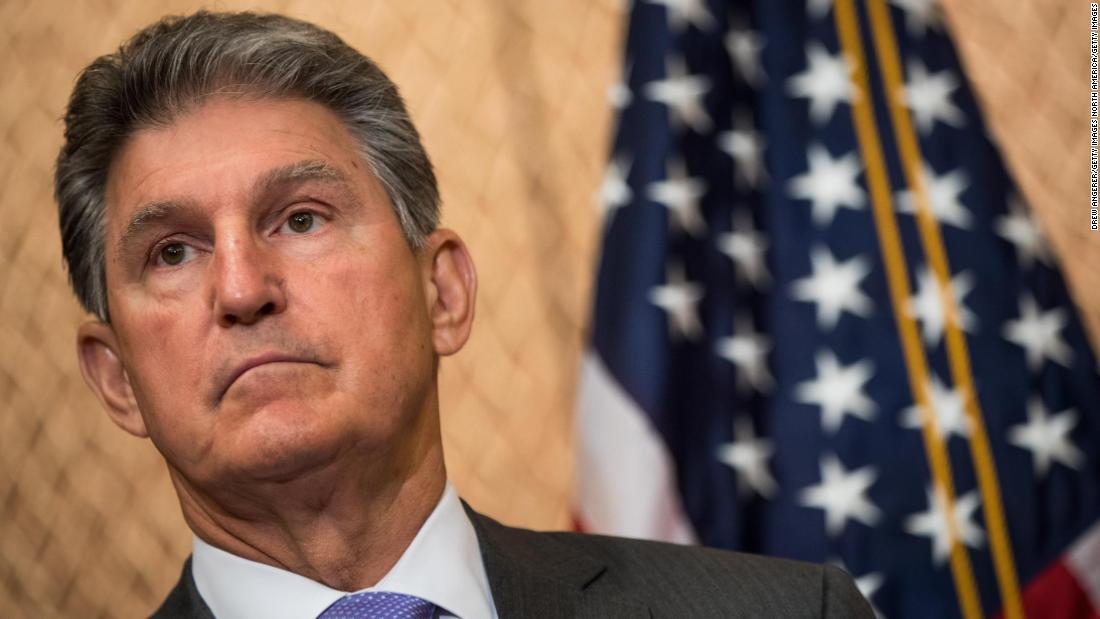
Moderate Democratic Senator Joe Manchin of West Virginia said on Wednesday that the inflation we’re seeing right now is not transitory, and “is instead getting worse.”

“By all accounts, the threat posed by record inflation to the American people is not “transitory” and is instead getting worse,” he tweeted, adding “From the grocery store to the gas pump, Americans know the inflation tax is real and DC can no longer ignore the economic pain Americans feel every day.”

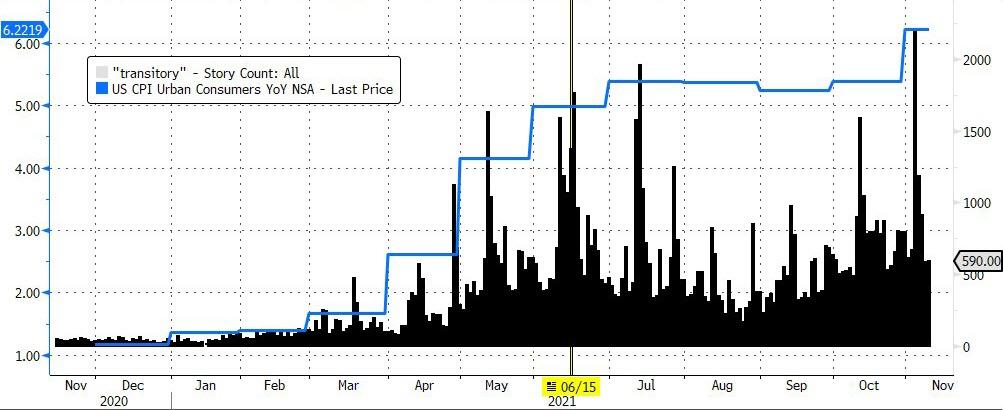
Of note, here’s CPI vs. mentions of the word “Transitory” in the news:

Manchin’s comment comes after US consumer prices soaring 6.2% in October – outpacing the 5.9% expected YoY, which is a sharp acceleration from September’s 5.4% YoY and the highest print since June 1982.

Tyler Durden
Wed, 11/10/2021 – 10:00

via ZeroHedge News https://ift.tt/307mqYU Tyler Durden

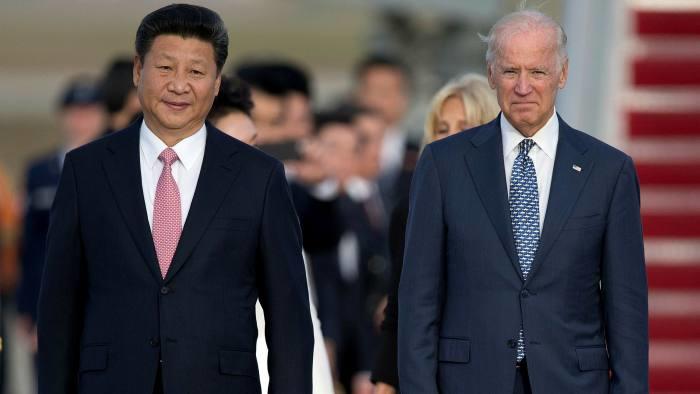
Biden-Xi Virtual Meeting ‘Set For Next Week’ As Xi Says “Both Countries Will Lose From Confrontation”

Biden-Xi Virtual Meeting ‘Set For Next Week’ As Xi Says “Both Countries Will Lose From Confrontation”

Presidents Biden and Xi Jinping are expected to hold a virtual meeting as early as next week, according to a Reuters source who was briefed on the matter. However, the White House and Chinese Embassy have yet to confirm. 

Last week the two sides agreed for the US and Chinese leaders to engage in direct talks at some near-term point by the end of the year, based on dialogue between US national security adviser Jake Sullivan and his Chinese counterpart, top diplomat Yang Jiechi, in Zurich.

The White House had earlier described the meeting of the two delegations in Switzerland a “more meaningful and substantive” discussion than previous engagements, a reference to the testy summit in Anchorage last March. 

Yang Jiechi was days ago reported as saying, “China attaches importance to Biden’s positive remarks recently and noted that the US said it doesn’t intend to contain China or engage in a new cold war.”

And on Tuesday Xi himself wrote a letter to the New York-based National Committee on US-China Relations wherein he urged for Beijing and Washington work together on a basis of “mutual respect”

“Cooperation is the only right choice,” he said, according to the contents of the letter:

“Right now, China-U.S. relations are at a critical historical juncture,” Xi said, according to a letter addressed to the National Committee on U.S.-China Relations, a New York-based non-profit.

“Both countries will gain from cooperation and lose from confrontation,” Xi said in the letter. “Cooperation is the only right choice.”

“Following the principles of mutual respect, peaceful coexistence and win-win cooperation, China stands ready to work with the United States to enhance exchanges and cooperation across the board,” the letter added.

Xi laid out the he’d like to work with Biden to “address regional and international issues as well as global challenges.” In the meantime, he expressed hope that the two countries can “properly manage differences” in order to “bring China-U.S. relations back to the right track of sound and steady development.”

Meanwhile…

Tyler Durden
Wed, 11/10/2021 – 09:53

via ZeroHedge News https://ift.tt/2YxMwDY Tyler Durden