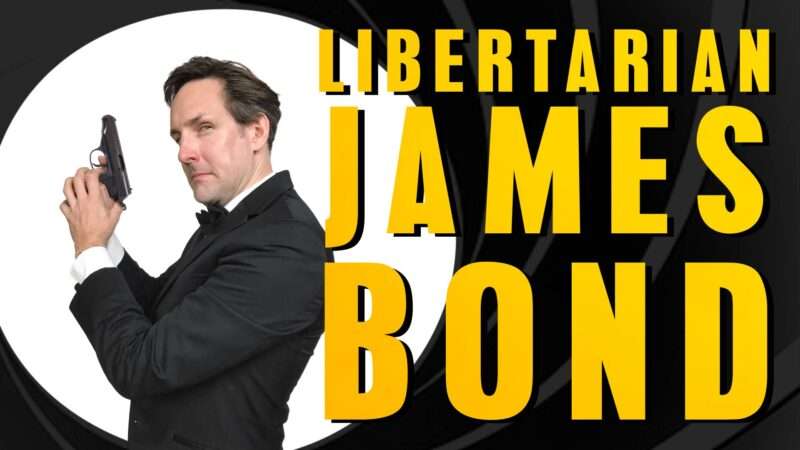
You loved him in Live and Let Die With Dignity, Bitcoins are Forever, and The Man with the Gold ‘n’ Gun. Now Bond is back with an explosive new film filled with action, intrigue, and a lengthy discussion of Federal Reserve monetary policy.
Starring Andrew Heaton, Austin Bragg, and Remy Munafisi; written by Andrew Heaton, Austin Bragg, and Meredith Brag; produced by Meredith and Austin Bragg; theme music by Scott McRae and Ryan Rapsys.
from Latest – Reason.com https://ift.tt/3Bm2C1v
via IFTTT
From U.S. v. Perez, decided June 9 by Judge David Ezra (W.D. Tex.), but apparently not publicized (or uploaded to Westlaw) until now; the defendant was just sentenced to 15 months in prison, though he is appealing the decision:
According to the Indictment, on or about April 5, 2020, … Defendant posted on Facebook the following: “PSA!! Yo rt HEB MERCADO!! My homeboys cousin has covid19 and has licked every thing for past 2 days cause we paid him too [4 EMOTICONS] … big difference is we told him not to be these fucking idiots who record and post online … YOU’VE BEEN WARNED!!! HEB on nogalitos next ;).” Defendant also posted the following on the same day: “Lol…I did try to warn y’all but my homegirl changed my mind … mercado already is, nogalitos location next …”
Defendant was charged with a violation of 18 U.S.C. § 1038(a)(1), and the court held that the charge wasn’t precluded by the First Amendment:
“The statute requires conduct that conveys false information that, if true, would violate certain enumerated statutes” that would cover a broad range of topics, including: “destruction of aircraft and motor vehicles, biological and chemical weapons, improper use of explosives, improper use of firearms, destruction of shipping vessels, acts of terrorism, sabotage of nuclear facilities, and aircraft piracy.” Hoaxes of this nature often create responses such as “deployment of first responders, evacuations, hazardous materials units, S.W.A.T. teams, bomb squads, extensive investigations concerning the threat, and more.” Section 1038(a) thus prohibits more than just “false statements”; it prohibits false statements that create serious responses to potential “grave and imminent” threats to the order of society. SeeUnited States v. Keyser, 704 F.3d 631 (9th Cir. 2012) (rejecting a First Amendment challenge to a section 1038(a) hoax-speech conviction where the defendant mailed packets of sugar labeled “anthrax” to businesses and public officials in order to promote a book because terror hoaxes are grave and imminent threats).
Because section 1038(a) prohibits more than just “false statements,” it is distinguishable from the Stolen Valor Act, which criminalized making false statements about earning military awards. In holding that the Act was unconstitutional, the plurality in United States v. Alvarez (2012) noted that “[t]he Court has never endorsed the categorical rule … that false statements receive no First Amendment protection.” In a concurring opinion, Justice Breyer provided examples of false factual statements that would be protected under the First Amendment, including public statements that “may stop a panic or otherwise preserve calm in the face of danger.” Section 1038(a) prohibits speech that would cause panic in society, whereas the Stolen Valor Act does not….
Defendant maintains that the statute is not actually necessary to achieve its stated interest as applied to Defendant’s conduct. Defendant states, “[Defendant] is alleged to have joked on Facebook about paying a friend to lick items at a grocery store. This is likely not the type of conduct that would spark a public panic or merit an overwhelming law enforcement response.”
The Court disagrees. COVID-19 has caused death to thousands of people and hospitalized many more. To say that COVID-19 has caused fear in this country would be an understatement of epic proportions. And while many individuals, particularly those with underlying health conditions, stayed at home to avoid exposure to the virus, the grocery store was one of the few places that could not be avoided. Posting online that a friend with COVID-19 licked foods at a particular grocery store would likely spark a public panic and an investigation, as many people would fear for their own health as well as the health of those whom the grocery shoppers interacted with after leaving the store.
The Court is also mystified by Defendant’s argument that “the alleged conduct likely had more beneficial than harmful results.” Defendant attempts to justify this assertion by explaining that his behavior “would likely have encouraged the appropriate level of concern as compared to the downplaying of the seriousness of the pandemic that occurred at the highest levels of Government and permeated through communities around the country.” However, the Court
respectfully disagrees that joking about having exposed innocent people to COVID-19 while purchasing basic biological needs had “more beneficial than harmful results.”
The speech that is being prohibited in this case had the potential to cause mass panic. Instead of yelling “fire” in a crowded movie theater, Defendant here posted online that his friend with COVID-19 licked foods at a grocery store during a deadly global pandemic. Both actions have the potential to cause mass panic. The actions in this case, however, had the potential to cause even more panic. Yelling “fire” in a crowded movie theater affects everyone inside the movie theater. Posting online that someone with COVID-19 licked foods at the grocery store affects everyone that was in the grocery store over a span of several days and the people that the grocery shoppers interacted with after leaving the grocery store. The speech in this case is of the type that 18 U.S.C. § 1038(a) seeks to prohibit….
Defendant’s examples of potential violations of § 1038(a) that allegedly lie beyond its stated legislative goals do not outweigh the numerous proper uses of this statute. Most of Defendant’s examples would likely not fall under the statute in any event. Seee.g., United States v. Brahm (D.N.J. 2007) (“Orson Welles’s ‘War of the Worlds’ broadcast … may not qualify as something within the reasonable belief required by the statute.”). Further, when comparing valid restrictions on speech to invalid restrictions, courts utilize “a sensitivity to reality” when considering hypothetical situations. It would appear that the proper uses of the statute, described above, would occur with much more frequency than indictments for parodies and other artistic expressions….
Defendant posted his comments online on April 5, 2020 …. At that time, the country was in a state of hysteria. Some people hoarded toilet paper, cleaning products, and hand sanitizer. Others refused to leave home without gloves, hand wipes, or other protective gear. While the healthcare system was on the verge of being overrun with COVID-19 patients, Americans in large cities cheered on healthcare workers after their long shifts by clanging pots, pans, and cowbells outside of their windows. Thousands of people were infected with the virus, many were hospitalized, and many lost their lives. Americans have not suffered physically, mentally, and emotionally from a such a deadly disease since the 1918 influenza pandemic.
As people calculated the risks of leaving their homes and decided “to do without” many things, the one place that could not be avoided was the grocery store. People gave up haircuts, appointments, and other social outings, but they could not forgo basic biological needs. And it was at this time that Defendant posted online that his friend with COVID-19 licked items at the grocery store. These online posts, when considering the state that country was in at that time, presented a grave and imminent threat not just to the innocent grocery shoppers and essential grocery workers, but to all of the other innocent victims who later interacted with them….
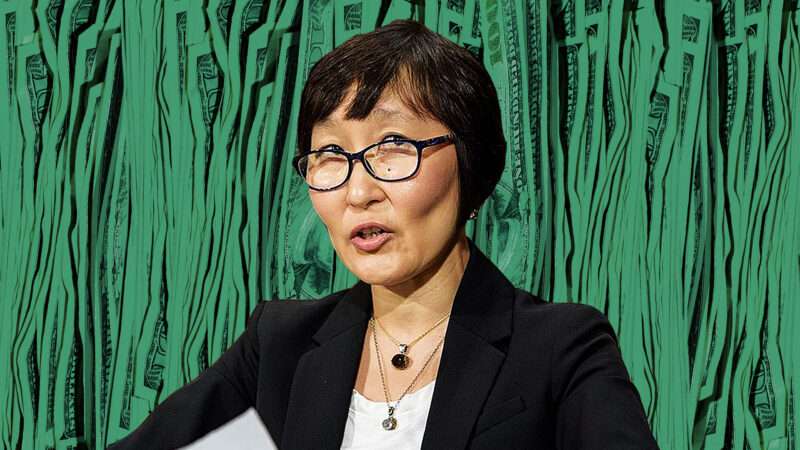
Some people who survived the Soviet Union took its failures as lessons learned the hard way, not worth replicating. But not Saule Omarova, President Joe Biden’s pick to serve as currency comptroller.
Born in the Kazakh Soviet Socialist Republic, Omarova is someone you might expect to be wary of the ways state power can distort markets at consumers’ peril. Instead, the Cornell law professor tweets things like “Say what you will about old USSR, there was no gender pay gap there. Market doesn’t always ‘know best.'” She defended that claim by noting that salaries were set by the state and that maternity benefits were always generous.
How nice that communism can degrade both genders equally! Preventing people from being compensated for quality work across 11 timezones does not seem like a recipe for a productive, developed economy, and indeed it wasn’t. But that gaffe wasn’t an outlier. Omarova really does want to greatly expand state power, even if not to fully Soviet levels.
Omarova’s most out-there academic ideas include directing the Federal Reserve to handle consumer deposits, taking that power away from banks. “Having Americans park their money at the Fed would allow the central bank to more directly and efficiently pull the levers of monetary policy by enabling it to credit individual citizens’ accounts when there’s a need to stimulate the economy,” notesPolitico.
Rob Nichols, president of the American Bankers Association, has said such policies would “effectively nationalize America’s community banks,” according to The New YorkTimes. Omarova “wants to eliminate the banks she’s being appointed to regulate,” agrees the Wall Street Journal editorial board. Groups representing both big and small banks, including the American Bankers Association, the Consumer Bankers Association, and the Independent Community Bankers of America, have reached out to more moderate Democrats to lodge their opposition to the pick—a ballsy move, given that she may end up passing down the rules that these associations’ members must later comply with.
“Recall that big banks always fight against regulation by claiming they lend to Main Street,” she tweeted in July, along with a quote from an accompanying article: “JPMorgan and Citi are now lending more to a small number of ultra-high net worth clients than to their millions of credit card customers.” (Note that JPMorgan and Citi Bank do, in fact, still lend to Main Street.) She has also branded herself as a cryptocurrency foe, like many of this administration’s other recent picks, saying that digital currencies are “untethered” from the real economy. Amusingly, President Joe Biden likely sees her nomination as a safer pick designed to appease moderates, given that she worked for George W. Bush’s administration.
Currency comptrollers, of course, do not have the power to do all the things Omarova has mused about in her academic writings, and dumb tweets here and there are not necessarily disqualifying. But the nominee’s general hostility toward markets, coupled with faith that the Federal Reserve ought to take on more prominence, should give any libertarian pause.
from Latest – Reason.com https://ift.tt/3BhNOB8
via IFTTT
You loved him in Live and Let Die With Dignity, Bitcoins are Forever, and The Man with the Gold ‘n’ Gun. Now Bond is back with an explosive new film filled with action, intrigue, and a lengthy discussion of Federal Reserve monetary policy.
Starring Andrew Heaton, Austin Bragg, and Remy Munafisi; written by Andrew Heaton, Austin Bragg, and Meredith Brag; produced by Meredith and Austin Bragg; theme music by Scott McRae and Ryan Rapsys.
from Latest – Reason.com https://ift.tt/3Bm2C1v
via IFTTT
In mid-April 2021, I began receiving reports from sources in China and the United States that certain regions in China had begun to experience ongoing power disruptions at their warehouses and manufacturing facilities. Most notable of these was in south China’s Guangdong megaregion, where in June operations at the Taishan Nuclear Power Plant had become disrupted by a small number of faulty claddings for the fuel rods, ultimately forcing state-owned General Nuclear Power Group to shut down Unit 1 (there are two units) for maintenance and repair. Concurrently, available power imported to the Guangdong region from Yunnan province’s considerable hydroelectric capacity was reduced due to drier-than-expected weather throughout the spring.
Taken together, some estimates are that total power available to the region fell by as much as 15% by June. In response, officials began quietly rationing power to factories, cutting business operation days by 1 or 2 days depending on the facilities’ power requirements.
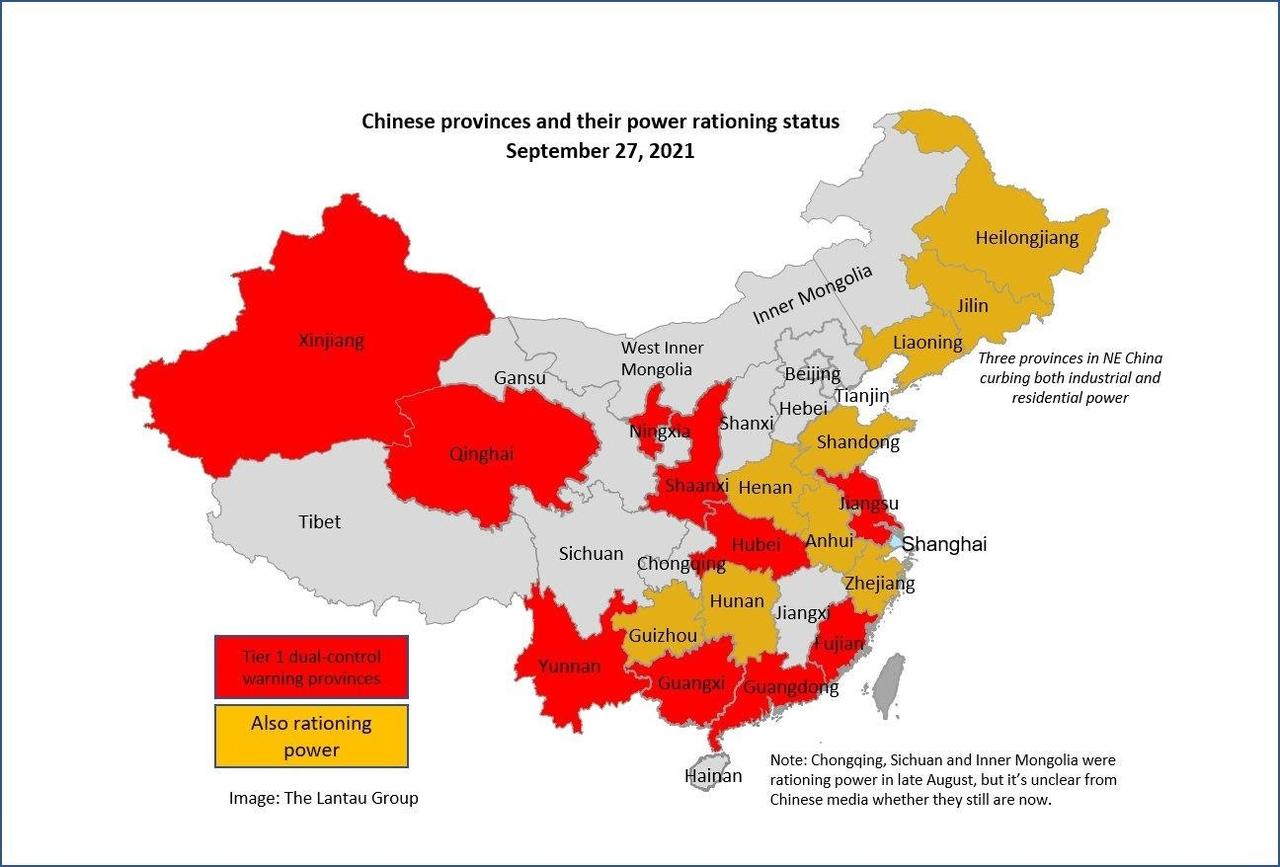
In recent weeks, however, officials have begun a much more aggressive rationing program (Figure 1), with factories in much of Guangdong now seeing only 1-2 days per week of power use allowed. Similar situations are reportedly occurring in Jiangsu, Hubei, and Fujian provinces, all major manufacturing regions. As just one example, one of my US-based import customers has reported that a key supplier in Jiangsu is down to a single day per week of power availability. Limited-but-expanded power rationing is also occurring in Zhejiang, Shandong, Liaoning, and other important heavy industrial, chemical, and energy-product hubs.
The primary causes of power disruptions are the aforementioned reduced availability of hydroelectric power in much of southern China, as well as limited supplies of coal due to the ongoing China/Australia trade dispute. The latter cause is expected to be more sustained in impact, as the year-long embargo by China on Australian thermal coal has depleted China’s strategic reserves and caused commercial and residential prices to rapidly spike. China imports about 10% of its annual thermal coal needs; of this, Australia was close to 70% of the total prior to the mid-2020 embargo. It is expected that China will be forced to drop the embargo ahead of the fourth quarter, but this is not certain. Reopening its markets to Australian coal imports would be an important stabilizing step for China’s manufacturing base, but would nonetheless take weeks or even months to ramp back up to normal output.
If China does not capitulate on the importation of Australian coal and cannot close the gap with imports from Brazil, South Africa, and the US, the southern region will continue to see constrained power availability, reducing export volumes especially from Shenzhen’s ports, Hong Kong, and Xiamen, as well as Tianjin, Dalian, and Qingdao in the north. We would expect in this scenario to see these ports be utilized by ocean carriers for more transshipments out of Southeast Asia or central China, while export-focused capacity shifts to Ningbo and Shanghai, as well as alleviating significant congestion pressure at Kaohsiung and Busan. Freight rates are anticipated by some maritime industry players to soften somewhat, though a bullish case for barely-reduced rates could be made that a very large backlog of existing cargo and ongoing delays at US and European ports will keep volumes at a high level through Lunar New Year at least, with a strong likelihood of continuing through the ILWU negotiations.
Looking at 2022, any significant level of ongoing power disruptions will begin to cause fractures in China’s economy, particularly in the finance and heavy manufacturing sectors as well as within the population. Such fissures have in the past led to increased belligerence by China against neighboring and regional countries, which could have unexpected disruptive effects on maritime and air traffic in the Far East. With regard to which sectors of the economic base will receive favored treatment for any surplus power, heavy manufacturing (auto, shipbuilding, infrastructure), high technology, energy (renewable and traditional), petrochemicals, medical, and metal processing will likely be protected first. These are considered critical industries in China due to the PLA’s direct investments into these sectors (as well as the in-kind benefits to China’s military industrial complex), with industries such as homegoods, consumer electronics, and garments receiving the least support. This will in particular impact retailers in the US and Europe who are already falling short on inventory, and were hoping for a strong late-year push to close the earnings year on a high note.
More broadly, it should be expected that the continuity and consistency that China-based supply chains have historically enjoyed will be diminished in the short- to intermediate-term. Fortis expects that Xi will tip China’s dual-circulation economic strategy in favor of protecting domestic consumers, particularly to offset the political instability introduced by energy and food price increases. We can also reasonably expect to see internal enemies of the CCP and PLA be targeted for power rationing, or even villainized as over-users of precious energy resources at the expense of the civilian population. In closing, the energy disruptions in China are but one more canary in the coal mine indicating accelerating catastrophic failure cascades, further consolidation of internal power by Xi and the CCP, and an ongoing bifurcation of geopolitical spheres between China and the US.
From U.S. v. Perez, decided June 9 by Judge David Ezra (W.D. Tex.), but apparently not publicized (or uploaded to Westlaw) until now; the defendant was just sentenced to 15 months in prison, though he is appealing the decision:
According to the Indictment, on or about April 5, 2020, … Defendant posted on Facebook the following: “PSA!! Yo rt HEB MERCADO!! My homeboys cousin has covid19 and has licked every thing for past 2 days cause we paid him too [4 EMOTICONS] … big difference is we told him not to be these fucking idiots who record and post online … YOU’VE BEEN WARNED!!! HEB on nogalitos next ;).” Defendant also posted the following on the same day: “Lol…I did try to warn y’all but my homegirl changed my mind … mercado already is, nogalitos location next …”
Defendant was charged with a violation of 18 U.S.C. § 1038(a)(1), and the court held that the charge wasn’t precluded by the First Amendment:
“The statute requires conduct that conveys false information that, if true, would violate certain enumerated statutes” that would cover a broad range of topics, including: “destruction of aircraft and motor vehicles, biological and chemical weapons, improper use of explosives, improper use of firearms, destruction of shipping vessels, acts of terrorism, sabotage of nuclear facilities, and aircraft piracy.” Hoaxes of this nature often create responses such as “deployment of first responders, evacuations, hazardous materials units, S.W.A.T. teams, bomb squads, extensive investigations concerning the threat, and more.” Section 1038(a) thus prohibits more than just “false statements”; it prohibits false statements that create serious responses to potential “grave and imminent” threats to the order of society. SeeUnited States v. Keyser, 704 F.3d 631 (9th Cir. 2012) (rejecting a First Amendment challenge to a section 1038(a) hoax-speech conviction where the defendant mailed packets of sugar labeled “anthrax” to businesses and public officials in order to promote a book because terror hoaxes are grave and imminent threats).
Because section 1038(a) prohibits more than just “false statements,” it is distinguishable from the Stolen Valor Act, which criminalized making false statements about earning military awards. In holding that the Act was unconstitutional, the plurality in United States v. Alvarez (2012) noted that “[t]he Court has never endorsed the categorical rule … that false statements receive no First Amendment protection.” In a concurring opinion, Justice Breyer provided examples of false factual statements that would be protected under the First Amendment, including public statements that “may stop a panic or otherwise preserve calm in the face of danger.” Section 1038(a) prohibits speech that would cause panic in society, whereas the Stolen Valor Act does not….
Defendant maintains that the statute is not actually necessary to achieve its stated interest as applied to Defendant’s conduct. Defendant states, “[Defendant] is alleged to have joked on Facebook about paying a friend to lick items at a grocery store. This is likely not the type of conduct that would spark a public panic or merit an overwhelming law enforcement response.”
The Court disagrees. COVID-19 has caused death to thousands of people and hospitalized many more. To say that COVID-19 has caused fear in this country would be an understatement of epic proportions. And while many individuals, particularly those with underlying health conditions, stayed at home to avoid exposure to the virus, the grocery store was one of the few places that could not be avoided. Posting online that a friend with COVID-19 licked foods at a particular grocery store would likely spark a public panic and an investigation, as many people would fear for their own health as well as the health of those whom the grocery shoppers interacted with after leaving the store.
The Court is also mystified by Defendant’s argument that “the alleged conduct likely had more beneficial than harmful results.” Defendant attempts to justify this assertion by explaining that his behavior “would likely have encouraged the appropriate level of concern as compared to the downplaying of the seriousness of the pandemic that occurred at the highest levels of Government and permeated through communities around the country.” However, the Court
respectfully disagrees that joking about having exposed innocent people to COVID-19 while purchasing basic biological needs had “more beneficial than harmful results.”
The speech that is being prohibited in this case had the potential to cause mass panic. Instead of yelling “fire” in a crowded movie theater, Defendant here posted online that his friend with COVID-19 licked foods at a grocery store during a deadly global pandemic. Both actions have the potential to cause mass panic. The actions in this case, however, had the potential to cause even more panic. Yelling “fire” in a crowded movie theater affects everyone inside the movie theater. Posting online that someone with COVID-19 licked foods at the grocery store affects everyone that was in the grocery store over a span of several days and the people that the grocery shoppers interacted with after leaving the grocery store. The speech in this case is of the type that 18 U.S.C. § 1038(a) seeks to prohibit….
Defendant’s examples of potential violations of § 1038(a) that allegedly lie beyond its stated legislative goals do not outweigh the numerous proper uses of this statute. Most of Defendant’s examples would likely not fall under the statute in any event. Seee.g., United States v. Brahm (D.N.J. 2007) (“Orson Welles’s ‘War of the Worlds’ broadcast … may not qualify as something within the reasonable belief required by the statute.”). Further, when comparing valid restrictions on speech to invalid restrictions, courts utilize “a sensitivity to reality” when considering hypothetical situations. It would appear that the proper uses of the statute, described above, would occur with much more frequency than indictments for parodies and other artistic expressions….
Defendant posted his comments online on April 5, 2020 …. At that time, the country was in a state of hysteria. Some people hoarded toilet paper, cleaning products, and hand sanitizer. Others refused to leave home without gloves, hand wipes, or other protective gear. While the healthcare system was on the verge of being overrun with COVID-19 patients, Americans in large cities cheered on healthcare workers after their long shifts by clanging pots, pans, and cowbells outside of their windows. Thousands of people were infected with the virus, many were hospitalized, and many lost their lives. Americans have not suffered physically, mentally, and emotionally from a such a deadly disease since the 1918 influenza pandemic.
As people calculated the risks of leaving their homes and decided “to do without” many things, the one place that could not be avoided was the grocery store. People gave up haircuts, appointments, and other social outings, but they could not forgo basic biological needs. And it was at this time that Defendant posted online that his friend with COVID-19 licked items at the grocery store. These online posts, when considering the state that country was in at that time, presented a grave and imminent threat not just to the innocent grocery shoppers and essential grocery workers, but to all of the other innocent victims who later interacted with them….
Some people who survived the Soviet Union took its failures as lessons learned the hard way, not worth replicating. But not Saule Omarova, President Joe Biden’s pick to serve as currency comptroller.
Born in the Kazakh Soviet Socialist Republic, Omarova is someone you might expect to be wary of the ways state power can distort markets at consumers’ peril. Instead, the Cornell law professor tweets things like “Say what you will about old USSR, there was no gender pay gap there. Market doesn’t always ‘know best.'” She defended that claim by noting that salaries were set by the state and that maternity benefits were always generous.
How nice that communism can degrade both genders equally! Preventing people from being compensated for quality work across 11 timezones does not seem like a recipe for a productive, developed economy, and indeed it wasn’t. But that gaffe wasn’t an outlier. Omarova really does want to greatly expand state power, even if not to fully Soviet levels.
Omarova’s most out-there academic ideas include directing the Federal Reserve to handle consumer deposits, taking that power away from banks. “Having Americans park their money at the Fed would allow the central bank to more directly and efficiently pull the levers of monetary policy by enabling it to credit individual citizens’ accounts when there’s a need to stimulate the economy,” notesPolitico.
Rob Nichols, president of the American Bankers Association, has said such policies would “effectively nationalize America’s community banks,” according to The New YorkTimes. Omarova “wants to eliminate the banks she’s being appointed to regulate,” agrees the Wall Street Journal editorial board. Groups representing both big and small banks, including the American Bankers Association, the Consumer Bankers Association, and the Independent Community Bankers of America, have reached out to more moderate Democrats to lodge their opposition to the pick—a ballsy move, given that she may end up passing down the rules that these associations’ members must later comply with.
“Recall that big banks always fight against regulation by claiming they lend to Main Street,” she tweeted in July, along with a quote from an accompanying article: “JPMorgan and Citi are now lending more to a small number of ultra-high net worth clients than to their millions of credit card customers.” (Note that JPMorgan and Citi Bank do, in fact, still lend to Main Street.) She has also branded herself as a cryptocurrency foe, like many of this administration’s other recent picks, saying that digital currencies are “untethered” from the real economy. Amusingly, President Joe Biden likely sees her nomination as a safer pick designed to appease moderates, given that she worked for George W. Bush’s administration.
Currency comptrollers, of course, do not have the power to do all the things Omarova has mused about in her academic writings, and dumb tweets here and there are not necessarily disqualifying. But the nominee’s general hostility toward markets, coupled with faith that the Federal Reserve ought to take on more prominence, should give any libertarian pause.
from Latest – Reason.com https://ift.tt/3BhNOB8
via IFTTT
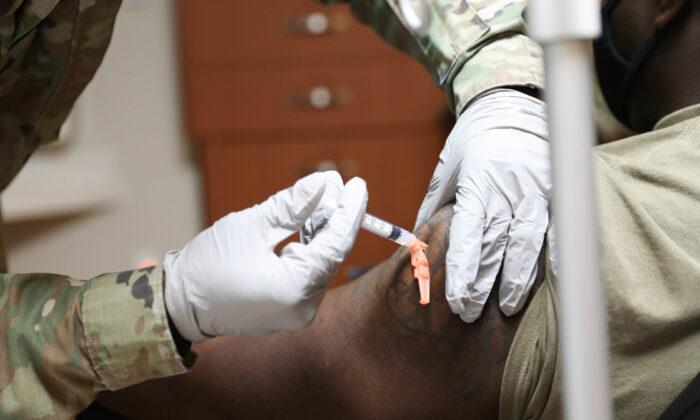
The U.S. military is ignoring the protection against infection bestowed by having COVID-19 and recovering, a lawyer representing Navy SEALs who have concerns about COVID-19 vaccines said.
“My clients are seeing for the first time in the military natural immunity is not being recognized as a reason for an exemption to a vaccine,” R. Davis Younts, the lawyer, said on EpochTV’s “Crossroads.”
“So it’s very strange and I think it’s reasonable for my clients to ask the question, ‘why is natural immunity demonstrated by positive serology being ignored for this vaccine but it’s not for others?‘” he added.
Military regulations outline how medical exemptions to required vaccines can be granted because of “evidence of immunity based on serologic tests, documented infections, or similar circumstances.”
But the COVID-19 vaccine mandate, which is being imposed on both active-duty and civilian Pentagon employees, does not contain that provision.
A memorandum issued by Defense Secretary Lloyd Austin in August says that all service members must get fully vaccinated against the virus that causes COVID-19. “Those with previous COVID-19 infection are not considered fully vaccinated,” he said.
An Oct. 1 memo from another senior Pentagon official concerning civilian employees says that “those with previous COVID-19 infection(s) or previous serology are not considered fully vaccinated on that basis for the purposes of this mandate.”
The Navy referred The Epoch Times to the Pentagon, which declined to answer emailed questions, including why natural immunity is not being considered a reason for a medical exemption to the COVID-19 vaccine mandate.
Natural immunity refers to when a person has protection against an illness due to prior infection. In this case, it means protection against COVID-19, which causes COVID-19.
The lack of a carve-out is the prime argument in a lawsuit filed against Austin and other officials last month over the mandate. Two active-duty service members cited Army Regulation 40-562, which states that prior infection is a reason for a medical exemption, in noting they have natural immunity.
Younts is representing SEALs who have been told they will no longer be deployable if they don’t get a COVID-19 vaccine.
The men on the elite fighting force have concerns that are primarily faith-based and are exploring applying for religious exemptions to the mandate. But they also have health concerns.
“Ultimately, one of their main concerns is the sense that they have a conviction to be very careful and thoughtful what they put into their bodies. These are Navy SEALS, right? And they think it’s reasonable to ask the question, ‘why is this vaccine being treated differently?’ We don’t have long-term 5- and 10-year safety studies on the mRNA vaccine,” Younts said.
“They’re asking the question, ‘isn’t there a risk that they’re creating to other people if they get a vaccine that has been shown in some studies to have not just breakthrough cases, but also high viral loads and potentially viral shedding?‘” he added.
The two most widely administered COVID-19 vaccines in the United States were produced on messenger RNA technology. The type of vaccine is new.
Another complaint involves nuances on how the vaccines have been treated by regulators. The Food and Drug Administration (FDA) has approved Pfizer’s shot. But the approved version wasn’t available in early September, and there were no plans to make it available in the near future.
“When will the actual FDA-approved vaccine be available for military members?” Younts asked.
A Navy spokesperson told The Epoch Times that no exemption applications have been approved or denied yet. The spokesperson referred The Epoch Times to the Pentagon for other questions. The Pentagon did not answer whether it has obtained doses of Cominarty, the approved version of Pfizer’s shot. The FDA referred The Epoch Times to the Centers for Disease Control and Prevention and the Department of Health and Human Services, neither of which responded to requests for comment. Pfizer did not return inquiries.
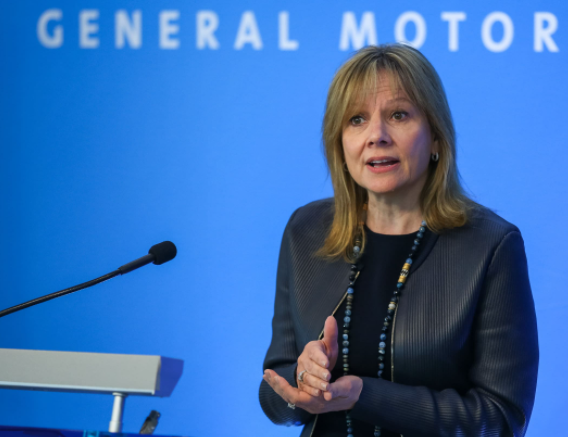
Anything You Can Do: GM Looks To Double Its Annual Revenue In Push To Be “More Like Tesla”
While Elon Musk doesn’t come to mind as the first person we would want to emulate if running a public company, it seems General Motors – the very same company that once had a tie-up with now disgraced Nikola Motors – has a different opinion of the California-based electric car maker.
In a bid to be “seen more like Tesla”, the legacy automaker announced on Wednesday that it hopes to double its annual revenue and grow its profit margin by the end of the decade, according to CNBC.
At the beginning of a two day investor day, GM said it wants to double its annual revenue to $280 billion by the end of the decade. It also said it is targeting operating profit margins of 12% to 14%.
The company took its annual average revenue of about $140 billion as a starting point for its new goals, despite GM posting just $122.5 billion in revenue last year, due to the pandemic.
In 2020, the company’s operating profit margin was just 7.9%.
GM CEO Mary Barra commented: “When you look at all of the investments we’ve been making for five years plus, that’s what positions us today to really be in execution mode. We have great confidence in our ability to grow revenues.”
Barra says new revenue growth will come from service based businesses: “Especially in the initial days, we see EVs being plus volume, so we see tremendous opportunity to grow from an EV perspective and then the subscription and services.”
GM’s traditional business is expected to increase to $195 billion to $235 billion per year and new and existing tech services could make up the difference.
The company also said it was scaling up its EV manufacturing quickly, with more than 50% of its plants in North America and China capable of producing EVs.
GM President Mark Reuss added that the company is on the verge of announcing a second assembly plant for battery electric trucks. He said: “No one is going to be able to touch us in the battery-electric truck space. You’re going to see that we have hit the mark on those.”
The company also announced that in 2023 it would announce its hands-free system called “Ultra Cruise”. And we’re guessing they won’t even have to run 10 beta versions on the public before releasing the “final” product, either!
Ultra Cruise will be available on more than 2 million miles of road in the U.S. and Canada, the company said.
The purpose of the company’s investor meeting this week was to provide a “clear strategy” on how the company could be valued like a tech startup instead of a legacy automaker. As investors likely know, the valuation gap between Tesla and traditional automakers is immense.
Tesla is currently valued at about $750 billion, while GM is valued at just $79 billion.
The U.S. government is secretly ordering Google to provide data on anyone typing in certain search terms, an accidentally unsealed court document shows. There are fears such “keyword warrants” threaten to implicate innocent Web users in serious crimes and are more common than previously thought.
In 2019, federal investigators in Wisconsin were hunting men they believed had participated in the trafficking and sexual abuse of a minor. She had gone missing that year but had emerged claiming to have been kidnapped and sexually assaulted, according to a search warrant reviewed by Forbes.
In an attempt to chase down the perpetrators, investigators turned to Google, asking the tech giant to provide information on anyone who had searched for the victim’s name, two spellings of her mother’s name and her address over 16 days across the year. After being asked to provide all relevant Google accounts and IP addresses of those who made the searches, Google responded with data in mid-2020, though the court documents do not reveal how many users had their data sent to the government.
It’s a rare example of a so-called keyword warrant …. Before this latest case, only two keyword warrants had been made public. One revealed in 2020 asked for anyone who had searched for the address of an arson victim who was a witness in the government’s racketeering case against singer R Kelly. Another, detailed in 2017, revealed that a Minnesota judge signed off on a warrant asking Google to provide information on anyone who searched a fraud victim’s name from within the city of Edina, where the crime took place.
This may well be constitutional, much as subpoenaing a potential witness to ask who had asked the witness for information about a crime victim. Like all police powers, it might be abused, but perhaps on balance it’s worth keeping. Still, it strikes me as worth thinking about; I hadn’t heard about this specific practice before, so I thought I’d mention it.
from Latest – Reason.com https://ift.tt/3oFV0Uc
via IFTTT