State Lawmakers Help Farmers by Improving Consumer Access to Raw Milk


A man pours raw milk in front of cows

Food freedom is spreading. And there’s perhaps no better evidence of that fact than the growing number of states making it easier for farmers to sell “raw,” or unpasteurized, milk to eager consumers.

This week, the North Dakota House of Representatives passed House Bill 1515, which would legalize dairy farms to sell raw milk to consumers. “A debate over whether dairy farms should be able to sell unpasteurized milk pitted proponents of consumer freedom against advocates for public health,” the Bismarck Tribune reported this week.

Currently, farmers in North Dakota may only legally sell raw milk to consumers who purchase a share of a cow, sometimes known as a herd share.

Similar bills are currently under consideration in Iowa, Idaho, and Washington. And a Wyoming bill could expand raw-milk sales even further than would the aforementioned bills.

Raw milk is a litmus test of sorts for food freedom—which I’ve long defined as a person’s right to grow, raise, produce, buy, sell, share, and eat the foods of their own choosing.

On the one hand, opponents of raw milk, including public-health bureaucrats and the nation’s largest sellers of pasteurized milk, argue raw milk should be banned because it may contain pathogens that could sicken or kill consumers.

The FDA, which was forced by a federal judge to reverse course and ban interstate sales of raw milk in 1987, regulates a host of raw foods (from sprouts to melons to sushi) that may contain harmful pathogens. While the agency may issue warnings about and recalls of those foods when they are found to contain pathogens, on raw milk the agency’s position is an absolutist no.

“No one disputes that pasteurization helps kill harmful pathogens,” I explained in a 2011 Washington Times op-ed. “But where the FDA claims to see a mountain, most states see a molehill.”

On the other hand, “raw milk has become popular in recent years as part of the local food movement,” NPR reported in a 2015 piece on the spread of raw milk. “[Consumers] say they buy raw milk because it doesn’t contain the growth hormone rGBH, they like the taste, and they enjoy having a direct connection to the food they eat.”

Supporters also note that many conventional dairy farmers who sell pasteurized milk are struggling and that raw milk sales may provide a lifeline in the form of higher margins. In December, such an argument won the day in Wisconsin—America’s leading dairy state—when the state farm bureau reversed its longstanding opposition to legal raw milk sales.

More and more, farmers, consumers, and lawmakers are favoring such sales. As of August 2022, according to data provided by the nonprofit Farm-to-Consumer Legal Defense Fund, where I serve on the board, at least 10 states allow some form of retail sales of raw milk, at least 18 states allow on-farm sales, and at least eight states allow herd shares. A similar raw-milk map, produced in 2015 by the National Conference of State Legislatures and reproduced here, shows state laws governing raw milk sales have improved noticeably across the country in less than a decade.

None of this is to say that consuming raw milk (or any food) comes without risk—for producers and consumers alike. But driving raw milk sales underground won’t make raw milk safer, I note in my 2016 book Biting the Hands that Feed Us: How Fewer, Smarter Laws Would Make Our Food System More Sustainable. Ultimately, adults should have the right to weigh risks and make choices about the foods we eat.

The post State Lawmakers Help Farmers by Improving Consumer Access to Raw Milk appeared first on Reason.com.

from Latest https://ift.tt/J0S1vb6
via IFTTT

The Big Myth Is Full of Recycled Anti-Capitalist Cheap Shots


‘The Big Myth’ is full of recycled anti-capitalist cheap shots.

Historian Richard Hofstadter once wrote that “the paranoid is a double sufferer, since he is afflicted not only by the real world, with the rest of us, but by his fantasies as well.” A compelling case could be made that this affliction has taken hold among the highest ranks of Hofstadter’s own profession. New academic “histories” now appear on a near-monthly basis, each blaming a variety of social ills on the conspiratorial machinations around a single idea: the free market.

Almost everything in this genre follows the same formula. When the American electorate fails to embrace the political priorities of an Ivy League humanities department, these disheartened authors cast about for a blameworthy culprit. They settle on “market fundamentalism” or “neoliberalism.” The explanation then takes a paranoid turn, declaring the targeted theories a “manufactured myth” arising from the “inventions” of 20th century business interests, which allegedly hoodwinked voters into accepting the “magic” of the free market as a matter of received wisdom. Certain that they have found the source of their political obstacles, these historians then claim to uncover a “secret” history that has been hiding in plain sight. All eventually settle on a mundane conspiracy of business interests and libertarian economists, who allegedly derailed America from its progressive path by convincing people that markets work better than government at solving problems.

At some 550 pages, The Big Myth: How American Business Taught Us To Loathe Government and Love the Free Market is among the most loquacious entrants into this crowded literature. Harvard University’s Naomi Oreskes and California Institute of Technology historian Erik Conway lay out their conspiracy theory with formulaic precision, but their book is atypical in one significant way. While most of the other works in the anti-neoliberalism genre manage at least to excavate some interesting archival findings about libertarian economists (before badly misinterpreting them), this book is remarkably light on original content.

The Big Myth‘s argument most closely resembles that of Cornell University historian Lawrence Glickman’s 2019 book Free Enterprise: An American History, which advanced a nearly identical thesis wherein the concept of “free enterprise” allegedly arose as a myth in the service of anti–New Deal business interests. But The Big Myth also weaves in recent tracts by Philip Mirowski and Dieter Plehwe, Kim Phillips-Fein, Kevin Kruse, Quinn Slobodian, and Jane Mayer. Oreskes and Conway round out their spartan use of economic sources (their recounting of “market failure” theory makes heavier use of Pope Francis’ encyclicals than any actual economics texts) with a dash of Thomas Piketty’s dubious inequality empirics and a touch of Ha-Joon Chang’s attempts to resurrect trade protectionism.

A reader with even casual awareness of these other authors will be left wondering why this same story needed yet another repackaged recitation. The result is a meandering journey through secondary sources and Wikipedia entries, presented as if they were tacked to a basement wall amid a disorderly web of yarn and dental floss in a progression that only its authors truly comprehend.

The Big Myth is structured in sequential vignettes about various themes and figures such as Ludwig von Mises, Leonard Read, Friedrich Hayek, Rose Wilder Lane, and Milton Friedman, all of whom are portrayed as either willing propagandists for big business or hapless dupes of the same. The authors expend almost no effort on understanding the arguments of the thinkers they set out to debunk.

A revealing example appears in the book’s treatment of Leonard Read’s 1958 essay “I, Pencil.” Read’s story is a fairly straightforward allegory for Adam Smith’s famous concept of the “invisible hand,” showing how complex social coordination arises from routine economic exchanges and signals in the absence of a centralized design. To Oreskes and Conway, however, the metaphor is literally the hand of God working from above to ensure the market system provides. As they put it, “God made the marketplace and the marketplace made the pencil; ergo God made the pencil.”

This peculiar reading originates in a remark by Read’s titular pencil: “Since only God can make a tree, I insist that only God could make me.” While Read was a practicing Christian who used religious imagery in his writing, this quip was not an invocation of divine intervention to account for the assembly of pencils. It is an allusion to a famous line from Joyce Kilmer’s poem “Trees,” a point that Read made obvious in a later printing that credited the saying to “a poet.” Oreskes and Conway nonetheless carry their mistake to absurd lengths, sneering all the while that deviation from the progressive economic planner’s impulse is a sign of superstitious philosophical Occasionalism about markets.

Interpretive peculiarities continue in their treatment of Ludwig von Mises’ Socialism. After initially acknowledging that the book was written in German in 1922, Oreskes and Conway soon drift into anachronism by insinuating that it was intended as a critique of President Franklin Roosevelt. (“Mises’s use of the term socialism was misleading,” they contend, “because no credible American political leader in 1944 was advocating central planning.”) They augment this ascription of prophecy with a sleight of hand, replacing the revolutionary Marxists of Mises’ original commentaries with the comparatively benign Norman Thomas as their own preferred avatar of socialism. Like other texts in the anti-neoliberalism genre, The Big Myth removes 20th century free market authors from their historical context by hand-waving the Soviet Union out of existence and proceeding as if socialism means nothing more than a narrow swath of modern Scandinavian social democracies.

Such errors are frequently paired with another recurring theme: the authors’ fundamental inability to approach their opponents with anything remotely resembling intellectual charity. The book is filled with gratuitous swipes, many of them comically ahistorical.

This usually means either a false accusation of racism or a disparaging attack on a target’s qualifications. Mises receives both types of abuse. After dubbing him an “absolutist who sympathized with fascism,” Oreskes and Conway launch into an extended attack on the Austrian economist’s migration to the United States in 1940. In their telling, Mises was a relic of a bygone laissez faire ideology who struggled to find a respectable academic job until “dark money” funders created a succession of positions for him at New York University. It is doubtful they would pass similar judgment on the many academic refugees from Nazi Germany who hailed from the political left. Meanwhile, Mises’ academic work in the United States gained higher honors than either Oreskes or Conway has ever achieved. By the decade’s end, he had published three monographs with Yale University Press, including the decidedly anti-fascist book Omnipotent Government. Upon his retirement from teaching at age 88, Mises was named a distinguished fellow of the American Economic Association.

Only a paragraph after branding Mises a fascist sympathizer, Oreskes and Conway shift into gushing praise for John Maynard Keynes’ “The End of Laissez Faire.” Keynes’ lifelong support for eugenics extended to this famous essay, which called on governments to “pay attention to the innate quality as well as to the mere numbers” of their citizenry. Interestingly, Keynes first delivered this message as a 1926 lecture at the University of Berlin. Mises, who attended as an academic observer, lambasted Keynes’ irresponsible remarks out of concern that they could be interpreted as support for Nazi race theory. Keynes continued to flirt with fascist elements through at least 1936, when he penned a notoriously tone-deaf preface to the German edition of his book General Theory, announcing that he “expect[ed] less resistance from German, than from English, readers.”

Oreskes and Conway’s penchant for disparagement apparently extends only in the free market direction. They casually brand Milton Friedman a “racist extremist” and defender of segregation, but not for any actual defense of segregation. The authors simply disagree with his argument that markets were more effective tools for bringing about integration than government edicts.

Hofstadter wrote that the paranoic’s accounts of his enemies “are on many counts the projection of the self.” It is hard to resist a similar conclusion here. Oreskes and Conway label their opponents racists and eugenicists while lionizing progressive racists and eugenicists. They accuse Friedrich Hayek of eschewing “the essence of scholarship,” which “is to look past the immediacies of time and place,” while themselves constantly processing history through their modern partisan commitments. They accuse free market economists of venturing outside their scientific expertise while offering their own decidedly nonexpert opinions on everything from economic inequality to COVID-19.

The authors’ discussion of the latter subject, which closes the book, is unintentionally comedic. Oreskes and Conway use the pandemic to contrast U.S. “market failure” with the alleged success of “countries that mounted a strong, coordinated response,” China foremost among them. As their book went to press, China’s centralized “zero-COVID” regime was collapsing into the same unfettered disease spread that Oreskes and Conway ascribe to free markets. But readers should not expect any self-interrogation from this pair.

The post <em>The Big Myth</em> Is Full of Recycled Anti-Capitalist Cheap Shots appeared first on Reason.com.

from Latest https://ift.tt/LG9X1Zh
via IFTTT

Ukraine War Could Last Another 12 Months, Says UK Defence Chief On Anniversary

Ukraine War Could Last Another 12 Months, Says UK Defence Chief On Anniversary

Authored by Alexander Zhang via The Epoch Times,

The war in Ukraine could last another year, UK Defence Secretary Ben Wallace has said.

Yesterday marked the first anniversary of the war, which began when Russian President Vladimir Putin launched a full-scale invasion on Feb. 24, 2022.

Asked whether the public will still see Ukraine and Russia at war in another 12 months, Wallace told LBC radio: “I think we will. I think Russia has shown a complete disregard, not only for the lives of the people of Ukraine, but for its own soldiers.”

Ukrainian soldiers patrol in Bakhmut, eastern Ukraine, on Feb. 14, 2023. (John Moore/Getty Images)

During the past 12 months, more than 188,000 Russian soldiers have been killed or wounded in the conflict, Wallace said.

The defence chief said he doesn’t think Putin will voluntarily put an end to the war.

“When someone has crossed the line and thinks it is OK to do that to your own people, running effectively a meat grinder for an army, I think he is not going to stop.”

Military Aid

Britain has been one of the staunchest supporters of Ukraine’s resistance.

Last year the UK provided £2.3 billion ($2.8 billion) in military aid to Ukraine—the largest package of support of any European nation and second only to the United States. The government has also pledged £1.5 billion in economic and humanitarian support.

Defence Secretary Ben Wallace meets Ukrainian soldiers during a visit to Bovington Camp in Dorset, England, on Feb. 22, 2023. (Ben Birchall – Pool/Getty Images)

In January, the UK became the first country to pledge advanced Western main battle tanks to Ukraine when Prime Minister Rishi Sunak authorised the delivery of 12 Challenger 2 tanks.

On Wednesday, Wallace met with Ukrainian troops being trained on the Challengers at the Bovington Camp in Dorset.

He told LBC that he is “open to more British tanks” being sent—on top of those already pledged.

Fighter Jets

The defence secretary also suggested that Ukraine is likely to receive fighter jets from NATO member countries. However, he suggested that NATO’s eastern European member states such as Poland—which have Soviet-era planes that the Ukrainian air force is used to—are more likely to supply the jets than Britain.

Sunak’s government has so far not committed to providing Ukraine with British jets, arguing that it takes too long for pilots to train on the Royal Air Force’s F-35 and Typhoon jets.

A Royal Air Force Typhoon jet flies over the Mihail Kogalniceanu Air Base near Constanta, Romania, on April 8, 2022. (Daniel Mihailescu /AFP via Getty Images)

But the prime minister is under increasing pressure from members of Parliament, including his immediate predecessors Liz Truss and Boris Johnson, to send fighter jets to Ukraine.

During Ukrainian President Volodymyr Zelenskyy’s visit to London earlier this month, Sunak announced plans to train Ukrainian pilots to fly NATO-standard advanced fighter jets, and Downing Street said Defence Secretary Ben Wallace is “actively looking at whether we send jets.”

Last week, however, Wallace claimed it could be years before the UK gives any planes to Ukraine, suggesting Zelenskyy may even have to wait until the war with Russia is over.

During a debate on Ukraine in the House of Commons earlier this week, both Truss and Johnson piled pressure on Sunak, urging the UK government to further step up its already substantial support for the war-torn country.

Johnson said: “The Ukrainians are fighting not just for their freedom, but for the cause of freedom around the world. We should give them what they need, not next month, not next year, but now.”

Echoing Johnson’s sentiment, Truss said she “can’t wait to see fighter jets” being delivered to Ukraine.

Ukraine’s President Volodymyr Zelenskyy and British Prime Minister Rishi Sunak meet outside Number 10 Downing Street in London on Feb. 8, 2023. (Henry Nicholls/Reuters)

Record Arms Orders

Amid the “elevated threat environment” caused by the Russian invasion of Ukraine, British defence giant BAE Systems has received record orders in the past year.

BAE, the UK’s biggest defence firm, reported its highest ever order intake of £37.1 billion ($44.5 billion) for 2022, which saw its order backlog jump to £58.9 billion.

The company said in a statement: “While it is tragic that it took a war in Europe to raise the awareness of the importance of defence around the globe, BAE Systems is well positioned to help national governments keep their citizens safe and secure in an elevated threat environment.”

The group—which builds ships, submarines, and fighter jets—said it expects sales to increase by a further 3—5 percent in 2023, while underlying earnings are forecast to increase by 4–6 percent.

Charles Woodburn, chief executive of BAE, said: “We’ve delivered another year of strong results across the group.

“Our record orders and financial performance give us confidence in delivering long-term growth and to continue investing in new technologies, facilities, and thousands of highly skilled jobs, whilst increasing shareholder returns.”

Tyler Durden
Sat, 02/25/2023 – 07:00

via ZeroHedge News https://ift.tt/D2gASXz Tyler Durden

Deconstruction: Why Leftist Movements Cannot Coexist With People That Value Freedom

Deconstruction: Why Leftist Movements Cannot Coexist With People That Value Freedom

Authored by Brandon Smith via Alt-Market.us,

It should be clear to anyone paying attention during this current stage of instability in our modern era that something is very wrong in terms of American society. I’m not talking about ongoing issues of political corruption and economic mismanagement, I’m talking about something much more dangerous. I’m talking about the systematic derailment of our culture, heritage, principals, history and moral compass. I’m talking about the vicious devouring of the very sinews that hold our civilization together.

There is a cancer eating away at America, a concerted and organized effort to destabilize. For anyone who is familiar with the Conjuring movies, it’s a bit like a demonic invasion. As Ed Warren cautions, the three stages of attack are infestation, oppression and finally, possession. The little demon we are dealing with, though, comes with Antifa patches, rainbow flags and special pronouns.

This week I came across a statement by Georgia representative Marjorie Taylor Greene in which she called for a “national divorce”, a separation of conservative red states and far left blue states, a parting of ways due to our obvious irreconcilable differences. Leftists within the corporate media, of course, flipped out, accusing Greene of inciting treason and the destruction of the US.

While I don’t generally put much stock in the comments of politicians I think it’s important to address this particular sentiment because it echos the arguments made by the Liberty Movement and the alternative media for many years. It’s just surprising to hear a prominent public figure say what we have been saying for so long.

The frantic upheaval expressed by the political left in reaction to Greene is something I have written about in the past. In my article ‘Separation Or Purge? Sharing A Society With The Political Left Is Impossible’ published in February last year, I noted that leftists take a communistic approach to civil disagreement. They see the populace as chattel to be managed in the name of the greater good of the collective, not as individuals with the right to disassociate. From my article:

Why not carry this process forward to its natural conclusion? Red states break from blue states and red counties break from blue state control and we live our lives the way we see fit. Let the leftists continue with their draconian economic and political models and see how well that goes for them. I guarantee they will be in financial ruins within a decade (the list of most indebted places in the country is dominated by blue states) and they will be begging to return to a union with red states (except for the zealots, which would lose influence as they continue to fail).

But this will not happen peacefully because, again, leftists cannot tolerate free activity. Their OCD will not allow them to be content with living in a collectivist state of their own; ALL states must be collectivist before they are satisfied. People are property to them; property of the collective, and people who are property cannot be allowed to make decisions without oversight.”

Globalism and progressive authoritarianism has been inching forward for a long time in the US, but only in the past ten years has the agenda become more obvious to the general public. During the covid lockdowns and mandates, people finally witnessed the true intentions of the political left, which widely supported draconian restrictions and called for brutal punishments for people that refused to comply. A large number of Democrats even supported Chinese-style covid laws including taking people’s children away and implementing forced internment.

This is the true face of the political left. Yes, there are moderates and issue focused progressives, but these people tend to keep their mouths shut and go along to get along when it comes to the woke extremists. The moderates are useless and rarely call out the gatekeepers on their own side.

To understand how we got to this place in our society and why leftist politics are poisonous to freedom loving people, you have to understand the concept of “deconstruction”.

It was globalist foundations (the super rich .001%) from the 1960s onward that funded and created the social justice left. This agenda has been going on for decades and is openly admitted in Alison R. Bernstein’s book ‘Funding The Future: Philanthropy’s Influence On America’s Higher Education’. Bernstein was the vice president of Education at the Ford Foundation and the former Associate Dean of Faculty at Princeton.

The woke ideology is an artificial edifice of astroturf activism. Their manifestos of “critical theory” are conjured using Marxist and communist methodologies and then adapted for American audiences, luring in useful idiots as they go.

The real power grab occurred in the late 1980s into the 1990s when deconstruction as a weapon for political and social upheaval was widely introduced into leftist circles. Before then “deconstruction”, derived from the work of the philosopher Jacques Derrida, was often thought of as a mind game; a way to question long held standards that acted as a basis for critical thinking or philosophy. In the 1990s it became something else.

Derrida’s ideas were to question binary notions in philosophy, but globalists and leftists expanded it as a concept for questioning EVERYTHING. Not just questioning, but engaging in active hostilities against the foundations of civilization. Leftists see “structuralism” (order) as a target, and they hate anyone seeking to order society around rules, definitions and principles that rely on discrimination of certain behaviors.

For leftists, all traditional rules and protections must be sabotaged and all aberrant behaviors must eventually become accepted as normal. They believe that in this way society can be homogenized into a Utopian world of perfect equity. Discrimination of anything (except traditional principles) is considered by them to be taboo. Because if people are allowed to discriminate then that allows them to separate, and if people are allowed to separate, then collectivism of thought can never be achieved. The hive mind requires total conformity.

The purpose of deconstruction is to pick away at fundamental systems and definitions and attempt to show them to be inherently flawed, problematic or absurd. Usually this method relies on abstraction, appeal to emotion and subjective experience rather than true analysis. In fact, critical analysis is considered the enemy of social justice because it places facts and evidence above subjective experience and mere feelings.

Emotional and self absorbed people are easy to control. Critical people that value reason are harder to control. For leftists to prevail they must destroy critical thought and encourage reactionary emotion as the norm in society. And, if that doesn’t work, radical leftists argue that burning primary systems to the ground by force is preferred. The end game for them is not necessarily to be right, the end game is to win.

The deconstruction mindset views nothing as sacred and this includes moral compass. While arguing from a position of moral superiority, the political left will often rationalize highly immoral practices. For example, this is why we now see aggressive attempts by leftists to normalize the indoctrination of very young children into trans activism. This is why we are seeing hundreds of gender affirmation clinics with procedures for children springing up all over the country. This is why we are seeing numerous sexualized drag shows for kids, and why highly sexualized reading materials are being planted in school libraries.

This is why some leftists in the media are promoting pedophiles as a victim status group rather than aberrant criminals that need to be weeded out of society. Innocent children are fair game for them because the ends justify the means. Brainwashing and denigrating the next generation is the fastest path to their Utopia.

This is the inevitable progression of the deconstruction ideology. Morality is a “binary” based on what is right and what is wrong. It is the most vital binary for human survival and without it our species would self destruct, but this seems to be exactly what leftists and the globalist puppeteers behind them want. They see traditional morality as a restrictive and oppressive dynamic, another binary that must be eliminated. Thus, they propose moral relativism instead; the idea that conscience is merely a product of social conditioning and that right and wrong, truth and lies, good and evil are based on personal preferences.

It is, ironically, the recipe for ultimate evil. It is the philosophy of pure chaos. When individual conscience becomes the enemy of society because it is considered an “act of discrimination”, then only evil can prevail.

The concept of national separation when taken in context of the bigger ideological picture makes perfect sense. Leftists obsess over power, they obsess over collective acceptance even if obtained by force, they obsess over those that disagree with them. People who respect the foundations of individual liberty and the wisdom of reason cannot co-exist with the political left. Eventually, the leftists will try to destroy them, or they will have to secede. It’s inevitable.

I have called for separation and relocation many times over the years as the only PEACEFUL means of dealing with the problem of complete moral and political division. It’s the only way the conservatives and freedom minded people can exit our association with leftists without bloodshed. That said, I fully realize that leftists/globalists will never allow this to happen. If people are allowed to leave, then the leftists lose. The only way they can win is to eliminate (deconstruct) every alternative social structure. They will froth and rage over separation and call for war.

In fact, one of the first things they accused Marjorie Taylor Greene of doing was inciting civil war. She never argued in favor of this, THEY insinuated it, as if to say “Try to walk away from us, and we’ll kill you.”

At this stage I’m ready to say let them try and lets get this over with. There can be no diplomacy or reconciliation with groups that value leftist cultism and deconstruction ideology – The deepest intent of deconstruction is to poison the cultural well. The dream of leftists is to blow up the world because they see the our current civilization as oppressive to their narcissism. At the same time, globalists exploit that narcissism and use leftists as a battering ram to wreak havoc. Through chaos, they hope to erect a new world order in which all values, all principles and all morals are dead and psychopathy becomes “normal”.

One cannot reason with a monster, one can only erase that monster from existence.

*  *  *

If you would like to support the work that Alt-Market does while also receiving content on advanced tactics for defeating the globalist agenda, subscribe to our exclusive newsletter The Wild Bunch Dispatch.  Learn more about it HERE.

Tyler Durden
Fri, 02/24/2023 – 23:40

via ZeroHedge News https://ift.tt/EgiHtYs Tyler Durden

Justice Kagan Double-Helixes Justices Gorsuch and Kavanaugh

On Wednesday, the Supreme Court decided Helix Energy Solutions Group, Inc. v. Hewitt. The vote in Hewitt was 6-2. Justice Kagan wrote the majority opinion, joined by the Chief Justice and Justices Thomas, Sotomayor, Barrett, and Jackson. This is a heterodox majority opinion that split left and right, much like the heterodox Fifth Circuit en banc majority.

Justice Gorsuch voted to dismiss the case as improvidently granted, known in the lingo as a DIG. In Gorsuch’s view, the Court granted review on one question, but after the cert grant, the Petitioner pivoted to focus on another question. Gorsuch also raised the question of whether the regulations were consistent with the statute.

Another reason counsels hesitation, too. Helix Energy does not just dispute the proper application of various regulations. It contends those regulations are inconsistent with and unsustainable under the terms of the statute on which they are purportedly based. While §541.601, §541.602, and §541.604 focus on an employee’s salary, Helix Energy submits, the statute requires attention to the employee’s duties. See Tr. of Oral Arg. 32–38, 46–47; Brief for Petitioners 41–44; Reply Brief for Petitioners 20–24; seegenerally 29 U. S. C. §213(a)(1). Understandably, the Court refuses to entertain this larger statutory argument because Helix Energy failed to raise it earlier in the litigation. Ante, at 7, n. 2. But the fact that Helix Energy forfeited such a foundational argument seems to me all the more reason to leave any question about §541.602 to another day. 

However, in Justice Gorsuch’s view, the petitioner forfeited this issue, so it was not proper to resolve the question. Gorsuch seems to DIG a lot. Last term he would have DIG’d in Kemp v. United States and Shoop v. Twyford

Justice Kagan replied that Gorsuch’s DIG concern had merit, but found that the question resolved was a “necessary ‘predicate'” to the question presented. Therefore, this case was appropriate to resolve on the merits.

3We appreciate JUSTICE GORSUCH‘s concern that the question we ask and answer is not quite the one Helix’s petition for certiorari urged upon us. . . . Resolution of that §602(a) issue is a necessary “predicate to an intelligent resolution of the question presented.” Caterpillar Inc. v. Lewis, 519 U. S. 61, 75, n. 13 (1996). Indeed, Helix’s counsel urged us to answer it—even assuming Helix would lose—rather than dismiss this case as improvidently granted. See Tr. of Oral Arg. 39–40 (“I would prefer that you just answer the question”—even if “adversely”—”because I don’t think there’s a basis for a DIG”). And our resolution of that predicate issue itself reveals the answer to Helix’s initial formulation of the question presented.

What about the statutory argument? Kagan likewise found the issue was forfeited:

At argument in this Court, Helix suggested that the salary-basis component of the regulations is an impermissible extrapolation from the statutory exemption for workers “employed in a bona fide executive . . . capacity.” 29 U. S. C. §213(a); see Tr. of Oral Arg. 33–37. But Helix did not raise that argument in the courts below.

So there was no need to decide the question here.

Then, there was Justice Kavanaugh. Let me ask you to make a prediction. What do you think Justice Kavanaugh did in this case? (A) found the issue was forfeited and let it go; (B) found the issue was forfeited and said the Court should resolve it in the appropriate case; (C) found the issue was forfeited but opined on it anyway. If you picked (C), you have been paying attention to Justice Kavanaugh’s five years on the Court.

Here is the final paragraph of Kavanaugh’s dissent:

One last point: Although the Court holds that Hewitt is entitled to overtime pay under the regulations, the regulations themselves may be inconsistent with the Fair Labor Standards Act. See, e.g., Brief for State of Mississippi et al. as Amici Curiae 7–10; Ante, at 1–2 (GORSUCH, J., dissenting). Recall that the Act provides that employees who work in a “bona fide executive . . . capacity” are not entitled to overtime pay. 29 U. S. C. §213(a)(1). The Act focuses on whether the employee performs executive duties, not how much an employee is paid or how an employee is paid. So it is questionable whether the Department’s regulations—which look not only at an employee’s duties but also at how much an employee is paid and how an employee is paid—will survive if and when the regulations are challenged as inconsistent with the Act. It is especially dubious for the regulations to focus on how an employee is paid (for example, by salary, wage, commission, or bonus) to determine whether the employee is a bona fide executive. An executive employee’s duties (and perhaps his total compensation) may be relevant to assessing whether the employee is a bona fide executive. But I am hard- pressed to understand why it would matter for assessing executive status whether an employee is paid by salary, wage, commission, bonus, or some combination thereof. In any event, I would leave it to the Fifth Circuit on remand to determine whether Helix forfeited the statutory issue. But whether in Hewitt’s case on remand or in another case, the statutory question remains open for future resolution in the lower courts and perhaps ultimately in this Court.

This is a classic Kavanaugh paragraph. Take an issue which the parties didn’t actually present, signal strongly what you think (using words like “questionable,” “dubious,” and “hard-pressed”), and hope the lower courts follow the lead. This paragraph is in keeping with the Kavanaugh concurrences in Dobbs and Bruen. Again, there is nothing moderate or restrained about this approach. Kavanaugh has this fixation to reach out and touch questions that are not necessary to decide.

Justice Kagan dealt with this aspect of the dissent with a vicious parenthetical.

. . . Helix did not raise that argument in the courts below. Following our usual practice, we therefore decline to address its merits. See, e.g., Kingdomware Technologies, Inc. v. United States, 579 U. S. 162, 173 (2016); see post, at 2 (GORSUCH, J., dissenting) (agreeing that Helix “failed to raise” the argument, and also declining to express a view of its merits); but cf. post, at 4–5 (KAVANAUGH, J., dissenting) (recognizing that the argument may be forfeited, but opining on it anyway).

I think this parenthetical can be added to just about any Kavanaugh separate writing: (issue is irrelevant, but opining on it anyway).

Once again, Gorsuch practiced judicial minimalism. Kavanaugh practiced judicial maximalism. Justice Alito should have joined the bulk of the dissent, with the exception of the last paragraph. Let Kavanaugh stand alone on these frolics and detours.

The post Justice Kagan Double-Helixes Justices Gorsuch and Kavanaugh appeared first on Reason.com.

from Latest https://ift.tt/ZyOc8wP
via IFTTT

75% Of Russians Support War With Ukraine, New Poll Finds

75% Of Russians Support War With Ukraine, New Poll Finds

According to a new survey by the independent institute Levada Center, 75 percent of Russians said in January that they supported the actions of Russian military forces in Ukraine, as the survey is putting it.

This support dipped to 72 percent in September around the announcement of partial mobilization and again to 71 percent in December.

When the war had just started in March, support had been at 80 percent.

Infographic: Levada See 75 Percent of Russians Supporting War | Statista

You will find more infographics at Statista

As Statista’s Katharina Buchholz notes, the Russian state-controlled media environment explains why approval rating for Putin or the Ukraine war can stay so high despite the country now being extremely marginalized in the international community and enduring the hardships of sanctions and war mobilization. Despite the surveys carried out by an independent researcher, many Russians may still feel pressured to give a favorable opinion because of the system they live in. The Levada Center has in a release pointed out that, while surveys only show the behavior people are willing to display publicly, survey-taking behavior has not changed since the invasion. Some observers believe war approval to actually be lower.

As part of the same survey, Russians were asked what feelings the news of the mobilization caused in them. Fear was the most common answer given throughout all age demographics.

The second most common answer varied by age group, however.

Those above the age of 40 were also likely to feel pride for Russia, while those younger named shock as the second most common feeling in relation to the mobilization, followed by anger.

Tyler Durden
Fri, 02/24/2023 – 23:20

via ZeroHedge News https://ift.tt/e0K6XrI Tyler Durden

House GOP Investigate State Department-Funded ‘Disinformation’ Group Behind Conservative Blacklists

House GOP Investigate State Department-Funded ‘Disinformation’ Group Behind Conservative Blacklists

Authored by Amy Gamm via The Epoch Times (emphasis ours),

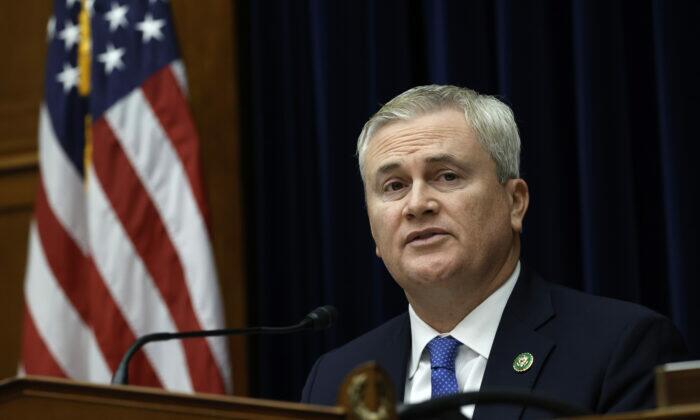
House Oversight Chair James Comer (R-Ky.) sent a letter on Thursday to the U.S. State Department demanding records and a briefing by the agency regarding its alleged funding of a “disinformation tracking group” that is blacklisting conservative-leaning news outlets.

Rep. James Comer (R-Ky.), chairman of the House Oversight and Reform Committee, delivers remarks during a hearing in the Rayburn House Office Building in Washington, on Feb. 01, 2023. (Anna Moneymaker/Getty Images)

The letter (pdf) cites as evidence the Washington Examiner’s series of investigative reports uncovering the State Department’s alleged partnership with activist organizations, specifically one “foreign organization,” to “suppress lawful speech and defund disfavored news outlets under the guise of combatting disinformation.”

The Committee is disturbed by recent reporting that taxpayer money ended up in the hands of a foreign organization running an advertising blacklist of organizations accused of hosting disinformation on their websites, including several conservative-leaning news organizations,” Comer wrote.

The letter goes on to detail the Washington Examiner’s findings.

According to the outlet, major ad companies look to “nonpartisan” groups that claim to detect and fight “disinformation” online to help determine which news outlets and websites they should avoid.

Some of these “disinformation monitors,” the Washington Examiner went on to explain, “are compiling secret blacklists and feeding them to ad companies, with the aim of defunding and shutting down disfavored speech.”

One such group is British Global Disinformation Institute (GDI), which has compiled a “dynamic exclusion list” of 2,000 websites and rates those outlets based on their “alleged disinformation ‘risk’ factor,” according to the Washington Examiner.

GDI’s website further explains its purpose. Calling itself an “independent, non-profit, open source, intelligence hub,” GDI “tracks disinformation and extremism across platforms online” to “serve a broad array of governments, NGOs [non-governmental organizations], online platforms, and media.”

In his letter, Comer cites a $330,000 figure that, according to the Washington Examiner, GDI received from State Department funds.

“The federal government should not be censoring free speech nor policing what news outlets Americans choose to consume,” Comer wrote in the letter.

“And taxpayer funds should never be given to third parties with the intent that they be used to censor lawful speech or abridge the freedom of the press,” he continued.

While calling for the State Department to schedule a staff-level briefing “no later than March 2,” Comer went on to list the types of documents and communications that he demands the Department deliver to the committee by March 9 “to enable oversight of the Department’s administration of funds flowing to organizations working to censor lawful speech and suppress press freedoms.”

GDI’s Naughty and Nice Lists of US News Media Organizations

In Dec. 2022, GDI published a study, called “Disinformation Risk Assessment: The Online News Market in the United States,” of 69 U.S. news websites that the organization analyzed between June and October 2022, placing each of them into one of five categories of disinformation risk—minimum, low, medium, high, or maximum.

GDI defines disinformation as “adversarial narratives, which are intentionally misleading; financially or ideologically motivated; and/or aimed at fostering long-term social, political, or economic conflict; and which create a risk of harm by undermining trust in science or targeting at-risk individuals or institutions.”

According to its criteria, GDI found that the ten most disinformation risky websites were all conservative-leaning, including Newsmax (maximum), The Federalist (maximum), The American Spectator (maximum), the New York Post (high), Reason Magazine (high), RealClearPolitics (high), The Daily Wire (high), The Blaze (high), One America News Network (high), and The American Conservative (high).

In contrast, the ten least risky sites earning the “minimum-risk” or “low-risk” designation were NPR (minimum), AP News (minimum), The New York Times (minimum), ProPublica (minimum), Insider (low), USA Today (low), The Washington Post (low), BuzzFeedNews.com (low), The Wall Street Journal (low), and The Huffington Post (low).

Tyler Durden
Fri, 02/24/2023 – 23:00

via ZeroHedge News https://ift.tt/LrFwBps Tyler Durden

These Are The World’s Oldest Populations

These Are The World’s Oldest Populations

As the UN commemorated World Day of Social Justice on February 20, we’re taking a look at one of the key challenges the world is facing in the coming decades: the gradual and largely irreversible shift towards an older population.

According to the United Nations Population Division, the number of persons aged 65 and older is expected to double over the next three decades, reaching 1.6 billion in 2050.

As Statista’s Felix Richter shows in the following chart, Asia is at the forefront of this trend, with Hong Kong, South Korea and Japan expected to have the highest share of people aged 65 and older by 2050.

Infographic: The World's Oldest Populations | Statista

You will find more infographics at Statista

While Japan is famous for its old population and was already topping the list in 2022, other Asian economies are in the middle of a significant shift, as life expectation has rapidly improved over the last decades and continues to do so. By 2050, roughly 40 percent of the populations of Hong Kong, South Korea and Japan are expected to be 65 and older, which makes a huge difference to levels currently observed in highly developed regions, where the share of older people is in the low 20s.

“Population ageing is a defining global trend of our time,” the UN Department for Economic and Social Affairs writes in its World Social Report 2023, calling it a “major success story” that brings both challenges and opportunities. One of the main challenges for countries with ageing populations is to ensure that the economy can support the consumption needs of a growing number of older people, be it by raising the legal retirement age, removing barriers to voluntary labor force participation of older people or by ensuring equitable access to education, health care and working opportunities throughout the lifespan, which can help to boost economic security at older ages.

Especially countries in the early stages of the demographic shift have the opportunity to plan ahead and implement the right measures ahead of time, to effectively manage the challenges that come with an ageing population.

Tyler Durden
Fri, 02/24/2023 – 22:40

via ZeroHedge News https://ift.tt/S4OaG2e Tyler Durden

Education: Civilizational Order Vs. Post-Modern Anarchy

Education: Civilizational Order Vs. Post-Modern Anarchy

Authored by John A. Burtka IV via RealClear Wire,

There is no subject of greater importance—and controversy—today in America than that of education. And nowhere is the clash between civilizational order and post-modern anarchy on greater display than with New College of Florida, a tiny liberal-arts college in Sarasota. The New York Times recently described the reaction of “students, parents, and faculty members” to Governor Ron DeSantis’s reforms of the college in a curious way: “a political assault on their academic freedom.

As a tax-payer funded, public institution of higher learning, New College is—or at least ought to be—accountable to Florida’s citizens and elected officials. But, then again, the left is increasingly uncomfortable with representative government. It considers democratic institutions to be “messy.” Better to be ruled top down by “experts,” it claims.

At the same time, many conservatives rightly lament the role that universal public education has played in secularizing and liberalizing American society. But we cannot possibly hope to restore excellence to American education by exclusively relying upon private and voluntary associations, as they only impact a small minority of students.

Florida is leading the way. In the course of four years, the state has invested billions to raise teacher pay (with starting salaries over 15 percent of the national average), abolished sales tax on back-to-school shopping necessities, established a teacher’s bill of rights to hold public-sector unions accountable, and passed a parent’s bill of rights, which, among other things, forbids the teaching of sexual orientation and gender identity to students in kindergarten through third grade. Florida has further provided new educational pathways for high school students in vocational technology programs, dual-enrollment programs, and apprenticeships. It has also explored the prohibition of DEI programs at state universities and replaced leadership at colleges like the University of Florida and New College.  

While each state will have its own unique set of needs and priorities, the transformation of Florida’s education system shows that it’s possible to raise standards, support students and parents, boost teacher compensation, fight radical ideologies, and win the broad support of the public. The ambition is not to create a single mode of education that applies to everyone—that would inevitably reduce educational standards to the lowest common denominator—but to use the power of politics and persuasion to apply top-flight learning to a variety of educational models, which respectively acknowledge the diversity of interests and capabilities of students.

For liberal-arts colleges, first and foremost, the classics must be put back in their rightful place in the core curriculum. Students have to be given the opportunity to step outside the confines of the 21st century. This type of education allows the world to be seen more fully, and, to be sure, more honestly.

For research universities, federal funding for student loans must be eliminated, administrative staff must be reduced, and DEI initiatives must be replaced entirely with a new system based solely on academic merit. Universities should also be held liable in bankruptcy court for former students who default on student loan debt, and standards of excellence should be set for measuring advances and innovations in science and technology.

At the high school level, the majority of graduates should no longer pursue a college degree. A college education is not the measure of all things. It’s unjust to force young Americans with a variety of backgrounds and interests into a one-size-fits-all program—rooted in post-WWII nostalgia—that burdens them with debt and poorly equips them for professional, familial, and civic life. Vocational training and apprenticeships should be encouraged and companies should be incentivized to hire and train high school graduates directly until a paradigm shift becomes manifest throughout workplace culture. Fixing higher education in America requires a whole-of-society approach.

At the Intercollegiate Studies Institute, we’re meeting this challenge head-on next week in the Free State of Florida where we are partnering with the Claremont Institute and the Heritage Foundation to host our first ever national faculty conference, the American Politics and Government Summit, which will convene professors and teachers from across the nation to explore the question of “Justice and the American Regime.” It will serve as an alternative to the American Political Science Association by providing scholars with a forum to civilly debate controversial topics and pursue truth. Moreover, they will be able to do this without fear of being canceled by the mob and needing to conform every thought and word to progressive dogmas.

Our effort as an educational and ideas organization is one small step towards reopening the American mind, and, I hope, returning sanity to an institution that has been held captive by narrow and self-destructive tendencies for far too long. But if we are to be successful at scale, we need to do more than host conferences and build associations. We need major, structural change in our public system of higher education. That will only come, at least in the next two years, from our elected officials at the state and local levels. The remarkable victories of both Governor DeSantis in Florida and Governor Glenn Youngkin in Virginia prove that addressing excellence in education is a winning formula.

Parents, of all political stripes, want the best education possible for their children. They want them to grow up to be upstanding citizens, good fathers and mothers, successful in their careers, and respectful and kind to their neighbors. They want them to love America, not blindly, but out of a sense of gratitude and a desire to make this country a better place for all.

John A. Burtka IV is president and chief executive officer of the Intercollegiate Studies Institute. Follow on Twitter: @johnnyburtka

Tyler Durden
Fri, 02/24/2023 – 22:20

via ZeroHedge News https://ift.tt/DQwP6rY Tyler Durden