DOGE Cancels Or ‘Descopes’ Contracts Worth $1.5 Billion Over A 5-Day Period

DOGE Cancels Or ‘Descopes’ Contracts Worth $1.5 Billion Over A 5-Day Period

The demise of DOGE has been greatly exaggerated. 

The Department of Government Efficiency (DOGE) website is displayed on a phone, in this photo illustration. Oleksii Pydsosonnii/The Epoch Times

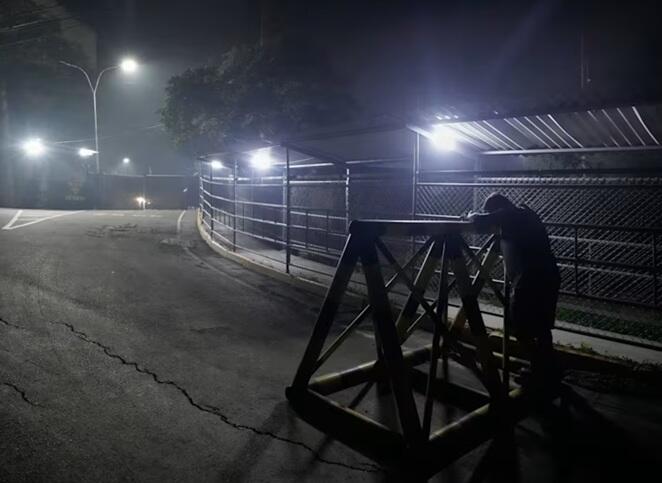
Over the weekend, the Department of Government Efficiency announced that agencies have terminated and descoped ’42 wasteful contracts with a ceiling value of $1.5B and savings of $269M, including a $1.2M Millennium Challenge Corp. DEI professional services contract for a “DCO Gender and Social Inclusion Director Full Time”.”

The post came roughly a week after DOGE announced that over a three-day period, federal agencies had similarly terminated and descoped 55 “wasteful” contracts with a ceiling value of $1.6 billion, resulting in $542 million in savings. Included in those was a $47 million State Department contract for “Africa/Djibouti, Somalia armored personnel carriers and Somalia National Army crew.”

As the Epoch Times notes further, as of Jan. 1, DOGE had saved approximately $215 billion through contract, grant, and lease cancellations, according to the department. Among an estimated 161 million individual federal taxpayers, DOGE has saved $1,335.40 per taxpayer.

Based on data displayed on its leadership board, the U.S. agencies that accounted for most of the savings are the Department of Health and Human Services, the General Services Administration, the Social Security Administration, the Office of Personnel Management, and the Small Business Administration.

Regarding contracts, the top amounts terminated are $12.5 billion and more than $5.7 billion from the Department of Defense (DOD), nearly $4 billion from the Department of the Air Force, and $3.75 billion again from the DOD, now known as the Department of War.

As for grants, the highest value amounts canceled are $4 billion and $2.6 billion from the now-defunct United States Agency for International Development (USAID). USAID was dismantled by the Trump Administration on July 1, 2025.

Fraud Alleged in States

DOGE’s latest announcement comes in the wake of large-scale government benefit fraud discovered in Minnesota, resulting in the waste of billions of taxpayer dollars, according to a Jan. 9 statement from the Department of the Treasury.

“Under Democratic Governor Tim Walz, welfare fraud has spiraled out of control,” said Treasury Secretary Scott Bessent. “Billions of dollars intended for feeding hungry children, housing disabled seniors, and providing services for children in need were diverted to benefit Somali fraud rings.”

Complex fraud rings in Minnesota have allegedly stolen billions of dollars from taxpayer-funded state programs, with criminals using the money to purchase residential and commercial real estate, luxury goods, vehicles, planes, international flights, and other luxury expenses, the statement said.

On Jan. 6, President Donald Trump also announced a fraud investigation targeting California.

Also, after the incidents in Minnesota, Texas Gov. Greg Abbott has directed state agencies to investigate social services for potential fraud.

Tyler Durden
Wed, 01/14/2026 – 07:45

via ZeroHedge News https://ift.tt/iymHrEf Tyler Durden
US Military Opens New Air Defense Coordination Cell In Qatar

US Military Opens New Air Defense Coordination Cell In Qatar

Authored by Ryan Morgan via The Epoch Times (emphasis ours),

The U.S. Central Command (CENTCOM), on Jan. 13, announced the launch of a new air defense coordination cell in Qatar.

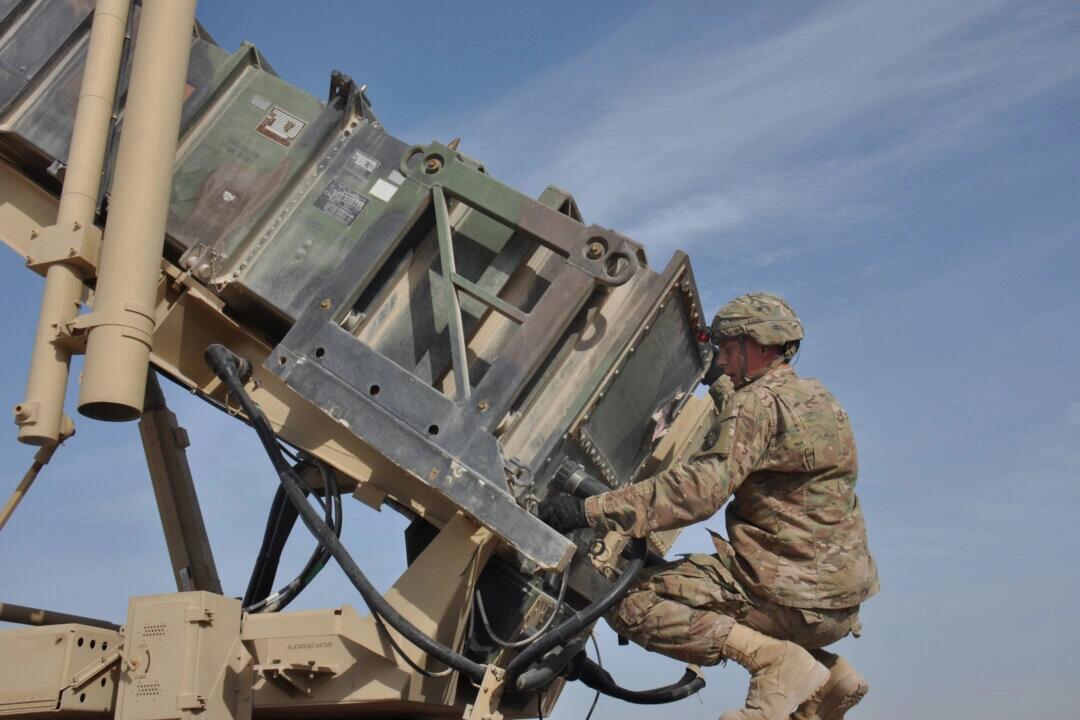
A U.S. soldier assigned to the 1-62 Delta Battery Air Defense Artillery Regiment Patriot at a Patriot launcher at at Al Udeid Air Base, Qatar, on March 4, 2015. Tech. Sgt. James Hodgman/U.S. Air Force via DVIDS

CENTCOM, the U.S. military command that oversees operations in the Middle East, said the new unit is located at the Al Udeid Air Base and will be operated by personnel from the United States and other regional partners.

Called the Middle Eastern Air Defense—Combined Defense Operations Cell, the center is situated within the existing Combined Air Operations Center at Al Udeid Air Base.

Over the past 20 years, representatives from 17 nations have helped to coordinate air operations from the Combined Air Operations Center.

“This is a significant step forward in strengthening regional defense cooperation,” Adm. Brad Cooper, the commander of CENTCOM, said in a statement on Tuesday.

“This cell will improve how regional forces coordinate and share air and missile defense responsibilities across the Middle East.”

CENTCOM and its regional partners have contended with long-range missile and drone attacks in recent years.

In April 2024, Iran launched a wave of one-way attack drones and missiles at Israel in response to an apparent Israeli strike on an Iranian diplomatic compound in Syria.

U.S. forces helped blunt that Iranian barrage, with CENTCOM reporting it intercepted 80 drones and six ballistic missiles.

American forces in the region again helped intercept Iranian ballistic missiles bound for Israel in October 2024.

As Israel and Iran came to blows in June 2025, U.S. forces again helped intercept Iranian attacks targeting Israel.

After U.S. forces struck Iran on June 22, Al Udeid Air Base came under direct retaliatory attack from Iran, and U.S. and Qatari air defense forces arrayed around the base defended against multiple missiles.

Lt. Gen Derek France, who leads the U.S. Air Force’s CENTCOM component, said the new air defense cell at Al Udeid Air Base “creates a consistent venue to share expertise and collectively create new solutions together with our regional partners.”

Qatar has been a key regional partner of the United States for years.

In addition to providing one of the largest bases for U.S. forces in the region at Al Udeid, Qatar has also played an intermediary role in negotiations for a cease-fire in the Israel–Hamas conflict in Gaza.

President Donald Trump has taken steps to expand the U.S.–Qatari partnership.

In September, Trump signed an executive order stating it is the policy of the United States “to guarantee the security and territorial integrity of the State of Qatar against external attack.”

In October, the Pentagon announced it had approved the creation of a new facility at Mountain Home Air Force Base in Idaho that will be dedicated to training members of the Qatar Armed Forces.

Tyler Durden
Wed, 01/14/2026 – 07:20

via ZeroHedge News https://ift.tt/J8GMnzl Tyler Durden

“Rude Awakening” For Travelers: Cancun Drowns In Seaweed

“Rude Awakening” For Travelers: Cancun Drowns In Seaweed

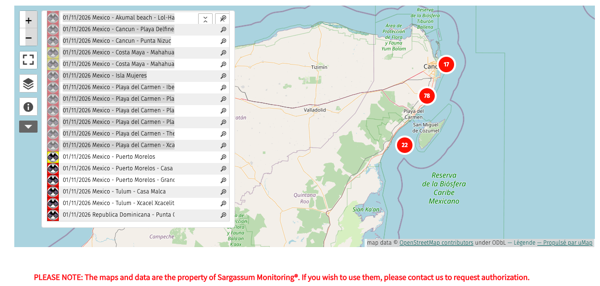
Cancun’s busiest travel period is underway (late Dec.-March), and travelers expecting crystal-clear Caribbean waters have been shocked over the past week as seaweed piled up to shin-high levels in some of the prime hotel and resort areas.

Travelers who booked a January 2026 trip to the Riviera Maya expecting guaranteed crystal-clear water were hit with a rude awakening this week,” local outlet Cancun Sun said.

In recent weeks, an “atypical surge” of sargassum seaweed hit the coast and covered some of the resort town’s most popular beaches…

Cancun Sun reported, citing a University of South Florida study that tracks blooms and warns that the “sargassum-free season” is disappearing.

Sargassum Monitoring Mapping Network

Report continues:

Here is what we know, and why 2026 is acting so differently.

The “Winter Die-Off” Failed. Usually, sargassum is a seasonal problem. The massive “seed population” of algae floating in the Atlantic typically blooms in the spring and dies off when the water cools in November and December.

That didn’t happen this year.

According to USF data, the bloom remained historically strong through late 2025. Instead of withering away in the cooler temperatures, the biomass survived and continued to grow.

The result? The “season” didn’t end; it just paused. And now, that massive surplus of seaweed is arriving on our shores months ahead of schedule. As we detailed in our 2026 Sargassum Outlook, early arrivals like this are often a warning sign of a “major” year to come.

With algorithms routing consumers to top resort destinations, you might want to think twice about Cancun at the moment. But not all is lost. There is still Coco Bongo.

Tyler Durden
Wed, 01/14/2026 – 06:55

via ZeroHedge News https://ift.tt/busAHtL Tyler Durden

Watch: US Vows To Unleash Full Arsenal Of Tools Against UK PM Starmer’s War On Free Speech

Watch: US Vows To Unleash Full Arsenal Of Tools Against UK PM Starmer’s War On Free Speech

Authored by Steve Watson via Modernity.news,

As Keir Starmer’s Labour regime tightens the noose on online freedom, the United States has issued a blistering warning: nothing is off the table to defend free speech in Britain.

With government appointed regulator Ofcom now formally investigating Elon Musk’s X over Grok-generated images, American officials are rallying against what they call authoritarian tactics straight out of a tyrant’s playbook.

Sarah B Rogers, US Under-Secretary of State for Public Diplomacy, has assured the British people that the Trump administration will counter any assault on X with the same tools used to pierce internet blackouts in oppressive states. This clash exposes Labour’s selective outrage—obsessed with AI bikinis while turning a blind eye to genuine dangers like grooming gangs.

The escalation builds on threats from Starmer’s government floating a total ban on X over Grok’s image generation capabilities, under the tyrannical Online Safety Act. Critics have slammed the move as a thinly veiled bid to silence dissent on the one platform where globalist narratives get shredded daily.

While anything meaningful takes years to progress through government in the UK, within days of sounding an intention to crackdown, they have made it illegal to create what they claim are ‘sexualised’ AI images.

Now, the crackdown has advanced. Ofcom announced its probe into X, claiming concerns over “Grok AI chatbot account on X being used to create and share undressed images of people – which may amount to intimate image abuse or pornography – and sexualised images of children that may amount to child sexual abuse material.”

The regulator’s X post detailing the investigation drew sharp irony for disabling replies, blocking public pushback.

In a GB News interview, Rogers dismissed Labour’s actions as politically driven, emphasizing America’s commitment to free expression amid Britain’s slide toward censorship.

She stated that the government’s ban threats were politically motivated—and that “given the pro-censorship inclinations of the British state in recent memory, I can’t say that we’ll be shocked” if it followed through.

Rogers outlined US capabilities: “America has a full range of tools that we can use” to open up internet access in “authoritarian, closed societies where the Government bans it.”

She added, “We are facilitating uncensored internet in Iran right now,” nodding to Starlink’s role in bypassing regime controls.

Directly addressing Starmer’s stance, Rogers fired back: “With respect to a potential ban of X, Keir Starmer has said that nothing is off the table. I would say from America’s perspective, nothing is off the table when it comes to free speech.”

She continued, “Let’s wait and see what Ofcom does and we’ll see what America does in response. This is an issue dear to us, and I think we would certainly want to respond.”

Praising Trump and Vance as “huge champions” of free speech, Rogers recalled Trump’s own ban from pre-Musk Twitter: “Our leadership understands this because President Trump was himself a target of censorship. President Trump was banned by Twitter – the old regime before Elon bought it.”

Invoking Alexei Navalny’s comparison of Trump’s ban to Putin’s tactics, she stressed: “You have to take that comparison seriously. That’s why our President cares about this issue – because people couldn’t deal with his popularity, they couldn’t deal with his success, and they tried to just shut him up so no one could hear him.”

Rogers also mocked Labour’s “ensure women and girls are safe online” rhetoric, highlighting hypocrisy: in the “real world” one of the party’s council leaders called grooming gang victims “white trash.” Rogers asserted that if the government “cared about women’s safety, it would have acted differently on grooming gangs.”

This US intervention aligns with Trump’s track record of challenging UK overreach, from suspending tech deals to offering asylum for “thought criminals.” Starmer’s plummeting approval—now at 11 percent—fuels his desperation to control narratives, especially on X where his deceptions get community-noted relentlessly.

Labour’s push mirrors EU efforts to muzzle X under similar pretexts, but the selective targeting reeks of fear: Grok isn’t the only AI capable of such outputs, yet X’s embrace of unfiltered truth makes it enemy number one.

As Ofcom’s probe unfolds, the Trump team’s assurances signal a potential transatlantic showdown. Britain’s globalist elite can’t suppress voices forever—America’s stand reminds them that freedom fighters have powerful allies ready to act.

Your support is crucial in helping us defeat mass censorship. Please consider donating via Locals or check out our unique merch. Follow us on X @ModernityNews.

Tyler Durden
Wed, 01/14/2026 – 06:30

via ZeroHedge News https://ift.tt/yCrvN0P Tyler Durden

Where Going To The Gym Is Most (Un)Popular

Where Going To The Gym Is Most (Un)Popular

Exercising more is again one of the most popular New Year’s resolutions in the United States.

Yet where data shows that January tends to see a higher number of gym sign ups than other months, it also reveals that the goal falls by the wayside for many not long after.

As Statista’s Anna Fleck reports, according to Statista data, only 15 percent of U.S. adults had paid for a gym membership in the 12 months prior to the survey.

Infographic: Where Going to the Gym is Most (Un)Popular | Statista

You will find more infographics at Statista

How many actually used the service regularly though is another question.

French and Italian respondents were even less enthusiastic about the gym, with only eight percent and 13 percent, respectively, saying they had invested in a gym membership.

By comparison, going to the gym was far more popular in Brazil and India.

Tyler Durden
Wed, 01/14/2026 – 05:45

via ZeroHedge News https://ift.tt/q5ye34x Tyler Durden

Ukraine Blocks Polymarket, Classifies Prediction Markets As Gambling

Ukraine Blocks Polymarket, Classifies Prediction Markets As Gambling

Authored by Amin Haqshanas via CoinTelegraph.com,

Ukraine has blocked access to the prediction market platform Polymarket, classifying its activities as unlicensed gambling under national law.

The decision was issued by the National Commission for the Regulation of Electronic Communications (NCEC) on Dec. 10, 2025, under Resolution No. 695. The ruling requires internet service providers to restrict access to online resources that organize, conduct or facilitate gambling without a valid license.

As part of the enforcement, the domain polymarket.com has been added to Ukraine’s public register of blocked websites, effectively cutting off local access to the platform, local news outlets reported on Monday.

Polymarket differentiates itself from traditional betting sites by allowing users to buy and sell shares tied to the outcome of real-world events, with prices reflecting market-implied probabilities, rather than offering fixed odds.

Ukraine slams Polymarket over war-related bets

The ban on Polymarket comes as Ukrainian authorities have criticized the platform for facilitating bets on geopolitical events linked to Russia’s invasion.

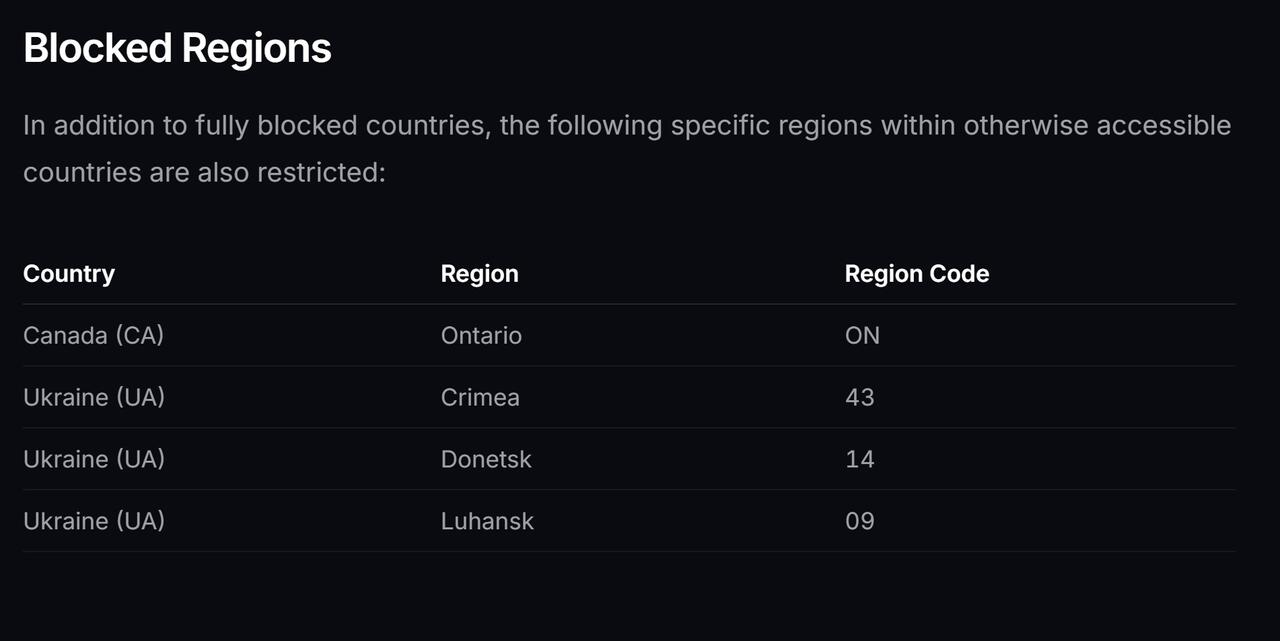
Polymarket is restricted across 33 other countries, including France, Germany, the United Kingdom, Italy, Poland, Belgium, Iran, Singapore, Iraq, North Korea, Thailand, Taiwan and Australia.

Polymarket already blocks some regions in Ukraine. Source: Polymarket

Founded in 2020 by Shane Coplan, Polymarket has grown into one of the most prominent prediction platforms globally, with an estimated valuation of $8 billion. All bets on Polymarket are placed using the USDC  stablecoin on the Polygon blockchain, making transactions and settlements publicly verifiable.

US lawmaker looks to ban insider trading on prediction markets

As Cointelegraph recently reported, US Representative Ritchie Torres is preparing legislation that would restrict insider trading on prediction markets, following scrutiny over a highly profitable bet linked to the capture of Venezuelan President Nicolás Maduro.

The proposed measure, known as the Public Integrity in Financial Prediction Markets Act of 2026, would bar federal lawmakers, political appointees and executive branch employees from trading contracts tied to political or policy outcomes when they possess nonpublic information gained through their official roles.

Last week, Tennessee’s sports betting regulator also ordered Kalshi, Polymarket and Crypto.com to halt the offering of sports event contracts to residents of the state.

Tyler Durden
Wed, 01/14/2026 – 05:00

via ZeroHedge News https://ift.tt/y2z8hou Tyler Durden

“Spy Center”: China Plans Secret Room Near Sensitive Cables In London Mega Embassy

“Spy Center”: China Plans Secret Room Near Sensitive Cables In London Mega Embassy

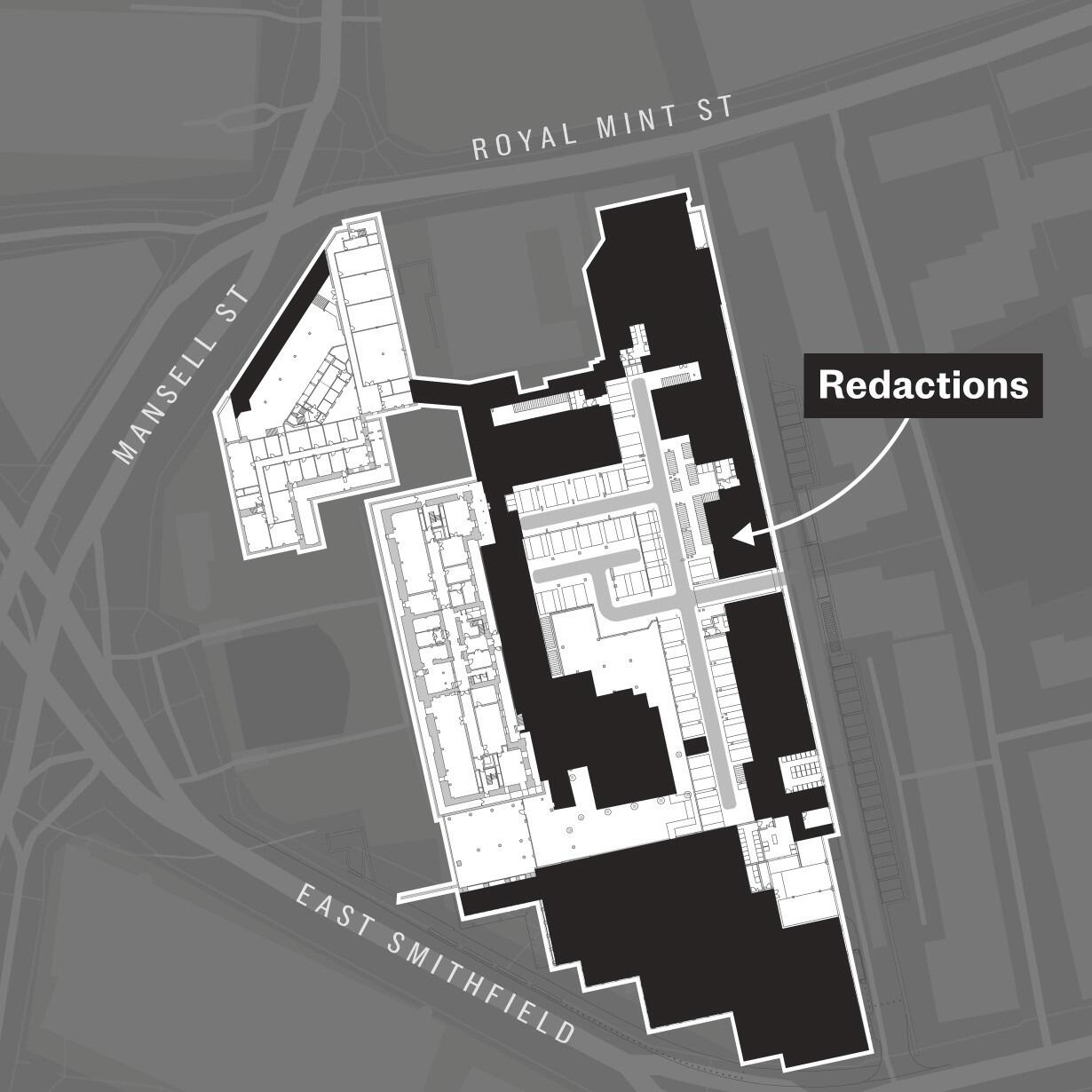
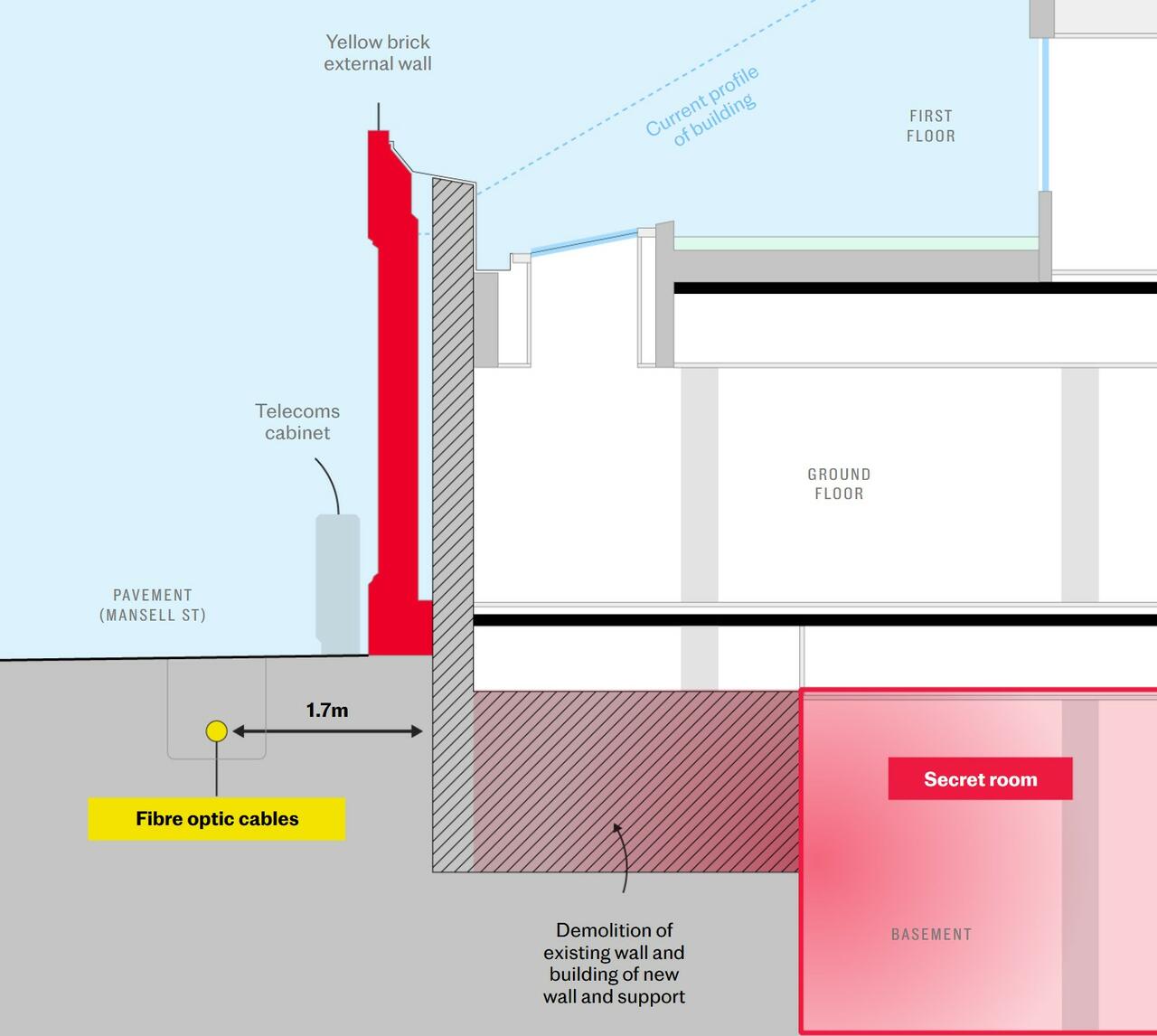
Chinese officials plan to construct a concealed underground chamber adjacent to some of Britain’s most sensitive communications infrastructure as part of their proposed new “super embassy” in London, according to planning documents reviewed by The Telegraph.

Illustration via The Telegraph

The chamber forms part of an extensive subterranean complex comprising 208 rooms beneath the embassy site at the former Royal Mint.

The Telegraph reports:

The drawings show that a single concealed chamber will sit directly alongside fibre-optic cables transmitting financial data to the City of London, as well as email and messaging traffic for millions of internet users.

The same hidden room is fitted with hot-air extraction systems, possibly suggesting the installation of heat-generating equipment such as advanced computers used for espionage. The plans also show that China intends to demolish and rebuild the outer basement wall of the chamber, directly beside the fibre-optic cables.

The revelations have prompted sharp criticism from senior UK Conservative figures, including Alicia Kearns, the shadow national security minister, who described approving the plans as providing “a launchpad for economic warfare at the heart of the central nervous system of our critical national infrastructure”.

Illustration via The Telegraph

The unredacted plans reveal a concealed room running immediately alongside the fibre-optic cables critical to the City and Canary Wharf. Telegraph readers don’t need me to spell out the obvious threats posed, nor China’s subterfuge – so why does the Labour Government?” Ms. Kearns told the newspaper.

Illustration via The Telegraph

The Telegraph further reports on why the proximity to the cables is cause for national security concerns:

Carrying signals bearing the innermost financial secrets of the British economy, the cables stretch between the Telehouse group of data centres in Docklands and other centres around the capital. Linked together, these form the core of the London Internet Exchange (Linx). Beyond London, they connect to Atlantic cables linking to the US.

Linx is one of the biggest internet exchange points in the world, handling vast volumes of data spanning everything from financial transactions to instant messages and emails.Its cables carry the financial transaction data relied upon by banks to update withdrawals and deposits, such as ordinary people’s salary packets and payments for goods bought online.

Professor Alan Woodward, a security expert at the University of Surrey, told The Telegraph that China’s plans pose a “red flag.”

“There’s a long history of cable-tapping by East and West alike. Anyone who can do it has done it,” Woodward said. “Espionage isn’t just about state secrets. Economic intelligence is central to the mission of foreign intelligence services.”

“If I were in their shoes, having those cables on my doorstep would be an enormous temptation,” he added.

Dominic Cummings, who served as then-British Prime Minister Boris Johnson’s chief aide, said MI5 warned him China was “trying to build a spy centre underneath the embassy”.

Illustration via The Telegraph

Nonetheless, British Prime Minister Keir Starmer is reportedly expected to approve the embassy construction plans ahead of Chinese President Xi Jinping’s high-stakes visit to Britain.

Just bloody brilliant, mate!

Tyler Durden
Wed, 01/14/2026 – 04:15

via ZeroHedge News https://ift.tt/X1PEGLf Tyler Durden

West Africa Under Jihadist Threat: Sahel States Surrendering Sovereignty To Islamic Terrorist Groups

West Africa Under Jihadist Threat: Sahel States Surrendering Sovereignty To Islamic Terrorist Groups

Authored by Lawrence Franklin vi The Gatestone Institute,

Al-Qaeda’s branch in Africa’s Sahel region has been laying siege to Mali’s capital city, as well as other areas of the country. The Algerian-based Al-Qaeda in the Islamic Maghreb (AQIM) and its affiliated Jama’a Nusrat ul-Islam wa al-Muslimin (Support Group for Islam and Muslims, JNIM) are cutting a wide swath of terrorist operations across West Africa’s Sahel region. This coalition of Jihadist groups now threatens the sovereignty of Mali and several other Sahelian states.

Islamist operatives now control all the main routes in and out of Bamako, Mali’s capital city, cutting it off from fuel, food, and friendly neighbors. JNIM militants have also targeted Mali’s transport, communications, educational network, and economic infrastructure in rural regions. Some towns in Mali are negotiating deals with Jihadist groups to secure some semblance of liberty and save their lives by agreeing to adopt Islamic Sharia law and pay “protection taxes” (jizyah) to Islamic officials.

Burkina Faso and Niger, two other Sahel states, landlocked like Mali, are also under severe pressure by the al-Qaeda affiliated JNIM to surrender their sovereignty to hardcore Sunni Islamic extremists. All three countries, once colonies of France’s West African Empire, have in the past five years expelled French troops who had been assisting the host governments. All three are governed by non-democratic military juntas with little popular support, and thus have been unable to deal effectively with their common Jihadist threat.

These military regimes, which have formed the “Alliance of Sahel States,” brought in mercenaries from Russia’s Wagner Group and Africa Corps to replace French troops. Yet the Russians have been failing in their mission to shore up the juntas. Moscow’s mercenaries suffered a major defeat in July 2024, near Mali’s border with Algeria, at the hands of Tuareg rebels, who are also allied with the Al-Qaeda-linked Jihadists. Reportedly, dozens of Russian troops were killed during an ambush that occurred during a desert sandstorm.

Jihadist recruits in the Sahel are primarily ethnically Tuareg, some of whom desire to establish an independent state in what is now northern Mali. The region’s other minorities, particularly in Mali, are also attracted to Islamist terrorist groups, including semi-nomadic Fulani tribesmen who populate the semi-deserts of the Sahel. Criminal networks have similarly thrown their lot in with the Jihadists, making money from kidnap ransoms and the sale of purloined gold shavings from Sahelian mines.

The Jihadist threat is not limited to the Sahel, but exists in the entirety of West Africa. For example, JNIM attacks now include assaults on the coastal African countries of Togo and Benin. There is even a report of a JNIM-sponsored foray across the border into Northwest Nigeria.

While most of the terrorist violence can be attributed to al-Qaeda-affiliated groups, Islamic State militants are also a predatory agent in the region. Fortunately, Al-Qaeda and the Islamic State jihadists also clash against one another.

Unless there is some urgent military assistance from the West, the success of the terrorists will continue. Logistical requirements of such external-based military aid would probably necessitate the establishment of a rescue corridor inside the territory of Ghana or the Ivory Coast. Alternatively, the juntas may be able to strike a temporary deal with either the Al-Qaeda or Islamic State proxies over sharing governmental powers — further delegitimizing the junta regimes and deteriorating the future of West Africa. Unless there is an immediate Western intervention, one or more of these military regimes is likely to suffer a terrorist takeover in 2026.

Tyler Durden
Wed, 01/14/2026 – 03:30

via ZeroHedge News https://ift.tt/iwN0YDE Tyler Durden

Venezuela Begins Gradual Release Of Imprisoned Americans Post-Maduro

Venezuela Begins Gradual Release Of Imprisoned Americans Post-Maduro

After US forces on January 3rd helicoptered into Caracas as Navy warships and aircraft bombed Venezuelan territory, and seemingly effortlessly nabbed President Nicolás Maduro and his wife, one wonders what took so long?

“The Venezuela government has started releasing prisoners with US citizenship, people with knowledge of the situation said,” Bloomberg reports Tuesday evening. “The authorities on Tuesday released at least one US citizen who already left the country, the people said, declining to identify the individual for security reasons.”

via AP

There is a planned for gradual release of American prisoners, of which there are not believed to be many. 

Just ahead of the Trump-ordered military strikes and brief invasion, various reports indicated at least 5 Americans were being held, including a New York man who only recently went missing after entering Venezuela (it’s not known whether he had a visa or not). 

As The NY Post detailed:

At least five Americans, including a New Yorker, are being detained in Venezuela following the Trump administration’s latest military and economic pressure campaign against Caracas, according to a new report.

James Luckey-Lange, 28, of Staten Island, is among the recently US citizens imprisoned in Venezuela, with the New Yorker deemed to be wrongfully detainedofficials told the New York Times.

Luckey-Lange, whose family reported him missing earlier this month, disappeared soon after entering Venezuela’s border as part of a long trip across Latin America that was inspired by the death of his mother, musician Diane Luckey.

The latest reports after Maduro’s ouster indicate he’s still in the custody of the country’s federal police, and that the new administration of acting President Delcy Rodríguez has not released him. Lucky-Lange’s family is pleading for his release, and has appealed to both Trump and the Rodríguez government.

Trump has controversially praised the Rodríguez government, saying last week in a Fox interview: “they’ve been great. … Everything we’ve wanted, they’ve given us.”

However, Americans deemed wrongfully detained are still apparently in custody. Last week some 100 political prisoners of Venezuelan as well as foreign nationalities were let go.

“Venezuela released a number of imprisoned high-profile opposition figures, activists and journalists — both citizens and foreigners — Thursday in what the government described as a gesture to ‘seek peace’ less than a week after former President Nicolás Maduro was captured by U.S. forces to face drug-trafficking charges,” The Associated Press indicated.

Tyler Durden
Wed, 01/14/2026 – 02:45

via ZeroHedge News https://ift.tt/CphoPSt Tyler Durden

In 2025, Germany Saw Bankruptcies Hit 20-Year High

In 2025, Germany Saw Bankruptcies Hit 20-Year High

Via Remix News,

The latest economic figures for Berlin are dramatic, revealing that 2025 saw more companies file for bankruptcy than at any point in the last two decades, all despite a promised economic turnaround from the Christian Democrat (CDU) government.

The wave of insolvencies grew significantly toward the end of the year, affecting the lives of thousands of employees. According to the Leibniz Institute for Economic Research Halle, the annual total reached a historically high 17,604 bankruptcies. This translates to an average of 48 partnerships and corporations going out of business every day in Germany, according to Bild newspaper.

“Even in the wake of the major financial crisis in 2009, the number was around 5 percent lower,” the institute explained.

December was particularly severe, with 1,519 insolvency applications filed. This figure was 75 percent higher than the average for December between 2016 and 2019, prior to the pandemic.

Jonas Eckhardt, an economic expert from the transformation consultancy Falkensteg, told Bild that “the German economy is no longer just struggling with headaches. She’s got a fever. That won’t change anytime soon.“

Professor Dr. Steffen Müller, Head of IWH Insolvency Research, observed that the “increase was broad and no one was spared, though sectors like hospitality, construction, and real estate suffered particularly heavily.”

He noted that the interest rate increase at the end of 2022 has put a stop to some of the plans in those industries.

Bild goes on to cite a number of companies hit with bankruptcies.

In Saxony, a sausage company dismissed its entire staff, while the Leifert bakery chain in Lower Saxony affected 220 employees with its insolvency. Other large bakeries like Hansen Mürwik also filed for bankruptcy, impacting 145 workers.

Large corporations are also struggling. A survey by Falkensteg found that 471 companies with annual sales exceeding 10 million euros filed for insolvency, a 25 percent increase over the previous year. Since 2021, these major insolvencies have nearly tripled.

Less than a week ago, Chancellor Friedrich Merz stated that parts of the German economy are in a “very critical state.” In the article from Bloomberg, it notes that while Merz did not specify which sectors, the car industry is seen as especially hard hit. This is due in large part to Chinese competition slowly crushing German companies, a topic Remix News has written extensively on.

While Müller points out that insolvency can be a market adjustment that makes room for future-proof companies, many businesses continue to struggle for survival. Jonas Eckhardt emphasized to Bild that for many medium-sized companies, the situation is no longer just an economic downturn but a question of survival. Experts do not anticipate a turnaround in 2026 and instead expect a further increase in bankruptcies among large companies.

Germany is not the only country struggling in Europe. Last month, French President Emmanuel Macron went to China essentially to beg for help, saying, according to Politico, that “European industry is facing a ‘life or death’ moment.”

“I am trying to explain to the Chinese that their trade surplus is untenable and that they are killing their own customers, mainly by not importing much from us,” Macron said, according to Politico.

Now, after Europeans complained about Trump issuing tariffs against China and Europe, Europe is considering pursuing the same tactic. At least, that is the threat Macron just issued China if the country does not refrain from relentlessly outcompeting the EU on trade, exports, and innovation.

Following the meeting in China, notably, no major business deals were signed, and on most key points, analysts say Macron walked away mostly empty-handed in regard to the major issues.

Remarkably, China almost completely rejected mass immigration and has about as many foreigners in the country as just one German city, Berlin.

Read more here…

Tyler Durden
Wed, 01/14/2026 – 02:00

via ZeroHedge News https://ift.tt/qdb7ZCx Tyler Durden