UK Defense Chief Says Ukraine To Increase Long-Range Strikes In Russia

UK Defense Chief Says Ukraine To Increase Long-Range Strikes In Russia

Just as President Biden was signing into effect the newly approved foreign defense package which includes $60 billion for Ukraine, the United Kingdom also rolled out its own massive aid package (though paling in comparison), first unveiled Tuesday.

Britain announced its single largest aid package for Ukraine yet, at the equivalent of $620 million (£500 million). According to UK NATO officials, the arms include Storm Shadow missiles among a total of 1,600 strike and air defense missiles, four million rounds of ammo, 60 boats, and over 400 vehicles.

Even though the White House is busy cautioning that in the coming months Russia is likely to make more gains on the front lines, according to fresh words of Jake Sullivan, British leadership is still talking about “winning”.

Head of the UK military, Admiral Sir Tony Radakin, Via The Telegram

Defense Minister Grant Shapps, for example, had this to say about new aid: “This record package of military aid will give President Zelensky and his brave nation more of the kit they need to kick Putin out and restore peace and stability in Europe.”

“The UK was the first to provide NLAW missiles, the first to give modern tanks, and the first to send long-range missiles,” he added. “Now, we are going even further. We will never let the world forget the existential battle Ukraine is fighting, and with our enduring support, they will win.”

Britain’s military leadership is also echoing this optimism, with UK defense chief, Admiral Sir Tony Radakin, telling Financial Times that the West’s new infusion of military aid will help Ukraine increase its long-range strikes on Russian territory:

Ukraine is set to increase long-range attacks inside Russia as an influx of western military aid aims to help Kyiv shape the war “in much stronger ways”, the head of the UK military has said.

Admiral Sir Tony Radakin acknowledged the downbeat mood surrounding Ukraine’s defence in an interview with the Financial Times, admitting the country was facing a “difficult” fight to repel advancing Russian forces.

But Britain’s chief of defence, a key figure in the west’s military support for Kyiv, stressed that such a gloomy “snapshot” of the war failed to recognise longer trends more in Kyiv’s favour.

Adm. Radakin continued, “As Ukraine gains more capabilities for the long-range fight . . . its ability to continue deep operations will [increasingly] become a feature” of the war. He emphasized of new weapons systems, “they definitely have an effect.”

UK leadership has of late put the country’s defense industry on a “war footing” in preparation to support Kiev for the long haul. More of Radakin’s words point to escalation (and not negotiations) in the following…

“Don’t expect anyone to say publicly ‘this is the plan’ and A, B and C are now going to happen,” he told FT. Some aspect of Ukraine’s strategy and operations “will be hidden . . . some will be dictated by a tactical or operational advantage, and some also depends on more foundational aspects,” he added.

Nowhere in the UK defense chief’s interview was acknowledgement that these policies could lead to runaway escalation, and an eventual direct confrontation between nuclear-armed powers. The Kremlin has in response vowed that it will take more territory in Ukraine in order to counteract the longer range of NATO missiles.

Tyler Durden
Fri, 04/26/2024 – 06:55

via ZeroHedge News https://ift.tt/IQ1N0bY Tyler Durden

Polish President Admits That Major Infrastructure Project Has Dual Military Purposes

Polish President Admits That Major Infrastructure Project Has Dual Military Purposes

Authored by Andrew Korybko via Substack,

Polish President Andrzej Duda revealed in an interview that the Central Communication Port (CPK by its Polish abbreviation) transportation megaproject outside of Warsaw has dual military purposes.

He represents Poland’s prior conservative-nationalist government but remains in office despite the liberal-globalist opposition’s victory at the polls last fall since his term doesn’t expire till next year.

Duda’s latest claim makes Prime Minister Donald Tusk’s decision to pause and audit the CPK even more scandalous.

It was analyzed here at the time that he was economically subordinating Poland to Germany after having already done so on the political and military fronts, which lent credence to conservative-nationalist chieftain Jaroslaw Kaczynski’s warning late last year that Tusk is actually a “German agent”. Tusk then subordinated his country to its neighbor on the educational, judicial, and diplomatic fronts, all of which is being done on the pretext of implementing various “reforms”.

The end result is that Poland now plays an indispensable role in Germany’s “Fortress Europe” that was elaborated upon here, but Duda’s unexpected revelation about the CPK’s dual military purpose might reverse some of the tempo by putting grassroots and external pressure on Tusk to approve the CPK. Most Poles are in favor of this transport megaproject according to the latest polls that Duda’s interlocutor cited, while the US has an interest in using Poland as an anti-Russian military launchpad.

Here’s exactly what Duda said according to Google Translate:

“It is no secret to anyone, and I emphasize this: If a situation of potential danger for Poland were to occur, and the relocation of additional allied forces to Poland would be necessary to defend our territory, we do not currently have an airport that would be able to provide such support for the West to quickly come to Poland.”

This reminder is meant to imply that Tusk is harming NATO’s contingency plans for partisan reasons.

It’s also a dog whistle harkening back to what the former conservative-nationalist government’s Defense Minister claimed about his liberal-globalist predecessors regarding Tusk’s defensive plans during his prior two terms in office. Mariusz Blaszczak alleged that Tusk’s government planned to withdraw west of the Vistula River in the political fantasy that Russia invaded Poland until NATO reinforcements arrived and claimed to have the classified documents to prove it too.

Tusk’s previous time in power was marked by the arguably German-advised Russian-Polish rapprochement that was meant to create a “Europe from Lisbon to Vladivostok” during the halcyon era of Russian-EU relations. Those hopes were obviously dashed as everyone now knows, after which Tusk’s conservative-nationalist successors never wasted an opportunity to speculate that his pragmatic policy at the time was due to secret Russian influence over his government.

Blaszczak’s allegation should be seen in that light just like Duda’s reminder should too. Their conservative-nationalist movement sought to exploit political Russophobia in Polish society ahead of the elections to remain in power, but even though that didn’t work, they haven’t learned their lesson and are now trying to employ it yet again in their attempt to return to power one day. That said, it’s indeed important for Poles to be aware of both facts, after which they can make up their own mind.

Revealing allegedly classified details about outdated Polish national defense policy is one thing, while raising awareness of how possibly canceling the country’s largest megaproject in recent memory could impact national security in theoretical contingencies (not to mention killing lots of jobs) is another.

The first disclosure didn’t succeed in reshaping popular perceptions of the liberal-globalists whereas the second stands a greater chance of success of doing so even though it’s too early to conclude that it will.  

Another point to pay attention to is that this isn’t the first time that Duda dropped a bombshell about a significant issue. Earlier in April, he told Lithuanian media that foreign companies own most of Ukraine’s industrial agriculture, thus confirming what had previously been reported but denied by the West. He therefore has a habit of being very candid about issues that he sincerely believes are of immense importance for Poland’s objective national interests.

Regardless of whatever the reader’s opinion might be about the likelihood of Duda’s scenario unfolding, which concerns Poland relying on the CPK to serve as the port of entry for a large-scale NATO intervention in the event of a Russian invasion, his point about that megaproject is militarily and strategically sound. It’ll be very difficult for Tusk to argue against it after he himself jumped on the Russia-bashing bandwagon since returning to power and continues fearmongering about its intentions.

He even jumped the shark last month by sensationally claiming that “we are in a pre-war era” that he compared to the run-up to World War II, thus suggesting whether sincerely or not that he supposedly believes that it’s possible for Russia to invade Poland in the coming future. If he ultimately decides to cancel the CPK despite Duda reminding him of its dual military purposes, then he’d discredit his previous fearmongering about Russia, which is the pretext for justifying Poland’s subordination to Germany.

Tusk’s hands might be tied, however, since the combination of grassroots and external (US/NATO) pressure might be enough to get him to reconsider weaponizing the CPK as part of his partisan war against his conservative-nationalist opponents under whom this megaproject was initiated. In any case, Duda inadvertently vindicated those Russian observers who long suspected that the CPK had dual military purposes, thus proving that they were right about Poland’s real plans all along.

Tyler Durden
Fri, 04/26/2024 – 06:30

via ZeroHedge News https://ift.tt/B2Q6Z7J Tyler Durden

Chipotle Tells Workers To “Preserve” Chicken Supply As Demand Soars

Chipotle Tells Workers To “Preserve” Chicken Supply As Demand Soars

A surge in restaurant traffic boosted Chipotle Mexican Grill’s first-quarter earnings and revenue, topping the average estimate of Wall Street analysts tracked by Bloomberg on Wednesday.

Shares are higher by more than 5% in the cash session on Thursday. However, this note will not expand on earnings. Instead, we will focus on a letter from the company to employees stating: Stop eating chicken during lunch and dinner meals because soaring demand has collided with dwindling poultry supply—and the need to preserve supply urgently. 

Bloomberg obtained the letter Chief Restaurant Officer Scott Boatwright sent employees last week. He told them:

“Due to its sustained strong sales we need your help to keep up with our guests’ demand for this popular protein option.” 

Boatwright told store managers and hot-side and cold-side kitchen employees not to order chicken or chicken al pastor with their free or discounted employee meals. Even white-collar Chipotle workers were told not to order chicken. 

The message read, “Let’s Conserve Our Fan-Favorite Chicken.” Execs did not give a timeline for boosting the chicken supply. The letter aimed to “preserve our supply of Adobo Chicken for our guests.” 

Chief Corporate Affairs and Food Safety Officer Laurie Schalow told Bloomberg in an emailed statement:

“Due to the high demand for chicken in our restaurants and sustained success of our limited-time offer chicken al pastor, we temporarily asked all of our employees at corporate and in-restaurants to select another protein option for their meals to preserve our supply.” 

The Chipotle mobile app shows no disruptions to any protein option on the menu. 

Harper McNamara, an employee in Michigan at the only unionized Chipotle US store, was quoted by Bloomberg as saying the company’s move was a slap in the face to its workforce: “It’s disrespectful, just on a personal level.” 

Tyler Durden
Fri, 04/26/2024 – 05:45

via ZeroHedge News https://ift.tt/1gJDs7u Tyler Durden

EU Prepares To Tighten Screws On Russian LNG Imports

EU Prepares To Tighten Screws On Russian LNG Imports

By Julianne Geiger of OilPrice.com

In a move that could reshape Europe’s energy landscape, the European Commission is poised to propose new sanctions targeting Russian liquefied natural gas (LNG) imports.

According to Reuters sources close to the matter, the proposed measures will include a ban on shipments within the EU and sanctions on three Russian LNG projects.

The European Commission’s decision comes amid growing concerns over Europe’s reliance on Russian energy, particularly in the wake of the ongoing conflict in Ukraine. While the EU imposed a ban on Russian seaborne oil imports earlier this year, it has thus far refrained from taking similar action against LNG imports. However, with imports of Russian LNG surging since the start of the war, accounting for around 15% of EU gas supply, pressure has been mounting on Brussels to act.

The proposed ban on trans-shipments within the EU is aimed at preventing the diversion of Russian LNG cargoes to other destinations. Currently, Belgium, France, and Spain are the largest importers of Russian LNG, with many of these imports being re-exported to other countries, including China. By imposing restrictions on trans-shipments, the EU hopes to ensure that Russian LNG does not find its way to markets outside of Europe.

In addition to the ban on trans-shipments, the European Commission is also considering sanctions on three Russian LNG projects – Arctic LNG 2, Ust Luga, and Murmansk. While the details of these sanctions are still being discussed, they are expected to target projects that are not yet operational, further complicating Russia’s efforts to expand its LNG exports.

The move by the European Commission reflects growing unease within the EU over its dependence on Russian energy. With tensions between Russia and the West showing no signs of abating, European policymakers are increasingly looking for ways to reduce Europe’s exposure to Russian energy supplies. By targeting Russian LNG imports, the EU hopes to send a clear message to Moscow that its actions in Ukraine will not go unpunished.

However, the proposed sanctions are likely to face resistance from some EU member states, particularly those that are heavily reliant on Russian energy. Nevertheless, with pressure mounting on Brussels to take action, it seems increasingly likely that Europe’s energy landscape could be in for a significant shake-up in the coming months.

Tyler Durden
Fri, 04/26/2024 – 05:00

via ZeroHedge News https://ift.tt/FbIGhHf Tyler Durden

Russia Will Target US Nuclear Weapons In Poland If They Appear

Russia Will Target US Nuclear Weapons In Poland If They Appear

Russia has warned that Poland will make itself a ‘priority target’ if it hosts NATO nuclear weapons on its territory. In a Thursday statement Russian Deputy Foreign Minister Sergei Ryabkov said “Moves in this direction will not provide greater security (for Poland or other nations that host such weapons).” He was further quoted in Russian media as saying

Moscow considers any expansion of NATO’s nuclear-sharing arrangement as “deeply destabilizing” in nature, “and in fact threatening” Russia, Ryabkov was quoted as saying by TASS on Thursday. This applies to joint missions, where non-nuclear members of the US-led bloc are trained to use American hardware, and even more so to the permanent stationing of such weapons “which hotheads in Warsaw are talking about,” he said.

In follow-up, Foreign Ministry spokeswoman Maria Zakharova stipulated that “any nuclear weapons deployed to Poland would be legitimate targets in the event of war with the alliance.” Russian media translations said Moscow would see this as a “priority target”.

All of this was in response to words issued by Polish President Andrzej Duda in a Monday interview. He said his country is “ready” to host nuclear weapons should NATO decide to do so as reinforcement of its eastern flank. It remains that the United States chiefly supplies and oversees NATO’s nuclear-sharing program, thus any possible future nukes in Poland would be supplied by Washington.

“Russia is increasingly militarizing the Königsberg oblast (Kaliningrad). Recently, it has been relocating its nuclear weapons to Belarus,” Duda continued, apparently wanting to match and mirror Russian moves. Indeed Belarus is now believed to host possibly dozens of Russian tactical nukes.

via infobrics.org

“If our allies decide to deploy nuclear weapons as part of nuclear sharing on our territory as well, in order to strengthen the security of NATO’s eastern flank, we are ready for it,” the Polish president had added.

Duda additionally said while discussing the topic of NATO’s nuclear sharing program in the interview that Warsaw and Washington have been in talks “for some time.” He emphasized: “I’ve already talked about it several times. I must admit that when asked about it, I declared our readiness.”

But the reality is Brussels and Washington are likely to be deeply hesitant based on the nuclear threats emanating from Moscow of late. Moving NATO warheads to Polish soil would most certainly greatly intensify the already somewhat high nuclear tensions, and at a moment the proxy war in Ukraine shows no sings of abating.

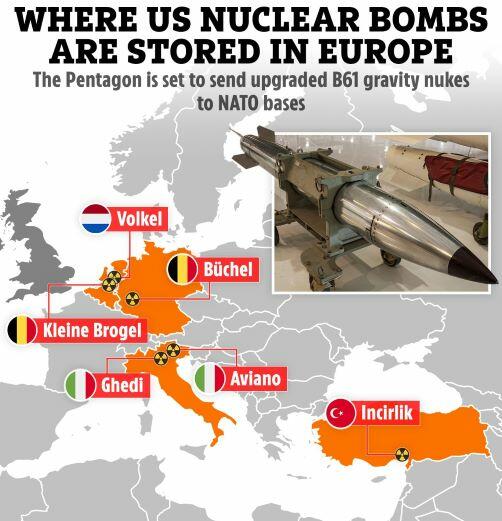
While three NATO members are officially nuclear weapons states – the United States, France and the United Kingdom – others are authorized to host nukes (typically ‘tactical’ nuclear weapons). They are Belgium, Germany, Italy, the Netherlands and Turkey.

Apparently Poland is now throwing its name in the hat for NATO’s nuclear-sharing program, which would expand Western nuke placement right up to Russia’s backyard. The Kremlin would no doubt deploy more of its strategic assets near Eastern Europe in such a scenario.

Tyler Durden
Fri, 04/26/2024 – 04:15

via ZeroHedge News https://ift.tt/n1xYOSJ Tyler Durden

European ESG Funds Witness Heavy Decline In Inflows

European ESG Funds Witness Heavy Decline In Inflows

Authored by Irina Slav via OilPrice.com,

European exchange-traded funds with a focus on ESG investing saw a substantial decline in inflows in the first quarter amid what Morningstar called “an existential crisis”.

According to the Financial Times, net inflows into these funds totaled 7.1 billion euros, or $7.62 billion, in the first three months of the year. This was down from 13.8 billion euros in the final three months of 2023, equal to $14.8 billion.

As a result, the portion of ESG fund inflows during the period fell to 16% of total net flows into exchange-traded funds, down from 29% in November to December 2023.

The trend is the latest sign of trouble in energy transition industries as wind, solar, and EV companies struggle with persistently high interest rates, rising raw material costs, and growing competition from low-cost Chinese producers.

“This means further deceleration from the highs of 2022 when close to 65 percent of all flows into the European ETF market were directed to ESG-themed strategies,” Morningstar associate director of passive strategies Jose Garcia-Zarate said.

The news follows a revelation in March that a total of 70% of passive funds passed off as “sustainable” by five of the largest asset managers in the U.S. and Europe were exposed to companies developing new oil and gas projects, according to a report by environmental organization Reclaim Finance.

Reclaim Finance has examined 430 “sustainable” passive funds managed by five of the biggest passive fund managers – Amundi, BlackRock, DWS, Legal & General Investment Management (LGIM), and UBS AM – and found that 70% of the passive funds are exposed to companies developing new fossil fuel projects.

These giant asset managers “are turning a blind eye to the climate impact of their passive investments, with funds invested in oil giants including TotalEnergies, Shell and ExxonMobil, and coal developers such as Glencore and Adani,” Reclaim Finance said in the report.

Tyler Durden
Fri, 04/26/2024 – 03:30

via ZeroHedge News https://ift.tt/URCt4mw Tyler Durden

Poland Ready To Help Ukraine Round Up Military-Aged Men

Poland Ready To Help Ukraine Round Up Military-Aged Men

Poland says it is ready and willing to help Ukraine with its crisis-level manpower and recruitment problems, as it could be poised to round up Ukrainian military-aged males and return them to their home country. Government officials are now strongly signaling just such a controversial plan.

Polish Defense Minister Wladyslaw Kosiniak-Kamysz issued the words Wednesday, largely in response to Ukraine’s new law and policy requiring men between 18 and 59 living abroad to get or renew their passport only at offices inside Ukraine. It is designed to prevent them from leaving in the country and thus avoid military service.

Poland has suggested in the past helping Ukraine so that those who are subject to military service go back to their country to fulfill their civic obligation, Kosiniak-Kamysz told Polsat News television,” according to Reuters.

Getty Images

“I think many Poles are outraged when they see young Ukrainian men in hotels and cafes, and they hear how much effort we have to make to help Ukraine,” he said, but without specifying what precise steps Warsaw is set to take.

According to more of the Polish defense minister’s words:

“The Ukrainian authorities are doing everything to provide new soldiers to the front, because the needs are huge,” Kosiniak-Kamysz said.

The Polish official said that Warsaw had previously offered to help Kiev track down those who dodge their “civic duty,” but noted that “the form of assistance depends on the Ukrainian side.”

Of course, we should note that such a policy of helping get young Ukrainian men ‘off the streets’ is highly convenient from a Polish perspective, given the historic anti-Ukrainian sentiment among the Polish population. Simply put, the two nationalities tend to hate each other, and Warsaw will now cast its policies pressuring Ukrainians to leave as somehow noble.

Ukraine’s foreign minister Dmytro Kuleba wrote earlier this week on X that he had “ordered measures to restore fair attitudes toward men of conscription age in Ukraine and abroad.” Kuleba complained, “How it looks now: A man of conscription age went abroad, showed his state that he does not care about its survival, and then comes and wants to receive services from this state.”

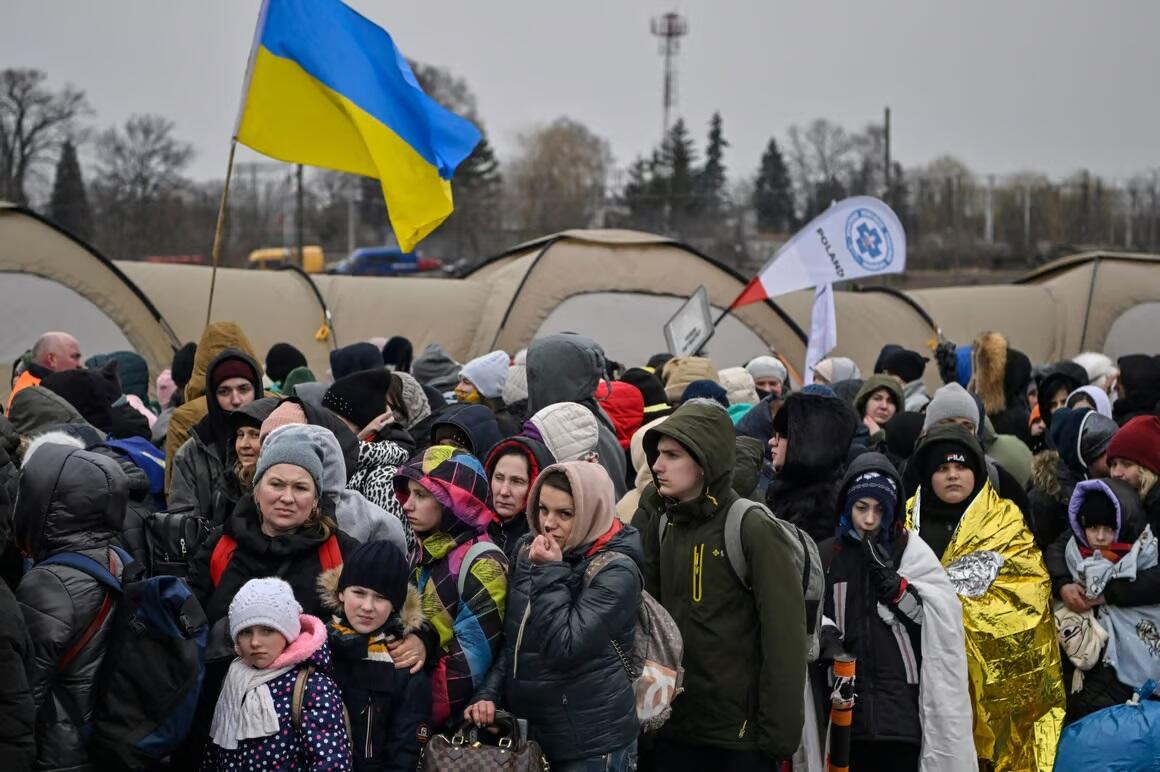
Russian media has estimated that almost one million Ukrainians have been given temporary sanctuary in Poland, and that a significant but unknown portion of these are likely eligible for conscription.

Despite Biden’s $60 billion for Ukraine’s defense having finally been signed into law by the president, the reality remains that Ukraine is fundamentally suffering a severe crisis of manpower. This essentially means that even as US weapons and equipment arrive, there are fewer and fewer troops experienced enough to actually man and operate them.

Tyler Durden
Fri, 04/26/2024 – 02:45

via ZeroHedge News https://ift.tt/USaHumr Tyler Durden

Former British PM Liz Truss Warns About Global Threat Of The Left

Former British PM Liz Truss Warns About Global Threat Of The Left

Via The Epoch Times,

Former British Prime Minister Liz Truss spoke Monday at The Heritage Foundation about how the United States and the United Kingdom are facing very challenging forces in the global left, not just in terms of their extremist activists, but also in the power they hold in our institutions.

She warned that conservatives must create a stronger infrastructure to take on the left—which is well-funded, activist, and has many friends in high places—by recruiting more conservative activists and candidates who can fight in the trenches in the ideological war that we now face.

Excerpts from her remarks are below.

Why am I launching “Ten Years to Save the West” in the United States as well as in the United Kingdom? Well, I like to think of the United States of America as Britain’s greatest invention, albeit a slightly inadvertent invention. And if you look at our history, from Magna Carta to the Bill of Rights to the American Constitution, we have developed and perfected representative democracy.

And if you look at what is going on in our societies, first of all, the Brexit vote back in 2016 and then the election of President Donald Trump later that year, you can see the same desires of our people for change and the same desires for those conservative values and that sovereignty.

And if you look at the battle for conservatism now and the frequency with which we get new prime ministers in the United Kingdom and the frequency with which you get new speakers of the House here in the United States, we can see again that there is a battle for the heart and soul of conservatism on both sides of the Atlantic. And I think that battle is very important. Because, let’s be honest, we have not been winning against the global left.

If you look at the history since the turn of the millennium, the left have had the upper hand. And it’s not the old-fashioned left who used to argue about the means of production and economic inequality. It’s the new left who have insidious ideas that challenge our very way of life.

Whether it’s about climate extremism that doesn’t believe in economic growth, whether it’s about challenging the very idea of a man and a woman and biological sex, whether it’s about the human rights culture that’s been bedded into so much of our society that makes us unable to deal with illegal immigration—those new ideas have been promulgated by the global left and they have been successful in infiltrating quite a large proportion of society and a large part of our institutions.

Let’s just look at the state of economics. I am a supply-sider. I know that it works. We saw it work under [U.S. President Ronald] Reagan and [UK Prime Minister Margaret] Thatcher, and yet we’ve seen the domination of Keynesian economics in recent years, bloated size of government, huge debts in both of our countries.

On the immigration and human rights culture, look at what is going on now on American university campuses where it is not safe anymore to be Jewish, or the streets of London where a Jewish man could not cross the road during yet another appalling protest, or the fact that we can’t seem to deport illegal immigrants either from your southern border or the small boats that are crossing the channel.

Or take wokery, another bad neo-Marxist idea developed from [Michel] Foucault and all those crazy post-modernists in the 1960s, the idea that biological sex is not a reality.

We now have President [Joe] Biden introducing regulations around Title IX, which means that girls could see biological boys in their changing rooms, in their locker rooms, in their school restrooms and not be able to do anything about it. And if they complain about it, they could be the ones guilty of harassment. How on earth can that be happening in our society?

Or the climate extremists who aren’t satisfied with just stopping coal-fired power stations here in America, [liquefied natural gas] terminals being built, fracking in the United Kingdom, but want to go further. Whether it’s imposing electric vehicles or air-source heat pumps or extra taxes on the public. Meanwhile, our adversaries in China are busy building coal-fired power stations every week.

I see that as unilateral economic disarmament in the middle of what is a various, serious threat to the West.

So how has it ended up that after the turn of the millennium, despite the fact that we have many conservative intellectuals and politicians, why have our institutions, why has so much of our public discourse shifted to the left?

Well, first of all, too many conservatives have not been making the argument. Now, I call them conservatives in name only, CINOs. I know in America you call them RINOs. But these conservatives in name only, rather than taking on those ludicrous ideas, instead have tried to appease and meet them halfway.

Why have they done this? Well, first of all, they don’t want to look mean. They don’t want to look like they’re against human rights. They don’t want to look like they’re against the environment. They don’t want to be mean to transgender people. They’ve allowed those arguments to affect their views on what is right and wrong. But it’s also more cynical than that.

If you want to get a good job after politics, if you want to get into the corporate boardroom, there are a group of acceptable views and opinions that you should hold. And most of them are on that list. If you want to be popular and get invited to a lot of dinner parties in Washington, D.C., or London, there are reviews on that list that you should hold. And people have chosen dinner parties over principle.

But the other thing I think we’ve missed on the conservative side of the argument, and I put my hands up to this, is the rising power of the administrative state. The fact that power—which previously lay in the hands of democratically elected politicians, like them or not they can be voted out of office—is now in the hands of so-called independent bodies, whether it’s central banks, whether it’s government agencies, or whether it’s the civil service themselves.

And what we’re seeing in bureaucracy in the United Kingdom, and I think here in the United States as well, is a growing activist class of civil servants who have views on transgender ideology or climate or human rights, which they are keen to promote in their roles.

I saw this firsthand and one of the key points the book is about is my battles that I had with that institutional mindset. And there’s a phrase that we use in Britain called “consent and evade.” Quite often the officials will be very polite on the request, but it will take a very long time to do if it’s something like helping deport illegal immigrants or sort out the Rwanda scheme. If it’s something that they like, like dealing with climate change, that will be expedited.

And I think it’s very difficult for people who haven’t worked in government to understand just how cumbersome and how treacle-like it has become. And I don’t know if that’s a product of the modern era, if it’s a product of the online society, but it is very, very difficult now to deliver conservative policies.

Now, I did many jobs in many different government departments. I was in the justice department, the environment department, the education department, the treasury, I was in trade, I was in the foreign office, and I faced battles against activist lawyers, against environmentalists, against left-wing educationalists.

But what I thought when I ran to be prime minister in 2022 is I thought I had the opportunity to change things because that was surely the apex of power. I hadn’t been able to change it as environment secretary or trade secretary, but as prime minister, surely that was the opportunity for me to be able to really change things.

Now, there’s a bit of a spoiler alert about the book. It didn’t quite work out. I ended up being the shortest-serving British prime minister as a result of trying to take on these forces. And the particular thing that I tried to take them on was the whole issue of our economy.

*   *   *

I come today with a warning to the United States of America. I fear the same forces will be coming for President Donald Trump if he wins the election this November. There is a huge resistance to pro-growth supply-side policies that will deliver economic dynamism and help reduce debt.

What the international institutions and the economic establishment want to see is they want to see higher taxes, higher spending, and more big government, and more regulation. They do not want to see that challenged. And we’ve already heard noises from the Congressional Budget Office and elements of the United States market about the financial stability situation.

So, what have I learned from my experience? What have I learned from my time in office? I have learned that we are facing really quite challenging forces of the global left, not just in terms of their virulent activists making extremist documents, but also the power they hold in our institutions. And that leads me to believe that what conservatives need is what I describe as a bigger bazooka.

Now, what do I mean by a bigger bazooka? Well, first of all, I mean that we need really strong conservative political infrastructure to be able to take on the left. They are well-funded, they are activists, they have many friends in high places. And we need strength and depth in our political operation.

That’s why I’m working on a new political movement in the UK called Popular Conservatism, which is about bringing in more activists, more candidates, more potential legislators, more operators who can actually fight in the trenches against the left in the ideological warfare that we now face.

The second thing we need to do is we need to dismantle the administrative state. And there are lots of people I speak to who say, “It’s just because you ministers aren’t tough enough. If only you were a bit bolder in taking on things, if only you had a bit more political will, you would be able to deliver.”

Those people are not right. Until we actually change the system, we are not going to be able to deliver conservative policy such as the depths of resistance in our institutions and our bureaucracy that we do have to change things first.

And what does that mean? Well, you’re ahead of us in the United States in that the president gets to appoint 3,000 people into the government positions. In Britain it’s only 100 people. And those 100 people are relatively junior. They’re not in charge of departments. So, I believe we need to change that in Britain. We need to properly appoint senior figures in our bureaucracy.

We also need to deal with the proliferation of unaccountable bureaucratic bodies. They have to go. There has to be a real bonfire of the quangos.

But even here in the United States, policies like Schedule F are going to be very, very important in order to be able to deliver a conservative agenda. And the project that Heritage is sponsoring, Project 2025, is another vital part of building that institutional infrastructure that can actually deliver conservative policies. Having seen what I’ve seen on both sides of the Atlantic, I think both of those things are vital in order for conservative policies to deliver.

But we can’t just deal with the administrative state at a national level because what we’ve also got is the global administrative state. We have the United Nations, the World Health Organization, we have the [Conference of the Parties] process.

And one of the things I tried to do was stop Britain hosting COP in Glasgow. I failed. But I want to see us in the future abandon that process. The best people to make decisions are people that are democratically elected in sovereign nations. It is not people sitting on international bodies who are divorced from the concerns of the public.

The final thing conservatives need to do is end appeasement. And by ending appeasement, I’m talking about the appeasement of woke Orwellianism at home as well as the appeasement of totalitarianism abroad. We have to do both of those things because both of those things are threatening our way of life.

Totalitarian regimes like China, Russia, and Iran have to be stood up to, the only thing they understand is strength. And now the military aid budget has been passed through Congress. There needs to be more clarity about how Russia can be defeated and how China and Iran will also be taken on. And in order to achieve that, we are going to need a change in personnel at the White House.

Now, I worked in Cabinet whilst Donald Trump was president and while President Biden was president. And I can assure you, the world felt safer when Donald Trump was in office. 2024 is going to be a vital year, and it’s the reason that I wanted to bring my book out now. Because getting a conservative back in the White House is critical to taking on the global left. And I hate to think what life would be like with another four years of appeasement of the woke left in the United States, as well as continued weakness on the international stage.

But my final message is that winning in 2025 or winning in 2024 and going into government in 2025 is not enough. It’s not enough just to win. It’s not enough just to have those conservative policies. That there will be huge resistance from the administrative state and from a left in politics that has never been more extremist or more virulent.

And that is why it will need all the resources of the American conservative movement, think tanks like Heritage, and hopefully your allies in the United Kingdom to succeed. But you must succeed because the free world needs you.

Reprinted by permission from The Daily Signal, a publication of The Heritage Foundation.

Tyler Durden
Fri, 04/26/2024 – 02:00

via ZeroHedge News https://ift.tt/jit3L8I Tyler Durden

The Great Game Returns To Central Asia

The Great Game Returns To Central Asia

Via EurasiaNet.org,

  • Russia’s invasion of Ukraine has reanimated US and EU interest in Central Asia.

  • China has eclipsed Russia as the region’s largest trade partner.

  • Central Asian trade is diversifying away from Russia and towards the West.

The Great Game is playing out once again in Central Asia, but it is getting a new name and adopting a different set of rules. Economics, not politics, is defining the terms of the current superpower competition for regional influence, according to a report prepared by a Kazakh research institute. 

There is a key difference governing the global rivalries in Central Asia in the 19th and 21st centuries: these days, regional states, not outsiders, wield the more influence over potential outcomes, according to the report, titled Pursuing Multi-Vectorism Through Business Diplomacy: The Path for Central AsiaThe report was published by the Talap Center for Applied Research. 

“The region, previously the theater of the Great Game in the confrontation of superpowers, is now trying to become an opportunity zone,” the report states.

Russia’s unprovoked attack on Ukraine in 2022, and the imposition of Western sanctions to punish Russian aggression, changed Central Asia’s geopolitical dynamics by reanimating US and European Union interest in the region. By extension, Russia’s actions encouraged the diversification of trade and investment, changing East-West trade patterns connecting China and Europe. Sanctions have diminished the utility of the Northern Corridor via the trans-Siberian railway, while providing impetus for the growth of the Middle Corridor via Central Asia.

These changes have shifted Central Asia’s center of geo-economic gravity. China has eclipsed Russia as the region’s largest trade partner, while the overall trend is toward diversification of trade partners. The West’s share of Central Asian trade under the present dynamic is set to keep rising.

“The trade and investment dynamics in the region show a significant shift of diversification with non-traditional markets of Europe, North America, South Asia, and the Middle East since 2022,” the Talap report notes.

“This has become possible due to a traditional, multi-vector policy for the region, which, under the stress of escalating conflicts, was transformed into a policy of emphatic non-alignment – a firm rejection of any involvement in the conflict.”

The report notes that the contacts between the European Union and Central Asian states have “have gained a special dynamism” since the start of the Russia-Ukraine war.

It also notes that public opinion in the region indicates that a majority of regional residents do not want to get dragged into the confrontation between the West and Russia, which is supported by China. 

The prevailing circumstances have forced Central Asian states to “balance a genuine interest in developing their ties with the Western world while being surrounded by Iran, Afghanistan, China, and Russia, countries with which the West has strained and even tense relations,” the report says.

Maximizing economic multi-vectorism will require some work by Central Asian governments to enhance the predictability of the regional business climate. Vaguely defined trade rules and property rights, along with the unreliability of regional judicial systems, remain big impediments to Western investment. The lack of mechanisms to enforce contracts or resolve corporate disputes also constitutes an investment barrier. In addition to bolstering the independence of the judicial system, the Talap report recommends reforms to regional tax codes to foster more “equitable” business environments. 

“The investment climate in Central Asia reflects a difficult balance between the determination of governments to take advantage of growing interest in the region and the inertia of institutional barriers,” the report states.

“To take advantage of these opportunities, the countries of the region have to address existing institutional and regulatory barriers for both domestic and international companies and investors, strengthen the rule of law, enforce fair and open competition, implement business friendly tax regulations, and align trade, customs and logistical standards.”

Tyler Durden
Thu, 04/25/2024 – 23:45

via ZeroHedge News https://ift.tt/F4AIqYj Tyler Durden

Gaza Aid Flotilla With 1,000 Passengers, Tons Of Supplies Poised To Sail – As IDF Awaits

Gaza Aid Flotilla With 1,000 Passengers, Tons Of Supplies Poised To Sail – As IDF Awaits

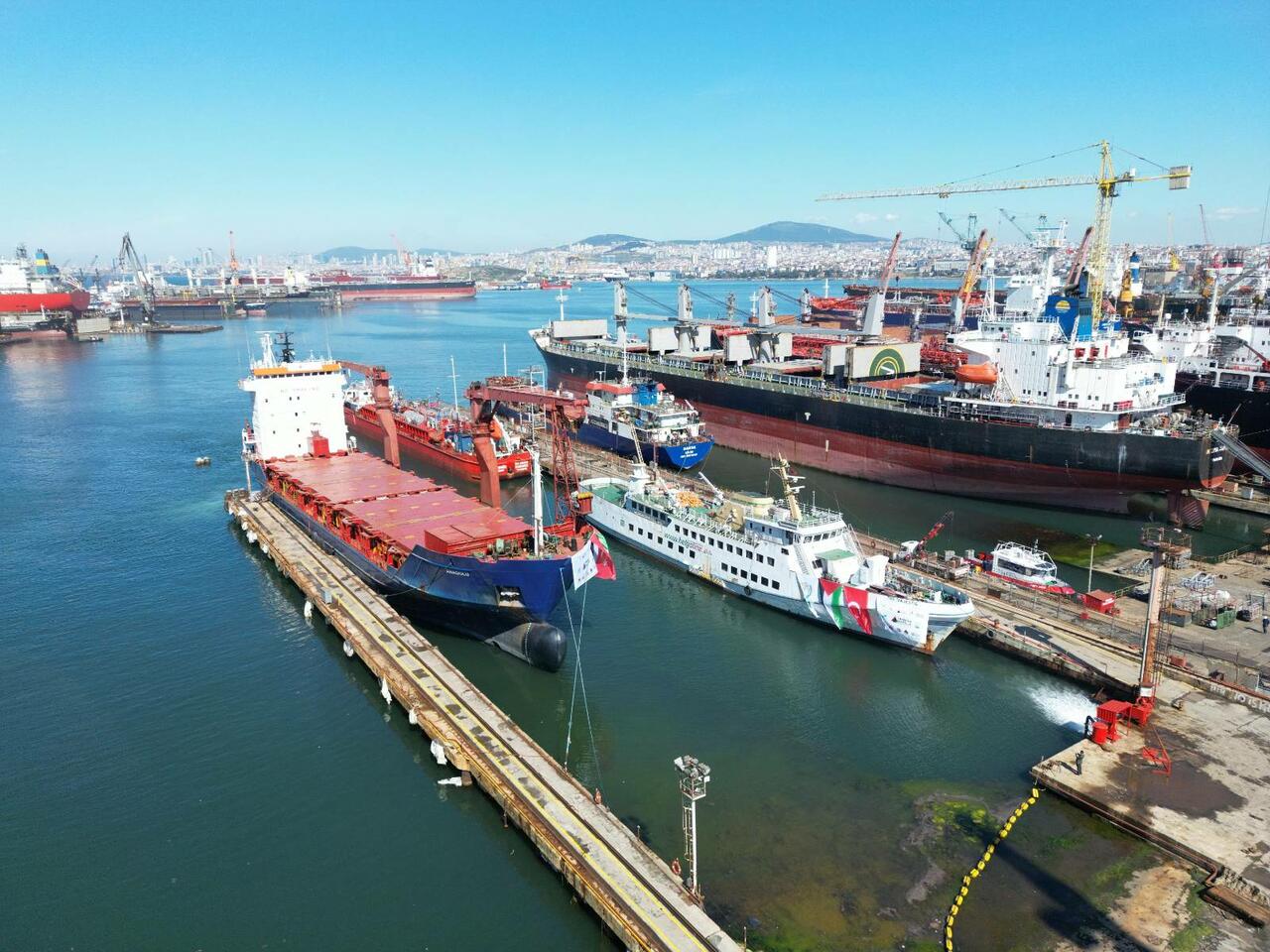
A flotilla of ships packed with a thousand activists, human rights observers and more than 5,500 tons of food and medical supplies is ready to sail from Istanbul to for Gaza. To do so, they’ll need the Turkish government to let them leave the port, and then run the risk of being subjected to a deadly Israeli Defense Forces (IDF) attack — as their predecessors were in an infamous 2010 incident.  

“The Freedom Flotilla has the support of millions around the world who are outraged at the failure of our governments to protect the Palestinians people from Israel’s genocidal actions, including the deliberate starvation of over two million people,” said the organizing coalition’s Zohar Chamberlain-Regev. 

The group has three ships ready to go: one packed with food and medical supplies, and two ships for passengers who hail from 40 different countries. The cargo ship also has eight ambulances and a fire truck aboard — a grim reminder of the IDF’s Nov 3 bombing of an ambulance convoy next to Al-Shifa hospital that killed 15 and wounded dozens. 

A horse lies dead next to an ambulance bombed by the IDF just outside a Gaza hospital on Nov 3 (Momen al-Halabi / AFP – Getty Images via NBC News)

CodePink’s Medea Benjamin is among those hoping to set sail, but says she’s worries about diplomatic interference. “The Turkish government might cave to pressure from Israel, the United States and Germany, and prevent the boats from even leaving Istanbul,” she wrote on Tuesday. 

“We expect that Turkey will not be bought off and we will indeed sail,” Palestinian-American human rights lawyer Huwaida Arraf optimistically said at a press conference hosted on one of the ships. “Anything less than this is collaborating with the illegal siege on Gaza, and we don’t think that is what the Turkish government will do.”

The three Freedom Flotilla Coalition vessels docked in Istanbul 

While the IDF has said little, an Israeli news outlet reported that the Israeli military has already started “security preparations” for commandeering the flotilla. In an infamous 2010 incident, the IDF killed 10 activists aboard a Freedom Flotilla Coalition vessel, the Mavi Marmara. 

With that precedent in mind, organizers have been giving volunteers “non-violence training” and educating them on what the Israeli forces may use on them — such as tear gas and concussion grenades. 

The Freedom Flotilla Coalition was founded in 2010 to circumvent economically-devastating travel and trade restrictions imposed by the State of Israel on the 25-mile-long Gaza strip. Long before the Oct. 7 Hamas invasion of southern Israel, the Zionist state has blocked the people of Gaza from having an airport or even a seaport.  

From the first days of Israel’s post-Oct. 7 attack on Gaza, Israel made clear its intentions to cause widespread devastation in the strip. “I have ordered a complete siege on the Gaza Strip. There will be no electricity, no food, no fuel, everything is closed,” Defense Minister Yoav Gallant told reporters on Oct. 9. “We are fighting human animals and we are acting accordingly.”

A crowd of Palestinians seeking food in Rafah (via Btselem)

On Tuesday, US Special Envoy for Humanitarian Issues David Satterfield belatedly acknowledged that the risk of famine in Gaza is “very high.” This comes long after a various news outlets and humanitarian organizations have reported on increasingly desperate measures Gaza residents have resorted to, including boiling weeds and eating animal food. Acute malnutrition among young children is soaring, and UNICEF says the entire population is in increasing peril:

“The Integrated Food Security Phase Classification (IPC) projected that 1.1 million people face catastrophic levels of hunger (IPC Phase 5) and are at risk of famine in the Gaza Strip, the highest number of people ever recorded in this category by the IPC system.”

US money helps enable the IDF-imposed blockade on Gaza — and more US money is spent circumventing it with airdrops like this 

On Wednesday, President Biden signed off on a controversial foreign aid package that included another $26 billion for Israel. In his State of the Union address, Biden announced that the Pentagon would create a floating port off the Gaza coast to facilitate the flow of humanitarian aid. Some six weeks later, construction hasn’t even started, but a spokesman on Tuesday said it should begin “in the coming weeks.” 

Tyler Durden
Thu, 04/25/2024 – 23:25

via ZeroHedge News https://ift.tt/UFP74oy Tyler Durden