Panama City is often reduced to a canal. That’s understandable: The Panama Canal is one of the most consequential pieces of infrastructure ever built. But that’s also a misunderstanding. The canal didn’t create Panama City’s identity as a trading hub; it formalized it. Long before steel ships crossed from ocean to ocean, the isthmus functioned as a corridor for exchange, connection, and movement.
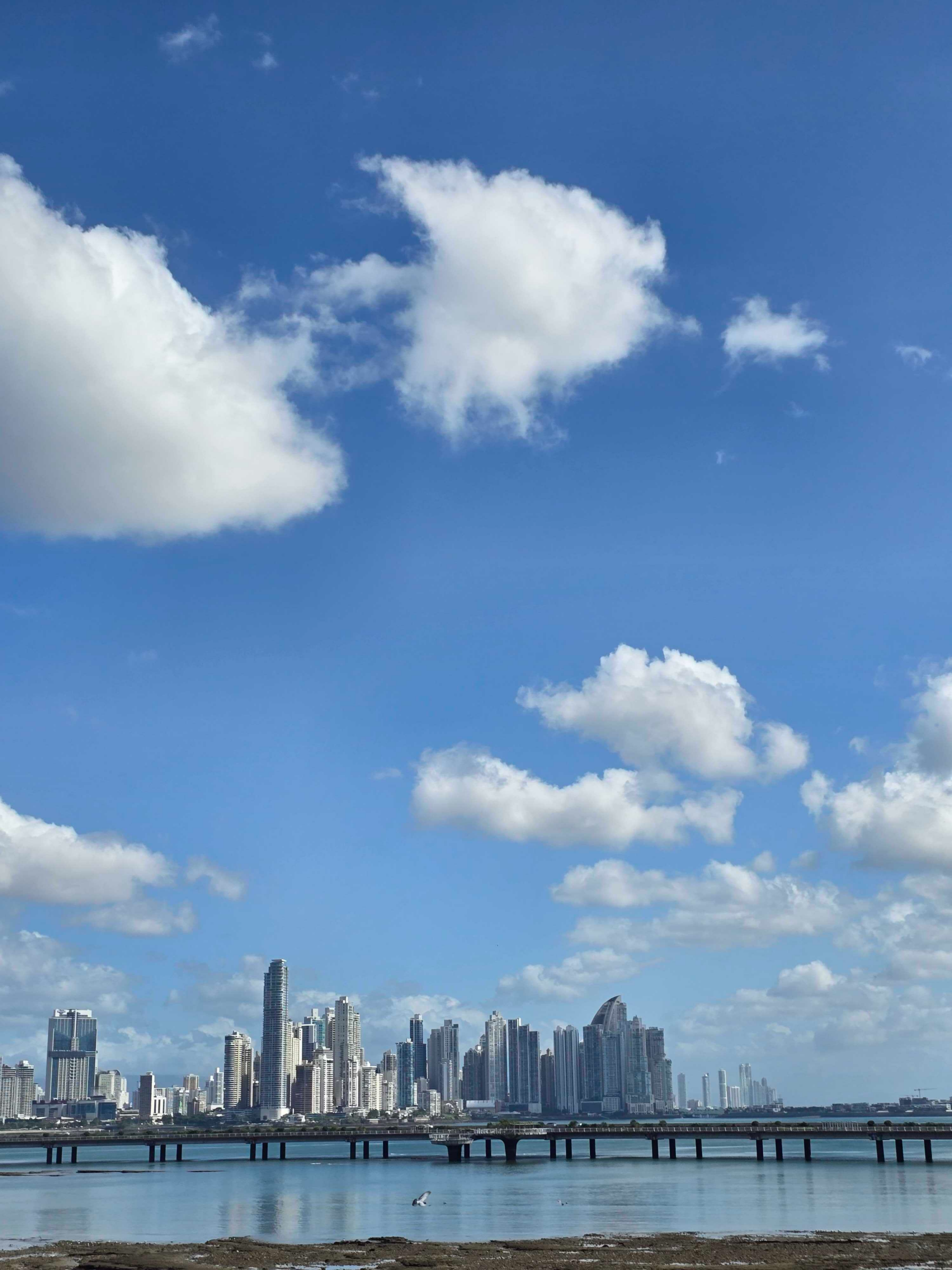
Arriving in Panama City today feels like landing in a more tropical version of Miami. Glass towers line the coast. Luxury malls sit beside logistics offices. Container ships hover offshore, waiting their turn to go through the canal’s locks. A massive airport connects continents. The city looks global because it has always been oriented outward, and because it doubled down on trade even as much of the world turned inward.
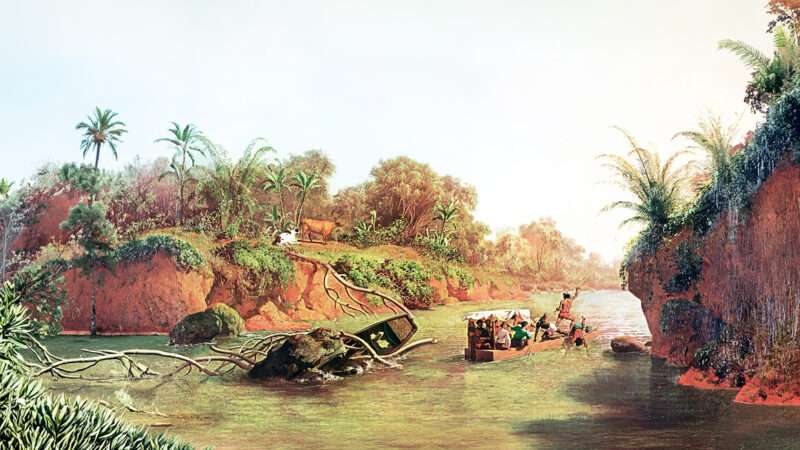
Long before modern borders, indigenous peoples used the narrow 50-mile isthmus to move goods between the Atlantic and Pacific. Trade networks followed rivers and overland routes, linking communities and facilitating the exchange of goods such as salt, cacao, feathers, ceramics, and obsidian.
The narrow geography defined Panama’s value. The Spanish recognized this almost immediately. After arriving in the 16th century, they built directly on existing indigenous trade routes, transforming the isthmus into a central artery of imperial commerce. Gold and silver from Peru crossed from the Pacific to Caribbean ports, where galleon ships waited to carry the goods to Europe. Later on, goods from Asia also crossed the isthmus, linking the Far East to European markets.
When imperial trade declined in the 18th century, Panama declined with it. Its next revival came not from ideology, but from demand. In the mid-19th century, the California Gold Rush created an urgent need for faster Atlantic-Pacific crossings, and Panama’s geography again made it indispensable.
The Panama Railroad, completed in 1855, connected the two oceans in hours rather than weeks. It was the first true transcontinental railroad in the Americas. Passengers, cargo, and capital flooded the region, reinforcing a familiar lesson: The movement of goods and people was Panama’s comparative advantage.
The canal was the next logical step.
French engineers failed to build it in the late 19th century, undone by disease, landslides, and technical limits. The United States took over after Panama separated from Colombia in 1903, beginning construction in 1904. When the canal opened in 1914, it rewired global trade. Shipping routes shortened and costs fell. Panama once again anchored itself to the movement of the world.
For much of the 20th century, the Canal Zone functioned as a U.S. enclave, limiting Panama’s control over its most valuable asset. Domestic politics were often unstable, culminating in the military dictatorship of Manuel Noriega in the 1980s and the economic isolation that resulted.
Even so, Panama’s role as a trading crossroads proved more resilient than its politics. The Colón Free Trade Zone, established in 1948, grew into one of the world’s largest free trade zones, while ports, reexport businesses, and financial services developed around the canal.
After Noriega’s removal and the restoration of civilian rule, the 1990s marked a period of institutional stabilization. When the canal was transferred back to Panamanian control in 1999, Panama gained the ability to align control of the waterway with an economic model already in place.
What followed was integration and scale. Ports, logistics parks, free trade zones, and an airline hub coalesced into a single connective platform for the Americas. The canal’s expansion in 2016, with new locks allowing larger ships to pass through, accelerated that model. Panama developed one of the highest gross domestic products per capita in Latin America by leaning harder into trade.
More than a century after it opened, the Panama Canal still carries roughly 5 percent of global maritime trade, including 40 percent of U.S. container traffic. That scale explains why the canal keeps resurfacing in geopolitical debates.
In recent years, trade routes have been reframed as strategic assets, and openness as a liability. Tariffs, industrial policy, and protectionism have returned to the center of political life. President Donald Trump’s suggestion that the U.S. should take back the canal on the grounds that China now operates it fits squarely within that unfortunate shift.
Panama City offers a different model. Its economy was not built by shielding domestic industry or weaponizing access, but by making movement of goods, capital, and people easier. The city’s skyline, ports, and constant flow of ships reflect an economy designed around connection rather than control.
The post Long Before the Canal, Global Trade Built Panama City appeared first on Reason.com.
from Latest – Reason.com https://ift.tt/NmOqiDU
via IFTTT