The Complicated Reality Behind High Gas Prices
Authored by Petr Svab via The Epoch Times,
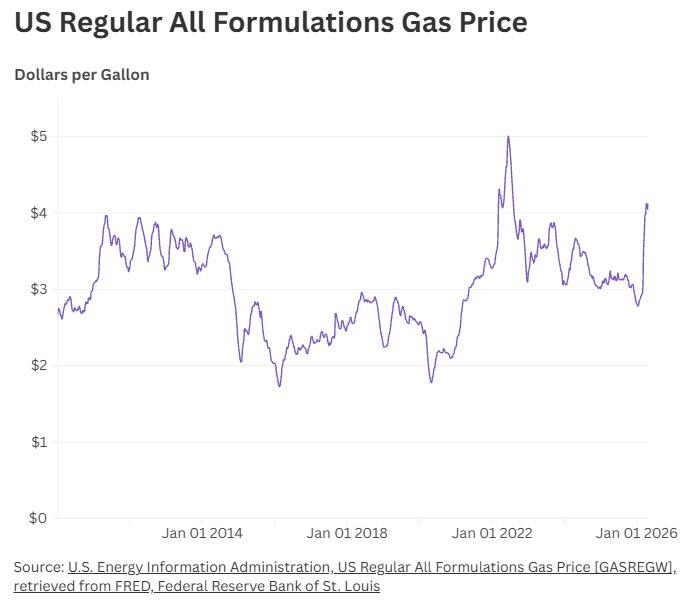
Average gas prices in the United States have gone up by almost 40 percent since March 1.
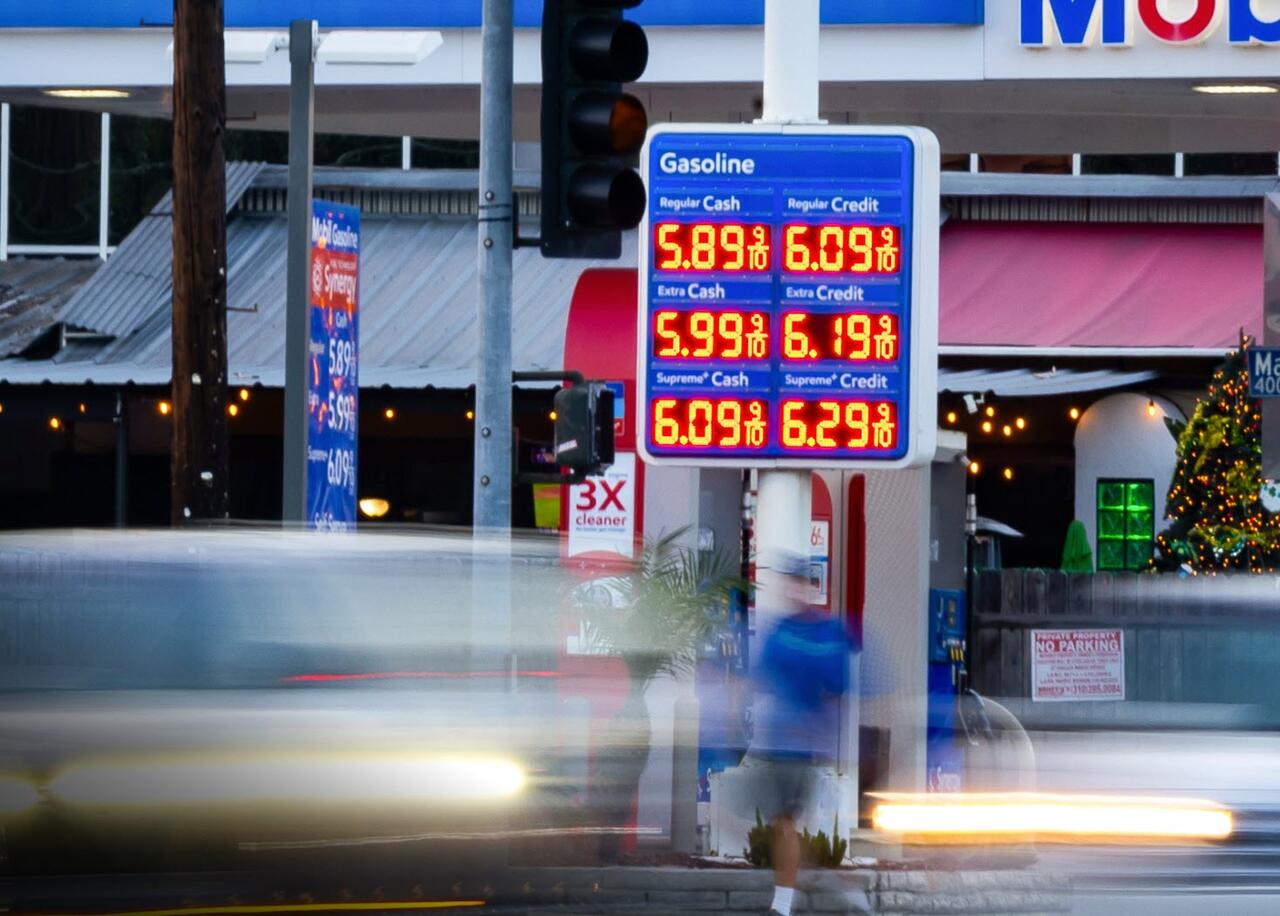
The reason appears straightforward: Iran has blocked the Strait of Hormuz in response to the U.S. military operation that decapitated its regime and degraded its military. Hundreds of tankers trapped behind the strait cannot deliver their oil, depriving the world of 7 percent to 10 percent of its supply.
Although that explains drastic price increases and even shortages in Europe and Asia, the United States gets almost no oil through the strait. In theory, the country should be energy-independent, as it is a net petroleum exporter.
But in reality, the United States is highly intertwined with the global oil market, and there is little chance it could disentangle itself from it, according to experts who spoke to The Epoch Times.
“Oil is a fungible commodity that can be shipped anywhere in the world, and that is why everyone is impacted by the events,” said Patrick De Haan, petroleum analyst with gas price tracker GasBuddy.
Countries facing shortages are willing to pay top dollar for U.S. oil.
“There’s huge demand to export the product,“ said Paul Sankey, an oil market analyst and president of Sankey Research.
”So that draws the prices up.”
If the U.S. government were to impose limits on oil exports, it would likely cause more problems than it would solve, the experts said.
Light Sweet Versus Heavy Sour
Not all crude oil is made the same. The oil produced in the United States through fracking is called “light sweet.” It is the easiest to refine and contains few impurities such as sulphur.
Much of Middle Eastern oil is categorized as “medium.” It is still fairly easy to process, but it is thicker and contains more sulphur. Canada largely produces “heavy sour” oil. It is even thicker and more sulphurous. Venezuela, despite its gigantic reserves, produces mostly very heavy, sour oil that few refineries can process.
U.S. refineries are generally geared toward heavier oil.
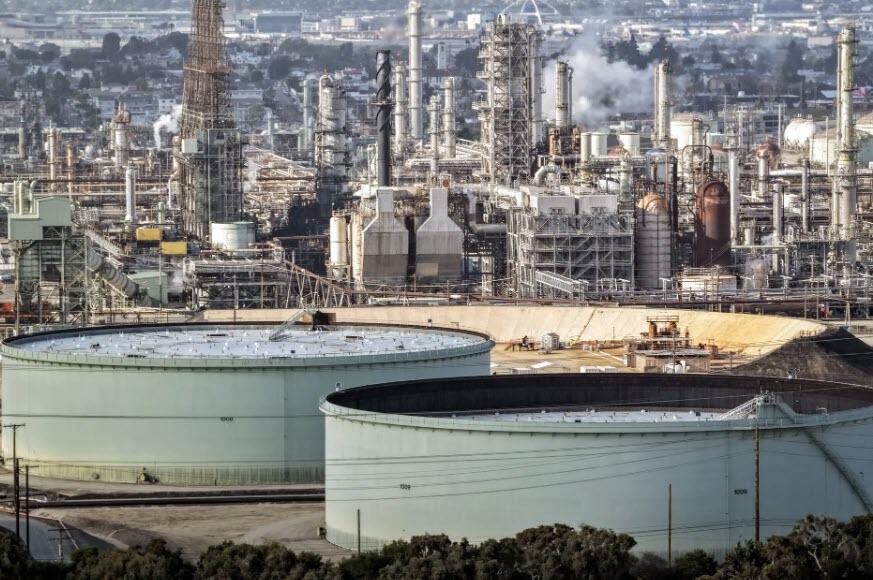
An aerial view shows the Chevron El Segundo refinery, one of California’s largest petroleum processing facilities, in Manhattan Beach, Calif., on April 8, 2026. Average gas prices in the United States have gone up by almost 40 percent since March 1 amid the war in Iran. Mario Tama/Getty Images
“Most of our refineries were built at least half a century ago now,“ said David Blackmon, an energy policy analyst and adviser. ”They were set up to refine heavier grades of crude oil coming in from the Middle East and Mexico, the big producing countries at that time, because we were heavily dependent on foreign oil during those days.”
Refineries have been adjusting to processing lighter grades, Sankey noted.
But switching from one grade to another remains difficult, said Keming Ma, former process engineer at a major refinery in Asia. It is easier to change the oil than the refinery.
“They blend the oil with a different grade to accommodate the refinery,” he said.
In fact, refineries have an incentive to maintain their setup for heavier oil, according to Robert Dauffenbach, an energy expert and professor emeritus at the University of Oklahoma’s Price College of Business.
“These companies have invested billions of dollars into being able to take advantage of the price spread between heavier sour crude, which, quite frankly, can’t be run at every single refinery, so it tends to be cheaper,” he said.
And so the United States exports about 5 million barrels of largely light oil daily, while importing more than 6 million barrels of largely heavy oil.
“We’re kind of maxed out on the amount of light, sweet crude we can run out of refineries,” Dauffenbach said.
And there is another reason why heavier oil is desirable.
Refineries separate crude oil through distillation into fractions, from the lightest such as methane and propane, through petrol (gasoline), and then into heavier oils such as kerosene, diesel, and heating oil until only asphalt is left. The lighter the crude, the less of the heavier fractions it yields.
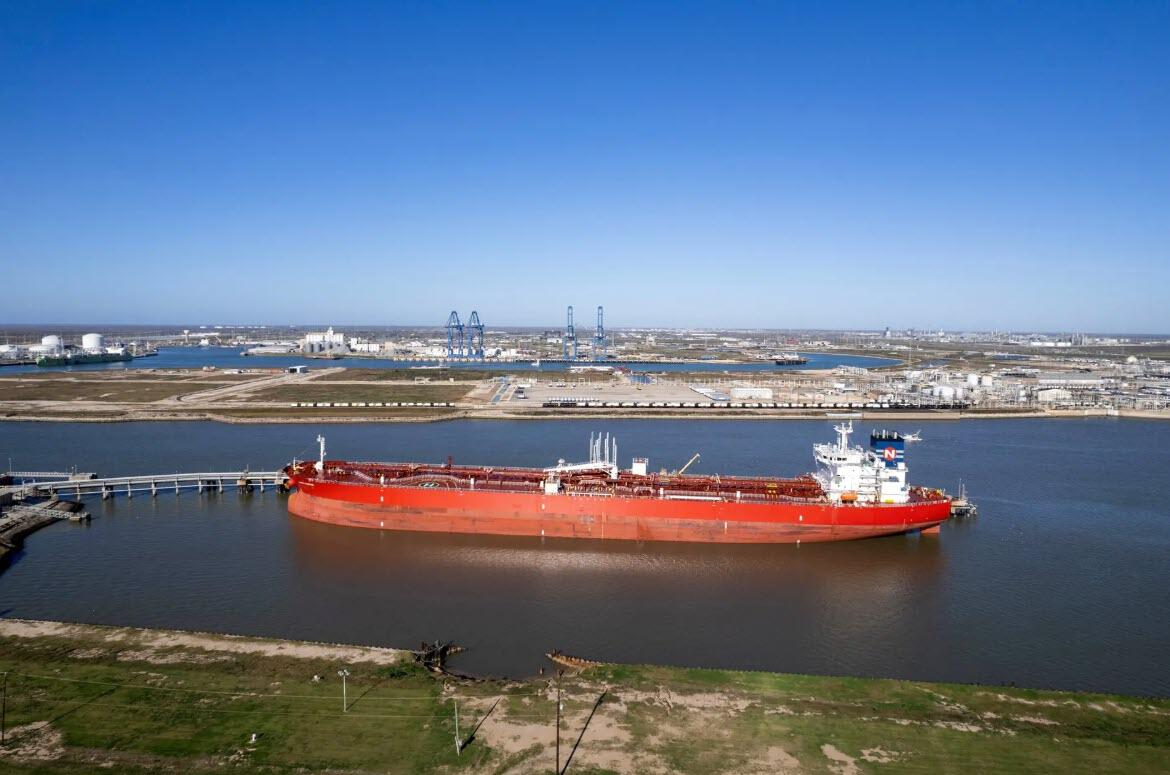
An aerial photo shows the Nave Photon crude oil tanker carrying Venezuelan oil docked in Freeport, Texas, on Jan. 16, 2026. Venezuela’s crude is largely heavy and sour—thicker and more sulphurous—making it difficult for most refineries to process. Mark Felix/AFP via Getty Images
“We import heavy sour … because we need it for our refineries to make heavier products like diesel and jet fuel,” said Tracy Shuchart, a senior economist at NinjaTrader Group.
Export Ban Repercussions
“[Limiting exports] would likely push prices down here temporarily, but it would negatively impact many of our major allies that are now relying on us,” De Haan said.
The United States produces about 13 million barrels of crude per day, but its refineries, now running virtually at maximum capacity, guzzle about 16 million barrels per day, Dauffenbach said. The refineries produce more than Americans consume.
“America is a big winner from the exports,“ Sankey said.
”So you’d be shooting yourself in the foot if you banned exports.”
A ban would also throw a wrench into the supply chain.
“Our domestic storage would fill up with this light grade of crude coming out of the shale place, and we’d have to stop importing that heavier crude that we need to manufacture diesel,” Blackmon said.

A farmer prepares a blend of minerals, biologicals, and fertilizers to be sprayed onto fields during seeding in Hickory, N.C., on April 10, 2026. Experts say demand for fuels such as diesel and jet fuel is one reason U.S. refineries favor heavier crude. Grant Baldwin/AFP via Getty Images
It is the heavier fractions “that are very highly desirable right now,” De Haan said.
“Right now, the price of diesel is up even more significantly than gasoline,“ he said. ”So if anything, refiners would like more heavy oil right now.”
An export ban would also have a chilling effect on the industry.
“You’re going to disincentivize more export infrastructure,” Sankey said.
There is not much risk that exports would dent domestic supply too much, he added.
“There’s a limit on how much we can export as well,“ he said. ”So that’s probably not going to be a huge pull above a certain level of exports, which will be the capacity maximization of the existing export infrastructure.”
The Trump administration has already made clear that an export ban is not on the table.
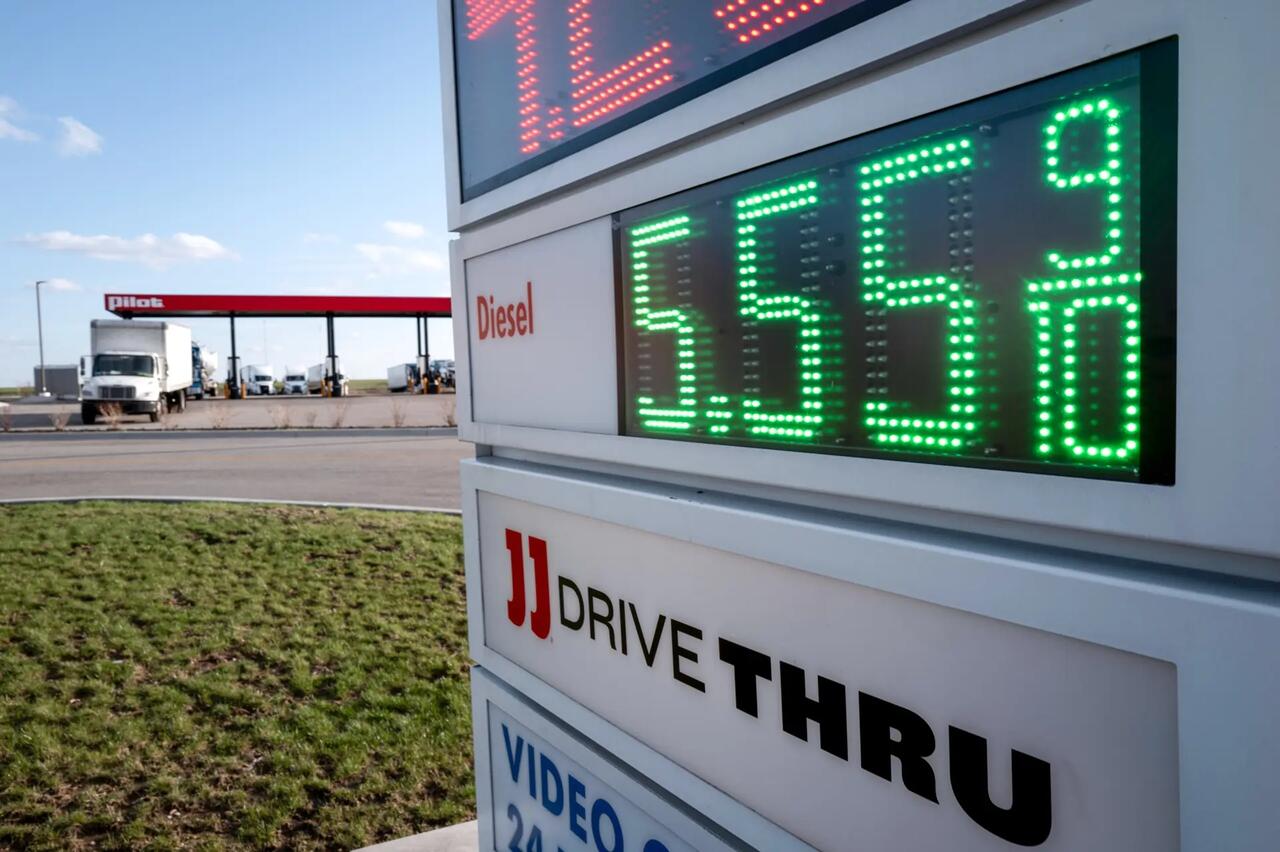
Fuel prices are displayed at a truck stop in Belvidere, Ill., on April 6, 2026. With diesel prices rising faster than gasoline, refiners are turning to import heavier crude needed to produce diesel, experts said. Scott Olson/Getty Images
What Is Next?
The most obvious way out of the current conundrum is to open the Strait of Hormuz. Yet it is not clear how and when that will happen.
Iran does not have the capacity to block the strait outright. Yet it can still issue a credible threat to attack passing vessels. In response, insurance companies are not willing to insure ships, hence shipping companies are not willing to risk passage.
The Trump administration is trying to negotiate a deal with Iran amid a rolling ceasefire. Meanwhile, the Islamic Revolutionary Guard Corps, a part of Iran’s military that answers to the clerical regime leadership, continues to threaten the crucial shipping lane.
The uncertainty leaves traders scrambling for clues about where oil prices are heading.
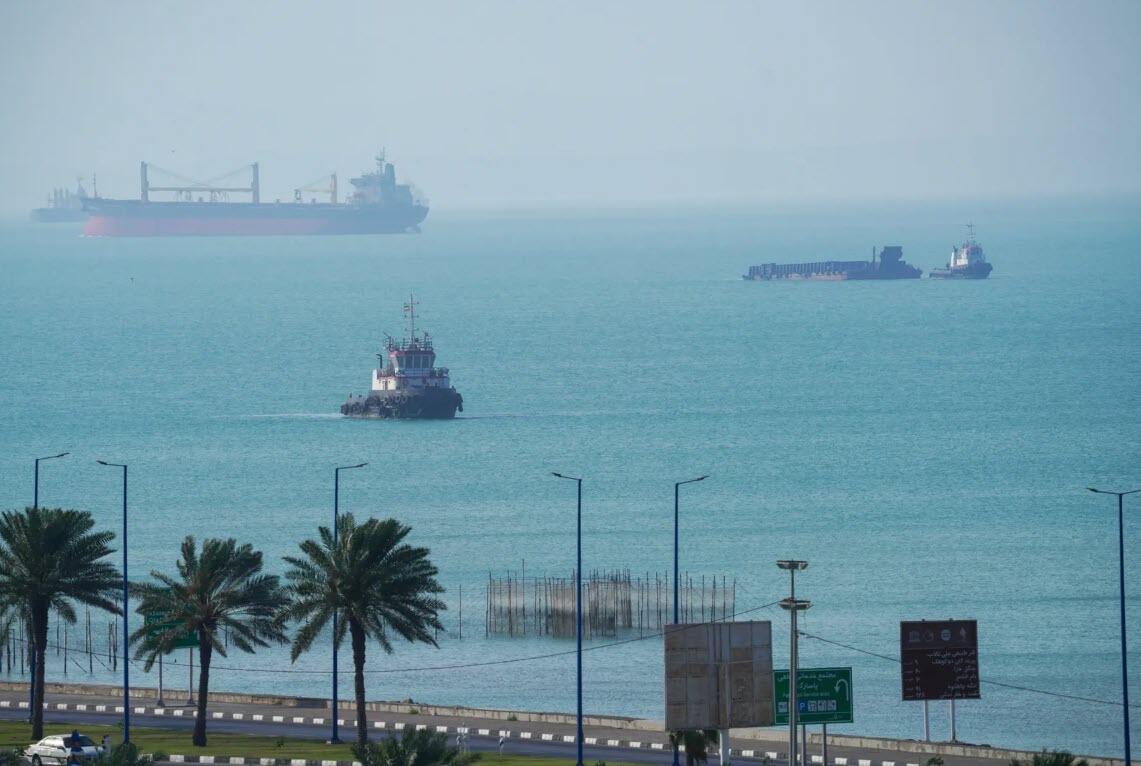
Boats navigate the sea in the Strait of Hormuz near Qeshm Island, Iran, on April 28, 2026. The Trump administration is trying to negotiate a deal with Iran amid a rolling ceasefire, but it rejected Iran’s last offer and continues to blockade Iran’s ports. Asghar Besharati/Getty Images
“The market is trying to figure this out,” Dauffenbach said.
It seems, though, that the general tendency is for prices to rise.
“It’s pretty clear in my mind that oil prices are going to continue to slowly rise until there’s a resolution here,” De Haan said.
“That’s what we’re starting to see again. The ceasefire and the peace talks only temporarily pushed the oil prices lower.”
The initial price shock was not as drastic as some expected, in part because of the supply chain lag.
“Going into this conflict, we had some cushions against the supply shock,” Blackmon said.
“We had [about] 400 million barrels of oil already in tankers on the water that provided a cushion. That’s about four days of global supply.”
In addition, the United States, Japan, and China have substantial oil reserves.
“But those are now being depleted on a daily basis,“ he said. ”And, last I saw, about two-thirds of that cushion on the water has been delivered now.”
Still, the United States is much better off than many other countries, particularly in Asia and Europe.
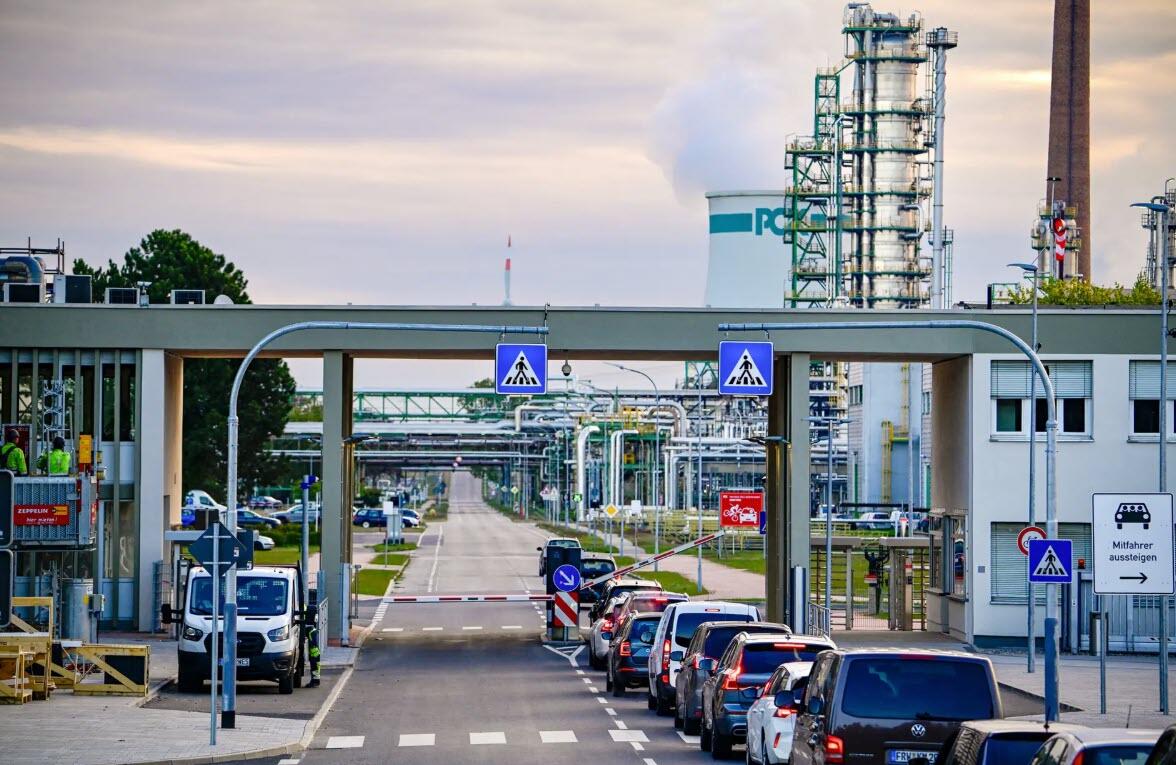
Cars queue at an entry gate to the PCK Schwedt refinery in Schwedt, Germany, on April 30, 2026. Fuel prices in Germany have surged to more than $9 per gallon amid a global energy crisis tied to the Iran conflict. Tobias Schwarz/AFP via Getty Images
Americans experienced “a sticker shock” when gasoline went from $3 to $4, but “the gasoline price is already low here in global terms,” Sankey said, noting that in Germany, gas is now more than $9 per gallon.
The United States benefits not only from domestic supply, but also from substantial imports from Canada.
“About 95 percent of what we consume is here in North America,” Blackmon said.
“We get a little from Mexico, but their industry has really gone downhill in recent years. And then we get some from Venezuela, and some from Brazil and Guyana.”
Canadian oil is generally cheaper “because it has limited means to flow out to the global marketplace,” De Haan said, although he noted that Canada recently opened a pipeline to the West Coast, which will allow it to access other markets in the future.
Thus, Americans are seeing higher prices, but at least no shortages.
“We’re insulated from the big supply shock, because we have such a high degree of energy security,” Blackmon said.
Policy Fixes
Even without export restrictions, the U.S. federal government has some policy options for easing the situation. One thing it has already done is suspend the Jones Act, which states that only American-made and American-flagged ships with American crews can run between American ports. This restriction has previously increased shipping costs between American ports.
Although helpful, it does not move the price much, Dauffenbach said.
“Now they’re getting to the point where there’s not much difference between Jones Act and internationally flagged [ships] because there’s a lack of ships right now,” he said.
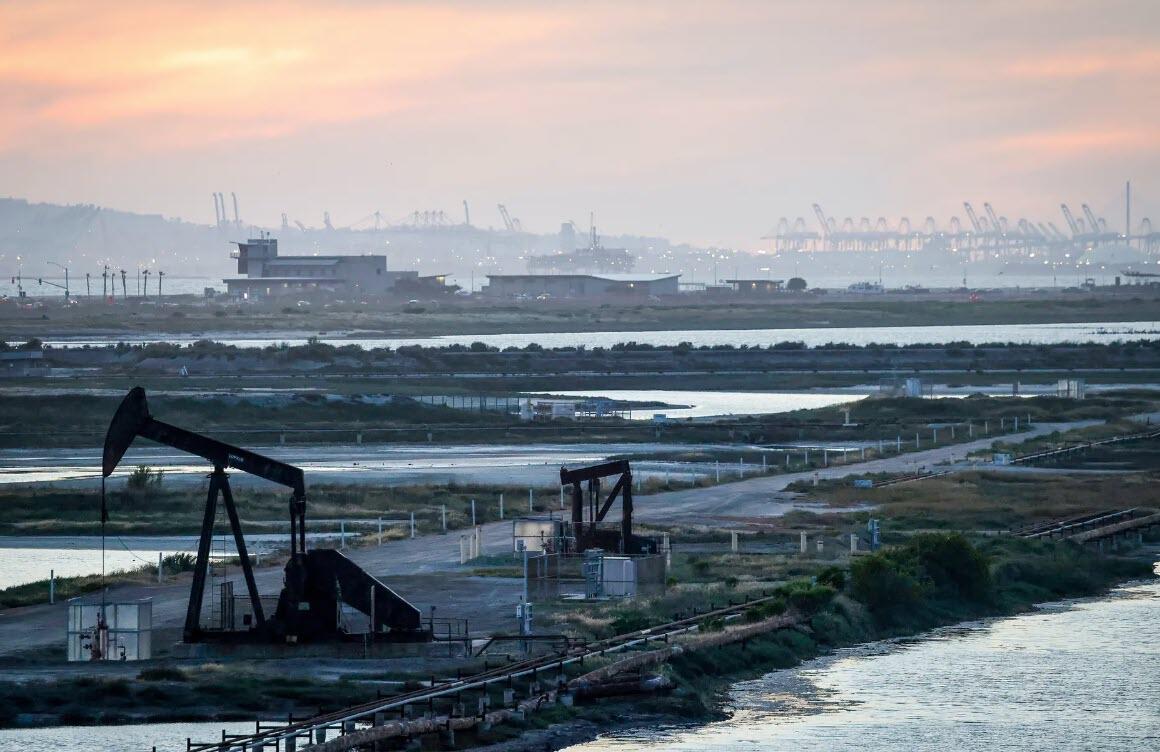
A pumpjack stands idle in the Huntington Beach oil field, with port cranes visible in the distance, in Huntington Beach, Calif., on April 23, 2026. America benefits not only from domestic supply, but also from substantial imports from Canada. Mario Tama/Getty Images
The government could call a gas tax holiday.
“It would bring prices down immediately by 18.4 cents a gallon,” he said.
Individual states could also roll back their gas taxes. Georgia has already done so, he noted.
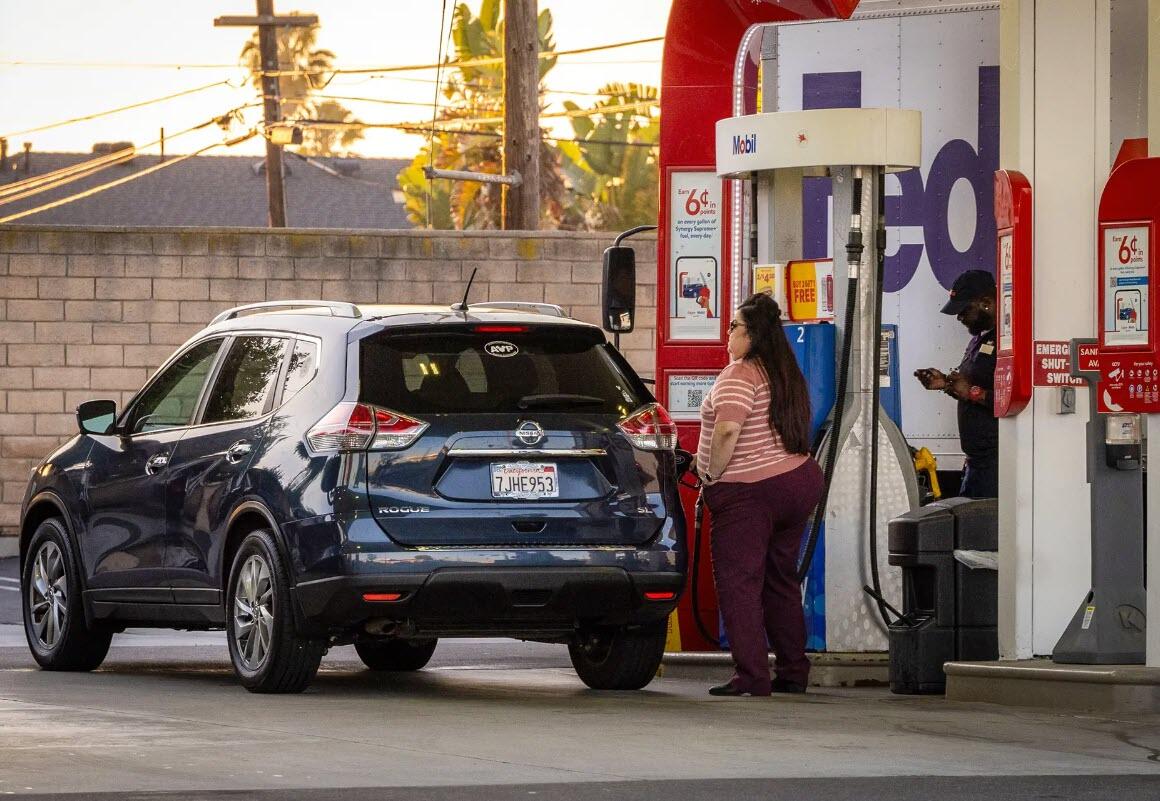
Customers fill up with gas in Los Angeles on March 11, 2026. Despite higher prices, Americans have not faced shortages because of the country’s “high degree of energy security,” analyst David Blackmon said. John Fredricks/The Epoch Times
The federal government could allow year-round sales of E15, a fuel containing more ethanol.
“Ethanol is cheaper than gasoline right now, so that would help bring down prices a little bit,” he said.
For now, Americans are stuck paying more, as demand remains steady.
“It’s very difficult for demand to dissipate in the United States, unless things get really out of control, just because everybody has to drive everywhere here,” Shuchart said.
Tyler Durden
Thu, 05/07/2026 – 15:25
via ZeroHedge News https://ift.tt/7IfVpH4 Tyler Durden