Persian Gulf Countries ‘Refused’ UAE Call For Joint Attack On Iran
The UAE tried but failed to persuade neighboring states, including Saudi Arabia and Qatar, to take part in a coordinated military attack on Iran, Bloomberg reported Friday, citing sources familiar with the matter.
UAE President Mohammed bin Zayed (MbZ) spoke by phone with Saudi Crown Prince Mohammed bin Salman (MbS) and other regional leaders to propose the coordinated attacks, shortly after the US and Israel launched the war on Iran on February 28, the sources said.
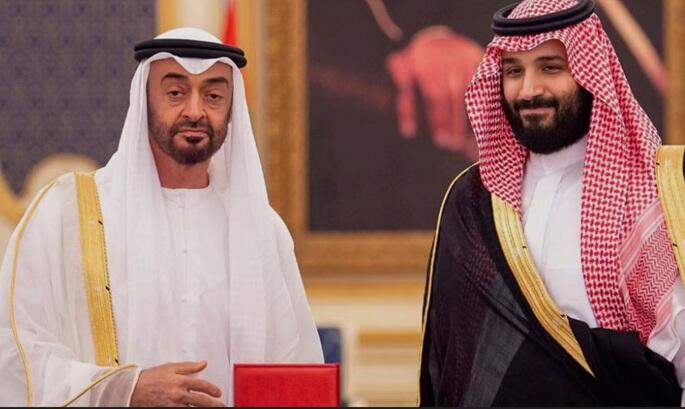
During the calls, MbZ argued that the states that formed the Gulf Cooperation Council (GCC) must act as a bloc to attack Iran alongside the US and Israel. However, his fellow Gulf leaders told him it was “not their war,” according to the report.
When Saudi Crown Prince MbS refused to go along with the scheme, already shaky ties between the UAE and Saudi Arabia were further strained. The Saudi refusal also contributed to the Emirates’ decision to leave OPEC and OPEC+, the oil-producing cartel, and deepen its existing ties to Israel.
The UAE ultimately carried out several strikes against Iran without support from other Gulf states in early March and in April. Iran targeted US bases and oil facilities in Saudi Arabia with drones in the first days of the war. Yet the kingdom focused its efforts on promoting Pakistani-mediated negotiations between Washington and Tehran.
Qatar considered joining the UAE in an attack after Iranian missile strikes hit Doha’s Ras Laffan Industrial City, the world’s largest liquefied natural gas (LNG) facility, causing extensive damage and major fires, a Gulf official said. However, Doha also ultimately chose to de-escalate and throw its support behind negotiations.
Bahrain, Kuwait, and Oman joined Saudi Arabia and Qatar in rejecting the UAE plan. One source said US officials were aware of the UAE effort and that Washington pushed Saudi Arabia and Qatar to join a coordinated military response.
On Thursday, the Financial Times (FT) reported that Saudi Arabia had “floated” the possibility of reaching a “non-aggression pact” between Iran and neighboring states modeled on the 1975 Helsinki Accords, which eased tensions during the Cold War in Europe.
The Saudi-proposed pact for the day after the US-Israeli war on Iran ends reportedly has support from several European capitals, which view it as “the best way to avoid future conflict” and have urged Arab states to support it.
The British daily cites an unnamed Arab diplomat who says that such a pact would be welcomed “by most Arab and Muslim states, as well as by Iran,” although severe concerns remain about Israel’s continued threats to reignite the war regardless of any deal.
Meanwhile, the two-day meeting of BRICS foreign ministers in New Delhi ended on Friday without a joint statement due to “differing views” on the US-Israeli war against Iran and the current situation in West Asia. The foreign ministers expressed “their respective national positions and shared a range of perspectives,” according to a statement issued by India.
The statement added that one member state had “reservations” about issues related to Gaza, as well as security in the Red Sea and the Bab al-Mandab Strait.
Iranian Foreign Minister Abbas Araghchi said during the meeting that “Iran is a country that cannot be divided. The era of American dominance is over.” He also singled out the UAE for blocking the ministerial BRICS statement, and pointed out its “own special relationship with Israel.”
Tyler Durden
Sat, 05/16/2026 – 12:50
via ZeroHedge News https://ift.tt/Uc3MdXI Tyler Durden