UBS Reactivates Supply-Chain Stress Watch After Detecting Alarmingly Rapid Deterioration
One week after Maersk CEO Vincent Clerc warned CNBC of a “new wake-up call” for global trade amid the ongoing disruption of the Strait of Hormuz and a deepening energy crisis that could intensify further in June, UBS analysts are out with a new note telling clients they have “reactivated” their Global Supply Chain Stress Index in response to increasingly alarming signals emerging across global logistics networks.
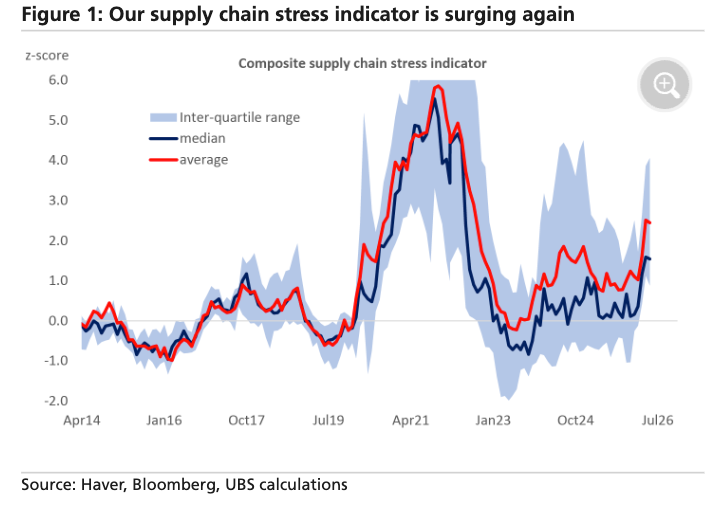
“Supply chain stress is rising at its fastest pace since the early pandemic,” UBS analyst Pierre Lafourcade wrote in a note on Sunday.
Lafourcade explained that global supply chain stress is emerging quickly, with the index rising by 1.2 standard deviations in March and April, the second-largest two-month jump since July 2020.
“We are now reactivating it to assess disruptions stemming from the Middle East conflict,” he said, noting that the last time the index was published was in February 2023, or the period in which Covid snarled supply chains.
The Global Supply Chain Stress Index is surging again.
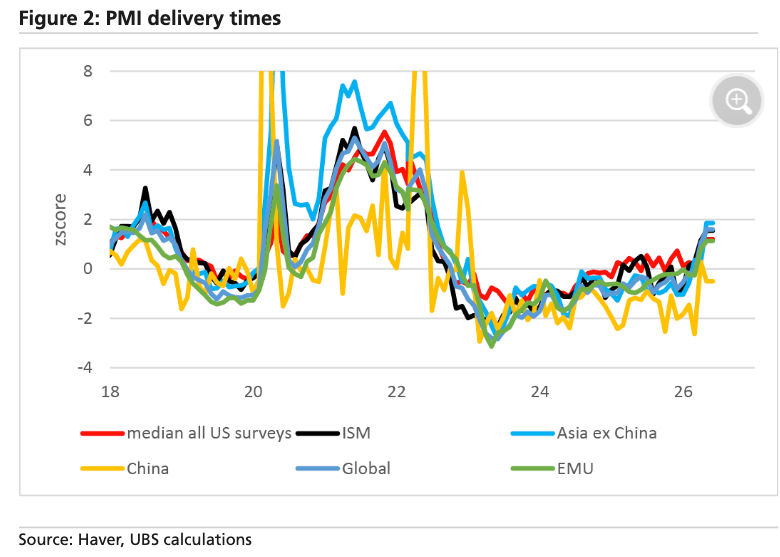
PMI delivery times are increasing again.
The full note can be read by Professional subscribers here at our new Marketdesk.ai portal.
Related:
-
Maersk CEO Warns Iran War Is A “New Wake-Up Call” For Global Trade
-
Trump’s Project Freedom Likely Triggered By Oil Market’s One-Month Countdown To Chaos
JPMorgan analysts warned that the world is spiraling toward a catastrophic cliff-edge shortage of crude oil if the maritime chokepoint remains blocked for another four weeks.
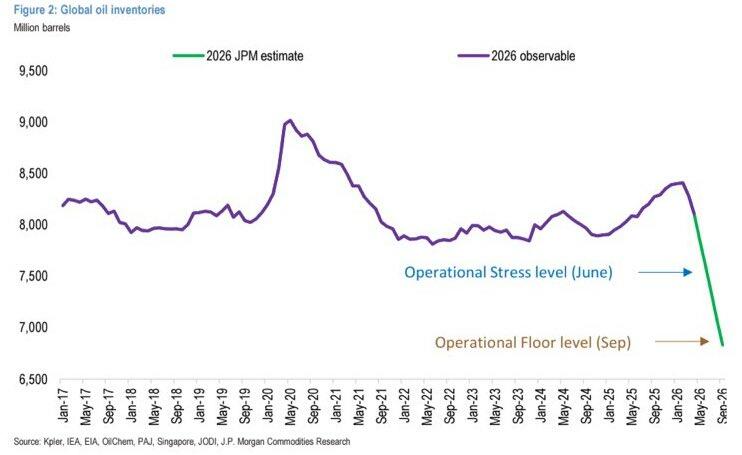
With that said, June is only a few weeks away, and early indications suggest that continued disruption of the maritime chokepoint could begin to materially affect global trade next month, with risks extending well beyond that if the chokepoint remains shuttered.
Separately, with Brent back in triple-digit territory, UBS analyst Dimitrios Laloudakis pointed to surging yields worldwide:
US yields join G10 peers in estimating rate hikes for 2026. 2y yields comfortably above moving averages. Cross asset implications should drag equities lower, vol higher, and duration to selloff.
It appears something has to give if Hormuz remains choked by the end of the month.
Tyler Durden
Tue, 05/19/2026 – 04:15
via ZeroHedge News https://ift.tt/cPpl5Jt Tyler Durden