The Cost Of The Grain That Feeds Half The World Just Posted Biggest Monthly Surge Since 2008
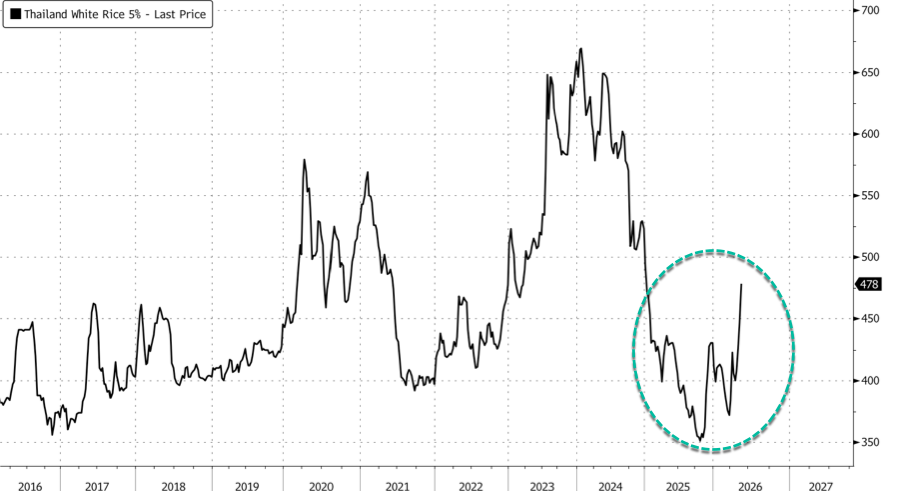
Asian rice prices logged their biggest monthly gain in nearly two decades in May, as a Gulf energy shock collides with an expected El Niño event later this year. The spike adds to the mounting risks of a broader food price shock that could emerge as soon as six months from now.
Any time rice prices spike, it is a major concern because the grain feeds more than half the world’s population, estimated at 3.5 to 4 billion people.
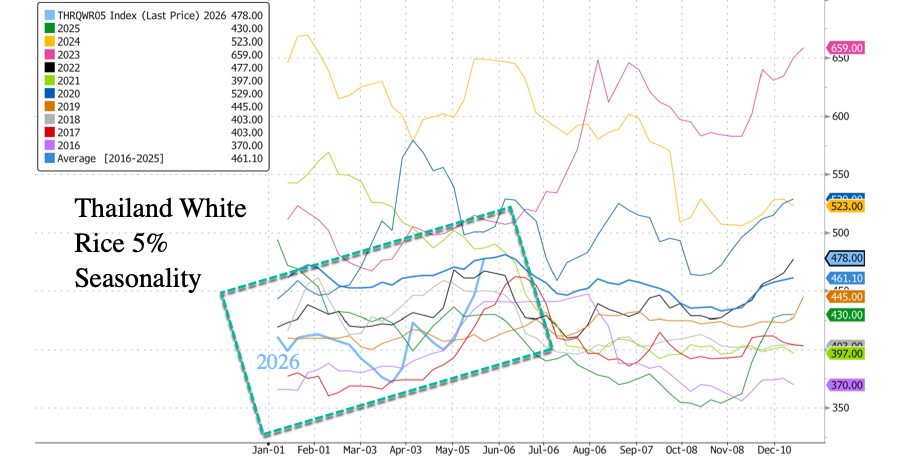
Thailand white rice, a regional Asian benchmark, surged 20% in May, the largest monthly increase in data going back to 2008, according to Bloomberg. Chicago rice futures rose 15% last month.
Seasonality:
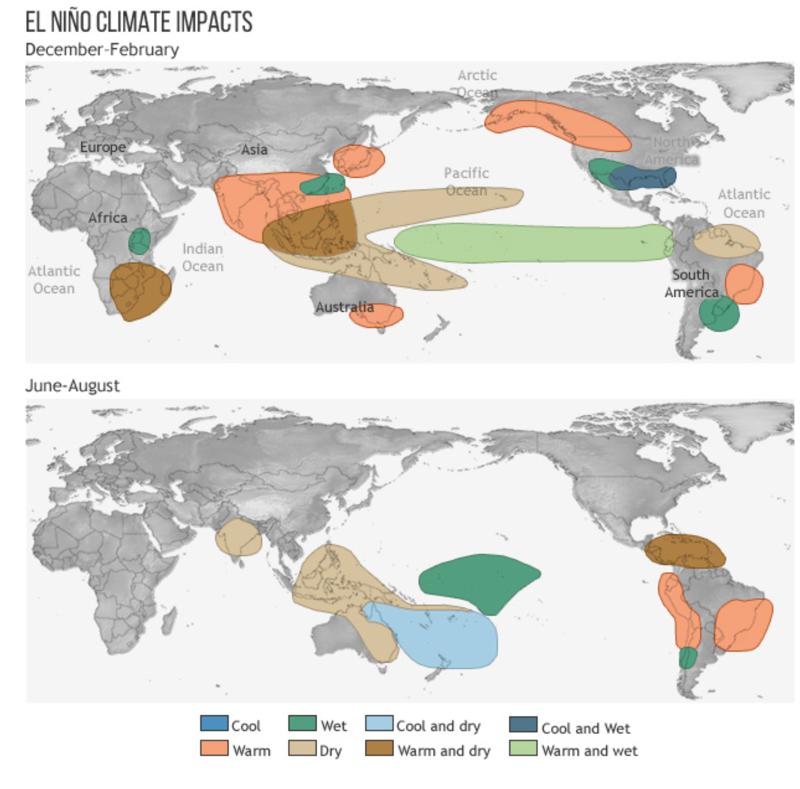
BMI analyst Bin Hui Ong warned that an expected El Niño event later this year will unleash adverse weather conditions across major rice-growing belts in Asia, including hotter, drier conditions. She noted this adds further upside to rice prices in the months ahead.
It is not just the threat of a severe El Niño event on analysts’ radars. There are also continued elevated diesel and fertilizer costs tied to disruptions around the Strait of Hormuz. This will further weigh on rice production yields across import-reliant Asia.
Rice farming is already highly fertilizer-intensive, while irrigation systems often depend on diesel-powered pumps.
In Vietnam’s Vinh Long province, a farmer told Bloomberg that he plans to skip one of his usual three annual crops due to rising input costs and extreme heat.
Fertilizer prices in Thailand, Cambodia, and the Philippines have soared by nearly 50% since late February, according to the International Rice Research Institute.
The Philippines has warned that a strong El Niño could cut rice production by up to 700,000 tons, or 3.5% of its annual production target.
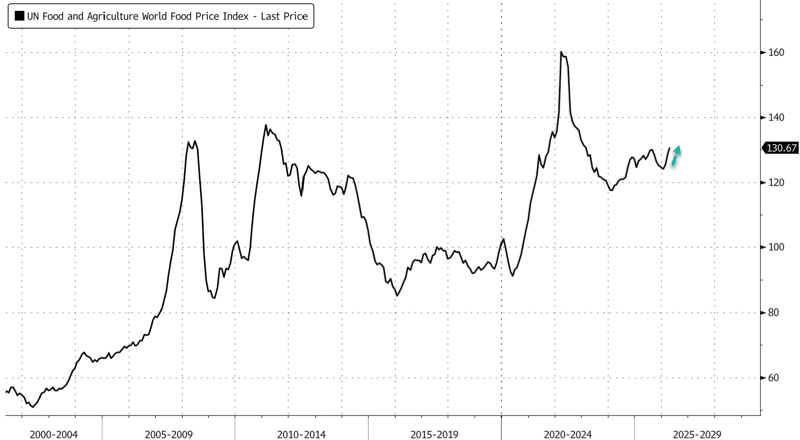
Already, the United Nations Food and Agriculture Organization’s FAO Food Price Index, which tracks monthly changes in the international prices of a basket of globally traded food commodities, is trending upward and risks a further leg higher.
Alexandra Prokopenko, a fellow at the Carnegie Russia Eurasia Center, warned in mid-March that disruptions to the Strait of Hormuz would spark shortages of energy and fertilizers, translating into higher food prices in “six to nine months from now.”
Related:
-
We Are 6 Months From Global Food Shortages Because Farmers Are Facing A Quadruple Whammy Crisis
-
Everyone Talks About The Cost Of Gasoline… Soon Everyone Will Be Talking About The Cost Of Food
Last month, ZeroHedge Debates held a roundtable to ask: How bad will the food inflation mess get?
View here:
Visual Capitalist’s Dorothy Neufeld outlined where food inflation is expected to hit the hardest, on a country-by-country level, this year (see report)
Tyler Durden
Tue, 06/02/2026 – 04:15
via ZeroHedge News https://ift.tt/dHlZmCx Tyler Durden