How China Is Remaking Its Vast Western Frontier
China is undertaking a vast effort to reshape its western frontier, transforming Xinjiang and Tibet from remote borderlands into strategic hubs for industry, energy, tourism and trade, according to a new lengthy report from Financial Times.
Under President Xi Jinping, Beijing is pouring investment into highways, railways, renewable energy projects, manufacturing bases and tourism infrastructure across a region that covers nearly a third of China’s territory. Officials see the west not as a distant hinterland but as a frontline for economic growth, national security and connectivity with Eurasia.

The strategy serves several goals. It aims to integrate Xinjiang and Tibet more deeply into China’s economy, strengthen border security, expand access to critical resources and energy, and make western China a more important link in global supply chains. Analysts say this could also reduce the effectiveness of future Western sanctions by increasing the regions’ economic importance.
The transformation is most visible in Xinjiang. Tourism has surged, with record visitor numbers drawn to ski resorts, scenic villages and newly built infrastructure. International hotel chains are rapidly expanding in the region, while exports, manufacturing and state-backed investment continue to grow. For many Chinese visitors, Xinjiang is increasingly marketed as a safe and attractive destination rather than a politically sensitive region.
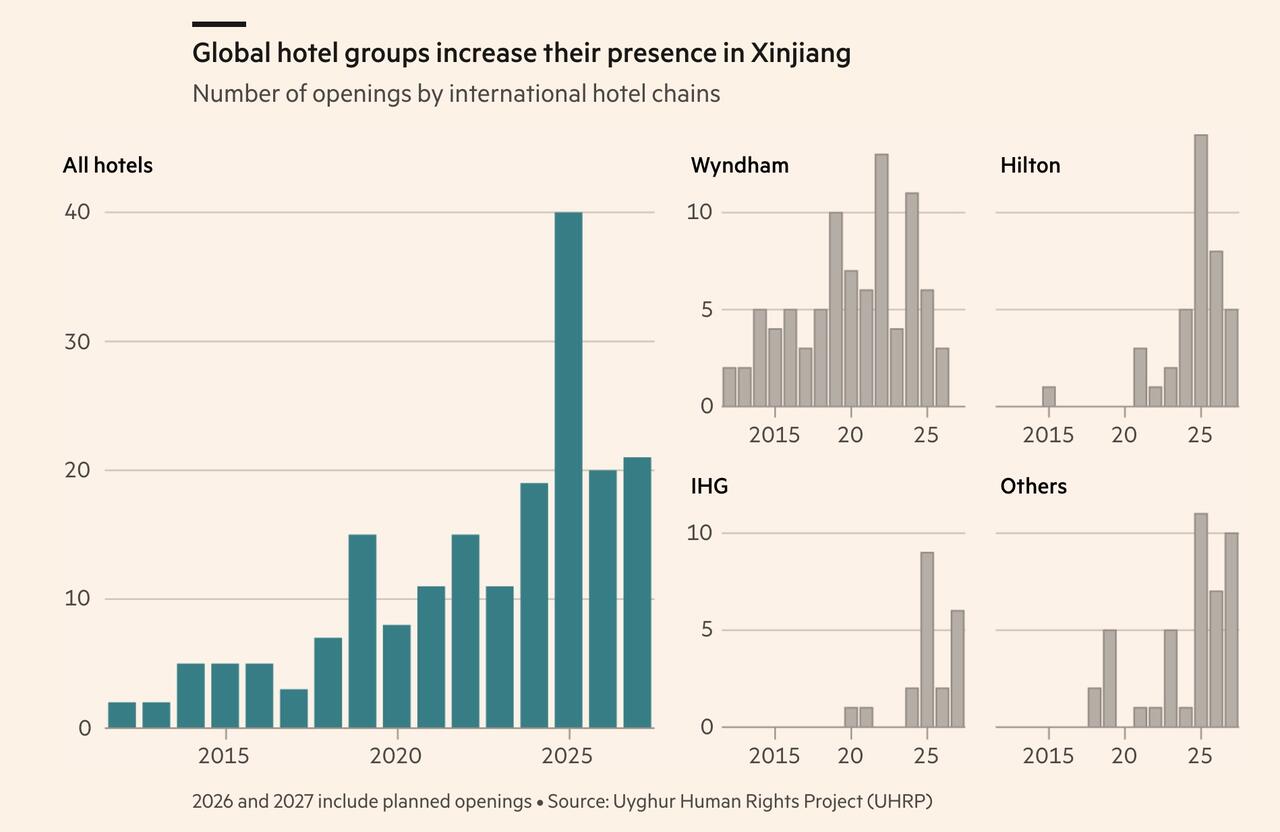
Yet the economic boom has not been accompanied by a rollback of state control. Human rights groups say the surveillance systems, security apparatus and policies that followed the mass detention of Uyghurs remain firmly in place. Critics argue Beijing is pairing economic incentives with continued social control and cultural assimilation.
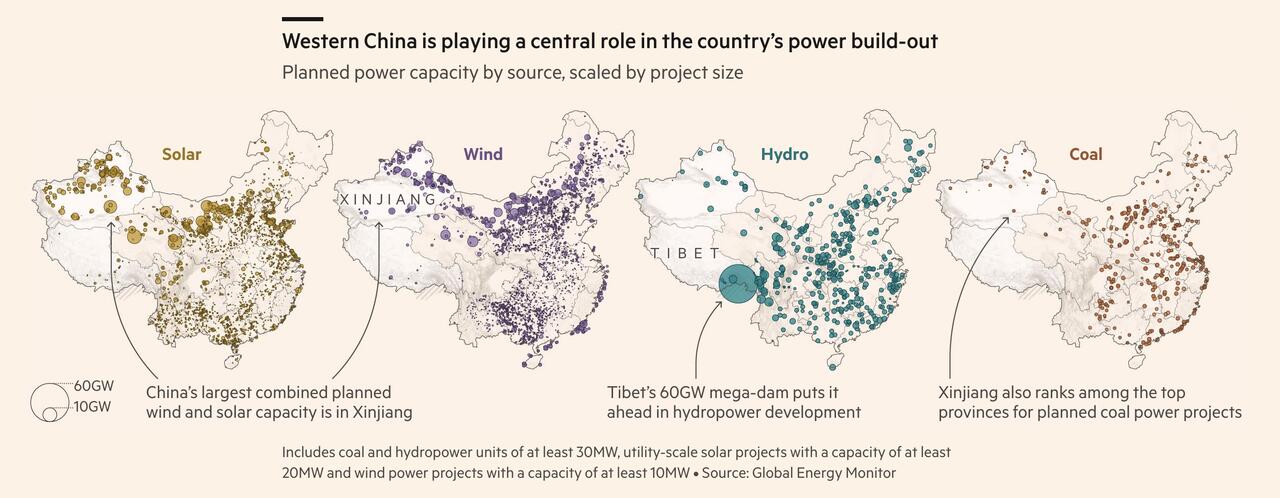
The FT writes that Tibet is undergoing a similar transformation. Massive hydropower projects, transmission networks and mineral extraction plans are positioning the region as a future energy hub. The flagship Yarlung Tsangpo dam could become the world’s largest hydropower project, supplying electricity far beyond Tibet. Supporters see these developments as engines of growth; critics warn of environmental damage, pressure on local communities and risks to downstream countries.
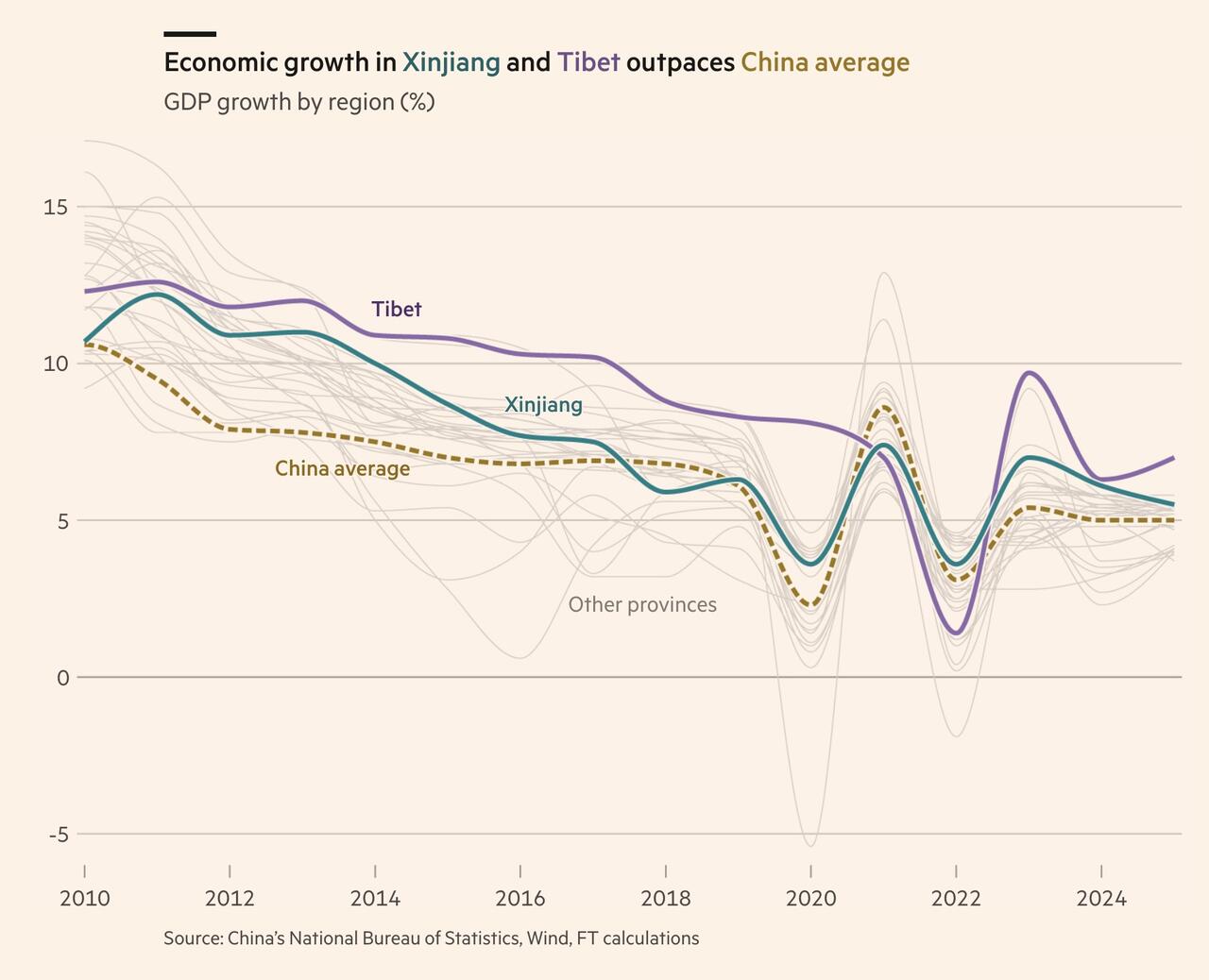
At the same time, rights groups and researchers say policies promoting Mandarin-language education, migration and “ethnic integration” are accelerating the assimilation of Tibetans and Uyghurs into mainstream Han Chinese society. Beijing rejects such criticism, saying it protects minority cultures while promoting development and national unity.
Taken together, the projects signal a long-term effort to remake China’s west. Roads, railways, factories, power plants and tourist attractions are reshaping the region’s economy and its role within China. But the transformation is occurring alongside an extensive security system, raising questions about whether development is being used not only to modernise the frontier but also to cement Beijing’s political control over it.
Tyler Durden
Tue, 06/02/2026 – 23:00
via ZeroHedge News https://ift.tt/xCoze4U Tyler Durden