China’s Mass Production Of Dual-Use Drone Engines Fuels A Global Proliferation Crisis
China’s greatest military advantage may be its ability to convert its massive civilian manufacturing base into wartime production of low-cost, one-way attack drones modeled after Iran’s Shahed-136.
This is especially alarming because the U.S. defense industrial base is only beginning (read here) to prepare for a transition to wartime output, even as a global drone procurement race accelerates. Nation-states are set to stockpile millions of autonomous, low-cost weapons in the years ahead.
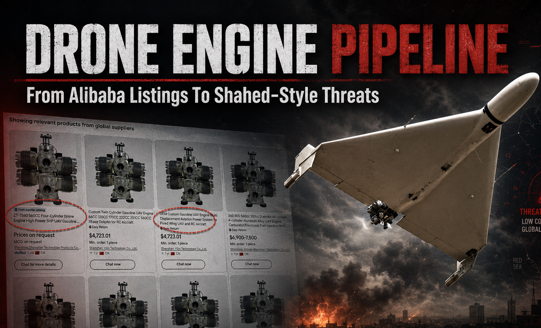
We have already shown readers how Chinese firms appear to be ramping up production of Shahed-style drones, with open-source footage from social media increasingly pointing to expanding production capacity.
Some scary stats on China’s militaro-industrail complex’s capacity:
– China casts more metal products than the next nine countries combined and >5× the US.
– Its shipbuilding capacity is ~200× the US (a total-capacity figure, not per-ship speed).
– It makes ~90% of the world’s… pic.twitter.com/RcxKN4SDZZ— Léo (@LeoKharon) July 13, 2026
The latest finding centers on the drone’s powerplant: the Iranian MADO MD-550 engine, which is used throughout the Shahed family and in Russia’s Geran-2 variant. MD550-type engines are also being mass produced in China and widely advertised on Chinese e-commerce platforms, including Alibaba.
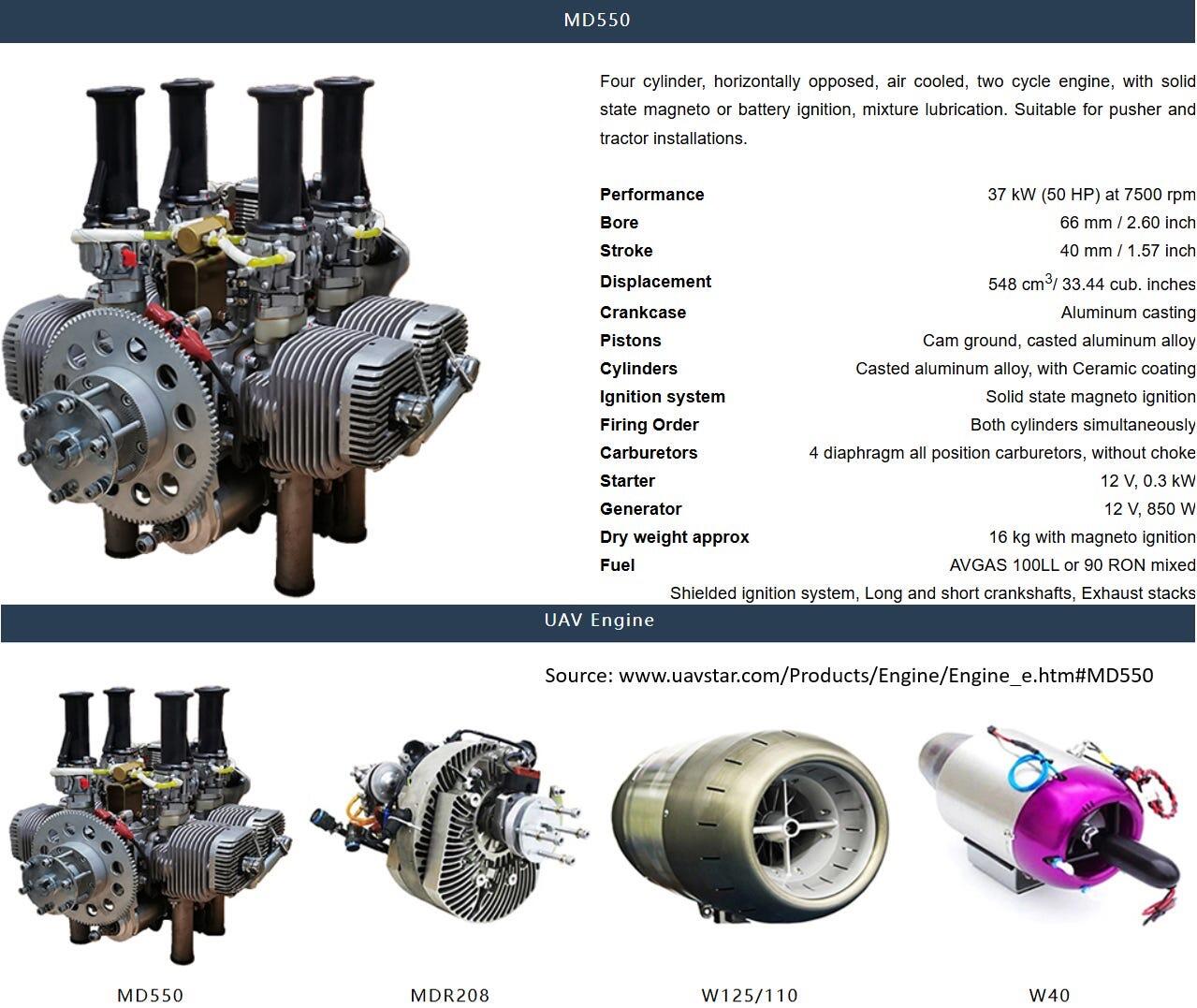
The problem is not that China manufactures small aviation engines; it is that commercially available, dual-use engines can be incorporated into Shahed-style drones with limited visibility into the final buyer or end use.
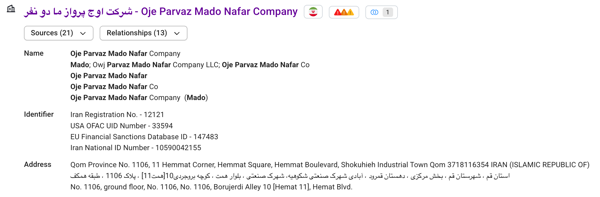
The United Nations has identified the Iranian MADO-550 as the engine used in the Shahed drone family, while the U.S. Treasury has said the sanctioned Oje Parvaz Mado Nafar Company (commonly known as Mado company).
Chinese vendors on Alibaba advertise MD550-type UAV engines in large quantities, although the listings alone do not show any connection to a Chinese state weapons program.
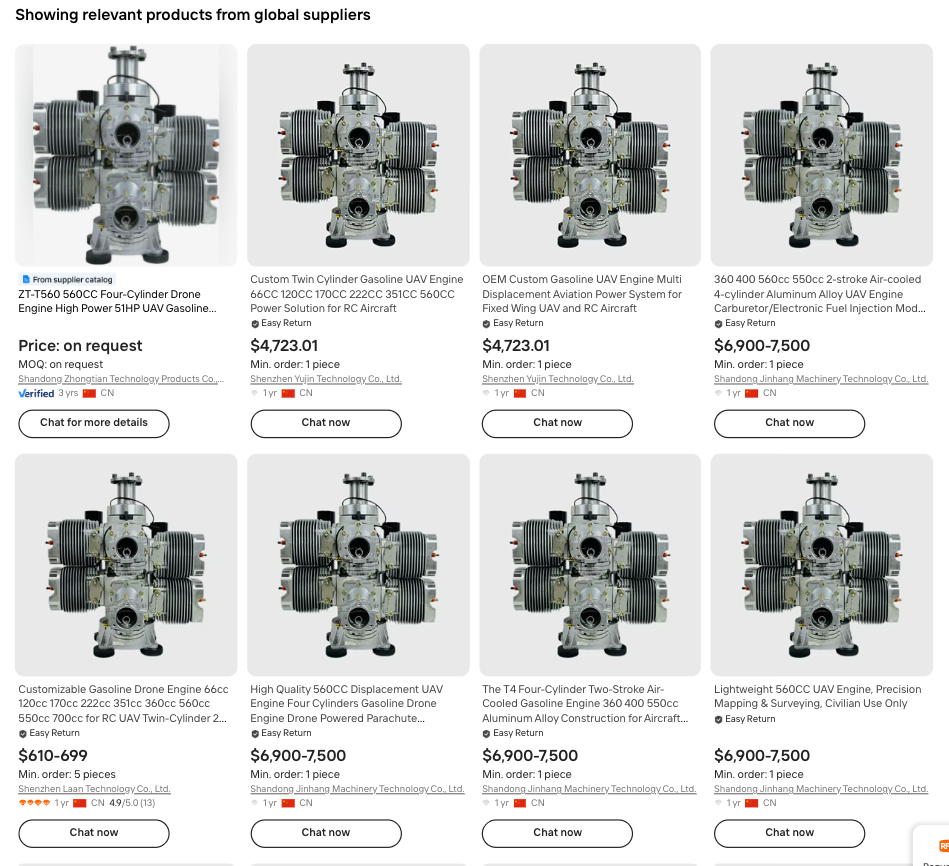
More importantly, the Alibaba listings are evidence of commercial availability, not proof that Beijing is deliberately supplying one-way attack drone programs. However, the listings only highlight the erosion of the boundary between civilian manufacturing and weapons production.
The real threat is that long-range strike drones can increasingly be assembled from commercially produced parts at a scale traditional export-control systems were never designed to contain. This means Shahed-style systems are likely to proliferate far beyond nation-states, spreading to proxies, criminal networks, and other threat actors.
Like this:
Latest evidence:
The question is no longer whether these drones will reach the West, but when.
Tyler Durden
Tue, 07/14/2026 – 23:00
via ZeroHedge News https://ift.tt/7vA3MQi Tyler Durden