The US Department of Homeland Security (DHS) expects to have face, fingerprint, and iris scans of at least 259 million people in its biometrics database by 2022. Is there any way to escape the mass surveillance and tracking that George Orwell warned us all about in his iconic book, 1984?
The Orwellian police state is upon us, but don’t expect it to improve at all. In fact, as George Orwell said: “If you want a vision of the future, imagine a boot stamping on a human face – forever.”
The agency is transitioning from a legacy system called IDENT to a cloud-based system (hosted by Amazon Web Services) known as Homeland Advanced Recognition Technology, or HART. The biometrics collection maintained by DHS is the world’s second-largest, behind only India’s countrywide biometric ID network in size. The traveler data kept by DHS is shared with other US agencies, state and local law enforcement, as well as foreign governments. –Quartz
Your data hasn’t been private for a long time and it won’t be ever again as long as governments believe they are allowed to hoard it – all in the name of keeping you safe, of course. The first two stages of the HART system are being developed by United States defense contractor Northrop Grumman, which won the $95 million contract in February 2018. DHS wasn’t immediately available to comment on its plans for its database.
Biometrics “make it possible to confirm the identity of travelers at any point in their travel,” Kevin McAleenan, US President Donald Trump’s recently-departed acting DHS secretary, told Congress last year. The criteria used by US Customs and Border Protection (CBP) officers, a division of DHS, to screen out specific travelers as suspicious is top secret, but was determined in conjunction with Palantir, the Silicon Valley data-mining firm co-founded by controversial billionaire and ardent Trump supporter Peter Thiel. The EFF said it believes CBP could be tracking travelers “from the moment they begin their internet travel research.”As the group has noted, DHS says “the only way for an individual to ensure he or she is not subject to collection of biometric information when traveling internationally is to refrain from traveling.” –Quartz
Last month’s DHS presentation describes IDENT as an “operational biometric system for rapid identification and verification of subjects using fingerprints, iris, and face modalities.” According to further reporting by Quartz, the new HART database “builds upon the foundational functionality within IDENT,” to include voice data, DNA profiles, “scars, marks, and tattoos,” and the as-yet-undefined “other biometric modalities as required.” EFF researchers caution some of the data will be “highly subjective,” such as information gleaned during “officer encounters” and analysis of people’s “relationship patterns.”
So basically, if you ever leave your house, expect the government to track and monitor your every move and make sure “highly subjective” information is used to ensure you remain enslaved. The “land of free?” I hardly think so.
Russia Says BRICS Seeking Common, Non-Dollar Payment System
The fracturing of the global economy and de-dollarization appear to be full-steam ahead.
Brazil, Russia, India, China, and South Africa, simplified as BRICS, are five emerging national economies that are developing a new universal payment system to challenge the US’ SWIFT international payment network, a Russian official was quoted by Reuters on Thursday.
Russia’s de-dollarization effort has gained momentum in the last several years, in line with President Putin’s commitment to reduce the country’s vulnerability to the continuing threat of US sanctions. But it’s not just Russia who wants to lessen their dependence on dollars for trade, it’s the entire economic bloc.
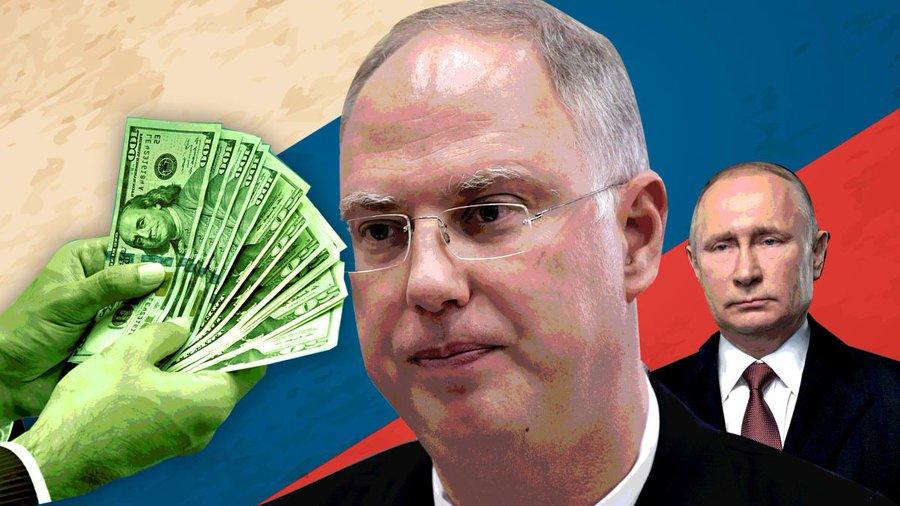
Kirill Dmitriev, the head of the Russian Direct Investment Fund (RDIF), said, “increasing non-market risks of the global payment infrastructure” is behind the push to develop a new international payment system for BRICS peers.
“An efficient BRICS payment system can encourage payments in national currencies and ensure sustainable payments and investments among our countries, which make up over 20% of the global inflow of foreign direct investment,” Dmitriev said.
Dmitriev said BRICS peers have also been discussing a new common cryptocurrency for mutual payments as another workaround to the dollar.
He said Russia had made a considerable effort over the last several years to reduce dollars in foreign trade. In the last several years, Russian foreign trade payments in dollars have dropped to 50% from 92%, while rouble transactions have jumped from14% to 3%, he added.
On Wednesday, Russian Deputy Finance Minister Vladimir Kolychev was quoted by Reuters as saying the Russian sovereign wealth fund will reduce US Dollars and is studying whether it should add Chinese yuan.
Last month, Russian Economy Minister Maxim Oreshkin told the Financial Times that the country would continue down the path of de-dollarization and begin trading some oil transactions in Euros and roubles.
Russia’s desire to abandon the dollar is a trend that continues to flourish — now it appears BRICS peers could be following down the same path. This will certainly irritate Washington.
Speculative loans in China are souring rapidly. Ruzhou, a city of one million people provides examples.
Struggling to keep its economy growing, the city of Ruzhou spent big, but is now asking its health care workers for cash to stay afloat.
Great piece. The problem isn’t incompetent officials: the problem is unrealistically high GDP growth targets that clearly cannot be met except by borrowing and overbuilding (and, of course, capitalizing investment losses that should be expensed).https://t.co/cWAJ8ANqsG
Ruzhou, a city of one million people in central China, urgently needed a new hospital, their bosses said. To pay for it, the administrators were asking health care workers for loans. If employees didn’t have the money, they were pointed to banks where they could borrow it and then turn it over to the hospital.
Ruzhou is a city with a borrowing problem — and an emblem of the trillions of dollars in debt threatening the Chinese economy.
Local governments borrowed for years to create jobs and keep factories humming. Now China’s economy is slowing to its weakest pace in nearly three decades, but Beijing has kept the lending spigots tight to quell its debt problems. Increasingly these deals are going sour, as they did in Ruzhou, and the loans are going unpaid. Lenders have accused three of Ruzhou’s hospitals and three investment funds tied to the city of not paying back their debts.
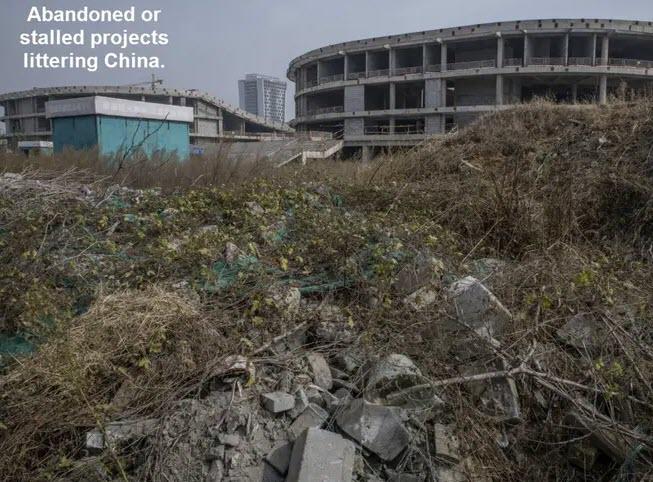
Local officials have long used big spending to keep the economy growing. Ruzhou is home to a number of white-elephant projects, including a stadium and sports complex turned e-commerce center, now largely unused. A shantytown redevelopment project, begun four years ago to give rural residents new homes, has been slowed for lack of money, locals said.
Doctors and nurses at the traditional Chinese medicine hospital complained to one local state-owned newspaper that they were being ordered to give between $14,000 and $28,000. At Ruzhou Maternal and Child Health Hospital, nurses and doctors were told they had to invest between $8,500 and $14,000, according to government online forums and state media.
Ruzhou officials did not respond to repeated requests for comment. Two employees of The New York Times who traveled to the city were briefly held by the police and forced to leave.
Tip of the Iceberg
Ruzhou has several hospitals in trouble, an unused sports stadium, a cultural complex in shambles, and a failed shantytown project.
Play this same scene throughout China.
It’s everywhere.
Nobody is quite sure how big the problem might be. Beijing says the total is about $2.5 trillion. Vincent Zhu, an analyst at Rhodium Group, a research firm, puts the figure at more than $8 trillion.
Factor in the world’s worst air pollution and water supplies you would have to be crazy to drink from.
Yet, US hyperinflationists think the dollar will collapse to nothing, Chinese debt somehow doesn’t matter, China will soon rule the world, and the yuan will displace the dollar as the world’s reserve currency.
Dems Aren’t Going To Condemn This Trump-Putin Cooperation
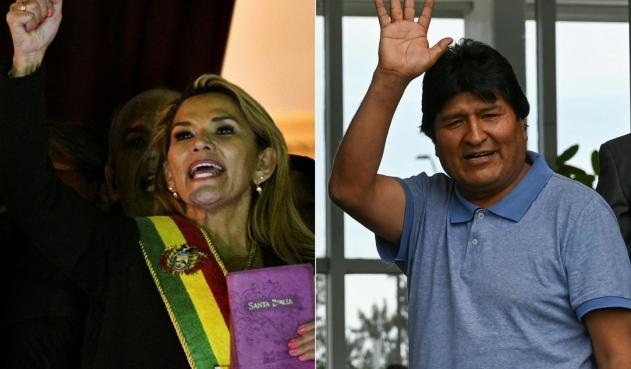
Independent journalist David Mizner notes “Dems aren’t going to criticize this Trump-Putin cooperation” as Moscow has now recognized Jeanine Añez as Bolivia’s self-declared interim president until the protest-wracked South American nation’s next elections.
This came two days after Washington did the same, with Acting Assistant Secretary for US Department of State’s Bureau of Western Hemisphere Affairs Michael Kozak being the first to announce Tuesday, “Acting Senate Presidetn Anez has assumed responsibilities of Interim Constitutional President of Bolivia.”
Kozak added, “We look forward to working with her and Bolivia’s other civilian authorities as they arrange free and fair elections as soon as possible, in accordance with Bolivia’s constitution.” And on Wednesday Secretary of State Mike Pompeo also congratulated Añez as Evo supporters clashed in the streets with riot police.
Russia’s Deputy Foreign Minister Sergei Ryabkov was quoted in RIA Novosti news agency as saying, “Russia will perceive Mrs. Añez as Bolivia’s leader, but only until the elections.”
This despite Ryabkov expressing that Russia views the series of events which led to President Evo Morales’ ouster as tantamount to a state coup. He said Moscow “took into account that there was no quorum in the parliament at the time of her confirmation in this position.”
Interestingly, it appears Russia is taking a route of pragmatic acquiescence, perhaps given Evo is already in Mexico where he was provided political asylum, and Bolivia’s army is now firmly in support of Anez. In the case of socialist Venezuela, it must be remembered, where the US recognizes opposition leader Juan Guaido as ‘interim president’ and has led failed coup efforts, Russia has firmly stuck by President Nicolás Maduro.
Former president Morales was quick to respond from his place of asylum in Mexico that Añez is a“coup-mongering right-wing senator” and said his supporters’ attempts to access the Senate had been denied. Morales also called the series of events which led to his rapid ouster at the start of the week “the sneakiest, most nefarious coup in history.”
Meanwhile security forces have vowed to take back the streets, deploying heavily in the administrative capital of La Paz, where throngs of angry Morales supporters squared off against police. The US embassy has evacuated all non-essential personnel according to reports, as pro-Evo socialist demonstrators have vowed to reject the “right-wing coup”.
The White House had been quick to issue a statement on Morales’ ouster, describing it as a “significant moment for democracy in the Western Hemisphere”.
On Thursday Añez took the further provocative move of declaring that Evo Morales would not be welcome in any new elections, which she would like to see held soon. Morales’ Movement for Socialism (MAS) party would be allowed to participate, but “They should start searching for a candidate,” she said, according to Reuters.
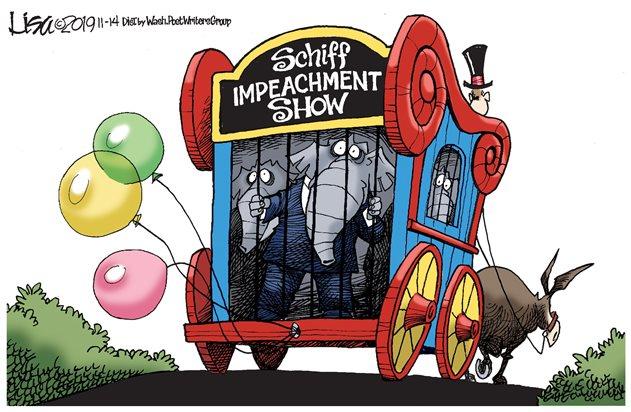
The House began public hearings this week, furthering the partisan move by the Democrats to impeach President Trump in a blatant abuse of constitutional authority. Representative Adam Schiff said in a press conference, “These open hearings will be an opportunity for the American people to evaluate the witnesses for themselves and also to learn firsthand about the facts of the president’s misconduct.”
There are several problems with this statement.
First, Schiff is already characterizing the outcome of the investigation. As the chairman of the House Intelligence Committee, he serves as a key arbiter of the inquiry under the resolution. As such, he is in a position that demands an unbiased irreproachable ethic in evaluating requests for subpoenas and testimony. Any judge in a similar position would be required to recuse himself with even a hint of the pure bias Schiff has displayed, including coordination with the Ukraine whistleblower and other actions.
The Democrats do not even pretend that their impeachment game is fair or actually about fact finding. This is simply about using a grant of power in the Constitution arbitrarily and politically, outside the bounds of due process and the purpose of that authority. Although the House does have the “sole power” of impeachment, that is a grant of jurisdiction, not a license to proceed on purely partisan motivation. Article One must work coordinately and not inconsistently with Article Two, which provides the legal basis upon which a sitting president may be impeached.
Second, Schiff demonstrates this is all about media play in the court of public opinion. Voters have no power or responsibility in an impeachment proceeding. The drafters of the Constitution intended the impeachment and removal process to be exercised only when there was sufficient evidence that the subject of the impeachment had committed a legally qualifying offense. This is not about whether impeachment is popular in the polls or whether a majority of Americans prefer it. Transparency in the context of this quasi judicial process is to provide fundamental fairness and due process for the president. Why are the Democrats so hellbent on blatantly refusing to allow Republican subpoenas and witnesses?
It is because it is a sham. Yet the Democrats are openly admitting that their goal is to try this in the media and attempt to dishonestly convince us that somehow we too should hate Donald Trump. They are hoping to convince us not to vote for him. That is not a legitimate or constitutional purpose of an impeachment. It is rather ironic that they claim his “crime” is an alleged quid pro quo to gain political advantage, while they are manipulating the power of impeachment for their political advantage. It is Schiff and other Democrats like House Speaker Nancy Pelosi who should be impeached. There is an actual constitutional basis for that.
Third, Schiff is proving beyond doubt that this entire impeachment is merely a coordinated partisan attack against President Trump and, even more importantly, against the government of the United States. There was a bipartisan effort was against impeachment, with two Democrats and all Republicans in the House voting against the inquiry. The Democrats are abusing the power of impeachment and, if they are allowed to move forward, they are not only setting a terrible precedent that impeachment can be wielded as a political weapon that it was never intended to be, but also attacking the Constitution and undermining the rule of law.
In the Federalist Papers, Alexander Hamilton explained the problem of political motivation with the power of impeachment. He wrote,
“A well constituted court for the trial of impeachments, is an object not more to be desired than difficult to be obtained in a government wholly elective. The subjects of its jurisdiction are those offenses which proceed from the misconduct of public men, or in other words from the abuse or violation of some public trust. They are of a nature which may with peculiar propriety be denominated political, as they relate chiefly to injuries done immediately to the society itself. The prosecution of them, for this reason, will seldom fail to agitate the passions of the whole community, and to divide it into parties, more or less friendly or inimical, to the accused.”
He was right. Schiff and Pelosi are not interested in real demonstrations of innocence or guilt. Their only interest is staging a political coup against their adversaries. But this is even bigger than the president. This is an attempt to overthrow the federal government from the inside.
Stocks, Yuan Surge After Yet Another Kudlow Trade Headline Claiming “Deal Is Close”
Algos have gone full retard…again.
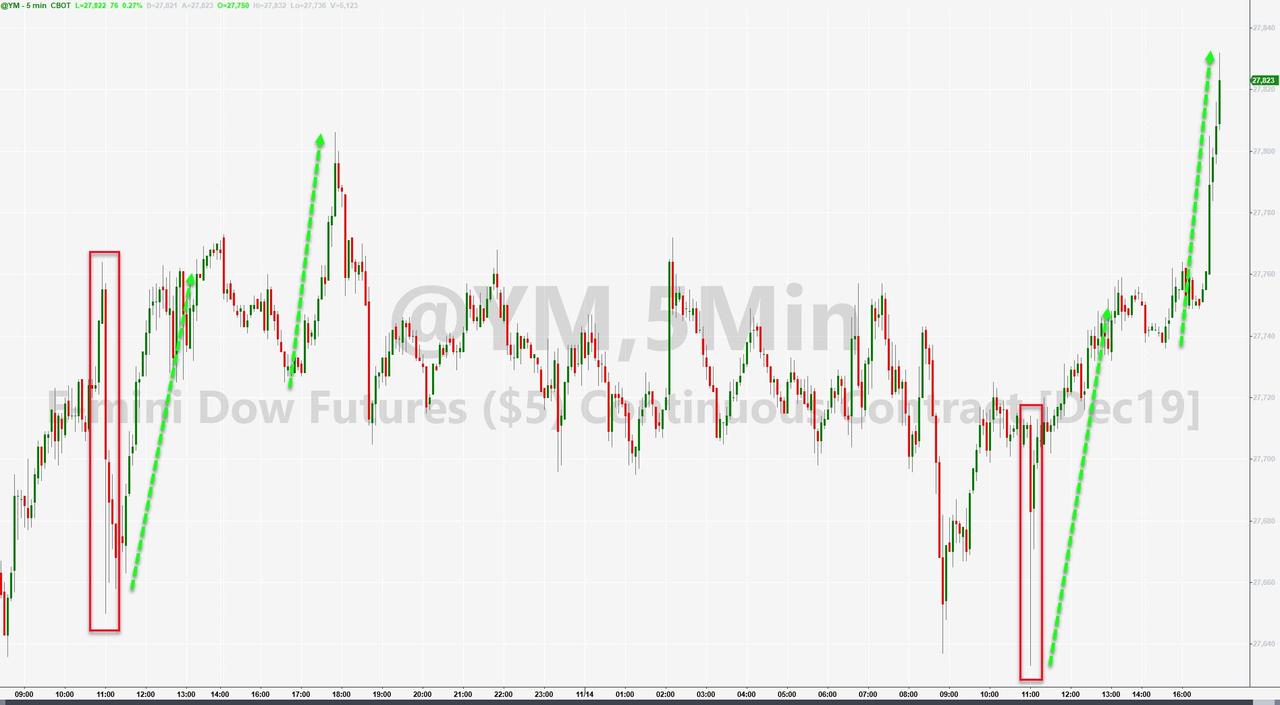
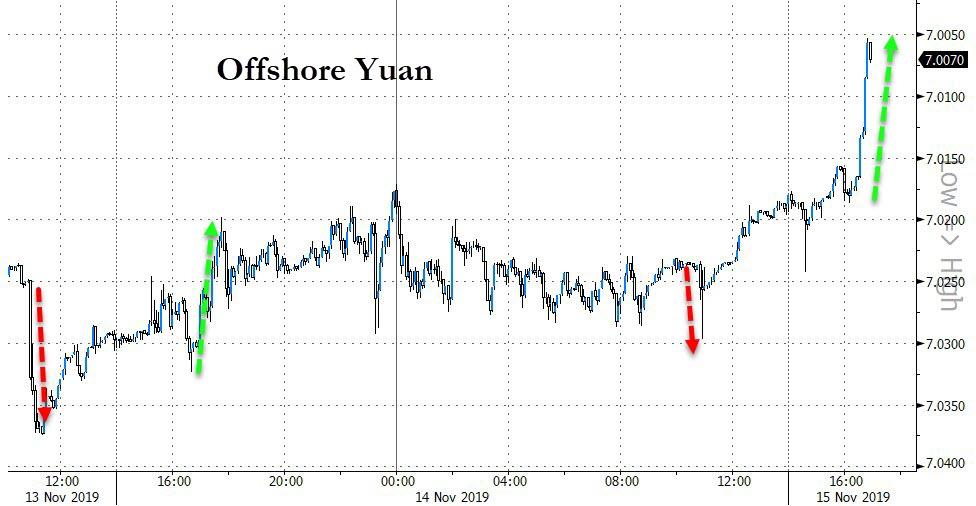
In an exact mirror of yesterday’s idiocy – by which a series of headlines raise doubts about the US-China trade deal, spark a rapid plunge in stocks which is instantly bid into the US cash market close and then ramped even higher as Japan opens on the back of “trade deal is close” comments from someone in the US administration – US equity futures and offshore yuan are spiking tonight…
White House economic adviser Larry Kudlow tells reporters:
“We are in communication with them every single day right now,” referring to U.S. talks with China trade negotiators over a phase one trade pact.
“We are coming down to the short strokes,” Kudlow adds noting that a deal is “close…it’s not done yet.”
And for the 51289932nd time, algos panic buy futures!!
Dow futures are now over 200 points off the intraday lows – on nothing at all!
Offshore Yuan is also following a similar pattern…
Source: Bloomberg
As one veteran trader exclaimed, “this is becoming f**king ridiculous.”
At Wednesday’s debut of the impeachment hearings there was one issue upon which both sides of the aisle seemed to agree, and it was a comic-book caricature of reality.
House Intelligence Committee Chairman Adam Schiff led off the proceedings with this:
“In 2014, Russia invaded a United States ally, Ukraine, to reverse that nation’s embrace of the West, and to fulfill Vladimir Putin’s desire to rebuild a Russian empire…”
Five years ago, when Ukraine first came into the news, those Americans who thought Ukraine was an island in the Pacific can perhaps be forgiven. That members of the House Intelligence Committee don’t know — or pretend not to know — more accurate information about Ukraine is a scandal, and a consequential one.
As Professor Stephen Cohen has warned, if the impeachment process does not deal in objective fact, already high tensions with Russia are likely to become even more dangerous.
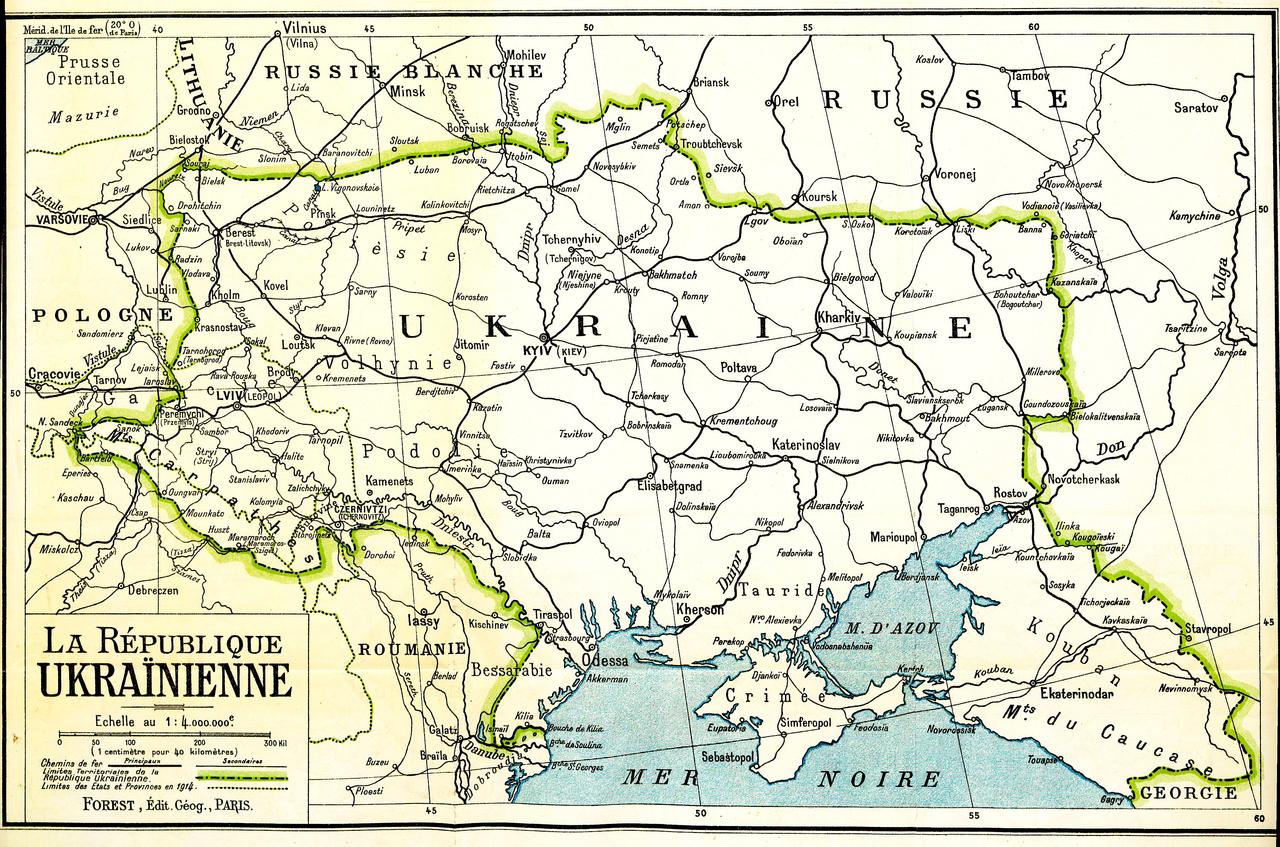
So here is a kind of primer for those who might be interested in some Ukraine history:
Late 1700s: Catherine the Great consolidated her rule; established Russia’s first and only warm-water naval base in Crimea.
In 1919, after the Bolshevik Revolution, Moscow defeated resistance in Ukraine and the country becomes one of 15 Republics of the Union of Soviet Socialist Republics (USSR).
In 1954, after Stalin’s death the year before, Nikita Khrushchev, a Ukrainian, assumed power. Pandering to Ukrainian supporters, he unilaterally decreed that henceforth Crimea would be part of the Ukrainian SSR, not the Russian SSR. Since all 15 Republics of the USSR were under tight rule from Moscow, the switch was a distinction without much of a difference — until later, when the USSR fell apart..
Khrushchev: Gave Ukraine away. (Wikipedia)
Nov. 1989: Berlin wall down.
Dec. 2-3, 1989: President George H. W. Bush invites Soviet leader Mikhail Gorbachev to summit talks in Malta; reassures him “the U.S. will not take advantage” of Soviet troubles in Eastern Europe. Bush had already been pushing the idea of a Europe whole and free, from Portugal to Vladivostok.
A Consequential Quid Pro Quo
Feb. 7-10, 1990: Secretary of State James Baker negotiates a quid pro quo; Soviet acceptance of the bitter pill of a reunited Germany (inside NATO), in return for an oral U.S. promise not to enlarge NATO “one inch more” to the East.
Dec. 1991: the USSR falls apart. Suddenly it does matter that Khrushchev gave Crimea to the Ukrainian SSR; Moscow and Kyiv work out long-term arrangements for the Soviet navy to use the naval base at Sevastopol.
The quid pro quo began to unravel in October 1996 during the last weeks of President Bill Clinton’s campaign when he said he would welcome Poland, Hungary and the Czech Republic into NATO — the earlier promise to Moscow notwithstanding. Former U.S. Ambassador to the USSR Jack Matlock, who took part in both the Bush-Gorbachev early-December 1989 summit in Malta and the Baker-Gorbachev discussions in early February 1990, has said, “The language used was absolute, including no ‘taking advantage’ by the U.S. … I don’t see how anybody could view the subsequent expansion of NATO as anything but ‘taking advantage,’ particularly since, by then, Russia was hardly a credible threat.” (From 16 members in 1990, NATO has grown to 29 member states — the additional 13 all lie east of Germany.)
Feb. 1, 2008: Amid rumors of NATO planning to offer membership to Ukraine, Russian Foreign Minister Sergei Lavrov warns U.S. Ambassador William Burns that “Nyet Means Nyet.” Russia will react strongly to any move to bring Ukraine or Georgia into NATO. Thanks to WikiLeaks, we have Burns’s original cable from embassy in Moscow.
April 3, 2008: Included in Final Declaration from NATO summit in Bucharest: “NATO welcomes Ukraine’s and Georgia’s Euro-Atlantic aspirations for membership in NATO. We agreed today that these countries will become members of NATO.”
Early September 2013: Putin helps Obama resist neocon demands to do “shock and awe” on Syria; Russians persuade President Bashar al-Assad to give up Syrian army chemical weapons for destruction on a U.S. ship outfitted for chemical weapons destruction. Neocons are outraged over failing to mousetrap Obama into attacking Syria.
Meanwhile in Ukraine
Dec. 2013: In a speech to the U.S.-Ukraine Foundation, Assistant Secretary of State for European Affairs Victoria Nuland says: “The United States has supported Ukraine’s European aspirations. … We have invested over $5 billion to assist Ukraine in these and other goals that will ensure a secure and prosperous and democratic Ukraine.”
Feb. 4, 2014: Amid rioting on the Maidan in Kiev, YouTube carries Assistant Secretary of State Victoria Nuland’s last minute instructions to U.S. Ambassador to Ukraine Geoffrey Pyatt regarding the U.S. pick for new Ukrainian prime minister, Arseniy Yatsenyuk (aka “Yats”) and other plans for the imminent coup d’etat in Kiev. (See: ) When Pyatt expresses concern about EU misgivings about mounting a coup, Nuland says “Fuck the EU.” She then apologizes to the EU a day or two later — for the profanity, not for the coup. She also says that Vice President Joe Biden will help “glue this thing together”, meaning the coup.
Feb. 22, 2014: Coup d’etat in Kyiv; appropriately labeled “the most blatant coup in history” by George Friedman, then President of the widely respected think-tank STRATFOR.
Feb. 23, 2014: The date that NATO, Western diplomats, and the corporate media have chosen – disingenuously – as the beginning of recent European history, with silence about the coup orchestrated in Kyiv the day before. President Vladimir Putin returns to Moscow from the winter olympics in Sochi; confers with advisers about Crimea, deciding — unlike Khrushchev in 1954 — to arrange a plebiscite to let the people of Crimea, most of whom strongly opposed the coup regime, decide their own future.
March 16, 2014: The official result from the voters in Crimea voted overwhelmingly for independence from Ukraine and to join Russia. Following the referendum, Crimea declared independence from Ukraine and asked to join the Russian Federation. On March 18, the Russian Federal Assembly ratified the incorporation of Crimea into Russia.
In the following days, Putin made it immediately (and publicly) clear that Yatsenyuk’s early statement about Ukraine joining NATO and – even more important – the U.S./NATO plans to deploy ABM systems around Russia’s western periphery and in the Black Sea, were the prime motivating forces behind the post-referendum re-incorporation of Crimea into Russia.
Putin: Reacted to coup. (Russian government)
No one with rudimentary knowledge of Russian history should have been surprised that Moscow would take no chances of letting NATO grab Crimea and Russia’s only warm-water naval base. The Nuland neocons seized on the opportunity to accuse Russia of aggression and told obedient European governments to follow suit. Washington could not persuade its European allies to impose stringent sanctions on Russia, though, until the downing of Malaysian Airlines MH17 over Ukraine.
Airplane Downed; 298 Killed
July 17, 2014: MH 17 shot down
July 20, 2014: Secretary of State John Kerry told NBC’s David Gregory, “We picked up the imagery of this launch. We know the trajectory. We know where it came from. We know the timing. And it was exactly at the time that this aircraft disappeared from the radar.” The U.S., however, has not shared any evidence of this.
Given the way U.S. intelligence collectors had been focused, laser-like, on that part of the Ukrainian-Russian border at that time, it is a near certainty that the U.S. has highly relevant intelligence regarding what actually happened and who was most likely responsible. If that intelligence supported the accusations made by Kerry, it would almost certainly have been publicized.
Less than two weeks after the shoot-down, the Europeans were persuaded to impose sanctions that hurt their own businesses and economies about as much as they hurt Russia’s – and far more than they hurt the U.S. There is no sign that, in succumbing to U.S. pressure, the Europeans mustered the courage to ask for a peek at the “intelligence” Kerry bragged about on NBC TV.
Oct. 27, 2016: Putin speaks at the Valdai International Discussion Club.
How did the “growing trust” that Russian President Putin wrote about in his September 11, 2013 New York Times op-ed evaporate?
How did what Putin called his close “working and personal relationship with President Obama” change into today’s deep distrust and saber-rattling? A short three years later after the close collaboration to resolve the Syrian problem peacefully, Putin spoke of the “feverish” state of international relations and lamented: “My personal agreements with the President of the United States have not produced results.” And things have gone downhill from there.
South Korea Slaughters 380,000 Pigs After China’s Pig Ebola Crosses Border
Cross-border transmissions of African swine fever is becoming a significant issue across Asia.
Just last week, we warned about China exporting the hog-killing disease to Russia. Now it appears North Korea, a country that borders China, has already exported the virus to South Korea.
South Korean authorities have been scrambling to contain the outbreak since mid-September.
A new report from Reuters, indicates 380,000 pigs have been slaughtered since the end of September, in the northern region bordering North Korea.
Already, the government has led a significant effort to slaughter nearly 3% of the country’s pig herd to prevent further spread. The first swine-fever case emerged in mid-September.
Woo Hee-jong, a veterinary professor at Seoul National University, said government authorities aggressively killed pigs in the northern region to prevent the spread to large pig farms in the southern part of the country.
As of October 10, swine fever cases were zero, and the attempt to prevent a further outbreak might have worked but has come at the cost of 380,000 pigs.
So far, there are no reports of wild boar infected with the disease, but if that were the case, then the spread across the country would become unstoppable.
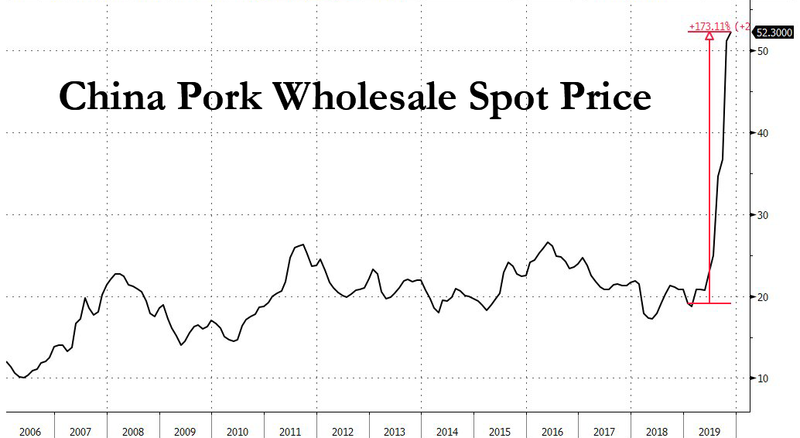
The epicenter of the hog-killing disease started in China, where authorities have killed at least 50% of its pig herd this year.
The cross-border spread of African swine fever from China to Russia; China to North Korea; and now North Korea to South Korea suggests the virus is becoming uncontrollable for governments.
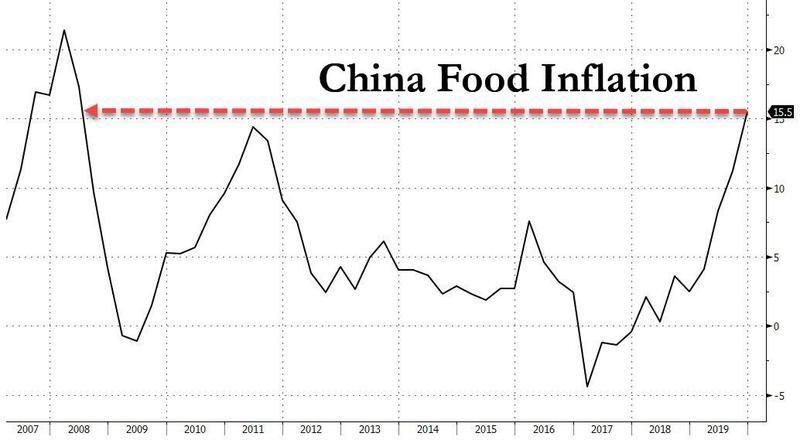
The spread of the virus across China has already led to skyrocketing food prices for pork, and rapid food inflation is likely to be seen in neighboring countries.
Watching Day 1 yesterday of the impeachment inquiry that isn’t one, I was thinking about an old children’s game, which is just as useful for adults, in which, in a wide circle of persons, no. 1 tells no. 2 a story, no. 2 tells no. 3, and so forth. If the total numbers of persons in the circle is large enough, it’s certain that the story, if it has enough details, will have changed unrecognizably by, say, no. 20.
That little game is a nice illustration of why you’ve all heard the words “Hearsay, Your Honor” spoken by some lawyer or another in 1000+ movies and TV series. And hearsay was all there was yesterday from “witnesses” Bill Taylor and George Kent. They are both “witnesses” who didn’t witness anything related to the hearing in course and neither ever met or spoke to President Trump, but both claim to know exactly what he was thinking, why he did what he did, and said what he said, based on things they heard from third parties, quite a few of whom remain anonymous.
Little of what they said would therefore be ruled admissible in a court of law. But the House inquiry is not a court of law. It can probably best be compared to a grand jury, a very one-sided format designed to let a prosecutor find and present enough evidence to let a case go to court. If Taylor and Kent had been in a court room, you would have heard “Hearsay, Your Honor” about once in every ten seconds. That gets old fast.
So why do we have this circus going on when it is obvious that round 2 (or 3, if you think the basement hearings were round 1), the Senate trial which must follow if the Dems decide to impeach Trump, has to acquit him because the House based its entire case on hearsay? I don’t know, but perhaps we see some of it in Democrat Rep. Mike Quigley (IL)’s statement: “Hearsay can be much better evidence than direct … and it’s certainly valid in this instance”
Democrat Rep. Mike Quigley (IL) on evidence: “Hearsay can be much better evidence than direct … and it’s certainly valid in this instance” pic.twitter.com/JD0Ui6acxD
Note that Quigley in that little video got shut down very rapidly in his enthusiasm for using hearsay by someone (I can’t see who) saying none of the exceptions he seemed to refer to applied to “this testimony”. And that’s the crux here: courts may have in the past, after much deliberation, allowed hearsay in specific cases, but Quigley tries to make it look as if that is now some general rule, and that is certainly not true.
Before I forget, something that struck me at the start yesterday was how both Adam Schiff and Bill Taylor in their openings emphasized their focus on Russia, while this case is not about that, but about Ukraine. And Russia Russia Russia has been shot down along with Robert Muller in his memorably awful “defense” of his failed report a few months ago.
Schiff’s opening words:
In 2014, Russia invaded a United States ally, Ukraine, to reverse that nation’s embrace of the West, and to fulfill Vladimir Putin’s desire to rebuild a Russian empire. In the following years, thirteen thousand Ukrainians died as they battled superior Russian forces.
There is so much wrong and debatable and leading and what not in just those few words, I don’t even know where to start. I guess perhaps I should be shouting out “Hearsay, Your Honor” at the top of my lungs. Then there’s Taylor:
After his opening statement, Taylor answers questions. He tells committee members: “If we withdraw or suspend or threaten to withdraw our security assistance” to Ukraine, it sends a “message to Ukrainians, but its just as important to the Russians who are looking for any sign of weakness”. “That affects us” he adds. It affects the world that we live in; that our children and grandchildren will grow up in,” he adds, appearing to become emotional. “Ukraine is on the front line of that conflict,” he concludes.
These statements are important because they tell us that Schiff and Taylor both see the world through the same glasses. The Russians are looking for signs of US weakness that they can use to advance their grand plan to (re) build a grand empire. That comes with the idea that the US didn’t cause the mayhem in Ukraine in 2014 with their coup, no, it was Russia which reacted so it wouldn’t lose its only warm water port.
Back to the hearing.
Taylor said it was his “clear understanding” that President Trump withheld military aid to Ukraine until the Bidens and other matters were investigated. At the very least there is no proof of that. It’s much more likely from what we know today that Ukraine didn’t know Trump withheld the aid until after the July 25 phone call this whole thing rests on. It was suggested yesterday that they didn’t know until the end of August, but I’ve seen people claim that they knew a few weeks earlier. But Zelensky didn’t know on July 25, that we can agree on.
And anyway, this is merely Taylor’s opinion. Based on hearsay. Based on what some guy told him some other guy told him etc etc. And though Taylor never met Trump, the very idea of withholding aid to one of the most corrupt nations on the planet scares the heebees out of him because Russia Russia Russia.
Taylor is a career diplomat who has bought hook line and sinker into established US policy in the region, and who will defend it until his dying breath. And if that means going against the president of the country he allegedly serves, who has every right to rebalance that policy, Taylor will do it. That is what he was saying.
Taylor came close to matching Mueller’s uber-bumbling performance the other day, though he didn’t quite get there. Kent was not quite that bad, but he’s in the same camp, the same career field, and the same deep state, FBI-CIA controlled policy-making no matter who gets elected president. And looking at Bill Taylor, how can one not question the wisdom of people like him making decisions on matters such as that?
Republican counsel Steve Castor started off strong, at least from what I saw, but seemed to fizzle out a little because he became lost in his own one question every five seconds model.
Perhaps it was the format, maximum time limits etc., which you don’t have in a courtroom. Jim Jordan did well, he just got named to the committee, but he could have been more effective as well. Still, this part was strong:
Jordan: You didn’t listen in on President Trump & Zelensky’s call?
Taylor: I did not.
Jordan: You’ve never talked with Chief of Staff Mulvaney?
Taylor: I never did.
Jordan: You’ve never met the President?
Taylor: That’s correct.
Jordan: And you’re their star witness.
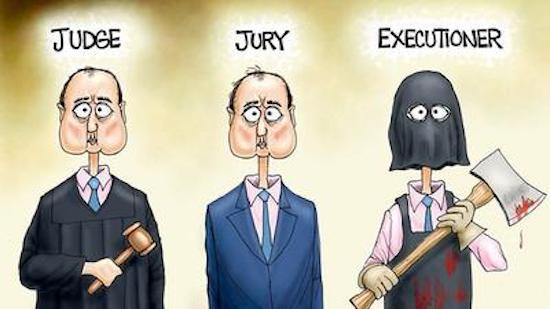
All in all, if you thought yesterday was a good day for the Democrats, for the inquiry, or for Adam Schiff, you really need to check a few fundamental issues. All Schiff managed to bring to the table was hearsay. And it’s only because of the grand jury-like format that he even gets to start day 2. No judge would have let him. But there is no judge, and there is no jury. There’s only an executioner.
PS I found this thing from the BBC intriguing and illustrative:
Bill Taylor, the acting US ambassador to Ukraine, said a member of his staff was told Mr Trump was preoccupied with pushing for a probe into Mr Biden. He was speaking at the first public hearings in the impeachment inquiry.
[..] During a detailed opening statement, Mr Taylor said a member of his staff had overheard a telephone call in which the president inquired about “the investigations” into Mr Biden. The call was with Gordon Sondland, the US ambassador to the European Union, who reportedly told the president over the phone from a restaurant in Kyiv that “the Ukrainians were ready to move forward”. After the call, the staff member “asked ambassador Sondland what President Trump thought about Ukraine”, Mr Taylor said. Mr Taylor said: “Ambassador Sondland responded that President Trump cares more about the investigations of Biden.”
First, it argues that a member of Taylor’s staff was told something by a third party, but later it changes to him/her hearing the president “live”. Albeit through an allegedly private phone call in which Trump may have sounded a bit loud. You want to impeach your president on the basis of a maybe overheard phone call that someone told you someone told someone else about?
By the way, that phone call allegedly was between Trump and Gordon Sondland, hotelier cum US ambassador to the EU, the same person who testified in the famous Schiff basement and whose laywer at some point contested Taylor’s statements about what Sondland told him, after which the latter went back to the basement to change his testimony. He said she said but then he said and then she said and so on.
What’s on the schedule for the circus tomorrow, is it the clowns or the elephants? I may take a day off. We have weeks more of this. And already I have no idea left of who told whom what.
SolarCity Lawsuit Reveals Almost All Of Elon Musk’s Merger Promises Were “Misleading Or False”
As we dive further into the depositions and discovery documents from the ongoing SolarCity lawsuit, it becomes clearer and clearer that the transaction was simply a bailout of Elon Musk’s cousin and SolarCity shareholders, and that much of the hype surrounding the idea in the first place was drummed up solely to create enthusiasm for the deal.
And now, even the media is starting to notice, with Bloomberg’s Dana Hull saying that the thousands of pages of documents released via the lawsuit “show that the CEO’s promises about SolarCity were misleading or false.”
“The move was called a catastrophe for Tesla, a $2 billion-plus bailout of a debt-saddled company of which Musk himself was chairman and the largest shareholder,” Hull reminds us.
The merger was pitched a different way to Tesla shareholders. Elon Musk called it “blindingly obvious” and a “no brainer” at the time.
But it seems even Musk has come to terms with what he has done, though. In a deposition, Musk reversed his course on the acquisition, stating: “At the time I thought it made strategic sense for Tesla and SolarCity to combine. Hindsight is 20-20. If I could wind back the clock, you know, I would say [I] probably would have let SolarCity execute by itself.”
And the shareholders that approved the deal to begin with really only had Musk’s word to go on. Musk told shareholders that the idea of combining the two companies was always part of his master plan and that it would create the world’s first vertically integrated clean energy company. The idea was that Tesla driving consumers would go home to their solar paneled homes to charge their vehicles.
And if you don’t support that utopian image, you must hate the environment.
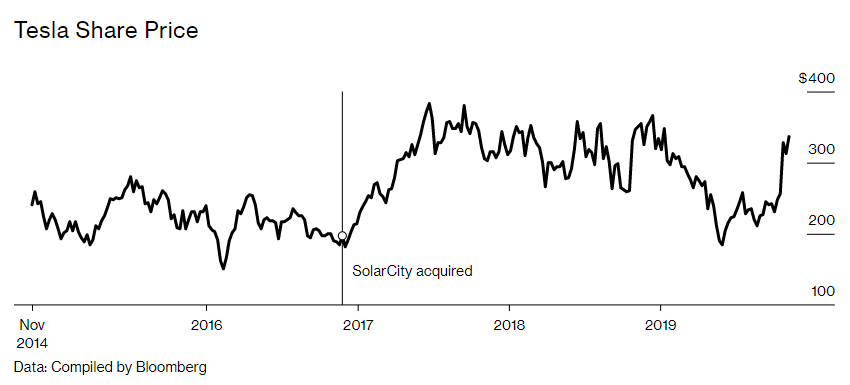
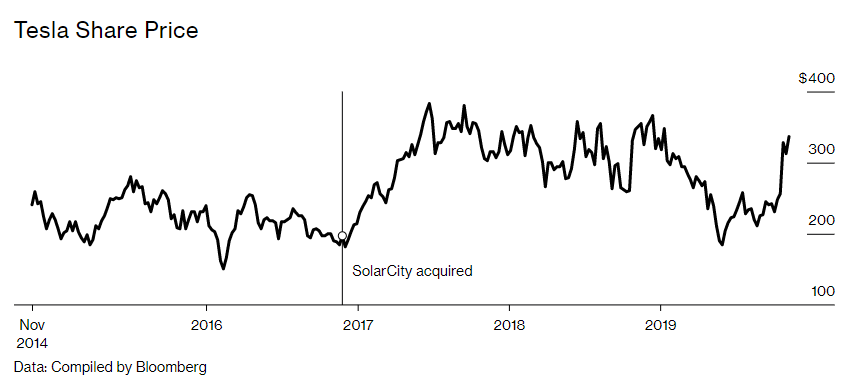
The SolarCity deal was consummated about 3 years ago this month and now, looking back, it’s easy to see that “almost every significant promise Musk pitched publicly [was] either misleading or false.”
The situation behind the scenes for SolarCity was called “dire” and Hull says that “the documents in the lawsuit offer an unprecedented look at what happens when Musk’s reality-distortion field comes up against the reality of testifying under oath.”
Musk said publicly that SolarCity was on solid financial footing, but then behind the scenes was saying that it needed to solve its “liquidity crisis”. SolarCity was, of course, burning cash and in danger of defaulting on its debt.
Tesla’s board – and Evercore, who the company hired to evaluate the deal – both thought it wasn’t a good idea. But Evercore, like everyone else involved in the public markets, gave way to Elon Musk’s decision making. “It’s Elon’s world. We just live in it,” an Evercore banker wrote in one email.
Even Tesla’s CFO spoke out against the idea: “We have Model 3 happening. We have a lot of things going on. We ourselves have a large debt load. Why do we need to do this now, Elon?”
On top of that was the obvious conflicts of interest:
Besides his cousins Lyndon and Peter Rive running SolarCity, its board and Tesla’s had complicated overlaps. Six of Tesla’s seven directors were Musk associates (including his brother, Kimbal) with SolarCity ties. Antonio Gracias was on the board of both companies. What’s more, Musk had used his other entities to raise capital for SolarCity: SpaceX, for example, had purchased $255 million of SolarCity bonds. Musk bought $65 million worth. Tesla’s directors had to grapple with this apparent self-dealing as Musk pushed them to reconsider the acquisition in May 2016. Musk said he recused himself from these deliberations, but court filings indicate he remained actively involved, even advocating for the move directly with bankers and investors.
But this didn’t stop Musk from coming up with the idea of the Solar Roof (debunked by one solar expert in a podcast here and here) to try and win over shareholders. Musk showed off the product in 2016 to an impressed audience but it was later revealed the demos weren’t functional. Regardless, the acquisition received approval several weeks later.
The roof was supposed to be central to the merger, but Tesla has still failed to develop a mass market version of the product and high volume manufacturing has been delayed several times over the last few years. Tesla and SolarCity Director Antonio Gracias said there were only “50 to 100 of these things operating today in tests on people’s roofs.”
Meanwhile, last year, the company’s head of energy, Sanjay Shah, said he had “high confidence” they were on track to ramp up solar roof production in 2019. He said if more delays came up, “we will be more transparent than ever before to make sure you guys hear from us why.”
We can’t wait for that explanation.
Musk claimed in his deposition that Shah was actually focused on Model 3 development during his time at Tesla.
Tesla executives also knew that the SolarCity acquisition would be risky. In a 2017 memo, Tesla’s top brass exchanged talking points in a memo, saying the acquisition “wasn’t a bailout” and that “family-run businesses can lead to long-term success”.
“The collaboration has been great,” the memo says, stating that development was “going extremely well”.
But SolarCity was falling apart behind the scenes. In Q4 2017, solar deployments fell by 56% YOY and Tesla had gutted the company’s sales team. The Rive brothers left the company after the merger and Musk admitted that despite “synergies”, he had redeployed much of the SolarCity staff to work on the Model 3 launch.
“We’re turning our attention to solar, and we’re going to fix it,” Musk said in a deposition, when asked.
When the plaintiff’s lawyer asked for more details, Musk called him “shameful” and a “very, very bad person”.
Musk seems ready to go to trial. “I can’t wait. It will be great. You’re going to lose,” he told the plaintiff’s counsel.
We can only hope this trial is nationally televised.