Why the DOJ Has Stopped Describing Maduro as the Head of a Literal Drug Cartel


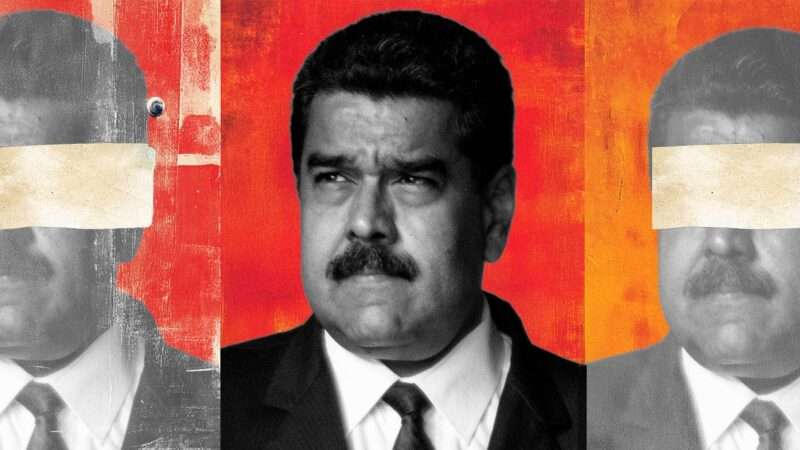
Nicolas Maduro | Eddie Marshall | Eneas de Troya | Midjourney

On the same day that U.S. forces invaded Venezuela to capture Nicolás Maduro, the Justice Department published a federal indictment that supposedly justified the operation. Like the 2020 indictment that federal prosecutors obtained during President Donald Trump’s first term, the revised version charges the former Venezuelan dictator with participating in conspiracies involving “narco-terrorism,” cocaine trafficking, and machine gun possession. But there is a notable difference that highlights the slipperiness of Trump’s attempts to justify legally dubious policies, including summary deportation of alleged gang members and his deadly military campaign against suspected drug boats, by describing his targets as “foreign terrorist organizations” (FTOs).

The 2020 indictment places Maduro at the center of “the Venezuelan Cártel de los Soles,” which it describes as a “drug-trafficking organization comprised of high-ranking Venezuelan officials who abused the Venezuelan people and corrupted the legitimate institutions of Venezuela—including parts of the military, intelligence apparatus, legislature, and the judiciary—to facilitate the importation of tons of cocaine into the United States.” That “drug-trafficking organization,” the indictment says, “participated in a corrupt and violent narco-terrorism conspiracy” with Fuerzas Armadas Revolucionarias de Colombia (FARC), a Marxist guerrilla group that relies on the cocaine trade for funding.

The indictment explains that the Venezuelan group’s name, which means “Cartel of the Suns,” refers to “the sun insignias affixed to the uniforms of high-ranking Venezuelan military officials who are members of the Cartel.” It mentions Cártel de los Soles, which the Treasury Department and the State Department designated as an FTO last year, 33 times.

The new indictment, by contrast, refers just twice to Cártel de los Soles, which it describes as “a patronage system” run by top Venezuelan officials. It alleges that Maduro “participates in, perpetuates, and protects a culture of corruption in which powerful Venezuelan elites enrich themselves through drug trafficking and the protection of their partner drug traffickers.” The “profits of that illegal activity,” it says, “flow to corrupt rank-and-file civilian, military, and intelligence officials.”

That description, New York Times reporter Charlie Savage notes, is more in line with reality, since Cártel de los Soles “is actually a slang term, invented by the Venezuelan media in the 1990s, for officials who are corrupted by drug money.” As Savage explained in November, citing “a range of specialists in Latin American criminal and narcotics issues,” Cártel de los Soles “is not a literal organization” but rather “a figure of speech in Venezuela.”

In 2020, in other words, the Justice Department made a pretty embarrassing mistake, which it has sought to rectify in the revised indictment. Yet the Treasury Department and the State Department are still listing Cártel de los Soles, which federal prosecutors now say refers to “a patronage system” created by a bunch of corrupt government officials, as an FTO, which under federal law means “a foreign organization” that “engages in terrorist activity” threatening “the security of United States nationals or the national security of the United States.”

Counterintuitively, the FTO list includes profit-motivated criminal organizations, along with ideologically or religiously motivated groups that use violence to achieve political goals. The latter set of FTOs fits the conventional definition of terrorism: “the unlawful use of violence or threats to intimidate or coerce a civilian population or government, with the goal of furthering political, social, or ideological objectives.” Under that definition, a violent gang that simply aims to make money by robbing banks, kidnapping people, or selling drugs is not engaged in terrorism.

That understanding of the term is reflected in the FBI’s definition of “domestic terrorism,” which entails “violent, criminal acts committed by individuals and/or groups to further ideological goals stemming from domestic influences, such as those of a political, religious, social, racial, or environmental nature.” By contrast, the FBI says, “international terrorism” refers to “violent, criminal acts committed by individuals and/or groups who are inspired by, or associated with, designated foreign terrorist organizations or nations.”

An FTO, in short, is “a foreign organization” that “engages in terrorist activity,” which means unlawful violence committed by an FTO. As Reason‘s Matthew Petti notes, such “circular logic” is convenient for the executive branch, allowing it to designate any foreign organization that commits violent crimes, regardless of its motivation, as an FTO.

Even in light of that broad license, classifying “a patronage system” as an FTO is a stretch. That label seems nonsensical if Cártel de los Soles is “a figure of speech” rather than “a literal organization.”

In an interview with Savage, Elizabeth Dickinson, deputy director for Latin America at the International Crisis Group, welcomed the Justice Department’s correction but noted that it is inconsistent with the FTO designations. “I think the new indictment gets it right, but the designations are still far from reality,” she said. “Designations don’t have to be proved in court, and that’s the difference. Clearly, they knew they could not prove it in court.”

Legally, an FTO designation means the Treasury Department can block transactions involving a listed group’s assets and the Justice Department can prosecute people for supplying it with “material support or resources.” But for Trump, the main purpose of the label is rhetorical and political, and in that respect, it has been very useful.

When Trump invoked the Alien Enemies Act against suspected members of the Venezuelan gang Tren de Aragua (TDA) in May, he opened by describing the group as “a designated Foreign Terrorist Organization.” That FTO “operates in conjunction with Cártel de los Soles, the Nicolas Maduro regime-sponsored, narco-terrorism enterprise based in Venezuela,” Trump averred. Tren de Aragua, he claimed, was “supporting the Maduro regime’s goal of destabilizing democratic nations in the Americas.”

Tren de Aragua “is closely aligned with, and indeed has infiltrated, the Maduro regime, including its military and law enforcement apparatus,” Trump said. According to his proclamation, the gang was “undertaking hostile actions and conducting irregular warfare against the territory of the United States both directly and at the direction, clandestine or otherwise, of the Maduro regime in Venezuela.”

Those allegations were aimed at supporting Trump’s improbable assertion that Tren de Aragua was a “foreign nation or government” that had “perpetrated, attempted, or threatened” an “invasion or predatory incursion against the territory of the United States.” But in the judgment of U.S. intelligence agencies, there was little reason to believe the Venezuelan government was closely collaborating with Tren de Aragua, let alone directing its activities.

“Maduro regime leadership probably sometimes tolerates TDA’s presence in Venezuela, and some government officials may cooperate with TDA for financial gain,” an April 2025 intelligence memo said. But it added that “the Maduro regime probably does not have a policy of cooperating with TDA and is not directing TDA movement to and operations in the United States.”

The Maduro indictment likewise offers little evidence to support the claim that Tren de Aragua was doing his bidding. In 2019, it says, the gang’s leader, Guerrero Flores, “discussed drug trafficking with an individual he understood to be working with the Venezuelan regime.” During “multiple” phone calls, Flores “offered to provide escort services for drug loads” and explained that Tren de Aragua “could handle the logistics of every aspect of the drug trade.” Even assuming that Flores was in fact talking to a Venezuelan official, that is a far cry from “undertaking hostile actions and conducting irregular warfare against the territory of the United States” at “the direction” of “the Maduro regime.”

In Trump’s telling, however, one FTO, Tren de Aragua, had joined with another, Cártel de los Soles, in mounting an “invasion or predatory incursion” against the United States. He also leaned heavily on Tren de Aragua’s status as an FTO when he described the September 2 attack that inaugurated his new policy of summarily executing suspected cocaine smugglers, which so far has killed 115 people in 35 operations.

After the first attack, Trump gleefully announced that “U.S. Military Forces” had “conducted a kinetic strike against positively identified Tren de Aragua Narcoterrorists,” adding that the gang “is a designated Foreign Terrorist Organization, operating under the control of Nicolas Maduro.” The operation, he bragged, “resulted in 11 terrorists killed in action.”

The classification of Tren de Aragua as an FTO did not, strictly speaking, make Trump’s reading of the Alien Enemies Act any more plausible. Nor did it provide a legal basis for his lethal anti-drug strategy, since an FTO designation is not a license to kill that transforms murder into self-defense. But the claim that he had killed “terrorists” lent superficial credence to his otherwise patently preposterous conflation of drug smuggling with violent aggression.

After U.S. forces blew up another boat on September 15, Trump likewise rejoiced in the deaths of three “confirmed narcoterrorists from Venezuela.” Four days later, he announced a third attack that he said had killed three people “affiliated with a Designated Terrorist Organization” who were “conducting narcotrafficking.”

In those cases, Trump did not specify which FTO he was talking about, and the government typically has not supplied that information after subsequent attacks. But it hardly matters: Last month, The New York Times reported that Trump had authorized Defense Secretary Pete Hegseth to “target vessels in international waters carrying drugs for any of 24 Latin American ‘narco-terrorist’ groups.”

That list is secret, and it can always be amended. The only requirement, as far as Trump is concerned, seems to be an FTO designation, which the administration can supply at will, even when it makes little sense, as with the listing of Cártel de los Soles.

Secretary of State Marco Rubio is still pretending that the “patronage system” is a literal drug cartel. “We will continue to reserve the right to take strikes against drug boats that are bringing drugs toward the United States that are being operated by transnational criminal organizations, including the Cártel de los Soles,” Rubio said on Meet the Press last Sunday. “Of course, their leader, the leader of that cartel, is now in U.S. custody and facing U.S. justice in the Southern District of New York. And that’s Nicolás Maduro.”

The post Why the DOJ Has Stopped Describing Maduro as the Head of a Literal Drug Cartel appeared first on Reason.com.

from Latest – Reason.com https://ift.tt/PLVfjXR
via IFTTT
I Once Supported Regime Change in Iraq. That’s Why Venezuela Worries Me.


A yellow, gray, and orange tinted image with a world map, depictions of war, and a soldier in the middle | Illustration: Svetlana Dubovetcaia | Dreamstime.com | Pavel Bernshtam | Dreamstime.com | Brian Johnson | Dreamstime.com | Brett Critchley | Dreamstime.com | Jerome Cid | Dreamstime.com | Rawpixelimages | Dreamstime.com | Midjourney

As one government official after another talks about regime change and the removal of an awful dictator in Venezuela, you can forgive Iraq War veterans like me for being nervous.

When I contemplated joining the Marine Corps in 2002, I found a similar “humanitarian” case for war compelling: The Iraqi people were suffering under a brutal dictator, and even in the worst-case scenario, removing him would be a net good. What followed was civil war, mass death, swelling ranks of terror groups, genocide, mass rape, and slavery. 

Seventeen years after I had that calming thought about removing a dictator, I spoke with a woman in northern Iraq who had been enslaved by ISIS. I was on a United Nations trip through northern Iraq. She told a group of foreign policy analysts how ISIS had slaughtered the people of her town and taken the young girls, including her and her 13-year-old sister, into slavery. After the collapse of the terror state, ISIS-affiliated families like the one she’d been sold to were herded into the sprawling al-Hol refugee camp in Syria, trapping victims and slavers together. A Yazidi smuggling operation found her and smuggled her out. But her sister was still there.

Near where the survivors spoke, their children played and sang along to “Baby Shark.” The man who ran the smuggling operation told us there were still many survivors enslaved in these camps. Three years after we spoke, in 2022, a security operation would find six girls chained up in al-Hol, subject to rape and torture—eight years after they had been captured.

“Why are we not having enough attention from your side?” he asked. “We have a high number of survivors, people in mass graves. Why don’t we have assistance?” But the news of the genocide was years old at that point, and Americans were tired of the endless horrors of the Iraq War, the human wreckage as uninteresting to us as our responsibility for what happened in the first place.

Do I think all that will happen in Venezuela? No. I honestly have no idea what might happen in Venezuela, though the current crackdown by the regime, with journalists jailed and counterintelligence scouring people’s social media accounts, is an ominous early sign. I’ve long studied the region, and I’ve written about the violence and drug trade along the border with Colombia, but I couldn’t even begin to speculate about all the ways this could go haywire. Those spiking the football should remember that when we use our military and roll the dice with the fate of nations, the consequences play out in a much longer time frame than social media trends.

I’m hoping for the best. I have Venezuelan friends who are delighted and are hoping for a transition similar to what happened after the assassination of Rafael Trujillo in the Dominican Republic. In the aftermath, figures from the dictator’s administration took control, but under steady foreign pressure, gradually liberalized. But as the historian of modern Latin America Mark Healey has told me, even “the relatively soft post-Trujillo transition included significant bloodshed, a diplomatic crisis, multiple coups, and a US invasion”. Nonetheless, when a Venezuelan friend tells me about his former students and colleagues who had been killed peacefully protesting Nicolás Maduro, I understand why he supports what we’ve done.

But when you launch military action in an unstable part of the world long beset by violence, there isn’t really a bottom to how bad things can get. And rather than offering a serious plan for a stable future, we’re already threatening other countries. President Donald Trump has revived talk about taking Greenland from our NATO ally, Denmark. When asked about possible military action in Colombia, another long-term ally and one whose assistance would be an essential part of any serious policy in the region, the president said, “Sounds good to me.” 

Tough talk, but unlikely to engender trust in the region. And the recent seizures of tankers, along with the president’s public statements suggesting a naked greed for oil, are certainly provoking moral repulsion.

As the analyst Kori Schake has argued, American power in the wake of World War II was remarkably cost-effective because it rested heavily on agreed-upon rules and consensual participation. “No dominant power,” she wrote, “has ever had so much assistance from others in maintaining its dominance.” If the only substitute the Trump administration has for getting willing cooperation from our allies is cooperation at the barrel of a gun, America will rapidly become a much diminished thing. Not just weaker, but also contemptible.

But it isn’t even the potential downsides to Venezuela and the surrounding countries that worry me so much as what our president, high on the success of a brilliant military operation, might do next. In his first year back in office, we’ve already struck Iran and Venezuela without even trying to go through Congress and establish democratic support for war, the most dangerous and morally consequential thing a country can do, and which, for precisely that reason, our founders made the responsibility of the legislature.

Going forward, how often will Trump roll the dice this way? And if we continue to allow an unrestrained president to initiate acts of war against other countries without debate or authorization, how long before the whims of one irresponsible man lead to genuine disaster?

The post I Once Supported Regime Change in Iraq. That's Why Venezuela Worries Me. appeared first on Reason.com.

from Latest – Reason.com https://ift.tt/DWdUSMT
via IFTTT

Why the DOJ Has Stopped Describing Maduro as the Head of a Literal Drug Cartel


Nicolas Maduro | Eddie Marshall | Eneas de Troya | Midjourney

On the same day that U.S. forces invaded Venezuela to capture Nicolás Maduro, the Justice Department published a federal indictment that supposedly justified the operation. Like the 2020 indictment that federal prosecutors obtained during President Donald Trump’s first term, the revised version charges the former Venezuelan dictator with participating in conspiracies involving “narco-terrorism,” cocaine trafficking, and machine gun possession. But there is a notable difference that highlights the slipperiness of Trump’s attempts to justify legally dubious policies, including summary deportation of alleged gang members and his deadly military campaign against suspected drug boats, by describing his targets as “foreign terrorist organizations” (FTOs).

The 2020 indictment places Maduro at the center of “the Venezuelan Cártel de los Soles,” which it describes as a “drug-trafficking organization comprised of high-ranking Venezuelan officials who abused the Venezuelan people and corrupted the legitimate institutions of Venezuela—including parts of the military, intelligence apparatus, legislature, and the judiciary—to facilitate the importation of tons of cocaine into the United States.” That “drug-trafficking organization,” the indictment says, “participated in a corrupt and violent narco-terrorism conspiracy” with Fuerzas Armadas Revolucionarias de Colombia (FARC), a Marxist guerrilla group that relies on the cocaine trade for funding.

The indictment explains that the Venezuelan group’s name, which means “Cartel of the Suns,” refers to “the sun insignias affixed to the uniforms of high-ranking Venezuelan military officials who are members of the Cartel.” It mentions Cártel de los Soles, which the Treasury Department and the State Department designated as an FTO last year, 33 times.

The new indictment, by contrast, refers just twice to Cártel de los Soles, which it describes as “a patronage system” run by top Venezuelan officials. It alleges that Maduro “participates in, perpetuates, and protects a culture of corruption in which powerful Venezuelan elites enrich themselves through drug trafficking and the protection of their partner drug traffickers.” The “profits of that illegal activity,” it says, “flow to corrupt rank-and-file civilian, military, and intelligence officials.”

That description, New York Times reporter Charlie Savage notes, is more in line with reality, since Cártel de los Soles “is actually a slang term, invented by the Venezuelan media in the 1990s, for officials who are corrupted by drug money.” As Savage explained in November, citing “a range of specialists in Latin American criminal and narcotics issues,” Cártel de los Soles “is not a literal organization” but rather “a figure of speech in Venezuela.”

In 2020, in other words, the Justice Department made a pretty embarrassing mistake, which it has sought to rectify in the revised indictment. Yet the Treasury Department and the State Department are still listing Cártel de los Soles, which federal prosecutors now say refers to “a patronage system” created by a bunch of corrupt government officials, as an FTO, which under federal law means “a foreign organization” that “engages in terrorist activity” threatening “the security of United States nationals or the national security of the United States.”

Counterintuitively, the FTO list includes profit-motivated criminal organizations, along with ideologically or religiously motivated groups that use violence to achieve political goals. The latter set of FTOs fits the conventional definition of terrorism: “the unlawful use of violence or threats to intimidate or coerce a civilian population or government, with the goal of furthering political, social, or ideological objectives.” Under that definition, a violent gang that simply aims to make money by robbing banks, kidnapping people, or selling drugs is not engaged in terrorism.

That understanding of the term is reflected in the FBI’s definition of “domestic terrorism,” which entails “violent, criminal acts committed by individuals and/or groups to further ideological goals stemming from domestic influences, such as those of a political, religious, social, racial, or environmental nature.” By contrast, the FBI says, “international terrorism” refers to “violent, criminal acts committed by individuals and/or groups who are inspired by, or associated with, designated foreign terrorist organizations or nations.”

An FTO, in short, is “a foreign organization” that “engages in terrorist activity,” which means unlawful violence committed by an FTO. As Reason‘s Matthew Petti notes, such “circular logic” is convenient for the executive branch, allowing it to designate any foreign organization that commits violent crimes, regardless of its motivation, as an FTO.

Even in light of that broad license, classifying “a patronage system” as an FTO is a stretch. That label seems nonsensical if Cártel de los Soles is “a figure of speech” rather than “a literal organization.”

In an interview with Savage, Elizabeth Dickinson, deputy director for Latin America at the International Crisis Group, welcomed the Justice Department’s correction but noted that it is inconsistent with the FTO designations. “I think the new indictment gets it right, but the designations are still far from reality,” she said. “Designations don’t have to be proved in court, and that’s the difference. Clearly, they knew they could not prove it in court.”

Legally, an FTO designation means the Treasury Department can block transactions involving a listed group’s assets and the Justice Department can prosecute people for supplying it with “material support or resources.” But for Trump, the main purpose of the label is rhetorical and political, and in that respect, it has been very useful.

When Trump invoked the Alien Enemies Act against suspected members of the Venezuelan gang Tren de Aragua (TDA) in May, he opened by describing the group as “a designated Foreign Terrorist Organization.” That FTO “operates in conjunction with Cártel de los Soles, the Nicolas Maduro regime-sponsored, narco-terrorism enterprise based in Venezuela,” Trump averred. Tren de Aragua, he claimed, was “supporting the Maduro regime’s goal of destabilizing democratic nations in the Americas.”

Tren de Aragua “is closely aligned with, and indeed has infiltrated, the Maduro regime, including its military and law enforcement apparatus,” Trump said. According to his proclamation, the gang was “undertaking hostile actions and conducting irregular warfare against the territory of the United States both directly and at the direction, clandestine or otherwise, of the Maduro regime in Venezuela.”

Those allegations were aimed at supporting Trump’s improbable assertion that Tren de Aragua was a “foreign nation or government” that had “perpetrated, attempted, or threatened” an “invasion or predatory incursion against the territory of the United States.” But in the judgment of U.S. intelligence agencies, there was little reason to believe the Venezuelan government was closely collaborating with Tren de Aragua, let alone directing its activities.

“Maduro regime leadership probably sometimes tolerates TDA’s presence in Venezuela, and some government officials may cooperate with TDA for financial gain,” an April 2025 intelligence memo said. But it added that “the Maduro regime probably does not have a policy of cooperating with TDA and is not directing TDA movement to and operations in the United States.”

The Maduro indictment likewise offers little evidence to support the claim that Tren de Aragua was doing his bidding. In 2019, it says, the gang’s leader, Guerrero Flores, “discussed drug trafficking with an individual he understood to be working with the Venezuelan regime.” During “multiple” phone calls, Flores “offered to provide escort services for drug loads” and explained that Tren de Aragua “could handle the logistics of every aspect of the drug trade.” Even assuming that Flores was in fact talking to a Venezuelan official, that is a far cry from “undertaking hostile actions and conducting irregular warfare against the territory of the United States” at “the direction” of “the Maduro regime.”

In Trump’s telling, however, one FTO, Tren de Aragua, had joined with another, Cártel de los Soles, in mounting an “invasion or predatory incursion” against the United States. He also leaned heavily on Tren de Aragua’s status as an FTO when he described the September 2 attack that inaugurated his new policy of summarily executing suspected cocaine smugglers, which so far has killed 115 people in 35 operations.

After the first attack, Trump gleefully announced that “U.S. Military Forces” had “conducted a kinetic strike against positively identified Tren de Aragua Narcoterrorists,” adding that the gang “is a designated Foreign Terrorist Organization, operating under the control of Nicolas Maduro.” The operation, he bragged, “resulted in 11 terrorists killed in action.”

The classification of Tren de Aragua as an FTO did not, strictly speaking, make Trump’s reading of the Alien Enemies Act any more plausible. Nor did it provide a legal basis for his lethal anti-drug strategy, since an FTO designation is not a license to kill that transforms murder into self-defense. But the claim that he had killed “terrorists” lent superficial credence to his otherwise patently preposterous conflation of drug smuggling with violent aggression.

After U.S. forces blew up another boat on September 15, Trump likewise rejoiced in the deaths of three “confirmed narcoterrorists from Venezuela.” Four days later, he announced a third attack that he said had killed three people “affiliated with a Designated Terrorist Organization” who were “conducting narcotrafficking.”

In those cases, Trump did not specify which FTO he was talking about, and the government typically has not supplied that information after subsequent attacks. But it hardly matters: Last month, The New York Times reported that Trump had authorized Defense Secretary Pete Hegseth to “target vessels in international waters carrying drugs for any of 24 Latin American ‘narco-terrorist’ groups.”

That list is secret, and it can always be amended. The only requirement, as far as Trump is concerned, seems to be an FTO designation, which the administration can supply at will, even when it makes little sense, as with the listing of Cártel de los Soles.

Secretary of State Marco Rubio is still pretending that the “patronage system” is a literal drug cartel. “We will continue to reserve the right to take strikes against drug boats that are bringing drugs toward the United States that are being operated by transnational criminal organizations, including the Cártel de los Soles,” Rubio said on Meet the Press last Sunday. “Of course, their leader, the leader of that cartel, is now in U.S. custody and facing U.S. justice in the Southern District of New York. And that’s Nicolás Maduro.”

The post Why the DOJ Has Stopped Describing Maduro as the Head of a Literal Drug Cartel appeared first on Reason.com.

from Latest – Reason.com https://ift.tt/PLVfjXR
via IFTTT

I Once Supported Regime Change in Iraq. That’s Why Venezuela Worries Me.


A yellow, gray, and orange tinted image with a world map, depictions of war, and a soldier in the middle | Illustration: Svetlana Dubovetcaia | Dreamstime.com | Pavel Bernshtam | Dreamstime.com | Brian Johnson | Dreamstime.com | Brett Critchley | Dreamstime.com | Jerome Cid | Dreamstime.com | Rawpixelimages | Dreamstime.com | Midjourney

As one government official after another talks about regime change and the removal of an awful dictator in Venezuela, you can forgive Iraq War veterans like me for being nervous.

When I contemplated joining the Marine Corps in 2002, I found a similar “humanitarian” case for war compelling: The Iraqi people were suffering under a brutal dictator, and even in the worst-case scenario, removing him would be a net good. What followed was civil war, mass death, swelling ranks of terror groups, genocide, mass rape, and slavery. 

Seventeen years after I had that calming thought about removing a dictator, I spoke with a woman in northern Iraq who had been enslaved by ISIS. I was on a United Nations trip through northern Iraq. She told a group of foreign policy analysts how ISIS had slaughtered the people of her town and taken the young girls, including her and her 13-year-old sister, into slavery. After the collapse of the terror state, ISIS-affiliated families like the one she’d been sold to were herded into the sprawling al-Hol refugee camp in Syria, trapping victims and slavers together. A Yazidi smuggling operation found her and smuggled her out. But her sister was still there.

Near where the survivors spoke, their children played and sang along to “Baby Shark.” The man who ran the smuggling operation told us there were still many survivors enslaved in these camps. Three years after we spoke, in 2022, a security operation would find six girls chained up in al-Hol, subject to rape and torture—eight years after they had been captured.

“Why are we not having enough attention from your side?” he asked. “We have a high number of survivors, people in mass graves. Why don’t we have assistance?” But the news of the genocide was years old at that point, and Americans were tired of the endless horrors of the Iraq War, the human wreckage as uninteresting to us as our responsibility for what happened in the first place.

Do I think all that will happen in Venezuela? No. I honestly have no idea what might happen in Venezuela, though the current crackdown by the regime, with journalists jailed and counterintelligence scouring people’s social media accounts, is an ominous early sign. I’ve long studied the region, and I’ve written about the violence and drug trade along the border with Colombia, but I couldn’t even begin to speculate about all the ways this could go haywire. Those spiking the football should remember that when we use our military and roll the dice with the fate of nations, the consequences play out in a much longer time frame than social media trends.

I’m hoping for the best. I have Venezuelan friends who are delighted and are hoping for a transition similar to what happened after the assassination of Rafael Trujillo in the Dominican Republic. In the aftermath, figures from the dictator’s administration took control, but under steady foreign pressure, gradually liberalized. But as the historian of modern Latin America Mark Healey has told me, even “the relatively soft post-Trujillo transition included significant bloodshed, a diplomatic crisis, multiple coups, and a US invasion”. Nonetheless, when a Venezuelan friend tells me about his former students and colleagues who had been killed peacefully protesting Nicolás Maduro, I understand why he supports what we’ve done.

But when you launch military action in an unstable part of the world long beset by violence, there isn’t really a bottom to how bad things can get. And rather than offering a serious plan for a stable future, we’re already threatening other countries. President Donald Trump has revived talk about taking Greenland from our NATO ally, Denmark. When asked about possible military action in Colombia, another long-term ally and one whose assistance would be an essential part of any serious policy in the region, the president said, “Sounds good to me.” 

Tough talk, but unlikely to engender trust in the region. And the recent seizures of tankers, along with the president’s public statements suggesting a naked greed for oil, are certainly provoking moral repulsion.

As the analyst Kori Schake has argued, American power in the wake of World War II was remarkably cost-effective because it rested heavily on agreed-upon rules and consensual participation. “No dominant power,” she wrote, “has ever had so much assistance from others in maintaining its dominance.” If the only substitute the Trump administration has for getting willing cooperation from our allies is cooperation at the barrel of a gun, America will rapidly become a much diminished thing. Not just weaker, but also contemptible.

But it isn’t even the potential downsides to Venezuela and the surrounding countries that worry me so much as what our president, high on the success of a brilliant military operation, might do next. In his first year back in office, we’ve already struck Iran and Venezuela without even trying to go through Congress and establish democratic support for war, the most dangerous and morally consequential thing a country can do, and which, for precisely that reason, our founders made the responsibility of the legislature.

Going forward, how often will Trump roll the dice this way? And if we continue to allow an unrestrained president to initiate acts of war against other countries without debate or authorization, how long before the whims of one irresponsible man lead to genuine disaster?

The post I Once Supported Regime Change in Iraq. That's Why Venezuela Worries Me. appeared first on Reason.com.

from Latest – Reason.com https://ift.tt/DWdUSMT
via IFTTT

ICE Shoots and Kills Woman in Minneapolis


Still from video of Minneapolis ICE shooting | Illustration: Eddie Marshall | Blue Sky | Arbaz Bagwan

Federal Immigration and Customs Enforcement (ICE) officers in Minneapolis shot and killed a woman in her car today.

Video of the shooting, obtained by the Minnesota Reformer, shows a SUV stopped at an angle in the street as a pickup truck with emergency lights on approaches and stops in front of it. Masked ICE agents exited the truck and immediately ordered the woman to get out. As the officers started to pull on the door handles of the SUV, the woman backed the SUV up and then started to pull away, forcing an ICE officer who had stepped in front of the driver-side bumper out of the way. The officer drew his gun and fired three shots in quick succession into the car. The SUV continued down the street a short distance before crashing.

Minneapolis Public Radio (MPR) reported that an eyewitness, Emily Heller, saw a car blocking traffic “that appeared to be part of a protest against federal law enforcement operations.” 

Heller said she heard ICE agents telling the driver, a woman, to “get out of here.”

“She was trying to turn around, and the ICE agent was in front of her car, and he pulled out a gun and put it right in—like, his midriff was on her bumper—and he reached across the hood of the car and shot her in the face like three, four times,” Heller told MPR.

In a statement posted to the social media platform X, Tricia McLaughlin, Department of Homeland Security (DHS) assistant secretary for public affairs, confirmed that the woman was dead and described her as a “violent rioter” who “weaponized her vehicle, attempting to run over our law enforcement officers in an attempt to kill them—an act of domestic terrorism.”

DHS’ public affairs office has made similar accusations against U.S. citizens who were subjected to violent and deadly force by ICE and Customs and Border Protection (CBP) officers, but in several of those cases the defendants’ names were cleared after evidence emerged contradicting DHS’ initial claims.

For example, federal prosecutors in Chicago dropped charges in November against Marimar Martinez, a woman who was shot five times by a Border Patrol agent. The government accused Martinez of ramming an agent’s vehicle, but according to Martinez’s lawyer, video showed an agent turning his vehicle into her car, after which an agent said, “Do something, bitch.” The agent then got out of his car and started shooting at Martinez. DHS’ original press release described Martinez as a “domestic terrorist” with a “history of doxxing federal agents.”

DHS considers following, recording, and alerting others to the presence of law enforcement to be illegal activity, despite the fact that every federal circuit court that has considered the issue has firmly upheld the First Amendment right to film and monitor the police in public. 

There have been months of news reports and viral videos showing federal immigration officers threatening, brandishing weapons, and violently detaining people for following and recording them in public. David Bier, director of immigration studies at the Cato Institute, collected dozens of these instances in a report released last month. Bier concluded that the amount of video evidence, in conjunction with memos and public statements from DHS leadership, amounts to “an official, nationwide policy of intimidating and threatening people who attempt to observe and record [DHS] operations.”

In a comment to Reason last month, the DHS Office of Public Affairs said that following and recording law enforcement officers “sure sounds like obstruction of justice.”

Local and state officials, as well as federal lawmakers representing Minnesota, are demanding in response that ICE and CBP withdraw from Minneapolis, where the Trump administration recently launched a large immigration enforcement crackdown.

“A US citizen has apparently been shot by ICE agents in Minneapolis. I’m gathering information, but the situation on the ground is volatile,’ Sen. Tina Smith (D–Minn.) posted on social media. “ICE should leave now for everyone’s safety.”

“I am aware of a shooting involving an ICE agent at 34th Street & Portland,” Minneapolis Mayor Jacob Frey posted. “The presence of federal immigration enforcement agents is causing chaos in our city. We’re demanding ICE to leave the city immediately. We stand rock solid with our immigrant and refugee communities.”

The post ICE Shoots and Kills Woman in Minneapolis appeared first on Reason.com.

from Latest – Reason.com https://ift.tt/BJ0eoQC
via IFTTT

ICE Shoots and Kills Woman in Minneapolis


Still from video of Minneapolis ICE shooting | Illustration: Eddie Marshall | Blue Sky | Arbaz Bagwan

Federal Immigration and Customs Enforcement (ICE) officers in Minneapolis shot and killed a woman in her car today.

Video of the shooting, obtained by the Minnesota Reformer, shows a SUV stopped at an angle in the street as a pickup truck with emergency lights on approaches and stops in front of it. Masked ICE agents exited the truck and immediately ordered the woman to get out. As the officers started to pull on the door handles of the SUV, the woman backed the SUV up and then started to pull away, forcing an ICE officer who had stepped in front of the driver-side bumper out of the way. The officer drew his gun and fired three shots in quick succession into the car. The SUV continued down the street a short distance before crashing.

Minneapolis Public Radio (MPR) reported that an eyewitness, Emily Heller, saw a car blocking traffic “that appeared to be part of a protest against federal law enforcement operations.” 

Heller said she heard ICE agents telling the driver, a woman, to “get out of here.”

“She was trying to turn around, and the ICE agent was in front of her car, and he pulled out a gun and put it right in—like, his midriff was on her bumper—and he reached across the hood of the car and shot her in the face like three, four times,” Heller told MPR.

In a statement posted to the social media platform X, Tricia McLaughlin, Department of Homeland Security (DHS) assistant secretary for public affairs, confirmed that the woman was dead and described her as a “violent rioter” who “weaponized her vehicle, attempting to run over our law enforcement officers in an attempt to kill them—an act of domestic terrorism.”

DHS’ public affairs office has made similar accusations against U.S. citizens who were subjected to violent and deadly force by ICE and Customs and Border Protection (CBP) officers, but in several of those cases the defendants’ names were cleared after evidence emerged contradicting DHS’ initial claims.

For example, federal prosecutors in Chicago dropped charges in November against Marimar Martinez, a woman who was shot five times by a Border Patrol agent. The government accused Martinez of ramming an agent’s vehicle, but according to Martinez’s lawyer, video showed an agent turning his vehicle into her car, after which an agent said, “Do something, bitch.” The agent then got out of his car and started shooting at Martinez. DHS’ original press release described Martinez as a “domestic terrorist” with a “history of doxxing federal agents.”

DHS considers following, recording, and alerting others to the presence of law enforcement to be illegal activity, despite the fact that every federal circuit court that has considered the issue has firmly upheld the First Amendment right to film and monitor the police in public. 

There have been months of news reports and viral videos showing federal immigration officers threatening, brandishing weapons, and violently detaining people for following and recording them in public. David Bier, director of immigration studies at the Cato Institute, collected dozens of these instances in a report released last month. Bier concluded that the amount of video evidence, in conjunction with memos and public statements from DHS leadership, amounts to “an official, nationwide policy of intimidating and threatening people who attempt to observe and record [DHS] operations.”

In a comment to Reason last month, the DHS Office of Public Affairs said that following and recording law enforcement officers “sure sounds like obstruction of justice.”

Local and state officials, as well as federal lawmakers representing Minnesota, are demanding in response that ICE and CBP withdraw from Minneapolis, where the Trump administration recently launched a large immigration enforcement crackdown.

“A US citizen has apparently been shot by ICE agents in Minneapolis. I’m gathering information, but the situation on the ground is volatile,’ Sen. Tina Smith (D–Minn.) posted on social media. “ICE should leave now for everyone’s safety.”

“I am aware of a shooting involving an ICE agent at 34th Street & Portland,” Minneapolis Mayor Jacob Frey posted. “The presence of federal immigration enforcement agents is causing chaos in our city. We’re demanding ICE to leave the city immediately. We stand rock solid with our immigrant and refugee communities.”

The post ICE Shoots and Kills Woman in Minneapolis appeared first on Reason.com.

from Latest – Reason.com https://ift.tt/BJ0eoQC
via IFTTT

Title VI Hostile Environment Law in the Shadow of Antisemitic Violence

My latest article, Title VI Hostile Environment Law in the Shadow of Antisemitic Violence, forthcoming in the Journal of Free Speech Law, is now available to download. The article is forty pages long, but its basic contribution comes down to this: discussion by judges and commentators of hostile environment complaints filed by Jewish students have largely ignored the fact that Jewish students across the US have faced violence, threats, and intimidation since October 7, in a national environment in which Jews more generally have faced a similarly threatening environment, including several murders. This article, in contrast, analyzes the relevant Title VI issues, including the freedom of speech of protestors, in light of that environment, and concludes that rather than focusing on whether speech protected by the First Amendment should have been suppressed because of unprotected antisemitic acts, courts and commentators should consider whether protected speech that endorses violence is part of a threatening context that required universities to crack down (as many did not) on unprotected actions that contributed to a threatening environment such as vandalism, threats, illicit encampments, classroom disruptions, and so on.

Here is the formal abstract:

Following Hamas’s October 7, 2023 attack on Israel, American universities have faced a wave of Title VI complaints alleging deliberate indifference to antisemitic harassment of Jewish students. Many of these claims arise in the context of anti-Israel campus protests featuring rhetoric that, while deeply offensive and often perceived as endorsing violence, is ordinarily protected by the First Amendment. Courts and commentators have increasingly concluded that such protected speech cannot form any part of a cognizable hostile-environment claim. This Article argues that this conclusion rests on a fundamental misstatement of both Title VI doctrine and the nature of the claims being advanced.

The Article contends that Jewish students’ post–October 7 claims do not seek to impose liability for protected political expression. Rather, they allege that universities have failed to address unprotected antisemitic conduct—including physical assaults, threats, intimidation, vandalism, unlawful encampments, and selective nonenforcement of neutral conduct rules—that materially interferes with access to education. Within this framework, protected speech plays a limited but legitimate role: not as actionable harassment, but as contextual evidence bearing on whether a university’s inaction in the face of unprotected conduct reasonably gives rise to fear of violence and intimidation.

Drawing on extensive documentation of antisemitic assaults and threats on campuses and in the surrounding society, the Article argues that the “reasonable person” standard governing hostile-environment claims must be applied in light of contemporary conditions. When violent rhetoric coincides with lawless behavior and administrative indifference, Jewish students’ fear for their physical safety cannot be dismissed as hypersensitivity to ideas. Properly understood, Title VI permits—indeed, requires—universities to enforce neutral conduct rules to mitigate hostile environments without suppressing protected speech. Courts therefore err when they dismiss such claims at the pleading stage by conflating demands for physical security with demands for ideological conformity.

The post Title VI Hostile Environment Law in the Shadow of Antisemitic Violence appeared first on Reason.com.

from Latest – Reason.com https://ift.tt/RLHIvdj
via IFTTT

A Recent Book Shows Why Invading Greenland Would Be a Dumb Idea


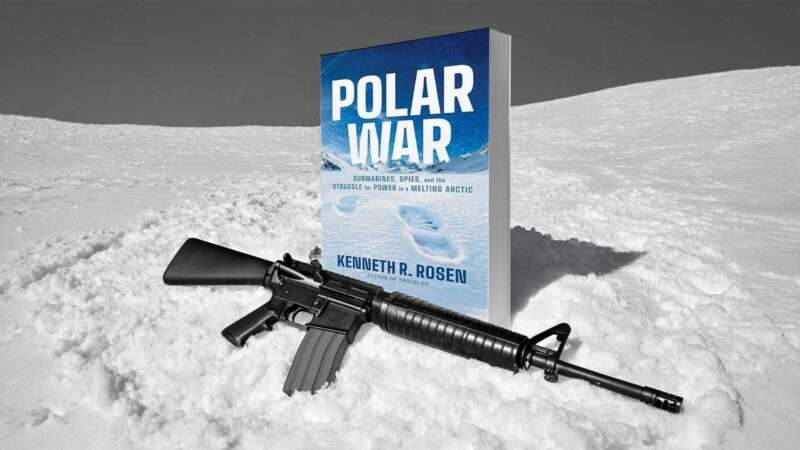
The book "Polar War" next to a military rifle | Illustration: Eddie Marshall | Midjourney

Polar War: Submarines, Spies, and the Struggle for Power in a Melting Arctic, by Kenneth R. Rosen, Simon & Schuster, 320 pages, $29

When he first started talking about it, President Donald Trump’s desire to take over Greenland sounded like a joke. Now European leaders are taking the possibility of a hostile takeover—and possibly even a war for the Danish Arctic island—as a deadly serious threat. After Trump’s diet regime change operation in Venezuela, he immediately set his sights on Greenland, with the implication that it would be an armed conquest rather than a voluntary purchase.

“Nobody’s going to fight the United States militarily over the future of Greenland,” White House Deputy Chief of Staff Stephen Miller told CNN, bragging about a world “governed by strength, that is governed by force, that is governed by power.” Danish Prime Minister Mette Frederiksen said that a U.S. attack on any part of Denmark would end “everything” that has to do with “post-World War II security.”

What would a battle in the Arctic actually look like? Polar War, a book published by Kenneth Rosen amid the latest threats, aims to answer that very question. Rosen sails along with Norwegian and American coast guard patrols in the Arctic, watches prospective Swedish ski troopers at their boot camp, flies to the village in northern Greenland where the U.S. military is based, and hitches a ride on a supply run to the Russian outpost in Svalbard, a strange neutral zone in the Barents Sea.

The book is at least partly a pitch for more Western military spending. “Russia and China and their allies knew exactly what they wanted,” Rosen argues, but the United States had “no road map” to compete. The problem is his double standard: While Rosen sees the gap between planning and execution on the Western side up close—and gets to hear typical complaints from officials that their programs are underfunded—he takes it for granted from a distance that Russian shows of force or Chinese business plans reflect these countries’ real polar capabilities.

Rosen’s comparisons within the Western bloc have inadvertently turned out to be the most useful part of his book, given the tensions over Greenland. Observing U.S. and European operations in the far north, he finds that Nordic troops are much more agile and well-prepared for high latitudes than their American counterparts.

In fact, Rosen gets to compare these forces side-by-side when he follows a Norwegian ship on the way to a planned rendezvous with the USCGS Healy, the U.S. Coast Guard’s only Arctic-specific icebreaker. When the two ships meet, they are suddenly buzzed by a Russian helicopter. The Americans are “visibly unnerved,” Rosen notes. The Norwegians, on the other hand, dryly comment about how they do the same to Russians all the time.

An important lesson is that experience, rather than flashy equipment, makes or breaks a polar army. The cold quickly kills people and destroys machines. Snow does not behave like sand when building fortifications. Cross-country skis are faster than snowshoes. Sunburn is a surprisingly common problem despite the cold. Hooks and ropes have to be carefully maintained. Wind and weather at sea can change unpredictably. Even routine, peacetime shipboardings can be deadly.

The book argues that Europe’s comparative advantage in the Arctic can make NATO worthwhile for the U.S., by reducing the need for an American military buildup up there. What neither Rosen nor almost anyone else imagined was that the Arctic would trigger a zero-sum competition between America and Europe, with a real possibility of Americans facing off against their more experienced European counterparts.

Missing from most of the mainstream conversation—but present in Rosen’s book—is the question of what Greenlanders themselves want. Most people in Greenland are Inuit, members of the same culture that much of northern Canada and coastal Alaska belong to. For centuries, they chafed under Danish colonial rule. Now they enjoy considerable self-rule within Denmark and are deciding whether to pursue independence.

Polls show that most Greenlanders support independence in theory but don’t necessarily want to break away at the moment. The fact that Danish taxpayers pay for half of the Greenlandic government budget is an obvious, widely known barrier to independence. So is the potential loss of the mobility and export markets that European Union membership provides. Many Greenlanders whom Rosen meets have family or work ties to mainland Europe. Even if they resent being ruled by and dependent on faraway foreigners, they have a lot to lose from cutting the relationship in haste.

What Greenlanders definitely do not want is to have this relationship renegotiated at gunpoint. They are, as Rosen puts it, “open for business but not for sale.” Ironically, Trump’s threats threw icy water on Greenlandic nationalists’ otherwise warm view of America; many had hoped that American tourism and mining investment could replace Danish subsidies.

With climate change opening up the Arctic, it may be prudent for America to pay more attention to its northern frontier. And that may mean preparing for the intense difficulties of fighting in the Arctic. But those difficulties show why actively seeking out such a fight is so deranged.

The post A Recent Book Shows Why Invading Greenland Would Be a Dumb Idea appeared first on Reason.com.

from Latest – Reason.com https://ift.tt/mYZ7dRJ
via IFTTT

Title VI Hostile Environment Law in the Shadow of Antisemitic Violence

My latest article, Title VI Hostile Environment Law in the Shadow of Antisemitic Violence, forthcoming in the Journal of Free Speech Law, is now available to download. The article is forty pages long, but its basic contribution comes down to this: discussion by judges and commentators of hostile environment complaints filed by Jewish students have largely ignored the fact that Jewish students across the US have faced violence, threats, and intimidation since October 7, in a national environment in which Jews more generally have faced a similarly threatening environment, including several murders. This article, in contrast, analyzes the relevant Title VI issues, including the freedom of speech of protestors, in light of that environment, and concludes that rather than focusing on whether speech protected by the First Amendment should have been suppressed because of unprotected antisemitic acts, courts and commentators should consider whether protected speech that endorses violence is part of a threatening context that required universities to crack down (as many did not) on unprotected actions that contributed to a threatening environment such as vandalism, threats, illicit encampments, classroom disruptions, and so on.

Here is the formal abstract:

Following Hamas’s October 7, 2023 attack on Israel, American universities have faced a wave of Title VI complaints alleging deliberate indifference to antisemitic harassment of Jewish students. Many of these claims arise in the context of anti-Israel campus protests featuring rhetoric that, while deeply offensive and often perceived as endorsing violence, is ordinarily protected by the First Amendment. Courts and commentators have increasingly concluded that such protected speech cannot form any part of a cognizable hostile-environment claim. This Article argues that this conclusion rests on a fundamental misstatement of both Title VI doctrine and the nature of the claims being advanced.

The Article contends that Jewish students’ post–October 7 claims do not seek to impose liability for protected political expression. Rather, they allege that universities have failed to address unprotected antisemitic conduct—including physical assaults, threats, intimidation, vandalism, unlawful encampments, and selective nonenforcement of neutral conduct rules—that materially interferes with access to education. Within this framework, protected speech plays a limited but legitimate role: not as actionable harassment, but as contextual evidence bearing on whether a university’s inaction in the face of unprotected conduct reasonably gives rise to fear of violence and intimidation.

Drawing on extensive documentation of antisemitic assaults and threats on campuses and in the surrounding society, the Article argues that the “reasonable person” standard governing hostile-environment claims must be applied in light of contemporary conditions. When violent rhetoric coincides with lawless behavior and administrative indifference, Jewish students’ fear for their physical safety cannot be dismissed as hypersensitivity to ideas. Properly understood, Title VI permits—indeed, requires—universities to enforce neutral conduct rules to mitigate hostile environments without suppressing protected speech. Courts therefore err when they dismiss such claims at the pleading stage by conflating demands for physical security with demands for ideological conformity.

The post Title VI Hostile Environment Law in the Shadow of Antisemitic Violence appeared first on Reason.com.

from Latest – Reason.com https://ift.tt/RLHIvdj
via IFTTT

A Recent Book Shows Why Invading Greenland Would Be a Dumb Idea


The book "Polar War" next to a military rifle | Illustration: Eddie Marshall | Midjourney

Polar War: Submarines, Spies, and the Struggle for Power in a Melting Arctic, by Kenneth R. Rosen, Simon & Schuster, 320 pages, $29

When he first started talking about it, President Donald Trump’s desire to take over Greenland sounded like a joke. Now European leaders are taking the possibility of a hostile takeover—and possibly even a war for the Danish Arctic island—as a deadly serious threat. After Trump’s diet regime change operation in Venezuela, he immediately set his sights on Greenland, with the implication that it would be an armed conquest rather than a voluntary purchase.

“Nobody’s going to fight the United States militarily over the future of Greenland,” White House Deputy Chief of Staff Stephen Miller told CNN, bragging about a world “governed by strength, that is governed by force, that is governed by power.” Danish Prime Minister Mette Frederiksen said that a U.S. attack on any part of Denmark would end “everything” that has to do with “post-World War II security.”

What would a battle in the Arctic actually look like? Polar War, a book published by Kenneth Rosen amid the latest threats, aims to answer that very question. Rosen sails along with Norwegian and American coast guard patrols in the Arctic, watches prospective Swedish ski troopers at their boot camp, flies to the village in northern Greenland where the U.S. military is based, and hitches a ride on a supply run to the Russian outpost in Svalbard, a strange neutral zone in the Barents Sea.

The book is at least partly a pitch for more Western military spending. “Russia and China and their allies knew exactly what they wanted,” Rosen argues, but the United States had “no road map” to compete. The problem is his double standard: While Rosen sees the gap between planning and execution on the Western side up close—and gets to hear typical complaints from officials that their programs are underfunded—he takes it for granted from a distance that Russian shows of force or Chinese business plans reflect these countries’ real polar capabilities.

Rosen’s comparisons within the Western bloc have inadvertently turned out to be the most useful part of his book, given the tensions over Greenland. Observing U.S. and European operations in the far north, he finds that Nordic troops are much more agile and well-prepared for high latitudes than their American counterparts.

In fact, Rosen gets to compare these forces side-by-side when he follows a Norwegian ship on the way to a planned rendezvous with the USCGS Healy, the U.S. Coast Guard’s only Arctic-specific icebreaker. When the two ships meet, they are suddenly buzzed by a Russian helicopter. The Americans are “visibly unnerved,” Rosen notes. The Norwegians, on the other hand, dryly comment about how they do the same to Russians all the time.

An important lesson is that experience, rather than flashy equipment, makes or breaks a polar army. The cold quickly kills people and destroys machines. Snow does not behave like sand when building fortifications. Cross-country skis are faster than snowshoes. Sunburn is a surprisingly common problem despite the cold. Hooks and ropes have to be carefully maintained. Wind and weather at sea can change unpredictably. Even routine, peacetime shipboardings can be deadly.

The book argues that Europe’s comparative advantage in the Arctic can make NATO worthwhile for the U.S., by reducing the need for an American military buildup up there. What neither Rosen nor almost anyone else imagined was that the Arctic would trigger a zero-sum competition between America and Europe, with a real possibility of Americans facing off against their more experienced European counterparts.

Missing from most of the mainstream conversation—but present in Rosen’s book—is the question of what Greenlanders themselves want. Most people in Greenland are Inuit, members of the same culture that much of northern Canada and coastal Alaska belong to. For centuries, they chafed under Danish colonial rule. Now they enjoy considerable self-rule within Denmark and are deciding whether to pursue independence.

Polls show that most Greenlanders support independence in theory but don’t necessarily want to break away at the moment. The fact that Danish taxpayers pay for half of the Greenlandic government budget is an obvious, widely known barrier to independence. So is the potential loss of the mobility and export markets that European Union membership provides. Many Greenlanders whom Rosen meets have family or work ties to mainland Europe. Even if they resent being ruled by and dependent on faraway foreigners, they have a lot to lose from cutting the relationship in haste.

What Greenlanders definitely do not want is to have this relationship renegotiated at gunpoint. They are, as Rosen puts it, “open for business but not for sale.” Ironically, Trump’s threats threw icy water on Greenlandic nationalists’ otherwise warm view of America; many had hoped that American tourism and mining investment could replace Danish subsidies.

With climate change opening up the Arctic, it may be prudent for America to pay more attention to its northern frontier. And that may mean preparing for the intense difficulties of fighting in the Arctic. But those difficulties show why actively seeking out such a fight is so deranged.

The post A Recent Book Shows Why Invading Greenland Would Be a Dumb Idea appeared first on Reason.com.

from Latest – Reason.com https://ift.tt/mYZ7dRJ
via IFTTT