A British Liberal Democrat MP has openly admitted what the political class really fears about Elon Musk’s X: it lets ordinary Britons speak freely about the disaster of mass immigration.
In a clip that exploded across the platform on Monday, Cheltenham MP Max Wilkinson described X as a “massive problem” precisely because it gives critics of unchecked migration a voice.
“It’s a really easy [way] to get some content out about how you think immigration is too high, or immigration is the big thing that’s tearing the country apart… X is now making sure that you can have your voice heard in a really easy way that you couldn’t in the past,” he complained.
This is not some fringe rant. Wilkinson, the Lib Dems’ Home Office spokesperson, simply said the quiet part out loud. While the establishment lectures the public about “tolerance” and “diversity,” it seethes at the idea that native Brits can now push back online without gatekeepers filtering their concerns.
The backlash was instant and brutal. Toby Young of the Free Speech Union fired back: “Labour MP Max Wilkinson says the quiet part out loud: He doesn’t like X because it enables people who think immigration is too high to have their voices heard.”
Telegraph journalist Allison Pearson was even sharper: “God forbid people should be able to say on X that immigration is far too high. Or that it is causing problems for our way of life. Lib Dem MP Max Wilkinson thinks those opinions should be silenced. How dare he!”
This admission lands at the perfect moment to expose the broader pattern of suppression. It confirms exactly why the government has been so desperate to rein in platforms like X.
As we have highlighted, the UK’s relentless and ongoing push to ban or restrict X has been predicated on protecting children, yet is clearly about narrative control:
The same government that lectures about “hate” has already banned a teacher for the crime of saying migrants should respect our laws or leave:
Samuel Everett’s posts – “If you don’t respect our laws, culture and way of life you should leave, nobody is forcing you to stay” and “deploy the navy” on small boats – earned him an indefinite professional ban even, despite an independent panel clearing him of ‘racism’.
The government has also jailed a man for 18 months over two spicy anti-immigration tweets viewed just 33 times.
Last year alone Britain’s speech gulag saw 10,000 people arrested for social media posts.
The crackdown reaches into schools too. The Green Party wants to teach children radical ideology regarding immigration.
While the current Labour government urges schools to snitch on “anti-Muslim hostility” in an Orwellian dragnet.
It even produced a video game that brands kids “terrorists” for questioning mass migration:
Counter-terror police ran an advert warning teens that sharing “funny content” could be terrorism.
Meanwhile the demographic transformation accelerates. Migrants are set to swallow 40 percent of new UK homes by 2030.
A recent caller to Talk TV perfectly captured how most British people feel about it all:
And the hypocrisy never stops. The same regime is introducing an “anti-Muslim hate” definition while branding the Union Flag a tool of hate in leaked strategy documents.
Wilkinson’s outburst is the clearest proof yet: the real “threat” to the establishment isn’t hate, it’s democracy. They cannot win the argument on open borders, so they attack the platform that lets the public make it.
Britain does not need more speech restrictions. It needs politicians who listen instead of silencing the people they are supposed to serve. X is working exactly as intended – giving a voice to the voiceless. That is why the elites hate it, and why millions of us will keep using it, by hook or by crook.
Your support is crucial in helping us defeat mass censorship. Please consider donating via Locals or check out our unique merch. Follow us on X @ModernityNews.
Tracking The Last UK-Bound Jet Fuel Tanker As Shortages Near
We outlined the early signs of global demand destruction and worsening energy chaos in a note earlier on Monday, mapping the regional dominoes and the order in which they are likely to fall. Turning to the UK, the last known jet fuel shipment from the Middle East is due to arrive later this week, a major warning that aviation disruptions could soon materialize.
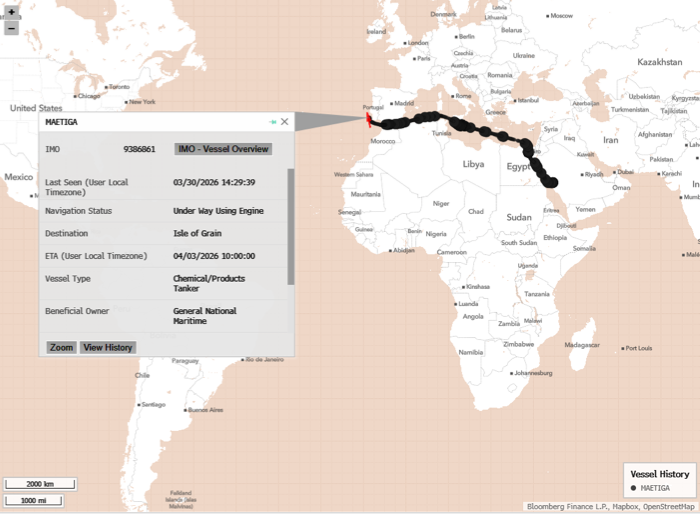
The Financial Times reports that the Libyan-flagged Maetiga vessel, loaded with jet fuel from Saudi Arabia, is set to dock in the UK on Thursday.
Maetiga is currently transiting off the coast of Portugal.
“No other UK-bound cargoes from the region are visible on the water, given the blockage of the Strait of Hormuz,” the FT noted.
The UK has heavily relied on jet fuel transiting the Hormuz chokepoint for several years after phasing out Russian supplies. Analysts warn that airlines may begin to feel the supply crunch in late April if disruptions in Hormuz persist.
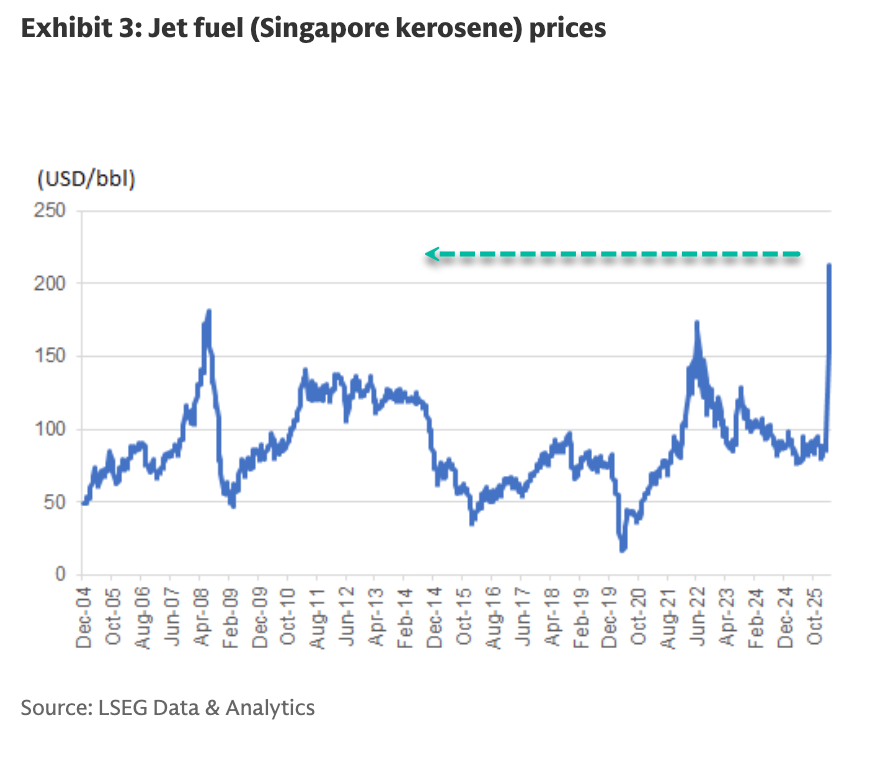
As of Monday, northwest European jet fuel prices were roughly double prewar levels. In Asia, Singapore kerosene is trading at more than $200 a barrel, more than double the level at the start of the year.
“Market understanding is that fuel shortages are not far away in some countries,” and “higher prices are to trickle through the entire supply chain and will be felt by all,” Janiv Shah, vice-president of oil markets at consultancy Rystad Energy, told the outlet.
According to UBS, a shortage of jet fuel in Asia, along with very high prices for what is available, is now leading to more flight cancellations.
Europe sources a shocking amount of jet fuel through the Hormuz chokepoint, upwards of 40%, and the UK is especially exposed, both directly and through imports routed via the Netherlands and Belgium.
Lars van Wageningen, research and consultancy manager at data provider Insights Global, pointed out that supply chains are not broken just yet but are being reshuffled, indicating that European buyers will seek additional jet fuel supplies from refineries in West Africa and the US.
The UK government has told travelers not to worry yet, which is usually the moment to start worrying. Energy shocks do not hit everywhere at once. As we point out, first through Asia, then into Africa, Europe, and eventually onto the US West Coast.
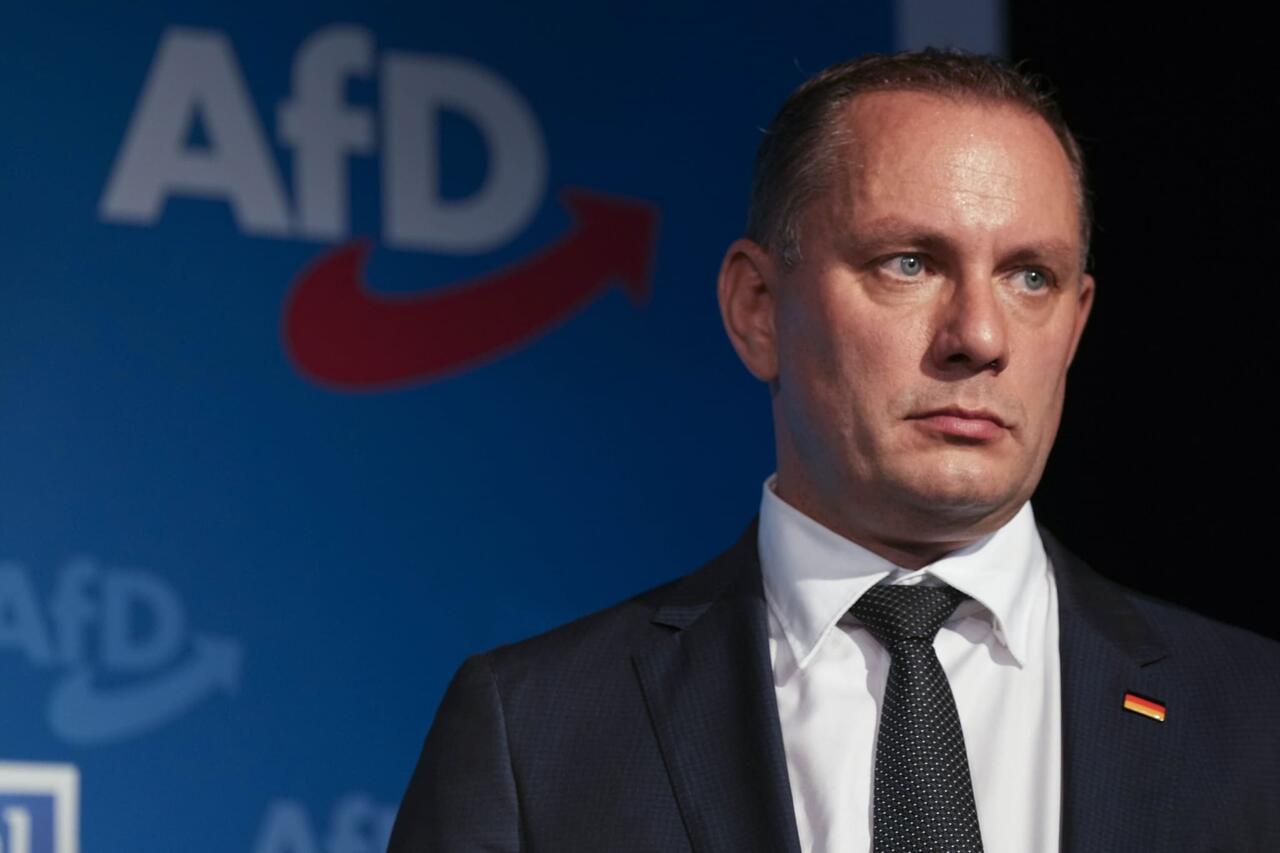
Alternative for Germany (AfD) co-chair Tino Chrupalla spoke out in favor of withdrawing American troops from Germany. During a party congress in Saxony, he stressed that, if AfD comes to power, this should be the first step in implementing the party’s program, which calls for the removal of all allied forces from Germany and a withdrawal from NATO’s nuclear weapons sharing system.
“Let’s start implementing this program by withdrawing U.S. troops,” he said, as reported by the Frankfurter Allgemeine Zeitung, cited by Do Rzeczy.
The proposal received loud applause by the audience.
Chrupalla also argued that Germany should not be involved in international military operations, praising Spain for opposing U.S. use of its bases for its conflict with Iran.
“And that is exactly right. Spain is not interfering in this war,” he said.
His criticism of American troops on German soil comes after his sharp criticism of Trump’s decision to launch a war against Iran.
“I am extremely disappointed in Donald Trump when it comes to his campaign promises,” Chrupalla during an appearance on Markus Lanz earlier this month.
“During the election campaign, he also accused Kamala Harris, that she would start World War III. And now we are on the cusp of having probably started the Third World War with Donald Trump. And that’s a breach of his word, which I really resent and which the American people also resent, who incidentally reject this war in Iran at a much higher rate than Germans. So, 70 percent of Americans do not want this war and do not support it.
Chrupalla also stated it was clear the United States was dragged into the war by Israel.
“And I think the Americans, as you can really see now if you look at all the events, were dragged into this war by Israel. There were serious negotiations where Oman, as a peacemaker, came to an agreement with Israel together with the USA, and they basically started bombing Iran on the same day. The Omani Foreign Minister has described this as a huge mistake. The entire Arab world has labeled it a mistake. The Norwegian Foreign Minister has described it as a mistake. It has also been labelled a mistake by Turkey. You can’t ignore all that. These are all countries in this region that are naturally extremely worried that this will escalate into a conflagration. And that’s what we’re seeing now. It’s a huge wildfire.”
In his most recent speech, Chrupalla also addressed Russia’s war against Ukraine. He announced that the AfD would “bring about peace” and that after the conflict ends, Ukrainians in Germany should return to their home country, criticizing the current refugee benefits system.
“This is exactly what must end. All Ukrainians must go back,” he said
Chrupalla’s speech made it clear that the AfD aims to take power in Germany, at both the state and national levels. “We must develop, moving from an opposition party to a governing party,” he said during the party convention in Löbau, as quoted by Deutsche Welle.
Germany’s next federal elections will take place only in March 2029. At that time, Chrupalla plans for the AfD to have a prime minister in Saxony and an AfD chancellor as the leader of Germany. Chrupalla also admitted that this requires further capacity-building and preparing party structures for governance.
Noting that AfD must no longer be perceived as a single-issue party, presumably referring to its focus on implementing mass deportations, and must demonstrate concrete results in government going forward.
“At some point, we will have to present our voters with successes,” he emphasized.
According to Bild reports, the party has already begun organizational preparations to take over the government by establishing a special working group for participation in the government.
The last time global energy markets witnessed a shock similar to what we might see this year was during the 1973 Arab Oil Embargo. Tensions were escalating in the aftermath of the Yom Kippur War when the Arab Coalition launched a surprise attack against Israel. OPEC nations joined forces to cut off oil to Israeli allies including the US. This froze around 15% of oil exports to America, triggering market speculation, hording and price inflation.
The infection spread to Asian markets long dependent on the Middle East for energy resources. This slowed industrial capacity and many governments imposed rationing and price controls.
Images of long lines of cars at gas stations and people filling up extra containers remain burned into the collective memory of anyone who lived through that era. However, the real threat to the US was not supply shortages; rather, it was the prospect of a market cascade.
Stagflation coupled with supply chain vulnerabilities were exacerbated by public panic. Stock markets also plunged into recession territory in the expectation of an industrial slowdown. The embargo lasted only five months, but the damage was extensive.
Things have changed quite dramatically since the 1970s. The US is far less dependent on energy resources from the Middle East, though, any shocks to the global oil trade have the ability to ripple out and affect American markets. Furthermore, Arab oil producers are now largely allied with the US, which means there’s less risk of a prolonged shutdown due to conflict.
In the case of the Strait of Hormuz, any direct damage to America is minimal. Only 7% of all oil shipments to the US actually travel through the Hormuz, and, Venezuelan oil is helping to fill that gap. The greater danger is rooted in globalism and the interdependent trade system.
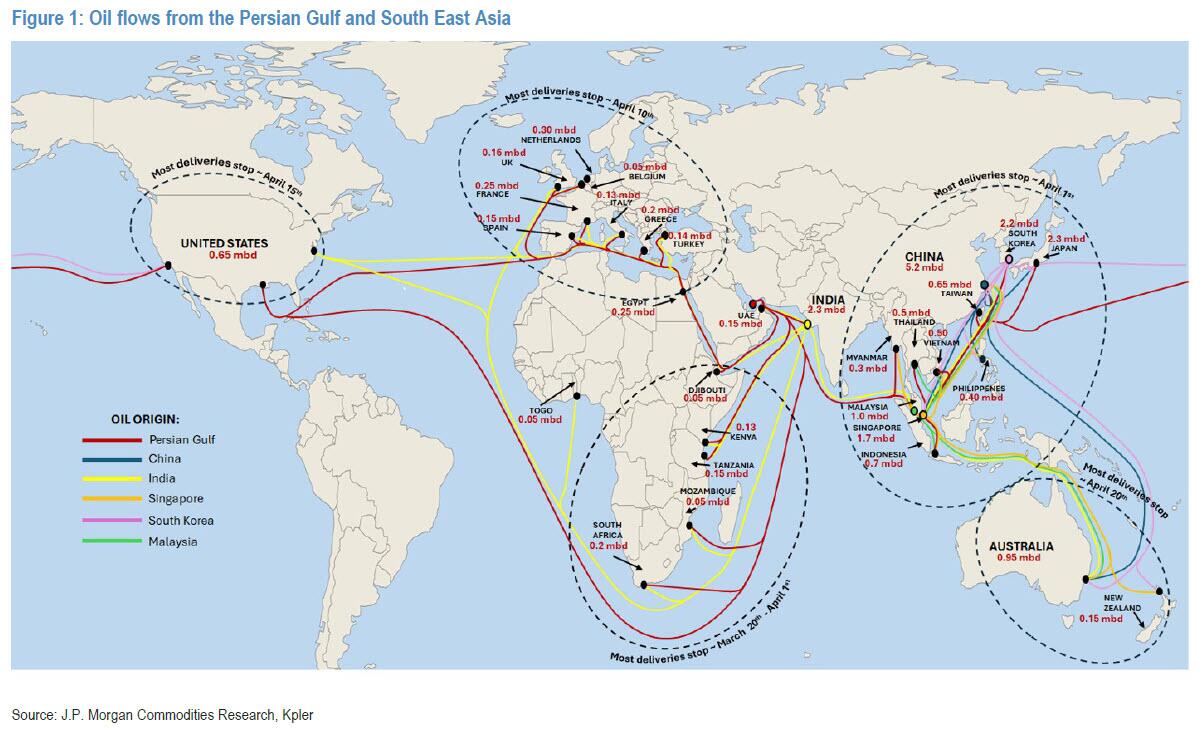
For example, US allies like Australia, India, Japan, and the Philippines are heavily exposed to the Hormuz shutdown. Australia is currently one month away from supply shortages and the country has little to no backup. The Philippines has already declared a state of emergency and established ration policies; they have perhaps 2 months of emergency supplies. Japan is currently tapping into strategic oil reserves and they are boosting coal fired power.
China, is facing significant exposure, with 15% of their oil supplies coming directly from Iranian wells and around 35% of their total oil supply traveling through the Hormuz. China has around 4 months of reserves before crisis hits them like a freight train.
Most Asian countries that are reliant on oil and natural gas passing through the Hormuz have around two months before they start to see public panic and long lines at gas stations similar to 1973.
Iran claims that they intend to let “non-hostile ships” pass the strait, but they’ve stopped multiple Chinese ships this week after this announcement was made. It is likely that war conditions will continue for at least another month, and, in the worst case scenario, the Hormuz could remain closed well beyond the cutoff date for many at-risk countries. The longer the war goes on, the greater the chance of a market cascade.
I’ve noticed that there are some bought-and-paid-for “prognosticators” out there adding their own propaganda spin to these events, including the notion that the west is on the verge of collapse because of the Hormuz closure. In reality, the east is far more economically exposed than the west is to this war. That said, there are risks to the US, and they are reliant on how long the conflict lingers.
Energy Crisis, Election Dangers And Global Economic Warfare
“The establishment media reports that Iran hacked the Trump campaign’s election strategies and gave them to the Harris camp. There are also rumors spread by US intelligence agencies that Iran was working to have Trump assassinated. Are these claims true? There’s little public evidence available to prove it.
Maybe Iran really wants to take Trump down. Or, maybe this is part of a plot to ensure that Trump backs a full blown war with Iran should he win the election. Trump has said repeatedly that he intends to end the war in Ukraine upon his return to the White House. This would ruin over a decade of planning by the Atlantic Council. But what if they can sink the US into a different conflict with the same potential for a world war? That’s what Iran is – Another linchpin…”
I would note that “world war” can take many forms. It could be a war using economic weapons rather than nukes. It could be a series of proxy wars that spiral and spread.
The Ukraine theater serves as a proxy war in which Russia indirectly engages with NATO and Russia is now forced to sustain its military posture for far longer than it expected at a much higher cost. Iran has the potential to become another Ukraine, but one in which the US is trapped into expending military and economic assets while Russia and China drag out the costs.
“Iran will receive ample weaponry and intel from Russian sources, prolonging the conflict….”
The Kremlin has essentially admitted that this is already happening. Iran has shown uncharacteristic precision with some missile strikes exactly because they have access to Russian satellite intel and targeting. The Russians could very well be running Iran’s strategic operations, for all we know. I also argued that:
“On the political front there will be a deep divide between pro-Israel conservatives and anti-war conservatives. Trump will lose a large percentage of his base if the US deploys troops. Americans might hate leftists enough that this won’t matter in 2026, but they’re not going to give Neo-Cons a free pass, either.”
In other words, one of the biggest disasters that could happen for the US as a result of this war is that ideologically deranged Democrats and leftists regain enough political leverage post-midterms to disrupt any practical reforms and eventually bring back the woke nightmare we witnessed under the Biden Administration. If this happens, mass violent unrest in America is inevitable. Not to mention, war with Russia in Ukraine will be back on the table.
For large swaths of Asia, the disaster will be immediately visceral, including economic implosion, rationing and probably civil unrest. And, thanks to globalism, economic crisis in Asia has the ability to spread into western economies.
The BRIC nations have lost much of their leverage over the US Dollar that they had 10 years ago (China’s dollar and treasury holdings have been cut in half and exports from China to the US have dropped significantly), but they can still engage in enough economic warfare through trade disruptions to wreak havoc on US markets.
As I mentioned in recent articles, any disruption to the Yen-Carry trade is perhaps the biggest threat to the US economy right now, and this could be triggered through high energy prices in Japan; not as an attack, but as a basic consequence of market interdependency. All of this depends on the true objectives behind US operations in Iran.
Is the goal an occupation and complete regime change? Well, this is clearly what the Neo-Cons and Israel want. That kind of project could take years to complete and it would require a maximum US ground commitment. However, if Trump intended to pursue an occupation I think he would have committed tens of thousands of troops on day one.
Is the goal to simply destroy the Iranian ability to project military power outside of their country, or take control of the Strait of Hormuz? Walking away is not an option at this stage (the Hormuz cannot be left in the hands of the Iranians without leverage against them). So, this would be the easiest objective to complete with minimal US ground operations, bringing us to our best case scenario…
The Key To Ending The Iran War In Five Weeks
We constantly hear about international exposure to the Hormuz shutdown, but the media rarely mentions that Iran is the MOST exposed economy of all. For now, Iranian oil ships continue to pass through the strait and these vessels are Iran’s economic lifeline. Strategic estimates suggest that without the steady passage of these oil tankers, the Iranian economy would completely collapse within five weeks.
In fact, there is already information leaking out from Iran which suggests that an economic crash is happening right now. This will accelerate the Islamic regime’s willingness to negotiate.
If they don’t, Trump’s strategy will be a ground invasion of Kharg Island along with several other Islands that Iran uses to help secure the Hormuz. Kharg Island handles approximately 96% of Iran’s crude oil exports, making it the single greatest weakness of the regime.
But what if Kharg represents too much risk? The American public abhors even minimal military casualties, which is why we are politically ill equipped to weather a long term war. There is another way, and it’s much safer…
Iranian cargo ships can be targeted for seizure by a US blockade of the Persian Gulf well away from the narrow waters of the Hormuz. The ships could be destroyed, but I suspect the Department of Defense will try to avoid oil spills and ecological disasters. Instead, the best option is to capture Iran’s tankers and then redirect the oil to countries in danger of shortages. Iran has the option of shutting off GPS tracking for their vessels (shadow fleet), but this would not help them maneuver past a comprehensive US blockade.
In other words, I argue that the US could turn the tables on Iran and use their reliance on the Hormuz against them. With Iran’s economy in shambles, they will no longer be able to purchase missiles or drones for resupply from Russia and China. They won’t be able to pay for logistic resources for their military and they won’t be able to contain public unrest.
The Iranians would be forced to negotiate and the war would be over quickly with minimal risk to US troops. It’s the only option I see for returning energy markets to normal operations within a couple months while preventing a global crisis. Trump should treat any calls for long term ground occupation with suspicion; there is no need for this kind of military commitment. The war can be decided quickly through economic means.
White House Intervenes After Israel Closed Church Of The Holy Sepulchre Ahead Of Easter
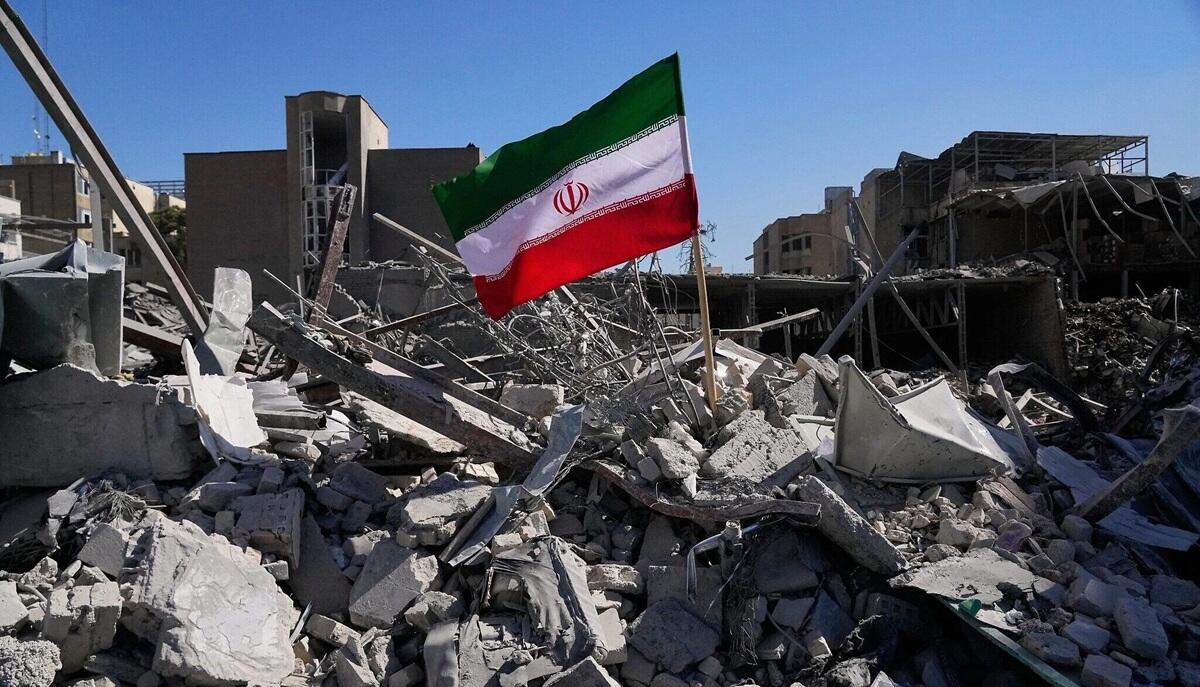
Jerusalem’s Church of the Holy Sepulchre was closed by Israeli authorities earlier this month after Iranian missile fragments hit Jerusalem, with restrictions also being placed on who can enter the walled old city – home to all of the most sacred religious sites.
This has resulted in outrage among Christians, however, Israeli officials have said that Al Aqsa Mosque was also closed, and limitations were placed numbers of people visiting the Western Wall – and claimed that all of this was being done as a safety precaution.
But closure of the Holy Sepulchre for Lent and Easter is basically unprecedented in recent history, and Church leaders say it violates the church’s historic autonomy under an arrangement called the ‘status quo’.
Things have come to a head after on Palm Sunday, two Catholic leaders were prevented from praying at the Holy Sepulchre by Israeli police. The Vatican was quick to rebuke the police decision as “a manifestly unreasonable and grossly disproportionate measure.”
Cardinal Pierbattista Pizzaballa was the top official kept from entering the church, and his name has previously been in the news over the course of the Gaza war, where he called out Israel’s military for shelling Christian sites, including a couple of deadly airstrikes on Palestinian churches.
Somewhat surprisingly, the Trump White House has gotten involved, exerting some rare direct pressure on the Israeli government over the church closure.
“We did express our concerns with Israel with respect to these holy sites being shut down,” White House press secretary Karoline Leavitt says during a briefing – as cited in Israeli press reports.
“We want worshipers to be able to access these holy sites. Of course, safety is a top priority, but we understand Israel is working on the security measures to reopen the sites throughout Holy Week, and that’s something that we’re appreciative of,” she added.
It seems the White House intervention may have worked, with Times of Israel reporting that “Catholic officials in Jerusalem announced that prayer arrangements for Holy Week, which culminates with Easter on Sunday, April 5, had been resolved with Israeli authorities, ending a diplomatic spat over the issue.”
The majority local church in the Holy Land, among Palestinians and Greeks, is the Orthodox Church of Jerusalem – part of the worldwide Eastern Orthodox communion. There are typically large throngs of Orthodox Christians descending on Jerusalem during this period. While the Western confessions – or rather the Roman Catholic and Protestant churches – will celebrate Easter on April 5, Orthodox Easter, also known as Pascha, takes place on April 16 this year.
JERUSALEM — Israeli authorities announced on March 29, 2026, a special plan allowing Christian leaders to resume services at the Church of the Holy Sepulchre, following international backlash over the obstruction of Catholic clergy on Palm Sunday.
It’s as yet unclear the degree to which Israeli police and military will actually allow Christians to access the Church of the Holy Sephulchre before and during these dates. And the reality is that it is unlikely that the crowds will be huge or overwhelming this year, given the ongoing war and current difficulty of travel in the region.
Zelensky Calls For Easter Truce Amid Nightly Russian Drone Assaults
Ukrainian President Volodymyr Zelensky is urging for an Easter holiday ceasefire with Russia, at a moment each side has sent daily and nightly drones and missiles across the border.
“We’re ready for a ceasefire during the Easter holidays,” Zelensky told reporters, describing that “normal people who respect life” would seek a permanent ceasefire. “But we’re ready for any compromises, except those involving our dignity and sovereignty,” he added.
Both countries have predominantly Eastern Orthodox Christian populations, and Orthodox Easter, also known as Pascha, takes place on April 16 this year. The West, or rather the Roman Catholic and Protestant churches, will celebrate on April 5.
While full ceasefires, even short ones, have not had much success in the past more than four years of war, the two sides have previously agreed to days or even weeks of pauses on attacking energy sites. This limited truce does hold some potential.
“If Russia is ready to stop hitting Ukrainian energy facilities, we will not respond against their energy sector,” Zelensky said.
Last year saw an effort to put in place a Pascha ceasefire, called for by President Putin – however, there were widespread accusations of violations.
Putin himself attends the long Orthodox Pascha vigil each year, while Zelensky is Jewish. He became the first Jewish president of Ukraine after being elected in 2019, and has since faced accusations of persecuting Ukrainian Orthodox who maintain spiritual ties with the Moscow patriarchate.
Currently, drone attacks on mutual energy sites are continuing at rapid pace. We detailed that last week Russia set a record for the largest single-day drone assault on Ukraine of the war.
At least seven people were killed in Ukraine last Tuesday after Russia launched the truly massive drone.Counting both drones and cruise missiles, 979 warheads poured into Ukrainian airspace as diplomatic efforts at ending the war remain stalled and the world’s attention focused almost entirely on the US-Israeli war on Iran.
A Florida-based company is accelerating production of powerful systems that can counter small drone threats. VAMPIRE counter-unmanned systems (C-UxS) deliver precision strike capabilities against drones.
Developed by L3Harris Technologies, the system is a self-contained platform that delivers advanced reconnaissance and can conduct operations against remotely piloted aircraft.
VAMPIRE counter-unmanned system installed on vehicle
L3Harris Technologies recently installed its VAMPIRE counter-unmanned system aboard a GM Defense Infantry Squad Vehicle (ISV), demonstrating a mobile solution to take out drone threats.
The facility features a flexible assembly, testing and installation area to integrate VAMPIRE onto ground vehicles and containerized weapon systems. The production line can adjust and increase volume as demand evolves.
“Deploying VAMPIRE on GM Defense’s ISV is a great example of how quickly and seamlessly this system can be used by our Army customer to defeat the rapidly growing threat of small, hostile drones,” said Tom Kirkland, vice president and general manager, Targeting and Sensor Systems, L3Harris.
“Working together, we have swiftly responded to the urgent need to defeat small unmanned autonomous systems accurately and affordably while allowing ground forces to stay tactically mobile.”
Highly adaptable to meet diverse mission
The company claims that the GM Defense ISV is uniquely engineered to fulfill U.S. Army requirements for rapid deployment. With robust off-road capabilities, the ISV significantly improves tactical mobility across a range of military operations. The vehicle is easily maintainable and highly adaptable to meet diverse mission and operational needs, according to a press release.
GM Defense partners with companies like L3Harris to design and produce diverse kits to support the broad range of mission requirements for a variety of general purpose and special operations forces. Incorporating a Counter-small UAS system like VAMPIRE adds new capability to protect operators from hostile drone attacks, as per the release.
“The versatility of the ISV is one of its core strengths, and integrating a critical counter-UAS capability like VAMPIRE showcases our ability to rapidly adapt the vehicle to meet evolving threats,” said John ‘JD’ Johnson, Vice President of Government Solutions and Strategy, GM Defense.
“This successful integration highlights how the ISV’s modular design and commercial-based architecture can quickly incorporate next-generation technologies to deliver immediate value and enhanced protection to our warfighters.”
The company also highlighted that the completely self-contained, low-cost, multi-mission, precision-guided weapons platform effectively engaged in combat operations since 2023, safeguarding personnel and critical infrastructure against hostile unmanned systems and ground threats.
The affordable, compact ISR and counter-unmanned weapons system designed to deploy on nearly any platform, vehicle or vessel, according to L3 Harris. This all-in-one system excels in Counter-small Unmanned Airborne System (C-sUAS) operations, delivering precision strike capabilities with customizable sensors and weapons, significantly reducing the cost-per-effect and overall cost of ownership, according to the company.
‘Project Hail Mary’ Writer Credits Not Going Woke For Film’s Success
With an $80.6 million domestic opening weekend, a 95% critics’ score on Rotten Tomatoes, and a 96% audience score, Project Hail Mary is an undeniable blockbuster hit. By its second weekend, the movie crossed $300 million worldwide and dethroned Avatar: Fire and Ash as thetop-grossing Hollywood film of 2026 in North America. It’s become the second-biggest non-franchise opening over the past decade, after Oppenheimer.
The Hollywood Reporter published a piece titled “Project Hail Mary: 4 Lessons Hollywood Won’t Learn From Its Success,” pointing to smart storytelling, sincerity, patience, and practical effects as the pillars behind the film’s blockbuster performance. That’s a solid four. But, it predictably missed the fifth, and arguably most important point: Don’t go woke.
In the movie, Ryan Gosling plays Ryland Grace, a science teacher and biologist who wakes up alone on a deep-space mission to figure out how to stop a microorganism from dimming the sun. He eventually makes contact with an alien on the same mission, and the two team up to save their respective worlds from extinction. The premise could have easily become a vehicle for climate allegory and geopolitical moralizing, but it didn’t.
Andy Weir, the author of the novel, sat down with Will Jordan – better known online as The Critical Drinker – on Jordan’s YouTube channel shortly after the film’s release.
“For me, it’s a great example of what you can do now with movies,” Jordan said. “If you’re faithful to the source material and you don’t insult the intelligence of your audience, and give them something really interesting to grapple with, and you know, dare I say it, [don’t] try and shove, like, crappy identity politics into it, you end up with a goddam good movie at the end of it that the people just want to watch.“
Weir’s response was immediate and unambiguous. “I think you and me are kind of on the same wavelength there when it comes to fiction writing,” he said. “I never put any politics or messaging in any of my stories at all. There’s no deeper meaning; there isn’t even any symbolism, even non-political. There’s just no symbolism at all. My books are just purely to entertain.”
Weir added. “You don’t have to worry about the message.”
This is why Andy Weir will always be one of my favorite authors. His goal is to entertain, not lecture. pic.twitter.com/5KmvOvf8c4
That’s a best-selling author of two major Hollywood adaptations – The Martian and now Project Hail Mary – telling an audience of millions that the secret ingredient is the absence of an agenda. Not diversity hires. Not carefully calibrated representation metrics. Not a third-act monologue about social justice. Just a story, told well, about humans trying to survive.
The contrast with HBO Max’s upcoming Harry Potter series couldn’t be clearer. Last week, the teaser trailer for the first season dropped, and the internet promptly caught fire over the casting of Paapa Essiedu – a black actor – as Severus Snape. The show had been pitched as a more faithful adaptation of J.K. Rowling’s novels than the original eight films were able to be. But upon the announcement of Essiedu’s casting, fans quickly pointed to original illustrations and decades of book descriptions of Snape, and realized this was not going to be a faithful adaptation of the novels.
Following the release of the trailer, social media has been flooded with “Black Snape” memes, AI-generated edits, and videos, many lamenting how certain Harry Potter storylines and character dynamics will land differently because of the race swap. The conversation about the new series has become almost entirely about casting politics and DEI, rather than storytelling.
That’s exactly what Project Hail Mary avoided. Directors Phil Lord and Chris Miller, and a production that respected its source material, delivered a film people actually wanted to see.
Hollywood has a template now. It’s not complicated. Serve the audience, not the agenda. The question isn’t whether the lesson is available. It’s whether Hollywood is willing to hear it.
A team of researchers in China has unveiled an all-weather electrolyte designed to boost the performance of lithium batteries across a wide range of conditions. Scientists based in Shanghai and Tianjin report that batteries built with the new hydrofluorocarbon-based electrolyte delivered more than twice the energy density of conventional designs when tested at room temperature.
Beyond efficiency gains, the team says the chemistry remains stable in extreme environments, with batteries continuing to operate effectively at temperatures as low as minus 94 degrees Fahrenheit.
The development points to a potential path for longer-lasting, more resilient batteries suited for EVs and other demanding applications, where both energy density and reliability under stress are critical.
Batteries can store up to three times more energy
In a study published last month in the journal Nature, researchers outlined how hydrofluorocarbon-based electrolytes could help overcome long-standing limits in battery power and energy density.
The team found that, for the same battery mass, energy storage capacity at room temperature could increase by two to three times compared to conventional designs. In turn, this suggests a viable route toward significantly more efficient lithium batteries, with implications for EVs, grid storage, and other high-demand applications, the South China Morning Postreported.
The advance could significantly extend electric vehicle range, potentially increasing it from roughly 310–370 miles to about 620 miles on a single charge, the scientists noted. Beyond EVs, the technology may also enhance the performance of devices such as smartphones, drones, robots, and even spacecraft, particularly in extremely cold environments where conventional batteries tend to struggle.
At the core of any battery is the electrolyte, a chemical medium that allows ions to move between the positive and negative electrodes. For decades, most lithium battery electrolytes have relied on oxygen- and nitrogen-based compounds because they effectively dissolve lithium salts. However, these materials have limits – they don’t transfer charge as efficiently under stress, which can slow down charging, reduce performance in cold conditions, and in some cases, raise safety concerns.
New electrolyte powers lithium-metal cells in extreme temperatures
The team, part of Nankai University and the Shanghai Institute of Space Power-Sources (SISP) under the China Aerospace Science and Technology Corporation, developed fluorine-based electrolytes for lithium-metal batteries that offer lower viscosity, improved stability, and enhanced performance in cold conditions.
Using one of their hydrogen-, fluorine-, and carbon-based electrolytes, the researchers produced lithium-metal pouch cells with an energy density exceeding 700 Wh per pound at room temperature and around 400 Wh per pound at minus 58 °F.
By comparison, conventional lithium batteries reach about 136 Wh per pound at room temperature, dropping to roughly 68 Wh per pound at minus 4 °F. The researchers reported that even at minus 94 °F, their fluorine-based electrolyte maintained high efficiency and stable charge-discharge cycles.
Even with strong performance at both room and extremely low temperatures, the team noted that the electrolyte’s high-temperature stability still needs improvement. Raising the boiling point of the electrolytes could open the door to true all-climate applications, making the technology viable across a wider range of environments.
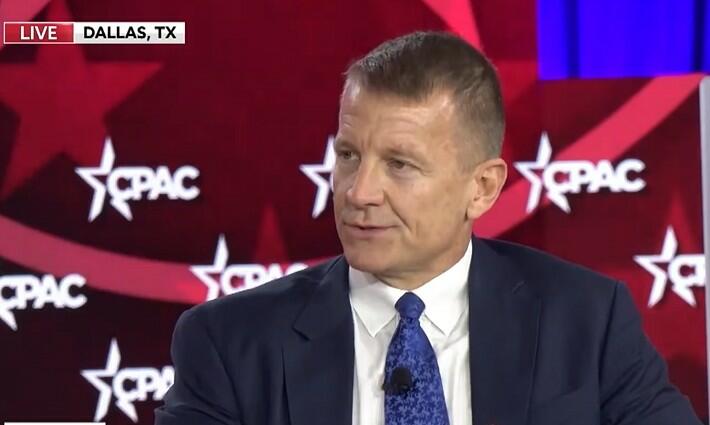
Even Erik Prince Warns Iran Will “Burn It Down” – Boots On The Ground Could Mean “Burning American Warships”
Even Erik Prince is warning the Trump administration to exercise extreme caution in Iran – particularly when it comes to boots on the ground.
The founder of Blackwater, whose private military contractors became synonymous with the U.S. quagmire in Iraq, is pushing back hard on current U.S. strategy toward Iran. Prince issued a sobering warning at CPAC last week. Speaking on the “Breaking Stuff and Killing Bad Guys” panel, Prince expressed deep skepticism about the current trajectory of U.S. involvement in Iran:
“I don’t share the optimism of the administration that there’s going to be a peaceful stop to this. They will burn it down.”
He then highlighted the particular dangers of committing ground forces:
“And my real concern is that if they try to putboots on the ground and force the Strait of Hormuz, you will see imagery of burning American warships in the next couple of weeks. And I don’t think people are really prepared for that.”
Prince is “extremely concerned” about the escalation and noted that Iran’s leadership has been preparing for conflict with the U.S. for decades.
Echoes of Earlier Warnings
Prince cautioned strongly against any US ground commitment nearly a month ago in a March 1 appearance on Steve Bannon’s War Room.
“Don’t ever contemplate ground troops in Iran,” he said. “I don’t think a regime has ever been changed by air power alone. It’s wishful thinking.”
He was equally skeptical of relying on airpower for regime change:
“Airpower alone is not going to get that done.”
ERIK PRINCE: If there are negotiations with the mullahs for some kind of transition, give them the city of Mashhad almost like a Vatican where they can go and be super Islamic and strict while the rest of Iran breathes free.
Prince’s warnings arrive as discussions continue in Washington about Iran’s critical oil infrastructure, including Kharg Island (which handles the vast majority of Iran’s crude exports) and control of the Strait of Hormuz. Prince described a potential airborne assault on Kharg Island as “mighty thin” and “pretty sporty” due to dense missile defenses and Iran’s effective use of FPV drones down to the squad level.
At CPAC, he reinforced that Iran is no easy target and would respond aggressively to any attempt to seize or blockade key maritime chokepoints.