“We Are Entering The Period Of Global Uncertainty…”

“We Are Entering The Period Of Global Uncertainty…”

Authored by Gregory Copley via OilPrice.com,

The year 2020 could emerge as the start of the era of relative global chaos or major upheaval. It is the era we have been anticipating, as the impact of core population decline meets economic dislocation, and security and structural uncertainty.

Changes in the fundamental sociological framework of global society, due to the end of the population growth cycle – and with it the end of the economic growth cycle based on expanding market size – were beginning to become evident by the beginning of 2020. It was apparent that 2020 was likely to see a major evolution in this transformation.

The three “inevitable” trends which had been promoted in recent decades:

  1. the “inevitable” rise of the People’s Republic of China;

  2. the “inevitable” decline of the United States of America; and

  3. the “inevitable” consolidation of the European Union into a strategic superpower

…had all, by 2020, retreated into the swamps of vainglory.

A broad-brush landscape view of 2020 must include at least the following:

The People’s Republic of China and the BRI Framework:

The Communist Party of China (CPC) should be expected to face unprecedented challenge in 2020-21, not only for its control of the economy of the People’s Republic of China (PRC), but to its ability to project the PRC’s physical power in its immediate region, and across its suzerain empire, expressed through the Belt & Road Initiative (BRI) network of states.

The PRC economy has been faltering for several years, and growth in gross domestic product (GDP) figures have only been sustained by artificial construction transactions, which are now becoming unsustainable. It is now estimated that the PRC was in actual economic decline at a time, which will lead to a faltering in its foreign investment and loan capacity to sustain the BRI program.

The BRI concept has become an ideology for the projection of the CPC’s influence, far more than an economic platform, but it is one which has a real financial cost to the PRC and which is expressed in monetary terms. It was created as a de facto ideology to buy strategic space globally when traditional maoist-marxist ideology could not make any meaningful penetration.

The CPC’s ability to “buy hearts and minds” was made possible by the Chinese economic growth, which had been funded by the Chinese private sector, unleashed by PRC leader Deng Xiaoping (1978-92) after the death of Mao Zedong. The state economic sector did not contribute to this rise.

By 2019, and even earlier, Pres. Xi Jinping had begun to curb the private sector and favor the state-owned enterprises (SOEs, which had not contributed to the “economic miracle”), in order to gain more control over society. It was a de facto return to maoism and economic stagnation at a time when urbanization and other factors were already stressing the PRC’s capability to sustain growth.

Moreover, the PRC has almost 20 percent of the global population and only seven percent of its water (and that water supply is decreasing due to consistently declining snowfall on the Tien Shan mountain range), and what water it does have is heavily polluted. Its food production is now totally compromised.

The PRC has extensive foreign exchange holdings and holdings of US debt paper, but these are now beginning to erode as Beijing is forced to now expand its imports of foreign foodstuffs. The reason for the PRC’s total capitulation to the US in the so-called trade war with the signing of “Phase One” of January 15, 2020 was (a) for the PRC to begin to cope with its growing food and economic crises, and (b) to ensure, for US Pres. Donald Trump, that the PRC’s economy would not completely collapse in 2020, the year of pivotal US elections.

So the PRC was already on economic life-support by the time the coronavirus pandemic began to become known by the end of January 2020. It was clear that the CPC was already well aware of the reality that the coronavirus had begun its broad contagion – with the consequent impact on the PRC economy – when it signed the “trade deal” with Pres. Trump.

All of this, coupled with the economic impact of the revolt of Hong Kong against the PRC – effectively removing Hong Kong as one of the key economic contributors to the PRC’s “economic miracle” – meant that the PRC’s already-delicate economic condition was now in an unavoidable and dramatic decline. At the same time, the Hong Kong example meant that Beijing’s steady pressure to dominate the elections in the Republic of China (ROC: Taiwan) collapsed, resulting in a severe loss of prestige for the CPC.

The Taiwanese “intransigence” meant that “two Chinas” continued to exist. The CPC could not claim total victory in the Chinese Civil War when the original state – albeit now reduced to a rump geography on Taiwan and other islands – continued to exist as a taunt to the legitimacy of Chinese maoism.

The question was, then, what Beijing would do about the situation to prevent a domestic backlash and the collapse of the substantial BRI infrastructure which had developed throughout Eurasia and Africa, and through the Pacific. Pres. Xi must do something, if only to contain the unrest within the CPC, let alone within the PRC population.

Was it possible that he would initiate military action against Taiwan? Or against Vietnam (perceptionally, an easier target, but one which embarrassed the PRC in 1979)? Or elsewhere? Xi must do something, and it will be disruptive, and possibly have significant negative impact on his own rule.

US Pres. Trump, assuming he wins re-election in November 2020, may decide in 2021 to take the PRC off life support and re-start the trade war. The downstream ramifications are significant.

Western Europe After Brexit, and the Re-Shaping of the Heartland/Maritime Balance:

The myth of the European Union (EU) was finally shattered when the United Kingdom – despite ruthless pressures from the EU – left the EU on January 31, 2020. The EU was already in a delicate economic condition before that occurred, and would now lose significant traction as a result of the UK departure (Brexit). This raises questions:

1. Would the economic malaise which was likely to deepen in the EU in 2021 (unless it could achieve a tariff-free trade deal with the UK before that time) cause other EU members to question the value of the alliance?

2. Would the rump EU become more susceptible to influence from Moscow because of energy dependency on Russia? [And come under greater PRC pressure because of an economic dependency on PRC loans and investments?]

3. Would the EU attempt rapid increases in “state-building” to create an actual sovereign entity out of the Union? This approach, which had been the long course of action by EU leaders, defies the fact that the EU lacks a coherent defense capability as a requisite for actual superpower influence. The ideology of Brussels has been that the EU would build a “third way” of “soft power”, something which indicates that the proponents of this do not actually comprehend the necessity to have a comprehensive arsenal of “soft” and “hard” power resources.

The EU has moved into a position, particularly with Brexit, of massively reduced influence globally. On the other hand, the move by the UK back to fully sovereign status means a re-galvanized position for the community of maritime powers, and for the Commonwealth. Despite a period of “sorting out” in 2020, the maritime powers (the UK, US, Canada, Australasia, possibly Japan, India, Taiwan, and so on) and the Commonwealth, have now begun to re-coalesce.

The ongoing weakness of the EU, however, has significant ramifications for stability in the Mediterranean Basin, and particularly related to actions by Turkey toward Cyprus, Greece, Libya (and by stealth, toward Egypt), and the Levant. There is an increasing likelihood of France continuing to take a sovereign view of strategic issues, and work closely with the UK. Moreover, some EU states – particularly Greece, Poland, and the Baltic States – will reinforce a new momentum in NATO, which should be expected to re-orient away from a purely “North Atlantic” context to become the basis of a global capability.

The United States Moving To and Through Pivotal Elections:

The US continues to be a nation divided at levels of polarization not seen since 1860. This is likely to worsen until (and beyond) the November 3, 2020, Presidential and Congressional elections.

The internal US schism profoundly hampers both the attention which the US President can devote to strategic issues, and the prestige which gives the office influence. Thus, most of the strategic actions by the incumbent President fail to get attention in the US polity, such as initiatives to cement a new economic and power framework in Central Asia, extending through a resolution of the Afghanistan conflict, and linking to the Indian Ocean via Pakistan. And attempts since 2017 to break up PRC strategies (BRI) to control Eurasia and Africa.

Of primary importance, then, is whether the US misses great opportunities in 2020 and possibly fails to start to regain unity in 2021, and whether the US can itself regain cohesion at all. It is not inconceivable that the US could see greater moves toward secession by some states, or toward violence between urban-controlled state structures against nationalist elements.

In the US, it is the society-level schism which could work profoundly against the success of the state, as opposed to the PRC where it is the state which is now moving (again) against society.

A Turning Point for Africa:

The collapse of the PRC’s suzerainty over much of Africa has meant a collapse of security there, and a return to corruption at a leadership level in those particular states.

The absence of accountability or major-power pressure means that rapid decline should be expected in 2020 in South Africa, Nigeria, Zimbabwe, and elsewhere on the Continent. Problems persist in the Horn of Africa and North Africa. This instability is being exploited substantially by Turkey, working alone and through Muslim Brotherhood (Ikhwan) conduits, and by Iran.

The fundamental decline in PRC investment and loans (and the pressure by Beijing for African states to deliver resources and other outcomes), as well as a tapering off of PRC purchases of resources from African states, will mean growing economic malaise in Africa. This will lead to an impetus toward mass migration to Europe (in particular) at a time when the EU states are increasingly less able to cope economically with this.

A similar scenario could apply to much of Latin America and for similar reasons.

The Transformation of the Middle East-Mediterranean:

There was, as 2020 dawned, a kind of “calm before the storm” emerging in the Middle East. Iran’s clerics, after a period of panic after the death (long anticipated) of Quds Force leader Qasem Soleimani, were now looking more soberly at whether they could carry through with their planned new war against Israel. After initial euphoria about possible victory against Israel, there was the start of sober evaluation as to whether Iran could prevail.

Meanwhile, Saudi Arabia and the UAE, which had briefly abandoned the US in 2019 to seek Moscow’s and Beijing’s support in keeping Iran from attacking them, had by 2020 begun to rebuild their relations with the US. Internal challenges in Saudi Arabia remained, and the task of restructuring Yemen in the wake of a collapse of the Saudi-UAE war there was beginning, but without Saudi influence.

Meanwhile, Turkey continued to lash out with initiatives in Libya designed to help Ankara get access to the Egyptian-Israeli-Cypriot gasfields of the Mediterranean. Turkey, facing growing economic and social challenges, became the principal area of instability, which was likely to cause its President to undertake precipitate action in 2020.

Is Chaos Likely to be Expressed as Paralysis and Distraction?

As very real crises begin to emerge, what is significant is that urban societies tend to avoid all consideration of them and turn to the distractions of belief systems, particularly climate change politics (which is separate from actual climate change science). These drive internal societal passions, but paralyze capabilities to deal with actual strategic challenges.

A sense of “social distress” is likely to become exacerbated in major urban societies as the economic decline of the PRC begins to bite the global economy.

This will further polarize societies and impact funding for technological evolution.

We are entering the period of uncertainty.


Tyler Durden

Thu, 02/06/2020 – 09:45

via ZeroHedge News https://ift.tt/2ur6l0B Tyler Durden

“We’d Rather Die At Home” – Chinese Citizens Rebel Against Mandatory Quarantine As Lockdown Expands

“We’d Rather Die At Home” – Chinese Citizens Rebel Against Mandatory Quarantine As Lockdown Expands

Thousands of athletes around the world breathed a sigh of relief on Thursday when Japanese Prime Minister Shinzo Abe confirmed that the Summer Olympics in Tokyo won’t be delayed. Then again, if the outbreak continues to worsen in Japan and the broader region, who is going to want to come if they don’t feel safe?

As the second week of global pandemic panic comes to a close, China, increasingly frustrated that their ruse with the WHO didn’t manage to calm the international community, again registered its “strong objections” to the growing number of travel bans directed at its citizens.

The warning followed a decision by Taiwan’s health authority to ban all international cruise ships from docking at the island from Thursday as the number of suspected outbreaks aboard cruise ships grows.

The global death toll has ticked higher, reaching 566 overnight, while the total number of confirmed cases has broken above 28,000 to 28,384.

More than a dozen countries have imposed some kind of restriction on foreigners who have recently visited China. Within China, images of police clad in hazmat suites and touting infrared thermometers have become frighteningly common. Many airlines cancelled passenger routes to China, and some are extending those cancellations out to March or April.

“China is strongly concerned and dissatisfied,” said a spokeswoman for China’s Foreign Ministry. “We hope relevant countries will bear in mind overall relations and people’s interests and resume normal operation of flights to guarantee normal people-to-people exchange and cooperation.”

“I must stress that certain countries’ ill-advised decisions to suspend flights to and from China are neither cool-headed nor rational,” she added.

But while Beijing tries to spin the narrative to accuse other countries of racism, some brave journalists have shared the stories of families brave – or foolish – enough to speak out against the regime.

One resident of Wuhan who has been stuck in the city since the quarantine told the BBC that his uncle died in a quarantine because of supply shortages.

The image of life in Wuhan is every bit as bad as the most chilling conspiracies would have you believe.

“My uncle actually died in one of the quarantine points because there are no medical facilities for people with severe symptoms. I really hope my father can get some proper treatment but no-one is in contact with us or helping us at the moment.”

“I got in touch with community workers several times, but the response I got was, ‘there’s no chance of us getting a bed in the hospital.'”

Beijing, which just announced a spate of new treatment-related projects in Wuhan and the surrounding area, seemingly can’t get beds online fast enough. Because the government is literally condemns some elderly patients to die in their homes.

But for people like us, we can’t even get a bed now, let alone get one in the new hospitals.

If we follow the government’s guidelines, the only place we can go now is to those quarantine points. But if we went, what happened to my uncle would then happen to dad.

So we’d rather die at home.

Many are saying that if they knew authorities would lock down Wuhan last week, they would have left for the holiday earlier.

What I want to say is, if I knew they were going to lock down the city on 23 January, I would have definitely taken my whole family out, because there’s no help here.

If we were somewhere else, there might be hope. I don’t know whether people like us, who listened to the government and stayed in Wuhan, made the right decision or not.

In news from outside China, Indonesia is reportedly planning to build a quarantine center on an uninhabited island to isolate coronavirus victims, even though Indonesia has yet to record a single case of the virus, though 243 have been quarantined on the island of Natuna.

Across the globe, health officials are racing to develop treatments and testing methods for the virus. Wuhan, ground zero of the outbreak, opened an emergency test laboratory on Wednesday to begin human trials.

Over in Hong Kong, a top public health official has declared a community outbreak, according to the SCMP.

A day after the city government revealed that it would impose a mandatory 14-day quarantine on anybody crossing into Hong Kong from China, the city government has provided some more details on how it will combat the crisis. Most of the new cases in the city are being caused by human-to-human transmission. Six people have been diagnosed with the coronavirus over the past few days, five of whom had not left the city recently. Of the 21 cases in total, eight are believed to have no travel history relevant to the coronavirus.

Circling back to the mainland, local authorities in the city of Tianjin announced on Thursday that it would ban the exit and entry of its villages and compounds, becoming the latest city to essentially quarantine its entire population. Over in Wuhan, authorities are now demanding that all residents report their temperatures at least once per day.

So, that’s 60+ million people under quarantine in China. And though the pace of new cases in the country has slowed slightly, the virus is accelerating, especially in Asia.


Tyler Durden

Thu, 02/06/2020 – 09:25

via ZeroHedge News https://ift.tt/2vNxdIv Tyler Durden

A State Of Denial

A State Of Denial

Authored by Sven Henrich via NorthmanTrader.com,

Once again investors are made to believe that nothing matters. Only 2 trading days after Friday’s sell off $NDX made new all time history highs. Only 3 days after Friday’s sell-off $SPX made a new all time closing high. Only 4 days after Friday’s sell off $DJIA, $SPX and $NDX make new all time human history highs in premarket. Fours day, four up gaps, all unfilled at the time of this writing. The market of the overnight gap ups.

Why? Because the economic impact of the coronavirus is over or contained? Of course not, it’s far from any of that. Shutdowns persist, warnings of individual companies are mounting i.e. $TSLA, tumbling a day after the technical warning issued,  global economic growth estimates are coming down and with them invariably take downs in earnings estimates.

What do markets do? Make new all time highs, back on the multiple expansion game from 2019 when no slowdown in earnings mattered as the liquidity injections from our central bank overlords overrode everything.

This week the PBOC injected liquidity, the Fed kept flushing repo liquidity into the system, and of course a continued buying of treasure bills.

And so markets continue on their path of never pricing in any bad news and continue to disconnect farther and farther from the underlying size of the global economy no matter the ongoing data:

German factory orders:

Baltic Dry Index:

But there are no bubbles central bankers tell us. Don’t insult our intelligence I say. Especially since they perfectly well know that policies and words are closely followed by markets and are market impacting:

Yet in the same breadth they tell us their polices are not to blame for the distortions created in markets.

Here’s ECB president Lagarde today in full denial mode:

Don’t blame our negative interest rate policies for housing price increases or bank profitability issues.

And besides there is no housing bubble when ordinary people struggle keeping up with ever rising house prices:

But there is no inflation they same in the same breath.

Any wonder there are trust issues:

We don’t believe you.

And central banks in denial about the distortions they have created and continue to create is not a recipe for long term success.

Fact is they remain trapped and beholden to a market whose entire valuation scheme and price discovery mechanism remains entirely dependent on ongoing central bank intervention.

It’s a historic absurdity we are witness to and an ultimate tragedy unfolding before our eyes.

Central banks are in denial about the existence of the financial bubbles and distortions they themselves have created.
For to admit them would be to take responsibility and acknowledge that asset prices are sky high overvalued which in itself could lead to a risk off event as the admission of bubbles would lead to a loss in confidence, confidence which must always be maintained.

Central banks are residing in glass tower la la land. There is no trust, no transparency, no accountability. Only denial.

And so we see a market running on nothing but optimism despite continued disappointment about the reality on the ground:

Lions and tigers and bears. Oh my!

Overnight futures ramped on the news that China proactively cut tariffs. You think that’s a sign of China thinking the economic impact of the virus is contained and happy days a here again?

I wonder:

Look, this tariff reduction was already agreed to. This in itself is not a rationale for further multiple expansion in markets, especially as one of the reasons for last year’s multiple expansion was based on supposed phase one terms which are now being walked back due to the coronavirus.

So you see there’s a circular drain that’s flushing down justifications for support of ever widening multiple expansion in lieu of growth projections again coming down.

Central banks are wanting you believe their policies cause no asset price distortions, don’t cause bubbles and will surely tell you they are not to blame when this bubble, that they deny to exist, eventually pops.

Central banks may have entered the state of denial, doesn’t mean investors have to. The economic impact of the coronavirus is real, but sentiment is managed with new highs in equity prices. For now. While the virus will at some point be properly contained as of now there is no verified cure and no clear visibility as of yet when the economic impacts will be alleviated, the longer it drags on the more profound the effects. The death toll has not anywhere near reached the annual deaths tolls from the common flue, but the impact is already lager then SARS and nobody knows as of this moment how far this will ultimately go, not the WHO, not China and certainly not central banks.

Reality is markets are getting ever more stretched and investors keep piling into tech even as $NDX is screaming a major warning signal.

*  *  *

For the latest public analysis please visit NorthmanTrader. To subscribe to our market products please visit Services.


Tyler Durden

Thu, 02/06/2020 – 09:05

via ZeroHedge News https://ift.tt/39bDj3W Tyler Durden

Tesla Shares Slide After Company Says It Will Shutter China Stores Due To Coronavirus

Tesla Shares Plunge Again As Company Says It Will Shutter China Stores Due To Coronavirus

Following yesterday’s record 17% drop, Tesla shares are down again in pre-market trading on Thursday after the company announced it is temporarily closing stores in mainland China as of February 2. Tesla shares dropped another 5% in early trading Thursday morning ostensibly on a combination of the China news, and what probably is just a badly needed reality check after a 72-hour parabolic binge due to a short squeeze, gamma-hedging frenzy and increasing numbers of hysteric retail traders.

The company announced in an online post to its employees that it temporarily closed its stores beginning last Sunday. The move follows suit with the rest of China, which has ground to a standstill to try and control the coronavirus, which has (according to the Chinese government) killed more than 500 people. That number is in dispute

CNBC  translated a note that was sent to Tesla China employees on WeChat regarding the closures. It stated:

“From today on, Tesla stores are all closed throughout China. But I will answer questions online, around the clock. Online orders are still welcome. We suggest all of you stay home, and take good care of your health.”

Tao Lin, a Tesla VP in China, also helped along the company’s 17% decline on Wednesday when he announced on Weibo that cars scheduled for delivery in early February would be delayed due to the spread of the virus. Shanghai has ordered local businesses not to resume work before February 10, which means that Tesla’s production factory is also shut down. 

This, of course, led us to ask why Tesla doesn’t just set up another quarantine tent for production like they did in Fremont?

Tesla has 24 stores in mainland China and its Chinese operations have been a large catalyst for hype around the stock over the last several months, since the company’s Shanghai plant was completed. 

As for the stock, we wouldn’t be surprised to see the reality check continue. Even one of Tesla’s most ardent supporters, Adam Jonas at Morgan Stanley, issued a note Thursday morning with an underweight rating and a $360 price target – now about 50% downside – saying it is “too soon” to declare a winner in the global EV market. 

He noted the astounding volume with which Tesla has traded. Jonas says that “Tesla traded over 48 million shares on Wednesday (over 25% of shares outstanding) for a value traded of approximately $36bn. For comparison, Apple, a company with roughly 10x the market cap of Tesla traded approximately $9.5bn of value yesterday. Tesla traded nearly 4x the value of the world’s most valuable public company.”

Tesla stock price (blue) vs. Morgan Stanley price target (red)

And he also was cautious about calling Tesla the winner in the EV space, given its new entrants: “Moreover, with US and global EV penetration at approximately 2% we believe it may be too early to declare the ultimate winner in the global EV market. At a minimum, there may be substantial risk to modeling the growth and market share of a market at such a low level of maturity today.”

He concluded by noting that even the bulls he was speaking sound like they are starting to change their tone:

“We continue to engage with investors in high volume on Tesla, but noted a slight change in feedback where even some bulls on the name we have spoken with have expressed a degree of uncertainty, and in some cases, concern around the recent price action..”


Tyler Durden

Thu, 02/06/2020 – 08:50

via ZeroHedge News https://ift.tt/383T6lj Tyler Durden

Another Massively Oversubscribed Term Repo Confirms Persisting Liquidity Woes

Another Massively Oversubscribed Term Repo Confirms Persisting Liquidity Woes

Two days after dealers unexpectedly flooded the first reduced term-repo (from $35BN previously to $30BN) offered by the Fed, the liquidity shortage in the repo market – which was supposed to be temporary and few if any strategists said would continue beyond year-end – persists, and today the Fed announced that in its latest 2-week term repo (maturing Feb 20), it was $57.25BN in submissions ($35.75BN in TSYs, $21.5BN in MBS) for a maximum $30BN in available reserves.

This means that for the second time in three days, the term repo operation saw a massive oversubscription, which at 1.9x was the 4th highest ever since the Fed restarted term-repos in late September, and just shy of the 2.0x submitted-to-accepted ratio recorded on Monday.

As we concluded on Monday, “the massive demand for term repo today means that the liquidity crisis that continues to percolate just below the surface of the market and has clogged up the critical plumbing within the US financial system, is getting worse, not better, and today’s massive oversubscription indicates that one or more entities continues to face a dire shortage of reserves, i.e., cash.”

We hope that eventually someone at the Fed will address this ongoing issue which was supposed to be resolved over a month ago.


Tyler Durden

Thu, 02/06/2020 – 08:44

via ZeroHedge News https://ift.tt/3biwPCg Tyler Durden

2019 US Productivity Rises Most In A Decade, Real Wages Jump Most Since 2015

2019 US Productivity Rises Most In A Decade, Real Wages Jump Most Since 2015

After disappointingly contracting by 0.2% in Q3 2019, US Productivity was expected to expand by 1.6% QoQ in Q4, but while it did bounce back, the preliminary US productivity rose only 1.4% QoQ. This enabled a 1.8% YoY gain in productivity for 2019…


Source: Bloomberg

This is the biggest annual gain in productivity since 2009…

Source: Bloomberg

Unit labor costs were also up at a 1.4% rate following a 2.5% pace in the previous three months. The report showed inflation-adjusted hourly compensation averaged a 1.9% pace in 2019, the biggest gain since 2015.

Subdued productivity has been a long-running topic of debate among economists. In an October 2019 speech, Federal Reserve Chairman Jerome Powell pointed out several possible reasons, including that the productivity slowdown may be overstated due to mismeasurement.

Earlier this week, former Fed Chair Janet Yellen said slow productivity growth is a “huge concern.”


Tyler Durden

Thu, 02/06/2020 – 08:37

via ZeroHedge News https://ift.tt/2v5Ss8j Tyler Durden

“What Were We Thinking?”

“What Were We Thinking?”

Authored by Charles Hugh Smith via OfTwoMinds blog,

Will we wonder, what were we thinking? and marvel anew at the madness of crowds?

When we look back on this moment from the vantage of history, what will we think? Will we think how obvious it was that the coronavirus deaths in China were in the tens of thousands rather than the hundreds claimed by authorities?

Will we think how obvious it was that the virus would spread around the globe, wreaking havoc on the global economy and social order, even as the authorities claimed only a handful of cases had arisen outside China?

Will we be amazed at the delusional confidence that the U.S. economy would be untouched by the virus as stock markets quickly soared to new all-time highs while the world’s largest economy ground to a halt in a desperate attempt to close the barn door after the horses had already escaped?

Will we look back at the patently false data being promoted by authorities and wonder why the majority accepted it all as credible?

Will we re-examine all the smartphone videos posted on the web by average people and wonder why all the lies were given more credibility than actual videos?

Will we recall how content that didn’t parrot the approved narrative that everything was under control and the global impact would be near-zero was suppressed, banned, de-platformed or marginalized? Will we wonder at the complacency of all those who accepted this orchestrated suppression with such obedient passivity?

Will we look back at the claim that only twelve people in the entire U.S. had the virus, despite all the direct flights from Wuhan and the tens of thousands of people who’d traveled from China to the U.S. in January, and marvel at our credulity?

Will we look back at the wreckage left in the wake of the coordinated campaign to suppress the facts and lay the responsibility for all the carnage on the authorities who devoted more energy to hiding the realities of the pandemic than to preparing us for the impact?

Will we ponder the incredible grip of mass delusion on the human mind when we recall the confidence that the U.S. economy was invulnerable to the virus and the implosion of China, and the blithe quasi-religious faith that central banks would never let global stock markets decline even 2%?

Will we wonder how the mainstream could watch the Chinese economy shutting down and still remain absolutely confident that the global economy would be untouched as the spot of bother was sure to evaporate in a week or two and all would be restored to pre-virus euphoria?

Will we wonder what were we thinking? and marvel anew at the madness of crowds? Will we wonder why we embraced the delusion so readily, and relive the moment when the gate to reality creaked open? Will we relive our realization that we’d embraced an absurd fantasy floating on a tissue of lies, or will we bury that painful moment of truth?

*  *  *

My recent books:

Audiobook edition now available:
Will You Be Richer or Poorer?: Profit, Power, and AI in a Traumatized World ($13)
(Kindle $6.95, print $11.95) Read the first section for free (PDF).

Pathfinding our Destiny: Preventing the Final Fall of Our Democratic Republic ($6.95 (Kindle), $12 (print), $13.08 ( audiobook): Read the first section for free (PDF).

The Adventures of the Consulting Philosopher: The Disappearance of Drake $1.29 (Kindle), $8.95 (print); read the first chapters for free (PDF)

Money and Work Unchained $6.95 (Kindle), $15 (print) Read the first section for free (PDF).

*  *  *

If you found value in this content, please join me in seeking solutions by becoming a $1/month patron of my work via patreon.com.


Tyler Durden

Thu, 02/06/2020 – 08:26

via ZeroHedge News https://ift.tt/3866Z2d Tyler Durden

OPEC+ Committee Fails To Agree On Proposed Production Cuts

OPEC+ Committee Fails To Agree On Proposed Production Cuts

Oil futures remain in a bear market following the collapse in oil demand from China amid two-thirds of its economy shutdown following the coronavirus outbreak.

Crude rallied Wednesday on inventory builds, mostly on the hope that the OPEC+ meeting would lead to cuts. However, any gains that were seen are being quickly erased as of Thursday morning.

This forced the OPEC+ technical committee to meet in Vienna, Austria, for a third day this week, to discuss the importance of slashing oil output by at least 500,000 barrels per day (bpd), reported Reuters.

The Joint Technical Committee (JTC) is an advising body of OPEC and Russia, known as OPEC+.

As of Thursday, there’s no firm decision by the technical committee to cut oil production. This is because Russia has opposed to cuts and said it would be willing to agree on an extension of current cuts.

Ransquawk reports that the meeting has officially ended without a planned resolution of production cuts.

The technical committee meeting comes ahead of a planned OPEC+ conference on March 5-6.

OPEC+ has already agreed in December to remove 1.7 million bpd from markets in response to a slowing global economy. Now the deadly virus outbreak has created a “shock” in the global economy as China’s economy grinds to a halt. The country is the largest importer of crude in the world, suggesting that demand has collapsed, and oil prices will plunge deeper if supply isn’t curbed.

Russian Energy Minister Alexander Novak said on Tuesday that he wasn’t sure if it was time to tighten output further.

BP CFO Brian Gilvary warned Tuesday that the virus outbreak has reduced 2020 global demand growth by 300,000-500,000 bpd, or about 0.5%.

Gilvary said the global economy is expected to weaken because of the developments in China.

Energy to industrial metal futures contracts have plunged in the last several weeks, as commodity traders sell first and ask questions later.

“The magnitude of the demand shock that we’re seeing is on par with 2008 to 2009” financial crisis, Jeffrey Currie, global head of commodities at Goldman Sachs Group Inc., said in a Bloomberg television interview. During that slump, prices fell from above $140 a barrel down into the $30s.

Commodity supply chains in China and across the world have already been disrupted. China told Chile on Wednesday to defer cargoes of copper. Crude oil and liquefied natural gas to China slumped this week to near zero.

The virus outbreak in China has led to the creeping economic paralysis that risks a hard landing. Industrial activity has collapsed, and the proposed opening of factories early next week is being pushed out even further. This would certainly create supply chain shocks that will be felt around the world.


Tyler Durden

Thu, 02/06/2020 – 08:10

via ZeroHedge News https://ift.tt/39fvbiG Tyler Durden

Futures Hit All Time High On Trade, Virus Optimism

Futures Hit All Time High On Trade, Virus Optimism

And just like that, US equity futures hit an all time high of 3,357.75 overnight on a combination of trade and virus optimism.

Contracts on all main US equity indexes pointed to record highs and a fourth day of gains after China said it will lower levies on $75 billion of U.S. goods next week, likely satisfying part of the interim trade deal. And not just the US: stock markets across the world gained on Thursday, with MSCI’s world equity index rising 0.5%, boosted by the unexpected announcement by China to cut tariffs on some U.S. goods by as much as half (even as Beijing plans to invoke the emergency clause in the Tariff 1 deal to limit its purchases of US goods), amid renewed “coronavirus is contained” optimism (even as China reports numbers that look increasingly manipulated) as investors press their bets that the global economy would avoid long-term damage from the coronavirus (even as Goldman cuts Q1 GDP growth by 2% and Fitch says if the epidemic is not contained into Q2, China’s GDP growth in Q1 could be closer to 3%).

Following yesterday’s blistering move higher in US stocks, as both the S&P and Nasdaq reached record highs after jobs and service sector indicators suggested the economy could continue to grow this year even as consumer spending slows, propelling the Dow almost 500 points higher also following an unconfirmed report that a cure for the coronavirus is in the works (even as the WHO denied all such speculation), momentum from Wall Street spilled from Asia into European markets, gathering pace as investors assessed prospects for help to the global economy in the form of government stimulus and looser policy from central banks.

Europe’s Stoxx STOXX 600 index gained 0.4% to a record high, amid a handful of strong earnings reports helping, even as a 2.1% decline in German factory orders in December – the fastest pace in more than a decade – undermined recent data suggesting that manufacturing is slowly recovering.

Indexes in Frankfurt, Paris and London all made solid gains, rising between 0.3% and 0.7%. Italy’s biggest bank UniCredit rose 5% after it posted a lower-than-expected fourth-quarter net loss. ArcelorMittal SA jumped the most since 2016 after expressing optimism on the outlook for steel demand this year, and Societe Generale SA rose after pledging to boost shareholder returns.

Earlier in the session, Asian stocks pushed higher, not only on US momentum, but also after China said it would halve tariffs on some U.S. goods, which traders interpreted as potentially improving negotiating conditions for a second phase of a trade accord after the two countries signed off on an interim deal last month. In reality it just means China is desperate to obtain goods cheaper, and also means that Beijing will most likely be unable to satisfy the terms of the Phase 1 deal as there is now way its slowing economy and collapsing supply chains will be able to buy up to $200BN in US goods over the coming year. In any case, the announcement, which came after China’s central bank eased policy last weekend, helped MSCI’s broadest index of Asia-Pacific shares outside Japan jump 1.6% as bluechip Chinese shares gained 1.9%.

Before China’s announcement, markets were already beginning to emerge from safe-haven assets and bet on the virus being a short-term shock, paradoxically even while the human toll continues to grow.

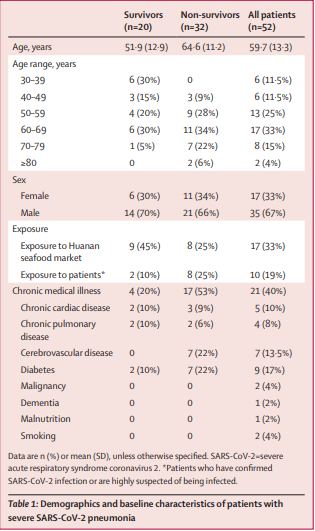
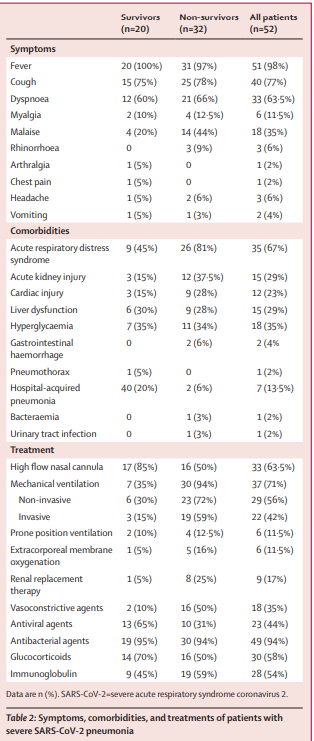
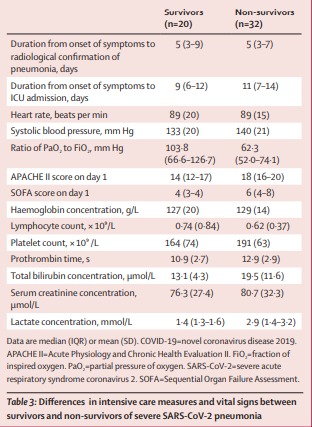
As we reported last night, another 73 people on the Chinese mainland died on Wednesday from the virus, the highest daily increase so far, bringing the total death toll to 563, the country’s health authority said on Thursday. Statistics from China indicate that about 2% of people infected with the new virus have died, suggesting it may be deadlier than seasonal flu but less deadly than SARS, another reason that investors remain relatively calm. Of course, Coronavirus is now vastly more widespread than SARS ever was and it is still spreading at an exponential pace, but the algos were far less concerned about this.

“The market is looking through the near-term disruption to activity and seeing potential for quite a sharp rebound later this year on the back of even looser policy,” said Tim Drayson, head of economics at Legal & General Investment Management.

“Companies are going to continue to struggle in the short term” with disruptions and forgone business due to the virus, said Joe Zidle, chief investment strategist at Blackstone Group Inc. But China’s moves in recent days to reopen markets and inject stimulus “gave global investors a degree of confidence that the Chinese policy makers had at least taken the worst-case scenario off the table,” he said, despite zero evidence to suggest that the pandemic is even remotely close to being contained.

In FX, investors also pursued risk-on bets as China’s onshore yuan climbed 0.2% to its strongest level since Jan. 23 after the tariff cuts were announced. The Australian dollar also gained. The safe-haven Japanese yen slipped to a two-week low against the dollar.  Other major currencies were largely quiet. The euro stood flat at $1.0996 while the dollar against a basket of six major currencies slipped a fraction to 98.262. The pound dropped in London morning hours as Brexit worries continued to weigh in low-volatility markets.

Rates were mixed: after initially bond yields rose, with 10-year U.S. Treasury yields climbing to 1.68% from a five-month low touched on Friday, the yield has since dropped back to 1.64%. Euro zone bond yields told a similar story, with German bund yields initially climbing to their highest in almost two weeks before fading.

“The coronavirus is continuing to spread so we need to remain cautious. But markets now appear to think that there will be a quick economic recovery after a short-term slump,” said Masahiro Ichikawa, senior strategist at Sumitomo Mitsui DS Asset Management.

In commodities, oil futures rose for a second day amid what Reuters dubbed “investor optimism over unconfirmed reports of possible advances in combating the coronavirus outbreak in China, which could cause fuel demand to rebound in the world’s biggest oil importer.” Brent rose by 66 cents, or 1.2%, to $55.97 a barrel having risen 2.4% in the last session. Despite the move, it is still down about 15% so far this year.

Of note, OPEC+ reportedly recommend an output cut of 600k BPD, according to OPEC delegates, but the meeting broke without resolution. This follows earlier source reports that the JTC could today agree on the need for a deeper oil reduction of at least 500k bpd, according to sources. Russian Energy Minister Novak said Russia is not yet ready to announce its position on the OPEC+ action related to the coronavirus outbreak, notes that time is needed to assess the impact, added that it is premature to talk about decisions.

Copper, after suffering the longest decline on record, showed some signs of stabilization although it remained depressed overall. Shanghai copper extended its rebound into the third day, rising 1.4% from 33-month low hit earlier this week.

To the day ahead now, we’ll get Q4’s unit labour costs and nonfarm productivity, as well as weekly initial jobless claims. From central banks, ECB President Lagarde will be appearing before the European Parliament’s Economic and Monetary Affairs Committee, while the ECB will also be releasing their Economic Bulletin. Elsewhere, we’ll hear from the ECB’s Villeroy and Dallas Fed President Kaplan. Finally, earnings releases to watch out for today include Twitter, L’Oréal and Philip Morris International. Finally, EU trade chief Phil Hogan will be in the US today to meet with the US officials including Trade Representative Robert Lighthizer. The trip comes as the US and EU are seeking a trade agreement, so expect some headlines on that front.

Market Snapshot

  • S&P 500 futures up 0.2% to 3,343.25
  • MXAP up 1.8% to 170.63
  • MXAPJ up 1.6% to 551.41
  • Nikkei up 2.4% to 23,873.59
  • Topix up 2.1% to 1,736.98
  • Hang Seng Index up 2.6% to 27,493.70
  • Shanghai Composite up 1.7% to 2,866.51
  • Sensex up 0.4% to 41,322.51
  • Australia S&P/ASX 200 up 1.1% to 7,049.20
  • Kospi up 2.9% to 2,227.94
  • STOXX Europe 600 up 0.2% to 424.64
  • German 10Y yield rose 1.4 bps to -0.345%
  • Euro up 0.05% to $1.1005
  • Brent Futures up 0.7% to $55.64/bbl
  • Italian 10Y yield rose 1.3 bps to 0.798%
  • Spanish 10Y yield rose 1.9 bps to 0.319%
  • Brent futures up 0.1% to $55.36/bbl
  • Gold spot up 0.5% to $1,563.29
  • U.S. Dollar Index down 0.05% to 98.25

Top Overnight News from Bloomberg

  • Health officials raced to develop treatments and improve testing for the new coronavirus that has claimed 563 lives in China, though the World Health Organization cautioned a vaccine is a long way off
  • The U.K. will pursue an “early trade deal” with Australia as Prime Minister Boris Johnson seeks to deliver on his promise of a boost to the country’s fortunes after it leaves the European Union
  • Chancellor of the Exchequer Sajid Javid’s ambition to lift U.K. economic growth toward itspost-war average of almost 3% a year is “quite unrealistic.” warned the National Institute of Economic and Social Research
  • The Bank of Japan shouldn’t hesitate to bolster monetary easing if price momentum faces greater risks, board member Takako Masai says in a speech to local business leaders in Nara, Japan
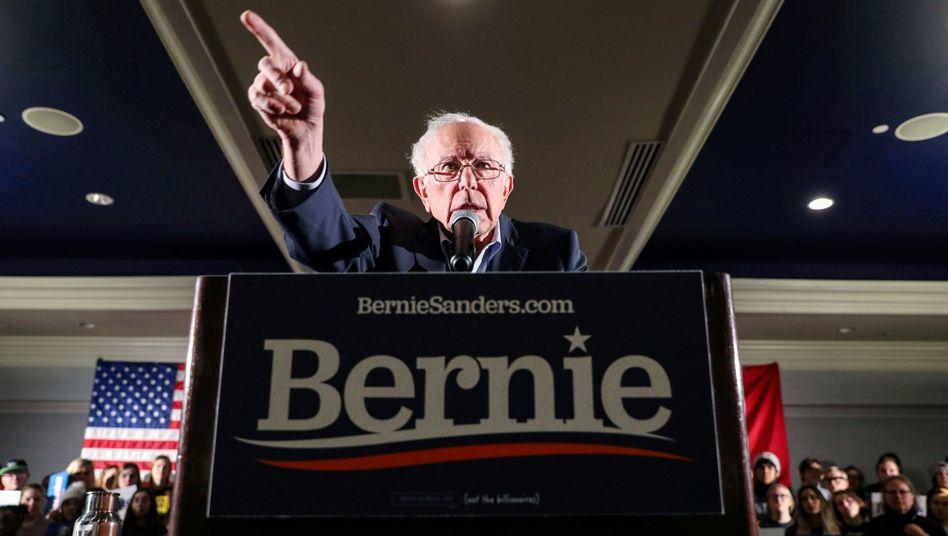
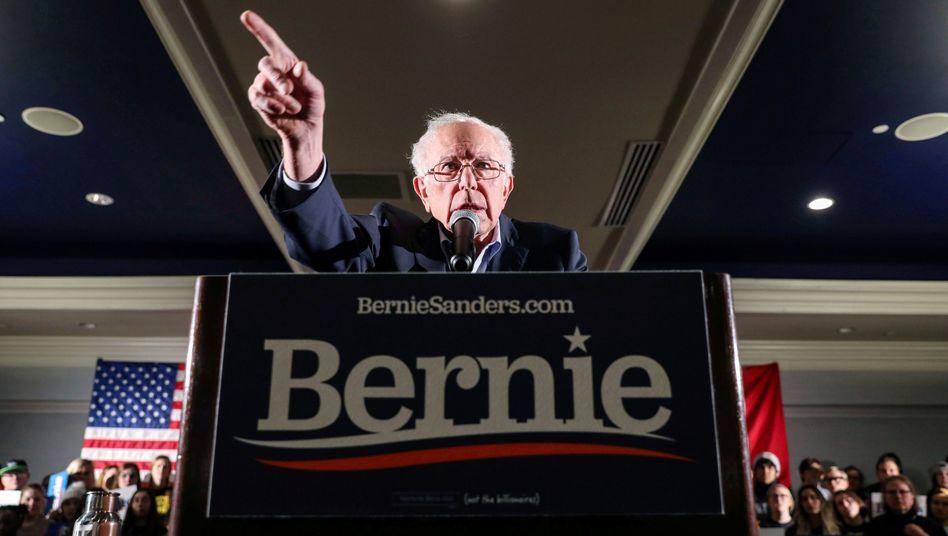
  • Pete Buttigieg was clinging to a narrow lead over Bernie Sanders in the Iowa caucuses as the state’s Democratic Party continued to struggle Wednesday with releasing long-delayed results. The former South Bend, Indiana, mayor had 26.5% of state delegate equivalents, barely besting the Vermont senator’s 25.6%, with 92% of more than 1,700 precincts reporting results
  • The U.S. Senate voted to acquit President Donald Trump on charges he abused his power and obstructed Congress, ending a historic, bitterly partisan fight and leaving the final judgment on his actions up to voters in November
  • A 2.1% decline in German factory orders in December — the fastest pace in more than a decade — undermined recent data suggesting that manufacturing is slowly recovering; Germany January construction PMI separately rose to 54.9 from 53.8 in December
  • EU Trade Commissioner Phil Hogan will be in Washington on Thursday for the second time in less than a month, as the 27- nation bloc seeks to revive a transatlantic commercial truce
  • India’s central bank left interest rates unchanged for a second straight meeting, while keeping the door open for more easing to support the economy when inflation eases

Asia-Pac equity markets got a lift on the tailwinds from Wall St. where S&P 500 and Nasdaq posted record closes with sentiment underpinned by US data and hopes of a coronavirus treatment in the works despite the World Health Organization denying any breakthrough. ASX 200 (+1.1%) was led higher by outperformance in energy amid a rebound in crude prices and strength in the largest weighted financials sector to reclaim the 7000 level, while Nikkei 225 (+2.4%) received an additional boost from favourable currency flows, as well as a deluge of earnings including Toyota. Elsewhere, Hang Seng (+2.6%) and Shanghai Comp. (+1.7%) conformed to the heightened global risk appetite after unverified reports that a Chinese university research team found an “effective” drug to treat people with Coronavirus and as several mainland pharmaceutical stocks hit limit up, with gains later exacerbated after China announced to cut tariffs by as much as 50% on USD 75bln of US goods effective February 14th. Finally, 10yr JGBs were subdued in which prices declined below 152.50 amid the lack of demand for safe havens and after reports of China’s move to reduce tariffs on US goods which nullified the slightly improved 30yr JGB auction results.

Top Asian News

  • Singapore to Exempt Listed Local Developers From Home-Sale Rule
  • India’s ECB-Like Move to Inject Cash Stokes Short-Term Bonds
  • Philippines Central Bank Cuts Key Rate Amid Coronavirus Risk

European equity markets have waned off highs [Eurostoxx 50 +0.4%] seen since the cash open as sentiment turned more cautious in early EU trade. This follows on from a solid APAC lead where investors cheered China’s surprise rollback in USD 75bln worth of US goods in the hope of a reciprocal move by the US to help ease some of the burden arising from the coronavirus outbreak. Nonetheless, major bouses are still in positive territory although the FTSE 100 (+0.1%) modestly lags its peers amid losses in some of its large-cap stocks including some miners amid a decline in base metal prices. Sectors are largely mixed with no clear reflection of the current risk sentiment – financial names modestly outperform amid a higher-yield environment. In terms of individual movers, triple-listed ArcelorMittal (+9.3%) rose post-earnings topping EBITDA expectations whilst also reporting a decent YY increase in iron-ore shipments and noting that the supportive inventory environment leads to expectations of growth in steel consumptions. Total (+1.6%) shares rose in light of its Q4 adj. net income topping estimates, an increase in FY dividend, a USD 2bln share buyback programme and a target of over USD 5bln in cumulative savings this year – albeit shares could be underpinned by price action in the energy complex. On the flip side, Royal Mail (-8.3%) shares slumped to the foot of the Stoxx 600 post-earnings amid the assessment of a challenging outlook.  Other earnings-related movers include Unicredit (+5.8%), Publicis (+4.5%), Nordea Bank (+4.8%), Sanofi (+2.4%), Dassault Systemes (-3.1%), ICA Gruppen (-7.1%), and Assa Abloy (-3.1%). Elsewhere, NMC Health (+5.6%) sees a day of reprieve after sources noted that the Co’s founder would be returning with an “active position” and separate source reports that Private Equity firms, including Apollo, circled the Co. in the past. Finally, Deutsche Bank (+6.0%) shares extended on its gains after Capital Group Companies disclosed a 3.1% stake in the Co.

Top European News

  • Swiss Risk Repeat of History as Trump Sets Sights on Europe
  • Lagarde Says ECB Running Out of Room to Fight Global Threats
  • Stock Values in Johannesburg Are So Low They’re Tough to Resist
  • Surprise Drop in German Factory Orders Shows Slump Isn’t Over

In FX, the Buck remains bolstered by firm US Treasury yields, albeit off best levels in relatively rangebound trade, as the index consolidates above 98.000, but fails to derive enough momentum independently or indirectly to extend gains beyond the next upside chart objective ahead of 98.500 (98.402 Fib). However, the Dollar may glean more bullish impetus if today’s domestic data in the form of Challenger lay-offs, initial claims and Q4 labour costs or productivity is upbeat awaiting Friday’s NFP release.

  • NZD/GBP/AUD – In contrast to other G10 currencies that are largely meandering vs the Greenback, Cable has drifted back below 1.3000 again and the Kiwi has retreated further below the 0.6500 handle amidst Waitangi holiday-thinned volumes and more underperformance against the Aussie. Indeed, Aud/Nzd is holding ‘comfortably’ above 1.0400 even though Aud/Usd has slipped back under 0.6750 where hefty option expiry interest resides (1.3 bn) in wake of sub-forecast trade and retail sales overnight. Back to Sterling, Wednesday’s EU MiFID revelations are still reverberating, while the UK Trade Department announces to implement a most favoured country tariff system post-Brexit transition on January 1 next year.
  • EUR/JPY/CAD/CHF/NOK/SEK – All on a more even keel vs their US counterpart, as the Euro pivots 1.1100 amidst conflicting vibes via significantly worse than expected German factory and VDMA engineering orders in contrast to an upbeat ECB President Lagarde and monthly bulletin echoing signs of economic stabilisation. Meanwhile, broadly, but less pronounced risk-on sentiment continues to hamper the Yen and Franc just shy of 110.00 and 0.9750 respectively, though the Loonie is not really benefiting within tight 1.3275-88 confines in the run up to tomorrow’s Canadian jobs data. Elsewhere, the Scandi Kronas have both waned after yesterday’s decent recovery gains, with Eur/Nok back up near 10.1500 and Eur/Sek close to 10.5600 against the backdrop of sagging crude and a drop in Swedish house prices.
  • EM – Although many regional currencies are down vs the Dollar, reports about China cutting US import tariffs by up to 50% on February 14 have kept the Yuan afloat, while the Real could get a boost from the BCB signalling that last night’s 25 bp rate cut may be the last in the current cycle. Conversely, the Rand has been undermined by a deterioration in SA business sentiment on top of the aforementioned general Greenback bid.

In commodities, WTI and Brent front-month futures have given up a bulk of their overnight gains as risk aversion crept into the markets in early EU trade. Furthermore, OPEC’s JTC has extended its meeting to three days from the originally scheduled two. Sources noted that the technical committee could agree on a total reduction of at least 500k BPD – in fitting with some of the prior sources which noted the JTC would be assessing several scenarios that have cut options between 500-900k BPD. Later, a delegate noted of an agreement of 600k BPD cut but disagreement on whether to hold an emergency meeting. Russian Energy Minister Novak played down the reports and noted that Russia is not yet ready to announce its position on the OPEC+ action and that it is premature to talk about decisions. Russia has been historically adamant to commit to deeper cuts as Russia’s economy is more resilient to lower oil prices. WTI and Brent reside just above USD 51/bbl and USD USD 55/bbl respectively, having retreated from current intraday highs of USD 52.15/bbl and ~USD 56.50/bbl. Elsewhere, spot gold has been supported by the aforementioned shift in sentiment, with the yellow metal decoupling itself from a rising USD and residing just above its 21 DMA at ~USD 1563/oz (vs. low ~USD 1552/oz). Elsewhere, copper prices conformed to the abated risk appetite, with prices now back below USD 2.6/lb vs. an overnight high of USD 2.6144/lb. Finally, Dalian iron ore closed the session higher by almost 1% following three consecutive sessions of losses as China’s surprise tariff rollback announcement underpinned prices.

US Event Calendar

  • 7:30am: Challenger Job Cuts YoY, prior -25.2%
  • 8:30am: Nonfarm Productivity, est. 1.6%, prior -0.2%; Unit Labor Costs, est. 1.25%, prior 2.5%
  • 8:30am: Initial Jobless Claims, est. 215,000, prior 216,000; Continuing Claims, est. 1.72m, prior 1.7m
  • 9:45am: Bloomberg Consumer Comfort, prior 67.3

DB’s Jim Reid concludes the overnight wrap

Whether it’s the worst of the coronavirus fears being behind us, US politics or solid economic data, the risk-on mood in markets appears to be showing little sign of running out of steam yet. The reality is that it’s probably a combination of all of these factors and with the diary fairly thin on important events today the likely next hurdle for markets to jump is the US employment report tomorrow.

We’ll have a full preview of that in tomorrow’s EMR but in the meantime a quick update on markets. Last night the S&P 500 closed up +1.13% to make a new all-time high and thus more than wipe out the coronavirus driven move lower last month. As it stands the week-to-date return for the index is +3.39% which is the best first three days to start a week since November 28, 2018. In contrast to previous sessions though it was energy stocks that were actually the main driver, supported by the resurgent oil price, with WTI (+2.30%) and Brent crude (+2.45%) both moving higher on hopes of resilient economic demand and it’s worth noting that both are up a similar amount this morning. This drove a rotation into energy stocks, while the tech sector lagged, however the NASDAQ did still edge up +0.43% to a new high also. Similarly, in Europe the STOXX 600 rallied +1.23% and equity vol fell on both sides of the Atlantic with the VIX down 0.9pts to 15.15 and VSTOXX down 0.9pts to 13.60.

It was another decent day for credit too with EUR and USD HY spreads -6bps and -9bps tighter, respectively. Metals also got another lift, most notably copper up another +1.28%. So that makes two days of gains following 13 consecutive daily declines. As to be expected, bond markets have struggled with this risk on spell. Indeed 10y Treasury yields were up +4.8bps yesterday (and +2.2bps this morning) and are up +16.1bps this week while the 2s10s curve has steepened back above 20bps and up about 5bps from the recent lows. In Europe yields were up anywhere from 1-5bps.

The news overnight that China is to halve tariffs rates on $75bn of imports from the US beginning on February 14 has seen markets in Asia push on further this morning. That being said it shouldn’t be surprising news as this comes after both nations had agreed in Phase 1 negotiations that they would reduce tariffs on each other’s goods as part of the deal. The Nikkei (+2.72%), Kospi (+2.82%) and Hang Seng (+2.78%) in particular have seen the biggest moves with the Shanghai Comp up +1.18%. The onshore Chinese yuan is also up +0.18% to 6.962 while the Japanese yen is down -0.12%. Elsewhere, futures on the S&P 500 are up +0.59%.

Just on the latest on the coronavirus, the number of cases and deaths as of this morning has been recorded at 28,018 and 563 respectively. That compares to 24,324 cases and 490 deaths yesterday. It’s worth noting that the improved sentiment yesterday followed a story from Sky News which suggested that testing on animals for a vaccine could start as soon as next week, ahead of possible human studies in the summer. That said, others played down hopes of progress, with an executive director of the World Health Organization’s Health Emergencies Program telling a press conference that “there are no proven, effective therapeutics” for the virus. Also remember that the expert on our DB Research-led conference call earlier this week said that any true vaccine was still months – or more likely years – from being produced at scale.

Staying on the topic, looking at the impact beyond Wuhan, our Asia economics team put out a note yesterday (link here) looking at the potential economic impact across the wider region. For China, they now expect full-year GDP growth will be +5.8% this year, 0.3ppts lower than previously forecast.

Moving on. As noted at the top the data also played a part in yesterday’s moves. Ahead of tomorrow’s jobs report in the US, the ADP’s report of private payrolls rose by +291k (vs. +157k expected) in its strongest month since May 2015. Nevertheless, the ADP report has been wide of the private payrolls figures lately, with December’s ADP report overestimating private payrolls by +60k, while November’s reading came in -122k beneath private payrolls. Elsewhere, the ISM non-manufacturing index rose to 55.5 in January (vs. 55.1 expected) and its highest level since August, though unlike with the ADP, the employment index actually fell to 53.1, the weakest since September. Finally from the US, the annual trade deficit narrowed to $617bbn, the first reduction in the annual trade deficit since 2013, though the monthly figure for December had a slightly larger deficit than expected, at $48.9bn (vs. $48.2bn expected).

Staying with the US, our economics team put out a note yesterday (link) updating their 2020 outlook – specifically when considering the Phase 1 trade deal, Coronavirus, and Boeing headwinds. They now estimate that growth in the first half will average 1.9% but activity should accelerate to 2.5% in the back half, leaving full year growth (Q4/Q4) at 2.2%. In addition our global economists see a hit to world real GDP in the current quarter as a result of the coronavirus of -2%pts for q/q growth at an annual rate. (or one fourth that for the four-quarter growth rate). For the year as a whole they expect growth to be reduced by only 0.2%, with some of that loss being made up in 2021. See the link here.

Over in Europe, the main data came from the PMI releases, where the UK in particular outperformed expectations following the country’s December election. The composite PMI rose to 53.3, up from the flash reading of 52.4 and the strongest reading since September 2018, while the services PMI was also up to 53.9 (vs. flash 52.9). Others also saw upward revisions, with the Euro Area composite PMI up to 51.3 (vs. flash 50.9), adding to signs that the economy has turned a corner, and Germany’s composite PMI was up to 51.2 (vs. flash 51.1). The question will be whether this positive momentum can be maintained if the coronavirus outbreak starts to affect the global economy.

In other news, the US impeachment saga came to an end yesterday as the Senate voted to acquit President Trump. The move was widely expected, as it would have required a two-thirds majority in the Republican-controlled chamber to convict the President. Republican Senator Mitt Romney voted to convict the president on one of the two charges, breaking ranks with his party.

To the day ahead now, and data releases include German factory orders for December, as well as the country’s construction PMI for January. From the US, we’ll get Q4’s unit labour costs and nonfarm productivity, as well as weekly initial jobless claims. From central banks, ECB President Lagarde will be appearing before the European Parliament’s Economic and Monetary Affairs Committee, while the ECB will also be releasing their Economic Bulletin. Elsewhere, we’ll hear from the ECB’s Villeroy and Dallas Fed President Kaplan. Finally, earnings releases to watch out for today include Twitter, L’Oréal and Philip Morris International. Finally, EU trade chief Phil Hogan will be in the US today to meet with the US officials including Trade Representative Robert Lighthizer. The trip comes as the US and EU are seeking a trade agreement, so expect some headlines on that front.


Tyler Durden

Thu, 02/06/2020 – 07:54

via ZeroHedge News https://ift.tt/2S4e9OR Tyler Durden

China To Slash Tariffs On Some U.S. Imports By 50%

China To Slash Tariffs On Some U.S. Imports By 50%

While global equity futures continue to soar amid a return of the coronavirus is contained” following reports that new drugs are in the pipeline to treat the deadly disease on Wednesday, China’s economy is expected to print sub-5% GDP in Q1. This has forced an increasingly desperate Beijing to unexpectedly announce on Thursday that it will slash tariff levied on 1,717 U.S. goods by up to 50%. 

China’s finance ministry stated that on Feb. 14, additional tariffs levied on some goods will be reduced from 10% to 5%, and others lowered from 5% to 2.5%, reported Reuters. The finance ministry didn’t explicitly state the value of goods affected by tariff reductions. 

In a separate statement, the ministry said tariff reductions would mostly be for products announced during the trade war. They said further tariff adjustments could depend on the bilateral economic and trade situation.

The ministry said soybean tariffs would be reduced from 30% to 27.5%. Tariffs on crude will be halved from 5% to 2.5% after Feb. 14. 

“Any move to de-escalate is always good. Especially when the market is overwhelmed by the news about virus, good news about tariff is refreshing,” said Tommy Xie, head of Greater China research at OCBC Bank in Singapore.

“The announcement shows China’s commitment to implement the phase one trade deal despite the disruptions from the recent virus outbreak,” said Xie. 

Hu Xijin, the editor from the China Global Times, tweeted Wednesday asking the U.S. to give China some slack in the phase one trade agreement. This could mean China’s expected $200 billion in U.S. purchases over the next two years might not happen. 

China’s planned tariff reductions come as the coronavirus outbreak continues to broaden with more than 28,000 cases and 565 deaths globally. Much of the epidemic is centered in China. 

Two-thirds of China’s economy is offline, which will produce an economic “shock” that will send GDP tumbling sub-5% in 1Q. 

An economic “shock” in China will likely spill over into the rest of the world in the quarter. The reason: China’s economy has significantly increased in importance since the 2003 SARS epidemic because of the breathtaking growth of the Chinese economy over the past two decades.

Finally, those wondering why China would hint at major weakness by proactively pursuing such a move that puts it at a tactical disadvantage with the US, well that’s the $64 trillion question, and the answer appears to be viral.


Tyler Durden

Thu, 02/06/2020 – 07:00

via ZeroHedge News https://ift.tt/2OvkTTG Tyler Durden