Taibbi: The Death Of Humor

Taibbi: The Death Of Humor

Authored by Matt Taibbi via TK News,

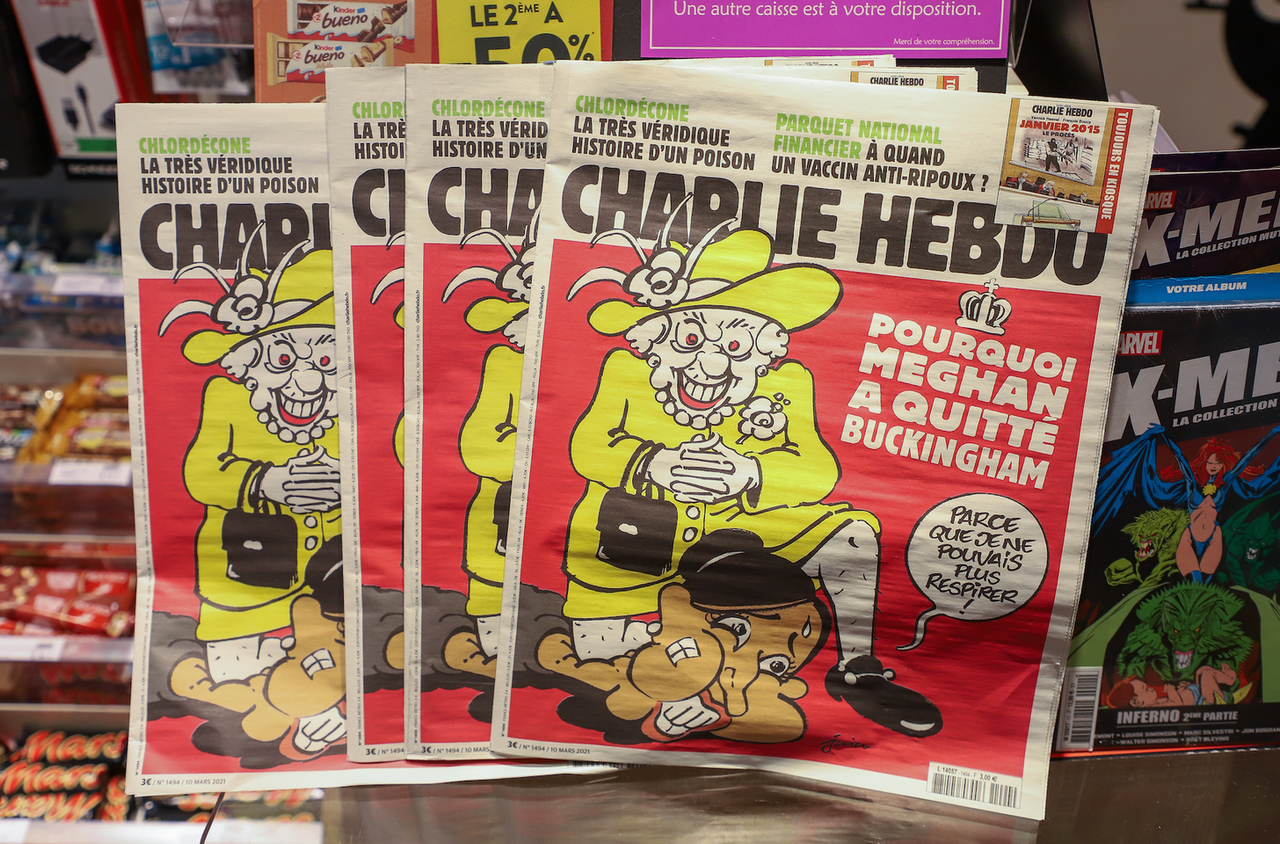
The French satirical magazine Charlie Hebdo won the condemnation of the whole world again, with the cover pictured above. Reactions ranged from “abhorrent” to “hateful” to “wrong on every level,” with many offering versions of the now-mandatory observation that the magazine is not only bad now, but “has always been disgusting.”

This cover is probably an 8 or 9 on the offensiveness scale, and I laughed. It goes after everyone: Queen Elizabeth, depicted as a more deranged version of Derek Chauvin (the stubby leg hairs are a nice touch); Meghan Markle, the princess living in incomparable luxury whose victimhood has become a global pop-culture fixation; and, most of all, the inevitable chorus of outraged commentators who’ll insist they “enjoy good satire as much as the next person” but just can’t abide this particular effort that “goes too far,” it being just a coincidence that none of these people have laughed since grade school and don’t miss it.
Review of Killer Cartoons, edited by David Wallis, and White, by Bret Easton Ellis

Six years ago, after terrorists killed 10 people at Hebdo’s Paris offices in a brutal gun attack, the paper’s writers, editors, and cartoonists were initially celebrated worldwide as martyrs to the cause of free speech and democratic values. In France alone on January 11, 2015, over 3 million people marched in a show of solidarity with the victims, who’d been killed for drawing pictures of the Prophet Muhammad. Protesters also marched in defiance of those who would shoot people for drawing cartoons, especially since this particular group of killers also fatally shot four people at a kosher supermarket in an anti-Semitic attack. For about five minutes, Je Suis Charlie was a rallying cry around the world.

In an early preview of the West’s growing sympathy for eliminating heretics, cracks quickly appeared in the post-massacre defense of Charlie Hebdo. Pope Francis said that if someone “says a curse word against my mother, he can expect a punch.” Bill Donohoe, head of the American Catholic League, wrote, “Muslims are right to be angry,” and said of Hebdo editor Stephane Charbonnier, “Had he not been so narcissistic, he may still be alive.” New York Times columnist and noted humor expert David Brooks wrote an essay, “I Am Not Charlie Hebdo,” arguing that although “it’s almost always wrong to try to suppress speech,” these French miscreants should be excluded from polite society, and consigned to the “kids’ table,” along with Bill Maher and Ann Coulter.

Humor is dying all over, for obvious reasons. All comedy is subversive and authoritarianism is the fashion. Comics exist to keep us from taking ourselves too seriously, and we live in an age when people believe they have a constitutional right to be taken seriously, even if — especially if — they’re idiots, repeating thoughts they only just heard for the first time minutes ago. Because humor deflates stupid ideas, humorists are denounced in all cultures that worship stupid ideas, like Spain under the Inquisition, Afghanistan under the Taliban, or today’s United States.

During the Trump era, there was a steep decline of jokes overall, but mockery of a president who’d say things like, “My two greatest assets have been mental stability and being, like, really smart” rose to unprecedented levels. It was not only okay to laugh at Trump, it was mandatory, and the more tasteless the imagery, the better: Trump gay with Putin, Trump gay with the Klan, Trump with micropenis, Trump’s face as mosaic of 500 dicks, Trump as a blind man led by a seeing-eye dog who has the face of Benjamin Netanyahu and a Star of David hanging off his collar, Trump with a pen up his ass, Trump with tiny penis again. Pundits guffawed even more when someone threatened to sue artist Illma Gore for her “Trump’s tiny weiner” pastel, displayed at the Maddox Gallery in London. “It is my art and I stand by it,” Gore said. “Plus anyone who is afraid of a fictional penis is not scary to me.”

People cheered, because of course: anyone who even threatens to hire a lawyer to denounce a drawing has already lost. Cartoonists in this sense had no better friend than Trump, who constantly tried to block unfriendly renderings, including a Nick Anderson cartoon showing him and his followers drinking bleach as a Covid-19 cure (the Trump campaign reportedly called Anderson’s drawing of MAGA hats a trademark infringement). A lot of the anti-Trump cartoons were neither creative nor funny — if “He’s gay and has a little dick!” is the best you can do with that politician, you probably need a new line of work — and were only rescued by Trump’s preposterous efforts to defend his dignity. You can’t police a person’s private instinct to laugh, and there’s nothing funnier than watching someone try, especially if that person is already a sort-of billionaire and the president.

For all that, most of the jokes of the Trump era fell flat, precisely because they were obligatory. Modern humorists are allowed to laugh at bad people: racists, sexists, conspiracy theorists, Trump, anyone but themselves or the audience. There were artists who made great humor out of Trump. “Mr. Garrison snorts amyl nitrate while raping Trump to death” stood out, while Anthony Atamaniuk’s impersonations worked because he genuinely tried to connect with the Trump in all of us, asking, “Where’s the Trump part of my psyche?” But most Trump humor was just DNC talking points in sketch form, about as funny as WWII caricatures of Tojo or Hitler.

Saturday Night Live even commemorated the release of the Mueller report and the death of the collusion theory not by making fun of themselves, or the thousands of pundits, politicians, and other public figures who spent three years insisting it was true, but by doing yet another “Shirtless Putin” skit, with mournful Putin declaring, “I am still powerful guy, even if Trump doesn’t work for me!” I defy anyone to watch this and declare it was written by a comedian, and not someone like David Brock, or an Adam Schiff intern:

Humorists once made their livings airing out society’s forbidden thoughts, back when it was understood that a) we all had them and b) the things we suppressed and made us the most anxious also tended to be the things that made us laugh the most. Which brings us to Killed Cartoons: Casualties From the War on Free Expression.

Editor David Wallis put Killed Cartoons together in 2007, not long after the controversy involving the Danish newspaper Jyllands-Posten, which published a cartoon of the Prophet Mohammed in September 2005. Wallis noted that American coverage of the controversy assiduously avoided showing the offending cartoons — I noted the same thing after the Hebdo massacre — which Pulitzer-winning cartoonist Doug Marlette insisted was tantamount to acquiescing to mob rule. This instinct is now ingrained in American journalism. On an almost daily basis, a public figure is forced to confess to various crimes against political orthodoxy, but readers are seldom told what exactly they’ve done, only that it was bad. Jay Leno is the latest to offer the Groveling Public Confession for what the New York Times only called “years of anti-Asian jokes,” without telling us what they were.

The confession was set in motion by a profile of actor and producer Gabrielle Union in Variety, in which she recounted an exchange between Leno and Simon Cowell in the offices of America’s Got Talent:

While filming a commercial interstitial in the “AGT” offices, she says the former “Tonight Show” host made a crack about a painting of Cowell and his dogs, saying the animals looked like food items at a Korean restaurant. The joke was widely perceived as perpetuating stereotypes about Asian people eating dog meat.

The Media Action Network for Asian Americans (MANAA) compiled “nine documented jokes” between 2002 and 2012 Leno made about Koreans or Chinese eating dog meat. (Koreans and Chinese do eat dog meat — there are even dog meat festivals — but whatever).

Rejected jokes weren’t hard to find even in the early 2000s because, Wallis wrote, editors “suppress compelling illustrations, editorial cartoons, and political comics out of fear — fear of angering advertisers, the publisher’s golf partners, the publisher’s wife, the local dogcatcher or the president of the United States, blacks, Asians, Hispanics, homophobes, gays, pro-choice advocates and antiabortion protesters alike, Catholics, Jews, and midwestern grannies…”

Even back in the 1990s and early 2000s, the “respectable” press often nixed cartoons precisely because they were funny. A genuine laugh to editors was a sign of trouble. Wallis tells of a cartoonist named J.P. Trostle from the Chapel Hill Herald, who in October 2001 tried to sell a cartoon in advance of a local Halloween Street party. “Unwise Halloween Costumes,” was the headline, above a picture of a boy trick-or-treating as a box of anthrax, and a couple at a keg party dressed as the Twin Towers (the man had a beanie hat with a dangling airplane). Wallis describes how Trostle showed sketches to editors and reporters hoping to build support. “The first thing they did was laugh at it,” he said. “The second thing they did was [say], ‘We are never going to run this.’”

It was the same thing when Bob Englehardt tried to test the statute of limitations on Holocaust humor. “Schindler’s Other List” was just a piece of paper with the words Eggs, Milk, Coffee, Bread on it — obviously funny, but killed by the Hartford Courant in 1993. There are many other stories involving ideas that were just a little too much like laughing at real things for newspaper editors even a generation ago, like Christ carrying an electric chair up a hill, the Pope ascending to heaven in a plexiglass-covered chariot, or another Pope (Popes are funny) holding a staff in the shape of a coat hanger.

Killed Cartoons is a history of a time when editors and cartoonists alike were trying to toe the line between what people found funny in private, and what was considered acceptable fodder for public ridicule. We’re way past that now, when we’re not supposed to have unwholesome thoughts either in public or in private. In fact, the whole concept of private thoughts has become infamous. Why does anyone need private opinions, in a society where the right opinions on every question are known, and should be safe to say publicly?


“A cultural low point of 2015,” wrote Bret Easton Ellis in White, “was the effort by at least two hundred members of PEN America, a leading literary organization to which most writers belong, to not present the survivors of the Charlie Hebdo massacre in Paris with a newly established Freedom of Expression Courage Award.”

Ellis, whose 2019 book attracted even more public disgust than Charlie Hebdo’s latest cover, went on to blast the writers who decided honoring Hebdo would be “valorizing selectively offensive material.” The award was ultimately given, because there were more PEN members who believed the magazine deserved the award, but, Ellis wrote:

There were still two hundred who were offended and felt Charlie Hebdo went “too far” in its satire, which suggested there was a limited number of targets that humorists and satirists were allowed to pursue.

It made sense that Ellis would be upset about Americans disowning Charlie Hebdo. He’s famous for producing maybe the last unashamedly tasteless work of satire to win critical acclaim in this country. American Psycho was successful in part because so many of the people who found it so entertaining didn’t realize they were being stabbed or chainsawed in its pages. That book was about what happens when a society governed by openly insane values requires its citizens to wear a mask of normalcy. The deeper you try to bury the contradictions, the worse the sickness gets, and the book argued we were very sick already by the late eighties and early nineties.

In White, Ellis describes the Wall Street bros he tried to study for American Psycho. They were straight white dudes who traveled in packs and probably grew up bullying anyone who was different using words like “faggot,” but now, as the cadet-corps leaders of “youthful ‘80s Reagan-era excess,” they appropriated “the standard hallmarks of gay male culture” rather than talk about who they really were:

During my initial research I’d been frustrated by their evasions about what exactly they did for the companies where they worked — information I felt was necessary, but finally realized really wasn’t. I was surprised instead by their desire to show off their crazy materialistic lifestyles: the hip, outrageously priced restaurants they could get reservations at, the cool Hamptons summer rentals and, especially, their expensive haircuts and tanning regimens and gym memberships and grooming routines.

American Psycho was a book that many people loved, so long as they were certain it described someone else, a monster. In fact, what made the humor work, and elevated it above a compendium of snide put-downs of Wall Street jerks, was that it described an inner monologue familiar to most of us.

In a country that worshipped the Nike image of the fit, informed, socially-concerned go-getter, but really judged us by our skill in crushing neighbors as capitalist competitors and fleecing the public as dupes — without question, Pierce and Pierce would eventually have been a leading marketer of mortgage-backed securities — the book’s serial killer hero Patrick Bateman was an utterly typical exemplar of the American species. The realization of his ordinariness, of society’s lack of interest or surprise at his murderous inner life, was central to the protagonist’s horrific punchline epiphany.

Ellis talks about how things in this country haven’t changed since American Psycho, but are “more exaggerated, more accepted.” Would the more heavily-surveilled America we live in now “prevent [Bateman] from getting away with the murders he at least tells the reader he’s committed…?” He’d at least have to work harder at his disguise. Would he “haunt social media as a troll using fake avatars… have a Twitter account bragging about his accomplishments”? Ellis notes that “during Patrick’s 80’s reign, he still had the ability to hide, a possibility that simply doesn’t exist in our fully exhibitionist society.”

In American Psycho, Bateman is a monster in private, and everything else is mask, from his spearmint facial scrub to his fake tan to his interminable conversations about business card fonts and rehearsed opinions on everything from feeding the homeless and achieving world peace.

In 2021, we’re all mask, and it shines through in White that what drives Ellis batty is that modern Americans not only believe the phony opinions they get from memorizing the latest sacred texts of the Times bestseller list (a fashion obsession no different from the Zegna suits worshipped by the American Psycho bros), but require that everyone else believe them too.

The penalties for deviance were once mostly self-imposed, by people who feared losing a little social status — “I want to fit in,” Bateman explained — but any person who wants to earn a living now must recite The Pieties, or else. Even someone like James Gunn, director of The Guardians of the Galaxy, someone who made over a billion dollars for his employers, could be fired for tweeting jokes like “Three Men and a Baby They Had Sex With #unromantic movies” and “The Hardy Boys and The Mystery of What It Feels Like When Uncle Bernie Fists Me #SadChildrensBooks.” Gunn’s idea for an alternate ending to The Giving Tree — “the tree grows back and gives the kid a blowjob” — seemed funny to me until I learned that a serious movement was really underway to “rethink” the book.

Author Shel Silverstein mainly just hated happy endings, but now stands accused of having created a model for abusive relationships in the story of a tree that keeps giving apples to a kid, who keeps taking them. “You don’t have to give until it hurts” chided one New York Times columnist, to child readers and, I guess, trees.

In a genuinely comic development, Gunn was re-hired, mainly because his initial firing was the result of a conservative prank. Right-wing provocateurs like Mike Cernovich and Jack Posobiec correctly guessed Hollywood could be conned into firing even a major rainmaker over nonsense. When Gunn was rehabilitated, the press cast him as a martyr to the cause of anti-Trumpism, targeted by right-wing fiends who “combed through Gunn’s social media history after Gunn’s criticism of President Donald Trump.” Meanwhile, one of the film’s stars, Chris Pratt, is still fighting off his own controversy, which literally started with a joke — which Hollywood Chris should be fired, a Tweeter asked — and morphed into a serious “backlash” in which Forbes explained that Pratt’s decision to not attend a virtual fundraiser for Joe Biden “has led to the belief that Pratt is secretly a Trump supporter.”

White came out two years ago, in April of 2019, and was reviewed savagely. Critics from Vox to NPR to the Guardian agreed White was the work of a bitter has-been sexist and misogynist whose “rambling mess of cultural commentary and self-aggrandizement” might never have been published if, Bookforum’s Andrea Long Chu suggested, “Ellis’s millennial boyfriend had simply shown the famous man how to use the mute feature on Twitter.” Virtually every review was a Mad Libs exercise in rearranging words like old, whiny, rich, petty, aggrieved, and boring (reviewers universally agreed the book was boring).

Every review focused on the politics of the book, describing as a tirade against cancel culture, left censorship, “snowflakes,” and “hysterics” who can’t take criticism. Ellis’s invocation of the term “Generation Wuss” to describe millennials, who do not come off well either in the book or in the interviews he gave after its release, figures in almost every review by younger writers, who of course gave back in kind. In a format that’s by now standard when criticizing almost any brand of transgressing celebrity, from Pratt to Ellen DeGeneres to Kirstie Alley, reviewers made a point of reminding us that not only is Ellis terrible now, but that on some level he’s always been terrible, even when we thought he was good. Bookforum even managed to wing J.D. Salinger in the crossfire.

“Like The Catcher in the Rye before it and Fight Club after it,” the site wrote, “American Psycho is a book designed to convince comfortable white men that they are, in fact, ‘outsiders and monsters and freaks.’” (That the book was about the opposite — a world where “no one can tell anyone else apart” and even ax-murdering Patrick Bateman ultimately learns he’s just a face in the crowd — is irrelevant). The strongest sentiment in all the reviews was a desire that Ellis just shut the fuck up. “One longs to tell him what the Rolling Stones told Trump: Please stop,” wrote Chu. NPR got more to the point. “Most of us carry around an invisible rosary of resentments to fiddle with in petty moments,” wrote Annalisa Quinn. “Most of us also know to keep these grudges private.”

The actual dictum isn’t just to keep unwelcome thoughts private, but to not have them at all. But people can’t control what they find funny. In Killed Cartoons, an African-American cartoonist describes bringing a cartoon depicting him sharing a giant bag of crack with prostitutes to an editor. “Why do you have to say that?” the editor asked. What’s the message? “It’s funny!” he replied. “It’s a giant bag of crack!” The panel ended up rejected, for fear of offending the paper’s “large white liberal readership.”

The new movement thinks it’s stamping out harmful jokes about disadvantaged groups, but truly cruel or bigoted material tends not to win real laughs. There are exceptions — people thought Eddie Murphy’s “faggots will kick your ass” jokes were funny once — but what people mostly laugh at are things that are true, which is the problem with telling people you can’t think or laugh about funny things even in private. People will either go mad, or else they’ll start laughing at you, which is why we’re already seeing something I never thought I would in my lifetime — the humor business drifting into the arms of conservatives. Humor is about saying the unsayable, and most of the comics who insist on still doing it are either denounced as reactionaries, like Charlie Hebdo or Joe Rogan or even Dave Chappelle, or else they were openly conservative to begin with. The Babylon Bee is marketed as something from one of my childhood nightmares (“Your trusted source for Christian news satire”), and the fact that it’s now exponentially more likely to be funny than Stephen Colbert feels like a sign of the End-Times.

In White, Ellis writes about the seemingly inexplicable appeal of Charlie Sheen in Two and a Half Men, writing that his stunned disgust as he “staggered amiably through a bad sitcom” was what attracted audiences, because “not giving a fuck about what the public thinks about you or your personal life is actually what matters most… the public will respond to you because you’re free and that’s exactly what they all desire.” People are attracted to humorists for the same reason; they’re saying what we can’t. If there’s no room for such people anymore, we’re in a lot of trouble. People can only go without laughing for so long.

Tyler Durden
Sat, 03/27/2021 – 15:30

via ZeroHedge News https://ift.tt/3stpVlD Tyler Durden
“Absolutely An Open Border Situation”: Sen. Lankford Gives Firsthand Account Of Border Crisis

“Absolutely An Open Border Situation”: Sen. Lankford Gives Firsthand Account Of Border Crisis

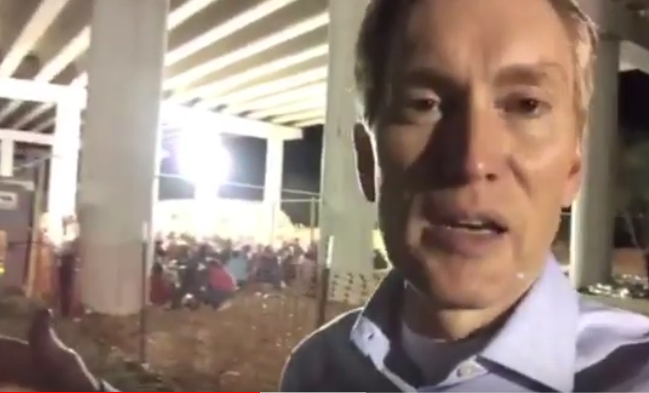
Oklahoma Sen. James Lankford (R) has given a firsthand account of the chaos at the US-Mexico border – joining Texas GOP Sens. Ted Cruz and John Cornyn for a tour of the situation after visiting a migrant detention facility and a processing location.

In a Thursday Facebook post, Lankford said he watched “hundreds of people being allowed in tonight.”

“No criminal background check from their home country, no COVID testing, no verification that the child you are traveling with is related. If a 25 year old male claims to be 17, he is allowed into the country as an unaccompanied minor.”

This is absolutely an open-border situation,” Lankford said in more videos posted to his YouTube channel:

Why are US Senators doing the job of the mainstream press?

Tyler Durden
Sat, 03/27/2021 – 15:00

via ZeroHedge News https://ift.tt/3rt3pIr Tyler Durden

Watch: A Naval Historian And Master Mariner Discuss The Suez Canal Blockage

Watch: A Naval Historian And Master Mariner Discuss The Suez Canal Blockage

By gCaptain

In the below video, Dr. Sal Mercogliano, Associate Professor of History of History at Campbell University and Adjunct Professor at the United States Merchant Marine Academy, along with Captain John Konrad, Founder and CEO of gCaptain, discuss the situation in the Suez Canal with the grounding of the Evergreen containership MV Ever Given.

John and Sal discuss what could have caused the event, what is being done now to clear the ship from the channel, the impact the closure of the canal is having on world trade and commerce, and why this issue should be important not only to shippers, but the government, the military, and every human on the planet since 90% of all goods are moved by sea.

Tyler Durden
Sat, 03/27/2021 – 14:30

via ZeroHedge News https://ift.tt/2NXzfiH Tyler Durden

New Universal Basic Income Program In Oakland Excludes Low-Income White Families

New Universal Basic Income Program In Oakland Excludes Low-Income White Families

Authored by Matt Margolis via PJMedia.com,

The city of Oakland, Calif., has just launched a universal basic income program, providing low-income families $500 per month, with absolutely no strings attached regarding how they must spend it. According to a report from CBS News, this program, which is privately-funded, “is the latest experiment with a ‘guaranteed income,’ the idea that giving low-income individuals a regular, monthly stipend helps ease the stresses of poverty and results in better health and upward economic mobility.”

Unless you aren’t eligible for the program because you’re white.

The “Oakland Resilient Families” program has so far raised $6.75 million from private donors including Blue Meridian Partners, a national philanthropy group.

To be eligible, individuals must have at least one child under the age 18 and an income that is at or below 50% of the area median income – about $59,000 per year for a family of three.

Half the spots are reserved for people who earn less than 138% of the federal poverty level, or about $30,000 per year for a family of three. Participants will be randomly selected from a pool of applicants who meet the eligibility requirements.

[…]

Oakland’s project is significant because it is one of the largest efforts in the U.S. so far, targeting up to 600 families. And it is the first program to limit participation strictly to Black, Indigenous and people of color communities.

Well, according to the report, the reason white families are excluded from the program is that, according to the “Oakland Equity Index” – I dare not ask – white households in Oakland make an average of three times as much as black households annually.

So, if you’re poor, white, and live in Oakland, California, you still gotta check your privilege because… white supremacy… I guess?

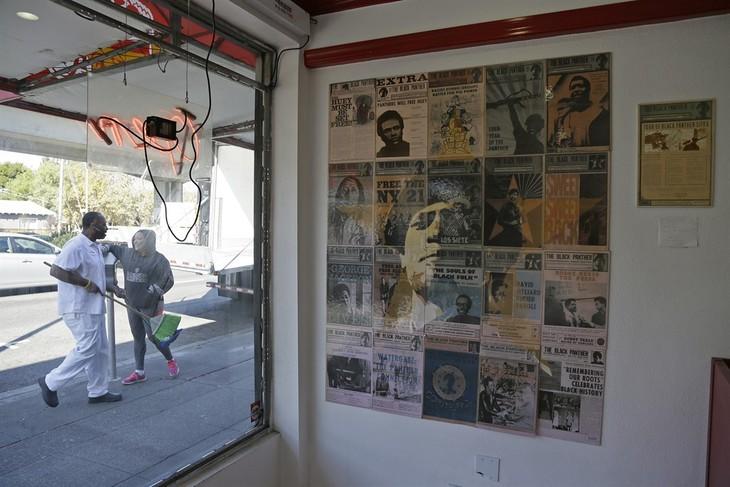
The exclusion of low-income but white (LIBW) families is also “a nod to the legacy of the Black Panther Party, the political movement that was founded in Oakland in the 1960s,” according to the report.

Apparently, honoring the Black Panther’s legacy means discriminating against white people.

I’m no fan of the universal basic income concept, but if you’re going to have one, having a race-based requirement is racist no matter how you look at it.

Proponents of this racist UBI program would probably argue that since it’s privately funded, the organization behind it can set whatever guidelines it wants. Imagine if a privately funded UBI program was limited to white families. Wouldn’t that be racist? Of course, it would! Also, the city of Oakland is still managing the program.

Sorry, LIBWs, because white families on average are more wealthy than families of color, you don’t deserve anything to “ease the stresses of poverty” that may “result in better health and upward economic mobility.”

Just suck it, and be poor, because you’re white.

Tyler Durden
Sat, 03/27/2021 – 13:30

via ZeroHedge News https://ift.tt/3m0LaZU Tyler Durden

Russia Pitches Frosty Arctic Sea Route As Superior Alternative To Blocked Suez Canal

Russia Pitches Frosty Arctic Sea Route As Superior Alternative To Blocked Suez Canal

As the world waits to see if the US Navy personnel dispatched to the Suez Canal will succeed in freeing the boat (after a successful “partial refloating” that appears to have been a dry run for a more comprehensive effort once the Americans arrive), Russia sees an opportunity to promote a potential alternative, as more container ships are re-directed around the Cape of Good Hope to complete their journey from Asia to Europe.

Indeed, as RT reports, Russian energy giant Rosatom is promoting a North Sea route (recently cleared of dangerous ice flows). The effort started with a series of half-joking tweets sent last night. In the thread, Rosatom offered three reasons why Russia’s strategic shipping route through the Arctic might be a viable alternative to the Suez, despite the cold and the ice. Fortunately, as Rosatom pointed out, if a container ship gets stuck in the ice, an ice-breaker ship could be quickly dispatched to help.

The first one stemmed from tracking data that showed the ship drew a giant phallus in the Red Sea before it got jammed. The state-run corporation cheekily pointed out that the Northern Sea Route offers much more space for drawing naughty pictures with the help of a giant cargo ship.

And what better way to open one’s audience up to new possibilities than with a crude joke? In its first tweet, Rosatom said there would be plenty more room for ships to draw “crude images” in the Arctic. The tweets have since been deleted, but the first one read: “Thread: reasons to consider Northern Sea Route as a viable alternative to the Suez Canal Route1. Way more space to draw peculiar pictures using your giant ships.”

Roasatom followed up the penis joke with a more serious (and valid) point about breaking the ice: “If you get icebound, we have icebreakers, well to break the ice.”

For the third tweet, Rosatom shared a gif featuring the lead character from the 1997 American spy-comedy film “Austin Powers” showing Powers stuck in a shuttle carriage that’s moving back and forth in a narrow tunnel. The gif has become fodder for one of the most popular memes about the Ever Given’s current predicament.

Russia has cited the develoment of the Northern Sea Route as one of its key strategic priorities. In January, Minister of National Resources and Environment Dmitry Kobylkin said cargo shipping in Russia’s northernmost territorial waters would top 80MM tons as early as 2024.

Why? Because the Russian Arctic offers the shortest route linking Europe and Asia. As Rosatom pointed out, a trip from Murmansk to Japan on the Northern Sea Route is 5,770 miles, compared with 12,840 miles if one were to travel through the Suez Canal route.

Perhaps this latest crisis will help Russia achieve their target more quickly than officials had anticipated?

Tyler Durden
Sat, 03/27/2021 – 13:05

via ZeroHedge News https://ift.tt/3lUEIDE Tyler Durden

There’s A Serious Flaw To The Team Powell-Yellen Inflation Scheme

There’s A Serious Flaw To The Team Powell-Yellen Inflation Scheme

Authored by MN Gordon via EconomicPrism.com,

If you’re a wage earner, retiree, or a lowly saver, your wealth is in imminent danger.

A lifetime of schlepping and saving could be rapidly vaporized over the next several years.  In fact, the forces towards this end have already been set in motion.

Indeed, there are many forces at work.  But at the moment, the force above all forces is the extreme levels of money printing being jointly carried out by the Federal Reserve and the U.S. Treasury.

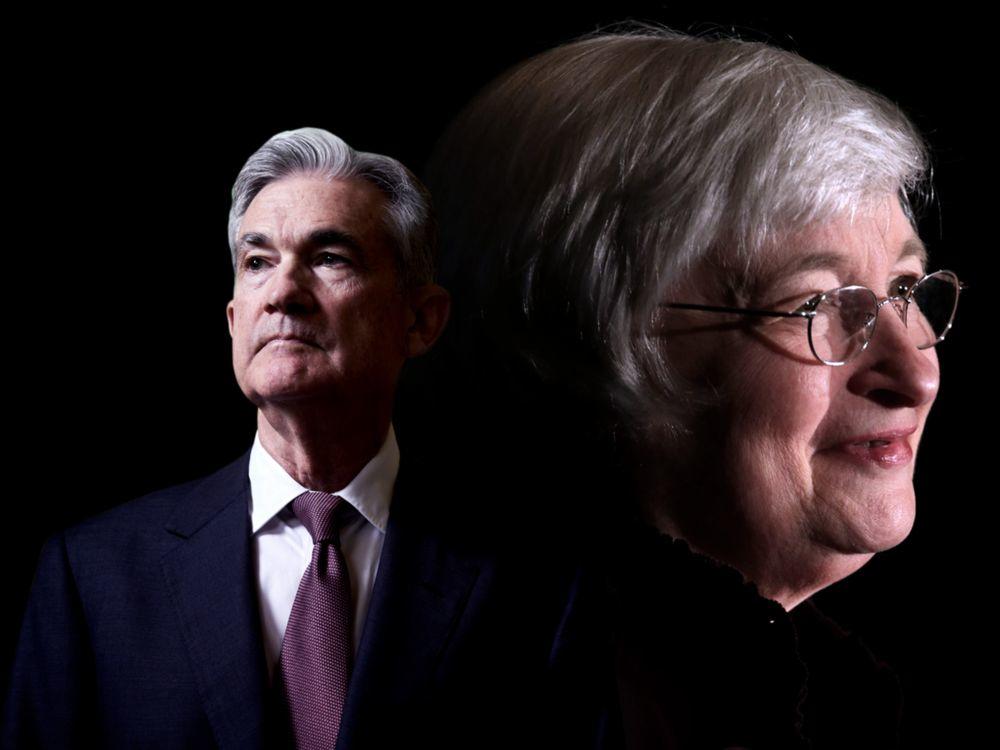
Fed Chairman Jay Powell and Treasury Secretary Janet Yellen have linked arms to crank up the printing presses in tandem.

This is what’s driving markets to price things – from copper to digital NFT art – in strange and shocking ways.  But what’s behind the money printing?

Surely it’s more than progressive politics – under the guise of virus recovery – run amok.

Where to begin?

The U.S. national debt is a good place to start.  And the U.S. national debt is now over $28 trillion.  Is that a big number?

As far as we can tell, $28 trillion is a really big number…even in the year 2021.  How do we know it’s a big number, aside from counting the twelve zeros that fall after the 28?

We know $28 trillion is a big number based on our everyday experience using dollars to buy goods and services.  You can still buy a lot of stuff with $28 trillion.  In truth, $28 trillion is so big it’s hard to comprehend.

Nonetheless, $28 trillion is not as big a number today as it was in 1950.  Back then, the relative bigness of $28 trillion was much larger.  It was unfathomable.

Crime of the Century

The points is, with paper dollars as legal tender the bigness of $28 trillion is relative.  Moreover, with policies of mass dollar debasement in effect, tomorrow’s bigness of $28 trillion will be much different than today’s.

What if $28 trillion isn’t such a big number after all?

What if, through sleight of hand, $28 trillion could be made less big?

What if the relative bigness of $28 trillion could be dropped an order of magnitude so that it had a commensurate value of $2.8 trillion?

A national debt that’s on relative par with $2.8 trillion would be much more convenient for the goons in Washington.  It would finagle the U.S. national debt to GDP ratio from over 130 percent to a relative 13 percent.

This may sound crazy.  But it has been done before…

One of the unspoken objectives of the Fed’s monetary policy is to inflate the debt away.  Powell won’t explicitly say this.  He doesn’t have too.  His actions tell you everything you need to know.

But what you may not know is that dollar debasement, as a matter of fiscal and monetary policy, bailed out the U.S. government in the 20th century.  Powell and Yellen are endeavoring to pull off this crime of the century once again.

If you recall, in 1946, at the conclusion of WWII, the U.S. national debt to GDP ratio was 118 percent.  Yet by 1981 the debt to GDP ratio had declined to just 31 percent.  It has been rising ever since.

Vigorous economic growth in the 1950s and 1960s had a hand in growing the economy out of debt.  But more important was the role of dollar debasement.  Check this out…

The Bureau of Labor Statics own Consumer Price Index (CPI) inflation calculator shows that $1.00 in January 1946 had the same buying power as $5.16 in December 1981.  Similarly, it took $1.00 in December 1981 to buy what $0.19 could buy in January 1946.

Thus, over this 35 year period, the dollar lost 81 percent.  Four fifths of its value was inflated away by the Fed and the Treasury.  That’s downright criminal.

There’s a Serious Flaw to the Team Powell-Yellen Inflation Scheme

As you can see, dollar debasement policies inflated a significant part of the national debt away.  However, achieving this feat was remarkably destructive.

To halt the flight of gold from American soil, the U.S. government closed the gold window at the Treasury in 1971.  This implicit default ended the Bretton Woods agreement.  The Treasury stiffed America’s trading partners unconditionally.

“The dollar is our currency, but it’s your problem,” remarked Treasury Secretary John Connally to his astonished European counterparts at the G-10 Rome meetings in late 1971.

After Nixon removed the discipline of gold from the world monetary system the money supply could be inflated without limits.  For American consumers, this quickly translated into raging price inflation.  Things got ugly quick.

By 1980, the CPI was at 13.5 percent and the yield on the 30 Year Treasury hit 15 percent.  Fed Chairman Paul Volcker had to jack the federal funds rate up over 20 percent to keep prices from coming completely uncorked.  The price of gold spiked from $35 per ounce to over $800.

Volcker’s efforts may have temporarily salvaged the dollar.  But they didn’t solve the debt problem.  Instead they laid a faulty foundation for an even larger debt edifice to be erected upon.

This brings us to the present state of awfulness.  Another implicit default is needed to reckon the Treasury’s books.

Aside from the fraud, chicanery, balderdash, and Montreal Screwjob of it all, there’s a serious flaw to the Team Powell-Yellen inflation scheme…

How can dollar debasement policies aimed at inflating away the debt ever succeed when it’s these very policies that induce the massive growth of debt in the first place?

And this, folks, is precisely why we’re doomed.

Tyler Durden
Sat, 03/27/2021 – 12:40

via ZeroHedge News https://ift.tt/2QKWn5d Tyler Durden

Transportation Secretary Mayor Pete Is Pushing For A “Vehicle Mileage Tax”

Transportation Secretary Mayor Pete Is Pushing For A “Vehicle Mileage Tax”

At what point to Democrats start to realize that they’re running out of things to tax?

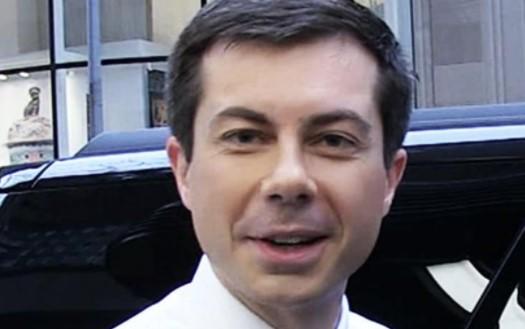
Could today be a wake up call? Perhaps the fact that Mayor Pete, now Transportation Secretary, is honestly pitching the idea of a vehicle mileage tax that would increase the further one travels, might wake some people up to the idea that we’ve gone too far?

Buttigieg told CNBC Friday that the idea was on the table to help pay for President Biden’s upcoming infrastructure plans. “He spoke fondly of a mileage levy,” CNBC wrote. 

Buttigieg said: “When you think about infrastructure, it’s a classic example of the kind of investment that has a return on that investment. That’s one of many reasons why we think this is so important. This is a jobs vision as much as it is an infrastructure vision, a climate vision and more.”

He continued: “A so-called vehicle-miles-traveled tax or mileage tax, whatever you want to call it, could be a way to do it.”

“I’m hearing a lot of appetite to make sure that there are sustainable funding streams. A mileage tax shows a lot of promise if we believe in that so-called user-pays principle: The idea that part of how we pay for roads is you pay based on how much you drive,” Buttigieg said. “You’re hearing a lot of ‘maybe’ here because all of these things need to be balanced and could be part of the mix.”

He’s also considering issuing “Build America Bonds” and says there’s “a lot of promise in terms of the way that we leverage that kind of financing. There have been ideas around things like a national infrastructure bank, too.”

He concluded: “There is near-universal recognition that a broader recovery will require a national commitment to fix and transform America’s infrastructure.”

Biden’s infrastructure proposals are expected to total $3 trillion to $4 trillion. Biden said last week that rebuilding the nation’s infrastructure was was critical to restore the economy and continue to compete with China. 

Tyler Durden
Sat, 03/27/2021 – 12:15

via ZeroHedge News https://ift.tt/3w7CpS6 Tyler Durden

Rickards: The Mainstream’s Got It Wrong

Rickards: The Mainstream’s Got It Wrong

Authored by James Rickards via DailyReckoning.com,

Gold has taken a hit this year, no doubt about it. Since peaking over $1,950 in early January, the price of gold has fallen to $1,725 today.

But not all is doom and gloom. Some perspective is needed. If we go back to the beginning of the current bull market on December 16, 2015 (when gold bottomed at $1,050 per ounce), gold is up over 60% even at today’s beaten-down price.

That bottom occurred on the exact day that the Fed started their “lift-off” in interest rates after seven years stuck at zero. I urged investors to buy gold then. Those who listened are still sitting on huge gains even after the latest drawdown.

Savvy investors know the dollar price of gold is volatile. They keep their eye on the long-term trends and long-term drivers of the gold price. Sophisticated investors don’t sweat the dips. They see the occasional drawdowns as a great entry point and buying opportunity. So do I.

Nothing New Here

We’ve been here before.

Gold fell 17% from August 5, 2016, to December 1, 2016. It fell 8.1% from September 8, 2017, to December 13, 2017. It fell 12.5% from March 6, 2020, to March 19, 2020, during the pandemic panic.

After every one of these falls, gold rallied back and maintained a trend line of higher highs, finally reaching the $2,000 per ounce threshold in August 2020.

The important questions for gold investors are: Is this just a dip or the start of a new bear market?

And, what’s been driving the dip; when can we expect a turnaround? We address both questions by looking at the mainstream scenario and explaining why it’s wrong and how the turnaround will emerge.

The Mainstream Scenario

Here’s the mainstream scenario: The U.S. and global economies are making a strong comeback from the pandemic. China is growing quickly, U.S. unemployment is dropping, the virus is fading and the lockdowns are ending. This would be a recipe for strong growth and higher interest rates by itself.

Now, Congress and the White House have passed a $1.9 trillion COVID relief bill, which has little to do with COVID and everything to do with spending for favored interests, including teachers, municipal workers, federal workers, and community organizers. It also provides money for programs such as the Kennedy Center, the National Endowment for the Arts, etc.

The market view is that this additional $1.9 trillion of spending, combined with the $6 trillion of deficit spending already approved for fiscal 2020 and fiscal 2021 and another $4 trillion deficit spending package expected later this year, is more than the COVID situation requires and more than the economy can absorb without inflation.

Therefore inflation expectations have risen sharply. And, along with inflation expectations, the yield-to-maturity on the benchmark 10-year U.S. Treasury note has spiked.

The yield on the 10-year has risen from 0.917% on January 4 to 1.316% on February 6 to 1.638% today. Those rate hikes might not sound like much, but it’s an earthquake in the note market.

If you compare the rate hikes to the decline in gold prices, there is a high degree of correlation. As rates go up, gold goes down. It’s that simple.

More deficit spending stokes the flames of inflation expectations, which leads to higher rates and lower gold prices. When those fundamental trends are combined with leverage, algo-trading, and momentum, it’s like throwing gasoline on an open flame.

Gold investors have been getting burned.

What’s flawed in this scenario? The short answer: everything.

Perspective

You can’t argue with the facts – rates are going up, and gold is going down. But, the assumptions behind these trends are flawed. That means the trends will inevitably reverse, probably sharply.

Again, perspective helps.

This is not our first interest rate spike. The 10-year note hit 3.96% on April 2, 2010. It then fell to 2.41% by October 2, 2010. It spiked again to 3.75% on February 8, 2011, before falling sharply to 1.49% on July 24, 2012.

It spiked again, hitting 3.22% on November 2, 2018, before plummeting to 0.56% on August 3, 2020, one of the greatest rallies in note prices ever.

There’s a pattern in this time series called “lower highs and lower lows.” The highs were 3.96%, 3.75% and 3.22%. The lows were 2.41%, 1.49%, and 0.56%.

The point is that the note market does back up from time-to-time. And when it does, it cannot hold the prior rate highs and eventually sinks to new rate lows.

If we apply that pattern to the current rise in rates, we should expect that the rate increase will top out well short of 2.5%, and a new low may follow as low as 0.25% or even zero. There’s no guarantee of this; it’s not deterministic. But, it would be consistent with the 10-year trend of lowering rates.

Still, there’s more going on. The economy is not nearly as strong as the headlines and Wall Street cheerleaders would have you believe.

The Alternative Scenario

Unemployment rates are coming down not because of strong job creation, but because able-bodied, prime-age workers are dropping out of the workforce. The decline in the labor force participation rate is behind the lower unemployment rate because the drop-out workers are not counted as “unemployed.”

If they were, the real unemployment rate would be about 11%, a rate associated with depressions.

Retail sales are being pumped-up by Treasury checks handed out by Congress. What happens when those checks stop?

Real estate losses are being held down by rent moratoriums and anti-eviction decrees. What happens when the rent is finally due?

Student loan defaults are on hold because a grace period on repayment has been extended. What happens when the grace period is over?

The real story is that the economy is weak, but the weakness is being papered-over by handouts, grace periods and repayment standstills. When those handouts stop, growth will slow sharply, and deflation or disinflation will reappear.

Higher interest rates are anticipating inflation, but the inflation is a mirage. Gas at the pump and housing prices are going up. Almost everything else from tuition to healthcare to clothing is going down.

Gold Wins Either Way

What comes next? The realization that we’re not re-inflating will take time to sink in. It will emerge from the data over the next six months.

Congress will halt multi-trillion deficit spending packages, despite the wishful thinking of Democrats that the country is ready for another trillion-dollar package. By mid-to-late 2021, the music will stop, the economy will slow, interest rates will resume their long-term downtrend and gold prices will soar.

What if I’m wrong? That would be good news for gold also.

The worst situation for gold is the one we have now where rates are going up, but there’s no actual inflation. If I’m right about inflation, then rates will come back down, and gold will rally.

But, if inflation actually does appear, guess what? Gold will go up because it always does in inflation.

Gold wins either way.

Tyler Durden
Sat, 03/27/2021 – 11:50

via ZeroHedge News https://ift.tt/3d8LaTC Tyler Durden

2 Dead, 10 Shot In Virginia Beach During “Chaotic Night Of Violence”

2 Dead, 10 Shot In Virginia Beach During “Chaotic Night Of Violence”

In what appears to be the third mass shooting in the US in under three weeks, 10 people have been shot, 2 fatally, after what the NYT described as “a chaotic night of violence” in Virginia Beach.

It’s the first shooting incident to grab national headlines in the city since an engineer slaughtered a dozen of his colleagues back in 2019 (an investigation into that incident had only just wrapped a few days ago). Police Chief Paul Neudigate told reporters Saturday morning that 8 people appeared to have been shot during a single incident, while 2 more were shot during other incidents.

In total, 2 of the victims succumbed to their wounds.

Details so far are sparse, but the chief confirmed that officers responded to the first seen around 2300ET Friday night. While officers were responding to the first shooting, they heard shots fired about a block away. As the rushed to confront the shooter, a uniformed police officer engaged one of the suspects in a firefight, killing them.

The department’s twitter account shared a warning about the shootings around 0100ET.

Although the timeline was left unclear, police also said a second victim was shot and killed in a third shooting incident that appeared to be unrelated to the others Neudigate said. A police officer was struck by a car while responding to the incident, though the officer’s wounds were non-life-threatening.

“What you can see is that we have a very chaotic incident, a very chaotic night in the beach,” Chief Neudigate said. “Many different crime scenes.”

Several people were in custody, the chief told reporters. But their exact connection to the violence was unclear.

In a Twitter post just after 1 a.m. on Saturday, the department said that it was investigating a shooting in which several victims had “possibly life-threatening injuries,” and that there was a large police presence along a section of the city’s oceanfront.

“Please avoid the area at this time,” it said.

A person who answered the phone at the department said that no one was available to comment. Virginia Beach was the site of a mass shooting in May 2019, which we mentioned above. In that incident, 12 people were killed and several others injured before the shooter was killed during a gun-battle with police. 

On social media, some disputed whether any of the incidents qualified as an “active shooter” situation, saying that the shooters were simply two people with a personal beef, and terrible aim.

Whether that is an accurate characterization, or not, will need to wait for more information from the department.

Of course, while two dead from gun violence in a single evening is extremely unusual in Virginia Beach, if the same incident unfolded on the South Side of Chicago, it would barely make the news.

Tyler Durden
Sat, 03/27/2021 – 11:25

via ZeroHedge News https://ift.tt/3lYygvl Tyler Durden

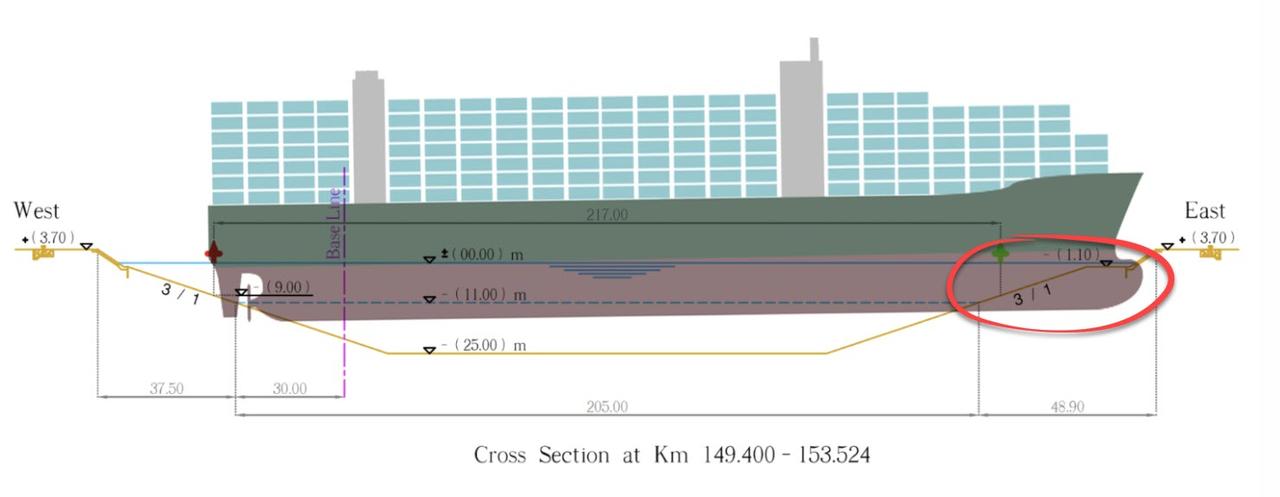
Over 300 Ships Now Stranded As Suez Canal Authority Chairman Says “Human Error” Contributed To Crash

Over 300 Ships Now Stranded As Suez Canal Authority Chairman Says “Human Error” Contributed To Crash

More than 300 vessels are logjammed at either end of the Suez Canal on Saturday, though an increasing number of vessels were being diverted to the southern tip of Africa, also known as the Cape of Good Hope. 

Lieutenant-General Osama Rabie, Chairman of the Suez Canal Authority (SCA), said at least 14 tugboats and a dredging ship worked around the clock to free the stranded containership ‘Ever Given’.

Rabie said 9,000 tons of ballast water were removed from the ship. Dredgers had removed some 20,000 tonnes of sand from around its bow by Friday, and the rudder and propeller system of the vessel was restarted.

He said the stern of the vessel started to move last before refloating efforts stopped.

“The bow is really stuck in the sandy clay, but the stern has not been pushed totally into the clay, which is positive. We can try to use that as leverage to pull it loose,” Peter Berdowski, chief executive of Boskalis, which owns Smit Salvage, which was brought in this week to help with efforts, said.

“Heavy tugboats, with a combined capacity of 400 tonnes, will arrive this weekend. We hope that a combination of the tugboats, dredging of sand at the bow and a high tide will enable us to get the ship loose at the beginning of next week.”

The chairman said around 321 ships were waiting to transit the canal as of Saturday. 

Many of the vessels stuck in or around the Suez Canal are carrying billions of dollars of goods, such as crude, crude products, automobiles, electronics, livestock, other consumer goods, and other commodities.

Rabie also said wind speeds were not the main reason for stranding the ship on the side of the canal. He said technical or human error could have contributed to the incident. 

And the worst-case scenario might play out if the ongoing dredging to refloat the ship assisted with tugboats and high tide doesn’t work, that is, as explained by the chairman, the possibility of lightening the vessel’s load. He hoped the salvage team wouldn’t have to come to that because, as JPMorgan’s Marko Kolanovic told clients Friday, unloading the ship could result in a “ship breaking.” 

As Kolanovic puts it, “another interesting development of this week was the blocking of the Suez Canal. While we believe and hope the situation will get resolved shortly, there are some risks of the ship breaking.”

Additionally, Reuters reports that Boskalis and Smit Salvage have warned that using too much force to tug the ship could damage it. Berdowski said a land crane would be brought in at the weekend which could lighten the Ever Given’s load by removing containers, though experts have warned that such a process could be complex and lengthy.

“If we don’t succeed in getting it loose next week, we will have to remove some 600 containers from the bow to reduce the weight,” he said.

“That will set us back days at least, because where to leave all those containers will be quite a puzzle.”

Rabie did not give any timelines on when the vessel would be refloated. He said the stranded ship would need to be surveyed after it was refloated. 

There’s still no word on the US Navy’s assessment of the vessel. 

The blockage of the world’s most crucial shipping lane has added significant pressure to the already stretched global supply chain. 

Tyler Durden
Sat, 03/27/2021 – 11:00

via ZeroHedge News https://ift.tt/3w06cfP Tyler Durden