We’re Number One in wealth, income and power inequality, yea for the Fed and the Empire!
If we avert our eyes from the electoral battle on the blood-soaked sand of the Coliseum and look behind the screen, we find the powers that matter are not elected: our owned by a few big banks Federal Reserve, run by a handful of technocrats, and the immense National Security State, a.k.a. the Permanent Government. These entities operate the Empire which hosts the electoral games for the entertainment and distraction of the public.
The governance machinery controlled by elected representatives is tightly constrained in what it can and cannot do. It can’t do anything to stop the debasement of the nation’s currency, which is totally controlled by the Politburo of the Fed, nor can it do much to limit the Imperial Project, other than feel-good PR bits here and there.
The president wields vast powers but even the president is powerless to stop the debasement of the nation’s currency and the enrichment of bankers, financiers, corporations, etc., who fund the campaigns of the gladiators, oops I mean politicians.
If we set aside the term Deep State and simply call it the unelected machinery of governance (Permanent Government), we get a clear picture of its scope and power. Presidents, senators and representatives come and go, but the machinery of Empire grinds on, decade after decade.
A great many people and places in America don’t matter to the Fed or the Permanent Government, and so they’ve been abandoned to their fates. The darlings of the Fed and Empire are clustered in Silicon Valley and other urban hubs where the technological and financial machinery of global hegemony are fabricated and maintained.
Those far from these centers of banking, finance and Big Tech have little to no stake as owners of meaningful capital. All they have to sell is their labor, and that’s been losing purchasing power for decades as financialization and globalization have stripmined rural America and enriched the bankers, financiers and speculators who serve the Fed and unelected Permanent Government.
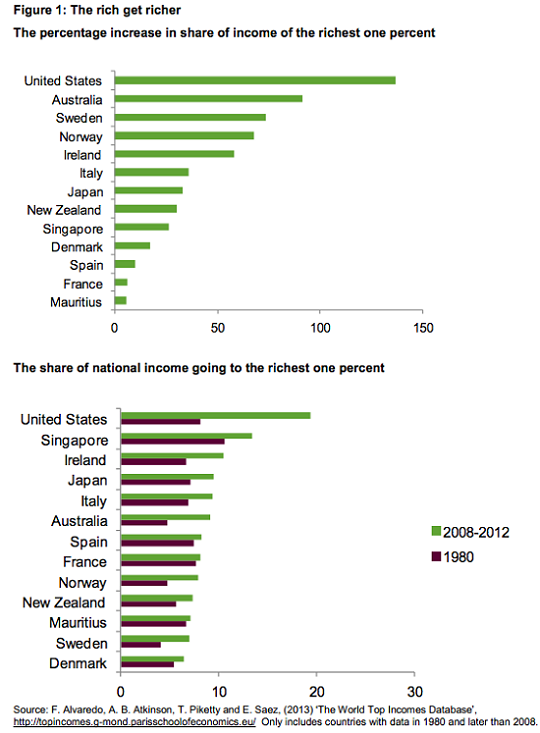
The Fed and the Permanent Government have been very, very good to the few at the expense of the many. Look at the chart above at America’s complete dominance when measured by the soaring wealth of its top 1% power elite: We’re Number One in wealth, income and power inequality, yea for the Fed and the Empire! And we don’t have to elect them–they elect themselves.
Watch Live: Will Fed Chair Powell Spoil The ‘QE Replaces Blue-Wave’ Narrative? Tyler Durden
Thu, 11/05/2020 – 14:25
While today’s FOMC statement was expected to be a nothingburger, the press conference could provide some fireworks as an anxious market has begun pricing in a Fed QE expansion to replace the ‘blue-wave’ stimulus hopes.
With valuations back at record highs, and bond yields sliding again, along with a tumbling dollar, the question is – will Powell hint at more QE to come, or put pressure back on Washington’s lame-ducks?
Watch Live (due to start at 1430ET):
via ZeroHedge News https://ift.tt/2IcDUde Tyler Durden
Fed Makes No Changes To Policy, Sees Economic Activity “Continuing To Recover” Tyler Durden
Thu, 11/05/2020 – 14:04
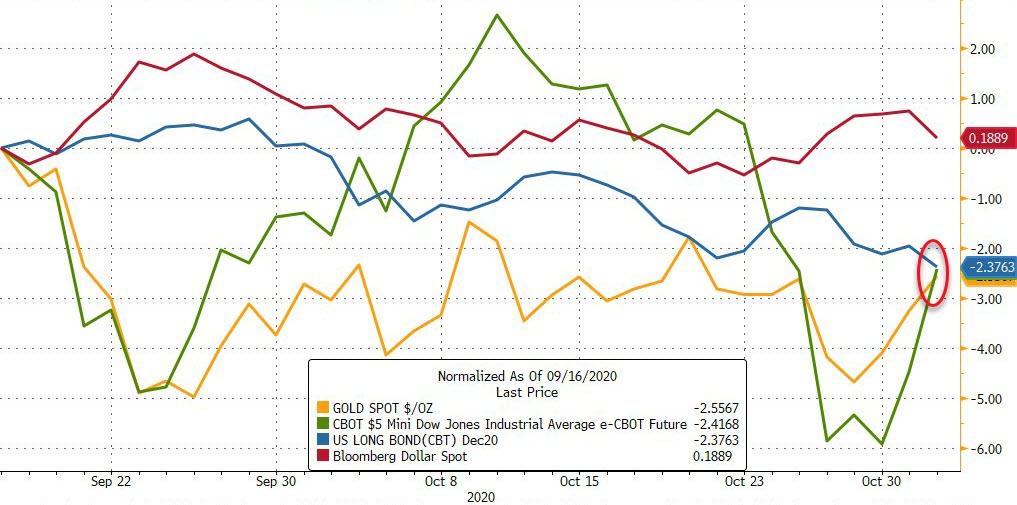
Since the last FOMC Statement, in September, the USDollar is very modestly higher but in a strange coincidence, gold, bond prices, and stocks are all down almost exactly the same amount…
Source: Bloomberg
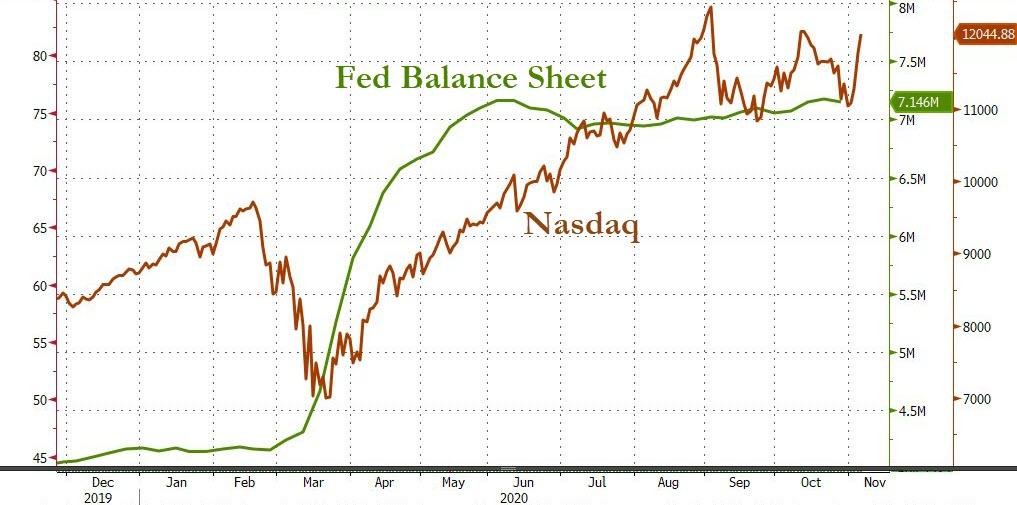
The Fed balance sheet has gone nowhere for four months and after this week’s death of the blue-wave, we suspect pressure will come back on Powell and his pals to jawbone QE expansion back into the narrative…
Source: Bloomberg
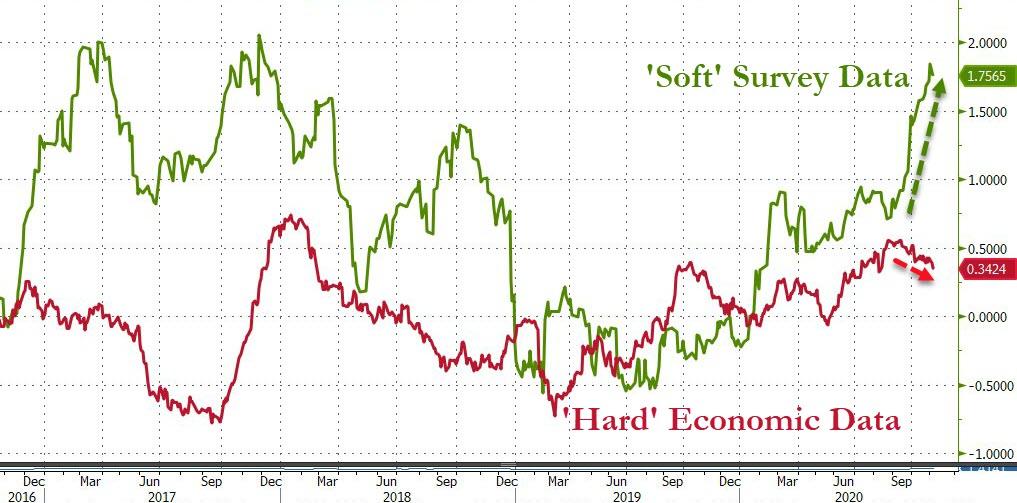
And in the last month or more, while ‘soft’ survey data has soared higher, ‘hard’ real data has serially disappointed…
Source: Bloomberg
Today’s FOMC is widely expected to be a non-event.
There is little chance of further policy action beyond the half-point surprise rate cut on March 3 and the full-point cut on March 15 that took the target range to 0.00%-0.25%. Analysts expect a sustained ZIRP position for the foreseeable future, especially now given the shift to average inflation targeting that would imply zero-rates beyond the return of inflation to 2%. Fed officials and the projections in the dots have indicated rate hikes are not expected for years.
The market will focus closely on the statement and ensuing press conference for further insights on forward guidance and any action on QE, which is increasingly being priced in as expected now that the blue-wave fiscal tsunami is out of the window.
So what did they say?
Not Much!
The Fed, as expected, held rates unchanged and did not change the terms of the bond-buying programs.
Additionally, The Fed repeated its commitment to using its full-range of tools.
The Fed continues to see economic activity and employment recovering.
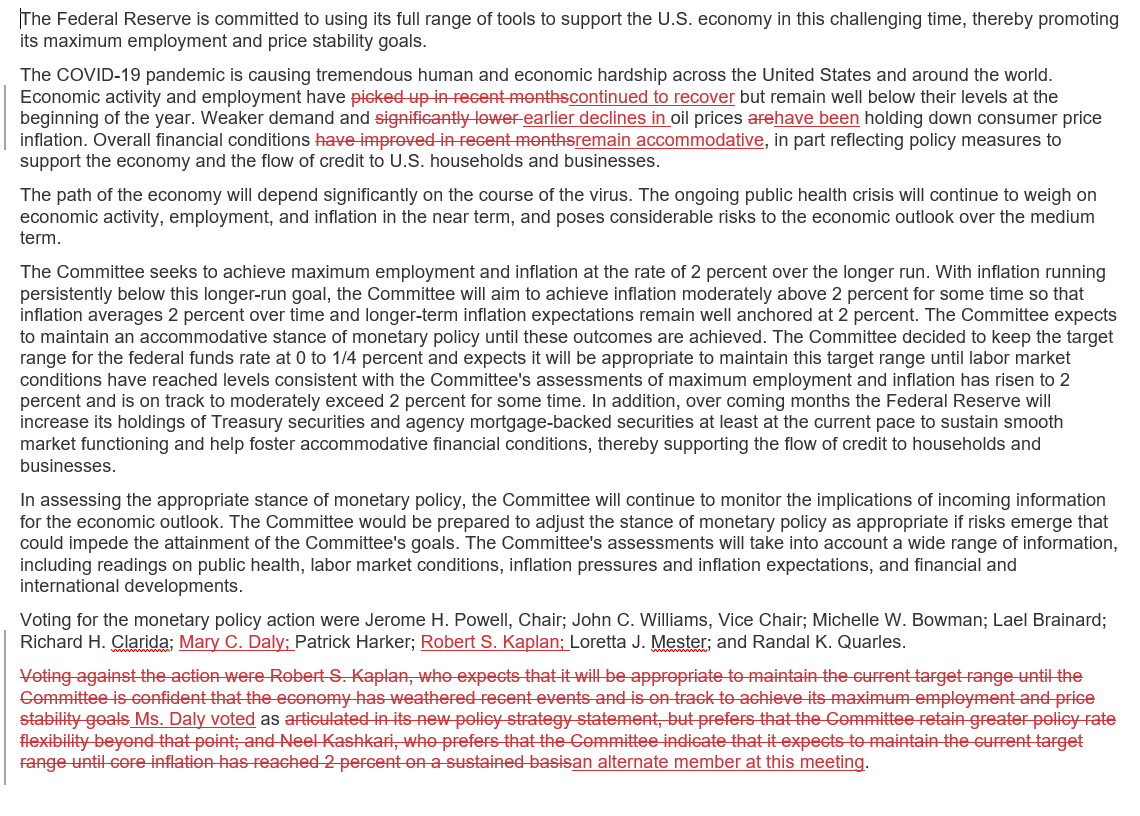
The following redline shows the statement was practically unchanged too…
With the only textual changes as follows:
“Economic activity and employment have continued to recover” changed from “picked up in recent months” … “but remain well below their levels at the beginning of the year.
“Weaker demand and earlier declines in oil prices” changed from “significantly lower oil prices” … “have been holding down consumer price inflation.”
” Overall financial conditions remain accommodative” changed from “have improved in recent months”
This decision was unanimous (because Neel Kashkari is on paternity leave).
via ZeroHedge News https://ift.tt/3p0EHz7 Tyler Durden
DOJ Seizes 27 Domains As ‘Iranian Disinformation’ Including Popular Indy News Site Tyler Durden
Thu, 11/05/2020 – 13:39
The Department of Justice announced Wednesday that it had seized 27 online domains on strong suspicion there were set up as media influence campaigns by Iran’s Islamic Revolutionary Guard Corps (IRGC).
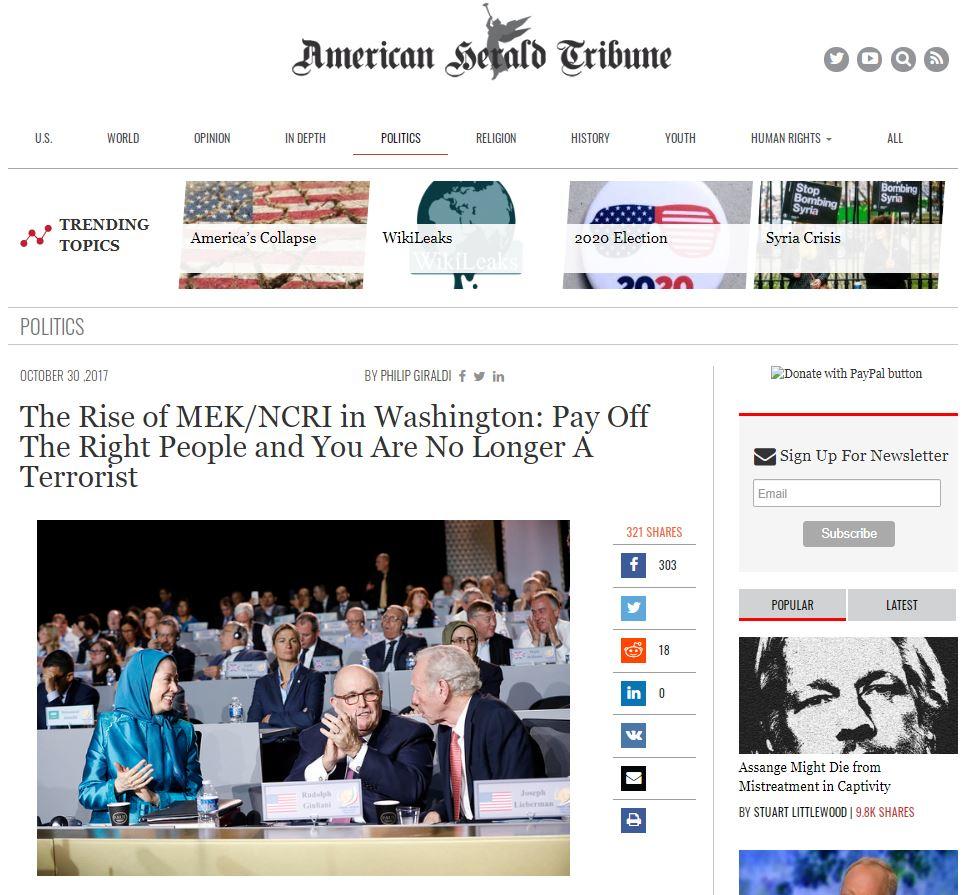
At least four of them were described by the DOJ as targeting an American audience, and one of them was a somewhat popular independent geopolitical news site, called American Herald Tribune:
According to the Department of Justice (DoJ), four of the 27 domain names – “rpfront.com”, “ahtribune.com”, “awdnews.com”, and “criticalstudies.org” – were seized as they breached the Foreign Agents Registration Act, which requires website holders to submit periodic registration statements containing truthful information about their activities and the income earned from them.
The DOJ statement said they purported to be news sites, with in some instances genuine news reporting and analysis, but that ultimately they were fronts for “Iranian propaganda” and “disinformation”.
“Here, the four domains purported to be independent news outlets, but they were actually operated by or on behalf of the IRGC to target the United States with pro-Iranian propaganda in an attempt to covertly influence the American people to change United States policy concerning Iran and the Middle East,” the DOJ said.
In the case of American Herald Tribune (AHT), the editor in chief, Anthony Hall, is based in Canada and the details proving Iranian affiliation have not been revealed. The online newspaper was known for its critical stance toward US foreign policy and was often linked to by other independent media and anti-war activist sites.
This will only get worse in the coming years, thanks to corporate media collusion with spy agencies to sow panic & fear that unofficial media critical of US empire must be controlled by State Enemies.
Added bonus: less competition for corporate media.https://t.co/aq8uVKLvrD
Interestingly the DOJ and FBI sought the cooperation of American big tech firms in the seizure: “Thanks to our ongoing collaboration with Google, Facebook, and Twitter, the FBI was able to disrupt this Iranian propaganda campaign and we will continue to pursue any attempts by foreign actors to spread disinformation in our country,” FBI Special Agent in Charge Craig D. Fair announced in a statement.
Screenshot of American Herald Tribune page before it was taken offline:
In October there had been a prior major seizure of 92 domains dubbed by the DOJ as Iranian disinformation outlets. Like in this latest case, US authorities didn’t reveal any particular evidence to the public, but in some cases cited allegations by third parties.
Last month federal agencies also said the caught US adversaries, particularly Iran and China, attempting infiltrate and meddle in US election and voter registration data.
via ZeroHedge News https://ift.tt/3eslXnn Tyler Durden
With the unfolding contested election, the only clear conclusion is the uniform polls declaring Joe Biden with commanding leads nationally and in states like Wisconsin were laughingly false. It appears that pollsters at newspapers like the Washington Post (which gave Biden a 17 point lead in Wisconsin on Election Day) have succumbed to the same pressures of echo chamber journalism as their journalistic counterparts. Polls on NBC, CNN, and the major newspapers all gave the same reassuring message that only a hardcore group of knuckle-dragging racists were left supporting Donald Trump. It has been a conversation with themselves in an echo chamber of unrelenting negative coverage.
That narrative crashed and burned this week. As I noted today, if Trump is reelected, he will have the mainstream media to thank.
The embarrassing protection of Joe Biden from allegations of sexual misconduct, the Hunter Biden scandal, or even serious campaign questions fooled no one. Instead, it further alienated voters as the establishment maintained a uniform narrative against Trump on every and any issue. Moreover, it is hardly surprising that Trump supporters were undercounted by media when it prefaced such requests for self-identification with coverage labeling any Trump supporters as “drug addicts,” Nazis, racists, liars, or brainwashed zombies. How open and forthcoming does NBC expect voters to be in a poll when its analysts are referring to Trump supporters as existing on “lizard brains”?
The media bias ultimately insulated Trump from backlash as the public simply grew suspicious of all media reports. The media has rendered itself as unbelievable as the subject of its current ire. While denouncing Trump as a pathological liar, the media has been pathologically biased. Polls consistently show the media racing Trump to the bottom on trustworthiness. Most of the media now feeds a steady diet of unrelentingly negative stories to a shrinking audience of true believers. Some polls show that the only group deemed less trustworthy than Trump is the media. The Knight Foundation has found that three-fourths of the public believe the media is too biased; some 54 percent believe reporters regularly misrepresent facts, and 28 percent believe reporters make things up entirely.
Thus, polls indicate that the unending attacks on Trump and his supporters in the media are not conditioning but, instead, are repelling voters. They are fulfilling his narrative that voters cannot trust the media. Many voters may still view both Trump and Biden as over-inflated clowns, but they resent being continually conditioned to hit one clown and hug the other. Indeed, if Trump is reelected, he may have the media to thank.
via ZeroHedge News https://ift.tt/2TYRFPq Tyler Durden
After Another $3 Billion Sale, Jeff Bezos Has Now Sold More Than $10.2 Billion In Stock This Year Tyler Durden
Thu, 11/05/2020 – 13:04
Jeff Bezos has fired another stock sale bazooka, this time for $3 billion, as part of his prearranged 10b5-1 trading plan.
The sale of stock brings his running total of stock sales just for 2020 to more than $10.2 billion, according to CNBC. Bezos still owns more than 53 million shares, currently valued around $170 billion, even after the sale.
The acceleration in stock sales for Bezos could be due to a number of things. Bezos has claimed he needs to sell $1 billion in stock per year to fund his rocket company startup, Blue Origin.
Bezos also launched a $10 billion “Earth Fund” earlier this year to help combat the effects of climate change. That organization needs capital to issue grants to scientists and other organizations. Bezos is also expected to make donations of $100 million each to the Nature Conservancy, the Environmental Defense Fund, the Natural Resources Defense Council and the World Wildlife Fund.
And then, of course, there’s ground to make up from Bezos’ $38 billion divorce settlement from mid 2019. His ex-wife is now the world’s richest woman, as we noted in September.
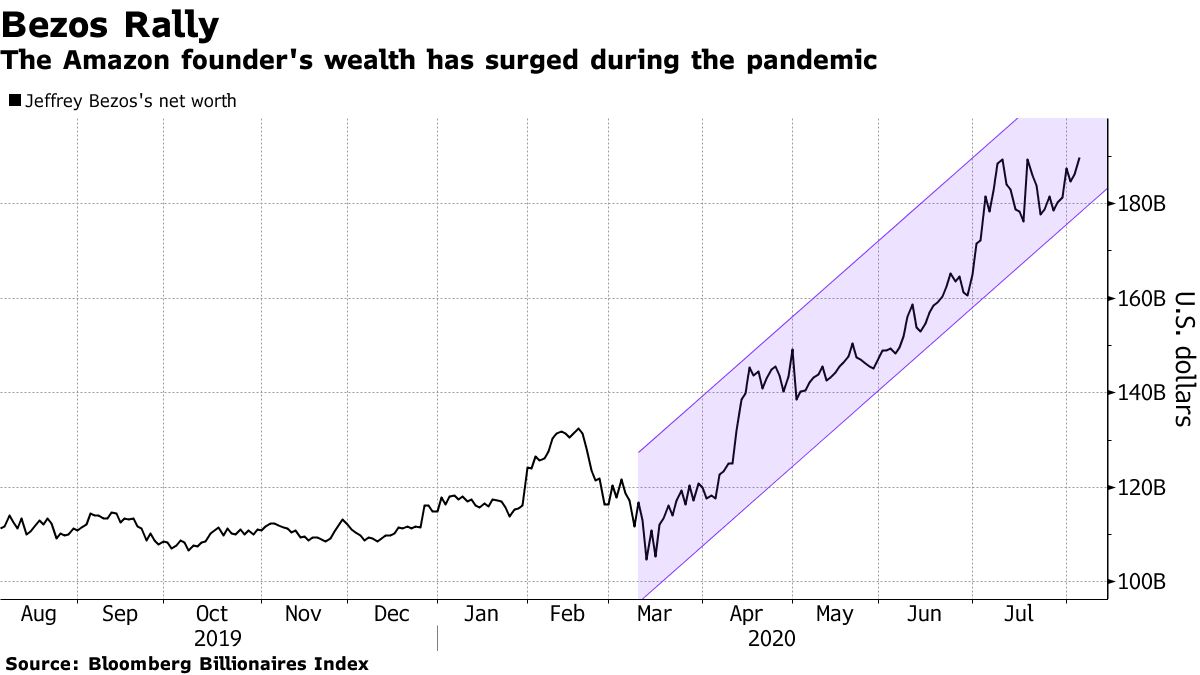
Her wealth grew with Bezos’ during the pandemic, as is noted in this chart from the summer. Since late summer, Amazon has risen about another 15%.
Recall, just a couple of months ago in August, Bezos had sold another tranche of $3 billion worth of stock, we noted. Bezos also dumped $1.8 billion worth of stock back between January 31 and February 3.
Bloomberg calculated back in February that in the 15 years after Amazon went public, Bezos sold a fifth of the company for $2 billion. Today, a fifth of the company would amount to roughly $324 billion.
Other recent transaction by Bezos include the sale of $2 billion in 2017 and $2.8 billion in 2019.
via ZeroHedge News https://ift.tt/3mUmn8N Tyler Durden
The heart of him who has understanding seeks knowledge, but the mouths of fools feed on folly. Proverbs 15:14
The term “cobra effect” is used when an attempted solution to a problem worsens the problem by unleashing unintended consequences. The name derives from a tale originating in Delhi, India. The government’s concern about rampant venomous cobras prompted them to offer a bounty for each dead snake. Although the strategy initially worked well, citizens began to breed cobras for income. When the government discovered what people were doing, they ended the bounty program. The cobra breeders, with worthless venomous snakes on their hands, set them free. Despite the best intentions, the solution made Delhi’s cobra problem worse.
As you might by now have figured, the cobra effect surrounds us in politics and economics.
A special thank you to Sahil Bloom (@sahilbloom) for his Twitterthread that inspired us to expand on his thoughts.
Bastiat’s Brilliance
Nineteenth-century French economist Frederic Bastiat has a well-known theory about unintended consequences. He uses a parable to explain that which is seen and what is not seen. His lesson starts with a stone that shatters a shopkeeper’s window. Most noticeable to the town’s people is the economic benefit of the broken window. In their minds, the shopkeeper must buy a window and employ a glazier to install it. As an aside, many economists peddle similar logic in the aftermath of natural disasters.
Bastiat’s brilliance is pointing out the not so obvious opportunity cost of the broken window. In this case, after paying to fix the window, the shopkeeper has less money to spend elsewhere. The shopkeeper could have bought new equipment making his shop more productive and profitable. The benefits of which would have had a positive impact on the shopkeeper’s wealth but also the economy and the populace.
Instead, replacing the window is at best a neutral economic event. There is undoubtedly no net economic gain, but there is an opportunity cost. Financial and material resources were used in a non-productive manner.
With cobras and broken windows in mind, we look at the Federal Reserve’s long-standing monetary policies.
Federal Reserve
Based on their actions over the past several decades, the Fed has increasingly taken more latitude in its mandate. They rationalize these actions through a variety of speeches, editorials, and white papers. Over the years, they have redefined their job from an entity intended only to supplement our capitalist free-market economy to an actively interventionist player.
The Federal Reserve Act, governing monetary policy, does not give them that authority. It simply reads:
The Board of Governors of the Federal Reserve System and the Federal Open Market Committee shall maintain long run growth of the monetary and credit aggregates commensurate with the economy’s long run potential to increase production, so as to promote effectively the goals of maximum employment, stable prices, and moderate long-term interest rates.
Legislators responsible for oversight of the Fed have not only failed to hold the Fed accountable but abet them in their mission creep. Although their power is supposed to be strictly limited to monetary policy actions, many of the tools they now employ spill over into the realm of fiscal policy. Such activities clearly jeopardize their independence and, therefore, their integrity.
Federal Reserve Snake Oil
The Fed has long led us to believe that lower interest rates produce economic growth and prosperity. Given that interest rates are a “price”, the price of money, the Fed is essentially manipulating that price in U.S. dollar terms. It is also understood that the U.S. dollar is the world’s reserve currency, which affects roughly 60% of all global transactions. That logic can only mean that the Fed is engaged in the single biggest price control scheme in human history. We are not aware of any instances where centrally planned price control efforts have produced favorable outcomes.
As we observe rising levels of geopolitical tensions, wealth and income divergence, and civil unrest, it should be evident the cobra effect is in play.
People, corporations, and governments tend to borrow and spend more when the cost of money is lower. Additionally, lower savings rates dis-incentivizes savings and thus increases consumption. The applied logic is that lower rates produce more economic activity. That is at least how the Fed and most Ph.D. economists prefer we think about low interest rates.
Behind The Fed’s Curtain
Now let’s look behind the curtain at the unseen. Artificially low interest rates encourage the use of debt. Debt is used to pull consumption forward. Therefore, the not so obvious consequence of lower than appropriate rates is weaker economic activity in the future. Artificially low interest rates also inspire non-productive uses of capital and speculation instead of productivity-enhancing savings and investment. Those effects are not apparent at first because low interest rates are initially stimulative. However, as described above, the long-run outcome will be a weaker economy.
That is precisely what we see in the U.S. and among all developed economies. Simply, we are breaking windows today and replacing them.
Under such a scheme, debts grow more than income. Over time, if not allowed to correct, the problem becomes self-reinforcing. Ever lower interest rates accommodate more debt used to pull consumption forward and service the prior debt load. The best way to describe this situation is that monetary policy has become a euphemism for Ponzi.
The Consequences
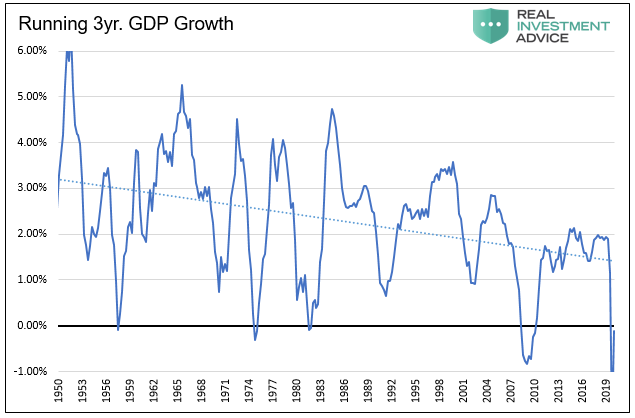
Today we find ourselves with shattered glass and cobras everywhere. U.S. interest rates are at 300-year lows and the zero bound. They are negative in many other parts of the world. The natural economic growth rate is below 2% and has been in decline for decades. Meanwhile, economic orthodoxy insists that the broken glass is a clear sign of a healthy economy, and the cobras will make fine pets. As described in a previous article, this is the very definition of being “gaslit.”
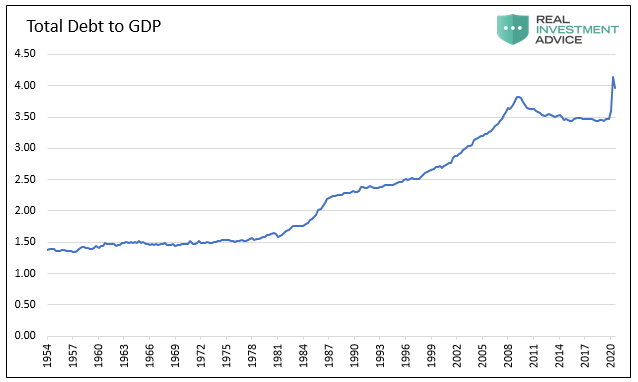
Our claim that Fed policy detracts from future economic growth is easy to support with data. If low interest rates helped the economy, the debt would decline as a percentage of economic activity. Productive debt creates more income than the cost of servicing it and paying it off. As a result, GDP would grow faster than debt. It has not, as shown below.
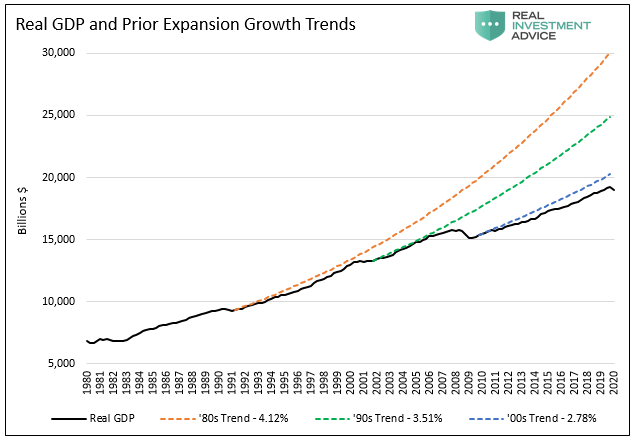
Further supporting our case is the fact that each economic expansion has been weaker than the previous one.
Moreover, the stimulus provided by lower interest rates inevitably wears off. Cutting interest rates boosts the economy by bringing future activity into the present: Easy money encourages people to buy houses and appliances now rather than later. But when the future arrives, that activity is missing. The only way to keep things going is to lower interest rates further — until, that is, they hit their lower bound, which in the U.S. is zero.
When interest rates stay low for long enough, the policy can even become counterproductive. In the U.S., monetary stimulus has already pushed bond and stock prices to such high levels that future returns will necessarily be lower.
No central bank wants to admit that it’s out of firepower. Unfortunately, the U.S. Federal Reserve is very near that point.
Summary
Replacing broken windows may make us feel good today, but it comes at a cost tomorrow.
Today, the United States faces a $3.1 trillion annual deficit supported with interest rates at or near zero. The Fed and government are rapidly exhausting their arsenal to fight current and future recessions. Equally troubling, almost all of their actions pay little or no future benefit, but the costs stay with us.
Current policies are about expediency. For at least the past 20 years, there are rarely any serious discussions by the Fed or politicians on their policies’ costs. Ignoring the possibility of negative consequences is just another definition of foolishness.
It is worth reiterating a point we have made in the past. The cost is not just financial. Equally important is America’s fraying social fabric as Fed-induced economic inequality bears down on the country.
via ZeroHedge News https://ift.tt/366gUVL Tyler Durden
Deja Vu: The Nation Is Once Again Facing A Shortage Of N95 Masks Tyler Durden
Thu, 11/05/2020 – 12:20
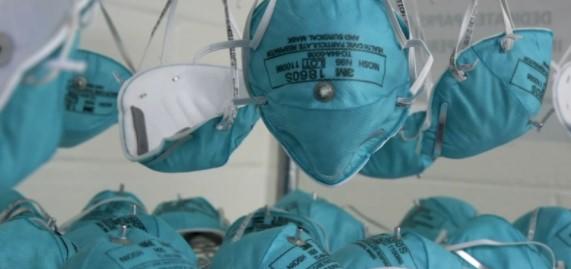
It appears to be a case of “deja vu all over again” for the medical community in finding masks to deal with the Covid-19 pandemic.
Early on during the outbreak of the coronavirus, securing PPE for medical professionals (and for the nation) was one of the key problems. Recall, even Dr. Fauci was telling the nation not to go out and wear masks because the medical community needed them so desperately.
Supply has improved since the beginning of the pandemic but some healthcare facilities are still below recommended quantities, according to the Wall Street Journal. This has forced some facilities to ration and reuse masks. In Michigan, almost 66% of healthcare systems are reporting less than a 3 week supply of PPE. Some facilities say they have less than a 7 day supply. The state recommends a 3 month supply.
Each state’s efforts to rebuild their supply of masks has been slowed by the rising number of cases, as the nation heads into the critical winter season.
Jeff Wagner, supply chain manager MidMichigan Health told the WSJ: “We would really like to beef up our stockpiles, but volume is high for everyone, so you can’t. The N95s are really the most challenging.”
In New Mexico, 90% of hospitals were reusing N95 masks. Wyoming said its hospitals could also wind up reverting to “emergency reuse” if hospitalizations in the state continue to rise.
Jon Ebelt, spokesman for Montana’s public-health department said: “We expect the need to increase and supplies to tighten again.”
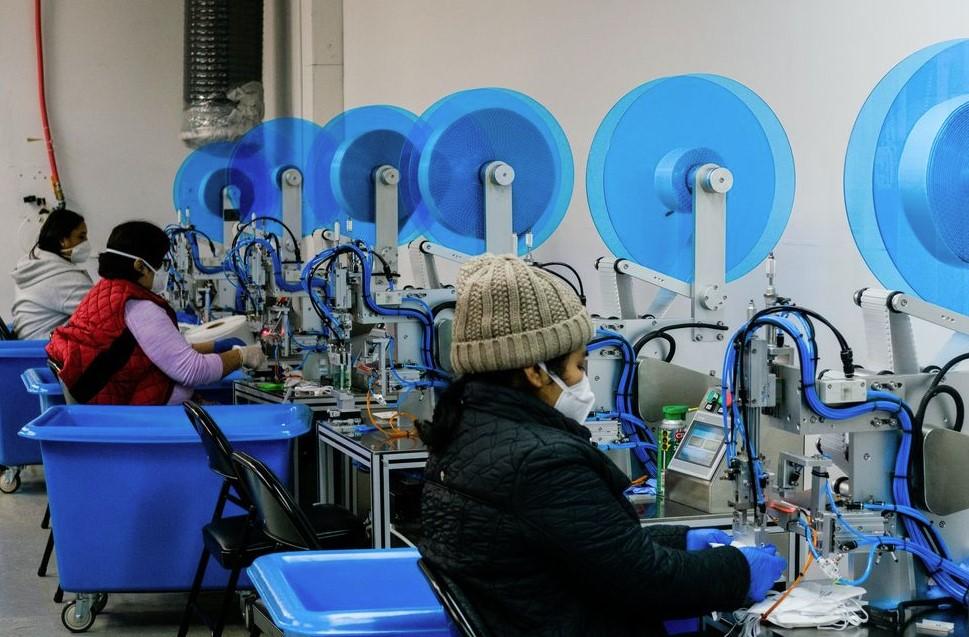
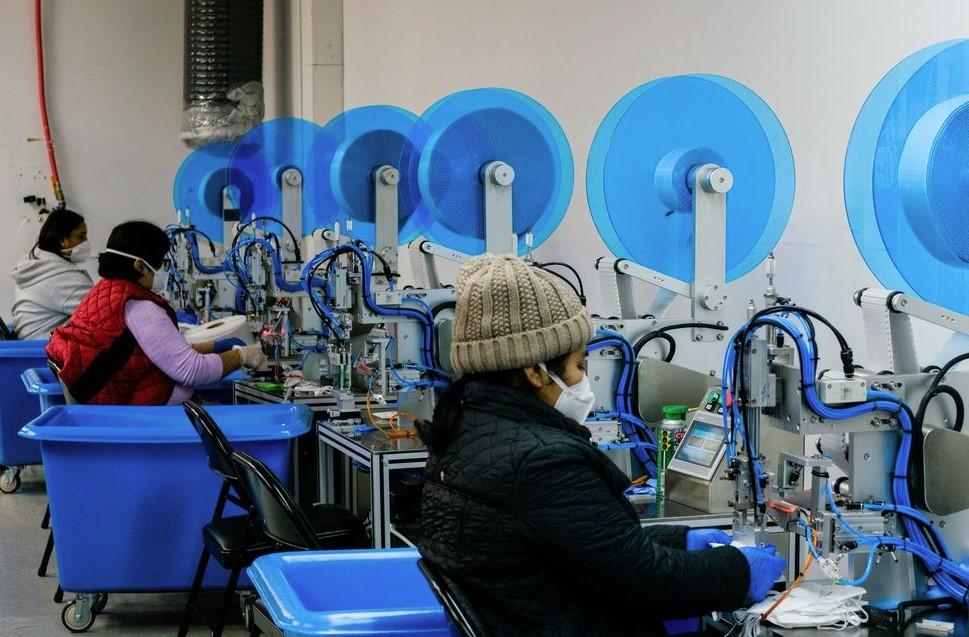
Pandmedic Solutions Inc., an N95-maker in Las Vegas, has seen orders rise 40% just in the past two weeks alone. Orders that would normally be 30,000 masks are now rising to 100,000 masks. The company’s operating manager said: “As fast as we are making them, they are leaving our facility.”
The company is one of about 20 new companies certified by The National Institute for Occupational Safety and Health to make new N95 masks. A lengthy certification process and scarce equipment to make the masks has made new entrants into the business just as scarce. WellSpan Health in PA and Lloyd Armbrust, an entrepreneur in Austin, Texas, are both hoping to begin making masks this year.
At the onset of the pandemic, President Trump used the Defense Production Act to force 3M to continue to make N95 masks. 3M had estimated output of 95 million masks per month in October, up from 50 million in June. But officials from many states still claim they are having trouble purchasing PPE, including masks.
3M Chief Executive Mike Roman commented: “N95s are still in high demand. We have more demand than we can supply.”
He continued: “We see demand from fighting the pandemic to continue in 2021 and beyond.”
We noted that California saw a similar issue in September when the state faced a mask shortage due to the outbreak of wildfires. N95 masks were already in hot demand when wildfires on the West Coast started blanketing the entire coast with smoke.
via ZeroHedge News https://ift.tt/32cMy2I Tyler Durden
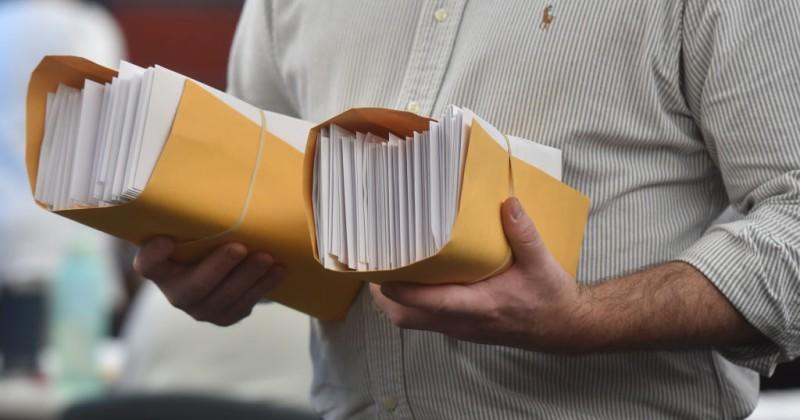
A county in Pennsylvania says it won’t begin counting over 35,000 ballots until Friday due to the need to perform “administrative work.”
“Allegheny County, PA still has 35,413 uncounted mail-in ballots, but elections staff is taking today off for “administrative work” and will not resume count until Friday. “I can’t get an answer as to why,” says @bethanyhallam, a member of county elections board,” tweeted the New York Times’ Trip Gabriel.
Allegheny County, PA still has 35,413 uncounted mail-in ballots, but elections staff is taking today off for “administrative work” and will not resume count until Friday. “I can’t get an answer as to why,” says @bethanyhallam, a member of county elections board.
When Will Chamberlain tried to give his legal commentary on the issue, Twitter censored Chamberlain’s tweet.
“They are waiting to see how many mail-in ballots they will need,” he tweeted. “No other good explanation This should be treated as evidence of intent to commit election fraud.”
They are waiting to see how many mail-in ballots they will need
No other good explanation
This should be treated as evidence of intent to commit election fraud https://t.co/8X8GoEK0IL
The tweet was censored behind a message that said the content was “disputed.”
Chamberlain followed up by asserting that the situation was a clear sign “election fraud” was taking place.
Allow me to rephrase, @TwitterSafety, you pedantic idiots.
I *argue* that the only good reason to take a day off from counting votes in a closely fought election – as Allegheny County is doing – is to hold back your boxes to commit election fraud. https://t.co/cFUo74Qwbq
“The only good reason to take a day off from counting votes in a closely fought election – as Allegheny County is doing – is to hold back your boxes to commit election fraud,” he said.
Trump held a massive lead in Pennsylvania on election night, at one point above 700,000 votes, but that lead has continually narrowed as more Biden ballots are ‘found’ – and some media outlets are now saying Trump will lose the state.
In the age of mass Silicon Valley censorship It is crucial that we stay in touch. I need you to sign up for my free newsletter here. Also, I urgently need your financial support here.
via ZeroHedge News https://ift.tt/2GwvbSZ Tyler Durden
New iPhone Hit With Power Chip Shortage Tyler Durden
Thu, 11/05/2020 – 11:40
Ahead of the holiday shopping season, sources told Bloomberg that Apple’s new iPhone is faced with a shortage of vital chips that manage power consumption.
Apple uses several types of power chips in its iPhone 12, as seen in this iFixit teardown. Apple’s own power management chip is marked yellow, while a Qualcomm power chip is marked green. h/t Mashable
According to the source, a shortage of power chips materialized late in the year because of the supply chain disruptions caused by the virus pandemic. We mentioned on Sept. 1 that production delays would result in iPhone 12 Pro models hitting stores much later than usual.
“The cheaper iPhone 12 models will launch at an unspecified date in October, followed by the iPhone 12 Pro phones in November. Thanks to production delays caused by COVID-19, the iPhone 12 Pro models will hit stores even later in the season than the iPhone X did in 2017 (the company’s pioneering ‘premium’ phone hit stores on Nov. 3, 2017).”
The source warned that “disruptions are expected to persist over the next two quarters.” There was no mention by the source which chip suppliers are facing supply problems, though, without these critical chips, specific 5G iPhone production lines could be paralyzed.
“Power management is more important in the iPhone 12 than for its predecessors given additional camera features and 5G capabilities, increasing Apple’s need for these components,” Bloomberg noted.
During a recent earnings call, Apple’s Tim Cook warned about supply constraints for the new iPhone and other products – although he was not specific in what power-management chips were affected.
While there’s not much visibility from Apple about what the disruption has meant for iPhone availability during the fourth quarter, which is typically the company’s busiest selling period, Bloomberg notes delays have already developed:
“In the U.S., a check of Apple’s website shows that new iPhone 12 Pro orders won’t arrive to customers until the end of November or early December, while the regular iPhone 12 isn’t showing any delay. Many iPad models are showing deliveries between mid-November and the end of the month, while some Apple Watch models are showing delivery times in late November.”
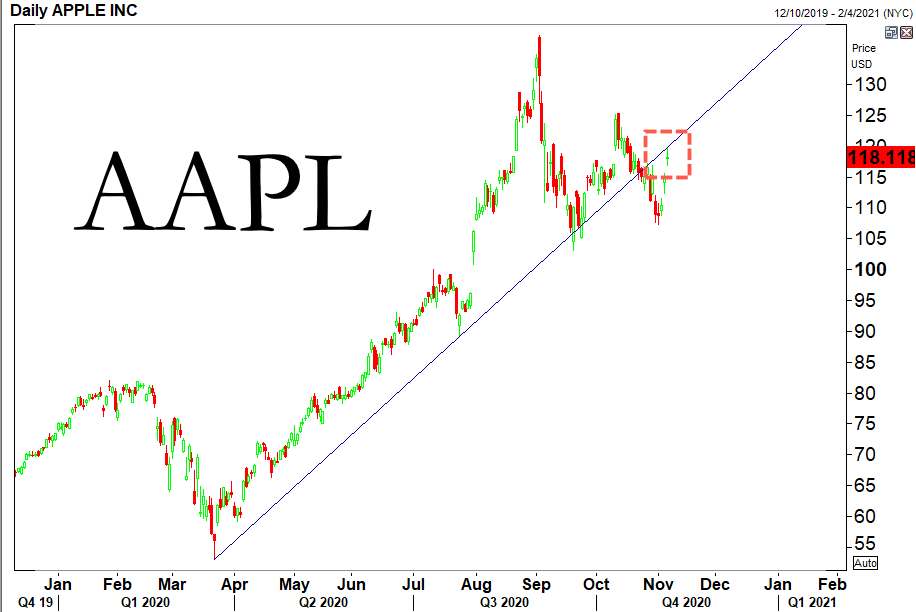
Apple shares have been in distribution for the last couple of months.
Supply chain disruptions, potentially delaying new iPhones hitting stores is more bad news, which could limit the upside in Apple shares.
Maybe it’s time for Tim Cook to supercharge the company’s buyback program…
via ZeroHedge News https://ift.tt/3oX4KXU Tyler Durden