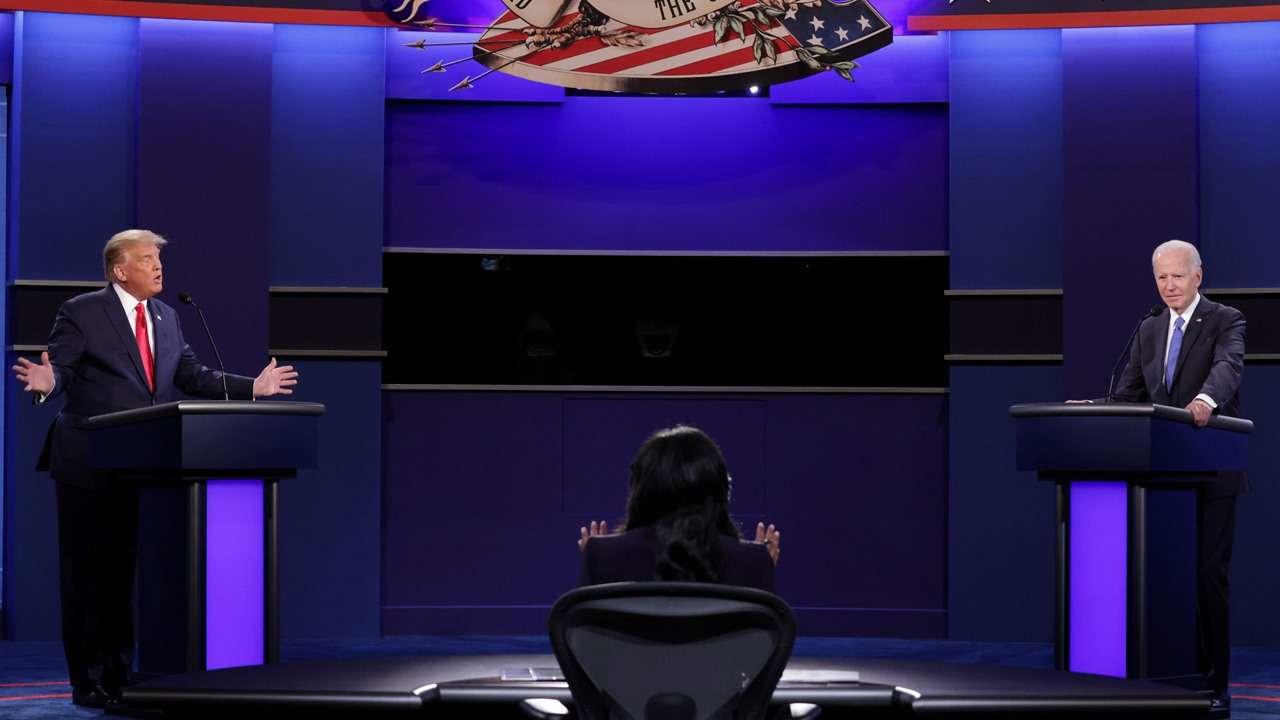
Have we ever witnessed a stranger anomaly in modern presidential politics than the craven contempt the Biden campaign, the media and social media have shown for the American electorate in their disgraceful conspiracy to hide Joe Biden?
What bona fide presidential candidate would arrogantly hide in his basement during the heat of a campaign, especially in the last few weeks of an ever-tightening one?
If the liberal media weren’t providing Biden cover, he couldn’t get away with this. If they were even raising questions about his intentional invisibility, this campaign would look far different, and far less surreal.
As President Donald Trump has hopscotched the country, traveling thousands of miles to appear at vigorous, humongous campaign rallies, Biden and his running mate, Sen. Kamala Harris, are nowhere to be found. We’ve never had a presidential candidate virtually opt out of the campaign.
Please don’t use the virus as an excuse, unless you’re willing to point out that Trump has been fearlessly campaigning for reelection with a rigorous schedule that would exhaust most 30-year olds, while Biden is acting like an old man with no interest in engaging with the public or the media. And he seeks to be leader of the free world? Then again, when Biden has surfaced, he’s failed to draw a Sunday school-sized crowd.
Never has a presidential candidate taken the voters for granted like this. Hillary Clinton declined to visit the swing state of Wisconsin after April 2016, but that is nothing compared with Biden’s ghosting of the entire electorate throughout the campaign.
Even candidates who believed they were comfortably ahead have never hidden from view like this to run out the clock. They all believed enough in the superiority of their agenda that they wanted to make their case to the people.
Moreover, what other presidential candidate has refused to provide his position on key issues, including whether he would pack the Supreme Court? When has any other candidate haughtily waved off questions of debate moderators and reporters with the sophomoric dodge that, “Trump just wants you to focus on this issue (instead of what an SOB he is)”?
Adding insult to injury, when has the media ever let any candidate off the hook like this, which is a scandal of unprecedented proportions? Obviously, the media disrespects the electorate as much as the Biden campaign does.
If anything is indisputably the media’s job, it is to bring out the candidates’ positions on important issues, and packing the Supreme Court and the Biden scandals are exceedingly important — and relevant — issues. What would the media’s reaction be if Trump refused to answer such questions?
The media dutifully promoted the canard that the Russians — yes, the Russians again — were behind the emails found on Hunter Biden’s laptop. But how will these crooked conspirators explain away the bombshell revelation of Hunter’s former business partner, Tony Bobulinski, that the “big guy” referred to in Hunter’s email is Joe Biden himself? How will they handle Bobulinski’s assertion that Joe Biden was offered 10% interest in a Chinese business deal?
But for my money, even these cover-ups don’t hold a candle to the media’s scandalous concealment of Joe Biden’s declining mental acuity. In his current state, Biden clearly is not fit for office, yet the media ignores it while raising bogus questions about the uncannily vibrant Trump’s capacity. Reality has finally trumped George Orwell’s imagination.
Where is the perennial finger-wagger Bob Woodward when you need him?
The American public knows everything there is to know about Trump, as they’ve scrutinized every molecule of his being and business dealings and dug up every conceivably negative morsel about him during the last four years.
To complete the trifecta, we’ve watched the leftist social media giants conspire with the Biden campaign and the media to stack the deck in Biden’s favor. When the New York Post first reported on the Hunter Biden emails that implicated Joe Biden, Facebook and Twitter actively buried the story — preventing users from sharing it with other users, invoking the specious excuses that the story violated a hacked-materials policy and was unsubstantiated. Nice try.
So, here we are, less than two weeks from the most important election of our lifetimes — and millions of voters have been shielded from the agenda of this Democratic duo to radically transform America into a socialist hellhole with 70 genders, major tax increases on most taxpayers, a federally engineered war on law enforcement and law and order, open borders, increased regulations, the horrors of the Green New Deal (including a gutted domestic energy industry), and scores of other policies the majority of Americans would reject if the Democrats’ positions were made known to them.
Don’t fool yourselves. This liberal trio knows the American electorate is still basically conservative and would never knowingly elect someone with such a radical agenda, which is why it will continue trying to deceive voters until Nov. 3.
via ZeroHedge News https://ift.tt/2HtbU55 Tyler Durden
Two Decades After 9/11, Pentagon Is Providing Covert Air Support To The Taliban Tyler Durden
Fri, 10/23/2020 – 22:40
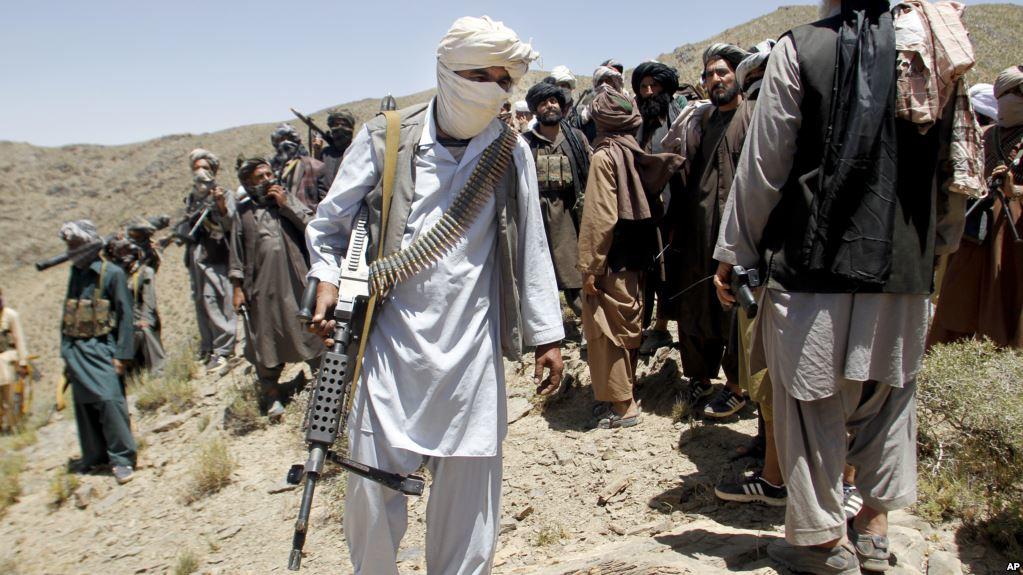
Nearly two decades following 9/11 and the initial invasion of Afghanistan which ostensibly had as its objective the removal and destruction of the hardline Islamist Taliban government, the United States military is providing covert support to the same “outlawed” Taliban with the latest aim of booting ISIS from the country.
A report in The Washington Post on Thursday details that this secret assistance focuses on the Pentagon providing air power to the Taliban as the group wars against against ISIS in Afghanistan’s northeastern Kunar Province.
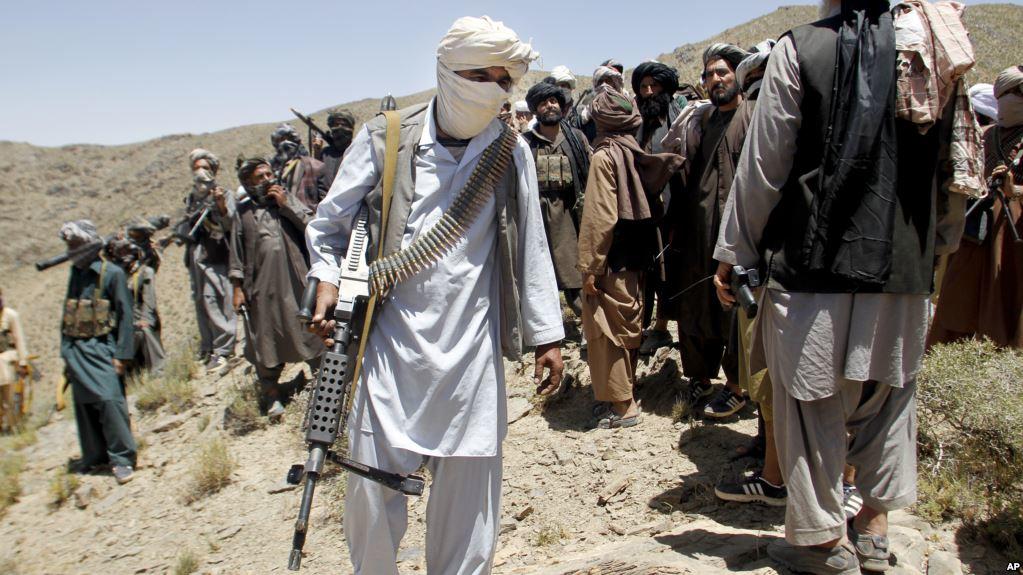
Afghan Taliban file image
That’s right, the very terrorist group that for years has waged a campaign to kill and maim large numbers of American troops in Afghanistan (not to mention many thousands of local civilians) is now being covered by US air power.
The Post’s reporting is sourced to members of the elite Joint Special Operations Command counterterrorism task force based at Bagram air base, who say the strikes are helping the Taliban gain ground against ISIS, seen as the greater and more immediate US nemesis, despite as recently as earlier this year the US being engaged in major bombing operations on the Taliban.
Army Sgt. 1st Class Steve Frye was stuck on base last summer in Afghanistan, bored and fiddling around on a military network, when he came across live video footage of a battle in the Korengal Valley, where he had first seen combat 13 years earlier. It was infamous terrain, where at least 40 U.S. troops had died over the years, including some of Frye’s friends. Watching the Reaper drone footage closely, he saw that no American forces were involved in the fighting, and none from the Afghan government. Instead, the Taliban and the Islamic State were duking it out…
US operations over Afghanistan, file image via US Air Force
Through JSCOC sources the Post was able to learn this is part of an active policy to provide air support via drone strikes in places where Taliban commanders are battling ISIS for territory:
What Frye didn’t know was that U.S. Special Operations forces were preparing to intervene in the fighting in Konar province in eastern Afghanistan — not by attacking both sides, but by using strikes from drones and other aircraft to help the Taliban. “What we’re doing with the strikes against ISIS is helping the Taliban move,” a member of the elite Joint Special Operations Command counterterrorism task force based at Bagram air base explained to me earlier this year, speaking on the condition of anonymity because the assistance was secret. The air power would give them an advantage by keeping the enemy pinned down.
The report notes that while there’s no direct communication between the JSOC team overseeing the mission, which is shockingly enough dubbed in the report “Taliban Air Force” based on JSOC’s own internal joking nickname, they listen in on Taliban communications in order to track the anti-ISIS frontline fighting.
Good snapshot of how insane US foreign policy is.
US military—who spent 2 decades fighting the Taliban—are now acting as their Air Force. https://t.co/s21LLGcT8J
“Our secret Taliban air force. Inside the clandestine U.S. campaign to help our longtime enemy defeat ISIS,” the WaPo story emphasizes in its lead-in.
The report underscores: “Taliban units on the ground appeared willing to take the help, waiting to assault Islamic State positions until they heard and saw the explosions of bombs and Hellfires.”
Recall too that last March US Central Command chief Marine Gen. Frank McKenzie testified before the House Armed Services Committee that the Taliban had been receiving “limited” Pentagon support against ISIS given the group had proven “very effective” at missions to “compress and crush[ing]” the ISIS stronghold in the country’s Nangarhar province.
The US has been engaged in long-running peace talks with the Taliban based in Doha with the ultimate aim of leaving Afghanistan stable enough for a full American exit from the longest war in US history. However, few realized just how ‘cooperative’ this relationship is becoming on the ground.
via ZeroHedge News https://ift.tt/3mbgB2i Tyler Durden
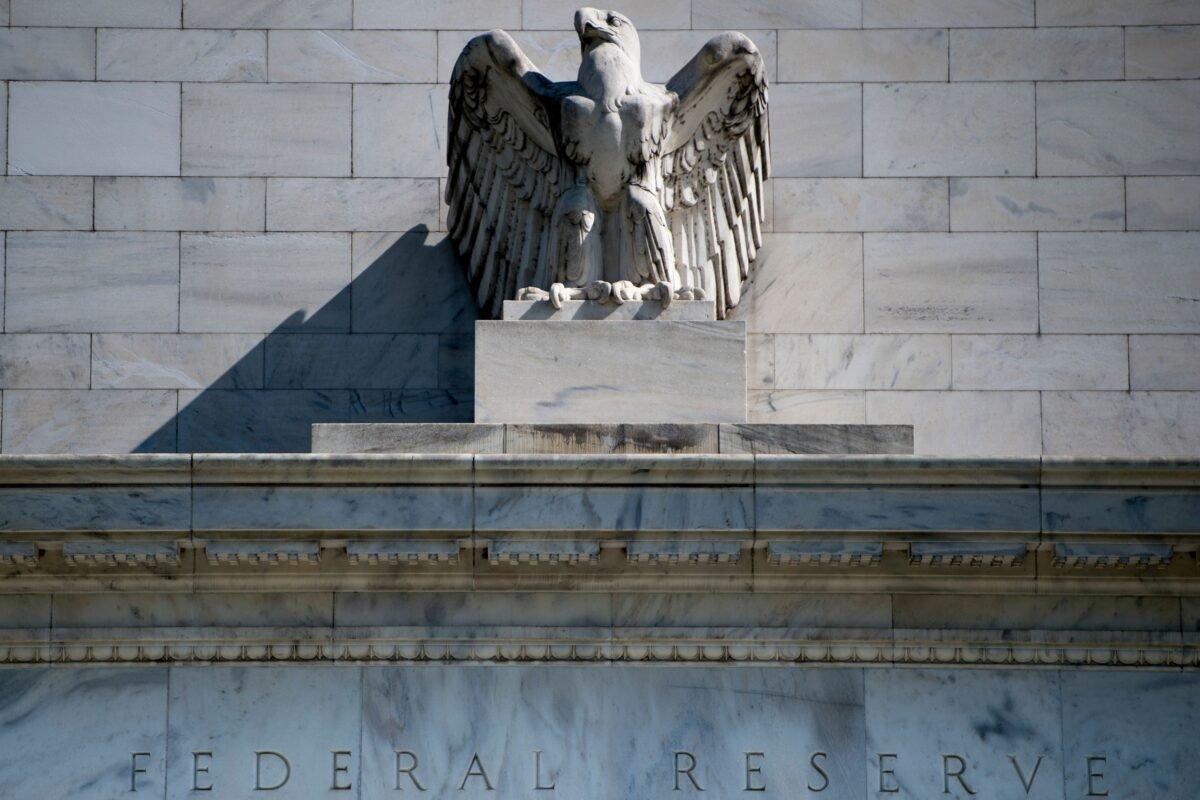
The Federal Reserve, which these days seems to be the only major part of the federal government capable of operating drama-free, has done a lot to help keep our economy afloat. It has cut interest rates to unprecedented low levels, bought billions of dollars of corporate IOUs, helped stabilize the debt markets and helped rescue a stock market that had begun falling sharply in mid-February when the COVID-19 recession started and that seemed headed for a crash.
In the process, the Fed has indirectly provided support to house prices and to the vital home construction business by forcing down mortgage interest rates to all-time lows of about 3%. Given that home equity is a major asset for many middle-class Americans, supporting home prices is especially important. As is supporting the home construction industry, which is a major source of blue-collar jobs.
But if you dig deeper, you’ll see that the Fed is unintentionally worsening economic inequality by providing the most help to Americans who are least in need of it. And it’s also putting stress on the middle class’ most important asset: retirement benefits.
Higher stock prices are great for people (including me) who own a lot of stocks, but those people are primarily the top 10% of the country, in terms of wealth. According to Fed statistics, more than half of stocks — 52% — are owned by the wealthiest 1% of Americans, and 88% are owned by the top 10%.
To show you a different aspect of helping the upper class but not the working class, the Fed’s securities purchases include buying debt issued by firms that are laying off workers while paying substantial dividends to shareholders. And for some imprudent or troubled corporate borrowers, the Fed’s moves have been hugely helpful.
But those moves are hurting prudent savers of modest means by greatly reducing the income they can earn on Treasury securities and other no-risk investments such as bank certificates of deposit. That tends to drive people seeking income into the stock market, where their capital is at risk. By contrast, if you buy a Treasury security, you’re sure of getting your money back when the security comes due, even though the security’s market value will fluctuate both up and down while you hold it.
Interest rates are so low that they’ve largely erased the key benefit — income — Treasury bonds are theoretically supposed to provide over stocks. If you own a low-cost Standard & Poor’s 500 index fund, you’re getting much more income from dividends than the interest you’d earn having the same amount invested in a 10-year Treasury note. For example, the dividend yield (a year’s worth of dividends divided by the current market price) on Admiral shares of Vanguard’s S&P 500 fund is more than double the interest yield of a 10-year Treasury. It’s even higher than the yield on a 30-year Treasury bond, something that you rarely see.
The yield on the Vanguard fund was 1.65% as of Sept. 30, the most recent available date. As I write this, the yield on a 10-year Treasury, the security it generally makes the most sense for a retail investor to buy and hold to maturity, was 0.76%. The yield on the 30-year Treasury was 1.56%.
Despite its good intentions, the Fed is setting the stage for huge problems down the road for pension funds and, therefore, for potential pension recipients. There are also going to be problems for insurance companies and for other firms onto which many corporate employers have offloaded their pension obligations in order to clean up their balance sheets and minimize their future financial risks.
The firms that have assumed the responsibility for paying these pensions typically own bond-heavy portfolios. And while bond prices have risen because interest rates have fallen — I’ll explain how that works some other day — rates seem much more likely to rise from their current low levels in the future than to fall even lower. And when rates rise, it will decrease the market value of the bonds held by the firms that have assumed responsibility for paying pensions.
What it all adds up to: The Fed is trying to salvage the present by pumping trillions of dollars into the U.S. and world financial systems but in the process is putting our economic future at risk.
“We’re bailing out the present and making the future pay for it,” said Gene Steuerle, a co-founder of the Tax Policy Center.
Please note that I’m not blaming the Fed for what it’s doing. It’s trying to fulfill its mandate to keep employment high, inflation relatively low, the dollar reasonably stable and interest rates at what it considers an appropriate level. The Fed’s job, which is already difficult in strange and uncertain economic times like these, is being made much harder by the lack of new economic stimulus packages from Congress and the White House. These packages, as we saw when they were in effect earlier this year, not only help individuals but also stimulate the economy when recipients spend the money they’ve gotten.
The Fed, by contrast, can help the financial markets and the economy but can’t directly help individual people.
Now, let me show you how the Fed’s near-zero rates, the culmination of a dozen years of ultralow rates and which Fed Chair Jerome Powell says will continue indefinitely, are undermining the long-range future of the U.S. retirement system. This matters — a lot — because Fed statistics show that retirement benefits (not including Social Security) are hugely important to the middle class.
Prof. Edward Wolff of New York University, who specializes in studying income and wealth inequality, told me that Fed statistics show that pension wealth accounts for 70.3% of the net worth of the middle class, which he defines as people ranking in the 20th through 80th percentiles in terms of wealth. By contrast, he said, retirement benefits are only 2.2% of the upper class’ wealth.
This makes the middle class particularly vulnerable to rising rates in the future. Let’s take this piece by piece.
For starters, near-zero rates are making the financial problems of the already-stressed Social Security system worse than they would otherwise be by sharply reducing the interest that Social Security can earn on its $2.9 trillion trust fund. That trust fund consists entirely of Treasury securities and is legally barred from owning stocks. That means that the fund’s interest yield is falling and it’s not benefiting from the 50% rise in stock prices since the market bottomed on March 23.
The near-zero rates also affect private pensions. David Zion of Zion Research estimates that the pension funds of the Standard & Poor’s 500 companies, which he says were underfunded by a total of $279 billion at the end of 2019, were underfunded by $407 billion as of June 30. “The main driver of the increase is lower interest rates,” he said. (I’ll explain the math behind lower rates raising pensions’ underfunding in a bit.)
Large as it is, the S&P companies’ total shortfall is only a fraction of the underfunding afflicting state and local government pension funds. Keith Brainard, director of research for the National Association of State Retirement Administrators, estimates that the 5,332 retirement funds sponsored by state and local governments were $1.96 trillion underwater as of June 30, the most recent available number, up from $1.90 trillion as of year-end 2019. This has happened, he said, even though the funds’ assets totaled about $4.65 trillion, an all-time high.
What’s more, if you use dispassionate math rather than the generous accounting principles that public pension funds are allowed to use, you see that lower long-term interest rates are doing much more damage to these funds’ financial status than the numbers from Brainard’s organization suggest. For instance, Steve Church of Piscataqua Research estimates that the shortfalls of the 127 public pension funds that he follows, which have a total of about $4 trillion of assets, are about $7.44 trillion. That’s more than quadruple the funds’ reported $1.53 trillion shortfall.
This huge difference stems mostly from different assumptions about interest rates and different ways of calculating how much money a fund needs to have on hand today to meet a future obligation. A public pension fund comes up with how much it needs to have on hand today based on the income it expects to earn on its portfolio. Corporate pension funds engage in the same process, but they are required to make far less optimistic assumptions. They have to set aside enough money to meet that obligation if the money were invested at the interest rate on high quality, long-term risk-free bonds.
Let me give you one example of the difference. If a pension fund expects to pay someone $10,000 in 10 years and anticipates it will earn 7% a year, compounded, today’s cost of that benefit — what numbers crunchers call its “present value” — shows up on its books as a liability of $5,083. If, however, the fund predicts it will receive 3% per year, which is about the rate that corporate pension funds use these days, the fund would need to set aside $7,441.
All of this is leading private and public pension funds to take on more risk. “When yields are low, you go looking for income somewhere else,” Zion told me.
That means putting money into stocks and various aggressive (and high-cost) Wall Street schemes such as private equity and venture capital funds.
In addition, some public pension funds are borrowing money to try to earn what financial types call “spread income” by investing the borrowed money in assets whose returns exceed the funds’ borrowing costs. “When the risk-free rate is zero and you need seven, that’s what prompts plans to move outside their traditional comfort zones,” Steve Foresti, chief investment officer of Wilshire Consulting, said.
Foresti, who advises numerous public pension funds, says that the use of borrowed money, alternative investments and such began getting more popular about a decade ago. That’s about when the Fed knocked rates to near zero and has pretty much kept them there.
One prominent example of a fund trying to borrow its way out of trouble is the California Public Employees’ Retirement System (CalPERS), the nation’s largest government pension fund. It’s considering borrowing up to $55 billion more than it has already borrowed, hoping that its return on the assets it will buy with that borrowed money exceeds what it will pay in interest.
The fund, which says it currently has about $25 billion of borrowed money for which it’s paying an average interest rate of 0.18%, now has authority to borrow up to 20% of its assets. That’s roughly $80 billion. CalPERS says borrowing has helped it because it’s been earning more on the assets it bought with the borrowed money than the interest it’s paying.
“It’s a moderate use of leverage. We will do it opportunistically and gradually,” Marcie Frost, CalPERS’ chief executive, told me. “We can tie up our capital for a long time. …We are able to be opportunistic.” However, as Frost readily acknowledges, “Leverage can exacerbate your losses.”
Or let’s look at another big fund, the Teacher Retirement System of Texas, which last year lowered the assumed rate of return on its investment portfolio to 7.25% from the previous 8%. Among other things, that lower assumption is indirectly responsible for teachers, school districts and the state of Texas having to increase their future contributions to the pension fund to avoid the fund having to slash future benefits.
Jase Auby, TRS’ chief investment officer, says the fund has been borrowing 4% of its assets for about a year. The idea, he said, is “to diversify away from equity risk” — the danger that stock prices will fall — caused by low interest rates. “Equity risk is greater because interest rates are low,” he said.
The fund says its borrowing cost is currently about 0.25% a year. TRS says there were no specific assets financed by its borrowings, but it’s ahead so far because its total fund return has exceeded its borrowing costs. If, however, the value of the assets bought with the borrowed money goes down, the fund obviously will be worse off than if it hadn’t borrowed the money.
By forcing bond yields down sharply and helping drive up stock prices, the Fed’s low-interest rate regime has made 401(k) and 403(b) and other individual retirement accounts more valuable — for now — by boosting the market values of both stocks and bonds.
However, these low rates are now exposing those individual accounts to considerably more risk than if stock prices were lower and bond yields higher.
Why do I say this? Because high stock prices can fall — we’ve had two 50% market drops in the past 20 years — and low-yielding Treasury securities will lose value if interest rates move higher.
How can U.S. Treasury securities lose value, given that the federal government can create as many dollars as it needs in order to redeem its obligations? Let’s say that you spend $10,000 to buy a 10-year Treasury note yielding 0.76%, the current rate. You’d collect $76 in interest a year, $760 over the issue’s lifetime, before getting your $10,000 back in 2030.
But let’s say that a year from now, despite Fed Chair Powell’s predictions, the rate on such a security has risen to 1.76%, around where it was for parts of last year. The market value of your now-nine-year security would be only about $9,174, according to my handy-dandy online bond calculator. That $826 decline in value is more than the total interest you stand to collect over the Treasury note’s lifetime. You can take your loss directly by selling your security, or you can take it indirectly by collecting $76 of annual interest for 9 years rather than the $176 that holders of market-rate securities would be getting.
I’d love to be able to quote Fed people to give you the Fed’s side of all of this. Alas, none of the people I’ve talked with or approached, some of whom I’ve known for years, are willing to be quoted by name.
Privately, various Fedniks past and present readily agree that there are serious downsides to what the Fed has been doing since then-chair Ben Bernanke (who declined, through a spokeswoman, to talk with me) first cut rates to near zero in 2008 and successfully ended the stock market meltdown and financial panic.
These Fedniks are also familiar with the risks that ultralow rates pose to the retirement system and the impact these rates have on economic inequality by sharply raising the values of financial assets, which are owned disproportionately by high-net-worth people, while doing relatively little for the less well off.
But they won’t talk about it publicly.
Still, the issue needs to be recognized. If we don’t do something to offset the damage to our retirement system, today’s problems could end up looking like a rounding error compared to what the future holds.
via ZeroHedge News https://ift.tt/2TjlXvV Tyler Durden
Watch US Navy Stealth Destroyer Conduct First Missile Test Tyler Durden
Fri, 10/23/2020 – 22:00
After years of delays, the US Navy received its next-generation guided-missile stealth destroyer back in April – the only problem was that the delivery was seven years late!
Now the Navy is rushing to get the USS Zumwalt (DDG-1000) combat-ready, with the first missile test conducted last Tuesday (Oct. 13) at the Point Mugu sea test range off the coast of California, reported USNI News.
Readers may recall, the Zumwalt program has faced numerous setbacks, including significant delays with the ship’s main guns, engine troubles, and significant cost overruns.
USNI said the destroyer conducted the MK 57 Vertical Launching System’s first live test, firing a Standard Missile-2. The missile is the cornerstone of the destroyer’s layered defense, with an approximate range of 90 nautical miles.
Inside The USS Zumwalt
USS Zumwalt’s Armament
Capt. Matt Schroeder, the program manager for the Zumwalt, said in a statement that “the successful test not only demonstrates the ship’s capability to fire missiles and conduct self-defense, it is also a significant step toward more advanced combat system testing and operations for our Navy’s most technically innovative warship.”
“The USS Zumwalt crew and Surface Development Squadron One are working hand-in-hand with the acquisition community to advance this ship’s operational capability,” Schroeder added.
There was some recent talk the Zumwalt could be outfitted with hypersonic missiles. The vessel is expected to join the US Pacific fleet, where it could soon be sent to challenge the Chinese in the South China Sea.
via ZeroHedge News https://ift.tt/2TjHPHw Tyler Durden
What is science? Has it changed from past to present? Is it still working? The coronavirus pandemic has put a spotlight on the question of science as a whole and biology and drug research in particular.
Now, the popular narrative is that if only we listened to the scientists, we would have prevented this, presumably contrasting scientists against “politicians” and perhaps some un-specified “non-expert” others. The pandemic is happening against a completely unprecedented backdrop of censorship of what seems to me like normal-people discussion about the effects of different drugs and therapies.
The CEO of YouTube has specifically said that the platform would block people suggesting vitamin C has beneficial effects on helping one recover from coronavirus. This is, of course, done “in the name of” science, because everything ought to be done in the name of science in the West.
My current view is that large numbers of fields which are considered “scientific” in the West are a complete mess and lack the essential feature of what it means to be a science in the first place.
So, let’s go back to first principles here. What is a science? If we look at the field of science as a mechanistic process that takes some inputs and produces outputs, what are those inputs and outputs? Let’s take one the of the most classic examples of this: Newton’s theory of gravity.
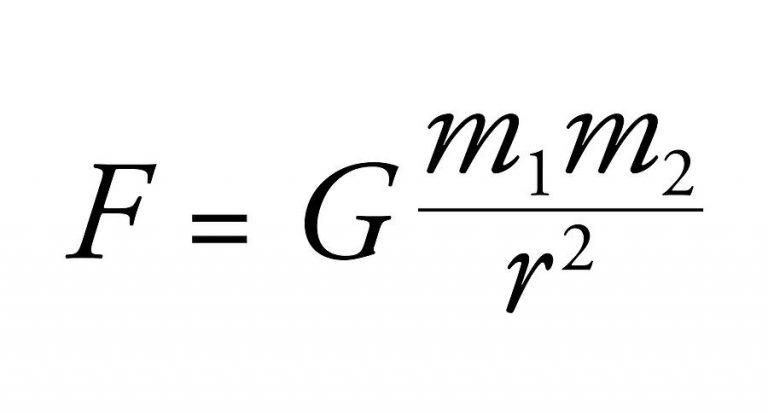
The theory of gravity, as we learn in middle school, is on its surface a simple formula:
Where the force of gravity is F, m1 and m2 are masses of two objects, r is the distance between them (more specifically their centers of gravity), and G is a gravitational constant. Now this formula needs a few key variables to be known: you need to know the mass of the objects, the center of mass, and the distance between them. Underlying these measurements you may want to know many more things, such as what mass is exactly, what is distance, can gravity be blocked, etc.
Some interesting questions arise: why is the gravitational constant that particular number? Could it be smaller or higher in, say, another universe? But even if all those things are somewhat undetermined, you still have a functional mathematical instrument. Taken together, the notions of mass, distance and a formula, even if somewhat imprecise, comprise a model of reality. This model may not be perfectly accurate, but it does well enough for middle school physics problems.
Why do we care, or why do we need models of reality at all? There is a stock answer that “science helps engineering” and that improves our standard of living. This is true—but how, specifically, does science help engineering? By allowing us to compress parts of the world into a model, it allows reasoning over a model that hopefully translates into reasoning over the world.
Notably, this process is not automatic. It relies on certain assumptions, such as:
There is, in fact, a model being produced, which is able to create falsifiable predictions about the future.
The model doesn’t wildly vary over time (it embodies actual compression of universal laws).
Reasoning over a model is simpler than reasoning over the real world and accessible to many people or algorithms.
There are clear agreements about what the inputs to the model are and how to measure them.
The model is over something that we are deliberately engineering, whether social or biological.
Though some inaccuracies in models are somewhat inevitable and form the basis for new models, wildly contradictory data indicates a problem in either the model or the data.
Clearly the theory of gravity, whether that of Newton or of Einstein, passes the test. Indeed, many things we learn pass the test: most physics, chemical equations, models of the cell, some economic theories. Not every model is strictly mathematical, although the boundary between chemical equations and math may be somewhat artificial. Regardless of that particular distinction, the models are there to help make reasoning easier for people.
It’s worth emphasizing these basic requirements for scientific advancement to be useful in order to highlight a stark contrast between the ideal notion of science and what we have today. The models that scientists produce are meant to simplify and de-mystify reality for other people, including and especially non-scientists. “De-mystify” here does not mean “remove the sense of awe,” as is often the case, but rather remove the mystery of how things work. A good model is one that is both accurate and simple enough that it can be applied by nearly anyone.
Now, given how specialized all the disciplines are, not every person employed in science is able to produce models. There is a lot of work gathering raw data, coming up with theories, writing up grants, teaching existing material, etc., etc. The specialization means a lot of people work in science, but not that many look at the big picture: what is the output we are producing, especially in the realm of health and human sciences?
Stating the Obvious
What we are producing instead of models are statements. Statements such as: a particular drug (e.g., Vitamin C/Vitamin D/HCQ) helps or does not help against the flu/coronavirus/scurvy. Now these statements are not useless, despite not being full models of reality. If they are true and we have good consensus on them, even without necessarily understanding the mechanism or models of actions behind them, they can still form useful guidelines for action on a deadly disease.
However, the question is: do they? What exactly does the science say and, just as importantly, when does it say it? This is a tricky question, often replaced in popular media by “what do the journalists say the science says?”—which is yet another link further removed from the truth.
Let me give a hypothetical example. Let’s say that I create an experiment with a control group and treatment group, each containing one person. I give the treatment group (one person) a drug and watch how both groups develop. Let’s say they both get better around the same time. What can we conclude?
If you are a follower of the scientific method, you might say that the sample size is too small to conclude anything. If you know statistical terminology, you might say that the experiment lacks “statistical power” for a negative proof of drug efficacy, which is a more precise way of saying the sample size is too small. Regardless, you might say that more data is needed.
However, according to modern journalistic “standards” in America, this study is definitive proof that the drug does not work, especially if to say so accomplishes some political goal. Of course, nobody does experiments of 2 people, but sometimes journalists do report on experiments of 30 people, which still lack power.
Even in the space of COVID and HCQ, there are plenty of other issues. One famous study of veterans features a whole gamut of issues, such as strange subgroup selection, observational studies passed off as control-based ones in media, bizarre hazard ratios that supposedly indicate that AZ + HCQ is much better than HCQ, but without further discussion of conclusions. Another Lancet study features a lot of those same problems, along with potentially being completely made up.
Our media and state epistemics—drug either=good (perfect cure) or bad (extremely harmful)—are completely incapable of handling issues as complex as “dosage” or “network effects” or person-dependent treatment.
This brings us to a philosophical question of what “evidence” is, what “evidence” should be, and how the term is used in practice. If you are a detective in a case, literally everything is likely evidence: how the person died, what the weapon was, where the people who knew him were on the night of the murder, what drugs they were normally taking. Now some of this, though it can be construed as evidence during the investigation, ends up not mattering at the end. However, until the judgement is done, it’s best not to dismiss particular things as not “evidence.”
In the view of a real scientist, everything is evidence—it is just very unclear how to interpret it. Science is about trying to explain reality. So, if we have two conflicting studies on a drug efficacy, there are many possible explanations here.
One we implicitly adopt, as a polarized society, is that one of the studies was done badly. While the general quality of studies done under the pressure of a pandemic can be assumed to be low, we also need to consider obvious other hypotheses, such as the drug working better for different people. For example, it’s a very plausible situation that the drug works better if we give it to people earlier in the disease. However, combining our desire to “help the worst off” with studies that follow the worst-infected people due to an easier time getting the drugs for them, makes us study efficacy on the people who are already really sick and might not be helped.
Now sometimes, these might be less strong “evidence” than a well-done RCT (even that is not guaranteed due to plausible network effects). But the issue here is that instead of considering “stronger” and “weaker” evidence, we consider one to be absolute truth and the other heresy. Instead of calling these things “evidence,” we have laid a claim on the term “evidence” as what journalists say are “studies,” which may or may not be RCTs, which may or may not be done or interpreted correctly.
“Evidence,” however important it is, is not the full story of science, which once again needs to produce models. How does the drug operate? Where does it operate? If one is doing an observational study, it’s worth asking what exact factors influence doctors to prescribe one vs. not, instead of simply throwing controls at the data until the desired outcome occurs.
Statements such as “the drug has a 20% chance of helping the disease” are seen as an “endpoint,” rather than a description of something we don’t know: what distinguishes those 20% from the 80%. The probability is not an “inherent” thing, but rather a pointer to missing puzzles in the causal graph. What we actually need is to work toward these causal graphs.
“Silence, Layman!”
Tech censorship of large amounts of info relating to the virus, including early videos from Wuhan, has been downright criminal. Big Tech has fully bought into the frame of “experts” vs “laypeople” as if experts are always “correct” and laypeople are “wrong,” (unless they are repeating a statement by the experts).
If the laypeople are “wrong,” then there has been a massive failure of education to produce correct models for people to use for home reasoning. Obviously, the default answer for many people is to simply pour more money into education. But we lack understanding of what science and science education even are. Science is meant to produce world models, and education is supposed to impart them to everyone else. Neither is doing this, really, and what we have in place of those instructions is one large uncanny valley of ever-changing statement production (how dangerous are public gatherings, really?).
Now, more abstract statements such as “Vitamin D/C helps with respiratory diseases” are what we would ideally have produced before the pandemic. Those can be operated on by laypeople and form a reasonable set of priors to be further refined when something new shows up. The original purpose of science is to produce functional information that can be operated on by both policy makers and laypeople. Said information can be shared by people who are themselves not scientists.
However, in our backwards society the idea of people coming to conclusions using previously available evidence is becoming taboo. This makes just about as much sense as tech companies censoring the correct calculation of gravity between two planets because the calculation wasn’t done by a scientist.
That’s not to say that all science needs to be public. There are good reasons for secrecy, such as scientific research into advanced weapons. However, all science that is public is there to empower people, not put them down. Not all science models need to be understandable by every person—sometimes models are too hard to understand and are thus more suited for use in a public open-source algorithm.
Again, that’s not to say that all censorship is unjustified. There can be harmful misinformation, but one key role of any future academy must be to define a formal Overton Window for the set of hypotheses that are “within” the realm of scientific discourse. If it’s a plausible hypothesis for an experiment, it’s likely plausible to be discussed in public.
What we have instead is a “debate” over HCQ, where academics are publishing papers conflicting with each other and doctors are giving people the drugs and reporting the results, before promptly being blocked by Big Tech on the grounds of being “unscientific.”
The debate over HCQ has both sides thinking the other is killing people. One side happens to be right. History will not judge those who were wrong on this very kindly. The American ideal of a citizen informed enough to make decisions in the voting booth is in direct contrast with a citizen who needs to be disciplined for making obvious logical conclusions about vitamins and virus relationships.
There is even an ironic, 1984-esque doublethink in the usage of statistics. You see, when society needs to make intelligent mathematical analysis happen, it will happen. Some teams at Microsoft, my previous employer, are masters of statistical analysis of both the Bayesian and the frequentist variety. If our society needs the truth about important things, such as how to make people click on ads, good honest statistics will be allowed to happen sometimes. But if we want to figure out whether a drug has a positive cost benefit for one’s health—forget about it.
Other sciences suffer from major problems as well. You can tell a particular field has issues by asking, “has society gotten better or worse on the factors studied by the science? And have we done so by looking at official advice or ignoring it?” The obvious example is nutrition. Obesity, as well as a host of other nutrition-related problems, has increased in America. If the entire nation is failing, then how good can the scientific establishment of nutrition be?
Of course, one could go paper by paper and see where individual publications make errors of judgment, but they are likely to fall into predictable categories: absence of actual models, lack of causal graphs, inappropriate controlling for variables. The problem here is that the science is failing as a whole, or we would not be having the health problems we are having. Understanding nutrition as a flawed science is perhaps one of the hallmarks of someone who is an intellectual versus someone who’s just pretending.
None of this is truly groundbreaking or new. I have heard stories of professors at Yale in one department being mad about professors in another department teaching p-hacking to students. Inter- and intra-discipline fights are common, which isn’t necessarily a bad thing as long as the overall combined output of the field is correlated with reality. However, the journalistic tendency to signal boost any paper that can have political impact amplifies some fights over others, further screwing up an already shaky system.
A New Birth of Reason
So right now science is losing its status among the general population. It is also losing status among those who can actually read statistics. This is both horrifying and encouraging. Without a structured way to sift actual reality into social reality, the social reality will diverge from reality, with further and further breakdown of health and sanity for society.
This is true both for academics and non-academics. The anti-science polarization does not necessarily arrive at the truth, as it is subject to its own signaling spirals. But it at least provides some counterpoint to the bizarre hegemony of ideas such as “if the disease doesn’t have a cure, then all attempts to establish helpful drugs must be banned”—the implicit philosophy of the tech sensors.
There are deeper problems than just the type signature of what is being produced or false assumptions about what is “evidence,” “information,” or “misinformation.” Each discipline of science generally has an incentive to ensure that their discipline grows and doesn’t get incorporated into other disciplines. If, for example, it is found that large aspects of mental illness are based on particular known social or nutritional problems, then the mental illness industry could become dissolved into a social science or some biological science. This is disadvantageous to the industry, and thus the industry is disincentivized to uncover causality of the concepts underlying itself.
True foundational research in a scientific discipline does not look to expand said discipline, but rather collapse it, just like a good engineer automates himself out of a particular task. However, our general epistemic foundation keeps coming up with a large number of conceptual ideas as “things-in-and-of-themselves” with independent identity disconnected from causality.
These “things-in-and-of-themselves” then find their way into identity, Twitter bios, and politics, closing the feedback loop of establishing social reality, complete with the social prohibition: “do not ask what causes this, that’s unscientific!” This is a key problem of social order that eventually leads to the destruction of social order and civilization as a whole, all under the name of “science.” It has been noted by many philosophers, yet no society has ever come up with a lasting solution.
For example, even something like “climate” is now a “thing-in-and-of-itself”, which means it can only be either “good” or “bad” along with an established set of possible actions that are allowed to affect it. Of course, one could ask a more precise question, such as “if we cut down more trees on the west coast, would we have less intense forest fires there?” without trying to invoke the “climate” as a whole. However, this is taboo, since “climate” is sacred and asking questions about parts of the sacred is taboo.
Is there still hope that we can convince the current “scientific establishment” to get back to the roots? I don’t have much. Reform will more likely be driven by a cadre of people who don’t think of themselves as “scientists,” unless in jest, but who have rapid enough feedback cycles from reality to begin to notice previously hidden patterns in it.
The future of science, as the Russian proverb goes, is its well-forgotten past: something that is produced by experts, but either understood by the common man or precise enough to be understood by a computer, as long as all the steps are verified. The future of science is models, not statements, and causal diagrams rather than frequentist nonsense of chasing p-values and correlations. Whether or not this will come under the banner of “science” remains to be seen.
via ZeroHedge News https://ift.tt/31A0bZm Tyler Durden
Americans Are Panic-Buying Military & Survivalist Gear Two Weeks Before Election Tyler Durden
Fri, 10/23/2020 – 21:20
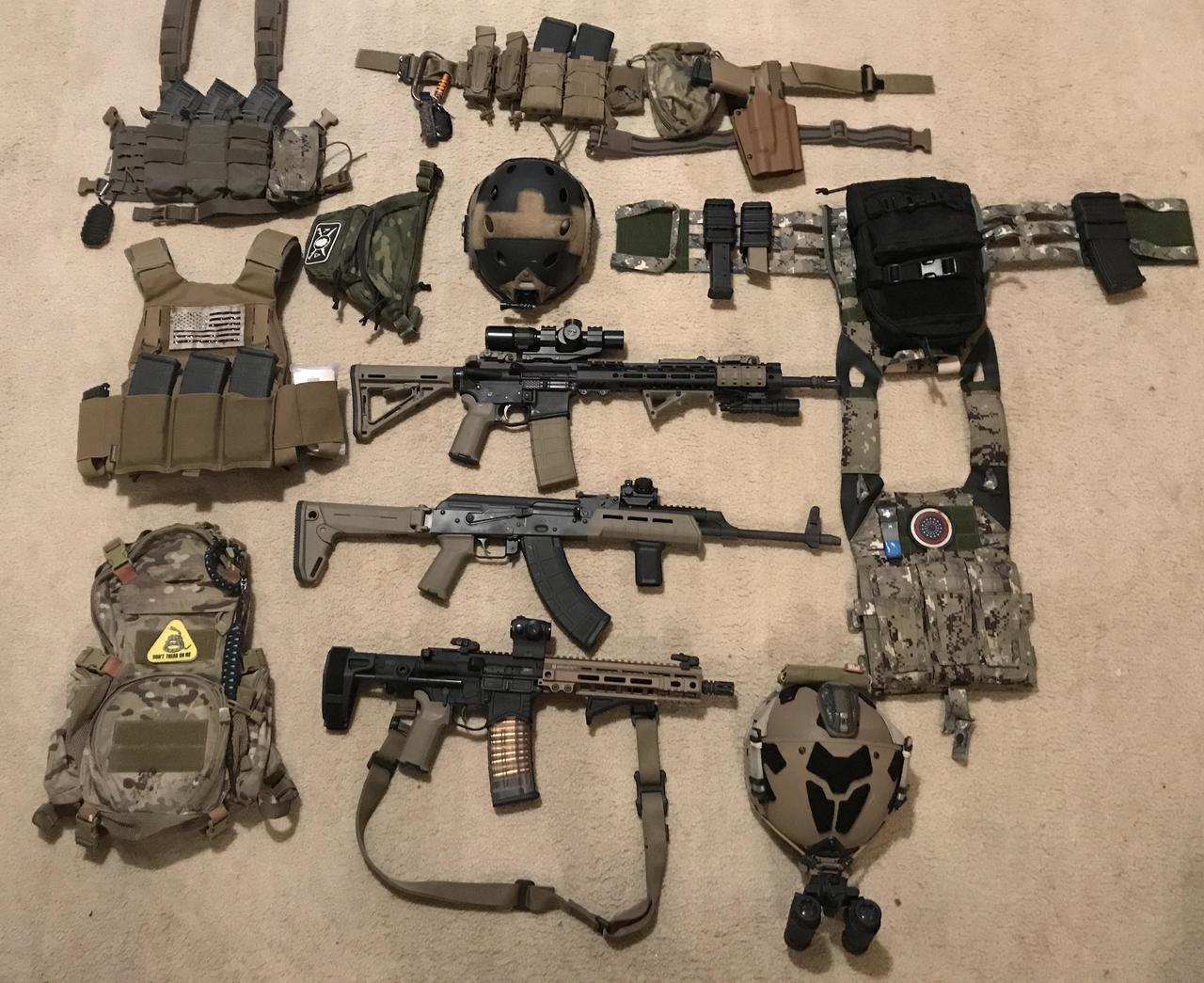
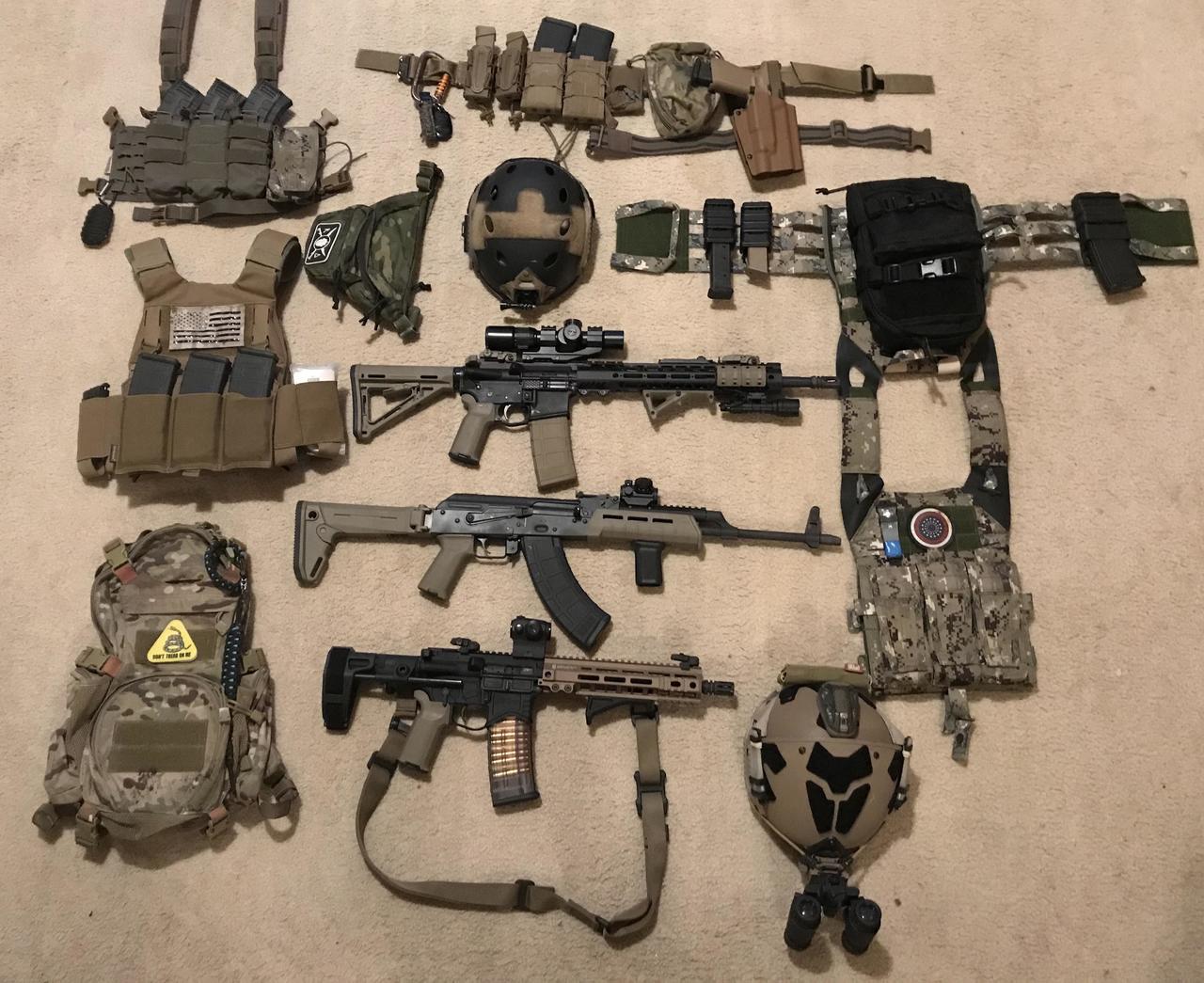
It’s an alarming trend we’ve observed before throughout the anxiety-ridden summer of rolling COVID-lockdowns and pandemic ‘uncertainty’ as well as the chaos of race protests and riots: Americans are stockpiling weapons and combat gear like there’s no tomorrow, or rather looking toward the near-term extreme unknowns coming post-election.
Surveying gun and tactical gear stores in cites especially across the south, for example Austin, a new report in Bloomberg finds that “Less than two weeks before Election Day, orders are rolling in. Since last year, online purchases have driven a 20-fold jump in sales of goods like the $220 CM-6M gas mask — resistant to bean-bag rounds — for Mira Safety of Austin, Texas.”
Via Reddit
“It doesn’t matter who gets elected,” the tactical gearoutlet’sfounder Roman Zrazhevskiy told Bloomberg as he sees products fly off the shelves. “They think that no matter who wins, Biden or Trump, there are going to be people who are upset about the result.”
However, the Bloomberg report especially zeros in on “right wing extremism” and a new form of patriotism which sees the “survivalist look” as part of a lifestyle centering on preparation for coming political unrest. Hot sellers include high end body-armor plates costing hundreds of dollars, military grade gas masks, tactical clothing, and gun accessories like laser sights and scopes.
Noting that all across the US gun and ammo sales are surging, with record prices as well as shortages – for example some bullets for assault rifles selling for a whopping $.50 per single round – the report underscores that business is booming for these stores like never before:
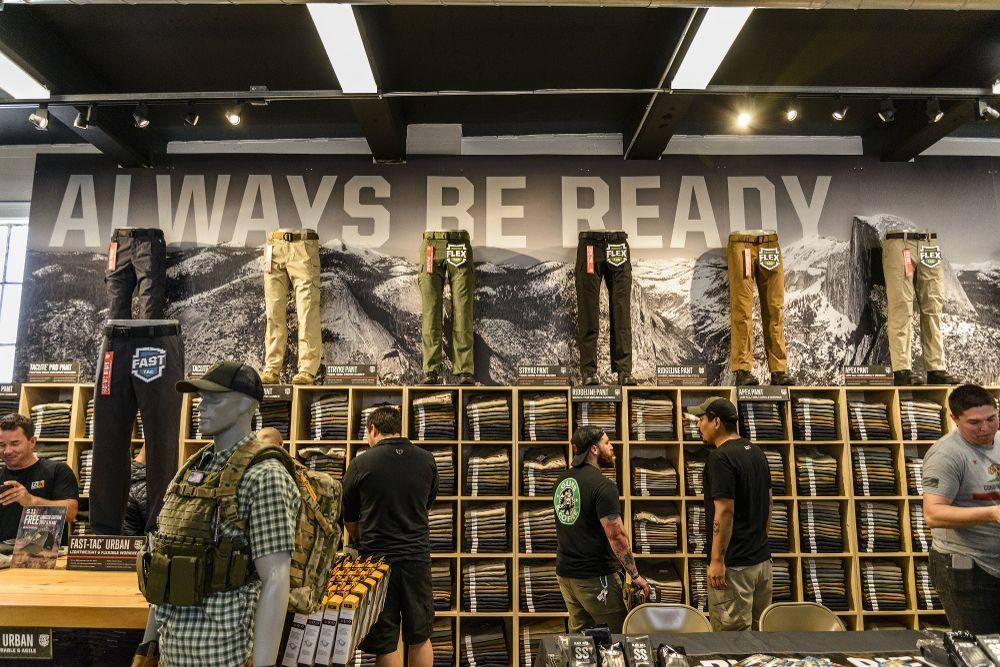
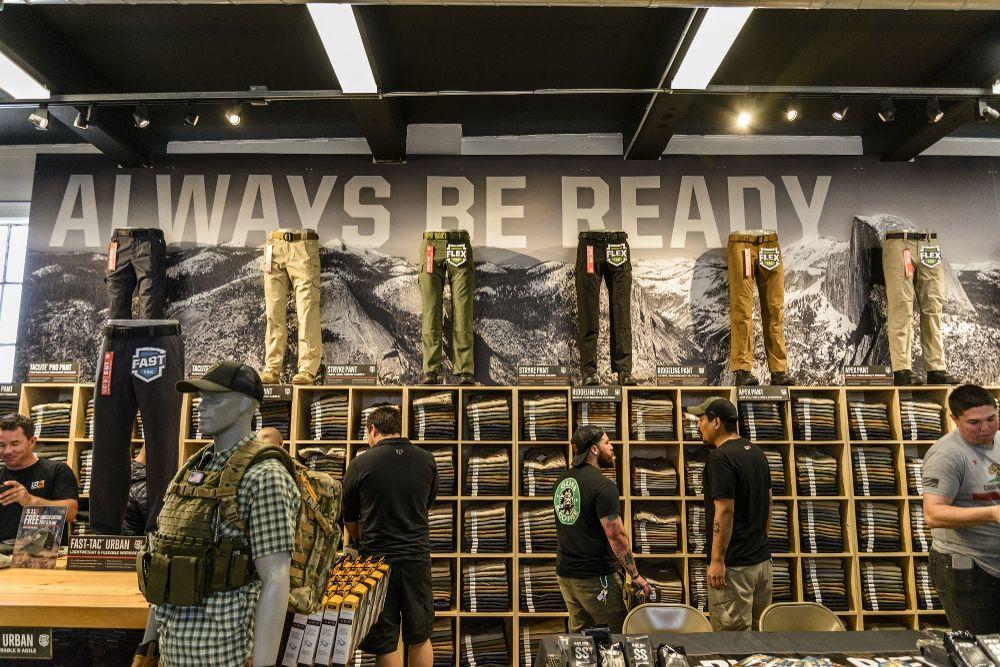
A retail chain called 5.11 Tactical, which traces its roots to a friend of President Donald Trump’s adult sons, is even trying to turn the survivalist look into a fashionable national brand. It’s racking up annual sales of almost $400 million with stores in places including Tulsa, Oklahoma, and the U.S. Army’s Fort Bliss in El Paso, Texas.
But the report still acknowledges the trend transcends political affiliation, or either extremes on the right or the left.
5.11 Tactical Store
One top DHS official who served as former assistant secretary for threat prevention at the Department of Homeland said, “It’s evidence of what many people have been expressing concern about for the last six months — the stress associated with the pandemic, a frustration or anger about various government mitigation efforts and a belief that those efforts are infringing on their individual liberties.”
Gun sales have soared throughout the summer, going back to the early weeks of pandemic-related lockdowns in the Spring:
“’We are up about 45 percent on first time firearm buyers and we are probably at least that on female purchasers,’ Jim Clark, the owner of Big Shots said.” https://t.co/Ej9brceeot
And the potential for a contested election could bring this “perfect storm” of frustrations and anxieties to the fore in some level of civil war type violence and clashes in urban settings.
Via Etsy
While such a prospect as little as a year ago seemed far-fetched and overly conspiratorial, the experience of life in 2020 has left many more people seeing this as an actual possibility.
via ZeroHedge News https://ift.tt/2TkbPmX Tyler Durden
Potential F-35 sales to Gulf states have driven US officials to take extra steps to guarantee Israel’s military superiority over its neighbors, known as the Qualitative Military Edge (QME).
On Thursday, Secretary of Defense Mark Esper and Israeli Defense Minister Benny Gantz met at the Pentagon and signed a joint declaration affirming Washington’s commitment to ensure Israel’s QME.
Prime Minister Benjamin Netanyahu stands in front of an F-35 fighter jet at the Israeli Air Force’s Nevatim base, via The Times of Israel.
“I want to state, again, how committed we are to Israel’s Qualitative Military Edge when it comes to defense sales, and our commitment to Israel’s security, which has been longstanding and it’s guaranteed and ironclad,” Esper said.
Details of the declaration are not clear, and it may be largely symbolic since maintaining Israel’s QME is already mandated by US law. A source from the meeting told The Jerusalem Post that an agreement was formulated to further Israeli acquisitions of US weapons.
The US sale of F-35 fighter jets to the UAE that is rumored to be part of Abu Dhabi’s normalization agreement with Israel was initially objected to by Israeli officials. But now, Israel could be angling to get some new weapons out of the deal. In September, Israeli Prime Minister Benjamin Netanyahu submitteda wishlist of advanced weaponry to President Trump worth $8 billion.
The F-35 sale has met resistance in Congress, with upholding Israel’s QME being a top priority on both sides of the aisle. A group of bipartisan lawmakers introduced a bill in the House that would effectively give Israel veto powers over US arms sales to the Middle East.
via ZeroHedge News https://ift.tt/3dUSguB Tyler Durden
Even though Global Head of Real Estate at WeWork, Peter Greenspan, recently told Ken Biberaj, US Managing Director at real estate services firm Savills, in an interview that the firm’s balance sheet is “strong,” Fitch Ratings downgraded the struggling co-working company on Thursday evening, warning about the increased default risk because the virus pandemic has resulted in a permanent shift in lower office space demand.
The rating agency slashed WeWork’s long-term issuer default rating to CCC from CCC+. The CCC tier, essentially the lowest level in the junk bond market, implies the once high-flying startup has a significant chance of defaulting on its obligations.
Fitch’s downgrade is due to the “viability of WeWork’s business model in light of a potential lasting shift by companies to a hybrid office model that leads to permanently lower office space demand.”
Fitch said, “WeWork has made material progress to reduce its cash burn rate, in a scenario where demand is structurally lower, Fitch sees WeWork as potentially requiring additional liquidity sources inclusive of and beyond the full $3.3 billion SoftBank financing commitment.”
Maybe that’s why SoftBank’s Masayoshi Son plowed $1.1 billion into the sinking ship, known as WeWork, in August to help it weather the coronavirus pandemic.
Fitch said WeWork’s cash burn rate had been cut by nearly 40% from $4 billion in 2019 to $2.5 billion in 2020. Under one scenario, absent of a second coronavirus wave and structurally lower office demand, Fitch sees WeWork’s burn rate decreasing to about $900 million, with much of the funding coming from SoftBank unsecured notes.
As for the scenario with a second wave and structurally lower office demand, which at the moment, appears to be in play, Fitch sees WeWork with a cash burn of about $1.5 billion in 2021 and 2022. Fitch questions if the struggling co-working company can receive funding in this scenario.
The virus pandemic forces a new era of remote working, and a permanent demand shift lower for office space. Fitch warns:
“WeWork’s business model is potentially compromised due to the coronavirus pandemic…”
Fitch believes the company will have to “negotiate exits” rather than “walk away from committed leases,” so it can preserve its “reputation” without “destabilize its business model.”
And rather than negotiating exits, WeWork, at some of its buildings, just stopped paying rent.
A previous concern held by the rating agency is that a reduction in leasing demand by WeWork in top cities could result in lower rents for other commercial spaces that would reduce the relative attractiveness of WeWork spaces.
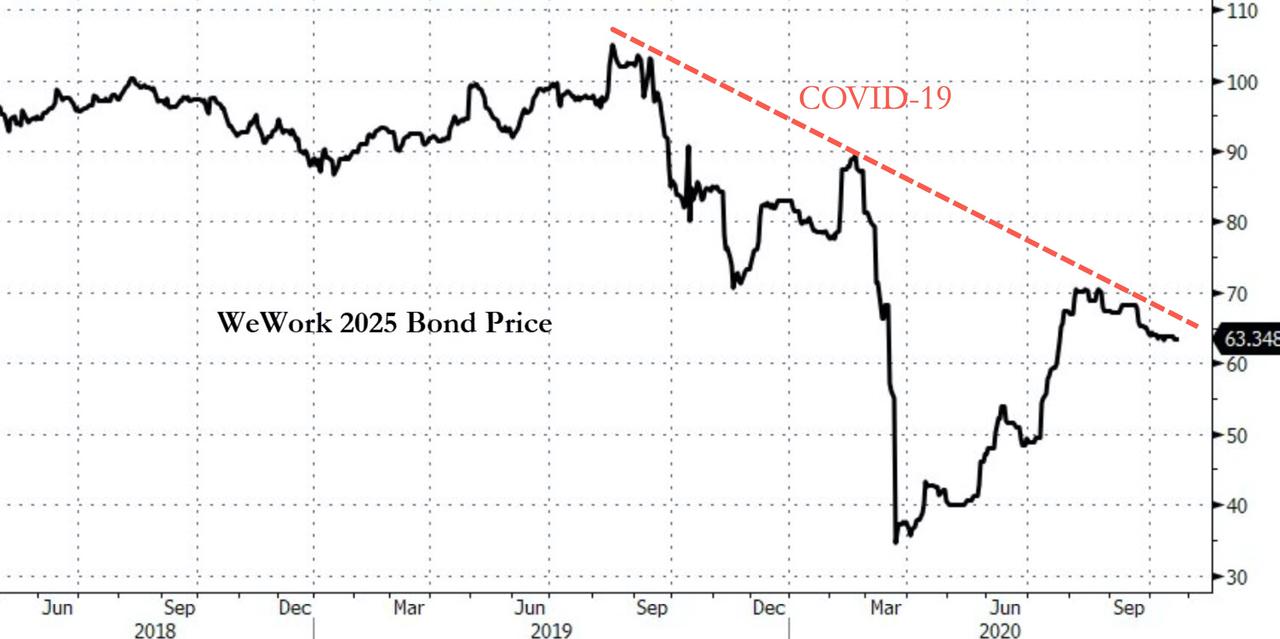
WeWork’s bonds maturing in 2025 trade around 63 cents on the dollar as more downside is possible.
We give the last word to Fitch: “WeWork would be considered a going concern in bankruptcy and that the company would be reorganized rather than liquidated.”
via ZeroHedge News https://ift.tt/3jm96nz Tyler Durden
Are you ready for this week’s absurdity? Here’s our Friday roll-up of the most ridiculous stories from around the world that are threats to your liberty, risks to your prosperity… and on occasion, inspiring poetic justice.
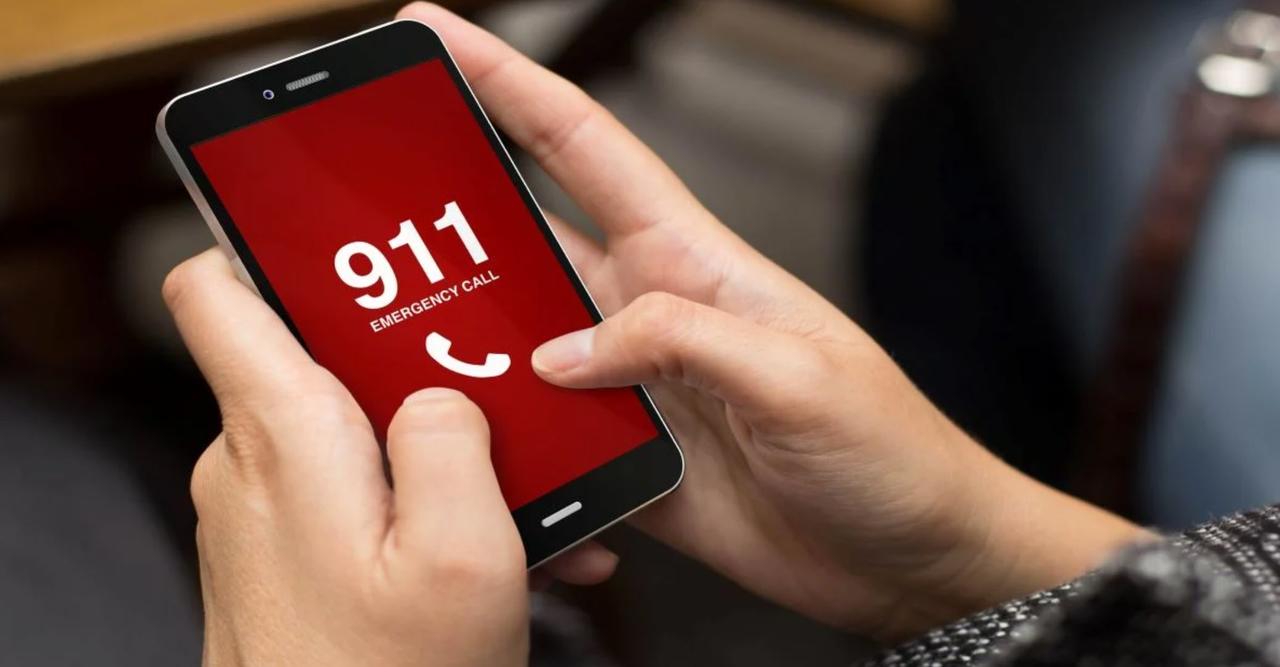
Puerto Rico Shuts Down 911 Over COVID
Puerto Rico has two centers which field 911 emergency calls for the island.
This week, BOTH of those call centers were shut down because employees tested positive for COVID.
The government instead instructed residents of Puerto Rico to call an alternative 10 digit number if they need emergency assistance.
Puerto Rico is not known for having the most efficient government… but seriously, this was the best solution they could think of? They couldn’t find replacement workers, a temporary facility, or simply reroute 911 calls to the emergency number they now advise calling?
That’s the COVID craze for you– if shutting down 911 saves just one life, it’s worth it.
Surely there won’t be any unintended consequences from SHUTTING OFF THE EMERGENCY PHONE NUMBER DRILLED INTO OUR HEADS SINCE CHILDHOOD!
Facebook Fights Fake News: An Obviously Satirical Newspaper
The Babylon Bee is a gem of a satirical news website, with headlines such as, “Nation Longs For More Civilized Age When Politicians Settled Disputes With Pistols,” and “To Improve Next Debate Both Candidates’ Mics Will Be Muted The Entire Time.”
Commenting on this Senate witch hunt to find something wrong with the judge, The Babylon Bee ran a headline that said, “Senator Hirono Demands ACB [Amy Coney Barret] Be Weighed Against A Duck To See If She Is A Witch.”
It’s a reference to a joke from the 1970s film The Monty Python and the Holy Grail.
But Facebook said it was incitement to violence, insinuating the article could make people want to burn witches…
Facebook demonetized The Babylon Bee until it edits the article.
But The Babylon Bee has refused to edit the satirical article.
Looks like the fake news is speaking a little too much truth for Facebook.
This summer the tax-funded KIPP Charter Schools decided to retire the slogan “Work hard. Be nice,” because it “supports the illusion of meritocracy.”
KIPP leadership thinks it is wrong to tell kids that hard work is all it will take to be successful, because there is something else standing in their way.
“Working hard and being nice is not going to dismantle systemic racism,” reads the KIPP website, explaining the decision to nix the old motto.
The new religion of wokeness preaches that everyone is a helpless victim. No amount of hard work will get you ahead.
KIPP hasn’t released a new slogan yet but maybe they’ll try, “Seize the means of production. Execute the Bourgeoisie.”
San Diego School District Abolishes Grades to ‘Combat Racism’
Students in San Diego schools will no longer have to do homework, turn in assignments, or take tests, because none of it will count toward a grade anyway.
Instead teachers will decide if a student has mastered the material.
How will teachers make this determination without some kind of test? Well, there aren’t any details on that yet.
But surely it will be less systemically racist than an A, B, or C letter grade.
Pennsylvania Restaurant that Opened in Violation of Lockdown “Not Guilty”
A Pennsylvania restaurant opened to full capacity in May in defiance of Pennsylvania’s lockdown orders and safety procedures.
The restaurant was cited and fined, but they went to court and pleaded not guilty.
Last week, a judge found in the restaurant’s favor, saying the Department of Agriculture fined the restaurant for violations it could not lawfully cite them for.
Kremlin Says US Elections Have Become “Competition In Russophobia” Tyler Durden
Fri, 10/23/2020 – 20:00
This week’s perhaps overly dramatic announcement Wednesday night by the heads of multiple federal agencies – foremost among them Director of National Intelligence John Ratcliffe – alleging new major efforts by Russia and Iran to interfere in the US presidential election formed a key question and talking point by debate moderator Kristen Welker Thursday night.
Welker even referenced as somehow undisputed and settled “truth”the now debunked “Russian bounties” story. Over a month ago the Pentagon and other intelligence heads concluded after an exhaustive investigation that there’s simply no evidence to suggest Russian military intelligence paid Afghan fighters to target Americans.
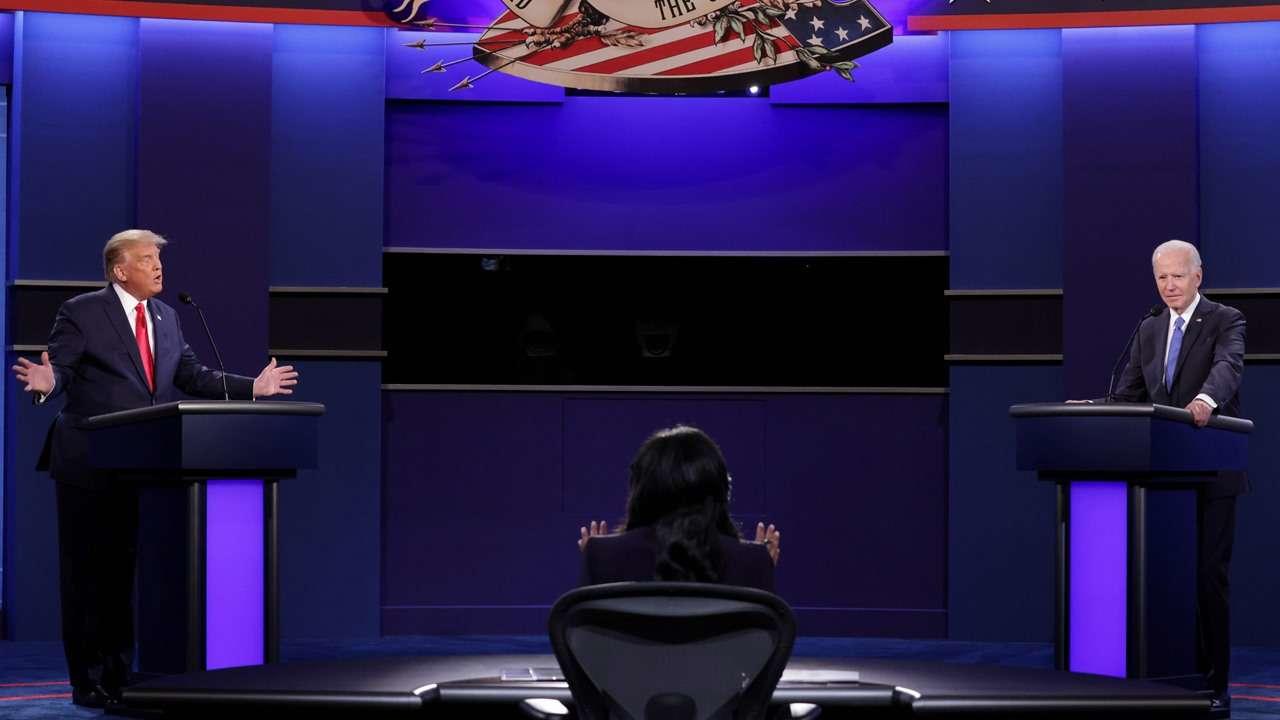
Final 2020 US presidential campaign debate in Nashville
Russia was certainly paying attention to the debate and was not amused. The Kremlin on Friday blasted what it said was “Russophobia” at the center of the debate.
Kremlin Spokesman Dmitry Peskov told journalists Friday that“competition in Russophobia has become a constant in all US electoral processes, regrettably.”
“We are fully aware of this and can only express regret,” he added as quoted in TASS.
“After all, probably, it is the American electorate who is the target audience of these debates, that is, common Americans. It is up to them to decide who won the debate, not us,” the spokesman said.
Indeed the American public is by and large likely growing tired of the endless Russia scapegoating too.
Corporate droid Kristin Welker says the laughable claim that Iran emailed threats to US lawmakers was “confirmed” by the same intel officials who made it up. Biden then spouts the discredited tale about Russian bounties, leading Trump to brag of arming Ukraine. National dementia.
National security pundit and research fellow at Columbia University’s Saltzman Institute of War and Peace Studies Richard Hanania had this to say about just how vapid foreign policy questions have become in this election (when they are offered at all):
Notice how the entire debate on foreign policy was about who was “nicer” to China, Russia, or some other “enemy,” not say whether we should go to war more or less often. There’s a primitiveness and stupidity surrounding discussions of foreign policy that we don’t accept elsewhere, he pointed out.
Over the years Putin himself has increasingly mocked and laughed about the degree to which he personally gets blamed for almost all ills of American society – from election meddling to “weaponizing” race relations to supposedly seeking to take out the national power grid.
via ZeroHedge News https://ift.tt/3mf2Nny Tyler Durden