Goldman's Stolper Opines On The EUR, Says ECB Rate Cut Is A Buying Opportunity

After briefly becoming the strongest currency in the world for 2013, yesterday’s stunning inflation report out of the Eurozone has not only left the massively overblown European recovery story in tatters (but… but… those soaring PMIs, oh wait, John Paulson is investing in Greece – the “recovery” is indeed over), has sent the sellside penguins scrambling with the new conviction that the ECB now has no choice but to lower rates once again, either in November or in December. So with everyone confused, we were hoping that that perpetual contrarian bellwether Tom Stolper, who just came out with a report, may have some insight. And sure enough, while the long-term EUR bull admits that “the ECB could move the EUR/USD cross by about 5 big figures by cutting the refi rate by 25bp” and that “it is quite possible that we will see EUR/$ drop further towards 1.33”, he concludes that “an ECB rate cut could turn out to be a buying opportunity to go long the EUR.” And now we know: because what Stolper tells his few remaining muppets to buy, Goldman is selling: if and when the ECB cuts rates, do what Goldman does, not what is says: sell everything.

From Goldman’s Tom Stolper

Should the ECB respond to a strong Euro?

On a trade-weighted basis, the EUR is the strongest currency globally – Earlier this week the EUR was briefly the strongest currency globally in 2013. On our GS Trade-Weighted Indices, it peaked at +5.9% year-to-date, outperforming by a whisker the CNY at 5.7%, with the Dollar remaining far behind at +2.0%. Apart from the fact that this has surprised consensus expectations for 2013, it is also becoming a headache for the ECB. At every post-meeting press conference President Draghi faces a number of questions about the exchange rate. In addition, our GSDEER fair value framework implies that the EUR is now overvalued by about 14% against the Dollar and by about 5% on a trade-weighted basis.

The Euro area’s current account position stands in contrast to the EUR valuation signals – Most FX valuation models, including Purchasing Power Parity, are ultimately trade arbitrage models. If goods are substantially cheaper in one country than another, the chances are that people will buy more of the cheaper goods and the resulting demand for the currency in the producer country will help correct the undervaluation. A strong currency over-valuation signal therefore often coincides with a trade deficit and a subsequent correction, as we have seen in EM deficit countries recently. In the Euro area that is not the case. Despite overvaluation, the Euro area currently is not running a current account deficit; in fact, it has the largest surplus ever at about 2.5% of GDP (Germany’s is 7% of German GDP). Even vis-à-vis the US, where the EUR is overvalued by 14%, the bilateral Euro area trade surplus currently stands at historical record highs. The opposing current account and valuation signals considerably complicate the case for a weaker EUR.

Euro weakness would theoretically deepen imbalances – Of course, one of the reasons why the Euro area current account surplus has been growing has been slowing domestic demand depressing imports. Using a weaker Euro to substitute domestic demand would support growth but likely increase the imbalances. At least theoretically, the currency depreciation would raise the trade surplus even further. From a G-20 point of view this would be a very controversial policy (even if officially aimed at inflation alone). Already the US is criticising the German government for not stimulating domestic demand more, and the idea of pushing the EUR lower to help growth is met with scepticism in Asia.

An uncertain impact on growth from FX depreciation – Given the frequent calls to depreciate the Euro to boost Euro area growth and raise inflation, we take a quick look at the likely empirical impact. On the growth side we can extract the likely effect of EUR depreciation from the work of our Euro area colleagues in 2009. They estimated trade elasticities for the Euro area and calculated different scenarios for real TWI moves. Relative to a baseline forecast, a permanent real effective depreciation of 10% would raise GDP growth in the first year by 0.4% to 0.5% and in the second year by 0.2%. This is broadly in line with other estimates of trade elasticities but it is also important that the range of estimates varies considerably across a large number of empirical studies. Some authors fail to find evidence of the critical assumption that depreciation leads to an improvement in net trade (technically known as the Marshall Lerner condition). Some recent studies (see, for example, http://www.feb.ugent.be/FinEco/gert_files/research/JMCB_FP.pdf) emphasise that exchange rates, net exports and growth are all endogenous and that the nature of shocks will ultimately determine if depreciation coincides with accelerating growth. All said, it is likely that a weaker exchange rate will help growth but the impact is probably weaker and more uncertain than most observers believe. Similarly, the impact on core inflation of exchange rate moves is also difficult to quantify.

How much extra growth for an ECB rate cut? – We estimate that the ECB could move the EUR/USD cross by about 5 big figures by cutting the refi rate by 25bp. We discussed this in more detail in a Daily this week, where we also cautioned that this estimate is unlikely to be more than a guide to the order of magnitude of the response. Historically, a 5-big-figure drop in the EUR corresponds to about a 3% decline in the trade-weighted exchange rate. To calculate the impact on growth, we can use the estimates of our European colleagues. Assuming that this drop is permanent, it would boost Euro area growth by a bit more than 0.1 percentage points in the first year and by a touch more than 0.05 percentage points in the second. It could well be less if the EUR rebounds after the initial decline.

A substantial EUR depreciation to boost growth meaningfully – In order to see a more meaningful impact on growth, for example via a 10% decline in the real TWI, the EUR would have to drop to levels last observed in mid-2012, before the ECB announced the OMT. And again, the EUR would have to stay at those lower levels to get the full growth benefit. To get such a large EUR depreciation the ECB would have to pull many more stops than just a 25bp cut in the refi rate. In addition, the ECB would have to overcome what looks like an underlying appreciation trend. We find evidence of such a trend in our econometric work and it would be consistent with the strong balance of payment position. Our estimates currently suggest that the Euro drifts higher – all else equal – by about 1 big figure per month currently.

Tough FX policy choices in the Euro area – To summarise the challenges for FX policymakers in the Euro area, bringing the Euro down may not help as much as hoped for: it may increase political frictions, deepen macro imbalances and it is difficult to achieve in a meaningful way in any case. As the US Treasury suggests in its semi-annual report, boosting demand in Germany would be a far more effective policy to support growth in the Euro area. Given all these issues, we would be surprised if the ECB made the exchange rate the primary motivation for a policy move.

An ECB cut is possible… – To be sure, there may be other, mainly domestic, reasons to cut policy rates in the Euro area, including the surprisingly low inflation print this week. Demand remains weak in the Euro area and monetary conditions have tightened in recent months, partly linked to the global bond sell-off. In particular, if the disinflation trend persists in the ne
xt reading our Euro area economists think a December cut is becoming a close call. And even a cut at the policy meeting next week cannot be ruled out. In turn, such a cut – or the increased likelihood of such a cut – would still have a EUR-negative implication, as discussed above, even though it is already partly being priced by rate and FX markets. On that basis, it is quite possible that we will see EUR/$ drop further towards 1.33.

…but could turn out to be a buying opportunity – However, we are of the view that a rate cut would not be the beginning of a larger attempt to manage the currency weaker. In that respect, an ECB rate cut could turn out to be a buying opportunity to go long the EUR. Our view would change if markets started to price a much more hawkish Fed and the prospect of a genuinely widening interest rate differential with the US. But even then, one would have to factor in the EUR-supportive balance of payment flows.


via Zero Hedge http://feedproxy.google.com/~r/zerohedge/feed/~3/if1zhVOd858/story01.htm Tyler Durden

Goldman’s Stolper Opines On The EUR, Says ECB Rate Cut Is A Buying Opportunity

After briefly becoming the strongest currency in the world for 2013, yesterday’s stunning inflation report out of the Eurozone has not only left the massively overblown European recovery story in tatters (but… but… those soaring PMIs, oh wait, John Paulson is investing in Greece – the “recovery” is indeed over), has sent the sellside penguins scrambling with the new conviction that the ECB now has no choice but to lower rates once again, either in November or in December. So with everyone confused, we were hoping that that perpetual contrarian bellwether Tom Stolper, who just came out with a report, may have some insight. And sure enough, while the long-term EUR bull admits that “the ECB could move the EUR/USD cross by about 5 big figures by cutting the refi rate by 25bp” and that “it is quite possible that we will see EUR/$ drop further towards 1.33”, he concludes that “an ECB rate cut could turn out to be a buying opportunity to go long the EUR.” And now we know: because what Stolper tells his few remaining muppets to buy, Goldman is selling: if and when the ECB cuts rates, do what Goldman does, not what is says: sell everything.

From Goldman’s Tom Stolper

Should the ECB respond to a strong Euro?

On a trade-weighted basis, the EUR is the strongest currency globally – Earlier this week the EUR was briefly the strongest currency globally in 2013. On our GS Trade-Weighted Indices, it peaked at +5.9% year-to-date, outperforming by a whisker the CNY at 5.7%, with the Dollar remaining far behind at +2.0%. Apart from the fact that this has surprised consensus expectations for 2013, it is also becoming a headache for the ECB. At every post-meeting press conference President Draghi faces a number of questions about the exchange rate. In addition, our GSDEER fair value framework implies that the EUR is now overvalued by about 14% against the Dollar and by about 5% on a trade-weighted basis.

The Euro area’s current account position stands in contrast to the EUR valuation signals – Most FX valuation models, including Purchasing Power Parity, are ultimately trade arbitrage models. If goods are substantially cheaper in one country than another, the chances are that people will buy more of the cheaper goods and the resulting demand for the currency in the producer country will help correct the undervaluation. A strong currency over-valuation signal therefore often coincides with a trade deficit and a subsequent correction, as we have seen in EM deficit countries recently. In the Euro area that is not the case. Despite overvaluation, the Euro area currently is not running a current account deficit; in fact, it has the largest surplus ever at about 2.5% of GDP (Germany’s is 7% of German GDP). Even vis-à-vis the US, where the EUR is overvalued by 14%, the bilateral Euro area trade surplus currently stands at historical record highs. The opposing current account and valuation signals considerably complicate the case for a weaker EUR.

Euro weakness would theoretically deepen imbalances – Of course, one of the reasons why the Euro area current account surplus has been growing has been slowing domestic demand depressing imports. Using a weaker Euro to substitute domestic demand would support growth but likely increase the imbalances. At least theoretically, the currency depreciation would raise the trade surplus even further. From a G-20 point of view this would be a very controversial policy (even if officially aimed at inflation alone). Already the US is criticising the German government for not stimulating domestic demand more, and the idea of pushing the EUR lower to help growth is met with scepticism in Asia.

An uncertain impact on growth from FX depreciation – Given the frequent calls to depreciate the Euro to boost Euro area growth and raise inflation, we take a quick look at the likely empirical impact. On the growth side we can extract the likely effect of EUR depreciation from the work of our Euro area colleagues in 2009. They estimated trade elasticities for the Euro area and calculated different scenarios for real TWI moves. Relative to a baseline forecast, a permanent real effective depreciation of 10% would raise GDP growth in the first year by 0.4% to 0.5% and in the second year by 0.2%. This is broadly in line with other estimates of trade elasticities but it is also important that the range of estimates varies considerably across a large number of empirical studies. Some authors fail to find evidence of the critical assumption that depreciation leads to an improvement in net trade (technically known as the Marshall Lerner condition). Some recent studies (see, for example, http://www.feb.ugent.be/FinEco/gert_files/research/JMCB_FP.pdf) emphasise that exchange rates, net exports and growth are all endogenous and that the nature of shocks will ultimately determine if depreciation coincides with accelerating growth. All said, it is likely that a weaker exchange rate will help growth but the impact is probably weaker and more uncertain than most observers believe. Similarly, the impact on core inflation of exchange rate moves is also difficult to quantify.

How much extra growth for an ECB rate cut? – We estimate that the ECB could move the EUR/USD cross by about 5 big figures by cutting the refi rate by 25bp. We discussed this in more detail in a Daily this week, where we also cautioned that this estimate is unlikely to be more than a guide to the order of magnitude of the response. Historically, a 5-big-figure drop in the EUR corresponds to about a 3% decline in the trade-weighted exchange rate. To calculate the impact on growth, we can use the estimates of our European colleagues. Assuming that this drop is permanent, it would boost Euro area growth by a bit more than 0.1 percentage points in the first year and by a touch more than 0.05 percentage points in the second. It could well be less if the EUR rebounds after the initial decline.

A substantial EUR depreciation to boost growth meaningfully – In order to see a more meaningful impact on growth, for example via a 10% decline in the real TWI, the EUR would have to drop to levels last observed in mid-2012, before the ECB announced the OMT. And again, the EUR would have to stay at those lower levels to get the full growth benefit. To get such a large EUR depreciation the ECB would have to pull many more stops than just a 25bp cut in the refi rate. In addition, the ECB would have to overcome what looks like an underlying appreciation trend. We find evidence of such a trend in our econometric work and it would be consistent with the strong balance of payment position. Our estimates currently suggest that the Euro drifts higher – all else equal – by about 1 big figure per month currently.

Tough FX policy choices in the Euro area – To summarise the challenges for FX policymakers in the Euro area, bringing the Euro down may not help as much as hoped for: it may increase political frictions, deepen macro imbalances and it is difficult to achieve in a meaningful way in any case. As the US Treasury suggests in its semi-annual report, boosting demand in Germany would be a far more effective policy to support growth in the Euro area. Given all these issues, we would be surprised if the ECB made the exchange rate the primary motivation for a policy move.

An ECB cut is possible… – To be sure, there may be other, mainly domestic, reasons to cut policy rates in the Euro area, including the surprisingly low inflation print this week. Demand remains weak in the Euro area and monetary conditions have tightened in recent months, partly linked to the global bond sell-off. In particular, if the disinflation trend persists in the next reading our Euro area economists think a December cut is becoming a close call. And even a cut at the policy meeting next week cannot be ruled out. In turn, such a cut – or the increased likelihood of such a cut – would still have a EUR-negative implication, as discussed above, even though it is already partly being priced by rate and FX markets. On that basis, it is quite possible that we will see EUR/$ drop further towards 1.33.

…but could turn out to be a buying opportunity – However, we are of the view that a rate cut would not be the beginning of a larger attempt to manage the currency weaker. In that respect, an ECB rate cut could turn out to be a buying opportunity to go long the EUR. Our view would change if markets started to price a much more hawkish Fed and the prospect of a genuinely widening interest rate differential with the US. But even then, one would have to factor in the EUR-supportive balance of payment flows.


via Zero Hedge http://feedproxy.google.com/~r/zerohedge/feed/~3/if1zhVOd858/story01.htm Tyler Durden

Shots Fired At LAX

Reports hitting the tape of a shooting at LAX terminal 3, and that an evacuation is underway.

More as we see it.


via Zero Hedge http://feedproxy.google.com/~r/zerohedge/feed/~3/rj3qPCksgnI/story01.htm Tyler Durden

NSA Spied on World Bank, IMF, UN, Pope, World Leaders, and American Politicians and Military Officers

It came out this week that the NSA spied on the headquarters of the World Bank, International Monetary Fund, and United Nations.

It was also alleged that the NSA spied on the Vatican and the Pope.

Congressman Rand Paul asks whether the NSA might be spying on President Obama as well.

Congressman Devin Nunes said in that the Department of Justice was tapping phones in the Congressional cloak room.

Sounds crazy …

But it is well-documented that the NSA was already spying on American Senators more than 40 years ago.

And a high-level NSA whistleblower says that the NSA is spying on – and blackmailing – top government officials and military officers, including Supreme Court Justices, high-ranked generals, Colin Powell and other State Department personnel, and many other top officials. And see this:

 
He says the NSA started spying on President Obama when he was a candidate for Senate: 

Another very high-level NSA whistleblower – the head of the NSA’s global intelligence gathering operation – says that the NSA targeted CIA chief Petraeus.

Of course, the NSA also spied on the leaders of Germany, Brazil and Mexico, and at least 35 world leaders total.

The NSA also spies on the European Union, the European Parliament, the G20 summit and other allies.

A confidential government memo admits that the spying didn’t help prevent terrorism:

The memo acknowledges that eavesdropping on the numbers had produced “little reportable intelligence”.

Because the leaders of allies such as Germany, Brazil, Mexico, the EU and G-20 have no ties to Al Qaeda terrorists, the spying was obviously done for other purposes.

The NSA conducts widespread industrial espionage on our allies. That has nothing to do with terrorism, either.  And the  NSA’s industrial espionage has been going on for many decades.

Indeed, there is no evidence that mass surveillance has prevented a single terrorist attack. On the contrary, top counter-terror experts say that mass spying actually hurts U.S. counter-terror efforts (more here and here).

If NSA spying were really focused on terrorism, our allies and companies wouldn’t be fighting back so hard against it.

BONUS: 


via Zero Hedge http://feedproxy.google.com/~r/zerohedge/feed/~3/YNcTwq1HvUw/story01.htm George Washington

Japan’s Most Hated Outfit, TEPCO, Reports Fat Profit (From Taxpayer Bailout Money)

Wolf Richter   www.testosteronepit.com   www.amazon.com/author/wolfrichter

TEPCO, the utility that serves 29 million households and businesses in the Tokyo metropolitan area, and that owns the Fukushima nuclear power plant where three melted-down reactors are contaminating air, soil, groundwater, and seawater, an outfit famous for its lackadaisical handling of the fiasco and the parsimoniousness with which it doles out information – the most despised and ridiculed company in Japan reported earnings today. It was a doozie.

Instead of sending it into bankruptcy court to make bondholders and stockholders pay their share, the government has bailed it (and them) out lock, stock, and barrel. And it’s still on taxpayer-funded life support. So it was good news that revenues jumped 11.8% to ¥3.2 trillion during the fiscal first half ending September 30 – blistering hot growth for a utility with 49,000 employees in a slow-or-no-growth market!

But that was about it with the good news. It wasn’t even good news. It was based exclusively on electricity rate hikes that regulators had approved to compensate the company for the costs of running fossil-fuel power plants instead of its nuclear power plants, which remain shut down. It then inflicted those higher rates on already struggling businesses and squeezed consumers.

Sign of a booming Abenomics economy? Nope. Electricity sales volume fell by 1.7% in the first half. Among the reasons, ominously: a “decrease in production activities.” Commercial use fell 1.7% and industrial use 0.5% from the already depressed levels last year. Among large-scale industrial customers, electricity sales to ferrous metals companies suffered the most, down 6.7%, followed by sales to machinery producers, down 3.8%.

Net profit for the first half soared to ¥616.2 billion ($6.2 billion), up from a steep loss last year. But the rate hikes alone, big as they’ve been, couldn’t accomplish that. So cost cuts?

TEPCO is certainly trying to cut costs in dealing with the Fukushima fiasco, mostly by cutting corners. Efforts that produce curious results. A few days ago, for example, when it didn’t put enough pumps in place to deal with the rains from the typhoon, water contaminated with highly radioactive and toxic Strontium-90 leaked once again into the ocean. Despite all these valiant efforts at cutting corners, its “ordinary expenses” rose 1.2%. 

So where did that big fat profit of ¥616.2 billion come from? Turns out, “ordinary income” was only ¥141.6 billion, up from a loss last year. Those were the rate increases. The difference? “Extraordinary Income.”

A lot of it! So TEPCO sold some fixed assets for a gain of ¥74.2 billion, fine. But then there was an interesting, and huge entry:  ¥666.2 billion ($6.7 billion). It was the amount of taxpayer bailout money TEPCO had received during the first half. Booked as income!

After some extraordinary loss items – ¥22 billion for “extraordinary loss on natural disaster” and ¥230.5 billion for “nuclear damage compensation” – net disaster-related extraordinary income amounted to ¥413.7 billion ($4.2 billion), every yen of it from taxpayers. It became part of its net profit. What a way to make money!

These kinds of shenanigans have impact. TEPCO’s stock, which traded above ¥4,000 in 2007, skittered down during the financial crisis to land at ¥2,000 by the end of 2010. After the disaster in March 2011, the stock collapsed entirely and a few months later approached ¥100 yen – a technically bankrupt company with 49,000 employees. But since the bailout funds started pouring into TEPCO’s pocket, the stock has quintupled to ¥523.

Today, the government offered a view into the future. A panel composed of lawmakers from the ruling Liberal Democratic Party issued a draft report that recommended that the government, and therefore the taxpayer, step in and take control of the Fukushima cleanup and decommissioning efforts. It will be expensive and take four decades – unless the spent fuel rods in their destroyed pools ignite when the next big earthquake hits or when TEPCO screws up again, which would alter the hemisphere and eliminate any need to worry about the site.

The panel said that TEPCO must implement major internal improvements, including cost controls, and it suggested that the company may have to be broken up, partially or fully – with the good part likely going to bondholders and stockholders, and the bad part, that is Fukushima Daiichi and all associated costs and liabilities, being hung around the neck of the taxpayer.

There was urgency, the panel said. TEPCO could not manage the large amounts of groundwater that were getting contaminated daily by the reactors, and at the same time manage their decommissioning. The government would also have to figure out what to do with the nuclear waste from the site – and then pay for it as well.

The true costs of nuclear power are thus getting shuffled from the industry to the taxpayer – while bondholders and stockholders benefit.

Not a coincidence. Earlier this year, it was leaked that TEPCO had paid ¥1.8 billion ($189 million) in annual membership fees to a nuclear lobbying group in 2011, weeks after the melt-downs. The Federation of Electric Power Companies of Japan, which lobbies for Japan’s ten mega-utilities, keeps its budget secret. This was the first time the fees seeped out, offering an idea of its annual lobbying budget – whose magnitude explains in part the overwhelming power the nuclear industry has over its regulators and governments.

That power is now being exerted on the Abe administration and the legislature – not only to slough off the costs of dealing with Fukushima but also to restart the 50 surviving reactors, against strong local and national opposition.

As the Fukushima fiasco hobbled from cover-ups to partial revelations, TEPCO always pretended the situation was under control. But days after Tokyo scored the 2020 Olympics, that pretense fell apart. Read…. After Snatching Olympics, Japan Suddenly Admits Fukushima Not “Under Control,” Begs For International Help


via Zero Hedge http://feedproxy.google.com/~r/zerohedge/feed/~3/3cSfVCoUHf8/story01.htm testosteronepit

AL DaTa TeRRoRiST UPDaTe…


THEY STOP PLANES FROM FLYING INTO BUILDINGS…

AL DATA USA


HE’S ALL EARS

.
STATE OF SURVEILLANCE


HE’S MR DISINGENUOUS

.
MR DISINGENUOUS


SUDDENLY THEY ARE OUTRAGED

.
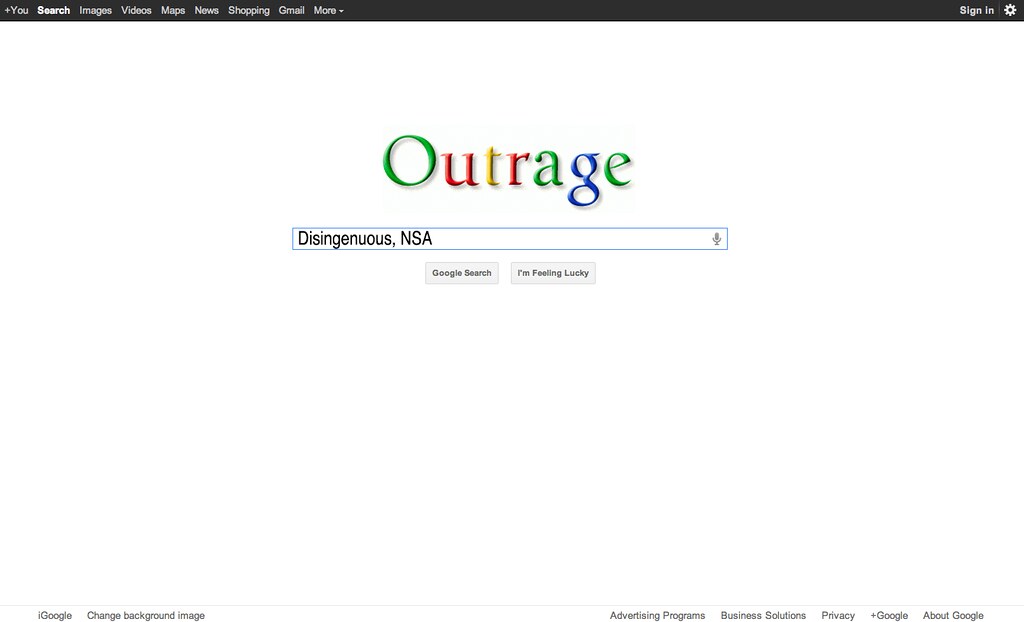
GOOGLE OUTRAGE


WHAT’S THIS?

.
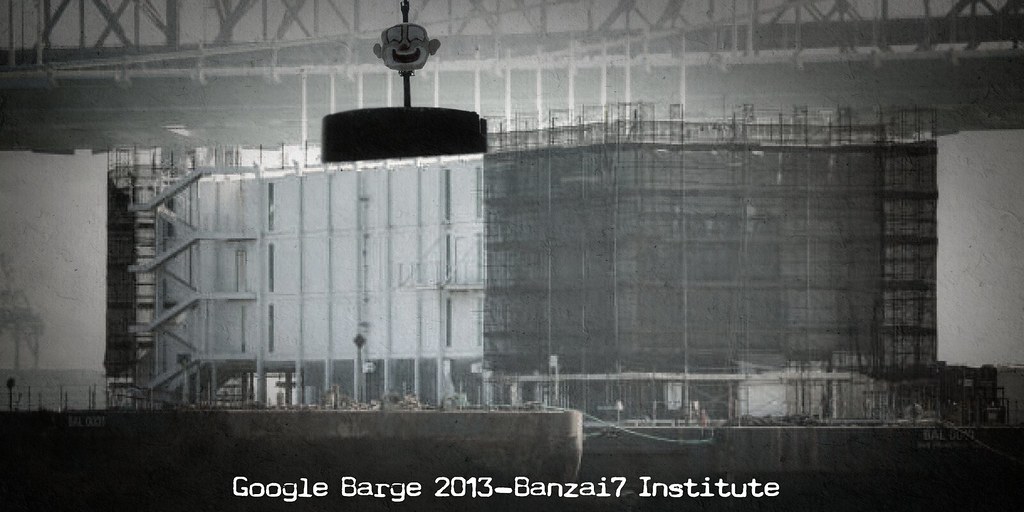
GOOGLE BARGE
.


BON APPETIT!

I EAT YOUR DATA (FINAL)


.
MISS ME NOW?


VISUAL COMBAT BANZAI7

Fine Art Prints

Inquiries: banzai7institute@gmail.com


via Zero Hedge http://feedproxy.google.com/~r/zerohedge/feed/~3/KZHJwI3m0zg/story01.htm williambanzai7

Bank Of America: "It's Getting Frothy, Man"

When even Bank of America’s Michael Hartnett has a note titled “It’s getting frothy, man“, and joins such other bubble-warners as JPM, Bill Gross, Larry Fink, and David Einhorn, one can be absolutely positive that the Fed will do… absolutely nothing.

From Bank of America:

It’s Getting Frothy, Man!


Equity funds: 3rd straight week of big inflows ($12.4bn); YTD, equities have seen $231bn inflows versus a mere $16bn inflows to bond funds (Chart 1)


Global Flow Trading Rule: another $8-9bn of inflows to long-only equity funds over next 2 weeks would trigger a contrarian “sell” signal (Chart 2). Bullish investor flows dovetails with our Bull & Bear Index, which is on course to trigger a cautionary riskoff signal in mid-November


Crowded trades: this week investors continue to funnel money into Europe, Japan, HY and Floating-rate debt


via Zero Hedge http://feedproxy.google.com/~r/zerohedge/feed/~3/Ls_yX52kuK0/story01.htm Tyler Durden

Bank Of America: “It’s Getting Frothy, Man”

When even Bank of America’s Michael Hartnett has a note titled “It’s getting frothy, man“, and joins such other bubble-warners as JPM, Bill Gross, Larry Fink, and David Einhorn, one can be absolutely positive that the Fed will do… absolutely nothing.

From Bank of America:

It’s Getting Frothy, Man!


Equity funds: 3rd straight week of big inflows ($12.4bn); YTD, equities have seen $231bn inflows versus a mere $16bn inflows to bond funds (Chart 1)


Global Flow Trading Rule: another $8-9bn of inflows to long-only equity funds over next 2 weeks would trigger a contrarian “sell” signal (Chart 2). Bullish investor flows dovetails with our Bull & Bear Index, which is on course to trigger a cautionary riskoff signal in mid-November


Crowded trades: this week investors continue to funnel money into Europe, Japan, HY and Floating-rate debt


via Zero Hedge http://feedproxy.google.com/~r/zerohedge/feed/~3/Ls_yX52kuK0/story01.htm Tyler Durden

The SEC’s Latest Scandal: Demands For Longer Lunch Breaks

There was a time when the only complaint the SEC’s 4000 employees had was that some porn sites charge just too much – after all, the SEC’s “enforcement” budget is limited, while the worldwide supply of pornography is virtually endless. It’s time to add one more grievance to the list of all those overworked regulators who have yet to put someone, anyone, from the big banks in jail as a consequence for nearly destroying the western way of life, or do more than merely wrist slap Steve Cohen with a penalty that costs more than three or four Picasso paintings: lunch breaks.

As Bloomberg reports, the latest scandal at the SEC has nothing to do with the agency’s terminal and embarrassing inefficiencies, and everything to do with how much time the SEC’s unionized workers are allotted to eat lunch.

In a dispute that has sent pangs of resentment — and perhaps hunger — across the agency, the SEC’s union chief has warned workers to keep lunch breaks to a half hour or risk being disciplined as “absent without leave.”


“Despite the fact that most SEC employees are often told that they may take an hour for lunch, technically, we are only entitled to thirty minutes,” wrote Greg Gilman, president of the union, in an e-mail sent to SEC workers last week. “Do not fall into the trap of believing that because you are a ‘professional’ the rules do not apply to you.”


Fueling the union’s angst is a new SEC plan to require the use of security cards that record the times people enter and exit the building in its offices across the country, a move Gilman wrote would “substantially increase surveillance.” He said that data from the system in place at the Washington headquarters is increasingly used in cases against employees accused of skipping out of work.

Wait, the SEC has… a labor union? Why yes.

Relations have been tense between the SEC’s management and its union, which represents some 3,000 of the agency’s 4,000 employees. Gilman has also criticized a recent decision by Chairman Mary Jo White to give added retirement and vacation benefits only to managers and has accused the commission of reneging on part of a student-loan repayment program.

Well, that pretty much answers all lingering questions about why the SEC is arguably the government’s most worthless organization.

But back to much more pressing things – like why said union can not spend an extended lunch siesta time doing more of what it does so well: nothing.

Gilman’s Oct. 24 note said the group, part of the National Treasury Employees Union, is seeking the services of a federal mediator to help resolve the matter.


“The ‘time-clock’ issue at headquarters has grown into a festering problem,” he wrote, adding that it has “resulted in a larger volume of high stakes discipline cases” against attorneys, accountants and examiners. The practice also goes against a deal the union negotiated with the SEC a decade ago that Washington office security turnstiles wouldn’t be used for “monitoring time and attendance,” Gilman wrote.


Now, to be on the safe side, he urged employees to take precautions.


As for lunches, Nester said it is true that the current union bargaining contract calls for only a 30-minute daily break. Even though it is not in the agreement, all workers are permitted two 15-minute breaks as well, he said.

And all so very much deserved…


via Zero Hedge http://feedproxy.google.com/~r/zerohedge/feed/~3/Gv7mSs5VsxE/story01.htm Tyler Durden

The SEC's Latest Scandal: Demands For Longer Lunch Breaks

There was a time when the only complaint the SEC’s 4000 employees had was that some porn sites charge just too much – after all, the SEC’s “enforcement” budget is limited, while the worldwide supply of pornography is virtually endless. It’s time to add one more grievance to the list of all those overworked regulators who have yet to put someone, anyone, from the big banks in jail as a consequence for nearly destroying the western way of life, or do more than merely wrist slap Steve Cohen with a penalty that costs more than three or four Picasso paintings: lunch breaks.

As Bloomberg reports, the latest scandal at the SEC has nothing to do with the agency’s terminal and embarrassing inefficiencies, and everything to do with how much time the SEC’s unionized workers are allotted to eat lunch.

In a dispute that has sent pangs of resentment — and perhaps hunger — across the agency, the SEC’s union chief has warned workers to keep lunch breaks to a half hour or risk being disciplined as “absent without leave.”


“Despite the fact that most SEC employees are often told that they may take an hour for lunch, technically, we are only entitled to thirty minutes,” wrote Greg Gilman, president of the union, in an e-mail sent to SEC workers last week. “Do not fall into the trap of believing that because you are a ‘professional’ the rules do not apply to you.”


Fueling the union’s angst is a new SEC plan to require the use of security cards that record the times people enter and exit the building in its offices across the country, a move Gilman wrote would “substantially increase surveillance.” He said that data from the system in place at the Washington headquarters is increasingly used in cases against employees accused of skipping out of work.

Wait, the SEC has… a labor union? Why yes.

Relations have been tense between the SEC’s management and its union, which represents some 3,000 of the agency’s 4,000 employees. Gilman has also criticized a recent decision by Chairman Mary Jo White to give added retirement and vacation benefits only to managers and has accused the commission of reneging on part of a student-loan repayment program.

Well, that pretty much answers all lingering questions about why the SEC is arguably the government’s most worthless organization.

But back to much more pressing things – like why said union can not spend an extended lunch siesta time doing more of what it does so well: nothing.

Gilman’s Oct. 24 note said the group, part of the National Treasury Employees Union, is seeking the services of a federal mediator to help resolve the matter.


“The ‘time-clock’ issue at headquarters has grown into a festering problem,” he wrote, adding that it has “resulted in a larger volume of high stakes discipline cases” against attorneys, accountants and examiners. The practice also goes against a deal the union negotiated with the SEC a decade ago that Washington office security turnstiles wouldn’t be used for “monitoring time and attendance,” Gilman wrote.


Now, to be on the safe side, he urged employees to take precautions.


As for lunches, Nester said it is true that the current union bargaining contract calls for only a 30-minute daily break. Even though it is not in the agreement, all workers are permitted two 15-minute breaks as well, he said.

And all so very much deserved…


via Zero Hedge http://feedproxy.google.com/~r/zerohedge/feed/~3/Gv7mSs5VsxE/story01.htm Tyler Durden