Tesla Jumps After Beating On Sales And Earnings; Reports Record Free Cash Flow

Tesla Jumps After Beating On Sales And Earnings; Reports Record Free Cash Flow

Tyler Durden

Wed, 10/21/2020 – 16:21

Heading into today’s Tesla earnings call, a question in this case posed by GLJ’s Gordon Johnson, has emerged: do TSLA’s earnings tonight even matter? As Johnson responds, “not really. Why? Well, Consensus is calling for 31c/shr in EPS for TSLA in 3Q20. What’s key is ~16c/shr of this, or ~$200mn, is one-time credit sales which go away at the end of this year, and thus do not deserve a multiple… you put a multiple on recurring profit, not one-time profit. So TSLA’s core biz of making cars appears set to do around 15c/shr in EPS, or ~60c/shr annualized. That’s a P/E ratio of ~700x at TSLA’s stock price today. That means TSLA’s EPS should grow at a 700% CAGR over the next (at least) 5yrs.”

Johnson then asks “Is this realistic” and answers that “of the 505 companies in the S&P 500, NONE OF THEM have grown earnings at a 700% CAGR over the past five years. Conclusion? TSLA is grossly overvalued, and a 10-20c/shr beat/miss is meaningless. Stated differently, at a ~700x P/E ratio, TSLA is not being priced to perfection… it’s being priced to impossibility.”

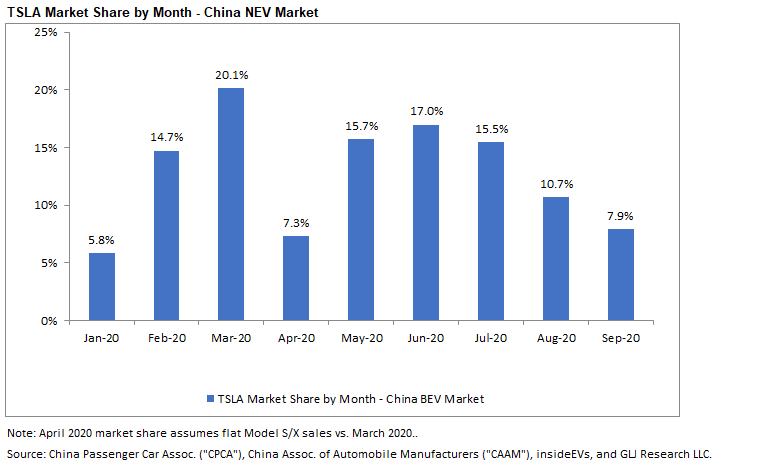
Why is this important? Because as the GLJ strategist continues, 2020 YTD EV sales in the EU (the world’s most competitive EV market) are up ~100% y/y, yet TSLA’s sales are down -14% y/y 2020 YTD.” In other words, not only is TSLA losing share, but they aren’t seeing growth in the world’s most important EV market of Europe. Meanwhile, in China, which is supposed to be TSLA’s major growth market, TSLA’s sales have been below production in each of the past 3 months, and their NEV market share in China has fell from 20.1% in Mar. 2020 to 7.9% in Sep. 2020. And, all of this has occurred despite TSLA cutting the price of its cars ~13 times this year (the price of a made-in-China [“MIC”] Model 3 in China is down 30% YTD). In fact, TSLA is now shipping MIC Model 3 cars to the EU, showing demand in China simply doesn’t exist despite cutting the price of the car 30% YTD,
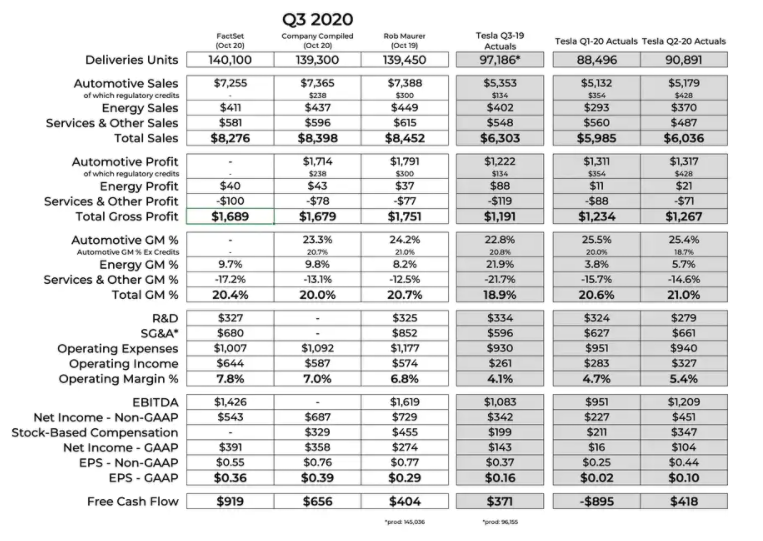
Of course, not everyone will agree, and for those who do care about earnings, here is a snapshot of what Wall Street consensus expects for the third quarter.
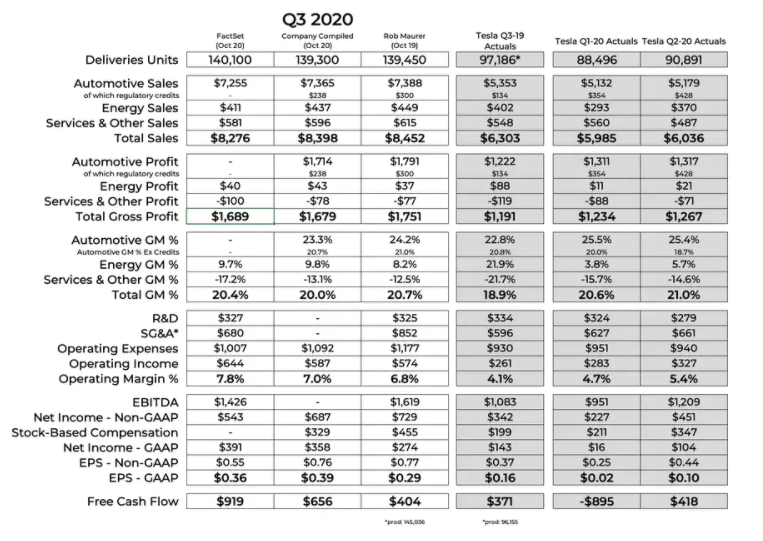
Source: Tesla Daily’s Rob Maurer via the @TeslaPodcast

Meanwhile, after sending its stock soaring in the first half of the year, option traders appear to be taking a back seat: according to Bloomberg, volatility in the electric-car maker has been plunging after a flurry of retail investor demand contributed to a surge in options prices over the summer. Ten-day realized volatility has dropped to about 36, down 50% from its one-month level of 72, and there are signs that retail interest may be waning, according to Alon Rosin, Oppenheimer’s head of institutional equity derivatives.
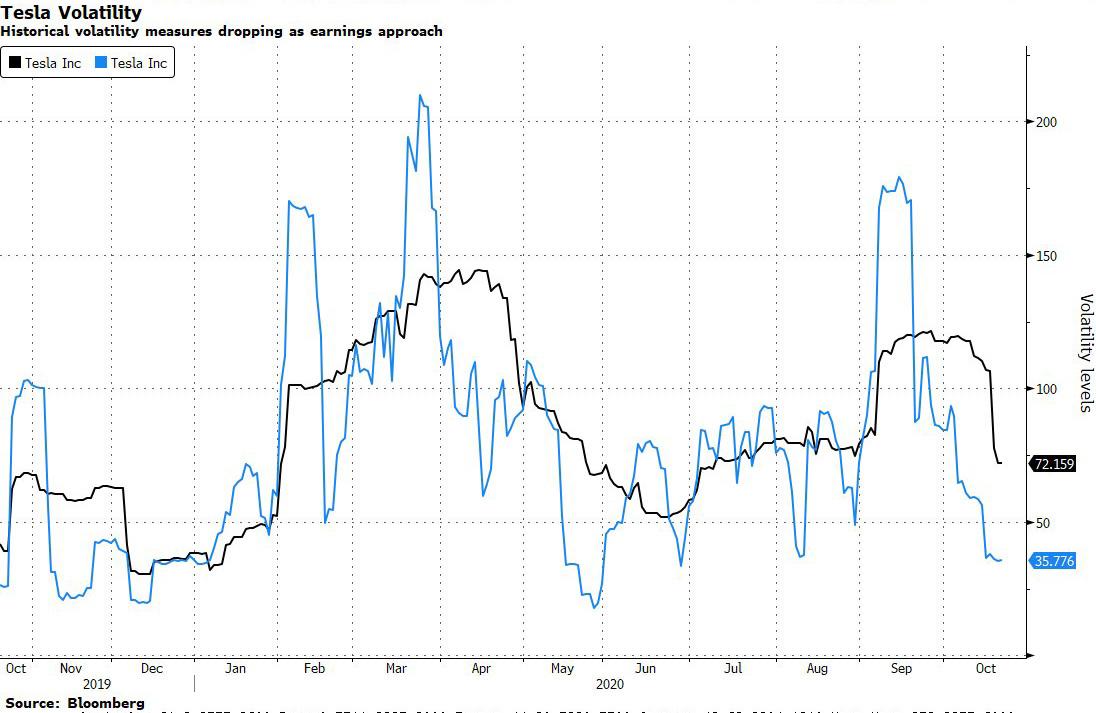
Looking at the options, the current at-the-money straddle suggests shares will move 7.8% in conjunction with the report. That’s in line with the average move of 7.8% over the last eight reports, when declines outpaced rallies at a rate of 5-to-3.

So with all that in mind, here is what Tesla just reported for the second quarter:

  • Q3 GAAP EPS of $76 cents, up 105% from $0.37 a year ago, and beating expectations of 55 cents
  • Q3 Revenue of $8.77BN, 39% Y/Y, and also beating the $8.26BN estimate.
  • Q3 Adjusted Net Income $874MM, up 156% Y/Y however, as in the previous quarter, nearly half of this was thanks to regulatory credits of $397MM
  • Q3 Free Cash of $1.95BN, vs Exp. cash burn of $1.1BN

What is bizarre is that for a company that is valued more than most other automakers in the world combined on its prospective growth, and is larger than both the entire US and European auto sector, one would expect far more revenue growth even after this quarter’s bounce:

Full breakdown of Q3 results:
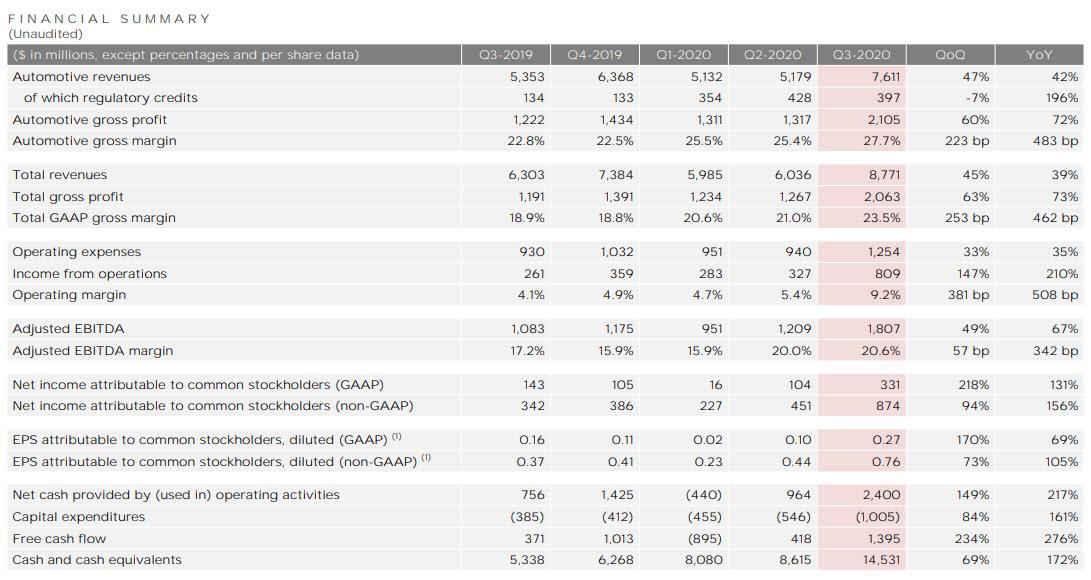
One big surprise in the report was Tesla’s free cash flow, which soared from 418MM in Q2 to a record $1.395BN in Q3, surprising Wall Street which expected $1.1BN in FCF

Thanks to positive free cash flow and the company’s equity offering in the quarter, cash grew impressively to $14.5 billion, up almost $6BN from the previously quarter, which means that Tesla will have no issues meeting debt maturities.

So what was the market’s verdict? In kneejerk reaction Tesla stock is higher but only modestly so compared to previous post-earnings spikes, and was last trading at $437/share, back to levels last seen just 3 days ago.

Developing

via ZeroHedge News https://ift.tt/3o8xrRn Tyler Durden

Is A Trump ‘Surprise’ Victory In The Offing?

Is A Trump ‘Surprise’ Victory In The Offing?

Tyler Durden

Wed, 10/21/2020 – 16:20

Authored by Tom Del Beccaro, op-ed via FoxNews.com,

As November 3 approaches, many prognosticators are trying to convince Americans that former Vice President Joe Biden is a lock to win the presidency. Of course, they said the same about Hillary Clinton’s chances in 2016 and it didn’t come to pass. Just as in 2016, there are tea leaves, if you will, indicating that President Trump will win again.

Here are ten of those tea leaves:

1. Pennsylvania Voter Registration

American presidential elections are decided by the Electoral College as President Trump and Joe Biden both know. 

In 2016, Pennsylvania and its 20 Electoral College votes were key to President Trump’s victory. He won Pennsylvania by a slim 44,292 votes out of nearly 6 million. That November, the Democrats had nearly a 900,000 voter registration advantage over the Republicans. That number is now down to a 700,000 registration advantage and has narrowed by 100,000 in the last year.

No one can logically say that improves the Democrats’ chances to win Pennsylvania in 2020.

2. Florida, too.

In 2008, Democrats held nearly a 700,000 voter registration advantage and Barack Obama carried the state by 236,148 votes. By 2012 that advantage slipped to 558,272 registrations and Obama won there by 74,309 votes.

In 2016, Democrats had a 327,483 registration advantage and Trump carried the state by 112,991 votes. 

Now the Democrats’ voter registration advantage is down nearly 200,000 to just a 134,242 lead, which Politico called a “historic low.”

Obviously, the movement towards Republicans bodes well for the president.

3. Latinos for Trump.

Trump could well receive a historic level of support from Latino Voters in 2020. In Florida, a NBC/Marist poll had Trump leading among Latinos 50% to 46% over Biden, whereas, in 2016, Hillary won among Latinos in Florida 62% to 35%. That would be a 15% swing toward Trump if it held up on Election Day.

After the first debate between Biden and Trump, a Telemundo poll showed Trump winning the debate overwhelmingly 66% to 34%. Snap media polls tend to reflect the sentiment of their viewers. Thus, it is no surprise that CNN viewers said Biden won the debate. The fact that Telemundo viewers decisively picked Trump as the winner, along with polls like those cited above in Florida, portend Trump getting the highest ever Latino support of any Republican presidential candidate.

4. African Americans For Trump. 

In September, according to polling done by Rasmussen, Trump’s approval rating among African Americans reached 45%. Keep in mind that President Trump only received 8% of the Black vote in 2016. If Trump received just 16% of the Black vote this November, let alone an even higher number, that would all but secure states like Michigan for Trump.

5. Biden the Tax Increaser.

Candidates who promise tax increases, or have a history of supporting tax increases, tend to lose versus those pushing for tax cuts.

President Jimmy Carter lost to challenger Ronald Reagan, Walter Mondale lost to President Reagan, Michael Dukakis lost to George H.W. Bush 41 and then 41 lost his reelection after his tax increase became a reality. George W. Bush beat Al Gore and then John Kerry.

Barack Obama promised to reduce taxes and he beat John McCain who was not a tax cutter. Obviously, President Trump offered tax cuts while running against, and beating, Hillary Clinton.

Joe Biden, on the other hand, is pushing for the largest tax increase in history.

Advantage Trump.

6. Enthusiasm Matters.

As the New York Post has reported, “just 46 percent of Biden voters in a recent Pew poll said that they strongly support him, compared to 66 percent of Trump’s base.”

That is a 20 point gap. In 2016, Trump had only a 13 point gap over Hillary. That increase of 7% bodes well for Trump, not Biden.

7.  Early Voting in Michigan, Wisconsin, and Ohio.

National polling from Pew Research indicates that “55% of voters who plan to cast their ballot in person before Election Day support Biden, compared to 40% who support President Trump.” 

However, in the key battleground states of Michigan, Ohio and Wisconsin the early voting indicates that “registered Republicans are returning ballots at about the same rate as registered Democrats.” The parties are even in Michigan, Democrats up 2% in Wisconsin and the Republicans up 2% in Ohio.

8. American Voters Are More Satisfied in 2020 than they were in 2016

A new Gallup poll shows that 56% of Americans say they are better off now than they were four years ago. That could well be the telling in this case given that just four years ago marked the end of the Biden vice presidency. Why would voters return to Biden if they are happier now than when he was in office?

9. Party Identification.

According to Gallup, by the end of September, when the polling firm asked voters this question, “In politics, as of today, do you consider yourself a Republican, a Democrat or an independent?” the answer came back as follows: 28% said Republican, 27% said Democrat and 42% said independent.

That is meaningful because many of the polls giving Biden the lead appear to be sampling more Democrats than Republicans – sometimes by a wide margin. Also, in 2016, Gallup had Democrats up 32% to 27% but, as we know, Trump still won.

10.  Voters Think Trump Will Win.

In the Trump era, there has been a lot of talk about whether Trump supporters feel free to tell pollsters that they are supporting the president’s reelection. Some experts point to polls asking voters who they believe will win the election to be a truer indication of candidate support.

Once again this bodes well for President Trump as a “Gallup poll shows only 40% of Americans think Biden will win the election; 56% predict a Trump victory.”

*  *  *

So, who will win the 2020 presidential election?

We don’t know yet and only time will tell but polls that say Biden is way ahead could be under-polling Republican participation like they did in 2016 when they said Hillary was up by 14% just a week before the election.

Stronger evidence of where voter sentiment lies is included in the tea leaves above. 

So, too, is the fact that Republicans have been working the door-to-door ground game in important states whereas Democrats have only just started to do so.

All of this indicates that President Trump may well surprise his doubters on November 3rd and win again.

via ZeroHedge News https://ift.tt/2Tcjbsz Tyler Durden

Stocks Chop On Stimulus Slop, Bitcoin Jumps, Dollar Dumps

Stocks Chop On Stimulus Slop, Bitcoin Jumps, Dollar Dumps

Tyler Durden

Wed, 10/21/2020 – 16:00

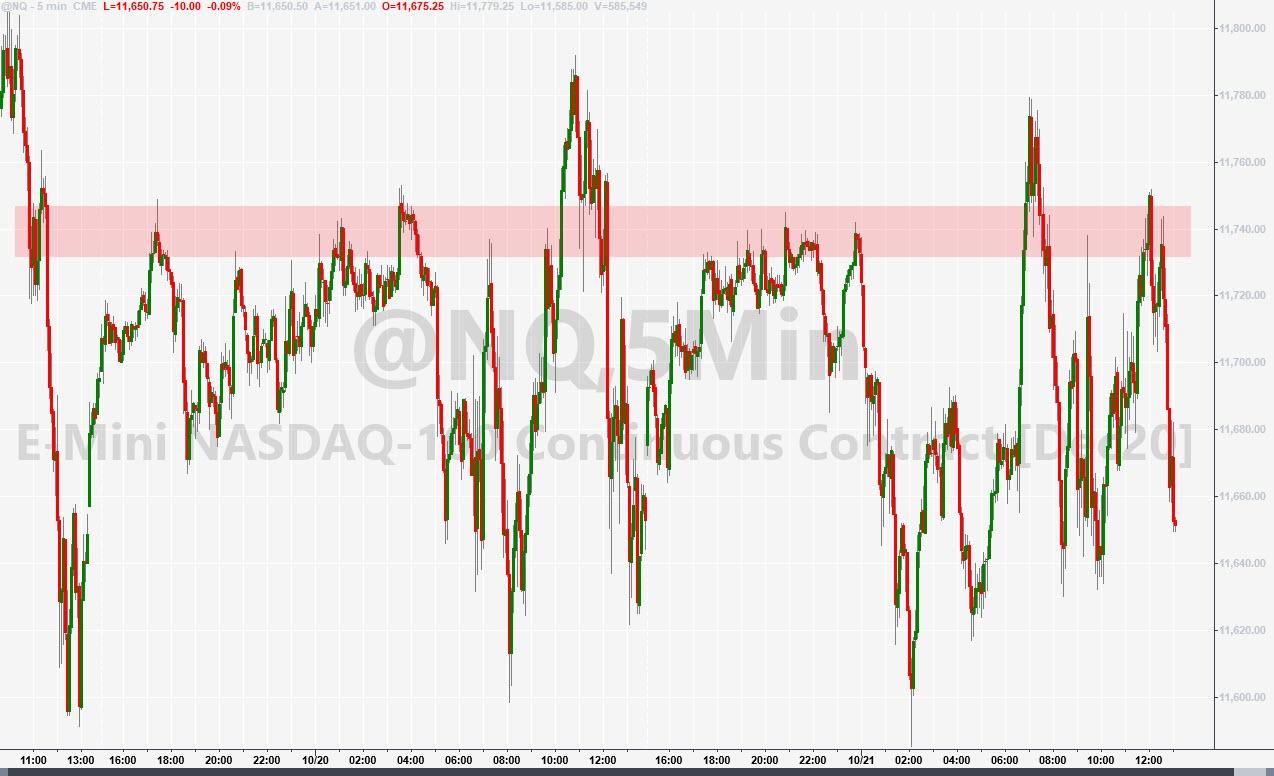
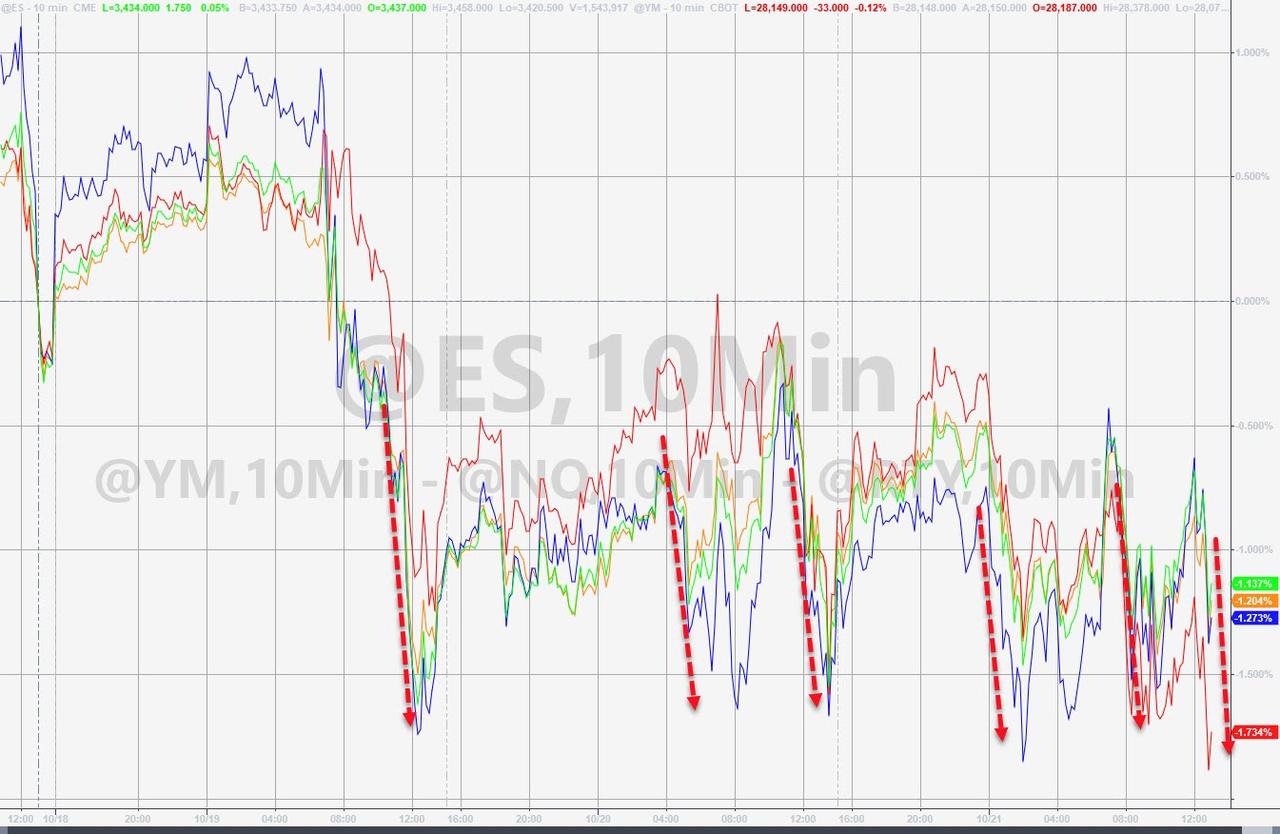
The algos were busy today… buying on every mention of the words “hope” or “optimism” and selling at technical resistance as once again nothing happened…

Small Caps are the week’s biggest loser for now…

Maybe it’s time to “not play” for a while… or is the FOMO just too strong?

But elsewhere in markets, there was lots of action.

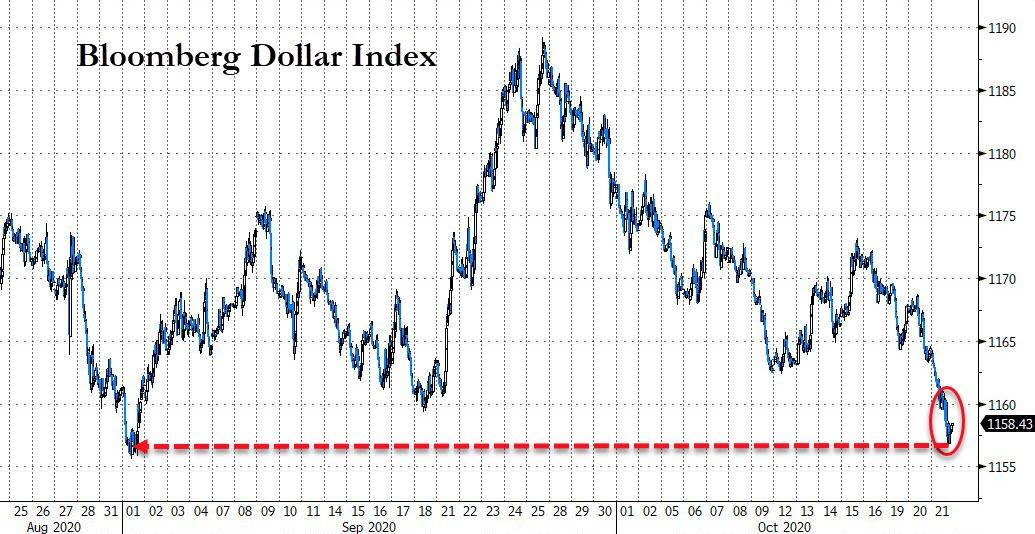
The dollar dumped to its lowest since Sept 1st…

Source: Bloomberg

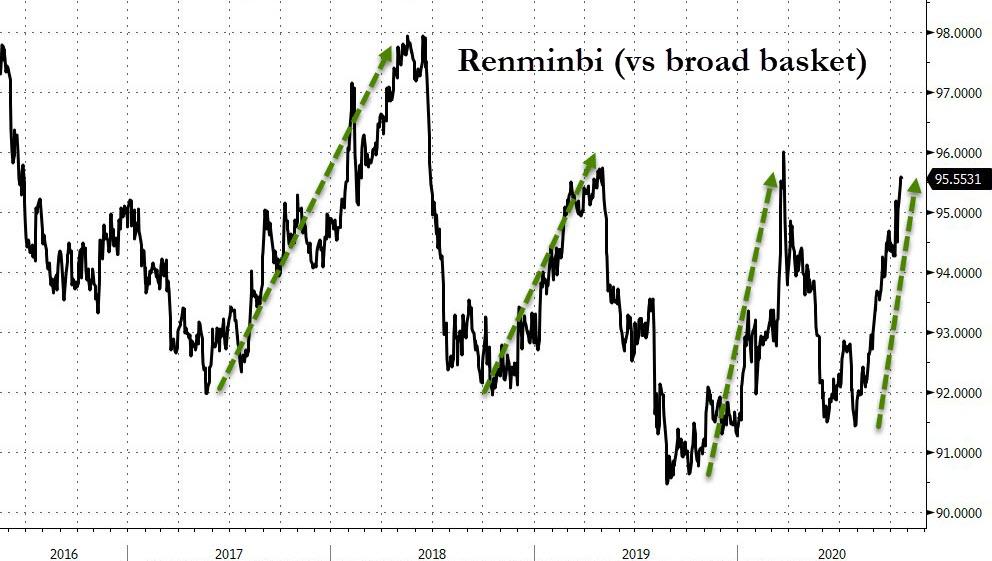
The dollar weakness has helped send China’s yuan to its strongest since 2018 (against a broad basket of currencies)…

Source: Bloomberg

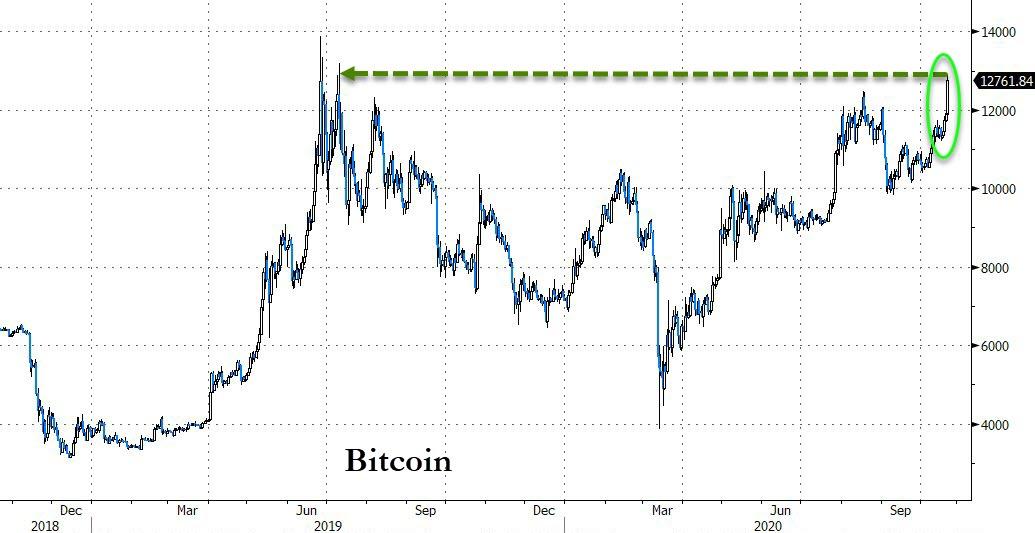
And as the dollar dropped, Bitcoin popped, topping $12,900 – the highest since July 2019 (helped by reports that PayPal will integrate crypto)…

Source: Bloomberg

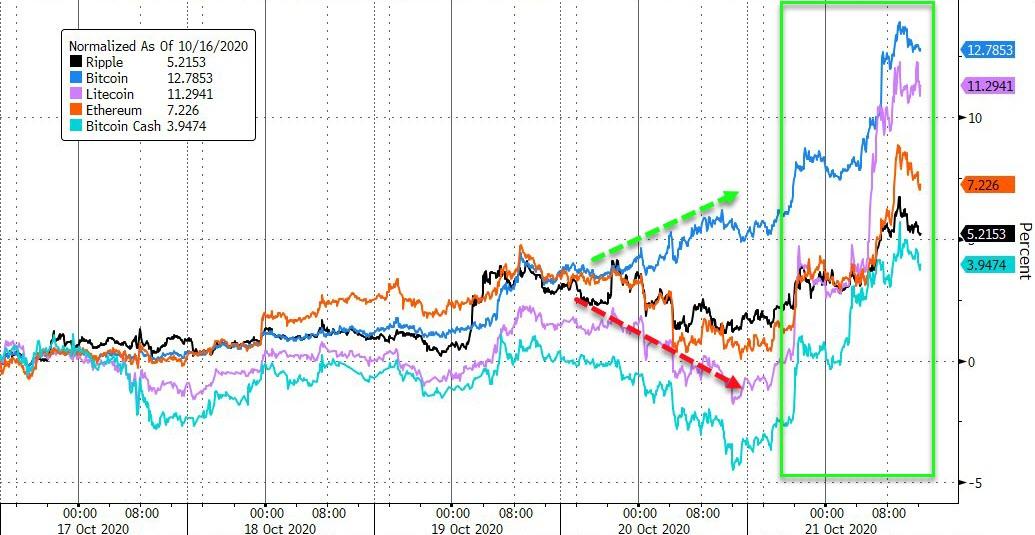
Bitcoin had decoupled yesterday but today’s PayPal news sent the rest of the crypto space higher too…

Source: Bloomberg

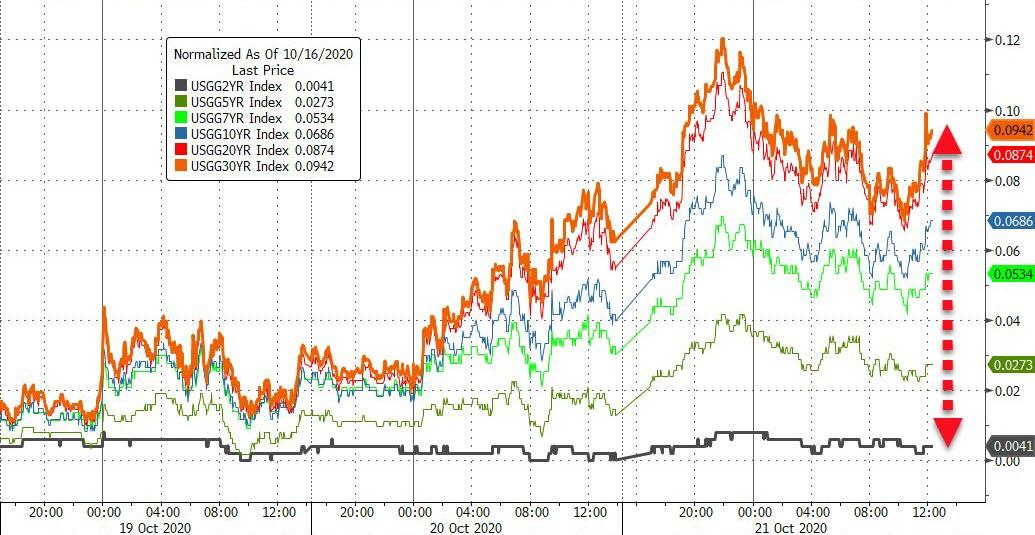
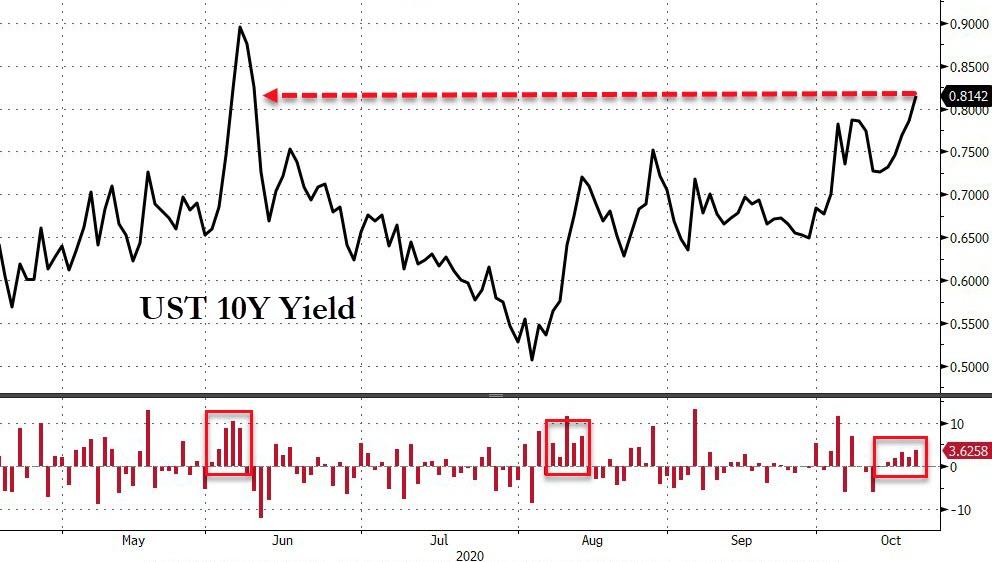
Treasury yields rose once again, led by the long-end (30Y +3bps)…

Source: Bloomberg

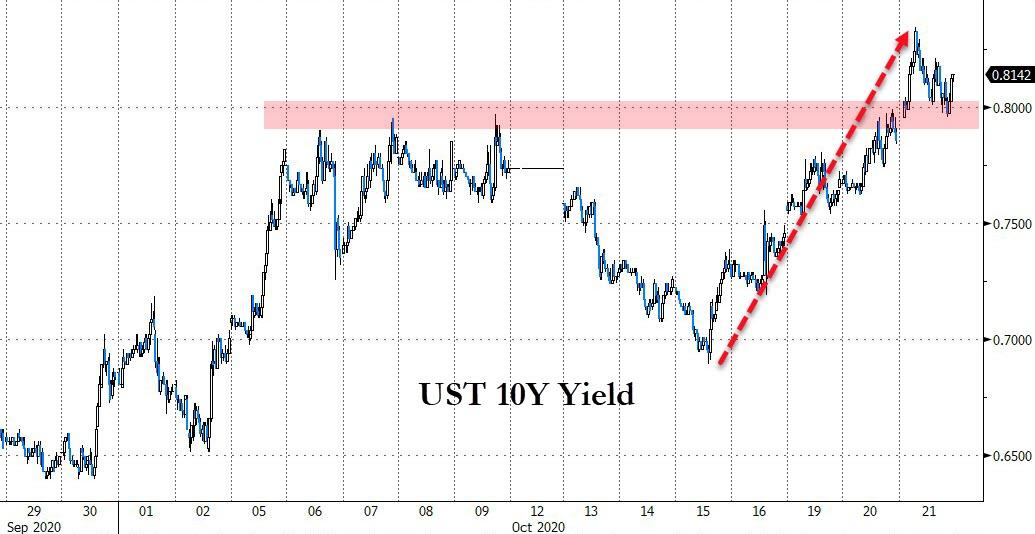
This is the 5th day in a row that yields have risen, pushing 10Y above 80bps (NOTE most of the selling was in the Asia session)…

Source: Bloomberg

…to its highest since June (NOTE these 5-day spikes have tended to reverse quickly)…

Source: Bloomberg

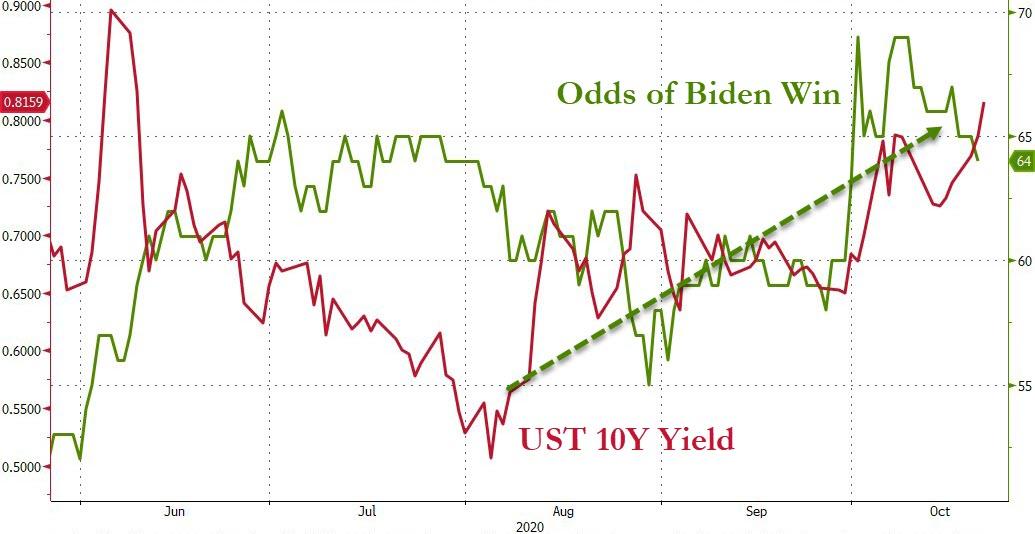
Rates are seemingly rising in line with the odds of a Biden win in the election…

Source: Bloomberg

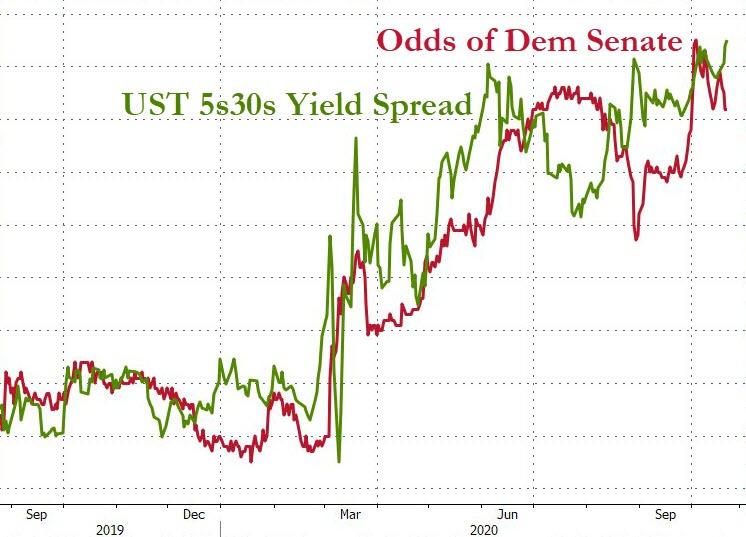
And as the odds of a “blue wave” rise are steepening the yield curve…

Source: Bloomberg

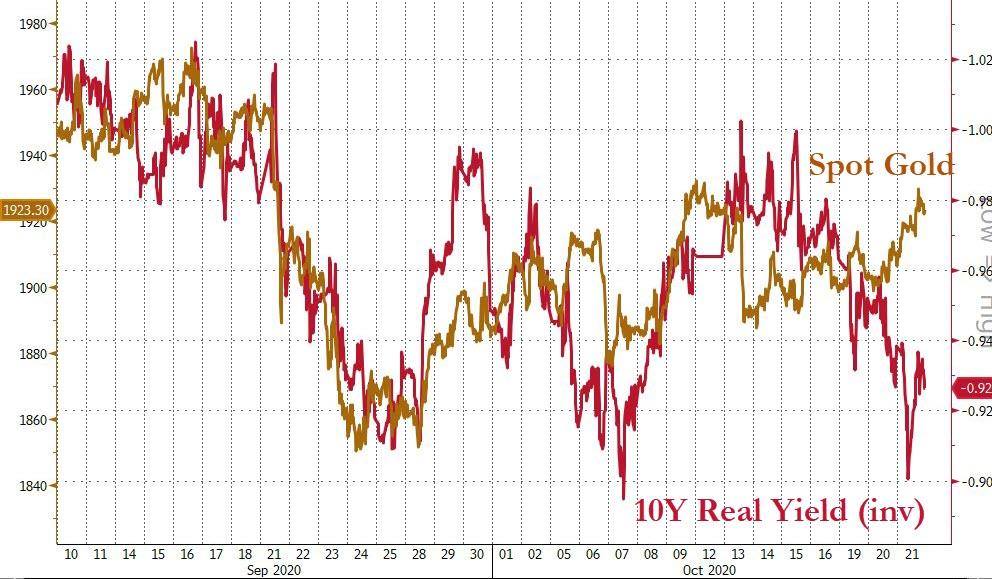
Notably, real yields are on the rise once again but gold has decoupled from its historical negative correlation…

Source: Bloomberg

WTI tumbled back to $40 intraday after a bigger than expected gasoline build…

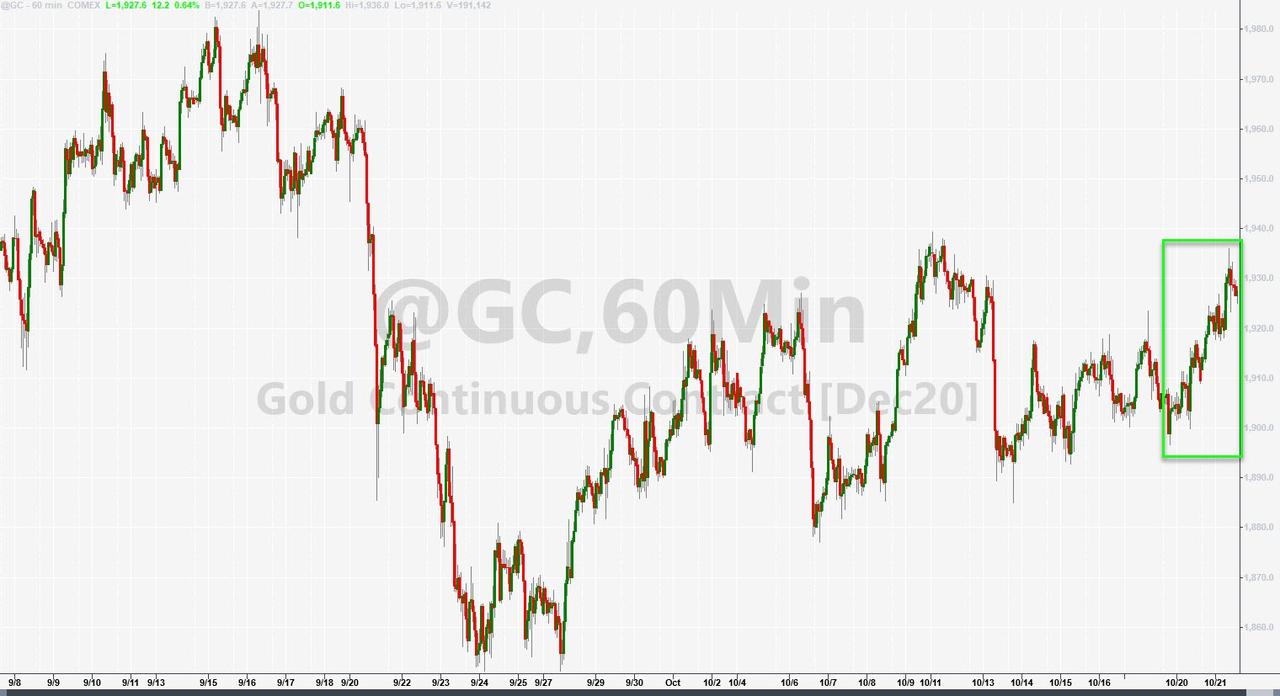
As the dollar dropped, gold popped, with futs back above $1930…

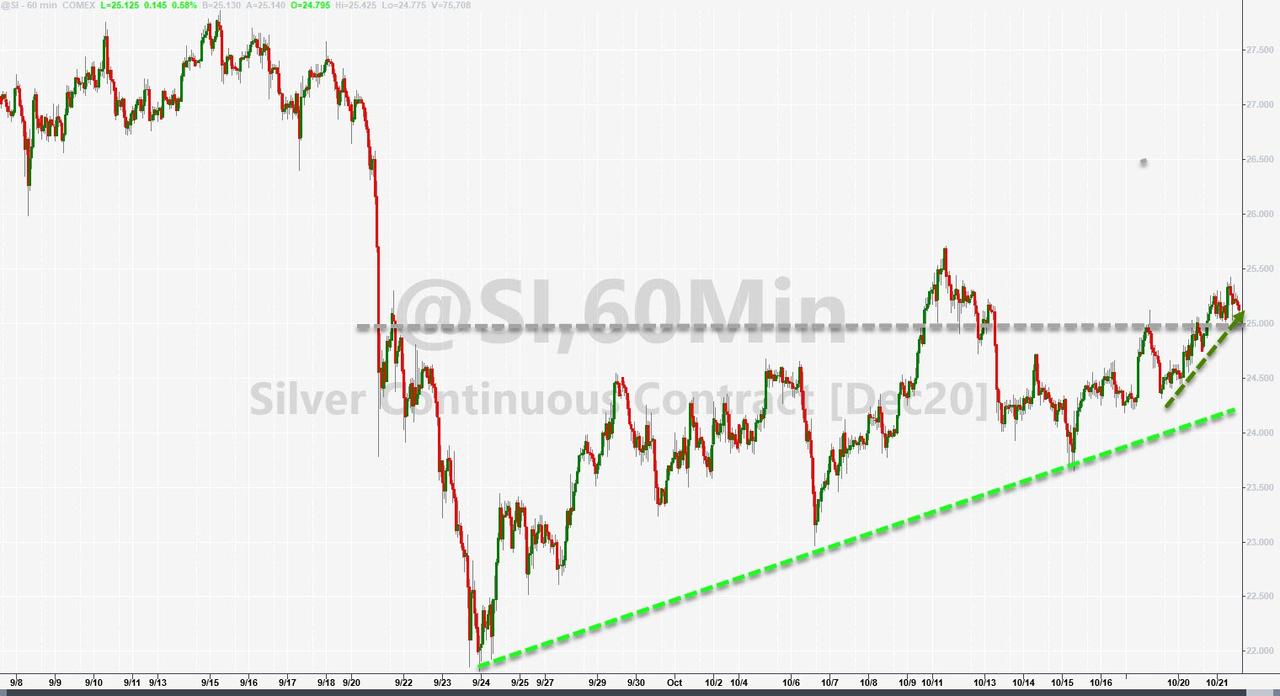
Silver futures pushed back above $25…

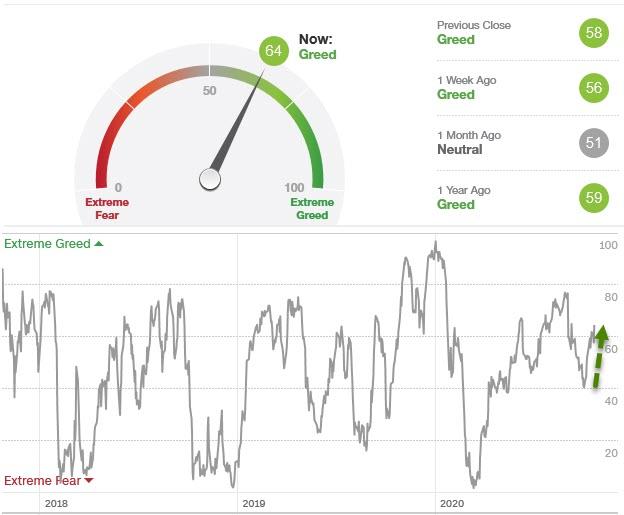
Finally, we note that Greed is back…

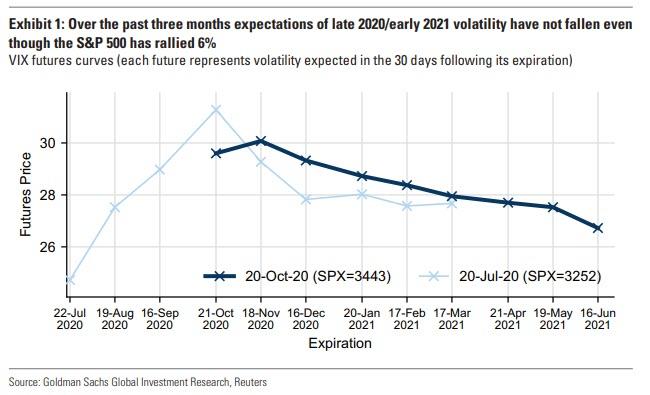
And as Goldman warns, so is fear as Vol remains significantly elevated after the election…

Markets are currently not just pricing in an increase in volatility around Election Day, but also a sustained high-volatility environment thereafter – both in the post-election period and in the long run. Does that sound like an environment to be buying every dip at record highs?

via ZeroHedge News https://ift.tt/35iI63a Tyler Durden

“Piles Of Stolen Mail On The Side Of The Road”: Ballot Thefts Reported In Two Portland-Metro Suburbs

“Piles Of Stolen Mail On The Side Of The Road”: Ballot Thefts Reported In Two Portland-Metro Suburbs

Tyler Durden

Wed, 10/21/2020 – 15:45

New reports of stolen mail, including election ballots, are surfacing in the Portland-metro area.

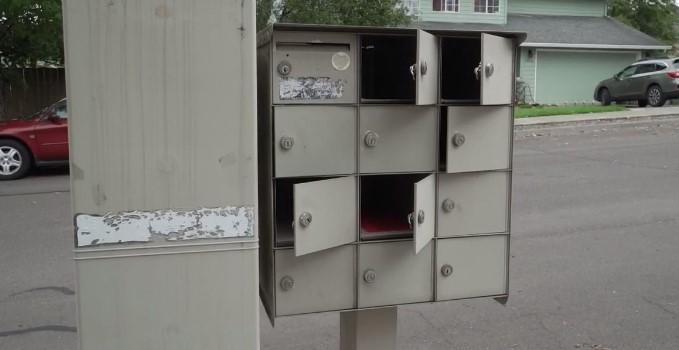
Resident Stephanie Prendergast told KGW8 that when she returned to her home on Sunday her mail and her ballot were both gone. Other neighbors who had checked their mail on Saturday found their ballots, but those who waited until Sunday couldn’t find theirs.  

“I noticed upon pulling up to our house that our mailbox was open. There was some junk mail, but no ballot,” she said.

Prendergast continued: “I think we’ve kind of entrusted that our mail is fine and our vote is fine. I would just really encourage people to not be lazy— go get your mail. We might be looking into a locked mailbox in the future.”

Not too far away, in Camas, there were similar incidents. 

Police said that neighbors reported finding “piles of stolen mail on the side of the road”, including 9 election ballots. Two residents had police deliver their ballots to their door after they were recovered. 

A Camas resident who wanted to stay anonymous said: “I just said, ‘What? My ballots were stolen?! I was upset but I was very thankful that [the officer] brought them back to us.”

Local police said that over the weekend, someone in Camas broke into four community mailboxes. One neighbor’s camera caught a possible suspect, who was driving a white four door sedan. 

Camas Police Sgt. Scot Boyles said: “We’re trying to really let the neighborhoods know to be vigilant about their community mailboxes. Know who your neighbors are, know who’s supposed to be around, and if you see someone who looks suspicious call 911.”

Boyles said police have investigated ten reports of mail theft this year, most centered around community mailboxes. He said the reports are common and that he didn’t think the latest case was politically motivated. 

“This fits the same pattern of our other mail thefts. If this was politically motivated, I think that the suspects would have damaged the ballots or made them unusable. In this case they left them sealed and threw them on the side of the road,” he concluded.

Meanwhile, Prendergast awaits a replacement ballot. She concluded: “It just feels like this shouldn’t have been complicated, and now it’s complicated.”

You can watch KGW8’s report here:

via ZeroHedge News https://ift.tt/31tWnZS Tyler Durden

“Plan For The Worst” – Law Enforcement Across America Is Bracing For Massive Election Riots

“Plan For The Worst” – Law Enforcement Across America Is Bracing For Massive Election Riots

Tyler Durden

Wed, 10/21/2020 – 15:25

Authored by Michael Snyder via The Economic Collapse blog,

The fact that law enforcement officials across the nation are expecting widespread violence following the election should chill every American to the core.  As I keep repeating over and over, violence is not going to solve anything, but much of the population is not listening to voices such as mine anymore.  As you will see below, authorities have decided to “plan for the worst” because everyone can see what is potentially coming.  But if we can’t hold a presidential election without violence at this point, how much longer can our system possibly last? 

No matter who ends up winning, I think that the election of 2020 will tell us a lot about how far America has already fallen.

Thankfully, officials in most major cities do not have their heads stuck in the sand and have been preparing for massive riots following the election.  In New York, the NYPD is literally “training every day” to deal with the riots and protests that they are anticipating…

The NYPD is training every day and deploying hundreds of extra cops as it braces for Election Day and its aftermath, amid fears riots and protests could break out after the results are announced.

In Los Angeles, officers are being told that “they may need to reschedule” their vacations so that they will be available for whatever may happen…

LAPD sent an internal memo to its officers last week that said they may need to reschedule any vacations around election day as the agency prepares for possible protests or other unrest, according to the Los Angeles Times.

In so many instances, law enforcement agencies are pointing to the riots that erupted in the aftermath of the death of George Floyd as the type of scenario that they want to be prepared for this time around.

Even down in Texas, authorities in multiple cities are admitting that “they are planning for potential unrest around the Nov. 3 election”

Agencies in at least four major cities — Austin, El Paso, San Antonio and Fort Worth — confirmed they are planning for potential unrest around the Nov. 3 election. Officials in other Texas cities declined to say whether they’re doing the same.

The intent of such preparations, said Tara Long, an Austin Police Department spokesperson, “is to ensure the safety of the community while protecting the rights of people to peacefully exercise their First Amendment rights.”

Of course in some cities the violent protests never seem to end.

Four years ago, chaos erupted in Portland when Donald Trump won the election, and the city has been wracked by civil unrest ever since then

Portland Police say they are preparing for possible unrest on election night after they saw saw riots after the 2016 presidential election.

It was just the beginning of what would be four years of unrest, protests and riots. Now, the 2020 election is just three weeks away and local police is preparing for the possibility of continued unrest.

Over in Minneapolis, shell-shocked officials continue to deal with an unprecedented wave of crime and violence, and the spokesman for the police told the press that their approach for this upcoming election is to “plan for the worst”

In Minneapolis, where the protests after George Floyd’s murder raged for weeks, similar preparations are being made. “We are aware that this may be a flashpoint and have made appropriate plans,” Minneapolis police spokesman John Elder. “Remember: Plan for the worst and hope for the best.”

I think that is a good word for all of us.

We can continue to hope that peace will prevail, but if you aren’t planning for the worst you are definitely making a big mistake.

At this point, even the Justice Department is “bracing for possible civil unrest”.  The following comes from the Washington Post

Bracing for possible civil unrest on Election Day, the Justice Department is planning to station officials in a command center at FBI headquarters to coordinate the federal response to any disturbances or other problems with voting that may arise across the country, officials familiar with the matter said.

Though the Justice Department monitors elections every year to ensure voters can cast their ballots, officials’ concerns are more acute this year that toxic politics, combined with the potential uncertainty surrounding vote tallies, could lead to violent demonstrations or clashes between opposing factions, those familiar with the matter said.

Personally, I sincerely hope that authorities will be successful in minimizing unrest as much as possible.

Any sort of political violence should break all of our hearts, because that should never happen in this country.

Unfortunately, an increasing number of Americans are convinced that things in this nation will soon take a very chaotic turn.  In fact, one recent poll found that 61 percent of Americans believe that we are heading toward another civil war…

The poll, which included results from the “Back-to-Normal Barometer” survey, was conducted by three firms: Engagious, Sports and Leisure Research Group and ROKK Solutions.

The poll results showed that over 61 percent of survey takers believe America is nearing a second civil war, with 41 percent who “strongly agree” with that assessment.

Those numbers are truly shocking, and they are consistent with other surveys that I have seen.

Anger and hatred have been building up in our country for years, and it appears that we are about to reach a crescendo.

I will continue to speak out against rioting, looting and all forms of political violence, and many other influential voices are doing so as well.

But there are also so many voices throughout our society that are just stirring up more anger and more hatred with each passing day.

So I would encourage all of you to “plan for the worst” for the months ahead.  It looks like it is going to be a very pivotal time in our history, and the more bitterly the election results are contested the worse the chaos is likely to be.

And when a winner is finally declared, many on the losing side will inevitably feel like the election was stolen from them.

There is still time to avoid a worst case scenario, but right now it is difficult to imagine how all of this is going to end well.

*  *  *

Michael’s new book entitled “Lost Prophecies Of The Future Of America” is now available in paperback and for the Kindle on Amazon.

via ZeroHedge News https://ift.tt/2HqWkqk Tyler Durden

Fallout Begins: One Of Apollo’s Biggest Investors Halts New Commitments Over Leon Black’s Epstein Ties

Fallout Begins: One Of Apollo’s Biggest Investors Halts New Commitments Over Leon Black’s Epstein Ties

Tyler Durden

Wed, 10/21/2020 – 15:03

Less than 24 hours after it was reported that Apollo co-founder Leon Black’s relationship with Jeffrey Epstein would be reviewed by a group of Apollo’s independent board members after it emerged that Black had paid Epstein $50 million for various “services” after his conviction for soliciting sex with a minor, the first domino has fallen: according to the FT, one of the biggest US public pension funds – The Pennsylvania Public School Employees’ Retirement System – has frozen new investments with Apollo Global Management, amid “growing concerns about founder Leon Black’s relationship with the late paedophile Jeffrey Epstein take a toll on the $414bn private equity group.”

“After that phone conversation, PSERS’ Investment team informed Apollo that it will not consider any new investments at this time,” PSERS told the Financial Times.

According to PitchBook, PSERS is among the biggest backers of private equity funds in the world and contributed $225 million to the New York firm’s latest buyout vehicle; at this moment, PSERS has less than $1 billion invested with the private equity group.

As we warned yesterday, it is only a matter of time before investors shun the massive PE fund, and the PSERS move underscores this point, demonstrating how the reputational crisis surrounding Black’s relationship with Epstein “is becoming a financial risk for Apollo, which manages $414 billion for investors that include many of the world’s largest pensions and sovereign wealth funds.”

In a statement, Apollo said it was “firmly committed to transparency” adding that “Leon has communicated directly with our investors on this issue and we remain in open dialogue.” And while it is true that Black sent out a letter to investors last week seeking to explain his relationship with Epstein, clearly questions remained. This is what we said yesterday:

One week ago, we asked a simple question in response to a NYT report that billionaire Leon Black, one of the brightest financial minds of this generation who is surrounded 24/7 by experts and specialists – and more importantly, his own paid employees – in absolutely every area of finance, paid “suicided” child molester and longtime pal Jeffrey Epstein $50 million after the deceased financier got out of prison for pedophilia.

Why?

Because the provided answer was ridiculous: according to Bloomberg, “For decades billionaire Leon Black turned to Jeffrey Epstein for financial advice.” But why would a billionaire financier need Epstein, who was through and through clueless about any sophisticated areas of finance, need to pay Epstein tens of millions for advice?

Neither did the answer given by Black’s spokeswoman make any sense: Black received “personal trusts and estates planning advice as well as family office philanthropy and investment services” from Epstein between 2012 and 2017. Wait… Black couldn’t get all of that for free from the the world’s biggest private equity company which just so happens he co-founded? Instead, he just had to pay Jeffrey $50 million.

“It is true that I paid Mr Epstein millions of dollars annually for his work,” said Black in a letter responding to the Times report. “It also is worth noting that all of Mr Epstein’s advice was vetted by leading auditors, law firms and other professional advisors” Black added in the process throwing virtually everyone under the bus, and adding that he had ‘once’ picnicked on Epstein’s private island with his family, and that he visited the dead pedophile ‘from time to time’ at his Manhattan townhouse.

Clearly, at least PSERS is also seeking an answer as to “why” Black continued to pay millions to Epstein year after year. And it is likely that now that the pension fund has made a “virtue signaling” example, other investors will promptly follow suit:

The abrupt halt to investment from PSERS comes as three other backers of Apollo’s private equity funds have raised concerns about the relationship between Mr Black and Epstein, after Mr Black confirmed that he had paid Epstein millions of dollars per year.

The investors, all public pension funds, say they are either already in contact with Apollo or are planning to be, as they seek further information about the links between the two men.

One fund which is appears the verge of following PSERS is Finnish pension fund Keva, whose head of alternative investments Markus Pauli said that “as a responsible investor we take ESG [environmental, social and governance] . . . seriously.” Keva which manages about €56BN and has committed $225MM to Apollo’s most recent private equity fund.

“We continue to follow the topic and are in dialogue with Apollo,” Pauli said, adding that while Keva generally tried to influence buyout groups “in a positive way” when it had concerns, it could sell its stake in funds “if the manager despite investors’ feedback does not take necessary actions to fix the situation”. He welcomed the outside probe.

The FT also noted that two UK local authority pension funds, the £7bn Essex Pension Fund and the £8.2bn South Yorkshire Pensions Authority, have also voiced concerns about Mr Black’s payments to Epstein, which were first reported by The New York Times last week.

“Clearly it raises some questions in terms of the timings and nature of the relationship and we will follow those up with the fund manager as part of our ongoing liaison,” said George Graham, director of the SYPA. He also welcomed the law firm’s review.

“We will continue to engage with our private equity manager [Hamilton Lane] to understand what steps the general partners [Apollo] intend to take,” said Essex Pension Fund. A Hamilton Lane spokeswoman declined to comment on its conversations with pension funds and Apollo on the subject.

Separately, the FT also reported that on Tuesday Apollo hired an outside law firm to conduct a probe into his links to Epstein — a move that the firm said was urged by Black “in light of continued attention” to the ties between the two men.

via ZeroHedge News https://ift.tt/3dOkE1r Tyler Durden

Secret Service Travel Logs Match Details In Alleged Hunter Biden Emails

Secret Service Travel Logs Match Details In Alleged Hunter Biden Emails

Tyler Durden

Wed, 10/21/2020 – 14:45

Authored by Ivan Pentchoukov via The Epoch Times,

Secret Service logs obtained earlier this year by Senate investigators include dates and locations matching those discussed in the emails allegedly belonging to Hunter Biden, the son of Democratic presidential nominee Joe Biden.

The alignment of the dates in the emails and the Secret Service protective detail logs is significant because the authenticity of the emails, first published by the New York Post last week, is the subject of heated debate. The FBI, which purportedly obtained Hunter Biden’s laptop in December last year, has not yet officially confirmed that it is in possession of the device and whether the emails are genuine.

In one alleged email, written after midnight on April 13, 2014, Hunter Biden wrote to Devon Archer, his business partner, that he will be traveling to Houston the next day. Secret Service logs obtained by the Senate Committee on Homeland Security and Governmental Affairs show a trip by Biden on April 13-14, 2014.

In another alleged email, Vadim Pozharskyi, a top executive from Ukrainian gas firm Burisma, wrote to Biden and Archer on May 12, 2014:

“Following our talks during the visit to the Como Lake and our further discussions, I would like to bring the following situation to your attention.”

While the email doesn’t cite a date for the trip, Secret Service logs include a travel entry for Biden on April 3-6, 2014.

In another alleged email, Archer wrote on May 12, 2014, that he is with Biden in Doha, Qatar.

Secret Service records include a trip by Biden to Doha, Qatar, on May 11-14, 2014.

The alignment in dates and location was first spotted by the staff of the Senate Homeland Security and Finance committees. Notably, some of the alleged Hunter Biden emails included discussions of Biden’s travel after he allegedly declined a Secret Service detail. Sen. Ron Johnson (R-Wis.) and Sen. Chuck Grassley (R-Iowa) penned a letter (pdf) to the director of the Secret Service on Oct. 20 asking for records after the date when Biden purportedly stopped receiving a Secret Service detail.

Rudy Giuliani, President Donald Trump’s personal attorney, provided a copy of the alleged Hunter Biden hard drive to the Post earlier this month. Giuliani declined to provide a copy to The Epoch Times, which has been unable to independently authenticate the files.

The alleged emails in the Post stories suggest that Hunter Biden used his father’s position as the vice president for personal profit via ventures with China and Ukraine.

The Biden campaign has declined repeated requests for comment on the laptop.

via ZeroHedge News https://ift.tt/34kI9wh Tyler Durden

GM Investing Billions In U.S. Factories To Gear Up For Hummer And Cadillac EV Production

GM Investing Billions In U.S. Factories To Gear Up For Hummer And Cadillac EV Production

Tyler Durden
Wed, 10/21/2020 – 14:27

In a move that we’re sure Joe Biden will somehow try to take credit for if he’s elected in November, General Motors announced yesterday that the company is going to be making a massive $2 billion investment into its Spring Hill, Tennessee factory to produce electric vehicles, including its Cadillac Lyriq. It’ll also be investing $2.2 billion in a separate factory to produce its new Hummer EV. 

The Spring Hill location is going to be the third U.S. EV factory for GM, inclusive of plans in Detroit and Orion Township, Michigan. The TN plant was commissioned in 1990 to be a Saturn plant, but that brand is now defunct, according to Reuters

The Lyriq will commence production at the new plant in 2022 and AutoForecast Solutions (AFS) also predicts that GM will announce additional EV production in Mexico. 

GM also said it would spend $32 million at a Flint, Michigan plant that builds the Chevy Silverado and GMC Sierra. The company is also investing $2.2 billion at its Detroit-Hamtramck factory to set up production for its Hummer EV, which it teased days ago alongside the announcement of the investment. 

The newly revealed Hummer EV, which will likely be a direct competitor to Tesla’s Cybertruck (if it is ever actually manufactured) boasts a 350 mile range, 1,000 HP and up to 11,500 pound feet of torque, according to TechCrunch

It starts at $80,000, but has already captured the attention of celebrities like LeBron James, who tweeted out his admiration for the vehicle to his nearly 48 million followers on Twitter yesterday.

The Hummer EV is powered by 3 motors and two Ultium drive units. It can go from 0 to 60 in around 3 seconds and also has all wheel steering, which allows it to drive diagonally in a mode called “crabwalk”. 

With 2 weeks left until the election, GM trying to focus on investing in the U.S. marks a significant shift in ethos from prior to President Trump taking the helm. One of Trump’s main campaign promises was to bring manufacturing back to the U.S. from places like China and Mexico and, while it has been a harrowing task, he has found some wins and, at the very least, has certainly shifted the focus of major company CEOs like Mary Barra. 

via ZeroHedge News https://ift.tt/2Hm8wJc Tyler Durden
Beige Book Finds “Slight To Modest” Continued Increase In Economic Activity

Beige Book Finds “Slight To Modest” Continued Increase In Economic Activity

Tyler Durden

Wed, 10/21/2020 – 14:25

Five months after the May Beige Book was shocked at the economic devastation across the US, things continue to improve according to the latest assessment from various regional Fed, which said in today’s just released August edition of the Beige Book that “economic activity continued to increase across all Districts, with the pace of growth characterized as slight to modest in most Districts”, an improvement from last month‘s Beige Book which found that gains were generally modest and activity remained well below levels prior to the COVID-19 pandemic.” The latest Fed report also found that manufacturing activity generally increased at a moderate pace – as confirmed by the latest PMI and ISM data.

Some more details from the latest report, first looking at residential, CRE activity, consumer spending, auto sales and agriculture conditions:

  • Residential housing markets continued to experience steady demand for new and existing homes, with activity constrained by low inventories.  Banking contacts also cited increased demand for mortgages as the key driver of overall loan demand.
  • However, commercial real estate conditions continued to deteriorate in many Districts, with the exception being warehouse and industrial space where construction and leasing activity remained steady.
  • While consumer spending growth remained positive, some Districts reported a leveling off of retail sales and a slight uptick in tourism activity.
  • Demand for autos remained steady, but low inventories have constrained sales to varying degrees.
  • Reports on agriculture conditions were mixed, as some Districts are experiencing drought conditions.

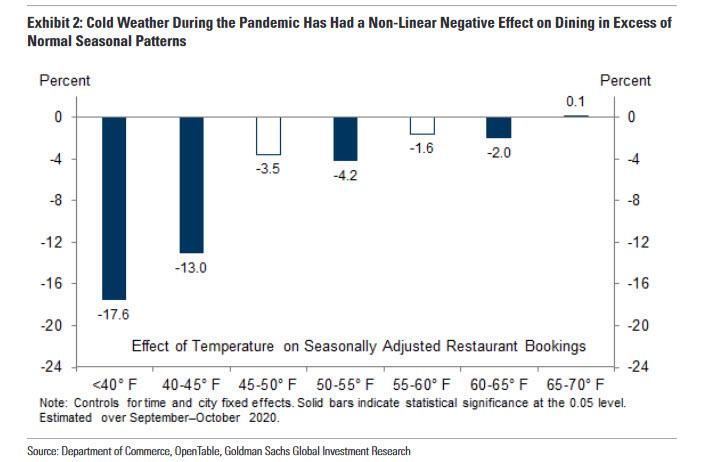
The various Fed districts characterized the outlooks as generally optimistic or positive, but “with a considerable degree of uncertainty.” Also notable is that restaurateurs in many Districts expressed concern that cooler weather would slow sales, as they have relied on outdoor dining, something we discussed two weeks ago when we found that once it gets below 40, outdoor dining is set to halt.

Ominously, banking contacts in many Districts expressed concern that delinquency rates may rise in coming months, citing various reasons; however, delinquency rates have remained stable.

Next, the Beige Book looked at jobs and wages:

  • Employment increased in almost all Districts, though growth remained slow. Employment gains were reported most consistently for manufacturing firms, although firms continued to report new furloughs and layoffs.
  • Most Districts continued reporting tight labor markets, attributing it to workers’ health and childcare concerns, with many firms consequently offering increased schedule flexibility; a few Districts, however, noted some firms were finding it easier to hire workers.
  • Wages increased slightly in most Districts, often tied to firms’ difficulty finding workers, especially for low-wage or high demand jobs.
  • Some firms reported returning wages (and raises) to normal levels, but many reported more stable wages.

Finally, a look at the most important variable in this day and age of Average Inflation Targeting, namely prices:

  • Prices rose modestly across Districts since the previous report. Input costs generally increased faster than consumer prices; however, some sectors—notably construction, manufacturing, retail, and wholesale—passed along the higher costs to consumers.
  • Overall, consumer prices across Districts rose modestly, with the notable exceptions of food, automobiles, and appliances, which increased significantly. Retail gasoline prices declined.
  • Input costs increased at  varying degrees, mostly led by increases in materials costs, particularly steel and lumber. Multiple Districts reported continued additional costs for firms due to COVID-19, including personal protective equipment, sanitation equipment, testing equipment, and technology needed for remote work.
  • Changes in row crop prices were mixed, while Districts reported declines in prices for animal proteins.

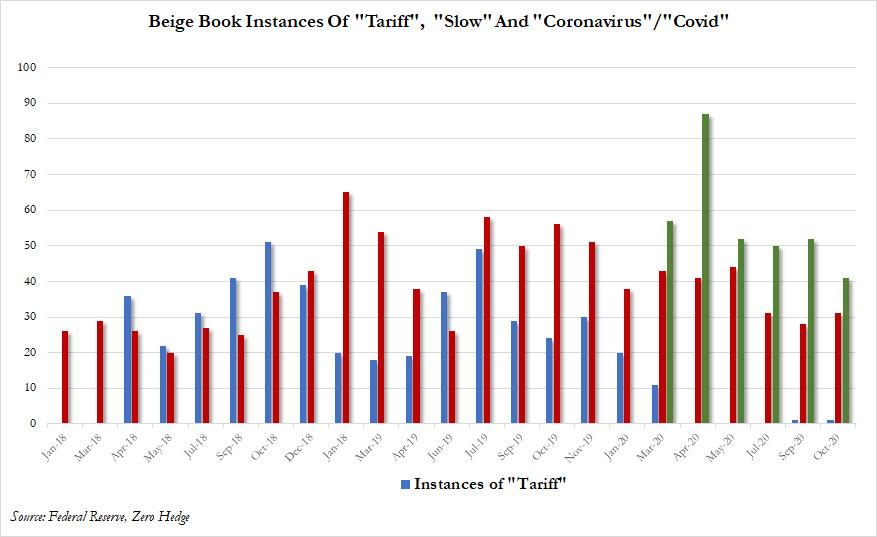
One notable aspect of the latest Beige Book: at just 41  instances of “covid” , “virus” or “coronavirus”, this was not only a big drop from the 52 last month, but also the fewest mentions of the disease since the start of the pandemic.

And another amusing fact: after initially calling the disease either “COVID-19” or “coronavirus” interchangeably, the Fed no longer mentions “coronavirus” at all, instead opting for the far more politically correct “COVID-19”

via ZeroHedge News https://ift.tt/35e2DFW Tyler Durden

Banks And The Digital Dollar

Banks And The Digital Dollar

Tyler Durden

Wed, 10/21/2020 – 14:05

Submitted by Chris Argyrople, of Pivot Analytics

Paper money is going away in the very near future.  Sooner than you realize, paper money will be replaced by a “digital-USD”.  Money is already digital.  Your bank and brokerage accounts are book entries in a digital database.  These book entries are claims that can be exchanged for paper money or paper stock certificates.  Governments, including the US government, will be mandating the exchange of all paper money for its digital “upgrade.”  Why and when will this happen?  More importantly, what implications does it have for investing?

Regarding the when, its going to happen soon, very soon.  Within 7 or 10 years, paper money will be history and not legal tender anymore.  China is already testing a digital RMB, so our leading nation is well behind its competitor, and once China rolls out its digital RMB in 2023, our government will spearhead the rollout of our USD version.  In reality, China is already fully digital.  Nobody in China uses cash anymore, and credit cards are a very small piece of their market.  Chinese people use Alipay and other digital payment mechanisms on their phones. 

Americans say “that can’t happen here, we value our privacy.”  That’s ridiculous.  If you buy with a debit or credit card, your grocery store knows when you buy broccoli and they know your brand of ice cream.  If you have a smartphone, your phone company knows where you are at all times, and, yes, they sell that location data to hundreds of companies who pay for it.   This location data is stripped of identifying records, rendering the data “blind” and “safe.”  Most people inherently understand this, but what they don’t know is that basic algorithms can then figure out exactly who you are even based on this blind data.  My friends at MIT get “blind” mobile phone data, merge it with other databases, and after they run it through algorithms, they know mostly everything about you, including your locations.   In 2020, if you used a smartphone and a credit card, “they” know everything about you.  In fact, most Americans choose to have very little privacy at all.  Google knows when you are at your girlfriend’s house, they know what gifts you buy her and most of your favorite topics.  This makes the digital dollar an easy sell for the government.  Try taking away free gmail, smartphones and credit cards and see the voters scream – people don’t want privacy. 

Later this decade, once the digital dollar is in place, the government can finally implement policy more effectively.  For example, right now, the main way that the government “prints money” is to buy bonds in the open market and hope that banks will lend the money.  The lent money is the increase in the money supply.  This system has contributed to the wealth gap, and it has also led to a lot of leverage in the system. 

Furthermore, the Fed has tried to spur inflation with no luck.  Why?  The Fed really can’t make the banks lend under the current system.  The digital dollar can cure some of these issues because the government, if its smart, will retain the right to manufacture digital dollars, thus bypassing the banks.  The Feds are sick of trying to make the banks lend then regulating them because they are over-levered.  It’s a faulty system and it is likely to be replaced by digitally created money supply which can then be sent out to the people directly.  This will enable universal basic income (UBI) models to proliferate, and it will finally be easy enough for the government to make inflation go higher when they want. 

It will also wreak havoc on the underground economy, specifically drugs and tax evasion.  With the digital dollar, everything will be traced and tax evasion will drop substantially.  Giving the government more power over the money supply (disintermediating the banks) will eventually be very inflationary. It could also be negative for the dollar exchange rate, but ultimately all governments will go this way so the FX rate implications are unclear at this juncture.  What is likely is that an aging workforce will get UBI payments in an inflation-first environment.  The government will try to inflate away the massive debt obligations, and they are likely to be successful. In 10 or 15 years, we will see massive inflation on the order of the 1970s or even worse. The Fed is on record saying they want inflation, and the politicians and public are addicted to the stimulus, so its print print print until we finally get sustained inflation.

How can one position themselves in this environment? 

Think about purchasing multi-unit apartments with long-term fixed rate debt.  Getting a 25 year fixed rate mortgage in the year 2025 is going to be the safe way to short bonds in the inflationary environment.  Note that 2025 is a number of years away, and you will want to structure these purchases before the digital dollar is in place.   It doesn’t really look like we will get the runaway inflation now, so there are a few years prior to the inflationary spiral.

If you don’t want to own real estate, then consider buying medium-P/E equities.  In today’s market, the best stocks have the highest P/Es because they are the best companies and distant profits are discounted back at very low rates, making these high P/E stocks beneficiaries of the low rate environment.  When really-high inflation hits around 2030, these high P/Es are likely to be cut in half as interest rates spike upward.  You want to still pay up for some quality, but market-average valuations should suffice.  As always, stay away from the really “cheap” stocks unless you have done a ton of homework on each situation.

Finally, be wary of investing in traditional banking models.  Right now all bank stocks are very cheap on both earnings and tangible book values.  Banks are under siege from fintech solutions.  The fintechs are fee-based and are slowly disintermediating the banks turf.  Its safe and easy to have an online account, you don’t need a bank branch anymore.  Branches are quickly becoming an anachronistic cost-hurdle that disadvantage traditional banks vs. fintechs.  Even worse, fractional reserve banking is a terrible business model.  Imagine a 0.7% or 1% ROA, then you have to lever up 10x to get a reasonable ROE.  Of course, at 10x leverage, a 10% drop in collateral value mostly wipes you out.  The next round of inflation, late in the decade or in the early 2030s, will basically wipe out all the banks.  I predict the end of fractional reserve banking in its current form. 

If the government retains the right to print and distribute digital dollars, banks in the fractional reserve system won’t be as necessary.   Its quite possible the next bank debacle will be significantly worse than 2008, so be wary of investing in banks later in the decade.  Right now, bank investors are waiting for higher interest rates, which could add to profitability.  Unfortunately, if rates really were to rise a significant amount, property values (collateral values) would fall, wiping out huge portions of bank equity – bank investors should be careful of what they wish for.  In my view, bank investing is difficult if rates stay low and also difficult if rates rise.  Keep time horizons shorter-to-medium term in any bank investments – don’t give the stocks more than a year to work.

In our next post, we will look at real estate: what will thrive post covid and what won’t.

via ZeroHedge News https://ift.tt/35oWTcy Tyler Durden