Elliott Management Latest Hedge Fund To Follow ‘Uncle Carl’ Icahn To Florida Tyler Durden
Wed, 10/21/2020 – 19:40
Ever since David Tepper revealed that he was moving back to New Jersey after briefly seeking the greener pastures (and substantially lower tax rates) of the Sunshine State (Phil Murphy said he received a personal phone call from Tepper, informing him about the additional $100 million+ in tax revenue headed to NJ), smug liberals on CNBC have been smirking about how wealthy financiers want to be where the talent is/simply can’t tolerate not having the opportunity to see three Andrew Llyod Weber musicals a week (though it’s not like anybody’s going to see a Broadway show right now).
While Manhattan remains the undisputed hedge fund capital, Florida, particularly South Florida and Miami, has seen a steady influx of capital and people over the past five years. Last fall, Carl Icahn announced plans to move his firm’s headquarters to Florida, offering employees generous severance packages if they opted not to follow the firm to Florida.
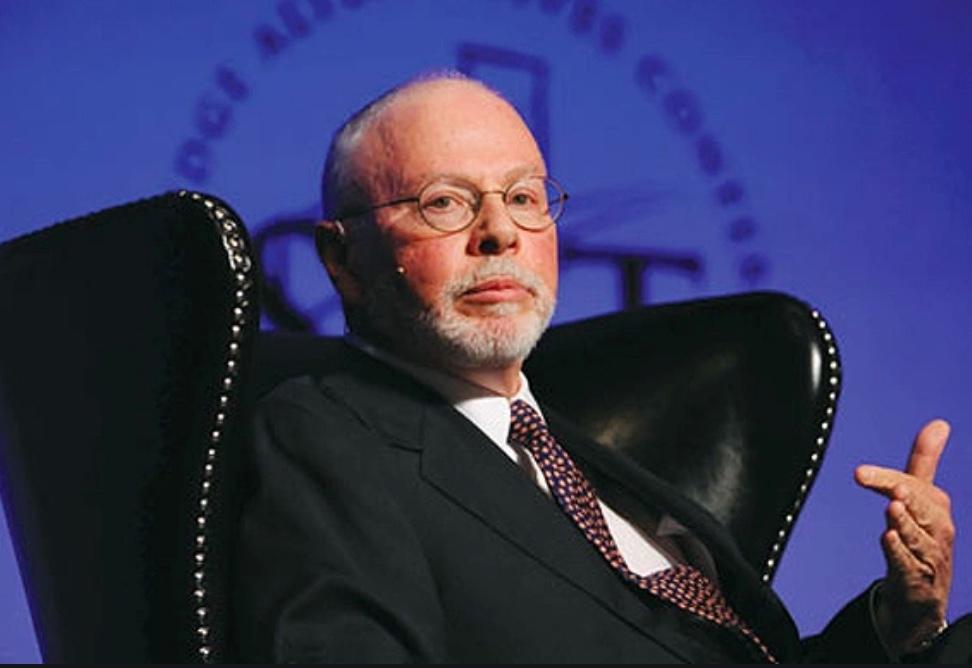
Now, Bloomberg reports that Elliott Management Corp., the investment fund run by Paul Singer, is taking its $41 billion AUM and moving it to West Palm Beach, a community best known to Americans as the former hunting grounds of Jeffrey Epstein.
The driving force behind the decision, apparently, is the fact that Singer’s co-chief investment officer and expected successor, Jon Pollock, owns a home near West Palm Beach and has been living there during the pandemic, said the people, who asked not to be identified because the information is private. The now-permanent move by Pollock, as well as several other senior officials at the fund, played a big role, as Singer apparently delegates more day to day responsibilities to this crowd.
For his part, Singer will reportedly remain “in the northeast”, though it’s not exactly clear where, specifically.
The firm will maintain some office space in NYC, and it also plans to open office space in Greenwich, Conn.
As Bloomberg points out, Elliott isn’t alone in expanding its presence in South Florida. Ken Griffin’s Citadel plans to open an office in Miami next year, and $8 billion Balyasny Asset Management, another Chicago-based firm, is also opening office space in Florida, and will have space for 30 employees by the end of the year.
It appears most of Elliott’s employees are staying put, which suggests Paul Singer is simply trying to side-step the burgeoning trend of liberal states dabbling with ‘wealth tax’ plans to plug the gaping holes in their budget caused by COVID-19. For example, Griffin is leading a campaign against a wealth tax in Illinois. Jamie Dimon recently bashed a proposed wealth tax plan in NY being pushed by – who else? – AOC.
And with New Jersey and Connecticut looking into similar proposals, we doubt this will be the last ‘wealthy billionaire’ leaves for Florida/Texas/Nevada post we write in the coming months.
via ZeroHedge News https://ift.tt/3oeDfbV Tyler Durden
Chaos In Nigeria After Soldiers Open Fire On Large Anti-Police Demonstration Tyler Durden
Wed, 10/21/2020 – 19:20
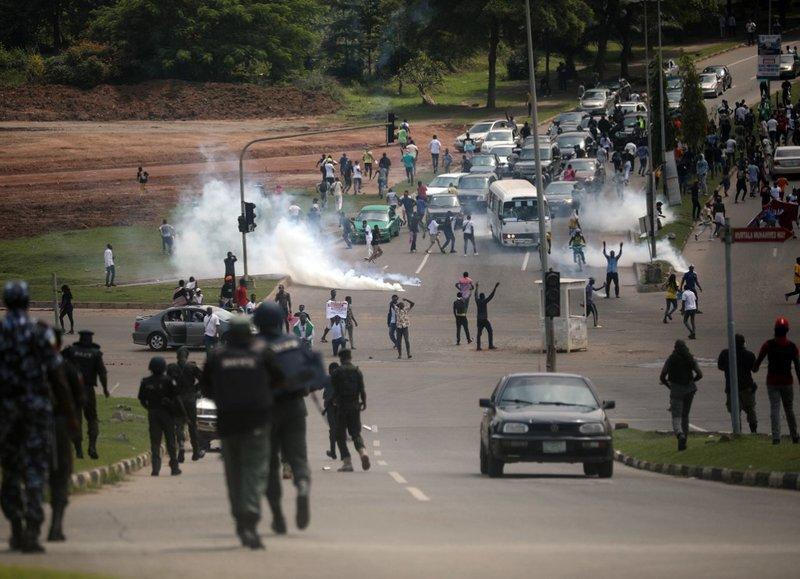
Late Tuesday night chaos broke out in the Nigerian capital of Lagos as demonstrators calling for an end to police brutality were reportedly fired upon by national soldiers or police attempting to clear the streets. At least one person was killed and one or more others were severely wounded, while dozens more were reported injured as the crowd of about 1,000 fled, according international reports.
Amnesty International initially reported fatalities among the protesters while citing “credible but disturbing evidence” that security forces were responsible. The standoff with security forces came during a curfew and as protesters attempted to erect a blockade.
It further comes a day after another ‘live fire’ incident may have resulted in injuries, and as authorities attempt a crackdown while imposing a 24-hour curfew. There’s been an estimated total of ten deaths during the recent wave of anti-police protests across multiple cities, in a situation the government says in spiraling out of control into a “monster”.
Protests in Lagos via AFP
While there are conflicting accounts, eyewitnesses told Reuters of the scene: “More than 20 soldiers arrived at the toll gate in Lekki and opened fire,” resulting in at least two people shot.
The mass protests and clashes with police have been growing more intense after a little over two weeks ago a video surfaced and went viral purporting to show officers with an elite police task force beating and torturing a man.
The video purports to show the notorious tactics of the Special Anti-Robbery Squad, known as SARS, which has long been despised especially by Nigeria’s youth. Mostly young people have been seen in the streets demanding the permanent disbanding of the SARS unit, something the government has vowed to do. Lagos is also promising further reform efforts among police and security branches.
But Nigeria’s military is denying it was behind the latest shootings on protest crowds, dismissing it as “fake news” in official statements.
“They are shooting at them at Lekki toll gate.”
Witnesses say security forces opened fire on #EndSARS protesters gathered in defiance of a curfew in Lagos, Nigeria. pic.twitter.com/yfXWewWTkE
President Muhammadu Buhari, meanwhile has downplayed the state security shootings while calling for calm and promising reform. Amid greater international media scrutiny US Democratic presidential nominee Joe Biden weighed in.
“I urge President Buhari and the Nigerian military to cease the violent crackdown on protesters in Nigeria, which has already resulted in several deaths,” wrote Biden. “My heart goes out to all those who have lost a loved one in the violence. The United States must stand with Nigerians who are peacefully demonstrating for police reform and seeking an end to corruption in their democracy.”
This is Nigeria today
RT @cnbnewsgo: Nigerian soldiers open fire on unarmed protestors in Lagos, Nigeria. At least seven #EndSARS protestors have been shoot dead and several others seriously injured.#Genocidepic.twitter.com/boh0DgkCZc
Meanwhile Nigerian military and police officials have blamed most of the violence on the protesters themselves as well as what they’ve identified as armed gangs taking advantage of the chaos to unleash violence.
via ZeroHedge News https://ift.tt/2IMiLqI Tyler Durden
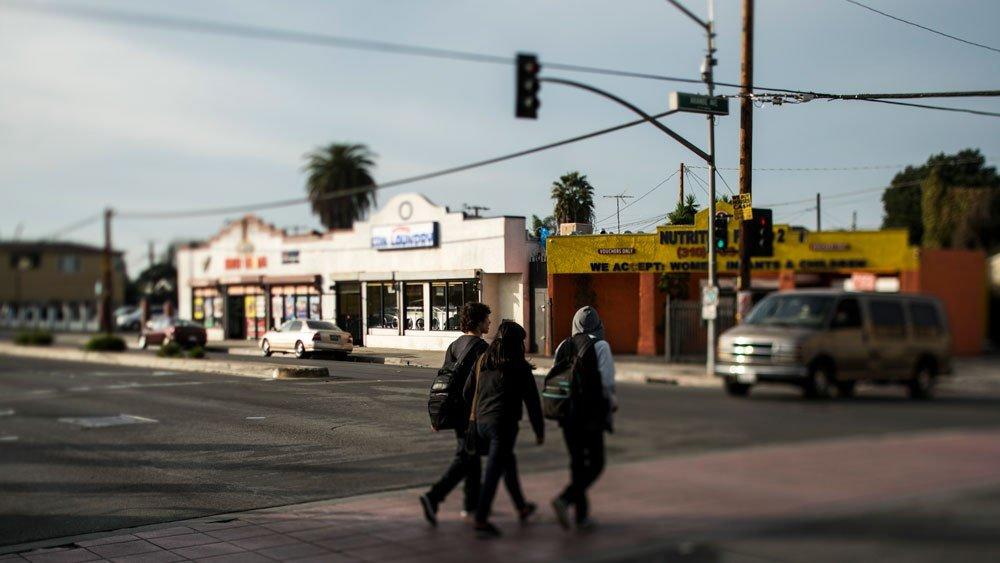
The Southern California city of Compton is launching a pilot program that aims to provide a basic income to 800 of its low-income residents, with zero strings attached.
Dubbed the Compton Pledge, the guaranteed income program will begin distributing free cash to 800 residents of the city in Los Angeles County for a period of two years. Compton Mayor Aja Brown has said that the ambitious program is the largest of its kind in for any city in the U.S.
The majority Black and Latino city is just the latest in a growing list of cities across the country, and the world, that is experimenting with new ways to put money in residents’ hands give the grave economic calamity caused by the ongoing novel coronavirus pandemic.
“I recognized that there’s a need for additional income, especially with the pandemic resulting in record high numbers of unemployment throughout the entire country,” the mayor told the Los Angeles Times.
“This is a great opportunity to address inequalities for Black and brown people and also additional opportunities for upward mobility.”
The guaranteed income program is also meant to “challenge the racial and economic injustice plaguing both welfare programs and economic systems,” according to a statement released by the Compton Pledge on Monday.
“People in our community are going through tough times, and I know that guaranteed income could give people a moment to navigate their situation, and have some breathing room to go back to school, explore a new career path, spend time with their children, or improve their mental and emotional wellbeing,” Brown said in the statement.
“Ensuring all people are able to live with dignity is something we should all strive for in America.”
Roughly 1 in 5 residents of Compton live below the poverty line – roughly double that of the national average – according to census data. The plight of Compton residents has only been compounded by the ongoing health emergency, which has raised the city’s unemployment rate to 21.9 percent.
The Compton Pledge has already raised over $2.5 million in private donations through the Fund for Guaranteed Income, a charity headed by the family of L.A. Times owner and billionaire bioscientist and transplant surgeon Dr. Patrick Soon-Shiong.
Under the program, randomly selected families from a vetted group of low-income residents will receive at least a few hundred dollars on a recurring basis along with tools helping to advise them on their finances. Parents and guardians may receive more, while anonymous researchers will track the spending habits and well-being of participants.
A representative board including nonprofit organizations like My Brother’s Keeper and the Coalition for Humane Immigrant Rights (CHIRLA) will also advise the Compton Pledge on how best to reach communities on the margins.
The program is aiming to include a representative sample of 68 percent of Latino and 30 percent of Black residents in Compton, along with those typically left out of federal and state welfare programs, such as formerly incarcerated residents and undocumented immigrants.
The program isn’t the first of its kind in the Golden State, where opulent displays of wealth often exist side-by-side with extreme poverty.
In 2019, Stockton Mayor Michael Tubbs launched the first guaranteed income program in the country, known as the Stockton Economic Empowerment Demonstration, which gave 125 Stockton residents a $500 payment for 18 months.
The concept of distributing free money to citizens without strings attached has gained popularity in recent times, due in no small part to the economic impact of the pandemic.
Political parties and figures both on the traditional left and the right have raised the demand for guaranteed income or Universal Basic Income (UBI), with some of its strongest proponents include tech oligarchs and venture capitalists like Peter Thiel, Marc Andreesen, and Jack Dorsey.
Supporters of the plan argue that inequality would be reduced by basic income and it would provide an added layer of financial security for certain people. Supporters of the plan, such as former Democratic presidential candidate Andrew Yang, also suggest that with jobs in myriad industries slated to be rendered obsolete by automation and computerization, a universal basic income is required to prevent a deeper humanitarian and financial crisis.
Critics on the left have suggested that basic income is a Trojan horse that would be a vehicle for dismantling what little remains of the welfare state, offering the “paying people for being alive” stipend in exchange for austerity and the destruction of social safety nets that protect the most vulnerable members of society and offer a small barrier to extreme inequality.
On the right, however, opponents have claimed that the idea is far too expensive and would dis-incentivize people from seeking work and would be tantamount to subsidizing poor people’s substance abuse habits or reckless spending on “temptation goods.”
However, decades of research has shown that most people on such programs continue to work after receiving the transfers, while those who work less spend more time with their families.
With many countries experiencing a free fall in jobs numbers – as well as sharply declining consumer demand and household spending – the idea of guaranteed basic income has gained popularity unseen since the idea saw a surge of interest following the 2008 financial crash.
In the South American nation of Colombia, politicians across the political spectrum have urged the government to introduce an Emergency Basic Income to mitigate the damage of the COVID-19 pandemic. The municipal government of Bogota under Green Party Mayor Claudia Lopez was the first city in the South American nation to offer basic income to vulnerable households struggling to feed themselves amid the lockdown. The plan also included integrating 581,000 poor households into the banking system, according to a press release from the City of Bogota.
While the Compton Pledge is beginning as a far more modest program, community advocates are hopeful that the program can be a success.
“Guaranteed income is an urgent and necessary strategy for addressing the economic realities of racial injustice,” said Black Lives Matter co-founder Patrisse Cullors.
Proponents also hope that this can become a trend that sparks a nationwide system of direct, recurring payments to vulnerable families.
“Guaranteed income will afford people the dignity of an income floor and agency to make choices for themselves,” said Stockton Mayor Michael Tubbs.
“Poverty stems from a lack of cash, not a lack of character,” he added.
via ZeroHedge News https://ift.tt/37rfTde Tyler Durden
US Oversees Unprecedented Preliminary Deal To Transport UAE Oil To Europe Via Southern Israel Tyler Durden
Wed, 10/21/2020 – 18:40
It didn’t take long for the historic US-brokered peace and ‘normalization’ of ties between Israel and the United Arab Emirates to shift focus to a potential major oil pipeline project in the works.
Israel’s Haaretz newspaper reports, “In what could become one of the most significant deals to emerge since Israel and the United Arab Emirates normalized relations, the Israeli state-owned pipeline company Europe Asia Pipeline Company, or EAPC, said on Tuesday that it had signed a memorandum of understanding to store and transport oil and distillates from the UAE to Europe.”
Below is the EAPC route through southern Israel from the Red Sea to the Mediterranean port of Ashkelon. This is unprecedented considering that up until just months ago the Arab Gulf states and Israel were official enemies, as they had been for decades especially over the fate of Palestinians.
Haaretz reports further that the memorandum of understanding was signed in Abu Dhabi on Monday, in a ceremony attended by US Treasury Secretary Steve Mnuchin.
“This is a historic agreement that will increase cooperation between EAPC and regional and international players. Without a doubt, this agreement has great importance for the Israeli economy both economically and strategically, because it involves long-term joint investments,” EACP Chairman Erez Kalfon said.
The Saudi-owned media outlet based on Dubai, al-Arabiya, also confirmed the preliminary deal.
And Reuters cited an inside source who speculated it could be worth an estimated $700-$800 million in the coming years. The arrangement “is likely to increase the transferred quantities by tens of millions of tons per year,” the source said. Supplies could start being delivered via the Red Sea to Mediterranean route by early 2021.
Yesterday, the Israeli company EAPC (which operates the Eilat-Ashkelon pipeline) signed a deal with the MED-RED consortium in the presence of the US Secretary of Treasury, Steven Mnuchin pic.twitter.com/mLczXV2q9j
Europe Asia Pipeline Co, which is jointly controlled by Israel’s government and UAE-based MED-RED Land Bridge plans to “deliver petroleum distillates originating in the Gulf through the EPAC pipeline and sell them to European customers,” according to Haaretz.
Specific details are being described as a tightly guarded secret, however, there’s speculation that the pipeline could eventually be extended across Saudi Arabia, also possibly as part of Washington’s desire to see normalized relations between Riyadh and Tel Aviv, which would be a monumental step.
The details of the deal are not clear, but some reports suggest the pipeline will be “extended to the UAE” (here from Times of Israel), which would mean crossing into Saudi Arabia pic.twitter.com/PkHYS5SK6k
The day after the signing of Monday’s historic MOU, the first official UAE delegation flew to Tel Aviv accompanied by Treasury Secretary Steven Mnuchin.
The pipeline itself has for decades been highly secretive in terms of operations, as well as source of geopolitical conflict. The pipeline’s history is fascinating considering it started as a joint Israeli-Iranian venture, as unlikely as that sounds. As Bloomberg summarizes, it reaches back to the years of the US-backed Shah in Iran:
The Eilat Ashkelon Pipeline Co., as EAPC used to be called, was jointly owned by the Jewish state and Iran’s government. Tehran would ship some of its Europe-bound oil to Eilat and then pipe it to Ashkelon on the Mediterranean.
After Iran’s Islamic Revolution in 1979, the nations became enemies. Yet for some years Israel still allowed Iranian oil to be sent through the pipeline in secret, including by Glencore Plc founder and sanctions-busting commodities trader Marc Rich.
Amazingly, it’s still unknown just what the pipeline has transported and sourcing in terms of operations over the past years. “The two countries have argued over the pipeline more recently, with Tehran wanting compensation after Israel took over its 50% stake. “Even today, information on what flows through the pipeline can be censored by Israel’s military,” continues Bloomberg.
It’s already being reported that a $3 billion Jerusalem-based fund which has US government involvement is getting behind the Israeli-UAE project.
It appears that for all the media hype surrounding the historic opening up of diplomatic relations between Arab Gulf states and Israel, at the end of the day it all comes back to oil, as has long been the story in the Middle East.
via ZeroHedge News https://ift.tt/3kkVlXx Tyler Durden
Update 1755ET: Following The Guardian’s full-court-press effort to distract from the disturbing details being exposed about Hunter Biden (and his father), the rest of the activist media jumped on the Giuliani-hand-down-his-pants/Borat story.
As the embarrassing story took on a mind of its own among social media and mainstream media types, the former New York Mayor has taken to Twitter to respond and clarify what exactly happened…
The Borat video is a complete fabrication. I was tucking in my shirt after taking off the recording equipment.
At no time before, during, or after the interview was I ever inappropriate. If Sacha Baron Cohen implies otherwise he is a stone-cold liar.
In fact, the NY Post today reports “it looks to me like an exaggeration through editing.”
As soon as I realized it was a set up I called the police, which has been noted in THR article on July 8th.
This is an effort to blunt my relentless exposure of the criminality and depravity of Joe Biden and his entire family.
Deadline Hollywood reports CAA had a distribution screening in September where there was no mention of the scene holding any importance.
We are preparing much bigger dumps off of the hard drive from hell, of which Joe Biden will be unable to defend or hide from. I have the receipts.
If this is all the Deep State has to try and distract from HunterGate, they have a problem (and so far have not denied any of the details that have been exposed).
And on the bright side, no Russians were blamed and at least he wasn’t masturbating on a work Zoom call.
* * *
As TheMindUnleashed’s John Vibes detailed earlier, Rudy Giuliani is among the high profile figures who were pranked for Sasha Baron Cohen’s new Borat sequel, and so far his encounter is the most embarrassing. Cohen and Maria Bakalova, the actress who portrays Borat’s daughter in the film, brought Giuliani into their prank by posing as conservative TV journalists.
They conducted an interview with Giuliani where they were extremely agreeable and after the interview, Bakalova went back to a nearby hotel room with him for a drink. The room was rigged with hidden cameras, which recorded Giuliani apparently untucking his shirt and reaching into his pants.
Once he began to reach into his pants, Borat runs into the room and shouts, “She’s 15. She’s too old for you.”
Just after the incident, Giuliani called New York City police to report the incident, claiming that he was the victim of a scam or a set up.
Giuliani described the encounter to the New York Post, saying that:
“This guy comes running in, wearing a crazy, what I would say was a pink transgender outfit. It was a pink bikini, with lace, underneath a translucent mesh top, it looked absurd. He had the beard, bare legs, and wasn’t what I would call distractingly attractive. This person comes in yelling and screaming, and I thought this must be a scam or a shakedown, so I reported it to the police. He then ran away.”
Giuliani said that he later realized that it was Sacha Baron Cohen and was relieved that he didn’t fall for their prank, although he seems to be the only one that thinks that.
“I thought about all the people he previously fooled and I felt good about myself because he didn’t get me,” he said.
Of course, the encounter made Giuliani look very creepy, but no laws were technically broken because Bakalova is 24-years-old and initiated the encounter. They were also interrupted before Giuliani got the chance to do anything illegal.
The plot of the new film revolves around Borat’s quest to give his daughter to a powerful US politician as a gift. As with the last film, Borat encounters a variety of different Americans in his travels, and their interactions are intended to illustrate a sort of culture shock that he is experiencing, while also satirizing the cultures of both America and Kazakstan.
However, due to the overwhelming success of the first film, Borat’s face was very easy to recognize for most of the people who he attempted to prank, so he needed to get creative and don disguises so his targets would feel more comfortable and let their guard down.
In one scene, he wears a very realistic Donald Trump disguise and crashes the American Conservative Union’s Conservative Political Action Conference, while Mike Pence is giving a speech.
In the scene, which is shown in the trailer, Cohen is seen running through the conservative convention wearing the Trump mask, and carrying an unconscious woman over his shoulder. He bursts into the room where Pence is speaking and shouts “Micheal Paenis I brought that girl or you.” Mike Pence looked directly into the crowd, glaring at Cohen.
The new film will be available to stream for Amazon Prime subscribers on Oct. 23.
via ZeroHedge News https://ift.tt/3dKRWP4 Tyler Durden
Senior editor, Ash Bennington, joins Jared Dillian, editor of The Daily Dirtnap, to discuss the art of portfolio construction and his current outlook on markets. Dillian shares his thoughts on why investors whose sole focus is on returns fail and how to structure a portfolio that properly accounts for risk. He also breaks down how he gets exposure in real estate as well as how he’s thinking about the implications of the Fed backstopping the credit markets. Dillian also covers his thoughts on Bitcoin, time horizons, U.S. election outcomes, and trend following. In the intro, Real VIsion’s Nick Correa share the latest CEO confidence numbers and the next big, potential SPAC deal between Michael Bloomberg and Bill Ackman.
via ZeroHedge News https://ift.tt/3jdL6mo Tyler Durden
Hollywood-Backed Quibi Headed For Shutdown After Squandering Nearly $2BN In 6 Months Tyler Durden
Wed, 10/21/2020 – 18:00
It looks like we can officially add Quibi to the growing list of unicorns that have been slaughtered by the coronavirus pandemic.
According to the Wall Street Journal’s latest report on the doomed Hollywood-backed Netflix competitor, Quibi’s management has accepted the fact that it will likely need to shut down, and return capital to investors, following a difficult reckoning with a team of expensive consultants.
The last time we checked in on Quibi, co-founders Meg Whitman and Jeffrey Katzenberg (the project was originally conceived by the former Walt Diseny Studios head and Dreamworks Mastermind, and he then brought Meg Whitman on to “execute” his vision for a mobile-only Netflix), Katzenberg had reluctantly ‘fessed up to the board that Quibi was in serious trouble. Quibi raised nearly $2 billion, and in just six months, it hasn’t brought in anything close to a sustainable revenue stream.
To try and chart a path forward, Quibi made the decision a few weeks back to bring on an expensive team of consultants to put together a list of options. That list has beepooo
Previous reports about Quibi described a company where Whitman and Katzenberg, two indisputable titans in the tech industry, surrounded themselves with ‘yes men’. In meetings, staffers were afraid to challenge their bosses, which is how ideas like being ‘mobile exclusive’ came about.
When Quibi premiered in April, critics lazily expected it to rack up a sizable following, due to its pedigree. But users quickly became frustrated when they realized they couldn’t stream Quibi’s content on their TVs. At this point, Quibi was targeting a market – the American commuter – that had greatly diminished in size.
To be sure, Quibi’s lineup got surprisingly creative at points, like with “Dummy”, a short series about a millennial woman who befriends her boyfriend’s sex doll.
A scene from “Dummy”
As this reality sunk in, critics and viewers alike were confronting another issue: for all the hundreds of millions of dollars Quibi had sunk into programming, the company had failed to produce anything even close to resembling a hit.
Katzenberg and Whitman are expected to host a call with the company’s backers on Wednesday where they could make an announcement about whether Quibi will be shuttered, or whether the company might persue a deal. While Quibi has tried to market its “library of content” as an attractive selling point, the company is also currently mired in a lawsuit with a much smaller technology firm called Eko, which claims Quibi stole its mobile-streaming technology from Eko.
While Katzenberg has taken to blaming COVID-19 for Quibi’s failure, we believe that boomer arrogance and egotism played just as big a role. This is plainly evident in one of Whitman’s first interviews with CNBC on the topic early last year.
via ZeroHedge News https://ift.tt/35oUYVB Tyler Durden
“Never let a good crisis go to waste.” Those were the words of Saul Alinsky, author of Rules for Radicals, a book in which he describes Lucifer as the “very first radical.”
Later, Rahm Emmanuel, Obama’s Chief of Staff who wanted to mandate national civilian service and who donated his time during the Gulf War to repair damaged Israeli tanks as well as oversaw a cesspit torture state as mayor of Chicago, would paraphrase Alinsky when, during the 2008 financial crash, he stated, “You never want a serious crisis to go to waste. I mean, it’s an opportunity to do things that you think you could not do before.”
Fast forward to 2020, COVID-19 is now the “crisis” that shouldn’t be wasted
As the COVID-19 restrictions began in earnest in March, 2020, Emmanuel once again reprised his paraphrase which has now become more of a slogan for him than Alinsky. “Never allow a crisis to go to waste,” Emanuel said. “Start planning for the future. This has to be the last pandemic that creates an economic depression. We’re going to have more pandemics, but this has to be the last economic depression.”
Emmanuel needn’t worry. This crisis, manufactured or not, is not going to waste. In fact, COVID is proving to be the biggest gift to totalitarian governments, pharmaceutical companies, and major corporations we have seen since 9/11. Indeed, for these institutions, Christmas came early this year.
Most major corporations have been able to hold on through months of idiotic and fascistic shutdowns and lockdowns (a prison term, it should be noted). Small and independently-run businesses have been disappearing by the trainload.
Big corporations thrive, while people are left hopeless, stressed, and considering suicide
Increased poverty allows for increased control as well as for the direction of broken hopeless people into action desired by governments and Deep State color revolutions. Increased medical surveillance under the guise of “contact tracing” is giving rise to a surveillance state at the personal level foreseen by researchers long ago. (Here’s some information on surviving extreme poverty from a person who has been there.)
Many people are holding on to the false hope of “maybe next year will be better,” the truth is that, unless something miraculous happens, it won’t be. In fact, it may be worse. Food shortages are not coming, they are here. External and internal refugees are leaving war-ravaged areas as well as areas currently being ravaged by natural disasters. They are also leaving states run by extreme leftist politicians to states that promise a few slivers of freedom and normalcy. But, with the wave of “refugees,” there will also come a wave of change to the culture of the places they arrive.
Shadowy much-quoted “experts” have stated that the “new normal” is here to stay
Case in point, a new provision approved by the Metropolitan Transportation Commission in the Bay Area is now requiring employees to work from home at least three days a week even after the alleged pandemic.
The reason? Climate Change.
The provision states that forcing these workers to work from home instead of commuting via cars or public transport will reduce “Greenhouse Gas Emissions” and thus reduce the “carbon footprint” of the area. The goals of greenhouse gas reduction were set and agreed to previously, no doubt following the mandates set by the United Nations and international foundations.
According to the Mail Online,
A new proposal could require Californians to work remotely three days a week – even after the COVID-19 pandemic – to reduce greenhouse gas emissions to aid in environmental efforts.
A number of Bay Area residents, including employees at large tech firms, were concerned over a new proposal approved by the Metropolitan Transportation Commission on Wednesday.
The controversial proposal would effectively ensure that sizable, office-based companies kept 60 per cent of their workers at home on any given workday to curb climate change.
‘Given the changes in travel patterns during the coronavirus pandemic, there was strong support for bolder policies on this front in the Final Blueprint, including a mandate for office-based employers,’ the proposal read.
‘To ensure this strategy achieves equity goals, a complementary strategy to expand internet access in underserved communities was added to the Economy Element as well.’
…
‘There is an opportunity to do things that could not have been done in the past,’ said Oakland Mayor Libby Schaaf, a commission member and proposal supporter, per NBC News.
Does that last little bit sound familiar to you? In the past, tyrants in the United States had to at least hide the fact that they were capitalizing on a crisis, even if it was imagined. Lip service had to be given to freedom and “democracy” (even though the United States isn’t a democracy, it’s a Republic).
Your way of life, stressful as it was, has been changed forever.
There is no intent to ever give it back. In fact, the stressful days of commuting, endlessly yammering coworkers, and fluorescent lighting, when it is compared to the miserable existence you will suffer through in the near future, something you will think of fondly.
That is, unless you choose to do something about it.
Don’t comply out of fear or shame.
Don’t comply at all.
If you want to live free
Just.
Live.
Free.
via ZeroHedge News https://ift.tt/3dKBG0F Tyler Durden
Indonesia Refuses To Host American Spy Planes Amid Sino-US Cold War Tyler Durden
Wed, 10/21/2020 – 17:20
The US and China are smack dab in the middle of a new Cold War. The observation in itself should not be startling to readers – as President Trump’s trade war metamorphosed into a technology war over the Chinese tech companies’ global dominance. Rapidly deteriorating relations between both superpowers, especially since the virus pandemic, has resulted in increased military action in East Asia.
In the last couple of years, we’ve pointed out the US has constructed a Lockheed Martin F-35 stealth jet “friends circle” around China. More recently, there’s been a significant uptick in US spy planes changing their transponder codes to disguise themselves during operations near China.
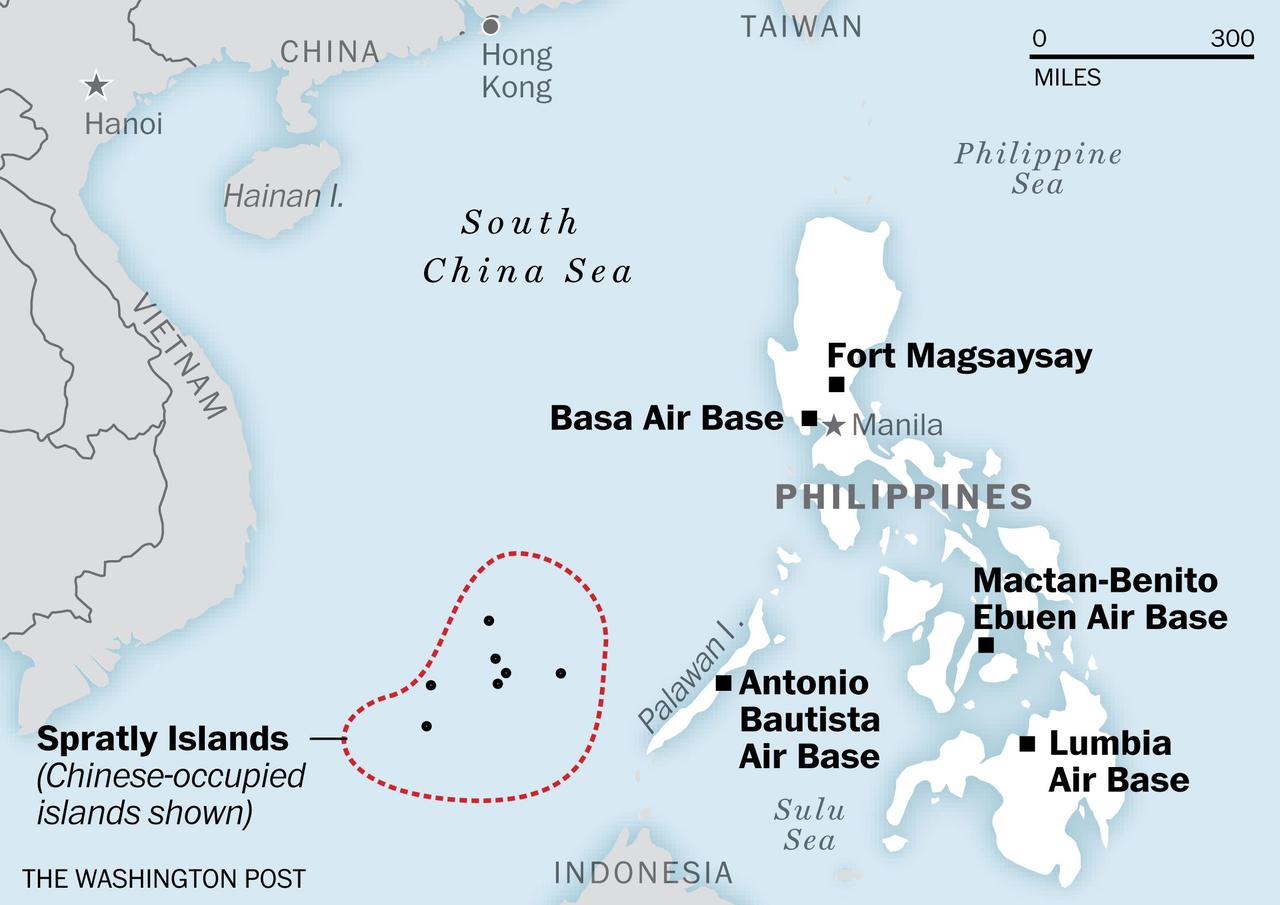
In the attempt to increase spy plane presence in East Asia, US officials made multiple “high-level” attempts in July and August to Indonesia’s top defense and government officials to clear the way to allow Boeing P-8 Poseidon maritime surveillance planes to land and refuel on the Southeast Asia country.
Four senior Indonesian officials familiar with the matter told Reuters that defense officials rejected the US proposal because Indonesia has a well-established policy of foreign policy neutrality – and does not permit foreign militaries to operate across its archipelago.
Reuters notes the P-8 “plays a central role in keeping an eye on China’s military activity in the South China Sea, most of which Beijing claims as its territory.”
Indonesia rejected the US spy plane presence because it has developed increased economic and investment ties with China over the years.
“It does not want to take sides in the conflict and is alarmed by growing tensions between the two superpowers, and by the militarization of the South China Sea,” Indonesia’s Foreign Minister Retno Marsudi told Reuters.
“We don’t want to get trapped by this rivalry,” Retno said in an interview in early September. “Indonesia wants to show all that we are ready to be your partner.”
Dino Patti Djalal, a former Indonesian ambassador to the US, said the “very aggressive anti-China policy” projected by the US has become troubling for Indonesia.
“It’s seen as out-of-place,” Djalal told Reuters. “We don’t want to be duped into an anti-China campaign. Of course, we maintain our independence, but there is deeper economic engagement, and China is now the most impactful country in the world for Indonesia.”
Greg Poling, a Southeast Asia analyst from the Washington, DC-based Center for Strategic and International Studies, said Washington’s attempt to pressure Indonesia into giving up land rights so US spy planes can fly in and out of the country is an example of “clumsy overreach.”
“It’s an indication of how little folks in the US government understand Indonesia,” Poling told Reuters. “There’s a clear ceiling to what you can do, and when it comes to Indonesia, that ceiling is putting boots on the ground.”
Both China and the US have recently ramped up military exercises in the South China Sea. The US has increased naval freedom of navigation operations, submarine deployments, and spy plane flights, while China has increased naval missions in the region.
To sum up, the new cold war has pressured Southeast Asian countries to take sides; they must choose between the US and or China. As for Indonesia, they quickly decided to be neutral with a lean towards China. Does this mean China’s gravity in terms of its size and its influence is overwhelming the US?
via ZeroHedge News https://ift.tt/3jhao2T Tyler Durden
Since the outbreak of the coronavirus, the United States has experienced one of the most unprecedented economic interventions in all of its history. Since March and April both the Federal Reserve and the US federal government have injected trillions into the economy in hopes of stabilizing it and reducing unemployment. At the expense of the public, both institutions have handicapped themselves for the future, and it will be extremely difficult to ever return to a “normalized” policy situation without triggering a larger economic crisis.
On February 11, 2020, Federal Reserve chairman Jerome Powell delivered a semiannual report wherein he laid out the present risks that both the Fed and the federal government face. Some of the risks addressed were low interest rates spurred by the Fed and burdensome debt from the federal government that would limit the ability of both institutions to provide the necessary stability when an economy goes into a downturn. By the next day, the Dow Jones had reached an all-time high of 29,551.42. The rise in equity prices sparked confidence in the market and, for the most part, overlooked the risks that the coronavirus had in store for both the nation and the world.
By March, as concerns over the covid-19 virus spread, many investors began to question the sustainability of profits for businesses as mass lockdowns became a policy implemented throughout the world. On March 11, the World Health Organization (WHO) declared the coronavirus a pandemic, as the world had over 118,000 cases, and on that same day, the United States entered into a bear market as the Dow fell 20 percent from its peak.
Immediately following, the Federal Reserve on March 13 began to inject $1.5 trillion in liquidity through repurchase operations (short-term loans) through incremental portions of $500 billion over the next three months. In addition, the Fed two days later cut the federal funds rate an entire percent, to 0–0.25 percent, and injected an additional $700 billion in liquidity into the markets. The intervention by the Fed was not well accepted, as the Dow Jones declined another 12.3 percent, reaching what Wall Street viewed as a low of 18,591.93 on March 23.
While panic brewed in the markets, state governments across the United States began to impose stay-at-home orders during the month of March that would last up until the end of May in most areas. The stay-at-home orders ordered any “nonessential” business to be closed, whether it was movie theaters, gyms, or sporting events. In response, Congress formulated a stimulus plan known as the CARES Act (Coronavirus Aid, Relief, and Economic Security Act) that would provide $2.2 trillion of liquidity to businesses in the forms of loans and grants and checks of up to $1,200 to individuals depending on their income. After days of debate, it was passed by Congress and finally signed by President Trump on March 27. The stay-at-home orders, which closed or partially closed many businesses, were in effect, resulted in the unemployment rate rising to 4.4 percent, with 701,000 jobs lost by the end of March.
More stimulus followed in April as the Fed decided to embark on providing an additional $2.3 trillion in liquidity that would provide funding for different-sized corporations and target asset prices to keep them from falling. Within the CARES Act, the Paycheck Protection Program (PPP), which was used to distribute low-cost loans to businesses, immediately ran out of money. As a result, Congress, with the approval of President Trump, created a new stimulus package on April 24 to provide an additional $484 billion in funding to small businesses. Unemployment surged in April to an alarming 14.7 percent, with over 23.1 million Americans losing their jobs.
The fever for cheap money did not stop. The US Treasury announced on May 4 that they would borrow a record $2.99 trillion from April to June, when at the time the federal debt stood at an astronomical $24.974 trillion. Furthermore, on May 12, US representative for New York Nita Lowley proposed the HEROES Act (Health and Economic Recovery Omnibus Emergency Solutions Act), an additional $3 trillion stimulus package which would provide additional relief to both households and businesses. Although there was controversy, the bill managed to pass the House on May 15 by a vote of 208 to 199. As the number of coronavirus cases throughout the world began to slowly decrease, the unemployment numbers continued to skyrocket, with unemployment claims rising to a high of 42.879 million by the end of May.
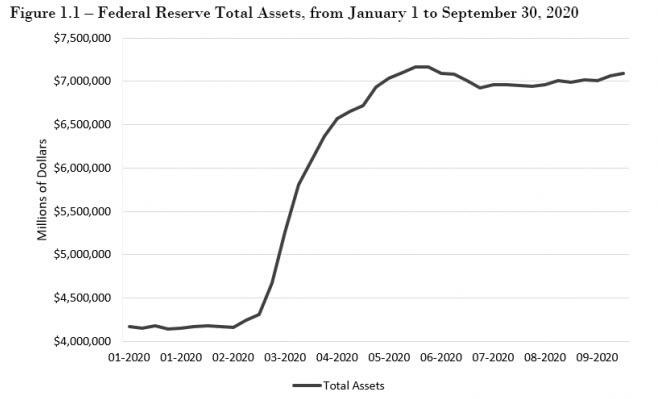
Figure 1.1: Federal Reserve Total Assets, January 1 to September 30, 2020
Source: FRED (“Assets: Total Assets: Total Assets (Less Eliminations from Consolidation): Wednesday Level (WALCL),” accessed Sept. 30, 2020), https://fred.stlouisfed.org/series/WALCL.
As we near the next election, there have been over 3.8 million jobs permanently lost following the lockdowns in the United States.
Since the start of 2020, the Federal Reserve has pursued an aggressive expansion of monetary policy amid the coronavirus, injecting trillions into the economy. As seen in figure 1.1, at the start of the year, the Federal Reserve’s balance sheet rose astronomically, by 69.95 percent from $4.17 trillion to $7.09 trillion by September 30. While the Fed’s balance sheet increased, the M1 money supply followed suit, which includes physical paper money, checking accounts, demand deposits, and other highly liquid assets, rising 41.31 percent from $3.95 trillion at the beginning of 2020 to $5.58 trillion by October 1. When the covid-19 panic began, the Fed had $4.12 trillion in liabilities and only $39 billion in capital at hand. As of October 1, the situation has worsened, with Fed now having $7.02 trillion in liabilities and $39.2 billion in capital.
With interest rates being artificially manipulated by the Federal Reserve and kept at historically low levels of 0–0.25 percent, the federal government can get away with borrowing more money than ever before. This has enabled to the Treasury to increase its debt by 16.5 percent from $23.17 trillion at the beginning of the year to $27 trillion by October 1. It is important to note that last year the federal government paid $574.59 billion in interest on $23.201 trillion in debt, which is an average interest rate of 2.48 percent on the debt. With last year’s picture in mind, the question that we must ask ourselves is how much more expensive our debt will become by the end of this year, as the Treasury has already paid out $484 billion in interest as it nears the final quarter. In addition, how much more expensive will the debt become when the Fed determines it appropriate to allow interest rates to rise again? Can the Fed afford to ever let this happen?
Even though the equity market looks as though it has corrected itself, the Fed is in a precarious position that calls into question its ability to mitigate another disaster if one presents itself before it can wind down on its balance sheet. The Fed’s situation would not be as concerning if the federal government itself were more fiscally run, which would give it more room to provide liquidity. However, with complete abandonment of fiscal responsibility by our policymakers, running deficits since 2001 and working to pass another stimulus package of $2.2 trillion on top of that should leave the American public asking how much longer fanatically driven stimulus of phony money will go on.
The answer may be longer than usual, as Federal Reserve chairman Jerome Powell after the September Federal Open Market Committee meeting stated that they intend on keeping rates low for several years and at least until 2023 to keep the economy afloat. It is no surprise that the Treasury danced to the same song as the Fed, with Secretary of the Treasury Steven Mnuchin stressing that he is prepared to request additional fiscal stimulus from Congress to help spur the economy as he deems fit.
As politicians and economists in Washington deem what is appropriate for the American people, it will be the very individual for whom these policies were intended who will have to eventually pay for these policies, whether through inflation or taxation. Unfortunately for the American citizen, when the plans of Washington are successful, it is the politicians and their special interests who reap the rewards. At the same time, any mistakes incurred are deferred upon the citizen. The reader must ask themselves again, How much longer will this go on?
Unfortunately, the policies of intervening within the market may go on for much longer than we hope, for the addiction to cheap money only increases the appetite of a hungry government. As the prominent Austrian economist, Henry Hazlitt said,
The only way government bureaucrats know of keeping prosperity going is to inflate some more—to increase the deficit or to pump more money into the system.
via ZeroHedge News https://ift.tt/2FNbrtN Tyler Durden