The #FinCENFiles Shine a Spotlight on How Banks Are Ordered to Snoop on You

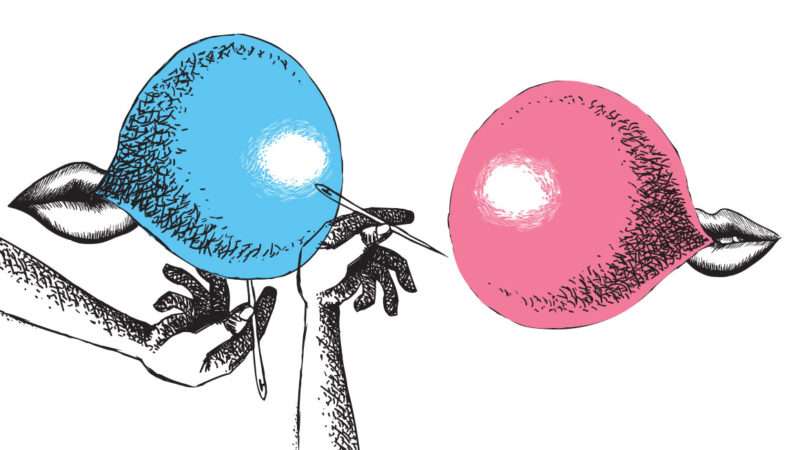
Banksnoops_1161x653

Did you know that major communications companies monitor all conversations to report suspicious activities to the government? By law, companies that facilitate the transfer of information are required to file what is called a “Suspicious Activity Report” (SAR) anytime a conversation veers in a direction the government doesn’t like. It could be because the conversation includes words that suggest tax evasion or terrorism. The details are laid out in legislation like the PATRIOT Act. The government reviews these SARs to try to catch the bad guys.

But an investigative report into these SARs suggests that this system isn’t even very good at flagging the kinds of communications as it is supposed to. A government whistleblower leaked hard evidence showing that the government rarely follows up on SARs indicating serious crimes, like trafficking, fraud, and terrorism. Meanwhile, the communications of millions of innocent people are subject to this surveillance program that doesn’t even work. The media has thankfully drawn attention to this expansive and ineffective surveillance, demanding accountability and reform.

Sorry, I got all that mixed up. It’s actually banks that need to file SARs, and they monitor all of our transactions for things that the government thinks are suspicious. It is part of the PATRIOT Act, but the roots of this program were laid with the similarly constitutionally questionable Bank Secrecy Act of 1970.

And actually, the media doesn’t see much of a problem with this financial surveillance program at all. The issue for most commentators is that the banks aren’t good enough government collaborators.

It’s a bit strange that while Ed Snowden’s revelations of major communications surveillance programs were met with mass outrage and years of discussion, these “FinCEN files” exposing our inefficient financial surveillance programs barely received mention. And when the media did discuss the FinCEN files, it was mostly to criticize banks for allowing these transactions to go through.

Let’s back up a bit. Few people have heard of FinCEN (the Financial Crimes Enforcement Network of the U.S. Treasury) or the Bank Secrecy Act (BSA), but this agency and law have given banks broad mandates to surveil our financial system and share that information with the government.

The BSA was passed in 1970 in an effort to clamp down on crimes by cutting off financial channels. Banks were to be required to file different kinds of reports—including SARs—for transactions that seemed to indicate criminal activity. Government agents then review those SARs to determine whether and how a criminal investigation should proceed.

Unsurprisingly, the BSA triggered immediate constitutional challenge in 1974’s California Bankers Assn. v. Shultz for clear First, Fourth, and Fifth Amendment issues. The Supreme Court ruled that the BSA did not violate the Constitution, a decision that has been subject to much critique from legal privacy scholarship in the following decades.

Today, it is the Financial Crimes Enforcement Network (FinCEN) of the U.S. Department of Treasury that mostly executes on the bank surveillance mandates laid out in laws like the BSA and PATRIOT Act. As the presence of the latter law indicates, the goals of these “anti-money laundering/know your customer” (AML/KYC) regulations have expanded to include other aims such as terrorist and cartel financing—previously introduced legislation also sought to include trafficking in arts and antiquities.

The so-called FinCEN Files are the product of a government insider leaking these SARs to journalists. Buzzfeed News, which broke the story, put the blame on banks for “feeding off the tragedy of people dying all over the world.” The story highlights several serious crimes that our financial surveillance system failed to stop: HSBC moved $15 million related to a Ponzi scheme, Standard Chartered got caught up in Taliban finance and evading banking sanctions targeted at Iran, and basically every major bank processed millions in transactions for the Kazakh fugitive Viktor Khrapunov.

We are clearly dealing with some unsavory characters here. But this was also the case with the communications surveillance programs that received so much public scrutiny in the last decade. Did anyone get mad at AT&T for allowing suspected terrorists to continue calling each other?

The difference is that the US’s financial surveillance programs require some form of proactive bank participation that programs like PRISM did not. Banks need to file SARs on transactions to remain compliant. But after they report the transaction to the government, their obligations pretty much end. If the government fails to investigate, the banks can just keep on processing the transactions. This is why the media is framing the FinCEN Files as a way for banks to “profit off of illegal transactions.” Since they filed the SARs, the banks must have known that the transactions might have been illegal. Therefore, the fact that these banks kept on financing these customers means they are complicit.

It should not have surprised anyone to learn that banks can be unscrupulous in how they do business. Before this story broke, different banks have been caught time and again moving money for some really terrible people. And the criticism that SARs are mostly done as a compliance and liability-waiving exercise is not a bad one. But really, do these journalists want to empower banks to act as a kind of extrajudicial private law enforcement agency?

Either way, it has been disappointing to see just how little attention has been paid to the problems with the larger financial surveillance system. To Buzzfeed‘s credit, the story does spare some words for a privacy expert to point out that “the SAR program became more about mass surveillance than identifying discrete transactions to disrupt money launderers.”

But when the authors turn to discuss solutions, they suggest “arrest[ing] executives whose banks break the law.” Of course, this assumes that there is the political will to actually stop this problem. And it does nothing to fix the sprawling and ineffective system of financial surveillance that ensnares millions of innocent people in its web. After all, two years ago, it was none other than Buzzfeed News which broke the story that FinCEN data was being used to spy on Americans.

It is a sad fact of life that powerful groups can bend or break the law with impunity. Does anyone think that if a criminal enterprise with enough intelligence or other dark support needed financing, it wouldn’t find some way to get it? In the meantime, the surveillance programs ostensibly put in place to stop such financing don’t impede these power-backed deals but they do sacrifice the privacy of millions of innocent people along the way. That should be the real lesson of the FinCEN Files.

from Latest – Reason.com https://ift.tt/3jh6U1a
via IFTTT
The US-China Tech Divide – Where Will it End?

Our news roundup is dominated by the seemingly endless ways that the US and China can find to quarrel over tech policy.  The Commerce Department’s plan to use an executive order to cut TikTok and WeChat out of the US market has now been enjoined. But the $50 Nick Weaver bet me that TikTok could tie its forced sale up until January is still at risk, because the administration has a double-barreled threat to use against that company – not just the executive order but also CFIUS – and the injunction so far only applies to the first. 

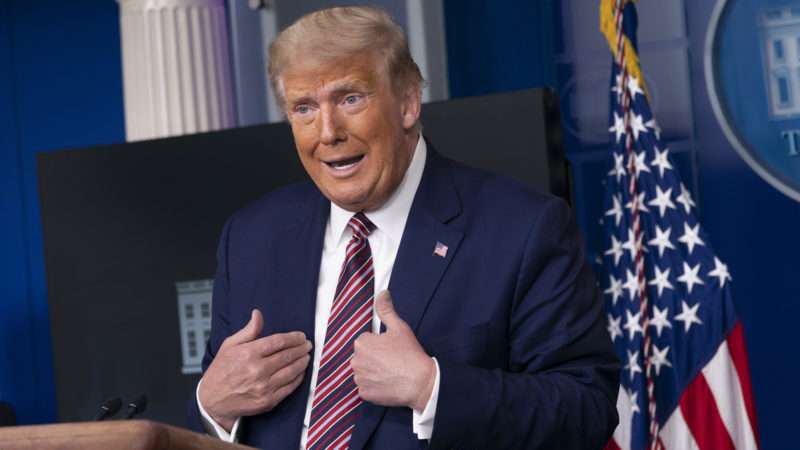
I predict that President Xi is likely to veto any deal that appeals to President Trump, just to show the power of his regime to interfere with US plans. That could spell the end of TikTok, at least in the US. Meanwhile, Dave Aitel points out, a similar but even more costly fate could await much of the electronic gaming industry, where WeChat parent TenCent is a dominant player. 

And just to show that the US is willing to do to US tech companies what it’s doing to Chinese tech companies, leaks point to the imminent filing of at least one and perhaps two antitrust lawsuits against Google. Maury Shenk leads us through the law and policy options.

The panelists dismiss as PR hype the claim that it was the threat of “material support” liability that caused Zoom to drop support for a PFLP hijacker’s speech to American university students. Instead, it looks like garden variety content moderation aimed this time at a favorite of the far left.

Dave explains the good and the bad of the CISA order requiring agencies to quickly patch the critical Netlogon bug

Maury and I debate whether Vladimir Putin is being serious or mocking when he proposes an election hacking ceasefire and a “reset” in the cyber relationship. We conclude that there’s some serious mocking in the proposal.

Dave and I also marvel at how Elon Musk, for all his iconoclasm, sure has managed to cozy up to both President Xi and President Trump, make a lot of money in both countries, and take surprisingly little flak for doing so.  The story that spurs this meditation is the news that Tesla is so dependent on Chinese chips for its autonomous driving engine that it’s suing the US to end the tariffs on its supply chain

 In quick hits and updates, we note a potentially big story: The Trump administration has slapped new restrictions on exports to Semiconductor Manufacturing International Corporation, China’s most advanced maker of computer chips. 

The press that lovingly detailed the allegations in the Steele dossier about President Trump’s ties to Moscow hasn’t been quite so enthusiastic about covering the dossier’s astounding fall from grace. The coup de grace came last week when it was revealed that the main source for the juiciest bits was flagged by the FBI ten years ago as a likely Russian foreign agent; he escaped a FISA order only because he left the country for a while in 2010. 

 The FISA court has issued an opinion on what constitutes a “facility” that can be tapped with a FISA order. It rejected the advice of Cyberlaw Podcast regular David Kris in an opinion that includes all the court’s legal reasoning but remains impenetrable because the facts are all classified. Maury and I come up with a plausible explanation of what was at stake.

The Trump administration has proposed section 230 reform legislation similar to the white paper we covered a couple of months ago. The proposal so completely occupies the reasonable middle of the content moderation debate that a Biden administration may not be able to come up with its own reforms without sounding fatally similar to President Trump. 

And in yet more China news, Maury and Dave explore the meaning of Nvidia’s bid for ARM, and Maury expresses no surprise at all that WeWork is selling off a big chunk of its Chinese operations 

Oh, and we have new theme music, courtesy of Ken Weissman of Weissman Sound Design.  Hope you like it!

Download the 330th Episode (mp3)

You can subscribe to The Cyberlaw Podcast using iTunes, Google Play, Spotify, Pocket Casts, or our RSS feed. As always, The Cyberlaw Podcast is open to feedback. Be sure to engage with @stewartbaker on Twitter. Send your questions, comments, and suggestions for topics or interviewees to CyberlawPodcast@steptoe.com. Remember: If your suggested guest appears on the show, we will send you a highly coveted Cyberlaw Podcast mug!

The views expressed in this podcast are those of the speakers and do not reflect the opinions of their institutions, clients, friends, families, or pets.


from Latest – Reason.com https://ift.tt/3n2WvIM
via IFTTT

The Media’s Nervous Breakdown Over Race

topicspolitics

If you were alive and on social media in early June, you were almost certainly swamped by scores of media and cultural organizations putting out statements, Instagram posts, and self-critical columns expressing solidarity in the fight against systemic prejudice.

“We recognize that there is much work to be done, and we are committed to engaging in this work to eradicate institutional racism,” announced the Poetry Foundation, publisher of Poetry magazine. “I have tried to diversify our newsroom over the past 7 years, but I HAVE NOT DONE ENOUGH,” confessed the editor in chief of Variety. The women’s lifestyle publication Refinery29, like many websites, changed its homepage color to black instead of its usual peppy pink.

Within days, the heads of all those institutions were out of a job.

In summer 2020, the American media experienced something like a collective nervous breakdown. Against the backdrop of the coronavirus and associated lockdowns, with whole sections of the industry teetering on the edge of collapse, newsrooms from coast to coast engaged in a series of internal revolts about race, defenestrating editors over everything from headlines to Halloween costumes.

Current and former employees launched self-styled “name-and-shame” campaigns on Twitter to out editors and organizations whose commitment to diversity and equity were deemed insufficient. A Broadway actress created a public spreadsheet called “Theaters Not Speaking Out”; participants were encouraged to “add names to this document who have not made a statement against injustices toward black people.” Heads rolled at The Philadelphia Inquirer, the Los Angeles TimesBon Appétit, the National Book Critics Circle, Chicago’s Second City Theater, The New York Times, and scores of other cultural institutions and corporations.

“Institutional leaders, in a spirit of panicked damage control, are delivering hasty and disproportionate punishments instead of considered reforms,” noted a group of 153 writers and academics, including such left-leaning luminaries as Salman Rushdie and Noam Chomsky, in a joint letter published online by Harper’s magazine on July 7. “Editors are fired for running controversial pieces; books are withdrawn for alleged inauthenticity; journalists are barred from writing on certain topics; professors are investigated for quoting works of literature in class; a researcher is fired for circulating a peer-reviewed academic study; and the heads of organizations are ousted for what are sometimes just clumsy mistakes.”

The Harper’s letter, like the actions that precipitated it, revealed a split within the broader intelligentsia. On one side are people defending the values of liberalism—free speech, due process, individualism. On the other are those chipping away broadly at institutions they judge to be abetting a corrupted, discriminatory power structure. One side laments each broken egg; the other is busy making omelets.

That divide was on stark display within minutes of the letter’s publication, as an entire generation of left-leaning commentators and journalists rose up nearly as one to douse the whole effort with bile. “The signatories, many of them white, wealthy, and endowed with massive platforms, argue that they are afraid of being silenced,” snarled a counter-letter signed by 164 writers three days later. “The irony of the piece is that nowhere in it do the signatories mention how marginalized voices have been silenced for generations in journalism, academia, and publishing.”

There is an asymmetry of approach between anti-liberals—of both left and right—and their increasingly alarmed critics. While the latter camp tends to treat controversies and individuals on a case-by-case basis, the former is forever trying to herd people into binary categories. In the words of bestselling author Ibram X. Kendi, “You’re either racist or antiracist; there’s no such thing as ‘not racist.'”

The Manicheans have special contempt for those who refuse such designations, especially when they’re otherwise on the same side of the political spectrum. That the Harper’s authors came mostly from the left and prefaced their brief complaint with a swipe at President Donald Trump bought them no sympathy from their progressive tormentors. So signatory Yascha Mounk founds an earnest new publication called Persuasion, even while being dismissed by such leftists as The Daily Beast‘s Laura Bradley as belonging to a “coven of fools.”

This witch-burning moment will hopefully recede, but the fuel in this accursed year will continue piling up.


from Latest – Reason.com https://ift.tt/30jzfwr
via IFTTT

Brickbat: To Tell the Truth

gunsbullets_1161x653

Pineville, Louisiana, police officer John Goulart Jr. claimed he’d been shot in the leg in an ambush. But officials now say he shot himself and made up the story about the ambush. Goulart has been charged with criminal mischief and malfeasance in office. “Everything shows it was an accidental discharge,” said Deputy Chief Darrell Basco. Basco said Goulart fired two rounds from his service weapon, one of which struck one of the doors of his patrol car.

from Latest – Reason.com https://ift.tt/33cUHVH
via IFTTT

Mother’s “Islamophobic” Remarks About School Board Member Yield Ban from School District Property

From Friday’s decision by Judge Lynn Adelman (E.D. Wis.) in Anderson v. Hansen:

[Heidi] Anderson is the mother of two children who attend schools within the Elmbrook School District. On August 11, 2020, the Elmbrook Board of Education held a public meeting to address the District’s procedures for dealing with the COVID-19 pandemic. One of the measures under consideration was a requirement that all children attending school in person wear masks to minimize the transmission of the virus through respiratory droplets. Anderson attended the meeting in person and signed up to speak about the proposal.

Anderson opposes mask mandates in general, and she was against the District’s proposal to require children to wear masks at school. The Board allowed her to express her views during the time allotted for citizen comments about the proposal. She was given two minutes to speak. When she was called to the podium, she delivered remarks that lasted over eight minutes.

During her remarks, Anderson gave a variety of reasons for opposing the mask proposal. Some reasons related to her faith. Anderson is Christian, and she believes that wearing masks is inconsistent with the Christian faith. During her remarks, she expressed her view that “[s]ix-foot distance and masks are a Pagan ritual of Satanic worshipers.” She stated that because her family is Christian and does not practice Satanic worship, her children are not made to “stand six feet apart from each other with facial coverings.”

Towards the end of her remarks, Anderson turned her attention to Dr. [Mushir] Hassan, a medical doctor and school board member whom the Board had designated as its medical liaison:

“[Mrs. Anderson:] Dr. Mushar, and I hope I’m saying this correctly, you are not the right choice to be the Board liaison. You do not practice in infectious disease, you have political leaning contrary to the will of this district. You online state that you’re a big Obama fan and you comply mentally with his control philosophy, and you have publicly slammed our president Trump online. I’m finishing. As a leader in the Islamic community—

“[Interjection by School Board President:] Heidi, we have to avoid defamatory comments.

“[Mrs. Anderson:] This is not defamatory. I’m stating facts. [To Dr. Hassan:] You are a leader in the Islamic community are you not, and a leader on the Board—

“[Board President:] Heidi.

“[Mrs. Anderson:] O.K. Well listen, my kids are Christians. They are not subject to wearing face coverings. Christian children should not be forced to wear face coverings any more than children who are Islamic or Muslim should be forced to, as you’ve put it, ‘be subject to the American style sexualization of children,’ and have to wear less clothing than you’re comfortable with your children wearing….

“[To the Board generally:] You are employed by the people of Brookfield and Elm Grove, you are elected to serve us. And the Elmbrook School administration works at our pleasure. You do not work for Madison, or any other unelected entity—our government is of the people, by the people, and for the people. This is one country, one nation under God, and we look to God for these answers when we can’t figure it out and I would suggest that you all do that. There is a wonderful prayer that he taught us to pray, it’s called the Lord’s prayer, and you can find it in your Bible. Thank you for your time.”

The board meeting was broadcast over the Internet. Anderson later learned that her comments had sparked controversy online. Some observers described her remarks as “ignorant,” “Islamophobic,” and “insensitive.” In response to these comments, the Elmbrook School District contacted community members and told them that the District condemned Anderson’s remarks. The District also “censored” a portion of Anderson’s comments, which I assume means that the District edited the archived video recording of her comments to remove the comments she directed towards Dr. Hassan. Further, on August 12, 2020, the day after the meeting, the School Board published a statement on its website in which it apologized to Dr. Hassan and expressed its view that Anderson’s statement was unacceptable….

[After some more back-and-forth, Superintendent Dr. Mark Hansen] informed Anderson that she would not be allowed on any District property without the prior approval of either the superintendent or the principal of her children’s school…. Anderson may not attend a Board of Education meeting or participate in events at her children’s school, including her daughter’s dance recitals, without first obtaining permission from the superintendent or the school principal. Moreover, because Anderson’s polling place is located inside an elementary school in the District, she may not vote in person without first receiving permission from the superintendent or a school principal….

Anderson sued, and Judge Adelman ruled that she was entitled to a preliminary injunction, because she had “a very high likelihood of success on the merits of her First Amendment claim”:

At the outset, I note that this case does not require me to determine whether Anderson’s comments towards Dr. Hassan displayed religious intolerance or were inappropriate, hateful, or offensive. For even if they were, the First Amendment would protect the plaintiff’s right to make them. See Matal v. Tam (2017) (“Speech that demeans on the basis of race, ethnicity, gender, religion, age, disability, or any other similar ground is hateful; but the proudest boast of our free speech jurisprudence is that we protect the freedom to express ‘the thought that we hate.’ “); id. (Kennedy, J., concurring) (recognizing that, with few exceptions, “it is a fundamental principle of the First Amendment that the government may not punish or suppress speech based on disapproval of the ideas or perspectives the speech conveys”); Rosenberger v. Rector (1995) (“It is axiomatic that the government may not regulate speech based on its substantive content or the message it conveys.”). Thus, basic First Amendment principles prevent the District from subjecting the plaintiff to adverse action for no other reason than it considered her speech at the board meeting intolerant, offensive, or hateful….

The government may place reasonable time, place, and manner restrictions on speech and regulate its own meetings. Thus, the District could have enforced its two-minute time limit for citizen comments and cut the plaintiff off once she exceeded the limit. Moreover, if the plaintiff’s comments to Dr. Hassan amounted to a personal attack rather than an attempt to express a viewpoint on the mask proposal, the board members could have told the plaintiff to keep her remarks focused on the issues or taken other action to prevent her from continuing to speak on topics that were not germane to the board meeting.

Here, however, the District’s policy cannot be viewed as a reasonable time, place, and manner restriction or another permissible regulation of speech. The policy is not reasonably tailored to prevent the plaintiff from exceeding time limits, veering off topic, or being belligerent at future board meetings. Instead, the policy flatly bans the plaintiff from entering school property for any purpose without permission. This ban has no rational connection to enforcing restrictions on citizen comments at board meetings and thus can only be viewed as a way of punishing the plaintiff for the comments she made during the prior board meeting.

The defendants contend that their policy is designed to ensure that religious harassment is not tolerated on school property…. Perhaps the District is arguing that the policy is a prophylactic measure designed to prevent Anderson from entering onto school property and harassing others based on their religion. But this justification for the policy would be preposterous. It is not rational to think that because Anderson made religiously intolerant statements during her citizen comments at a public board meeting that she will roam the halls of the Elmbrook schools and harass those she encounters on the basis of their religion.

Moreover, in the unlikely event Anderson does engage in such behavior, the District could intervene at that time. As the defendants note in their brief, no person has an unlimited right to be present on school property, and the District has adopted a general rule that allows building administrators to eject disruptive persons from school grounds, Thus, if Anderson causes a disruption on school property, the District could have her removed even if the policy at issue in this case were not in force. This shows that the policy serves no rational purpose other than to punish Anderson for having expressed views with which the District disagrees….

Anderson seems like rather a fool to me, but, no, she can’t be banned from school district property because she criticized a public official at a school board meeting, whether her criticism stemmed from hostility to Muslims or anything else.

from Latest – Reason.com https://ift.tt/3jaRdbS
via IFTTT

The Lessons Americans Refuse To Learn From Trump’s Tax Returns

Trump

Asked about The New York Timesnovella-length article analyzing his last 18 years of federal income tax returns, President Donald Trump said: “It’s fake news. It’s totally fake news. Made up, fake.”

That hasn’t stopped people from discussing Trump’s inventive accounting, to a chorus of sputtered outrage by Trump’s legion of critics, the vast majority of whom miss a simple point: The tax code is a big, complicated mess because major-party politicians—including those Republicans who insincerely promise to fit the entire form “on a postcard”—like it just fine that way, and voters do not punish them for perennially exacerbating the exasperating status quo.

So argue Nick Gillespie, Peter Suderman, Matt Welch, and Katherine Mangu-Ward on this week’s Reason Roundtable podcast. The gang also previews tomorrow night’s presidential debate (including those unfairly excluded from it), grapples with the Supreme Court nomination of Amy Coney Barrett, and makes a number of editorially questionable sound effects.

Audio production by Ian Keyser and Regan Taylor.

Music: “Jesse’s Carnival Waltz” by The Great North Sound Society.

Relevant links from the show:

Trump’s Tiny Tax Bill,” by Elizabeth Nolan Brown

Libertarian Party Candidate Jo Jorgensen: Don’t Waste Your Vote on Trump or Biden,” by Nick Gillespie

Congress Continues to Spend Delusional Amounts of Money,” by Veronique de Rugy

On Health Care, the 2020 Presidential Race Pits Bad Ideas Against Bad Faith,” by Peter Suderman

Amy Coney Barrett Condemns Purdue University’s ‘Fundamentally Unfair’ Adjudication of Sexual Assault Claims,” by Jacob Sullum

It’s Official: Trump Nominates Judge Amy Coney Barrett to the Supreme Court,” by Billy Binion

Amy Coney Barrett and the Problem of Conservative Judicial Deference,” by Damon Root

Amy Coney Barrett Thinks the Second Amendment Prohibits Blanket Bans on Gun Possession by People With Felony Records,” by Jacob Sullum

Amy Coney Barrett Demolishes the Qualified Immunity Claim of a Detective Accused of Framing a Man for Murder,” by Jacob Sullum

Partisan Poppycock Does Not Trump the Constitution on SCOTUS Picks,” by Jacob Sullum

Antebellum Is Empty Social Commentary Disguised as a Horror Movie,” by Peter Suderman

from Latest – Reason.com https://ift.tt/3cCzszX
via IFTTT

When Drones Deliver Human Organs

MissionGo

Drones aren’t just good for speedy package delivery and aerial photography anymore. Last week, the unmanned aviation company MissionGO and an organ procurement group, the Nevada Donor Network, announced the completion of two organ and tissue delivery test flights. The achievement might make organ delivery to U.S. hospitals faster and easier.

The first MissionGO drone transported corneas from Southern Hills Hospital in Las Vegas to San Martin Hospital (also in Las Vegas). The second transported a kidney from an airport to a small Nevada desert town, the longest organ delivery drone flight ever.

This technology will be a boon to transplant patients, especially during the pandemic. In the past, donor organs have been transported mostly via commercial flights; now that these flights have been cut back due to plummeting demand, there’s a risk that some organs will take too long to reach their destination. (Organs are generally only good for 36 to 48 hours after harvesting.)

Even before the COVID-19 outbreak, an August 2019 study in JAMA Internal Medicine found that the U.S. discards more than 3,000 kidney donations annually. Drones could play a major part in reducing such waste by reducing the travel time between donor and ultimate destination. The technology has already played a major role in getting personal protective equipment and other medical supplies to hospitals that urgently need them during the pandemic.

Another way to solve shortages—other than by reducing waste of viable organs—would be to compensate organ donors the same way we do with plasma (and surrogate wombs, semen, and eggs). But in the absence of the political will to take that up, reducing waste of already-scarce organs via more efficient delivery technology is surely a step in the right direction.

Maybe someday the skies will be full of lifesaving kidneys, livers, hearts, and corneas traveling cheaply by drone. A libertarian can dream.

from Latest – Reason.com https://ift.tt/36fKCcs
via IFTTT

High School Student “Says Teacher Threatened To Kick Him Out Of Virtual Class Over Trump Flag”

CBS 13 (Laura Haefeli) reported last week (including video of part of the incident that had been recorded by another student):

“You can sit up, remove the flag, or reposition your camera within the next 15 seconds or I’m kicking you out of class,” the teacher said during their virtual class.

[The student’s mother, Tiffany,] says the teacher then began to count and did not make it to 10 before Tiffany’s son waved goodbye and exited the virtual classroom….

The teacher apparently then apologized, but the school board has declined to explain what the rules are:

Tiffany and her son … asked [at last Monday evening’s school board meeting] that the board clarify the code of conduct for virtual learning.

“And he flat out told me no. We’ve just not been given any guidance,” Tiffany said.

The Colusa County Code of Conduct includes a dress code that bans clothes with alcohol or drug symbols, sexual messages, profanity, or clothing that degrades any race, but nowhere in the 38-page document does it mention politics, elections, or campaigning….

CBS13 did reach out to the superintendent as well as the principal and vice principal of Colusa High School, but we have not yet heard back.

ABC-10 (Giacomo Luca) adds:

When requesting a comment, a Colusa High School employee referred ABC10 to the code of conduct. However, requests for comment were not immediately returned from Colusa High School, the Colusa Unified School District (Colusa USD), or the Colusa County Office of Education.

“The Governing Board believes that free inquiry and exchange of ideas are essential parts of a democratic education,” the Colusa Unified School District student handbook writes regarding free speech. “The Board respects students’ rights to express ideas and opinions, take stands on issues, and support causes, even when such speech is controversial or unpopular.” …

The school policies generally allow students the right to free speech which includes the wearing of buttons, badgers, and other insignia. The policy bans the use of fighting words and any “expressions” that are obscene, libelous, or slanderous.

It’s pretty clear that a student’s having a political message as a background in one’s Zoom, just like wearing a T-shirt or an armband, is constitutionally protected. The government may sometimes restrict such speech, if it’s likely to cause a serious disruption (such as fights); but that’s not likely to be applicable here, especially as to distance learning.

And while of course political messages may be distracting, or could lead to in-class arguments that the teacher might need to restrain, that would have been equally true of black armbands to protest the Vietnam War—yet the Court found that such “undifferentiated fear or apprehension of disturbance is not enough to overcome the right to freedom of expression”:

Any departure from absolute regimentation may cause trouble. Any variation from the majority’s opinion may inspire fear. Any word spoken, in class, in the lunchroom, or on the campus, that deviates from the views of another person may start an argument or cause a disturbance. But our Constitution says we must take this risk, and our history says that it is this sort of hazardous freedom—this kind of openness—that is the basis of our national strength and of the independence and vigor of Americans who grow up and live in this relatively permissive, often disputatious, society.

I called the high school, got referred to the superintendent’s office, and then left a voice-mail there—I’ll post any response they give me, if they get back to me.

from Latest – Reason.com https://ift.tt/30ewYmn
via IFTTT

Minneapolis City Council’s Promise To Dismantle Police Is Now in Political Limbo

GFloydmemorial_1161x653

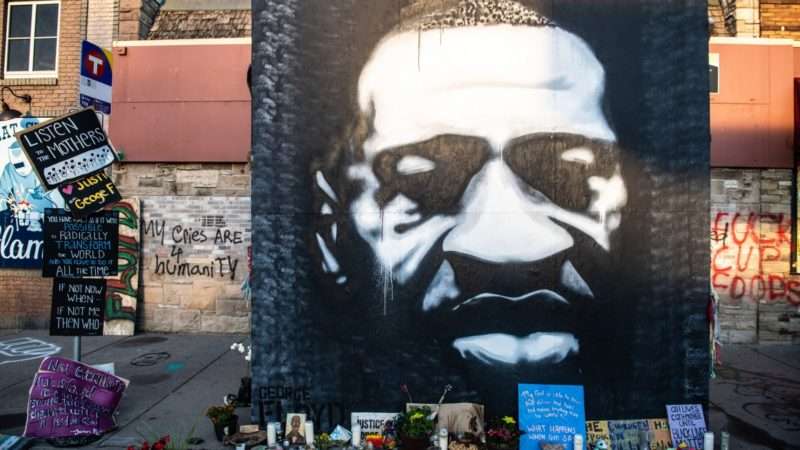
George Floyd’s death under the knee of then–Minneapolis Police Officer Derek Chauvin unleashed the activism that prompted the Minneapolis City Council to vote in June to completely eliminate the police department and attempt to craft a more “holistic” approach to handling public safety.

That’s not happening. It turns out that actually shifting policies takes more than embracing an expansive but vague concept of change.

The Minneapolis City Council knew this in June: The council’s vote didn’t actually order the disbanding or defunding of police. Instead it launched a lengthy process to change the city’s charter with the aim of ultimately replacing the police department with a “Community Safety & Violence Prevention Department.”

What does that actually mean? Well, that’s part of the problem. The proposed changes to the city’s charter cross out the section on the police and add sections for this new department. Here how the proposal describes the department and the person tapped to lead it:

Department of Community Safety and Violence Prevention. The City Council must establish, maintain, adequately fund, and consistently engage the public about a department of community safety and violence prevention, which will have responsibility for public safety services prioritizing a holistic, public health-oriented approach.

Director of Community Safety and Violence Prevention Department. The Mayor nominates and the City Council appoints a director of the department of community safety and violence prevention under section 8.4(b). Individuals eligible to be appointed as director will have non-law enforcement experience in community safety services, including but not limited to public health and/or restorative justice approaches.

But what does that mean? The next two parts of the proposal essentially restore the idea of having a police department, but just call it the “Division of Law Enforcement Services.”

This vagueness, The New York Times reports, ended up being a significant problem. As has become increasingly clear since that vote, there is no real agreement on what this new vision of policing should look like; much of the public—including, in one poll, 50 percent of black residents—”opposed reducing the size of the police department.” Meanwhile, councilors “repeatedly heard criticism from business owners and residents in more affluent areas of their wards who feared for their safety, as misinformation spread that the end of the police department was imminent.”

It turned out the City Council did not even have the authority to disband the police. Minneapolis is a charter city, and changes to its charter need to be reviewed by a state-appointed charter commission full of volunteers. The commission members are supposed to consider any legal or technical problems with a proposed charter change before putting it before voters. They decided that the proposal had not been written with proper legal provisions or with enough public input, and they declined to forward the City Council’s amendment by a vote of 5–10, instead calling for further study. The public will not be voting on it this November.

What has happened instead are some simple, but valuable, incremental reforms. Notably, while there’s been barely any “defunding” of the Minneapolis Police Department at all, $1.1 million was shifted from the police to the health department for more resources to try to help mediate conflicts.

The other major “accomplishment” of this vote has been to launch a new front of culture wars across the country where those with substantive policy proposals to reduce overpolicing have been drowned out by rioters on one side and aggressive police supporters on the other. President Donald Trump now campaigns by misrepresenting urban environments as lawless zones of anarchy, and the Department of Justice is attempting to cut grants to cities that cut spending to the police departments.

The best way to reduce police spending is to take the time to reform the ordinances, policies, and practices that cause police departments to expand and that protect officers from accountability for misconduct. Reason‘s October issue about fixing the police offers a host of substantive, specific changes that will lead to less policing (by ending the drug war, for example) and more accountability for police conduct (by abolishing qualified immunity and busting the police unions). Check out how to reform policing without relying on vague utopian sloganeering here.

from Latest – Reason.com https://ift.tt/3kXMDhU
via IFTTT