Ford “Quietly” Laying Off Thousands From Its China Joint Venture

At a time when global auto sales are grinding to what feels like inevitable prolonged recession, the world is taking many of its industry cues from China. Which is why it is notable that Ford’s China JV would be laying off “thousands” of workers according to the NYT.

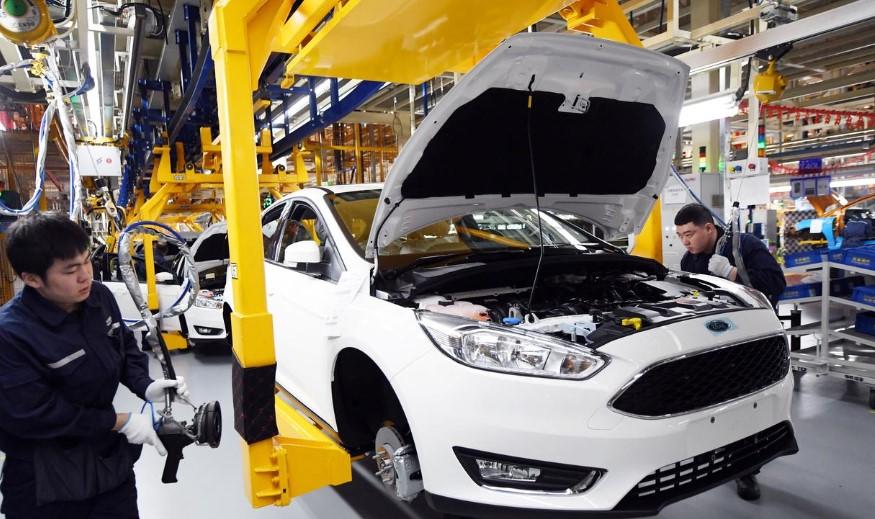
Thousands of the JV’s 20,000 total workers are expected to be laid off as a result of weak auto sales in the world’s second largest economy – a sign of continuing weakness for autos (and the overall economy) heading into the second quarter of 2019. Layoffs recently “quietly begun”, according to additional reporting from Reuters.  Neither Ford nor its China JV, formed in partnership with Changan Automobile Group, had a comment on the reported layoffs Wednesday morning. 

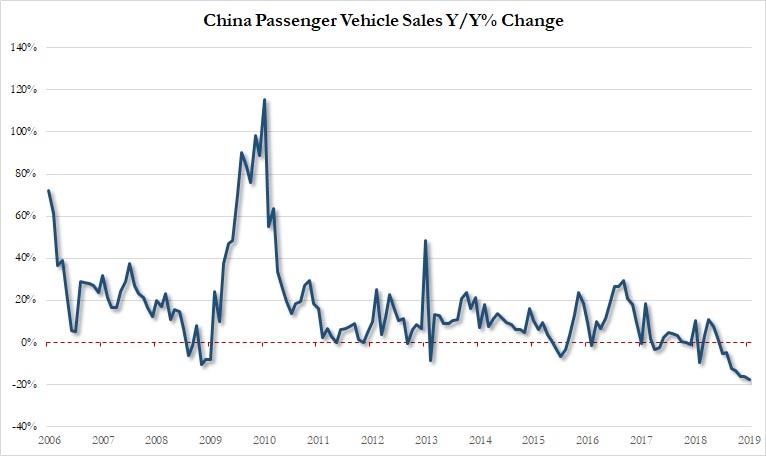
Car sales in China continued their relentless descent in January, falling 17.7%, as we recently expected would happen when discussing Europe’s tumbling January auto sales. This follows the country’s first full year slump (2018) in more than two decades and it puts further pressure on the state of the global automotive market. 

The drop marked the eighth monthly retail sales decline in a row and was the biggest one-month drop in seven years. Gu Yatao, a Beijing-based auto analyst with Roland Berger, confirmed to Bloomberg that the “downward pressure is still there. The government isn’t adopting stimulating policies to give the market a shot in the arm.”

The contraction in China comes at the same time that auto markets in Europe and North America continue to shrink as a result of car sharing services and slowing economies. As we have been reporting for months, the slowdown in China continues to be a result of the country’s slowing economy, coupled with the lagging trade war with the United States. Even discounts for the Chinese New Year, which traditionally can help spur sales, weren’t enough to keep consumers in showrooms early this year. 

It’s a “historic slump” for China: the wholesale decline in January, to 2.02 million units, accelerated from December’s 15.8% slump. For 2018, the drop was 4.1%, marking the first decrease since the early 1990s. 

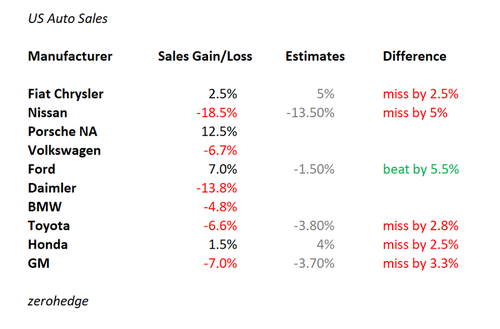
Back in early February we reported that automakers had started off 2019 with absolutely abhorrent sales numbers in the U.S., as well.  Ford at the time – which no longer reports official monthly sales numbers, just like GM – was the one exception, rising 7% versus estimates of -1.5%, according to Bloomberg who cited “people familiar”. GM, on the other hand, fell 7% versus estimates of -3.7%.

Japanese car giants Nissan and Toyota also both posted losses that were larger than expected and companies like Fiat Chrysler and Honda saw their meek gains falling below expectations. As was expected – and stop us if you’ve heard this one before – most companies wound up blaming the cold weather. Honda got creative and also blamed the government shutdown. 

The results also indicated that the annualized industry sales rate has slowed more than estimated.

via ZeroHedge News https://ift.tt/2BUZ2yI Tyler Durden

Have We Already Passed World Peak Oil And World Peak Coal?

Authored by Gail Tverberg via OurFiniteWorld.com,

Most people expect that our signal of an impending reduction in world oil or coal production will be high prices. Looking at historical data (for example, this post and this post), this is precisely the opposite of the correct price signal. Oil and coal supplies decline because prices fall too low for producers. These producers make voluntary cutbacks because the prices they receive fall below their cost of production. There often are supply gluts at the same time.

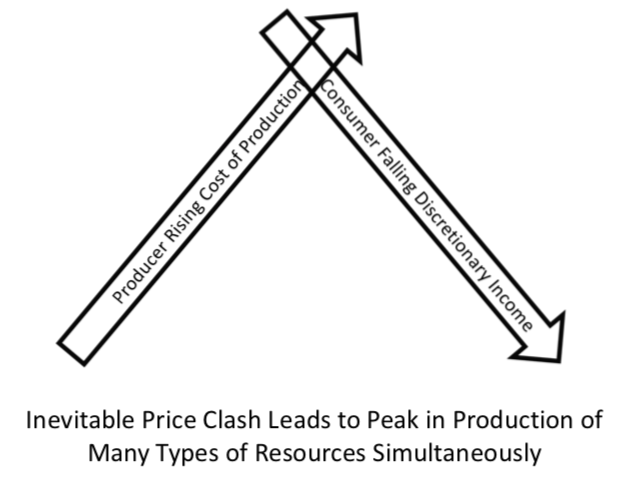
This strange situation arises because prices must be high enough for the producersat the same time that goods and services made by oil (and other energy products) are inexpensive enough for consumers to afford. There is a two way battle taking place:

(1) Prices producers require tend to rise over time, because of depletion. The easiest to extract portion of any resource (such as oil, coal, copper, or lithium) tends to be removed first. What is left tends to be deeper, lower quality, or otherwise more difficult to extract cheaply.

(2) Prices consumers can afford for discretionary goods (such as cell phones and automobiles) tend to fall for a combination of reasons:

  • Wages of many workers fall because of competition from lower cost labor in other countries.

  • Some jobs are eliminated through the use of computers or robots.

  • Young people are increasingly being required to pay for higher education (beyond that which is provided free), leaving many with loans to repay, reducing their discretionary income.

  • Changes to US healthcare law (mostly starting January 1, 2014) lead to required health insurance premiums. While some citizens find cost savings in this approach, healthy young people often experience cutbacks in discretionary income as a result.

  • Rents and home prices keep rising faster than incomes.

When the discretionary income of the many non-elite workers of the world falls, they buy fewer finished goods and services. Finished goods and services are manufactured using commodities of many kinds, including oil, coal, copper, iron ore, and fresh water. When discretionary demand falls, commodity prices tend to fall. This is the problem we are encountering now. It tends to cause the prices of many commodities to fall below the cost of production. Eventually, producers decide to quit because production is no longer profitable. This is the issue that leads to peak oil, coal or copper.

Figure 1. Illustration showing why falling affordability creates a conflict between supply and demand.

If the Affordability Price Clash Mostly Affects Non-Elite Workers, Does It Matter?

When I talk about non-elite workers, I am talking about workers who are in the bottom 90% of the wage distribution. Elite workers will always have enough income for the necessities of life. There are so many non-elite workers in the world that they, indeed, do make a difference.

Also, the forces that adversely affect non-elite workers tend to have several effects:

  1. They tend to send a larger share of wages to elite workers, as the economy becomes more complex and more specialized.

  2. They tend to send more unearned income to elite workers, through capital appreciation, because elite workers can afford to buy shares of stock and expensive homes.

  3. The wealthy spend their income differently from non-elite workers. Non-elite workers tend to spend the bulk of their discretionary income on devices made using commodities, such as cell phones and automobiles. The wealthy are likely to spend their discretionary income in less energy intensive ways, such as investing in shares of stock and buying services such as private college education for their children.

History shows that economies tend to collapse when wage and wealth disparity becomes too great. Collapse can take various forms, including revolutions by the disgruntled underclass, increased susceptibility to epidemics, or the financial collapse of governments. Wars become more likely, as one country tries to aid its citizens at the expense of citizens of other countries.

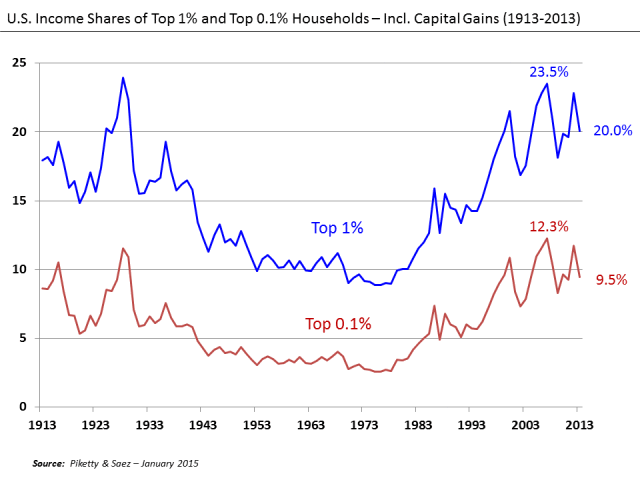
The world today seems to be approaching a crisis point with respect to wage and wealth disparity. Young people in particular are adversely affected. Figure 2 shows a chart indicating that wage disparity seems to be back to the level it was at the time of the Great Depression of the 1930s. This was also a time of low commodity prices and gluts of food and oil.
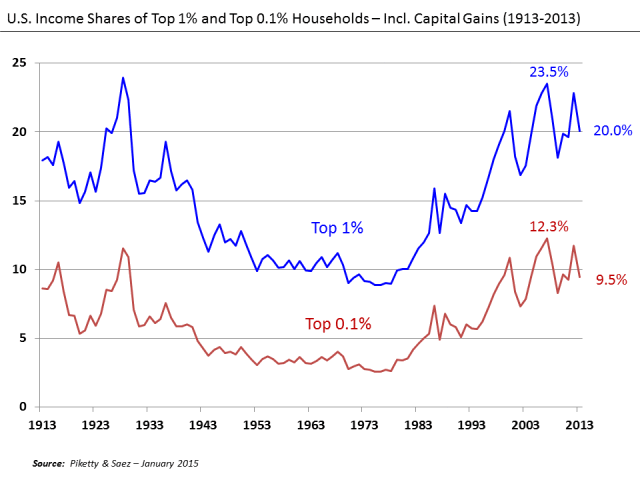
Figure 2. U. S. Income Shares of Top 1% and Top 0.1%, Wikipedia exhibit by Piketty and Saez.

Gluts tend to occur because commodity prices rise to a level where devices made with these commodities (such as cell phones and automobiles) become too expensive for non-elite workers to afford. Elite workers can still afford the devices, but there are not enough elite workers to make up for the shortfall in non-elite buyers of these devices, so industrial output per capita tends to fall.

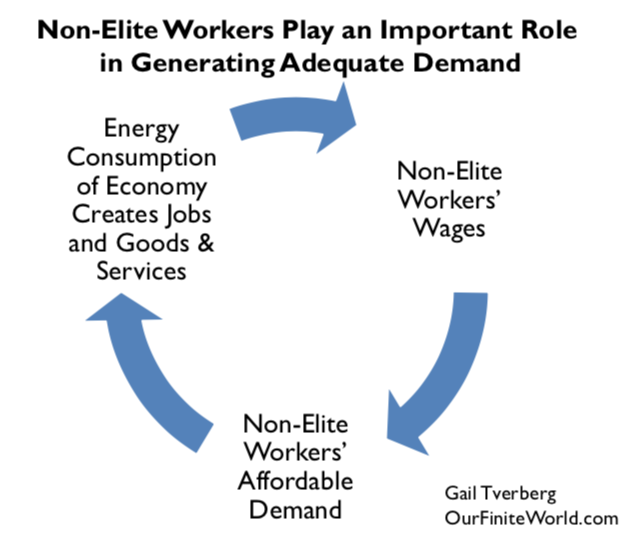
Figure 3 shows the important role that the wages of non-elite workers play in generating adequate demand. If their wages are high enough, they can buy enough goods and services made with commodities to keep commodity prices high. With sufficiently high commodity prices, production can continue.
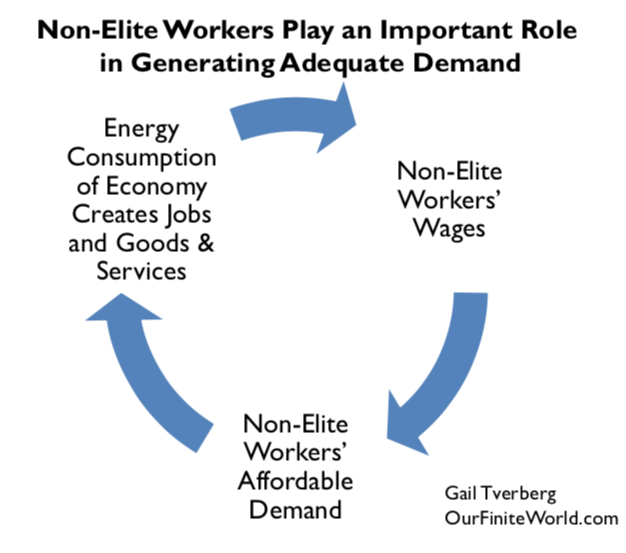
Figure 3: Chart showing the important role that the wages of non-elite workers play in maintaining energy demand. With adequate demand, prices can remain high enough for production to continue.

Why the Peak in World Oil Production Likely Occurred in 2018 

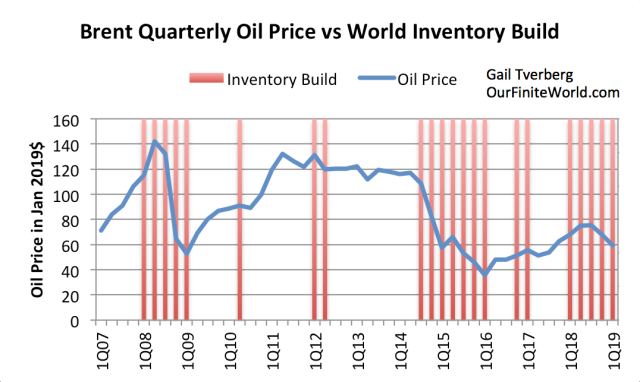
If we look at recent oil data, we see a pattern of growing gluts in supply, as indicated by the red bars in Figure 4. Even in the most recent week, the week ending February 15, 2019, after all of the cuts begun by OPEC and other oil exporters, US crude oil stocks continue to build. This is not the impact a person would expect, if the production cuts are truly effective!
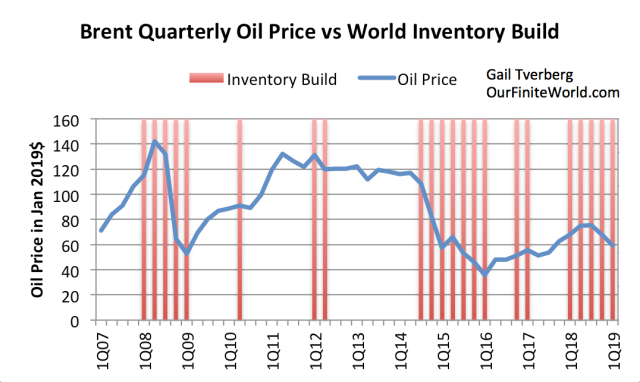
Figure 4. Brent average quarterly oil price (in January 2019$), with an indication of quarters when world crude oil inventories are building. Oil prices are Brent spot oil prices, adjusted using the CPI-Urban to January 2019 prices levels. World inventory build quarters are based on indications shown in US Short Term Energy Outlook reports of various publication dates.

This is precisely the kind of signal we would expect, if products made with oil (and using oil in their operation) are becoming increasingly unaffordable for the non-elite workers of the world. Note that these bars are becoming more frequent and are occurring at lower prices. This is the expected outcome of a clash between the falling discretionary income of non-elite workers and the rising costs of oil producers.

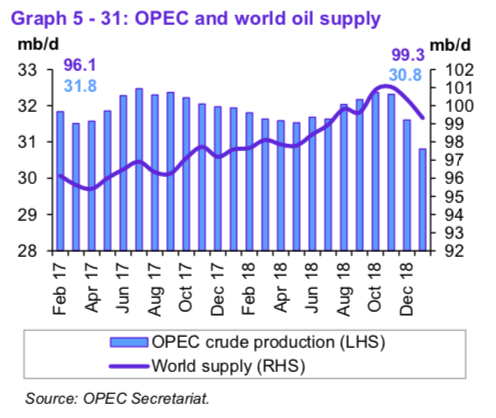
When prices fall too low, producers cut back production. OPEC reports its view of the effect of recent production cutbacks in Figure 5.
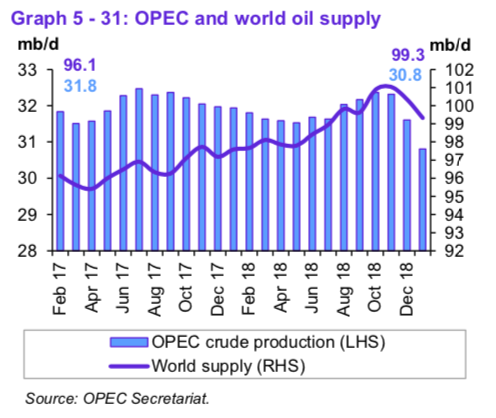
Figure 5. OPEC and world oil supply, in chart from OPEC Monthly Oil Market Report for February 2019.

Given the nearly worldwide problem of falling affordability of goods by non-elite workers, we should not be surprised if the peaks in oil production in October and November 2018 ultimately prove to be the maximum production ever recorded. In fact, it seems quite likely that the year 2018 will prove to be the year with the highest-ever oil production.

The cutback in production will appear to be voluntary. Once cutbacks start, they will tend to feed upon themselves. Unless oil prices really spike following the cutbacks (say, to $90 per barrel), exporting countries will find themselves worse off after the cutbacks, for a combination of reasons:

  • The cutback in production will reduce the number of workers directly and indirectly employed by the oil industry. Their reduced spending will lead to a need for expanded government programs.

  • Housing prices will fall in oil exporting countries. This is likely to ultimately lead to debt defaults.

  • Tax revenue that governments of oil exporters can collect on the smaller amount of oil will be lower, even though the needs of the economy will be greater.

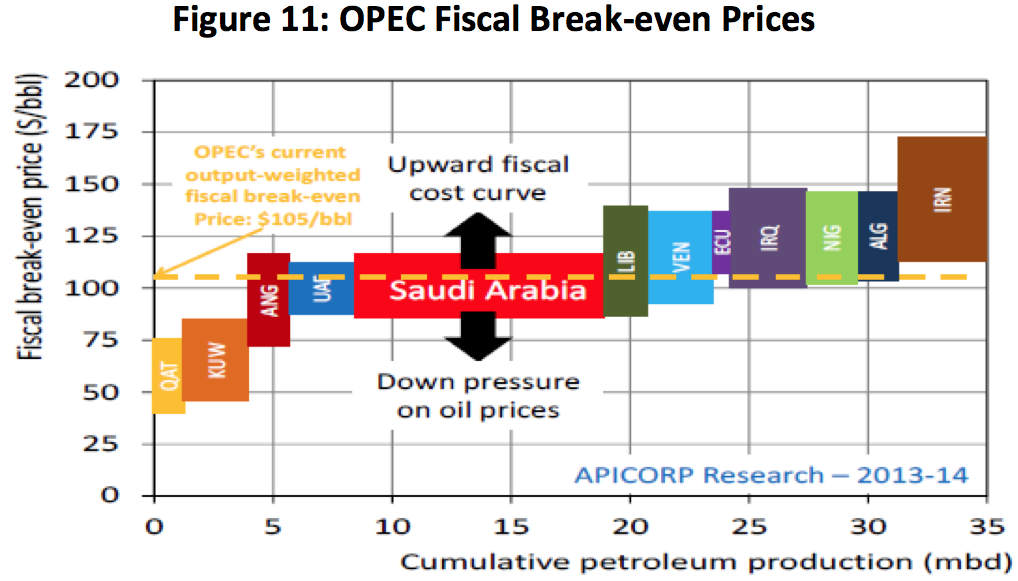
Ultimately, it seems likely that at least some governments of oil exporting countries will be overthrown, depressing oil production further. If the breakeven price for most OPEC members, including necessary tax revenue, was over $100 per barrel in 2014, it is hard to see how exporters can get along with much less today.

World Coal Production: Following a Similar Pattern to Oil?

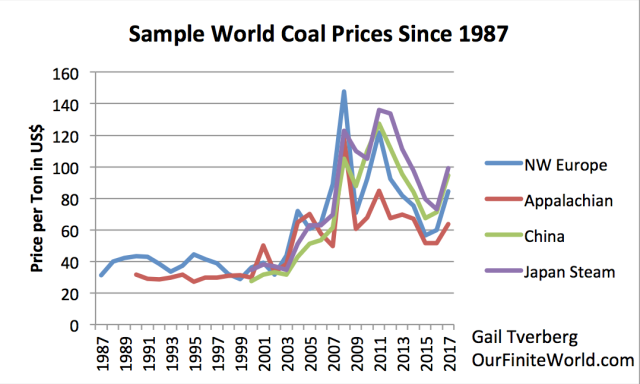
One thing that most people don’t realize is that coal prices follow a very similar pattern to those of oil.

Figure 6. Sample world coal prices, based on information from 2018 BP Statistical Review of World Energy.

In Figure 6, coal prices experience a major peak in 2008, followed by a lower peak in the 2011 period, which peters out by 2013. Prices recently are much lower than in the 2008 period, or in the 2011 to 2013 period. This pattern is very similar to the recent pattern in oil prices.

The similarity in the patterns of coal prices and oil prices makes perfect sense if prices of both oil and coal are based primarily on affordability, and this affordability depends heavily on the wages of non-elite workers. When countries, such as China, ramp up their debt, more non-elite workers can be hired at higher wages. These workers can make more computers, automobiles, steel ingots, and many other goods. They can also afford to buy more output of the world economy. This ramped up demand tends to raise the prices of both coal and oil.

For many commodities, China’s demand represents close to half of the world demand. China has become the world’s number one manufacturer of goods. China needs growing energy consumption to maintain its growth of manufactured goods because it takes energy to operate machines, even computers. It even takes energy to keep the lights on.

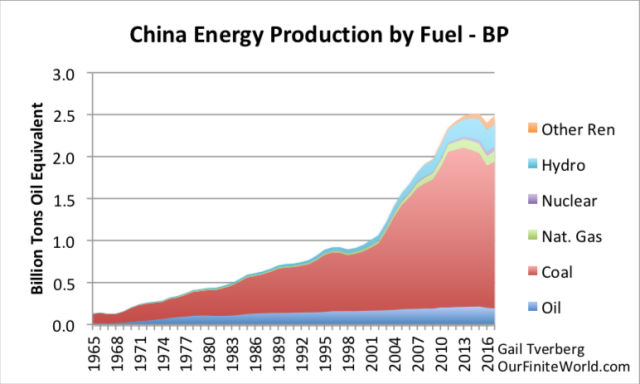
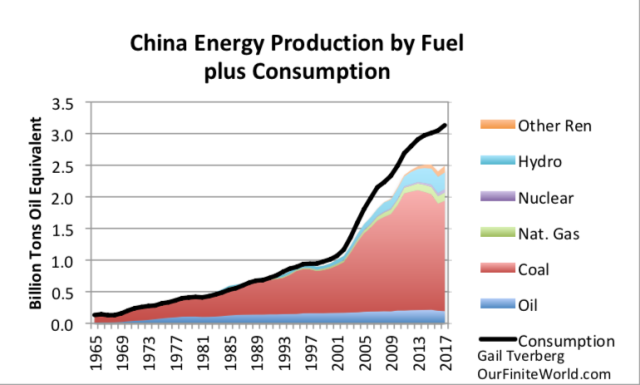
Unfortunately, with the recent lower prices for coal and oil, China is experiencing lower production of both coal and oil (Figure 7). Without growing energy supplies, China cannot meet the world’s growing need for manufactured goods.
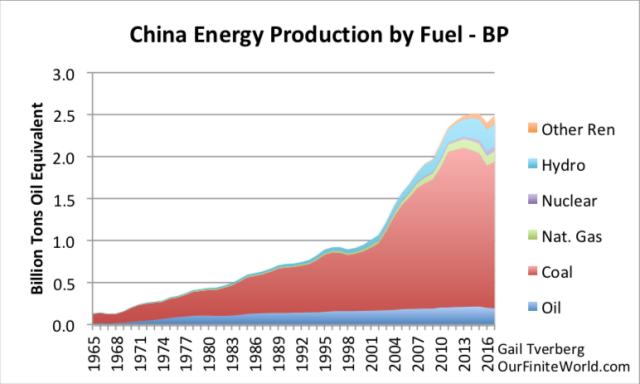
Figure 7. China energy production by fuel, based on 2018 BP Statistical Review of World Energy data.

The reason why China has recently reduced production of both coal and oil is the usual one: the rising cost of production conflicts with the low prices available in the marketplace, making production unprofitable for a growing share of producers.

How about China’s total energy consumption? Do imports make up for China’s lack of local production?

Figure 8. China energy production by fuel, with a line added to indicated it total energy consumption, including imports. Based on BP Statistical Review of World Energy 2018 data.

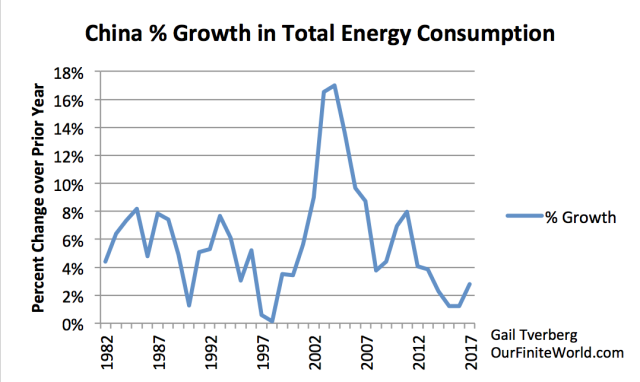
Not really. China is the world’s largest importer of coal, oil and natural gas. It is also the number one user of wind and solar (included in the tiny orange “Other Renewables” portion of the chart). Even with these huge additions to China’s energy production, its annual growth in the quantity of energy it consumes (including imports) has plummeted (Figure 9).
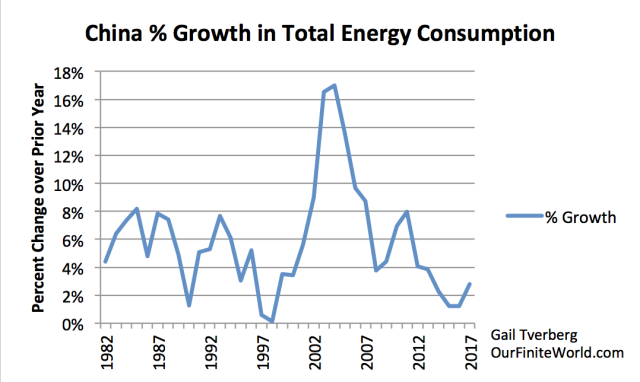
Figure 9. China annual growth in total energy consumption. Based on 2018 BP Statistical Review of World Energydata.

China reports that its real GDP growth rate is still very high (over 6%, net of inflation), but many observers are skeptical of this claim. Certainly, going forward, its coal and oil production cannot continue to decline, or the economy will encounter huge problems. The amount of goods China will be able to manufacture will fall, as will the number of new homes it can build. Without continued growth, China is likely to run into debt default problems. China is such a large country that its problems can be expected to adversely affect the world economy as a whole.

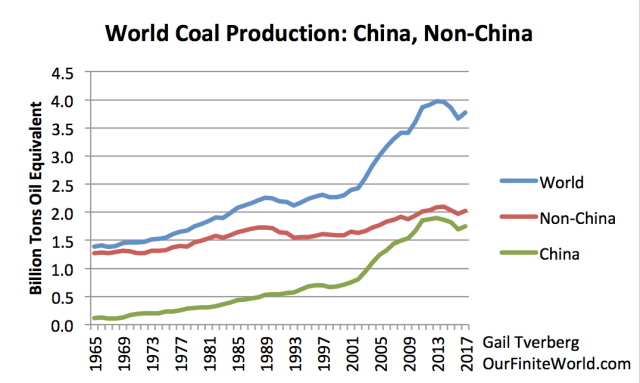
Figure 10 shows that China produces nearly half of the world’s total coal. If China’s coal production declines, world production is also likely to decline.
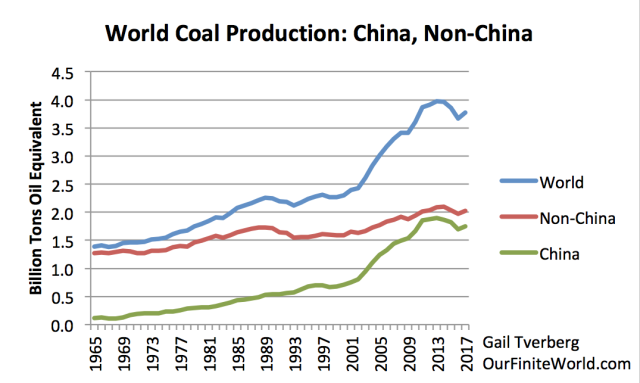
Figure 10. World coal production, divided into China and Non-China, based on 2018 BP Statistical Review of World Energy data.

The only way to prop up coal production, for either China or the rest of the world, is higher prices, indirectly coming from higher demand from non-elite workers. Businesses can perhaps use rising debt to hire these non-elite workers but, if there is not a sufficient supply of buyers who can afford the additional goods and services made by these workers, the final outcome will be debt defaults.

The Fundamental Problem Is a Physics Problem

The fundamental problem is that the economy grows for the same reason that hurricanes, ecosystems, stars, and plants and animals grow. They are dissipative structures that grow in the presence of energy flows. In the case of hurricanes, the energy comes from the heat in the warm ocean. In the case of the economy, the energy flows are of many different types, including (among others), human energy, energy of draft animals, solar energy, fossil fuels, and wind energy.

One key characteristic of dissipative structures is that they are not permanent. Permanent growth in a finite system is not possible. The laws of physics sets up the system in such a way that dissipative structures grow and eventually collapse. Over time, new dissipative structures form, each varying in a random way from previous dissipative structures. Those best adapted to the ever-changing circumstances tend to last the longest. This is the way that the evolution of economies takes place, just as the evolution of plants and animals takes place.

One characteristic of economies is that physics determines how much energy is needed to manufacture and transport a particular product. It also determines how much the mix of buyers can afford to pay for finished products using this energy. Thus, physics determines the potential profitability of a particular manufacturing process, with lower energy costs tending to make production more profitable. As energy costs rise because of diminishing returns, the system eventually reaches a point where it must collapse. The cost of production rises so high, relative to wages, that many non-elite workers cannot afford the finished goods and services made by the system.

The laws of physics also determine what wage distributions must look like, given the availability of energy and other resources. In general, if there are not enough resources to go around, some members of the economy tend to get “frozen out” by low wages. In addition, in a low-energy per capita situation, the energy that is available tends to rise to the top, to the high-earners of the economy, somewhat like heating water transforms it to its gas phase (steam), which rises to the top. With this structure, even with a severe energy shortfall, some members of the economy can be survivors.

With today’s worldwide economy, the survivors might be some humans and businesses within the world economy. The system would need to start over, building up smaller economies from pieces that managed to stay intact, but the system, as a whole, would not die out, unless the energy shortfall were to be severe.

Modeling the World Economy

One issue with academic research today is that it tends to be divided into many academic “silos.” Researchers tend to know more and more about their own field, but less and less about other fields that might be peripherally related. For example, economists tend not to keep up with the physics of self-organizing networked systems. Geophysicists understand the physics that governs the extraction of fuels, but they have no insight into the fact that the laws of physics might also affect prices and wage distributions.

Without understanding the forces that are causing the results that are being observed, it is very easy to create a model that is more misleading than helpful. For example, a simple model of the earth is the one each of us can see as we look around us.

Figure 11. Source: Edrawsoft.com

The model shown in Figure 11 is a flat map. This is a perfectly good representation of what the earth looks like, if a person is not concerned about what happens at a distance. Of course, to extend the map out, a person really needs to convert the model into a globe. A globe is a very different model.

Economic researchers tend to have some of the same modeling issues as illustrated by the flat map model. Economists favor fitting curves to past data to forecast the future patterns. Curve fitting tends not to be good for determining turning points. When dealing with energy and other resources, we are really interested in when a turning point will happen, forcing production of energy products and resources of many kinds downward.

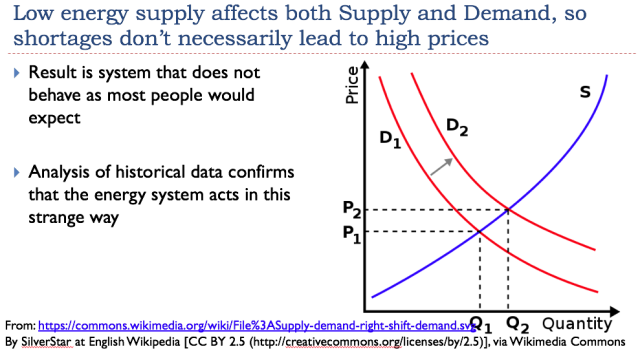
Another model favored by economists is the standard two-dimensional supply and demand model (Figure 12). This model ignores the special role that energy products play because of the operation of the laws of physics. Energy products, as they work through the networked economy, affect both the supply and demand of finished goods and services, making the two dimensional model shown inappropriate.
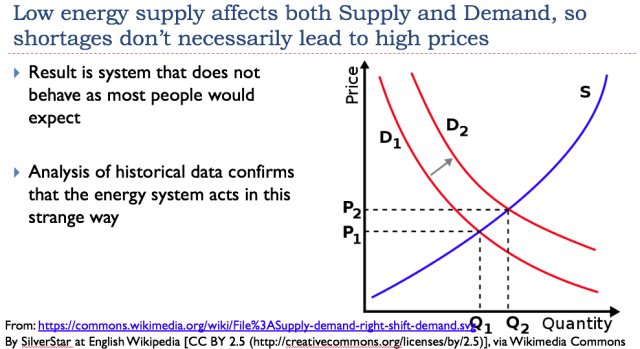
Figure 12. This standard model does not consider the special role energy plays in the economy under the laws of physics, so is not appropriate for energy products.

With neither curve fitting nor the standard supply and demand model sounding an alarm with respect to energy prices not being able to rise forever, economists have tended to overlook this issue.

Figure 13. Economic models tend to give a false sense of security because they forecast that the future will be a continuation of the past.

Of course, policymakers are happy to hear happily-ever-after endings. Few policymakers question the reasonableness of the models. They do not consider the possibility that the falling discretionary income of non-elite workers around the world might choke off demand for goods made with energy products.

Even geophysicists who have looked at the problem tend to get the story only half right. They understand underground physics, but they tend not to understand that prices cannot rise indefinitely. This is a different, related issue, also associated with the physics of the situation.

“Climate Change Is Our Biggest Problem” Is a Corollary to Bad Modeling

If a person truly believes that energy prices can and will rise forever, then it is an easy corollary to assume that all fossil fuels that we can identify within the earth’s crust will eventually become extractable. There are no limits except for the limits imposed by climate change.

Of course, if we are really hitting price limits here and now, the situation is likely to be very different. These price limits will cause a very near-term decline in energy supply, which we essentially have no control over. Financial systems are likely to collapse; international trade will be scaled way back; world population is likely to fall. CO2 levels will, in time, adjust to this radically changed world.

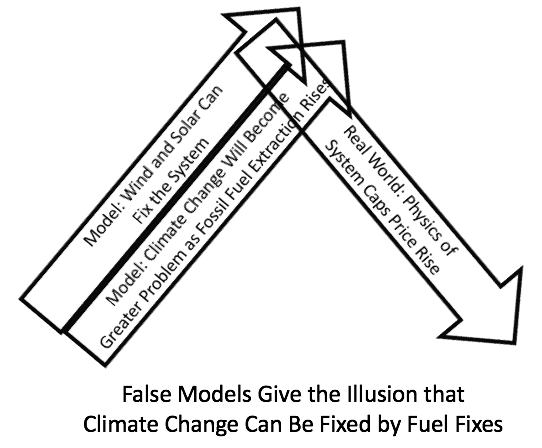
I showed earlier (in How the Peak Oil story could be “close,” but not quite right) that the models used to “prove” that wind and solar can be helpful to the system greatly overstate their benefit to the system. As a result, we don’t really have evidence that wind and solar are even helpful to the system.

Consequently, we really have two false models working together to give an illusion that we have a huge problem which is fixable, if we just exert enough effort. Physics puts a cap on our efforts, however. The physics of the system makes the system collapse before policymakers can hope to even make a small fix.

Figure 14. Two false models work together to give the illusion that climate change is the greatest problem that humans have and that we can fix the problem with fixes to the fuel system.

The unfortunate problem is that policymakers are not really in charge: the laws of physics are in charge. Energy and other resources are no longer inexpensive enough to extract to allow the system to work. The proposed solutions (wind and solar) are not cheap enough to save the system either. We can temporarily hide the problem with more debt (indirect promises of future energy) at lower interest rates, but this does not fix the system.

Conclusion

Many of the problems the world economy is facing today seem to be the result of reaching the limits of energy extraction. Very few researchers understand how a self-organized networked economy really operates. As a result, the symptoms of economic health and economic illness have been confused. It looks quite possible that we have reached both Peak Oil and Peak Coal, approximately simultaneously. This is a frightening situation, because it could be an indication of collapse in the next few years. This would likely be much worse than the Depression of the 1930s.

Of course, even with these observations, we do not know precisely what lies ahead. Somehow, multicellular animals have lived on this earth for a very long time. Amazing coincidences have happened and may continue to happen, allowing economies to flourish. We humans do not have as much control over the current situation as we would like to think that we have. Fortunately, we cannot rule out the possibility of more amazing coincidences, perhaps even caused by a literal Higher Power behind the energy flows. Thus, the result may be different from what our models seem to suggest.

via ZeroHedge News https://ift.tt/2Nzqnv1 Tyler Durden
Monsanto’s Roundup Weed Killer Found In Top Beer And Wind Brands 

A new report by the U.S. Public Interest Research Group (PIRG) Education Fund reveals that many beers and wine sold across the US contain toxic glyphosate from weedkiller.

PIRG tested five wines, 14 beers and one hard cider for the study. The wine brands were Barefoot, Beringer, Frey (organic), Inkarri Estates (organic), and Sutter Home. The beers tested were from Budweiser, Coors, Corona, Guinness, Heineken, Miller, Peak (organic), Sam Adams, Samuel Smith (organic), Sierra Nevada, Stella Artois, Tsingtao and New Belgium. Ace Perry Hard Cider was also tested.

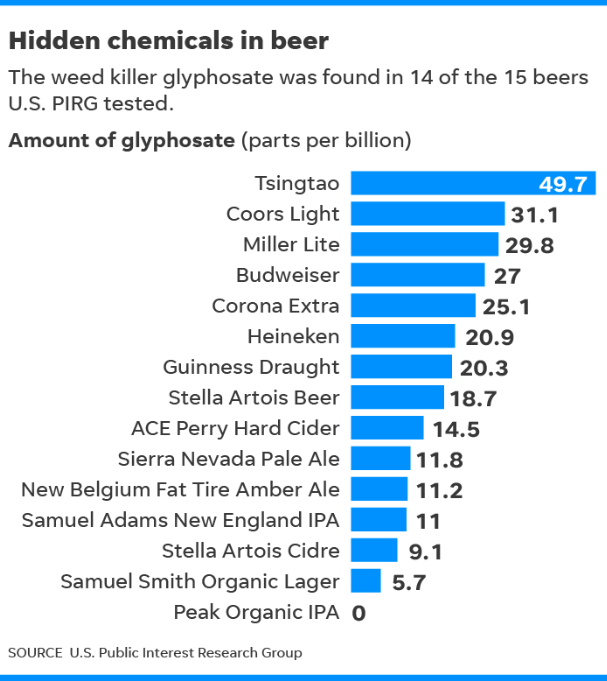
The study determined that popular beers like Coors, Budweiser, and Corona Extra contained an average of roughly 28 parts per billion (ppb). Tsingtao, the outlier, contained a whopping 49.7 ppb. 

Glyphosate is one of the most widely used herbicides across the US and is the active ingredient in products such as RoundupRodeo Aquatic Herbicide, and Eraser. The toxic chemical is a broad-spectrum herbicide that kills plants but has also been linked to cancer in humans by the World Health Organization.

Sutter Home Merlot had the highest concentrations of glyphosate of all 20 brands, at 51 ppb. Beringer Estates Moscato and Barefoot Cabernet Sauvignon had slightly smaller levels of the chemical.

This mind-numbing revelation was published on the same day as a San Francisco court began hearing arguments in the first federal civil case over whether Monsanto’s Roundup weed killer causes cancer.

“When you’re having a beer or a glass of wine, the last thing you want to think about is that it includes a potentially dangerous pesticide,” said U.S. PIRG Education Fund’s Kara Cook-Schultz, who authored the study.

“No matter the efforts of brewers and vintners, we found that it is incredibly difficult to avoid the troubling reality that consumers will likely drink glyphosate at every happy hour and backyard barbeque around the country.”

The study also found that herbicides like Roundup are prohibited in the making of organic beers and wines, but somehow, glyphosate was discovered in three of the four organic alcoholic beverages tested.

While the results are below the EPA’s risk tolerances for alcoholic beverages, at least one study noticed that as little as one part per trillion of glyphosate can trigger the growth of breast cancer cells and disrupt the endocrine system.

The findings indicate that glyphosate contamination is widespread in over-the-counter beers and wine.

Americans should take the appropriate action by avoiding the alcoholic beverages mentioned in the study.

via ZeroHedge News https://ift.tt/2UaZ5xz Tyler Durden

State Warning: Catastrophic Volcanic Eruptions In California Are “Inevitable”

Authored by Mac Slavo via SHTFplan.com,

The United States Geological Survey (USGS) has warned that California’s next big catastrophe might not be a massive earthquake.  Instead, they say a massive volcanic eruption could plunge the state into a post-apocalyptic hellscape.

In a report released on Monday, the USGS said that at least 10 volcanic eruptions have taken place in the past 1,000 years and that “future volcanic eruptions are inevitable.” The USGS has previously said that California in dire need of the monitoring of at least 8 active volcanoes.

USGS claims that most people are well aware of the fact that California could experience a major and deadly earthquake, but the general public is less than concerned about a volcanic eruption.

“The potential for damaging earthquakes, landslides, floods, tsunamis, and wildfires is widely recognized in California,” the report said according to Newsweek. 

“The same cannot be said for volcanic eruptions, despite the fact that they occur in the state about as frequently as the largest earthquakes on the San Andreas Fault.”

The USGS estimated the risk of volcanic eruption based on the past 5,000 years of volcanic activity in California. The report further found that there is a 16 percent chance of a small to moderate-sized eruption over the next 30 years. As reported by Newsweek, by comparison, there is a 22 percent chance of a magnitude 6.7 or larger earthquake at the San Andreas Fault in the San Francisco Bay Area in the next 25 years.

Although one cannot stop a volcano from erupting, preparations can be made just in case this inevitable event happens on our watch. The potentially hazardous volcanoes in California are being monitored closely for any changes that indicate an eruption could be on the way, but that may not give those in surrounding communities much time to get awat from the hazard.  Americans by and large have long lost their willingness to prepare for cataclysmic events and natural disasters.

“Understanding the hazards and identifying what and who is in harm’s way is the first step in mitigating volcanic risk and building community resilience to volcanic hazards,” the USGS’s report said.

“Characterizing exposure – the who and what is in harm’s way – is the first step in mitigating volcanic risk.” 

This all involves some level of personal responsibility when it comes to preparations.  Will a volcano erupt and destroy California tonight? Probably not. But preppers and survivalists understand the need to be ready at a moment’s notice either way.

“Across the ages, in every survival story, a disaster of some sort plays a prominent role. Sometimes the part is played by the government, sometimes it is played by Mother Nature, and other times, the role is taken on by a random mishap. If we have learned one thing studying the history of disasters, it is this: those who are prepared have a better chance at survival than those who are not.” Tess Pennington, The Prepper’s Blueprint

via ZeroHedge News https://ift.tt/2NxI8uR Tyler Durden

Cord Cutting Smashes Another Record With Horrible News For Big Cable 

MoffettNathanson LLC. is an independent sell-side research boutique. The firm covers media and telecom; software; retail; and retail internet areas. A new report from the firm, first reported by Fortune, shows that consumers are ditching their cable and satellite TV packages at near record levels in 4Q18. Cord-cutting was so massive last year that big cable companies could not offset the losses with internet or TV subscriptions.

The report said the total number of pay-TV subscribers dropped 4.1% from the prior year, the highest rate of decline since 2010. Approximately 985,000 more customers cut cable or satellite in the quarter than signed up for a new service.

The drop did not surprise Craig Moffett, the Founding Partner at MoffettNathanson LLC., who said “the satellite operators are dead men walking has been obvious to all for some time, and the cable operators, while actually not doing all that badly in video, have made clear that they increasingly view their core business to be broadband, not video,” adding that “it may not be an overstatement to say that the pay-TV business as we know it is beginning to unravel.”

Moffett had another warning; it was the fate of cable channel packages offered over the internet. Most providers, like Google’s YouTube TV and AT&T’s DirecTV Now, had to increase prices in 2018 to account for higher costs charged by big cable, so online subscriber growth slowed. The number of consumers who signed up for internet packages was 740,000 in 4Q18, down from a 900,000 gain a year earlier.

The cable bundle has become very unappealing as consumers gravitate to multichannel live TV streaming services, like AT&T Watch TV, Philo, Sling TV, DirecTV Now, Hulu, Netflix, and PlayStation Vue.

Fortune says the cord-cutting trend is similar to the consumers in the mid-2000s dropping landline phones for cellphones.

 Another research shop has echoed a similar deterioration narrative for big cable. Leichtman Research Group says 79% of households paid for traditional cable or satellite service in 2018, down from 84% in 2014 and the all-time peak of 88% in 2010.

via ZeroHedge News https://ift.tt/2GO3vHQ Tyler Durden
Scientists Plan To Geoengineer Planet Earth To Save Us From Global Warming

Authored by Barry Brownstein via The Foundation for Economic Education,

…but some scientists warn geoengineering will have unintended consequences.

Harvard’s Gernot Wagner wants to save the world from global warming. His method? Develop a new type of plane that will fly more than 4,000 missions a year dumping particulates into the stratosphere.

Wagner and his colleague Wake Smith call the proposed plane “SAI Lofter (SAIL).” Anonymous individuals at “Airbus, Atlas Air, Boeing, Bombardier, GE Engines, Gulfstream, Lockheed Martin, NASA, Near Space Corporation, Northrup Grumman, Rolls Royce Engines, Scaled Composites, The Spaceship Company, and Virgin Orbit” provided input.

Estimates for SAIL’s design and operation seem sophisticated but are fabricated. Wagner and Smith admit, “No existing aircraft design—even with extensive modifications—can reasonably fulfill [their] mission.”

Wagner and others believe that scientists can calculate how many particulates will be needed to cool the Earth to a desired temperature.

Wagner and Smith are not alone in their geoengineering dreams. As early as 2006, Paul J. Crutzen, Nobel laureate in chemistry, called for “stratospheric geoengineering research.” Harvard professors David Keith and Frank Keutsch hope to experiment via balloons spraying “a fine mist of materials such as sulfur dioxide, alumina, or calcium carbonate into the stratosphere.” Wagner, Keith, and Keutsch are all part of the Solar Geoengineering Research Program at Harvard.

Geoengineering is gaining global traction. Last fall, the UN’s Intergovernmental Panel on Climate Change issued a report saying geoengineering could be used as an emergency “temporary remedial measure.”

Spraying aerosols in the stratosphere would mimic what large volcanoes do.”

In 1815, Mount Tambora in Indonesia erupted, spewing “millions of tons of dust, ash, and sulfur dioxide into the atmosphere, temporarily changing the world’s climate and dropping global temperatures by as much as 3 degrees.” As the particulates moved around the global atmosphere, “1816 became the year without a summer for millions of people in parts of North America and Europe, leading to failed crops and near-famine conditions.”

No doubt, Wagner and others will tell you careful calculations will limit global cooling to just the right degree. Skeptics might conclude otherwise: scientists blinded by unlimited hubris are partnering with crony capitalists to threaten humanity.

To be sure, some scientists warn geoengineering will have unintended consequences. MIT’s Daniel Cziczo, an atmospheric scientist, warns that geoengineering could destroy the ozone layer. Without the ozone layer, photosynthesis would be difficult, the food chain would be destroyed, and life on Earth would perish. In this case, unintended consequences would be apocalyptic.

In his book The Fatal Conceit, F.A. Hayek observed, “The curious task of economics is to demonstrate to men how little they really know about what they imagine they can design.” Is Hayek’s statement equally applicable to scientists imagining they can safely modify the biosphere?

Regardless of your beliefs about global warming, Nassim Taleb’s “precautionary principle” would rule out plans altering the biosphere. Taleb writes:

The precautionary principle (PP) states that if an action or policy has a suspected risk of causing severe harm to the public domain (affecting general health or the environment globally), the action should not be taken in the absence of scientific near-certainty about its safety.

In the late 1980s, outside Tucson, Arizona, scientists built a closed ecosystem (all food and water had to be obtained from inside the dome) to replicate the Earth’s biosphere. Eight humans resided in the biosphere for a short period of time. Not long into the experiment, project organizers had to open the sealed doors of Biosphere 2: “Oxygen levels got so low halfway through the first year that they had to put more in over fear for the safety of the Biosphere residents.”

John Adams, deputy director of Biosphere 2, clearly states the takeaway: “What they did learn, and in my opinion the single most important lesson, was just how little we truly understand Earth’s systems.” I suspect that Wagner won’t be calling Adams soon.

If you think Wagner’s plan to cool the atmosphere by mimicking the effects of volcanoes is bonkers, consider the Atlantropa project—the craziest, most megalomaniacal scheme from the 20th century that you never heard of.”

After World War I, German engineer Herman Sörgel had a plan to prevent mass starvation in Europe. Sörgel called his plan the Atlantropa Project. The heart of the Atlantropa madness was to block the Atlantic Ocean from entering the Mediterranean by damming the Strait of Gibraltar. Deprived of a significant source of water flow, the Mediterranean would drain.

Sörgel imagined the dams would produce almost unlimited energy and the reclaimed land used for farming. World peace would reign when Europe and Africa were linked as a giant continent—Atlantropa.

Sörgel’s mad scheme had the enthusiast support of many expert engineers and the German public.

Yet, problems with Sörgel’s mad scheme were endless. An enormous amount of concrete would be requiredto build a dam across the Strait of Gibraltar. If the dam would fail, millions might die by floods. As for the reclaimed land, salt left behind on the seabed would prevent farming and turn the land into a desert.

Herman Sörgel’s crazy scheme is not so different from Gernot Wagner’s—both imagine they know how our biosphere works. In Sörgel’s case, dams would have altered the Gulf Stream with catastrophic global cooling the result.

Without government support, Sörgel had no power to impose his crazy dream on others. Humanity averted disaster when the Nazis rejected Sörgel’s engineered “utopia.” In another instance, the Soviets were not as lucky.

Consider the Aral Sea. The Aral Sea—once the fourth largest body of water on the planet—is now a vast wasteland that has shrunk to less than 25 percent of its former size.

The Aral Sea in Uzbekistan (formerly part of the Soviet Union) stands as a tragic monument to the environmental carnage that often occurs under socialism. How could this have happened? Was it a change in weather? No, the destruction of the Aral Sea was the consequence of the Soviet decision to divert waters that flowed into the Aral Sea to irrigate land for cotton farming.

In their book World Politics: International Politics on the World Stage, John Rourke and Mark Boyer write of the Aral Sea:

Then, beginning in the 1960s, Soviet agriculture demands and horrendous planning began to drain water from the sea and from the two great rivers that feed it (the Amu Darya from the north and the Syr Darya from the south) faster than the water could be replenished.

The sea started to shrink rapidly. As it did, the level of its salinity rose, and by 1977 the catch from the once-important fishery had declined by over 75 percent. Still the water level continued to fall, as the sea provided irrigation for cotton fields and for other agricultural production. The same Soviet planning that brought the world the Chernobyl nuclear plant disaster in Ukraine, stood by paralyzed as the Aral Sea began to disappear before the world’s eyes.

Now, in reality, geographical name Aral Sea is a fiction, because it has shrunk in size and depth so much that a land bridge separates the so-called Greater Sea to the north from the Lesser Sea to the South. What was a single sea has lost 75 percent of its water and 50 percent of its surface area in the past 40 years. That is roughly equivalent to draining Lake Erie and Lake Ontario. The Uzbek town of Munak was once the Aral Sea’s leading port, with its fishermen harvesting the sea’s abundant catch. Now there are few fish, but even if there were many, it would not help the people of Munak. The town is now in the middle of a desert; the shoreline of the Lesser Sea is 50 miles away.

Let’s put all of this together. Human hubris and madness will always exist. Scientists can dream of controlling the uncontrollable, but they need an agent of coercion to implement their dangerous schemes. Their tool of coercion can only be government.

via ZeroHedge News https://ift.tt/2TqnMJ8 Tyler Durden

China PMIs Plunge Despite Record Surge In Stimulus

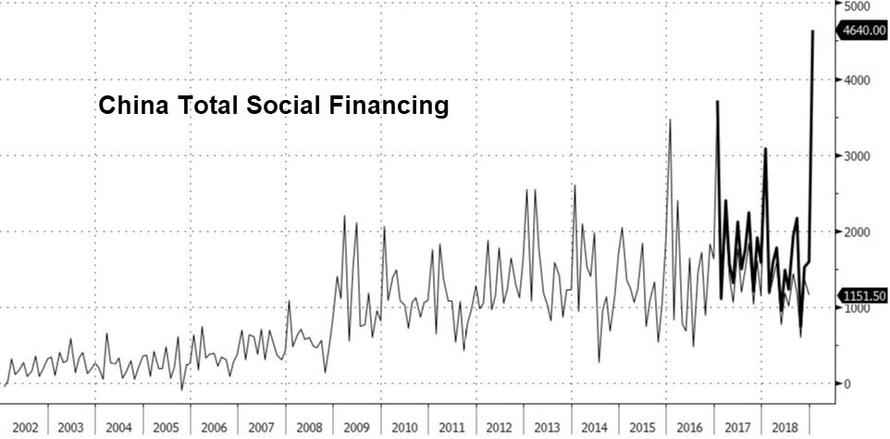
Despite endless jabs of stimulus and the biggest increase in credit on record, China Manufacturing and Non-Manufacturing PMIs plunged in February.

As a reminder, in what may soon be dubbed the Shanghai Accord 2.0, the PBOC announced it had flooded the economy with a gargantuan 4.64 trillion yuan in various new forms of debt which comprise China’s Total Social Financing in January, including notably, the “shadow” credit which Beijing had been aggressively cracking down on: an aggressive credit expansion which many took as a tacit confirmation that China was losing the fight with deleveraging.

But, after a brief bounce in January, everything tumbled again with the first official gauge of China’s manufacturing sector in February (the purchasing managers index) falling further below the 50 mark that signifies contraction, dropping to 49.2, compared with a median estimate of 49.5.

The gauge of new export orders slumped to 45.2 from 46.9 in the previous month indicating weakening external demand amid a global economic slowdown.

The non-manufacturing PMI, which reflects activity in the construction and services sectors, also fell, to 54.3 compared with 54.7 in January.


Production may have slowed in February, due to effects from the Lunar New Year holidays and a temporary campaign by some industrial provinces to reduce pollution.

via ZeroHedge News https://ift.tt/2tJayZQ Tyler Durden
The House Just Passed A “Sweeping” Gun Control Bill. Tomorrow They Vote On Another

Authored by Dagny Taggart via The Organic Prepper blog,

Today, gun-grabbers in the House of Representatives held their first major vote on gun control legislation in years.

They voted to pass H.R. 8, the Bipartisan Background Checks Act of 2019, which would require background checks for all firearm sales, including private transactions and purchases made online and at gun shows. Currently, only federally licensed firearms dealers, importers, and manufacturers are required to conduct background checks on customers under federal law. Twenty states and D.C. have already expanded background checks to include at least some private sales. The bill was described by NPRas “sweeping.”

H.R. 8 also prohibits firearms transfers by a person who is not a licensed dealer. However, it does exclude gifts to family members and transfers for hunting, target shooting, and self-defense. A temporary transfer of a gun can also take place in situations where it’s “necessary to prevent imminent death or great bodily harm.”

This is just another proposed gun control measure that won’t do anything to stop crime.

The National Rifle Association (NRA) wrote that H.R. 8 would impose so-called “universal” background checks, but the legislation “doesn’t address how criminals actually acquire their firearms”. In addition, it “creates traps for law-abiding gun owners, and it’s been proven not to work,” the gun rights organization explains.

Some Republicans, including Rep. Greg Steube, R-Fla., argue that the universal background check bill wouldn’t have prevented the school shooting in Parkland, Florida last year, noting that the shooter passed a background check. It also wouldn’t have stopped the Texas church shooting because the military didn’t report the shooter when they should have.

The bill passed largely along party lines (240 to 190). Eight votes in favor came from Republicans.

H.R. 8 had 232 co-sponsors. Five are Republicans: Peter King, of New York, Brian Fitzpatrick of Pennsylvania, Fred Upton of Michigan, Brian Mast of Florida, and Chris Smith of New Jersey.

Tomorrow, the House will vote on another gun control bill.

H.R. 1112, the Enhanced Background Checks Act of 2019, will be voted on by the House tomorrow – the 25th anniversary of the day the Brady Act, which mandated federal background checks, went into effect.

H.R. 1112 has 15 co-sponsors, only one of which is a Republican – Rep. Peter King of New York.

That bill would extend the amount of time firearms dealers must wait for a response from the background check system before the sale can proceed to 20 days. Currently, they can make the sale if they haven’t received a response in three days.

According to the NRA, H.R. 8 is “bad”, but “H.R. 1112 is worse”:

Under that bill, gun sales from licensed dealers would be subject to the discretion of federal officials. Through either malice or incompetence, the legislation creates an unworkable system where gun buyers could be placed in an endless loop of background checks and would never actually receive the firearms they wish to purchase. (source)

Proponents say the bills would close loopholes in the background check system. “For example, the gunman who killed nine people at the Emanuel African Methodist Episcopal Church in Charleston, S.C., in 2015, had drug charges that should have prevented him from buying his gun. But the dealer was able to proceed with the sale because the background check system had not sent a response within three days,” reports USA Today.

The White House will likely veto both bills if they make it through the Senate.

In a statement, the White House announced it opposed the bills for violating Second Amendment rights.

“The extensive regulation required by H.R. 8 is incompatible with the Second Amendment’s guarantee of an individual right to keep arms,” the statement reads. “By overly extending the minimum time that a licensed entity is required to wait for background check results, H.R. 1112 would unduly impose burdensome delays on individuals seeking to purchase a firearm.”

The two bills are expected to pass in the House, but would then need to be approved in the Senate, where Republicans hold a majority. In its statement, the White House suggested President Trump would veto both pieces of legislation if they pass the House and Senate.

via ZeroHedge News https://ift.tt/2H3xn24 Tyler Durden

Will Trudeau Resign After Former AG’s Explosive Testimony?

During a day where three concurrent Congressional hearings dominated the news cycle in the US, the testimony of Canada’s former Attorney General seemed to slip under the radar. But unlike Michael Cohen’s star turn in front of the House Oversight Committee, what former AG Jody Wilson-Raybould shared with lawmakers and the Canadian public actually might cause one head of state’s carefully constructed house of cards to come crashing down – just as campaign season is ramping up.

With roughly eight months left until an election where Canadians will decide whether to stick with – or reject – the progressive agenda of PM Justin Trudeau, a widening corruption scandal is threatening to take down the prime minister’s entire government. Two weeks ago, journalists at the Globe and Mail blew the lid off a scandal involving Trudeau and his closest aides, where the prime minister appeared to pressure Wilson-Raybould, then the attorney general, into offering a DPA to a Quebec-based engineering firm – then fired her when she refused to obey his demands. And after weeks of radio silence, she shared her side of the story during a widely watched (in Canada) Congressional hearing Wednesday afternoon.

Trudeau

Wilson-Raybould

Answering questions posed by a conservative MP, Wilson-Raybould said she faced intense political pressure and veiled threats from at least 11 people involved in the government – either the PMO or the Privy Council Office – related to the SNC-Lavalin affair. She also said she was warned directly by Trudeau about the negative consequences should the company face prosecution, according to CBC.  One close aide to Trudeau has already resigned over the scandal.

Wilson-Raybould listed the people she had warned about “the inappropriate nature of these conversations” after they “hounded” her about the affair, including Trudeau, Finance Minister Bill Morneau, Clerk of the Privy Council Michael Wernick and the (now-fired) senior senior aide to the prime minister, Gerald Butts.

“For a period of four months from September to December 2018, I experience a consistent and sustained effort by many people within the government to seek to politically interfere in the exercise of prosecutorial discretion in my role as the attorney general of Canada in an inappropriate effort to secure a Deferred Prosecution Agreement (DPA) with SNC-Lavalin.”

“Within these conversations there were express statements regarding the necessity of interfering in the SNC-Lavalin matter, the potential of consequences, and veiled threats if a DPA was not made available to SNC-Lavalin,” she said.

During a series of meetings, one of which took place on Sept. 17, Wilson-Raybould described how Trudeau and Privy Council clerk Michael Wernick tried to reason with her after she informed them that she had decided not to overturn a decision from the director of the Public Prosecution Service to proceed with criminal prosecution against SNC-Lavalin.

After hearing her answer, Trudeau warned of potential job losses should the company choose to move, and purportedly asked her to “help out.”

“At that point, the prime minister jumped in, stressing that there is an election in Quebec, and that, ‘I am an MP in Quebec, the MP for Papineau,'” she recounted. ‘I was quite taken aback.”

At that point, Wilson-Raybould said, she posed a direct question to Trudeau while looking him straight in the eye, asking if he was politically interfering with her role and her decision as the attorney general.

“I would strongly advise against it,” she told the committee she warned Trudeau, who responded, “No, no, no, we just need to find a solution.”

During another conversation, PMO senior staffer Mathieu Bouchard purportedly told Wilson-Raybould when discussing the case that “we need to get re-elected,” and proceeded to pressure her to change her ruling.

After repeatedly refusing to yield, she was moved in January from AG to the head of the department of Veterans’ Affairs – which was widely seen as a demotion. She resigned from the cabinet soon after. It wasn’t until weeks later that reports surfaced alleging that the seemingly arbitrary move may have been carried out in retribution for her refusal to cooperate on the SNC-Lavalin case.

And with that, calls for Trudeau to resign grow louder.

via ZeroHedge News https://ift.tt/2H6Wh0Y Tyler Durden

Trade War “Chess” Leaves U.S. And Global Economy With “Catastrophic” Uncertainty

Via Birch Group,

Trade wars are like a cutthroat game of chess. With each move, trade tensions build even further. But the “winner” is usually no one.

The U.S.-China trade war started reaching the boiling point last year, with “tit for tat” exchanges between the two countries adding tension to an already uncertain economic outlook in both countries.

But now it appears the trade war is reaching a fever pitch, and it’s expanding to include areas with much smaller economies like Venezuela and Africa. According to Forbes (emphasis ours):

The next US-China trade war won’t be fought in Washington or Beijing over trade frictions. It will be fought in Venezuela and Africa, where China has been an active investor, antagonizing the US.

The short version: A “contagion” could be created as a result of new trade sanctions placed on Venezuela, a country already teetering on collapse.

If Maduro’s government can’t repay its debt to China, then potential political regime change could shift to a “pro-American” government. According to the same Forbes piece, that may put Venezuela one step closer to stopping payment to China.

Then a “contagion” may develop that could “infect” emerging markets like Africa:

Worse, the collapse of Maduro’s regime could create a contagion that leads to the collapse of authoritarian regimes in other parts of the emerging market world. Like Africa, where China has been expending credit to unpopular regimes, and drawing strong criticism from the US.

So it’s possible the U.S.-China trade war could spread indirectly into smaller economies. This would create even more tension, potentially causing investors to panic.

And the seeds of that “panic” may already be bearing fruit. According to CNN Business, both China and globaleconomic growth are slowing. Plus, the IMF issued a warning about the global economy being pushed “closer to the edge”:

… the International Monetary Fund has warned that it will get worse if countries keep fighting over trade. Economists at Berenberg, a private bank in Germany, said last month that the risk of recession in the developed world is “more acute than it has been since the end of the euro crisis.

And that’s at the global level. In just the U.S., the pressure to resolve trade war tensions with China is mounting.

Tariff Tensions Could Trigger Stock “Catastrophe”

The market is sensitive to each comment POTUS makes about the U.S.-China trade war. Just this week, the S&P rebounded slightly on his announcement of “more time to find a way to avoid raising tariffs.”

But it’s important to keep in mind that, if both sides don’t reach an agreement, it could be “catastrophic” to the global stock market, according to a CNBC article. Added tension like that could send shockwaves through national markets like the U.S.

Chinese state-run online newspaper said the U.S. would be “most pressured” to avoid any more trade war tension. But no one knows for sure what will happen.

To add to the uncertainty, opinions range widely on what will happen next.

Martin Feldstein wrote, “There is no trade war.” Mike Murphy reports a deal being “outlined” that may end it. And Naeem Aslam from Forbes wrote, it’s a “ticking time bomb.”

On top of that, American companies like Caterpillar are already suffering according to Aslam’s piece (emphasis ours):

The company’s stock slumped after missing earnings as China demand waned. Caterpillar’s earnings are considered an economic bellwether. Its earnings missed estimates by 15 percent, the most since the fourth quarter of 2009, and this makes investors uncomfortable about the ongoing cold war between the two countries.

If an “economic bellwether” is missing estimates like that, the outlook can’t be too good.

And if the markets continue to be sensitive to comments made by POTUS, then economic uncertainty will only grow stronger.

Keep Your Retirement Safe from Trade Wars

While China, Venezuela, and Africa hash out the trade war with the U.S. on the global stage, the national stock market is on “pins and needles” awaiting the next trade decision from POTUS.

The chess game of protectionist trade policies appear to be backfiring, but you don’t have to let your portfolio suffer as collateral damage.

Take action to secure your financial future. Diversify your portfolio with assets such as gold and silver that protect against uncertainty. Don’t put the fate of your retirement in a sensitive market when you can put it in your own hands.

*  *  *

The mainstream narrative so far is that Trump is “likely” to finalize a trade deal with China during a March summit with Xi.  However, if Trump’s “deals” with North Korea are any indication, then I would expect more of the same theatrics. 

Meaning, Trump will announce “huge progress” on a deal that will never actually materialize on paper, leaving the door wide open for a return to the same tariff tensions.  This theater, in my view, is designed in part to provide cover for the Federal Reserve’s continued policy tightening measures.

The Fed has so far dumped another $58 billion in assets from its balance sheet in February, the largest asset dump so far.  This shows that for now the Fed has no intention of reversing QT, despite all the talk in the mainstream of the Fed going “dovish”.

Trump has so closely attached his presidency to fraudulent indicators like the stock market, when these indicators come crashing down Trump and the effects of the trade war will be blamed instead of the Fed.

– Brandon Smith, Founder of Alt-Market.com

via ZeroHedge News https://ift.tt/2SwjhrW Tyler Durden