Violators Of New Zealand’s New Mask Law Face Up To $700 Fine Tyler Durden
Fri, 08/28/2020 – 22:20
During the same week Germany’s Merkel announced that across all but one German states a mandatory mask law will be backed by a 50 euro fine for any violators, New Zealand has announced its own nationwide mask mandate aboard all public transit amid a feared resurgence of COVID-19 cases, with a possible penalty for refusal of up to $1000 (NZD).
The small Pacific nation was previously celebrated as the first in the world to completely eradicate the virus after previously witnessing rapid community transmission.
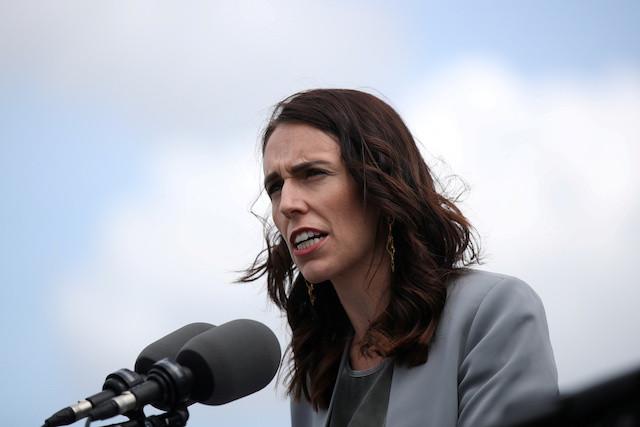
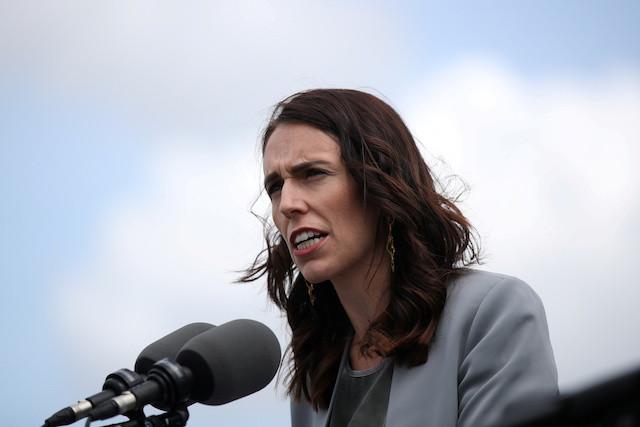
New Zealand Prime Minister Jacinda Ardern, via Reuters.
By the early part of August the Wellington government announced“we had beaten it” as new cases stopped being reported, and following the strict lockdown measures of months prior which had also involved shutting down the border for the island-nation.
Clusters of dozens of new cases began recently popping up again, however, after which the government ordered some 500 troops to border quarantine facilities to prevent the infected from breaching isolation order. Many blamed foreign travel.
Reuters summarizes that the “The Pacific nation of 5 million people had seemed to stop community transmission of COVID-19 due to tough lockdown measures but reintroduced restrictions in its largest city, Auckland, this month following a fresh outbreak.”
“With restrictions to scale back on Sunday, Ardern said in a Facebook post she was taking matters into her own hands before masks become compulsory on public transport across the country the following day,” the report continues.
The new mask mandate if effect this week applies to all buses, taxis, trains, fairies and planes. New Zealand media confirms that “From Monday, not wearing a mask on public transport will be punishable by a fine of up to $1,000 imposed by the courts, or a $300 infringement notice.” In New Zealand Dollars (NZD) this works out to a little under $700.
But anyone caught by police not wearing one without a reasonable excuse could be instantly fined $300 or fined up to $1000 imposed through the courts.
However, authorities say they’ll opt for “light enforcement” initially, likely to include warnings before tickets are issued.
Thus far this is the steepest fine we’ve heard of as the controversial trend of monetary penalties for not wearing a mask in certain public venues increasingly becomes a trend across parts of the globe.
via ZeroHedge News https://ift.tt/2YMoAtk Tyler Durden
German Court Overturns Protest Ban – Tomorrow’s Massive Anti-Lockdown March To Go-Ahead Tyler Durden
Fri, 08/28/2020 – 22:00
Earlier in the week, we reported that authorities in Berlin had banned a series of planned demonstrations against the country’s COVID-19 lockdown measures – claiming they were organized by “right-wing extremists” and would lead to the spread of the virus.
The city said it would deploy several thousand police around the German capital this weekend, citing threats.
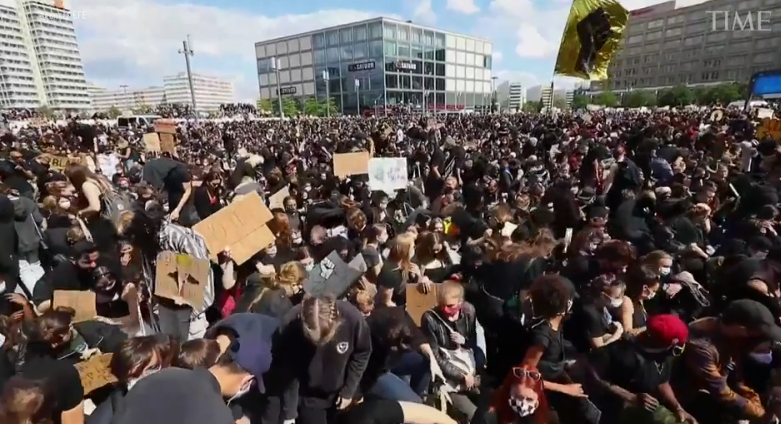
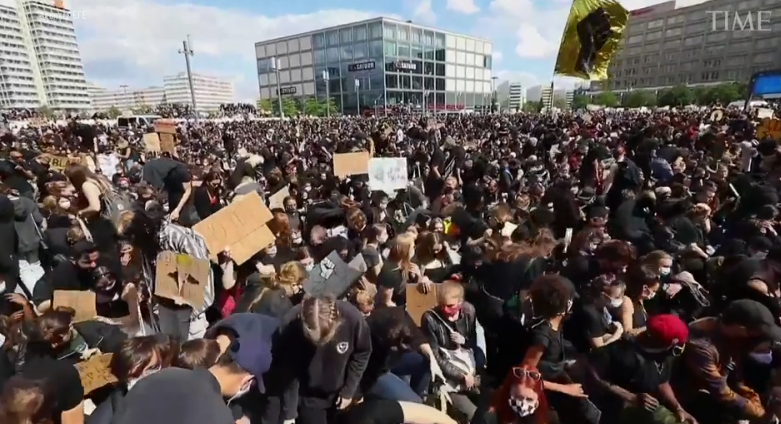
Notably, the German city did not ban a June Black Lives Matter protest in which approximately 15,000 people turned out.
June BLM protest in Berlin
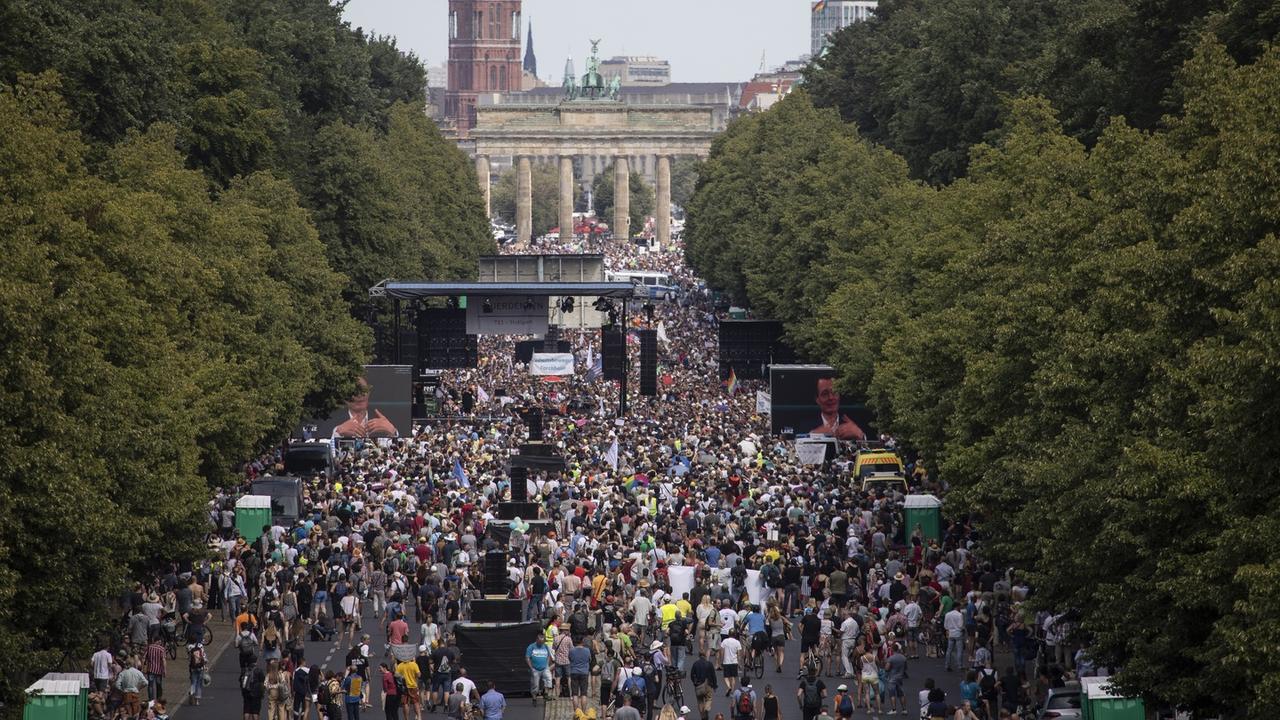
Meanwhile, the Assembly for Freedom had 17,000 registered demonstrators for the August 29 event before Berlin shut it down.
“We are still in the middle of a pandemic with rising infection figures,” said Berlin Interior Minister, Andreas Geisel.
“This is not a decision against freedom of assembly, but a decision in favor of infection protection,” he continued, adding that Berlin should not be “misused as a stage for corona deniers… and right-wing extremists.”
About 20,000 people, including libertarians, constitutional loyalists, far-right supporters and anti-vaccination activists, marched in Berlin on Aug. 1.
That said, the protest will still be under some restrictions – the court ruled that the organizers must follow all the laws and restrictions they are protesting against.
…the judges said protest organizers and participants must provide barriers in front of the stages where speeches will be held – and must regularly remind participants to observe social distancing rules and keep their distance.
Wearing masks was not included in the judge’s guidelines for the protest.
The court’s decision can be appealed by the Senate, but given the timeframe that seems unlikely at this stage.
The Berlin protest is taking place alongside other events around the world for a global day of action. Protests are planned for London, Ottawa, Paris and Zurich.
via ZeroHedge News https://ift.tt/2EApkek Tyler Durden
‘Big Cable’ Lost Over $55 Million In Q2 Despite Lockdown-Driven Couch-Surfing Tyler Durden
Fri, 08/28/2020 – 21:40
One would imagine, with tens of millions of Americans quarantined at home during the second quarter, that years of cord-cutting would not just subside but reverse. However, according to the website Kill The Cable Bill, people canceling their pay-TV subscriptions during the lockdown period accelerated.
Kill The Cable Bill cited a report from Leichtman Research, revealing major cable companies lost 501,400 subscribers in the three months ending on June 30.
Here’s a breakdown of the exodus:
Comcast: (478,000)
Charter: +94,000
Cox: (50,000)
Altice: (34,600)
Mediacom: (17,000)
Atlantic Broadband: (2,800)
Cable One: (13,000)
Kill The Cable Bill estimates the 501,400 subscriber decline equates to approximately $55 million loss for cable companies over the period.
The most recent estimates put the average cable bill at $109.60 per month. So when you crunch the numbers, that means Big Cable lost about $54,953,440 from subscribers in the second quarter. We also know that the average cable bill includes $37.11 in “hidden fees,” which are the fees tacked onto your bill after the advertised price. With the amount of subscriber losses this past quarter, Big Cable lost $18,606,954 in hidden fees alone! – Kill The Cable Bill
Cord-cutting was not limited to cable. Satellite TV services DIRECTV ((846,000)) and Dish ((40,000)) collectively lost nearly 886,000 subscribers in the second quarter, equating to a loss of approximately $97,105,600.
In total, big cable and satellite operators lost $152,059,040 over the period. Those who cut their pay-TV subscriptions gravitated towards streaming TV services, such as Netflix.
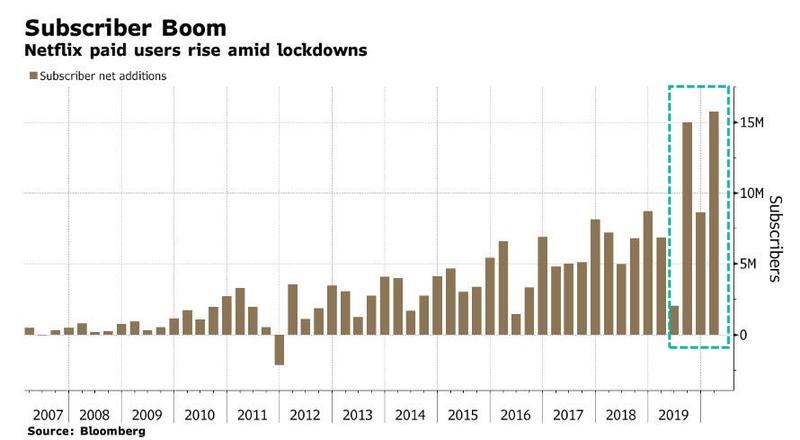
Netflix, during the second quarter, added about 10.2 million subscribers but warned subscriber growth is expected to wane. In the first quarter, the streaming TV service added 15.8 million subscribers.
“If Big Cable couldn’t stop the bleeding with more people than ever stuck at home watching TV, then there is truly no hope for the traditional pay-TV model,” Helen Back, Editor-in-Chief of Kill The Cable Bill said.
Back said, “Netflix was able to capitalize, adding 10 million subs in Q2, underscoring the unstoppable shift to inexpensive streaming services.”
Not even a pandemic (see: “”Perfect Storm” – Cord-Cutting Erupts In Pandemic As Pay-TV Crumbles”), with millions stuck at home, for various reasons, if that is under a public health order, or now remote working or just people stuck on their couches as depressionary unemployment crushes the economy – big cable is seriously doomed.
via ZeroHedge News https://ift.tt/32BQbyI Tyler Durden
On Tuesday, with its reporter standing in front of a raging fire, CNN ran a ludicrous chyron stating, “fiery but mostly peaceful protests after police shooting.”
Ordinarily, this wouldn’t be worthy of reporting three days later.
However, for some reason, this chyron was a bridge too far for many people, and the internet is still flooded with memes. It’s apparent that, with this latest denial of objective reality, CNN has finally completed its transformation into Muhammad Saeed al-Sahhaf, whom many Americans remember almost fondly as Baghdad Bob, the Hussein regime propagandist who insisted that Saddam was winning even as U.S. troops entered Baghdad.
In 2003, when our military successfully invaded Iraq and quickly captured Baghdad, Muhammad Saeed al-Sahhafk, aka Baghdad Bob, was Saddam Hussein’s Minister of Information. As troops neared and then entered Baghdad, al-Sahhaf gave daily press briefings during which he announced the most outrageous lies about the wars.
For example, Baghdad Bob insisted that American troops were committing suicide “by the hundreds” and that none had entered Baghdad. Meanwhile, Americans were a few hundred yards away from him, and the audience could hear the sounds of their fighting. On April 8, four days before Americans captured Baghdad, al-Sahhaf was still insisting that U.S. troops “are going to surrender or be burned in their tanks. They will surrender. It is they who will surrender.”
Baghdad Bob was last heard from some years ago living in the United Arab Emirates. However, it’s entirely possible that he’s currently working for CNN, a former news network, and now a sloppy propaganda outlet for the Anarcho-Marxists of Antifa and Black Lives Matter.
Obviously, things are a bit different here for Bob. Last time, American troops were closing in on Baghdad as Bob spun manifest lies about events. This time, American anarchists and communists are closing in on an American city as CNN spins manifest lies about events. But aside from the details, that chyron running across the bottom of the CNN screen is vintage Baghdad Bob:
For Americans fed up with a deeply dishonest media, this chyron seems to have been the last straw. Thankfully, rather than copying leftists and rising up with weapons and flames, Americans have instead mounted a sustained ridicule attack against CNN. It’s been three days and the jokes keep coming:
To all those conservatives and ordinary Americans having fun with this, you’ve mastered perfectly two of Alinsky’s Rules for Radicals: “Ridicule is man’s most potent weapon” and “A good tactic is one your people enjoy.” Keep on doing what you’re doing.
via ZeroHedge News https://ift.tt/32vPfvE Tyler Durden
It has been the bane of the electric vehicle revolution’s hopes—insufficient battery life. But now, Elon Musk has hinted that he might just have a solution to the thing that has dogged EVs for years.
Elon Musk, a name that is synonymous with EV manufacturer Tesla, hinted on Monday that the company might just be able to mass-produce EV batteries that have 50% more energy density within three to four years.
And although Musk’s track record for bold statements has been suspect, with some proclamations bearing fruit and others fizzling, the market is all abuzz.
The battery, Musk suggests, might be used to power an electric airplane.
“Probably 3 to 4 years,” Musk tweeted on Monday, in response to someone asking why Musk keeps dropping hints about an electric jet.
“400 Wh/kg *with*high cycle life, produced in volume (not just in a lab) is not far,” Musk said on Twitter.
The news comes just a few days before Tesla is due for a 5-to-1 stock split, and on the same day that Tesla announced it was starting operating the world’s largest casting machine at its Fremont factory.
Perhaps coincidentally, the statement also comes as drone video footage shows that Tesla’s Tera battery manufacturing facility is undergoing major construction.
Tesla stated earlier this summer that it is making room for its Roadrunner project at that facility, an “in-house designed battery cell manufacturing system to increase production volume and reduce cost,” according to Electrek.
via ZeroHedge News https://ift.tt/32DphWW Tyler Durden
NBA Walkout Proves LeBron James Now A “Potent Political Force”, Media Claims Tyler Durden
Fri, 08/28/2020 – 20:20
Just days after President Trump complained that the NBA is behaving “more like a political organization”, Reuters has published a story anointing LeBron James, unquestionably the league’s biggest star, as the modern day heir to the mantle of Mohammad Ali. In case readers missed all the NBA drama earlier this week, LeBron James tried to convince his fellow players to cancel the post-season. Fortunately for many, most of the league’s workmen players insisted on moving forward (because most working people can’t simply forego a massive paycheck in the middle of an unprecedented crisis), and the post-season has been saved.
For now, at least.
Because as Reuters explains, LeBron isn’t stopping with the league. He’s helped create a political organization to fight voter disenfranchisement. But more importantly for the Democrats, James has once again signed on as a surrogate, just like he did in 2016, when he went out and campaigned for Hillary Clinton.
But the real utility for the Biden campaign, as far as James is concerned, is his appeal to the young voters. Though a party hack quoted by Reuters focuses on the “respect and credibility” that James enjoys within the black community.
James, who campaigned for Democratic presidential candidate Hillary Clinton in 2016, has promised to campaign for Biden this year. His influence could be critical in 2020, strategists and activists said, given the party’s need to bolster Black voter turnout, which saw its first drop in 20 years in 2016.
“LeBron is likely to have a huge impact,” said Karen Finney, a Democratic political strategist and aide on Clinton’s 2016 campaign. “He has the respect and the credibility with the Black community, so he’s a tremendous asset.”
Meanwhile, James’s “leadership” on the issue of this week’s NBA post-season walkout has inspired the White House to reach out to him as somebody they might potentially be able to work with, although LeBron has been outspoken about his opposition to the president. One Republican strategist offered an apt analysis of the basketball legend’s credibility – the fact that he doesn’t wade into every single issue.
Amy Koch, a Republican strategist who lives in Minneapolis, where Floyd’s death sparked the first wave of protests, said James’ voice would have an impact but carried some risk of alienating suburban voters who have grown frustrated and are not differentiating between peaceful protests and violent ones.
“If he can get some of that extra vote out, he will make a difference,” she said. “The difference between him and some other celebrities is he doesn’t wade into everything, so he has credibility and he’s disciplined.”
LeBron’s organization, “More Than A Vote”, isn’t solely focused on registering voters. It also hopes to recruit poll workers in under-served communities to ensure that polls are well-staffed and that people aren’t forced to wait in line for hours to vote.
“LeBron recognized that these athletes are the most trusted members of their communities,” said a person familiar with his thinking. “It is entirely about the Black community and protecting and strengthening their right to vote.”
The group will collaborate with the NAACP Legal Defense Fund on a multimillion-dollar initiative to recruit young poll workers in Black communities in a dozen states, including battlegrounds such as Michigan, Florida, Wisconsin and Georgia.
A shortage of poll workers to staff in-person voting sites amid worries about the coronavirus pandemic led to dramatically fewer polling locations in some states that held primaries earlier this year, including Georgia and Wisconsin.
That led to long lines, hours-long waits and widespread confusion, particularly in hard-hit African-American communities that felt the brunt of the cutbacks.
The group previously partnered with teams in Los Angeles and Atlanta to turn stadiums into polling places, and worked on an effort to help the formerly incarcerated restore their voting rights in Florida.
Of course, LeBron’s focus on fighting for justice ends at the US border. Remember last fall when he kowtowed to the Communist Party during the Daryl Morey Tweet fiasco, and even suggested that “there are some negatives” to freedom of speech?
At least LeBron’s new BLM activist friends agree with him on that point.
via ZeroHedge News https://ift.tt/32zAAQf Tyler Durden
The 7 Pillars of Urban Preparedness is an introductory course that Selco and I teach. This is a foundational module that we refer to often because so much is built from these seven pillars. Selco and I created this framework to hang things in a logical sequence.
When Selco and I first met we shared our teaching material. After sifting through it all we found we had a massive volume of material with very little structure. People were having to process the information and somehow compartmentalize it in their own minds. They could not keep up with what we were teaching in the moment because they were still trying to sort out the previous information. We realized we needed to build structures for people to hang information on.
The preppersphere desperately needs that structure. As the sphere expands, without these structures, the information becomes more and more fragmented and people do not quite know what to do with the information they are given. The 7 Pillars are strong foundational pillars designed to help them with that and to help build resilience.
Please remember this crucial piece of advice:
These pillars are meant to be built together, incrementally, and consistently so the main structure stays level. You don’t want to build one pillar to its highest possible height when you haven’t yet started on the other 6.
What are the 7 Pillars?
Pillar One: Water
Pillar Two: Shelter
Pillar Three: Fire
Pillar Four: Food
Pillar Five: Signaling | Communication
Pillar Six: Medical | Hygiene
Pillar Seven: Personal Safety
Pillar One: Water
Water is absolutely vital. Most of us probably already know that. However, what we see consistently is we struggle to contextualize the absence of something. Particularly water. Many people just can not fathom a world without freely available water. Even though academically we know it is possible there may be a time when we are without water, we viscerally don’t feel it.
We tend to avoid prioritizing water and only make a token effort. We think we can just go buy a couple of cases of bottled water, put it in the corner and “Yay me. There’s my water. Done.”
Don’t get me wrong, that’s a good start. But that is woefully insufficient. Not only in terms of actual resource, but in strategic mindset or proper planning for this preparation. We must take into consideration reasonably foreseeable problems. Is it reasonably foreseeable that there can be an interruption to our water supply? Yes, and it happens daily somewhere in the world. It doesn’t just mean the tap doesn’t work. It could also be the water is contaminated.
If we fail to keep up our intake of water, we can experience significant problems very fast. A lot of people in survival training talk about the rule of threes: Three minutes without oxygen, three days without water, three weeks without food. Some even add in 3 hours without shelter, which is environmentally related.
I want to challenge this because it gives a total false sense of security.
Yes, you can go three days without water before long term internal organ damage occurs. But, in just a few hours without water you will begin feeling the detrimental effects of dehydration. Your mental processes will become compromised. You may not be deadly dehydrated, but you will start to make stumbling-bumbling bad decisions. So, you may just die by making a stupid decision because of your compromised mental state.
Please do NOT treat this with token effort. We must understand how important water actually is.
Pillar One-Water: Actionable Point
The first block of this pillar is to have a water supply stored and ready to go. You will need to calculate your household water requirement. Ideally, you want to aim for a robust two-week supply of water. This is something that’s way better to overestimate than underestimate.
Calculate two liters per person in your household, per day of water as a minimum. This should come to a half gallon per person.
Based on that number calculate your household requirement for one week minimum, two weeks ideally.
Household requirements means the people that are present, and the people that are possible. In the event of a crisis, is someone going to be coming to you? You need to factor them in and also factor in pets and livestock and animal effects.
The second block of this pillar addresses hygiene, whether that be in terms of flushing toilets, washing clothes or washing bodies. You want to have that buffer zone.
Calculate five liters per person in your household, per day. This should be one and a quarter gallons per person.
Based on that number, calculate your household requirement for one week minimum, two weeks ideally.
It is crucial that you look forward to the next stage. Perhaps you will need to have enough water for longer term, or your water may become compromised. You will want to factor in your ability to collect, transport, treat and store water. You need to think, “Where else could I go and get water from? What can I collect it with? How do I get it from where it is, back to me? How do I treat it to make it safe? How do I store it?
If you have collected water in a container that has not been treated, the container will become contaminated. You do not want to put your safe, treated water back into an untreated container. Make sure you have another container or system.
Pillar Two: Shelter
Thinking in terms of wilderness survival shelter, it would be: what resources can be discovered or pulled from the landscape to build a suitable structure to shelter against the elements here? Urban preparedness is going to be different.
Fundamentally, your shelter needs to protect you from environmental hazards. For me living here in Northern Scandinavia, we go deep into extreme winter – double-digit negative temperatures, consistently with heavy snowfall, heavy winds. Heating and insulation of houses and whether cladding and weatherproofing is a huge priority of constructions here.
All of you are all over the globe and I don’t know what region you live in or what weather you live through. But the common thought here should be: is your shelter resilient to your weather in general. Hopefully, your house deals with the climate that you’re used to living in. (That would be unfortunate if it weren’t.) And, also to the extremes of that climate and any extreme weather events that could happen.
Environmental threat is not just about the weather, it is also about the demographic you live in. Do you live in a densely populated region or a sparsely populated region? More densely populated areas have more people. More people means there will be more competition for resources. It can also mean the area can become more prone to violence.
Density does not just refer to people. You have to consider animals.
It’s been interesting to look at areas that have gone into lockdown due to the pandemic. The ecosystem has been interrupted because many animals were used to feeding off human garbage. (Dumpsters at the back of restaurants type stuff.) Animals are becoming increasingly out of control and problematic because those normal food resources aren’t there. Animals associate people with food and will take risks to get closer to people to access that resource. Your shelter needs to protect you from animals as well.
Pillar Two-Shelter: Actionable Point
Think about layout in terms of actual use vs intended use vs potential use. A shelter needs to function normally and it needs to function in extremes. Not only during environmental threat, but also the additional burden of more people.
For example: you may live on your own, or you may live with a partner and have a small family. What if, out of necessity, additional family members must be included. How will your shelter now cope with that? Do you have enough beds and bedding? Do you have enough cutlery and crockery if you need to house and feed more people? Or, you may have a categorical red line of no one’s ever going to come into my property, let alone stay on, or to stay here for a longer period of time.
Many of us are used to simply walking in through the front door or the back door. But let’s just put it in pandemic context. If an airlock is needed to create a decontamination route into the premise, how will you re-roll to do that? How am I changing? Are you going into a garage, stripping down, cleaning and putting on fresh clothes? What are you options for entering the residence then?
That is viral or pandemic specific, but there can be other issues.
For example, you are out dealing with extreme weather events getting really wet, muddy, dirty and stinky. That same sort of decontamination process needs to be factored in. How do we transition from outside to inside safely and securely? How do we transition from inside to outside in the reverse manner?
The big one is: what if the infrastructure gets compromised? What if the water stops running? What if the electricity stops working? If there is a gas supply, what if it runs out or it’s switched off? What are the alternatives now to keep the shelter functioning? And what’s the longevity of those? If you’ve got a small, backup gas cylinder, how long does that work in your heating system?
Remember this: one to two weeks minimum is a healthy caution. You should be thinking about if the need to heat, cool, ventilate and light your shelter for one to two weeks MINIMUM. This is not to say don’t plan for longer, if you want to plan for one month, three months or six months, that’s perfectly fine.
Pillar Three: Fire
This pillar includes alternative heating and cooking means as well as fire protection and fire suppression.
If electricity is off, if the stove doesn’t work, if the heating is shut off, what do you have as an off grid alternative for that? Do you have a camping stove, a little gas cooker or the ability to improvise and adapt for what is suitable for your environment?
As the system starts to get squeezed and the pressure begins to show, emergency services are potentially re-prioritized. You will then need to be your own fire department, your own nursery, your own school, your own pharmacy, your own hospital. All of that infrastructure and resource you’re used to accessing may not be available to you for some time. As the situation gets more serious you must increasingly become risk aware and prepared to manage risk.
Pillar Three-Fire: Actionable Point
Possible scenario: The electricity has gone out. You are now using candles for lighting, a camp stove or gas cooker to cook on. This is increasing the fire hazards in the home. At the same time there is going to be significantly delayed response, or no response, from emergency services.
Make sure you have smoke alarms in place, fire blankets and accessible fire extinguishers. Aside from very small children, everyone needs to know where these things are and how to use them. This is very important. If you are not there in that moment, whoever is there must know how to adequately suppress a fire before it gets out of control.
Another thing to take into consideration is what your residence is made of. If you are living in a brick apartment, great. However, if you live in a wood house insulated with sawdust it will they go up in flames like a tinderbox.
Pillar Four: Food
We are terrible creatures of habit.
We buy the food we are used to buying with no regard to practicality. Especially if we eat fresh every day. Two weeks of fresh produce in your fridge is all going to by mushy and rotting within three days. When we break out of our habits because of panicked herd mentality we find that we have stocked up on all the wrong things.
To those of you who may have already gone out and bought 200 kilos, 450 pounds of pasta: what are you gonna do with it? After eating that for four meals straight, you are going to be done. Cooking and cleanup are fine if everything is running perfectly. But what if the grid is compromised?
Shelf Stable and long-term food do not require any sort of special storage considerations, refrigeration, freezing or particular temperature. You need to ask yourself: do I have the means for preparation? Is this something I can tolerate? Let me let you in on a little secret: No One Like MRE’s. They are a necessary evil with a few rations that are okay. But that is as good as you’re going to get.
You have to try and keep familiar routines as much as you possibly can. Mealtime cannot be a war-zone. Throwing away a weeks’ worth of food is not survivable.
Pillar Four-Food: Actionable Point
While the stores are still open and online ordering is available, get what you can. Try to maintain a well-rounded diet. Buying a million of one thing is not going to work. To the best of your ability add variety. In my family we are fortunate to be able to create Indian food. With four base ingredients and 10 different spices we can have 30 different meals.
Don’t forget the snacks, it’s going to be a stressful time. Comfort snacking can bring a profound sense of relief. Just don’t buy 400 bags of chips and nothing with any substance.
The big thing to factor in is ease of preparation. Whatever you buy, just imagine if you’re limited on water or the gas or electricity is off. How easy is it to prepare? Things that require little or no preparation should be very, very high on your list.
Pillar Five: Signaling | Communication
Signaling and Communication are two complementary parts of Pillar 5. However, they have different meanings. Signaling relates to the devices or hardware used. Communication relates to the effectiveness and our own level of competency with the tools or platforms we intend to use.
Typically many of us get tripped up by only thinking of the gadgets and hardware. Just having walkie-talkies with batteries in them is not enough. Effective communication requires the competence and understanding of the correct use of that equipment, and the actual means to communicate your message unambiguously and with clarity to the other party or parties.
Pillar Five-Signaling | Communication: Actionable Point
Your aim here is to give yourself as many options as you can while also being effective, clear, and concise.
Ask yourself the following:
How many people am I dealing with?
What would be the best form of communication under the current situation?
How far do I need my communications to travel?
What kind of signals can I use to convey the messages quicker?
Here are examples of what you can use and how for effective communication.
PHONES: Set up a “Family Crisis Group on your phones. Instead of having to send the same message to 10 different people 10 different ways, you can put it all in one chat. This way everyone gets information at the same time and anybody can reply on the same thread and update.
PEN AND PAPER: Think a little more traditional. Not everything has to be done on a cell phone or computer. Physically write out lists, notes, whatever is necessary. This could come in handy if, let’s say, you have someone quarantined in your home. Passing notes to them on their food trays could be very beneficial. The quarantined person could then respond in the same manner when the food tray is returned.
WHITEBOARD: One way to transcend communication barriers is the use of a whiteboard. You should be able to pick up a few whiteboard packs, that include the markers and erasers, inexpensively. Having the ability to write notes and even communicate through glass if someone has self-isolated behind triple glazed glass and you’re on the other side is hugely beneficial.
WALKIE TALKIES: You could also consider ham radios, but for now, let’s stick to the more basic alternatives. Walkie talkies are great to have, especially if your network coverage is spotty or you are in a black spot. I used mine extensively when the kids were smaller. When I would go out to do things, the kids would stay in the house. Having the ability to check in on them and they could respond made them not so nervous.
You have to be broad in your approach to this one. Don’t narrow yourself down to simply choosing the devices or hardware.
Pillar Six: Medical | Hygiene
Medical and hygiene is another double-barreled pillar. Medical is effectively the reactive side of this pillar. For example, people have gotten injured or I’ve been hurt, and I need to have the equipment, tools, means, and knowledge to treat, triage, prioritize and deal effectively with those injuries. Not only in the short term, but potentially in the long term.
Hygiene is the preventative side of things. As the grid softens, or potentially goes down, hygiene and sanitation routines are easily compromised. If the toilets aren’t flushing, if the water is not running to wash your hands it becomes easy to overlook those habitual routines. Lack of sanitation, lack of good hygiene practice, is probably going to damage more people than a gunshot wound.
Often, we focus on the tactical, the cool side of medicine, neglecting the basics. If we don’t have the means and the ability to manage our bodily functions and waste immediately and effectively in the short term or long term, that’s far more likely to cause problems faster than some of the other stuff.
Pillar 6-Medical/Hygiene: Actionable Point
Begin by looking at your ability to improvise and adapt: For instance, if you don’t have a specific piece of medical gear, dressings, or bandages, what can be used to improvise and adapt? What is the critical equipment or supplies that just cannot be substituted? Bottled oxygen is a great example: if you’ve got somebody that needs supplementary oxygen, there’s almost no way to effectively substitute that. You will also have to analyze what parts are needed for critical equipment. You might have the bottle oxygen, but if you don’t have the tube, adapters, and connectors then you’ve got yourself a big problem. Also very important is the mechanical knowledge needed to repair any of the equipment you may have.
Medicines or pharmaceuticals: You need to know what is critical and is there a specific way of administering it. If it is tablet form that is relatively easy. But you need to know whether you’ve got to mix it in a vial, or it needs to be in a suspension, or requires a certain measurement or must be delivered using a specific method. And, you need to know how to do all those things and have the backup supplies necessary to do so.
Alternatives for sewage and waste: Almost a third of the planet does not use toilet roll at all. There are alternatives. When I was in the stores a few days ago all the toilet roll was sold out. But there were wet wipes, napkins, and kitchen rolls. You do not need a toilet roll to wipe your ass.
*Common knowledge: Do NOT flush wet wipes. They will clog your drains.
If the toilet won’t flush, but you’ve got plenty of greywater accessible you just pour a bucket in that toilet and that create the flushing action. Most modern toilets are designed as a gravity-fed system. If your toilet entirely stopped working, do you have alternatives to that? Get some heavy-duty trash bags to line the toilet with and collect the physical waste. Make sure you have a suppressor to top it off with, like cat litter. Tie it off and dispose of it safely.
At the very least, have a well-stocked first aid kit:
Address any medication concerns for everyone. If you’re on routine medication, you need to get as many of those as possible. Talk to your healthcare provider about accessing that.
If you or anyone else has allergies: at least two to three months of allergy medication.
Think about your non-medical needs: this can be things such as mosquitoes. They may not be a problem just yet, but if you are in an area where they will be, make sure you have supplies needed for those things now.
Tummy issues? Diarrhea? Cough? Cold? Irritated Eyes? Get the over the counter medications for those NOW. No need to stockpile. Just get ahead of the curve.
Pillar Seven: Personal Safety
Originally in the Seven Pillars model, the seventh pillar was self-defense. We have added to that and expanded into Personal Safety. Self-defense is crucial in that you need to know how to physically protect yourself in an attack. We have expanded this pillar to include minimizing the risk of any environmental factors that you may come into consideration with.
PPE definitely forms a part of this pillar. PPE includes gloves, masks (can be disposable or long lasting), safety glasses, defenders, specialty clothing, protective footwear, cold weather gear. Looking back on the courses from one to five years ago talking about the need for PPE people put in the token effort. They would have a box of 5 or 10 masks thinking they would not need more. Now, we have a pandemic waking us up to the fact that we can go through a large amount of disposable PPE in a very short period of time. General preparedness or true preparedness is all about that bigger picture perspective, not fixating on one thing.
Another thing to consider is your general way of dressing. You want to think about not standing out in environment you’re in. Just walking or driving through and not really getting noticed or having attention drawn to yourself is highly desirable.
Pillar Seven-Personal Safety: Actionable Point
Mindset: If you know there is a bad situation going down, don’t be there. That is as safe as you can be. For whatever reason, many people struggle with the “curiosity killed the cat: type thing. They just can’t help but head towards trouble just to see what’s going on. Don’t do it. The goal here is to stay alive and uninjured and as functional as possible. Avoiding trouble is a massive leap in the right direction toward that goal.
Physical purchases: you may choose to invest in tools or armaments for your personal safety. (We massively endorse this.) You also need the confidence and competence in using those tools. One example: firearms. Let’s say you have made the decision to own or carry firearms, make sure you put in the range training time and practice time. This ensures you will be confident and competent in the use of that weapons platform in the manner you mean to deploy it.
Training: The training element is crucial. Don’t get me wrong, stacking four persons deep on a door SWAT style with live fire is great fun, I love it. I do that kind of training. That is not how I plan to get my family out of my home in the instance of a home invasion. Tactically it’s completely wrong. Okay, it’s chalk and cheese trying to take that law enforcement or military application over to the civilian sphere. Make sure your training is contextual, and contextualized.
Individual Risk Analysis:
What conditions will I be exposed to?
How can I come to harm?
How can I avoid or mitigate the risk of that harm?
*These questions pertain to your individual clothing, equipment, and tool selections as well. You need to know what harm may come from having, not having, use, or improper use of these items.
Build a Roof of Resilience
The Seven Pillars has stood the test of time and is more relevant and needed now than ever, in our opinion. Think of it like this: we want to build a roof of resilience, and resilience is what we want to build. Preparedness is just part of resilience. You want that roof to sit on strong foundational pillars…The Seven Pillars are designed to be those foundational pillars.
via ZeroHedge News https://ift.tt/2QvyqLQ Tyler Durden
Bill Gates Next Project: Building Nuclear Power Plants Across The Pacific Northwest Tyler Durden
Fri, 08/28/2020 – 19:40
Here comes the next Bill Gates project which, like his others, aims to solve climate change and save the planet. However, this time, some of the critics of Gates & Co.’s approach have warned that the advanced nuclear power plants he’s now trying to build (which would “supplement” the northwest’s power grid) might be vulnerable to terror attacks due to high levels of enriched uranium.
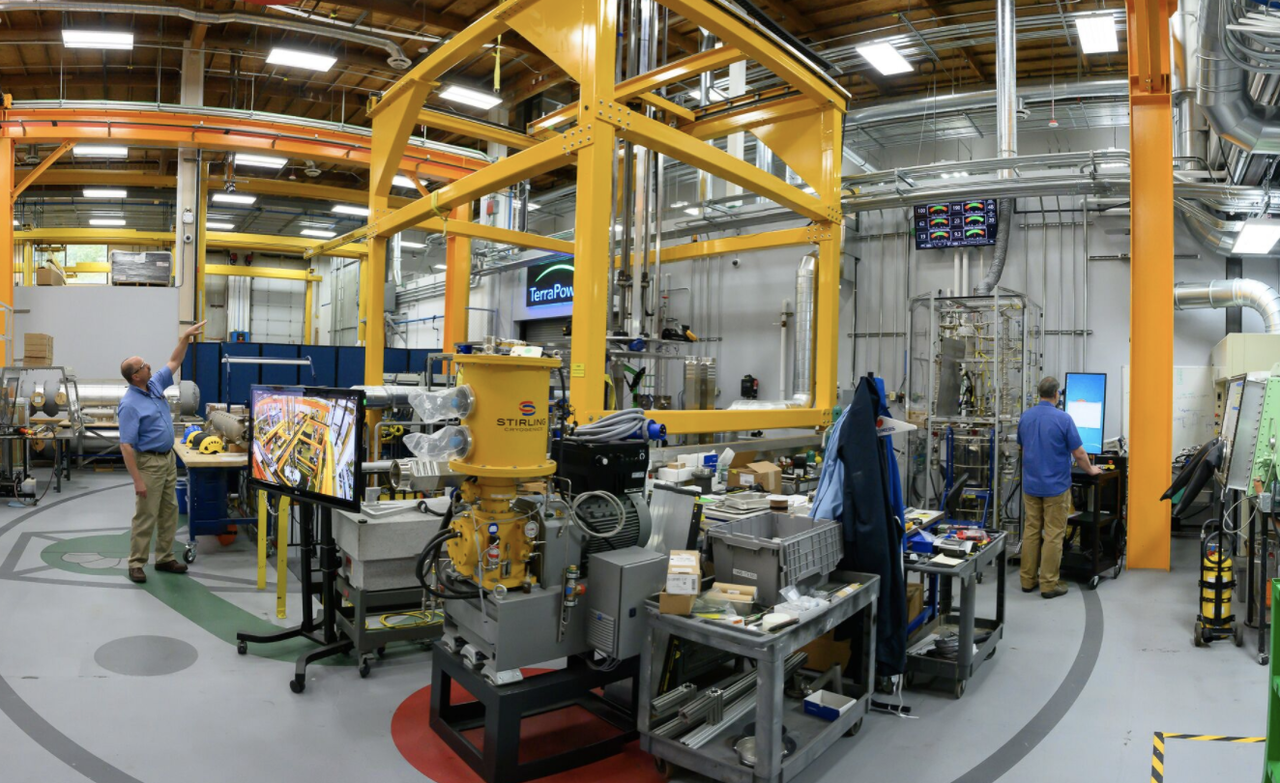
In a report published Thursday, Reuters revealed, for the first time, a new campaign by the Gates-controlled TerraPower LLC (Gates is chairman of the company’s board) to build commercial advanced nuclear energy plants called “Natrium” in the US later in the decade. The project will focus on the Pacific Northwest, where Gates has won the backing of three major utilities in the region, including Berkshire Hathaway-owned PacifiCorp (of course Gates’ best buddy Warren Buffett was more than willing to help out, we imagine).
After President Trump scrapped a plan to build these advanced power plants in and around Beijing, Gate’s TerraPower was forced to shift its focus back to the US, according to Reuters.
Gates had initially hoped to build an experimental nuclear plant near Beijing with state-owned China National Nuclear Corp. But last year, TerraPower was forced to seek new partners after the Trump administration restricted nuclear deals with China.
If the initial plants are a success, the company hopes to build them across the US, and abroad, hoping to provide a means of buttressing energy grids that are increasingly dependent on renewable power like solar and wind. By mid-century, “we would see hundreds of these reactors around the world, solving multiple different energy needs,” said Chris Levesque, the president and CEO of TerraPower, said. The 345-megawatt plants would be cooled by liquid sodium and cost about $1 billion each, and the complex technology would allow for the introduction of nuclear energy in countries that don’t have those resources like…say…Iran?
And via this “Molten Salt Power Storage” technique, these new-age nuclear power plants could shut down and store energy for days when the grid isn’t as well supplied.
Nuclear power is a top source of virtually emissions-free electricity, but many plants are shutting in the United States because of high costs and competition from solar and wind. Critics of advanced nuclear have also warned that smaller nuclear is even more expensive than conventional. The new plants, however, are designed to complement a renewable power because they will store the reactor power in tanks of molten salt during days when the grid is well supplied.
The nuclear power could be used later when solar and wind power are low due to weather conditions. Molten salt power storage has been used at thermal solar plants in the past, but leaks have plagued some of the projects.
Even though questions about practicality and affordability continue to plague the project, Gates and Levesque insist that nuclear power can be an important component of a “fossil fuel free” energy grid.
However, nonproliferation experts warn that these plants could become targets for attack because their uranium fuel would be even more highly enriched than conventional nuclear fuel.
As I noted below, Sarah Palin just won an important victory in her libel lawsuit against the New York Times; her case can go to trial on whether the Times acted with “actual malice,” which is to say knowing that an allegation in its editorial was false or likely false. But Palin also argued that the “actual malice” test set forth by New York Times v. Sullivan and later cases shouldn’t apply, and Judge Jed Rakoff said nay to that:
Plaintiff’s motion for partial summary judgment presents a pure question of law: whether plaintiff is required to prove that the allegedly libelous statements at issue in this case were published with “actual malice.” There is no dispute that plaintiff is a public figure and must therefore, under seemingly well-settled law, prove that the statements were published with actual malice. What plaintiff is really asking, then, is for this Court either to “overrule” New York Times v. Sullivan or else to distinguish that case on the facts and refuse to apply the actual malice rule here. To the extent those are, in fact, different requests, the Court declines them both.
While plaintiff acknowledges that the actual malice rule of New York Times and its progeny is well-established, she fundamentally misunderstands the doctrine of stare decisis that makes that rule binding on this Court. Plaintiff alludes to the “factors considered in deciding whether to overrule precedent” and notes in particular that “constitutional questions are less susceptible to stare decisis[,]” citing Janus v. American Fed’n of State, County, and Mun. Emps. Council 31, 138 S. Ct. 2444 (2018); Kimble v. Marvel Entm’t, LLC, 576 U.S. 446, 456 (2015)). But those factors, and those cases, pertain to horizontal stare decisis, whereby a court determines whether its own prior precedent remain binding on that court. By contrast, what lies before this Court is vertical stare decisis, whereby a higher court ruling binds a lower court. “[V]ertical stare decisis is absolute, as it must be in a hierarchical system with ‘one supreme Court.'” In other words, this Court has “a constitutional obligation” to follow the Supreme Court’s precedent “unless and until it is overruled by [the Supreme Court].”
Perhaps recognizing that this Court is not free to disregard controlling precedent even if it were so inclined (which in this case it distinctly is not), plaintiff offers what she calls an alternative argument: that “the actual malice rule arose from distinguishable facts and should not be applied” here. More precisely, plaintiff’s argument is that the actual malice rule, which was first articulated more than half a century ago in the days before the Internet and social media, has run its course and should no longer govern our contemporary media landscape.
Binding precedent does not, however, come with an expiration date. To the extent plaintiff believes the actual malice requirement ought to be abolished, she could make that argument to the appropriate court—the Supreme Court. Until then, public figures, like plaintiff, must establish actual malice before collecting damages for defamation. Plaintiff’s motion for partial summary is therefore denied.
Quite correct.
from Latest – Reason.com https://ift.tt/31Dh06r
via IFTTT
Sarah Palin had sued the New York Times for libel, over an editorial (following the wounding of Rep. Steve Scalise by James Hodgkinson) that had referred to the 2011 Jared Loughner shooting of Rep. Gabby Giffords and others:
Describing Loughner’s 2011 attack, the Editorial stated: “[T]he link to political incitement was clear. Before the shooting, Sarah Palin’s political action committee circulated a map of targeted electoral districts that put Ms. Giffords and other Democrats under stylized cross hairs.”
The Editorial contrasted the Loughner attack with that day’s Hodgkinson shooting, where there was “no sign of incitement as direct as in the Giffords attack.” The Editorial did, however, include a hyperlink to an ABC News Article titled Sarah Palin’s ‘Crosshairs’ Ad Dominates Gabrielle Giffords Debate, published the day after Loughner’s 2011 attack, which stated that “[n] o connection has been made between [the Map] and the Arizona shooting.”
The editorial was in error, as the Times later made clear in a series of correction, such as:
An earlier version of this editorial incorrectly stated that a link existed between political incitement and the 2011 shooting of Representative Gabby Giffords. In fact, no such link was established.
And it turns out an earlier version of the editorial, drafted by Elizabeth Williamson, didn’t assert a “link to political incitement”; it was editing by James Bennet, “the editor overseeing opinion journalism at the Times, including masthead editorials by the Times Editorial Board,” that included this “link to political incitement was clear” statement.
Today, Judge Jed Rakoff denied defendants’ motion for summary judgment, which means the case will go to trial, unless the parties settle. The key issue was whether Palin could show “actual malice,” a legal term of art that means knowledge that the statement was false, or recklessness about the statement’s being false.
Judge Rakoff began by asking whether there was enough evidence to go to the jury on whether Bennet (and thus the Times) had “actual malice” as to how readers would understand the statement:
Defendants first argue that plaintiff cannot prove that at the time Bennet wrote the allegedly defamatory portion of the Editorial, he knew that, or was reckless with respect to whether, readers would understand his words in the defamatory sense—that is, that the Map had “directly caused Loughner to shoot his victims.” …
Where a plaintiff’s defamation case depends on a statement that is capable of multiple meanings—one defamatory, the other innocuous—the plaintiff must prove that the defendant acted with actual malice not only with respect to the statement’s falsity but also to its meaning…. [T]he plaintiff must show that the defendant “either deliberately cast its statements in an equivocal fashion in the hope of insinuating a false import to the reader or that it knew and acted with reckless disregard of whether its words would be interpreted by the average reader as a false statement.”
Of course, because actual malice “is a matter of the defendant’s subjective mental state, revolves around facts usually within the defendant’s knowledge and control, and rarely is admitted,” a defendant cannot “automatically insure a favorable verdict by testifying that he published with a belief that the statements were true.” Here, to be sure, Bennet has sworn multiple times that he “did not intend to imply a direct causal link between [the Map] and Loughner’s horrific acts.” He also avers that “it did not occur to [him] that readers would understand the phrase ‘the link to political incitement was clear’ as suggesting that Loughner himself was directly inspired or motivated by the [Map] to engage in the shooting, and [he] did not intend for readers to draw such an inference.” Instead, he claims that he “intended to advance the idea that overheated political rhetoric can create a climate inducive to violent acts, and [he] mentioned the [Map] as an example of the kind of ‘political incitement’ that contributes to this atmosphere.”
However, … the Court cannot automatically credit this testimony at the summary judgment stage…. [P]laintiff meets her burden of adducing evidence that, taken in the light most favorable to plaintiff, could enable a rational jury to conclude that Bennet either knew, or was reckless not to know, that his words would carry the defamatory meaning. Indeed, at least four items of evidence warrant this conclusion.
First, there is the language of the Editorial’s statements themselves, such as the reference to the Map as being a “direct” form of “incitement” to Loughner’s shooting…. Bennet’s contention that, notwithstanding the words he used, he did not mean to suggest a direct link between the Map and the shooting, may be “so inherently improbable that only a reckless man would have” chosen the words he chose to convey the meaning he (allegedly) sought to convey.
Second, Bennet has himself admitted that he was aware that the term “incitement” could mean a call to violence….
Third, Bennet’s decision to substantially revise Williamson’s earlier draft, which did not include the allegedly defamatory language and meaning, is, a jury could find, yet more evidence of actual malice. To be sure, Bennet testified that he made these changes because he worried that phrases like “incendiary” or “inflammatory rhetoric” had been “drained of [their] power because [they are] used so often” and that he was searching for “a very strong word to write about the political climate,” and so chose “political incitement.” But, as discussed above, the credibility of that testimony is for the jury to assess, not for this Court to credit at the summary judgment phase. It is virtually undeniable that Bennet’s edits changed the meaning of Williamson’s draft, an alteration that a reasonable jury might conclude was intentional.
Fourth, the nature of the corrections issued by the Times in the aftermath of the Editorial stand as further circumstantial evidence that Bennet was aware that the Editorial carried the defamatory meaning. As discussed above, upon receiving Douthat’s email expressing concern over the Editorial, Bennet reached out to Williamson and other members of the team and asked them to “get to the bottom of this as quickly as possible.” The team then looked into whether there existed a direct link between the Map and the Loughner shooting; and when it concluded that no such link had been established, the Times issued a correction which read, in part: “An earlier version of this editorial incorrectly stated that a link existed between political incitement and the 2011 shooting of Representative Gabby Giffords. In fact, no such link was established.”
The fact that Bennet and the Times were so quick to print a correction is, on the one hand, evidence that a jury might find corroborative of a lack of actual malice …. But, on the other hand, a reasonable jury could conclude that Bennet’s reaction and the Times’ correction may also be probative of a prior intent to assert the existence of such a direct link, for why else the need to correct? Indeed, the correction itself concedes that Bennet’s initial draft incorrectly stated that there existed such a link. If, as Bennet now contends, it was all simply a misunderstanding, the result of a poor choice of words, it is reasonable to conclude that the ultimate correction would have reflected as much and simply clarified the Editorial’s intended meaning.
Ultimately, while much of plaintiff’s evidence is circumstantial, as is often the case when actual malice is at issue, and while there is arguably contrary evidence as well, the Court finds that, taking the evidence in the light most favorable to plaintiff, she has sufficiently pointed to enough triable issues of fact that would enable a jury to find by clear and convincing evidence that Bennet knew, or was reckless not to know, that his words would convey the meaning in the minds of the readers that plaintiff asserts was libelous, to wit, that she bore a direct responsibility for inciting the Loughner shooting.
Judge Rakoff then went on to conclude that a jury could find that Bennet knew or was reckless about the falsity of the incitement allegation:
[P]laintiff must show that defendants published the libelous statement “with knowledge that it was false or with reckless disregard of whether it was false or not.” “Mere negligence does not suffice.” Instead, “[a] finding of malice must be based on clear and convincing evidence that the defendant in fact entertained serious doubts as to the truth of his publication, or, in the alternative, knew of its falsity.”
While mere failure to conduct an investigation before publishing cannot itself establish actual malice, nonetheless, “where there are obvious reasons to doubt the veracity ” of the information, that can give rise to an inference of actual malice. Thus, as the Ninth Circuit explained, “where [a] publisher undertakes to investigate the accuracy of a story and learns facts casting doubt on the information contained therein, it may not ignore those doubts, even though it had no duty to conduct the investigation in the first place.” That is why, as the Supreme Court has explained, “the purposeful avoidance of the truth is in a different category” from mere failure to investigate….
Plaintiff argues that, construing the evidence in the light most favorable to her, a jury could conclude that (1) Bennet instructed Williamson to research whether there was a link between the Map and the shooting; (2) Bennet conceded, and Williamson confirmed, that her draft embodied the results of that research and did not turn up evidence of a causal link between the Map and the shooting; (3) the hyperlinked article attached to Williamson’s draft recognized as much; and (4) therefore, Bennet “knew there was no link but rewrote the draft anyway to say a link existed—consistent with the narrative he already decided to portray.”
As a threshold matter, defendants insist there is “no evidence to support these assertions.” Specifically, defendants contend that Bennet did not instruct Williamson to research whether there was a link between the map and the shooting; rather, according to defendants, Bennet only “asked for research to determine if the Times’ own Editorial Board had previously written anything connecting the Loughner Shooting to incitement … because he wanted to ensure the new editorial was in sync with any prior Board position.
However, taking the evidence in the light most favorable to plaintiff, Williamson acknowledges in her deposition that Bennet specifically asked her to “look for pieces related to the Giffords shooting and whether there was such a connection.” Defendants suggest that plaintiff is taking these statements out of context, weaving “two strands of testimony into a fiction.” But, again, at the summary judgment phase, the Court finds that Williamson’s deposition testimony could allow a juror to conclude that, at some point during the drafting process, Bennet specifically instructed Williamson to research whether there existed a link between the Map and the shooting and learned that there was no material support for such a link.
Beyond this, Williamson’ s inclusion in her first draft of the hyperlink to the contemporaneous ABC news article that flatly stated there was no such connection would have given Bennet, if he had accessed the article, “obvious reasons to doubt the veracity” of the alleged connection. If so, Bennet’s failure to investigate could support an inference that he purposefully avoided the truth.
To be sure, Bennet maintains that he never clicked on the hyperlink. But under all the circumstances, a jury might discredit this testimony.
Nonetheless, even if it were true, it could be evidence of reckless disregard. After receiving Williamson’s draft, a reasonable jury might conclude, Bennet had obvious reasons to doubt whether there existed a link between the Map and the Loughner shooting. At that point, Bennet’s failure to further investigate or at least just click on the link to the only article Williamson had presented could support the inference that he was purposefully avoiding the truth.
There are other pieces of evidence from the drafting process that further support such a theory. First, as the editors were discussing whether to cover the Hodgkinson shooting, it was Bennet’ s idea to focus the editorial on “the rhetoric of demonization and whether it incites people to this kind of violence.” Then, during the research phase, Bennet asked a researcher to determine whether the Board had previously written “anything connecting to the Giffords shooting to some kind of incitement.” After the researcher sent Bennet an article (written not by the Board but by a columnist at the Times), Bennet replied “Good for us.” While Bennet has testified that he does not recall what he meant by that response, a reasonable jury could infer from this response that Bennet felt free to advance his narrative because the Editorial Board had not written on the subject.
In addition, researchers sent to Bennet other articles that disclaimed the idea that Loughner had been motivated by violent rhetoric. Notably, Bennet was sent an earlier editorial entitled “As We Mourn,” published in January 2011, which quoted President Barack Obama saying Loughner’s shooting cannot be blamed on “a simple lack of civility.” Like the hyperlink, Bennet testified that he did not read this article, even after specifically asking for the researcher to dig up articles of this sort. But, as with the hyperlink, a jury could infer from this a purposeful avoidance of the truth.
Once again, there is considerable evidence that defendants mount to support the notion that Bennet simply drew the innocent inference that a political circular showing crosshairs over a Congressperson’s district might well invite an increased climate of violence with respect to her. But, taken in the light most favorable to plaintiff, the evidence shows Bennet came up with an ang le for the Editorial, ignored the articles brought to his attention that were inconsistent with his angle, disregarded the results the Williamson research that he commissioned, and ultimately made the point he set out to make in reckless disregard of the truth
Accordingly, the Court concludes that there is sufficient evidence to allow a rational finder of fact to find actual malice by clear and convincing evidence.
from Latest – Reason.com https://ift.tt/2EOIjBq
via IFTTT